Feeds:
Posts
Comments

Archive for the ‘Worship’ Category

Remember the Sesame Street game, “One of These Things Is Not Like the Others?”

See if you can find the misfit in this list of especially nutritious superfoods. One of these things is not like the others! Berries, cruciferous vegetables, cucumber, fish, leafy greens, legumes, nuts, olive oil, tomatoes, whole grains, and yogurt [1].

Did you choose cucumber? You win! Go eat some broccoli as a special winner’s treat!

And know this: prioritizing these foods on our plates leads to beneficial outcomes, including more energy, lower blood pressure and cholesterol, plus less risk of diabetes, depression, cognitive decline and even some cancers.

It’s no secret: our souls also need to be fed well. Choose the best options and experience such outcomes as these: lower anxiety, less depression, more contentment in life, and improved ability to handle life’s challenges with confidence and hope [2].

In addition, the well-fed soul tends to be resilient, able to navigate the ups and downs of everyday life [3].

So what are the best options for feeding our souls? There are a number of them, but for today, we’ll concentrate on just five.

No doubt they’re familiar to you. But I’d encourage you to at least skim-read below for an A-HA moment or two. I found worthwhile insights among the following; perhaps you will too.

BIBLE STUDY

The Center for Bible Engagement conducted extensive research to determine what happens when people engage with scripture at least four times per week. They found that people involved in Bible study are:

  • more pro-active in their faith (improving their quality of life as a result)
  • less likely to deal with bitterness, unforgiveness, discouragement, and more
  • more likely to resist temptations such as excess drinking, lashing out in anger, gossiping, or lying [4]

There’s much joy to be experienced in Bible study as well.

Theologian Jonathan Edwards (1703-1758) wrote that the Bible communicated “such refreshing food,” that “almost every sentence seemed to be full of wonders” [5].

I couldn’t agree more and know many of you would also.

PRAYER

And what might those changes include?

  • Less anxiety and more peace (Philippians 4:6-7)
  • Improved attitude as trust replaces doubt and hope replaces despair (Isaiah 40:31)
  • More understanding of God’s will (Colossians 1:9)
  • Greater endurance (Colossians 1:9-11)
  • Fine-tuned perspective as we allow God to reorient our thinking (Romans 12:2)

PRAISE AND WORSHIP

“Praise . . . is one great means of promoting the growth of the spiritual life. It helps to remove our burdens, to excite our hope, and to increase our faith.

“It is a healthful and invigorating exercise which quickens the pulse of the believer and prepares him for fresh enterprises in his Master’s service” (Charles Spurgeon) [6].

Here’s a praise-appetizer to whet your taste for glorifying God:

GRATITUDE

Gratitude is not just for those times when blessings abound.

“What was the prayer Daniel prayed right before being thrown in the lions’ den . . . ? Thanksgiving. What was Jonah’s prayer right before he was finally delivered onto dry land? Thanksgiving. How are we instructed to pray in Philippians 4:6 when we feel anxious? With thanksgiving. And what is the outcome . . . ? Peace” [7].

And that’s just one of many glorious benefits of gratitude—even when circumstances don’t seem to call for it. You can augment the positive impact by keeping a gratitude journal [8].

COMMUNITY

If we’re going to grow spiritually, we need the encouragement, prayer, and insight of other Jesus followers. Character and wisdom do not develop in a vacuum; interaction with others is an important factor [9].

All of these things—Bible study, prayer, praise and worship, gratitude, and community—are alike, in that they lead to the exceptionally satisfying life Christ offers [10].

Bon appétit!


[1] https://www.health.harvard.edu/blog/10-superfoods-to-boost-a-healthy-diet-2018082914463

[2] https://www.focusonthefamily.com/get-help-how-practicing-spiritual-disciplines-can-positively-impact-your-mental-health/

[3] https://www.healthline.com/health/emotionalhealth

[4] https://www.centerforbibleengagement.org/post/bible-engagement-a-key-to-spiritual-growth

[5] www.gracequotes.org

[6] Morning by Morning, 306.

[7] Lysa Terkhuerst, Embraced, 257.

[8] See https://nancyaruegg.com/2020/11/19/one-single-strategy-for-an-exceptional-life/

[9] Kenneth T. Aiken, Proverbs (from the Daily Study Bible Series), 170.

[10] John 10:10; Colossians 1:9-10; 1 Thessalonians 5:17; Psalm 34:1-3; Proverbs 27:17

Image credits: http://www.freerangestock.com; http://www.stockcake.com; http://www.canva.com; http://www.rawpixel.com; http://www.pickpik.com; http://www.stockvault.net.

Processing…
Success! You're on the list.

Read Full Post »

(A personal, prayer-response:)

How I love this passage, Lord, with its comfort and reassurance!

Paul reminds me here that You, O God, are all-wise and all-knowing; You know what’s best for each of us.

You cause all things to work together for our benefit, for those who love You (Romans 8:28).

Sometimes though, I have to admit, certain events confound and frustrate me. My finite mind cannot understand what good you could possibly bring out of:

  • Severe financial setbacks for a godly family
  • A rejection letter from a mission board for an eager candidate
  • An announcement of divorce between a respected couple in the church
  • A cancer diagnosis for a young mother
  • The death of a child

But those of us who trust in You know that we can count on Your wisdom and knowledge in all things, and the absolute dependability of Your character—Your benevolent goodness, Your perfect righteousness, Your deep compassion, Your unfailing faithfulness and infinite love (to name a few)—even in the face of struggle and tragedy.

Remind me, Father, that “making room for mystery in my worldview”(1) is an important element of spiritual maturity.

And to demonstrate that mature trust, I can follow Job’s example. His first response to catastrophe was worship (Job 1:20).

And as I worship, I can praise and thank You, not only for those blessings I see but also for those I can’t.

Help me Father to rest in the knowledge that:

  • Out of Your infinite wisdom, You select the best possible conclusion of events, and You adopt the best possible means for accomplishing that conclusion (2).
  • You are the Most High God, Lord of heaven and earth. You are subject to no one and influenced by no one; neither can anyone thwart or hinder Your plans (3).
  • Even my mistakes could never obstruct Your will.
  • You, on the other hand make no mistakes. Your choices for me are always right, because they come from Your perfect mind and heart. You always know exactly what you’re doing.
  • “Everything from You and for You” (v. 36) often includes mundane tasks, tedious routine, and lack of recognition. But I can count on the fact that, “in the midst of what seems terribly ordinary, You—in your wisdom and power–are doing something extraordinary” (4).
  • Everything serves Your purpose (5). You direct everything toward the conclusion you ordained for it.

May I be joyfully submissive to Your plans for me, in light of these marvelous truths!

Notes:

  1. Sarah Young, Jesus Always, 65. 
  2. Based on a J. L. Dagg quote, www.gracequotes.com.
  3.  Based on an A. W. Pink quote, www.gracequotes.com.
  4. Alice Mathews, A Woman God Can Use, 77.
  5. A quote my dad copied into one of his Bibles, source unknown.

Image credits: http://www.canva.com

Processing…
Success! You're on the list.

Read Full Post »

Which would you say is the most common human weakness?

  • A. Living unaware?
  • B. Greed?
  • C. Pride?
  • D. Selfishness?

According to pastor and author, Lou Guntzelman, the answer is A.*

Even twenty years ago when Guntzelman wrote his book, he saw many people living superficially, busily, and distractedly –moving too fast and focusing too much on insignificant matters.

Maybe those descriptors don’t apply to you. But I have been guilty on all counts. And those of us who tend to fly through our days risk missing many delights of life.

For example, we don’t see the unique qualities of the people around us.

We don’t hear the laughter of our children.

We don’t even think to take in deep gulps of rain-scented air, just for the pleasure of breathing.

We don’t taste and see God’s goodness in the world.

Blackwater Falls, WV

We don’t sense His presence.

But!

When we learn to engage the mind and especially the spirit in the moment at hand, we discover the splendor of God’s glory tucked into surprising places–right in front of us.

–Henry Miller

The obvious question is: how do we reprogram ourselves to live more aware?

Perhaps the first step is to condition our minds through quiet reflection.

In a place of solitude, we avail ourselves of his presence and redirect our attention from the day’s cares to God’s truth.

Sometimes that might include:

  • Studying and contemplating scripture, open to a change of heart or a change of direction
  • Naming God’s attributes and celebrating how he’s demonstrated those attributes in our lives
  • Keeping a gratitude journal, to help us tune in to the positive  (It’s a transformative habit!)
  • Reading books by thought-provoking Christian authors, then mentally processing their tenets, and seeking ways of application to life when appropriate

The state of our minds affects our perception of everything.

Second, we condition our focus.

We determine to:

Backyard beauties at our house, on display the end of April

  • Appreciate more fully the natural wonders around us—even in the backyard, on the way to work, while running errands.
  • Honor each person we meet with eye contact, smiles, and a kind word.
  • Sift out the immaterial and apply ourselves to the important.
  • Refuse pointless worry and find priceless treasure in scriptural reassurance and God’s inimitable peace.
  • Pursue wholeness—the state of being perfectly well in body, soul (mind, will, and emotions) and spirit.  That happens as we submit more and more to God’s perfect ways (Psalm 119:1-2).

And what will be the result?

Each day there will be the anticipation of discovery and delight, joyful praise and expectant hope.

We’ll find ourselves speaking to God more and more often, and hearing his whispers in our hearts. We’ll experience greater satisfaction in life as we train our focus on him and savor his endless blessings.

Bottom line: We will live on the threshold of heaven.

*     *     *     *     *     *     *     *     *     *

Oh, this is where I want to live, Father—on the precipice of your glory. Though responsibilities must be taken care of, I can still take note and inwardly soak in all the beauty, blessings, discoveries, and lessons that you bring to my attention. Help me to live aware!

*Lou Guntzelman, So Heart and Mind Can Fill, St. Mary’s Press, 1998.

Image credits:  

http://www.publicdomainpictures.nethttp://www.commons.wikimedia.org; wwwpxhere.com; http://www.pixabay.com (2); http://www.commons.wikimedia.orghttp://www.pxhere.com (2); http://www.pixabay.comhttp://www.pixnio.com; Nancy Ruegg; http://www.quotefancy.com; Nancy Ruegg; http://www.flickr.com.

(This post reblogged from June 21, 2018 while we enjoy a visit from out-of-town family.)

Processing…
Success! You're on the list.

Read Full Post »

Some of you may remember singing this song in Sunday School:

As a child, I knew God loved me. He proved it by sending his Son to take the punishment for my sins, provide the way for me to live in heaven one day, and know him in the present.  

But I also knew my little eyes, hands, and mouth were not as careful they should have been. Surely God was disappointed in me much of the time.

The truth that I could enjoy God never entered my mind. My false impression of his disapproval stood in the way for many years.

Somehow I’d missed the message of such scriptures as:

  • The joy you have in the LORD is your strength (Nehemiah 8:10 GWT).
  • Take delight in the Lord (Psalm 37:4a NIV).
  • I will go to the altar of God, . . . my joy and my delight (Psalm 43:4 NIV).

I read such passages as directives for prayer and worship rather than invitations to take pleasure in relationship with God.

Psalm 100 provides Exhibit A for enjoying him by praising him. “Shout for joy,” the psalmist begins. “Worship the Lord with gladness; come before him with joyful songs” (vs. 1-2, emphasis added).

Then he gives one example why: God has made us his own—in spite of our frailty—and cares for us like a compassionate, attentive shepherd (v. 3).

Parable of the Lost Sheep (Luke 15:3-7)

That’s certainly cause for thanksgiving and praise (v. 4), which in turn fosters our delight in God. Then the psalmist concludes with three more reasons to enjoy him: he is good, loving, and faithful (v. 5).

This psalm hints at another important truth. Dare I use a sport analogy?

My first attempts at playing tennis sent balls whizzing every which way. However, various drills and hitting the ball thousands of times against a wall built up my skills until I could actually play the game.

That’s when I began to enjoy the sport. The better I knew how to play tennis, the more pleasure I took in the game.

‘See the parallel in the spiritual realm? The more we know God, the more we’ll enjoy him.

But that’s not all.

The more we delight in God, the easier it becomes to obey him and live by his ways.

And as we see those ways contributing satisfaction, contentment, and purpose to our lives, we enjoy him all the more.

So how do we foster our pleasure in God? Here are three ways to get us started:

LEARN ALL YOU CAN ABOUT GOD—his character and his ways.

In January we explored the exercise of slowly reading through the psalms and writing down every mention of God’s character and deeds. As the list grows so does our delight in his multi-faceted splendor [1].

LEARN ALL YOU CAN ABOUT JESUS—his life, sacrificial death, provision of eternal life for us and all its implications.

For example, while reading the gospels, note his responses to people, his choices, and his behavior. What character traits can you identify?

While reading the letters written by the Apostles Paul, Peter, and others, consider all that Christ’s sacrifice has purchased for us.

The more we learn about Jesus, the more our love for him grows. The more our love grows, the more we find our hearts filled with joy in him.

REVEL IN GOD’S BEAUTY—his magnificence, the glory of his creation, and the beautiful blessings he bestows.

“His love notes are stashed everywhere,” says Sara Hagerty [2].

And as we discover them, we’ll find ourselves smiling and even laughing in pleasure with God, in the awesome works he performs [3].

Oh—and one more thing to celebrate. There will always be more to enjoy, and we can always acquire more ability to enjoy our God because . . .

quote from Morning by Morning, 268.

How do you enjoy God? Please share in the comment section below!


[1] https://nancyaruegg.com/2025/01/16/celebrating-god-through-the-psalms/

[2] Unseen, 206.

[3] https://nancyaruegg.com/2019/06/06/love-notes/

Image credits: http://www.youtube.com; http://www.dailyverses.net; http://www.freebibleimages.org; Nancy Ruegg; http://www.canva.com; http://www.pixahive.com (Vijay Richhiya).

Processing…
Success! You're on the list.

Read Full Post »

One way to get better acquainted with God is to read through the psalms, watch for statements pertaining to him, and write them down.

That last step is important, as research has proven: writing (not typing) helps us learn and retain what we’ve written [1]. In this case it will also increase our appreciation of God’s glorious attributes and gracious acts on our behalf.

I chose to participate in this exercise during Advent, and became astonished by the number of statements about God, totaling over three hundred by the time I reached Psalm 150. I even skipped over those that I remembered listing previously.

Some psalms offer a number of statements about God, one after another. Psalm 23 includes nine, Psalm 103, sixteen, and Psalm 145, twenty.

Perhaps that explains why these psalms are among the favorites of many people. Subconsciously we crave reassurance of God’s power, wisdom, and goodness working on our behalf.

A lesser-known psalm perhaps, #71, offers seven encouraging descriptors of God:

He is our sovereign Lord (v. 5) over all things, even our blunders and regrets.

No matter my poor choices, God can redeem them. “Our mistakes can never thwart the sovereign will of God” [2].

How thankful I am for that!

He is the One who’s been my hope and confidence since my youth (v. 5).

I’ve been a Jesus-follower since age four. Never have I toyed with the idea of abandoning my faith in him, because I learned early on from the saints around me:

  • God is a good and loving Father
  • There is purpose in everything God does
  • He will bring me through whatever I might face
  • He is accomplishing a good and eternal work in my life [3]

I’d be foolish to turn my back on Someone so invested in my welfare.

God is splendorous (v. 8).

We could surely add more attributes to Brooks’ list. God provides so many wonderful, spiritual blessings in Christ (Ephesians 1:3)!

He is the One who performs marvelous, mighty, and righteous deeds (vs. 16-18).

In truth, “The whole world is a series of miracles, but we’re so used to them we call them ordinary things” [4].

May we rediscover the wonder of God’s deeds in evidence all around us, and respond with gratitude and praise.

He is the One who’s taught me since my youth (v. 17).

Over time I’ve come to cherish God’ Word. And even though I’ve spent many happy hours in study, its inspiration never grows old.

That is very good news.

God is the One whose righteousness reaches up to the heavens (v. 19).

That’s good news too, because “there is no perfect life, no perfect job, no perfect childhood, no perfect marriage, and no set of people who always do what we expect them to do.

“What we do have is a perfect God who is able to lead us through this imperfect life with unfailing strength, infallible wisdom, and infinite love”—Unknown.

Praise God for his attentive participation in our lives!

He is the One who’s done great things. Who is like You, God (v. 19)?

All of these descriptors, among the dozens of others proclaimed in the psalms, do make clear:

P.S. My list of God-descriptors has become the basis for personal worship. Each morning I slowly read and pray back to him one page of the collected statements. The practice renews wonder and gratitude for my marvelous Heavenly Father.

Perhaps you’d like to try it too?


[1] Denise Hughes, Deeper Waters, 89.

[2] Bev Rihtarchik, contributor to A Moment to Breathe, 151.

[3] Dr. Charles Stanley, Advancing through Adversity, 101.

[4] Hans Christian Andersen

Photo credits: http://www.pxhere.com; Nancy Ruegg; http://www.flickr.com; http://www.pickpik.com; http://www.canva.com (2).

Processing…
Success! You're on the list.

Read Full Post »

I praise you, Lord Jesus, for surrendering all the glorious perfections of heaven, to live among us with all our un-glorious imperfections [1].

Also astounding is your arrival as an infant, born to peasants, in a stable-cave. How ignoble for the King of kings, the Alpha and Omega who always was and always will be.

As Mary and Joseph tried to rest on scratchy straw, did they wonder, “How could this be part of your plan, Lord Jehovah? How could the Messiah fulfill his grand destiny from such lowly beginnings?”

Little did the couple know:

  • their helpless baby who could not stand “would one day walk on water” [2]
  • his little hands that could not grasp would one day break five rolls and two fish into pieces and feed five thousand people
  • their Child who could not speak would one day make the hearts of men burn within them as he spoke words of supernatural wisdom and insight
  • his flailing arms would one day spread wide on a cross, to save his people from their sins [3]

The depth of your humility and the magnitude of your sacrifice, Lord Jesus, overwhelm me.

I praise you for all the ways you demonstrated God’s character to us during your earthly ministry—his love, compassion, goodness, and more.

I praise you, Lord Jesus, for your power on display in the miracles you performed and those you continue to perform to this day, confirming who you are—not just a wise teacher or mystic but the Son of God.

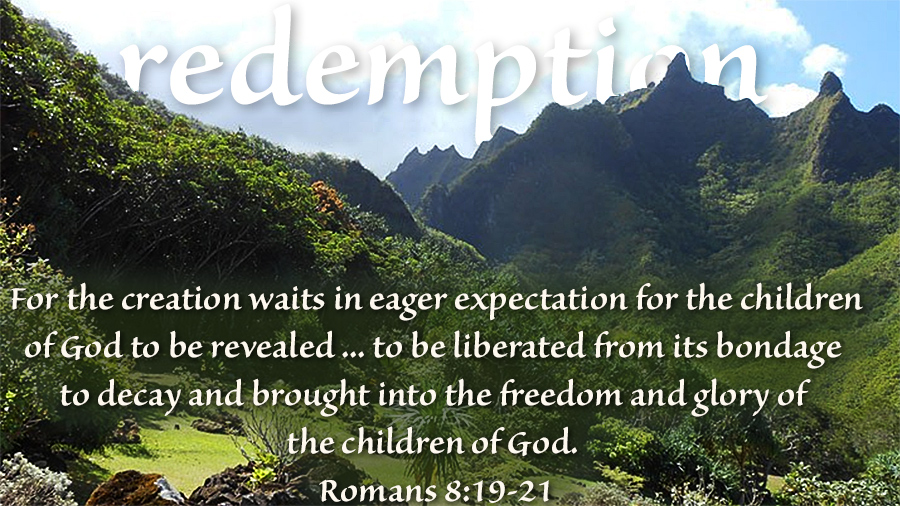
I praise you for the glimpses of heaven we experience from time to time of what it will be like when all creation is “brought into the freedom and glory of the children of God,”–because of what you accomplished [4].

Such glimpses include:

  • The exquisite beauty of nature, causing us to gasp in wonder
  • The profound heart-to-heart connections we experience with other believers
  • The songs that move our spirits and cause tears of blissful joy
  • The sense of your presence—your encompassing and perfect shalom [5]

–C. S. Lewis (The Problem of Pain, 150-151)

I praise you, Lord God, that before time began, you’d already established the plan for your Son’s birth, ministry, death, and resurrection [6].

I praise you, Lord Jesus, for withstanding horrific suffering in our place, paying the penalty for our sins [7].

I praise you Heavenly Father, for your power over death, proven by the resurrection of your Son. He received a grand welcome back to heaven and now sits on his throne, receiving the honor, glory, and power he deserves [8].

I praise you for the promise—repeated many times through scripture—that upon our physical deaths, those of us who believe in Christ will live forever with you, surrounded by the wonders of heaven [9].

I praise you, Lord Jesus, we’ll even sit with you on your throne [10]!

Such an honor seems downright absurd, and yet there it is—promised and guaranteed in your infallible Word—promises we can trust, a guarantee we can believe in.

I pray that many will see:

And may many embrace you, O Christ, as their Prince of Peace and King of kings, to experience your shalom and joy. May they accept your gift of gifts: eternal life!


[1] Philippians 2:5-7

[2] From Mark Lowry’s carol, “Mary Did You Know”; see also Matthew 14:22-33 for one example

[3] Matthew 14:13-33; Luke 24:13-24; Luke 23:33; Matthew 1:21

[4] Romans 8:21

[5] Shalom includes not only peace, but complete well-being and wholeness

[6] Titus 1:2

[7] Romans 5:8

[8] Revelation 3:21

[9] John 3:16

[10] Revelation 3:21

[11] From a sermon, “The Great Birthday of Our Coming Age,” December 21, 1884.

Photo credits: http://www.freebibleimages.com; http://www.canva.com; http://www.heartlight.org; http://www.dailyverses.net; canva.com.

Processing…
Success! You're on the list.

Read Full Post »

As his father prayed, little Isaac peeked through his fingers to see what was causing a rustling sound. His eyes spied a mouse crawling up a bell-rope, and Isaac giggled.

After family prayers, Father wanted to know what had possessed his son to be so disrespectful.

“I saw a mouse running up the bell-rope, and it came to my mind:

There was a mouse for want of stairs,

‘Ran up a rope to say his prayers.”

Father was not amused and reached for the rod. Isaac fell to his knees and begged:

“Father, Father, pity take,

And I will no more verses make [1]!”

Neither the little poet Isaac Watts (1674-1748) nor his father could have known where the boy’s penchant for rhymes would take him.

As a late teen, Isaac complained often to his father about the tiresome, chanted hymns of the church. How was a person supposed to sing them with joy as the Bible-psalms often urged, when the music droned in a minor key?

From a 1600’s hymnal

Mr. Watts finally suggested he turn complaining into composing and create better melodies and lyrics. Isaac did, and over the next fifty-plus years more than six hundred of his hymns were published.

Some people found fault with Isaac’s contemporary worship songs. But at least several prominent leaders supported him, including Samuel Johnson, Cotton Mather, and John Wesley [2].

Isaac Watts

Probably the best known of Watts’ hymns is “Joy to the World,” although Watts never set it to music. Decades later Lowell Mason felt inspired to do so and upon publication in 1848, the song soon became a beloved Christmas carol.

Some insist this hymn has no place in the carol-category, because Watts included no elements of the Christmas story in the lyrics.

But as Alyssa Poblete points out: This song celebrates what Christ came to do. And along with looking back at the grace accomplished in the past, we also look forward to the grace accomplished for our future, to the ultimate joy to be revealed [3].

That enlightenment helps explain that puzzling first line, “Joy to the world, the Lord is come” (emphasis added). I’ve often wondered why Watts didn’t choose “has come.”

Ms. Poblete gives us indication. God’s grace (explained in part by the acronym, God’s Riches at Christ’s Expense) is active in all of time—past, present, and future.

Our Messiah’s birth was long-promised for centuries. His coming ushered in a new kingdom of Light. Those who believe in Jesus gain release from the kingdom of darkness, and one day that evil kingdom will be utterly destroyed [4].

In addition:

Christ’s coming is an ever-present and ongoing engagement in the world.

–Darrow L. Miller [5]

The Lord didn’t just come. He is here! And we can sing with dazzling Christmas joy because:

  • One day the whole earth will receive her King. Therefore, let heaven and nature sing (v. 1) [6]
  • The Savior reigns forever and ever (v. 2) [7]
  • Sins and sorrows will be no more, when Christ returns (v. 3) [8]
  • He comes to make his blessings flow (v. 3) [9]
  • He rules the world with truth and grace (v. 4) [10]
  • The glories of his righteousness and the wonders of his love are on display everywhere (v. 4) [11]

These musicians capture well the dazzling joy of knowing our Savior reigns!

For the reasons listed above and more, Watts invites: “Let every heart prepare him room” (v. 1), and “Let men [all humanity] their songs employ” (v. 1)!

May we be just such people who sing with intention, from a place of authenticity [12].

In fact, take a moment right now if you can, and worship, celebrate, and sing with dazzling Christmas joy!


[1] Betty Dunn, https://www.powerofchange.org/blog/2011/12/16/isaac-watts-joy-to-the-world.html

[2] Erin Tabor, https://www.zmiinternational.org/daily-dose-of-encouragement/joy-to-the-world-the-lord-is-come  

[3] https://www.thegospelcoalition.org/article/joy-to-the-world-a classic-christmas-hymn-reconsidered/

[4] Isaiah 7:14 and 9:6; Colossians 1:14; Revelation 20:7-20.

[5] https://disciplenations.org/wp-content/uploads/202004/Music-that-Writes-Culture-Reflections-on-Joy-to-the-World.pdf

[6] Romans 8:19-23; Revelation 22:20; Psalm 96:1-4

[7] Revelation 11:15

[8] Revelation 21:4

[9] Psalm 5:12; 34:10b; 2 Peter 1:3

[10] John 1:14; Colossians 1:16-17

[11] Psalm 33:4; 145:17 31:21

[12]  https://passioncitychurch.com/article/joy-to-the-world/

Art & photo credits: http://www.justanotherclaypotblogspot.com 9/10/2008; http://www.boudewijnhuijgens.getarchive.net; http://www.jenikirbyhistory.getarchive.net; http://www.canva.com (2); youtube.com; http://www.pxhere.com and canva.com.

Processing…
Success! You're on the list.

Read Full Post »

(An imaginary conversation between God and me, but I invite you to put your name in the blanks):

ME: You’ve heard me say, Lord, “I can’t imagine life without You,” because You’ve been an invaluable, all-wise influence through the years.

You’ve provided protection, guidance, care, and more. Just knowing You are with me gives me comfort, strength, and peace.

GOD: Ministering to you in these ways has been My delight, __________. I do love to see you practicing My presence—asking for My help and connecting with Me through praise and prayer.

As you draw near to Me, you experience wonder, quiet, calm, and warmth.  

ME: Thank you Father for these blessings! But I’m still on the learning curve of sustained awareness. Distractions frequently interfere. It seems I’ll never attain moment-by-moment communion with You.

GOD: I understand, __________. Remember, I’m the One who made you and am well aware you cannot achieve perfection [1].

What I value is progress, and rest assured, that is occurring.

Think back to the days when you experienced great difficulty practicing My presence. Your thoughts rarely turned toward Me once your morning quiet time was over—unless you ran into trouble.

Now you come to Me much more frequently, giving Me the opportunity to strengthen and encourage you. Keep coming back to Me, __________.

The day will come when we enjoy almost-unbroken communion and it will be all the sweeter for the wait. Meanwhile, there are habits-of-thought to embrace that will advance your progress toward that day:

BE ATTENTIVE TO MY ATTRIBUTES

Stay alert to discover reminders of Me everywhere. And let each discovery bring to mind one or more of My attributes.

As attentiveness leads to praise and praise to joy, you’ll find yourself nestled more closely to My side. That’s where I long for you to be!

BE GRATEFUL FOR MY BLESSINGS

Ask yourself throughout the day, “What can I thank God for right now?”

For example, your answer in this moment might include the colorful fall flowers in the deck planter—a delight for your eyes—enjoyed in the surroundings of My living room [2].

And as we enjoy such blessings together, you’ll find your heart drawing close to Me.

AFFIRM MY PROMISES

Come worship at My footstool, __________ (Psalm 132:7).

Look up into My face and see in My eyes the love I have for you. See in My smile the delight you bring Me. Imagine My hand upon your back and feel My compassion.

Now, breathe out your cares and breathe in the truth of My promises. Listen closely as I affirm:

  • I love you __________ with an everlasting love (Jeremiah 31:3).
  • I will always help you (Isaiah 41:13).
  • My lovingkindness prevails over you (Psalm 117:2 AMP).
  • I am in control of all things (Ephesians 4:6).
  • I will work all things together for the good of those who love Me, who seek to live out My purpose for them (Romans 8:28).

It delights Me that you want to be more aware of My presence. Know that I take deep pleasure in every occasion you turn your attention toward Me.

Know too that beautiful transformation is taking place within you each time you do, because you can’t spend time in My presence and not grow more into My likeness [3].

 *      *      *     *     *     *     *     *     *     *

ME: Thank You, Father, for encouraging me toward greater intimacy with You, to enjoy You more fervently. Help me pause and sense Your presence, even in the ordinary moments of life.

May I create space for You through attentiveness to Your attributes on display, gratitude for Your countless blessings, and review of Your uplifting promises.

May I remember:

 I don’t want to miss that pleasure, even for a moment.


[1] Psalm 103:13-14

[2] Those of you who visit here often will probably remember that Michael Hyatt, former CEO of Thomas Publishing, is the one who calls the outdoors God’s living room. I love that imagery!

[3] 2 Corinthians 3:18

Photo credits: http://www.canva.com; http://www.heartlight.org; http://www.picryl.com; http://www.dailyverses.net; http://www.freerangestock.com; http://www.canva.com.

Read Full Post »

Come with me on a journey through time and space and watch God spin a miracle, crossing more than ten countries and spanning more than seventy years.

First, Sweden, 1885: Pastor and poet Carl Boberg watches a storm roll across the countryside—loud and blustery with pelting rain. For all its fury however, the maelstrom soon moves on and leaves behind a sparkling landscape, arched by a glowing rainbow.

Boberg is inspired to write and composes a nine-verse poem, “O Great God,” celebrating the beauty of God’s creation.

In 1891 he hears his poem being sung, set to a traditional Swedish melody. He publishes his poem and the tune together. However, the popularity of “O Great God” quickly subsides.

Second, Estonia, 1907: Manfred von Glehn becomes acquainted with Boberg’s hymn and translates the lyrics into German. . .

. . . and third, in 1925, E. Gustav Johnson brings the hymn to America and translates it to English, titling it “O Mighty God.”

In Russia, 1927, Ivan Prokhanoff hears the hymn while imprisoned for his faith. He translates the lyrics into Russian and his rendition is published in Moscow.

Fifth, the Carpathian Mountains in Eastern Europe, 1934: British missionary Stuart L. Hine bicycles from village to village, sharing his faith in Jesus and distributing Bibles to peasants who’ve never even seen one.

No doubt there were few paved roads through the Carpathian Mts. in the 1930s

Like Boberg, Hine also witnesses a fearsome storm and is reminded of a hymn he’s heard, the Russian form of “O Great God.” However, new lyrics begin to develop in his mind, and he writes an original stanza in English.

In Romania Hine marvels at the beauty and serenity of the woods, the warbles, trills, and whistling of the birds. He adds a second verse.

High up in the mountains he comes upon the village of Dmitri and Lyudmila who do own a Bible, left behind by a Russian soldier in 1915.

Just that year Lyudmila had learned to read, and as Hine arrives at their home, she’s just completed a read-aloud to other villagers. They’re discussing the wonder of God’s love, and Hine is prompted to write verse three.

By 1939, war threatens Europe again. Hine and his wife Mercy are forced to return home to England.

Nazi troops marching through Warsaw, Poland, September, 1939

Six years later they immerse themselves in ministering among the thousands of refugees. “Their stories of loss and hope inspire the fourth verse of the hymn, filled with the promise of eternal reunion” [1].

In 1949, Hine publishes his lyrics in a gospel magazine that’s sent to missionaries in fifteen countries across Europe and Asia.

India, 1954: British-American missionary J. Edwin Orr hears a choir singing Hine’s hymn. He experiences the power of the lyrics and tune.

Back in America, 1954, Orr begins sharing the song at conferences he leads on college campuses.

Children of actor/singer/song-writer Tim Spencer attend one of those colleges. Tim had been a well-known singing cowboy in the 1930s and ‘40s, appearing in numerous films.

(One cowboy trio, but no Tim!)

But in 1949 Tim had become a Christian. When his kids share with him this new, inspiring song, he also becomes an enthusiast.

In 1955 Spencer founds Manna Music Publishing and purchases the rights to Hine’s song. This same year, a friend of George Beverly Shea and Cliff Barrows introduces them to the newly-published hymn.

(Some of you will recognize those names. Shea was a featured soloist and Barrows was the music and program director for the Billy Graham Crusades.)

Toronto, Canada, 1955: Shea sings the hymn at one of the crusades and it rapidly gains popularity.

New York City, 1957: Shea and the crusade choir sing the song ninety-nine times during the sixteen weeks of meetings [2].

1959: It became the theme song for Billy Graham’s weekly radio program and continued to grow in popularity.

1978: The American Society of Composers, Authors, and Publishers named the song “The All-Time Outstanding Gospel Song” in America [3].

It has been translated into more than fifty languages and recorded by dozens of artists.

To this day the hymn “How Great Thou Art” remains a beloved favorite of many, as the lyrics lift our hearts in worship:


[1] https://worshipleader.com/worship-culture/how-great-thou-art-75-years-later/

[2] https://billygraham.org.uk/p/summer-soul-refresher-how-great-thou-art/

[3] https://www.umcdiscipleship.org/resources/fiftieth-anniversary-of-how-great-thou-art-in-the-united-states

Other Sources:

https://www2.cbn.com/article/not-selected/story-behind-how-great-thou-art

https://www.crosswalk.com/faith/spiritual-life/the-story-you-don-t-know-behind-how-great-thou-art.html

https://www.ibelieve.com/slideshows/10-incredible-facts-about-how-great-thou-art.html

https://www.premierchristianity.com/worship/the-ukrainian-roots-of-britains-favourite-hymn-how-great-thou-art/12908.article

http://www.wycliffe.ca

Photo credits: http://www.garystockbridge617.getarchive.net; http://www.commons.wikimedia.org; http://www.picryl.com; http://www.rawpixel.com; http://www.boudewijnhuijgens.getarchive.net; http://www.rawpixel.com.

Read Full Post »

(An imaginary conversation between God and me.)

ME:

You know me, Lord. If I’m not careful my mind can slide into fear and worry, especially about the needs and struggles of loved ones. Or I can slip backward into hurts or regrets of the past. Release from such thoughts is not always easy.

But I’ve heard it said, “What is IM-possible is HIM-possible” (Unknown).

So when negativity seeks to pull me down, I want to be quick to remember who YOU are, your promises, and what you can do that make all things HIM-possible.

GOD:

Indeed, nothing is IM-possible with me (Luke 1:37).

Here are four important truths to keep in mind that make for HIM-possible-living:

I am greater than your fears.

Think on My sovereignty and might.

I am in control of all things. I have established My throne in heaven and My kingdom rules over all. Therefore, the one who fears Me need not fear anything else [1].

I am all-wise and all-powerful, always with you and ready to offer counsel.

I am your all-sufficient Father, able to provide everything and anything you’ll ever need.

ME:

I praise You, Lord, for equipping me to contend with whatever circumstances unfold. You are the Mighty Warrior who saves!

(Psalm 103:19; 1 John 4:18a; Romans 11:33; Psalm 15:3, 46:1; Ephesians 3:20; Zephaniah 3:17)

GOD:

I am greater than your troubles.

Remember My power and strength.

Out of My omnipotence, I promise to supply you with strength sufficient for the day. Each morning I provide a fresh supply of all my mercies.

No matter what the future may hold, you can keep on bearing all things through My Son, Jesus Christ, who constantly infuses you with His strength.

Every trouble produces benefit–strong, honorable character in you, and blessing for others as they see My peace and joy reflected in you.

ME:

I praise you, Lord, for being a present-and-active help in times of trouble.

(2 Chronicles 20:6; Psalm 18:32; Lamentations 3:22-23; Philippians 4:13;

Romans 8:28; James 1:2-4; Matthew 5:16; Psalm 46:1)

GOD:

I am greater than your hurts.

Remember my love and tenderness, my grace and kindness.

I provide a solid foundation on which to rest, even when wave after wave of challenge sweeps through your life [2].

I am your Great Physician. Cling to Me by immersing yourself in My Word and find the cure for your heartache.

I am patiently transfiguring all the notes of your life into the song of My Son, Jesus . . . All is grace, as your hurts and heartaches become tools in My hands, to transform you into the image of Christ [3].

ME:

I praise you, Lord, for your devoted, attentive care.

(Isaiah 66:13a; Psalm 86:15; Psalm 147:3; Psalm 119:49-50; 2 Corinthians 3:18)

GOD:

I am greater than your regrets.

Remember my compassion and forgiveness.

Dwell on regrets and you’ll stir up a whirlpool of excruciating details. It’s an easy place to drown [4].

Leave the irreparable past in My hands, and step into the irresistible future with Me [5]. You’ll find joy replacing remorse and peace replacing agitation.

When thoughts of your failures do push their way into your consciousness, allow my total forgiveness to relieve your pangs of guilt. Then offer Me praise for accepting you just as you are, thanking Me for growing you into more than you were yesterday [6].

ME:

I praise you, Lord, for your mercy to forgive and your grace that meets me where I am but does not leave me where it found me [7].

I praise you that victory over fears, troubles, hurts, and regrets is more than HIM-possible with you!

(Psalm 103:8, 13; Romans 8:37)


[1] The fear of God in the original language doesn’t mean to be afraid. It means sustaining a joyful, astonished, awe and wonder before Him—Timothy Keller.

[2] Jane Fryar, Be Blessed, 34-35.

[3] Ann Voskamp, One Thousand Gifts, 100; Kay Arthur, His Imprint, My Expression, 180.

[4] Based on a David Powlison quote, https://www.sgclouisville.org/blog/2024/01/16/sermon-quotes-what-do-we-do-with-regret.

[5] Oswald Chambers, My Utmost for His Highest, Dec. 31.

[6] Ruth Bell Graham, Blessings for a Mother’s Day, 101.

[7] Anne Lamott, GRACE Eventually.

Art & photo credits: http://www.canva.com; http://www.heartlight.org; http://www.pxhere.com; http://www.canva.com; http://www.heartlight.org; http://www.dailyverses.net; http://www.rawpixels.com.

Read Full Post »

Older Posts »

Still Traveling

Impressions Becoming Expressions

Living Our Days

Gaining a heart of wisdom

He Said What?!

I'm Patty, and my husband and I are living with our adult son who has autism and epilepsy. I love sharing lessons learned from life around me, especially life with Aaron.

Meditations of my Heart

Impressions Becoming Expressions

Linda Stoll

Impressions Becoming Expressions

Debby Thompson

Impressions Becoming Expressions

Signora Sheila

Notes on Life, Faith & Italy

Colleen Scheid

Writing, Acting, Living in God's Love

Mitch Teemley

The Power of Story

Heidi Viars

Finding the Image of God