Feeds:
Posts
Comments

A Place of Sanctuary

Sad Reba


Jeremy and Nancy decided to keep the name given her by the society staff:  Reba.  No use adding confusion to the poor dog’s problems.

When they first brought her home, Reba wouldn’t  eat.  She also suffered from anxiety, shaking uncontrollably when faced with uncertainty.  (She still does, sometimes.)

Reba’s symptoms aren’t much different from those of humans when we experience extreme stress.  Depression and anxiety can quickly take over.

Jeremy and Nancy adopted Reba the summer of 2010. That December when we saw Reba again, it was as if they had adopted a new dog.  Now her head was up and her tail wagged merrily.  She could run and jump to catch a tossed tennis ball in mid-air.


Happy Reba


If Reba could talk, she would undoubtedly have abhorrent stories to tell of her past.  But I have a feeling Reba would finish by saying, “My new life with Jeremy and Nancy is completely different.  I love it here!”

Reba has found a sanctuary—a place of refuge and protection where she feels safe.  Her life has been transformed.

We, too, have a sanctuary available to us (Psalm 9:9).


When David composed that psalm, the tabernacle tent-church was the sanctuary for the Israelites.  God had told Moses centuries before, “Have them make a sanctuary for me, and I will dwell among them” (Exodus 25:8).

For over fifteen hundred years, the tabernacle, and then the temple in Jerusalem, represented God’s presence among his people.


But that was only temporary.  God provided an even better way to be with his people, through his son, Jesus.

Those of us who know him now experience his sanctuary within. 

“Do you not know that your body is a temple of the Holy Spirit, who is in you, whom you have received from God?  You are not your own; you were bought at a price” (1 Corinthians 6:19).

At the cost of his Son’s life, God bought us as his dwelling place.

We don’t have to go to Jerusalem.  We don’t even have to be in a church building to experience the sanctuary of our God.  His love, peace, and comfort are available wherever we are, whatever we’re facing.

Now that is life-transforming news. 

But I must avail myself of its truth.


*     *     *     *     *     *     *     *     *     *


Thank you, Heavenly Father, for being a sanctuary within me.  At any moment I can turn to you, and you are attentive to my cry.  As I focus on you—your wisdom, power, and benevolent care, my concerns deflate. 

I know you have a plan for my life, for those of my loved ones, for my country and the world. You are in control.  I imagine you taking hold of my hand, giving it a pat or two and reassuring me, “Don’t be afraid.  I will help you”.

You are incredibly good to me, O God, my refuge.  I reaffirm my trust in you.


(Psalm 34:15; Jeremiah 29:11; Psalm 9:7-8;

Isaiah 41:13; Nahum 1:7; Psalm 91:2.)


Photo & art credits:  Jeremy Ruegg, http://www.en.wikipedia.org; needpix.com.


Reblogged from 1-16-14.  I’m recovering from a reaction to a shingles vaccine, but on the mend.


Life-Altering Choices

 
Five samples of red wine sat before the young man, each labeled with a price tag ranging from $5 to $45 a bottle. He tasted one, cleansed his palette with plain water, then tasted the next.

“Which one tastes better to you?” the researcher asked.

“Oh, definitely the $45 bottle,” responded the participant.

Most everyone who tried the wines agreed. The more expensive vintage was clearly superior. What they didn’t know: the wines labeled $5 and $45 came from the same bottle (1).

The preconceived idea that more expensive wines taste better had greatly influenced the participants. And it makes one wonder, what other preconceived ideas influence what we value?


Do we choose our clothing based on the logo? Are we more likely to accept certain invitations based on the importance of the host? Do we take great interest in the rich and famous?

In today’s world, people value:

  • Influence, power and authority, little realizing its downward pull. “Power intoxicates men,” asserted James F. Byrnes. “When a man is intoxicated by alcohol, he can recover, but when intoxicated by power he seldom recovers.”
  • Self-reliance, assertiveness and drive. Charles W. Eliot isn’t the only one who’s believed “the efficient man is the man who thinks for himself.” But that discounts the value of knowledge, wisdom, and creativity of others–including God’s.


  • Wealth and material possessions. By contrast, St. Augustine would have us “soar above our worldly possessions. The bee does not need its wings less when it has gathered an abundant store; for if it sinks in the honey it dies.”
  • Fame and privilege. But “what is Fortune, what is Fame? Futile gold and phantom name—Riches buried in a cave, Glory written on a grave” (Henry Van Dyke, “The Talisman”).
  • Physical attractiveness. “The most highly respected and valued attribute in our culture is physical attractiveness, “ wrote Dr. James Dobson (2). But of course beauty fades over time. What then?


It’s all chasing after the wind.
 

“Life’s but a walking shadow, a poor player,

that struts and frets his hour upon the stage,

and then is heard no more;

it is a tale told by an idiot, full of sound and fury,

signifying nothing.”

–William Shakespeare, Macbeth

 
And yet, if you exhibit at least several of the elements listed in bold print above, you are deemed successful in this world—even though those who reach the pinnacle of such success often experience loneliness, boredom, and dissatisfaction.  What kind of prosperity is that?

Still, men and women through the ages have been fooled into believing that pursuit of these values will bring happiness–in spite of overwhelming evidence to the contrary.


Praise God he offers a better, truly fulfilling way to live. And since he made us, he knows exactly what will satisfy.

To an outside observer, the values of his kingdom must appear upside down. Note how opposite they are from the world’s values listed above:

  • reliance upon him (Proverbs 3:5-6)


  • humility (James 4:6)


  • generosity (2 Corinthians 9:7)


  • a servant’s heart (John 12:26)


  • inner beauty based on character (1 Peter 3:3-4)


These are the qualities that provide a solid foundation for wise choices.  And it’s wise choices that contribute to peace, contentment, and fulfillment.

*     *     *     *     *     *     *     *     *     * 

Lord God, I know the world’s ways lead to futility, yet I can still be drawn in by the lies. Give me strength to choose your way and make wise choices based on your Word. May I be mindful how blessed are those who are hungry and thirsty for righteousness, because it is they who will be satisfied. I praise and thank you for the full satisfaction you freely give!

Ephesians 4:17-24; James 1:5; Matthew 5:6 ISV


Notes:

  1. https://www.sciencedaily.com/releases/2008/01/080126101053.htm
  2. https://www.drjamesdobson.org/blogs/dr-dobson-blog/dr-dobson-blog/2018/10/15/sources-of-self-esteem-in-children-part-1-society’s-infatuation-with-beauty

Photo credits:  http://www.pixabay.com’ http://www.pxhere.com (2); http://www.pixnic.com; http://www.dailyverses.net; http://www.heartlight.org; http://www.wikimedia.com; http://www.heartlight.org; http://www.dailyverses.net (2).

Quiet Restoration


(A journal dialogue between God and me)


ME:

I love temperate mornings like this, Father, when I can spend moments on the deck with you, reveling in your creation. Thank you for this little island of quiet amidst urban commotion.

Dark clouds of yesterday have given way to those that artists love to paint: cotton puffs of white, some breeze-pulled into wisps.

The black walnut tree already wears many golden leaves. Occasional leaf showers create a dazzling parade of drifting sunflakes. Summer has acquiesced to fall.


Our squirrel friends have picked up another game of tag. They dash at alarming speed from tree to tree, and sometimes spiral up and down the trunks. Familiarity may contribute to their surefootedness, but such dare-devil antics still amaze.

At least several hummingbirds have visited the feeder since I settled in my chair. No doubt they’re fueling up for migration.

Some hover as they drink, wings and tails a blur of motion. Others rest briefly on the bar, take a quick sip, then fly up and back to warily scan their surroundings. A few partake from one opening and then another. Perhaps they’re hoping for different flavors?


Still others rest on the bar and take long gulps. When this latter group pauses, they remain still. Their glances about appear relaxed, as if they’re simply enjoying the view.


GOD:

Let the habits of the hummingbirds inform yours.

You are one of my little hummingbirds—small and practically defenseless. But you can fly! In your spirit you can fly at hummer-speed to me, your Provider and Protector.

In me you find all you need, just as the nectar in flowers or feeders provides for the hummingbirds all that they need.


Let the hummers who rest be a reminder to you. There is no reason to be in constant flight, hovering over this task and then on to the next in a flurry of hurry.

Take note of the birds who rest on the bar and enjoy their surroundings between sips. How can you do the same?

The occasional worship-pause at the kitchen window is a good start.


And your daily gratitude journal offers more moments of reverent respite.


ME:

You just gave me another idea, Father (1).

As you lead me to scriptures or quotes that inspire praise, I can copy them to tuck here and there as reminders.


GOD:

And when you come across one of those cards, quietly rest a moment in its truth. Look around and within for reasons to thank and praise me, as prompted by that scripture or quote.

And what will be the result? Refreshing restoration.  Renewed energy.  Augmented joy.  Deeper peace (2)—in spite of the troubling political and social climate and concerns surrounding Covid.


Fly with confidence into the days ahead, little bird—strengthened and refreshed in me.


Notes:

  1. James 1:17. All good gifts come from God—even good ideas.
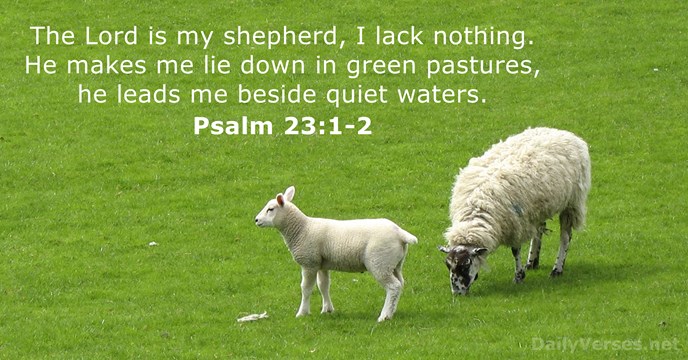
  2. Psalm 23:1-2; Psalm 19:7-8; Psalm 119:111; Psalm 119:165.


Photo credits:  Nancy Ruegg; http://www.wikimedia.com; http://www.flickr.com; http://www.wikimedia.com; http://www.dailyverses.net; Nancy Ruegg (3); http://www.needpix.com.


Mirth in the Mud


Our youngest granddaughter owns the book Pignic by Matt Phelan. Across the pages a family of pigs enjoys a day of outdoor activities until a storm threatens to spoil their fun.

But lots of rain makes lots of mud and the pigs make the messiest best of it.


Mirth in the mud.

For six months we’ve endured the nasty mud created by a virus-storm. It has washed out travel plans, beaten down get-togethers with family and friends, and lashed against such simple pleasures as shaking hands and hugging.

We need some mirth in this mud.


Our wise Heavenly Father, the Author of joy, gave us the ability to create laughter—with humor.

And with the pleasure of laughter comes great benefits for body, mind and spirit.*

So in celebration that the worst of Covid-19 is behind us, and the good news that vaccines hover on the horizon, let’s follow the example of the Pignic pigs and enjoy some mirth in the mud.

Take a few moments to wallow in some silliness:


“Eggs are fantastic for a fitness diet. If you don’t like the taste, just add cocoa, flour, sugar, butter, baking powder and cook at 350 for 30 minutes” (Anonymous).


“Tweet others as you want to be tweeted” (Unknown).


“To those of you who received honors, awards, and distinctions, I say well done. And to the C students, I say you, too, can be president of the United States” (George W. Bush).


“Never doubt the courage of the French. They were the ones who discovered that snails are edible” (Doug Larson).


“All right everyone, line up alphabetically according to your height” (Casey Stengel).


“The Bible contains much that is relevant today, like Noah taking 40 days to find a place to park” (Curtis McDougall).


“If you’re too open-minded, your brains will fall out” (Lawrence Ferlinghetti).


“A stockbroker urged me to buy a stock that would triple its value every year. I told him, ‘At my age, I don’t even buy green bananas.’” (Claude Pepper).


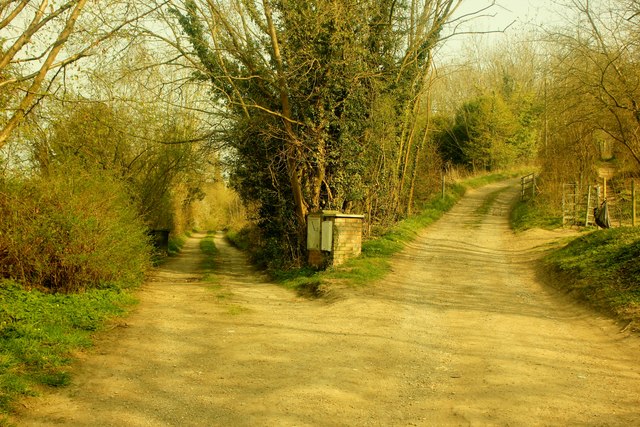
“If you come to a fork in the road, take it” (Yogi Berra).


“And remember, laughing is like changing a baby’s diaper. It doesn’t solve any problems permanently, but it makes things more acceptable for a while” (Barbara Johnson).


No doubt you remember King Solomon’s wise observation too: “The cheerful heart has a continual feast” (Proverbs 15:15b). And what compounds the pleasure of a feast? Sharing it with someone.


So choose your favorites from the bits of mirth above and read them aloud to someone else.  Make a joyful noise of chortles and chuckles together to multiply the pleasure and benefits of laughter.


Oh–and please leave one of your favorite one- or two-liners below for more mirth in the mud!


*You can read about some of those benefits in this post:  The Most Beneficial Therapy


Art & photo credits:  http://www.travelchatter.dailymail.co.uk; http://www.pxhere.com; http://www.pxfuel.com; http://www.needpix.com; http://www.wikimedia.org (2); http://www.pixabay.com; http://www.pxfuel.com.


In the Waiting Room


I read the poster, then checked my watch—again. It was time to notify.

“Excuse me, but my appointment with Dr. D. was at 10:30 and it is now 11:15.” I spoke in even tones that belied my frustration.

The receptionist referred to the schedule on her computer. “Thank you,” she responded pleasantly. “I’ll check to see what the problem is.”

Returning to my seat, I expected to be called shortly, but it still took ten to fifteen minutes. Another annoyance: no one ever explained the delay or apologized.


No doubt you’ve endured similar experiences. Waiting nearly always creates nuisance no matter how many magazines they provide. Who hasn’t been stuck in the waiting areas of car repair shops, office buildings, and airports—when we’ve places to go and things to do?

But those aren’t the only forced pauses we face. At one time or another all of us spend time in the waiting room of life—as we anticipate achieving a long-term goal, receiving that long-awaited email or phone call, or seeing an ongoing prayer finally answered.

How are we supposed to handle the interminable pauses in life?

The following truths promise to ease our frustration and offer hope.


In God’s view, to wait is not to waste.

There is always purpose in God’s delays. King David wrote, “A person’s steps are directed by the Lord” (Psalm 37:23 GNT). Next to this verse in the margin of his Bible, George Mueller wrote: “And the stops too” (1).

Just what might God be doing during the stops? He often uses wait time to work on our character, transforming pride into humility, doubt into faith, weakness into strength, and impatience into serenity.


A time of waiting provides a time for discovery.

As we turn attentive hearts toward gratitude for what is, praise for who God is, and satisfaction in serving him now wherever he has placed us, we’ll discover contentement.  With Paul we’ll be able to say:


“The heart is rich when it is content, and it is content when its desires are set upon God,” wrote Miguel of Ecuador (2).

On the other hand, a heart cannot be content if set primarily upon an attainment in the future.


Waiting is part of the wonder to come.

It’s a basic principle of investment: the longer we wait, the greater our return. Delay enhances delight.

And one day we’ll finally receive the explanation for the pauses in our lives. No doubt our eyes will widen in wonder to see all that God accomplished when in our view, progress stood still.


*     *     *     *     *     *     *     *     *     *


I thank you, Heavenly Father, that we can trust you during wait times.

You know the perfect sequence and timetable for events to unfold; we do not. You see the whole picture—the lives of others who will be impacted during this wait time; we cannot.

So may we rest on what we do know: You are a God of goodness, faithfulness, and wisdom. The one who trusts in you, whose confidence is in you, is blessed.


(Psalm 130:5; Psalm 139:16; 1 Thessalonians 5:24;

Psalm 100:5; Romans 11:33; Jeremiah 17:7)


Notes:

  1. George Müller (1805-1898) founded schools and orphanages in Bristol, England, in the early 1800s, providing care for thousands of children.  His testimony of great faith included numerous miracles of provision for the orphans under his care.
  2. Miguel of Ecuador (1854-1910)–teacher and author


Photo credits:  http://www.pxhere.com; http://www.canva.com (3).


Hezekiah’s Tunnel

How it might have been:

Edward’s fingers followed the pick-ax marks carved in a left-to-right direction.  He marveled at the skill and perseverance of long-ago workmen to create a tunnel of such length–a tunnel Edward thought might be the one ordered by King Hezekiah 2,500 years previously.

Suddenly Edward drew in a sharp breath. The markings abruptly changed direction. Instead of left-to-right blows, they became right-to-left, and an astonishing thought occurred to him.

“Eli,” he called. “Look at this. What do you make of it?”

His explorer-companion came alongside and fingered the wall as Edward had done. “How strange. All of a sudden the pick-ax marks change direction.”

“I’m thinking there must have been two teams of workmen, Eli—each working toward the middle from opposite ends. That would cut in half the time necessary to create such a tunnel.”

Time would have been of the essence to King Hezekiah as the Assyrians threatened to attack Jerusalem. No water source existed within the city walls. So the king ordered the tunnel be constructed in order to redirect the Gihon Spring into the city, and deprive the enemy of water at the same time.

Edward Robinson and Eli Smith continued sloshing through shallow water along the twisting, two-feet wide tunnel. Could it be that, behind the silt that had built up for centuries, they had indeed rediscovered Hezekiah’s tunnel, referred to in 2 Kings, 2 Chronicles, and Isaiah? Curiosity kept them going.

In fact it was curiosity that had brought Edward to Palestine in the first place. His Puritan upbringing in the early 1800s had instilled in him a love for scripture, which he studied with a passion, along with Hebrew, Greek, and Latin.

Now age 44, he was finally exploring the beloved land of the Bible, for the purpose of creating the first systematic survey of biblical geography (1). God had provided Edward with a knowledgeable guide and translator, Eli Smith, a missionary of the region.

After a thirty-minute trek through the underground stream, Edward and Eli found the tunnel did lead to the Gihon Spring outside Jerusalem’s walls.

But the Bible says nothing of two teams working from either end. How could such a feat have been achieved, 140 feet below ground at some points, long before the compass had been invented?

In addition, the tunnel twists and turns for 1,738 feet. A straight line from pool to spring would have shortened the distance considerably, to slightly more than 1,000 feet. Why did the foreman of the crew choose a winding route when an Assyrian invasion loomed at any time?

Edward Robinson’s idea of two teams working toward the middle remained a theory until a hot day in June, 1880, when several boys playing in the Siloam Pool (as it came to be known) decided to explore the tunnel for themselves.

About 20 feet from the entrance, one boy spotted an inscription in the wall. The find was reported to authorities, and Professor A. H. Sayce, a resident in the area at the time, was sent to study the ancient writing. He reportedly sat for hours in mud and water, transcribing the inscription by candlelight (2).

This is a replica; the original resides

in the Istanbul Archaeological Museum.

The inscription included the following information:

    1. While stone-cutters worked toward each other, and while three cubits of rock remained to tunnel through, a workman’s voice was heard, because of a fissure in the rock.
    2. On the final day of tunneling, each stonecutter struck the stone forcefully in order to meet his co-worker. And then the water began to flow toward the pool.
    3. The full distance of the tunnel: 1200 cubits. The height of the rock above the stone-cutters’ heads: 100 cubits. (3).
After more than forty years, Edward Robinson’s theory was proven correct.

But Hezekiah’s name is not mentioned.  How can we be sure the tunnel dates to the time of the ancient king?

In 2003, archaeologists implemented modern radiometric dating, based on the decay of radioactive elements. They determined the excavation of Hezekiah’s tunnel did occur about 700 years before Christ, the era of the Judean king’s reign (4).

As for the winding route, some speculate that workers followed natural fissures in the rock as well as cracks that already seeped water, making the process easier and faster.

Last, how did workmen meet in the middle so far underground? That is still a mystery and source of wonder. It would seem God himself brought the two teams together.

Notes:

  1. Robinson completed a three-volume work, Biblical Researches in Palestine, Mount Sinai, and Arabia Petraea that laid the groundwork for a new realm of study: biblical archaeology. https://www.vision.org/digging-faith-370
  2. https://www.christiancourier.com/articles/101-hezekiahs-tunnel
  3. https://www.bibleodyssey.org/en/places/related-articles/siloam-inscription-and-hezekiahs-tunnel (translated by Christopher Rollston).
  4. https://www.eurekalert.org/pub_releases/2003-09/huoj-dok090903.php

Other sources:

  1. Archaeological Study Bible, Zondervan, 2005, p. 564
  2. https://www.hopechannel.com/au/read/siloam-inscription
  3. http://www.land-of-the-bible.com/Hezekiah_Tunnel
  4. http://www.land-of-the-bible.com/node/854

Art and photo credits:  http://www.wikimedia.org; http://www.pickist.com (2); http://www.wikimedia.org (2), http://www.canva.com.

After the Fact

“This is our daughter, Diane,” explained Betty, a church member where my husband had just become pastor. “Diane actually attends another church in town, but sometimes she visits with us.” Betty smiled up at her daughter and wrapped an arm around her waist. “She’s a teacher too.”

That was all Betty needed to say to launch Diane and me into a conversation about all things school. We quickly discovered both of us had taught third grade the previous year.

“Listen,” Diane interjected. “It’s summer; I don’t have anything important going on. Let me help you unpack or wipe down cupboards—whatever you need done.”

And so the following week, Diane and I spent a pleasurable morning emptying boxes, organizing the contents, and getting better acquainted.

“Tell me about where you teach,” I prompted, while we released china from its bubble wrap at the dining room table.

Diane began to describe her private school—just two classes at each grade level with only twenty-two or so children per room, highly involved parents, strong discipline, and just five minutes from our house. The more she talked, the more delightful her situation sounded.

“Now,” she invited, “tell me about your experience.”

I explained that the week before Moving Day, I’d completed my first year back in the classroom after a long hiatus as stay-at-home mom with our three children. It was no exaggeration to say my learning curve had been steeper than the students’.

Diane commiserated with my circumstances. She was well-acquainted with the process ahead of me, having moved from another state herself just a few years before: the prospect of substitute teaching in order to become known in the district, applying for positions, and interviewing.

If a position was offered, the next challenges would include absorbing the way another school system worked and mastering its different curricula—likely at a different grade level. No doubt, another steep learning curve loomed ahead.

But my frustration ran deeper than what I confided in Diane that day. The transition to this new community made no sense. We’d been perfectly happy where we were, and the previous church hadn’t wanted my husband to move either.

Such a change seemed counter-productive to us, but the state-level leadership of our denomination considered it necessary. We grieved and prayed; the kids and I cried.  We also wondered: what was God up to?

Before Diane left that day, she offered to submit my name for the substitute list at her school and gave me the address. Sometime later I checked out the location, heeding her warning that the campus was hidden among trees, the entrance on a one-block street. Who knows how long we would have lived there before discovering this school on our own?

The first call to substitute came one morning just as I began my work out. “Can you be here within the hour?” asked the secretary. In record time I was showered, dressed, out the door and down the road, playing “Farmer in the Dell” with preschoolers.

For lunch I expected to purchase something in the cafeteria. Silly me—still in public school mode. Here the kids and staff brought their lunches from home. When one of the other teachers learned I had no lunch, she scrounged up an instant cup-of-soup, crackers, a box of raisins, and a tea bag.

“I’m sorry that’s all I can offer you,” she apologized. But I was greatly impressed by her effort to take care of a woman she didn’t know. And first impressions count.

The school called often, offering me experience at various grade levels, familiarizing me with their curriculum, and allowing me to become acquainted with the friendly faculty and staff. I began to pray God would open up a position for me at this school. But as the months passed, full-time employment seemed unlikely. No one was close to retirement; no one was leaving.

In April, however, the headmaster offered me a position. One of the fourth grade teachers had just been elected mayor of her community. Trying to fulfill those responsibilities and teach was more than she wanted to tackle. I would start that August, which gave me the summer to prepare. An added bonus: my classroom would be right next door to Diane’s.

When that job opportunity opened up, it was as if God turned a spotlight on His plan. After the fact I could see how he’d miraculously arranged the whole sequence of events—from the moment Betty introduced me to Diane, to the headmaster’s offer of employment.

The disappointment over leaving my previous position had turned into a God-ordained appointment at my new school, a much better situation, and one that lasted twenty-two years.

Have you experienced a spotlight moment?  Tell us about it in the comment section below!

Photo credits:  http://www.asan.af.mil; http://www.flickr.com (2); http://www.pxhere; http://www.flickr; http://www.dailyverses.net; http://www.canva.com.

Fountains of Life

Some of our excursions through town take my husband and me past a fountain called The Muse. In summer, water gently spills from the lovely maiden’s hands while a ring of water-arches play at her feet. But even in winter her graceful form draws attention.

Downtown a much grander, three-level fountain, Genius of Water, doesn’t just draw attention—the size demands it. In place of the mild flow of The Muse, streams of water plummet from the outstretched hands of a nine-foot woman. Below her, fountains shoot plumes of water upward, and lower yet streams cascade into a pool.

I love fountains, don’t you? Perhaps it’s the “calming call of splashing water reminding us to relax and breathe amidst our busy days’ distractions” (1).

Perhaps it’s their appeal to four out of five of our senses, beginning with their sound of peaceful, liquid-music. But fountains are usually lovely to behold as well:

(Buckingham Fountain in Chicago,

often listed among the most beautiful in the world.)

And who can resist wading in a fountain’s pool—if allowed—which includes the sense of touch?

(The Pineapple Fountain, Charleston, SC)

Sometimes on hikes through state and national parks we’ve discovered cold, natural-spring fountains. Nothing tastes sweeter after a long trek.

And because of their delights, it’s not surprising that a psalmist turned to fountains for a lovely metaphor:

Perhaps he chose plural form because we enjoy a constant flow of so many wonders :

  • God’s attributes into our lives—his love, grace, mercy, and goodness
  • Countless gifts—like peace, joy, comfort, and blessings
  • Empowerment from God, including strength to persevere, patience to endure, and the Holy Spirit to guide

All that refreshes is from God.

And then he offers us a gratifying privilege. We get to be revitalizing fountains in the lives of others.

What might that look like—or in this case, sound like? No doubt, encouragement, comfort, and wisdom should be included.

Words of Encouragement


“Correction does much,

but encouragement does more.”

–Johann Wolfang von Goethe

One day after school, the father of one of our previous students stopped in the classrooms of my fourth grade colleagues and me.  His purpose?  To tell us we were the dream team. His fifth grade son was flourishing and this dad wanted to thank us for the sound preparation the boy had received.

We hung onto his statement from that moment forward. Every time we became overwhelmed, distraught, or discouraged, we’d remind each other: “Wait a minute–we’re the dream team!”

Just four words, but flowing with life.

Words of Comfort


What an honor God’s given us to speak his comfort and contribute to that overcoming Helen Keller spoke of—words such as these:

  • “I am so sorry.”
  • “I wish I knew the perfect words to ease your pain, but please know I hate that you are facing these circumstances.”
  • “You are constantly in my thoughts.”
  • “This is my prayer for you…”

It doesn’t have to be profound; just heartfelt.


Words of Wisdom

One time when I hit a rough patch, God brought to mind a friend who’d endured cancer—twice. The words, “Why me?” had never left her lips. Instead she asked, “Why not me?” and trusted God to bring good out of the suffering.

My circumstances didn’t begin to compare with her cancer diagnosis. If M. could trust God through her trial, I could certainly do the same.

There’s another phenomenon that occurs as we become fountains of life to others:

As God pours himself into us, we pour ourselves into others, and he receives honor and praise.

In the end, that’s the greatest satisfaction of fountain-living: to be for the praise of his glory (Ephesians 1:12).

Notes:

  1. Matthew Williams, https://ndsmcobserver.com/2017/08/why-are-we-fascinated-by-fountains/
  2. Longfellow quote taken from “Evangeline: A Tale of Acadie.”

Photo credits:  http://www.flickr.com (3); http://www.maxpixel.net; wwwlflickr.com; http://www.needpix.com (2); http://www.canva.com (2).


If you’ve ever weeded an early spring garden, you know how tricky it can be to sort seedlings from weedlings.

In the garden of the mind mentioned in the above poem, the weeds of lies can be particularly difficult to recognize—such lies as these:


1. God can’t possibly love me because I mess up all the time.

The problem is we think God sees us the same way critical people do—like the spinster great-aunt who looked down her nose at energetic children, like the teacher who frequently criticized, or the boss who was never satisfied.

That’s not God.

He knows we’re incapable of perfection and looks upon us with the compassion of a loving father.  No matter the sin, God is always ready to forgive (1)–and forget–as we repent:


Take this to heart: “Our God has a big eraser!”–Bill Zeoli (2).

And we can use that big eraser of love, compassion, and forgiveness to erase Lie #1.


2. I am insignificant.

God would have us know:  “There is no such thing as an insignificant person or an insignificant place or an insignificant position” (3).
Take a refresher course on your status:

  • The Prince of Peace died for you.
  • The King of glory is always thinking about you.
  • You have been adopted into his royal family.
  • You can enter his throne room whenever you like.
  • Your work has been specifically commissioned by the Sovereign Lord of the universe (4).


We run into trouble when we start comparing ourselves to others. Here’s what we need to affirm: “My significance is not based on what I do; it is based on Whose I am.”


3. It’s obvious my prayers don’t matter…

A.  …because there’s been no answer. 

Here’s a thought:


But there are a number of possibilities why prayers seem to go unanswered, including:

  • Unbeknownst to us, the answer has already come. A young man praying for a wife may already have met his future bride; he just doesn’t know it.
  • Sometimes God gives us what we need, not simply what we ask for. A young teen might pray that her family not have to move across state, but five years later, ends up earning a much-needed college scholarship from their new church.
  • We benefit from the spiritual discipline of asking, growing in faith, and persevering as we wait.

If our God is 100% good—and he is—then it follows:


B. …Almighty God doesn’t need me to accomplish his plans.

 You’re right; God can do anything he pleases—without us.

But he instituted prayer as a way for us to come alongside him and participate in the good purposes he’s ordained. He allows us to share in the release of his power as we intercede for one another.

Lord Tennyson spoke of the power of prayer in his poem, Idylls of the King:


One day we’ll know the magnitude of the exact number. And won’t it be satisfying to have participated in God’s monumental work?


_______________________________________


Now that we’ve removed these three weed-lies from the gardens of our minds, we can enjoy to the fullest these flowers of God’s truth:

He remembers our sins no more.

We are precious in his eyes.

He always responds to our prayers (5).


Notes:

  1. Psalm 103:13-14, 3, 10.
  2. Quoted in Quote/Unquote, compiled by Lloyd Cory, Victor Press, 1977, 121.
  3. Anne Graham Lotz, The Vision, of His Glory, Word Publishing, 1996, 77.
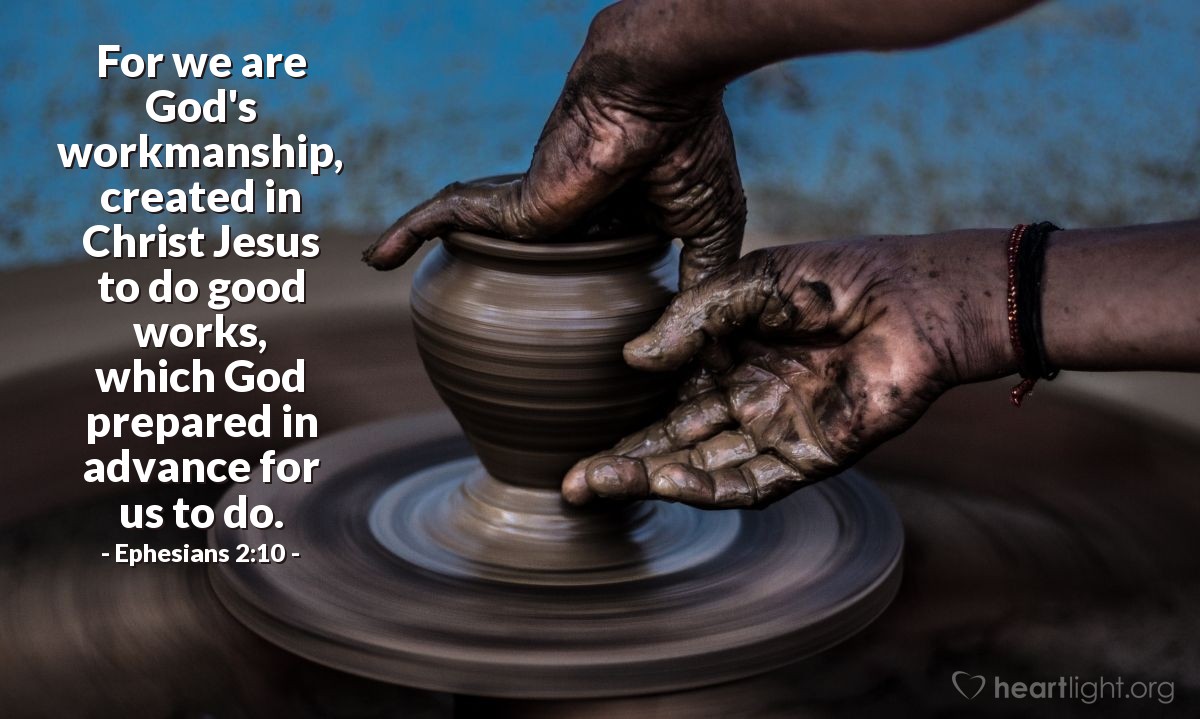
  4. Isaiah 9:6; 1 John 4:9-10; Psalm 139:17; Ephesians 1:5; 1 Peter 3:12; Ephesians 2:10.
  5. Isaiah 43:25; 43:4; Psalm 102:17.


Photo credits:  http://www.canva.com (2); http://www.heartlight.org; http://www.canva.com (2); http://www.wikimedia.com.


“Want to take a ride?” a friend asked from astride his motorcycle.

Nineteen-year old me was hoping he’d ask. So off we went—but not before L. shared an important instruction: “When we come to corners and curves, just lean into them. Follow my lead.”

The physics of a two-wheel bike require such a response. Otherwise riders will end up at the curb or in a ditch.  But leaning into the curve feels counter-intuitive to many first-time riders.

The journey of life also presents curves to navigate: physical setbacks, emotional trauma, and problematic circumstances. At such times, some of us default to responses that do more harm than good—reactions such as self-pity, anger, despair, and fear. If not corrected, these emotions will throw us into a ditch of distress.

But just as motorcyclists learn to navigate curves in a road, we can learn to navigate curves in life.

How?

1. Stay aligned 

 Wheels out of alignment cause instability—especially dangerous on a tight curve.

On the road of life, we travel best when our spirits are aligned—with regular times of Bible study and prayer. To the uninitiated, that may sound boring. But as the habit is established, participants begin to crave that quiet time when God speaks encouragement and instruction, and we share gratitude and concerns.

To start, you might choose an earlier bedtime and rising time. But it’s worth it. Awaiting you are wonderful things (1)!*

2. Lean in with positivity

Leaning into the curves with his body weight allows a cyclist to maintain balance. Leaning into the curves of life with faith and optimism keeps our spirits balanced, and out of the ditch of worry and complaint.

David of Old Testament times certainly earned the right to grumble and fret. Throughout his life he faced obstacles, enemies, and even death. But he learned to lean into such curves—with God.

One time after David was seized by his enemies, the Philistines, he wrote the following: “When I am afraid, I put my trust in you. In God, whose word I praise…What can mere mortals do to me”(2)?

How could David be so confident in the Lord? He knew God well, as protective, righteous, loyal, loving, and good (3)—among other attributes. David focused on his gracious God, not his troubling circumstances.

A steadfast, positive attitude begins with faith in God.

3. Remember the curves of the past

Once a novice cyclist has maneuvered a tight curve, the next one is a bit easier, and the next easier yet. Soon she sails around those bends with confidence, based on her experience.

The psalmists allowed experience to provide confidence on the twisting road of life. They remembered the Lord’s wonderful deeds and miracles, his acts of power and surpassing greatness (4).

And though God certainly deserves every breath of praise we offer, there is benefit for us in the remembering also. Meditation on all his kind deeds of the past sets a tone of confidence for the curves ahead—confidence in God (5).

____________________________________

Every day we travel the road of life into the unknown. But with our spirits aligned with God’s Spirit, a positive attitude grounded on faith, and confidence in God based on his flawless record, the unknown does not have to be a source of fear.

It can be an open road of sublime adventure.

*However! If you are parenting a newborn and/or little folks, caring for an elderly family member, etc.—if exhaustion is your constant companion and time to just breathe is in short supply—be kind to yourself. Listen to a Bible-centered podcast while folding laundry; pray while loading the dishwasher. God will smile with pleasure at any effort to connect with him. And in-depth Bible study can become a priority for the next stage of life.

Notes:

  1. Psalm 119:18
  2. 1 Samuel 21:10-15; Psalm 56:3-4
  3. Psalm 5:11; 7:17; 9:10; 12:5; 25:8
  4. Psalm 9:1; 105:5a; 150:2
  5. Isaiah 63:7; Psalm 103:2 BSB

Photo credits:  http://www.wallpaperflare.com; http://www.wikimedia.org; http://www.canva.com; http://www.dailyverses.net; http://www.uihere.com; http://www.wallpaperflare.com.


When the House is Quiet

Impressions Becoming Expressions

Mitch Teemley

The Power of Story

Still Traveling

Impressions Becoming Expressions

Living Our Days

Gaining a heart of wisdom

He Said What?!

I'm Patty, and my husband and I are living with our adult son who has autism and epilepsy. I love sharing lessons learned from life around me, especially life with Aaron.

Meditations of my Heart

Impressions Becoming Expressions

Linda Stoll

Impressions Becoming Expressions

Signora Sheila

Where faith meets la dolce vita

Heidi Viars

Finding the Image of God