Feeds:
Posts
Comments

10256822_s-300x200

Years ago, friends of my parents decided to name their second son after a family member: Glenn Allen. But as the little guy began to demonstrate his extrovert personality (with humor and lots of energy!), they chose to legally have his name changed. Glenn just didn’t fit the bouncy, talkative toddler he had become.

Glenn Allen became Peter Glenn. But then someone in the family started calling him Breezy, for the way he merrily careened through life. And that’s the name that stuck.

Just as Breezy’s parents desired a personality-defining name, Old Testament patriarchs called God by new names as his personality, as well as his power, were revealed to them.

For example, Abraham was the first to call God, Jehovah-jireh (the Lord Will Provide), when God produced the ram to take the place of Isaac on the altar (Genesis 22).

31118_000_011_09

Hagar, a servant girl in Abraham’s household, was the first to call God, El Roi (the God Who Sees), when she fled to the desert (Genesis 16).

Other names given by Old Testament personalities include:

  • Jehovah Nissi (the Lord Is My Banner), proclaimed by Moses after the defeat of the wicked Amalekites (Exodus 17).
  • Jehovah Shalom (The Lord Is Peace), declared by Gideon as God prepared him to defeat Israel’s enemy, the Midianites (Judges 6).
  • Jehovah Raah (The Lord my Shepherd), given by David in Psalm 23.

I wonder, dare we create new names for God—names that indicate those moments when our understanding of him was enriched? For example:

  • El Pele (The God Who Surprises)

Home_Depot_Store_Wide

Last summer, shortly after moving into our new house, we headed out to purchase tools and supplies. Our neighbor happened to be in her yard, and we stopped to introduce ourselves. In the conversation Steve mentioned an electrical problem we were experiencing that required a trip to Home Depot.

“Well, be sure to ask for Bill*,” she said. “That’s my husband and he just happens to work in the electrical department there.”

Sure enough, Bill was able to help us purchase what we needed. He even stopped by when his shift ended to work on our circuit breakers.

  • El Naphash (The God of Catharsis)

St.-Petersburg-Beach-Florida-Sunset

How often has God sent encouragement, exactly when needed, or provided respite and refreshment during a stressful time?

Years ago one Sunday morning, I sat in church with Kleenex pressed to my cheeks.  The tears would not stop.  In two weeks we would be sitting in a new church, in a new community, where my pastor-husband had been assigned by our denomination.  Soon our five years with this congregation on the Florida Gulf Coast would only be memories.  It seemed much too soon to say good-bye.

After church, Garry and Cindy approached us.

“Listen,” Garry explained.  “I just won a weekend getaway at one of the hotels out on the beach, and we want you two to have it.”

After a bit of “Oh-no-we-couldn’t-possibly” and “Yes, we insist,” Steve and I consented.  I worried that the packing and long to-do list wouldn’t be completed on time; Steve thought we were on track.  (Turned out, we were!)

For two blissful days we forgot about boxes and focused on beach walks, shell gathering, and sunsets over the Gulf.  We returned home refreshed and reenergized to finish the tasks at hand.

Through Garry and Cindy, God provided the stress-relief we desperately needed.

  • El Neshamah (The God of Ideas) 

inspiration

Numerous times over the years I’ve needed ideas for: 1) teaching concepts to my elementary students, 2) communicating truths to Sunday School classes or Bible study groups, or 3) a fresh perspective in a blog post.  Numerous times God has supplied.

Sometimes I hear or read some little snippet, and God turns that spark into an idea.

One Sunday, not long ago, the worship leader used three words within the same prayer: salvation, restoration, and transformation.   For the next day or two I collected more  ____-tion words, thinking they might be expanded into a post somehow. The result? “Oh God,” published June 18.

Praise God he is always revealing himself in fresh, new ways, inspiring greater trust in him and informing us more fully of his character and provision.

*     *     *     *     *   *     *     *     *     *

To our God of Never-Ending Glory: Thank you for your love and faithfulness expressed in countless ways. You are holy and magnificent, yet you crown us with goodness and compassion, blessing and honor.  You care about every aspect of our lives.  For these reasons and more, we praise your glorious name(s)!

What new name would you declare for God, based on your experiences with him?  Share your contribution in the Comment section below!

*Name changed.

(Art & photo credits:  www.growingyourbaby.com; http://www.lds.org; http://www.dailytech.com; http://www.floridaescape.com; http://www.633woman.com.)

father-playing-with-kids-in-park

Lauren’s husband, Mike, was the quintessential family man. He took the kids to the park, in order to give Lauren a break from mothering and homeschooling. He pitched in with the folding of laundry and the execution of science experiments. He quickly turned the Honey-Do list into Honey-Did, because Mike actually enjoyed puttering around the house, making repairs and improvements.

One Saturday he climbed up on the roof to check for a leak around the chimney. Somehow he lost his footing, tumbled to the ground, and hit his head on the cement driveway. He never regained consciousness, and died the next day.

FOR THOSE WHO GRIEVE

When such unspeakable tragedies occur to those we know and love, what words can we say to the family in order to comfort or help? Every possibility seems terribly inadequate:

  • “Mike was such a good guy.”
  • “We’re going to miss him.”
  • “We are so sorry.”

Actually, those three statements offer good places to begin.  Experts in grief support tell us that affirming the positive qualities of the loved one is very meaningful to a grieving family. A short story that highlights one of those qualities is also appropriate. The assurance that the loved one will be missed offers comfort as well.  And even a simple but heartfelt “We-are-so-sorry” communicates caring and support.

FOR THOSE WHO SUFFER

In addition to the loss of a loved one, there are other situations that may be less traumatic, but still leave us tongue-tied, wondering what we can say—situations like divorce, lay-offs, scandal, and serious illness.

Again, we’d do well to turn to the experts who tell us to:

  • Express sympathy. “I am so sorry you are going through this tough time.”
  • Offer affirmation. “I’ve always been impressed by your _____.”  Then name the strengths and personality traits that will be especially valuable during this time of trial. Such encouragement may help her see that God has equipped her, and he will see her through.
  • Listen.

Serious-Conversation

Yes, just listen.

Perhaps instead of worrying about saying the right thing, we’d be wise to let the hurting person share what’s on her heart.

A listening ear is a precious gift we can give in a world that overflows with chatter from electronics, technology, family, friends, coworkers, neighbors, etc. In fact, there seem to be more talkers these days than listeners.

Rearrange the letters of listen and you can make the word silent. To be good listeners we have to be silent and let the other person talk, uninterrupted. However, communication should still occur through:

  • eye contact, which indicates our interest and her importance to us,
  • facial expressions, as we respond to her words,
  • brief comments or questions now and then, that indicate we’ve heard her.

FOR THOSE WHO ARE DISCOURAGED

It is vital that we keep each other supported because Satan and his cohorts constantly whisper lies into our spirits. Lies such as:

“Who do you think you are anyway? And what makes you think you’re capable of accomplishing anything worthwhile? You are inadequate, unimportant, and practically useless. Get to the back of the line where you belong!”

The truth is: We’re sons and daughters of the King.  He has created each of us with spiritual gifts and talents to fulfill a specific purpose.

We can affirm others with such comments as:

  • “I am so glad God created you with _____.”  Again, name the strengths, talents, and personality traits that you admire.
  • “You know what else I appreciate about you?” Share your observations of her being courageous or wise or persevering—whatever might encourage her most, considering her current circumstances.
  • “For these reasons and more, I count it a great privilege to know you.”

Such “pleasant words are like honeycomb, sweetness to the soul and health to the body” (Proverbs 16:24).

honey(pp_w350_h233)

*     *   *     *     *     *     *     *     *     *

Father, I thank you for the privilege of being your voice, to minister encouragement to others. You’ve given us your heart to express love and compassion to a hurting world. We pray for your Spirit’s wisdom and strength to be at work in us and through us, because we so desire to offer your right words at the right time.

(Photo credits:  www.visualphotos.com; http://www.thecripplegate.com; http://www.celebrationchurchlive.com.)

picnic-table

During my growing up years, the Fourth of July was usually celebrated at an extended-family picnic, attended by aunts, uncles, and lots of cousins. At least two tables were required for the hamburgers, hot dogs, numerous side dishes, homemade lemonade, watermelon, and Grandma’s pies and cookies.

But the highlight of the celebration didn’t happen until dark: sparklers and fireworks. What a delightful wonder to stare into a sizzling starburst and spin circles and figure-eights with a thread of light.

And then, after much painful waiting, the real show would begin. Fireworks.

A soft phoom alerted us to each explosion of color.

My favorite was a yellow-orange burst that would remain brilliant for several moments, as each spark gracefully drifted downward. The effect resembled a mammoth weeping willow tree, lit from within.

Independence Day celebrations on The Mall in Washington on July 4, 2008.

I wonder, how did the custom of fireworks become a tradition for Independence Day?

Here is what I discovered.

It began with founding father, John Adams, in a letter to his wife, on July 3, 1776. Just the day before, fifty-six patriots had signed the Declaration of Independence. Mr. Adams thought that would be the day the new nation would celebrate. Instead, it would be the day after, July 4, when the final wording of the Declaration was approved.

trumbull-large1

Following, in bold print, is an excerpt of Mr. Adams’ letter to Abigail. The inserted comments are my own thoughts.

“The second day of July 1776 will be the most memorable epoch in the history of America. I am apt to believe that it will be celebrated by succeeding generations as the great anniversary festival.”

John Adams correctly predicted the importance of this event to Americans. The first great anniversary festivals occurred the next year in Philadelphia and Boston. Such commemoration caught on quickly throughout the thirteen colonies.

435_colonialfourth

“It ought to be commemorated as the day of deliverance, by solemn acts of devotion to God Almighty.” 

Now that would be a worthy addition to our Fourth of July gatherings. Solemn acts of devotion to God Almighty might include prayers of thanksgiving and praise for our great nation, then asking God for his continued guidance and blessing upon America.

“It ought to be solemnized with pomp and parade, with shows, games, sports, guns, bells, bonfires, and illuminations, from one end of this continent to the other, from this time forward forever.”

DCParade1Edit

That word, solemnized, caught my attention. It means, “to celebrate or observe with formal ceremonies or rites.” Although Mr. Adams and other patriots would no doubt approve of family picnics and parties with friends, our choices of activities ought to be respectful of the Declaration and the lives lost to achieve and uphold our independence.

“You will think me transported with enthusiasm, but I am not. I am well aware of the toil and blood and treasure that it will cost to maintain this Declaration and support and defend these States.”

Again, John Adams’ words were prophetic. Eight long years of toil, from 1775 to 1783, were required for the colonists to achieve freedom from Britain. The blood of 25,000 patriots paid for that freedom and the treasure of 400 million dollars.

Pyle-Painting

Of those who signed the Declaration, nine died in the conflict, five were captured and treated brutally, several lost family members, twelve had their homes completely burned, and seventeen lost everything they owned.

“Yet through all the gloom I can see the rays of ravishing light and glory.”

Even with his vision of ravishing light and glory, Mr. Adams could not have imagined the growth of prosperity in America. No country on earth has enjoyed such rich and varied resources, provided such strong influence in the world, and so generously offered aid across the globe when needed.

1_aerial_farmscape

Then again, perhaps God did give Mr. Adams a glimpse into the future, when he wrote: 

“I can see that the end is worth more than all the means; that posterity will triumph in that day’s transaction, even though we [may regret] it, which I trust in God we shall not.”

Posterity has indeed triumphed, and John Adams was blessed to witness firsthand the beginnings of that triumph, as the thirteen colonies became a nation.  He helped negotiate the Peace of Paris, which ended the Revolutionary War. He served as vice-president under Washington, and became the second U. S. president in 1796.  Before his death on July 4, 1824, he witnessed the Louisiana Purchase and the annexation of eleven more states.

United_States_1805-07-1809

  John Adams recognized that the principles which resulted in such triumph would never change:

“The general principles on which the fathers achieved independence were the general principles of Christianity. I will avow what I then believed, and now believe, that those general principles of Christianity are as eternal and immutable as the existence and attributes of God.”*

 Indeed. A republic such as ours cannot survive unless its citizens live by certain principles, including integrity, compassion, and personal responsibility. Such Christian principles cannot be legislated; they must come from the heart.

The ravishing light and glory John Adams declared for our nation can be achieved and maintained no other way.

God help us.

*     *     *     *     *     *     *     *    *     *

*This last excerpt from a letter to Thomas Jefferson, June 28, 1813.

(Art & photo credits: http://www.dianacarbonell.com; http://www.pinterest.com; http://www.ushistory.org; http://www.mentalfloss.com; http://www.theepochtimes.com; http://www.groundreport.com; http://www.discovernewengland.org; http://www.wikipedia.org.)

“You have given me the shield of your salvation,

and your right hand supported me,

and your __________ made me great.”

–Psalm 18:35 (EST)


What word would you put in that blank?

  • Power?
  • Grace?
  • Mercy?


The word chosen most often by translators* may surprise you. It certainly surprised me.

“Your GENTLENESS made me great.”

In addition to being surprised, I was puzzled. How can God’s attribute of gentleness make a person great?

A good place to begin our search for understanding is the background of this psalm.  It was written by King David, perhaps during his later years. He may have been pondering the incredible progression of his life from lowly shepherd boy to exalted king.


89446669


Surely young David never even daydreamed of becoming the most powerful man in Israel, as he sat on the hillsides of Bethlehem watching over his father’s sheep.

Neither could he have known at least fifteen years would pass between his anointing as king (a ceremony indicating a setting apart) and his actual coronation.

And contrary to human logic, those intervening years would not be spent as a student in preparation, but as a fugitive and outlaw, running for his life.  Seems like such a waste of time, doesn’t it? As David hid from King Saul in the Cave of Adullam, did he wonder, Lord God, what ARE you doing?

In hindsight we can see that God was gently teaching and preparing David his way, with practical, hands-on lessons such as:


d61f0ae266f6e653dd1702ccdb3a4b40


  • The Lord hears the prayers of the afflicted and encourages them (Psalm 10:17).
  • The Lord’s unfailing love can be trusted (Psalm 13:5).
  • The Lord gives wise counsel (Psalm 16:7).
  • The Lord is like a rock. His people can take refuge in him (Psalm 18:2).
  • There is no need to fear evil, because the Lord is always present with his own (Psalm 23:4).

One definition of gentle is “considerate or kindly.” God certainly demonstrated gentleness of this nature by endowing David with certain character traits–traits that would serve him well as monarch over Israel:


david-goliath-carousel


  • Courage—most obvious, perhaps, when teenaged David took on nine-foot-plus Goliath (1 Samuel 17)
  • Perseverance—when he spent those years waiting for God’s plan to be fulfilled, all the while fleeing from Saul’s vengeful rage (1 Samuel 19-2 Samuel 1)
  • Cleverness—on display when David pretended madness in order to avoid death at the hands of the Philistines (21:10-15)
  • Restraint—when he twice resisted the opportunity to kill Saul before the king killed him (chapters 24 and 26)
  • Respectability—During his years as a fugitive, six hundred men gathered in support of David and fought with him (27:3-4).


Another definition of gentle is “tender hearted.” No doubt it was with a tender heart that God:

DAVIDHARP


  • Bestowed upon David  the gifts of poetry and music (1 Samuel 16:18)
  • Demonstrated his wonderful love (Psalm 31:21)
  • Forgave David (32:1-2)
  • Remained faithful to him (57:3)
  • Protected David in the shadow of his wings (61:4)


But here’s even better news about God’s gentleness: It wasn’t reserved just for David or other Bible heroes. God displays his gentle nature to all of his children, every day.

In hindsight, we, too, can often see God’s gentle teaching and preparation for what he has called us to do. (If you’re in the middle of that process, rest assured those tough life-lessons you’re enduring now will not be for nothing!)

Second, with kind and gentle consideration, God has bestowed upon each of us specific character traits that qualify us to accomplish his plans. (And that plan isn’t complete until we hear the angels sing!)

Third, God has surely demonstrated his gentle, tender-hearted love for us, beginning with the death of his Son on a cross and ending with…

…well, there is no end to his faithfulness, grace, mercy, attentive care, peace, joy, and more.  How glorious is that?

And though it’s very doubtful you or I will ever be great monarchs like David, we can aspire to greatness in God’s eternal kingdom.

How? By serving him wherever we are with the specific gifts and traits he has given us.

Jesus spoke that truth very clearly:


deb571b6619a70af4ad01348af4191b3

(“The greatest among you will be your servant.” –Matthew 23:11)


*     *     *     *     *     *     *     *     *     *

I praise you, God, for your gentleness that tenderly prepares us for our purpose, kindly endows us with attributes for that calling, and graciously showers us with the benefits of your character, all throughout life.

Help me, I pray, to be compliant under your tender hand, ready and willing to follow your gentle lead, and generous to bestow upon others the graces of your character which I have enjoyed.  Amen.


(Photo and art credits:  www.panoramio.com; http://www.pinterest.com; http://www.donnarios.com; http://www.plusii.blogspot.co.uk; http://www.pinterest.com.)


* www.biblehub.com provides easy access to twenty translations of the Bible. Fifteen out of twenty include the word “gentleness” at the end of Psalm 18:35, or a synonym: humility, lowliness, or meekness.

Munttar17

In a desert land he found him,

in a barren and howling waste.

He shielded him and cared for him;

he guarded him as the apple of his eye

(Deuteronomy 32:10, italics added).

Notice the verbs: found, shielded, cared for, and guarded. Just as God watched over the Hebrew nation in the wilderness, God is surely watchful over each of us. See if these stories trigger memories of your own–when God found, shielded, cared for, and guarded you.

FOUND:

Growing up in a Christian home, I learned about Jesus before taking my first steps. At age four, after hearing the crucifixion story, I asked Jesus to be my Savior and constant Companion. Even as a preschooler, I understood my need for Someone to take the punishment I deserved for my naughtiness, so I could receive God’s gift of eternal life. If Jesus was willing to suffer and die in my place, how could I say, “no?”

81dcb5dcf618c976c041e845ebb0dd25

Praise God he seeks after lost sheep—even the little ones (Luke 15:4)!

Where did God find you?

 SHIELDED:

Numerous times over the years I have felt shielded from harm, including serious car accidents.

One time while approaching a stoplight, I hit a rain-slicked patch of city street, with cars in front of me and a bus to the right. My car began to slide and swerve; I started pumping the brakes. But there was no way to stop soon enough and avoid collision with the slowing line of vehicles ahead.

I took a chance and turned a bit to the right, hoping beyond hope there would be enough room for me to squeeze ahead of the bus, where the lane was open. Surely God intervened and created the needed space. (I think he also alerted the bus driver to apply his brakes and leave room for me!) My car did come to a safe stop, with room to spare.

God has shielded me in other important ways, too. He’s protected me from life-choices that would have led me down treacherous paths. He’s saved me from unhealthy relationships.

Psalms_28-7

Praise God he is our shield! We can trust in him, and receive the help we need (Psalm 28:7).

How has God shielded you?

CARED FOR:

I couldn’t find the dental insurance form I needed to drop off at Dr. H.’s office. Jeremy (our younger son and a middle schooler at the time) assisted me in a thorough search.  No form. While out on my walk, it suddenly occurred to me the form may have been gathered up with the newspaper. Sure enough, that’s where it was. Being Wednesday, those papers—and the dental form—should have been long gone in the recycling truck, but Jeremy was saving newsprint for his art teacher. God not only revealed to me the location of that form, but kept it safe, saving me the hassle of getting a new one and filling it all out again.

a6b7d3947c75be26393ae18a51f35ccc

Praise God for his loving attention, even in small matters like dental forms (1 Peter 5:7)!

How has God cared for you?

GUARDED:

One spring day in 1985, an elderly gentleman hit the gas pedal instead of the brake, at the stop sign on our corner. He drove his station wagon right through the garage wall. Several feet more to the right and he would have plowed into our daughter’s room, and she was playing there at the time. The driver was protected, too, sustaining only minor injuries.

god-of-the-bible-gcsrw-25-638

Praise God he guards us like an eagle, hovering over its young (Deuteronomy 32:11).

How has God guarded you?

THE APPLE OF HIS EYE:

The last phrase of Deuteronomy 32:10 explains why God is so attentive to his people. We are the apple of his eye. Some translations replace apple with pupil. God protects us as the pupil of his eye.

Just as our eyesight is precious to us, so we are precious to God.

As we’re careful to provide protective care for our eyes, shielding them from danger, for example, so God provides loving, protective care of us.

May we continually praise our God for all he is to us. First, he found us, and then became our attentive Shield, Provider, and Guard.

bbd550f7373b204033320b16c5638e3c

(“You make me glad by your deeds, O Lord; I sing for joy at the works of your hands” — Psalm 92:4.)

 In the Comments below, please share your personal stories of how God found you, or how he has proved himself as your Shield, Provider, and Guard. Let’s celebrate together God’s powerful deeds on our behalf!

(Art and photo credits:  www.biblewalks.com; http://www.pinterest.com; http://www.kingjamesbibleonline.com; http://www.imagefriend.com; http://www.slideshare.net; http://www.pinterest.com.)


FORTUNE COOKIE WITH BLANK FORTUNE

‘Cracked open a fortune cookie not long ago and discovered this bit of wisdom:

“It’s not the years in your life,

but the life in your years

that counts.”

Come to find out, that’s not from Confucius or any other Chinese sage.  It’s from a beloved, former U.S. president, Abraham Lincoln.

Many folks might interpret this proverb to mean:

Live each day to the fullest; a full life is a meaningful life.

But what brings fullness to the day? And what makes a life meaningful?

The answers to those questions lie in another collection of proverbs, not found in fortune cookies, but in the Bible:

  1. A meaningful life comes from finding favor with God and with others (Proverbs 3:4; 21:21). 

Proverbs 3:3 names the qualities that garner favor: faithfulness and love.

It’s true.  Those two character traits play out in goodness, generosity and grace. Without fail, that kind of person experiences great satisfaction in her relationships. After all, that’s how God designed us (Acts 20:35).

“A full life cannot be measured by the quantity

but rather the quality of one’s relationships

with others and with God.”

–Warren Mueller

  1. A meaningful life comes from living wisely (Proverbs 8:35).

And just how do we do that? By applying integrity to our actions, discretion in our conversations, and prayerful, Spirit-led discernment in our decisions.

“Wisdom is the power to see

and the inclination to choose

the best and highest goal,

together with the surest means of attaining it.”

–J. I. Packer

And wisdom leads to peace of mind, contentment, and a clear conscience—important foundation stones for a meaningful life.

  1. A meaningful life comes from internalizing God’s ways (Proverbs 11:28, 21:21). 

These proverbs, (11:28 and 21:21), provide a corollary to the previous one. A wise person follows the course of conduct established by the Father of Wisdom and revealed in the Bible.  He made us; he knows the best way for us to live.

Countless millions have devoted their lives to the accumulation of stuff, the pursuit of fame, and the climb to a position of power.

Yet King Solomon (who had it all) proclaimed: “Meaningless! Meaningless! Utterly meaningless! Everything is meaningless” (Ecclesiastes 1:2).  Did you notice that four words out of seven in that verse are the same?   “Meaningless!” I hear a bit of frustration in Solomon’s voice, don’t you?

Wouldn’t it be wise for us to avoid the mistakes he made? Maybe we should post that verse on the fridge, to keep us grounded in what really matters: God’s purpose for our lives.

“No real meaning exists

apart from linking our lives

to God’s purpose.”

–John Maxwell

  1. A meaningful life comes from reverencing God (Proverbs 14:27; 19:23). 

And reverence includes honor, respect, adoration, and awe. Embracing these attitudes toward God leads to deep satisfaction, complete peace, and true joy, because:

“The man who has God as his treasure

has all things in One.”

–A.W. Tozer

  1. A meaningful life comes from trusting God (Proverbs 16:20b).

God alone knows me better than I know myself. He alone is aware of what’s going on in the lives of those around me. And he alone can see into the future. Why do I think I’m capable of moving ahead on my own?

Even when trouble comes to call, I can rest assured that such experiences have purpose and meaning (Romans 8:28).

I would do well to remember: 

“Relinquishment is a prerequisite to fulfillment.”

–Eugene Peterson

  1. A meaningful life comes from an attitude of humility (Proverbs 22:4).

Humility is the proper perspective of oneself, especially in relation to God. He is all-powerful, all-wise, all-seeing, and more. Reminding ourselves of his magnificence is one way to foster humility.

Another way is to be thankful. A full, satisfied life is grounded in humble gratitude.

“Gratitude can transform common days into thanksgiving,

turn routine jobs into joy,

and change ordinary opportunities into blessings.”

–William Arthur Ward (italics added)

M-m-m. Living thankfully, joyfully, and blissfully aware of each blessing. Yes, that does sound like a highly satisfactory way to live.

*     *     *     *     *     *     *     *     *     *

Service, Wisdom, Obedience, Reverence, Trust, Humility, and Gratitude.  That’s a long list, Lord.  Perhaps the full, meaningful life is out of reach for me.  Oh, but if I consider the interrelatedness of these qualities, the reach is shortened considerably.  Obedience includes service, and reverence naturally leads to humility.  Humility includes gratitude, and trust leads to wisdom.  Most important of all, YOU want all of your children to experience life to the fullest. Oh, how  I praise you for your direction and provision to make that happen! 

(John 10:10; Philippians 1:6; 2 Peter 1:3)  

(Photo credit:  www.kitchendaily.com.)


O God

Morning-mist

O God of Creation, who

Drapes morning mist across the hillsides,

Paints the dawn with ever-changing hues, and

Scatters sparkling crystals of dew on grass and flower,

I worship you with incredulous wonder.

JesusOnCross_013

O God of Salvation, who

Gave your precious Son, the King of kings,

To die a cruel, criminal’s death for my sin, and

Provide the way of eternal life,

I worship you with overflowing gratitude.

5248

O God of Restoration, who

Now considers me righteous,

Making possible an intimate relationship with you, and

Granting perfect peace and effervescent joy,

I worship you with a humbled spirit.

prodigalSonReturns

O God of Affection, who

Mercifully withholds the punishment I deserve,

Graciously bestows blessings I have not earned, and

Carries me close to your heart,

I worship you with overwhelming love.

godbreathed


O God of Revelation, who

Gave us your timeless, trustworthy Word, that

Offers infallible wisdom, inspired instruction, and

Encouraging promises to lead us and lift us,

I want to worship you with my obedience.

9a43220b3ec83b9281fbe735d4b7139a

O God of Transformation, who

Actively pursues my best interest,

To mold me into the image of Jesus

With ever-increasing splendor,

I want to worship you with my submission.

This VLT image of the Thor’s Helmet Nebula was taken on the occasion of ESO’s 50th Anniversary, 5 October 2012, with the help of Brigitte Bailleul — winner of the Tweet Your Way to the VLT! competition. The observations were broadcast live over the internet from the Paranal Observatory in Chile. This object, also known as NGC 2359, lies in the constellation of Canis Major (The Great Dog). The helmet-shaped nebula is around 15 000 light-years away from Earth and is over 30 light-years across. The helmet is a cosmic bubble, blown as the wind from the bright, massive star near the bubble's centre sweeps through the surrounding molecular cloud.

O God of Distinction,

There is no one like you.

Your greatness is beyond human comprehension.

I stand in awe of your splendor and majesty, and

I worship you with all that is within me.

(Revelation 17:14; Philippians 2:8; Romans 5:17; 2 Corinthians 5:21; Revelation 3:20; Romans 14:17; Micah 7:18; John 1:16; Isaiah 40:11; Psalm 119:160, 130, 50; Romans 8:26-29; 2 Corinthians 3:18; Psalm 145:1-5.)

Photo and art credits:  www.macgardens.org; http://www.renewaldynamics.com; http://www.crossmap.com; http://www.waysoflife.info; http://www.stokethefire.org; http://www.pinterest.com; http://www.stream.org.

4294b8e0861224468e7e42b56456b714


My first teaching job was in a small community southwest of Lexington, Kentucky. Although the school included first through sixth grades, there were only five teachers. Second grade was divided, some students included in first, the rest with third. I was assigned the first/second split.

The first morning of school went by quickly as we read stories, played a few learning games, and completed a class chart of favorite summer activities. Soon it was time to march to the cafeteria for lunch.

The children lined up to receive their plates of food, and then were instructed to pick up napkins, utensils, cartons of milk, and straws – all without benefit of trays. Little hands struggled to hold so many items–much less carry them all without accident. (And why were the first and second graders seated farthest from the serving line? I never had the nerve to ask.)

lunch

So began my habit of standing at the end of the counter, wrapping utensils and a straw in a napkin, then perching a milk carton on an empty corner of the plate as the students passed by.

One second grader, Ricky, was much too manly to use a straw. Each day he would proclaim, “I don’t need no straw.”

Each day I would patiently correct him: “I don’t need a straw.” Ricky would repeat it again after me.  It almost became a joke between us, as the exchange occurred day after day, month after month.

One noontime in March, while focused on wrapping the next set of flatware, I heard Ricky’s voice proudly proclaim, “I DON’T NEED A STRAW!”

My eyes popped, Ricky’s twinkled, and his broad smile indicated his pleasure in remembering–all by himself–how to correctly form his request.

A quick hug, a few pats on the back, and an “I-am-so-PROUD-of-you!” let him know how I felt.

It never occurred to me to say, “Well, it’s about time, Bud! You DO realize we’ve repeated this little ceremony over one hundred times, don’t you?”

No. This was a moment to celebrate! Our perseverance had paid off. And perhaps this one little grammatical victory would prompt Ricky to conquer the next. I was thrilled.

Do you suppose that’s how God feels when our “practice makes perfect?”

When:

1313

  • Our quiet time with him finally becomes a near-daily habit?
  • We remember to express gratitude and praise to him throughout the day?
  • We’re able to think before we speak more consistently?
  • We forgo some purchase for pleasure in order to supply someone else with necessities?
  • We put aside our agenda to do a favor for someone else?

Yes, I believe God is thrilled with our steps of progress, just as I was with Ricky’s effort. If God withheld his pleasure until we reached perfection, we’d never experience even one good thing (Psalm 84:11). He’d always be in discipline-mode.

But Isaiah tells us: “The Lord longs to be gracious to you; he rises to show you compassion” (30:18).

David reminds us that out of his grace and compassion he guides our steps and takes delight when we follow his way (Psalm 37:23).

Another psalmist proclaimed that the Lord delights in those who fear him, who put their hope in his unfailing love (147:11).   No mention of delight reserved only for those who are perfect.

Ah, but what about Jesus’ statement in Matthew 5:48:   “Be perfect as your Heavenly Father is perfect?”

Yes, that is the standard, but God does not disapprove of us because we have not achieved that goal.   He knows perfection this side of heaven is impossible. What he does approve of is effort—to press on like Paul to “receive the heavenly prize for which God through Christ Jesus, is calling us” (Philippians 3:12-14).

When we stumble, we keep going. When we fall, we get up and try again.

But listen closely.  You’ll hear God celebrating our progress (Zephaniah 3:17).

Zephaniah-317-

*    *     *     *     *   *     *     *     *     *

We praise you, Heavenly Father, for being a gracious, compassionate God,

who is slow to become angry and always abounding in loving-kindness.

Even as we strive to be more like you,

we can rest in the knowledge that you will not condemn us

when we stumble and fall.

Thank you for your readiness to forgive and your everlasting love.  

Thank you for continually drawing us closer to you and your perfection. 

(Psalm 103:1-2, Romans 8:1; 1 John 1:9; Jeremiah 31:3).

Photo credits:  www.pinterest.com; http://www.grist.org; http://www.neabscobaptist.org; http://www.untilsheflies.com.)


ucm284632


Research scientists rely on their five senses to collect and analyze data.

Some scientists argue that because we can’t see, touch, or hear God (out loud, in the hearing of others), he cannot exist.

So how can we embrace faith in our invisible God, and be sure of what we hope for, and certain of what we do not see (Hebrews 11:1)?

First, the Christian faith is based on a huge body of proof. Our beginning point of discovery: God’s Word. And why should we believe the Bible? Because its reliability has been proven again and again by:

  • Hundreds of archaeological discoveries. One small example: Remember the Pool of Bethesda where Jesus healed a lame man (John 5:1-8)? According to John, the pool had five porticos, or colonnaded walkways. No such place was found until 1956, because it was buried–forty feet below ground level. But, sure enough, there are five porticos (1).

Also worth noting: Not one artifact has been found to disprove a fact or claim of the Bible (2).


1422113545_7ada8fbca9_z


  • Thousands of manuscript fragments discovered, from ancient copies of the scriptures. The Dead Sea scrolls are one incredible example. Complete copies or portions of ALL books in the Hebrew Bible, our Old Testament, are included in these scrolls.  The book of Esther is the only omission (3).

viewer-Isaiah


  • Scientific and medical discoveries that have corroborated scriptural truth. Again, one example of many: In the late 1960s, deep sea exploration discovered numerous springs of fresh water pouring out of the ocean floor. Job (38:16) spoke of the “springs of the sea” eons ago (4).


Job 38-16


Hundreds of prophecies fulfilled with pinpoint accuracy.  The Old Testament contains hundreds of prophecies. Of those, more than four dozen are about Jesus. Every one of them that refers to his earthly life was fulfilled.  

Those are just a few categories of proof.

But we can also place our confidence in God because of experience.  The Bible and two thousand years-plus of church history include countless stories of believers in God who faced hardships to be sure, but lived adventurous, fulfilling, and miraculous lives of faith.

To experience the same, we have to step out in faith, like:


gen-12-1-ww-wall-9x


  • Abraham, who left his home country at God’s command, with no idea of where he was going (Genesis 12:1).
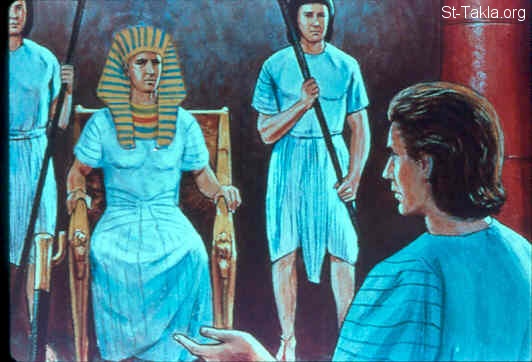
  • Moses, who confronted Pharoah and ordered the powerful ruler to release God’s people from slavery (Exodus 5:1-5).
  • David, who stepped out onto a battlefield to fight a giant—alone (1 Samuel 17).
  • King Jehoshophat, who led Judah into battle against a vast army (2 Chronicles 20).
  • The centurion who asked Jesus to heal his beloved servant—from a distance. Jesus fulfilled his request and commended the officer for his great faith (Luke 7:1-10).

We have to step out like these more recent heroes, too:


4225983_orig

  • George Muller (1805-1898), who could hardly provide for his own family, yet with great faith and not much else, founded five orphanages in Bristol, England, where ten thousand children were cared for.
  • Florence Young (1856-1940), a missionary to the Kanakas of the Solomon Islands. She and others helped the Kanaka believers minister to villages that practiced cannibalism. Thousands of people became Christians.
  • C. T. Studd (1860-1931), missionary to China, India, and then Africa. He inherited 25 million dollars ( in today’s economy) and gave it all away.
  • Betty Greene (1920-1997), who combined her passion for flying with her faith in God and helped to found Mission Aviation Fellowship.
  • Brother Andrew (1928- ), who smuggled Bibles into communist countries during the Cold War.

How were these biblical and historical heroes able to accomplish such feats? Was it because of courage and perseverance? No doubt, but the foundation underneath those traits was their faith in God.

They believed what they could not see. They were sure of God’s love and care. They were certain their final destiny was secure.  Therefore, they confidently moved forward step by step as God opened the way. That is faith.


il_570xN.189993668


*     *     *     *     *     *     *     *     *     *

Lord, I have said it many times: Whatever you want for my life is OK with me! Forgive me for wavering and fretting that perhaps your will might cause hardship. Shame on me! Help me to rest in you, Father. Since your love is steadfast and everlasting, and you have only my best interest at heart, I can confidently put my faith in you. Help me to be watchful and stand firm, a woman of strength, courage, and love.

(Psalm 116:7; Jeremiah 31:3; 1 Corinthians 16:13)

Notes:

  1. bible-history.com
  2. Grant Jeffrey, The Signature of God, p. 71.
  3. deadseascrollsfoundation.com
  4. Institute of Creation Research (icr.org)

(Photo and art credits:  www.fda.gov; http://www.flickr.com; dss.collections.imj.org.il; http://www.newheartnewspirit.com; http://www.alittleperspective.com; http://www.georgemuller.org; http://www.etsy.com.)

The Choice

db63b187e6b3cb277bc9bf6a3ad09862

Just as Jennifer was about to take freshly washed sheets to the backyard clothesline, she heard a knock at the kitchen door. Through the curtain she recognized the silhouette of her friend from down the street, Sarah. In tow were her two little boys.

Not another interruption, Jennifer thought. Between the cleanup of spilled orange juice in the fridge and the talkative A/C repair man, I’m never going to get the laundry done and finish vacuuming before I have to pick up Josh at preschool. Jennifer’s to-do list was longer than usual, and with company coming for the weekend, there was a deadline, too. Today was the only day she didn’t have to be at the floral shop where she worked part-time.

Jennifer could have pretended she wasn’t home, but felt compelled to open the door. She was so glad she did. Sarah was crying, although trying to hold back in front of her boys.

“Come on out to the yard with me,” suggested Jennifer, as she hefted the laundry basket once more. “The boys can play on the swing set and we can talk.”

While the two women hung sheets, Sarah confessed that her husband, Rob, had become very angry that morning and hit her. Hard. Sarah desperately needed someone to talk to.

Oh, Lord. What if I hadn’t opened that door?” thought Jennifer.

*     *     *     *   *     *     *     *     *     *

20060215_checkout_2

Amy stood in line at the grocery store with her two-year old son strapped into the child’s seat. Behind her was an older gentleman.

“That’s a cute little boy you’ve got there,” he said. “Too bad they can’t stay cute and little.”

Amy smiled. “I guess we just have to look for the positives of each stage as they grow.”

“Yeah, well, there’s not much positive in a grown son who’s become a religious fanatic,” he replied. “Always talking about Jesus.”

Amy was shocked speechless. What an odd comment to make to a stranger.

It was Amy’s turn to line up her groceries on the conveyor belt; the conversation stopped.

In the parking lot, no sooner had Amy loaded her groceries into the trunk, than that same gentleman came walking toward her. His car was directly across from her. It seemed too coincidental.

I need to say something to him, don’t I, Lord, Amy thought, to let him know that Jesus is not who he’s been led to believe. Help me speak your words to him! And calm these butterflies, please!

With Sam still strapped in the child’s seat, Amy walked her cart across the aisle. “Sir,” she began. “I just wanted you to know that I’m a believer in Jesus, too. He’s made a huge difference in my life, and I am very glad I said yes to him!”

The man actually smiled. “Thank you, young lady.”

Two cars turned into their aisle, one from each direction. Amy had to get her cart out of the way, to open up the parking space where she stood.

“Well, good-bye, and God bless you!” she called as she scurried across, already praying. Oh, Father. Did I say enough? Were those the words he needed to hear? Use this encounter to get him thinking. May he reconsider what his son has been trying to tell him. 

*     *     *    *     *     *     *     *     *     *

stock-photo-55934910-praying-woman

At the end of a Sunday morning worship service, Sylvia and Michelle saw Cindy walk down to the altar. Cindy had been attending for a few weeks, and had even joined the choir.

The two friends left their seats to join Cindy. Her hands were already wiping away tears; her shoulders shook.

“Is there anything specific we can pray with you about?” Sylvia asked softly. Cindy shook her head.

So Michelle began to thank God for his peace and comfort when we’re hurting, for his power to handle any situation, for his wisdom and guidance to deal with challenging decisions.

Cindy continued to cry uncontrollably.

Michelle stopped praying.  She felt a nudging in her spirit to ask, “Cindy, do you remember the day when you invited Jesus to be a part of your life?” She shook her head, no.

And so Sylvia and Michelle joyfully introduced Cindy to the Wonderful Counselor, Mighty God, and Prince of Peace.

The crying stopped, and Cindy broke into a radiant smile.

*     *     *     *     *     *     *     *     *     *

Each day we have the choice to embrace God-ordained opportunities. Opportunities like:

  • Inconvenient Interruptions
  • Coincidental Encounters
  • Whispered instructions

And no doubt your heart cries out as mine does: Lord, may I not miss a one!

Now, it’s confession time. These stories are based on actual events. Jennifer, Amy, and Michelle are really one person. Me.

Not that I have recognized or stepped out in faith in response to every opportunity God has provided.  Far from. But as I recall times such as those described above, my resolve is strengthened.

I’m trying to remember: We will never regret embracing God-inspired opportunities; it’s the missed opportunities for which we will carry remorse.

Photo credits:  www.pinterest.com; http://www.mprnews.org; http://www.istockphto.com.)

When the House is Quiet

Impressions Becoming Expressions

Mitch Teemley

The Power of Story

Still Traveling

Impressions Becoming Expressions

Living Our Days

Gaining a heart of wisdom

He Said What?!

I'm Patty, and my husband and I are living with our adult son who has autism and epilepsy. I love sharing lessons learned from life around me, especially life with Aaron.

Meditations of my Heart

Impressions Becoming Expressions

Linda Stoll

Impressions Becoming Expressions

Signora Sheila

Where faith meets la dolce vita

Heidi Viars

Finding the Image of God