Feeds:
Posts
Comments

il_570xN.485491692_idn6

“Mom, what’s that lovely perfume you’re wearing?” I exclaimed while greeting my mother-in-law with a hug.

“It’s called White Linen,” she responded. “I like it because it’s crisp and clean and not too heavy.”

The scent stayed with me, but I didn’t mind. Not only did the perfume have a pleasing aroma, but it belonged to one of the sweetest, most generous women I’ve ever known.

The apostle Paul taught that we should leave a pleasant scent wherever we go. But he wasn’t talking about perfume or cologne. He meant that our very lives ought to emit the fragrance of Christ:

“Through us, [God] brings knowledge of Christ.

Everywhere we go, people breathe in the exquisite fragrance.

Because of Christ, we give off a sweet scent rising to God,

which is recognized by those on the way of salvation—

an aroma redolent with life.”

(2 Corinthians 2:14-15, The Message)

 I’ve been privileged to enjoy the exquisite fragrance of a number of saints over the years:

  • My grandmother, who loved and served Jesus with a passion. She demonstrated kindness and thoughtfulness, and never raised her voice. (At least not that I heard!)
  • My parents, who lovingly guided me, and demonstrated what a Christian marriage should be:  two people committed to the best interest of the other.
  • A youth pastor who showed personal interest in each kid, and whose prayers were so heartfelt, we knew this guy was up-close-and-personal with God.
  • A professor and his wife at the seminary Steve attended, who took us under their wings and lovingly mentored us with great wisdom.
  • A mother of three who led the first women’s Bible study I attended.  She provided strong teaching, but better yet, an example of what it means to be a godly woman of excellence.
  • An older couple who listened, supported, and encouraged us as Steve began his pastoral career.
  • A younger couple who came alongside us in ministry over thirty years ago and are still caring friends to this day.
  • A choir director who taught by example what a calm and gentle spirit (2 Peter 3:4) looks like.
  • Countless friends and acquaintances over the years who have loved on us and prayed for us.

Some of these wonderful people have already departed for heaven. Yet their beautiful fragrance lingers in my life to this day—a memorable blend of selflessness, generosity, and grace.

And I wonder, Where would I be without their enduring examples providing strength and guidance?

To be honest, I would surely have ruined my life with poor choices, spurred by emotional immaturity, and spiritual depravity. But God provided all these saints and more, that I might acquire even a faint aroma of Christ. 

And now I plead with myself, YOU serve Jesus by being a sweet fragrance for others, redolent with the life of Christ. YOU be the listener, encourager, and grace-giver. YOU provide the example of Christian maturity. 

*     *     *     *     *   *     *    *     *     *

Oh, Father, I thank you for the countless people you have brought into my life, whose positive impact provided wisdom, direction, and inspiration. Guide me, I pray, to live just as fragrantly, spreading your love, grace, and joy wherever I go.

Whose exquisite aroma lingers in your life?  Tell us about him/her in the comments below.

(Photo credit:  www.etsy.com.)

Chocolate Chip Cookies

Chocolate Chip Cookies

There’s nothing quite like a fresh batch of chocolate chip cookies. The best recipes (and a decent oven!) create a buttery crunch on the outside and a chewy, chocolate-and-walnut infused center.

Of course, every ingredient of the recipe is necessary—not just the chips and nuts. You have to include the flour, butter, eggs, and more. Leave one out, and the results will be hugely disappointing.

Take vanilla extract, for example. A batch of chocolate chip cookies is quite bland without that one teaspoon of flavoring. But have you ever tasted vanilla extract all by itself?  Whew!  It is shockingly strong and bitter.

Now try this idea on for size: Our lives are a bit like chocolate chips cookies!

(Stay with me–the simile will be clear in a moment!)

Just as it takes a variety of ingredients to make delectable cookies, it takes a variety of people and circumstances to make our lives into “the aroma of Christ” (2 Corinthians 2:15).

Some ingredients, like chips and walnuts, can be enjoyed all on their own. Similarly, God’s recipe for each of us also includes blessings, provided solely for our pleasure—all on their own.

But then there’s that vanilla. So awful by itself; so transforming when combined with the rest of the ingredients.

I see that vanilla as representative of the distasteful and bitter experiences God allows in our lives. Without them, we’d end up as bland and good-for-nothing as vanilla-less chocolate chip cookies.

Every person, every situation God allows into our lives has the potential to make us like Jesus. Even the bitter ones. No, especially the bitter ones. It’s those uncomfortable, challenging relationships and situations that transform us the most. For example:

  • Would Joseph have been as prepared to be second-in-command under Pharaoh—without being sold into slavery or thrown into prison? Probably not. He learned invaluable lessons about organization and leadership while overseeing Potiphar’s household. Those skills only increased while Joseph was incarcerated and given responsibility for all that was done in the prison.
  • Would David the shepherd boy have become the greatest king of Israel? Undoubtedly, his perseverance and faith grew strong as he struggled through fifteen years of waiting—and hiding in caves from Saul.
  • Would Paul’s ministry have been as effective to the persecuted Christians of the first century, if he himself had not been exposed to great suffering?

It’s true. Just a teaspoon of trouble can create great benefit. Trials offer us opportunities for:

  • Growing spiritually and emotionally
  • Ministering to others with understanding and empathy
  • Developing a closer relationship with God
  • Preparing for a God-ordained change-of-direction in life
  • Praising, as God engineers circumstances beyond our dreams

However.

We must be willing participants.

Perhaps our prayer could be based on Ephesians 3:20, a verse often quoted to give us hope for blessing. But this scripture also offers great hope for the good accomplished through difficulty:

“All glory to God,

who is able,

through his mighty power

at work within us,

to accomplish infinitely more

than we might ask or think.”

Just as a bit of acrid vanilla works wonders in the cookie dough,…

God uses the bitter moments to work wonders in our lives.

*     *     *     *     *     *     *     *     *     *

Heavenly Father, I praise you for your infinite wisdom. You know exactly what to allow into my life to achieve your ultimate purpose. I thank you for the blessings but also for the trials. May I be a willing participant, like Joseph, David, and Paul. And may I become strong and resilient as they were—for your honor and glory. Amen.

(Photo credit:  www.thehealthyfoodblog.wordpress.com.)

 il_340x270.721480768_78no

The fabric of our family;

slowly woven by the Master Weaver 

upon the warp and woof of each day.

IMG_0142

Just two colors in the beginning— 

Steve’s blue, and my yellow– 

our favorite colors.

Then came the addition of three children

IMG_0134

with threads of 

energizing orange 

as they romped through the house,

IMG_0135 

invigorating green 

as they quickly progressed 

through the stages of development,

and excitable red

as arguments erupted! 

But calm colors were also interwoven 

among the bright:

IMG_0136 

soft gray for security, 

rich brown for stability, 

and luminous white for the Light 

of Jesus, our Savior. 

Threads of respect and responsibility 

appeared throughout; 

Challenge and trouble, 

hopes and dreams, too.

IMG_0139

Each thread faith-strengthened 

And reinforced with love. 

IMG_0141

Not easily rended, 

but repaired here and there with forgiveness, 

embellished with the embroidery of laughter,

IMG_0138 

and scattered with a patchwork of

familiar, soft-hued memories.

IMG_0143 

IMG_0144

IMG_0145

IMG_0146

As Mother’s Day approaches 

I celebrate 

the fabric of family 

that is fabulously, uniquely ours.

And I thank God that

“He gives the childless woman a family, 

making her a happy mother.

Praise the LORD!”

(Psalm 113:9, NLT)

(Tapestry art credit:  www.etsy.com.)

Game-Logo-Fatty-iOS-Android

  “Hi there, Fatty!” he called out. AGAIN. For several weeks this had been his standard greeting.

My husband’s boss evidently thought Fatty was a cute nickname for a very pregnant Mama—me. On the outside I smiled; on the inside I seethed:

This man is the most insensitive lout I have ever known. How can he think such a comment is appropriate? I am sick and tired of his teasing. Add to that his lack of tact, the lies he’s told us, his sneakiness behind the scenes and just general annoyance, it’s a wonder I don’t hit him in the head!

I wish my negativity had ended there. That little tirade is bad enough. But all too often during that trying period years ago, my thoughts went round and round in a cesspool of bitterness and anger.

Then our Bible study group began a study of First John. Chapter two, verses nine through eleven shouted off the page:

“Anyone who claims to be in the light

but hates his brother

is still in the darkness.

Whoever loves his brother

lives in the light

and there is nothing in him

to make him stumble.

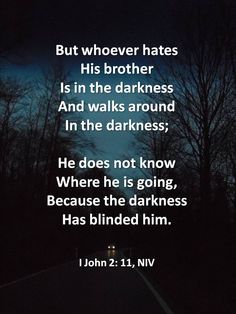
But whoever hates his brother

is in the darkness

and walks around in the darkness;

he does not know where he is going

because the darkness has blinded him.”

(1 John 2:9-11)

ecc1c21b0a843ea739550ef999ed591f

 Guilt washed over me.

Oh, Lord, help me to love Jim*. I don’t want to live in this dark cesspool anymore. I know it’s wrong, but every time he says or does something irritating, my mind and spirit get all churned up again. You’ve probably noticed I’ve even been daydreaming about telling him off. How can I ever learn to love a man like Jim?

Part of my problem was a profound misunderstanding of what love is. I thought it was warm and fuzzy feelings toward another person. And try as I might, or as much as I prayed, no tender affection welled up inside me for Jim. It wasn’t until years later I learned:

love-is-action

Love is not a feeling; it’s an action.

When another Bible teacher brought these facts to my attention, I immediately thought of Jim. Had I treated Jim in loving ways, even though there were no warm and fuzzy feelings in sight? For the most part, yes. I was able to smile, be civil,  even wrap my arm around his back when he gave me a hug. I never did tell him off.

Over the years Steve and I have dealt with more challenging folks. No surprise there. Planet Earth is still our home.   I wish I could say their annoyances have rarely wormed their way under my skin, and I kept myself out of the cesspool of negativity. Alas, no.

But the good work God began in me when Jim came into our lives, he has been carrying out ever since (Philippians 1:6). God has taught me, and continues to teach that:

  1. I cannot control the actions of another; it is my reactions I need to control.   I must set aside anger, resentment, and rehashing.   I need to forgive, whether the other person asks for it or not.

 Forgiveness isn’t about letting the other person off the hook.

It’s about keeping the hooks of bitterness from getting into you.

–Unknown

  1. Sometimes, forgiveness is an act of the will, not an act of the heart. When we find ourselves circling the edge of the cesspool, we can make a willful turnabout to focus on God instead.

The key to forgiving others

is to quit focusing on what others have done to you

and start focusing on what God has done for you.

–Unknown

  1. To foster a forgiving heart: pray for the offender.

“I do not believe you can hate a man

for whom you habitually pray.

–Charles Spurgeon

 And just how do we pray for people like Jim?

  • Pray for understanding. There may be psychological or spiritual problems at the root of a person’s offenses. The person may be oblivious to the harm he is causing.
  • Ask for God’s blessing upon this difficult person.
  • Pray for opportunities that allow us to show him God’s love. And,
  • Remember what God has done for us. I, for one, have offended God numerous times. Yet he has never stopped demonstrating his love for me. How small of me to focus on Jim’s shortcomings and faults, while ignoring my own.

Forgiveness is not easy. It stretches to the limit our capacity to love. But by the power of the Holy Spirit, we can take the necessary steps that will lead us there, because:

 2-peter_1819

“His divine power has given us

everything we need for a godly life…”

(2 Peter 1:3)

…including love and forgiveness.

*(The name has been changed.)


(Photo & art credits:  www.invisioncommunity.co.uk; http://www.pinterest.com; http://www.reaganramm.com; http://www.schenphoto.wordpress.com)                

Behind the Scrim

a84324051bff03eaec8e389c6eb02608

Slow, somber music faded away.  All lights were extinguished, including the spot on the cave-like tomb, stage left.

Black silence enveloped us for several moments as the burial scene concluded, a dramatic part of the Easter musical production at our church.

In a hushed voice, the narrator picked up the story.  He explained that when Sunday morning came, women went to the tomb. We, the audience, could see them approaching from stage right, talking among themselves.

They peered into the tomb, and cried out as they discovered the body of Jesus was gone. No sooner did they begin to question what might have happened, than an angel suddenly appeared next to them.  I don’t mean, “walked up and joined them.”  No.  One moment that angel was nonexistent; the next moment there he stood, gleaming brightly.

How did the stage crew create such a startling scene? They used a scrim, a large sheet of gauzy fabric, behind the back of the tomb. When the tomb was lit from the front, everything behind the scrim was invisible. When the spotlight behind the scrim came up, suddenly the audience could see the angel.

That scrim-effect made me think: we live with a virtual scrim in front of us every day. We cannot see what God has planned for us in the future. Events of tomorrow—even this afternoon—are blocked from us by black silence. In his infinite wisdom God has determined that’s the best way for us to live.

But! Sometimes we’re able to look back to see behind the scrim, and note how God orchestrated events for our benefit.

I’m remembering a particularly difficult move years ago. We were leaving a much-loved church where my husband had pastored for six years, and beginning a new ministry across-state.

My personal challenge would be obtaining a teaching position in our new locale, at a time when there were more teachers than positions available.

But look what God did:

First, he “introduced” me to Diane, a delightful young woman—also a teacher. Her parents were members of our new church. Diane actually attended elsewhere, but every now and then would join her parents on a Sunday morning. She visited shortly after our arrival.

Second, God urged Diane to offer help with our unpacking. We spent a delightful morning emptying boxes and organizing various items while getting acquainted. I learned that she taught at a small private school, with just two classes at each grade level. The school was close by, too—only four minutes away. Diane suggested she submit my name for the substitute list. I told her, “Yes!”

Third, God created many substitute opportunities for me at Diane’s school, but fulltime employment seemed unlikely. No one was close to retirement; no one was moving. Meanwhile I applied at public schools within a reasonable commute of our home.

But in April, without even an interview, God prompted the headmaster at the private school to offer me a position. One of the fourth grade teachers had just been elected mayor. Trying to fulfill those responsibilities and teach was more than she wanted to tackle.

I started the following August, which gave me the entire summer to prepare. My classroom was right next door to Diane’s.

When that job opportunity opened up, it was as if the spotlight turned on behind the scrim. Suddenly I could see how God had carefully arranged the whole sequence of events.  My disappointment over leaving our previous home and church turned into a God-ordained appointment at that private school, one that lasted twenty-two years.

“Never underestimate what a redeeming God can do, “ says Karol Ladd.*

And keep your eye on that scrim, for the glorious moment when you can see how he’s been orchestrating events for your benefit (Jeremiah 29:11).


*from Thrive, Don’t Simply Survive by Karol Ladd, Howard Books, 2009.


*     *     *     *     *     *     *     *     *     *


When have you glimpsed behind the scrim of your life?  What events has God orchestrated for your benefit?  Share with us your story in the comments below!

The Idol of Control

Last week, on April 22nd, I read the devotion, “Listen to Me Continually,” by Sarah Young (Jesus Calling, Integrity Publishers, 2004).

Did you happen to read it, too?


writing-fountain-pen-400


As you may know, Sarah determined a number of years ago to listen to God with pen in hand and write down whatever she believed he was saying to her. Those meditative moments became this book.

God’s messages through Sarah often speak timely challenges to me.  Last Thursday was no exception.

First, a bit of background.

As I write this, my to-do list is a bit long, even though I’m retired. (To those who are still employed or still have children at home under your charge, that sounds ridiculous, I know. But let me tell you, retirement does not change how busy you are, just what you are busy doing.)

Not only is that list of tasks long, but I have a strong desire to do a thorough job on each item. After all,


if-a-jobs-worth-doing-its-worth-doing-well-quote-1

(“If a task is worth doing, it is worth doing well.”)


Except that goal can easily lead to perfectionism, which I do have to fight against.

So here is what Sarah sensed Jesus telling her for April 22nd:

When Jesus died, he set us free. That includes freedom from compulsive planning.

And that’s exactly what I have been doing: figuring out when I could accomplish certain jobs, deciding whether a few tasks could be postponed, wondering if I’d be able to accomplish everything–on time.

Jesus continued; Sarah wrote more:

When we’re distracted by a whirlwind of thoughts, we cannot hear his voice.


bored-baby2


Oh, Lord, that is so true. Sometimes my thoughts are a stress-inducing jumble of “Stay on task! Don’t waste a minute! Don’t forget that! Do this first!” No wonder I feel overwhelmed.

Then Jesus and Sarah hit me between the eyes:

“A mind preoccupied with planning pays homage to the idol of control.”

Oh, my. I never thought of planning as a possible idol, something excessively adored.

But there is truth in that idea. I do prefer to be in control, to feel competent in handling my responsibilities, to know that everything will be accomplished efficiently and in a timely manner.

That sounds an awful lot like pride, doesn’t it.

I don’t think the problem lies in the planning, as if it’s a sin to make a to-do list.

The sin is in the attitude.  I need to ask myself:   Is my planning an effort toward making an impression? Rooting for compliments? Looking for a pat on the back?  I have to be honest.  Sometimes, yes.

Jesus reminded me (through Sarah) that my attention needs to be on him, not on the best ways to complete a task list. I need to listen to him, not the voices telling me to hurry to do this; scurry to do that.

And what will be the result? Stress will melt away, and I’ll enjoy the peaceful, God-enhanced, abundant life he’s promised.  I’ll be more useful to him and compliant to his will instead of mine.

That sounds much more satisfying and enjoyable, doesn’t it.

*     *     *     *     *     *     *     *     *     *

Heavenly Father, I am so sorry that I’ve allowed a preoccupation with planning to become an idol. Help me to hold very loosely the plans I make, in order to embrace the interruptions and changes ordained by you. Teach me also to release control of the to-do list to you.  Amen.

Photo credits:  www.imgbuddy.com; http://www.picturequotes.com; http://www.eastbabtlife.com.)


inspire

Dove chocolates come wrapped in foil on which are printed positive and encouraging statements. Recently I found this one:

“The more you praise and celebrate your life, the more there is in life to celebrate.”

A positive attitude of praise and celebration, even for the little blessings, does contribute to a sense of well-being.  But there’s an important omission in this quote–the cause of all those blessings.  Perhaps the sentiment might be worded like this:

“The more you praise and celebrate God in your life, the more there is in life to celebrate.”

Now a pleasing sentiment has become solid truth, because with God in our lives, joy is our constant companion.

“You make me glad by your deeds, O Lord;

I sing for joy at the works of your hands.”

(Psalm 92:4)

 It requires such a small effort, really.

 Sometimes, all we need to do is focus on the pleasure of ordinary events:

  • Water vapor curling up from a cup of coffee
  • Sunbeams finally breaking through, after three days of unrelenting rain
  • The first butterfly of spring dancing among the daffodils

Sometimes all we need to do is change our perspective.  We can choose to:

  • Get depressed over the huge stack of dirty dishes in the kitchen, or reminisce (while we clean!) over the delightful meal just enjoyed with family and friends
  • Grumble that vacation is over, or celebrate that two weeks out-of-town makes even our scuffed-up, well-lived-in home look mighty inviting
  • Sigh with dissatisfaction that personal goals have not yet been reached, or take note of how far we’ve come

Sometimes all we need to do is make a celebration out of a small moment.

I had been shopping at the mall for several hours, scouring the sales racks to no avail. Suddenly I looked down at my purse on which I had draped my light jacket and sweater. The sweater was gone. It was one of my favorites.

So not only did I not purchase an addition for my wardrobe that afternoon, I had subtracted a piece of clothing I already owned.  That sweater had just been dry cleaned, too. “Insult to injury,” as they say.

Retracing my steps seemed pointless; I had been in so many stores.

Not long after realizing my sweater was gone, it was time to meet Steve for dinner at a restaurant attached to the mall.  We ordered our meals, and then I told him what happened.

“I’ll check the mall lost-and-found after we eat,” I said. “By then maybe someone will have found my sweater and turned it in.”

So that’s what we did.

No sweater.

Steve suggested we stop at the stores where I’d shopped, as we made our way back to the car.

At the very first store the eyes of the young sales girl lit up when I asked about a lost sweater. “What color was it?” she asked.

“Red,” I told her.

“We did find it! It’s right back here!” she enthusiastically replied, walking to the back of the store.

Sure enough, there it was. Someone had even put it on a hanger.

Well! I thanked her, and the manager behind the counter, not knowing which of them had found it and been so thoughtful.

One of them jokingly said something about doing good deeds for chocolate.

As it happened, just two doors down was the Godiva Chocolate Shop. Steve and I popped in, bought two little boxes, and went back to the clothing store.

When those two girls saw the Godiva bag they whooped in surprise and delight. Steve and I laughed, too.

“God blessed me through you by returning my sweater; we wanted to bless you,” I said.

“Oh! That remark about chocolate was just a joke!” the salesgirl cried. “But you have no idea how much I needed this. Today has been especially rough.” She started around the counter with her arms outstretched. “Come here! I need to give you a hug!”  Then she added, “Look!  I’m crying!”  I had tears in my eyes as well.

The level of endorphins was so high in that shop the lights shone brighter, the air smelled fresher, and the atmosphere crackled with joy.

And all because we took a small moment and magnified its significance, and we gave God the glory as we celebrated a God-orchestrated event.

Truly, “The more you praise and celebrate God in your life, the more there is in life to celebrate.”

And God celebrates, too.  After all, he loves a cheerful giver (2 Corinthians 9:7), right?  Surely that includes givers of chocolate and hugs.

(Photo credit:  www.inhabityourmoments.com.)

*     *     *     *     *     *     *     *     *     *

What are you celebrating in life today?  Share your joy in the comments below!

“You have made man a little lower than the heavenly beings…

You made him ruler over the works of your hands…

All the beasts of the field, the birds of the air, and…

All that swim the paths of the seas” (Psalm 8:5-8, italics added).


4553514-More-Underwater-Fish-1


“Paths of the seas.” What might that refer to?  That question crisscrossed Matthew Maury’s mind frequently.

Maury had always loved the sea, prompting him to join the U.S. Navy at age 19, in 1825.

Life at Sea

The second ship on which he served, the Vincennes, included a library. Matthew was eager to learn and spent his spare time studying navigation. Sometimes he chalked out problems in spherical geometry on cannon balls. When the Vincennes circumnavigated the world, Matthew received practical experience in the subject.

Upon returning to the States, Matthew took an examination in navigation and passed. He was then appointed acting sailing master on the Falmouth. Along with the ship’s commander, he was responsible for navigating the course, steerage, and sail trim.

Next Matthew determined to learn about winds and currents. He discovered that no one had charted such information for the treacherous Cape Horn off the southern tip of South America. He kept meticulous records during the voyage and wrote about his findings in a paper, published by the American Journal of Sciences and the Arts.

In 1834, Matthew married Ann Herdon, and they settled in Fredericksberg, Virginia.

Maury’s life was certainly following a positive trajectory. And no doubt, as a strong Christian believer since boyhood, he saw each new opportunity as a blessing from God.

Plan B

But in 1839, Matthew was injured in a stagecoach accident.  The final result:   permanent lameness.  Never again would Maury be able to work aboard a naval vessel.  His career came to an abrupt end, and Maury fell into despair.

Surely he must have wondered, What am I to do, Lord? The sea is all I know.

But Maury did not allow his despair to debilitate him. He used his convalescence to continue studying navigation, meteorology, winds, and currents.

Was God behind that compulsion? Perhaps so. In 1841, Maury was offered a position as manager of the U.S. Naval Observatory and the depot for charts and instruments. This position was perfect for him, requiring the exact knowledge and abilities he had acquired.


4 arthur


In 1852-1853, Maury brought together ten major maritime powers of the world. In unanimous agreement, they began to compile unified records benefiting all mankind. For the next thirty-five years, more than a million ships’ logs were sent annually to the observatory. From those records were developed wind and current charts for the globe.

Pathfinder of the Seas

Meanwhile, Maury sought for the meaning of that mysterious phrase in Psalm 8:8, “the paths of the seas.”

As he studied those ships’ logs being sent to the observatory, he compiled charts of ocean-wind and sea currents. He set adrift weighted bottles that would float slightly below the surface of the water, where they would not be impacted by wind.

Instructions inside each bottle informed the person who found it to return the bottle, with the location and date of its discovery. From his charts and experiments, Maury was able to determine the “paths of the seas,” including the Gulf Stream.

Pathfinder of the Wind

Maury also proved the truth of Ecclesiastes 1:6:

“Blowing toward the south, then turning toward the north, the wind continues swirling along; and on its circular courses the wind returns.”

Further study and experiments indicated that the wind did indeed move in circular patterns. Today we call them jet streams. Maury’s investigations led to a better understanding of weather, and predictions became more reliable.

Plan C

But despair entered Maury’s life again when the United States declared civil war. As a citizen of Virginia, he felt obligated to side with the South, giving up the position in Washington at his beloved observatory. Jefferson Davis, President of the South, sent Maury to England as an ambassador for the Confederate States.

After the war Matthew spent three years exiled in England. Many honors were conferred on him during that time, but his heart was still in the U.S.

Did he wonder once again what God might be planning? Perhaps he prayed, “Lord, if it be your will, arrange circumstances so that we may return to America.”

In 1868, the U.S. offered general amnesty to ex-patriots and Matthew sailed back to the States. He accepted a position at Virginia Military Institute as professor of meteorology, a position he held from September 1868 to the day he died, February 1, 1873.


maury2187


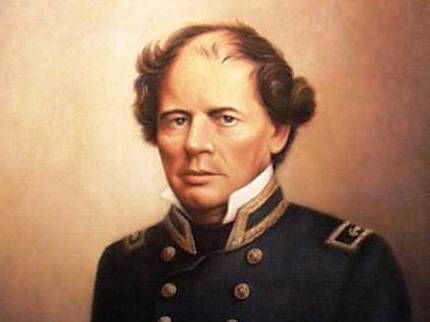
Matthew Fontaine Maury, a self-taught navigator of the seas, astronomer, meteorologist, author, and educator, always sought to prove:

“The Bible is true and science is true,

and therefore each, if truly read,

but proves the truth of the other.”

–Matthew Maury


And though he may not have set out to do so, Maury also proved:

“I know the plans I have for you, plans to prosper you and not to harm you, plans to give you hope and a future” (Jeremiah 29:11).

With the advantage of hindsight, we can readily see this promise grandly fulfilled in Maury’s life. Yes, he suffered pain and hardship. All saints of God do (Romans 8:17).

But! God brought Maury through every challenge and used him in mighty ways—ways that impact our world to this day.

*     *     *     *     *     *     *     *     *     *

Lord, I am deeply grateful you are the one who plans each of our lives. What comfort to know that an all-seeing, all-wise God is orchestrating not only the main events of life, but every single day. I pray for your grace, in order to be accepting of disappointments, knowing that you will bring good out of every situation. In fact, you may very well be preparing something important. I want to trust you without hesitation.

(Psalm 139:16; Romans 8:28; Ephesians 2:10)


Sources:  The Founders’ Bible, https://answersingenesis.org; http://www.cbn.com; http://www.creation.com.)

Photo and art credits:  www.travelblog.org; http://www.firstladies.org.)

l-12422

“Be careful what you think,

because your thoughts run your life.”

–Proverbs 4:23, NCV


That would explain why worrisome thoughts can turn into paralyzing fear, pessimism into debilitating discouragement, and sadness into utter hopelessness.

No one wants to dwell in such misery.

But if a person is facing difficult circumstances, and she allows her thoughts to run amok on auto-pilot, she’s likely to slide downward into hyper negativity.  Climbing out is difficult.

“Snap out of it!” someone will say. Not very helpful.

“Look for the silver lining,” advises another. Easier said than done when tragedy strikes–and lingers.

“Spend some time in reflection.” That’s what one web site recommends, offering sixteen questions for a person to consider. Most of us don’t have time for that much introspection, nor the inclination, when we’re hurting.

So, how can we climb out of a miserable pit of despair?

By replacing negative thoughts with positive thoughts, especially scripture.

You see, our brains cannot focus on two things at once. Prove it to yourself by counting to ten and reciting John 3:16 at the same time. You’ll find you’re either counting or reciting, not both simultaneously.

We can apply the same strategy to negative thinking. At the first moment we realize our thoughts are headed in the wrong direction, we can confess it and ask God to help us renew our minds:

“Lord, I don’t want to think about this anymore.  I know it’s counter productive and does absolutely no good. Help me to refocus on what is noble and right, pure and lovely (Philippians 4:8).”                            

Then we start singing a favorite praise song, listing all the reasons we can trust God in this situation, or reciting an uplifting scripture.

For a start, the bulleted quotes below highlight some common threads of negative thinking.  Following each is a positive scripture as rebuttal:

  • “There is no way this situation is going to work out.”

 Oh? “In all things God works for the good of those who love him, who have been called according to his purpose” (Romans 8:28, italics added).

  • “I can’t stand another day of this.”

Oh, yes, I can stand. I can put on the full armor of God, so that in this day of trouble, I may be able to stand my ground” (Ephesians 6:13).

 Restoration will come. “Though you, [God], have made me see troubles…you will restore my life again…you will again bring me up” (Psalm 71:20).

  • “I am never going to succeed.”  

Not true.  God says [He] will accomplish all [his] purposes (Isaiah 46:10b, italics added).  What greater success could there be than to accomplish the purpose of Almighty God?

  • “I have no idea how to proceed. Maybe I should just quit. This is just too hard.”

 I can pray as the author of Hebrews did: “May the God of peace…equip me with everything good for doing his will, and may he work in me what is pleasing to him” (Hebrews 13:20-21).

  • “Sometimes I can’t seem to do anything right. How can God use me?” 

I am God’s workmanship, created in Christ Jesus to do good works, which he prepared in advance for me to do (Ephesians 2:10).

If the bulleted comments in bold print are our focus, our lives will surely head in a downward direction toward discouragement and hopelessness.

If, on the other hand, we focus on the promises and positive affirmations of scripture, we head in an upward direction toward wholeness, productivity, and joy.

habakkuk_3_19_scripture_memory_card_post_card-r720e7f7e571e4323b9c59aed790eee1b_vgbaq_8byvr_512

“He enables [us] to go on the heights” (Habakkuk 3:19)–above the doubts and uncertainties.

Focus determines direction.

*     *     *     *     *     *      *     *     *     *

What scripture promise or affirmation lifts you up when circumstances try to pull you down?  Add your favorites in the Comments below!

(Photo credits:  www.facebook.com/wonwithoutaword; http://www.zazzle.com.)


lower-part-of-the-trail-as-we-got-closer-to-the-stream

“Success is a journey, not a destination.”

–Arthur Ashe

Too often we think of success as the final, glorious outcome of endeavor. But achieving a goal requires the successful completion of many steps along the way, some of which are slippery, steep, and uneven.  As time passes and difficulties mount, hopelessness can hold us back.

However, history is full of examples of people who persevered in spite of great difficulty, even failure. They didn’t allow tumbles and trip-ups to stop them. They maintained their optimism and effort toward the goal.  Prime examples include:  Bill Gates, Walt Disney, Albert Einstein, and Winston Churchill.

“Success is going from failure to failure without loss of enthusiasm.”

–Winston Churchill

Another prime example is Thomas Edison. You might remember he tested over 6000 materials for the filament of his electric light bulb, and performed 1200 experiments before reaching ultimate success.

Once the invention had been released, a reporter asked Mr. Edison, “How did it feel to fail over a 1000 times?”

The inventor replied, “Young man, I did not fail 1000 times. I simply found 1000 ways how not to create a light bulb.”

Edison had learned to celebrate progress, not just the end result.

We, too, can learn to celebrate the steps toward our God-ordained, individual goals, not just the finish line.

And what are the steps worth celebrating? Here are a few:

  1. Making good choices, even in small things (Luke 16:10).

Doing little things with a strong desire to please God

makes them really great.”

–St Francis De Sales 

  1. Maintaining a positive attitude (Colossians 3:23-24).

Feed your hope with positive expectancy.

Instead of wondering, Why isn’t God doing anything?

Ask, I wonder what God will do next?

  1. Exercising self-control (Galatians 5:23).

“You must do the very thing you think you cannot do.”

–Eleanor Roosevelt

  1. Applying wisdom (Proverbs 19:8).

“Wisdom is the means by which the godly can both

discern and carry out the will of God.”

–Douglas Moo 

  1. Striving for humility (Proverbs 22:4).

“I believe that the first test of a truly great man is his humility…

Really great men have a curious feeling

that the greatness is not of them, but through them…

And [they] are endlessly, foolishly, incredibly merciful.”

–John Ruskin 

  1. Overcoming disappointment and failure (Psalm 37:23-24).

“Discouragement and failure

are two of the surest

stepping-stones to success.”

–Dale Carnegie

Too often we’re sidelined by our failures—even the little ones. We have to remember: success has nothing to do with immunity to failure.

“Success is getting up just one more time than you fall.”

–Oliver Goldsmith.

So! I’ve devised a little questionnaire, to help us appreciate our steps of success:

  • Did we accomplish one task today, leading toward our God-ordained goals, even though we didn’t want to do it?
  • Did we thank God for even one blessing today? Gratitude takes our minds off the way we’d like things to be and refocuses our attention on what God has already provided.
  • Was there at least one small thing we chose not to do, in order to apply our time and energy on the goals set before us?
  • Did we apply a bit of wisdom today that kept us on the path of success?
  • Did we demonstrate genuine interest in someone else without even thinking about ourselves at all? That’s C.S. Lewis’s definition of true humility.
  • Did we encourage ourselves with words or action, in order to press on?

Success is found on the path of most persistence.

So, let’s celebrate progress–those moments, those steps, that are leading us toward God’s call on each of our lives.

And if progress is slow, let’s not lose heart.  Most progress is slow.  God rarely rushes in with a delivery of instant success.

Let’s all take a deep breath and affirm:  God isn’t finished with us yet. He’s still working, still guiding, still engineering circumstances for the personal goals he has ordained for each of us.

That doesn’t mean we sit back and wait for God to achieve our success for us.  It’s a matter of balance.  We must trust him as if everything depended on him, and work as if everything depended on us (Living Application Bible note, Proverbs 16:3).

(Photo credit:  www.hikingtohealthy.com)

*     *     *     *     *     *     *     *     *     *

What steps to success would you add?

And, how do you celebrate the successful steps along the way?

Please join the conversation below! 


When the House is Quiet

Impressions Becoming Expressions

Mitch Teemley

The Power of Story

Still Traveling

Impressions Becoming Expressions

Living Our Days

Gaining a heart of wisdom

He Said What?!

I'm Patty, and my husband and I are living with our adult son who has autism and epilepsy. I love sharing lessons learned from life around me, especially life with Aaron.

Meditations of my Heart

Impressions Becoming Expressions

Linda Stoll

Impressions Becoming Expressions

Signora Sheila

Where faith meets la dolce vita

Heidi Viars

Finding the Image of God