Feeds:
Posts
Comments

Posts Tagged ‘Faith’


“There is no fear in love.  But perfect love drives out fear.”

1 John 4:18a

M-m-m.  Interesting.  John doesn’t say perfect courage drives out fear.  Not even perfect faith.  Why does he say perfect love will drive out fear?

First of all, this verse is not talking about fears of financial ruin or life-threatening events.  Verse eighteen gives us the context.  John is talking about Judgment Day.  He’s reminding us that, if we know Jesus, there is nothing to fear when we leave this earth for eternity.  Jesus gave his life to save us from the consequences of our sin.  Our place in heaven is secure, if our faith is in him.

And once that matter has been settled, other fear-producing questions can be put in proper perspective. We have to remind ourselves that earthly life fades quickly like the leaves (Isaiah 64:6).  These questions will cease to matter–questions like:

  • Will my job survive the cutbacks?
  • Will I be able to keep my health insurance?
  • Will my kids make it through their personal crisis?

But such questions can cause torment to the point of ulcers and high blood pressure.  If we allow fear to control us, we’re saying that the troubles we face are more powerful than our God.

So here are a few ways to fight against fear:

  • Rename your difficulties as possibilities—possibilities for God to do something glorious.  Without a problem, there’s no opportunity for a miracle.
  • Picture God Almighty accompanying you all day long.  He’s standing right behind you at the sink.  He’s sitting beside you in the car.  His ever-watchful eye is upon you,  his infinite strength is available to you, and his perfect wisdom will guide you.
  • Don’t feed your fear with worry; feed your faith with the truth of God’s Word.  Psalm 23 is a perfect place to begin.  Remember verse four?  “Even though I walk through the valley of the shadow of death, I will fear no evil, for you are with me; your rod and your staff, they comfort me.”
  •  Listen to what he says:  “I am the Lord, your God, who takes hold of your right hand and says to you, do not fear; I will help you (Isaiah 41:13).  Visualize God holding you by the hand as you walk through each day.

Years ago, when a I was a young teenager, my family visited Lookout Mountain in Tennessee.  Dad and I were hiking over the mountain paths when we came to a deep, narrow ravine.  He easily jumped across, turned, and held out his hand for me.

“I can do it myself,” I announced confidently.  Then I looked down into that deep ravine.  What if I fall? I thought.  Grinning sheepishly at Dad, I said, “’Guess you’d better help me after all!”  I had great confidence in my father.  I knew he loved me and would never let me fall.

God is ready to walk hand-in-hand with me along the mountain paths of life.  Problems arise, though, when I repeat that moment on Lookout Mountain and focus on the ravine, the what-ifs.  The  result?  I’m frozen with fear.

How downright foolish of me, when my loving, trustworthy Heavenly Father has assured me:

“Don’t panic.  I’m with you.  There’s no need to fear for I’m your God.  I’ll give you strength.  I’ll help you.  I’ll hold you steady, keep a firm grip on you” (Isaiah 41:10, The Message).

 You see, perfect love drives out fear because we can trust the perfect love of our perfect God.

Read Full Post »

No doubt we would all agree:  Christmas is much more than carols, cookies, and cards.  The heart of this holiday goes even deeper than the love we express with presents.  It is a celebration of God’s inexpressible gift (2 Corinthians 9:15).

And those of us who accept God’s gift of eternal life through faith in Jesus, ought to live our lives with overflowing gratitude.  The motivation behind our words and deeds should be the same sacrificial love which motivated Jesus.

Henry van Dyke (1852-1933)

Henry van Dyke (1852-1933, photo credit: Wikipedia)

What might that look like in everyday life?  Henry van Dyke* made several suggestions through these thought-provoking questions:

“Are you willing to forget what you have done for other people, and to remember what other people have done for you;

To ignore what the world owes you, and to think what you owe the world;

To put your rights in the background, and your duties in the foreground;

To own that probably the only good reason for your existence is not what you are going to get out of life, but what you are going to give to life;

To close your book of complaints against the management of the universe, and look around you for a place where you can sow a few seeds of happiness—

Are you willing to do these things even for a day?

Then you can keep Christmas.”

Ouch.  If God made these stipulations into law, and only law-abiders were allowed to celebrate Christmas, I’d be left out.  My thoughts and motivations are not always pure.  I do not consistently put others’ needs before my own.  My focus is not always on what I can give.

But Rev. van Dyke’s essay does not end on that hopeless note.  He adds one more glorious line.

“But you can never keep it alone.”

Of course not!  “We are utterly incapable of living the glorious lives God wills for us” (Romans 3:23, The Message).

However.  God does not expect instantaneous perfection, the minute we invite Jesus into our lives.  “God who began the good work within [us] will keep right on helping [us] grow in his grace until his task within [us] is finally finished on that day when Jesus Christ returns” (Philippians 1:6, The Living Bible).

Hallelujah!

(Photo credit:  www.worshipkids.com)

Joyful, joyful, we adore Thee,

God of glory, Lord of love;

Hearts unfold like flowers before Thee,

Opening to the sun above.

Melt the clouds of sin and sadness,

Drive the dark of doubt away;

Giver of immortal gladness,

Fill us with the light of day.

(also by Henry van Dyke)

*     *     *     *     *     *     *     *     *     *

*Henry van Dyke (1852-1933) was an author, educator, and clergyman.  His lengthy list of accomplishments included professor of English literature at Princeton, minister to the Netherlands and Luxembourg (by appointment of President Wilson), and author of many poems, stories, and essays. “The Other Wise Man” and “The First Christmas Tree.” are among his most popular works.  He also wrote the lyrics for a number of hymns, including “Joyful, Joyful, We Adore Thee.”  The first verse is quoted above.


Read Full Post »

I love decorating our Christmas tree, even though it takes at least two days.

Two days?” you ask.  “Why so long?”

There are several very logical reasons – if you are me.

One:  It takes time to arrange the branches.  We have an artificial tree, you see.  (Cut evergreens don’t last long in Florida because of the heat, and Steve and I like to decorate right after Thanksgiving.)  That means, before decorating can begin, the tree has to be assembled and the branches spread out.

Two:  It takes time to string the lights.  Although pre-lit trees are convenient, they often include too few lights.  The rule of thumb is 100 lights per foot.  We put 1,000 lights on our eight-footer.  Some are tucked in, some arranged on the tips of branches.  This creates a tree that truly glows.

Three:  It takes time to hang the decorations — the ultimate 3-D jigsaw puzzle of Santas, angels, and miniature manger scenes, animals, toys, and traditional ball ornaments.  Dozens and dozens of them.  (And nearly all given to us by family, friends, members of the churches we’ve served, and students from my classes.)

Long ago I worked for a creative designer.  One aspect of her business included decorating Christmas trees for banks and businesses.  She taught me several tricks for creating a stunning display.  I’ve already shared the first rule:  Use lots of lights.

Two:  Consider the size, theme, and material of each ornament.  Try not to hang several Santas, or a group of red decorations, all together.

Three:  Just as lights are tucked in or perched on branch-tips, it’s important to do the same with ornaments.

Four:  Use the tree lights as spotlights for the ornaments, as often as possible.

A beautiful, glowing Christmas tree is in the carefully executed details.

tree 2012

(Photo taken before the last step:  settling the treetop angel in place.)

*     *     *     *     *     *     *     *     *     *

Something else that’s found in the details?  Wonder.

Yes, that statement could be applied to decorations.  There is a sense of wonder when studying a breath-taking display.

But more significant?  The glorious wonder to be found in the carefully executed details of the Christmas story, the events surrounding the birth of Jesus.

Beyond the familiar events of angel visitations, a trip to Bethlehem, Baby Jesus laid in a manger, and a shepherds’ hurried trek to see the newborn Messiah, there is much to appreciate in the details.

For example:

One:  Little did Caesar Augustus know he was being used by God to fulfill an ancient Messianic prophecy, when he decreed the census that sent Mary and Joseph to Bethlehem.  “But you, Bethlehem Ephrathah,…out of you will come for me one who will be ruler over Israel, whose origins are from of old, from ancient times” (Micah 5:2).  God is sovereign — even over those who do not know him.

Two:  Observe whom God chose to notify first about this pivotal event in history–the birth of his Son.  Shepherds!  Members of the lowest class in Jewish society!  Perhaps God wanted us to know that wealth, position, and even the respect of others is of little consequence in his eyes.  What does matter?  Faith.  “Without faith it is impossible to please God” (Hebrews 11:6).

The shepherds did believe – in the old Messianic prophecies and in the angel’s message:  “Today!  Right now!  In the little town of David, your Savior, the Messiah, has been born” (Luke 2:10-11)!  Those sheep herders scurried off to Bethlehem as fast as they could go.  And their faith was highly rewarded.  They were first to see the long-awaited King of kings, the Messiah.  Their lowly position in society didn’t matter.

Three:  Most wondrous of all?  The Son of God, who was with God and was God from the very beginning, became human (John 1:1-2).  The One who created all things (Colossians 1:15-16), chose to become a helpless baby, and embrace every aspect of the human experience through thirty-some years of earth-dwelling.

I like the way Eugene Peterson says it:  “God became one of us and moved into the neighborhood” (John 1:14, The Message)!

And how do we respond to such wondrous details?  We follow the example of those shepherds.  We praise and glorify our God for all the things we have heard and seen, which prove what we’ve been told (Luke 2:20).

*     *     *     *     *     *     *     *     *     *

I DO praise you, Heavenly Father, that early in life I heard about your Son and your gift of eternal life.  I invited you into my life, and have experienced your love, joy, and peace, just as you promised.  In fact, I have seen many of your promises fulfilled in my life and in the lives of others.  You have proven to me over and over that what we’ve been told in scripture is indeed 100% truth.  With Mary, I exult:  “My soul glorifies the Lord and my spirit rejoices in God my Savior” (Luke 1:46-47a)!

Read Full Post »

Boris Nicholayevich Kornfeld, political prisoner of the former Soviet Union.

Incarcerated in the late 1940s at Ekibastuz, a forced labor camp, in Siberia.

A doctor.

Because of his medical training, the camp authorities put him to work in the hospital.

Dr. Kornfeld was Jewish, but a Christian prisoner attracted his attention.  The man evinced a quietness of spirit, in spite of the horrors, deprivation, and hopelessness of their situation.  Often the doctor would hear this fellow prisoner reciting the Lord’s Prayer.

One day, a guard was brought into the surgery.  An artery had been cut during a knifing incident.  As Dr. Kornfeld began to repair the artery, he thought, I could make the sutures in such a way that this horrid man would slowly bleed to death later.  The authorities would ever know.

But no sooner did the idea cross his mind than Dr. Kornfeld’s stomach turned at the cruelty of his own thoughts.  Words from the Lord’s Prayer came to his mind, and he spoke them silently in his heart:  Forgive us our sins as we forgive those who sin against us.

Day by day, Dr. Kornfeld sensed change occurring in his spirit.  He wanted to speak to the Christian prisoner about his experience in the surgery, to discuss what was happening within himself, but the fellow had been transferred to another gulag.  The doctor told no one about his growing faith in Jesus.

As he was being transformed on the inside, Dr. Kornfeld’s character began to change.  He started saying “No” to some of the sordid practices of the prison camp. Once he reported on an orderly who had stolen food from a dying patient.  Such misdeeds were actually quite common.  After all, why waste food on someone who was going to die anyway?

But telling the authorities what was going on put Dr. Kornfeld in danger.  No one was going to appreciate his sense of fairness and kindness.  Every prisoner lived for himself, doing whatever was necessary to survive.

One evening, Dr. Kornfeld examined a patient named Alex, who had undergone surgery for cancer.  He felt compelled to describe to Alex his journey toward faith in Christ.  The words came in a flood.  For at least several hours, Kornfeld spoke to the young cancer patient.

The next morning, Dr. Kornfeld was dead.  Someone had beaten him in the head with a mallet.

Alex thought long and hard about the doctor’s story and his life-changing faith.  He, too, decided to become a Christian.  Miraculously, Alex survived the gulag and wrote about his experiences there.  The book was smuggled to the West and published.

More books followed, all revealing the cruel and disastrous results of the Soviet system under the leadership of Stalin.  (At least sixty-five million Russian citizens were murdered in the gulags.)

That prisoner-become-author was Alexander Solzhenitsyn, who won the Nobel Prize for Literature in 1970.  The Gulag Archipelago and One Day in the Life of Ivan Denisovich were two of his most famous works.  Many credit his writings as the beginning of the end of the Soviet Union.

Photo of Aleksandr Solzhenitsyn in 1953, right...

Photo of Aleksandr Solzhenitsyn in 1953, right after his release from the special Gulag camp at Ekibastuz (Photo credit: Wikipedia)

But certainly Dr. Boris Kornfeld also deserves credit.  His influence was an important catalyst.  And what about the nameless Christian who introduced Dr. Kornfeld to Jesus?

He also was used by God in a chain of events to achieve great impact upon the world.

But no one knew, including himself.  He very likely died in the gulags.

Oh, but consider his home-going to heaven.  Think of Jesus, wrapping his arm around the shoulders of this saint, saying “Well done, my devoted one.  Have I got a story for you!  Come and let me share what you have been a part of!”

We must not allow fear or anonymity to dissuade or discourage.  God may use any one of us to change the world, but he may very well wait to reveal our impact until he can tell us all about it — face to face!

*     *     *     *     *     *     *     *     *     *

Heavenly Father, may I never miss an opportunity to be a part of your grand, over-arching plan.  May the legacy of Dr. Kornfeld, Alexander Solzhenitsyn, and millions of nameless martyrs compel me to be courageous and passionate for you.  I have nothing important to lose and everything worthwhile to gain.

Read Full Post »

On Monday I introduced you to six bloggers I follow—out of the 200-plus million blogs on the internet.  Today I’d like you to meet the other seven of my baker’s dozen.  (This post grew a bit long; you may wish to break it up and read it over several days.)

My PhotoThree Way Light (www.threewaylight.blogspot.com) is hosted by Jody Collins, a teacher of the Seattle, WA area.  She often accompanies her rich text with equally rich images of her own photography.

On Monday, Jody wrote:  “I am weak and broken and needy and healed and failing and falling and healed and over and over it goes. Jesus continues to peel off the layers of my shell of protection so He can get to the parts of me that need His touch.”

Did that last line speak to you as it did me?  Jody never fails to give me food for thought and sustenance for my spirit.

A Devoted Life (www.boyslumber.wordpress.com) offers “Practical Daily Devotions for the Real World” from JD Blom—Familyhusband, father, pastor, and athlete.

Recently JD used mountain-climbing as a visual image of the Christian life.  We’re created to climb, he said, to take on the challenge for the glory of God.  Jesus makes ascension possible.  However, Jesus did not come to…

…remove the difficulty of the route.
…eliminate the hurdles.
…chisel an escalator into impenetrable holiness.
…lower the glory of God down to the realm of man.
…diminish the elevation of righteousness for the unrighteous.

“Jesus came to create supernatural climbers.  We are new creatures in Christ.  IN Christ, we are supernatural climbing freaks.”

I like that image of supernatural climbing freaks–passionate, persevering, focused freaks.  YEAH!

Redemption’s Beauty (www.redemptionsbeauty.com) has blossomed from a child of divorce and alcoholism.  God redeemed Shelly Miller, and she is now a clergy wife raising two teens.

Two of Shelly’s outstanding attributes are honesty and humility, strongly apparent on October 11th, when she wrote:

”I’ve turned joyfulness into legalism, allowing it only in instances of the extraordinary and the accolades of good fortune. I don’t fit into the rules I create for it. I’m not extraordinary enough to be the object of attention, someone’s artistic gift.

Which I know in my head, isn’t the truth.”

A bit later she quoted Brene Brown, from The Gifts of Imperfection:

“Joy isn’t an unreachable standard, a goal attached to a list of rules to follow. Jesus chose us, not because of our extraordinariness, but because His extraordinary life lives in us.”

See?  From the pedestal of her vulnerability, Shelly shares heart-touching wisdom.  It happens often.

Strength Renewed  (www.strenthrenewed.wordpress.com) is not only the title of Tresa Walker’s blog, but states the objective as well:  that her thoughts might renew our strength for the circumstances we face.

One afternoon, this teacher/writer, and mother of two grown children, suddenly remembered she needed cupcakes for a gathering—in two hours.  No quick trip to the store would solve the problem–the local grocery was closed.  And no cake mixes sat perched on the pantry shelves either.  If Tresa was going to keep her promise, the cupcakes would have to be made from scratch.

She began searching for the ingredients.  Shortening?  The can held precisely the ½ cup required.  Baking powder?  Just enough.  Eggs?  The exact number needed.

Tresa recognized a life-lesson in her experience.  God sometimes provides exactly what we need rather than what we want.

She says, “Maybe when it seems our needs aren’t being met, it’s because God is giving us the opportunity to trust Him to provide the things that we truly need.”

She has me thinking.

DSCF4687Wings of the Dawn (www.heidiviars.wordpress.com) includes poetry and prose by Heidi Viars.  She is gifted at both, as well as photography.

Recently she included breath-taking shots of sunbeams casting ethereal ribbons among tall trees.  She wrote about turning around during a walk recently and discovering sunbeams had been lighting up the road behind her.

Heidi’s insight:  “Even when we can’t see Him work, we can trust Him to do His work in and through us. Sometimes it’s not until later, when we get a chance to turn around, that He reveals to us that He has been the Light on our path all along.”

My heart responds, “Oh, yes, Heidi.  And surely such moments are glimpses of His ethereal glory– just like those sunbeams!

Horizons of the Possible (www.horizonsofthepossible.wordpress.com) is hosted by Russell Smith, pastor of the church where our older son and daughter-in-law attend.

On October 8th, he wrote on the topic “People Are Not Projects.”

“We see the powerful, the accomplished, the athletic, and the beautiful and we easily see glory about them,” Russell says.  “What about all the rest – the misfits, the oddballs and the awkward?  What about the weak and the needy and the not-quite-right?  Unfortunately, we tend to think of them as projects to be worked upon.  Or we see them as objects of charity who need our help, but have little to give us.”

Then Russell reminds us of Psalm 8:5.  “You made [human beings] a little lower than the heavenly beings and crowned him with glory and honor.”

Every person has great worth, because he/she bears the stamp of Creator God.  He values each one; we can do no less.

(in)courage (www.incourage.me) is a team effort, sponsored by Dayspring.  Twenty-eight women contribute one post per month.  Lisa Leonard recently wrote “Showing Myself a Little Kindness.”

Her car was dead, probably because she had left the lights on the night before.  After all, she had been exhausted.  But instead of treating herself with kindness and understanding (as she would if the situation had happened to a friend), Lisa berated herself and even called herself names!

While waiting for AAA, however, Lisa was treated to a glorious sunrise.  And she noted:

“…how imperfect life is, and how there is still beauty to be found. I am flawed and yet, I can show myself kindness. I make mistakes, but there is forgiveness.”

Lisa is right.  My spirit breathes in deep her statement:  “I can be kind and forgiving of myself.”  And with that realization comes peace.

*     *     *     *     *     *     *     *     *     *

Thank you, Father, for inspiring these writers.  I delight in their giftedness and insights!  Thank you that day after day they minister life lessons and encouragement to me and many others.  Bless them, I pray, with your favor and protection, and with your joy and peace.  In the name of Jesus, Amen.    

Read Full Post »

Last fall I read there were more than 150 million blogs on the internet, with approximately 175,000 new ones being launched daily.  At that rate, cyberspace now includes over 213 million blogs!

After much shopping, I have found twelve devotional blogs which I follow regularly.  I’ll introduce six today and six on Thursday–in no particular order.  After reading these sample bits, you might want to visit these blogs yourself, and discover fresh insight from…

IMG_1727…Jennifer Dukes Lee (www.jenniferdukeslee.com), wife of an Iowa farmer, mother of two daughters, professor of journalism, and author of a new book being released in early 2014.  Recently she wrote about “How to Talk Back to Fear:”

“I believe that bravery looks a lot like…believing.  And I believe that there’s really no such thing as failure, because there’s nothing unredeem-able in the hands of Christ.”

Smart woman, that Jennifer.

…Holley Gerth (www.holleygerth.com), life coach and author, tackled the topic, “When You’re Worried What People Think.”

First, Holley quoted 1 Corinthians 4:3 (MSG):  “It matters very little to me what you think of me, even less where I rank in popular opinion…Comparisons in these matters are pointless.”

Holley says.  “When I care very little what other people think of me then I’ve suddenly got room to care a lot about other people.”

Quite insightful, don’t you agree?

Unshakable Hope…Unshakable Hope (www.unshakablehope.wordpress.com), written by Bill, married more than twenty-five years, father of two daughters, diagnosed in 1996 with ALS, or Lou Gehrig’s Disease.  Bill has very little mobility, yet his spirit is more vibrant than ever.

On February 21, 2013, Bill wrote about Shadrach, Meshach, and Abednego (Daniel 3).  They were about to be thrown into King Nebucadnezzar’s furnace and boldly proclaimed, “The God we serve is able to save us…, and he will rescue us from your hand, O king.  But even if he does not…we will not serve your gods or worship the image of gold you have set up (vs. 17-18).

Bill says, “For me, this is more than a great example of strong faith.  I believe this is a pattern of faith that all Christians should emulate regardless of challenges we might be facing.  We can proclaim that, ‘Our God whom we serve is able to deliver us from [insert your trial here].  BUT EVEN IF HE DOES NOT…we are not going to serve…doubt, fear, worry, hopelessness or anything else that destroys faith, hope, joy and peace.’

Strong words from a man of deep strength.

…Morning Story & Dilbert (http://www.morningstoryanddilbert.wordpress.com).  Kenny gleans thought-provoking posts from many sources and serves them up with a Dilbert cartoon — something for the mind and heart; something for the funny bone!

Recently Kenny included an anecdote about Abraham Lincoln, highlighting the president’s humility.  Although Lincoln was wise, responsible, and persevering, surely humility was one of the supreme qualities that contributed to his strong leadership.

Here’s the story Kenny shared:

“After the Battle of Gettysburg, General Robert E. Lee and his Confederate forces were withdrawing to Virginia, and Lincoln felt that they were vulnerable. Eager to get the agony of the war over with, President Lincoln sent word to General Meade to attack.

“With his message, Lincoln also sent a personal note. ‘The order I enclose is not on record,’ said the note. ‘If you succeed, you need not publish it. Then, if you succeed, you will have all the credit of the movement. If not, I’ll take the responsibility.’”

Taking responsibility for failure, but giving others the credit for success.  Now that’s humility.

…Jean Wise of “Healthy Spirituality” (www.healthyspirituality.org), is a former nurse, but now focuses her time on writing My Photoand speaking.

On September 24, 2013, she shared the story of second-string quarterback, Kenny Guiton, of the Ohio State Buckeyes.  Opportunities to get in the game have been few for this senior, but Kenny is always prepared.  Then, on a recent Saturday, he not only had a chance to play, Kenny scored a record six touchdowns!

In contemplating Kenny’s story, Jean said, “My job is to be faithful. To enter each day relying on God’s love and guidance.  To show up every morning with an open mind and heart.  To say to our heavenly coach, ‘Here I am, Lord.  What position do you need me to play today?’  To be ready when He calls me off the bench.  To wait and let God form me as He wills till His time is right.’”

Jean’s prayer resonates with my heart, too.

Diana Trautwein…Diana Trautwein‘s musings at “Just Wondering” (www.dianatrautwein,com).  She’s the mother of three, grandmother of 8, and a graduate of seminary in mid-life.  Currently Diana serves as a spiritual director.  Her post on October 11, 2013 was titled, “Giving Permission to Say No.”  Her words of wisdom include:

“Saying ‘yes’ is central to a full, rich challenging life.  We need to say yes to lots of different things over the course of our [life] journey.”

But!  “Try as we might, we cannot do everything.  (Because God already has.)  We cannot save the world.  (There is only one Savior.)  And we must not work ourselves to death.  (We are meant to enjoy God, and glorify God, not assume responsibilities we were never designed to bear.)”

See what I mean?  Wise woman.

Please return on Thursday to meet six more outstanding bloggers!

Read Full Post »

“It is good to wait quietly,” Jeremiah said (Lamentations 3:26a).

At the risk of sounding impudent, “What’s good about it?”

Waiting can make us feel anxious and stressed.  If we’re waiting for a prayer to be answered or a scriptural promise to be fulfilled, we can become doubtful, discouraged, and despondent.  Not good.

Yet the act of waiting seems important to God.  Numerous times in the Bible we see people of faith who had to endure Wait Time:

  • Abraham and Sarah waited 25 years for the birth of Isaac.
  • Jacob waited 14 years to take Rachel as his bride.
  • Joseph waited 13 years, first as a slave, then as a prisoner, before being rescued and elevated by God to second-in-command over Egypt.
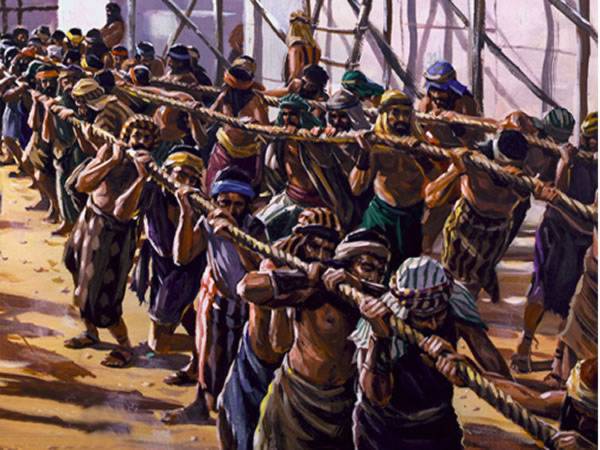
  • The Israelites waited through 400 years of slavery in Egypt before God’s miraculous intervention.

  • Caleb waited 45 years to inherit his portion of the Promised Land.
  • David waited at least 15 years to become king of Israel, after his anointing by Samuel.
  • Simeon, Anna, and many other Jews waited for their Messiah.

God’s delays must serve a purpose.  And a diligent search through scripture gives us answers to:  What good can come from waiting?

  • Times of waiting strengthen our trust in God and our resolve (Psalm 27:14).  If every day was problem-free and blissful, surely our faith would remain shallow.
  • We grow in our relationship with God while resting in his sovereignty and reliability (Psalm 62:5-8).  The Almighty of the universe becomes our closest confidant.  Intimacy with him deepens as we turn to him for comfort, encouragement, strength, and more.

  • Spiritual maturity develops (James 1:2-4).  Waiting is a challenge all by itself, but can also be accompanied by worry, pain, and sacrifice.  The test of waiting, however, develops our patience and perseverance and gives us opportunity to grow in character.  None of these benefits would blossom within us if God provided for every whim, and rescued from every trial.
  • We learn to take joy in the blessings we already have.  Paul wrote, “Be joyful always” (1 Thessalonians 5:16) to a church experiencing persecution.  They were undoubtedly praying and waiting for relief.  But Paul knew that focusing on what Christ had already done for the believers, and the benefits they already enjoyed, would help offset their anxiety and frustration.  The same is true for us.
  • Others see our patience and trust while we wait (Psalm 40:1-4).  Then, when God answers our cries, others take note of his provision, and their faith is encouraged.

It seems we’re always waiting for something; it’s only the intensity of emotion attached to the waiting that tends to vary.  When that intensity begins to grow, perhaps it would help to say, “I’m waiting with great anticipation!

There can be sweet delight in anticipation.  For example, as the Christmas holidays approach, I anticipate the glorious homecoming of family members.  I relish the imaginings of long conversations at the candle-lit dinner table, the hugs and laughter, and the gathering around the Christmas tree for family worship and gift-giving.

I need to apply that joy of anticipation to waiting on God.  I can relish the fact that his plan – including the Wait Time — always includes positive aspects.  I can reaffirm that God is always on time – never late, never early.  I can generate excitement in my spirit by musing on God’s promises and looking forward to the creative, miraculous ways he will fulfill those promises.  With an attitude of anticipation, waiting shouldn’t be nearly so uncomfortable.

(You have my permission to remind me of that, should impatience or frustration start to manifest themselves!)

*     *     *     *     *     *     *     *     *     *

Heavenly Father, I don’t think I’ve ever thanked you for the Wait Times in my life.  Thank you for holding me back, so trust, intimacy, gratitude, patience, and spiritual maturity have a chance to grow.  Help me to embrace the Wait Times as opportunities to discover more of who you are, more of the priceless treasures hidden in your Word, and more of who I can be when I am rooted and built up in you (Colossians 2:7)—especially through times of waiting.

(Art & photo credits:  www.bible-stories-library.com , http://www.moseseditor.blogspot.com . http://www.photosbyravi.com , http://www.pinterest.com.

Read Full Post »

(No, the title is not a typo!  Please read on!)

One time only the verb wrestle is used in scripture.  You probably remember the story of Jacob wrestling with a man through the dark hours of one night. Chances are, Jacob would have been sleepless anyway.  The next day he was to reunite with his estranged brother, Esau (Genesis 32:22-32).  Echoing in Jacob’s mind was his brother’s vow to kill him (27:41).

At the end of the wrestling match, when the man left Jacob, he realized his opponent had been God (32:30)!  (Some say God took the form of an angel.  Some say this was an appearance of Jesus, a pre-incarnate visitation, before he was born as a baby in Bethlehem.)  

Jacob’s heart must have been pounding madly at that moment, but not just from the exertion.  Imagine his shock to realize he had engaged with the all-powerful King of the universe in hand-to-hand combat!

The chronicler to record this event (and all the other events in Genesis) is generally accepted to be Moses.  As he wrote this particular story, Moses must have smiled to himself at the word play that flowed from his pen (Did they use pens of some sort in those days?)

First of all,  Jacob’s name in ancient Hebrew is ya’ aqob.  The word, wrestled, is ye’ abeq.  Even the location of the event is included in the word play.  Verse 22 indicates Jacob was camped along the stream called Jabbok, or yabbok in Hebrew.  Perhaps it was named later, as a memoriam to Jacob’s once-in-history experience.  By Moses’ time, the name would have been well-established.

But that’s just an interesting aside.   Showcasing his sense of humor was not God’s main objective for including this story in scripture.  What might he want us to learn from Jacob’s experience?

Perhaps it is a lesson in humility, as it certainly was for Jacob.  At the end of that wrestling match, God wrenched Jacob’s hip.  He limped for the rest of his life–a constant reminder that God was his Shepherd-caretaker, responsible for Jacob’s successes.  God was also his Angel-deliverer.  Jacob could not guarantee his own escape from Esau’s harm. or any other danger (Genesis 48:15-16).

God proved himself as Jacob’s Mighty One (49:24) the next day.  Shortly after the man left Jacob, Jacob looked up and saw Esau coming toward him–with four hundred men.  Quickly Jacob took precautions to protect his family.  But it was unnecessary.  Esau ran to meet Jacob and embraced him.  The two brothers, who had been alienated from one another for years, now wept in each others’ arms (33:1-4).

At the end of his life, Jacob reaffirmed that it was God Almighty who had provided all the blessings he’d enjoyed (Genesis 49:25).  The patriarch was as powerless to bless himself as he was to overpower God in a wrestling match.  And he prayed that the Strong God would give his blessings–tumbling out of the skies, bursting up from the Earth–to rest on the head of Joseph (vs. 25-26, The Message).

Jacob did not pray that Joseph, too, might  wrestle with God, but that God’s blessing would rest upon him.

Yes, wrestling with God has its place.  At times we may spar with God using words, much as David openly and honestly expressed his disappointments, depression, and even anger to God.  (See Psalms 22, 55, and 77 for examples.)  God is big enough to handle it.

But then comes the morning when we can affirm that his compassions, his blessings, never fail.  Great is the faithfulness of our God (Lamentations 3:22-23)!

So an additional bit of word play brings the two concepts together, thanks to my preacher-son, Jeremy:  wrestling + resting = wresting.

Wrestling allows load-shifting; resting results in peace.  Together they make us strong, steadfast, and firm in our faith.

(art credit:  http://www.bishopmarcelopires.org )


Read Full Post »

Women's Bible Study

“I know we have to persevere and not give up on what we sense God wants us to do,”  S. shared at Bible study.  “And from the lives of Joseph, Moses, Daniel, and others in the Bible, I know God rarely smooths the path perfectly and makes every door open without me even turning the knob.  But what I want to know is how to proceed.  I’d like steps to follow!”

Heads nodded around the table, mine included.  Wouldn’t it be nice if God laid out step one, step two, and so on toward his perfect plan?

That idea has been circulating in my brain for nearly a week now.  Here are some observations.

1. God values our growth in faith more than our comfort in a predetermined plan.   

If it was best for us to know his plan in advance, then that’s what God would provide.  Instead, he allows our faith to be tested, in order to build our character.  That is important to him:

“The Lord detests men of perverse heart but he delights in those whose ways are blameless” (Proverbs 11:20).

2.  God values the process of spiritual growth, not just the final outcome of a purpose fulfilled.

Times of challenge give us opportunity to develop maturity  more readily than times of ease.  What might that development include?

  • Self-discipline–when we tackle difficult tasks.  Granted, the Holy Spirit empowers us (Galatians 5:22-23), but we must give ourselves over to him.  How?  Through frequent prayer, offered throughout the day, consistently asking for his guidance and help.
  • Self-denial–by doing without.  However, the attentive person will soon discover much to celebrate that may have been missed otherwise:  the stunning display of God’s creation, the joy of love and laughter with family and friends, the peace and strength from frequent communion with God.  Suddenly, gratitude flourishes in the heart, and what has been given up doesn’t seem so important anymore.
  • The full meaning of love–when given opportunity to respond in kind ways to difficult people.

None of these valuable traits of discipline, selflessness, and love would fully develop without lessons of experience.

3.  God values the development of our prayer lives–not for his benefit, but for ours.

Jean Nicolas Grou, a Jesuit priest of the 1700s, described healthy prayer as humble, reverent, loving, confident, and persevering.  As we practice those traits in our prayer lives, surely they will overflow into our character, in our actions and reactions.

Patient pursuit, then, is best applied to God’s ways, and then to God’s plan.

(photo credit:  http://www.st-tims-church.org )


Read Full Post »

Back in July we looked at the question, “What does it mean to seek God?”  That phrase, seek God, turns up rather frequently in scripture.   Jeremiah 29:13 is a perfect example:  “ ‘You will seek me and find me when you seek me with all your heart.  I will be found by you,’ declares the Lord.”

In that post, we considered our experiences of searching for people to discover principles that might guide our search for God.

The same strategy can give us insight for another instruction seen often in scripture:  walk with God.  Micah 6:8 is one example:  “What does the Lord require of you?  To act justly and to love mercy and to walk humbly with your God.”

What does that mean exactly, to walk with God?  Again, understanding may be expanded by examining what happens when we walk in the physical realm.

First of all, learning to walk doesn’t happen in a moment.  The late Howard Hendricks, professor at Dallas Theological Seminary, used to make this point with a humorous illustration:

A baby does not sit in his playpen and suddenly say to himself:  “My, oh my!  Observe these family members ambulating on two feet!  What an amazing maneuver for forward locomotion!  I think I shall try it!”

No, a baby cannot simply get up and start to walk.  It is a process that happens over time.  That brings us to…

Principle #1:  Walking with God is a learned behavior that happens over time.

 “Come to me,” Jesus says.  “Walk with me and work with me—watch how I do it.  Learn the unforced rhythms of grace” (Matthew 11:28-29, The Message).

Slowly but surely, as we bring Jesus into our daily routines to be our guide and confidante, we take on his attributes.  A glorious side effect will be:  the fullness of joy that comes when we walk in his presence (Psalm 16:11).  And day by day that fullness grows.

*     *     *     *     *     *     *     *     *     *

Not long ago, my friend, Cindy, invited me to go on a walk in a nearby state park.  It was not an aerobic workout!  Cindy and I chatted away as we leisurely made our way through the woods.  We probably missed some critter sightings because we were more focused on our conversation than the beauty around us.

However, occasionally something would catch our attention, and one would point it out to the other, such as…

“Oh!  Look at those sweet purple flowers!”  Two people saying “ooh” and “aah” is so much more fun than one!

Principle #2:  Walking with God is simply friendship with God.

 God is beside each one of us as we progress through each day.  At any moment we can share our hearts with Him, much as Cindy and I did on that walk.  As his gifts and blessings seize our attention, we can thank and praise him—share our “oohs” and “aahs” with him.

A. W. Tozer suggests we “live in a state of unbroken worship.”  Might that just be like a walk in the woods with a friend?

*     *     *     *     *     *     *     *     *     *

A couple of years ago I accompanied two of our three adult children, their spouses, and one granddaughter to a theme park.  Of course, the young adults wanted to ride at least one roller coaster.   So little Sophie and I went to one of the shows while they waited in line.

Because of the crowd, I held tightly to Sophie’s hand as we made our way to the theater.  But there were patches of thick crowds around some of the attractions.  At those points, I carried her, to make sure we weren’t separated.

I wasn’t about to let anything happen to her.  She is much too precious to me.

Principle #3:  Walking with God provides glorious blessings.  Among them, protection and care.

  • His protective presence.  No doubt you remember this affirmation from David:  “Even though I walk through the valley of the shadow of death, I will fear no evil, for you are with me; your rod and your staff, they comfort me” (Psalm 23:4).
  • And Isaiah presents a beautiful image of God’s loving care.  “He tends his flock like a shepherd; He gathers the lambs in his arms and carries them close to his heart” (Isaiah 40:11).

Heavenly Father, how incredible it is that you—the majestic Lord of the universe–would want to walk with us!  What an amazing privilege that you desire to grace us with your all-wise, all-powerful, supremely loving presence!  What wonderful benefits you bestow as we walk close to your side!

Why would I ever want to walk alone?

(photo and art credits:  www.squiddo.com ; http://www.wallpaperfreehd.com ; sarahhamill.wordpress.com ; http://www.sfgate.com ; tomverenna.wordpress.com )


Read Full Post »

« Newer Posts - Older Posts »

When the House is Quiet

Impressions Becoming Expressions

Mitch Teemley

The Power of Story

Still Traveling

Impressions Becoming Expressions

Living Our Days

Gaining a heart of wisdom

He Said What?!

I'm Patty, and my husband and I are living with our adult son who has autism and epilepsy. I love sharing lessons learned from life around me, especially life with Aaron.

Meditations of my Heart

Impressions Becoming Expressions

Linda Stoll

Impressions Becoming Expressions

Signora Sheila

Where Faith Meets La Dolce Vita

Heidi Viars

Finding the Image of God