Feeds:
Posts
Comments

Posts Tagged ‘Faith’

DSC_7445-X3 (My mom & dad with their great-granddaughter, Sophie, 2011)


“What we leave behind

is not what is engraved in stone monuments,

but what is woven into the lives of others.”

— Pericles (495-429, B.C.  Greek statesman, orator, and general of Athens)

I love that word, woven. It speaks eloquently of the way my mother, Geraldine Claire  (November 5, 1928-October 9, 2014), influenced my life. Woven into the fabric of my being are memories of Mom’s words and example that still have impact to this day.

Many of those memories involve Mom and Dad because they were such an inseparable team. They even wallpapered together.

Now marriage experts will tell you that completing home improvement projects with your spouse can be detrimental to your relationship. But that was not the case for Mom and Dad. Amidst the measuring, pasting, and hanging, my brother, John, and I saw cooperation and patience in action.

Once the wallpaper was hung in the three homes of our growing-up years, Mom was ready to entertain. Hospitality was definitely one of her gifts. In fact, the last dining room table Mother and Dad purchased could seat fourteen people.

Mom became adept at organizing large gatherings by writing lists, doing everything she could ahead of time, even labeling the serving ware so each item on the menu would have an appropriate bowl or plate. Little did I know then how often I’d be following her routine and recipes, as Steve and I began to entertain.

Mom’s legacy included wise advice. One time I was heartsick over a low report card grade in math—my most challenging subject. She quickly gave me perspective for the tragedy, saying, “Just remember: this grade will not matter in ten years.”  And, of course, she was right.

Countless times over the years as disappointments and difficulties have occurred, I’ve heard Mother’s voice reminding me to consider events with a ten-year perspective.

But that doesn’t mean she accepted excuses. Instead, Mom fostered independence and personal responsibility .

I’m remembering the Sunday School Christmas program from second grade. My part was to recite six verses from Luke, chapter two, about the angel visitation to the shepherds. “This is too much to memorize,” I complained.

Mother replied calmly, “Well, just tell Mr. Faircloth that you can’t manage it, and he’ll ask someone else.”

Mom did not take control of the situation; she left it up to me to decide what course of action to take. Wise mother, indeed.

But perhaps the most astounding aspect of her legacy is the way she exhibited all features of the fruit of the Spirit, listed in Galatians 5:22-23.

For example:

LOVE — Mom lavished love on family, friends, and stranger alike. She could strike up a conversation with anyone, and was always ready with a warm hug.

JOY — Mother was a woman of gladness. She laughed easily and often.

PEACE — Mom and Dad created a peaceful, secure home for John and me.

PATIENCE — She exercised great patience, especially when dealing with my fluctuating moods of early adolescence.

KINDNESS — Mother demonstrated kindness in many ways.  I remember one house where the old wallpaper was in process of removal when Mom and Dad took in a missionary who needed a place to stay.  We have home movies of  that missionary, Miss Hunt, standing in front of  the glue-encrusted plaster.  Another time when a different missionary family stayed with us, Mom did all their laundry while they attended to other affairs.

GOODNESS — Mother’s goodness was also expressed in numerous ways.  In my mind’s eye, I can still see Mom at her desk at Scripture Press, where she was executive secretary to the Vice President of Editorial.  (The visualization is easy to conjure; I sat directly across from Mom, most of my seven summers as an editorial assistant.)  Frequently people stopped by her desk to share a need and ask for advice.  We used to tease her about being the psychologist of Scripture Press!   

FAITHFULNESS — Mother’s faithfulnesss to God never wavered for the seventy-five earthly years she knew Jesus as her Savior and Lord.

GENTLENESS — While John and I were growing up, Mom could be plenty firm with us.  Yet, when we were sick, hurt or experiencing trouble, she readily soothed us with comfort and hugs.

SELF-CONTROL — I have to admit:  I provided Mom and Dad with plenty of parenting challenges.  And though Mom did become angry sometimes, she never lost her temper with me.

For these reasons and so many more, John and I “arise and call her blessed” (Proverbs 31:28).  Mother did indeed weave godly integrity, wisdom, and faith into our lives.

Read Full Post »

article-step-by-step_ds-photo_getty_article_178_67_200377237-001_XS

Back in the 1970s somebody came up with the idea of worry stones—small, smooth pebbles that people could rub between their fingers to release their worries. (What a great money-maker, huh?  Collect some free pebbles, clean ’em up and sell for 100% profit.  Genius.)

According to enthusiasts, the constant rubbing activates the nerves at the base of the thumb, releasing endorphins. As a result, a sense of calmness purportedly settles in the user’s mind.

Even if that’s true, what happens when the person stops rubbing? Since the worry has not been resolved; isn’t it likely to return? I can’t see myself rubbing a stone until I fall asleep at night, can you?

Here’s a better idea.  Instead of going to a small pebble for worry-relief, go to the Rock.

What Rock, you ask?

“There is no one holy like the Lord; there is no one besides you; there is no Rock like our God” (1 Samuel 2:2).

Next question:  Why go to the Rock?

1.  God our Rock is more stable and reliable than Gibraltar.

igibrat001p4

The Rock of Gibraltar has become a symbol for stability, having stood sentry on the southern coast of Spain for centuries. Some say it dates back to the Jurassic Period.

But our God is older still, isn’t he.

“Trust in the Lord forever, for the Lord is the Rock eternal” (Isaiah 26:4).

And he is the same yesterday, today, and forever (Hebrews 13:8).  Now that’s reliable.

2.  God our Rock is more sheltering than a deep cave.

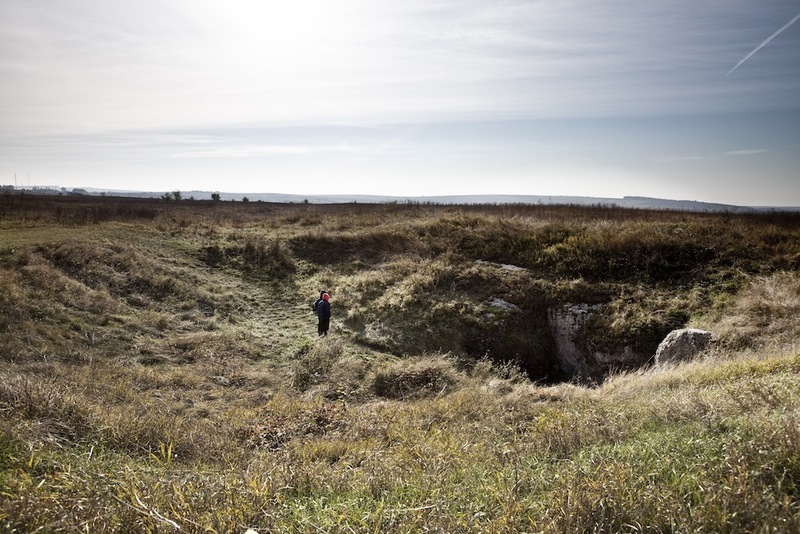
Verteba_Cave

(Verteba Cave, Ukraine)

During World War II, a small group of Ukrainian Jews found a way to escape the Nazis. They lived underground in caves for a year and a half.

At night they foraged for food. They even built showers and latrines deep inside.

But imagine living every day in pitch blackness and in fear of being discovered.

One day it happened. Nazi soldiers stumbled upon their hiding place. A courageous woman spoke for the group, as German guns pointed straight at her.

“What are you afraid of here?” she said. “Is the Furhrer going to lose the war because we live here?” Miraculously the soldiers left without doing anyone harm.

The band of Jewish villagers found relative safety in those caves,  and in April, 1944, the cave dwellers were liberated, able to return to the light.

But God our Rock offers guaranteed eternal safety for our souls. His Son, Jesus “became the source of eternal salvation for all who obey Him” (Hebrews 5:9)

3.  God our Rock is more protective than Masada.

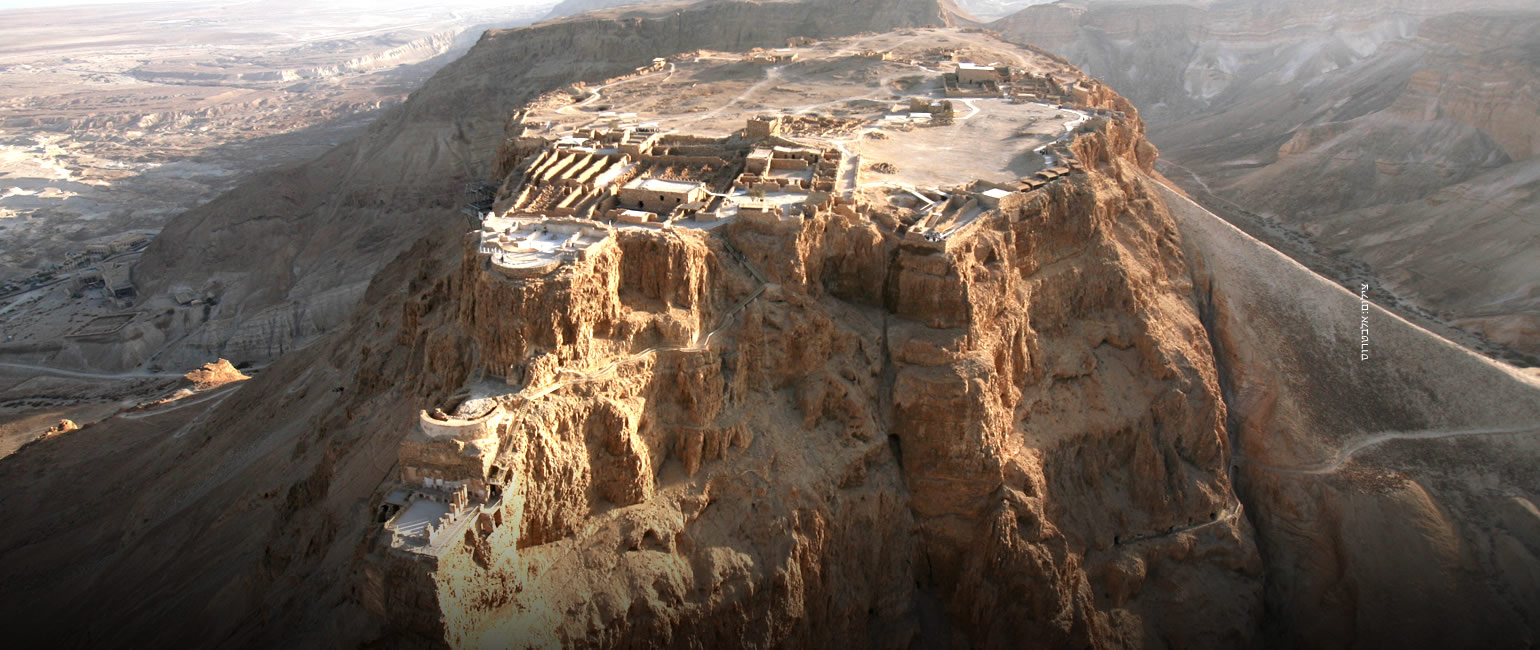
slide-static

Perhaps you’re familiar with the mountaintop fortress, towering 1500 ft. above the Dead Sea.   The refuge was built by Herod the Great, from 37 to 31 B.C., to showcase his power.

Infamous for his brutality, Herod had good cause to be paranoid. He spared no expense to make sure this desert fortress could withstand attack and provide long-term refuge. His plan included protective casement walls, an ingenious water-collection system and cisterns for storage, storehouses, barracks, palaces, an armory and more.

Impregnable? Almost.

When Herod died, Jewish rebels were able to overtake the Roman guard remaining at the fortress. A thousand Jewish zealots lived atop Masada for three years.

Yet nothing or no one on earth can compare to God our Rock.

“Lead me to the Rock that is higher than I,” cried David. “For you have been my refuge, a strong tower against the foe” (Psalm 61:2-3).

And how do we avail ourselves of God’s refuge?  Through gratitude, praise, and prayer.  We can:

  • Thank him for his promises, for the times he has protected and provided in the past.  We must feed our confidence in God rather than our fear.
  • Praise him for his glorious attributes that he is bringing to bear upon our situations–attributes such as power, wisdom, trustworthiness, and love.
  • Affirm our faith. If we occupy our minds with expressions of trust, there won’t be room for thoughts of worry.

“My soul finds rest in God alone;

my salvation comes from him.  

He alone is my rock and my salvation;

he is my fortress, I will never be shaken…

Find rest, O my soul, in God alone;

my hope comes from him”

(Psalm 62:1-2, 5).

(Photo credits:  www.ehow.com; http://www.kids.brittanica.com; http://www.noplaceonearthfilm.com; http://www.masada.org.il.)

Read Full Post »

Olive-grove

In one of his many psalms, David compared himself to an olive tree:

“I am like an olive tree flourishing in the house of God; I trust in God’s unfailing love for ever and ever” (Psalm 52:8).

If you’re like me you’re wondering: Why does David identify himself as this particular tree? Is there something special about olive trees?

As a matter of fact, yes.

It may be that, as David composed this psalm, he was contemplating several qualities characteristic of these distinctive trees:

Long Life

Olives are among the longest-living trees, continuing to grow for hundreds of years.   In fact, one specimen in Algarve, Portugal is 2000 years old, according to carbon dating.

Perhaps their longevity is due to adaptability. They can grow in various conditions—on terraced hillsides or in valleys, in rocky soil or rich, fertile loam. But even in hot climates with little rainfall the olive can grow quite contentedly.

Not only is it adaptable, the olive tree is tenacious. If it is cut down, shoots from the roots will develop, and the tree will miraculously regenerate itself.

Far-Reaching Root Systems

Because they grow for centuries, and spread their branches wide, the root system of an olive tree can be quite massive, expanding twenty feet in every direction around the trunk.

Fruitfulness

Even dwarf olive trees will produce 20-40 pounds of fruit each year.  The largest variety can produce a ton of olives annually!  The oil pressed from the fruit is also useful for cooking, for fuel in oil lamps, and even for skin care products.

No doubt you already see parallels to a life rooted and established in God:

  • The olive tree is almost eternal; David knew that one day he would “dwell in the house of the Lord forever” (Psalm 23:6).
  • The massive root system brings to mind the qualities of stability and perseverance, and the habit of abiding (John 15).  An anonymous psalmist expanded the word picture for us when he wrote: “And he shall be like a tree firmly planted [and tended] by the streams of water, ready to bring forth its fruit in its season; its leaf also shall not fade or wither; and everything he does shall prosper [and come to maturity]” (Psalm 1:3, AMP). In other words, a person seeking after God is so well-rooted in Him, nothing can destroy his spirit.
  • The fruitfulness of the olive tree reminds us of the fruitfulness of the Spirit-led life (Galatians 5:22-23).  As a person grows deep in her knowledge of God and in relationship with God, she becomes more loving, joyful, peaceful, and so on.  Not all at once, however.  It is a growing process, after all.

And so, an expansion of David’s metaphor in Psalm 52 might read:

I am like an olive tree,

Content to bloom where the Gardener plants me,

Flourishing and thriving even,

In the gracious presence of my God–

Immortal through faith,

Grounded in Him,

Growing toward maturity

As I trust

In His unfailing love,

His protection and provision,

His guidance, and grace–

Forever and ever.

We praise you, Heavenly Father, for what you have done (Psalm 52:9a)!


(Photo credit:  www.home-hunts.net.)

Read Full Post »

‘Ever watch one of those television shows that provides a person with a complete makeover? By the end of the hour she (or sometimes he) has acquired a personalized, updated wardrobe, learned how to apply make-up, and received a new hair-do.  The physical transformation is always stunning.

However, there is a transformation even more amazing.  Paul explains it this way:

“If anyone is in Christ, he is a new creation; the old has gone, the new has come” (2 Corinthians 5:17).


new-creation


Those of us in Christ haven’t just been adjusted, primped, polished, or camouflaged.  We have become new people with clean slates, strong purpose, deep joy, and vibrant enthusiasm for life.

And that’s not all.  Each day we’re becoming better than the day before–a bit more perfected–if we remain in Christ.  Sarah Young (Jesus Calling) says we’re becoming more fully our true selves–the ones God designed us to be.  I like that.

Each day in Christ is an opportunity to grow more completely into his glorious image.  These changes have nothing to do with outward appearance.  They take place on the inside, impacting our personalities, emotions, minds, and spirits.

That expression, in Christ (also “in the Lord” and “in him”), occurs 164 times in Paul’s letters.  Such repetition would indicate the importance of the concept.

So how would we define the meaning of being “in Christ?”  Here are a few possibilities.

1.  In Christ means we live within his presence.  Now that’s a rather abstract concept. Perhaps an analogy would increase our understanding.

Picture yourself surrounded by trees in a forest.  The woods fill your senses—the sight of tall, stately trees, the sound of chirping birds, the aroma of pine and earth, the textures of rough bark and velvety moss, the taste of cold, clear water from a stream.


SunShiningThroughDustInWood

Similarly, the presence of Christ completely surrounds us as believers.  Christ fills the senses of our hearts, if we avail ourselves. We see more fully the glory of his creation, hear his truth, breathe in his love like a fine fragrance, feel his strength upholding us, and taste his goodness in the feast of blessings he provides.

Such sensations change who we are.  In Christ, we can become stable, contented, joy-filled people.

2.  In Christ means we are united with him, like a branch fused to the vine (John 15:1-8). He is the Source of everything we need, but we must stay in contact with him. How do we do that with Someone who’s invisible? Possibilities include prayer, praise, gratitude, and worship–throughout the day.

And when we’re united with him, his peace and strength are infused into us.

3.  In Christ means we’re in close relationship with him. Never should there “be day when we give ourselves a chance to forget him” (William Barclay).

And when we live in the presence of Christ, and in union with Christ, the inner transformation he has instituted will most definitely become visible. Jesus’ character will begin to flow through our attitudes and actions, just as sap flows through the vine into the branches. Attitudes like kindness, understanding, and forgiveness will give strong evidence that we’re living in Christ.


Woman praising with arms raised in the air


And what will the people around us see?  Folks who…

  • exude joy and optimism.
  • are gracious to others.
  • exhibit self-control.
  • make wise choices.
  • aim to express love–always.

Such delightful, purposeful living awaits those who center themselves  in Christ.

*     *     *     *     *     *     *     *     *     *

Thank you, Lord Jesus, for the supreme privilege of living in your presence.  You are the King of the universe, yet you want to be united with us in close relationship.  And as we avail ourselves, you infuse us with your attributes, your strength, your peace.  All praise to you, gracious Savior, the Author and Perfecter of our faith, as we abide in you.

(Photo credits:  www.brotherransome.com, http://www.wikipedia.org., and alishagratehouse.com.)


Read Full Post »


(As most of you know, Steve will soon be retiring from the pastorate, after serving forty years in Florida. Mid-June we move to the Midwest, to be close to our sons and their families. If our daughter and her family would just move east from Washington State, life would be near-perfect!

No doubt you’re also aware that packing and unpacking are time-consuming tasks, so I’m putting the blog on hold for a few weeks. But please continue to visit! I’ll re-blog some previous posts, and hopefully you’ll find them meaningful again, or perhaps for the first time.

The following post was first published 11-12-12.)


david_goliath_bible_hero_poster


If I asked a church group to name their favorite Bible story, David and Goliath would surely get several votes. The classic plot of underdog-beats-bully appeals to many of us. In addition, David provides a powerful example of faith in the face of fear.

This familiar story was the reading assignment during my Bible study one morning almost thirty years ago. But a new lesson awaited me that day, and has impacted my life ever since.

Following the reading of 1 Samuel 17, the study guide asked: “How did David’s past experiences of the Lord’s deliverance give him confidence to face the present challenge?” The author was referring to the bears and lions David had defeated while caring for his father’s sheep (vs. 34-36). Such experiences had prepared David to face Goliath with faith and courage.

Then came the clincher question: “What practical lessons does this teach us about the value of remembering, and the importance of proving God’s presence and power in ordinary daily living?”

I could easily recall several outstanding experiences when God’s presence and power were definitely at work in my life. But I knew there were many more which had slipped out the back door of my memory and were gone forever.

So I decided to begin writing down instances of God’s presence and power. Then when Goliath-sized problems arose in my life, I could review those entries and build up my faith.

The first incident occurred that very afternoon. I locked myself out of the house as Jeremy, our youngest, and I left to pick up his older brother and sister from school. My pastor-husband, Steve, was attending a meeting forty-five minutes away and wouldn’t be home until late that night. To make matters worse, dinner was simmering on the stove. (Remember, this happened nearly thirty years ago, before cell phones.)

I did have the car keys so we drove to school and started to pray for God to help us. Upon returning, I tried every door and window. Nothing budged. We went to a neighbor’s house. I started to call several leaders from our church, hoping someone would have a parsonage key.

During the second or third call, who should pull up in the driveway but Steve! His meeting had adjourned early. With a few spare minutes on his way to another appointment, Steve thought he’d stop by to see the kids. Our car in the neighbor’s driveway indicated where we were.

Now some folks would call that mere coincidence. Not I. That was a God-incidence, and it became the first entry in my Blessings Journal. I concluded that record with this prayer: “Thank You, Lord, for this little miracle, for proving your power and presence to me the very day I determined to look for it. You are a great and marvelous God, yet you cared for one forgetful mother with one small problem.”

(That Blessings Journal now contains over 900 entries of remarkable gifts and events.)


What indication of God’s presence and power have you experienced recently?  Tell us about it in the comments below!


(art credit: http://www.livingfaithtogether.wordpress.com)

Read Full Post »

(As most of you know, Steve will soon be retiring from the pastorate, after serving forty years in Florida. Mid-June we move to the Midwest, to be close to our sons and their families. Now if our daughter and her family would just move east from Washington State, life would be near-perfect!

No doubt you’re also aware that packing and unpacking are time-consuming tasks, so I’m putting the blog on hold for a few weeks.  But please continue to visit! I’ll re-blog some previous posts, and hopefully you’ll find them meaningful again, or perhaps for the first time.

The following post was first published 12-3-12.)


When I was a little girl, my parents kept a large garden in the backyard. They grew corn, beans, tomatoes, strawberries, lettuce, and more.

Among all that produce grew something else: garter snakes. I was petrified of those snakes, in spite of assurances from Mom and Dad that they could do me no harm.


Garter_Snake


So what was my reaction if, while playing in the yard, I noticed the slightest bit of slithering? I RAN while emitting eardrum-splitting shrieks. No doubt those snakes took off just as rapidly in the opposite direction, but I never looked back to find out.

Those experiences make a good word-picture of what my response should be when snakes of negativity, worry, or hurt feelings invade my mind. RUN!

James recommended exactly that: “Resist the devil, and he will flee from you” (4:7b).

But where should I run to? As a child, when seeking escape from the garter snakes, I often ran into the house, a safe and secure refuge. (Although I did have the occasional nightmare about smart snakes, who knew how to slither under doors and up stairs, so even the house wasn’t safe!)

As an adult, facing “snakes” of a different nature, where should I run?

“God is our refuge and strength, an ever-present help in trouble (Psalm 46:1).

That means, when my thoughts begin to turn to the negative, I need to run to God, my refuge of hope and help (Psalm 119:114).

When people speak or act unkindly and my emotions are bruised, I need to run to God, my refuge of comfort (Psalm 31:19-20).

When worry overtakes me, I need to run to God, my refuge of peace (Psalm 9:9).

Once my attention is focused on him, I must:

  • Look into his eyes and see the great everlasting love he has for me (Jeremiah 31:3).
  • Sense his strong arms around me, holding me close to his heart (Isaiah 40:11).
  • Hear him reminding me of all his promises and all the times he has blessed me in the past (Psalm 77:11-12).
  • Taste his goodness (Psalm 34:8) in all the flavors of his attributes: power, wisdom, holiness, loving-kindness, grace, and more.

And what will be the end result? “Let all who take refuge in you be glad; let them ever sing for joy” (Psalm 5:11a). That sure beats cowering, fretting, and flustering, doesn’t it?

*     *     *     *     *     *     *     *     *     *

Thank you, Father, for availing yourself to us as a refuge, a person-place we can run to for help, protection, and peace. We love you, O Lord, our strength, because you are our rock, our fortress, and our deliverer (Psalm 18:1).

Thank you for caring for us, those who seek to trust in you (Nahum 1:7). May we avail ourselves of your gladness and joy rather than let the snakes of negativity, worry, or emotional hurt get the best of us!

(Photo credit:  www.wikimedia.org.)

Read Full Post »

(This is the last new post until July 3.  As most of you know, Steve is retiring from the pastorate, after serving forty years in Florida.  Mid-June we move to the Midwest, to be close to our sons.  And if our daughter and her family would just move east from Washington State, life would be near-perfect!

Packing and unpacking are time-consuming tasks, as you know, so I’ll put the blog on hold for a few weeks.

But please continue to visit!  I’ll re-blog some previous posts, and hopefully you’ll find them meaningful again, or perhaps for the first time.)


TODAY’S POST


True or False:

 God will do the right thing at the right time.

–Max Lucado


We believe that’s true, right?  We can even find scripture to back up that statement:

“I choose the appointed time; it is I who judge uprightly” (Psalm 75:2).

Never in a million years would we say, “This statement is false. God can’t be trusted to do the right thing!”

But we do sometimes wonder why our ideas of the right thing don’t seem to match his idea.

And we do unabashedly wonder about his idea of right timing.

We also wonder why there’s not even a hint of progress toward that right thing we desire. We wonder why God is silent.


Wondering


But God’s silence is not like that of people.   He doesn’t give us the silent treatment in some petty game of payback. And it’s not a case of forgetfulness either.

More than likely God is working on other matters rather than that one we’re focused on– other matters such as perseverance, faith, and spiritual maturity. These character traits and others don’t grow so well if we’re always getting what we want when we want it.

We can rest assured there is purpose in the pause.

And just knowing that can ease our impatience.

Something else that’s important to know, too:

There’s really no such thing as silence with God, because we always have his Word, chock full of glorious promises and encouragement.  And it’s always available.  (I’m assuming you have an iPhone or computer–you’re reading this post; therefore you have access to a Bible–even if it’s online!)

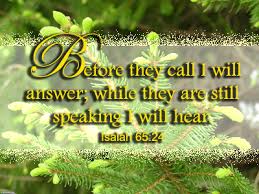
One of my favorite promises is Isaiah 65:24.


Unknown


(“Before they call I will answer; while they are still speaking, I will hear.”)

And one more, also from Isaiah:

“I will accomplish all my purpose” (46:10b).

God is not only working in our behalf now, he foresaw our need and began working toward its fulfillment before we uttered the first prayer. He started arranging events and bringing together people and resources so that at just the right time the right thing will happen.

Notice the “I will” in each of those verses above. Isaiah did not record God’s good intentions. These are promises of the Almighty God of the universe, our always-truthful, always trustworthy Heavenly Father.

WHY DO I WONDER?!


*     *     *     *     *     *     *     *     *     *


I praise you, Heavenly Father, for being reliable and trustworthy. I can’t imagine life without you as my foundation. Thank you for every promise in your Word that gives me support. Once again, I avail myself to your plan, so you can do the right thing at the right time—without the interference of my impatience or doubt!


(Art and photo credits:  www.kemingshen.com , http://www.brendaboen.blogspot.com.)


Read Full Post »

images


I am a person of roots and routine. Are you?

Do you grieve when it’s time to leave one community for another, because emotional attachments have grown deep?

Do you take comfort in familiar routine, because you can move forward with confidence?

Then you’ll understand this statement: I am a person who struggles with change.

So this post is for me, to review what I know about accepting–even celebrating–change. You’re welcome to read over my shoulder.

First and foremost: I need to be selective of vocabulary, even in my thoughts. Thoughts impact attitudes; attitudes impact soul and spirit. For example:

  • Instead of change, I need to speak of the circumstances as an adventure.
  • Instead of problem, I should say possibility.
  • Instead of challenge, I can call the situation an opportunity.

Such a small commitment, really. But retooling my word-choices could have a profound impact on my spirit.

First, the change I don’t want to embrace takes on a glowing, new aura when I rename it adventure—the adventure of participating with God to bring about his good purpose (Romans 8:28). Such thinking would surely foster excitement!

Second, the problem I see is nothing compared to the possibilities God is capable of. “God can do anything, you know—far more than you could ever imagine or guess or request in your wildest dreams” (Ephesians 3:20, The Message)! As I consider the possibilities, hope and anticipation will flourish.

Third, the challenge I find so uncomfortable will undoubtedly provide opportunity to see God’s power and provision at work. Perhaps I’ll witness a whole string of God-engineered events. Or, the power and provision may occur in me, as he molds my personality and spirit into a more Christ-like version. (That is even more miraculous!) And who would turn aside from seeing—even participating in—a miracle?

It begins with my words.

*     *     *     *     *     *     *     *     *     *

This might sound strange to some, but thank you, Father, for the uncomfortable changes, challenges, and disappointments you’ve brought into my life. Not one of them was without purpose. Forgive me for the times I have fretted about how circumstances would turn out. How easy it is for me to forget that you hold all things in your hands.

May I anticipate the adventure, the possibilities, and the opportunities of each day, NO MATTER WHAT, because you are by my side–my all-powerful, all-wise, all-loving God. Thank you for the promise that you WILL fill me completely with joy and peace as I trust in you.  Then I can overflow with hope (Romans 15:13).

(Photo credit:  www.desiremercy.wordpress.com.)

Read Full Post »

let_the_glory_out_tshirts-rf982b89d7b1846dbb186d467bd317390_8naah_324

Defeat may serve as well as victory

To shake the soul and let the glory out.

When the great oak is straining in the wind

The boughs drink in new beauty and the trunk

Sends down a deeper root on the windward side.

Only the soul that knows the mighty grief

Can know the mighty rapture.  Sorrows come

To stretch out spaces in the heart of joy.

–Edwin Markham (1852-1940)

Mr. Markham–educator, author, and poet– gives us much to contemplate in just eight lines, beginning with the first seven words:

“Defeat may serve as well as victory.”

No, thank you, my spirit says.  Defeat is humiliating, uncomfortable, and depressing.

Mr. Markham inspires a different perspective and a note-to-self:  God may very well bring defeats into my life “to shake my soul and let the glory out.”

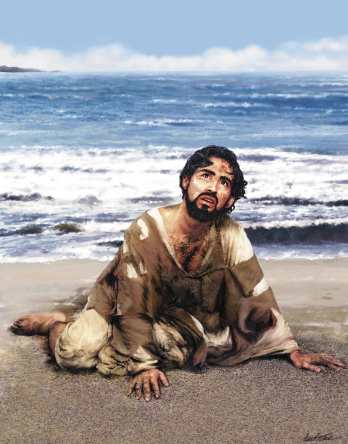
Reminds me of Jonah, the reluctant prophet who tried to run from God.  The Lord told him to go east to Nineveh, an important city of Assyria.  Instead he headed west, boarding a ship for Tarshish.

But a fierce storm churned the seas into a boil.  In desperation to appease the gods, the sailors hurled Jonah overboard.  Surely in those tense moments of near-drowning and then being swallowed by a great fish, Jonah felt crushing defeat.  His life was over; it was just a matter of seconds.

Yet he didn’t die.  Hour after hour in the utter blackness of the fish’s belly, he remained alive.

No doubt he felt shaken in his soul, and in his distress, he called to the Lord (2:1ff).

God heard his prayer and commanded the fish to vomit Jonah onto dry land.

Jonah_shore

 Then the Lord repeated Jonah’s marching orders: “Go to the great city of Nineveh and proclaim to it the message I give you” (3:1).

This time Jonah obeyed, and the glory came forth.   Jonah preached and the people repented. God had compassion upon the citizens of Nineveh, and did not bring destruction upon them.

What appeared to be a mortal defeat for Jonah turned into a glorious revival for a wicked city.

Read Mr. Markham’s poem again and you’ll discover more benefits of defeat, as outcomes of:

  • Straining in the wind.  Pressing on during adversity results in perseverance and strength of character.
  • Drinking in new beauty.  During times of distress we’re more aware of God’s glorious attributes at work in our spirits–attributes such as empowerment, faithfulness, peace, and grace.
  • Sending down deep roots.  Defeat often brings us to new depths of surrender and submission.  It also brings us to new depths of God’s love (Ephesians 3:17).
  • Experiencing grief.  Only those that know a mighty grief can know the mighty rapture.  Like diamonds against dark velvet, joy needs a backdrop of sadness in order to be appreciated fully.
  • Experiencing sorrow.  Sorrows create space for joy.  Joy is never so sweet and overwhelming as after sorrow.

God knows what he’s doing, and he doesn’t waste time or effort.  False starts and fruitless endeavors just don’t happen with our perfect Heavenly Father.

Therefore, when defeat comes into my life or yours, we can rest assured he is accomplishing his good purpose for us.

There will be victory in defeat.

Guaranteed.


(photo and art credits:  www.zazzle.co.nz.com; http://www.searchforbibletruths.blogspot.com.)


Read Full Post »

110524

“Surely goodness and mercy will follow me, and I will dwell in the house of the Lord forever.”

Sound familiar? That’s the last verse of Psalm 23.

It turned up somewhere in my reading this week.  Can’t remember exactly where.

But I do remember thinking, Wait a minute.  Follow?  Why didn’t David say, “Surely goodness and mercy are with me?”  It doesn’t seem very helpful to have God’s goodness and mercy behind me.

After all these years of familiarity with this beloved psalm, I was suddenly quite puzzled.  What could David’s statement mean?

I started with the dictionary.  Did you know there are twelve different meanings for the verb,  follow?  Several of the definitions opened up new understanding for me.  See what you think:

1.  Follow means to be the result of, as in, “A discussion followed the presentation.”

God’s goodness and mercy are the result of availing ourselves of his shepherding, his watchful care and wise guidance (vs. 1-3).  We don’t have to beg for his loving kindness; it is automatically bestowed as we trust in God.  Isn’t that glorious?

“Your righteousness reaches to the skies, O God, you who have done great things.  Who, O God, is like you” (Psalm 71:19)?

But.   If we take a pass on his leadership, we have no right to expect his blessing.

2.  Follow means to keep to or stick to, as in “Follow these guidelines.”

The Bible scholars of GOD’S WORD Translation must have embraced this definition. “God’s goodness and mercy will stay close to me,” they wrote.  One commentator said these attributes of God cling to us.  I like that, too.

3.  Follow means to pursue, to move behind with the intention of overtaking as in “The detectives followed the suspect.”

Isn’t that wonderful imagery, of God pursuing us with his goodness and mercy and never giving up?

Those translators who have chosen stay close to me, or pursue, do enlighten our understanding.  But one truth of David’s statement is best served with the more familiar verb, follow:  We often don’t see God’s goodness and mercy until the experience has passed.  It’s in looking back we see that he did pursue us and cling to us, lavishly imparting all his attributes.

For example, ever have one of those weeks when the to-do list is long, and there seems no way to accomplish it all?  I’ve seen God engineer circumstances so that an item or two could be postponed, another one or two are cancelled, and a few don’t take as long as expected.  One way or another, the list of tasks is checked off. And with a sigh of relief I look back and realize God had been following me, taking care of things as the week progressed.

“He rescues and he saves; he performs signs and wonders in the heavens and on the earth” (Daniel 6:27).  Even for one woman with too much to do.

Every time God demonstrates his close attention, I try to record the incident in my blessings journal.  Watching that list grow has increased my faith; all the experiences have taught me I can continue to trust.   The goodness and mercy of God will follow me all the days of my life.

*     *     *     *     *     *     *     *     *     *

Oh, Father, I marvel to think your continual presence is close to me.  I can turn to you at any moment and you are there, ready and waiting to minister to my needs. Out of your goodness you give me countless blessings that I don’t deserve; out of your mercy you have withheld consequences for my sin that I do deserve.  Thank you for pursuing me with patience, gentleness, and compassion. 

Now may I be passionate to follow you, all the remaining days of my life.  “And I will dwell in the house of the Lord forever.”  How glorious to know that, even while living on earth, I can dwell in your presence within my spirit.  I rejoice in your name all day long and exult in your righteousness, for you are my glory and strength (Psalm 89:16-17)!

(Photo credit:  http://ourdailyblossom.com.)

Read Full Post »

« Newer Posts - Older Posts »

When the House is Quiet

Impressions Becoming Expressions

Mitch Teemley

The Power of Story

Still Traveling

Impressions Becoming Expressions

Living Our Days

Gaining a heart of wisdom

He Said What?!

I'm Patty, and my husband and I are living with our adult son who has autism and epilepsy. I love sharing lessons learned from life around me, especially life with Aaron.

Meditations of my Heart

Impressions Becoming Expressions

Linda Stoll

Impressions Becoming Expressions

Signora Sheila

Where faith meets la dolce vita

Heidi Viars

Finding the Image of God