Feeds:
Posts
Comments

Posts Tagged ‘Faith’

Kind words do not cost much. Yet they accomplish much. ~  Blaise Pascal

“Kind words do not cost much.  Yet they accomplish much.”

*     *     *     *     *     *

“Do you wish people to think well of you?  Don’t speak well of yourself.”

*     *     *     *     *     *

The power of a man’s virtue should not be measured by his special efforts,

but by his ordinary doing.”

*     *     *     *     *     *

Do the above quotes remind you of Proverbs in the Bible?  They do have a similar tone, and certainly impart wisdom.  But they were not penned by King Solomon.  Credit goes to Blaise Pascal (1623-1662).

Portrait of Pascal

His name probably sounds familiar.  Chances are, you studied him in school, either in math class or science, maybe both.

Pascal’s first noteworthy accomplishment?  He formulated  a basic theorem of projective geometry, called Pascal’s theorem– at age sixteen!

He invented a calculating device, to help his father, who was a tax collector–when he was only nineteen.

A Pascaline, an early calculator.

(A Pascaline, Pascal’s early calculator)

Another set of experiments produced his famous law of hydraulics.  He contributed important study on the vacuum, on the weight and density of air, and the arithmetic triangle.

Pascal also developed the theory of probability, which is still used today.

And he invented the syringe, the hydraulic lift, as well as the first mechanical computer.  A computer language is named after him.

Such broad giftedness wrapped up in one young man!  But Pascal was actually embarrassed by all his talents.

Even as he was studying mathematics and conducting scientific experiments, Pascal was also exploring spiritual matters.  He and his sister joined a group of Catholics in France, called Jansenists, who believed that salvation was a gift of God’s grace, and could not be earned through good works.

Pascal said, “There is a God-shaped vacuum in the heart of every man which cannot be filled by any created thing, but only by God, the Creator, made known through Jesus Christ.”

In 1654, Pascal was thrown from a carriage when the horses bolted.  The horses died, but Pascal was unhurt.  He felt convinced God had saved him, and he began thinking seriously about what God might want him to do.

That night Pascal had a vision of the crucifixion and experienced a profound renewal in his spirit.  From that point forward, scientific work was of secondary importance in his life.

At that time, Pascal wrote:  “Certainty!  Joy!  Peace!  I forget the world and everything but God!…I submit myself absolutely to Jesus Christ my Redeemer.”

Pascal recorded  this and other statements about his mystical experience on a piece of parchment, then sewed the document into his coat.  There it remained hidden until it was discovered after he died.  Pascal was only thirty-nine years old.

(Pascal’s “Night of Fire” parchment)

Also discovered after his death:  twenty-seven bundles of notes for a major work defending the Christian faith.  These notes were published posthumously and titled Pensees, or Thoughts.  It became a classic of Christian thinking.

 Pascal’s truth-gems include:

“The supreme function of reason is to show man that some things are beyond reason.”

“Happiness is neither without us nor within us.  It is in God, both without us and within us.”

“If our condition were truly happy, we would not seek diversion from it in order to make ourselves happy.”

“People almost invariably arrive at their beliefs not on the basis of proof but on the basis of what they find attractive.”

Perhaps his most famous statement in the Pensees is a short essay titled “The Wager.”  Here are a few excerpts:

“Either God exists, or He does not.  Which will you gamble on?  If God exists, you win everything.  If He does not exist, you lose nothing.  Do not hesitate, then:  gamble on His existence!”

In other words:

Thank You, Father, for wise men and women such as Blaise Pascal, who express themselves in such rare and beautiful ways.  Their words stretch our intellects and stir our hearts. 

Yet Your greatest joy would be for their words to touch our lives so that tomorrow we are nearer Your best for us–words such as that quote about virtue not being measured by special efforts but by ordinary doing.  Help me to remember that it is in the ordinary that I can reflect You most brilliantly.

 (References:  Eerdman’s Christian Classics;  www.christianitytoday.com ; www.ccel.org; www.answersingenesis.org. ; http://www.brainyquote.com ; http://www.goodreads.com ) 

Photo and graphics credits: http://www.smallactsofkindness.wordpress.com ; http://www.wikipedia.com ; http://www.famousquotesabout.com; http://www.conflicted collegechristians.wordpress.com.


Read Full Post »

Mr. Chump thinks he’s pretty smart.

He doesn’t need experts; he already knows what’s best.

He doesn’t need repairmen; he fixes things himself.  Of course, many items turn out to be very poorly made, so parts don’t go back together the way they’re supposed to.  Frequently he’s forced to replace such items.  It never dawns on him how often that scenario occurs.

Mr. Chump also thinks he knows better than God.

“So many things in this world just don’t make sense,” he loudly complains to his neighbor.  “For example, why did God create mosquitoes?  And what’s up with the rain?  Sometimes we get too much, and sometimes not enough.  What would be wrong with a little balance?  And why does winter have to be so cold?

“And look at this tall, strong oak tree here, with all of its tiny acorns,” Mr. Chump continues.  “And then over there, on that puny, limp vine lying on the ground, huge, heavy pumpkins grow.  It makes no sense.

“People talk about an all-wise God in control of the universe, but there are just too many inane situations in nature for me to believe in Intelligent Design, much less God.”

And then an acorn falls on his head.  And his neighbor quietly remarks:

“What if that had been a pumpkin?”

Poor Mr. Chump.  Little does he realize that:

“God is exalted in his power.   Who is a teacher like him?  Who has prescribed his ways for him,  Or said to him, ‘You have done wrong?’  (Job 36:22-23).

Or…

“What a wonderful God we have!  How great are his wisdom and knowledge and riches!  How impossible it is for us to understand his decisions and his methods!  For who among us can know the mind of the Lord?  Who knows enough to be his counselor and guide?…For everything comes from God alone.  Everything lives by his power, and everything is for his glory.  To him be glory evermore (Romans 11:33-36 TLB).

I begin to shake my head in pity for Mr. Chump, who doesn’t understand that God most certainly knows what he is doing.

Then I realize:  there are times when I am no different from Mr. Chump.  Oh, I may not complain that acorns should grow on vines and pumpkins on trees.  But I allow negative thoughts to swirl around in my mind that sound an awful lot like complaining.  Thoughts like…

…This situation is unbearable, Lord.  When will you intervene?

…I don’t know why I keep hoping for such-and-such to happen.  It would appear I’ve been working and waiting for nothing.  Am I wasting my time, God?

…I’m frightened, Lord.  What is going on?  Where are you?

So what can I do to avoid behaving like Mr. Chump?

Paul’s idea in the Romans passage above is a great place to start.  Paul confesses he’s at a loss, that the depths of God are beyond his reach.  So he humbly sits down at the brink, and adores the depth.*

Worship.  That’s the answer.

Move over Mr. Chump.  Make room for adoration, gratitude, and trust.

Amend that.  Move out, Mr. Chump.  Your foolishness is not welcome here.


*paraphrased from Matthew Henry’s Commentary


(photo credits:  www.alexandriavaappliancerepair.com ; http://www.onlineathens.com ; http://www.flickr.com ; http://www.godmeandacupofcoffee.blogspot.com )


Read Full Post »

Think of the last time you . . .

. . . gazed in wonder at a blazing sunset,

. . . marveled at the heavenly aroma of lilacs or orange blossoms, or

. . . listened to a melody that brought tears to your eyes.

God has equipped us with amazing physical senses, enabling us to experience and enjoy the display of his creative genius.

But physical manifestations are not his only outlet of expression.  God also revels in displaying his fullness in our hearts.  The question is:  how do we become aware of such revelations in the abstract realm of our spirits?

A.W. Tozer presents a possibility in his classic, The Pursuit of God.  He suggests we use the senses of our hearts.

The Bible gives us glimpses of how these internal senses might work.

1.  TASTE

David urges us to “taste and see that the Lord is good (Psalm 34:8).  That verse reminds me of a father urging his child to try a bite of some new food.  “Try it—you’ll like it!” he says.

As Christians, we can “try” God—offer him a prayer, believe in a promise, trust in his love and care.  He will not ignore such efforts!  When we come near to God, he will come near to us (James 4:7).

2.  SMELL

Although Psalm 45 was written as a wedding song, perhaps for King Solomon, it also has prophetic qualities, looking forward to the day when Christ and his bride, the church, will be united forever.  Verse 8 mentions the groom’s fragrant robes:

“All your robes are fragrant with myrrh and aloes and cassia,” wrote the psalmist.

Think of a favorite candle with a delightful aroma.  Do you light it and then leave it?  No, more than likely you place that candle in close proximity, so you can breathe in deeply the lovely fragrance and relish the pleasure.

We can draw near to God and relish the pleasure of his presence—the fragrance of his peace, joy, and comfort.

3.  HEARING

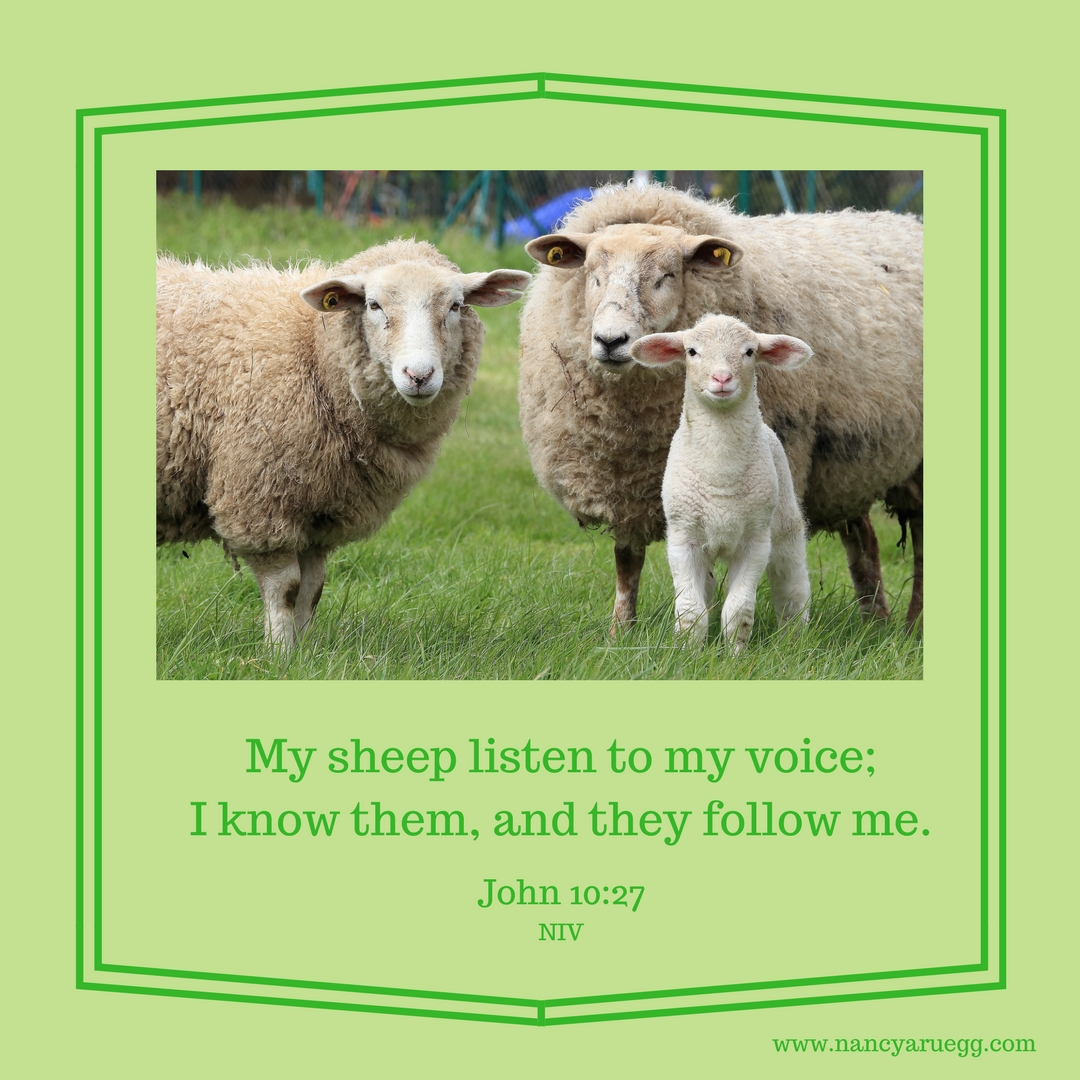
Jesus said, “My sheep listen to my voice; I know them, and they follow me” (John 10:27).

His voice represents wisdom, guidance, encouragement, and security.  Our primary source for those benefits?  The Bible.  But God also speaks to his children in other ways:  through creation, other people, events, even inner impressions.

Times of stillness are necessary.  If every moment is filled with chatter, we will not be able to hear God.

4.  TOUCH

Talk to those who have sought God during a crisis and without exception they will attest to sensing God’s presence with them.  For me, it’s like a holy heart-hug, infusing me with peace of mind and strength of heart.  Not that I am impervious to hurt or discouragement, but the touch of God provides respite and hope.

How?  Through praise and worship, especially as I meditate in the psalms.

5.  SIGHT

“Blessed are the pure in heart, for they will see God” (Matthew 5:8).

The verb tense used here is called “future continuous.”  The verse could read:  “They shall be continually seeing God for themselves.”

I’m reminded of a time Steve and I visited friends at their new home.  We turned off a familiar busy street and were almost immediately surrounded by tall trees.  The homes were set back from the road, barely visible.  The neighborhood was a bit of country set down in the middle of our metropolis.


“Who knew this area even existed?” I said to Steve.  He agreed.

We had both passed that street numerous times, but never saw it.

Isn’t that how it is with God?  We’re so busy, dashing from one task to the next, we never see God at work around us.  We aren’t looking for him so we miss him.

But!  When we are attentive for evidence of God’s presence and power, we will see him!

“When the habit of inwardly gazing Godward 

becomes fixed within us,

we shall be ushered onto

a new level of spiritual life.”

– A.W. Tozer

*     *     *     *     *     *     *     *     *     *

Thank you, loving Father, that you do expand my understanding as I seek to know you more and strive to comprehend more fully the greatness of your glory.  Teach me to use the five senses of my heart to accomplish those goals.  With great anticipation, I look forward to the new levels of spiritual life to which you will guide me!    

(Photo credits:  www.flickr.com (2); www.roshchodeshnewmoon; http://www.canva.com http://www.pixabay.com; www.flickr.com.)

Read Full Post »

Not by Sight: A Fresh Look at Old Stories of Walking by Faith  -             By: Jon Bloom, John Piper

Imagine…

…the woman caught in adultery (John 8:2-11), walking home after her encounter with Jesus.  What must she have been thinking?

…Zacchaeus, the despised tax collector, coming to your door to return the money he owed you—plus four times more (Luke 19:1-10).  What would have been your reaction?

…how it felt to be Joseph Barsabbas, the candidate not chosen to replace Judas Iscariot (Acts 1:26). How might he have responded?

These are just three out of thirty-five scenarios Jon Bloom explores in his book, Not by Sight: A Fresh Look at Old Stories of Walking by Faith (Crossway Books, 2013).    Indeed, they are fresh, creative takes on familiar Bible stories.

And although quite short, just three pages or so in length, each vignette still gives plenty of food for thought. I found them to be compelling, insightful, and instructive—encouraging my walk of faith.

One of my favorites is “Staying Faithful When Things Get Worse.”  Jon imagines what Joseph must have been thinking as a falsely accused prisoner in Egypt.  For at least twelve years he endured the hellish conditions and tormenting hopelessness.  Those should have been the best years of Joseph’s life—his youth.  Many would have said, “What a waste.”


Imagine year nine, Jon suggests.  Surely Joseph fought against depression and discouragement, even as he recited to himself the promises of God.  No doubt he reviewed in his mind the stories of his ancestors—Abraham, Isaac, and even those of his own father, Jacob.

Jon Bloom imagines Joseph affirming repeatedly that, just as God had been faithful to them, he would be faithful to Joseph.  Each patriarch had faced situations that seemed impossible.

Abraham and Sarah were much too old to have a child.

The older brother, Esau, would never serve his younger brother, Jacob–even if the age difference between twins was slight. That promise of God went against all tradition and logic.

Jacob was a poor runaway.  He couldn’t possibly become a wealthy herdsman.

But each man and his family had been blessed, just as God had promised.  Why?  They remained faithful.  Yes, they made mistakes and failed to obey God on occasion.  But they never turned their backs on him, even when circumstances turned bleak.

Jon Bloom also imagines Joseph reaffirming his faith in God and his willingness to wait for him to act.  Meanwhile, he would continue to honor God, even within prison walls.

As Jon brings the vignette to a close, he shares fresh application:

Even in the care of Almighty God, circumstances may get worse, not better.  “Faith in God’s future grace for us is what sustains us in those desperate moments,” Jon says.  Our hope is best placed in God, in his promises, and especially the assurance of eternal bliss in heaven yet to come.

Jon Bloom perfectly fulfills the role of a writer, as defined by Anais Nin, American author of the twentieth century:  “The role of a writer is not to say what we all can say, but what we are unable to say.”

Page after page, this is what Jon Bloom did for me.  No doubt he will do the same for you.

(Art Credits:  www.angieblattner.theworldrace.org ; www.illustrationartgallery.com )

Read Full Post »

DARE

The ledge was very narrow—no more than a foot—and perhaps five feet long.  The drop-off was straight down—perhaps several hundred feet.

The four of us hiking at Red River Gorge that day had two options, as the trail narrowed to this dilemma:  1) Navigate across the ledge and very quickly get back to where our vehicle was parked, or 2) Turn around and spend a couple of hours hiking the way we had come, circling back and upward to get to the car.

Guess who was more than willing to hike all the way back, rather than risk that ledge?  Just me.  I was out-voted.

Since I’m here to tell the story, you already know the outcome.  We made it across just fine, although with great care.  But it took awhile for my heart to calm down and the adrenaline to stop flowing.  Even falling asleep that night was difficult.  (Did you catch the pun there?!)

And now you know:  I am not a risk-taker.

But there are some hazards worthy of embrace:

I want to live out my faith with courage.

Not just try.  No, DARE.

With my shoulders back and my head up, I want to jump into the day, into the conversation, into the situation where God puts me.

I want to live in confidence.

Put into practice what I know:  God is engineering the circumstances.  He’ll guide me to do or say what’s needed.

But I have to be proactive and step out, speak up, and take the risk–get in there, and just do it!

I also want to live in joy.

 This life with Jesus is full of blessing and delight!  But who will know that if I’m stone-faced and focused on the negative?

My desire is to sail out into the world as a breath of fresh air, providing a glimpse of the good life that I enjoy with my God (Philippians 2:15, The Message).

My Jesus is SO worth the risk.

*     *     *     *     *     *     *     *     *     *

Heavenly Father, I may need a push from behind to move me out of my comfort zone.  But I know that even as you push, you will be supporting and leading.  You will advise and encourage.  So, with my face raised in anticipation, and my arms spread wide in expectation, I affirm:  Here I am, Lord!  Send me (Isaiah 6:8)!


(Photo credits:  www.hikeky.com ; http://careergirlnetwork.com )

Read Full Post »

Years ago in my hometown, when the community pool was built, Dad often took my brother and me swimming.  I marveled at the way my father could slice the water with a smooth dive, roll over on his back, and float.  Without even moving his arms and legs, he could remain on top of the water.  Amazing!

When I tried it, I sank–immediately.

“Daddy!  Show me how to float!” I cried.

First, he helped me to lie flat-out on top of the water.  His hand gently supported the middle of my back.  And then Dad said the strangest thing.

“Now, relax.”

What?!  Every fiber of my being was tense.  I just knew that if I relaxed, my nose would instantly fill up with heavily chlorinated water.

But I trusted Dad.  He wouldn’t trick me into a catastrophe.  So I tried to relax.

Easier said than done.  Try as I might, my body would not relax.  My focus was more on the possibility of sinking than it was on the one thing that would keep me afloat.

“That’s OK,” Dad probably said.  “This is just your first try.  Keep practicing, and all of a sudden you’ll get the feel of it.  That’s how it happened for me.”

This experience came to mind as I read Charles Spurgeon’s comment on an excerpt from Isaiah 30:15.

First, the scripture-excerpt:  “In quietness and confidence shall be your strength.”

And now, the Spurgeon quote:  “We are sinking by our struggles when we might float by faith.”

But learning to relax in the spiritual realm is just as difficult as it was to relax on my back in that swimming pool.  It is so much easier said than done–at least for me.

Why is fretting and worrying my default mode?  It’s so pointless.  Resting in God is the only way to hope and peace (Psalm 62:5).

The big question is how.  How can I relax into quiet confidence that will be my strength, and keep me afloat?

Perhaps the answer is in that word practice.  As I reaffirm over and over God’s glorious attributes, as I review His wonderful promises, my focus will change and my spirit will learn how to rest.

What attributes might be wise to focus on?  King David included a number of them in his glorious psalm of thanksgiving, found in 1 Chronicles 16:8-36:

  • Power (vs. 9, 12, 14) – He is able to work wonders.
  • Integrity (v. 15) – He is totally trustworthy.
  • Holiness (v. 29) – He is absolutely pure and righteous, totally set apart from anyone else in the universe.
  • Goodness (v. 34) – His blessings to us are bountiful and frequently displayed.
  • Love (v. 34) – Not based on our paltry deeds, but on his kind and gracious nature.

And what promises would build my confidence?  Here are three for a good start:

  • “As for God, his way is perfect; the word of the Lord is flawless.  He is a shield for all who take refuge in him” (Psalm 18:30).
  • “My God will meet all your needs according to his glorious riches in Christ Jesus” (Philippians 4:19).
  • “I will lead the blind by ways they have not known, along unfamiliar paths I will guide them; I will turn the darkness into light before them and make the rough places smooth.  These are the things I will do; I will not forsake them” (Isaiah 42:16).

Notice:  He promises protection, provision, and guidance.  Everything we might face is covered.

Thinking back to those summer days at the community pool, I’m reminded of two things that happen when we float:  1) Our eyes are focused upward.  2) Our ears cannot hear very well, situated as they are beneath the surface.  Noise is silenced.

Those two things need to happen in the spiritual realm if we’re to float by faith.  Our eyes need to be focused upward on our powerful, loving, promise-keeping God, and our ears need to be stopped to the voices of worry.

The former will undoubtedly take care of the latter.

(Photo credits:  www.sciforums.com ; www.dailyencouragement.net ; www.flickr.com ; www.confessionsofasmowflake.com )

Read Full Post »

Group of sparrows.

Group of sparrows. (Photo credit: Wikipedia)

“Are not two sparrows sold for a penny?  Yet not one of them will fall to the ground apart from the will of your Father…So don’t be afraid; you are worth more than many sparrows” (Matthew 10:29, 31).

Why did Jesus choose sparrows for this illustration?

They’re so small and common.  (Have you ever felt unimportant and ordinary?)

Sparrows were of such little value in Jesus’ day, they were sold two for a penny.  The poor would buy them to eat—a cheap source of protein.

Nobody much cared about sparrows in Bible times; most folks still don’t care today.  They’re just drab little birds we see every day—hardly worth our attention.

But the smallest, drabbest sparrow doesn’t slip by God’s attention.  Not one can fall to the ground without God knowing.  And if he knows and cares about the sparrows, he certainly knows and cares about each of us.  Verse thirty-one makes it clear:  “You are worth more than many sparrows.”

There’s a modicum of comfort in the knowledge that God sees our situations.  To be honest, though, the fact that he just knows isn’t all that helpful.

Better yet is the news that not one sparrow can fall without God’s consent.

Nothing happens to us that hasn’t first received the stamp of approval from God Almighty.

“Wait a minute,” you might say.  “If a sparrow falls, he’s likely to die.  Not much comfort in that either– knowing that God gave his OK!

Here’s what I want to embrace:  we have the mind of Christ (1 Corinthians 2:16b), right?  When it’s my turn to fall off the branch, I want to be able to affirm, “Yes, Lord.  Whatever you think is best is A-OK with me.  I know I can trust you because you love me.  And I rejoice in the promise that whatever happens, you will bring good from it.”   (Remind me of that truth when I start to wobble, will you?)

But here’s the best news:  Notice that Jesus didn’t speak of God as some detached, omnipotent being.

He said, Father.

It is our gracious and kind Heavenly Father who tenderly watches over his little sparrows.

Red Bike

Red Bike (Photo credit: swanksalot)

Think of a loving mother who witnesses her small son falling off his bike.  When he gets up with a scraped knee, she won’t just say, “Oh, I saw that happen, Johnny.  I’m so sorry you’re hurting.”  Small comfort in that.

No, that mother will run to her son, hold him in her arms, talk to him reassuringly, take him to the house, and patch him up.  That’s just what a loving parent does.

When trouble comes, our loving Heavenly Father is right there with us, just like that mother.

He holds us.  Isaiah wrote, “He gathers the lambs in his arms and carries them close to his heart” (40:11).

He talks reassuringly to us, especially through His Word.  With the psalmist, we can pray, “Strengthen me according to your word” (Psalm 119:28b).

God is our refuge and sanctuary; he is our home, our dwelling place. (Psalm 91:1-2).

And God patches us up; he restores our souls (Psalm 23:3).  He renews our energy, purpose, and hope.

So, “Don’t be afraid,” he says. “If I take care of the sparrows, I will most certainly take care of you, because you are worth more than many sparrows.”

See? You’re not small, unimportant, and ordinary–not at all!

*     *     *     *     *     *     *     *     *     *

Thank you, Lord, for not playing favorites.  What glorious news that each of us is precious to you!  Thank you also for being an attentive God who tenderly watches over us.  And especially thank you for being an involved God, always acting on our behalf, and always for our good.  We are in awe of you, our loving, gracious Heavenly Father!    

Read Full Post »

Back in the 1970s I saw Helen Hayes in a made-for-TV movie.  Some of you may recognize her.  She was known as the “First Lady of the American Theater,” beginning her career on Broadway in 1905, when she was only five years old.  In the 1930s, Helen expanded her stardom to films, and finally to television.

The reason she comes to mind now and then is the impression she made upon me, as an energetic, sparkly eyed senior citizen.  I remember thinking, “When I get old, I want to be like that!”

Poof.  Four decades have passed, and I am indeed getting old!  I don’t feel like it, but that doesn’t stop the incessant turning of the calendar pages.

So I was delighted to come across these verses from Psalm 92 that cast aging in a positive light:

“The righteous will flourish like a palm tree, they will grow like a cedar of Lebanon; planted in the house of the Lord, they will flourish in the courts of our God.  They will still bear fruit in old age, they will stay fresh and green, proclaiming, “The Lord is upright; He is my Rock, and there is no wickedness in Him” (vs. 12-15).

Palm trees do indeed flourish, living up to 100 years.  Withstanding heat, drought, and high winds, these trees stand tall and strong; their leaves fresh and green all year long.


What a perfect picture of an energetic, sparkly eyed senior citizen! 

How do we achieve such age-defying qualities? 

First, notice that the righteous will flourish.  When our faith is grounded in God, when we follow his principles for a prosperous life, we flourish.

Like the palm tree that grows straight up toward heaven, the righteous reach for the God of heaven.  That’s how they’re able to stand strong through the winds of change and difficult circumstances.

The psalmist then continues:  “The righteous will…grow like a cedar of Lebanon.”

Majestic cedar trees grow to 120 feet in height and up to 30 feet in circumference.  They provide the perfect picture of a firm, stable person.  Just as the cedar’s roots go deep into the soil, so the righteous person is rooted and grounded in God’s love (Ephesians 3:17).  From those roots comes the nourishment needed to remain strong and spiritually healthy.

Second, notice where these trees are planted:  in the house of the Lord.  They flourish in the courts of our God.

Charles Spurgeon, that eloquent preacher and writer of the 1800s, had this to say about those who dwell in habitual fellowship with God:  “They shall become men [and women] of full growth, rich in grace, happy in experience, mighty in influence, honored and honorable.”  Now that sounds like a very satisfying way to live—so much better than the opposite!

Think of a complaining oldster whose mouth turns down from constant disgruntlement.  His bottom lip protrudes from perpetual pouting, and his brow is permanently lowered into a frown because anger often rules his emotions.  All this negativity has stunted the growth of his maturity.  He’s unhappy much of the time, and is not held in high regard by others.  Do you suppose he ever considers that his way of life is terribly unsatisfying?   

However!  When our lives are centered upon worship of God, as we express gratitude for his blessings, praise for his attributes, contentment for where he’s placed us, and joy in the midst of trials, we become those admirable men and women Dr. Spurgeon described above:  mature, gracious, and happy.

Dr. Spurgeon also added “mighty in influence and honored.  God rewards the righteous aged with “fruit.”  In other words, we may still bring glory to God by our words and actions—well into old age.

We can be:

  • Energetic—with the power of the Holy Spirit
  • sparkly-eyed—with the indwelling of God’s peace
  • grace-filled—with continual demonstrations of God’s love to others
  • joyful—with hearts focused on God’s blessings

These kinds of saints provide a powerful example of God’s faithfulness—through pleasant times and challenges, through plenty and want, year after year.

May we continue to grow deep and stand tall—all the days of our lives.

(photo credits:  www.pachd.com, www.captainkimo.com, www.forestertreeservice.com, www.centrifueleadership.com, www.seniors.ovetoknow.com)

Read Full Post »


Seeking after God.  It’s a concept we come across frequently in scripture.  But God is Spirit; he’s invisible to us.  How do we seek after someone we can’t see?

Perhaps we can answer that question by considering the ways we seek a person, who can be seen.

Example #1:

When my husband, Steve, and I are separated in a crowd, it’s quite amazing how quickly I can spot him.  Beyond height, hair, and eye color, I know the breadth of his shoulders, the way the hair grows on the back of his head, the shape of his ears.  In fact, it’s such nuances as these that draw my attention, even more than the descriptors listed on his driver’s license.

Perhaps our first step in seeking God is to get to know what he looks like, although not his physical Being, since he’s chosen not to reveal himself that way.  But as we read his Word, the Bible, we become familiar with who he is.  Through frequent, thoughtful study—not occasional reading—we learn about his character and his ways.  One guiding question can train us to seek God as we study:  What does this passage teach me about God?

Example #2:

Sometimes I find Steve in a crowd when I hear his voice or the timbre of his laugh.

Step two in seeking God:  We can listen carefully for his voice, although he rarely chooses to speak audibly.  More often he communicates his wisdom and encouragement to us through the Bible, and the voices of wise and mature Christians—spoken and written.

God also speaks directly into our spirits, so we must cultivate the habit of listening carefully for strong but silent impressions.  We can ask God to make clear if those thoughts are indeed from him.  He will affirm.

Example #3:

I know Steve’s signature.  Give me a sheaf of papers with Steve’s name written by different people, and his distinctive style will stand out from the others.

Step three in seeking God:  Look for his distinctive signature of wisdom and power in his people and in God-incidents.

Even in creation, “God’s invisible qualities—his eternal power and divine nature—have been clearly seen, being understood from what has been made” (Romans 1:19).


Take note of the slow loops of a circling hawk, the graceful curve of a flower stem, the straight, tall sentries of a pine forest.  Pay attention to the perfect oval of a ladybug, the teardrop shape of  a milkweed seed, or the mounds of clouds in a summer sky.  You’ll soon find that God loves variety, pattern, organization, beauty, intricacy, and color.  Your heart will begin to respond with wonder and praise for your magnificent, powerful God.

Example #4:

Steve doesn’t even have to be with me, and my thoughts will turn to him.  A song, a phrase, a person who reminds me of someone from our past, and I think, “Oh, Steve would like this,” or, “I’ll bet Steve would agree he looks just like So-and-So.”

Just looking down at my new Mother’s Day watch, and I’m reminded of my thoughtful, generous husband.

Step four in seeking God:  As we get to know God through the Bible, as we learn to hear his voice, as we see his signature everywhere, we find our thoughts turning to him throughout the day.  A song may urge a response of praise.  A phrase might prompt a prayer, a person’s gracious kindness causes us to reflect upon his character shining through that individual.

And every blessing should result in gratitude.

Seeking God is an ongoing, progressional process.  Awareness of his presence grows slowly yet continually.  Perhaps God planned it that way so we always have more delights to discover about our Heavenly Father until we do see him face to face.


Seeking after God can begin with a simple prayer:  God, I want to know you more intimately,  to sense your presence  even though I can’t physically see you.  And I want you to be an integral part of my life and thoughts.  Nothing could be more satisfying than a close relationship with you.  This is what I seek.

That’s my prayer.  Will you seek God with me?  What steps have helped you to seek after God?

(Art & photo credits:  www.experienceproject.com; http://www.luddite1811.blogspot.com; http://www.revelife.com; http://www.finartamerica.com;  www.hullquist.com.)

Read Full Post »

Conventional wisdom teaches that we are in control of our own destinies, that hard work and perseverance will assure achievement of goals.  To a point that’s true.  Laziness and a lack of follow-through do not lead to success.

But.  Those truisms fail when disaster strikes.

Ask Job; he’ll tell you.  He was an extremely wealthy man.  In fact, he was the greatest man among all the people of the East.

Job also enjoyed a large, loving family.  His children liked each other so much they partied together.

Job was also a blameless and upright man—totally undeserving of what happened to him (Job 1:1-4).

He was stripped of everything.  All of his wealth.  All of his wonderful children.

Recent tornado victims know the magnitude of such horror. Home and all its contents, gone.  Family members, gone.  I can only imagine their emotional pain and heartache.

And what was Job’s reaction?

If you had asked me that question a couple of years ago, I would have answered that Job was incredibly accepting, that he did not blame God.  And those statements are true.

But there’s more:

“Job got up and tore his robe and shaved his head” (1:20a).  OK, that makes sense.  Those were customs of the day for expressing grief.

And then do you know what Job did?

“He fell to the ground in worship” (v. 20b).

What?!  How can a person possibly worship at a time like that, when your whole world comes collapsing down around you?

All Job had left was his foundation—a foundation of faith in God.

Worship was his expression of that faith, declaring God’s worth to him—in spite of horrific calamity.  For Job, God was enough.

From Job we learn that true worship is not reliant upon circumstances.  We don’t have to be on top of the world to worship.  In fact, a sacrifice of praise (Hebrews 13:15) is surely very precious in God’s view.

Second, true worship is not reliant upon emotions.  We don’t have to be filled with joy in order to worship.  We can worship God with our tears, expressing our trust in spite of the pain.

Job couldn’t rely on answers that would give meaning for his suffering.  God gave him none.  What Job did rely upon was God’s character:

  • “His wisdom is profound, his power is vast” (9:4a).
  • “He performs wonders that cannot be fathomed, miracles that cannot be counted” (9:10).
  • “If it is a matter of strength, he is mighty!  And if it is a matter of justice who will summon him?”  (9:19).
  • “You gave me life and showed me kindness, and in your providence watched over my spirit” (10:12).
  • “To God belong wisdom and power; counsel and understanding are his (12:13).
  • “Can anyone teaching knowledge to God, since he judges even the highest?” (21:22).

In the end, knowing God is more important than knowing answers.

*     *     *     *     *     *     *     *     *     *

Heavenly Father, I shake my head in wonder as people of faith such as Job neither blame you nor give up on you in the face of calamity.  Instead, they rely upon you all the more tenaciously.  They worship, affirming that you are still their sovereign, loving God.  They testify of your strength and peace.  Thank you for being a God who comes alongside us with your wisdom and grace, especially when we’re hurting.  Thank you for powerful examples to follow, such as Job.

Read Full Post »

« Newer Posts - Older Posts »

When the House is Quiet

Impressions Becoming Expressions

Mitch Teemley

The Power of Story

Still Traveling

Impressions Becoming Expressions

Living Our Days

Gaining a heart of wisdom

He Said What?!

I'm Patty, and my husband and I are living with our adult son who has autism and epilepsy. I love sharing lessons learned from life around me, especially life with Aaron.

Meditations of my Heart

Impressions Becoming Expressions

Linda Stoll

Impressions Becoming Expressions

Signora Sheila

Where Faith Meets La Dolce Vita

Heidi Viars

Finding the Image of God