
“This is Superintendent Hamilton calling. Is Steve there?”
The phone call that morning caught me off-guard—by who was calling and his instruction. I felt my heart rate quicken even while responding: “No, but may I take a message?”
“I need for you and Steve to come to the district office—this afternoon, if possible. When you’re able to reach him, have Steve arrange a time with my secretary, and I’ll see you then!”
Dr. Hamilton quickly ended the call, busy as he was, especially given the season: appointment-announcement time. Surely this was what he wanted to discuss with us.
That afternoon we learned that my husband, a pastor, would be assigned to a new church, effective in three months’ time. As Dr. Hamilton prayed for us, tears filled my eyes.
We’d developed delightful friendships within our current church—people who’d become like family over the previous five years. But soon we’d no longer sing in the choir together, meet every Monday night at the parsonage for Small Group (which grew to about thirty-five or forty people), or laugh and whoop through holiday parties with one another.
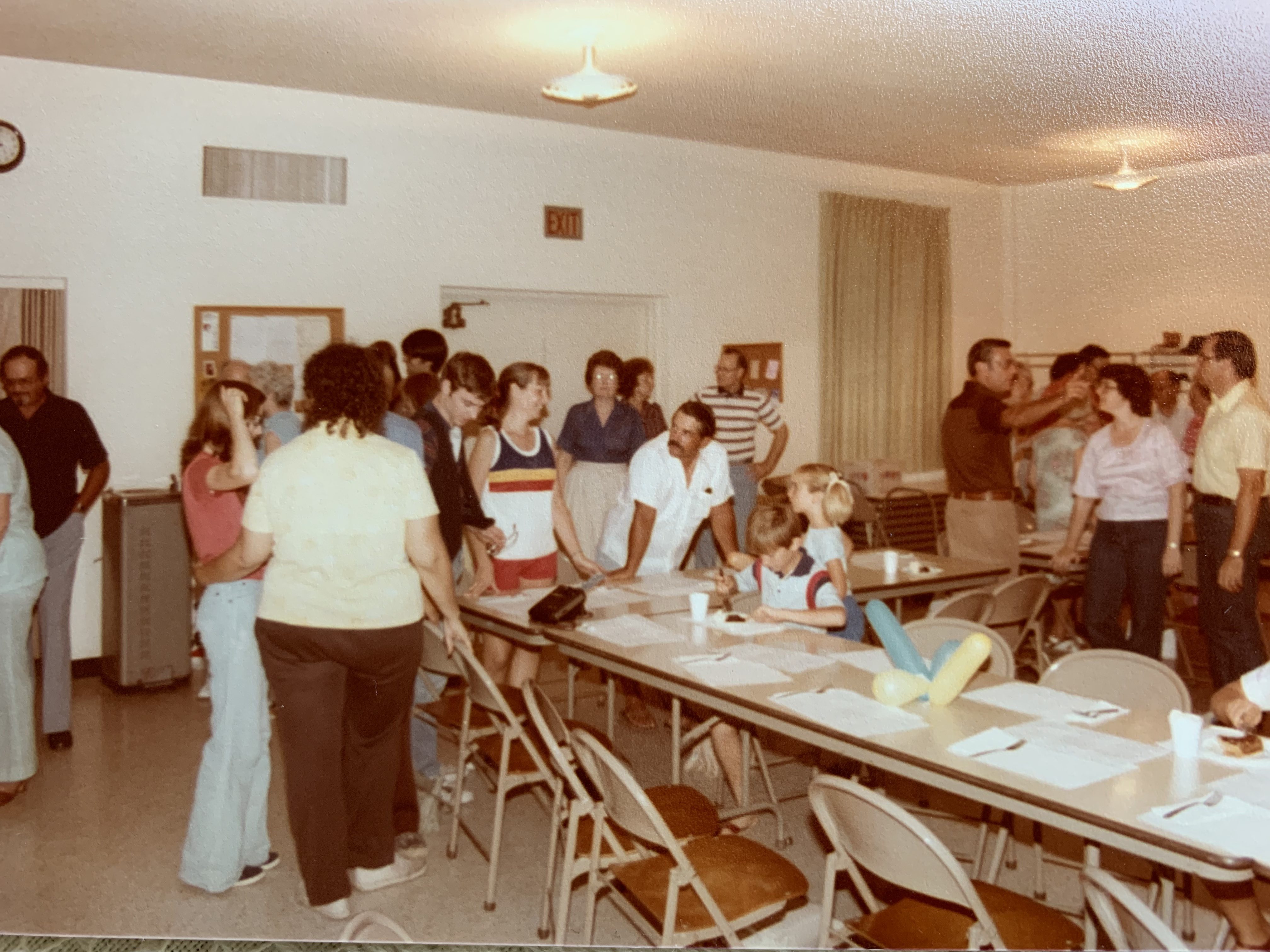
A more sedate gathering of the group in Fellowship Hall at the church
This was the hardest part of being married to a pastor in our denomination: moving. In those days we had little voice in the matter. The bishop and district superintendents made the decisions; clergy families were expected to abide by them.
Change is hard, especially when thrust upon you. Some of you know full well; you’ve experienced much worse upheaval than moving.
For me, at that point in my young adult life, I still had much to learn about navigating the challenge of change. There’s actually much we can do to ease the transition and find ourselves changed-for-the-better in the process.

To begin, we might . . .
Embrace Heartening Truths about Change
For example:
- “Change is God’s idea. He orchestrates it, and it never takes him by surprise [1].
- Change is good! It can deliver us right into the palm of God’s hand, which is where we wanted to be all along [2].
- The God who made us will equip us for the road ahead, even if it’s an unpleasant road [3].

Consider Change as a Gift . . .
. . . because along with the difficulties and heartaches come beautiful benefits as well:
Our faith grows as we’re compelled to press in closer to God for comfort and strength. We experience Spirit-orchestrated transformation as perseverance does its work to produce maturity (James 1:4). And tempered resilience develops as change pushes and pulls us, rebukes and remakes us [4] into better people than we were before.
In addition, new possibilities present themselves that never occurred to us. (Think of Joseph’s transition from household overseer to prime minister—by way of prison, or David from shepherd to king—by way of living as a fugitive for a dozen years or so.)
Allow the Transition to Lead to Transformation [5]
How? By:
- Clinging to scripture truth. We can begin in the Psalms, copying, journaling and meditating on those truths about God that are relevant to our situations. We can copy promises that offer reassurance and hope. (Another post, The Favor of God, offers an example.)
- Affirming that God has a hope-filled future awaiting us (Jeremiah 29:11) and taking the next step forward. Tomorrow, we do it again. Before long we see his plan for good unfolding before us [6].
- Looking back with gratitude and remembering: Just as God has brought us through challenges in the past (sometimes quite wondrously!), he will bring us through our current challenges as well. (Again, another post, Sacred Hands Behind the Scenes, offers examples from my journal.)
- Looking forward with anticipation and asking: What opportunities might lie ahead? How might God use me in this new life-chapter?

This is not to claim we should sail through the challenge of change hassle-free. But even when swamped by trouble, we can take heart in knowing our God is a strong, stabilizing anchor through every storm.
He’s our ever-present help through every trial, our full provider for every need, and our gracious guide for every path [7].
As for that move? The next church (and three more after that) provided new friends, new opportunities, and new joys!

[1] Sherry Surrat, https://www.todayschristianwoman.com/articles/2016/february/ how-to-cope-with-change.html.
[2] Sheila Niequist, Savor, 10.
[3] Karol Ladd, Thrive, Don’t Simply Survive, 36.
[4] Sheila Niequist
[5] Jean Wise, Sacred Surroundings, 150.
[6] Betsy de Cruz, https://www.crosswalk.com/devotionals/your-daily-prayer/a-prayer-for-when-you’re-facing-unwanted-changes.html.
[7] Hebrews 6:19; Psalm 46:1; Philippians 4:19; Psalm 48:14b.
Image credits: http://www.flickr.com; Steve Ruegg; Nancy Ruegg; http://www.canva.com (2); http://www.freerangestock.com.
TAKE NOTE–a NEW RESOURCE FOR YOU! Do sign up below for the monthly newsletter that includes a collection of quotes and scriptures focused on God’s attributes, to encourage you and share with others.
Scroll to the end of the newsletter to access this resource!