Feeds:
Posts
Comments

Archive for the ‘Bible Study’ Category

Late spring, 1961, President John F. Kennedy and his wife Jackie visited France. He’d only been in office four months, but already the world had embraced the refined and fashionable First Lady.

Upon arrival in Paris, people lined the streets and shouted, “Vive Jackie!”

And as the week unfolded, she impressed them further with her knowledge of French history and culture and her command of their language, polished to perfection at the Sorbonne during her junior year of college.

With dignitaries Jackie proved to be articulate, diplomatic, and a good listener. She especially charmed their president, Charles DeGaulle.

President Kennedy, on the other hand, received a cool reception from his French counterpart. The two had not seen eye-to-eye on certain policies. Jackie helped pave the way for diplomacy between them.

At a state dinner held in the Palace of Versailles, JFK famously introduced himself as “the man who accompanied Jacqueline Kennedy to Paris. And I have enjoyed it.”

The Hall of Mirrors where the dinner took place

Today, many still remember Jackie’s iconic style, her gentle demeanor, and stalwart courage following President Kennedy’s tragic death. But she will also “go down in history . . . for creating a dominant soft power dynamic in American politics” [1].

We also admire the way JFK humbly honored his wife at that state dinner. He appreciated her strengths that provided great benefit to him.

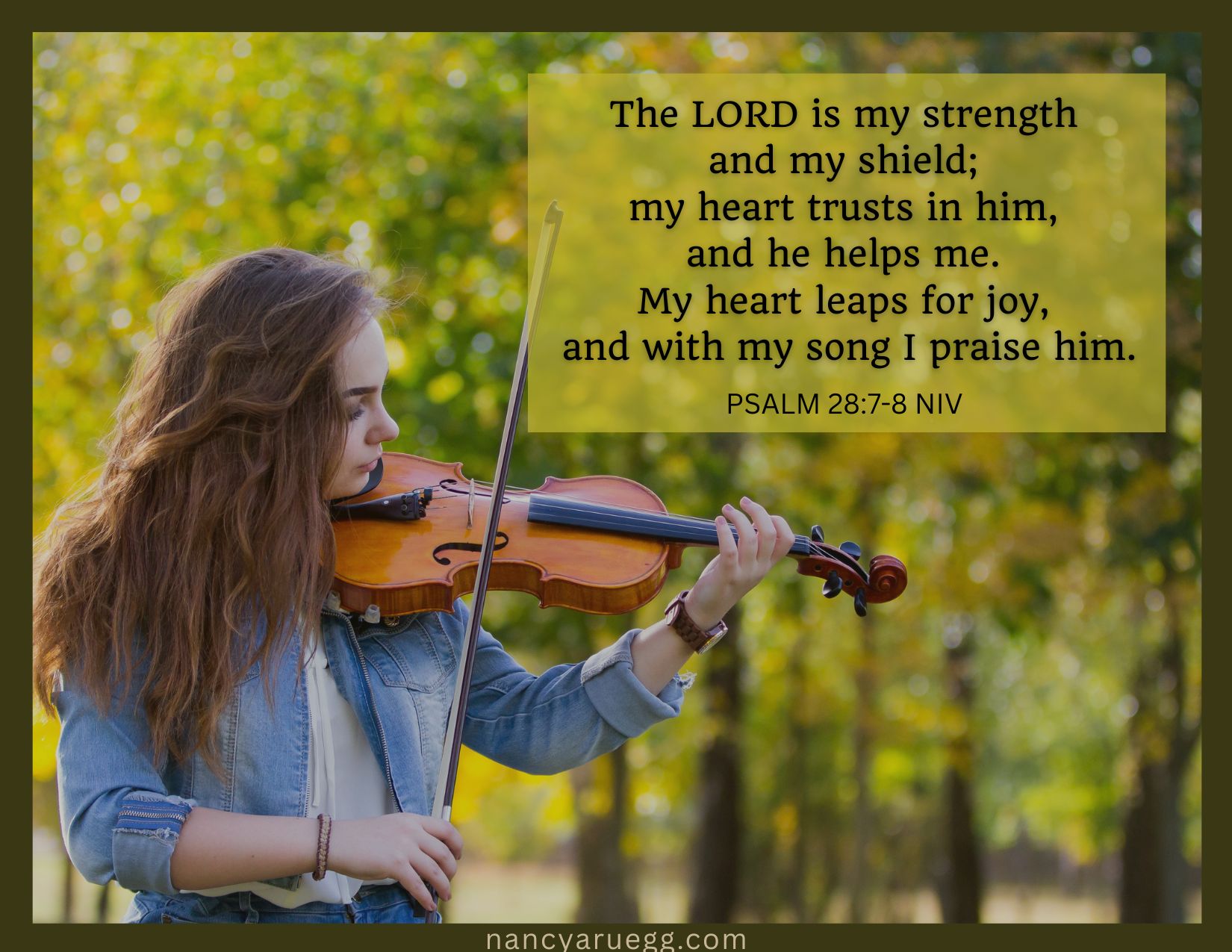
With this example in mind (although a weak one compared to what it illustrates!), we might understand more clearly what the psalmist meant when he wrote that God is the glory and strength of those who put their faith in him:

“Strength” we more readily understand. Many of us have experienced God’s power upholding us through crises and augmenting our efforts to serve him. But glory? What did the psalmist mean by “God is their glory?”

Perhaps the following comparisons will make the meaning clearer.

  • Even more than the great benefit Jackie provided to her husband, God provides abundant benefit to us.
  • As Jack gloried in Jackie, honoring her and acknowledging her worth, we glory in God.
  • As Jackie made the visit to France a glowing success, so God makes his people glow with success—that is, prosperity of soul, contentment of heart, and peace of mind.

JFK understood it was Jackie who exalted his position with DeGaulle and the French people. Similarly, we need to acknowledge that our sovereign God is the one who exalts us.

We don’t have to push and strive to prove ourselves; we can rest in all the glorious attributes of our Heavenly Father, lavished upon us for our benefit [2].

But like all analogies, this one involving the Kennedys breaks down, because no one is like our God.

Beyond the examples given above to explain how God is our glory, consider these truths:

God’s magnificence

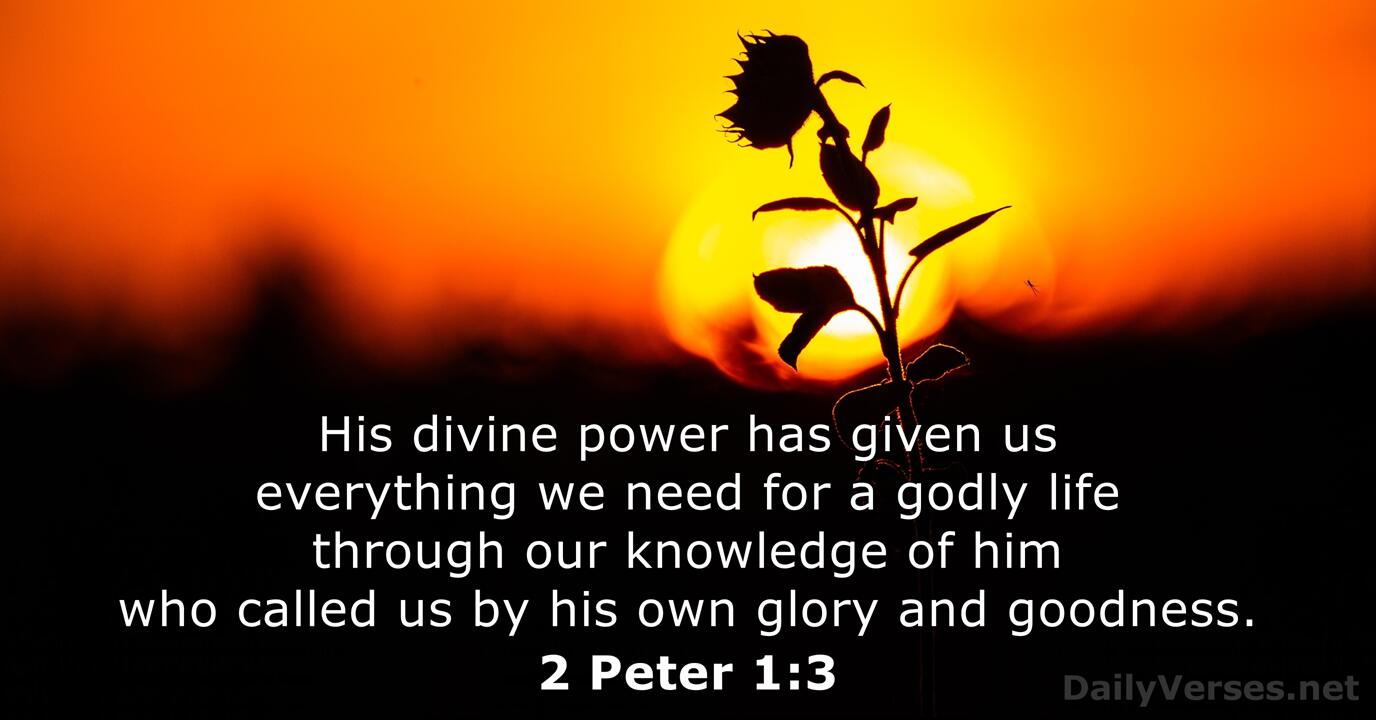
God’s infinite power gives impetus to all his perfections in our lives. After all, what good would his perfect wisdom do without the wherewithal to execute it? His unfailing mercy without the ability to apply it? His infallible promises without the capability to keep them [3]?

God’s enabling work in our lives

God’s incomparable strength is instilled in us as we rely upon him. The result? We begin to display the glory of his attributes, including: patience in the midst of stress, kindness in response to rudeness, and self-control in the face of frustration [4].  

God’s power

God specializes in the impossible. Nothing is too great for his almighty power; nothing is too small for his love. Enter God’s realm where everything is possible [5]!

Of course there are many more facets to God’s glory. And this splendorous God of wonders is our strength—even if we don’t feel tough enough, talented enough, smart enough, or engaging enough for the path ahead—even if circumstances seem against us.

That last state of affairs must have been President Kennedy’s perception as he and Jackie left for France. Little did he know how Jackie would transform their visit.

By contrast we KNOW God’s capabilities of transformation! The evidence is in scripture, history, in the lives of those around us, and in our own experience.

Therefore, let’s remember:

Praise be to God, our glory and strength!


[1] https://uscpublicdiplomacy.org/blog/jackie-kennedy-public-diplomacy-camelot

[2] Another post about God’s attributes: Rooted/

[3] 2 Peter 1:3

[4] 2 Corinthians 12:9; Ephesians 1:15

[5] Based on a quote of Corrie ten Boom, Holocaust survivor

Image credits: http://www.deviantart.com (Kralj Aleksandar); http://www.boudewijnhuijgens.getarchive.net; http://www.flickr.com; http://www.pickpik.com; http://www.dailyverses.net (2); http://www.canva.com (2).

Processing…
Success! You're on the list.

Read Full Post »

We’ve all known people who push themselves hard all day long until they fall into bed at night. Their lists and schedules make sure they use every minute to the fullest.

And though efficiency experts might be impressed by their productivity, it’s likely these ultra Type-A folks are harming themselves—physically, mentally, and spiritually.

The truth is, “Renewal and restoration are not luxuries, they are essentials. Being alone and resting for a while is not selfish; it is Christlike.” Even Jesus took time away to be with his Father [1].

Also important to understand: Rest is an attitude of the heart amidst the responsibilities of the day.  It’s not “some holy feeling that comes upon us in church. It is a state of calm rising from a heart deeply and firmly established in God” [2].

The restful life begins in trusting God, and he’s given us plenty of good reasons to do so:

 OUR GOD PERFORMS RIGHTEOUS DEEDS AND MIGHTY ACTS (Psalm 71:16-18)

OUR GOD HELPS IN NUMEROUS WAYS (Psalm 27:9)

He supplies our needs, guides our decisions, strengthens our spirits, and more.

In addition, his power is at work to help us “understand his love, live a life worthy of our calling, bear fruit in every good work, endure with patience, live a life of thanksgiving, escape the corruption caused by evil desires and overflow with hope” [3].

In other words, he helps us experience the God-enhanced life that truly satisfies our souls.

OUR GOD PROTECTS HIS PEOPLE (Psalm 3:8 CEV)

It’s not his way to protect us from all pain and trouble. Instead, he grants us stamina and strength of spirit to endure, growing us into maturity.

OUR GOD LAVISHES US WITH HIS LOVE (Psalm 86:13)

His compassionate care is expressed as “His wisdom is our direction, His knowledge, our instruction, His power, our protection, His justice, our surety, His love, our comfort, and His mercy, our solace. He holds back nothing from us” [4].

OUR GOD BESTOWS BLESSINGS, BENEFITS, AND GOODNESS (Psalm 103:1, 5)

OUR GOD FULFILLS HIS PROMISES (Psalm 145:13b)

But how can we be sure of that?

“The permanence of God’s character guarantees the fulfillment of his promises” [5].

OUR GOD ANSWERS WHEN WE CALL (Psalm 86:7)

To rest in spite of a “No” or “Wait” answer surely gives indication how well we trust.

These seven assurances of God’s influence in our lives certainly offer wonderful encouragement. But they won’t contribute to spiritual rest unless we “grasp them by faith, plead them by prayer, expect them by hope, and receive them by gratitude” [6].

*     *     *     *     *     *     *     *     *     *

O Lord, I bow before you in wonder that you, the God of the universe, with your infinite power and glory, would provide all these blessings and benefits for me.

Thank you for your gracious benevolence. Help me to REST in these truths, knowing that you have everything under control and you will see me through until I’m home with you.


[1] Chuck Swindoll, The Quest for Character, 49; Luke 6:12.

[2] Henry Drummond, quoted in Streams in the Desert, Jim Reiman, ed., 232.

[3] Melissa Krueger, The Envy of Eve, 104.

[4] Charles Spurgeon, Morning by Morning, 141.

[5] A. W. Pink, http://www.gracequotes.org.

Image credits: http://www.stackcake.com; http://www.canva.com (5).

Processing…
Success! You're on the list.

Read Full Post »

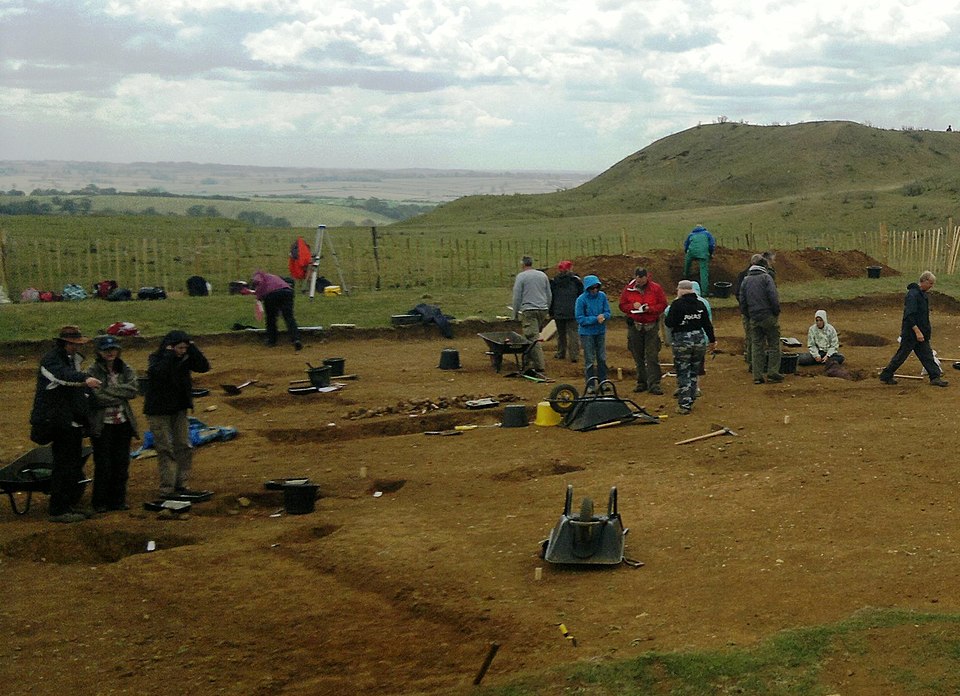
In May of 2019 archaeologists in central England discovered an ancient shield made of bark, dating back to the Iron Age. It’s the oldest shield ever found.

Some might think such a shield would offer little protection during battle. But experiments have proven the bark of such trees as alder and willow would have served well, providing an effective but lightweight shield, easy to maneuver [1]

Fast forward to today. Modern technology has made Israel’s Iron Dome possible. The system shields the country with exceptional radar protection–detecting, tracking, and destroying incoming enemy rockets, high in the sky before they can do any harm [2].

One of Israel’s missile launchers in action

Both shields impress—one for its age and unusual material; the other for its advanced technology and precision.

Scripture speaks of another shield, much older than the one found in England yet still available today, and even more impressive than Israel’s Iron Dome:

The Lord himself.

As we consider that truth, a few questions present themselves:

  • Why would God inspire that metaphor?
  • What does God want me to understand about him being my shield?
  • How might new understanding impact my life?

In researching and pondering the answers to those questions, I discovered that:

God is our shield because of his attributes.

His power shields us from ultimate ruin.

His wisdom shields us from foolishness.

His compassion shields us from emotional and spiritual wounds too deep to heal.

His righteousness shields us from the evil one.

His mercy and grace shield us from the punishment we deserve for our wrongdoing [3].

The list could go on.

God is also our shield because of his actions.

His shield offers:

  • Protection against our arch-enemy Satan and all his cohorts
  • Salvation, saving us from the condemning power of sin
  • Help in times of trouble
  • Faithfulness we can rely on, because of his covenant of love
  • Truth—like the promises of God’s Word that can protect us against discouragement and confusion
  • Favor in the form of lovingkindness, mercy, and grace [4]

God’s shield can cover every aspect of our lives, but . . .

 . . . we must each take up our shield.

God is a gentleman; he doesn’t force his protection, help, or favor upon us. We must come to him and choose to take refuge in him [5].

How? Through prayer.

We invite him to watch over us and protect us.

We affirm the promises and encouragement from his Word.

We remind ourselves of who he is, our Almighty God of Refuge, Shelter and Strength, our Rock of Stability and Safety.

Will you pray with me right now?

*     *     *     *     *     *     *     *     *     * 

I praise you, O God, for being my strength and impenetrable shield. I can put my trust in you with unwavering confidence because of who you are [6].

I praise you for not only being a shield in front of me; you are a shield that surrounds me, guarding on all sides [7].

You are above, beneath, around, and within, protecting me from ultimate ruin, irreparable damage to my spirit, and foolishness. You shield me from the full brunt of trouble, the fiery darts of the enemy, and his lies [8].

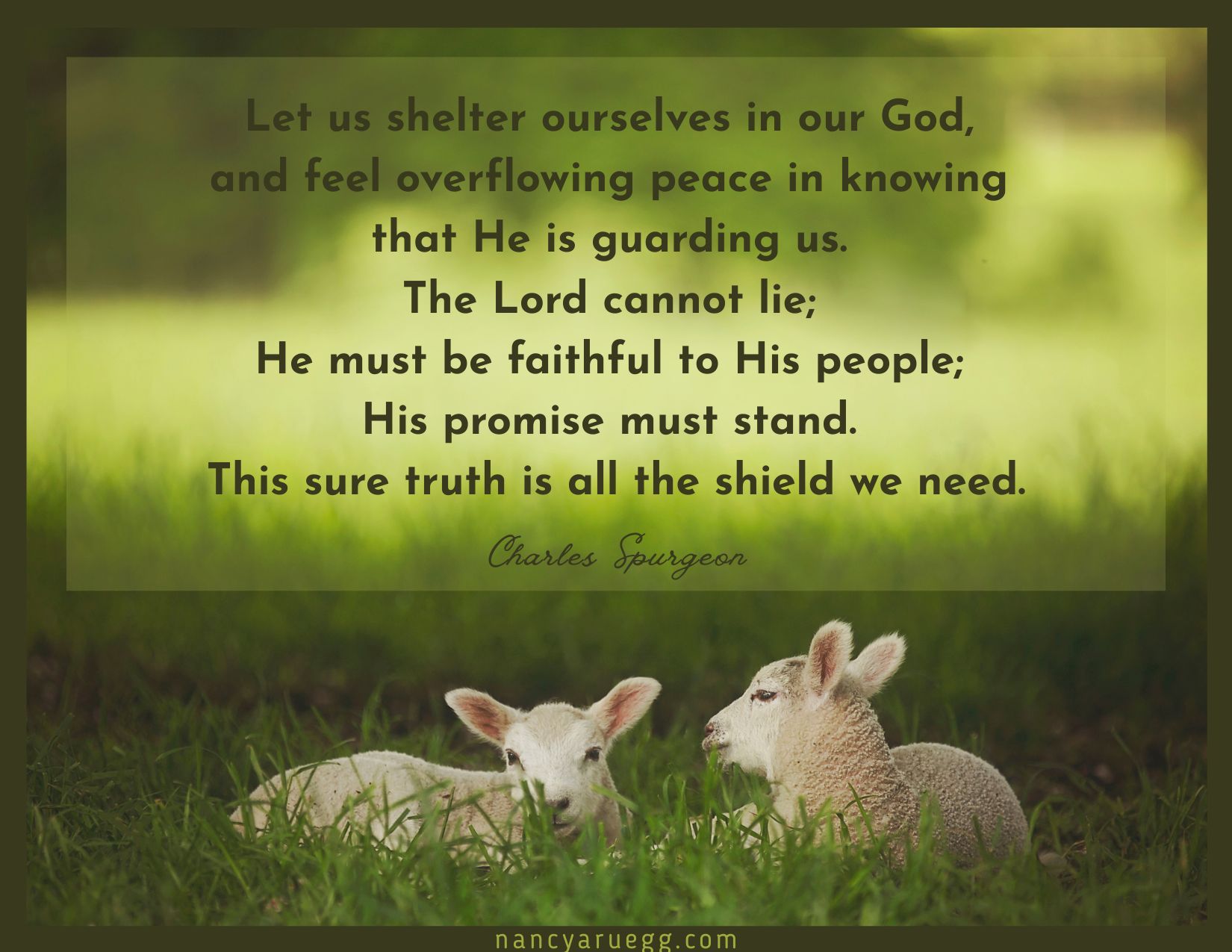
I praise you for the overflowing peace in knowing you are guarding me as a shield!


[1] https://www.theguardian.com/science/2019/may/23/2300-year-old-iron-age-bark-shield-leicestershire

[2] https://www.bbc.com/news/world-middle-east-20385306#:~:text=Iron%20Dome%20detects%20and%20tracks,to%20fall%20on%20open%20ground.

[3] Proverbs 3:23-26; 28:26; Psalm 86:12-15; 2 Thessalonians 3:3; Ephesians 2:4-5

[4] Ephesians 6:16; Psalm 18:35 ESV; Deuteronomy 33:29; Psalm 91:4 and Deuteronomy 7:9; Psalm 91:4c; Proverbs 30:5; Psalm 5:12

[5] Matthew 11:28-30

[6] Psalm 28:7 AMP

[7] Psalm 3:3 GWT

[8] Psalm 91:4a; Isaiah 28:16; Psalm 3:3; Colossians 1:27; Ephesians 6:16

Image credits: http://www.commons.wikimedia.org (2); http://www.biblepics.co & http://www.canva.com; http://www.canva.com (2); http://www.heartlight.org (3).

Processing…
Success! You're on the list.

Read Full Post »

Another time, another meal

Easter afternoon we’ll join our son, daughter-in-law, and two granddaughters for dinner in their home—with six other guests.

E. and H. have planned a Georgian feast, based on traditional dishes from the Eastern European country of Georgia. (Did you know that 85% of that nation’s population are Christian? I certainly didn’t.)  

Each family or single person attending this celebration has been given a recipe, so we’ll be able to sample eight different dishes of this new cuisine. And because of the many delicious meals we’ve enjoyed with E. and H., we know:

Within the warm ambiance of their home and the congenial atmosphere as we converse and laugh together, each of our individual concerns will recede to the background. In their place, joy, contentedness, and peace (shalom) will settle upon our spirits.

By contrast, the Passover feast that Jesus celebrated with his disciples, the night before his crucifixion, held little joy or peace for him. In fact, the Apostle John wrote, “Jesus was troubled in spirit” [1].

He knew what would happen that night and into the next day: the pain of betrayal, scourging [2], a crown of thorns thrust on his head, mockery, the crucifixion, and separation from his Father.

The plan had already been set in motion, when Judas approached the chief priests and officers of the temple guard to discuss how—for a price—he might hand Jesus over to them when no crowd was present [3].

Under these stressful circumstances Jesus stated to his disciples, “Peace I leave with you; my peace I give you. I do not give to you as the world gives. Do not let your hearts be troubled and do not be afraid” [4].

The Amplified Version adds: “Let My perfect peace calm you in every circumstance and give you courage and strength for every challenge.”

But if Jesus was troubled in his own spirit, how could he promise his peace to the disciples? How could he tell them not to be troubled?

The answer lies in his confidence in his Father. Though fully aware of the suffering to come, Jesus displayed confidence in the purpose and power of his Father and moved forward unhesitatingly to meet the pending crisis [5].

Consider his demeanor over the next eighteen hours or so. Jesus conducted himself with calm quietude from the moment of his arrest to his last breath on the cross. God did indeed supply courage and strength for every torment.

This is the nature of the peace Christ gives to all of us who trust in him [6].

But how do we avail ourselves of this precious gift? (And for those of us who are familiar with these ways to peace, how well are we implementing them?)

Get to know God in his Word.

We considered one way in the post, “Celebrating God in the Psalms.” So many of his attributes and gracious actions are highlighted in these ancient songs.

Practice his presence.

Possibilities include expressing gratitude, speaking simple prayers throughout the day, and singing worship songs.

Be quick to praise God.

You’ll find your cares reduced and your anxieties lessened. The result: expanded peace.

Come Sunday, our son and daughter-in-law’s home will provide a splendid place of refuge and peace—for a few hours.

How glorious to contemplate that Christ’s refuge and peace is much more splendorous, much more impactful, and for all time!

* * * * * * * * * *

Thank you, Lord Jesus Christ, for enduring unimaginable suffering in order to restore our relationship with God and provide the gift of eternal life. Now you are our Lord of peace, ready to give us peace at all times and in every way. You ARE indeed worthy to receive honor and glory and praise!

1 Peter 3:18; 2 Thessalonians 3:16; Revelation 5:12


[1] John 13:21

[2] A flogging, inflicted with a whip of leather straps imbedded with pieces of metal and glass, meant to rip into the flesh. Such a brutal beating often led to death.

[3] Luke 22:1-6

[4] John 14:27

[5] Merrill Tenney, www.preceptaustin.org

[6] Colossians 3:15

Image credits: Nancy Ruegg; http://www.canva.com (3); http://www.pxhere.com; http://www.flickr.com.

Read Full Post »

What would happen if the keeper(s) of the house gave up their responsibilities? Can you imagine the pile-up of dishes and dust, garbage and grime, dirty clothes and clutter? The house would soon become uninhabitable.

Now think of what would happen if the Keeper of the universe gave up his responsibilities–just on Planet Earth.

His carefully-engineered habitats for plants and animals would collapse, weather patterns conducive for agriculture would become sporadic, and the regulation of Earth’s orbit and rotation would end. Our planet would soon become uninhabitable.

Our God is indeed Keeper extraordinaire of creation!

But his preservation skills impact more than the physical realm. Skim-read these scriptures and see what categories-of-keeping you notice:

  • “The Lord bless you and KEEP you [protect you, sustain you, and guard you]” (Numbers 6:24 AMP).
  • “Lord God of heaven, . . . you faithfully KEEP your promise and show mercy to those who love you and obey your commandments” (Nehemiah 1:5 NIV).
  • “You Lord, KEEP my lamp burning and turn darkness to light” (Psalm 18:28 CEV).
  • “The Lord will KEEP you from evil; he will KEEP your life” (Psalm 121:7 ESV).
  • “You will KEEP in perfect peace all who trust in you, all whose thoughts are fixed on you” (Isaiah 26:3 NIV).
  • “He will KEEP you strong to the end” (1 Corinthians 1:8 NLT).

More scriptures could be added, but even this short list makes clear: We are cared for, guarded, preserved, protected, provided for, shielded, upheld, and watched over (all synonyms for kept).

I’ve lived long enough to see much evidence of God’s keeping, including:

  • His provision when the A/C repairman “just happened” to have in his truck the part we needed, slightly used but still good, which he gave us without charge.
  • God’s protection when the IRS declared our son owed the government $5000. He engaged a tax accountant who verified he only owed $1500. But she also found additional deductions and discovered the IRS owed him $1500!
  • God’s care during sieges of too much to do and not enough time to do it, relieved by changes of plans, help from unforeseen sources, and tasks that didn’t take as long as expected.
  • God’s preservation when troubling events haven’t happened: exposure to illness and we didn’t get sick, dangerous weather projected by meteorologists turned out to be much less severe, or a meeting expected to be stressful actually went smoothly.

Such circumstances occur more frequently than we realize. In fact, “There are not five minutes in the day when [we] do not need the Almighty Keeper to keep charge of [us]” [1].

For some, however, keeping sounds constrictive, like God is repressing us under his thumb, insisting on control, spoiling our fun.

Charles Spurgeon offers a different perspective: “It is . . . a delightful thing to be kept of God . . .  They are kept indeed whom God keeps: they are preserved from evil; they are reserved unto boundless happiness” [2]. The above examples offer proof.

“No, no,” some will say. “Evil happens to good people much too often; sadness intrudes upon every life. Where is God’s keeping then?”

Surely the Apostle Paul was addressed such a question, while held under house arrest in Rome.

He might have answered, “I’ve known and served Christ for many years, and have enjoyed countless blessings along with dynamic relationships. I’ve watched God perform astounding miracles and seen people’s lives transformed by faith in Christ.

“But I’ve also experienced hardship, persecution, suffering, and sorrow, including my imprisonment now. God doesn’t necessarily remove us from difficulty; he preserves us through it.

“We’re upheld by his light in darkness, his comfort in stress, his strength in trouble, his peace in upheaval, and even his joy in spite of disappointment” [3].

And because he wanted everyone to remember that nothing can interfere with God’s compassionate keeping of our lives, Paul wrote:    

How has God demonstrated his compassionate keeping in your life? Please share in the comments below!


[1] Andrew Murray, The Spiritual Life, Whitaker House, 1996, 235.

[2] Faith’s Checkbook, August 4.

[3] Psalm 55:22; 139:12; 23:4; Isaiah 41:10; Nehemiah 8:10c.

Image credits: ww.flickr.com; stockcake.com; http://www.canva.com; stockcake.com; http://www.canva.com (2).

Processing…
Success! You're on the list.

Read Full Post »

Some of you may remember singing this song in Sunday School:

As a child, I knew God loved me. He proved it by sending his Son to take the punishment for my sins, provide the way for me to live in heaven one day, and know him in the present.  

But I also knew my little eyes, hands, and mouth were not as careful they should have been. Surely God was disappointed in me much of the time.

The truth that I could enjoy God never entered my mind. My false impression of his disapproval stood in the way for many years.

Somehow I’d missed the message of such scriptures as:

  • The joy you have in the LORD is your strength (Nehemiah 8:10 GWT).
  • Take delight in the Lord (Psalm 37:4a NIV).
  • I will go to the altar of God, . . . my joy and my delight (Psalm 43:4 NIV).

I read such passages as directives for prayer and worship rather than invitations to take pleasure in relationship with God.

Psalm 100 provides Exhibit A for enjoying him by praising him. “Shout for joy,” the psalmist begins. “Worship the Lord with gladness; come before him with joyful songs” (vs. 1-2, emphasis added).

Then he gives one example why: God has made us his own—in spite of our frailty—and cares for us like a compassionate, attentive shepherd (v. 3).

Parable of the Lost Sheep (Luke 15:3-7)

That’s certainly cause for thanksgiving and praise (v. 4), which in turn fosters our delight in God. Then the psalmist concludes with three more reasons to enjoy him: he is good, loving, and faithful (v. 5).

This psalm hints at another important truth. Dare I use a sport analogy?

My first attempts at playing tennis sent balls whizzing every which way. However, various drills and hitting the ball thousands of times against a wall built up my skills until I could actually play the game.

That’s when I began to enjoy the sport. The better I knew how to play tennis, the more pleasure I took in the game.

‘See the parallel in the spiritual realm? The more we know God, the more we’ll enjoy him.

But that’s not all.

The more we delight in God, the easier it becomes to obey him and live by his ways.

And as we see those ways contributing satisfaction, contentment, and purpose to our lives, we enjoy him all the more.

So how do we foster our pleasure in God? Here are three ways to get us started:

LEARN ALL YOU CAN ABOUT GOD—his character and his ways.

In January we explored the exercise of slowly reading through the psalms and writing down every mention of God’s character and deeds. As the list grows so does our delight in his multi-faceted splendor [1].

LEARN ALL YOU CAN ABOUT JESUS—his life, sacrificial death, provision of eternal life for us and all its implications.

For example, while reading the gospels, note his responses to people, his choices, and his behavior. What character traits can you identify?

While reading the letters written by the Apostles Paul, Peter, and others, consider all that Christ’s sacrifice has purchased for us.

The more we learn about Jesus, the more our love for him grows. The more our love grows, the more we find our hearts filled with joy in him.

REVEL IN GOD’S BEAUTY—his magnificence, the glory of his creation, and the beautiful blessings he bestows.

“His love notes are stashed everywhere,” says Sara Hagerty [2].

And as we discover them, we’ll find ourselves smiling and even laughing in pleasure with God, in the awesome works he performs [3].

Oh—and one more thing to celebrate. There will always be more to enjoy, and we can always acquire more ability to enjoy our God because . . .

quote from Morning by Morning, 268.

How do you enjoy God? Please share in the comment section below!


[1] https://nancyaruegg.com/2025/01/16/celebrating-god-through-the-psalms/

[2] Unseen, 206.

[3] https://nancyaruegg.com/2019/06/06/love-notes/

Image credits: http://www.youtube.com; http://www.dailyverses.net; http://www.freebibleimages.org; Nancy Ruegg; http://www.canva.com; http://www.pixahive.com (Vijay Richhiya).

Processing…
Success! You're on the list.

Read Full Post »

(An imaginary conversation between God and me.)

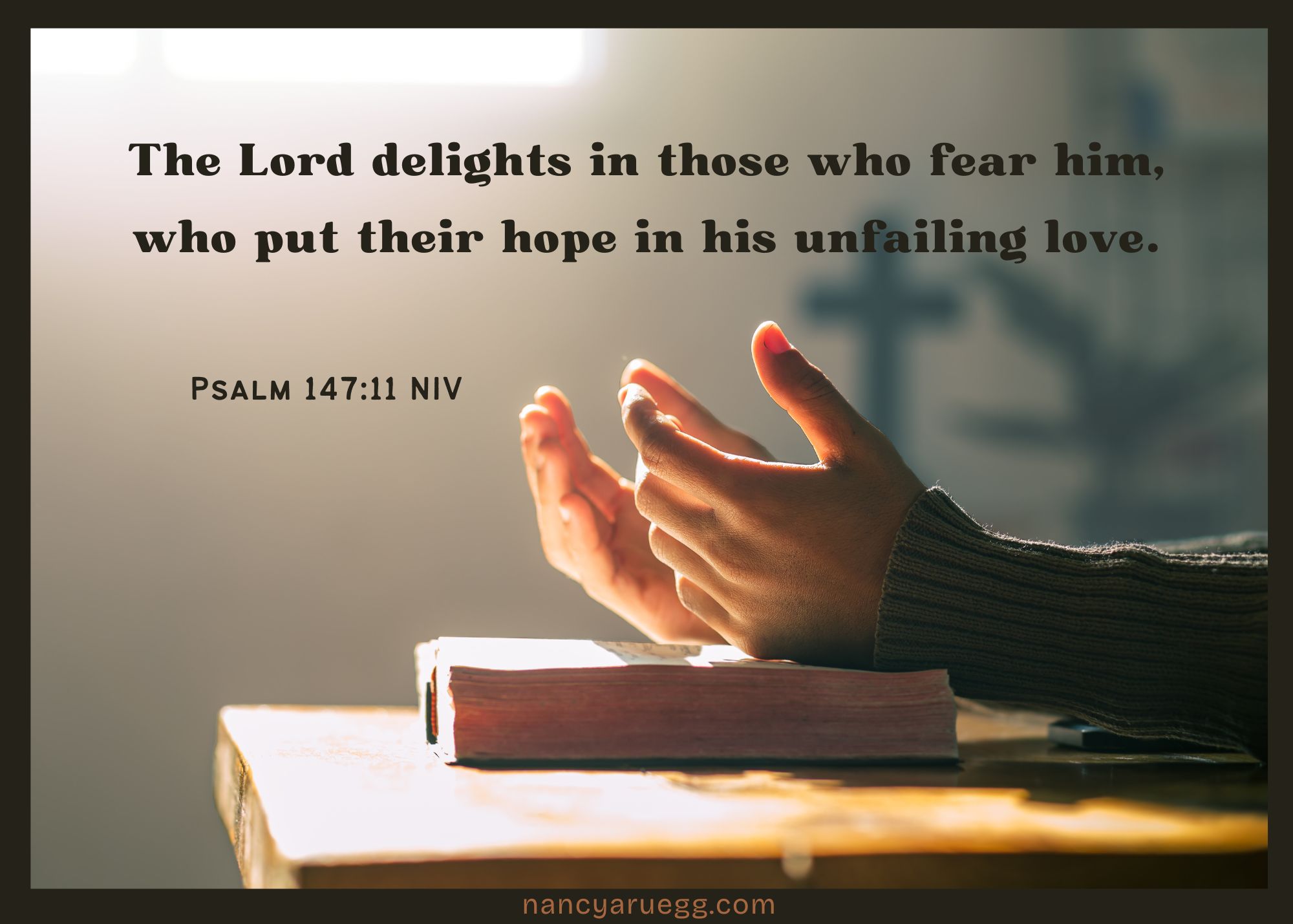
GOD: Though I inspired a lyricist to write Psalm 147:11 long ago, its truth remains. I still delight in those who fear Me and put their hope in My unfailing love.

ME: What does it mean to fear you, Lord?

GOD: Let’s begin with an example from the physical realm.

Think of standing on a ridge above an ocean beach after a tropical storm. You watch in amazement as mammoth waves pound against the shore—powerful enough to slide a building off its foundation. That display manifests a modicum of My power. . .

. . . And your emotional response offers a small sample of the wonderment that can well up in your spirit when you gaze upon Me, contemplating the splendor of My attributes and the ways I manifest them.

Another example: Remember that time when an actor came to your church and portrayed Jesus, telling stories from His life? His physical appearance matched how many people imagine Christ may have looked.

As the actor entered the sanctuary from the back and slowly walked toward the platform, he fixed his gaze on one person after another, including you.

And what was your reaction? Instant awe and reverence—so strong, you had to stop yourself from bowing down at his feet as many did in Bible times.

Of course, your response was not for the actor but for the One he represented—your forgiving and self-sacrificing Savior.

This is the kind of fear the psalmist was referring to in Psalm 147:11. It is veneration that recognizes your human frailty compared to My infinite transcendency and prompts the desire to worship Me and follow My excellent ways.

ME: I do want to follow Your ways, heavenly Father, but often fail. I thank You for loving me because of who You are, not because of who I am.

And yet, understanding that certain behaviors please You does inspire me toward obedience.

That verse also says you delight in those who put their hope in Your unfailing love. What does effectual hope look like?

GOD: First, confident. It pleases Me when My children look for evidence of My attributes at work in their lives and as the evidence mounts, become more and more confident in My love.

Second, tranquil.  My gracious love for you is affirmation of My acceptance of you and pleasure in you. I don’t just put up with you, I love you. You are a unique creation I designed with care. Rest secure in such truths.

Third, diligent. Hope involves wait-time. The person who hopes in Me fills that wait-time with:

  • TRUST in Me to provide loving care even as she waits
  • GRATITUDE for what I’ve already done 
  • PRAISE for what I’ll do in the future
  • ASSURANCE of the truth of My promises
  • DRAWING NEAR to Me, availing herself of My strength, encouragement, and more

And as you put these hope-filled, life-changing actions into practice, I’m delighted.

ME: How do I accomplish that last action, Lord, drawing near to You?

GOD: Again, a visualization might help. Imagine sitting on a footstool at My feet. Look up into My face and see in My eyes the devoted love I have for you. See in my smile the delight you bring Me. Feel My warm compassion as I wrap My arm around your shoulders.*

Bask in My presence and know that I—the King of the universe—delight in spending time with you in My Word, through prayer, and just resting in companionable silence.

Know this also: I delight in those who fear Me and put their hope in My unfailing love because of the resulting, ever-growing relationship between us, and these are the ones who will experience the fullness of My joy (Psalm 16:11).

* Psalm 99:5; 11:7; Ephesians 3:18-19; Psalm 149:4; 86:15.

RELATED POSTS:

Photo credits: http://www.canva.com; http://www.commons.wikimedia.org (Luis Ascenso); http://www.freebibleimages.org; http://www.dailyverses.net; http://www.canva.com; http://www.dailyverses.net.

Processing…
Success! You're on the list.

Read Full Post »

“You might remember my grandmother,” J. mentioned in our conversation. “although she’s been gone a long time now.”

“Who could forget her?” I responded. “She was such a vibrant woman.”

J. nodded. “I was privileged to be with Grandma during her last hours on earth—a surreal experience for sure. She radiated peace and wore the sweetest smile. Grandma kept whispering with wonder, ‘Oh, it’s beautiful—so beautiful!’

“And she called out people’s names too, names that meant nothing to us. At the time it seemed such a strange thing to do.

“Then a few years ago when I researched our family ancestry, some of those names turned up on our family tree from a generation or two prior to Grandma’s—relatives she must have known when she was young and people of faith already in heaven. She had to have seen them from her deathbed!”

We marveled at what J. had observed as she stood on the threshold of heaven with her grandmother. And we embraced the assurance that dying need not be feared—IF we’ve accepted God’s gift of eternal life by believing in Christ.

In fact, the great preacher Charles Spurgeon declared we can welcome death with intense delight, that it is sweet to die in the Lord [1].

In my younger days though, I wondered if playing a harp all day would be sweet enough to keep me happily occupied. My next thought was, at least that beats the alternative.

Little did I understand:

Of course that’s true. God in all his glory resides there. Also, if he’s provided astounding beauty, pleasurable activity, and satisfying purpose for us on earth, he will certainly provide all that and more in heaven.

Lewis wasn’t talking about fleeting joy, but permanent, moment-by-moment, perfect joy.

He also wrote:

I also used to wonder, How will we get there? Will we have to “walk toward the light” alone? I’d like some company.

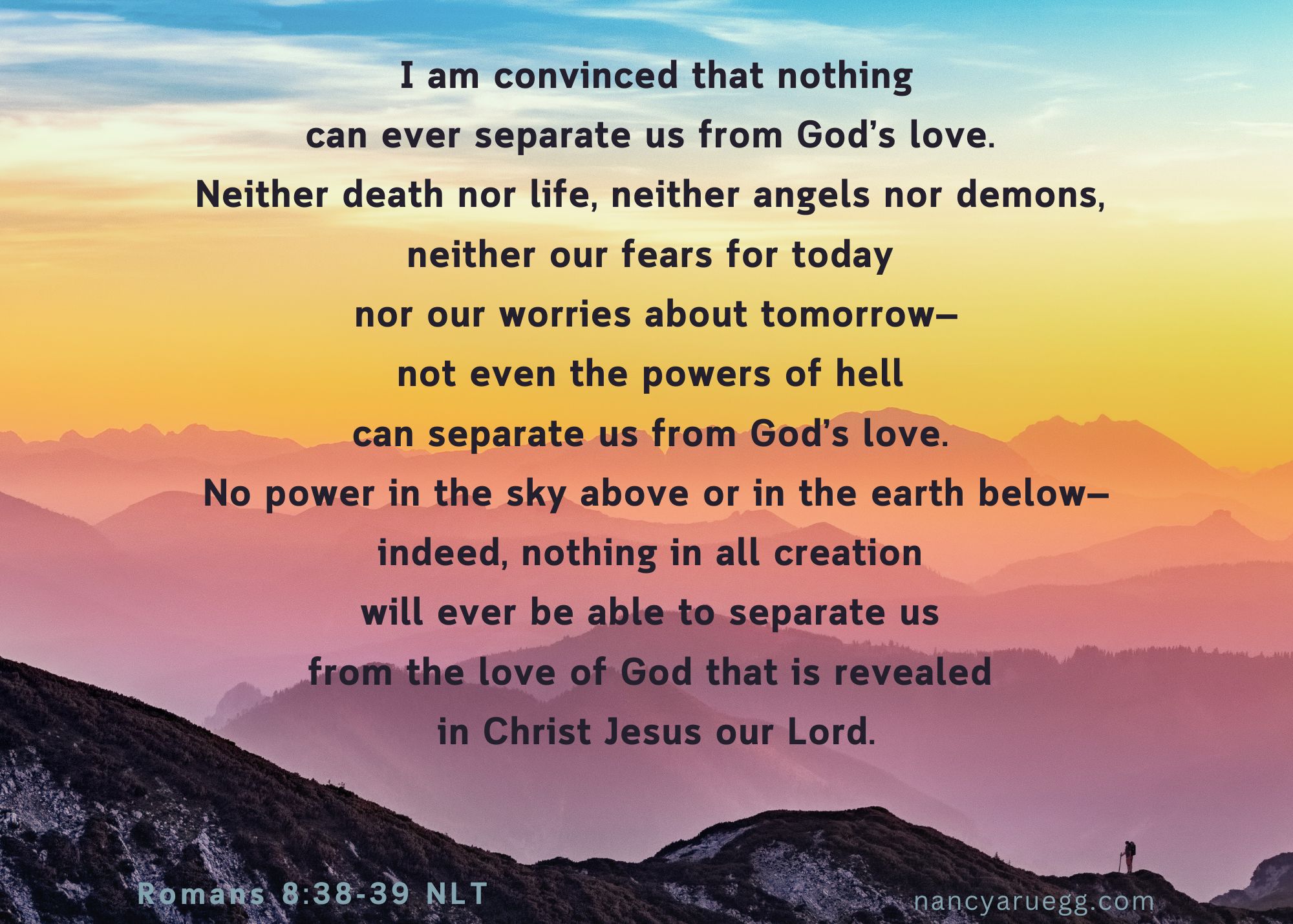
First of all, Jesus promised to be with us always [4]. His very name Emmanuel means God with us—in the here and now, as we approach and cross the threshold of heaven, and forever thereafter.

Second, in Jesus’ parable about the rich man and the poor beggar Lazaruz, the latter was carried by angels to heaven [5].

Looks like we’ll have plenty of company. 

But the journey from earth to heaven won’t be very long anyway. To be absent from the body is to be present with God [6].

Even if the threshold of heaven was far distant, and even if we had to make the journey alone, the potential discomfort would be more than worth it.

The Bible only gives us a few quick glimpses of what’s to come, but they stagger the imagination: twelve gates, each made from a single pearl, streets of gold as pure as transparent glass, and walls made of precious stones.

A river as clear as crystal runs down from God’s throne and through the middle of the main street. It’s a place where no pain, sorrow, death, or suffering can mar the perfection of God’s realm [7].

Some Bible teachers and scholars have characterized heaven in these ways:

  • Life far better, richer, fuller, purer, and more joyful than here [8]
  • Tranquility, fullness, blessedness, calm, sweetness, holiness, joy, a haven of rest [9]
  • Unsurpassed joy, unfading glory, undiminished bliss, unlimited delights, and unending pleasures [10]

We can depend upon it. That last moment, as each of us stands on the threshold of eternity, will be the best moment we have ever known!

J.’s grandmother and others provide the proof.

P.S. This post highlights what others had to say as they stood on the threshold of heaven: https://nancyaruegg.com/2018/02/01/famous-last-words/


[1] Morning by Morning, 113.

[2] Quoted in Streams in the Desert, L. B. Cowman, ed. Jim Reimann, 157.

[3] Letters to Malcolm, 92-93.

[4] Matthew 28:20

[5] Luke 16:19-31.

[6] 2 Corinthians 5:8 HCSB

[7] Revelation 21:4; 18-21; 22:1

[8] Jon Bloom, Not by Sight, 67.

[9] Jonathan Edwards (www.gracequotes.org).

[10] John MacArthur, The Glory of Heaven, 68.

Art & photo credits: http://www.freerangestock.com; http://www.heartlight.org; http://www.canva.com; http://www.stockcake.com; http://www.pexels.com; http://www.canva.com.

Processing…
Success! You're on the list.

Read Full Post »

The Apostle Paul included a curious instruction for us in Romans 12:12:

Does it pique your curiosity too? I can see rejoicing in the hope of salvation from death, the hope of blessings yet to come, and the hope of intervention in our lives. But HOPE in and of itself?

In addition, there are occasions when our hope is desperate, accompanied by impatience, fear, and anxiety—certainly not rejoicing.

So what did Paul mean?

Later in this letter Paul gives a clue in Romans 15:13. There Paul calls God the “God of hope.”

To rejoice in the God of hope, no matter our circumstances, increases our confidence in him to bring us through what we face. Such hope is like an anchor for the soul (Hebrews 6:19), offering stability for our lives. Now that’s something to rejoice in!

I pray the following truths about God will cause more joyful hope to overflow in your heart:

We can depend on his TRUSTWORTHINESS–even in the midst of trouble (Psalm 9:9-10).

He can wield his REDEEMING POWER over any situation (Matthew 19:26).

In his Word we find his soul-strengthening AFFIRMATION and calming ASSURANCE (Psalm 19:7-8).

His NATURE includes numerous, magnificent attributes, which he employs on our behalf (Psalm 145).

Take note of these examples:

And those descriptors just touch the surface!

God’s SOVEREIGNTY over all things (Jeremiah 32:17) includes the timing of his interventions.

Out of his FAITHFULNESS, God bestows hope. We don’t have to search for it; we don’t have to muster it ourselves (1 Peter 1:3).

Christ proved to be the victorious OVERCOMER, no matter what the world hurled at him (John 16:33): every temptation, every discouragement, every setback, and more. And though we could never measure up to his perfections, he makes us victorious overcomers too (Romans 8:37).

His RESTORATION upon our spirits fortifies hope (Isaiah 41:10).

God’s MINDFULNESS of us never wavers (Psalm 40:5 ESV).

His EXCELLENCIES defy our ability comprehend (Psalm 145:1-3).

God’s loving DETERMINATION keeps him from ever giving up on us (1 Corinthians 1:7 MSG).

And when we consider all these attributes of our God of hope—his . . .

Trustworthiness

Redeeming power

Affirmations and Assurances

Nature above reproach

Sovereignty

Faithfulness

Overcoming victory

Restoration

Mindfulness

Excellencies

Determination . . .

. . . we find ourselves rejoicing in confident hope because such truths have TRANSFORMED our spirits.

I pray that’s your experience today!

Art & photo credits: http://www.pexels.com; http://www.heartlight.org; http://www.flickr.com; http://www.pexels.com; http://www.canva.com.

Processing…
Success! You're on the list.

Read Full Post »

One way to get better acquainted with God is to read through the psalms, watch for statements pertaining to him, and write them down.

That last step is important, as research has proven: writing (not typing) helps us learn and retain what we’ve written [1]. In this case it will also increase our appreciation of God’s glorious attributes and gracious acts on our behalf.

I chose to participate in this exercise during Advent, and became astonished by the number of statements about God, totaling over three hundred by the time I reached Psalm 150. I even skipped over those that I remembered listing previously.

Some psalms offer a number of statements about God, one after another. Psalm 23 includes nine, Psalm 103, sixteen, and Psalm 145, twenty.

Perhaps that explains why these psalms are among the favorites of many people. Subconsciously we crave reassurance of God’s power, wisdom, and goodness working on our behalf.

A lesser-known psalm perhaps, #71, offers seven encouraging descriptors of God:

He is our sovereign Lord (v. 5) over all things, even our blunders and regrets.

No matter my poor choices, God can redeem them. “Our mistakes can never thwart the sovereign will of God” [2].

How thankful I am for that!

He is the One who’s been my hope and confidence since my youth (v. 5).

I’ve been a Jesus-follower since age four. Never have I toyed with the idea of abandoning my faith in him, because I learned early on from the saints around me:

  • God is a good and loving Father
  • There is purpose in everything God does
  • He will bring me through whatever I might face
  • He is accomplishing a good and eternal work in my life [3]

I’d be foolish to turn my back on Someone so invested in my welfare.

God is splendorous (v. 8).

We could surely add more attributes to Brooks’ list. God provides so many wonderful, spiritual blessings in Christ (Ephesians 1:3)!

He is the One who performs marvelous, mighty, and righteous deeds (vs. 16-18).

In truth, “The whole world is a series of miracles, but we’re so used to them we call them ordinary things” [4].

May we rediscover the wonder of God’s deeds in evidence all around us, and respond with gratitude and praise.

He is the One who’s taught me since my youth (v. 17).

Over time I’ve come to cherish God’ Word. And even though I’ve spent many happy hours in study, its inspiration never grows old.

That is very good news.

God is the One whose righteousness reaches up to the heavens (v. 19).

That’s good news too, because “there is no perfect life, no perfect job, no perfect childhood, no perfect marriage, and no set of people who always do what we expect them to do.

“What we do have is a perfect God who is able to lead us through this imperfect life with unfailing strength, infallible wisdom, and infinite love”—Unknown.

Praise God for his attentive participation in our lives!

He is the One who’s done great things. Who is like You, God (v. 19)?

All of these descriptors, among the dozens of others proclaimed in the psalms, do make clear:

P.S. My list of God-descriptors has become the basis for personal worship. Each morning I slowly read and pray back to him one page of the collected statements. The practice renews wonder and gratitude for my marvelous Heavenly Father.

Perhaps you’d like to try it too?


[1] Denise Hughes, Deeper Waters, 89.

[2] Bev Rihtarchik, contributor to A Moment to Breathe, 151.

[3] Dr. Charles Stanley, Advancing through Adversity, 101.

[4] Hans Christian Andersen

Photo credits: http://www.pxhere.com; Nancy Ruegg; http://www.flickr.com; http://www.pickpik.com; http://www.canva.com (2).

Processing…
Success! You're on the list.

Read Full Post »

« Newer Posts - Older Posts »

Still Traveling

Impressions Becoming Expressions

Living Our Days

Gaining a heart of wisdom

He Said What?!

I'm Patty, and my husband and I are living with our adult son who has autism and epilepsy. I love sharing lessons learned from life around me, especially life with Aaron.

Meditations of my Heart

Impressions Becoming Expressions

Linda Stoll

Impressions Becoming Expressions

Debby Thompson

Impressions Becoming Expressions

Signora Sheila

Notes on Life, Faith & Italy

Colleen Scheid

Writing, Acting, Living in God's Love

Mitch Teemley

The Power of Story

Heidi Viars

Finding the Image of God