Feeds:
Posts
Comments

Archive for the ‘Bible Study’ Category

Some of you may remember singing this song in Sunday School:

As a child, I knew God loved me. He proved it by sending his Son to take the punishment for my sins, provide the way for me to live in heaven one day, and know him in the present.  

But I also knew my little eyes, hands, and mouth were not as careful they should have been. Surely God was disappointed in me much of the time.

The truth that I could enjoy God never entered my mind. My false impression of his disapproval stood in the way for many years.

Somehow I’d missed the message of such scriptures as:

  • The joy you have in the LORD is your strength (Nehemiah 8:10 GWT).
  • Take delight in the Lord (Psalm 37:4a NIV).
  • I will go to the altar of God, . . . my joy and my delight (Psalm 43:4 NIV).

I read such passages as directives for prayer and worship rather than invitations to take pleasure in relationship with God.

Psalm 100 provides Exhibit A for enjoying him by praising him. “Shout for joy,” the psalmist begins. “Worship the Lord with gladness; come before him with joyful songs” (vs. 1-2, emphasis added).

Then he gives one example why: God has made us his own—in spite of our frailty—and cares for us like a compassionate, attentive shepherd (v. 3).

Parable of the Lost Sheep (Luke 15:3-7)

That’s certainly cause for thanksgiving and praise (v. 4), which in turn fosters our delight in God. Then the psalmist concludes with three more reasons to enjoy him: he is good, loving, and faithful (v. 5).

This psalm hints at another important truth. Dare I use a sport analogy?

My first attempts at playing tennis sent balls whizzing every which way. However, various drills and hitting the ball thousands of times against a wall built up my skills until I could actually play the game.

That’s when I began to enjoy the sport. The better I knew how to play tennis, the more pleasure I took in the game.

‘See the parallel in the spiritual realm? The more we know God, the more we’ll enjoy him.

But that’s not all.

The more we delight in God, the easier it becomes to obey him and live by his ways.

And as we see those ways contributing satisfaction, contentment, and purpose to our lives, we enjoy him all the more.

So how do we foster our pleasure in God? Here are three ways to get us started:

LEARN ALL YOU CAN ABOUT GOD—his character and his ways.

In January we explored the exercise of slowly reading through the psalms and writing down every mention of God’s character and deeds. As the list grows so does our delight in his multi-faceted splendor [1].

LEARN ALL YOU CAN ABOUT JESUS—his life, sacrificial death, provision of eternal life for us and all its implications.

For example, while reading the gospels, note his responses to people, his choices, and his behavior. What character traits can you identify?

While reading the letters written by the Apostles Paul, Peter, and others, consider all that Christ’s sacrifice has purchased for us.

The more we learn about Jesus, the more our love for him grows. The more our love grows, the more we find our hearts filled with joy in him.

REVEL IN GOD’S BEAUTY—his magnificence, the glory of his creation, and the beautiful blessings he bestows.

“His love notes are stashed everywhere,” says Sara Hagerty [2].

And as we discover them, we’ll find ourselves smiling and even laughing in pleasure with God, in the awesome works he performs [3].

Oh—and one more thing to celebrate. There will always be more to enjoy, and we can always acquire more ability to enjoy our God because . . .

quote from Morning by Morning, 268.

How do you enjoy God? Please share in the comment section below!


[1] https://nancyaruegg.com/2025/01/16/celebrating-god-through-the-psalms/

[2] Unseen, 206.

[3] https://nancyaruegg.com/2019/06/06/love-notes/

Image credits: http://www.youtube.com; http://www.dailyverses.net; http://www.freebibleimages.org; Nancy Ruegg; http://www.canva.com; http://www.pixahive.com (Vijay Richhiya).

Processing…
Success! You're on the list.

Read Full Post »

(An imaginary conversation between God and me.)

GOD: Though I inspired a lyricist to write Psalm 147:11 long ago, its truth remains. I still delight in those who fear Me and put their hope in My unfailing love.

ME: What does it mean to fear you, Lord?

GOD: Let’s begin with an example from the physical realm.

Think of standing on a ridge above an ocean beach after a tropical storm. You watch in amazement as mammoth waves pound against the shore—powerful enough to slide a building off its foundation. That display manifests a modicum of My power. . .

. . . And your emotional response offers a small sample of the wonderment that can well up in your spirit when you gaze upon Me, contemplating the splendor of My attributes and the ways I manifest them.

Another example: Remember that time when an actor came to your church and portrayed Jesus, telling stories from His life? His physical appearance matched how many people imagine Christ may have looked.

As the actor entered the sanctuary from the back and slowly walked toward the platform, he fixed his gaze on one person after another, including you.

And what was your reaction? Instant awe and reverence—so strong, you had to stop yourself from bowing down at his feet as many did in Bible times.

Of course, your response was not for the actor but for the One he represented—your forgiving and self-sacrificing Savior.

This is the kind of fear the psalmist was referring to in Psalm 147:11. It is veneration that recognizes your human frailty compared to My infinite transcendency and prompts the desire to worship Me and follow My excellent ways.

ME: I do want to follow Your ways, heavenly Father, but often fail. I thank You for loving me because of who You are, not because of who I am.

And yet, understanding that certain behaviors please You does inspire me toward obedience.

That verse also says you delight in those who put their hope in Your unfailing love. What does effectual hope look like?

GOD: First, confident. It pleases Me when My children look for evidence of My attributes at work in their lives and as the evidence mounts, become more and more confident in My love.

Second, tranquil.  My gracious love for you is affirmation of My acceptance of you and pleasure in you. I don’t just put up with you, I love you. You are a unique creation I designed with care. Rest secure in such truths.

Third, diligent. Hope involves wait-time. The person who hopes in Me fills that wait-time with:

  • TRUST in Me to provide loving care even as she waits
  • GRATITUDE for what I’ve already done 
  • PRAISE for what I’ll do in the future
  • ASSURANCE of the truth of My promises
  • DRAWING NEAR to Me, availing herself of My strength, encouragement, and more

And as you put these hope-filled, life-changing actions into practice, I’m delighted.

ME: How do I accomplish that last action, Lord, drawing near to You?

GOD: Again, a visualization might help. Imagine sitting on a footstool at My feet. Look up into My face and see in My eyes the devoted love I have for you. See in my smile the delight you bring Me. Feel My warm compassion as I wrap My arm around your shoulders.*

Bask in My presence and know that I—the King of the universe—delight in spending time with you in My Word, through prayer, and just resting in companionable silence.

Know this also: I delight in those who fear Me and put their hope in My unfailing love because of the resulting, ever-growing relationship between us, and these are the ones who will experience the fullness of My joy (Psalm 16:11).

* Psalm 99:5; 11:7; Ephesians 3:18-19; Psalm 149:4; 86:15.

RELATED POSTS:

Photo credits: http://www.canva.com; http://www.commons.wikimedia.org (Luis Ascenso); http://www.freebibleimages.org; http://www.dailyverses.net; http://www.canva.com; http://www.dailyverses.net.

Processing…
Success! You're on the list.

Read Full Post »

“You might remember my grandmother,” J. mentioned in our conversation. “although she’s been gone a long time now.”

“Who could forget her?” I responded. “She was such a vibrant woman.”

J. nodded. “I was privileged to be with Grandma during her last hours on earth—a surreal experience for sure. She radiated peace and wore the sweetest smile. Grandma kept whispering with wonder, ‘Oh, it’s beautiful—so beautiful!’

“And she called out people’s names too, names that meant nothing to us. At the time it seemed such a strange thing to do.

“Then a few years ago when I researched our family ancestry, some of those names turned up on our family tree from a generation or two prior to Grandma’s—relatives she must have known when she was young and people of faith already in heaven. She had to have seen them from her deathbed!”

We marveled at what J. had observed as she stood on the threshold of heaven with her grandmother. And we embraced the assurance that dying need not be feared—IF we’ve accepted God’s gift of eternal life by believing in Christ.

In fact, the great preacher Charles Spurgeon declared we can welcome death with intense delight, that it is sweet to die in the Lord [1].

In my younger days though, I wondered if playing a harp all day would be sweet enough to keep me happily occupied. My next thought was, at least that beats the alternative.

Little did I understand:

Of course that’s true. God in all his glory resides there. Also, if he’s provided astounding beauty, pleasurable activity, and satisfying purpose for us on earth, he will certainly provide all that and more in heaven.

Lewis wasn’t talking about fleeting joy, but permanent, moment-by-moment, perfect joy.

He also wrote:

I also used to wonder, How will we get there? Will we have to “walk toward the light” alone? I’d like some company.

First of all, Jesus promised to be with us always [4]. His very name Emmanuel means God with us—in the here and now, as we approach and cross the threshold of heaven, and forever thereafter.

Second, in Jesus’ parable about the rich man and the poor beggar Lazaruz, the latter was carried by angels to heaven [5].

Looks like we’ll have plenty of company. 

But the journey from earth to heaven won’t be very long anyway. To be absent from the body is to be present with God [6].

Even if the threshold of heaven was far distant, and even if we had to make the journey alone, the potential discomfort would be more than worth it.

The Bible only gives us a few quick glimpses of what’s to come, but they stagger the imagination: twelve gates, each made from a single pearl, streets of gold as pure as transparent glass, and walls made of precious stones.

A river as clear as crystal runs down from God’s throne and through the middle of the main street. It’s a place where no pain, sorrow, death, or suffering can mar the perfection of God’s realm [7].

Some Bible teachers and scholars have characterized heaven in these ways:

  • Life far better, richer, fuller, purer, and more joyful than here [8]
  • Tranquility, fullness, blessedness, calm, sweetness, holiness, joy, a haven of rest [9]
  • Unsurpassed joy, unfading glory, undiminished bliss, unlimited delights, and unending pleasures [10]

We can depend upon it. That last moment, as each of us stands on the threshold of eternity, will be the best moment we have ever known!

J.’s grandmother and others provide the proof.

P.S. This post highlights what others had to say as they stood on the threshold of heaven: https://nancyaruegg.com/2018/02/01/famous-last-words/


[1] Morning by Morning, 113.

[2] Quoted in Streams in the Desert, L. B. Cowman, ed. Jim Reimann, 157.

[3] Letters to Malcolm, 92-93.

[4] Matthew 28:20

[5] Luke 16:19-31.

[6] 2 Corinthians 5:8 HCSB

[7] Revelation 21:4; 18-21; 22:1

[8] Jon Bloom, Not by Sight, 67.

[9] Jonathan Edwards (www.gracequotes.org).

[10] John MacArthur, The Glory of Heaven, 68.

Art & photo credits: http://www.freerangestock.com; http://www.heartlight.org; http://www.canva.com; http://www.stockcake.com; http://www.pexels.com; http://www.canva.com.

Processing…
Success! You're on the list.

Read Full Post »

The Apostle Paul included a curious instruction for us in Romans 12:12:

Does it pique your curiosity too? I can see rejoicing in the hope of salvation from death, the hope of blessings yet to come, and the hope of intervention in our lives. But HOPE in and of itself?

In addition, there are occasions when our hope is desperate, accompanied by impatience, fear, and anxiety—certainly not rejoicing.

So what did Paul mean?

Later in this letter Paul gives a clue in Romans 15:13. There Paul calls God the “God of hope.”

To rejoice in the God of hope, no matter our circumstances, increases our confidence in him to bring us through what we face. Such hope is like an anchor for the soul (Hebrews 6:19), offering stability for our lives. Now that’s something to rejoice in!

I pray the following truths about God will cause more joyful hope to overflow in your heart:

We can depend on his TRUSTWORTHINESS–even in the midst of trouble (Psalm 9:9-10).

He can wield his REDEEMING POWER over any situation (Matthew 19:26).

In his Word we find his soul-strengthening AFFIRMATION and calming ASSURANCE (Psalm 19:7-8).

His NATURE includes numerous, magnificent attributes, which he employs on our behalf (Psalm 145).

Take note of these examples:

And those descriptors just touch the surface!

God’s SOVEREIGNTY over all things (Jeremiah 32:17) includes the timing of his interventions.

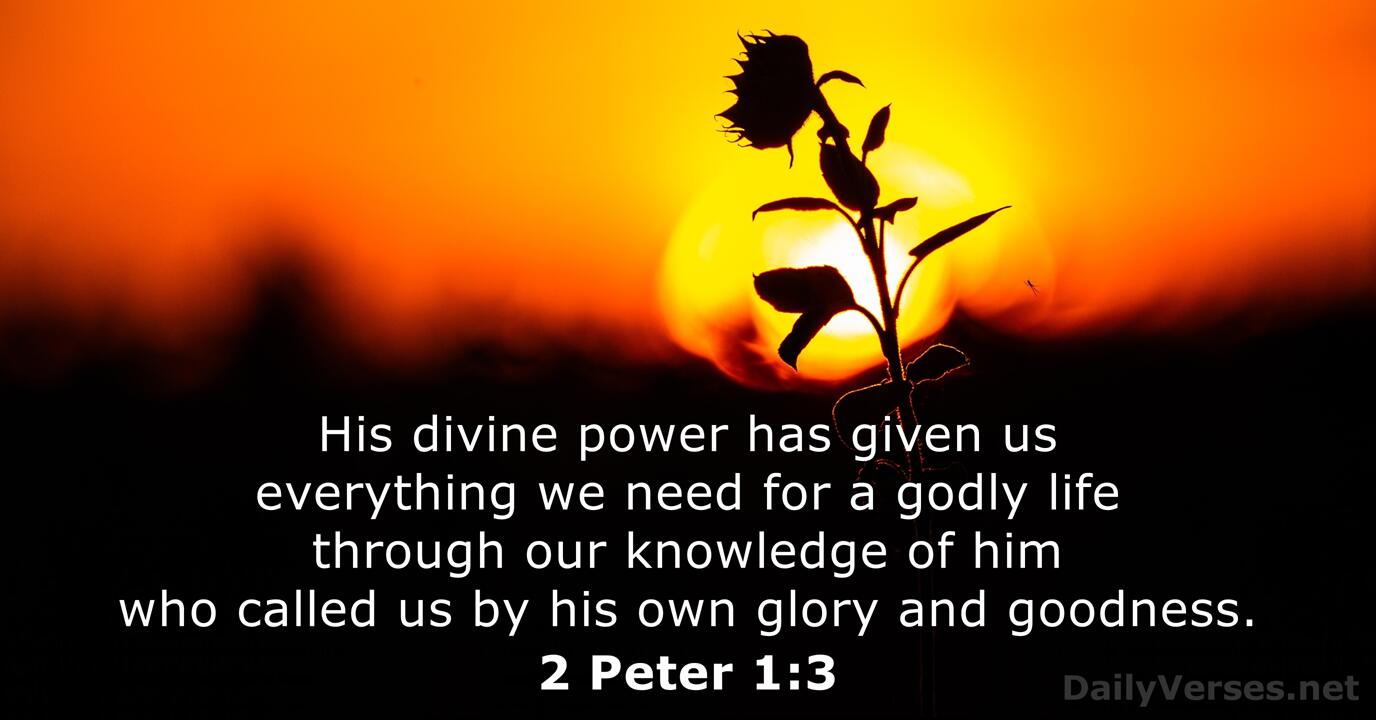
Out of his FAITHFULNESS, God bestows hope. We don’t have to search for it; we don’t have to muster it ourselves (1 Peter 1:3).

Christ proved to be the victorious OVERCOMER, no matter what the world hurled at him (John 16:33): every temptation, every discouragement, every setback, and more. And though we could never measure up to his perfections, he makes us victorious overcomers too (Romans 8:37).

His RESTORATION upon our spirits fortifies hope (Isaiah 41:10).

God’s MINDFULNESS of us never wavers (Psalm 40:5 ESV).

His EXCELLENCIES defy our ability comprehend (Psalm 145:1-3).

God’s loving DETERMINATION keeps him from ever giving up on us (1 Corinthians 1:7 MSG).

And when we consider all these attributes of our God of hope—his . . .

Trustworthiness

Redeeming power

Affirmations and Assurances

Nature above reproach

Sovereignty

Faithfulness

Overcoming victory

Restoration

Mindfulness

Excellencies

Determination . . .

. . . we find ourselves rejoicing in confident hope because such truths have TRANSFORMED our spirits.

I pray that’s your experience today!

Art & photo credits: http://www.pexels.com; http://www.heartlight.org; http://www.flickr.com; http://www.pexels.com; http://www.canva.com.

Processing…
Success! You're on the list.

Read Full Post »

One way to get better acquainted with God is to read through the psalms, watch for statements pertaining to him, and write them down.

That last step is important, as research has proven: writing (not typing) helps us learn and retain what we’ve written [1]. In this case it will also increase our appreciation of God’s glorious attributes and gracious acts on our behalf.

I chose to participate in this exercise during Advent, and became astonished by the number of statements about God, totaling over three hundred by the time I reached Psalm 150. I even skipped over those that I remembered listing previously.

Some psalms offer a number of statements about God, one after another. Psalm 23 includes nine, Psalm 103, sixteen, and Psalm 145, twenty.

Perhaps that explains why these psalms are among the favorites of many people. Subconsciously we crave reassurance of God’s power, wisdom, and goodness working on our behalf.

A lesser-known psalm perhaps, #71, offers seven encouraging descriptors of God:

He is our sovereign Lord (v. 5) over all things, even our blunders and regrets.

No matter my poor choices, God can redeem them. “Our mistakes can never thwart the sovereign will of God” [2].

How thankful I am for that!

He is the One who’s been my hope and confidence since my youth (v. 5).

I’ve been a Jesus-follower since age four. Never have I toyed with the idea of abandoning my faith in him, because I learned early on from the saints around me:

  • God is a good and loving Father
  • There is purpose in everything God does
  • He will bring me through whatever I might face
  • He is accomplishing a good and eternal work in my life [3]

I’d be foolish to turn my back on Someone so invested in my welfare.

God is splendorous (v. 8).

We could surely add more attributes to Brooks’ list. God provides so many wonderful, spiritual blessings in Christ (Ephesians 1:3)!

He is the One who performs marvelous, mighty, and righteous deeds (vs. 16-18).

In truth, “The whole world is a series of miracles, but we’re so used to them we call them ordinary things” [4].

May we rediscover the wonder of God’s deeds in evidence all around us, and respond with gratitude and praise.

He is the One who’s taught me since my youth (v. 17).

Over time I’ve come to cherish God’ Word. And even though I’ve spent many happy hours in study, its inspiration never grows old.

That is very good news.

God is the One whose righteousness reaches up to the heavens (v. 19).

That’s good news too, because “there is no perfect life, no perfect job, no perfect childhood, no perfect marriage, and no set of people who always do what we expect them to do.

“What we do have is a perfect God who is able to lead us through this imperfect life with unfailing strength, infallible wisdom, and infinite love”—Unknown.

Praise God for his attentive participation in our lives!

He is the One who’s done great things. Who is like You, God (v. 19)?

All of these descriptors, among the dozens of others proclaimed in the psalms, do make clear:

P.S. My list of God-descriptors has become the basis for personal worship. Each morning I slowly read and pray back to him one page of the collected statements. The practice renews wonder and gratitude for my marvelous Heavenly Father.

Perhaps you’d like to try it too?


[1] Denise Hughes, Deeper Waters, 89.

[2] Bev Rihtarchik, contributor to A Moment to Breathe, 151.

[3] Dr. Charles Stanley, Advancing through Adversity, 101.

[4] Hans Christian Andersen

Photo credits: http://www.pxhere.com; Nancy Ruegg; http://www.flickr.com; http://www.pickpik.com; http://www.canva.com (2).

Processing…
Success! You're on the list.

Read Full Post »

No Christmas season would be complete without the reading of the second chapter of Luke—the account of Mary and Joseph traveling to Bethlehem, presiding over the birth of Jesus in a stable or cave, and receiving shepherd-guests.

Toward the end of the account, as those shepherds were spreading the word of Jesus’ birth, Luke wrote, “Mary treasured up all these things and pondered them in her heart” (v. 19).

Indeed. She had much to process:

  • Her baby was the Messiah, the Promised One, who would save his people from their sin. I wonder if she studied him, looking for signs that he was different from other infants.
  • This was the Prince of Peace cradled in her arms. Yet he had been born to a common village girl in very primitive conditions.  Did that seem strange to her?
  • The shepherds had learned of his birth when angels visited them, just as the angel, Gabriel, had visited Mary and then Joseph.  Gabriel had also visited Zechariah, the father of John the Baptist. Four angel visitations in a matter of months. Never had that happened before.

I find myself pondering, too—pondering Mary herself–this dear, young girl who carried a tremendous burden for a long time.

Dear means beloved and valued. Mary is certainly that for numerous reasons.

  • She embraced Gabriel’s announcement with great faith. “May it be to me as you have said,” (Luke 1:38). She put herself in the care of God in spite of incomprehensible circumstances.
  • Her prayer, the Magnificat (Luke 1:46-55), gives indication of a heart fully committed to God.
  • She endured much: shame for her pregnancy, a long, uncomfortable journey to Bethlehem, and crude circumstances for the birth of her Son.

Mary was young—perhaps between thirteen and fifteen years of age. That was the typical age for a girl to be married in Bible times.

Yet, young as Mary was, Gabriel praised her for being “endued with grace” (v. 28, AMP). In addition, Mary demonstrated stamina, maturity, and gentleness beyond her years.

No doubt God graced her with these traits. But I have to believe Mary also had freedom of choice, as we all do, to embrace God’s way for her.

What I ponder most, however, is the fact Mary carried a tremendous burden, given to her by an elderly man, Simeon, eight days after Jesus was born.

You undoubtedly remember the story. Joseph and Mary took Jesus to the temple at Jerusalem to be circumcised.

There they met the righteous and devout Simeon who had been waiting decades for the Messiah. The Holy Spirit had revealed to him he would not die until he had seen the Lord Christ.

Immediately upon seeing the Child, Simeon knew this was the One.

He praised God for keeping his promise, blessed Mary and Joseph, and then spoke particularly to Mary, saying Jesus would cause some to rise and some to fall, he would be spoken against, the thoughts of many hearts would be revealed, and a sword will pierce your own soul too (Luke 2:21-35).

Those last words must have caused Mary’s eyes to grow wide and her heart to skip a beat. Wasn’t the worst behind her? Surely Mary wanted to ask Simeon, “What do you mean?” Scripture gives us no indication that she did so.

For thirty-three years those last words of Simeon must have echoed in Mary’s mind again and again. How does a person live with such long-term foreboding? Perhaps her mind turned back to the night of Gabriel’s visitation.

Perhaps, for thirty-three years, Mary repeated what she had told the archangel: “I am the Lord’s servant. May it be to me as you have said” (1:38).

Mary may very well have developed the calm assurance that even when God’s ways are baffling, we can rest assured he is orchestrating events to accomplish far more than we could ever imagine (Ephesians 3:20). She’d been witness to such orchestration in Bethlehem.

Mary knew that even our personal hardships can fulfill purposes that extend far beyond ourselves.

That’s a lesson for all of us to embrace with calm assurance.

(Revised and reblogged from December 15, 2014, while we enjoy a blessed week with family!)

Photo credit: http://www.stocksnap.io.

Processing…
Success! You're on the list.

Read Full Post »

As his father prayed, little Isaac peeked through his fingers to see what was causing a rustling sound. His eyes spied a mouse crawling up a bell-rope, and Isaac giggled.

After family prayers, Father wanted to know what had possessed his son to be so disrespectful.

“I saw a mouse running up the bell-rope, and it came to my mind:

There was a mouse for want of stairs,

‘Ran up a rope to say his prayers.”

Father was not amused and reached for the rod. Isaac fell to his knees and begged:

“Father, Father, pity take,

And I will no more verses make [1]!”

Neither the little poet Isaac Watts (1674-1748) nor his father could have known where the boy’s penchant for rhymes would take him.

As a late teen, Isaac complained often to his father about the tiresome, chanted hymns of the church. How was a person supposed to sing them with joy as the Bible-psalms often urged, when the music droned in a minor key?

From a 1600’s hymnal

Mr. Watts finally suggested he turn complaining into composing and create better melodies and lyrics. Isaac did, and over the next fifty-plus years more than six hundred of his hymns were published.

Some people found fault with Isaac’s contemporary worship songs. But at least several prominent leaders supported him, including Samuel Johnson, Cotton Mather, and John Wesley [2].

Isaac Watts

Probably the best known of Watts’ hymns is “Joy to the World,” although Watts never set it to music. Decades later Lowell Mason felt inspired to do so and upon publication in 1848, the song soon became a beloved Christmas carol.

Some insist this hymn has no place in the carol-category, because Watts included no elements of the Christmas story in the lyrics.

But as Alyssa Poblete points out: This song celebrates what Christ came to do. And along with looking back at the grace accomplished in the past, we also look forward to the grace accomplished for our future, to the ultimate joy to be revealed [3].

That enlightenment helps explain that puzzling first line, “Joy to the world, the Lord is come” (emphasis added). I’ve often wondered why Watts didn’t choose “has come.”

Ms. Poblete gives us indication. God’s grace (explained in part by the acronym, God’s Riches at Christ’s Expense) is active in all of time—past, present, and future.

Our Messiah’s birth was long-promised for centuries. His coming ushered in a new kingdom of Light. Those who believe in Jesus gain release from the kingdom of darkness, and one day that evil kingdom will be utterly destroyed [4].

In addition:

Christ’s coming is an ever-present and ongoing engagement in the world.

–Darrow L. Miller [5]

The Lord didn’t just come. He is here! And we can sing with dazzling Christmas joy because:

  • One day the whole earth will receive her King. Therefore, let heaven and nature sing (v. 1) [6]
  • The Savior reigns forever and ever (v. 2) [7]
  • Sins and sorrows will be no more, when Christ returns (v. 3) [8]
  • He comes to make his blessings flow (v. 3) [9]
  • He rules the world with truth and grace (v. 4) [10]
  • The glories of his righteousness and the wonders of his love are on display everywhere (v. 4) [11]

These musicians capture well the dazzling joy of knowing our Savior reigns!

For the reasons listed above and more, Watts invites: “Let every heart prepare him room” (v. 1), and “Let men [all humanity] their songs employ” (v. 1)!

May we be just such people who sing with intention, from a place of authenticity [12].

In fact, take a moment right now if you can, and worship, celebrate, and sing with dazzling Christmas joy!


[1] Betty Dunn, https://www.powerofchange.org/blog/2011/12/16/isaac-watts-joy-to-the-world.html

[2] Erin Tabor, https://www.zmiinternational.org/daily-dose-of-encouragement/joy-to-the-world-the-lord-is-come  

[3] https://www.thegospelcoalition.org/article/joy-to-the-world-a classic-christmas-hymn-reconsidered/

[4] Isaiah 7:14 and 9:6; Colossians 1:14; Revelation 20:7-20.

[5] https://disciplenations.org/wp-content/uploads/202004/Music-that-Writes-Culture-Reflections-on-Joy-to-the-World.pdf

[6] Romans 8:19-23; Revelation 22:20; Psalm 96:1-4

[7] Revelation 11:15

[8] Revelation 21:4

[9] Psalm 5:12; 34:10b; 2 Peter 1:3

[10] John 1:14; Colossians 1:16-17

[11] Psalm 33:4; 145:17 31:21

[12]  https://passioncitychurch.com/article/joy-to-the-world/

Art & photo credits: http://www.justanotherclaypotblogspot.com 9/10/2008; http://www.boudewijnhuijgens.getarchive.net; http://www.jenikirbyhistory.getarchive.net; http://www.canva.com (2); youtube.com; http://www.pxhere.com and canva.com.

Processing…
Success! You're on the list.

Read Full Post »

You’ve heard the Christmas story—probably multiple times.

You may even know interesting background information such as:

  • The number of miles Mary and Joseph traveled from Nazareth to Bethlehem—about seventy—and the number of days on the road—four to seven
  • Angels not necessarily singing to the shepherds but most likely speaking their message [1]
  • The gifts of the Magi holding symbolic meaning: gold for Christ’s royalty, myrrh (used in embalming) for his humanity, and incense for his divinity

But perhaps a new insight or two about the familiar story will add a bit of icing to your Christmas joy!

For example, consider:

A Disadvantaged Upbringing

Most of us would choose a sophisticated city like Jerusalem (in the homes of priests perhaps) for the upbringing of the mother and earthly father of the Christ Child.

Instead, God chose Nazareth–a small, nondescript town that nobody cared about. That’s where Mary and Joseph, the parents for the Son of God, were likely born and raised.

We mustn’t think anyone too weak, untrained, or undistinguished to fulfill God’s plans.

An Unknowing Participant

The Roman emperor Caesar Augustus—not a believer in God—unknowingly carried out holy purpose [2]. Our Lord can and does use the most unlikely people; we mustn’t underestimate his influence and power.

An Unlikely Invitation

by Alexander Laureus, 1815

Neither the powers of Rome nor the priests of the Jewish people received an invitation to the birthplace of the King of kings. Instead, angels delivered the news of the Messiah’s birth to scruffy shepherds and told them where Christ could be found.

Often it is the lowly who are the beneficiaries of God’s special favors and blessings—more so than the rich or famous [3].

An Unassuming Humility

Our Savior God is a humble God. Even though he’s the sovereign power of the universe, Christ humbled himself to be born a helpless baby, grow into manhood, and suffer death in the place of all sinners who put their faith in him [4].

How dare I entertain even the smallest of prideful thoughts?

An Unexpected Circumstance

Our God loves surprises! Imagine the shepherds crying out in shock as an angel suddenly appears to them, only to be even more surprised by the angel’s message!

No doubt you’ve been surprised by God too, as he worked out impossible circumstances, miraculously supplied a dire need, or blessed beyond imagination. God’s surprises prove his creative capability to perform wonders that cannot be fathomed, and miracles that cannot be counted!

An Unlikely Juxtaposition

The shepherds visited the True Shepherd; the kings from the East visited the King of the universe. And that Shepherd-King (such a mind-boggling juxtaposition of humility and majesty!) now lives within us.

An Uncommon Possibility

When angels announced Christ’s birth to the shepherds, “the glory of the Lord shone around them [5].”

I wonder, might that celestial light have been rainbow-infused? Consider Revelation 4:3 where the Apostle John tries to describe the glory around God’s throne.

He wrote, “A rainbow that shone like an emerald encircled the throne.” Perhaps those same, glorious rainbow hues swirled in the light above the hills of Bethlehem that night!  

This is the only public-domain image that hints toward what I’m imagining!

Some people enjoy adding such facts and conjectures to their bank of knowledge.

Better yet is to let such information provide the icing on our Christmas joy—the icing of delicious astonishment and sweet encouragement that leads to worship.

*     *     *     *     *     *     *     *     *     *

I praise you Lord God, that your Word is living and active. No matter how often we read a passage or hear a scripture story, you can breathe fresh life into its meaning and impact.

The Christmas narrative is no exception. As we read and hear again the grand story of Jesus’ birth, may our hearts be open to your inspiration, may we overflow with renewed wonder, and in response, offer you our heartfelt worship.

Hebrews 4:12a; Proverbs 4:20-22;

Psalm 119:18; Psalm 40:5; Psalm 72:18-19


[1] Luke 2:13-14

[2] Luke 2:1-4

[3] http://www.examiner.com

[4] Colossians 1:17; Philippians 2:5-8

[5] Luke 2:9

Art & photo credits: http://www.freebibleimages.org; http://www.pickpik.com; http://www.flickr.com; http://www.rawpixel.com; http://www.canva.com; http://www.flickr.com; http://www.canva.com.

Processing…
Success! You're on the list.

Read Full Post »

Surely you’ve met them—those glowing saints whose eyes always twinkle, smiles always dazzle, and whose faith and attitude always inspire.  We’re left wondering, how did they grow that glow?

No doubt it begins with strong trust in Christ, cultivated by scripture-study and prayer. They apply what they’ve learned about:

  • Giving all their concerns to God, knowing he truly cares
  • Focusing on the positive, the joyful, the beautiful
  • The pleasure of giving such gifts as time, encouragement, and a listening ear
  • Practicing God’s presence to experience his peace, strength, and more [1]

But researcher Michael Zigarelli discovered another reason why godly saints radiate joy: gratitude. He found that expressing continual gratitude to God actually energizes the practice of other spiritual disciplines, and altogether they contribute to growing that saintly glow [2].

Insightful author, Ann Voskamp concurs:

“The brave who focus on all things good and all things beautiful and all things true, even in the small, who give thanks for it and discover joy even in the here and now, they are the change agents who bring fullest Light to all the world” [3].

In addition, author and theologian Warren Wiersbe would have us know:

“That’s all fine and good,” someone might say. “But right now I see very little to be thankful for. We’ve had one financial setback after another, my job is more stressful than ever, our son is having a hard time in school, and my brother and sister-in-law just announced they’re separating. ‘See what I mean?”

Yes, we do. Some seasons of life include multiple troubles all at once.

But take note of this good news: simply expressing thankfulness (even if we don’t feel grateful) has been proven to create positive change in our brain chemistry [4].

And we find: continual gratitude contributes to a sense of WELL-BEING.

Another surprise?

Continual gratitude provides HEALING for the wounds of distress [5] —especially appreciation for who our Savior God is and what he has done.

Think of it: He created all things! He sustains all things! He has supremacy over all things! He is our Emmanuel (God with us), our Good Shepherd, our Wonderful Counselor, and so much more [6]!

God hears us as we pray, loves us with an everlasting love, empowers us through the Holy Spirit, fills us with hope, and anchors us through the storms of life [7]

And as we cultivate continual gratitude for such realities, we find PEACE.

The truly thankful person

is a truly peaceful person.

—Lysa TerKeurst [8].

It makes sense. The more we thank God for all the benefits he bestows, the firmer our faith-stance in his competence to sustain us.

Third, continual gratitude cultivates JOY.

Turn [your] eyes toward Jesus and everything shines—

even the tough spots morph into excitement. . .

How is he going to solve my problem this time? . . .

When I am consciously aware of him,

life fills with wonder and wonder brings joy [9].

What better way to remain aware of God and expand joy-inducing wonder than with gratitude?

Last, continual gratitude “lays out planks of TRUST” [10].

Think of all the moments he’s been faithful, when:

  • an impossible situation worked out amazingly well
  • a potentially difficult conversation turned out to be restorative and beneficial
  • an inspired idea came to mind that cleverly solved a problem
  • a surprising bargain materialized, supplying a current need
  • a string of just-so-happened circumstances provided the answer to a prayer

Yes, some will call these coincidences. Around here we call them God-incidences, because “whatever is good and perfect is a gift coming down to us from God our Father” [11].

And every time we acknowledge such gifts of provision, protection, and guidance, we lay another plank of trust, constructing a strong bridge of faith from yesterday into tomorrow [12].

Now we know. Each of us can grow a glow as we embrace the power of gratitude.

And isn’t November—with Thanksgiving just a few weeks away—the perfect month to grow that glow a little bit brighter?


[1] 1 Peter 5:7; Philippians 4:8; Acts 20:35; Isaiah 26:3 NLT

[2] https://godsmissionarychurch.org/2018/10/26/growing-through-thankfulness/

[3] One Thousand Gifts, 58.

[4] https://www.focustsoul.com/blog/signs-of-maturity-in-christ-part-1-gratitude-and-joy

[5] https://cct.biola.edu/spirituality-suffering-gratitude/, emphasis added

[6] Colossians 1:15-20; Matthew 1:23; John 10:14; Isaiah 9:6

[7]  1 Peter 3:12; Jeremiah 31:3; 2 Timothy 1:7; Romans 15:13; Hebrews 6:19

[8] Embraced, 256.

[9] Deanna Chadwell, Soul Bare, 82-84.

[10] Ann Voskamp, One Thousand Gifts, 151.

[11] James 1:17 NLT

[12] Voskamp, 152.

Art & photo credits: http://www.commons.wikimedia.org; http://www.heartlight.org; http://www.pexels.com; http://www.pickpik.com; http://www.flickr.com; http://www.shutterstock.com.

Processing…
Success! You're on the list.

Read Full Post »

Some time ago I mentioned my quiet time notebook in response to one of Linda Stoll’s thoughtful essays on Substack.

(DO visit her at https://lindastoll.substack.com!)

This notebook provides a place to keep Bible study notes, scripture memory work, prayer-starters, and more. Then when I sit down each morning to spend time with God, I have what I need in one place.

Linda replied to my comment, “One of these days you’ll have to tell us more about that notebook!”

Well, today is the day! Here’s a brief explanation of its contents.

First, I’ve chosen looseleaf over spiral, allowing me the freedom to move things around, even remove pages and file them to make room for newer material.

The set-up of various sections allows me to organize by category, making it easier to find what I need.

Below you’ll find more details for each section, plus suggestions for others.

THE COVER

Here’s a chance to be creative! It might be as simple as a scripture coloring page (Many free ones are available online.), a favorite Bible verse or quote written with colorful markers, or an inspiring photograph. Make your notebook a pleasure to pull off the shelf.

PROMPTS FOR PRAISE

Many of us follow the pattern-for-prayer based on the acronym, A.C.T.S. A = Adoration, C = Confession, T = Thanksgiving, and S = Supplication.

To add freshness to my praise, I decided to focus on just one of God’s attributes each day, to avoid a repetitious list-prayer.

For each trait I’ve collected scriptures and quotes that help me express adoration for who our God is. That collection is the first section in my notebook.

CURRENT BIBLE STUDY

If I’m not using a workbook—a study by the likes of Jen Wilkin or Priscilla Shirer—I keep my notes together in this section.

When I finish journaling or verse-mapping through a book of the Bible (for example), I file these pages so, if needed, I can find them again.

However! Purging has been necessary now and then. Had I kept every study throughout the decades of my life, I’d probably need two or three file cabinets!
Also in this section: ideas for scripture meditation, to add variety to the ways I study. These too are available online. (One example: https://biblicalspirituality.org/wp-content/uploads/2015/03/Meditation-Methods-Summary-17.pdf).

MEMORY WORK

I keep a typed copy of each chapter I’ve memorized, the many shorter passages, and individual verses. Reviewing a page or two each day helps to keep the passages fresh in my mind.

PRAYERS

Some people keep a prayer list in this section. But years ago I transitioned to a prayer box of 3 x 5s. The cards provide more room to write, as some requests go through stages toward fulfillment. It’s encouraging to see God at work through the process, as well as in the final outcome.

So this section of my notebook isn’t for requests, it’s for model prayers that have especially touched my heart. I can turn to these when the words won’t come.

An index helps me find an appropriate one. For example, when I need discernment I turn to a prayer of Thomas Merton, for hope, John D. Rayner, and for peace, Teresa of Avila.

FROM THE INTERNET

Occasionally I come across articles and blog posts worth keeping close at hand: how to’s, poetry, inspiration, information, and more. (I need to create an index for this section too!)

WORD OF THE YEAR

Sometimes I participate in this practice of prayerfully choosing a word to focus on for a year. That focus can include searching out related scriptures, writing them out, journaling meditative thoughts, and then praying through them.

The goal is to allow such focus to form our character and enhance our relationship with God.

OTHER POSSIBILITIES

There are those who include a reflection journal, gratitude journal, written out prayers, and/or other personalized pursuits. I prefer actual journals or separate notebooks for certain endeavors.

One example: my God Is Faithful journal, mentioned here now and then.

The first pages are starting to show their age!

Dozens of pages offer a record of God’s faithfulness to our family since 1983. At first this journal did reside in my quiet time notebook. But it soon grew and required a notebook of its own.

And now, gracious readers, I’d love to hear how you organize your quiet time materials. Please share in the comment section below!

All photos: Nancy Ruegg

Processing…
Success! You're on the list.

Read Full Post »

« Newer Posts - Older Posts »

When the House is Quiet

Impressions Becoming Expressions

Mitch Teemley

The Power of Story

Still Traveling

Impressions Becoming Expressions

Living Our Days

Gaining a heart of wisdom

He Said What?!

I'm Patty, and my husband and I are living with our adult son who has autism and epilepsy. I love sharing lessons learned from life around me, especially life with Aaron.

Meditations of my Heart

Impressions Becoming Expressions

Linda Stoll

Impressions Becoming Expressions

Signora Sheila

Where faith meets la dolce vita

Heidi Viars

Finding the Image of God