Feeds:
Posts
Comments

Archive for the ‘Courage’ Category

Joanne examined the young woman again, hopeful that after another hour of labor, she would show signs of progress toward birthing her child. But change was imperceptible.

The prolonged labor was sapping the young woman’s strength.  If intervention didn’t occur soon, Lorsan and the baby would die.

Even so, Joanne smiled reassuringly at the mother-to-be and announced, “We’re going to get some help for you, Lorsan.”*


Joanne had been midwife for many women of the Biliangao jungle-village in the northern Philippines.  But she didn’t have the training or equipment for a C-section.

As a Wycliffe Bible Translator, her expertise lay in linguistics. Granted, her preparation for remote mission service had included a modicum of medical training, but certainly not for surgery.

Praise God we can arrange for help, thought Joanne. She asked her colleague Anne to use their newly acquired radio (no generator needed for this one) and call for an airlift from JAARS–Jungle Aviation and Radio Service.


(Founded in 1948; still in operation today.)


Meanwhile, Joanne prayed for her patient, and the villagers who’d gathered listened with wary attention.

Their faith was in the spirits of the jungle and the frequent sacrifices offered to appease them (even though the practice gravely depleted their food supply). The villagers were convinced that all trouble was due to angry spirits, including Lorsan’s difficult delivery.

Of course the JAARS operator who answered Anne’s distress signal knew the missionaries well. They were two of the most courageous women she’d ever met, living as they did in a remote, mountainous region, with people who’d been headhunters in the not-so-distant past.
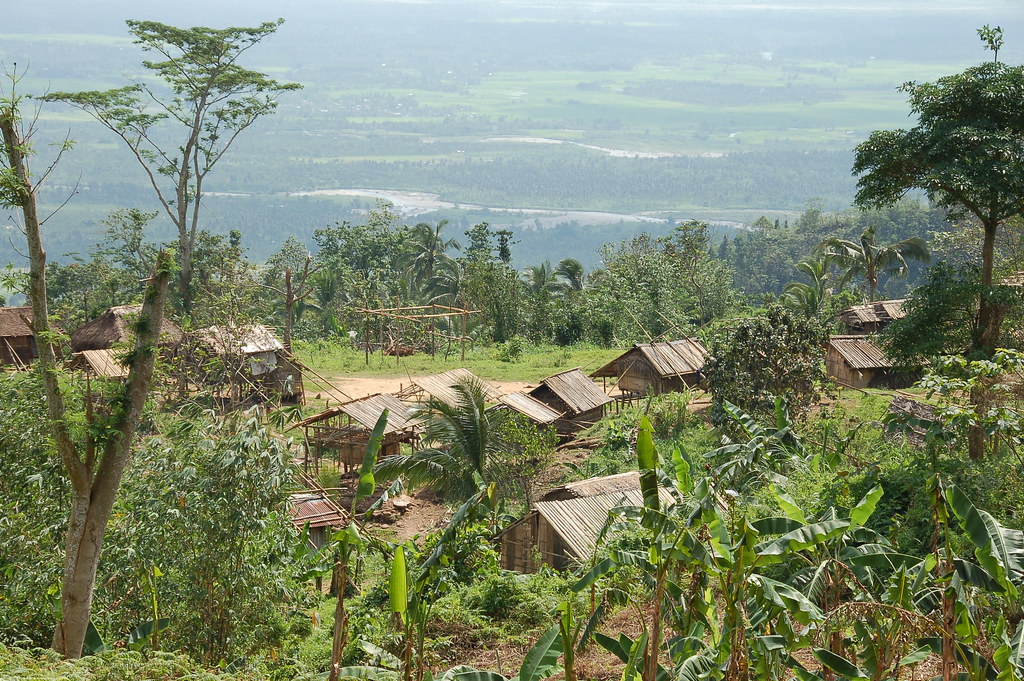
 

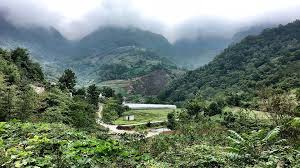
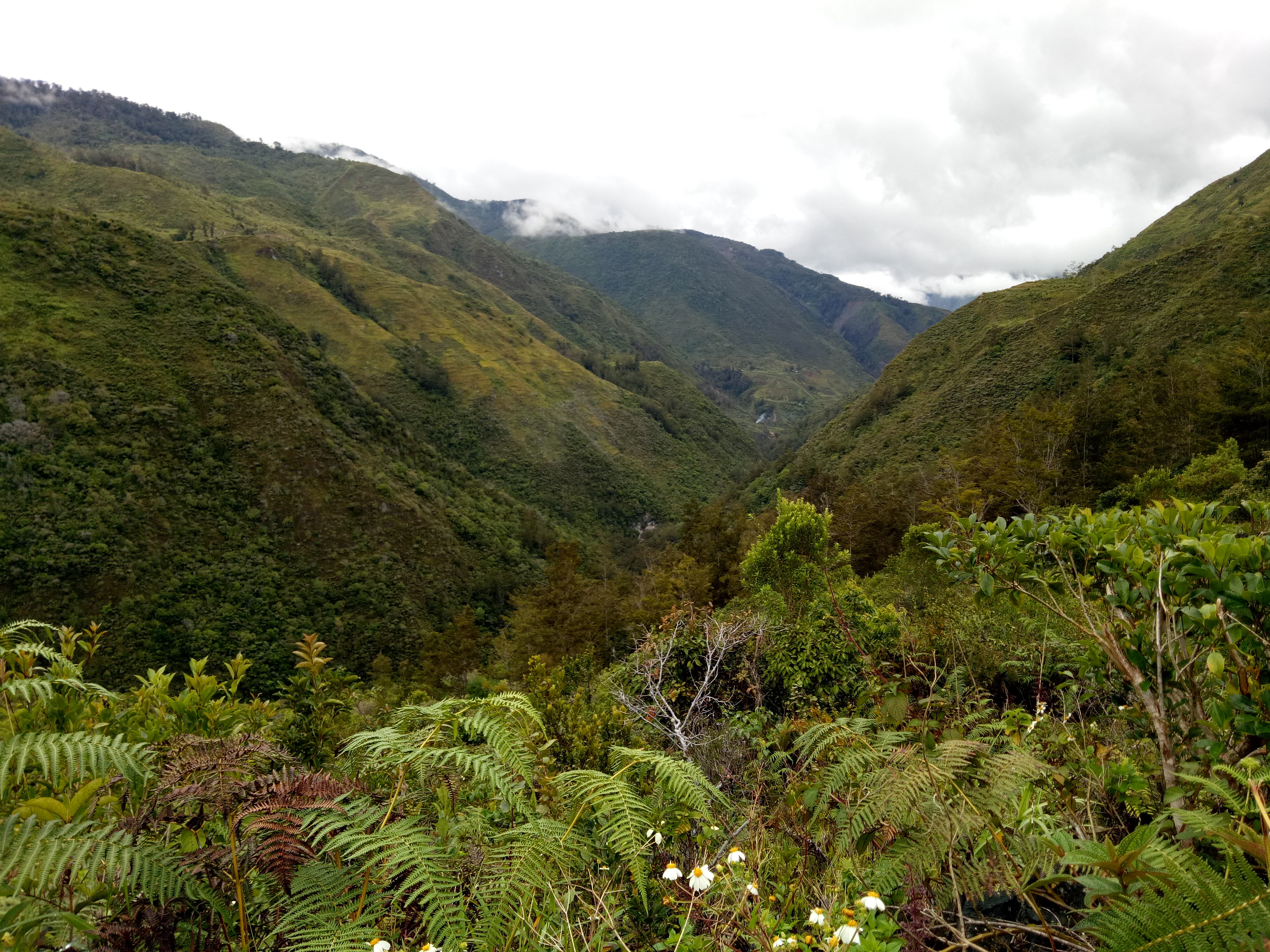
(Mangyan village, Philippines)


But Joanne and Anne had been confident this was the people-group God wanted them to reach, and had talked the reluctant Wycliffe director in letting them go–despite their youth and gender. That was in 1962.

Now it was 1967. For five years Joanne and Anne had been learning the language, determining a way to transcribe it, and then translating the New Testament into the Baliangao language.

All the while they built relationships, helped the people as they could, and told them about Jesus.

The villagers were anxious for their language to be available in written form. But a New Testament about a new God? They had serious doubts about his significance and power.

Only a few villagers had accepted Jesus; everyone else feared what the spirits might do in retaliation.

The JAARS radio operator soon dispatched a plane to transport Lorsan to a lowland clinic. Days later she and her healthy baby were returned to the village.


The people were amazed that mother and child had survived.  Perhaps some also wondered at the kindness of strangers to help a young mother.

They began to ask Joanne and Anne, “Who is this God, the one you’re always talking about?” Among them were several spiritists–witch doctors–desperate for release from their fear and the evil spirits who tormented them.

Joanne prayed as they acknowledged God, the powerful One over all spirits, accepted Jesus into their lives, and committed to end the useless practice of sacrificial appeasement.

Soon there were enough believers to start a church in Baliangao. Joanne’s village “father” and protector soaked up her Bible teaching and became a teacher himself.

By this time, Joanne’s coworker, Anne, had accepted a marriage proposal back in the States. The Wycliffe director recommended that Joanne leave also, but she refused, wanting to complete the New Testament translation for these people she’d grown to love.

While she worked, villagers traveled to near-by villages, telling them about the one true God and his Son Jesus. These neighbors were enemies who warred one another frequently. Many had died in the skirmishes.

But the message of a God who loved them (John 3:16) and offered peace of heart (Psalm 85:8), turned these enemies into brothers and sisters.


Bible classes grew into village-style conferences, and during the twenty-two years Joanne worked to translate the New Testament, she witnessed several thousand Baliangao people turn from fear of spirits to peace in Jesus.

As for the original village, they are now sending out a second generation of missionaries into other parts of Asia.

And as of February 2019, Joann was still serving God as a speaker with Scripture Engagement International, presenting workshops around the world.

The author of Hebrews wrote:



Joanne Shetler is certainly a heroine to consider and imitate–for her courage, perseverance, and faith.


*Real name unknown


Sources:

https://www.jaars.org/updates/my-story-jaars-was-there-for-me/

https://billygraham.org/decision-magazine/june-2006/a-message-for-all-people/

https://bulletininserts.org/inspiration-from-a-bible-translator-whose-work-was-offensive/

http://www.thetravelingteam.org/articles/joanne-shetler 

https://www.westsidebiblechapel.ca/1_3_109_missions-history-joanne-shetler.html

http://magazine.biola.edu/article/16-summer/meet-the-2016-alumni-award-winners/

https://www.checkitout.org/check-it-out/speakers/


Photo credits:  http://www.wikipedia.org; http://www.flickr.com; http://www.commons.wikimedia.org; http://www.flickr.com; http://www.dailyverses.net; http://www.pikrepo.com.


Read Full Post »


With Advent near the surface of my thinking these days, I was primed to notice a new-to-me phenomenon in the word adventure.

It begins with Advent!

I don’t know how I’ve missed that similarity before. But once the word-within-a-word jumped out at me, I began to wonder: Are the two words related or is it just coincidence? Might there be significance to the similarity?

Research uncovered several interesting insights.

The Oxford English Dictionary defines Advent as “the arrival of a notable person or thing.” It comes to us from Latin; ad- means “to” and venire means “come” (1).


Adventure refers to an undertaking that may involve danger and unknown risks, and/or an exciting or remarkable experience (2).

Etymologically the words are more like distant cousins than siblings. But they do come together at Christ’s advent into the world—and in our individual lives—because he does offer grand adventure—the adventure of faith.

Mary certainly chose such an adventure as Gabriel announced she would conceive the Son of God. “I am the Lord’s servant,” she affirmed. “May your word to me be fulfilled” (Luke 1:38).

Joseph also stepped into the adventure of the Messiah’s birth, risking the derision of his community (Matthew 1:18-25).  If his neighbors didn’t know it yet, they’d learn soon enough that his betrothed was pregnant.


Neither Joseph nor Mary knew the dangers they’d face (including King Herod’s paranoia) and the uncertainties of parenting the perfect Son of God who would be misunderstood, scorned, and even murdered.

For their adventure, the shepherds ignored the first rule of sheep-tending: never leave the flock to fend for themselves. Instead, these men  threw caution to the wind and participated in a remarkable experience. They were among the first to see the long-anticipated Christ Child (Luke 2:8-18).

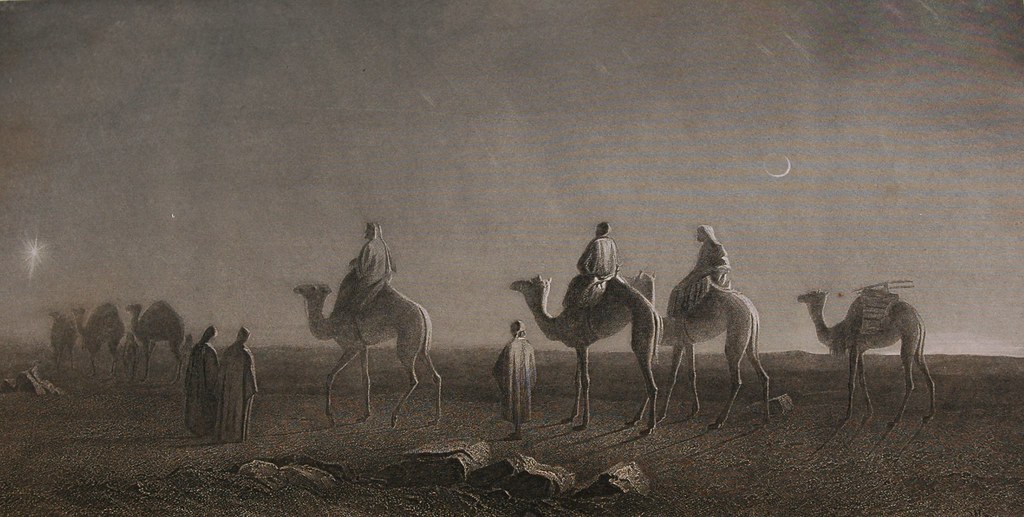
The wise men most likely adventured for two years, traveling to Judea from Babylon or Persia in order to worship the newborn King (Matthew 2:1-12). Imagine the stories of danger, risk, and astonishment they had to tell.


And now it’s our turn to choose. Will we step into the adventure of faith as they did—not knowing exactly what will happen and not being in control?

Yes, we might encounter danger or risk, but we are also guaranteed remarkable experiences, including:

  • Being used by God for eternal good, as we offer ourselves as his servants, just like Mary did.
  • Becoming the best version of ourselves as God works within us, developing our character and maturity (Galatians 5:22-23).
  • Looking for the miracle-drenched moments—taking holy delight in the ordinary (Psalm 40:5).
  • Getting acquainted with the Bible, finding sincere pleasure in knowing God’s Word. The more we know him, the more we love him, and the more wonder we experience (Psalm 112:1).
  • Participating in God’s work through prayer (James 5:16b).


Two years ago our son and daughter-in-law gave us three wooden Christmas ornaments, created by a girl overseas. We’ll call her Kiana. Kiana works in a factory run by a missionary couple sent out from our church.

On the tag attached to the ornaments was Kiana’s name and picture. Her sparkling eyes and joyous smile grabbed my heart and seemed to indicate Kiana just might know Jesus.

I began to pray for this young woman on a regular basis, thanking God for his promised provision and protection over her. I asked God to honor Kiana, bringing her to Jesus if she did not know him yet, and using her to impact others if she was already a believer.

Not long ago, those missionaries came home on furlough. I had the chance to ask about Kiana and learned she is a sweet Christian and even leads a Bible study.

My eyes filled with tears as I realized the privilege God had given me, to participate with him in the work he’s doing half-way around the world—through the adventure of prayer.


(One of the ornaments created by Kiana)


‘You see how gracious God is? Advent is only the beginning. The joy of this season can become an extended adventure that unfolds day after day, year after year, as we make ourselves available to him.

And that’s not all. The remarkable experience of heaven is yet to come.

The question is: will we embrace the adventure that begins with Advent, or will we withdraw?


Notes:

  1. https://www.europelanguagejobs.com/blog/turning_advent_into_adventure.php
  2. Mirriam-Webster’s Collegiate Dictionary, Tenth Edition, 2001.


Photo and art credits:  http://www.thebluediamondgallery.com; http://www.canva.com; http://www.wikimedia.com (painting by James Tissot); http://www.flickr.com; http://www.canva.com; Nancy Ruegg


Read Full Post »


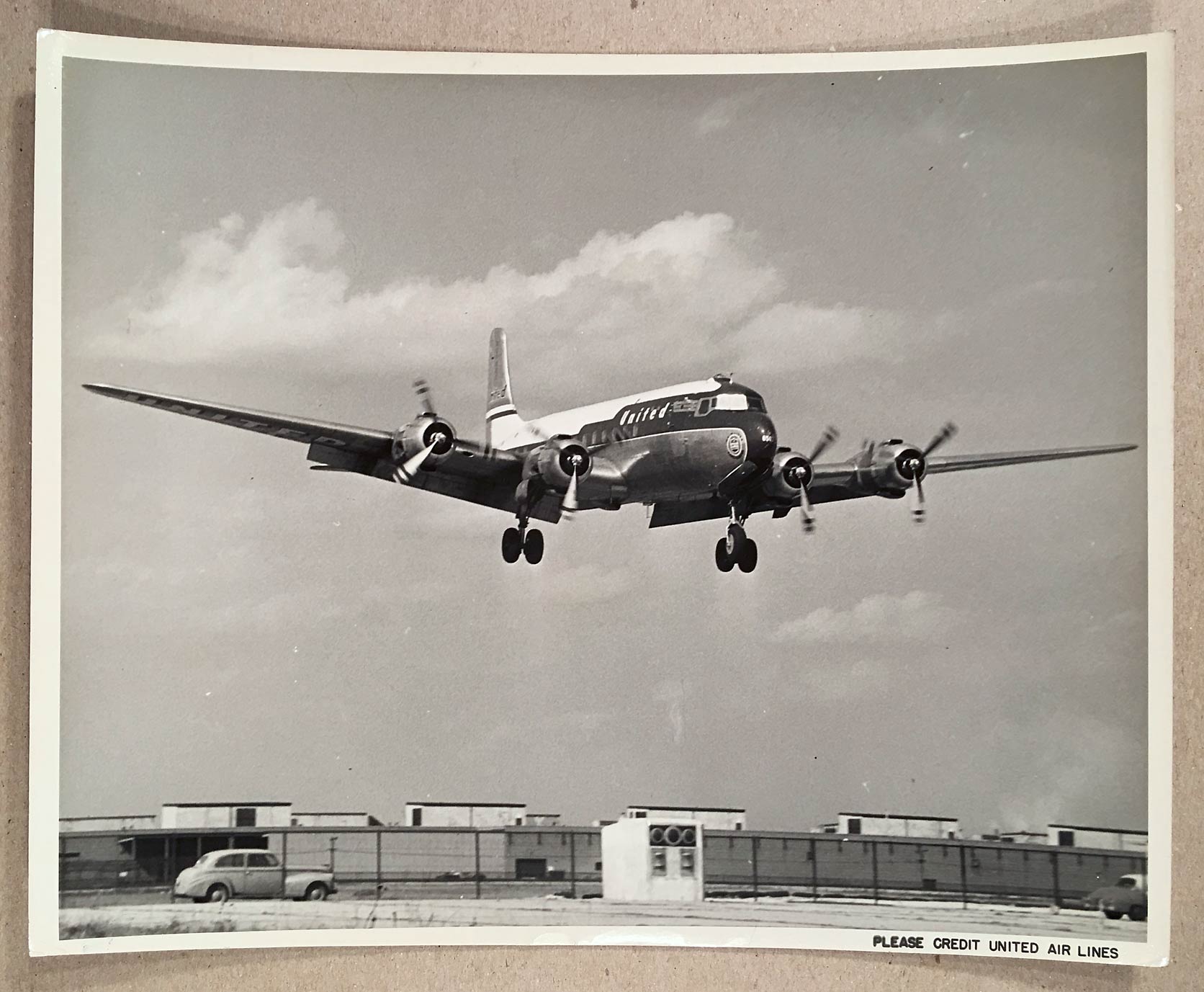
“Here comes another one!” little Jim cried to his dad, as they stood atop the small airport terminal not far from their house. Father and son spent occasional afternoons watching the planes take off and land, much to Jim’s delight.

His sharp ears would pick up a plane’s droning buzz before his eyes could make out the small dot in the sky. He hardly breathed as the plane slowly descended, then lightly touched down on the landing field.

The wonder never grew old. And Jim wished more than anything to be in the cockpit, participating in the miracle of flight, not just observing.

That dream stayed with Jim all through school. Upon graduation he attended the U.S. Naval Academy, and then entered the Air Force. His plan was to become a commercial pilot after his term of service.


(The P-51 Mustang)


And then Jim chanced to fly a P-51, the fastest jet of the time and capable of flying almost vertically. After that experience, commercial piloting seemed much too tame.

Jim went back to school to earn his master’s degree in aeronautical and instrumentation engineering and graduated in 1957.

The National Aeronautics and Space Administration (NASA) was established the following year and Jim Irwin set his sites on becoming an astronaut. To achieve that goal he needed to become a test pilot.


Jim entered that program in 1960. Once qualified he was assigned to a top-secret mission: testing a plane that flew higher and faster than any previous aircraft.

Three times he applied for the astronaut program; twice he was rejected. Finally in 1966 his acceptance letter arrived. Jim’s first assignment was to direct the testing of a lunar landing module that engineers were designing.


Then came the moment he’d been waiting for. He and fellow astronauts David Scott and Alfred Worden were chosen for the Apollo 15 mission, scheduled to take place the summer of 1971.

Eighteen months of intense training were required to prepare the men for the twelve-day expedition, three of which would be spent on the moon.

The boy who wanted to fly would soar where only a dozen men had traveled before him.


Their mission included collecting rock samples and conducting experiments in an unexplored region of the moon. They would also be the first astronauts to drive a Lunar Rover that allowed investigation of a larger area than that of previous missions.

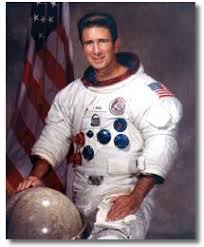
Jim was the eighth person to walk on the moon—certainly a thrill-of-a-lifetime. But later he would insist, those moments on the moon weren’t exciting because he was there, but because God was there. Jim profoundly sensed his presence.


He’d been a Christian for over twenty years by 1971, but “I was…[a] silent Christian,” he would explain.

On the moon, as Jim looked up at Planet Earth against the black backdrop of the universe, he marveled at its fragile appearance—so delicate that if someone reached out to touch it, the world would surely crumble and fall apart, he said. Jim experienced overwhelming awe for the creation of God and his love for the entire human race—love that sent his Son Jesus earthward to die in their place.


One of Jim’s responsibilities on the mission was to set up the mechanism for lunar experiments. Not all steps proceeded successfully. But instead of inquiring the NASA engineers, Jim prayed, because waiting for a reply from Houston would take too long.

Each time he sensed God telling him what to do, and he felt the supernatural presence of God with him as he worked. That sensation was so strong, Jim felt sure if he turned around, Jesus would be standing right there at his shoulder.

As complicated as the moon landings were, Apollo 15 proceeded without major problems. The three astronauts landed safely in the Pacific Ocean on August 7, even though one parachute (out of three) didn’t deploy.


A little more than two weeks later Irwin, Scott, and Worden were honored by a ticker tape parade in New York City. As Jim waved to the thousands gathered along the street, his heart ached for those who did not know Jesus as a personal Friend, and he felt God wanted him to tell others about his Son.

A year later Jim resigned from NASA and formed the High Flight Foundation to share about Jesus from his experiences as an astronaut, and to encourage archaeological research, confirming the accuracy of the Bible.

Jim even participated in exploration of Mt. Ararat in Turkey, where other adventurers claimed to have seen what looked like ship remains, high up on the slopes. Conjecturers proposed that perhaps Noah’s ark had been found.


(Mount Ararat, nearly 17,000 ft. in elevation)


Jim’s astronaut-status provided opportunities that other exploratory teams had not been able to achieve. Government officials allowed the High Flight Foundation access to sites that had been refused to others. Yet in spite of these privileges, Jim and his crew never found the ancient ark.

For twenty years after his moon-landing adventure, Jim Irwin told others that “Jesus walking on earth was much more important than man walking on the moon, that Jesus was the way to know God and receive eternal life.”*


The day before the twentieth anniversary of his homecoming from the moon, the boy who wanted to fly flew further still. Jim experienced his homecoming in heaven, due to a massive heart attack. He was survived by his wife Mary and their five children.

No doubt, James Benson Irwin heard those beautiful words, “Well done, good and faithful servant (Matthew 25:21)!” Only this time, Jim didn’t just feel Jesus’ presence. This time, Jim was able to see his Savior and Friend face to face.


* https://godreports.com/2100/03/encounter-with-jesus-on-the-moon-left-astronaut-changed/


Sources:

  1. https://biography.yourdictionary.com/james-benson-irwin
  2. https://crev.info/scientists/james-irwin/
  3. https://defendingthechristianfaith.org/others-who-testify-of-faith-in-christ.html
  4. https://godreports.com/2011/03/encounter-with-jesus-on-the-moon-left-astronaut-changed/
  5. https://ramsheadpress.com/messiah/ch17.html
  6. https://www.rocketstem.org/2015/07/07/rovering-across-the-moon-during-apollo-15/


Photo credits:  http://www.ebay.com; http://www.commons.wikimedia.org; http://www.nationalmuseum.af.mil; http://www.nasa.gov; http://www.jsc.nasa.gov; http://www.wikipedia.org; http://www.picryl.com; http://www.wikimedia.com (3); http://www.canva.com.


Read Full Post »


The eagle that soars in the upper air

does not worry itself how it is to cross rivers.

—Gladys Aylward


That’s a worthy quote to keep on file, don’t you think? I love the imagery of flying high through life close to God, the One who empowers us to traverse challenge.

But I wonder, who is this Gladys Aylward? Author? Teacher? Did she soar in the upper air? What rivers of challenge did she have to navigate?

A bit of research revealed that Gladys’ life began in the challenging river of the working class in London, 1902. By age fourteen she had to leave school and become a maid, to help support the family.

Two events changed her course, however. One, Gladys met Jesus at a revival meeting, and two, she became impassioned about China, after hearing a pastor speak of several missionaries who worked there.


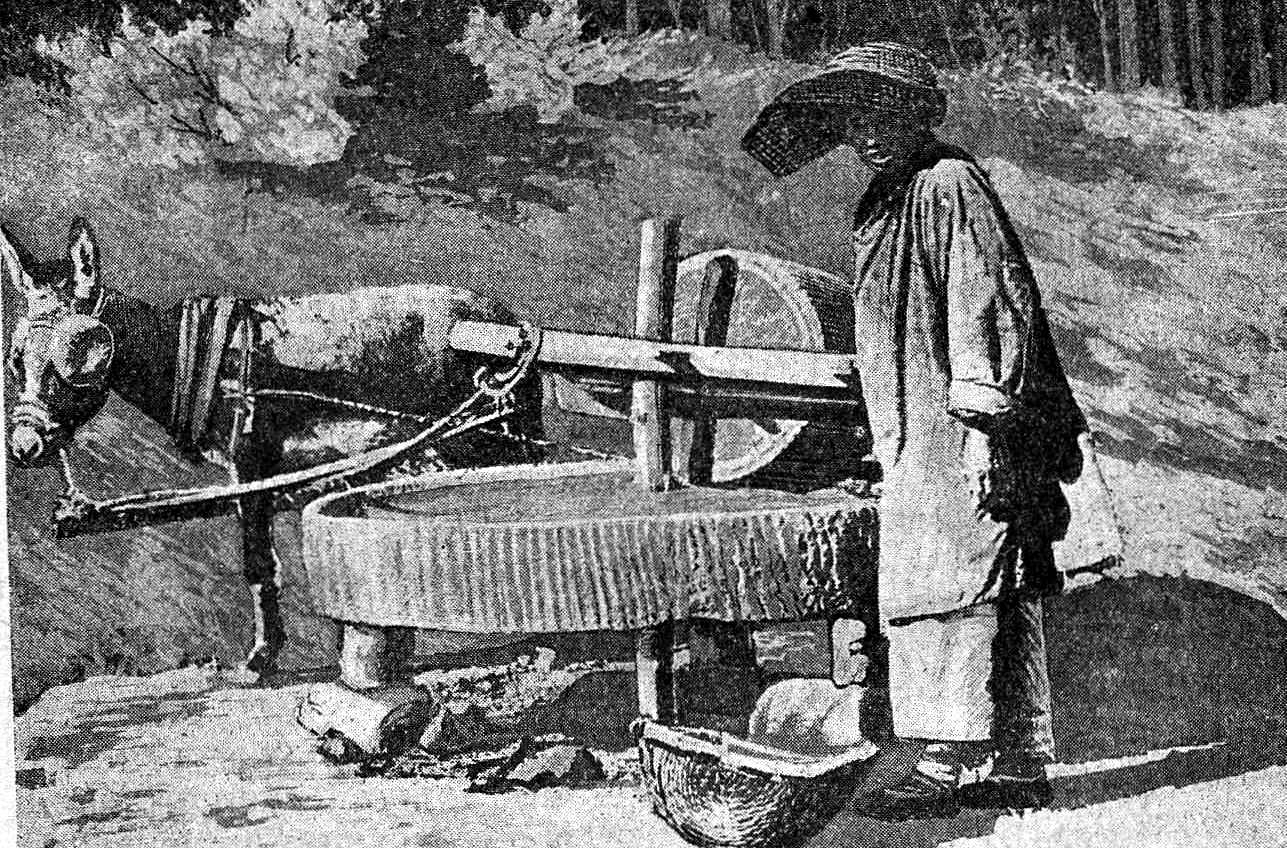
(Millworker in Henan, China, 1930)


Gladys’ thoughts turned toward China frequently and to the millions of people who had never heard about Jesus. She longed to be one of those to tell them, so she applied to the China Inland Mission.

Gladys was turned down. They said she didn’t have the aptitude or education necessary to learn such a difficult language as Chinese.

The rejection was a deep disappointment, but it did not stop her. She spent four years working extra hours, scrimping and saving every possible pence from her meager wages, in order to pay her own passage.

During that fourth year, word reached Gladys that an elderly widow missionary, Jennie Lawson in Yancheng, China, was in need of a helper.

Several months later, in October of 1932, she set out on the dangerous, weeks-long journey through Europe and Russia, mostly by train. (Passage aboard a ship would have provided a shorter, safer trip, but train travel was cheaper.)


When Gladys finally arrived, she found Jennie—not directing an established mission, but living alone in a ramshackle inn. Within a year, however, Jennie, Gladys, and their Chinese cook and friend, Yang, had completed the needed repairs.

The two missionaries were finally able to host the mule drivers who caravanned through Yancheng, transporting their various wares.  In the evenings, Jennie told Bible stories to the guests.

It wasn’t long before Gladys was also telling the stories. She learned Chinese quite readily while conversing with Yang and the muleteers—a feat she later called one of God’s miracles.


(Gladys Aylward)


No sooner did their situation become secure than Jennie fell, and died several days later. Gladys couldn’t sustain the inn on her own. But God made provision for her to stay. The Mandarin of the area offered Gladys a job, inspecting women’s feet!


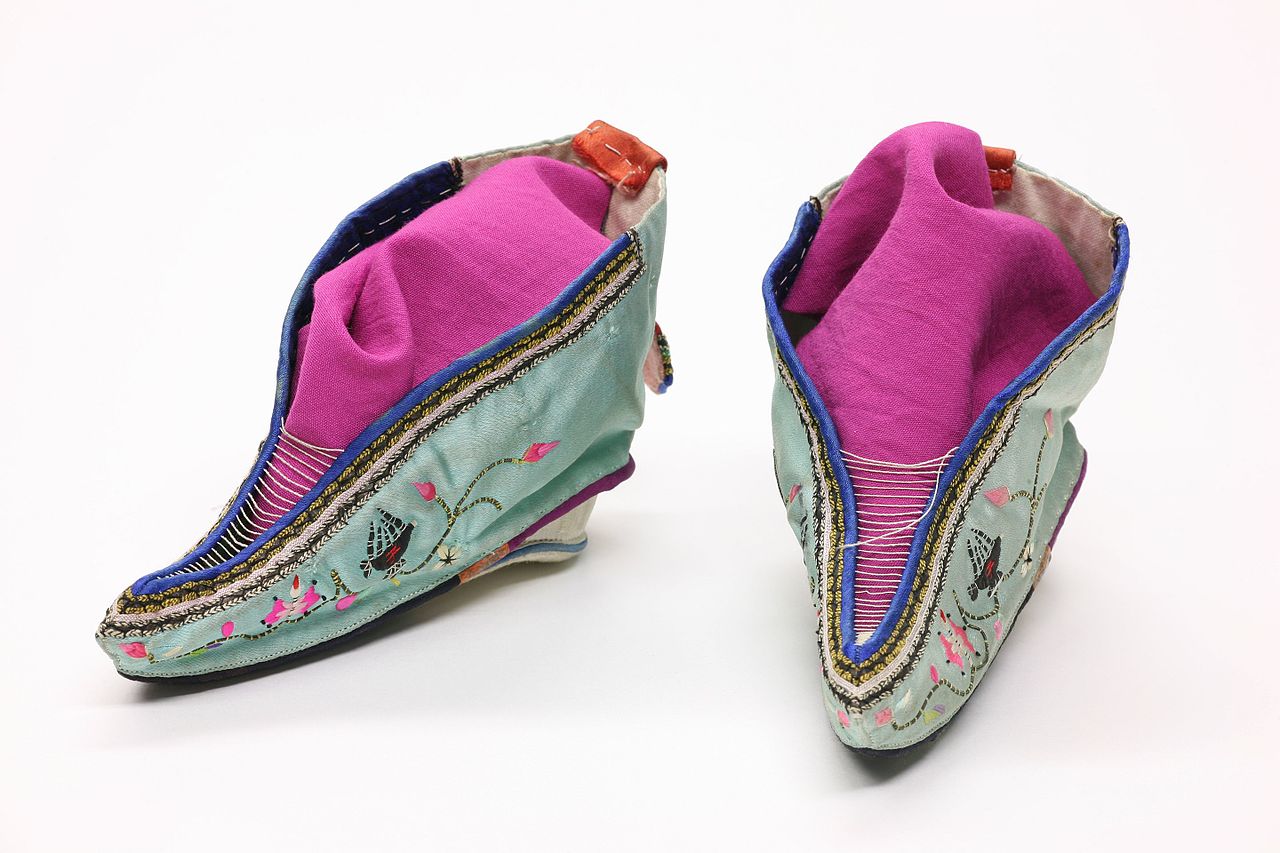
(foot-binding shoes)


A law had been passed in China forbidding the ancient custom of binding girls’ feet in order to keep them dainty and small. The practice also caused lameness and pain. Gladys accepted the position, eager for the opportunities it would offer to tell people about Jesus.

But life still did not settle down into a comfortable, peaceful routine, as Gladys faced a number of seemingly impossible situations. And she soared over them all with God.

When a prison riot occurred, the Mandarin sent for Gladys—all 4’ 10” of her—to settle the inmates. God gave her the wherewithal (in spite of her fear) to command attention, ask a representative of the prisoners to explain the reasons for the riot, and then act as liaison with the prison guards to improve conditions.


In 1937, the war between Japan and China grew into a full-scale conflict. Gladys became a spy for her Chinese countrymen. Her foreign status gave Gladys the ability to cross into Japanese-controlled areas. When they became aware of Gladys’ espionage activities, a bounty was posted for her capture—dead or alive.

One time, Gladys narrowly escaped the bullets of her Japanese pursuers. As she hid in some bushes, Gladys used her padded coat as protection, wadding it up like a shield.

But the day came, she had to seek sanctuary elsewhere.  It was not just her life that was in danger; Gladys was concerned for the orphans who now lived with her at the inn.

She chose to flee to a government orphanage at Sian. When word spread through the community of her plan, other orphans were brought to her, so they too could escape the war zone. Soon 100 children had gathered for the trek—mostly four to eight years of age.


They walked through the mountains for twelve days—on rough, little-used trails where they could remain hidden. Some nights they spent with welcoming hosts; other nights they slept on the mountainsides. Most of their cloth shoes wore out before they reached Sian.

Miraculously, all of them arrived safe and sound, except Gladys, who was suffering from typhus and pneumonia and collapsed into a coma. She almost died, but did finally recover.

And as soon as she could, Gladys returned to what she loved: helping others in need and telling everyone about Jesus.

Gladys Aylward certainly proved she knew how to soar in the upper air, with God as her strength. And he did indeed carry her across many rivers.

Postscript:  Among the many that accepted Jesus into their lives as the result of Gladys’ efforts, was the Mandarin of Yancheng.


*     *     *     *     *     *     *     *     *     *


May I also soar, O God, resting in the confidence that you will never leave me or forsake me. You have promised to be my Helper. May I focus on you, my loving and powerful God, and not my circumstances, because you are the Lord of every situation. 

(Isaiah 40:31; Hebrews 13:5-6; Ephesians 1:11)


(Some of you may recognize Gladys’ story. It became the basis for a movie in 1958, The Inn of the Sixth Happiness, starring Ingrid Bergman.)


Sources:

  1. https://www.christianity.com/church/church-history/timeline/1901-2000/gladys-aylwards-impossible-mission-to-china-11630754.html
  2. http://justus.anglican.org/resources/bio/73.html
  3. http://www.thetravelingteam.org/articles/gladys-aylward
  4. https://urbana.org/blog/gladys-aylward


Photo credits:  http://www.pexels.com; http://www.wikimedia.org;  http://www.flickr.com; http://www.wikimedia.com; http://www.wikipedia.org; http://www.heartlight.org; http://www.maxpixel.net; http://www.dailyverses.net.


Read Full Post »


(Wilfred Grenfell, 1865-1940)


Dr. Wilfred Grenfell listened to the ill fisherman’s labored breathing. He took note of the patient’s fever-flushed cheeks and chill-induced tremors. The diagnosis: severe pneumonia, and possibly tuberculosis as well.

With little equipment and scant supplies at hand, Grenfell was unable to save the man. Left behind were the man’s wife and six children, subsisting in a tiny sod house.


Who would care for the destitute family? Everyone in the fishing village of Battle Harbor, Labrador was barely surviving. In fact, up and down the coast similar tragedies occurred frequently because of the primitive living conditions.

The year was 1892. Dr. Grenfell had just recently arrived on the northeastern coast of Canada.


Over the next three months of summer, he treated about nine hundred people for a variety of medical conditions. And God used those experiences to stir him into action—action for which he had been preparing Grenfell for his entire life.

During his childhood, Wilfred’s parents, Reverend Algernon and Jane Grenfell, provided a strong Christian upbringing for their four sons. Grenfell then studied medicine at London Hospital and London University under the mentorship of the highly respected Christian surgeon, Sir Frederick Treves.


(Sir Frederick Treves)


But a life-changing moment occurred for Grenfell in 1885 when he attended a tent-revival meeting held by D. L. Moody. Grenfell accepted Moody’s spirited challenge to serve Christ with passion and courage.

Not long after, he heard the Cambridge Seven speak—famous student athletes at the time, serving as missionaries in China. Wilfred felt further inspired to follow God’s leading toward Christian service.


(The Cambridge Seven in Mandarin garb, 1885)


Upon graduation from medical school, Wilfred joined the Royal National Mission to Deep Sea Fishermen, on recommendation of his mentor and board member of the mission, Sir Frederick Treves.

The RNMDSF already provided floating libraries, clothing stores, and chapels. Now Grenfell could add medical services to the other benefits.


(The Royal National Mission to Deep-Sea Fishermen,

still in operation since its founding in 1881.)


His travels with the mission brought Grenfell to Labrador where the living conditions were so dire he felt compelled to do what he could to improve them.

In addition to offering medical care, Grenfell held simple church services, preaching what he remembered from his father’s sermons. Numerous people chose to follow Jesus; others were strengthened in their faith.

Over the course of the next four decades Grenfell built six hospitals and opened seven nursing stations. He established fourteen industrial centers, a number of churches, and  four boarding schools.


At first, the Royal National Mission to Deep-Sea Fishermen financed his work. But it soon became necessary for Grenfell to raise monies himself. God equipped him for this aspect of the work also, and very quickly he became a successful fundraiser and charismatic speaker.

One close-call adventure Grenfell relayed often on his speaking tours, and it finally became a book. (He wrote more than thirty books—all for the support of his mission work.)


In April of 1908 he found himself drifting out to sea on a chunk of ice with no hope of survival. He’d been dog sledding across the frozen Hope Bay, headed for a remote community in Newfoundland where a young boy needed surgery.

But conditions on the bay changed overnight while he rested. The ice began to break up. Though Grenfell tried to jump from one ice chunk to another in order to return to shore, he soon realized it was wasted effort. The floe was moving too fast.


(Drift ice off the coast of Labrador)


For a day and a night, Grenfell continued to drift. He was sure the rough seas would make rescue impossible. But a small group of fishermen in a boat did spot him and came to his aid.

Later, he described his rescuers as five men “with Newfoundland muscles in their backs and five as brave hearts as ever beat in the bodies of human beings” (Adrift on an Ice Pan, 1909).

Two days later, Grenfell was able to perform surgery on the young boy, who was brought to the local hospital by boat—a much more satisfactory solution.

In addition to his accomplishments and great adventures, Grenfell’s full life also included disappointment and doubt, trouble and sorrow, even failure. But he knew where to find strength and encouragement:


“The word of God is the Christian soul’s best weapon,

and it is essential to have it with him always.

In doubt it decides; in consultation it directs;

in anxiety it reassures, in sorrow it comforts;

in failure it encourages; in defense it protects;

in offense it is mightier than the mighty.”

–Wilfred Grenfell


Thus empowered, the great doctor accomplished his divinely appointed mission–day by day, year after year—with passion and courage.


*     *     *     *     *     *     *     *     *     *

That is what we desire as well, Father, to accomplish the mission you’ve divinely-appointed for each of us. May we embrace with faith, courage, and passion the possibilities you present before us, in honor of you, and because your pleasure always becomes ours as well.


(P.S. The winter after the ice floe rescue, Grenfell met Anna MacClanahan of Lake Forest, Illinois. They were married in November of 1909, and she quickly became Grenfell’s private secretary, editor, and adviser. They had two sons and one daughter.)


Sources:

  1. http://www.biographi.ca/en/bio/grenfell_wilfred_thomason_16E.html
  2. http://www.canadianchristianleaders.org/leader/wilfred-grenfell/
  3. http://www.cdnmedhall.org/inductees/sir-wilfred-grenfell
  4. http://www.greatthoughtstreasury.com/author/wilfred-grenfell-fully-sir-wilfred-thomason-grenfell
  5. http://www.grenfellhistory.co.uk/biographies/wilfred_thomason_grenfell.php
  6. https://www.heritage.nf.ca/articles/society/grenfell-mission.php
  7. https://ottawacitizen.com/news/national/fifteen-canadian-stories-wilfred-grenfell-the-daring-doctor-who-brought-hospitals-to-newfoundland


Art & photo credits:  http://www.flickr.com;www.wikimedia.org; http://www.wikipedia.org; http://www.wikimedia.org (2); http://www.geograph.org.uk; http://www.flickr.com (2); http://www.picryl.com; http://www.wikimedia.org; http://www.picryl.com.

Read Full Post »


“Oh, what a beautiful tree!” my mother-in-law exclaimed with enthusiasm. Her comment referred to a tall bush, planted near the house and visible outside our kitchen window. “What’s the name of it?” she asked.  Being from Ohio, Mom wasn’t familiar with some of the unique foliage of South Florida.

“That’s a sea grape,” I told her. “It’s actually a shrub, but they can grow quite tall.”

“Well, it’s lovely. Such big leaves!”

Now clearly there’s nothing remarkable about this conversation, until you know that Mom had asked the very same question with the very same enthusiasm every morning of her visit. And each morning I supplied the same answer.  Mom was in her late 80s, and her dementia was becoming more and more noticeable.

Mom’s fresh outlook each morning reminded me of Lamentations 3:22-23:


The faithful love of the LORD never ends!

His mercies never cease.

Great is his faithfulness;

his mercies begin afresh each morning (NLT).


Just as Mom brought new enthusiasm to each morning, so God brings new mercies for each day. Yes, the challenges we faced yesterday required wisdom, strength, and perseverance. But today we’ll need a fresh supply.   Praise God he never runs out of such gifts; he is always able to provide.

In the same way, God’s new mercies for today are not meant to be sufficient for tomorrow. In other words, we shouldn’t expect to feel ready this morning for the potential challenges of the future—much as we’d like to. (Who hasn’t wished to know now exactly how the next day or week will unfold, and how best to respond?)

Instead, our wise and loving Heavenly Father has chosen to lead us one day at a time, to protect us from being overwhelmed, easy prey to depression and paralyzed by fear.

No, our best course of action is to avail ourselves of God’s mercies for this one day. As for tomorrow, we can trust God to supply new mercies, more than sufficient for whatever we might face when the time comes.


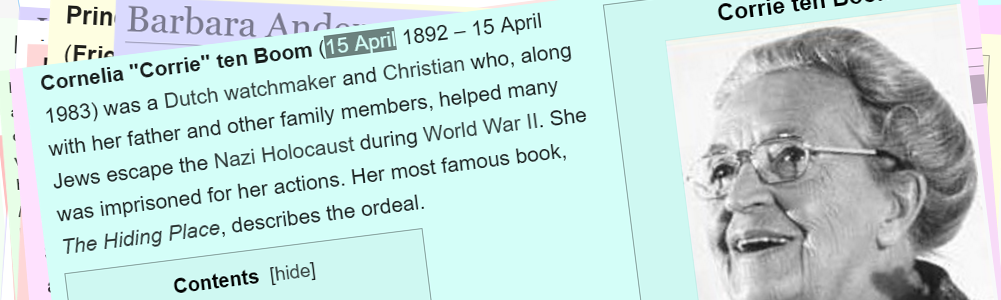
I’m remembering Corrie ten Boom. (Maybe this post brought her to your mind, too.)


Corrie and her family suffered cruel hardships in the concentration camps of Nazi Germany, as a result of helping Jews escape the Holocaust.

After the war, people would often say to Corrie, “I wish I had such great faith as yours. I could never live through the experiences you survived.”

Corrie would tell a story to explain.

When she was a child, Corrie happened to see a dead baby. A terrible fear gripped her that one of her family might also die. When Papa ten Boom came to tuck her in that night, she burst into tears.

“I need you!” she sobbed. “You can’t die!”

Her sister, Betsy, explained why Corrie was so afraid.

Papa asked, “When you and I go to Amsterdam, when do I give you your ticket?”

“Just before we get on the train,” she responded.

“Exactly,” Papa replied. “And God knows when you’re going to need things, too. Don’t run out ahead of him, Corrie. When the time comes that some of us have to die, you will look into your heart and find the strength you need—just in time.”

Papa ten Boom was proven right. When Corrie needed supernatural strength, God did provide. We can rest assured that his mercies will be new and fresh each morning for each of us–just in time.


*     *     *     *     *     *     *     *     *     *


I praise you, Lord God, that we can face each day with fresh enthusiasm, because for every trial, you have prepared great mercies of endurance, strength, and wisdom.

I thank you that in the midst of trouble, you also provide blessings: a more acute awareness of your presence, peace that defies explanation, family and friends to come alongside, miraculous provision, and delightful surprises to make us smile.

You are more than a sufficient God; you are an abundantly gracious God!


(Revised and reblogged from 5-28-15.  Photo credits:  http://www.flickr.com; http://www.heartlight.org; http://www.canva.com; http://www.wikimedia.com.)


Read Full Post »


From the time Darlene McIntosh was ten years old, she knew God wanted her serve him on the mission field.

By age twenty-two, Darlene was newly married to pioneer missionary Russell Deibler, and settled in the jungle of New Guinea where he had built a two-room home for her out of woven bamboo mats.


Russell and Darlene proceeded to build relationships with members of a nearby primitive tribe, the Kapauku, who had never heard of Jesus. She fell in love with the people, the work, and her surroundings.

On her twenty-third birthday in May of 1940, the couple heard that the Nazis had invaded Holland. It didn’t take long for the war to find them, even in their remote location. The Deiblers and other missionaries could have escaped to safety but chose to stay at their mission compound.

In January of 1942 the Japanese came and took the men captive. Russell’s last words to Darlene were: “Remember one thing, dear: God said that He would never leave us nor forsake us.” That was the last time she saw Russell; he would die in the prison camp.


For a short while, the women and one older man continued to live at the mission.

One night Darlene heard scuffling noises in the house. She got up from her bed and encountered a bandit armed with a knife.

Darlene surprised herself by rushing at him. Even more surprising, the bandit turned and fled; Darlene chased him out of the house. Suddenly a gang of bandits ran out of the jungle to join the first. She expected them to attack her. Instead the first bandit yelled to the others, and they all turned and ran.

From then on, the missionaries kept clubs at the feet of their beds, but they never had to use them.

Darlene always suspected the compound gardener had been the bandit, because he was familiar with the house. After the war, Darlene asked him why he had never tried to steal from the missionaries again.

“It was because of all those people you had there–” he replied.  “Those people in white who stood about the house!”


In May of 1943, Darlene and the other remaining missionaries were taken to a prison camp in Kampili. Commander Yamaji, a man with a mercurial temper, required strenuous work quotas of the six hundred women living there, including killing flies.

The flies bothered the pigs, raised at the camp to feed Japanese soldiers. Each prisoner was required to bring Commander Yamaji 100 dead flies every day (That’s 60,000 flies!)—even while completing numerous other tasks.

Darlene prayed for Commander Yamaji and was able to tell him about Jesus. “He died for you,” she told him. “Maybe that’s why God brought me here, to tell you he loves you.” The commander suddenly left his office with tears on his cheeks.


In May of 1944, the Japanese secret police came to escort Darlene to another prison. She was put in solitary confinement, falsely accused of espionage.

Darlene endured nightly mosquito swarms, near-starvation, malaria and other serious illnesses, inhumane conditions, brutal interrogations, and torture.

But only her Heavenly Father saw her tears, never the captors. She sustained herself by singing hymns, quoting scripture, and reciting Russell’s last words: God will never leave you nor forsake you.


One day Darlene pulled herself up to look out the small window of her cell. She saw a woman make her way to the fence, reach through the underbrush, and come away with a bunch of bananas, which she quickly concealed in the folds of her skirt.

Oh, to eat just one banana, Darlene thought. Lord, how I would love a banana! Darlene could not get the coveted fruit out of her mind. She talked to God about her craving, knowing that such a fantastical desire could not be fulfilled.

The next morning, Darlene had a surprise visitor, Commander Yamaji. Tears filled her eyes. “It’s like seeing an old friend,” she exclaimed.

“You are very ill, aren’t you,” he remarked.

“Yes, Mr. Yamaji, I am.”

When the commander left, Darlene watched him speak to the guards for a long time. Later she heard the familiar stomp of boots outside her cell. The door was unlocked and one of the guards threw a stalk of bananas onto the floor.

“From Mr. Yamaji,” he said.

With tears of praise to God, Darlene counted ninety-two bananas. God had provided—far above what she imagined. She savored them, one per day for three months.


Darlene would surely have been beheaded as a spy, but she was inexplicably returned to Kampili, the POW camp under Commander Yamaji’s leadership.

Soon nightly bombings began. The women hid as best they could in ditches. Every morning they would have to bury those who had not survived.

One night during the siege, Darlene felt compelled by God to leave her shelter in the dirt, go back to the barracks, and retrieve a Bible. By the time she returned to her ditch the bombing had subsided.

But during Darlene’s brief absence, her refuge had been hit directly and destroyed.


Finally, in the fall of 1945 the horrific ordeal ended. Darlene returned to her family in America to be nursed back to health. She weighed 80 pounds.

Four years later, Darlene was back in New Guinea. God had brought Gerald Rose into her life, another missionary who also carried a passion for indigenous people. They were married and together raised two sons. For forty years they served God, not only in New Guinea but also in the Outback of Australia.

In 1976, a friend told Darlene she had heard Mr. Yamaji sharing his story on Japanese radio. The angry and cruel prison camp commander had become a changed man because of Jesus.


No doubt God had used Darlene as an important influence in his life—and in the lives of countless others as well.


*     *     *     *     *     *     *     *     *


Almighty God, we exult in your sustaining power that carries us through even the most excruciating circumstances. You supply impossible strength, courage, and perseverance to endure. And just as Russell told Darlene, you never leave us nor forsake us. Hallelujah!

(Psalm 28:7; Philippians 4:13; Deuteronomy 31:6; James 1:2-4, Deuteronomy 31:8)


Sources:

1) http://reneeannsmith.com/a/tag/darlene-deibler-rose/

2) http://pursuedandconquered.blogspot.com/2012/08/bananas-in-prison.html

3) http://www.danielakin.com/wp-content/uploads/2016/08/Psalm-27-The-Lord-Is-My-Light-and-My-Salvation…Darlene-Diebler-Rose-Convocation-Fall-2016-kh.pdf

4) http://www.scripturaltruths.org/Articles/Real%20Life%20Experiences/REAL%20LIFE%20STORIES%20-%20Darlene%20Deibler%20Rose%20-%20Prisoner%20of%20War%20-%20May%202017%20-%20PDF.pdf


Art & photo credits:  http://www.darlenerose.org; http://www.wikimedia.com; http://www.dailyverses.net; http://www.heartlight.org;www.canva.com (2); http://www.heartlight.org (2); http://www.canva.com.

Read Full Post »

(In honor of Black History Month)

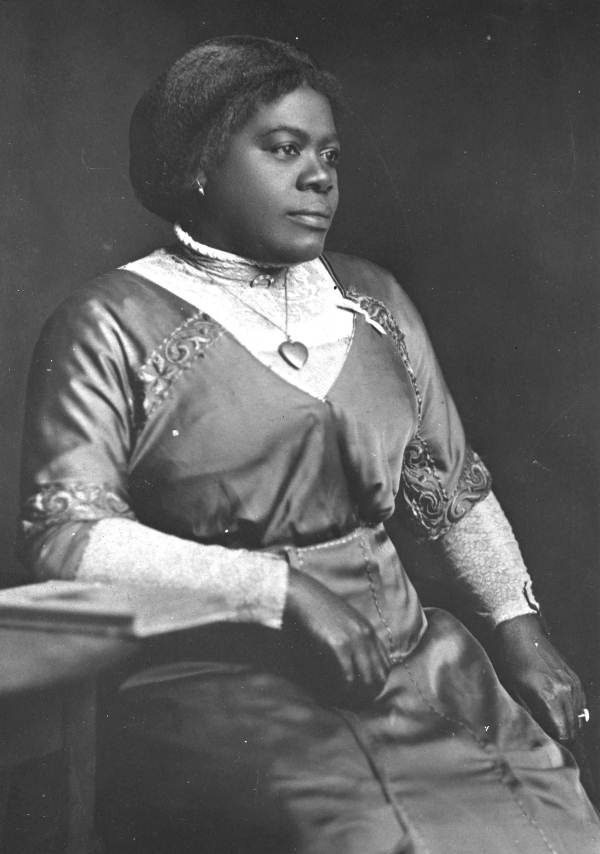
(Mary McLeod Bethune)

Mary turned over in her bed for the umpteenth time seeking a restful position, even though she knew discomfort was not the cause of her sleeplessness–excitement was. Tomorrow morning, October 4, 1904, she would stand in front of her first class of children in her own school: The Daytona Literary and Industrial School for Negro Girls.

Mary smiled, remembering the miracle of learning to read for herself when she was a girl of ten—miraculous because: 1) the provision of education for African-American children was rare in 1885, and 2) out of the seventeen children in her family, she was the one chosen to attend.

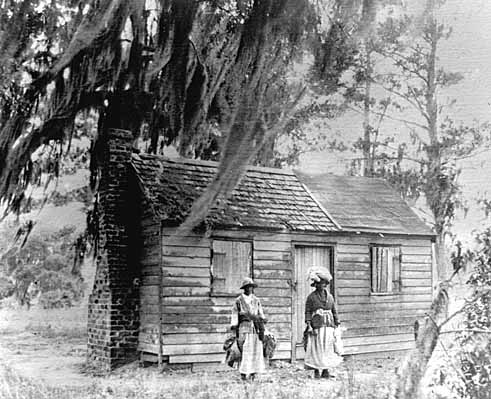
(Cabin where Mary was born, the fifteenth child out of seventeen)

The school was five miles from home, and she had to endure harassment and assault from white children on her daily treks. But Mary knew: this opportunity meant God had purpose for her life.

In 1886 a Quaker missionary financed the continuation of her education at Scotia Seminary in North Carolina.

Seven years later she entered Moody Bible Institute in Chicago as the only African-American among hundreds of white students. Instead of harassment and assault, however, Mary encountered acceptance, proving that “blacks and whites could live and work together with equality” (1).

While at Moody, Mary sensed God leading her to Africa as a missionary. But when it came time to apply, her denomination’s mission board denied her request because she was black.

The disappointment was deeply painful, but Mary soon turned her attention to those of African descent in America, and became a teacher—first in Augusta, Georgia and then in Sumter, South Carolina. She worked tirelessly, not only for her students but also for the surrounding black communities.

Thank you, Lord, for those nine years of teaching experience, Mary prayed. You prepared me well to found this new school.

Granted, there would only be five little girls greeting her in the morning, but it was a beginning. And Mary was confident God would make her school grow.

She chuckled to herself. Of course, Lord, you left an awful lot of work for ME to do!

First she found a community in need of a school: Daytona Beach, Florida. Numerous African-American families were moving there, in order to be employed by the newly formed Florida East Coast Railroad.

(Workers on the East Coast Railway Extension, 1906)

Next Mary found a run-down cottage to rent for eleven dollars per month.  She convinced the owner to accept $1.50 as a down payment.

To supply her school with furniture and other necessities, Mary foraged at the city dump and behind hotels for anything useful. Old peach crates became student desks and chairs, an old barrel became her teacher’s desk.

She retrieved discarded linens, kitchen ware, and cracked dishes for the homemaking and skilled trades she would teach. Everything was scoured, mended and repurposed. Even charred wood had value as substitute pencils.

To cover expenses, Mary sold sweet potato pies and fried fish to wealthy tourists. She canvassed neighborhoods, spoke to church groups and clubs, and distributed leaflets.

Now, opening day was hours away.  And as she finally drifted off to sleep Mary wondered, What might the future hold?

If God had told her, even Mary’s strong faith would have been stretched.

That tiny handful of students in 1904 would grow to almost 250 by 1906, requiring more teachers, an advisory board, and a bigger facility. Among the influential men (black and white) on the board was James M. Gamble of the Proctor and Gamble Company.

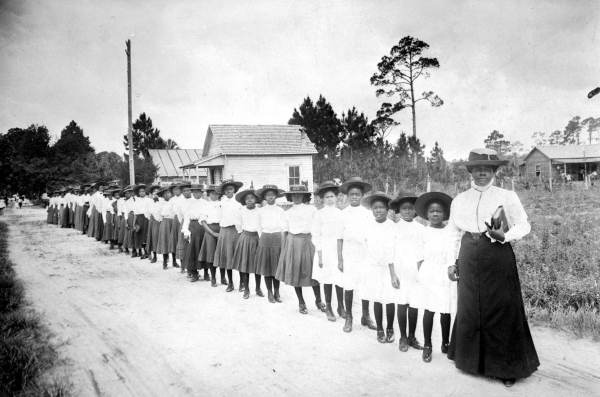
(Mary and her students, ca. 1905)

In 1923 her school would merge with the Cookman Institute, a co-educational school for African-American students in Jacksonville, Florida. Mary was chosen as the first president. Later the Bethune-Cookman Institute became a college and then a university. (Today, nearly 4,000 students attend the school.)

(Faith Hall, built in 1907 to accommodate Mary’s growing school;

now part of Bethune-Cookman University)

In 1935 Mary helped organize the National Council of Negro Women (NCNW) “to connect African-American women across the country and establish a national voice for them” (2).   Mary served as the first president.

A White House Conference of the NCNW met in Washington, DC in 1938. Then president, Franklin D. Roosevelt, offered her the position of Director of the Division of Negro Affairs of the National Youth Administration.

Mary met one-on-one with President Roosevelt several times a year and became good friends with Eleanor.

(Eleanor in the middle; Mary to her right)

Her participation on various government committees actually spanned the terms of four presidents, from Calvin Coolidge to Harry S. Truman.

(Mary’s home in Washington, DC)

Mary often said:

The impossible events of Mary’s life offer ample proof.

(Mary McLeod Bethune, 1875-1955)

Notes:

(1) http://www.talbot.edu/ce20/educators/protestant/mary_bethune

(2) https://savingplaces.org/stories/mary-mcleod-bethune-bethune-cookman-university-hbcu-history#.WnzP3pM-e8U

Sources:

http://www.talbot.edu/ce20/educators/protestant/mary_bethune

Click to access EJ969859.pdf

https://savingplaces.org/stories/mary-mcleod-bethune-bethune-cookman-university-hbcu-history#.WnzP3pM-e8U

http://www.wciujournal.org/journal/article/mary-mcleod-bethune-an-agent-of-change-and-leadership

Photo credits:  http://www.flickr.com; http://www.wikimedia.org (2); http://www.flickr.com; http://www.wikimedia.org (2); http://www.nationalparkservice.org; http://www.wikimedia.org, http://www.canva.com

Read Full Post »


In three short days 2017 will melt into memories, and we’ll greet a new year with all its potential for grand possibilities.

These last few days of December offer a time of optimism and expectancy within our spirits. We wonder if 2018 will be the year for:

  • The fulfillment of a long-held dream,
  • The answer to a frequent, heart-felt prayer, or
  • The accomplishment of a hard-won goal.

It’s also a time when our hearts become reflective:


  • What might God have in store for me in 2018?
  • What would he desire me to do over the next twelve months?
  • How would he have me grow in character and maturity?

And so I pray.  (Perhaps you’d like to join me?)

Thank you, Father, for the demarcation between one year and the next, giving us pause to evaluate and encouraging us to:

  • Refocus our attention on priorities,
  • Recalibrate those attitudes that hold us back, and
  • Renew our resolve to live your way for your purpose (and experience your effervescent joy in the process).


To that end:

  • I pray for strength to accomplish what you have ordained for me.

Make clear your plan, Lord, and then help me tackle that plan boldly, mindful that you rarely give strength beforehand; most often you grant strength as we journey.

Remind me also: “When I am weak, then I am strong” (2 Corinthians 12:10). That sense of inadequacy in my spirit is actually a positive force. It compels me to rely on you more consistently.


  • I pray for wisdom to choose those areas where you want me to spend my time, energy, and resources.

Remind me my days on Planet Earth are growing short (Psalm 90:12). I need to remain focused.


Thank you, O God, for the delightful promise that the pursuit of wisdom results in joyful satisfaction in life. “Blessed is the man who finds wisdom and the man who gains understanding (Proverbs 3:13). May I be diligent to seek wisdom from your Word and then make choices based on that wisdom.

  • I pray for courage to speak of you everywhere, anytime.

As I pick up the phone or head out the door, may I affirm you are with me (Joshua 1:9). You will spread the knowledge of Christ through me, like a sweet perfume (2 Corinthians 2:14)—if I am a willing participant.


With Pastor Jack Hyles (1926-2001), I do not pray for my fears of rejection or conflict to be removed; I ask for courage equal to my fears.

  • I pray for faith to relish the adventure of a God-honoring life.

Keep me mindful of your promises, Father, that create a rock-solid foundation for my faith, including: 1) You are always working to accomplish your plan (John 5:17). 2) You are always working in me to mold my character into Christ-likeness (Philippians 1:6). 3) Your incomparably great power is always available for us who believe (Ephesians 1:19).


And if I proceed into each day with a simple reliance upon your power, with a single eye to your glory, it is certain you will be with me…And if you are with me, then I must succeed (Charles Spurgeon). Thank you for such emboldening words!

  • Last, I pray for passion to experience even more of your abundant life.

I want to participate with you in what you are doing around me, Lord—in my family, church, neighborhood, community, even in the lives of those I meet in the blogosphere.

I want to live with spiritual intensity, acutely aware of your presence around me and your power within me.

I want to experience the abundant life you offer in John 10:10 until even simple moments sing with significance because they reveal your glory.


O God, as you fulfill these desires and increase these qualities in me–strength, wisdom, courage, faith, and passion–what a year 2018 promises to be!


(Art & photo credits:  http://www.maxpixel.freegreatpicture.com; http://www.pixabay.com (2); http://www.dailyverses.net (2); http://www.wallpaper4god.com; http://www.slideshare.net; http://www.wallpaper4god.com.)


Read Full Post »

“The whole meaning of history is in the proof

that there have lived people before the present time

whom it is important to meet.”

–Eugene Rosenstock Huessy


Betty Greene (1920-1997) is one of them.


Eight year-old Betty sat close to the radio, listening intently to the news all America wanted to hear on May 21, 1927: Charles Lindbergh had landed his tiny plane safely in Paris. He had flown nonstop for thirty-three hours and thirty minutes  to cross the Atlantic Ocean–the first person to do so. As a result, Charles Lindbergh became a hero to many Americans, including young Betty.


The next year, she followed the exploits of Amelia Earhart. In June of 1928, Ms. Earhart also flew nonstop across the Atlantic, from Newfoundland to Wales.


“That’s what I want to do someday—fly airplanes!” Betty asserted. And she began to dream of her own adventures in the sky.

By the time Betty was old enough for flying lessons, however, the Great Depression had settled over the country. Her mom and dad needed every dime to provide necessities for their family of six. Flying lessons were an unaffordable luxury.

But on her sixteenth birthday, Betty received an envelope from one of her uncles. Inside she found one hundred dollars—a small fortune at that time. Betty immediately made arrangements for flying lessons.

Not that she could expect to become a commercial pilot. That career was reserved for men in the 1930s. Unless Betty took up stunt aviation, she would have to be content to fly as a hobby—if she could afford access to a plane.

An elderly family friend suggested a creative possibility. Betty might be able to serve as a missionary pilot. “Think of all the time—and sometimes lives—that could be saved if missionaries didn’t have to spend weeks hacking their way through jungles,” she said.

Immediately Betty knew. This was what God wanted her to do.

Before Betty had a chance to pursue such a radical idea, World War II began. Early in the conflict, it became apparent the number of Air Force pilots was inadequate. But someone decided women could be trained to handle non-combat tasks, freeing up men for the more dangerous assignments.

Betty perfectly fit the criteria to become a WASP in the Women Airforce Service Pilots, and was readily accepted into the program.


Soon she was flying planes from the manufacturing site to military bases and departure points for overseas. She towed aerial targets for soldiers to gain artillery practice—with live ammunition (so say some sources).  And Betty flew missions at high-altitudes, to assist in the development of needed technology for such flights.

Betty’s dream to be a missionary pilot seemed to be on hold as the war continued, but God was about to do immeasurably more than all she could ask or imagine (Ephesians 3:20).

While serving as a WASP, Betty wrote two articles for two different Christian magazines about using planes to help missionaries. Three American pilots read the articles and wrote to Betty about their idea to start such an organization, once the war ended.

On May 20, 1945, the Christian Airmen’s Missionary Fellowship began operation in Los Angeles. Later to become Missionary Aviation Fellowship (MAF)—perhaps because their first pilot was not an airman at all. It was Betty.


(Preparing for the inaugural flight, February, 1946)


That first flight included two women missionaries in need of transportation from southern California to Mexico City, a three-day trip.

On the first leg Betty noticed something coming off the engine, so she made an unscheduled landing at Tuxpan, Mexico to have the plane inspected. The debris turned out to be just flaking paint. Meanwhile the two missionaries made their way to Mexico City on a commercial flight.

Betty and a new passenger, Cameron Townsend (founder of Wycliffe Bible Translators) left Tuxpan for Tuxla Gutierrez, near the Wycliffe Jungle Camp. Along the route Betty stopped in Minatitlan to refuel and then they were off again. However, a heavy storm developed, and they were forced to turn back.

As they headed toward Minatitlan, another setback occurred:  the engine died. Betty kept her head and switched gas tanks, then re-fired the engine. The tactic worked. She and Mr. Townsend safely returned to Minatitlan. Later she discovered that water in the fuel tank had caused the engine to fail.

The next morning, they finally reached Tuxtla. The three-day flight had taken one week. But the troublesome beginnings did not discourage Betty.

She went on to serve as an MAF pilot for sixteen years–in spite of more mishaps, emergency landings on rivers and at least one crash.  She completed 4,640 flights, served in twelve countries, and touched down in another twenty.

Her responsibilities included ferrying aircraft and delivering missionaries, dignitaries, and cargo to remote areas. She also saved lives by transporting ill or injured patients from inaccessible locations back to civilization and medical care.


(Betty, center left, in Papua, Indonesia)


In 1962 Betty transitioned from pilot-in-the-field to representative-and-recruiter for MAF, serving as an advocate for the organization until her death in 1997.

Today, MAF operates 132 aircraft in more than 25 countries worldwide.


(Sites of MAF Bases)


And it all began with a little girl who dreamed of flying.


Sources:  www.dianawaring.com; http://www.footprintsintoafrica.com; http://www.maf.org; http://www.maf-uk.org; http://www.mnnonline.org.


Photo credits:  www.flickr.com (2), http://www.pinterest.com; http://www.maf.org (3).


Read Full Post »

« Newer Posts - Older Posts »

Sylvia Schroeder

Impressions Becoming Expressions

Mitch Teemley

The Power of Story

Still Traveling

Impressions Becoming Expressions

Living Our Days

Gaining a heart of wisdom

He Said What?!

I'm Patty, and my husband and I are living with our adult son who has autism and epilepsy. I love sharing lessons learned from life around me, especially life with Aaron.

Meditations of my Heart

Impressions Becoming Expressions

Linda Stoll

Impressions Becoming Expressions

Signora Sheila

Where faith meets slow living

Heidi Viars

Finding the Image of God