Feeds:
Posts
Comments

Archive for the ‘Courage’ Category

“The whole meaning of history is in the proof that there have lived people before the present time whom it is important to meet” (Eugene Rosenstock Huessey, Speech and Reality, p. 167).

The forefathers of our nation are among them…


John_Hancock_1770-crop


(January 23, 1737-October 8, 1793)


For John Hancock, it was the last straw.

The Stamp Act of 1765 was bad enough, requiring printed materials in America to carry a special stamp, and the obligatory fees sent to England. In the 160-year history of the colonies, Americans had only paid taxes to their colonial governments.

And although the Stamp Act had been repealed, it was replaced with a more detrimental decree: The Declaratory Act of 1766, which proclaimed Britain’s absolute authority over the American colonies.

Then came the Townshend Revenue Acts of 1767, taxing the colonists further.

No wonder they took up the cry, “No taxation without representation.”

Now it was 1768. Customs officials had just confiscated John Hancock’s sloop, Liberty, in the Boston Harbor. They claimed it was being used to transport contraband goods.

And that was the last straw. Hancock had reached the end of his tolerance for sovereign British rule. He and politician, Samuel Adams began orchestrating demonstrations and rallies. They also spread the ideal of liberty to other locales.

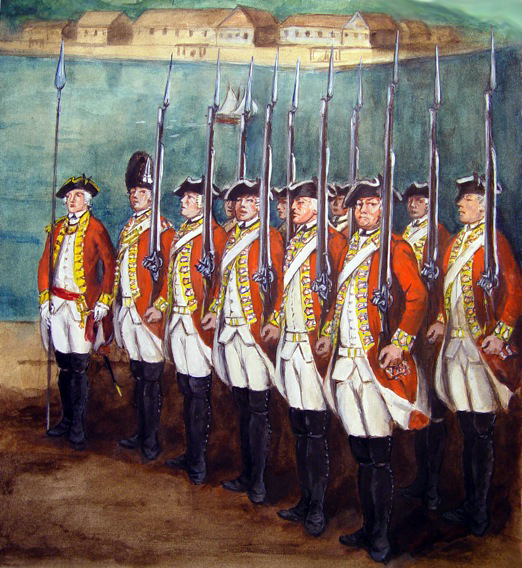
Meanwhile, British reinforcements were sent to Boston—an occupation that would last eight years.


t25-Ft-c1770s-Lawson-ASKB-Lawson-ASKB


In 1770, British soldiers shot into an unarmed crowd, killing five Bostonians and wounding others. The horrific event became known as the Boston Massacre.

For a number of years, that day, March 5, was memorialized in the city. Hancock was asked to speak in 1774. In his speech he said:

“Let us humbly commit our righteous cause to the great Lord of the Universe (Psalm 37:5), who loveth righteousness and hateth iniquity (Hebrews 1:9)…Let us joyfully leave our concerns in the hands of Him Who raiseth up and pulleth down the empires and kingdoms of the world as He pleases (Daniel 2:21).”

Then he quoted Habakkuk 3:17-18, reminding Bostonians that no matter what happened as the conflict continued, or how desperate circumstances might become, “yet we will rejoice in the Lord” (1).

So many scriptures brought together in one brief paragraph give indication of the strong Christian faith John Hancock embraced.

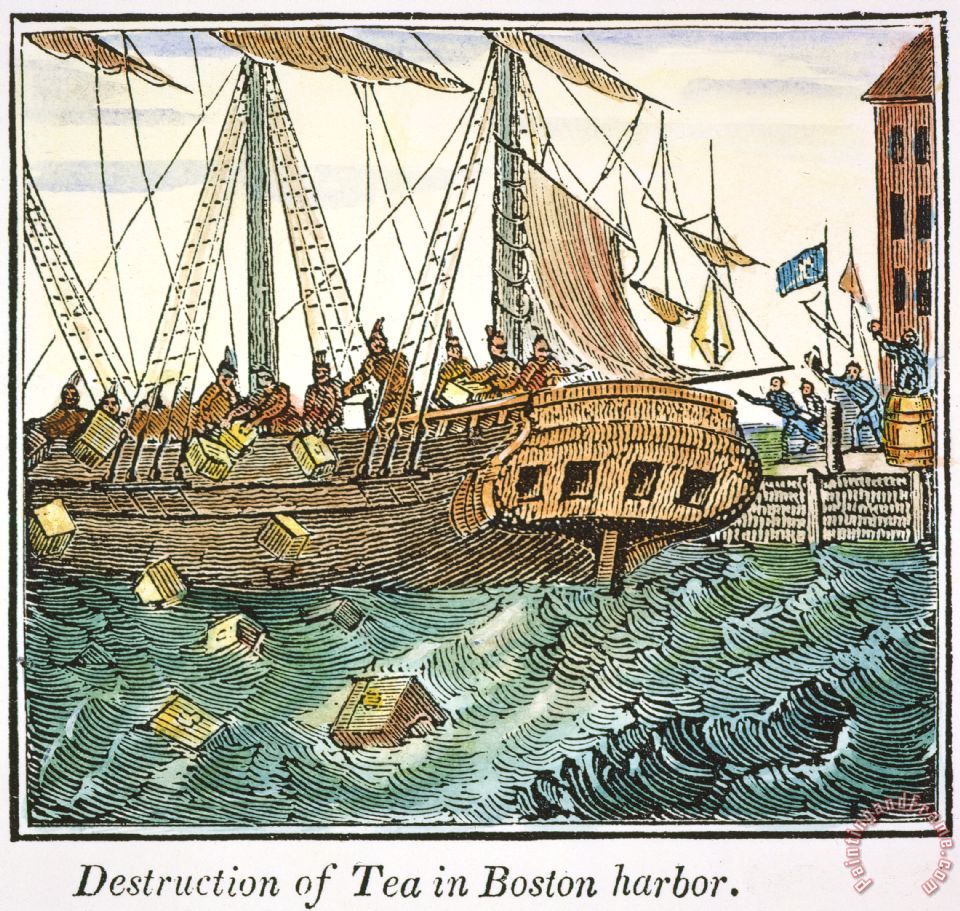
Also in the early 1770s, Hancock, Adams, and several dozen others “hosted” the Boston Tea Party. They dumped 342 chests of tea into the harbor rather than pay import duties to Britain.


The Boston Tea Party, 1773 Painting; The Boston Tea Party, 1773 Art Print for sale


In 1774, Hancock and Adams were elected to the Provincial Congress at Concord, Massachusetts. John was elected president and presided over the Committee of Safety. He and others organized the minutemen, colonial militia who could be ready in a minute to oppose the British.

April 19, 1775, seven hundred British soldiers were sent to Concord to confiscate military supplies and capture Hancock and Adams. Thanks to the warning of Paul Revere, the two men were able to escape.

At nearby Lexington, British soldiers and minutemen engaged in a skirmish, and the Revolutionary War began with the “shot heard round the world.”

Just four days before, John Hancock had written:

“All confidence must be withheld from the means we use; and reposed only on that GOD who rules in the armies of heaven, and without whose blessing, the best human counsels are but foolishness—and all created power vanity (2)”.

Hancock knew that all their efforts toward freedom were in vain if God was not on their side.

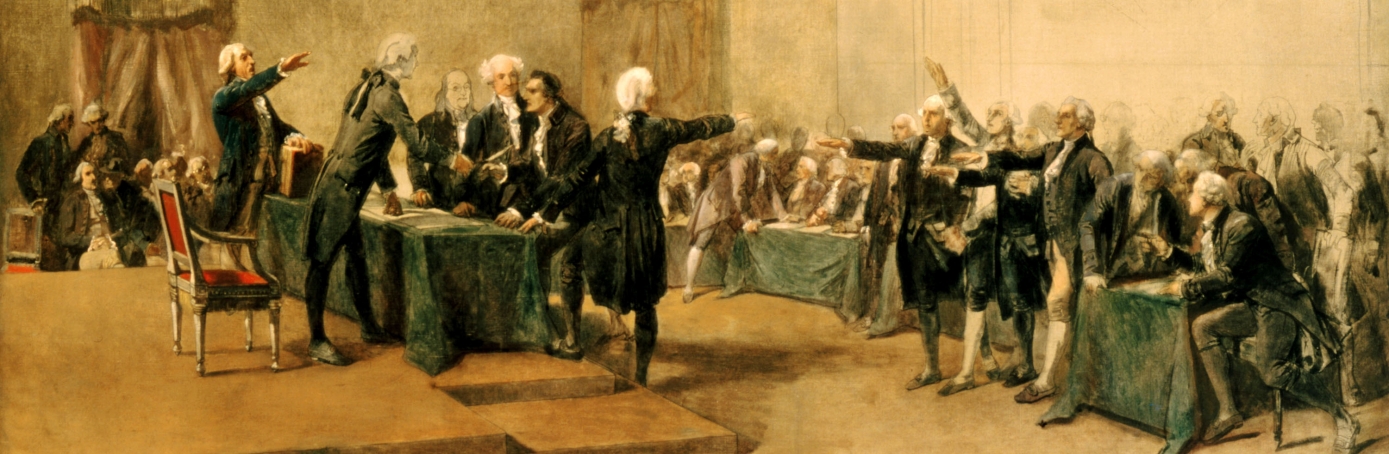
That summer he represented Massachusetts at the Continental Congress held in Philadelphia, to discuss ways of restoring harmony with Britain, yet establish rights and liberties for the colonists. Independence wasn’t on the table – yet.


continental-congress-hero-H


But 1776 brought Thomas Paine’s famous pamphlet, “Common Sense.” American patriotism grew strong, and Congress passed a resolution calling on “the aid of God in the moral cause for independence.” They encouraged fasting and prayer throughout the colonies, and “through the merits and mediation of Jesus Christ, obtain his pardon and forgiveness” (3).

That’s how deep and wide the Christian faith permeated American society.

Of course, the most important resolution of the Continental Congress, under Hancock’s presidency, was the Declaration of Independence, severing all ties to Britain. And, as most U.S. history students know, he was the first to sign in his distinctive script.


John-Hancock-dreamstime1


For almost two and a half years, Hancock tirelessly presided over the Congress, as the war escalated, and the delegates hammered out the first constitution, the Articles of Confederation.

At least four times they had to flee for their lives to other colonies in order to continue their work. In addition, long debates and political rifts took their toll on the delegates, including John Hancock. He also suffered from gout.

When Congress had completed the Articles, Hancock resigned the presidency, but continued public service in Massachusetts, assisting in the formation of the state constitution (4). He and other delegates included this requirement:

“Any person chosen governor, lieutenant governor, counselor, senator, or representative…shall…make and subscribe the following declaration: ‘I, ______________, do declare that I believe the Christian religion and have a firm persuasion of its truth” (5).

I wonder what our institutions of government would look like today if that affirmation were still required.

John Hancock, first governor of Massachusetts, became one of the first to sign that statement of faith. He served eleven years before his death in 1793, at age fifty-five.

Revisionists want to remove from the historical record any mention of God, Jesus, Christianity, and the Bible. But Hancock and many other founding fathers knew: “Without God’s blessing, the best human counsels are but foolishness.”

We had better know that, too.


Citations and Notes:

  1. The Founders’ Bible, p. 1374
  2. faithofourfathers.net
  3. johnhancock.org
  4. The only constitution in the world still in use today and older than the U. S. Constitution
  5. The Founders’ Bible, p. 2097

Sources:

  1. acheritagegroup.org
  2. biography.com
  3. The Founders’ Bible
  4. faithofourfathers.net
  5. johnhancock.org
  6. ushistory.org

Art & photo credits:  www.wikipedia.org; http://www.allthingsliberty.com; http://www.paintingandframe.com; http://www.history.com; http://www.plannersweb.com.

Read Full Post »

eaab14ad79f81660b93f3032488a12eddc3a7b6e

Granville Sharp

(b. November 10, 1735)

Never had thirty-year old Granville Sharp seen such injuries: large swellings about the neck and head, gaping wounds, and a face hideously swollen, streaked with trails of dried blood.

The victim: Jonathan Strong, a young slave who’d been pistol-whipped by his master and left to die on the streets of London, 1765. Somehow Jonathan made his way to the house of Granville’s brother, William, a doctor. And there he sat, waiting in line outside William’s office, when Granville stopped by the house.

quote-the-boy-seemed-ready-to-die-he-almost-lost-the-use-of-his-legs-and-feet-and-to-compleat-his-granville-sharp-266227

The encounter would change Granville’s life forever.

His heart went out to the slave; they became acquainted. Jonathan’s story horrified Granville. To make matters worse, when Jonathan recovered, the master demanded he be returned. Granville determined to help Jonathan, even though he’d “never opened a law-book except the Bible in [his] life” (1).

Those defending the slave owner were evidently intimidated by the case Granville put forth. After a two-year legal battle, they never brought Jonathan’s case to trial.

7149324-Granville_Sharp_1769_Liverpool

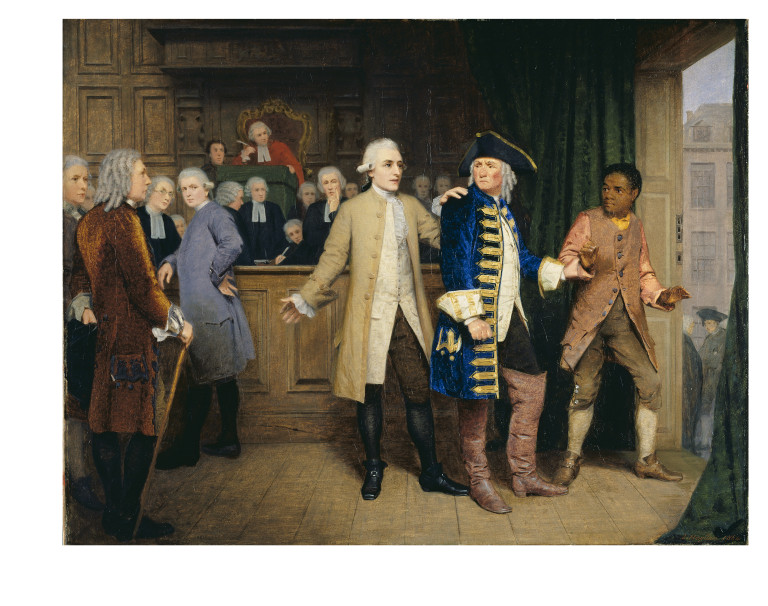
Sharp helped other slaves win their cases against tyrant owners, becoming more and more involved in the abolition of slavery. One case in particular, that of James Somerset, helped to set an important precedent in England.

Somerset had escaped his master, been recaptured, and was about to be shipped to a Jamaican plantation when Granville and others became involved.  They helped the slave win his freedom, arguing that “no master ever was allowed here (in England) to take a slave by force to be sold abroad because he deserted his service…therefore the man must be discharged” (2).

2006BB2012

Granville remained active in the abolition movement his entire life. He wrote frequent letters to many leaders in America and Britain, influencing their thinking about slavery and earning their respect. Among them: Dr. Benjamin Rush (signer of the Declaration), John Jay (first Chief Justice of the U.S. Supreme Court), Benjamin Franklin, and John Adams in America; John Wesley, William Wilberforce, the Archbishop of Canterbury in England; and General Lafayette of France.

But that was only one of his passionate pursuits. Another concern was the illegal treatment of the colonists in America. He published books and pamphlets to help their cause, catching the attention of Ben Franklin during one of his visits to England.

Granville gave Mr. Franklin 250 copies of his pamphlet about people’s natural rights as supported by the British constitution. Franklin sent them to America where several presses reprinted the booklet.

Sharp’s pamphlet influenced Thomas Jefferson as he drafted the Declaration of Independence, evidenced by at least several similarities in both documents.

In 1775, when war broke out in the colonies Granville was employed in the ordnance office (handling all matters concerning weaponry). He wanted nothing to do with the war, so he wrote to his employer: “I cannot return to my ordnance duty whilst a bloody war is carried on, unjustly as I conceive, against my fellow-subjects” (3).

Granville’s brothers agreed to support him, enabling him to pursue his studies, causes, and writing. In fact, beginning with his first book in 1765, Sharp published a new work, sometimes more than one, almost annually for the rest of his life (5).

sharp-title-page-Cropped-543x465

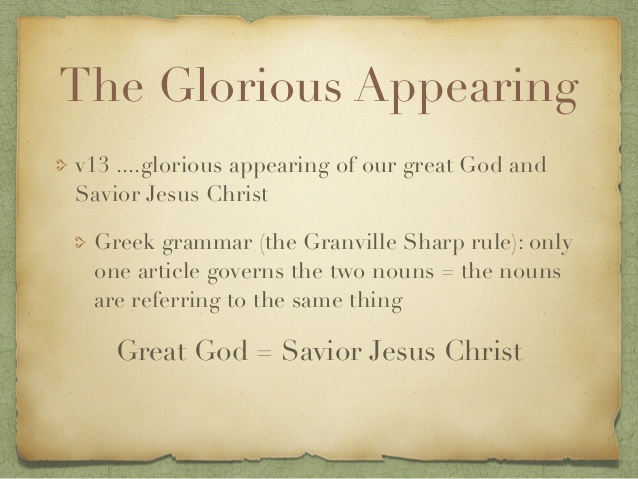
One of those books (with a thirty-six word title!) is now known as “Sharp’s rule” (1777). With his self-taught knowledge of ancient Greek, Granville demonstrated how eight passages of the New Testament had been mistranslated by some Bible scholars, leaving the reader to surmise that God the Father and God the Son were separate Beings. Sharp presented a thorough explanation that God the Father, Son, and Holy Spirit are One, according to the original Greek texts (4).

our-hope-the-appearing-of-jesus-christ-16-638

Yet Granville accomplished still more. In the mid-1780s, Sharp teamed with a Mr. Smeathman to establish a colony for freed English slaves on the west coast of Africa. (Many of them were homeless, subsisting on the streets of London with no hope of improving their lives.) But Smeathman died shortly after he and Granville established their partnership. Sharp continued the work nevertheless.

In April of 1787, the dream for that African colony became a reality with the founding of Sierra Leone. The colonists named the first settlement, Granvilletown.

220px-Province_of_Freedom

Sharp accomplished even more, as he served on a number of boards and societies, in support of mission efforts and philanthropic concerns.

Yet he did not see the fulfillment of his greatest dream—the abolition of slavery. The battle he began with the case of Jonathan Strong in 1765 finally ended in 1833, when slavery was completely abolished in the British Empire.

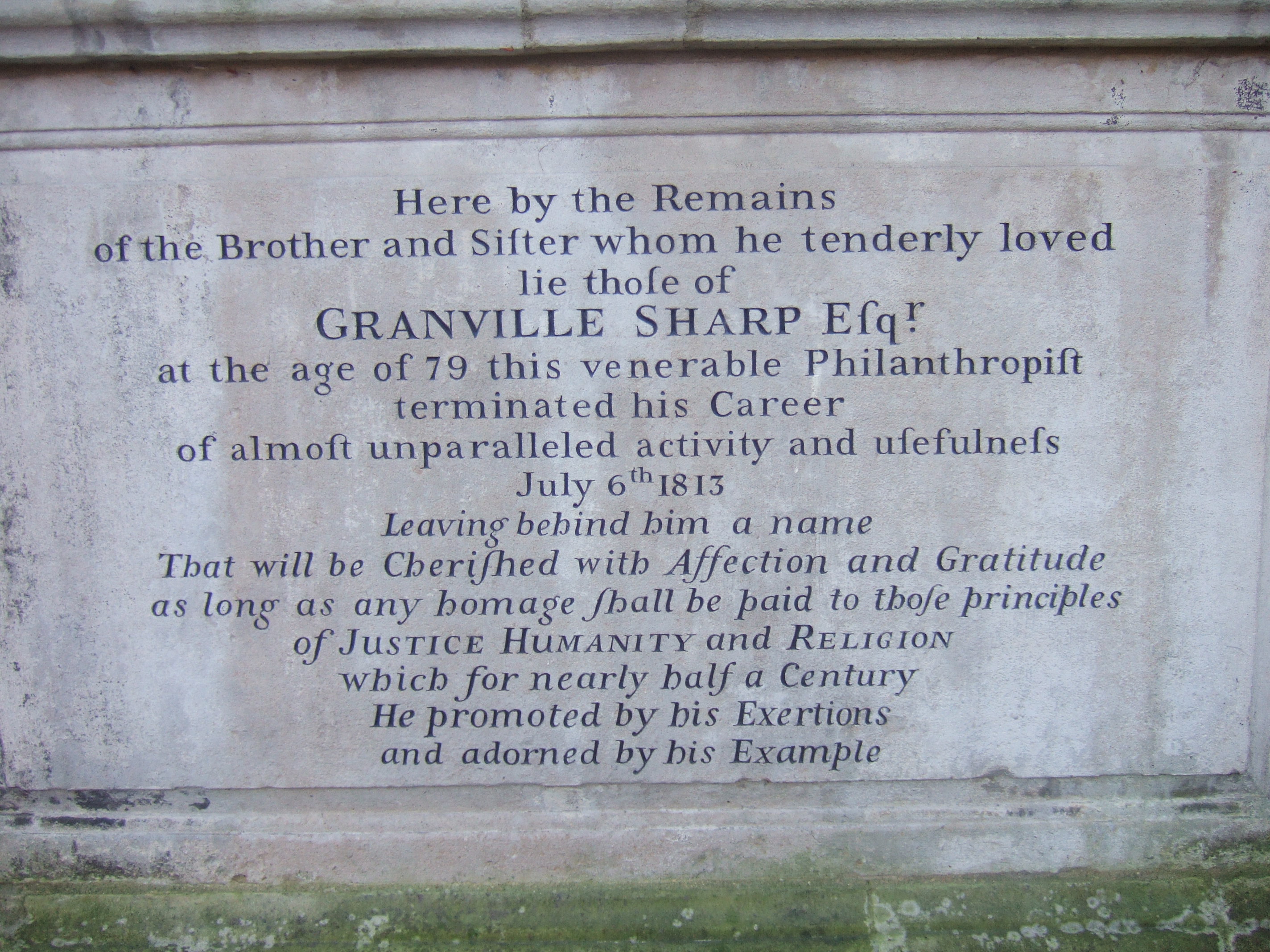
Sharp died in 1813.

Granville_Sharp's_tomb_inscription

His chief biographer, Prince Hoare, said that as he began to study Sharp he intended to “draw a veil over peculiarities of Mr. Sharp’s character,” out of respect for the dead. But when he finished his careful and comprehensive research, he realized Sharp’s “character to be of that high and dignified nature, to leave no necessity for such a precaution…I see nothing to veil.” (6).

Like many other forgotten heroes, Granville Sharp is among that great cloud of witnesses who fixed their eyes on Jesus and ran the race marked out for them (Hebrews 12:1-2a).

May his example and that of others–their faith, integrity, perseverance, and passion–push us along in the race marked for us.

______________________________

  1. history.ac.uk
  2. national.archives.gov.uk
  3. Dr. Daniel Wallace, www.bible.org
  4. christianity.com
  5. brycchancarey.com
  6. Dr. Daniel Wallace, http://www.bible.org

(Art & photo credits:  www.bbc.co.uk; izquotes.com; http://www.virtualtourist.com; http://www.collections.vam.ac.uk; http://www.wikipedia.org; http://www.liverpoolmuseums.org.uk; http://www.slideshare.net; http://www.en.wikipedia.org; )

Read Full Post »

seagrape03

“Oh, what a beautiful tree!” my mother-in-law exclaimed with enthusiasm. Her comment referred to a tall bush, planted near the house and visible outside our kitchen window. “What’s the name of it?” she asked.  Being from Ohio, Mom wasn’t familiar with some of the unique foliage of our area in south Florida.

“That’s a sea grape,” I told her. “It’s actually a shrub, but they can grow quite tall.”

“Well, it’s lovely. Such big leaves!”

Now clearly there’s nothing remarkable about this conversation, until you know that Mom had asked the very same question with the very same enthusiasm every morning of her visit. And each morning I supplied the same answer.  Mom was in her late 80s, and her dementia was becoming more and more noticeable.

Mom’s fresh outlook each morning reminded me of Lamentations 3:22-23: 

The faithful love of the LORD never ends!

His mercies never cease.

Great is his faithfulness;

his mercies begin afresh each morning (NLT).

his-mercies-are-new-wallpaper_1366x768

Just as Mom brought new enthusiasm to each morning, so God brings new mercies for each day. Yes, the challenges we faced yesterday required wisdom, strength, and perseverance. But today we’ll need a fresh supply.   Praise God he never runs out of such gifts; he is always able to provide.

In the same way, God’s new mercies for today are not meant to be sufficient for tomorrow. In other words, we shouldn’t expect to feel confident and in charge this morning for the potential challenges of the future—much as we’d like to. (Who hasn’t wished to know now exactly how the next day or week will unfold, and how best to respond?)

Instead, our wise and loving Heavenly Father has chosen to lead us one day at a time. And just what is so wise and loving about keeping us in the dark?  So as to protect us from being overwhelmed, easy prey to depression, and paralyzed by fear.

No, our best course of action is to avail ourselves of God’s mercies for this one day. As for tomorrow, we can trust God to supply new mercies, more than sufficient for whatever we might face when the time comes (Matthew 6:34).

I’m remembering Corrie ten Boom. (Maybe this post brought her to your mind, too.)

g25143_u22597_corrie_ten_boom

Corrie and her family suffered cruel hardships in the concentration camps of Nazi Germany, as a result of helping Jews escape the Holocaust.

After the war, people would often say to Corrie, “I wish I had such great faith as yours. I could never live through the experiences you survived.”

Corrie would tell a story to explain.

When she was a child, Corrie happened to see a dead baby. A terrible fear gripped her that one of her family might also die. When Papa ten Boom came to tuck her in that night, she burst into tears.

“I need you!” she sobbed. “You can’t die!”

Her sister, Betsy, explained why Corrie was so afraid.

Papa asked, “When you and I go to Amsterdam, when do I give you your ticket?”

“Just before we get on the train,” she responded.

“Exactly,” Papa replied. “And God knows when you’re going to need things, too. Don’t run out ahead of him, Corrie. When the time comes that some of us have to die, you will look into your heart and find the strength you need—just in time.”

Papa ten Boom was proven right. When Corrie needed supernatural strength, God did provide. We can rest assured that his mercies will be new and fresh each morning for each of us, as needed.

*     *     *     *     *     *     *     *     *     *

I praise you, Lord God, that we can face each day with fresh enthusiasm, because for each trial, you have prepared for us great mercies like endurance, strength, and wisdom. I thank you that in the midst of trouble, you also provide blessings: a more acute awareness of your presence, peace that defies explanation, family and friends to come alongside, miraculous provision, and delightful surprises to make us smile. You are not just a sufficient God; you are an abundantly gracious God!

(Photo credits:  www.mgonline.com; http://www.coffee4thesoul.com; http://www.myhero.com.)

Read Full Post »

(In honor of Black History Month)


Isabella, the daughter of James and Elizabeth Baumfree, was born a slave in New York state about 1797. No one knows the exact date, because birth records weren’t kept for “property.”

Did her parents know the name means, “consecrated to God?” Even if they chose the name for its meaning, those parents could not have dreamed of the future awaiting their Baby Belle.

Her early years were difficult.  Belle was sold five times, several times to cruel masters.

At age eighteen or so, Belle fell in love with Robert, a young slave from a nearby farm. The couple had a daughter. But Belle’s master, John Dumont, forbade her to see Robert again. According to the law, all children of the union would belong to Robert’s master, not Dumont.

Two years later, Dumont forced Belle to marry an older slave. They had three children: Peter, Elizabeth, and Sophia.

In 1826, Belle escaped the Dumont farm with Baby Sophia. In a vision, God showed her a particular home to go to. That home belonged to a Quaker family, the Wageners, who took in the young woman and her baby. They even paid Belle’s price to Dumont and made her a free woman. Belle became a housekeeper, then a maid.

Shortly after her escape from slavery, Belle learned that her five-year old son, Peter, had been illegally sold in Alabama. She took the matter to court and won her case. Peter was returned to New York. That was the first time a black woman challenged a white man in a U.S. court. It was also the first time of many that Belle’s resolve and courage were put on display.

Several years later Belle was falsely accused of poisoning her former employer. In 1835 she took that case to court and won again.

Someone must have encouraged Belle to tell her story of being a slave and becoming a free woman. But she had never learned to read or write, so a friend wrote as Belle dictated. A Northern Slave was published in 1850.

In her book, Belle explained that several years after she was freed, God revealed himself to her, “with all the suddenness of a flash of lightning, showing her, in the twinkling of an eye, that he was all over, that he pervaded the universe, and that there was no place where God was not.”

The book sold many copies and Belle became well-known. She was asked to speak at a women’s rights convention in Massachusetts. Before long, Belle was traveling with abolitionist, George Thompson, speaking against slavery and for human rights.

In 1851, Belle gave a speech at another women’s conference, this time in Ohio. She spoke convincingly (and extemporaneously) about women being every bit as capable as a man:

“I have plowed and reaped and husked and chopped and mowed, and can any man do more than that?”

And, no doubt with a twinkle in her eye, she added:

“As for intellect, all I can say is, if a woman have a pint, and a man a quart — why can’t she have her little pint full? You need not be afraid to give us our rights for fear we will take too much, for we can’t take more than our pint’ll hold. The poor men seems to be all in confusion, and don’t know what to do. Why children, if you have woman’s rights, give it to her and you will feel better. You will have your own rights, and they won’t be so much trouble.”

She concluded by asking: “And how came Jesus into the world? Through God who created him and the woman who bore him. Man, where was your part?”

It’s not surprising that some were displeased with Belle’s speeches. One time she was told that the building where she was to preach would be burned down if she dared to speak. “Then I will speak to the ashes,” she replied.

Belle was also physically assaulted. One brutal attack caused permanent injury, and she had to walk with a cane for the rest of her life.

In 1863, Harriet Beecher Stowe wrote an article about Belle for the Atlantic Monthly:

“I do not recollect ever to have been conversant with anyone who had more of that silent and subtle power which we call personal presence…She seemed perfectly self-possessed and at her ease. An audience was what she wanted—it mattered not whether high or low, learned or ignorant. She had things to say, and was ready to say them at all times, and to anyone.”

Imagine. A slave woman who never had the opportunity to go to school, never learned to read or write. Yet the power of her spoken word helped bring the end of slavery and pave the way for women to be granted the right to vote.

Belle proved:

“There is no difficulty that cannot be defeated.

There is no victory that cannot be achieved,

if you believe in the power of God!”

— Anonymous

Of course, by the time she achieved notoriety, Belle was known by another name.

You see, Belle had asked God for a new name several decades before the Civil War. Again, it was the result of a vision. She said God chose her new first name based on the fact she would travel. Then Belle asked God for a second name, “’cause everybody has two names.” And the Lord granted her request. Her second name proclaimed what Belle always declared from her podium.

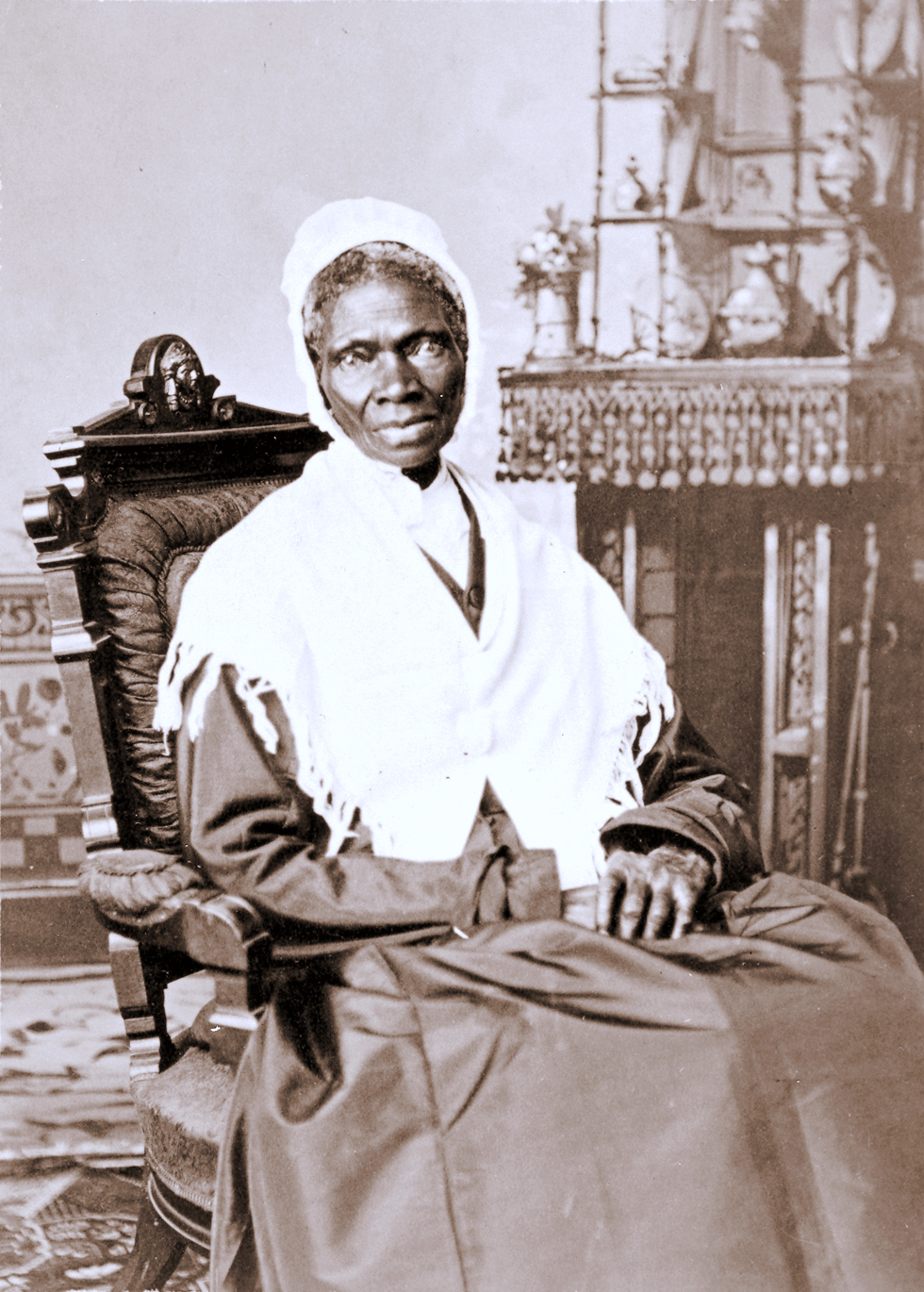
Perhaps you remember Sojourner Truth.


Sojourner_truth_c1870

(Photo from http://www.wikipedia.org.)


Sources:  www.biography.com; http://www.sojournertruth.org; http://www.; http://www.blackpast.org; http://www.americanswhotellthetruth.org; http://www.christianitytoday.com.)

Read Full Post »


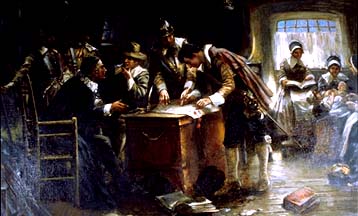
Mayflower_compact


They had been at sea for sixty-six days, enduring overcrowded conditions. Storms had caused damage to their ship and sea sickness plagued them all– passengers and crew alike. Meager provisions and no heat on chilly autumn days caused further discomfort.

So on November 9, 1620, when they finally saw the coastline of North America in the distance, the Pilgrims and others aboard the Mayflower must have cheered enthusiastically. Soon they could abandon the cramped, cold, and fetid ship and begin new lives in a new world.

But. All had not been peaceful and congenial among the passengers during the crossing. And when it became apparent the storms had blown them too far off course to land in the Virginia Colony as planned, relations deteriorated further.

Not all of the travelers were Pilgrims. Also aboard were merchants, craftsmen, skilled workers, and indentured servants. The Pilgrims called them “strangers.”

No sooner had the decision been made to anchor off Cape Cod, than an argument ensued. Several of the “strangers” pointed out that, since they were not going to be under the jurisdiction of the Virginia Company, they would “use their own libertie” and do as they pleased. “None had the power to command them, they said.” (Quoted words are from William Bradford’s records. He served as historian for the Pilgrims.)

To avoid anarchy, five men gathered in the cabin of the ship to create a basis for law and order. The result of their efforts: the Mayflower Compact.

The first words of the document give strong indication of the Pilgrims’ hearts.

In the name of God, Amen.

“Everything they did started with God” (The Founders’ Bible, p. 187).

Next, the Pilgrims stated their purpose for coming to America.

We, whose names are underwritten,…by the grace of God,…having undertaken for the glory of God, and advancement of the Christian faith, and honor of our King and country…

Several phrases indicate the Pilgrims’ desires for their new colony:

  • “For the glory of God” would be a guide for all manner of decisions.
  • “Advancement of the Christian faith” would encourage them to remain strong in Christian faith among themselves and to introduce others to Jesus.
  • “Honor of our King and country” indicates their loyalty to native England and its monarch, in spite of his untoward actions that caused their flight to America in the first place.

…[We] do solemnly and mutually in the presence God and of one another, covenant and combine ourselves together into a civil body politic…

The Mayflower Compact expressed their commitment to live together in a civil manner, in the sight of God.

[We] will enact…such just and equal laws, ordinances, acts, constitutions, and offices, from time to time, as shall be thought most meet and convenient for the general good of the colony, unto which we promise all due submission and obedience.” 

Note:  there is no mention of a leader who would oversee the colony. The Pilgrims created a democratic, representative form of government, in covenant with one another, rather than by a monarchy or dictatorship.

It was the first document of its kind in the history of the world.

But the Mayflower Compact would only be as good as the commitment of Pilgrims and Strangers alike to abide by its guidelines.

Would the mutinous Strangers sign?

John Carver, church deacon and one of the organizers of the voyage, was the first to affix his signature. Other Pilgrims followed.

One book says there was a long pause. Then Captain Myles Standish stepped forward to sign. Standish had been hired by the Pilgrims to be their military captain; he was with them, but not one of them.

Soon other Strangers followed Standish’s example.  In total, forty-one signatures appeared on the document. One freeman, two hired men and seven servants declined.

At long last, Pilgrims, Strangers, and crew were able to disembark. And what did they choose to do first?

Pray.

According to Bradford, they “blessed the God of heaven, who had brought them over the fast and furious ocean..and a sea of troubles before.” Then he quoted scripture:

“Let them therefore praise the Lord, because He is good and His mercies endure forever.” (Psalm 106:1).


*     *     *     *     *     *     *     *     *     *


We, too, praise you, Lord, for your goodness and mercy upon America all these years.  As we celebrate Thanksgiving on Thursday, may we remember the solemn history behind this occasion.  Thank you for the supreme example and sacrifice of our Pilgrim forefathers–strong in faith, commitment, and perseverance.  May we follow their example, not only because you are faithful to the faithful (2 Samuel 22:26), but out of appreciation for what you, our loving God, have already done.


(Sources:  By These Words by Paul M. Angle; The Founders’ Bible; The Intellectual Devotional:  American History by David S. Kidder & Noah D. Oppenheim; The Rebirth of America;  http://www.learningtogive.org; http://www.humanities360.com; http://www.crf-usa.org; http://www.americanhistory.about.com; http://www.tparents.org; http://www.mrkash.com; http://www.mayflowerhistory.com; http://www.plimoth.org.)


Art credit:  www.washingtonmayflower.org.  


Read Full Post »

???????????????????????????????????????????????????????????????????????????????????????????????


The days are getting shorter; schools will be in session within a couple of weeks. It must be August.

And with the end of summer comes a tinge of sadness. The days of swimming, boating, and patio parties will soon be over for another year. We wish summer could last a bit longer.

What we need is a holiday in August, even if we invent it for ourselves. Something to lift our spirits.

Perhaps we could celebrate the birthday of Francis Scott Key, born August 1, 1779. (That would place our new holiday neatly centered between Independence Day and Labor Day.)


Francis-Scott Key


Mr. Key would be a worthy man to honor, too, and not just because he penned The Star Spangled Banner.

Francis Scott Key was a man of faith.

From 1818 until his death in 1843, he served as vice-president of the American Bible Society. Mr. Key was also involved in the American Sunday School Union, instrumental in planting thousands of Sunday Schools in settlements throughout the Midwest.

Though only an amateur poet, he penned at least ten hymns in addition to our national anthem. Included below are the first-stanza lyrics of Lord, with Glowing Heart I’d Praise Thee.  I think you’ll find these words  as heart-stirring as The Star-Spangled Banner: 


Lord, with glowing heart I’d praise Thee,

For the bliss Thy love bestows,

For the pardoning grace that saves me,

And the peace that from it flows:

Help, O God, my weak endeavor;

This dull soul to rapture raise:

Thou must light the flame, or never

Can my love be warmed to praise.


Francis Scott Key was a man of courage.

If you’re like me, you remember bits and pieces of the circumstances that inspired Mr. Key to write our national anthem. Sometime during the War of 1812, he was on a boat in a harbor, anxiously watching to see if the fort onshore would survive an onslaught from the British Navy. By the dawn’s early light he caught a glimpse of the American flag still flying over the ramparts, and the first lines of The Star Spangled Banner were born in his mind.

But what was Sir Francis doing in a harbor full of British ships attacking an American fort?

First, it’s important to understand the British had just completed a successful campaign against Washington, D.C., burning many buildings including the White House. Hundreds had fled for their lives, including President Madison.

After Washington, the victorious enemy approached Baltimore, the third largest city in America.  Mr. Key and John Stuart Skinner (an American Prisoner Exchange Agent) had been sent to the British, to negotiate the release of prisoners.  One of those prisoners was Dr. William Beanes. Dr Beanes had been captured in Washington, and was being held aboard ship in Baltimore Harbor.

Why was Mr. Key sent as a negotiator? Perhaps because, as a lawyer, he was gifted at persuasion.

But what guarantee might Francis Key and John Skinner have that they themselves would not be taken prisoners? Surely there was none. Promises can easily be broken, especially during war.

Yet the two men did board an enemy ship and talk the British into releasing Dr. Beanes. However, the battle against Fort McHenry was about to begin. The three Americans were not allowed to return to shore, but were transferred to a small boat behind the British fleet. They had no choice but to anxiously watch the bombardment of Fort McHenry, located on Baltimore Harbor. Would the Americans be forced to surrender?


francis-scott-key-1779-1843-american-lawyer-and-poet-witnessing-the-bombardment-of-fort-mchenry-september-13-14-1814-wood-engraving-american-1885-granger


Into the night the ferocious battle continued. Sixteen British war ships lobbed cannon fire and rockets into the fort from a safe distance out in the harbor. Meanwhile, American gunfire was useless. The ships were out of range.

But the dawn’s early light revealed that the American flag still waved. The fort had remained secure in spite of the onslaught. Mr. Key grabbed an envelope. On the back he wrote out the first phrases of the poem, “The Defense of Fort McHenry.”  Later he added to the poem, creating four stanzas. Soon it was set to a British(!) tune, Anacreon in Heaven, and retitled, The Star-Spangled Banner.

Though the song celebrated that particular victory at Fort McHenry, Mr. Key expressed his faith in God and hope for America in the last stanza:


Oh, thus be it ever when freemen shall stand

Between their loved homes and war’s desolation;

Blest with vict’ry and peace, may the Heav’n rescued land

Praise the Pow’r that hath made and preserved us a nation!

Then conquer we must, when our cause it is just;

And this be our motto: “In God is our trust.”


Did you notice that last line? Mr. Key created our nation’s motto as well as our national anthem.

He’s worthy of a holiday, don’t you think?


(Resources:  www.wallbuilders.com, http://www.christianity.com, http://www.middletownbiblechurch.org, http://www.usflag.org, and http://www.poemhunter.com.

Photo & art credits:  www.scholarshipexperts.com, http://www.oldfloridabookstore.blogspot.com, http://www.fineartamerica.com.)


Read Full Post »

$T2eC16Z,!ykE9s7t)22nBQ0lKpDuG!~~60_35

(Success is not final, failure is not fatal; it is the courage to continue that counts.” — Winston Churchill)


The annals of history are filled with failures.  Consider:

Example #1: A.’s parents may have felt like failures when their son did not speak until age four and did not read until he was seven. Later they faced the embarrassment of his expulsion from school.

But surely his parents must have breathed a sigh of relief when A. was finally admitted to a university–only to be discouraged again when a professor called him a lazy dog! Who was this disappointing failure of a son? Albert Einstein.

Example #2: As a young man, W. worked for a newspaper, but not for long. His editor told him he lacked imagination and had no good ideas. In the coming years he started a number of short-lived enterprises that ended in bankruptcy. The name of this business failure? Walt Disney.

Example#3: M. was set up for failure. Jealous competitors convinced an employer to assign him a difficult, time-consuming project, outside M.’s area of expertise. It was a sure-fire plan to keep him busy, ruin his reputation, and be rid of him.

The employer? Pope Junius II. The person set up for failure? Michelangelo. The project was the ceiling of the Sistine Chapel.

Michelangelo had no experience with fresco painting. In addition to tackling a new medium, he had to paint upside down on a curved surface. It took him four years to complete the project.

But. Giorgio Vasari (1511-1574), painter, writer, and historian said, “The whole world came running when the vault was revealed, and the sight of it was enough to reduce them to stunned silence.”  I’ll bet his competitors were among them!

As I seek to put myself in the place of each of these individuals, I sense their disappointment, embarrassment, and frustration. Failure is painful! It damages our dignity and destroys our morale.

Simply put, failure feels bad…

…but that’s good!

Defeats push us to refocus and redirect. And with God’s help, those two steps can bring us to peace in spite of failure, and hope for a future of contentment.  Our relationship with God is deepened; our character is strengthened.

Care to join me in a closer look at those two verbs, refocus and redirect?

Refocus by turning our attention upward—not backward. Dwelling on the disappointments of the past is counterproductive.

As soon as we realize negativity has moved in, we must refocus our thoughts on gratitude for God’s gifts and praise for his attributes. (If my past experience is any indication, we may have to do this frequently. The enemy does not give up easily!)

But when we fill our hearts and minds with faith-statements, peace, encouragement and hope have a chance to flourish.

Redirect  our energy. God gives us our marching orders in Psalm 37. Again, note the verbs.

Trust in the Lord and do goodDelight yourself in the Lord…Commit your way to the Lord…Be still before the Lord and wait patiently for him…Do not fret—it leads only to evil (Psalm 37:3-8).

And all the while we can remind ourselves, God specializes in providing…

  • Strength for the weary and power for the weak
  • Light in place of darkness
  • New ways out of a wasteland
  • Comfort for the afflicted
  • Gladness and joy after sorrow and sighing
  • Beauty out of ashes

(Isaiah 40:28-29; 42:16; 43:19; 49:13; 51:11; 61:3)


Thank God he also provides what Winston Churchill (at the beginning of the post) says counts the most:   the courage to continue.


(Photo and quote credit:  www.ebay.co.uk.com.)


Read Full Post »

Portrait_of_George_Washington

Many of our founding fathers were men of Christian faith.  The record of their background, correspondence, and character attests to that fact.  Consider:

  • Twenty-four of the fifty-six men who signed the Declaration of Independence attended seminary or Bible school.
  • Hundreds of letters of these men speak of God and their faith in Him.
  • Honor and integrity were important attributes which characterized their lives.  Most of them sacrificed much for the cause of American liberty.  “With firm reliance on the protection of the divine Providence*, we mutually pledge to each other our Lives, our Fortunes, and our Sacred Honor,” they declared.

George Washington was no exception. With great integrity,  courage, faith, wisdom, and humility, he was instrumental in bringing America through perilous times.  We should know his legacy well, and follow his example.  Can you imagine an America where men and women would display…

 …The Integrity of George Washington

Washington was the only president unanimously chosen by the electoral college, an indication of the trust the American people invested in the general.  Frequently throughout his life, he demonstrated strong reliance on God.  Remember the portrait of him, kneeling in prayer at Valley Forge?    And decades after his death, pastors were still preaching sermons that honored his exemplary life.

…The Courage of George Washington

Washington’s accomplishments can be rivaled by few.  At age 23 he was commissioned colonel at the outset of the French and Indian War (1754).  His courage was legendary.  In one battle he directed the troops while riding up and down the front lines on his horse, seemingly not to care he was an easy target.  After that battle (which the British and American forces won), George wrote home that his safety was the result of “the miraculous care of Providence*.”

…The Faith of George Washington

Washington recognized that God had been strongly involved in the colonies’ battle for liberty.

“The hand of Providence* has been so conspicuous in all this that he must be worse than an infidel that lacks faith and more than wicked, that has not gratitude enough to acknowledge his obligations.”

His first act upon being sworn in as President?  He prayed, reminding his listeners at the inauguration that it is Almighty God who presides over the universe.  Washington also closed his inaugural address with prayer.

As he signed official government documents, he often concluded with the closing, “In the year of our Lord Christ.”

…The Wisdom of George Washington

In an address given in 1796, George wisely stated:  “Of all the dispositions and habits which lead to political prosperity, religion and morality are indispensable supports.”

(Might the economic and political decline now happening in America be the result of those supports–religion and morality–being slowly but surely removed?)

…The Humility of George Washington

In spite of a long list of outstanding accomplishments over a lifetime of sacrificial service to his country, Washington said:  “I have only been an instrument in the hands of Providence*.”

What chance did the weak, floundering colonies have to become a strong, prosperous nation?  Small, indeed.  But God used men of Christian character such as Washington to achieve the impossible.

What chance does our nation have today, to recapture our strength and prosperity?  Small, indeed.  But, God can use men and women of Christian character, just as he did George Washington–those willing to follow God’s lead and live sacrificially, to achieve the impossible. Because “nothing is impossible with God (Luke 1:37) .”

*     *     *     *     *     *     *     *     *     *

*Providence was a word used frequently in early America, to indicate God’s active care and protection.  Noah Webster, in his first dictionary (1828), noted that Divine providence is often understood as God Himself.  The word appeared over 100 times in the Geneva Bible, the translation of choice among many early Americans.  Now the word is translated with synonyms for care, such as “tender mercies,” “loving kindness,” and “protection.”

Because the word, providence, no longer appears in our Bibles, some have concluded that those forefathers who used the term were Deists who believed in an impersonal God.  But many outspoken Christians of the day used the term, including Rev. Dr. John Witherspoon (minister and signer of the Declaration), John Quincy Adams (officer of the American Bible Society, active patriot, and sixth president of the United States), John Jay (president of the American Bible Society and first chief justice of the Supreme Court), and Dr. Benjamin Rush (founder of the Sunday School in America and signer of the Declaration).  All of these men and others, whose allegiance to Christ is verifiable in their writings, also  included many references to Providence in their works.

(Sources:  The Founders’ Bible, http://www.wallbuilders.com, http://www.ochristian.com)

(Art Credit:  www.en.widipedia.org)

Read Full Post »


“There is no fear in love.  But perfect love drives out fear.”

1 John 4:18a

M-m-m.  Interesting.  John doesn’t say perfect courage drives out fear.  Not even perfect faith.  Why does he say perfect love will drive out fear?

First of all, this verse is not talking about fears of financial ruin or life-threatening events.  Verse eighteen gives us the context.  John is talking about Judgment Day.  He’s reminding us that, if we know Jesus, there is nothing to fear when we leave this earth for eternity.  Jesus gave his life to save us from the consequences of our sin.  Our place in heaven is secure, if our faith is in him.

And once that matter has been settled, other fear-producing questions can be put in proper perspective. We have to remind ourselves that earthly life fades quickly like the leaves (Isaiah 64:6).  These questions will cease to matter–questions like:

  • Will my job survive the cutbacks?
  • Will I be able to keep my health insurance?
  • Will my kids make it through their personal crisis?

But such questions can cause torment to the point of ulcers and high blood pressure.  If we allow fear to control us, we’re saying that the troubles we face are more powerful than our God.

So here are a few ways to fight against fear:

  • Rename your difficulties as possibilities—possibilities for God to do something glorious.  Without a problem, there’s no opportunity for a miracle.
  • Picture God Almighty accompanying you all day long.  He’s standing right behind you at the sink.  He’s sitting beside you in the car.  His ever-watchful eye is upon you,  his infinite strength is available to you, and his perfect wisdom will guide you.
  • Don’t feed your fear with worry; feed your faith with the truth of God’s Word.  Psalm 23 is a perfect place to begin.  Remember verse four?  “Even though I walk through the valley of the shadow of death, I will fear no evil, for you are with me; your rod and your staff, they comfort me.”
  •  Listen to what he says:  “I am the Lord, your God, who takes hold of your right hand and says to you, do not fear; I will help you (Isaiah 41:13).  Visualize God holding you by the hand as you walk through each day.

Years ago, when a I was a young teenager, my family visited Lookout Mountain in Tennessee.  Dad and I were hiking over the mountain paths when we came to a deep, narrow ravine.  He easily jumped across, turned, and held out his hand for me.

“I can do it myself,” I announced confidently.  Then I looked down into that deep ravine.  What if I fall? I thought.  Grinning sheepishly at Dad, I said, “’Guess you’d better help me after all!”  I had great confidence in my father.  I knew he loved me and would never let me fall.

God is ready to walk hand-in-hand with me along the mountain paths of life.  Problems arise, though, when I repeat that moment on Lookout Mountain and focus on the ravine, the what-ifs.  The  result?  I’m frozen with fear.

How downright foolish of me, when my loving, trustworthy Heavenly Father has assured me:

“Don’t panic.  I’m with you.  There’s no need to fear for I’m your God.  I’ll give you strength.  I’ll help you.  I’ll hold you steady, keep a firm grip on you” (Isaiah 41:10, The Message).

 You see, perfect love drives out fear because we can trust the perfect love of our perfect God.

Read Full Post »

Boris Nicholayevich Kornfeld, political prisoner of the former Soviet Union.

Incarcerated in the late 1940s at Ekibastuz, a forced labor camp, in Siberia.

A doctor.

Because of his medical training, the camp authorities put him to work in the hospital.

Dr. Kornfeld was Jewish, but a Christian prisoner attracted his attention.  The man evinced a quietness of spirit, in spite of the horrors, deprivation, and hopelessness of their situation.  Often the doctor would hear this fellow prisoner reciting the Lord’s Prayer.

One day, a guard was brought into the surgery.  An artery had been cut during a knifing incident.  As Dr. Kornfeld began to repair the artery, he thought, I could make the sutures in such a way that this horrid man would slowly bleed to death later.  The authorities would ever know.

But no sooner did the idea cross his mind than Dr. Kornfeld’s stomach turned at the cruelty of his own thoughts.  Words from the Lord’s Prayer came to his mind, and he spoke them silently in his heart:  Forgive us our sins as we forgive those who sin against us.

Day by day, Dr. Kornfeld sensed change occurring in his spirit.  He wanted to speak to the Christian prisoner about his experience in the surgery, to discuss what was happening within himself, but the fellow had been transferred to another gulag.  The doctor told no one about his growing faith in Jesus.

As he was being transformed on the inside, Dr. Kornfeld’s character began to change.  He started saying “No” to some of the sordid practices of the prison camp. Once he reported on an orderly who had stolen food from a dying patient.  Such misdeeds were actually quite common.  After all, why waste food on someone who was going to die anyway?

But telling the authorities what was going on put Dr. Kornfeld in danger.  No one was going to appreciate his sense of fairness and kindness.  Every prisoner lived for himself, doing whatever was necessary to survive.

One evening, Dr. Kornfeld examined a patient named Alex, who had undergone surgery for cancer.  He felt compelled to describe to Alex his journey toward faith in Christ.  The words came in a flood.  For at least several hours, Kornfeld spoke to the young cancer patient.

The next morning, Dr. Kornfeld was dead.  Someone had beaten him in the head with a mallet.

Alex thought long and hard about the doctor’s story and his life-changing faith.  He, too, decided to become a Christian.  Miraculously, Alex survived the gulag and wrote about his experiences there.  The book was smuggled to the West and published.

More books followed, all revealing the cruel and disastrous results of the Soviet system under the leadership of Stalin.  (At least sixty-five million Russian citizens were murdered in the gulags.)

That prisoner-become-author was Alexander Solzhenitsyn, who won the Nobel Prize for Literature in 1970.  One Day in the Life of Ivan Denisovich (published in November 1962) and The Gulag Archipelago (December 1963) were two of his most famous works.  Many credit his writings as the beginning of the end of the Soviet Union.

Photo of Aleksandr Solzhenitsyn in 1953, right...

Photo of Aleksandr Solzhenitsyn in 1953, right after his release from the special Gulag camp at Ekibastuz (Photo credit: Wikipedia)

But certainly Dr. Boris Kornfeld also deserves credit.  His influence was an important catalyst.  And what about the nameless Christian who introduced Dr. Kornfeld to Jesus?

He also was used by God in a chain of events to achieve great impact upon the world.

But no one knew, including himself.  He very likely died in the gulags.

Oh, but consider his home-going to heaven.  Think of Jesus, wrapping his arm around the shoulders of this saint, saying “Well done, my devoted one.  Have I got a story for you!  Come and let me share what you have been a part of!”

We must not allow fear or anonymity to dissuade or discourage.  God may use any one of us to change the world, but he may very well wait to reveal our impact until he can tell us all about it — face to face!

*     *     *     *     *     *     *     *     *     *

Heavenly Father, may I never miss an opportunity to be a part of your grand, over-arching plan.  May the legacy of Dr. Kornfeld, Alexander Solzhenitsyn, and millions of nameless martyrs compel me to be courageous and passionate for you.  I have nothing important to lose and everything worthwhile to gain.

Read Full Post »

« Newer Posts - Older Posts »

Sylvia Schroeder

Impressions Becoming Expressions

Mitch Teemley

The Power of Story

Still Traveling

Impressions Becoming Expressions

Living Our Days

Gaining a heart of wisdom

He Said What?!

I'm Patty, and my husband and I are living with our adult son who has autism and epilepsy. I love sharing lessons learned from life around me, especially life with Aaron.

Meditations of my Heart

Impressions Becoming Expressions

Linda Stoll

Impressions Becoming Expressions

Signora Sheila

Where faith meets la dolce vita

Heidi Viars

Finding the Image of God