Feeds:
Posts
Comments

Archive for the ‘Encouragement’ Category

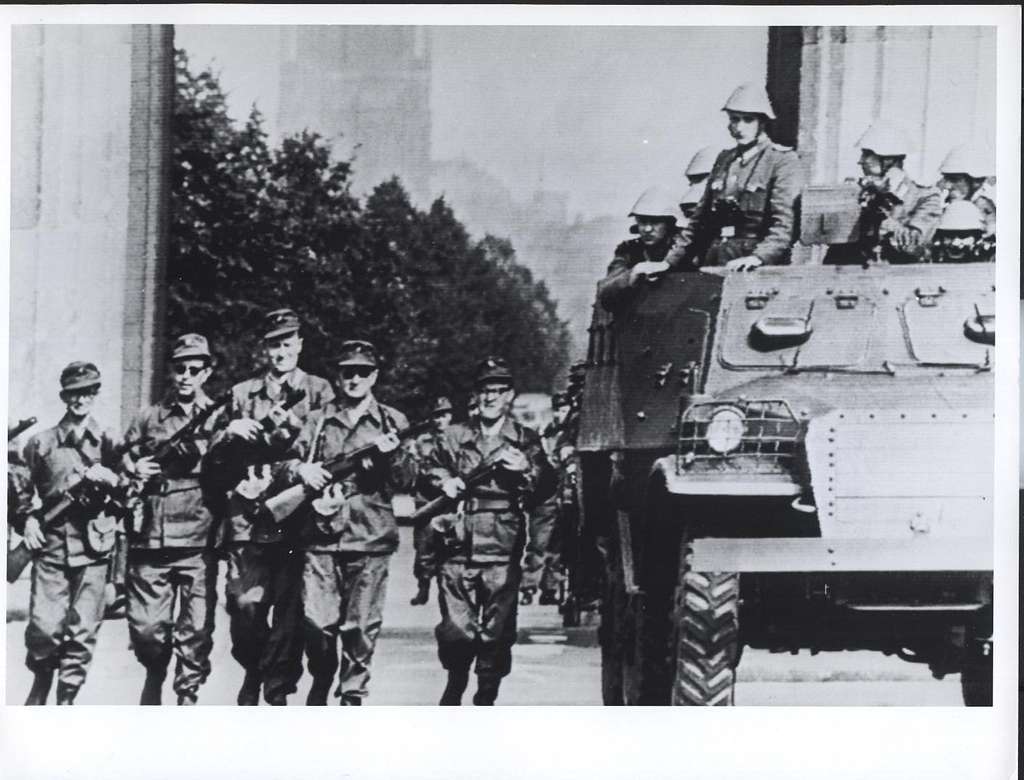
Gunfire blasts and booming cannons surrounded Union Army Private, William Carney. His regiment’s objective: to capture Fort Wagner near Charleston, South, Carolina.

The 54th Regiment of Massachusetts at the Civil War battle for Ft. Wagner, July 18, 1863.

Jerking movement nearby caught Carney’s eye. The color guard had been shot. As the dying man fell, the U.S. flag he carried began billowing toward the ground. Carney scrambled to rescue the flag from desecration and took a bullet himself.

Carney continued to crawl toward the fort, holding the flag high and calling encouragement for his fellow soldiers to follow. He was hit at least three more times, but made it to the walls of Fort Wagner, planting the flag into the sandy soil and holding it upright “until his near-lifeless body was rescued” [1] .

Even then Carney refused to let go of the flag until he was returned to his regiment’s camp. His heroism that day inspired a vital victory for the Union Army.

W. H. Carney with the flag he carried that day.

Years later Carney explained his motivation for joining the Union cause: “I had a strong inclination to prepare myself for the ministry; but when the country called for all persons, I could best serve my God by serving my country and my oppressed brothers. The sequel is short – I enlisted for the war” [2] .

Yes, Carney had been an oppressed brother himself, born into slavery in 1840. But during the 1850s he arrived in Massachusetts, either through the Underground Railroad, or perhaps his father—already a freed slave—was able to purchase his son.

Either way, Carney began to enjoy the freedoms that Blacks of the South were denied—freedoms like traveling, assembling, learning to read and write, and receiving pay for work. He passionately desired other slaves to experience the same.

That God-given passion for his fellow man surely inspired Carney that day at Fort Wagner, to give the fight his all no matter what duty fell to him. And for his tenacity and courage, William Carney received the Medal of Honor in 1900. He was the first Black soldier to do so.

Someone might ask, how was William Carney able to stay so strong?

Undoubtedly his firm stance was the result of:

  • Strong attention toward his God
  • Strong determination to live by God’s ways
  • Strong faith in God’s promises, confident that whether he lived or died, all would be well

We too can stand firm in what we face by applying the same.

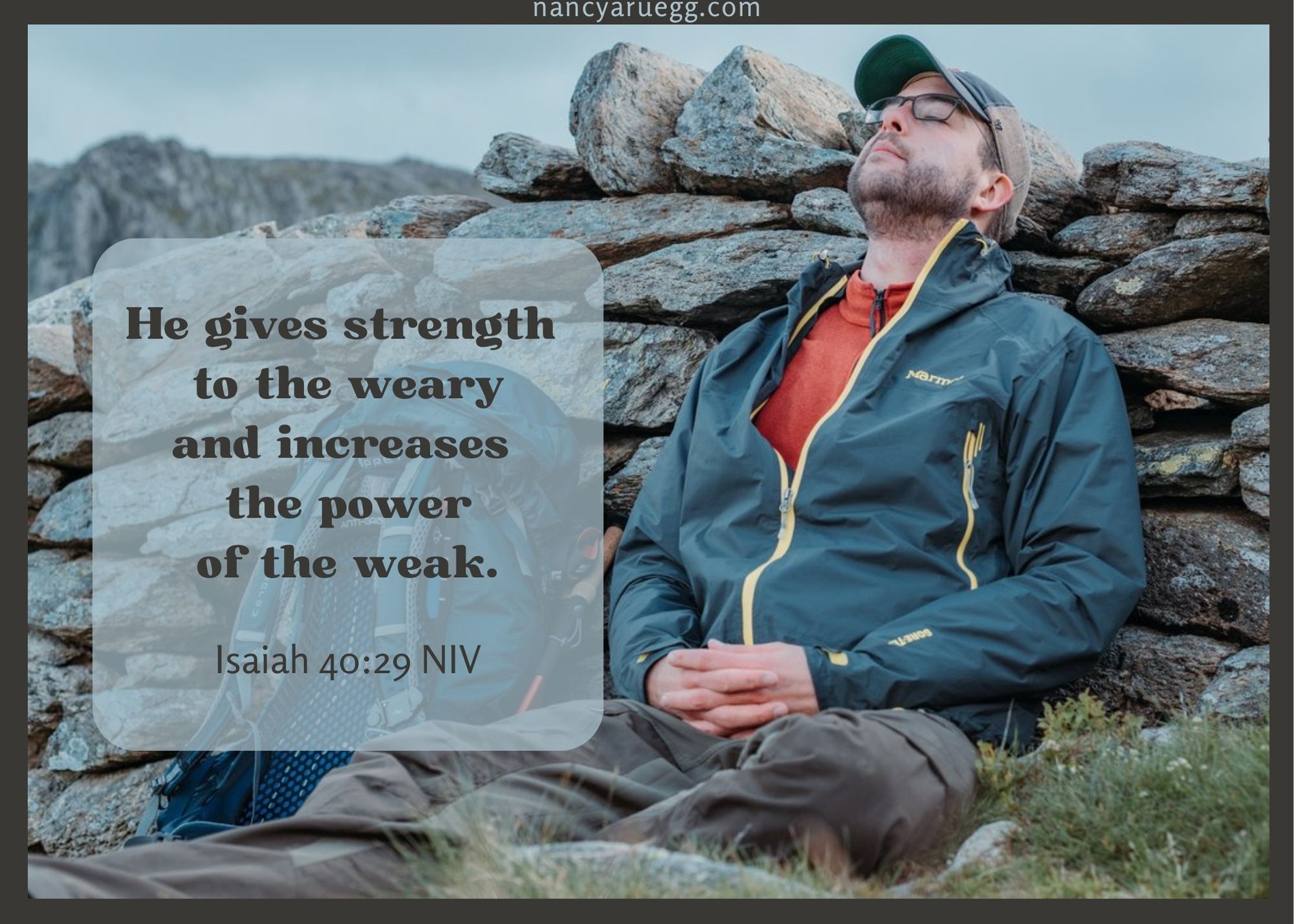
Strong attention toward God includes not allowing our emotions to control us. For example, sorrow, fear, and exhaustion will insist we can’t go on, but God tells us he gives strength to the weary and increases power for the weak [3] .

Strong attention toward God includes being in relationship with him, through prayer, Bible reading, worship, and more. We can’t expect to sense his peace and strengthening presence if we never spend time with him.

Security is not the absence of danger

but the presence of God

no matter what the danger.

Unknown

Strong determination to follow God means choosing to live by his truth. Scripture is full of examples of men and women shaped by their faith and obedience in God, becoming as strong as steel: Huldah, Jeremiah, Daniel, Mary (Mother of Jesus), Peter, and Paul are among them.

We see such Bible heroes as extraordinary, but I’m sure they’d tell us they were just ordinary people who trusted in their extra-ordinary God.

Strong faith in God’s promises means we can hold on to hope with confidence and courage.

I wonder if scripture-promises echoed in William Carney’s mind as he held that flag high and emboldened his comrades–promises such as these?


  • “The Lord gives strength to his people; the Lord blesses his people with peace” (Psalm 29:11).
  • “With your help I can advance against a troop; with my God I can scale a wall. It is God who arms me with strength and makes my way perfect” (2 Samuel 22:30, 33).
  • “If I live, it will be for Christ, and if I die, I will gain even more.” (Philippians 1:21 CEV).

You and I may never fight in battle, but these same promises can echo in our minds as we confront such enemies of our souls as discouragement, anxiety, stress, guilt, and temptation.

Like William Carney WE can stand steadfast and strong [4] .

What helps you to stand strong? Please share your experience in the comment section!


[1]https://www.army.mil/article/181896/meet_sgt_william_carney_the_first_african_american_medal_of_honor_recipient

[2] https://www.nps.gov/articles/william-h-carney.htm

[3] Isaiah 40:29

[4] 1 Corinthians 15:58

Photo credits: http://www.picryl.com (2); http://www.nypl.getarchive.net; http://www.dir.es/album/hiking-in-wales-2019; http://www.wallpaperflare.com.

Read Full Post »

No matter how many sunrises a person might witness over a lifetime, who could tire of the majestic spectacle, with its mesmerizing shades of lavender, scarlet, apricot, and golden yellow—all aglow with the backlight of the sun, and each dawn different than all those before.

I’m filled with wonder as the morning sky begins to fill with light and “the heavens proclaim the glory of God. The skies display his craftsmanship”[1].  He is the supreme Artist.

My favorite sunrise-displays are those when clouds are positioned just right to create magnificent gleaming rays reaching into infinity.

Perhaps God inspired the prophet Malachi with just such a sunrise as he wrote: “The Sun of Righteousness [our Messiah] will rise with healing in his wings for you people who fear my name”[2].

Wings refers to sunbeams, bringing to mind the unending healing of God’s forgiveness, available to all who put their trust in Jesus. He provides for us the dawning of a new day as we choose to move out of darkness and into his marvelous light [3].

Sunrise is also God’s daily reminder that his faithfulness is great and his mercies begin anew each morning . Perhaps he wanted us to understand that his faithfulness to us is as certain and consistent as the sunrise, yet full of surprise and creativity as well [4].

The dawn brings hope, reminding us that:

  • Just as the sun is bigger than any planet in our solar system, so God is bigger than any challenge we might face.
  • Just as the sun always shines whether in full view or behind clouds, God is always with us whether we sense his presence or not.
  • Just as the sun never fails to rise, so the Son will never fail to rise, bringing the light of his salvation, truth, and wisdom.
  • Yesterday’s disappointments and failures are past; a new day with fresh blessings and possibilities has dawned [5]!

In addition to hope, fresh joy comes with the morning light.

But to see the dawn and experience its pleasure, a person must look at the sunrise. If we’re going to see joy and experience its pleasure, we must look to the Son, the source of joy [6]. Then, each day becomes an opportunity to live in wild, blissful amazement of God.

When you do witness a glorious sunrise doesn’t it make you smile—if not on your face, then in your spirit? We can augment that joy with gratitude—not just for a breath-taking dawn, of course, but for all the beautiful, remarkable, and pleasurable things God generously bestows.

Author Roman Payne wrote in celebration of the sun: “O, Sunlight! The most precious gold to be found on Earth!” And surely we’d agree, a golden sunrise especially proves his point.

But just such a sunrise might better serve as a reminder to celebrate the Son:

O SonLight, more precious than all the gold to be found on Earth!

*     *     *     *     *     *     *     *     *     *

I praise you, God the Father, Son, and Holy Spirit, for your light that is brighter than the brilliance of a sunrise! You are the source of all blessing, the brightness of our days, and our guiding Light to show the way. Without you, life is like twilight with dark night ahead. But with you, it is the dawn of morning with the light and warmth of a full day ahead.

(Psalm 84:11 PTP; James 1:19; 2 Samuel 22:29; Psalm 119:105;

last sentence based on Philip Schaff quote.)


[1] Psalm 19:1 NLT

[2] Malachi 4:2a

[3] 1 Peter 2:9

[4] Lamentations 3:23, and an idea inspired by Eugene Peterson, Run with the Horses, pp. 115-116.

[5] Philippians 4:13; Psalm 23:4; 27:1; 119:105, 130; Ecclesiastes 2:13

[6] John 15:11

Photo credits: http://www.pixabay.com; http://www.peakpix.com; http://www.canva.com (2); http://www.rawpixel.com.; http://www.peakpix.com.

Read Full Post »

My quote-collecting hobby started with a gift over thirty years ago–a charming floral journal.

Now there are three volumes. Two binders include typed notes and quotes from many books I’ve read.*

The newest journal for quotations is an elegant shade of lavender, which, it turns out, is the perfect color for a such a collection, based on a Rudyard Kipling quote I came across recently:

He wrapped himself in quotations—

as a beggar would enfold himself in

the Purple of Emperors.

Rudyard Kipling

It’s true, many quotes do provide rich enhancement for our lives, succinctly bestowing wisdom, challenge, encouragement, or humor. Great impact can occur in a matter of moments.

For this post I’ve culled just such quotations, with the potential of changing our perspective on troublesome circumstances—quotes that might inspire us to even celebrate them.

For example:

Hurray for Difficulty! 

Because: “Great things never come from comfort zones”—Ben Francia.

And . . . “The secret is Christ in me; not me in a different set of circumstances”—Elisabeth Elliot.

Hurray for Discouragement! 

Because: “If you knock with a heavy heart, you shall yet sing with joy of spirit. Never be discouraged”—Charles Spurgeon.

And . . .  “Do not get discouraged—it may be the last key on the ring that opens the door”—Stanisfer.

Hurray for Failure!

Because: “Failure is the fertilizer that feeds success. It stinks and is unpleasant to handle but without it, success is unattainable”—Unknown.

And . . .  “When something goes wrong in your life, just yell, “Plot twist!” and move on—Author Molly Weis.

Hurray for Hiddenness!

Because: “When we know we are seen by the one who created praise itself and he is the one who gives us a word of affirmation—when he is the one who notices us pouring ourselves out in secret—we realize that this is what we craved all along . . . Being elbow deep in soapsuds and breakfast sausage grease looks and feels different when we know God sees us there”—Sara Hagerty (Unseen;51).

And . . . “How can I feel depressed by the smallness of my life when the most important Man in the universe died for me? . . . When the most important Man in the universe has always been thinking of me?”—Anne Graham Lotz (The Vision of His Glory; 13, 14).

Hurray for Inadequacy!

Because: “God is attracted to weakness. He can’t resist those who humbly and honestly admit how desperately they need him”—Jim Cymbala (quoted by Beth Moore in Praying God’s Word; 260).

And . . .  “Never mind your weakness; it is the very thing that qualifies you. Never mind your feelings of inadequacy; it is God’s work, not yours. Simply make yourself available, and let go of any need to impress others, or prove yourself worthy, or achieve ‘success.’ What matters is that God has chosen you, and that God claims you as his own”—Br. David Vryhof.

Hurray for Waiting!

Because: “If God makes you wait longer than you could wish, it is only to make the blessing doubly precious”—Andrew Murray.

And . . . “What we are waiting for is not as important as what happens to us while we are waiting. Trust the process”—Mandy Hale (quoted by Jean Wise in Christmas Crossroads; 53).

Do you see a theme here?

“The eternal substance of a thing never lies in the thing itself [like difficulty, discouragement, or failure]. It’s in the quality of our reaction to it.

“If in hard times we are kept from resentment held in silence, and filled with inner sweetness, that is what matters. The event that distressed us will pass from memory as a wind that passes and is gone. But what we were while the wind was blowing has eternal consequences”—A. Wetherell Johnson.

I pray the wisdom and encouragement shared in these quotes will give uplift to the quality of our reactions.

*A large collection has limited value without an index, so I’ve created those too—prompted by a touch of OCD, no doubt.

Art & photo credits: http://www.pixabay.com; Nancy Ruegg; http://www.dailyverses.net; http://www.pickpic.com; http://www.wallpaperflare.com; http://www.heartlight.org; http://www.dailyverses.net; http://www.heartlight.org; http://www.canva.com.

Read Full Post »

Some paintings appear so realistic, we can mistake them for photographs:

Painting by Simon Luttichuys, 1650

And while studying the fine brush strokes, the accuracy of color, proportion, and shading, we wonder, How can someone paint like that?

Architecture can stir up the same awe in our hearts. Gloucester Cathedral in England offers a fine example:

The foundation was laid in 1089, and forty-one years later the builders completed the main structure. Its fan-vaulting is a marvel of architecture; its Great East Window is the size of a tennis court.

Other forms of artistic genius can bring us to tears, like a soul-stirring song or a writer’s words that surprise us by their beauty or wisdom.

Some of you have devoted yourselves to training and practiced for hours in order to achieve expertise in one or more of these fields. Others of us have to make do with amateur efforts.

But there’s one dimension where we can all participate with glorious results—as artists of the soul. Scripture provides a few guidelines for us, as we consider the strengths of the masters in each of the above pursuits. For example:

The perceptive artist sees differently.

Just as an artist sees more than most of us—the subtleties of detail, color, light, and contour—the enlightened heart sees all the nuances of hope that God supplies–for positive change, answers to prayer, better tomorrows, and eternal life.

In addition, hope splashes the colors of joy into our souls and casts light into every corner.

The skilled architect builds solidly.

The requirements for a stable structure include a firm foundation on rock, sturdy walls, and a reliable roof.

A soul that is stable and secure for eternity must include the same entities: a firm foundation of faith on our Rock, Jesus Christ, sturdy walls of certainty in God’s truth, and reliable protection over us in the storms of life [1].

The effective writer communicates plainly.

All writers seek to tell their story or share their message with clarity; all of us who follow Jesus should desire to communicate clearly our love and trustworthiness.

But how we express these traits may vary–especially when it comes to love–just as authors’ writing-styles can differ.

For example, you may know a person who exhibits warmheartedness toward others with his cheerfulness and infectious laugh, someone else by listening and empathizing, and still another by lending a hand wherever needed.

But no matter our style, love (and integrity) are what we’re called to communicate [2].

The proficient vocalist and instrumentalist express passion.   

Those who really know how to express music bring more to their performance than perfected technique. They sing or play from their hearts and artfully communicate the emotion of the piece.

In Psalm 147:7 above, we’re told our music before God should communicate grateful praise. And genuine gratitude sparks passion. We’d do well to remember our audience also:

“Sing [or play] as if performing for a King.

You are.”

Unknown

Even as we strive to honor God, a small miracle unfolds within us: the music washes away from our souls the dust of everyday life [3].

So, as an artist of the soul, what form will your worship take today? Will you:

  • Determine to splash the colors of joy in your spirit with the nuances of hope?
  • Add more bricks of faith from God’s Word, to increase your stability?
  • Communicate love and faithfulness to those around you?
  • Sing or play your grateful praise to God your King—with passion? (Remember, he won’t mind a bit if it’s not perfect.)

Let’s make today a work of art for him!


[1] 1 Corinthians 3:11; Psalm 91:2; Psalm 5:11.

[2] John 13:35; Proverbs 4:26 NIV

[3] Based on a Berthold Auerbach quote

Art & photo credits: http://www.commons.wikimedia.org; http://www.pxhere.com; http://www.commons.wikimedia.org (2); http://www.wallpaperflare.com; http://www.pxfuel.com; http://www.canva.com; http://www.peakpx.com; http://www.commonswikimedia.org.

Read Full Post »

The Ruegg crew–1980

Years ago when my husband Steve was two-and-a-half years into his first pastorate and our three children were ages five and under, I found myself over-committed.

Sundays, of course, included Sunday School, church, and an evening service. Mondays we hosted a small group in our home that grew to about 30 (which, in my mind, required a clean house plus fresh iced tea and coffee). Thursday evening was choir practice.

From a handful of members to a loft-full; I’m 5th from the left

Every other week, I facilitated a Moms’ support group/Bible study. Also on the to-do list: leading Children’s Church each Sunday for a year, and participating in numerous other activities that happened on a less frequent schedule.

Do you see any issues here?! I didn’t.

All this activity felt important for the growth and community-building of our church that had been dying before we arrived. As a result, I was always on the go between the responsibilities there and at home. Sometimes I resented it (which can be one of the symptoms of striving too hard).  

But the bustle felt gratifying too. In seeking to please the people around me, I was feeding my own neediness for validation. Pride and self-satisfaction lurked in the corners of my soul—wrong reasons for the striving. In addition, I was discovering those attitudes are never satiated.

What’s a Type-A person–who wants to do what’s right–supposed to do?

The following questions can help us evaluate our choices of activity, how many we choose, as well as analyze the motivations behind them:  

Am I propelled most days by determination or devotion?

The determined person rarely reads her Bible or prays except on the run. Her calendar is impressively full of good-deed commitments for others, but contentment is illusive.

This woman may know that a quiet time spent with God refreshes and transforms the spirit, but she can’t seem to make it happen.

Do I find myself pressing on (to the point of exhaustion), while rarely pressing in to be strengthened?

Pressing in includes connecting with God throughout the day, especially in the thick of stress, frustration, or anxiety.  One means is to recite scripture verses that bring our focus back to our all-powerful, all-wise God. [1]

Such verses include:

  • “God is our refuge and strength, a very present help in trouble” (Psalm 46:1).
  • “Call on me in the day of trouble; I will deliver you, and you will honor me” (Psalm 50:15).
  • “The Lord is good to those whose hope is in him, to the one who seeks him” (Lamentations 3:25).

God is ever-ready to help—with the choices before us, when to say yes and when to say no, as well as the right motivations behind those choices.

Does people-pleasing supersede God-pleasing in my life?

Author Shauna Niequist speaks for some of us when she asks: “Why am I doing this? What is it in me that keeps things moving so breakneck fast, . . . that sacrifices my own health and happiness so that people who aren’t me will think I’m doing a good job, in some vague, moving-target kind of way?”[2]

I too find my service for others frequently tinged with people-pleasing. Does that mean I should forego such activity until I can purify my intentions?

No, wrote author and pastor, Tim Keller: “If you wait until your motives are pure and unselfish before you do something, you will wait forever.”[3]

BUT! Our heavenly Father offers this glorious hope:

Because we are covered by Jesus’ righteousness, even our imperfect efforts to please God are acceptable. And as we grow in dependence upon Christ, he’ll purify our hearts more and more.[4]

*     *     *     *     *     *     *     *     *     *

Father, I know it’s downright foolish of me to strive so hard, especially for all the wrong reasons. I want to be free from people-pleasing, self-gratification of the ego, and pride. Forgive me for giving room to such attitudes in my mind.

Help me to be an eager and compliant participant as you work within me to create a pure heart and make my attitudes new.

In the powerful name of Jesus, AMEN.

(Proverbs 4:23; Psalm 51:10; Romans 12:2)


[1] Psalm 72:12 ESV

[2] Present over Perfect, 58.

[3] The Reason for God: Belief in an Age of Skepticism

[4] Isaiah 61:10; Titus 2:11-14

Photo credits: Nancy Ruegg (2); http://www.dailyverses.net; http://www.pixabay.com (TheDigitalArtist); http://www.heartlight.org; http://www.dailyverses.net.

Read Full Post »

Recently I’ve been listening to Christian comedians on YouTube while exercising. They help distract me during this most distasteful half-hour of each day.

The best part of exercise: when it’s over.

So far I can recommend the humor of Tim Hawkins, Jim Davis, Kenn Kington, and Ted Cunningham to keep one entertained.

However, be forewarned: it’s impossible to do crunches while laughing.

Here’s a sample of Kenn Kington. Start the video, start crunching, and you’ll see what I mean.

https://www.youtube.com/watch?v=3YZ8tAbI5fw

No doubt you’ve heard some of the benefits of laughter that researchers have identified, including:

  • Decreased tension
  • Lowered blood pressure
  • Improved immune system
  • Increased feel-good endorphins
  • Renewed energy [1]

Laughter is good medicine, just as God inspired King Solomon to write eons ago (Proverbs 17:22). It also produces healthy servings of joy into our spirits.

But laughter isn’t the only action that produces health benefits and joy. So do gratitude and praise.

According to the Mayo Clinic, gratitude:

  • Decreases depression
  • Lessens worry
  • Improves sleep
  • Enhances immunity
  • Reduces chronic pain [2]

The ability to express gratitude and praise is a gift from God, intended to accomplish much good for mind, body, and spirit.

So what might we give thanks and praise to God for today?

A quick perusal of my gratitude journal provides the following possibilities that anyone can embrace:

  • Watching children on a playground, running, climbing, sliding, and whooping with glee—and finding my own glee expanded
  • Tackling a challenging project and reveling in the moment when it’s finally complete
  • Partaking a delicious meal with family and/or friends, enhanced by caring conversation, shared memories, and of course, laughter!
  • Marveling at the masterpieces of nature: the wings of a butterfly, the camouflage of a deer, the leap-and-grab abilities of a squirrel
  • Delighting in a bargain purchase that God surely provided (James 1:17)

Both of these practices, laughter and gratitude, will take us only so far into health and joy without one all-important element: faith.

When Paul wrote from prison to his dear friends at Philippi, he hoped to be released and visit them soon. His heart’s desire was to contribute further to their spiritual growth and to their joy in the faith (Philippians 1:25), considering its numerous benefits.

Which come first to your mind? See if your thoughts correspond with a few of these blessings:

  • God’s unfailing grace, compassion, and love
  • His inexplicable peace, comforting presence, and absolute strength
  • The wisdom of his Word to guide us through every situation
  • God’s promises that offer hope
  • His help that sometimes manifests itself in a surprising God-incident
  • His encouragement at unexpected moments through unexpected sources
  • The undeserved gift of eternal life yet to come

Researchers have verified that faith in God also provides physical benefits, including:

  • Reduced stress
  • Lowered blood pressure
  • Enhanced mental health
  • Improved emotional health
  • Decreased depression [3]

It stands to reason, the stronger our faith in a God–who provides so much–the greater our contentment.

And when enthusiastic laughter, heartfelt gratitude, and praise-charged faith are part of every day, we’ll find ourselves overflowing with a sense of well-being and joy—an overflow that also impacts others.


[1] https://www.helpguide.org/articles/mental-health/laughter-is-the-best-medicine.htm.

[2] https://www.mayoclinichealthsystem.org/hometown-health/speaking-of-health/can-expressing-gratitude-improve-health#:~:text=Expressing%20gratitude%20is%20associated%20with,pain%20and%20risk%20of%20disease.

[3]https://www.bethesdagardensloveland.com/blog/the-health-benefits-of-faith#:~:text=The%20health%20benefits%20of%20faith%20have%20been%20a%20hot%20topic,reduced%20dependency%20on%20addictive%20substances and https://relevantmagazine.com/life5/surprising-links-between-faith-and-health/ and https://www.christiantoday.com/article/believing.in.god.is.good.for.your.health/27902.htm.

Photo credits: http://www.rawpixels.net; Nancy Ruegg; http://www.canva.com; http://www.heartlight.org; http://www.pexels.com (Sidney Lima); http://www.canva.com.

Read Full Post »

John and me–1964 (?)

The third and last home of my childhood, the one we moved to when I was ten, is of course the one I remember best. With no effort at all I can conjure up the kitchen and imagine Mom at the sink, peeling potatoes for dinner, while I cut up veggies or fruit for a salad.

I can see Dad in the basement, working on his current carpentry project, and my younger brother John puttering with the wood scraps.

Surrounding us all–thanks to the speakers Dad had installed in every room–was the sweet and serene instrumental music of a nightly radio program called “Candlelight and Silver”.

Such memories provide clarity for a statement made by author and pastor Alexander Maclaren:

The memories of those evenings at home (as seen through rose-tinted glasses, I admit) help me understand: dwelling in God’s presence doesn’t mean constant awareness of him, any more than my family was constantly aware of the radio music.

We were occupied with other things and conversing with one another, yet influenced nonetheless by the beautiful and soothing melodies in the background.

But it wasn’t just the music that contributed to those peaceful times. It was the atmosphere of love. Mom and Dad were clearly devoted to one another.

And though disagreements certainly occurred, I don’t remember a single quarrel.

Between them they created a stable, supportive environment in which my brother and I could flourish.

(Had the opposite been true, and their relationship contentious, not even sweet melodies coming from the radio could have dispelled the resulting atmosphere of anger and tension.)

Similarly, our Heavenly Father’s presence is like sweet music because of the atmosphere of love he continually provides. After all:

Think of it: the Most High God of the universe is not just near; he is here. In this moment. With you. With me.

And we have the privilege of knowing him.

But wait! There’s more, and it’s even more incredible: This King of kings actually wants to dwell with us. “I have loved you with an everlasting love,” he declares with compassion. “I have drawn you with unfailing kindness”. [1]

So how do we train ourselves to hear that undercurrent of sweet Song?

We can start with daily scripture-reading and prayer, as well as weaving moments of worship and praise into our routines, so there’s never a day we aren’t in contact with God [2].

And what will be the result? Troubles will be made bearable, joys will be brightened, and a peaceful calm will permeate the atmosphere—even in the midst of busyness.

It’s true: “Dwelling [in the sweet music of God’s constant presence] is a little piece of heaven on earth”—Stephanie Bryant [3].

*     *     *     *     *     *     *     *     *     *

O Sovereign God! Thank you for singing over us your song of love, compassion, and faithfulness and gifting us with a little piece of heaven on earth.

Even when nothing else around us is good, the sweet music of your presence in the midst of deep pain is a good gift indeed [4].

And as we live in the undercurrent of your Song, may we learn to tune our hearts, our minds, our lives, to voice your melodies [5].

In the power of your name we pray, AMEN.


[1] Jeremiah 31:3

[2] See the previous blog post, Ten Ways to Keep Mindful of God.

[3] p. 367, A Moment to Breathe, Denise J. Hughes, ed.

[4] Aliza Lotta, Take Heart, p. 162, Grace P. Cho and Anna E. Rendell, ed.

[5] Douglas Kaine McKelvey, Every Moment Holy, p. 250.

Art & photo credits: Nancy Ruegg; wwwpublicdomainpictures.com (Sabine Sauermaul); http://www.canva.com; http://www.heartlight.org; http://www.flickr (Faye Mozingo); http://www.pxhere.com.

Read Full Post »

Discouragement bombards us from every direction—from disheartening newscasts to difficult neighbors, from incompetent coworkers to family frustrations.

Secular sources offer strategies like these to combat despair:

  • Let go of anger and accept people as they are. (Easier said than done!)
  • Stand up straight—good posture helps. (Help, perhaps. Absolute remedy? Seems doubtful.)
  • Learn something new; do something fun! (And when the distraction is over, what then?)

An anonymous psalmist offers us this God-inspired example instead:

Can you affirm that our sovereign God is a mighty, majestic, and miracle-working God?

If so, you’ll agree with this assertion:

“As long as our eyes are on God’s majesty

there is a bounce in our step!”

–Max Lucado [1]

Look up majesty in a thesaurus and you’ll find such awe-inspiring synonyms as magnificence, glory, awesomeness, and superbness.

But how can we keep our eyes on the majesty of a God who’s invisible?

We can see its manifestations–they’re all around us.

For example:

We See God’s Majesty in Creation

While reading on the deck one afternoon, a house wren landed at one end of the rail, then dashed across its length before pausing and flying away. Never would I have expected such a small bird to run so fast. You’d think she had wheels, not legs!

And I marveled at this work of God: a small, nondescript bird with the extraordinary gift of great speed.

We See God’s Majesty in Circumstances

H. asked if I’d like to join her for a church-sponsored concert that she knew we’d both enjoy. I purchased my ticket online, only to learn later the transaction hadn’t completed, even though the last page on the website announced a successful purchase. The ticket was never emailed.

Kicking myself for not taking a screen shot, I contacted the credit card company, but there was no record of the payment yet. My husband urged me to attend the concert anyway. Upon arrival we learned there’d been a problem with the website. They graciously invited those of us without tickets to attend free of charge!

We See God’s Majesty in Scripture

Not long ago I let myself slip into a cesspool of self-pity while cleaning the house—a task I deplore. Suddenly God broke through my negativity and redirected my thoughts with this gem of advice: “Rejoice in the Lord always. I will say it again, rejoice” (Philippians 4:4).

He reminded me why I was cleaning. I could rejoice that our younger son and daughter-in-love were coming to visit. And I prayed, “Help me practice gratitude, Father, and enjoy your company—even as I clean.”

(Please revive my attitudes also, Lord!)

We See God’s Majesty in Jesus

No one is as glorious and majestic as our righteous King! And yet he concerns himself with us.

He is:

Our Priest to atone

Our fountain to cleanse

Our Intercessor to plead

Our Foundation to support

Our Counselor to advise

Our Prophet to teach

Our Sun to enlighten

Our Bread to nourish

Our Father to provide

Our Shepherd to protect

Our Emmanuel to attend

Our Peace to comfort

Our Lord of glory to reign![2]

May such truths as these help to dispel discouragement and put a bounce in our step–today and always!

What truths would you add to this starter-list? Please share in the comments!


[1] Grace for the Moment, 289.

[2] V. 1: Hebrews 2:17; Zechariah 13:1; Romans 8:34; 1 Corinthians 3:11. V. 2: Isaiah 9:6; Deuteronomy 18:15; Malachi 4:2; John 6:35. V. 3: Isaiah 9:6; John 10:11; Matthew 1:22-23; 2 Thessalonians 3:16, 1 Corinthians 2:8.

Art & photo credits: http://www.pexels.com, Yan Krukau; http://www.canva.com; http://www.publicdomainpictures.net, Sheila Brown; http://www.canva.com; http://www.publicdomainpictures.net, Lynn Greyling; http://www.wallpaperflare.com.

Read Full Post »

‘Tis Poetry Month again—time to play with words in creative ways, whether we’re practiced poets, novices, or somewhere in between.

According to American Poet Laureate, Stanley Kunitz:

Isn’t that a perfect definition? There is delight in the act of discovery while distilling meaning into a compact whole.

This year I tried two new forms, the Ottave Rima and the Ochtastich (explanations below), and included two more familiar forms as well, the Tanka and Couplet. Although it wasn’t my goal, all four became centered around the theme of blessing:

1. Tanka—a Japanese form with 31 syllables. In English, there are 5 lines, with a 5-7-5-7-7 pattern for the syllable count. Line 3 most often provides a transition.

Blessing

God prepares blessings

For each day—bright benefits

To enjoy.  But better yet?

To be God’s blessing and grant

Loving kindness to others.

2. Couplet—Includes at least two lines that typically rhyme and have the same meter. It can be a poem on its own or part of a longer poem. Each couplet most often creates a complete thought or idea.

Glad Delight

Fill your days with godly light;

Create a stream of glad delight.

Note the blessings God bestows.

Be grateful! Give praise! Set your heart aglow!

And then to others, offer grace—and smile!

Aim to make your words worthwhile.

May everyone who comes to you

Leave better, happier, and renewed.

  • Ottava Rima–an Italian form with 8 lines, 11 syllables each, and an ABABABCC rhyme scheme. It often tells a story; this one happens to be true.

The Lost Ring

Dad had long worn the broad-banded, golden ring

Showcasing his grandmother’s diamond, reset.

But it disappeared from its place of resting.

A thorough search produced nothing but regret.

Days later, on favorite chair he was sitting,

Reached for his Bible; on top sat lost objet.

Breathing stopped. Our God of wonders had drawn near,

Expressing love, unmistakable and clear.

  • Octastich—A stanza with eight lines, written in free verse or conforming to a specific rhyme scheme or rhythm pattern.

Look

Look to the Lord who supplies our needs;

He’s the Mighty One of absolute perfection.

Look with hope upon the God of peace;

He’s the gracious One, offering salvation.

Look within to the Father of love;

He’s the faithful One; full of affection.

Look up to the King who reigns from above;

He’s the Holy One deserving devotion.

Perhaps you’ve celebrated Poetry Month also. If so, please share a sample of your poetry in the Comment section below!

Art & photo credits: http://www.flicker.com (rubyblossom); http://www.peakpx.com; http://www.wallpaperflare.com; Nancy Ruegg; http://www.pixfuel.com.

Read Full Post »

Erin has prayed for years that her estranged son would come home.

Tricia can’t seem to shake a gray cloud of despondency, ever since her fiancé broke off their engagement.

Jack worked many extra hours to qualify for a prized promotion, but the boss’s unpleasant nephew was awarded the position instead.

Stacie has faced the loss of one job and a stressful transition to another.

Kate goes through the motions at church and even continues with her quiet time. But God seems to have distanced himself. She hasn’t sensed his presence for weeks.

Such circumstances can cause a downward spiral in our spirits, as debilitating emotions like frustration, anger, worry, and depression threaten to move in and take over. If we feed these emotions with negative thoughts, our faith in God begins to falter, and the devil’s lies begin to sound like truth:

  • So much time has passed; God is never going to answer your prayer.
  • Since bad things keep happening, it’s obvious God has abandoned you.
  • God doesn’t care about your life. Otherwise, why would he allow you to fail?
  • They say God offers love, peace, and joy, but none of it’s coming your way.
  • It looks like God’s forsaken you and to make matters worse, you don’t even know why.

Is it possible to fight against such feelings and fortify our faith? Oh, yes!

Our fight begins with truth—straight from God’s Word. We have to choose facts over feelings—just like a pilot does, as he flies through miles of thick clouds. In order to stay on course, he can’t trust what he feels is proper speed, direction, and altitude; he has to rely on the facts presented by his instruments.

So what scriptural truths might help us maintain our spiritual equilibrium? There are dozens, perhaps hundreds of passages that address our various needs with pinpoint perfection.

Other scriptures provide broad-sweeping truths that cover almost any situation. One example:

If we read the Bible with the intent of finding applicable truth for our circumstances, we won’t be disappointed.

“Such things were written in the Scriptures long ago to teach us.  And the Scriptures give us hope and encouragement as we wait patiently for God’s promises to be fulfilled.”

Romans 15:4 NLT

Now the question becomes: Will we take God at his word and act upon it?

Hebrews 11 gives us a lineup of faith-stars who did just that–based their actions on faith, not feelings.

By faith Noah built an ark (v. 7).   He didn’t allow feelings of inadequacy to stop him.
By faith Abraham left home with no notion of where he was going (v. 8). He didn’t allow fear of the unknown to deter him from following God’s direction.

By faith, the parents of Baby Moses hid him from Pharaoh. They didn’t allow fear of punishment to stop them. “They were not afraid of the king’s edict” (v. 23).

By faith the people of Israel marched around Jericho, even though it must have seemed a strange tactic (v. 30).

Bottom line: Faith is the exercise of our minds, based on the stable truth of God’s Word, in spite of what we might feel. Emotions are just the unreliable, fluctuating condition of our minds. [1]

On the other hand, God doesn’t ask us to ignore our feelings. Job, David, and the prophets honestly expressed frustration, fear, disappointment, and discouragement. But! They didn’t allow their emotions to cripple them. [2]

Also worth noting:  None of these faithful people were perfect, yet God honored their faith.  He doesn’t need perfect people to accomplish his purpose, just willing and faithful ones.

*     *     *     *     *     *     *     *     *     *

Forgive me, Lord, for allowing feelings to impact my faith. Help me to fit every thought. emotion, and impulse into the structure of a Christ-shaped life.  

Thank you for listening and offering encouragement as I confess my feelings.  You even supply strength, peace, and hope.  

And finally, I praise you that you preserve the faithful. I am secure in you.  In fact, you, my all-powerful God, are security itself.

2 Corinthians 10:5, MSG; Psalm 10:17; Psalm 29:11; Psalm 31:23; Proverbs 18:10

Notes:

[1]  J. Clarke, http://www.writtentreasures.org

[2] See Psalm 13 for a worthy example.

Art & photo credits: http://www.pexels.com (Liza Summer); http://www.pexels.com (Karolina Grabowska); http://www.pxfuel.com; http://www.publicdomainpictures.net (George Hodan); http://www.publicdomainpictures.net (2); http://www.wikimedia.org; http://www.dailyverses.net.

(Revised and reblogged from February 9, 2015 while we enjoy a visit from our younger son.)

Read Full Post »

« Newer Posts - Older Posts »

When the House is Quiet

Impressions Becoming Expressions

Mitch Teemley

The Power of Story

Still Traveling

Impressions Becoming Expressions

Living Our Days

Gaining a heart of wisdom

He Said What?!

I'm Patty, and my husband and I are living with our adult son who has autism and epilepsy. I love sharing lessons learned from life around me, especially life with Aaron.

Meditations of my Heart

Impressions Becoming Expressions

Linda Stoll

Impressions Becoming Expressions

Signora Sheila

Where faith meets la dolce vita

Heidi Viars

Finding the Image of God