Feeds:
Posts
Comments

Archive for the ‘Encouragement’ Category


A homeless woman slumped against the familiar brick wall of the warehouse, then grouped her plastic shopping bags snugly around her. Next she looped several bag-handles on her legs, and stretched her arms over the rest. The worry of losing to theft any of her treasured possessions kept her vigilant. Once settled, she succumbed to a fitful doze.

A man approached. “Excuse me, ma’am,” he called gently. “Are you Genevieve Bartlett?”

The woman startled awake, instinctively clutching her belongings more tightly. “What if I am?” she grumbled.

“Well, if you can answer a few questions for me, I may have some excellent news for you,” he replied calmly, recognizing that defensiveness in her position was only to be expected.

Genevieve returned his gaze with a scowl, but sat up straighter, readying herself to listen. The questions were easy: what were the names of her deceased parents and grandparents, when and where had she been born, and where had she attended school.

The man handed her his card and began to explain. “My name is Henry Lewis. I’m a lawyer, here to inform you you’re the last surviving Bartlett of your family, and you’ve just inherited fifty million dollars. If you’ll come with me, we can take care of the details at my office, and start the process of…finding a more comfortable situation for you. Would that be to your liking?”


Genevieve didn’t move for several moments. “Fifty million dollars,” she repeated slowly, and studied the lawyer’s face. Could he possibly be telling the truth? But why else would he seek her out at the warehouse?

Genevieve suddenly slipped the bag-handles off her legs, stood up, and announced, “I’m ready, let’s go!” Without even looking back, Genevieve left her shopping bags and their worthless contents on the pavement.

Out of several interpretations for this story, consider the shopping bags as representative of our fears. Don’t we sometimes hold on to them—worthless as they are—as tightly as Genevieve held on to her belongings?

But as God’s children, we possess tremendous wealth, worth much more than fifty million dollars, because “the kingdom of heaven is like treasure” (Matthew 13:44). And unlike Genevieve during her homeless days, we have access to a good part of that treasure now, if we let go of our worries and lay hold of our wealth.


So what might that treasure include?  Consider the following:

1. God’s Glorious Provision. Unlike Genevieve, we know a glorious inheritance is waiting for us.  Ours is in heaven—an inheritance so magnificent, when we arrive there, we’ll look back on our earthly lives “as an insubstantial dream from which we have happily awoken” (Austin Farrer).

2. God’s Involvement. He is always at work. Take note of his wisdom in creation, his engineering of life-circumstances, and his generosity in the blessings he bestows. God even makes joy available in the midst of trouble. 

3. God’s Sovereignty.  No doubt Mr. Lewis designed a plan for Genevieve to provide for her well-being. God too has designed a perfect and purposeful plan to accomplish much good, in the world at large and for each of us individually.  Whatever we entrust to him, he will take care of much better than we can.


4. God’s Unfailing Love.  We can leave our worries behind, as Genevieve did her shopping bags, when we dwell on the lovingkindness of God. In fact, peace of heart is guaranteed–if we keep our focus upon him. 

5. God’s Constant Presence. He is always with us—even as we wait for him to act. The attentive person recognizes his presence in the aria of a songbird, the sunbeams of a morning, the spontaneous hug of a friend.


6. God’s Kindness and Care.  Surely Genevieve marveled for the rest of her days how Mr. Lewis had changed her life.  We can draw strength and great delight from remembering God’s gracious provisions of our past.

7. God’s Powerful Word. Scripture offers indispensable comfort and encouragement, reminding us that God is our protective Shield and dependable Rock, our caring Shepherd and devoted Helper, our loving Provider and strong Confidence.


In these seven ways and more, God generously shares his inheritance with us now, giving us the opportunity to overcome anxiety with joy.   After all, every fear about our future, safety, health, suffering, death, financial woes, inadequacy, and events beyond our control are good-for-nothing baggage.

The question becomes: Will I let go of my worthless bags of worries and lay hold of my glorious inheritance?


Scripture Notes for:

  1. 1 Peter 1:3-4
  2. Deuteronomy 32:4; 1 Chronicles 29:11; Psalm 94:19
  3. 2 Chronicles 20:6; Romans 8:28
  4. Psalm 94:17-18; Isaiah 26:3
  5. Psalm 23:4
  6. Psalm 92:4
  7. Psalm 3:3; 18:2; 23:1; 46:1; 78:23-29; Proverbs 14:26


(Genevieve’s story is based on an illustration from Charles Spurgeon’s sermon, “To Give You the Kingdom.”)


Photo credits:  http://www.flickr.com; http://www.maxpixel.net; http://www.publicdomainpictures.net; http://www.dailyverses.net; http://www.pexels.com; wwww.canva.com; http://www.dailyverses.net.


Read Full Post »


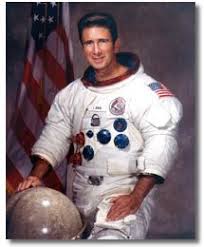
“Here comes another one!” little Jim cried to his dad, as they stood atop the small airport terminal not far from their house. Father and son spent occasional afternoons watching the planes take off and land, much to Jim’s delight.

His sharp ears would pick up a plane’s droning buzz before his eyes could make out the small dot in the sky. He hardly breathed as the plane slowly descended, then lightly touched down on the landing field.

The wonder never grew old. And Jim wished more than anything to be in the cockpit, participating in the miracle of flight, not just observing.

That dream stayed with Jim all through school. Upon graduation he attended the U.S. Naval Academy, and then entered the Air Force. His plan was to become a commercial pilot after his term of service.


(The P-51 Mustang)


And then Jim chanced to fly a P-51, the fastest jet of the time and capable of flying almost vertically. After that experience, commercial piloting seemed much too tame.

Jim went back to school to earn his master’s degree in aeronautical and instrumentation engineering and graduated in 1957.

The National Aeronautics and Space Administration (NASA) was established the following year and Jim Irwin set his sites on becoming an astronaut. To achieve that goal he needed to become a test pilot.


Jim entered that program in 1960. Once qualified he was assigned to a top-secret mission: testing a plane that flew higher and faster than any previous aircraft.

Three times he applied for the astronaut program; twice he was rejected. Finally in 1966 his acceptance letter arrived. Jim’s first assignment was to direct the testing of a lunar landing module that engineers were designing.


Then came the moment he’d been waiting for. He and fellow astronauts David Scott and Alfred Worden were chosen for the Apollo 15 mission, scheduled to take place the summer of 1971.

Eighteen months of intense training were required to prepare the men for the twelve-day expedition, three of which would be spent on the moon.

The boy who wanted to fly would soar where only a dozen men had traveled before him.


Their mission included collecting rock samples and conducting experiments in an unexplored region of the moon. They would also be the first astronauts to drive a Lunar Rover that allowed investigation of a larger area than that of previous missions.

Jim was the eighth person to walk on the moon—certainly a thrill-of-a-lifetime. But later he would insist, those moments on the moon weren’t exciting because he was there, but because God was there. Jim profoundly sensed his presence.


He’d been a Christian for over twenty years by 1971, but “I was…[a] silent Christian,” he would explain.

On the moon, as Jim looked up at Planet Earth against the black backdrop of the universe, he marveled at its fragile appearance—so delicate that if someone reached out to touch it, the world would surely crumble and fall apart, he said. Jim experienced overwhelming awe for the creation of God and his love for the entire human race—love that sent his Son Jesus earthward to die in their place.


One of Jim’s responsibilities on the mission was to set up the mechanism for lunar experiments. Not all steps proceeded successfully. But instead of inquiring the NASA engineers, Jim prayed, because waiting for a reply from Houston would take too long.

Each time he sensed God telling him what to do, and he felt the supernatural presence of God with him as he worked. That sensation was so strong, Jim felt sure if he turned around, Jesus would be standing right there at his shoulder.

As complicated as the moon landings were, Apollo 15 proceeded without major problems. The three astronauts landed safely in the Pacific Ocean on August 7, even though one parachute (out of three) didn’t deploy.


A little more than two weeks later Irwin, Scott, and Worden were honored by a ticker tape parade in New York City. As Jim waved to the thousands gathered along the street, his heart ached for those who did not know Jesus as a personal Friend, and he felt God wanted him to tell others about his Son.

A year later Jim resigned from NASA and formed the High Flight Foundation to share about Jesus from his experiences as an astronaut, and to encourage archaeological research, confirming the accuracy of the Bible.

Jim even participated in exploration of Mt. Ararat in Turkey, where other adventurers claimed to have seen what looked like ship remains, high up on the slopes. Conjecturers proposed that perhaps Noah’s ark had been found.


(Mount Ararat, nearly 17,000 ft. in elevation)


Jim’s astronaut-status provided opportunities that other exploratory teams had not been able to achieve. Government officials allowed the High Flight Foundation access to sites that had been refused to others. Yet in spite of these privileges, Jim and his crew never found the ancient ark.

For twenty years after his moon-landing adventure, Jim Irwin told others that “Jesus walking on earth was much more important than man walking on the moon, that Jesus was the way to know God and receive eternal life.”*


The day before the twentieth anniversary of his homecoming from the moon, the boy who wanted to fly flew further still. Jim experienced his homecoming in heaven, due to a massive heart attack. He was survived by his wife Mary and their five children.

No doubt, James Benson Irwin heard those beautiful words, “Well done, good and faithful servant (Matthew 25:21)!” Only this time, Jim didn’t just feel Jesus’ presence. This time, Jim was able to see his Savior and Friend face to face.


* https://godreports.com/2100/03/encounter-with-jesus-on-the-moon-left-astronaut-changed/


Sources:

  1. https://biography.yourdictionary.com/james-benson-irwin
  2. https://crev.info/scientists/james-irwin/
  3. https://defendingthechristianfaith.org/others-who-testify-of-faith-in-christ.html
  4. https://godreports.com/2011/03/encounter-with-jesus-on-the-moon-left-astronaut-changed/
  5. https://ramsheadpress.com/messiah/ch17.html
  6. https://www.rocketstem.org/2015/07/07/rovering-across-the-moon-during-apollo-15/


Photo credits:  http://www.ebay.com; http://www.commons.wikimedia.org; http://www.nationalmuseum.af.mil; http://www.nasa.gov; http://www.jsc.nasa.gov; http://www.wikipedia.org; http://www.picryl.com; http://www.wikimedia.com (3); http://www.canva.com.


Read Full Post »


Years ago when I taught fourth grade, our reading curriculum included a mini-lesson about A-HA Moments—places in a story where the author answers questions the reader has been wondering about.

Watching for those moments keeps the reader alert (thus improving comprehension), contributes to greater understanding of the plot and characters, and makes reading more fun.

Once our students became familiar with the concept, we enjoyed calling out “A-HA!” to one another (occasionally in unison) as other epiphanies occurred, whether it was in class or at recess. The sharing of A-HA Moments developed our classroom community and added to the joy of learning.


Our Heavenly Father also provides A-HA Moments, through such avenues as scripture, other reading, comments from others, and observations in nature. Our God is highly creative, providing personal revelations in numerous ways.

And similar to the benefits of A-HA Moments for students, our discovery moments with God augment our understanding of scripture and spiritual matters, strengthen our relationship with him, and add to the joy of learning from him.

For example:


  • An A-Ha Moment from Scripture

After six delightful years at one church, my pastor-husband received word he’d be assigned to a new congregation in three months’ time. My heart sank. This would be our third such move in thirteen years, and it wasn’t getting easier. As you know, saying good-bye hurts.

In addition, I had just returned that year to full-time teaching, after a long hiatus as a stay-at-home mom. Now I’d face the onerous task of procuring another position.

In the weeks that followed the announcement, we learned about some of the difficult challenges facing the new-to-us congregation.   And I wondered, God, what ARE you doing?


One afternoon a radio host quoted Jeremiah 29:11—a familiar scripture—but that day those words spoke loud and clear to me from God himself: Nancy, there is no reason to worry. I have already worked out my plans for you—plans to prosper you, not harm you, plans to give you HOPE and a thriving future.

Indeed we did prosper at that new church—for thirteen years—as God brought us and taught us through those numerous challenges. But one problem took care of itself—a new teaching position for me. (You can read that story at After the Fact.)


  • An A-HA Moment from other reading


The fact I’m writing about this topic today is the result of an A-HA Moment in itself. First, the seed of an idea was already on my topic list for 2019, but I had no notion how to develop it.

Currently I’m studying Discerning the Voice of God by Priscilla Shirer. And just the other day I read this:


“I know the Lord is speaking to me personally when I read my Bible

and a particular verse or passage seems illuminated

—it just lifts up off the page,

and I seem to hear a gentle, inaudible whisper

as I have an ‘aha moment’ in my heart.”

–Anne Graham Lotz


Anne’s A-HA Moment caused me to have one of my own. God brought to mind the story about moving I just shared above as well as other examples. Then he pointed out other avenues of A-HA Moments, and I knew this was today’s topic.


  • An A-HA Moment in God’s Living Room

That’s what Michael Hyatt* calls the out-of-doors.  Isn’t that a poetically perfect appellation?   My special corner in God’s living room is our back deck overlooking the treetops.

One morning last October, the deck was surrounded by stillness—no birds trilled, no squirrels chattered—until one lone cardinal began to sing. Enthusiastically he filled our little woods with his voice, and his song made me smile.

I was reminded that God often breaks through the stillness of all our lives, with custom-designed lessons, answered prayers, and out-of-the-blue blessings. As a result, we experience hope, peace, and joy—three commodities that make life worth living.


Recorded in my journal is the impression God spoke in my spirit:

I do love to surprise My children! And their subsequent celebrations of praise bring Me great pleasure. But in reality I provide more wonders than they often perceive. Some surprises go unnoticed.

Keep watching and listening, Nancy, so we can smile, laugh, and celebrate together all the delightful surprises I bring into your life.

And therein lies the secret for experiencing life-enriching A-HA Moments with God: keeping watch (Micah 7:7) and listening attentively (Proverbs 1:5).


“Blessed are your eyes because they see,

and your ears because they hear.”

–Matthew 13:16


*former CEO of Thomas Nelson Publishing


What A-HA Moment has God presented to you lately? Tell us your story in the Comments section below!


(Photo credits:  http://www.kadena.af.mil; http://www.calicospanish.com; http://www.maxpixel.net; http://www.heartlight.org; http://www.pixabay.com; Nancy Ruegg; http://www.canva.com; http://www.pixabay.com.)


Read Full Post »


Every now and then, even positive people are bothered by a niggling, accusatory voice in their heads, offering such (Please note the sarcasm.) helpful comments as:

  • “Look at that guy—one successful venture after another. What have you accomplished lately, Ms./Mr. Nobody?”
  • “Everybody in that group was so articulate compared to you. Why are you such an idiot?”
  • “This assignment is way beyond your abilities. You’re gonna make a fool of yourself.”

Such self-talk is destructive; you know it. But how do you turn it off?  With affirmative battle cries. Positive rebuttal will send those self-critical thoughts into retreat—back to the darkness where they came from.

A proper battle cry can stir up encouragement, inspire perseverance, and be a reminder of who you really are, as well as what you can actually do.

And the very best battle cries are based on scripture.  These examples may provide a good place to start:

  1. You are a cherished daughter/son of God!

You may be focused on your inadequacies and failures, but God is not. His attention is riveted on what you will be—completely perfect and whole.

And as he works within you toward that goal, he rejoices in your progress. Follow his example, and celebrate your steps on the right path.


  1. You are a masterpiece–not a mess!

Consider what constitutes a masterpiece: artistic genius, extraordinary design, superlative craftsmanship, and originality—among other glorious qualities.  That’s YOU!

Never forget: the greatest Artistic Genius of the universe created you. He fashioned a one-of-a-kind mold for your personality, your particular traits and talents, your specific purpose.  Embrace who he made you to be.


  1. You have been created in the image of God himself!

And he’s given you the privilege to brightly reflect his magnificent image to those around you.

Consider yourself a stained glass window, with God’s light (all his magnificent attributes) gleaming through the shapes and colors of your individuality, your abilities, in order to bless those around you.


  1. You are a true Superman/Superwoman!

More than a conqueror,” Paul said.  That makes you a super-conqueror (!), through the one who loves you–Jesus.

And because of him, you are guaranteed victory in the end.  Now each day can be viewed as an adventure with God, not an affliction.


  1. You are capable to accomplish anything God prepares for you to do!

That’s because nothing is impossible for him. He goes ahead of you to prepare the way, and supplies the abilities necessary to complete your mission.

In addition, “[He] will help you deal with whatever hard things come up–when the time comes” (Matthew 6:34, MSG).


  1. You are equipped to thrive!

In the soil of God’s unfailing love, and with the nourishment of his encouraging Word, you can grow seeds of contentment, and they will produce the fruit of joy and peace.


So!  Are you feeling inadequate for the day or frustrated by what you face?

Perhaps a few of these battle cries speak to your situation. State them firmly out loud, and for greater impact, speak in front of a mirror.

Affirm to yourself who you are really.

___________________________________


Scriptural support for each battle cry:

  1. 1 John 3:1-2; Hebrews 10:14; Philippians 1:6; Psalm 147:11; Psalm 119:35.
  2. Ephesians 2:10 NLT; Psalm 139:16; Proverbs 19:21.
  3. Genesis 1:27; 2 Corinthians 3:18.
  4. Romans 8:37; 1 Corinthians 15:57.
  5. Philippians 4:13; Matthew 19:26; Ephesians 2:10; Psalm 37:23 CSB; 1 Peter 4:11; Matthew 6:34 MSG, emphasis added.
  6. John 10:10; Jeremiah 29:11; 2 Timothy 3:17; Ephesians 3:17-19; Psalm 119:24; Philippians 4:12-13; 1 Peter 1:8-9; Isaiah 26:3.


What battle cry against the negative self-talk helps you?  Please add your suggestion in the Comment section below!


(Photo credits:  http://www.pxhere.com; http://www.wikimedia.com; http://www.pxhere.com; http://www.wikimedia.com; http://www.pixabay.com; http://www.dailyverses.net; http://www.pixabay.com.)

Read Full Post »


In the midst of my harried day

When I seem farthest from myself

A moment comes to me and beckons,

“Let us fly away.”


Shutting out the din

Of the never-ending to-do

I close my eyes and begin

To wander in thoughts sublime;

And gather flowers in my mind.


–Tara Afriat*


Such delightful imagery Tara creates with that last line. But I wonder, what sublime thoughts might be worthy of a bouquet in my mind?  So far, five varieties have occurred to me:


1. Humor offers blooms of joy.


Just recently my husband was hospitalized and underwent a number of tests. When an orderly came to accompany Steve to a procedure he announced, “One CT scan, coming up. Would you like fries with that?”

I’m thinking a new journal specifically for humor might be fun to keep (and savor later).


2. Quotes provide blooms of wisdom, encouragement, and beauty.

Isn’t it amazing how a few well-chosen words can suddenly enlighten our understanding or give us eyes to see what was invisible just moments before?

A recent addition in my quote journal offers wisdom, encouragement, and the potential for beauty:


“Make one person happy every day and in forty years

you’ll have made 14,600 human beings happy

for a little time at least.”

–Unknown


Such encouragement gives wise perspective to the impact of small kindnesses, doesn’t it?   And what fun to cause 14,600 beautiful smiles!


3. Observations become blooms of refreshment.


Another journal on my shelf is titled “A Celebration of Small Things.” Each day I record at least one observation worth noting, because:


“A grateful heart is one

that finds the countless blessings of God

in the seemingly mundane of

every day life.”

–Anonymous


Pages of entries over the last two years remind me of just how blessed I am. For example:

January 10, 2017: “The birds are singing a “Hallelujah Chorus” of their own this morning, in celebration of the sudden balmy temperatures—into the upper 50s!”


Review of such moments does refresh my attitude.


4. Kindness creates blooms of grace.

In 1983 I began a journal to document God’s grace. So far, the record of more than 1300 entries offers sublime flower-gathering in my mind. Again, one example:

1996/97 proved to be a particularly challenging year at the school where I taught. Frustration plagued many of us faculty members. In late September I confessed to my early morning prayer group my difficulty in letting go of annoyance, and Betty prayed for me.

Minutes later as I drove to school, my attention was drawn to bright sunbeams radiating from behind great billowing clouds. It seemed the windows of heaven had been opened, and the glory of God on his throne radiated from just beyond that cloud bank. I could almost hear him saying, “You’re going to be fine—I’m right here to help you!”


Betty’s kind prayer and that God-given sky-reminder provided perfect affirmation. And now, that entry and many like it remind me: My Heavenly Father has been ever-faithful in the past; I can trust him for the future.


5. Scripture provides blooms of truth.

Within the pages of the Bible we find a variety of flowers for the mind, including those mentioned here: wisdom, encouragement, beauty, refreshment, and grace. But the most important is truth. Absolute truth.

We live in a time when relative truth is embraced by many, but:


(“Truth is incontrovertible. Malice may attack it,

ignorance may deride it, but in the end, there it is.”

–Winston Churchill)


The wise person seeks after truth—truth that revives the soul, gives joy to the heart, and provides insight for a well-lived life. That’s exactly what the Bible provides (Psalm 19:7-8).**

One psalmist who reveled in scripture wrote: “Oh, how I love your law! I meditate on it all day long” (Psalm 119:97).

And no wonder. The Bible is a continual source of flowers for the mind—of the very best, wisest, and most beautiful kind.


Where do you gather flowers of the mind? Share with us in the Comment section below!

__________________________________


*Quoted from Soul Retreats for Busy People, compiled by Lila Emspon


**If you’re not sure whether scripture is reliable truth or not, I recommend Mere Christianity by C. S. Lewis, The Reason for God by Timothy Keller, or The Reason Why Faith Makes Sense by Mark Mittleberg. It is the honest person who invites God to reveal himself.


Photo credits:  http://www.pexels.com; http://www.wikimedia.com; http://www.pixabay.com (2); http://www.nps.gov;  http://www.pocketshare.speedofcreativity.org; http://www.azquotes.com.


Read Full Post »

Tony always loved team sports. In his teens he focused on football, and at the University of Minnesota he distinguished himself as a talented quarterback.


But no pro team picked him up after graduation in 1977. He finally signed on with the Pittsburgh Steelers as a free agent.

Over the next three years he played for three different teams.  His career seemed to be going nowhere.  And at the end of that third year Tony anticipated transitioning from football to something else.

But his alma mater drafted him as assistant coach for their team. And the following year he was offered the same position with the Pittsburgh Steelers.


Over the next fifteen years, Tony held two different coaching positions with two more teams before becoming head coach for Tampa Bay.  The Buccaneers did well for five years, making it to the playoffs three years in a row, 1998-2000. But the fifth year did not go well, and Tony was fired.

Now what, he wondered.

Within days Tony’s question was answered.   The Indianapolis Colts offered him the position of head coach. And in 2007 they won the Super Bowl. Tony Dungy became the first African-American coach to achieve that distinction.


Then-President George W. Bush receives an honorary jersey from the Super Bowl champs of 2007.  Quarterback Peyton Manning is to the president’s right, Tony Dungy is to the left.


It certainly hadn’t come easy. But after thirty years of ups and downs and hard work, Tony had finally achieved a long-held dream.

Tony’s story and the experiences of countless other persevering people have proved:


“The desires of the diligent are fully satisfied.”

–Proverbs 13:4b NIV


However, there is much more to that proverb than success in one’s work, as valuable as that is (Ecclesiastes 5:19).


And there’s much more to Tony’s story than a struggling football player who became a successful coach.

Tony is a Christian. And while he taught and trained athletes all those years, Tony was diligently applying himself to desires of eternal value.  He always felt that Christian principles were more important than everything else. Whatever position he held, Tony kept his faith at the forefront.

Proof of that statement lies in the choices he’s made—on the field as a calm, self-disciplined coach and off the field as a dedicated servant of God.


He’s been the national spokesman for “All Pro Dad,” and has worked with a number of organizations like Fellowship of Christian Athletes, Athletes in Action, Mentors of Life, Big Brothers/ Big Sisters, Boys and Girls Clubs, and the Prison Crusade Ministry.

In addition, he and his wife Lauren have adopted seven children to round out their family of three biological children.  They also established the Dungy Family Foundation that works with Christian organizations, including pregnancy centers and youth ministries.

Tony says he loved coaching and winning the Super Bowl, but that was never his ultimate objective. “My purpose in life is simply to glorify God,” he says.*


(Tony receives the prestigious American Spirit Award

in November, 2007.)


There’s the secret to satisfaction in life.  Those who diligently desire to glorify God are the ones fully satisfied in their spirits.

But diligence requires effort—efforts such as:


  • Conditioning of the mind (Romans 12:1-2)


Tony would be the first to tell you the positive impact of scripture study in his own life. To highlight its importance, he put a Bible in his Hall of Fame locker, prominently displayed on the top shelf.


  • Humble submission (1 Peter 5:6)


Tony surrendered his expectations, knowing that God would bring fulfillment to his life, though not always in the ways Tony anticipated.


  • Patience (Galatians 6:9)


All the while Tony was playing football and coaching, he was learning to be a man of integrity, self-discipline, and courage.

Years spent in the public eye has also provided Tony a unique platform for: 1) mentoring players and coaches, 2) speaking at meetings and conferences on such topics as integrity, personal discipline, and overcoming adversity, and 3) writing books, including Quiet Strength and Uncommon–all endeavors of eternal worth.


  • Allowing pressure to achieve purpose (2 Corinthians 1:3-5)


At the onset of each setback in his career, Tony wondered what God was doing. But he knew God could be trusted.

Then came the most painful setback of all—the suicide of his son in 2007.

Even then Tony did not falter. He allowed the pain to press him closer to his Heavenly Father, and he set about to use the tragedy as a way to honor God and help others.

In the final analysis, satisfaction is the outcome of diligent surrender to God’s purpose and diligent rest in God’s providence.


Just ask Tony Dungy.


*     *     *     *     *     *     *     *     *     *

I thank you, Father, for brothers and sisters like Tony Dungy who diligently spend their time and energy in usefulness to you, and all for the praise of your glory.  May I, too, diligently follow the narrow path of such uncommon people.


(Art & photo credits:  http://www.wikimedia.org (2), http://www.georgewbush-whitehouse.archives.gov; http://www.dailyverses.net; http://www.wikimedia.org (2); http://www.dailyverses.net; http://www.bibleversestogo.com; http://www.heartlight.org; http://www.macdill.af.mil; http://www.dailyverses.net; http://www.canva.com.)


*https://www.I/20160802/hof16-tony-dungys-faith-is-central-to-his-success.com


Sources:

  1. https://www.cantonrep.com/special/20160802/hof16-tony-dungys-faith-is-central-to-his-success
  2. https://www.faithwire.com/2018/08/30/former-nfl-coach-tony-dungy-one-of-the-reasons-god-has-me-at-nbc-is-to-give-christians-like-nick-foles-a-voice/
  3. https://www.l/20160802/hof16-tony-dungys-faith-is-central-to-his-success
  4. http://www.bpnews.net/22595/tony-dungy-voices-the-pain-and-lessons-from-his-sons-suicide
  5. https://www.sun-sentinel.com/news/fl-xpm-2007-01-31-0701300302-story.html
  6. https://billygraham.org/story/tony-dungys-31-year-faith-journey-to-canton-ohio/
  7. http://www.enccylopedia.com/people/sports-and-games/sports-biographies/tony-dungy


Read Full Post »

One Sunday morning years ago our Bible study teacher, Andy, gave each of us a pencil and a piece of paper with a large grid—4 squares across, 4 squares down. One square at a time but out of order, he guided us to draw various sized curves in various positions.


Sometimes he instructed us to revisit a square and add more detail.


The bits and pieces made no sense—just haphazard strokes accomplishing nothing–until the last few curves remained, and Andy told us to rotate our papers bottom side up.


Each of us was constructing a very recognizable Mickey Mouse.

And you can probably guess Andy’s objective:

God does indeed know what he’s doing, even when events seem random to us. Sometimes he reveals the reasons for nonsensical curves in our lives, as purposeful outcomes finally sharpen into focus.

Such was the case with Joseph in the Bible. The violent curves of his life story finally made sense when he became prime minister of Egypt.

To his brothers who had terribly mistreated him he said,


Quite often, however, God chooses to withhold explanation.

I have to wonder if he’s waiting until all his children are gathered together in heaven and then he’ll reveal the complete, awe-inspiring panorama of intricately wrought events, involving billions of lives over eons of time.

Andy Andrews, in his delightful children’s book, The Boy Who Changed the World, offers a glimpse of this panorama, as he tells the story of a farm manager named Moses and his wife Susan who raised an orphaned boy. Together they shared their love of plants with the child. That boy was George Washington Carver.


In addition to his many scientific achievements, George provided an important influence for a young boy named Henry, teaching him all about plants. Henry Wallace grew up to become the U.S. secretary of agriculture and then vice president of the United States.


Henry hired a young biochemist named Norman and instructed him to develop a high-yielding, disease-resisting wheat. Norman spent twenty years in laboratory and field research to achieve the objective. He also developed superior corn and rice.


More than two billion lives have been saved because of Norman Borlaug–and Henry Wallace who impacted Norman, and George Washington Carver who influenced Henry, and Moses Carver who inspired George.


Who else but God could have directed such events, connecting one life with another to create such epic results?

We, too, have the exciting privilege to participate with God.  There are grand possibilities in every encounter–to impact our corners of the world as Jesus’ agents, speaking on his behalf, acting in his name, and drawing people to him.

And at those times when the effort doesn’t seem to accomplish much, we can remember:

  1. 1. “God does some of his best work when we don’t think he’s doing a thing” (Priscilla Shirer, The Kingdom Woman Devotional, emphasis added), and
  2. 2.  God’s work in us and through us isn’t over until we’ve completed the last curve.

*     *     *     *     *     *     *     *     *     *

Father, I want to be a person who seizes the day under your instruction, who chooses to honor you in word and action. I want to be a participant in what you’re accomplishing, not just an observer. May I be faithful to follow your lead, knowing that in the end the results will be gloriously worth it.


(Art & photo credits:  Nancy Ruegg (4); http://www.canva.com; http://www.flickr.com; http://www.wikimedia.com (2); http://www.sunraybook.com)


Read Full Post »

Years ago my mother worked as secretary to a publishing company vice-president.  One spring she was invited to attend a goal-setting retreat with those in leadership. Her job was to take notes.


During the first session, the facilitator (We’ll call him Jim.) included some clarifying questions about the mission of the company.   Mom didn’t expect to participate, so she was caught off guard when Jim invited her to share. She confessed to feeling out of place and unqualified to contribute. After all, she was only a secretary.

But editor-in-chief, Bernice, exclaimed, “Why, Geri! You shouldn’t feel that way!”

Jim suggested that Bernice tell Mom why her input was important, why she was a valuable part of the team.


(A-Z Quotes)


Perhaps Bernice mentioned a few of the gifts I noticed in Mom: her creative problem-solving ability, astute interpersonal skills, and proficiency at organization.

Whatever Bernice said, the compliments embarrassed Mom but validated her deeply. Bernice had never before shared what she saw in Mom.

Jim explained that citing specific reasons, rather than simply telling someone not to feel a certain way, can more effectively foster a change of mindset.

So in light of that facilitator’s advice, I won’t tell you that God thinks you’re pretty terrific.

Let me show you from his Word what he sees in you.

For example:

God sees you as precious and honored because he loves you.


That love is not just collective for all humankind, but individual and unique—just for you.

God sees and loves you—the one who handles a myriad of details so someone else can be in the spotlight.

He sees and loves you—the one who swipes up messes hither and yon, parades laundry baskets to and fro, and traipses dishes from washer to shelf, day in and day out.

He sees and loves you—making those calls, writing those notes, pausing to listen to sales clerks and restaurant servers.

But on any given day, you may not feel particularly precious or honored—when frustration boils over into unkind words, impatience leads to anger, or unfair treatment curdles into self-pity. How can God see anything precious and honored in that?  Perhaps it’s because he’s focused on his vision for you, his work in you.

Remember,

God sees you as his child.


And like any loving parent, he delights in every step of growth, every benchmark of progress. With pleasure and pride he is cheering you on.

Also,

God sees your heart.


Perhaps that statement evokes guilt, as it did in me for many years. I contemplated the ways I disappointed God, even failed him. But there’s a positive side to that statement. Our Heavenly Father sees our good intentions, our desire to obey him, our attempts to practice his presence with praise and gratitude.

And just as we would never reject a misspelled, wobbly-lettered love note from a child, God never rejects our sincere efforts.

Furthermore,

God sees you as his masterpiece, a stunning, one-of-a-kind design (Ephesians 2:10).


He chose the colors of your personality, the form of your life-chapters, the line of movement from child to maturity, and the spaces both negative and positive that contribute to soul growth.

God also chose a particular place for you in his world-size gallery where you could best display his artistry. And like all beautiful handiwork, you evoke joy in the heart of your Maker.


Indeed, it is holy, precious perfection that God sees in you.


(Photo credits:  http://www.hanscom.af.mil (Todd Maki); http://www.azquotes.com; Nancy Ruegg; http://www.dailyverses.net; http://www.heartlight.org; http://www.flickr.com.)

Read Full Post »

English poet, William Blake (1757-1827) penned those words of the title.

We don’t have to look far to see that he was right:

  • Children pick up mannerisms, inflections, even body language from their parents.
  • Couples who have been married a long time often begin to look alike (1).
  • Transplants to another part of the country frequently pick up the accent of that region.

In addition, modern neurological research has proven Mr. Blake’s statement in ways even he never imagined.

Here’s what scientists have discovered: Thoughts travel along specific pathways to various destinations in our brains. As we consider the same thought frequently, the pathway for that thought becomes more deeply entrenched. The final result? The more often we contemplate something, the more it will affect our thought patterns, how we feel, and how we behave (2).

No wonder God inspired Paul to write:

According to that research mentioned above, to behold (observe and take in) such things as Paul lists will lead us to become honorable, pure, admirable, etc. In fact, we’ll gradually begin to resemble Jesus.

But how do we contemplate the Lord’s glory on a day-to-day basis? How do we train our thoughts to etch worthwhile pathways in our brains, so we’re thinking, feeling, and behaving in Jesus-like ways?

To begin, we might check the stimuli for our thoughts:

  • the book(s), magazines, and websites we read
  • the programs and movies we watch
  • the music and podcasts we listen to
  • the kind of entertainment we choose
  • the conversations we participate in—in person and on social media

Can we describe these activities with the adjectives Paul used in Philippians 4:8? Is our reading material pure? Our entertainment admirable? Our conversations worthy of praise?

O God,

Second, we set aside a quiet time with God each day.

It’s surely one of the loveliest and most excellent activities for beholding him, as we immerse ourselves in truth for life from his Word, revel in his glorious attributes, and talk to him about the concerns on our hearts.

“Look up into his lovely face and as you behold him,

he will transform you into his likeness.

You do the beholding—he does the transforming.”

—Alan Redpath

Third, we infuse the hours of each day with praise.

All those descriptors in Philippians 4:8 apply to Jesus. Day in and day out we can enjoy the uplift of praise, celebrating that he is:

  • the epitome of truth (John 14:6).
  • honorable and worthy of all tribute, because he lived a sinless life and sacrificed himself on the cross for us (Revelation 5:12).
  • right in all he does (Jeremiah 23:5).
  • pure in all he is (1 Peter 2:22).
  • lovely, as the radiance of God’s glory (Hebrews 1:3).
  • admirable, as the only man tempted in every way and yet never sinned (Hebrews 4:15).
  • excellent in all ways, including his servitude, humility, and obedience (Philippians 2:6-8).
  • praiseworthy, as ruler of all things (Matthew 28:18).

In addition, Jesus was a man of peace, joy, wisdom, kindness, courage and more (3).

And God wants us to be the same, to become like his Son (Philippians 1:6).

Can you think of any greater aspiration?

_______________________________________________

Notes:

  1. One theory to explain this phenomenon: We unconsciously mimic the facial expressions of our spouses, as we empathize with their experiences and emotions. Over time, repeated expressions shape our faces in similar ways.
  2. https://www.maxanders.com/we-become-what-we-behold.
  3. John 14:27; John 15:11; Luke 2:40; Matthew 9:36; Philippians 2:8.

Art & photo credits:  http://www.pxhere.com; http://www.heartlight.org; http://www.dailyverses.net; http://www.pxhere.com; http://www.canva.com; http://www.pxhere.com; http://www.canva.com.

Read Full Post »


Some believe that indulging in memories is a waste of time, that past events have no meaning for the present. But nothing could be further from the truth— especially if we acknowledge God’s part in those events.

When we include God in our remembering:

  1. We gain a sense of perspective.

Even difficult times are part of God’s plan. Sometimes, with the gift of hindsight, we catch a glimpse of his purpose later.

For example, how many students have struggled through school, yet in adulthood flourished in careers well matched to their gifts? Most of them are actually thankful for the early challenges, because they learned perseverance and developed strength of character. Those late-bloomers are often compassionate and understanding toward other strugglers, because they remember the difficulties of those formative years.


  1. We acquire wisdom for today.

“Reflective thinking turns experience into insight.”

–John Maxwell

In my younger days I used to be a champion talker. But somewhere along the way I began to notice the listeners—caring folks who often demonstrated the gentle and quiet spirit Peter spoke of (1 Peter 3:3). They reminded me of my sweet grandmother.

I valued that demeanor and began to turn insight into a new experience of focused listening. (Please understand: practice hasn’t achieved perfection yet. But improvement? Yes.)


  1. We build a foundation of stability for today as we remember God’s grace and faithfulness in the past.

But memories easily fade. So some believers keep a book of remembrance or a praise journal, as a way to savor God’s faithfulness.

Just for fun, I randomly opened my loose leaf praise journal in search of an entry to share with you. Here’s what I wrote, December 23, 2003, about our older son, who was in college at the time:


(“Eric got a new job yesterday and it starts today! The owner of the bike shop has not paid Eric for ten days, but a friend offered him a job in their family’s fireplace shop at the same salary.”)

Entry after entry highlight God’s provision, protection, and guidance through the years. And each memory contributes to my foundation of stability.


  1. We foster gratitude in our hearts.

As you can see, the entry recorded above ends with: “Thank you, Lord, for answering our prayers and providing for Eric.”  Joy just naturally overflowed into appreciation.

On the opposing page I wrote, “I am overwhelmed, Lord, by this continuing string of blessings. You are SO good to us, always demonstrating your faithfulness and grace. May your praise continually be on my lips!”

Research has now proven a number of benefits of gratitude.*  But surely one of the best: it nurtures a contented soul.


  1. We can turn remembering into a beautiful act of worship. 

That’s exactly what scripture invites us to do: 

“Rejoice in all the good which the Lord your God has given to you and your house” (Deuteronomy 26:11).

Praise the name of the Lord your God, who has done wondrously with you” (Joel 2:26b).

“You make me glad by your deeds, O Lord; I sing for joy at the works of your hands” (Psalm 92:4).


Such glorious cause and effect! Remembering God’s wonderful deeds of the past turns our hearts to worship, which causes a powerful, positive impact on the present.


  1. We can tell our stories of God’s miracles and mercies, to encourage the faith of others and refresh our own.

Scripture invites us to do that too: 

“I will tell of the kindness of the Lord, the deeds for which he is to be praised, according to all he has done for us” (Isaiah 63:7).

.


So let’s begin here! Please share in the comment section below about a kindness, miracle, or mercy of God from your memory. And together we can praise the name of the Lord who has worked wonders for us!


* Another post details some of those benefits, “Happiness.”


Art & photo credits:  http://www.flickr.com; http://www.nellis.af.mil; Nancy Ruegg (3); http://www.heartlight.org.


Read Full Post »

« Newer Posts - Older Posts »

When the House is Quiet

Impressions Becoming Expressions

Mitch Teemley

The Power of Story

Still Traveling

Impressions Becoming Expressions

Living Our Days

Gaining a heart of wisdom

He Said What?!

I'm Patty, and my husband and I are living with our adult son who has autism and epilepsy. I love sharing lessons learned from life around me, especially life with Aaron.

Meditations of my Heart

Impressions Becoming Expressions

Linda Stoll

Impressions Becoming Expressions

Signora Sheila

Notes on Life, Faith & Italy

Heidi Viars

Finding the Image of God