Feeds:
Posts
Comments

Archive for the ‘Encouragement’ Category

Lott Carey ran his hands over the polished wood of his new desk. He shook his head in wonder while contemplating the most recent turn-of-events in his life.

Lord, I can scarce believe where you’ve brought me, he prayed.

Surely no one but a prophet could have predicted this day for Lott, a former slave from Virginia, born about 1780. 

Thank you, Father, for placing me in a God-fearing family, and for our kind master who kept us together—my grandmother, parents, and me. Thank you for their faithfulness to raise me up knowing you.

Lott rested his elbows on the desk and covered his eyes at the next memory, when his master sent him to work in a tobacco warehouse in Richmond.

He was twenty-four, joined with a group of carousing men, and began drinking heavily.

Months later, he returned to church and reestablished his faith in Christ.

Thank you, Lord, for never giving up on me, even when I turned my back on you.

Lott smiled to think how God engineered the ensuing events. First came the desire to read, and Lott signed up for night school at First Baptist Church. He also studied writing, math, the Bible, and other subjects.

Then God provided a promotion to supervisor at the tobacco warehouse, providing a better salary. Lott saved every extra penny and purchased his freedom [1].

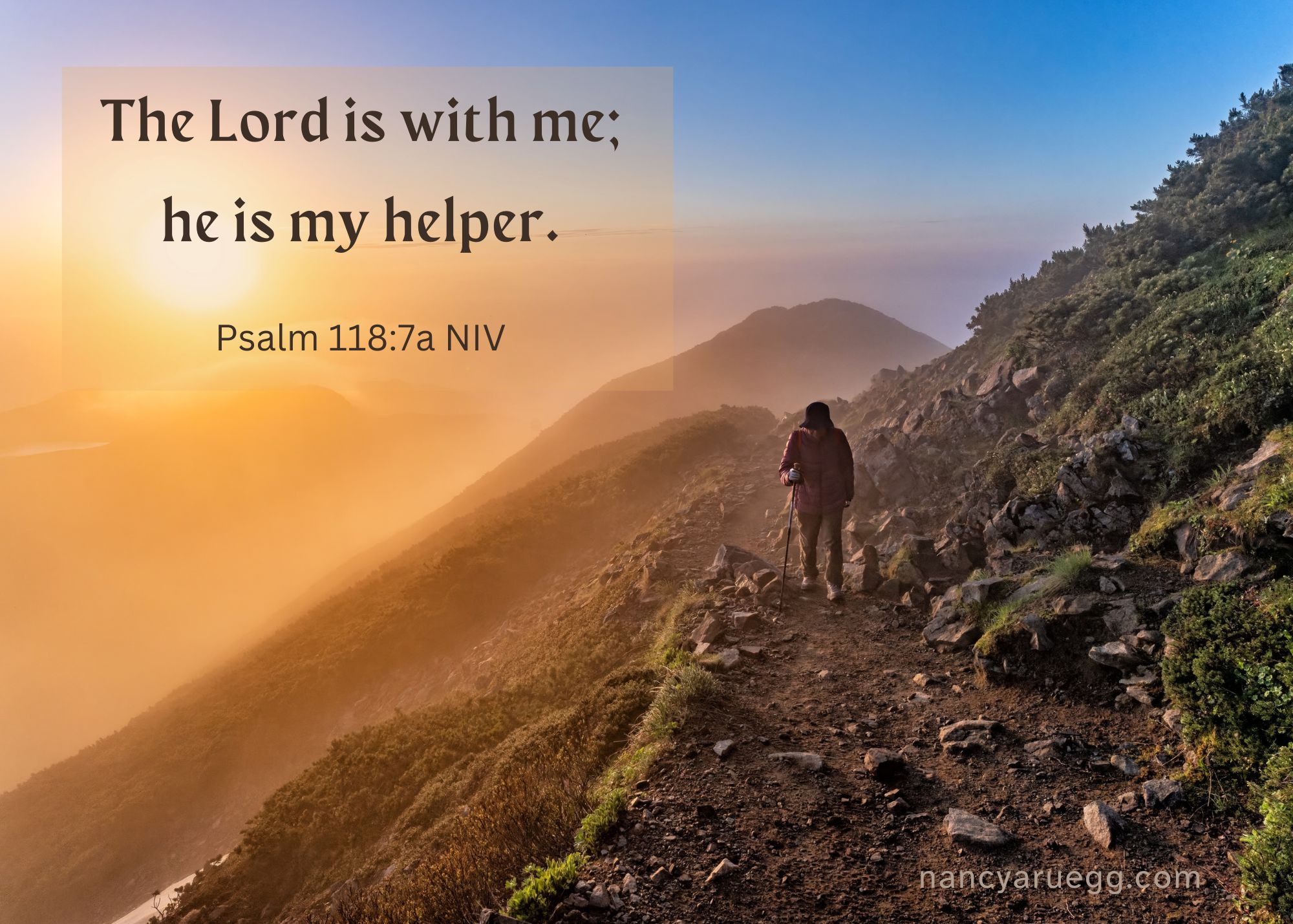
Looking back, God, I can see how you’ve cared for me all along the way. You’ve gone before me, you’ve been with me, and have never forsaken me [2].

Next came the realization that God had given him a gift for preaching, and his church licensed him to do so. Lott ministered to a small black congregation for a time, and under his leadership, it grew to over eight hundred members. Lott began receiving invitations to preach all over Virginia.

That turned out to be a short stretch of road, didn’t it Father! You used my teacher, Mr. Crane, and others to turn my heart toward Africa, which I found exciting but also overwhelming.

The fact that my church family provided strong affirmation encouraged me that this was your plan.

For six years the idea of becoming a missionary in Africa had grown increasingly urgent in Lott’s heart. Finally, in 1821, the dream became a reality when he, his second wife, three children and two more co-workers with their families set sail for Sierra Leone.

They were the first black Americans to serve as missionaries in Africa.

West Africa

Lott shook his head. Never would I have expected my life journery to take me across the ocean!” he mused.

Not long after disembarking, the group discovered that the American Colonization Society, responsible for purchasing land for them, had not done so. The team had to work as laborers for nearly a year until support arrived from the States.

An even more grievous event that year: Lott’s wife became ill and died.

Such agonizing setbacks might have done me in, Lord, but you upheld me. Thank you for your sustaining presence.

One uplifting circumstance: God used Lott to establish a mission among the nearby Mandingo tribe.

In 1822 the neighboring state of Liberia was founded by the America Colonization Society as a place for freed slaves to resettle and govern themselves.

Lott became Liberia’s health officer and government inspector in the capital city of Monrovia, while also serving as pastor for several churches.

These have been exciting times, Lord. You’ve also helped me found the Monrovia Mission Society, to help us spread the good news of Christ all over Africa.

He suddenly chuckled. AND you made me physician of the colony!

Lott marveled how much he’d learned just through observation and experience while ministering to the sick. He’d also absorbed knowledge from scientific practitioners who visited the colony [3].

But most surprising of all, Lord, is where I currently sit, at this desk—the GOVERNOR’S desk!

Who would ever guess that an illiterate, former slave like me would be chosen provisional governor of Liberia while the elected governor returns home because of illness?

Lott surveyed the desktop with its books and papers–his domain now.

God, you’ve taken me on an extraordinary journey. As I assume these responsibilities, thank you in advance for your continued enablement to do what you require. May I serve you well, AMEN.

Little did Lott know that he’d shortly be organizing a defense force against hostile tribes, that he and seven co-workers would die in a gun powder explosion while preparing to rescue negotiators from the enemy. He was just forty-nine years old.

And yet during his short life, Lott set for us a stellar example of hard work, strong faith, and prayerful compliance with whatever God set before him to do.

His legacy lives on in the Lott Carey Global Christian Missional Community, established in 1897 and “dedicated to broadening the reach of the Christian faith across the globe” [4].


[1] He also purchased freedom for his first wife who later died, and their two children. The cost: $850. (https://landmarkevents.org/lott-carey-sails-for-africa-1821/; https://docsouth.unc.edu/neh/taylor/taylor.html).

[2] Deuteronomy 31:18 NIV

[3] https://docsouth.unc.edu/neh/taylor/taylor.html , 44.

Additional Sources:

http://www.imb.org, “Missionaries You Should Know: Lott Carey.”

https://www.thetravelingteam.org/articles/lott-carey

Image credits: http://www.stockcake.com; http://www.picryl.com; http://www.canva.com; http://www.flickr.com (Juan Freire); http://www.heartlight.org; http://www.canva.com.

Processing…
Success! You're on the list.

Read Full Post »

(An imaginary conversation between God and me.)

GOD: Though I inspired a lyricist to write Psalm 147:11 long ago, its truth remains. I still delight in those who fear Me and put their hope in My unfailing love.

ME: What does it mean to fear you, Lord?

GOD: Let’s begin with an example from the physical realm.

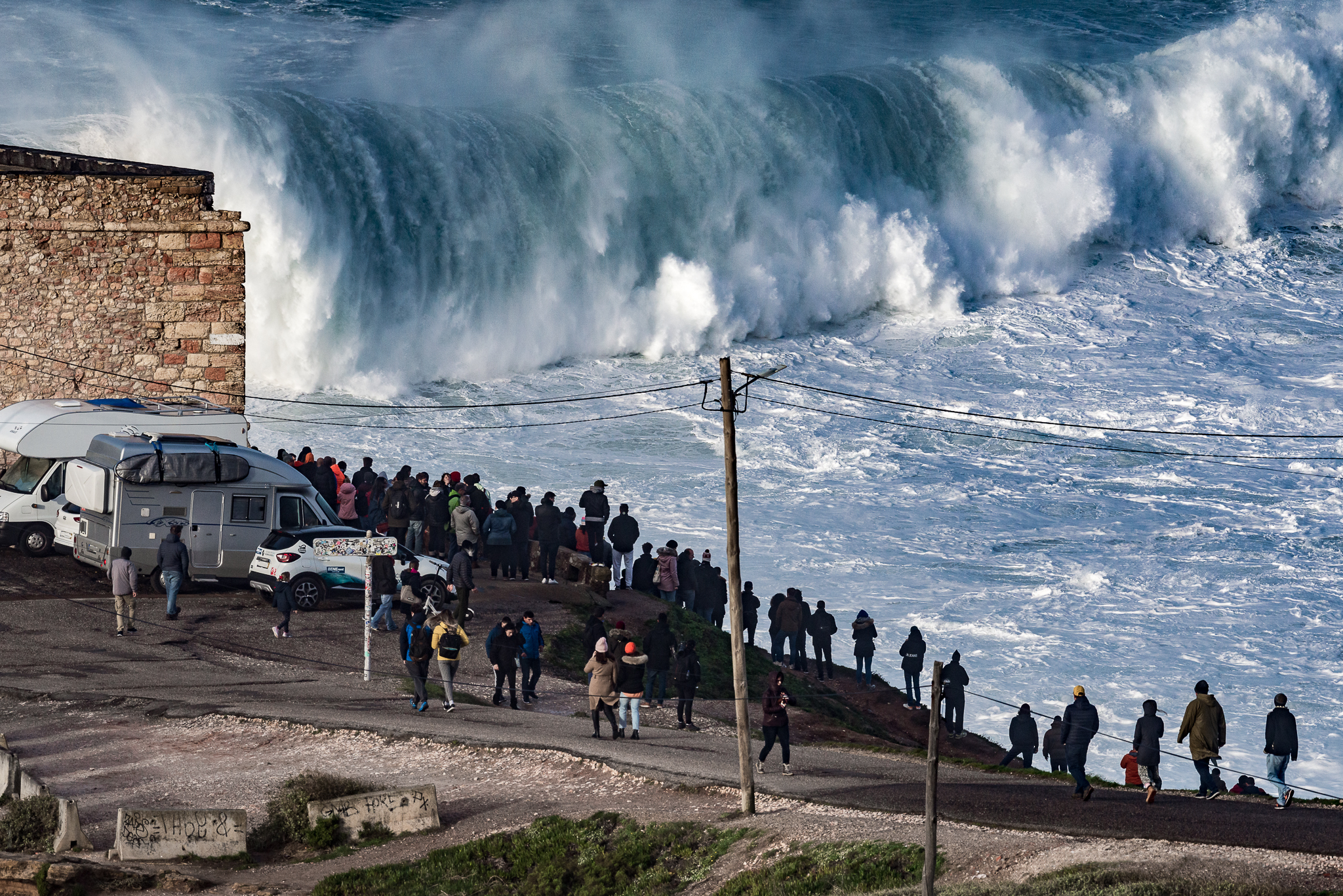
Think of standing on a ridge above an ocean beach after a tropical storm. You watch in amazement as mammoth waves pound against the shore—powerful enough to slide a building off its foundation. That display manifests a modicum of My power. . .

. . . And your emotional response offers a small sample of the wonderment that can well up in your spirit when you gaze upon Me, contemplating the splendor of My attributes and the ways I manifest them.

Another example: Remember that time when an actor came to your church and portrayed Jesus, telling stories from His life? His physical appearance matched how many people imagine Christ may have looked.

As the actor entered the sanctuary from the back and slowly walked toward the platform, he fixed his gaze on one person after another, including you.

And what was your reaction? Instant awe and reverence—so strong, you had to stop yourself from bowing down at his feet as many did in Bible times.

Of course, your response was not for the actor but for the One he represented—your forgiving and self-sacrificing Savior.

This is the kind of fear the psalmist was referring to in Psalm 147:11. It is veneration that recognizes your human frailty compared to My infinite transcendency and prompts the desire to worship Me and follow My excellent ways.

ME: I do want to follow Your ways, heavenly Father, but often fail. I thank You for loving me because of who You are, not because of who I am.

And yet, understanding that certain behaviors please You does inspire me toward obedience.

That verse also says you delight in those who put their hope in Your unfailing love. What does effectual hope look like?

GOD: First, confident. It pleases Me when My children look for evidence of My attributes at work in their lives and as the evidence mounts, become more and more confident in My love.

Second, tranquil.  My gracious love for you is affirmation of My acceptance of you and pleasure in you. I don’t just put up with you, I love you. You are a unique creation I designed with care. Rest secure in such truths.

Third, diligent. Hope involves wait-time. The person who hopes in Me fills that wait-time with:

  • TRUST in Me to provide loving care even as she waits
  • GRATITUDE for what I’ve already done 
  • PRAISE for what I’ll do in the future
  • ASSURANCE of the truth of My promises
  • DRAWING NEAR to Me, availing herself of My strength, encouragement, and more

And as you put these hope-filled, life-changing actions into practice, I’m delighted.

ME: How do I accomplish that last action, Lord, drawing near to You?

GOD: Again, a visualization might help. Imagine sitting on a footstool at My feet. Look up into My face and see in My eyes the devoted love I have for you. See in my smile the delight you bring Me. Feel My warm compassion as I wrap My arm around your shoulders.*

Bask in My presence and know that I—the King of the universe—delight in spending time with you in My Word, through prayer, and just resting in companionable silence.

Know this also: I delight in those who fear Me and put their hope in My unfailing love because of the resulting, ever-growing relationship between us, and these are the ones who will experience the fullness of My joy (Psalm 16:11).

* Psalm 99:5; 11:7; Ephesians 3:18-19; Psalm 149:4; 86:15.

RELATED POSTS:

Photo credits: http://www.canva.com; http://www.commons.wikimedia.org (Luis Ascenso); http://www.freebibleimages.org; http://www.dailyverses.net; http://www.canva.com; http://www.dailyverses.net.

Processing…
Success! You're on the list.

Read Full Post »

If you stood on Pike’s Peak on a cloudless day, you’d be able to see a wide panoramic view– ninety miles in any direction.

If you stood on the shore of remote Bouvet Island, you’d be 1,500 long miles away from civilization (in South Africa).

If you looked into a clear night sky from a dark location, high up you’d see far-distant stars, at least 4,000 light years away.

And if you peered down into the deep of the Mariana Trench in the Pacific Ocean, you’d surely marvel that the bottom is seven miles down.

Of course, an extended journey across our planet or into outer space would offer any number of such awe-inspiring extremes.

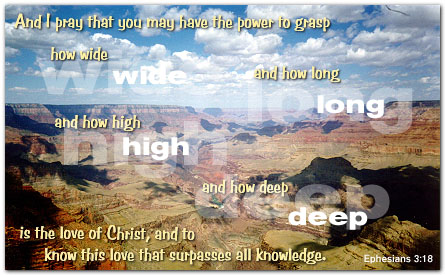
But few may have contemplated that a similar extreme applies in the spiritual realm. God’s love for us is also awe-inspiring in its width, length, height, and depth.

Take a journey of the heart and experience God’s love that is:

  • So wide it includes everyone who believes in his Son
  • So long it extends into eternity
  • So high it reaches as far as the heavens are above the earth
  • So deep he chose to send his Son to die in our place [1]

No wonder the Apostle Paul wrote:

A curious reader might wonder, how do we gain a full understanding of God’s love?

We can begin with affirmation, gratitude, and trust.

AFFIRMATION

Many of us acknowledge the infinite expanse of God’s love, but do we fully receive it?

Satan often tries to niggle at our assurance with such barbs as, “God can’t be pleased with you, given all your faults, poor choices, and rebellious sins. How could he possibly love you?”

Scripture offers perfect comebacks against such lies. One example I turn to often:

Think about the parent-toddler relationship. The child is weak and needy but Dad understands her limitations; he’s ready to lovingly help and guide.

It’s the same in our relationship with God. And I have to admit, in my own weakness and neediness, I sometimes feel like a toddler with him!

But scripture assures me he understands and tends to me with loving compassion and patience.

‘You know what else? God doesn’t even see the filthy rags of our misdeeds. He sees us as radiant in Christ’s righteousness and wrapped in luminous love [2].

Affirm such truths as needed!

GRATITUDE

Gratitude fosters appreciation for what God does, appreciation fosters adoration for who God is, and adoration opens our hearts to experience his loving presence.

TRUST

Paul’s prayer in 2 Thessalonians 3:5 (the third image, above) didn’t include an appeal for us to love God more (although that’s also a highly-worthy pursuit), but for us to understand more fully, more confidently, his love for us.

And once that confidence is solidified, we can rest in the knowledge that our loving Father is always ready to bestow what we need, including:

  • Peace—as we center ourselves in his presence
  • Strength—to endure as we rely upon him
  • Empowerment—to fulfill his purpose for our lives
  • Protection—from the enemy and all his wiles
  • Encouragement—to persevere [3]

And praise God, this journey of the heart will never end. There will always be more to discover, more heights and depths of God’s infinite love to experience!

*          *          *          *          *          *          *          *          *          *

Thank you, Father, for the immeasurable expanse of your love for me. I ask for your guidance, to lead me deeper, higher, and farther into your love. May I frequently affirm your presence, worshiping you with gratitude and adoration, and trusting that your loving attentiveness will see me through to the end.


[1] John 3:16-17; Psalm 117:2; 103:11; Romans 5:6-8

[2] Isaiah 61:10 and Sarah Young, Jesus Always, 41.

[3] 2 Corinthians 13:11; Romans 8:37; Hebrews 10:24; 2 Thessalonians 3:3; Psalm 94:18-19

Art & photo credits: http://www.commons.wikimedia.org; http://www.heartlight.org; http://www.canva.com (3); http://www.heartlight.org.

Processing…
Success! You're on the list.

Read Full Post »

“You might remember my grandmother,” J. mentioned in our conversation. “although she’s been gone a long time now.”

“Who could forget her?” I responded. “She was such a vibrant woman.”

J. nodded. “I was privileged to be with Grandma during her last hours on earth—a surreal experience for sure. She radiated peace and wore the sweetest smile. Grandma kept whispering with wonder, ‘Oh, it’s beautiful—so beautiful!’

“And she called out people’s names too, names that meant nothing to us. At the time it seemed such a strange thing to do.

“Then a few years ago when I researched our family ancestry, some of those names turned up on our family tree from a generation or two prior to Grandma’s—relatives she must have known when she was young and people of faith already in heaven. She had to have seen them from her deathbed!”

We marveled at what J. had observed as she stood on the threshold of heaven with her grandmother. And we embraced the assurance that dying need not be feared—IF we’ve accepted God’s gift of eternal life by believing in Christ.

In fact, the great preacher Charles Spurgeon declared we can welcome death with intense delight, that it is sweet to die in the Lord [1].

In my younger days though, I wondered if playing a harp all day would be sweet enough to keep me happily occupied. My next thought was, at least that beats the alternative.

Little did I understand:

Of course that’s true. God in all his glory resides there. Also, if he’s provided astounding beauty, pleasurable activity, and satisfying purpose for us on earth, he will certainly provide all that and more in heaven.

Lewis wasn’t talking about fleeting joy, but permanent, moment-by-moment, perfect joy.

He also wrote:

I also used to wonder, How will we get there? Will we have to “walk toward the light” alone? I’d like some company.

First of all, Jesus promised to be with us always [4]. His very name Emmanuel means God with us—in the here and now, as we approach and cross the threshold of heaven, and forever thereafter.

Second, in Jesus’ parable about the rich man and the poor beggar Lazaruz, the latter was carried by angels to heaven [5].

Looks like we’ll have plenty of company. 

But the journey from earth to heaven won’t be very long anyway. To be absent from the body is to be present with God [6].

Even if the threshold of heaven was far distant, and even if we had to make the journey alone, the potential discomfort would be more than worth it.

The Bible only gives us a few quick glimpses of what’s to come, but they stagger the imagination: twelve gates, each made from a single pearl, streets of gold as pure as transparent glass, and walls made of precious stones.

A river as clear as crystal runs down from God’s throne and through the middle of the main street. It’s a place where no pain, sorrow, death, or suffering can mar the perfection of God’s realm [7].

Some Bible teachers and scholars have characterized heaven in these ways:

  • Life far better, richer, fuller, purer, and more joyful than here [8]
  • Tranquility, fullness, blessedness, calm, sweetness, holiness, joy, a haven of rest [9]
  • Unsurpassed joy, unfading glory, undiminished bliss, unlimited delights, and unending pleasures [10]

We can depend upon it. That last moment, as each of us stands on the threshold of eternity, will be the best moment we have ever known!

J.’s grandmother and others provide the proof.

P.S. This post highlights what others had to say as they stood on the threshold of heaven: https://nancyaruegg.com/2018/02/01/famous-last-words/


[1] Morning by Morning, 113.

[2] Quoted in Streams in the Desert, L. B. Cowman, ed. Jim Reimann, 157.

[3] Letters to Malcolm, 92-93.

[4] Matthew 28:20

[5] Luke 16:19-31.

[6] 2 Corinthians 5:8 HCSB

[7] Revelation 21:4; 18-21; 22:1

[8] Jon Bloom, Not by Sight, 67.

[9] Jonathan Edwards (www.gracequotes.org).

[10] John MacArthur, The Glory of Heaven, 68.

Art & photo credits: http://www.freerangestock.com; http://www.heartlight.org; http://www.canva.com; http://www.stockcake.com; http://www.pexels.com; http://www.canva.com.
Processing…
Success! You're on the list.

Read Full Post »

The Apostle Paul included a curious instruction for us in Romans 12:12:

Does it pique your curiosity too? I can see rejoicing in the hope of salvation from death, the hope of blessings yet to come, and the hope of intervention in our lives. But HOPE in and of itself?

In addition, there are occasions when our hope is desperate, accompanied by impatience, fear, and anxiety—certainly not rejoicing.

So what did Paul mean?

Later in this letter Paul gives a clue in Romans 15:13. There Paul calls God the “God of hope.”

To rejoice in the God of hope, no matter our circumstances, increases our confidence in him to bring us through what we face. Such hope is like an anchor for the soul (Hebrews 6:19), offering stability for our lives. Now that’s something to rejoice in!

I pray the following truths about God will cause more joyful hope to overflow in your heart:

We can depend on his TRUSTWORTHINESS–even in the midst of trouble (Psalm 9:9-10).

He can wield his REDEEMING POWER over any situation (Matthew 19:26).

In his Word we find his soul-strengthening AFFIRMATION and calming ASSURANCE (Psalm 19:7-8).

His NATURE includes numerous, magnificent attributes, which he employs on our behalf (Psalm 145).

Take note of these examples:

And those descriptors just touch the surface!

God’s SOVEREIGNTY over all things (Jeremiah 32:17) includes the timing of his interventions.

Out of his FAITHFULNESS, God bestows hope. We don’t have to search for it; we don’t have to muster it ourselves (1 Peter 1:3).

Christ proved to be the victorious OVERCOMER, no matter what the world hurled at him (John 16:33): every temptation, every discouragement, every setback, and more. And though we could never measure up to his perfections, he makes us victorious overcomers too (Romans 8:37).

His RESTORATION upon our spirits fortifies hope (Isaiah 41:10).

God’s MINDFULNESS of us never wavers (Psalm 40:5 ESV).

His EXCELLENCIES defy our ability comprehend (Psalm 145:1-3).

God’s loving DETERMINATION keeps him from ever giving up on us (1 Corinthians 1:7 MSG).

And when we consider all these attributes of our God of hope—his . . .

Trustworthiness

Redeeming power

Affirmations and Assurances

Nature above reproach

Sovereignty

Faithfulness

Overcoming victory

Restoration

Mindfulness

Excellencies

Determination . . .

. . . we find ourselves rejoicing in confident hope because such truths have TRANSFORMED our spirits.

I pray that’s your experience today!

Art & photo credits: http://www.pexels.com; http://www.heartlight.org; http://www.flickr.com; http://www.pexels.com; http://www.canva.com.
Processing…
Success! You're on the list.

Read Full Post »

Steve and I had stopped for brunch at a restaurant near an interstate exit. When he slipped the waitress his usual extra-generous tip, she gasped and her eyes began to fill with tears.

“I don’t know what to say,” she cried. “Thank you! You don’t know what this means to me.”

She was right; we didn’t. Emily[1] never said a word about the challenges she faced. We’d seen her radiant smiles, enjoyed her friendly attitude, and appreciated her thoughtfulness to keep our coffee cups filled.

We’d heard respect and cheerfulness in her voice–all coming from a heart submitted to Jesus. We knew that much.

The three of us chatted a bit and we affirmed to Emily the fine character traits we’d witnessed, and the truths that God loved her and had her best interest at heart. It was our prayer God would use our gift as a demonstration of his attentive care.

On the way out, the hostess stopped us. “Emily just told me what you did for her,” she said quietly. “That girl is going through a very rough time right now; she will never forget your gift!”

No doubt you too can remember when a word of affirmation or gift of appreciation greatly ministered to your spirit. Perhaps it occurred when you were struggling, wondering what God was up to, and feeling starved for encouragement.

Like Emily, when the affirmation came, your spirit filled with wordless wonder.

Also a wonder? That those who give are even more blessed than those who receive [2]. Have you noticed that such moments of benevolence seem divinely energized by the Spirit of God?

It’s downright thrilling to be used by him in uplifting others with affirmation and encouragement—two words not as synonymous as I once thought.

Affirmation indicates approval of what is already known or perceived—like the character traits we’d seen in Emily.

Encouragement inspires a person to persevere into the future—like the truths about God we shared with her. We benefit from both.

Scripture includes numerous passages that remind us what is true about God and what he thinks about us, passages that encourage and affirm our own spirits, equipping us to share the same with others.

Here are several verses and assurances to get us started. I pray you find affirmation and encouragement in the following:

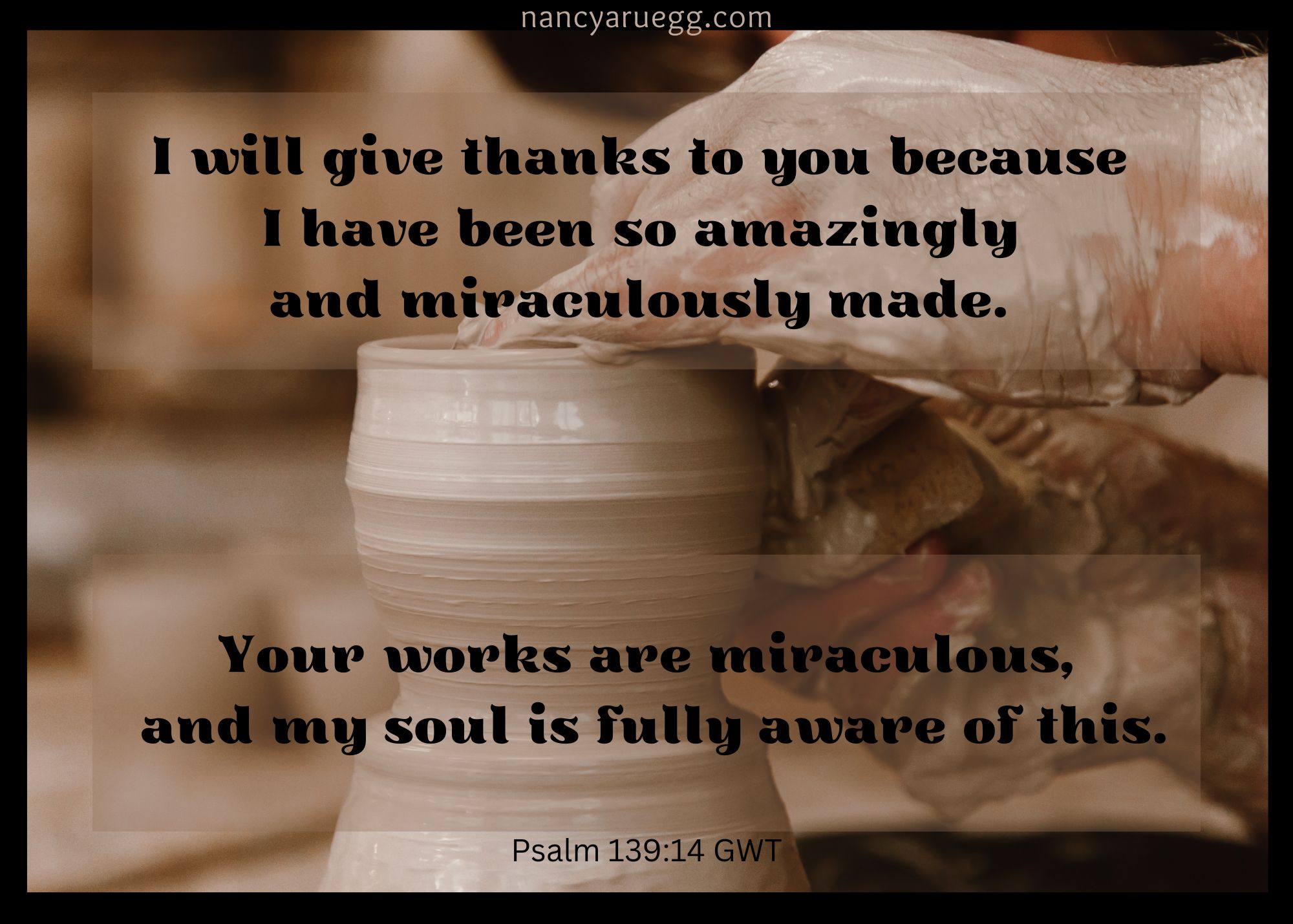
  • I have been remarkably and wonderfully made (Psalm 139:14).
  • “My Father is always at his work to this very day, and I too am working”—Jesus (John 5:17).
  • “You do not realize now what I am doing, but later you will understand”—Jesus (John 13:7).
  • I am one of God’s special possessions, commissioned to declare his excellencies (1 Peter 2:9).

I pray your spirit is affirmed and encouraged.

And now, who can you refresh today?

(Our experience with Emily hasn’t been a one-time event. Should you wish to read similar, special-moment stories, click on one of these posts:


[1] Name changed.

[2] Acts 20:35

Art & photo credits: http://www.pixabay.com; http://www.pickpik.com; http://www.canva.com (2); http://www.pexels.com; http://www.rawpixel.com (2); http://www.pxhere.com.

Processing…
Success! You're on the list.
Read Full Post »

One way to get better acquainted with God is to read through the psalms, watch for statements pertaining to him, and write them down.

That last step is important, as research has proven: writing (not typing) helps us learn and retain what we’ve written [1]. In this case it will also increase our appreciation of God’s glorious attributes and gracious acts on our behalf.

I chose to participate in this exercise during Advent, and became astonished by the number of statements about God, totaling over three hundred by the time I reached Psalm 150. I even skipped over those that I remembered listing previously.

Some psalms offer a number of statements about God, one after another. Psalm 23 includes nine, Psalm 103, sixteen, and Psalm 145, twenty.

Perhaps that explains why these psalms are among the favorites of many people. Subconsciously we crave reassurance of God’s power, wisdom, and goodness working on our behalf.

A lesser-known psalm perhaps, #71, offers seven encouraging descriptors of God:

He is our sovereign Lord (v. 5) over all things, even our blunders and regrets.

No matter my poor choices, God can redeem them. “Our mistakes can never thwart the sovereign will of God” [2].

How thankful I am for that!

He is the One who’s been my hope and confidence since my youth (v. 5).

I’ve been a Jesus-follower since age four. Never have I toyed with the idea of abandoning my faith in him, because I learned early on from the saints around me:

  • God is a good and loving Father
  • There is purpose in everything God does
  • He will bring me through whatever I might face
  • He is accomplishing a good and eternal work in my life [3]

I’d be foolish to turn my back on Someone so invested in my welfare.

God is splendorous (v. 8).

We could surely add more attributes to Brooks’ list. God provides so many wonderful, spiritual blessings in Christ (Ephesians 1:3)!

He is the One who performs marvelous, mighty, and righteous deeds (vs. 16-18).

In truth, “The whole world is a series of miracles, but we’re so used to them we call them ordinary things” [4].

May we rediscover the wonder of God’s deeds in evidence all around us, and respond with gratitude and praise.

He is the One who’s taught me since my youth (v. 17).

Over time I’ve come to cherish God’ Word. And even though I’ve spent many happy hours in study, its inspiration never grows old.

That is very good news.

God is the One whose righteousness reaches up to the heavens (v. 19).

That’s good news too, because “there is no perfect life, no perfect job, no perfect childhood, no perfect marriage, and no set of people who always do what we expect them to do.

“What we do have is a perfect God who is able to lead us through this imperfect life with unfailing strength, infallible wisdom, and infinite love”—Unknown.

Praise God for his attentive participation in our lives!

He is the One who’s done great things. Who is like You, God (v. 19)?

All of these descriptors, among the dozens of others proclaimed in the psalms, do make clear:

P.S. My list of God-descriptors has become the basis for personal worship. Each morning I slowly read and pray back to him one page of the collected statements. The practice renews wonder and gratitude for my marvelous Heavenly Father.

Perhaps you’d like to try it too?


[1] Denise Hughes, Deeper Waters, 89.

[2] Bev Rihtarchik, contributor to A Moment to Breathe, 151.

[3] Dr. Charles Stanley, Advancing through Adversity, 101.

[4] Hans Christian Andersen

Photo credits: http://www.pxhere.com; Nancy Ruegg; http://www.flickr.com; http://www.pickpik.com; http://www.canva.com (2).

Processing…
Success! You're on the list.

Read Full Post »

Twenty-one-year-old James Gribble, a streetcar conductor, scanned the avenue ahead, but his mind swirled with visions of the future. Life was treating him well in Philadelphia with its many amenities in 1904, compared to his hometown of Mechanicsburg, PA. What opportunities might lie ahead?

Then it happened. A woman stepped off the still-moving trolley, caught her skirt under a wheel, and was pulled under. She died at the scene.

James agonized over the terrible accident. “Oh God, deliver me, and I’ll serve you!” he wrote in his journal.

That Sunday James attended church and accepted Jesus into his life. That evening he was baptized.

On Monday while reading his Bible, James came to Matthew 28:19a:

He told his pastor, “I think God wants me to become a missionary.”

For several years James received mentoring and instruction, then joined the African Inland Mission. To his delight, the team included a pretty young doctor, Florence Newberry. In 1908 they established a mission station in West Central Africa and started ministering to the nearby tribes.

The station was located in what is now the Central African Republic, south of Chad.

James wanted to become better-acquainted with Florence, but patients kept her busy from morning till night. Suddenly genius struck. James could pretend he was sick!

During the appointment he suggested courtship. Florence preferred they remain friends, still devastated over a previous beau uninterested in foreign mission work.

Twice more over the next four years James would approach her about courtship; twice more she declined.

James and another missionary traveled inland to establish a new station.

West African tribesmen, 1912

Soon his partner became ill and had to return to base camp, then James succumbed to black water fever. He expected to die.

Afterward James wrote about the vision God gave him on his sickbed—a panoramic view of the tribes of West Central Africa. God said, “Thou shalt be instrumental in carrying the gospel to these.” James knew then he’d survive.

During a prayer vigil in 1912, Florence’s thoughts turned to James. Her heart had warmed toward the trustworthy and kind missionary, so passionate about sharing Christ with the African people. Florence sensed the Spirit whispering to her, “Why not?”  

The two were married within a few months.

Sometime later Florence developed appendicitis and required hospitalization. For thirty days they traveled the three hundred miles to the nearest hospital.

As she slowly recovered, the doctor told James, “You must take her back to America. She cannot live in the tropics.”

Florence did return home and six months later James followed. They lived in Chicago for several years while Florence regained strength. Their only child Marguerite was born there in 1915.

Daily James would pray over a map of Africa. He found his attention drawn to a town named Bozoum, in Ubangi-Shari (now the Central African Republic). He wondered why.

Bozoum is located in the northwestern province of Ouham-Pende.

The couple shared their hope with area churches: to establish base camps across central Africa as a barrier against encroaching Islam. When they returned in 1918, two nurses and another family joined them.

The group desired to enter a French-controlled area, but it took eighteen months to receive permission. They named their base, Camp-Wait-Some-More.

Finally able to move on, they arrived in Carnot. While waiting there another eighteen months, they spent their time learning the language and praying.

A new official arrived, and James made an appointment with him.

He asked James, “Where do you intend to set up camp, now that you’ve received permission?”

Permission?! James was stunned. “Where would you recommend?”

Then came Surprise #2. “I think Bozoum would be a good place.”

Now James knew why God had inspired him to pray particularly for this town.

In 1921, Florence and James became ill again. She had to return to the States, taking their daughter with her. Eighteen months later Florence traveled back to Africa, but without Marguerite. Though an anguishing decision, the couple determined she should remain in America to attend school.

In 1923 a young recruit was due to arrive, but he died within miles of reaching their mission station, causing more heartache.

James wrote:

Not long after, James succumbed to black water fever again; this time the forty-year-old did not survive.

He’d previously written to Florence, “I shall be content with the lowest seat in heaven if only there I may sit and see the redeemed of the Lord come in from those fields where I have a been a pioneer missionary.”

Except James had not witnessed one person becoming a Christ-follower during his years in Africa.

Some might say those years of pain and hardship had accomplished nothing. And what about God’s promise: ““Thou shalt be instrumental in carrying the gospel to these?”

James had been instrumental, by bringing others to join in their work. Even his own daughter returned to Africa, ministering with her husband for thirty-one years.

James had served as a foundation builder—constructing base camps, encouraging others, and giving himself to prayer. He followed in the footsteps of the Apostle Paul:

Today, 70% of the population of the Central African Republic are Christians.

In my mind’s eye I see James in heaven, greeting saint after saint from West Central Africa, just as he imagined. But instead of sitting, I think James is standing and celebrating with all his heart.

Sources:

Photo credits: http://www.flickr.com; http://www.rawpixel.com; http://www.picryl.com; http://www.flickr.com; http://www.commons.wikimedia.org; http://www.nara.getarchive.net; http://www.commons.wikimedia.org.

Processing…
Success! You're on the list.

Read Full Post »

Joy is a word seen frequently during the Christmas season–on cards, ornaments and even fence gates.

But holiday-pleasure based on Santa, gifting, and parties, quickly disappears with the decorations and Christmas cookies.

Where do we find January-Joy that will carry us through the new year and even beyond?

First, we have to understand: true joy is more than feel-good endorphins.

To some that sounds ridiculous. Acquiescence sounds like distasteful servitude. And what possible delight can a person find in Someone we can’t see or hear?

Little do they know the depth of joy Jesus offers us (John 15:11).

Little do many people understand:

This deep sea of joy is made available to us as we obey God–another reality that makes some bristle. They don’t realize when Christ tells us to follow God’s ways, he’s not trying to make our lives miserable. He’s showing us the way to enjoy abundance of life (John 15:9-11; John 10:10)!

Scripture presents a number of principles that contribute to our fullness of joy, including:

POSITIVITY (Philippians 4:4)

GRATITUDE (Psalm 126:3)

MINDFULNESS (Psalm 89:15-16)

(How else might we make space for joy? That’s a question worth contemplating!)

GENEROSITY OF JOY (Acts 20:35)

Also worth remembering:

Empathy (Romans 12:15a)

And what happens to those who focus on all things beautiful, good, and true—no matter how small—and thank God for them?

What happens to those who discover the joys of the here and now—no matter their circumstances–and praise God for them?

“They are the change agents who bring fullest Light [and JOY] to all the world.”*

JOY to the world! For January–beyond.

Now there’s an objective to embrace for 2025.


* Ann Voskamp, One Thousand Gifts, 58.

Art & photo credits: http://www.pickpik.com; http://www.freerangestock.com; http://www.negativespace.co; http://www.pickpik.com; http://www.pixabay.com; http://www.canva.com.

Processing…
Success! You're on the list.

Read Full Post »

No Christmas season would be complete without the reading of the second chapter of Luke—the account of Mary and Joseph traveling to Bethlehem, presiding over the birth of Jesus in a stable or cave, and receiving shepherd-guests.

Toward the end of the account, as those shepherds were spreading the word of Jesus’ birth, Luke wrote, “Mary treasured up all these things and pondered them in her heart” (v. 19).

Indeed. She had much to process:

  • Her baby was the Messiah, the Promised One, who would save his people from their sin. I wonder if she studied him, looking for signs that he was different from other infants.
  • This was the Prince of Peace cradled in her arms. Yet he had been born to a common village girl in very primitive conditions.  Did that seem strange to her?
  • The shepherds had learned of his birth when angels visited them, just as the angel, Gabriel, had visited Mary and then Joseph.  Gabriel had also visited Zechariah, the father of John the Baptist. Four angel visitations in a matter of months. Never had that happened before.

I find myself pondering, too—pondering Mary herself–this dear, young girl who carried a tremendous burden for a long time.

Dear means beloved and valued. Mary is certainly that for numerous reasons.

  • She embraced Gabriel’s announcement with great faith. “May it be to me as you have said,” (Luke 1:38). She put herself in the care of God in spite of incomprehensible circumstances.
  • Her prayer, the Magnificat (Luke 1:46-55), gives indication of a heart fully committed to God.
  • She endured much: shame for her pregnancy, a long, uncomfortable journey to Bethlehem, and crude circumstances for the birth of her Son.

Mary was young—perhaps between thirteen and fifteen years of age. That was the typical age for a girl to be married in Bible times.

Yet, young as Mary was, Gabriel praised her for being “endued with grace” (v. 28, AMP). In addition, Mary demonstrated stamina, maturity, and gentleness beyond her years.

No doubt God graced her with these traits. But I have to believe Mary also had freedom of choice, as we all do, to embrace God’s way for her.

What I ponder most, however, is the fact Mary carried a tremendous burden, given to her by an elderly man, Simeon, eight days after Jesus was born.

You undoubtedly remember the story. Joseph and Mary took Jesus to the temple at Jerusalem to be circumcised.

There they met the righteous and devout Simeon who had been waiting decades for the Messiah. The Holy Spirit had revealed to him he would not die until he had seen the Lord Christ.

Immediately upon seeing the Child, Simeon knew this was the One.

He praised God for keeping his promise, blessed Mary and Joseph, and then spoke particularly to Mary, saying Jesus would cause some to rise and some to fall, he would be spoken against, the thoughts of many hearts would be revealed, and a sword will pierce your own soul too (Luke 2:21-35).

Those last words must have caused Mary’s eyes to grow wide and her heart to skip a beat. Wasn’t the worst behind her? Surely Mary wanted to ask Simeon, “What do you mean?” Scripture gives us no indication that she did so.

For thirty-three years those last words of Simeon must have echoed in Mary’s mind again and again. How does a person live with such long-term foreboding? Perhaps her mind turned back to the night of Gabriel’s visitation.

Perhaps, for thirty-three years, Mary repeated what she had told the archangel: “I am the Lord’s servant. May it be to me as you have said” (1:38).

Mary may very well have developed the calm assurance that even when God’s ways are baffling, we can rest assured he is orchestrating events to accomplish far more than we could ever imagine (Ephesians 3:20). She’d been witness to such orchestration in Bethlehem.

Mary knew that even our personal hardships can fulfill purposes that extend far beyond ourselves.

That’s a lesson for all of us to embrace with calm assurance.

(Revised and reblogged from December 15, 2014, while we enjoy a blessed week with family!)

Photo credit: http://www.stocksnap.io.

Processing…
Success! You're on the list.

Read Full Post »

« Newer Posts - Older Posts »

Still Traveling

Impressions Becoming Expressions

Living Our Days

Gaining a heart of wisdom

He Said What?!

I'm Patty, and my husband and I are living with our adult son who has autism and epilepsy. I love sharing lessons learned from life around me, especially life with Aaron.

Meditations of my Heart

Impressions Becoming Expressions

Linda Stoll

Impressions Becoming Expressions

Debby Thompson

Impressions Becoming Expressions

Signora Sheila

Notes on Life, Faith & Italy

Colleen Scheid

Writing, Acting, Living in God's Love

Mitch Teemley

The Power of Story

Heidi Viars

Finding the Image of God