Feeds:
Posts
Comments

Archive for the ‘Faith’ Category


The eagle that soars in the upper air

does not worry itself how it is to cross rivers.

—Gladys Aylward


That’s a worthy quote to keep on file, don’t you think? I love the imagery of flying high through life close to God, the One who empowers us to traverse challenge.

But I wonder, who is this Gladys Aylward? Author? Teacher? Did she soar in the upper air? What rivers of challenge did she have to navigate?

A bit of research revealed that Gladys’ life began in the challenging river of the working class in London, 1902. By age fourteen she had to leave school and become a maid, to help support the family.

Two events changed her course, however. One, Gladys met Jesus at a revival meeting, and two, she became impassioned about China, after hearing a pastor speak of several missionaries who worked there.
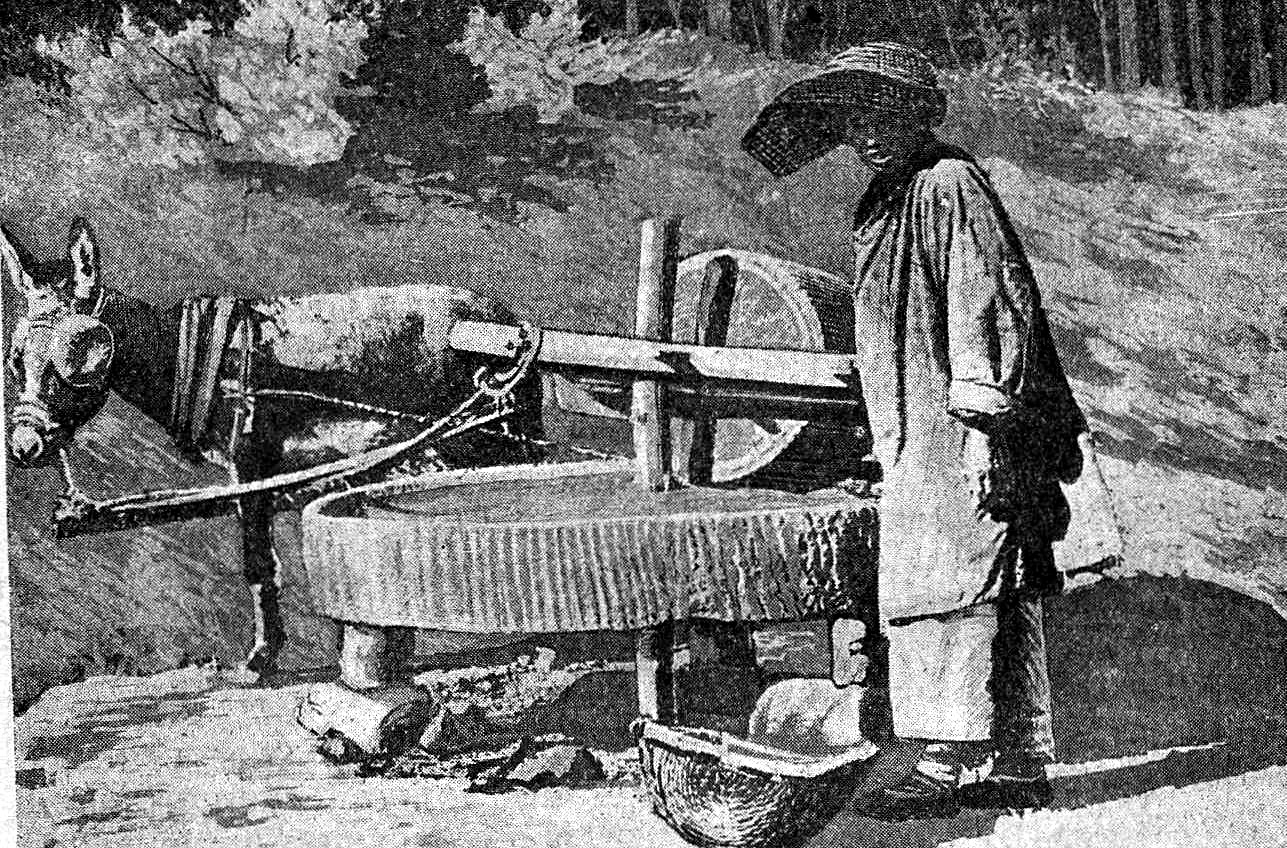
 

(Millworker in Henan, China, 1930)


Gladys’ thoughts turned toward China frequently and to the millions of people who had never heard about Jesus. She longed to be one of those to tell them, so she applied to the China Inland Mission.

Gladys was turned down. They said she didn’t have the aptitude or education necessary to learn such a difficult language as Chinese.

The rejection was a deep disappointment, but it did not stop her. She spent four years working extra hours, scrimping and saving every possible pence from her meager wages, in order to pay her own passage.

During that fourth year, word reached Gladys that an elderly widow missionary, Jennie Lawson in Yancheng, China, was in need of a helper.

Several months later, in October of 1932, she set out on the dangerous, weeks-long journey through Europe and Russia, mostly by train. (Passage aboard a ship would have provided a shorter, safer trip, but train travel was cheaper.)
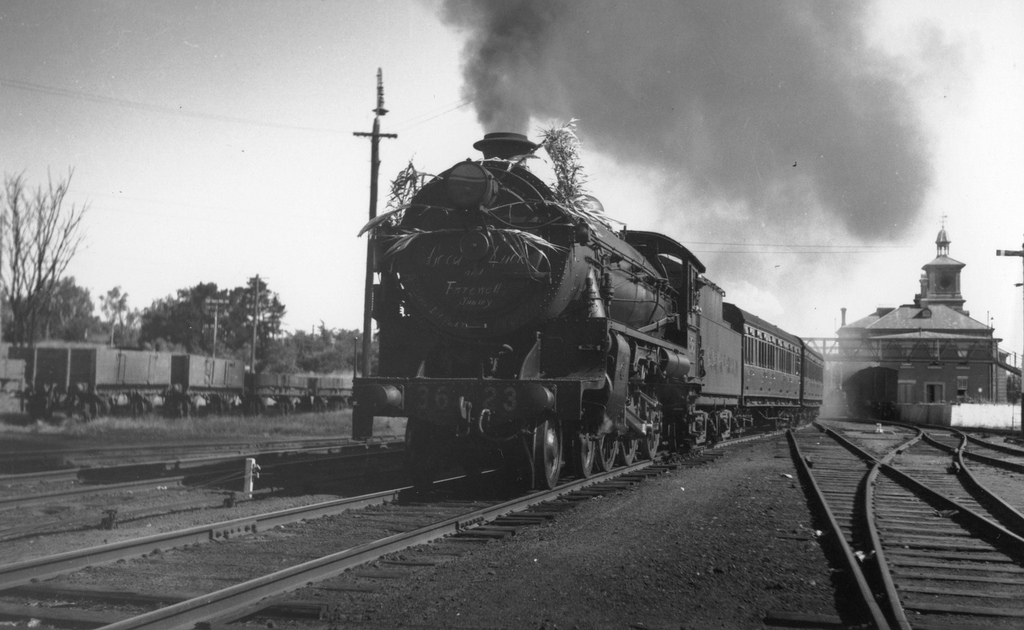


When Gladys finally arrived, she found Jennie—not directing an established mission, but living alone in a ramshackle inn. Within a year, however, Jennie, Gladys, and their Chinese cook and friend, Yang, had completed the needed repairs.

The two missionaries were finally able to host the mule drivers who caravanned through Yancheng, transporting their various wares.  In the evenings, Jennie told Bible stories to the guests.

It wasn’t long before Gladys was also telling the stories. She learned Chinese quite readily while conversing with Yang and the muleteers—a feat she later called one of God’s miracles.


(Gladys Aylward)


No sooner did their situation become secure than Jennie fell, and died several days later. Gladys couldn’t sustain the inn on her own. But God made provision for her to stay. The Mandarin of the area offered Gladys a job, inspecting women’s feet!

 

(foot-binding shoes)


A law had been passed in China forbidding the ancient custom of binding girls’ feet in order to keep them dainty and small. The practice also caused lameness and pain. Gladys accepted the position, eager for the opportunities it would offer to tell people about Jesus.

But life still did not settle down into a comfortable, peaceful routine, as Gladys faced a number of seemingly impossible situations. And she soared over them all with God.

When a prison riot occurred, the Mandarin sent for Gladys—all 4’ 10” of her—to settle the inmates. God gave her the wherewithal (in spite of her fear) to command attention, ask a representative of the prisoners to explain the reasons for the riot, and then act as liaison with the prison guards to improve conditions.


In 1937, the war between Japan and China grew into a full-scale conflict. Gladys became a spy for her Chinese countrymen. Her foreign status gave Gladys the ability to cross into Japanese-controlled areas. When they became aware of Gladys’ espionage activities, a bounty was posted for her capture—dead or alive.

One time, Gladys narrowly escaped the bullets of her Japanese pursuers. As she hid in some bushes, Gladys used her padded coat as protection, wadding it up like a shield.

But the day came, she had to seek sanctuary elsewhere.  It was not just her life that was in danger; Gladys was concerned for the orphans who now lived with her at the inn.

She chose to flee to a government orphanage at Sian. When word spread through the community of her plan, other orphans were brought to her, so they too could escape the war zone. Soon 100 children had gathered for the trek—mostly four to eight years of age.



They walked through the mountains for twelve days—on rough, little-used trails where they could remain hidden. Some nights they spent with welcoming hosts; other nights they slept on the mountainsides. Most of their cloth shoes wore out before they reached Sian.

Miraculously, all of them arrived safe and sound, except Gladys, who was suffering from typhus and pneumonia and collapsed into a coma. She almost died, but did finally recover.

And as soon as she could, Gladys returned to what she loved: helping others in need and telling everyone about Jesus.

Gladys Aylward certainly proved she knew how to soar in the upper air, with God as her strength. And he did indeed carry her across many rivers.

Postscript:  Among the many that accepted Jesus into their lives as the result of Gladys’ efforts, was the Mandarin of Yancheng.


*     *     *     *     *     *     *     *     *     *


May I also soar, O God, resting in the confidence that you will never leave me or forsake me. You have promised to be my Helper. May I focus on you, my loving and powerful God, and not my circumstances, because you are the Lord of every situation. 

(Isaiah 40:31; Hebrews 13:5-6; Ephesians 1:11)


(Some of you may recognize Gladys’ story. It became the basis for a movie in 1958, The Inn of the Sixth Happiness, starring Ingrid Bergman.)


Sources:

  1. https://www.christianity.com/church/church-history/timeline/1901-2000/gladys-aylwards-impossible-mission-to-china-11630754.html
  2. http://justus.anglican.org/resources/bio/73.html
  3. http://www.thetravelingteam.org/articles/gladys-aylward
  4. https://urbana.org/blog/gladys-aylward


Photo credits:  http://www.pexels.com; http://www.wikimedia.org;  http://www.flickr.com; http://www.wikimedia.com; http://www.wikipedia.org; http://www.heartlight.org; http://www.maxpixel.net; http://www.dailyverses.net.


 

Read Full Post »


Some believe that indulging in memories is a waste of time, that past events have no meaning for the present. But nothing could be further from the truth— especially if we acknowledge God’s part in those events.

When we include God in our remembering:

  1. We gain a sense of perspective.

Even difficult times are part of God’s plan. Sometimes, with the gift of hindsight, we catch a glimpse of his purpose later.

For example, how many students have struggled through school, yet in adulthood flourished in careers well matched to their gifts? Most of them are actually thankful for the early challenges, because they learned perseverance and developed strength of character. Those late-bloomers are often compassionate and understanding toward other strugglers, because they remember the difficulties of those formative years.


  1. We acquire wisdom for today.

“Reflective thinking turns experience into insight.”

–John Maxwell

In my younger days I used to be a champion talker. But somewhere along the way I began to notice the listeners—caring folks who often demonstrated the gentle and quiet spirit Peter spoke of (1 Peter 3:3). They reminded me of my sweet grandmother.

I valued that demeanor and began to turn insight into a new experience of focused listening. (Please understand: practice hasn’t achieved perfection yet. But improvement? Yes.)


  1. We build a foundation of stability for today as we remember God’s grace and faithfulness in the past.

But memories easily fade. So some believers keep a book of remembrance or a praise journal, as a way to savor God’s faithfulness.

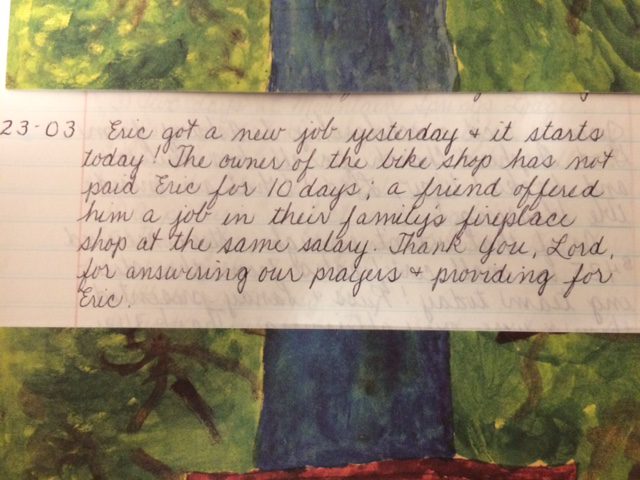
Just for fun, I randomly opened my loose leaf praise journal in search of an entry to share with you. Here’s what I wrote, December 23, 2003, about our older son, who was in college at the time:


(“Eric got a new job yesterday and it starts today! The owner of the bike shop has not paid Eric for ten days, but a friend offered him a job in their family’s fireplace shop at the same salary.”)

Entry after entry highlight God’s provision, protection, and guidance through the years. And each memory contributes to my foundation of stability.


  1. We foster gratitude in our hearts.

As you can see, the entry recorded above ends with: “Thank you, Lord, for answering our prayers and providing for Eric.”  Joy just naturally overflowed into appreciation.

On the opposing page I wrote, “I am overwhelmed, Lord, by this continuing string of blessings. You are SO good to us, always demonstrating your faithfulness and grace. May your praise continually be on my lips!”

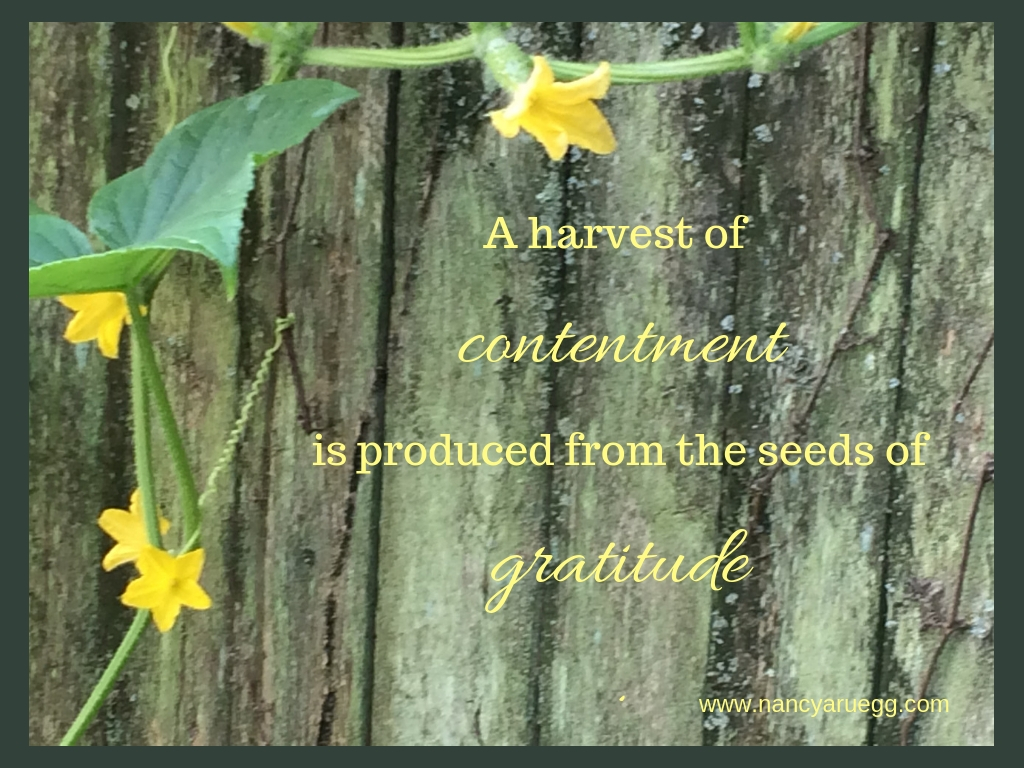
Research has now proven a number of benefits of gratitude.*  But surely one of the best: it nurtures a contented soul.


  1. We can turn remembering into a beautiful act of worship. 

That’s exactly what scripture invites us to do: 

“Rejoice in all the good which the Lord your God has given to you and your house” (Deuteronomy 26:11).

Praise the name of the Lord your God, who has done wondrously with you” (Joel 2:26b).

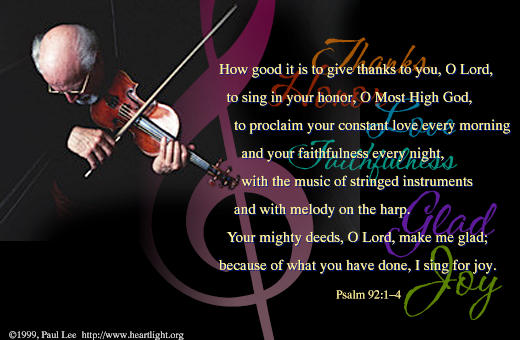
“You make me glad by your deeds, O Lord; I sing for joy at the works of your hands” (Psalm 92:4).


Such glorious cause and effect! Remembering God’s wonderful deeds of the past turns our hearts to worship, which causes a powerful, positive impact on the present.


  1. We can tell our stories of God’s miracles and mercies, to encourage the faith of others and refresh our own.

Scripture invites us to do that too: 

“I will tell of the kindness of the Lord, the deeds for which he is to be praised, according to all he has done for us” (Isaiah 63:7).

.


So let’s begin here! Please share in the comment section below about a kindness, miracle, or mercy of God from your memory. And together we can praise the name of the Lord who has worked wonders for us!


* Another post details some of those benefits, “Happiness.”


Art & photo credits:  http://www.flickr.com; http://www.nellis.af.mil; Nancy Ruegg (3); http://www.heartlight.org.


Read Full Post »


(Wilfred Grenfell, 1865-1940)


Dr. Wilfred Grenfell listened to the ill fisherman’s labored breathing. He took note of the patient’s fever-flushed cheeks and chill-induced tremors. The diagnosis: severe pneumonia, and possibly tuberculosis as well.

With little equipment and scant supplies at hand, Grenfell was unable to save the man. Left behind were the man’s wife and six children, subsisting in a tiny sod house.


Who would care for the destitute family? Everyone in the fishing village of Battle Harbor, Labrador was barely surviving. In fact, up and down the coast similar tragedies occurred frequently because of the primitive living conditions.

The year was 1892. Dr. Grenfell had just recently arrived on the northeastern coast of Canada.


Over the next three months of summer, he treated about nine hundred people for a variety of medical conditions. And God used those experiences to stir him into action—action for which he had been preparing Grenfell for his entire life.

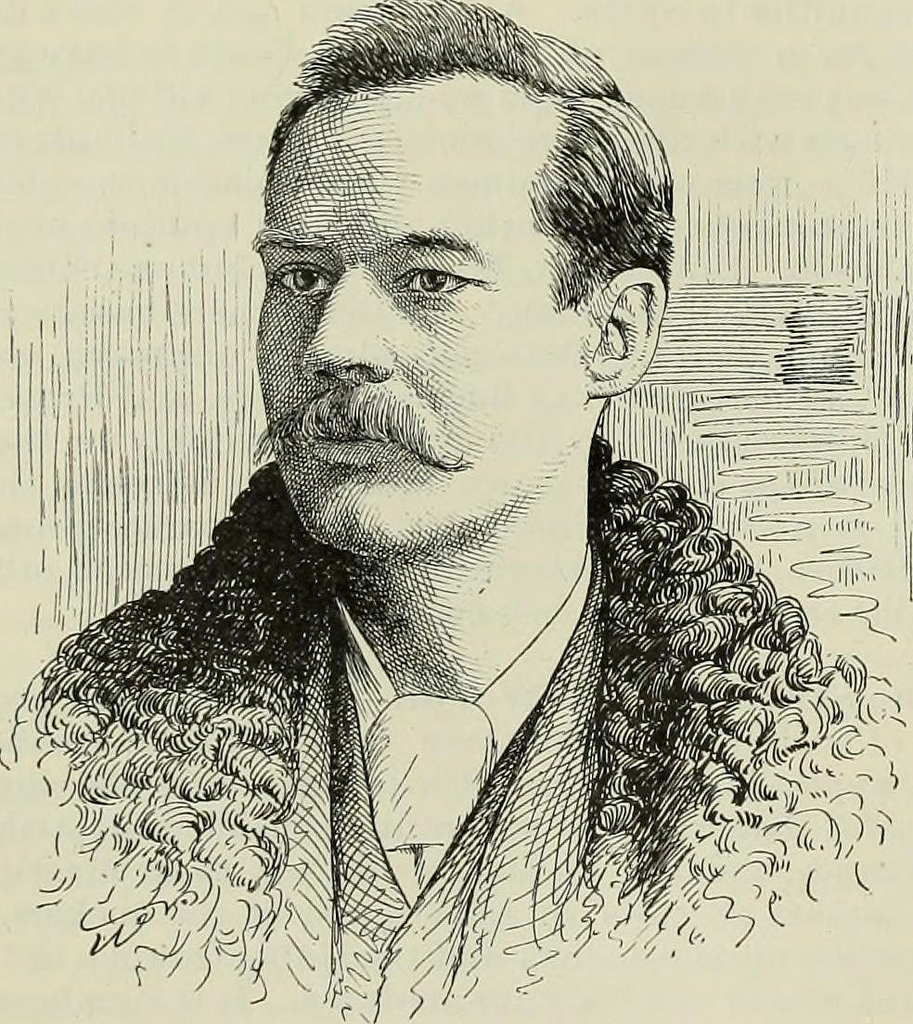
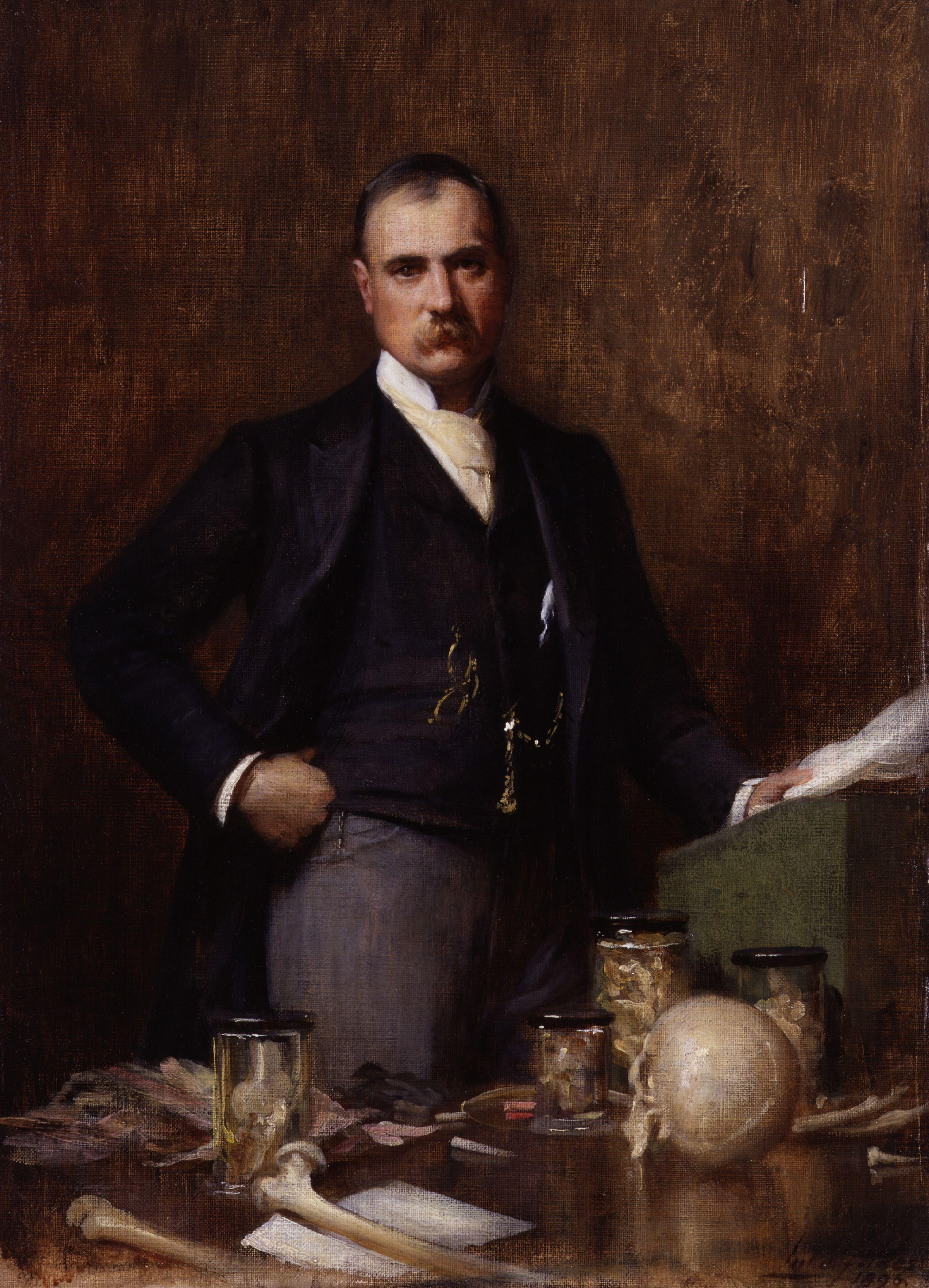
During his childhood, Wilfred’s parents, Reverend Algernon and Jane Grenfell, provided a strong Christian upbringing for their four sons. Grenfell then studied medicine at London Hospital and London University under the mentorship of the highly respected Christian surgeon, Sir Frederick Treves.


(Sir Frederick Treves)


But a life-changing moment occurred for Grenfell in 1885 when he attended a tent-revival meeting held by D. L. Moody. Grenfell accepted Moody’s spirited challenge to serve Christ with passion and courage.

Not long after, he heard the Cambridge Seven speak—famous student athletes at the time, serving as missionaries in China. Wilfred felt further inspired to follow God’s leading toward Christian service.


(The Cambridge Seven in Mandarin garb, 1885)


Upon graduation from medical school, Wilfred joined the Royal National Mission to Deep Sea Fishermen, on recommendation of his mentor and board member of the mission, Sir Frederick Treves.

The RNMDSF already provided floating libraries, clothing stores, and chapels. Now Grenfell could add medical services to the other benefits.


(The Royal National Mission to Deep-Sea Fishermen,

still in operation since its founding in 1881.)


His travels with the mission brought Grenfell to Labrador where the living conditions were so dire he felt compelled to do what he could to improve them.

In addition to offering medical care, Grenfell held simple church services, preaching what he remembered from his father’s sermons. Numerous people chose to follow Jesus; others were strengthened in their faith.

Over the course of the next four decades Grenfell built six hospitals and opened seven nursing stations. He established fourteen industrial centers, a number of churches, and  four boarding schools.


At first, the Royal National Mission to Deep-Sea Fishermen financed his work. But it soon became necessary for Grenfell to raise monies himself. God equipped him for this aspect of the work also, and very quickly he became a successful fundraiser and charismatic speaker.

One close-call adventure Grenfell relayed often on his speaking tours, and it finally became a book. (He wrote more than thirty books—all for the support of his mission work.)


In April of 1908 he found himself drifting out to sea on a chunk of ice with no hope of survival. He’d been dog sledding across the frozen Hope Bay, headed for a remote community in Newfoundland where a young boy needed surgery.

But conditions on the bay changed overnight while he rested. The ice began to break up. Though Grenfell tried to jump from one ice chunk to another in order to return to shore, he soon realized it was wasted effort. The floe was moving too fast.


(Drift ice off the coast of Labrador)


For a day and a night, Grenfell continued to drift. He was sure the rough seas would make rescue impossible. But a small group of fishermen in a boat did spot him and came to his aid.

Later, he described his rescuers as five men “with Newfoundland muscles in their backs and five as brave hearts as ever beat in the bodies of human beings” (Adrift on an Ice Pan, 1909).

Two days later, Grenfell was able to perform surgery on the young boy, who was brought to the local hospital by boat—a much more satisfactory solution.

In addition to his accomplishments and great adventures, Grenfell’s full life also included disappointment and doubt, trouble and sorrow, even failure. But he knew where to find strength and encouragement:


“The word of God is the Christian soul’s best weapon,

and it is essential to have it with him always.

In doubt it decides; in consultation it directs;

in anxiety it reassures, in sorrow it comforts;

in failure it encourages; in defense it protects;

in offense it is mightier than the mighty.”

–Wilfred Grenfell


Thus empowered, the great doctor accomplished his divinely appointed mission–day by day, year after year—with passion and courage.


*     *     *     *     *     *     *     *     *     *

That is what we desire as well, Father, to accomplish the mission you’ve divinely-appointed for each of us. May we embrace with faith, courage, and passion the possibilities you present before us, in honor of you, and because your pleasure always becomes ours as well.


(P.S. The winter after the ice floe rescue, Grenfell met Anna MacClanahan of Lake Forest, Illinois. They were married in November of 1909, and she quickly became Grenfell’s private secretary, editor, and adviser. They had two sons and one daughter.)


Sources:

  1. http://www.biographi.ca/en/bio/grenfell_wilfred_thomason_16E.html
  2. http://www.canadianchristianleaders.org/leader/wilfred-grenfell/
  3. http://www.cdnmedhall.org/inductees/sir-wilfred-grenfell
  4. http://www.greatthoughtstreasury.com/author/wilfred-grenfell-fully-sir-wilfred-thomason-grenfell
  5. http://www.grenfellhistory.co.uk/biographies/wilfred_thomason_grenfell.php
  6. https://www.heritage.nf.ca/articles/society/grenfell-mission.php
  7. https://ottawacitizen.com/news/national/fifteen-canadian-stories-wilfred-grenfell-the-daring-doctor-who-brought-hospitals-to-newfoundland


Art & photo credits:  http://www.flickr.com;www.wikimedia.org; http://www.wikipedia.org; http://www.wikimedia.org (2); http://www.geograph.org.uk; http://www.flickr.com (2); http://www.picryl.com; http://www.wikimedia.org; http://www.picryl.com.

Read Full Post »


“Oh, what a beautiful tree!” my mother-in-law exclaimed with enthusiasm. Her comment referred to a tall bush, planted near the house and visible outside our kitchen window. “What’s the name of it?” she asked.  Being from Ohio, Mom wasn’t familiar with some of the unique foliage of South Florida.

“That’s a sea grape,” I told her. “It’s actually a shrub, but they can grow quite tall.”

“Well, it’s lovely. Such big leaves!”

Now clearly there’s nothing remarkable about this conversation, until you know that Mom had asked the very same question with the very same enthusiasm every morning of her visit. And each morning I supplied the same answer.  Mom was in her late 80s, and her dementia was becoming more and more noticeable.

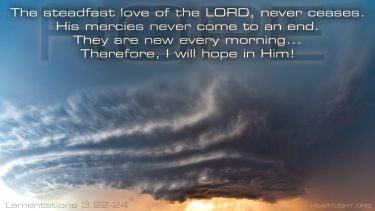
Mom’s fresh outlook each morning reminded me of Lamentations 3:22-23:


The faithful love of the LORD never ends!

His mercies never cease.

Great is his faithfulness;

his mercies begin afresh each morning (NLT).


Just as Mom brought new enthusiasm to each morning, so God brings new mercies for each day. Yes, the challenges we faced yesterday required wisdom, strength, and perseverance. But today we’ll need a fresh supply.   Praise God he never runs out of such gifts; he is always able to provide.

In the same way, God’s new mercies for today are not meant to be sufficient for tomorrow. In other words, we shouldn’t expect to feel ready this morning for the potential challenges of the future—much as we’d like to. (Who hasn’t wished to know now exactly how the next day or week will unfold, and how best to respond?)

Instead, our wise and loving Heavenly Father has chosen to lead us one day at a time, to protect us from being overwhelmed, easy prey to depression and paralyzed by fear.

No, our best course of action is to avail ourselves of God’s mercies for this one day. As for tomorrow, we can trust God to supply new mercies, more than sufficient for whatever we might face when the time comes.


I’m remembering Corrie ten Boom. (Maybe this post brought her to your mind, too.)


Corrie and her family suffered cruel hardships in the concentration camps of Nazi Germany, as a result of helping Jews escape the Holocaust.

After the war, people would often say to Corrie, “I wish I had such great faith as yours. I could never live through the experiences you survived.”

Corrie would tell a story to explain.

When she was a child, Corrie happened to see a dead baby. A terrible fear gripped her that one of her family might also die. When Papa ten Boom came to tuck her in that night, she burst into tears.

“I need you!” she sobbed. “You can’t die!”

Her sister, Betsy, explained why Corrie was so afraid.

Papa asked, “When you and I go to Amsterdam, when do I give you your ticket?”

“Just before we get on the train,” she responded.

“Exactly,” Papa replied. “And God knows when you’re going to need things, too. Don’t run out ahead of him, Corrie. When the time comes that some of us have to die, you will look into your heart and find the strength you need—just in time.”

Papa ten Boom was proven right. When Corrie needed supernatural strength, God did provide. We can rest assured that his mercies will be new and fresh each morning for each of us–just in time.


*     *     *     *     *     *     *     *     *     *


I praise you, Lord God, that we can face each day with fresh enthusiasm, because for every trial, you have prepared great mercies of endurance, strength, and wisdom.

I thank you that in the midst of trouble, you also provide blessings: a more acute awareness of your presence, peace that defies explanation, family and friends to come alongside, miraculous provision, and delightful surprises to make us smile.

You are more than a sufficient God; you are an abundantly gracious God!


(Revised and reblogged from 5-28-15.  Photo credits:  http://www.flickr.com; http://www.heartlight.org; http://www.canva.com; http://www.wikimedia.com.)


Read Full Post »

Jesus made it perfectly clear: “Surely I am with you always, to the very end of the age” (Matthew 28:20b, emphasis added).

And in our minds we affirm that truth. Yes, he’s invisible, but we know God is involved in our lives. We look back over our personal histories and see evidence of his work, as he engineered circumstances for our good.

But sometimes our emotions long to feel his bodily presence.   Wouldn’t it be wonderful, we daydream, if he literally took us by the hand, put his arm around our shoulders, or pulled us toward him in a close embrace?

Sometimes our ears long to hear his voice, telling us loud and clear exactly what step to take next, encouraging us we’re headed in the right direction, or offering perfect words of comfort that assuage our pain.

And sometimes our spirits long for assurance of his love in spite of our frailty, that progress in maturity is occurring, and the trials we face today will have meaning tomorrow.

There have been close encounters. Every now and then we’ve come within an angel hair of his touch—he felt that close. We’ve received impressions so strong they’ve almost been audible. And we’ve sensed his affirmation in our spirits that immediately settled our uncertainty for the moment.

But in between those intermittent occasions, our Heavenly Father would have us exercise a bit of faith (1) and take to heart what he’s already told us—truths such as these:

God isn’t even the width of an angel hair away from us. Remember the passage where Jesus declares he is the vine and we are the branches (John 15:5)? Just how far is the branch from the vine?

Exactly.

And because he’s right there, we can face uncertainty. God is no cheerleader, standing on the sidelines and shouting encouragement. He’s promised to be deeply involved, to strengthen, help, and support (Isaiah 41:10).

God hasn’t lost his voice. He most often chooses to communicate with us through his written Word. But sometimes he speaks to us through other Christians—their writings or spoken words. And he still implants impressions into the quietness of our souls—if we sit still long enough to listen.

Writer and theologian, Mike Yaconelli was probably right:  “The problem isn’t that God has stopped speaking; it’s that our lives have become louder.”

God wastes nothing.  Every event, every relationship, every circumstance has potential for meaning and  benefit somewhere down the road—including mistakes, disappointments, our own poor choices and those of others.

They become transformational moments to develop our maturity and prepare us for opportunities to come.

Consider:

  • Moses, once prince of Egypt, reduced to tending sheep for forty years. Yet God chose him to lead his people out of slavery.
  • Young Daniel, taken captive to live faraway in a strange culture. Yet God’s plan included his rise to provincial ruler in that land.
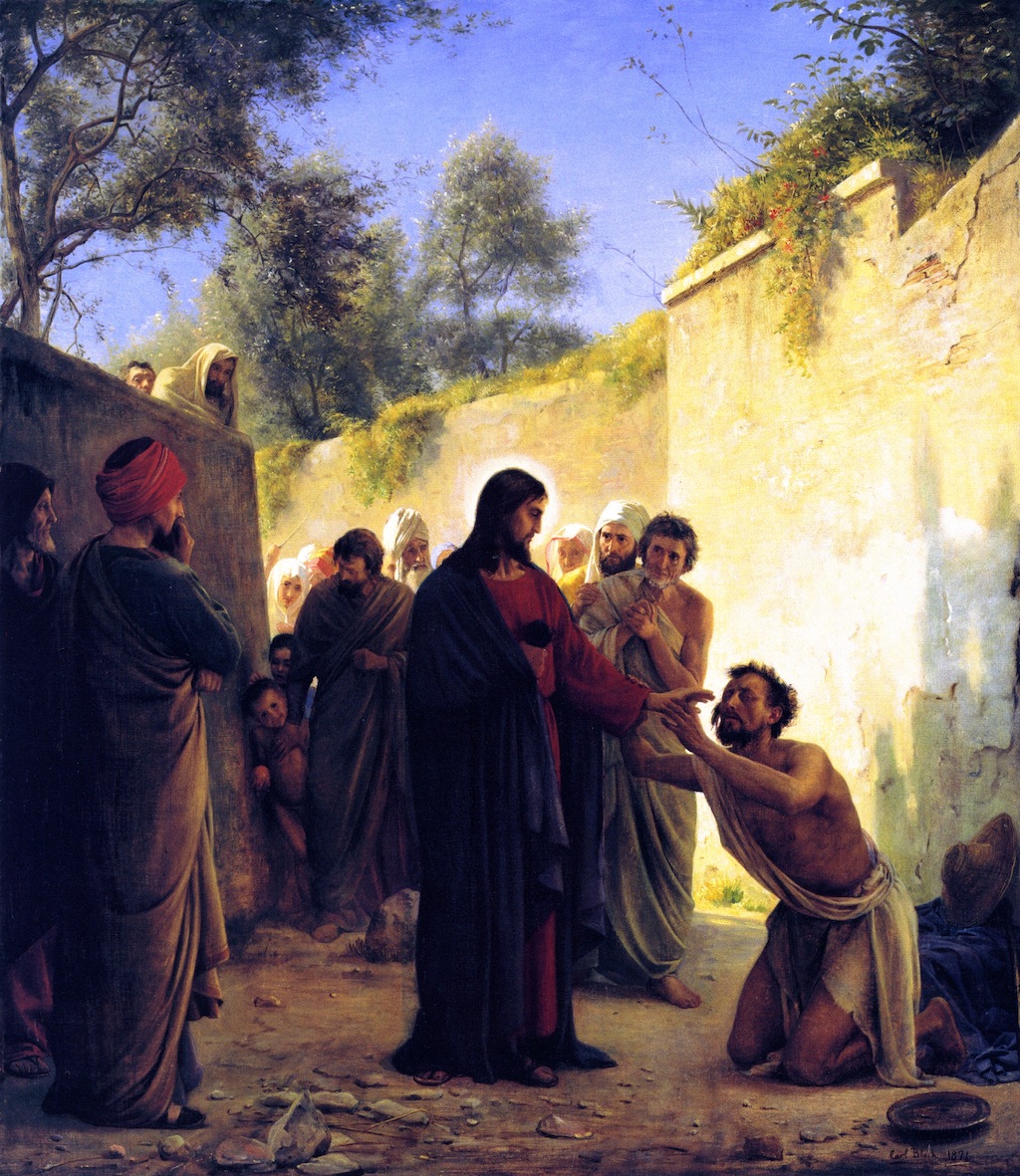
  • The man born blind, in order to one day display the work of God in his life (John 9, especially v. 3).

God doesn’t require hoop-jumping. We don’t have to conjure up articulate prayers to access his presence or follow a prescribed set of steps to avail ourselves of his guidance, comfort, and power.

Even the simple act of speaking Jesus’ name invokes all that he is and all that he can do (John 16:24). How reassuring to know: “When there are no words, when there is no strength, there is always his Name” (2). God intends for us to use it.

Finally, and most encouraging:

God is on our side.  We.  Cannot.  Lose (Romans 8:31-37).

Now the question becomes: Will we move forward on what we know, or stagnate because we cannot see, hear or touch?

Notes:

(1) Faith is a quality God greatly values. “Without faith it is impossible to please God” (Hebrews 11:6). But all it takes is the equivalent of a mustard seed (Matthew 17:20), and our God can move mountains of insurmountable difficulty!

(2) Marilyn Meberg, Boundless Love

Art & photo credits:  http://www.flickr.com (Salvatore Gerace Tuscan); http://www.pixabay.com; http://www.photolib.noaa.gov; http://www.wikimedia.com; http://www.canva.com.

Read Full Post »

See if this biblical statement surprises you as it did me:


“The Lord protects the simplehearted.”  Isn’t that puzzling? I thought scripture warned us against Simple Simon behaviors.

For example, the book of Proverbs speaks repeatedly about the folly of naiveté, foolishness, and recklessness:

  • “A simple man believes anything, but a prudent man gives thought to his steps” (14:15).
  • “The simple inherit folly, but the prudent are crowned with knowledge” (14:18).
  • “A prudent man sees danger and takes refuge, but the simple keep going and suffer for it” (22:3).


God does not generally protect those given to foolishness. More often he allows foolish behaviors to point out our need of him. Clearly simple of heart must mean something else.

I turned to other translations, to see what terms they may have used, and another surprise awaited me. Seven different translations chose seven different descriptors.

The simplehearted are:

  • Unwary (New International Version, 2011)
  • Helpless (Good News Translation)
  • Innocent (New English Translation)
  • Inexperienced (Holman Christian Standard Bible)
  • Ordinary (Contemporary English Version)
  • Defenseless (GOD’S WORD® Translation)
  • Those of childlike faith (New Living Translation)


M-m-m. Those are not particularly desirable qualities in our culture. We tend to value shrewdness and self-reliance, sophistication and exceptionality, strength and power.

But simplehearted is a positive trait in another culture–the kingdom of God–where those with childlike faith are commended (Matthew 19:14).

Further consideration reveals why the simplehearted are in need of protection. At any given time, we are:

  • Unwary of potential danger caused by our enemy, Satan
  • Caught in troubling situations with no means of escape
  • Blameless yet accused (Consider false guilt part of this category)
  • Amateurs in applying God’s Word to the hard choices of life
  • Trapped on the treadmill of humdrum routine
  • Vulnerable to burnout, discouragement, jealousy, anger—you name it


Did you see yourself among those descriptors? I sure do.

But praise God, my frailties do not repulse him. On the contrary, because of his loving and caring nature, he deeply desires to protect us simplehearted folks.

Now there’s another word that can trip us up: protect. We’d like God to keep us completely safe from trouble, pain, and harm. And sometimes he does—even in miraculous ways.

Other times, God protects us through the trouble (2).

Satan, however, wants us to think that God’s promises have failed us if we have to endure hardship.

But one look at the godly people around us who suffer and it becomes clear: God does not create heaven on earth for the subjects of his kingdom.

God’s idea of protection is to keep us out of the hands of the enemy, Satan (2 Thessalonians 3:3)…


…and to guard our hearts and minds with his peace in Christ Jesus (Philippians 4:7)—until he takes us home. Thats when all heartache and pain will cease.

Meantime, “There isn’t a single moment when you’re not tucked next to the heart of God” (3).

Such sweet comfort for those of us with simple hearts, reaching out with childlike faith for our Father’s perfect protection.


*     *     *     *     *     *     *     *     *     *


I praise you, O God, that you protect the simplehearted. Your eye is upon us, your arm is around us, your ear is open to our prayers. Your grace is sufficient, your promises unchangeable. My simple heart is filled with grateful praise!


(2 Chronicles 16:9; Isaiah 40:11; Psalm 34:15; 2 Corinthians 12:9;

Psalm 145:13b, and a John Newton quote)


Notes:

(1) Psalm 116:6a (NIV, 1984, emphasis added)

(2) See Perfect Trouble for more reflection on this topic.

(3) Tony Evans and Chrystal Evans Hurst, Kingdom Woman Devotional


Art & photo credits:  http://www.pixnio.com; http://www.pixabay.com; http://www.maxpixel.net; http://www.flickr.com; http://www.goodfreephotos.


Read Full Post »


Johnny reached for the highball near his workspace, even though it was only 10:00 in the morning. It was a necessity, he told himself, to help release his creativity and wit. How else was he supposed to come up with new ideas day after day?

He had thought a new home in the country would provide inspiration, renewed energy for his work, and the tranquility he longed for. But once he and his wife Bobby settled on their 150-acre estate, with a huge, wood-paneled studio overlooking a 25-acre lake, Johnny found himself just as unhappy and uninspired as before the move.


(Not Johnny’s and Bobby’s lake, but perhaps similar)


The success he’d achieved, the fortune he had acquired, the entertainment he pursued did not provide the satisfaction he’d expected.

Not long after settling into their new home, Johnny and Bobby decided to address its one drawback: there was no television reception. They purchased a satellite system.

The company sent a father/son team to install it—a process that became more complicated and time-consuming than anyone expected. The father and son stayed in the large studio for the days it took to complete the task.

As work progressed to hook up the several TVs in the house and one in the studio, the two men tuned in to a Christian station. Johnny found himself drawn to the screens, listening to the likes of D. James Kennedy, a well-respected preacher and author at the time.  Johnny had been a believer in Jesus when he was young, but had drifted away in adulthood.

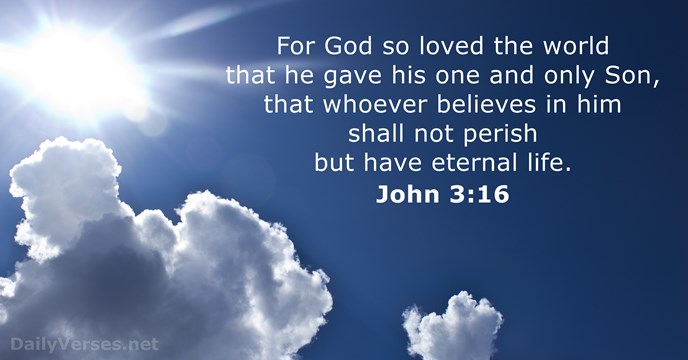
The more he listened, the more he remembered what he’d learned years before in Sunday School: God made us humans and loves us. But we are sinful, and sin separates us from him. So God sent his perfect Son, Jesus, to die in our place. And those who believe in him receive the incredible gift of eternal life with him in heaven when we die (John 3:16).


Johnny began reading the Bible and felt his doubts, dissatisfaction and fears melting away. In their place he noticed a deep sense of peace and purpose.

Part of that purpose was to allow his rekindled faith to impact his work as a cartoonist. He began to include Christian references in his highly successful comic strip, “B.C.”

You might remember it. Simple drawings of cavemen, dinosaurs, ants, and other animals inhabited a very stark habitat. The genius wasn’t in the drawings; it was in the puns, irony, wordplay, and dry humor that Johnny Hart produced for fifty years, from 1957-2007.

For example, in one strip, a caveman says, “God, if you’re up there, give me a sign.” In the next frame, a huge neon sign sits crookedly and slightly buried in the sand in front of the caveman. It has obviously just fallen from the sky, and it reads—in big capital letters—“I’M UP HERE.”

Of course, Johnny was criticized for those strips that affirmed Christian beliefs. His response to such reproach was to ask a question:

“What purpose would I serve if I had the answer to the mystery of life only I did not tell it for the sake of what other people believe (1)?”

One of Johnny Hart’s strips about the mystery of life moved me to tears.

It appeared on Good Friday, 1996.

There were simply four empty panels with no artwork and no conversation bubbles. The first panel was gray, the second a shade darker, the third darker still, and the last frame was completely black. That final panel carried the simple caption: Good Friday.

Such a simple presentation, but overflowing with meaning. For me, the progression toward black was symbolic of Jesus’ experiences that day—from betrayal in the Garden of Gethsemane to an unlawful trial, a flogging, a crown of thorns, a heavy cross to carry, and the worst torture man has ever devised: crucifixion. The land was shrouded in darkness that day for three hours (Mark 15:33).

But oh, it is Good Friday, because that darkest deed of history became our bright victory (1 Corinthians 15:54-57).


And because of Jesus’ profound sacrifice, we do have hope, peace, purpose, and more.

Johnny Hart would want us to know.


Note:

(1) https://www.washingtonpost.com/archive/lifestyle/1999/04/04/god-thats-funny/38fc77f9-dee5-4a18-b8c5-e5283c3e0964/?utm_term=.ff75a4558709


Sources:

1) https://www.charismamag.com/site-archives/572-newsletters/the-buzz/4671-johnny-hart-i-did-it-his-way

2)http://jeffjenkinsocala.blogspot.com/2008/07/bc-comics-censored.html

3) https://www.washingtonpost.com/archive/lifestyle/1999/04/04/god-thats-funny/38fc77f9-dee5-4a18-b8c5-e5283c3e0964/?utm_term=.ff75a4558709


Photo credits:  http://www.flicr.com; http://www.publicdomainpictures.net; http://www.dailyverses.net (2).


Read Full Post »


“Stand with me and sing!” invites the enthusiastic worship leader on the church platform, while guitars begin an upbeat tune and drums rap out a foot-tapping rhythm.

Around me people sway a bit to the music, some raise their hands, others worship with eyes closed.

And though I, too, sway and raise my hands, I have to admit my heart’s not in it. For some reason, lyrics that have brought me to joyful tears on other occasions are not penetrating today.

My spirit seems paralyzed—no feeling whatsoever. Efforts to engage—focusing on the words and imagining my Heavenly Father on his throne, listening with parental pleasure—don’t seem to help.

What’s wrong with me? I wonder.

Perhaps you’ve experienced the same numbness in corporate worship, maybe during personal quiet time or at prayer. And like me, you’ve felt certain that something must be wrong.


Granted, we worship God to honor him. Our end goal is not to rustle up feel-good endorphins for us.

But, according to the Westminster Shorter Catechism, we were created to glorify God and enjoy him forever. How is that even possible when we come down with a case of the spiritual blahs?

Actually, days and even seasons of spiritual dryness are a normal part of our faith-walk, experienced by almost every Christian at one time or another. And there is comfort in that, knowing we’re not alone.

Theologian Sam Storms offers us further encouragement:


“God is glorified by your longing for the joy to be found in him,

even if you are not yet experiencing it” (1).


But are there strategies we can implement to jump-start our hearts into exuberant responsiveness?

As a matter of fact, yes.


We can: 

1. Be honest with God.

King David certainly was. “I spread out my hands to you;” he cried. “My soul thirsts for you like a parched land” (143:6).

Yet in spite of his emotional tailspin, David writes, “I have put my trust in you. Show me the way I should go, for to you I lift up my soul (v. 8).


David provides a worthy example to follow: acknowledge the truth; affirm our trust, and seek God’s guidance.


2. Rehearse what we know about God’s character, his promises. 

Our minds are renewable resources (Romans 12:2). We can turn our thoughts away from the numbness we’re experiencing at the moment, and focus on what is lovely and true, excellent and praiseworthy about our God.

Sometimes such thought processes are all that’s necessary to bring us out of the doldrums (Psalm 92:4).


3. Persevere in spite of our emotions.

Keep showing up in God’s presence whether we feel like it or not.

Our emotions must not be allowed to control actions. In fact, God especially appreciates a sacrifice of praise (Hebrews 13:15), which surely includes offering him our worship when the fervency just isn’t there.


4. Anticipate.

Worship with an outlook on the future (Psalm 42:1-2). We can look forward to the day when our hearts will overflow again with ecstatic praise—even to the point of joyful tears.


5. Pray. 

Perhaps something like this: 

“Father in heaven, flood the dry places of my soul with your presence; lift the gray clouds that conceal you. Within my spirit I want to feel the warmth of your radiant Light, be wrapped in your unfailing love, and fly with you on the wings of the dawn!

In trusting expectancy I wait for you, O Lord. I know you will answer.”


(Isaiah 44:3; Psalm 4:6, 32:10, 139:9, 38:15)


What helps you beat the spiritual blahs?  Please share your thoughts in the comment section below!


Note:

(1) https://www.crosswalk.com/church/worship/how-can-i-worship-when-i-feel-nothing.html


Photo credits:  http://www.wikimedia.com; http://www.pixabay.com; http://www.pxhere.com; http://www.dailyverses.net; http://www.heartlight.org; http://www.canva.com (2).


Read Full Post »

That’s what we can expect when we choose to live God’s way: supreme blessedness.  Jesus made that clear in his Sermon on the Mount (Matthew 5-7).  You’ll remember he began with eight statements of blessing called beatitudes.

One example:


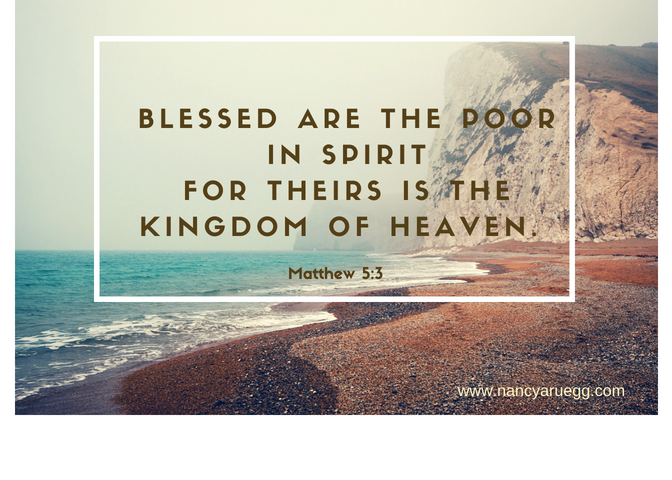
In other words, profound joy comes to those who humbly depend on God, as they avail themselves of his heavenly kingdom-benefits.

Of course, there are many other attitudes and actions he rewards, in addition to those eight Jesus named.

Below are listed several means to blessedness that have come to my attention over the years. Perhaps you’ve experienced them too:


Blessed are the risk-takers, for they shall sail on winds of faith.


“A ship in port is safe, but that’s not what ships are built for” (Grace Murray Hopper).


Think of Abraham.


“By faith Abraham…obeyed and went,

even though he did not know where he was going.”

–Hebrews 11:8


We too have to be willing to travel blind toward undisclosed destinations. Otherwise we’ll never experience the thrill of God’s power taking us to ports we’ve never dreamed of.

The way ahead is always hidden, sometimes causing uncertainty.  But!  We know the One who’s leading. Uncertainty does not have to cancel out confidence.


Blessed are those who seek God’s desires, for they shall know delight and fulfillment.

Somehow we think the pursuit of our own desires will bring satisfaction.  But haven’t we seen enough of the rich and powerful crash and burn in despair?  “Everything [is] meaningless; a chasing after the wind” (Ecclesiastes 2:11).

How much better off we are to pray along with the psalmist:


It is in the practice of obedience we learn its precious worth.


Blessed are the encouragers for they shall be encouraged.

Such an interesting phenomenon: make the effort to lift someone else’s spirit, and you find your own spirit uplifted.  Actually, wise King Solomon recorded this be-attitude long ago:


Guaranteed double pleasure.  How’s that for supreme blessing?


Blessed are the sifters of thoughts, for they enjoy golden contemplations.

If we’re not careful, our minds can easily gravitate toward dross thoughts–the negative, unwholesome, and ugly.  It takes effort to seek out the gold: the honorable, lovely, and commendable. But true contentment awaits those who do.


Blessed are the focused for they shall not spread themselves too thin.

Our bodies were made for a rhythm of rest—7 to 8 hours out of every 24. Short-changing sleep actually lowers our productivity and endangers our health (1).

That’s why:


We just can’t do it all, much as we’d like to. Priorities and parameters must be set. That means, saying no to some good things may be the best choice.  We must give others permission to do the same also.


Blessed are those who pay attention to the ordinary, for they discover the extraordinary.

For example:

  • Icicle sentries in winter, clinging to the seat of a deck chair


  • Wildflowers in springtime, cupping tiny pink and yellow stars


  • Sunbeams on a summer morning, filtering into the glen


  • God’s artistry (and penchant for color!) splashed on autumn leaves


Each eye-catching display is a precious love-gift from our Heavenly Father. And around us are countless more, waiting to be discovered, savored, and praised.


“Great is the Lord and most worthy of praise;

his greatness no one can fathom.”

–Psalm 145:3


And there you have six more beatitudes–examples of God’s supreme blessedness lavished upon us–when we choose to live by his wise and loving ways.


What be-attitude would you add?  Share your thoughts in the comment section below!


Note:

1) https://www.webmd.com/sleep-disorders/features/tired-at-work#1 and https://www.webmd.com/sleep-disorders/news/20170209/skimp-on-sleep-and-you-just-may-wind-up-sick#1


(Art & photo credits:  http://www.canva.com; http://www.wikimedia.org; http://www.canva.com; http://www.flickr.com; http://www.canva.com; http://www.libreshot.com; Nancy Ruegg (3); http://www.pixabay.com; http://www.canva.com.)


Read Full Post »

We’re all familiar with the extraordinary accomplishments of:


  • Beethoven—composing masterful concertos, symphonies and more while deaf
  • Michelangelo—creating over-sized artworks with awe-inspiring realism
  • Shakespeare—writing dozens of plays and hundreds of sonnets with words that flowed “like a miraculous Celestial Light-ship, woven all of sheet-lightning and sunbeams” (Thomas Carlisle)

Geniuses indeed. But even more important than brilliance was their willingness to exert great effort.


Beethoven rewrote nearly every bar of his compositions at least a dozen times.

Michelangelo produced more than 2,000 preparatory sketches for “Last Judgment” alone, a painting considered by many as one of the best artworks of all time. It took eight years to complete.

Even Shakespeare must have revised again and again before his words approached the sublime eloquence he is known for.


The more we know of such masters, the more we realize: their works required enduring patience, tenacious persistence, and sharp focus.

It just so happens that God values those three attributes also. And since he’s working in us to foster all positive traits, we each have the potential to create masterpieces.

Of course, works of genius include much more than symphonies, paintings, and plays.  Are you part of a ministry, community project, or volunteer organization? Are you a parent, grandparent, mentor, or friend? These are just a few ways you and I contribute to the most valuable masterpieces of all—the people around us.


But there is effort involved. God chooses not to do it alone; he invites us to join with him in the work.  So what might be our part in developing those important qualities of patience, persistence, and focus, necessary for developing our genius?

The following steps may provide a good start.


Step #1: Practice waiting.


It is a fact: most worthwhile endeavors take time. Usually lots of it.

In addition, patience requires stamina to endure delay.

Consider Dr. Albert Sabin, who researched polio and developed the oral vaccine.  His mission required thirty-one years of painstaking effort.


Step #2: Expect to be stretched by struggle.

Oswald Chambers, in My Utmost for His Highest, likens the believer in the hands of God to the bow in the hands of an archer. God stretches us beyond what we think we can bear. And when his purpose is in sight, then he lets fly.

Consider Dr. Jason Fader, son of medical missionaries who now serves as a medical missionary himself in Berundi, Africa–after grueling medical training, intense language school, and challenging fund-raising.  But in 2017 he was chosen as the first recipient of the Gerson L’Chaim Prize for Outstanding Christian Medical Missionary Service ( Jason’s story).


Step #3: Persist—with the application of faith, prayer, and hope.

We must be willing to tolerate discomfort, perhaps for an extended period of time.

However, the genius-in-the-making under God’s tutelage does not plod along as he perseveres; he plots. He sets his coordinates for the course ahead by faith, prayer, and hopetrusting in God’s promises, asking for God’s guidance, and embracing the possibilities of tomorrow as well as the challenges of today—because in all of it there is good.

Consider George Muller of Bristol, England, whose five orphanages housed over 2,000 children at any one time.  Muller not only wanted to care for these children but demonstrate that God would meet “all their needs as a result of prayer and faith, without any one being asked or approached” (www.mullers.org).  His story includes miracle after miracle.


Step #4: Remain focused on the task at hand.

A genius does not allow distraction or discouragement to sidetrack him. He takes delight in the present moment while: composing one bar of sublime, symphonic fusion, getting the light just right in one small area of the canvas, or choosing specific, rhythmic words for one line of imagery.

But even more important for the believer, she is inspired and directed by God himself. His plan may include an exceptional piece of music, art, or writing. Or, perhaps even more importantly, it may include exceptional input into the lives of others–through kindness, encouragement, and integrity.


It is God who is the Supreme Genius, masterfully weaving a tapestry of circumstances and relationships among his people. The full beauty of this masterpiece will not be revealed until we all arrive in heaven.

Then we’ll see the results of the God-given genius in each of us, our patience, perseverance, and focus, woven into God’s perfect design.

And what a celebration will ensue.


(Art & photo credits:  http://www.wikimedia.com; http://www.wikipedia.com (2); http://www.ramstein.af.mil; http://www.flickr.com; http://www.vi.wikipedia.com; http://www.georgemuller.org; http://www.flickr.com.)


Read Full Post »

« Newer Posts - Older Posts »

When the House is Quiet

Impressions Becoming Expressions

Mitch Teemley

The Power of Story

Still Traveling

Impressions Becoming Expressions

Living Our Days

Gaining a heart of wisdom

He Said What?!

I'm Patty, and my husband and I are living with our adult son who has autism and epilepsy. I love sharing lessons learned from life around me, especially life with Aaron.

Meditations of my Heart

Impressions Becoming Expressions

Linda Stoll

Impressions Becoming Expressions

Signora Sheila

Where faith meets la dolce vita

Heidi Viars

Finding the Image of God