Feeds:
Posts
Comments

Archive for the ‘Faith’ Category

Interesting, isn’t it, how the slightest trigger can transport us back through time?

  • A song might remind us of that first date with our spouse
  • The fragrance of lilacs brings to mind a previous home
  • The first bite of a family recipe at Thanksgiving conjures up bittersweet memories of another table long ago


They say that the memory of everyone we’ve known, every place we’ve been, and everything that’s happened to us is submerged in our subconscious. And the slightest nudge—haphazard as it might be–can bring a memory bobbing to the surface with surprising force.

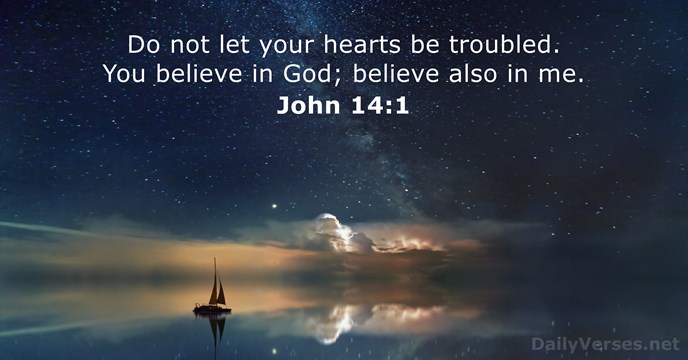
But there’s another kind of remembering—a deliberate quest to seek truth for our lives—to understand how the hurts, mistakes, and losses, the treasured times, precious people, and lessons learned, reveal God’s work within us and for us, bringing good from it all.

For example, looking back through our memories we see:


God has given us strength to persevere.

At times we thought we’d never make it. Friends proved unfriendly and while the sting smarted we struggled to understand why the relationship went wrong.

Circumstances turned our lives upside down and we couldn’t see how to make things right again.

Death claimed a loved one and the pain seemed unbearable, unending.


But here we are. We survived, because God brought us through each calamity.


God has taught us the value of his wisdom.

Most of us have made choices along the way that seemed right but proved wrong.

Perhaps it was a relationship with someone whose habits provided troubling warning signs, but we ignored them and later suffered heart-rending hurt.

Or, perhaps we pursued an appealing, self-serving dream, only to discover its fulfillment did not produce the satisfaction we expected.

Some of us had to learn the hard way: God’s wisdom in scripture is truth after all, including his warning against relationships with fools (Proverbs 13:20) and the emptiness of selfish gain (Ecclesiastes 2:1-11).


But he also promised blessing for those who follow his all-wise guidance:


“Whoever gives heed to instruction prospers,

and blessed is the one who trusts in the Lord.”

–Proverbs 16:20


God has demonstrated his faithfulness in countless ways.

Consider the categories listed below and allow your memory to plumb the depths, bringing to the surface people, places, and events from the past that reflect God’s faithfulness:


  • Nurturing family members
  • Loyal, supportive friends
  • Secure places of contentment
  • Health issues resolved
  • Knots of circumstances untangled
  • Necessities miraculously provided
  • Blessings bestowed, not even asked for

 And what can we anticipate as the result of this kind of remembering?

Peace.

Because we realize for all our yesterdays, God has…

…enabled us to power through on his strength,

…provided his wisdom to guide us through murky circumstances,

…and been at work in our lives for our benefit—sometimes in the form of gifts, sometimes in the form of lessons.


Such reassurances can settle fear, doubt, and worry, allowing peace to flourish today and into all our tomorrows.

This kind of remembering intentionally entwines past and future so memories become woven into faith-filled expectation.


(Photo credits:  http://www.flickr.com; http://www.pixnio.com; http://www.canva.com; http://www.needpix.com; dailyverses.net.)


Read Full Post »

Did you catch last week’s post, “There’s No Such Thing as a Christian Genius?”

That title came from a blog-responder some years ago who didn’t realize evidence refuted his opinion. Intelligence is to be found among believers in Jesus—in the sciences (as we discovered last week), and in the humanities, as presented below:

ART 

Albrecht Durer (1471-1528)—considered by many as the greatest Renaissance artist of northern Europe. His career began at the dawn of the Reformation under Martin Luther, whom Durer supported.

One of his prayers penned five hundred years ago is just as applicable today. Included here are excerpts:

O God in heaven, have mercy on us!

Preserve in us the true genuine Christian faith,

Help us recognize your voice,

Help us not to be allured by the madness of the world,

So that we may never fall away from you,

O Lord Jesus Christ (1).

Self-portrait of Durer

Casper David Friedrich (1774-1840) produced more than 500 works. He is best known for his landscapes, all of which possessed a spiritual quality and meaning.

Friedrich expressed his convictions in poetry as well:

Through the gloomy clouds break

Blue sky, sunshine,

On the heights and in the valley

Sing the lark and the nightingale.

God, I thank you that I live

Not forever in this world

Strengthen me that my soul rise

Upward toward your firmament (2).

Two Men Contemplating the Moon by Friedrich, ca. 1824

Thomas Cole (1801-1848) was one of several who led the Hudson River School, a group of painters known for their realistic landscapes.

They desired to portray the presence of God in his creation. One technique was to include small human figures surrounded by mammoth trees and vast meadows.

Cole saw “the mission of the artist as a spiritual one, to spread the Word of God through art devoted to nature” (3). To that end, Cole prayed before he painted.

Dream of Arcadia by Cole, ca. 1838

MUSIC

George Frideric Handel produced numerous works in at least seven genres. His most remarkable effort is perhaps his most famous composition, Messiah, which he accomplished in just twenty-four days.

In 1759, while receiving an ovation after his last performance, Handel cried out: “Not from me…but from Heaven…comes all” (4).

He hoped to die on Easter, hoping to “meet his good God, his sweet Lord and Savior, on the day of his Resurrection” (5). Handel arrived in heaven the day before, in 1759.

George Frideric Handel

Johann Sebastian Bach, another prolific composer, is considered one of the greatest Western composers of all time.

While serving as a church organist and teacher, he set an impossible goal: write a different cantata for every Sunday, for three years. Not only did Bach create the music, but made sure his singers and instrumentalists had copies, and time to rehearse with him before each Sunday’s service.

Even on his secular works, Bach often wrote “I.N.J.” for “in the name of Jesus.” Finished manuscripts were frequently initialed, “S.D.G.”—Soli Deo Gloria (to God alone, the glory) (6).

“Soli Deo Gloria” in Bach’s own hand, bottom right

Felix Mendelssohn excelled in numerous fields: philosophy, linguistics, watercolor painting, poetry, gymnastics, and of course, music. During his brief life of only thirty-eight years, Mendelssohn produced approximately 750 musical works in nearly every genre.

He gained great popularity and prestige as a musician, yet maintained a humble and devout faith in Christ.  In one of his letters, Mendelssohn wrote: “Pray to God that He may create in us a clean heart and renew a right spirit within us” (7).

LITERATURE 

Elizabeth Barrett Browning (1806-1861) had no equal in the literary history of any country, according to the Edinburg Review (8). Her literary works reflected keen intelligence and deep faith. As a teenager, she taught herself Hebrew so she could read the Old Testament with greater understanding.

Browning’s writings often explored Christian themes:

“Earth is crammed with heaven,

and every common bush is afire with God.

And only those who see take off their shoes;

the rest sit around and pluck blackberries” (9).

–from Aurora Leigh

And from the poem, “Comfort”:

“SPEAK low to me, my Saviour, low and sweet
From out the hallelujahs, sweet and low
Lest I should fear and fall, and miss Thee so
Who art not missed by any that entreat” (10).

Elizabeth Barrett Browning

G. K. Chesterton (1874-1936) distinguished himself as an essayist, columnist, humorist, poet, and novelist. About him, one evangelical scholar wrote : “There has not been a more articulate champion of classic Christianity, virtue, and decency.”

Articulate indeed:

“Just going to church doesn’t make you a Christian any more than standing in your garage makes you a car”—original source unknown (11).

“These are the days when the Christian is expected to praise every creed except his own.”—from the Illustrated News, 8-11-1928 (12).

G. K. Chesterton

Clive Staples Lewis (1898–1963), professor at Oxford and then Cambridge, is considered one of the intellectual giants of the twentieth century. He authored more than thirty books; many are popular to this day.

Lewis came to Christian faith out of atheism, through the reading of such authors as George MacDonald, G. K. Chesterton, and others. Also influential, other intellectuals of faith associated with Oxford, including J. R. R. Tolkien.

C. S. Lewis came to understand:

“Look for yourself and you will find in the long run only hatred, loneliness despair, rage, ruin, and decay. But look for Christ and you find Him, and with Him, everything else thrown in”from Mere Christianity (13).

C. S. Lewis, ca. 1940

______________________________

As noted last week, it is a fact many acclaimed geniuses have chosen not to become Christians.

But it cannot be said there is no such thing as a Christian genius.

Again, who would you add to the list?  Please share in the comment section below!

Notes:

  1. historyofpainters.com/durer/
  2. As quoted and translated by Linda Siegel in Caspar David Friedrich and the Age of German Romanticism, 1978, p. 48.
  3. https://www.equip.org/article/what-has-art-to-do-with-evangelism/
  4. christianheritageedinburgh.uk
  5. https://www.christianitytoday.com/history/people/musiciansartistsandwriters/george-frideric-handel.html
  6. christianheritageedinburgh.uk
  7. thirdmill.org/paul/impact_mendelssohn.asp
  8. poetryfoundation.org/poets/elizabeth-barrett-browning
  9. https://www.bartleby.com/236/86.html
  10. https://www.poemhunter.com/poem/comfort/
  11. http://famousquotefrom.com/g-k-chesterton/
  12. https://www.chesterton.org/quotations-of-g-k-chesterton/
  13. http://www.cslewisinstitute.org/cslewisonauthenticdiscipleshippage4

Photo credits:  http://www.flickr.com; http://www.picryl.com; http://www.wikimedia.org; http://www.wikipedia.org; http://www.wikimedia.org; http://www.wikipedia.org; http://www.wikimedia.org (2); http://www.flickr.com.

Read Full Post »
At least that’s what an anonymous responder tried to persuade the readership on a blog some years ago. According to this person, the Bible is just “a bad book of poetry” that no intelligent person would believe. And he challenged other readers to name a Christian genius (1).

Okay.  Here are a few to begin the list:

MATHEMATICS

Blaise Pascal’s notable mathematical works included the development of the theory of probabilities. Later in life, he devoted himself to theological writings. “There is a God-shaped vacuum in the heart of every man which cannot be filled by any created thing, but only by God, the Creator, made known through Jesus” (2).


Blaise Pascal (1623-1727)


Sir Isaac Newton, famous for his laws of physics, also paved the way for the subject of calculus. He too dedicated his later years to interpreting scripture. “Godliness consists in the knowledge, love, and worship of God, Humanity in love, righteousness & good offices towards man” (3), he wrote.


Sir Isaac Newton (1643-1727)


Dr. John Lennox is Professor Emeritus of Mathematics at the University of Oxford. He has published over seventy mathematical papers and co-authored two research level texts in algebra. But Lennox is also an astute Christian apologist, and has written such books as Can Science Explain Everything (4)?


Dr. John Lennox (1943- )


SCIENCE

Sir Francis Bacon, who established the scientific method, viewed science as a way to learn deeper truths about God. In his will, he included this final prayer: “When I thought most of peace and honor, thy hand [was] heavy on me, and hath humbled me, according to thy former loving kindness. … Just are thy judgments upon my sins. … Be merciful unto me for my Savior’s sake, and receive me into thy bosom” (5).


Sir Francis Bacon (1561-1626)


Galileo Galilei (1564-1642)–One of the most important and influential physicists, astronomers, inventors and scientists to ever live. He saw no conflict between science and faith in God. “God is known by nature in his works, and by doctrine in his revealed word” (6).


James Clerk Maxwell memorized the Bible by the age of 14.  Yes, the whole thing. His extensive scientific studies determined that light is an electromagnetic wave, and his kinetic theory established that temperature is entirely dependent on the speeds of particles. Upon his death, a colleague wrote: “We his contemporaries at college, have seen in him high powers of mind and great capacity and original views, conjoined with deep humility before his God, reverent submission to His will, and hearty belief in the love and atonement of that Divine Savior” (7).


James Clerk Maxwell (1831-1879)


MEDICINE

Sir James Simpson, an outstanding obstetrician, pioneered many techniques in his field. He’s also credited for his discovery of the anesthetic qualities of chloroform. But when asked by a journalist about his greatest discovery, Dr. Simpson replied he was a sinner and Jesus Christ his Savior (8).


Sir James Simpson (1811-1870)


Dr. Joseph Lister, the father of modern surgery, determined as a medical student to not just practice medicine, but to also conduct research. Among the surgical techniques he developed, Lister proved the benefits of antiseptic surgery. A devout Quaker, Lister made it clear: “I am a believer in the fundamental doctrines of Christianity” (9).


Dr. Joseph Lister (1827-1912)


Alexander Fleming–biologist, physician, microbiologist, and pharmacologist—changed the world when he discovered penicillin, but he gave God the credit. “Discoveries of this magnitude are rare . . . God took care to hide that country till he judged his people ready; then, he chose me for his whisper and I found it and it’s yours.” Fleming also asserted: “My greatest discovery was that I needed God, and that I was nothing without him and that he loved me and showed his love by sending Jesus to save me” (10).


Alexander Fleming (1881-1955)


Still further evidence of genius is found among the humanities. In an effort to keep this post of reasonable length, I’ll save that topic for next week.   But perhaps you’ll enjoy uncovering evidence for yourself of the godly faith of these Christians and others. The websites listed below offer a beginning point.

It is a fact that many proclaimed geniuses have chosen not to become Christians. God has chosen to bestow brilliant minds among all mankind, just as he grants the rain on the just and the unjust (Matthew 5:45).

But it cannot be said there is no such thing as a Christian genius.


___________________________________________


What Christian geniuses would you add to the list?

Please share in the comment section below!


Notes:

1. http://www.rightnation.us/forums/index.php?autocom=blog&blogid=7&showentry=742

2. https://www.timetoast.com/timelines/contributions-of-famous-christian-mathematicians 

3.  same as above

4.  https://www.rzim.org/speakers/john-lennox

5.  https://www.christianitytoday.com/history/people/scholarsandscientists/francis-bacon.html

6.  https://www.christianitytoday.com/history/people/scholarsandscientists/galileo-galilei.html

7.  https://creation.com/great-creation-scientists-james-clerk-maxwell

8.  http://evangelicalfocus.com/blogs/3118/The_Reformation_and_Medicine_My_lecture_to_commemorate_the_500th_anniversary-

9.  https://answersingenesis.org/creation-scientists/joseph-lister-father-of-modern-surgery/

10.  http://www.staplefordresources.co.uk/files/files/Alexander_Fleming.pdf


Other Sources:

https://coldcasechristianity.com/writings/the-rich-historic-roll-call-of-great-christian-thinkers-and-scientists/

https://www.famousscientists.org/great-scientists-christians/

http://evangelicalfocus.com/blogs/3118/thereformationandmedicinemylecturetocommemoratethe500thanniversary_

https://relevantmagazine.com/god/9-groundbreaking-scientists-who-happened-be-christians/

https://answersingenesis.org/intelligent-design/signature-god-medicine-and-microbiology/


Art & Photo credits:  http://www.wikimedia.org (2); http://www.flickr.com; http://www.wikimedia.org; http://www.azquotes.com; http://www.flickr.com (2); http://www.wikimedia.org (2).


Read Full Post »


“I made soup,” she says.

I peer into the pot to see a chicken leg, a whole apple, a cluster of green beans and an ice cream cone.

“Eat some!” she coaxes.

I spoon a bite and assure her, “Oh, this is delicious.”

She smiles broadly. “I make dessert.” And two-year old Maarit (Mah-rit), our granddaughter, trots back to her child-size kitchen to bake a plastic cake or pie.


It’s such fun to watch little ones enjoy their vivid imaginations, and it comes so naturally to them. No one has to teach toddlers how to pretend; they just do. But as we grow and leave childish things behind, most of us abandon our imaginings.

Oh, what we’re missing.

In a post a couple of years ago (Oh, Say Can You See), we looked at three ways an active imagination can positively impact our faith, helping us to better understand God, add insight to Bible reading, and see more in this incredible world he’s created.

Today let’s consider three more ways. 

  1. With an active imagination, we are more likely to see people and situations the way God sees them. 

In his Word he calls us to see people for what they could be and will be as they avail themselves of his transforming power. We’re also called to see situations with forward-looking faith in God’s ability to do far more than we can imagine (1).

By contrast, our thoughts too often veer to the negative. We forget what the Apostle Paul told us in Philippians 4:8—to think on excellent and praiseworthy things.


C. S. Lewis helped a woman do just that in a letter he wrote as she lay in a hospital contemplating the possibility of death:

“Think of yourself,” he said, “just as a seed patiently waiting in the earth: waiting to come up a flower in the Gardener’s good time, up into the real world, the real waking. I suppose that our whole present life, looked back on from there, will seem only a drowsy half-waking. We are here in the land of dreams. But the cock-crow is coming” (2).

Surely Lewis’s words stirred fresh hope in her heart as he awakened her imagination to a new perspective. In your mind’s eye, can you see excellent, praiseworthy events unfolding in the situation that most concerns you? Allow such imaginings to provide fresh hope for your heart.

  1. With an active imagination we can envision the kingdom of God that exists here and now, even though hidden from view. 

The very nature of faith requires imagination, because the kingdom of God cannot be perceived by the senses. It exists invisibly among and within those who invite King Jesus to rule in their lives (3). But our imaginations can help us access the invisible through the visible as we contemplate:


  • The glory of God in the splendor of creation
  • The rule of God in the organization of the universe
  • The goodness of God in our numerous blessings
  • The wisdom of God in his precepts that usher in abundant life
  • The power of God, as he transforms misery to joy, trouble to triumph, and even bitterness to forgiveness
  1. With an active imagination we can experience God more fully. 

For example, what if we:


  • Imagine God sitting with us as we pray, our hands pressed between his, his head leaning in close to hear our every word. Would it be easier to sense his presence, stay focused, and pray with more intensity?
  • Imagine God at our right hand as we work through our days (Psalm 121:5). He is our ever-present Protector, Guide, and Help. Might such visualization reduce stress? Could mindless tasks become sublime opportunities to enjoy his presence and access his strength?
  • Imagine God on his throne as we worship, with his dazzling radiance signifying splendor, and his voluminous robe representing power (4). Might the joy and passion of our worship-experience be enhanced as we contemplate his magnificence?


You might remember that Jesus held children in great regard. He suggested that adults become like little children to enter the kingdom of God (Matthew 18:1-5). Granted, his emphasis was upon trust, loyalty and humility. But responding to him with the imagination of a child as well will help us fly beyond the stars.


I don’t want to miss that. I’m guessing you don’t either.    


Notes:

  1. Philippians 1:6; Ephesians 3:20
  2. The Collected Letters of C. S. Lewis, vol. 3: Narnia, Cambridge, and Joy, 1950-1963, [2007]
  3. Hebrews 11:1; Luke 17:21
  4. Ezekiel 1:27; Isaiah 6:1-2


Photo credits:  http://www.pxhere.com; http://www.edwards.af.mil; http://www.heartlight.org; http://www.goodfreephotos.com; http://www.pixabay.com; http://www.flickr.com.; http://www.quotefancy.com.


Read Full Post »
It happened again. I was reading a familiar Bible passage when a new question presented itself.

Here’s the scripture:


The first two reasons made perfect sense. Pushing through difficulty does produce endurance, and endurance results in the formation of character–traits like responsibility, self-discipline, and patience.

If Paul had concluded by saying character produced maturity, I’d have heartily agreed and read on. But he says character fosters hope, which led to my question: Why hope?

To begin, we need a clear understanding of what hope means. Which of these definitions do you find most insightful?

Hope is: a) looking forward with confidence and expectation (Beth Moore), b) the reality that is being constructed but is not yet visible (Eugene Peterson), or c) happy certainty (J. B. Phillips).


Actually, instead of choosing, let’s weave them together: Hope is the attitude of looking forward with confidence, expectation, and happy certainty to the reality being constructed though not yet visible.

Author Katherine Paterson would also have us understand: “Hope… is not a feeling. Hope is something we do”–such as:

  • Affirming God’s omnipotent power—power that can accomplish anything (Matthew 19:26).


When we are facing the impossible,

we can count upon the God of the impossible.

–Amy Carmichael


  • Remembering God’s promises of the Bible—promises that never fail (Psalm 145:13b).


Quit studying the problems

and start studying the promises.

–Ruth Graham


  • Practicing God’s presence—presence that instills comfort, encouragement, and strength (Psalm 94:19; Isaiah 41:10; Joshua 1:9).


Few delights can equal the mere presence

of one whom we trust utterly.

–George MacDonald


In the 1980s, retired millionaire Eugene Lang was asked to speak to the graduating six graders of his East Harlem alma mater. He planned to share his story and encourage them that effort and perseverance do produce success.

But when he took the podium, Lang changed his mind.

“Stay in school,” he charged them. “In fact, it is so important, I’m going to make you a promise. You stay in school, and I’ll help pay the college tuition for every one of you.”


No doubt some of the students thought, “Yeah, right.”

Most of these kids had already experienced a lifetime-worth of disappointment. Why should they believe this old guy?

Yet even the most cynical among them had to admit: Mr. Lang did have the financial power to keep such a promise—a promise announced in front of numerous witnesses.

Soon Mr. Lang founded the I Have a Dream Foundation and convinced others to add their support. He exercised his own financial power to hire a project coordinator, finance field trips, and provide mentors and tutors for each student.


Mr. Lang made his presence known by taking students to restaurants and museums. He personally counseled them through crises, and intervened with school officials on their behalf.

The kids responded. They began to work toward the goal of a college education, learning self-discipline, perseverance, and responsibility along the way. As those character traits and more developed within them, their hope grew that Mr. Lang’s promise would manifest itself in reality.

Six years after that impromptu offer, nearly ninety percent of the students graduated from high school, and close to half were enrolled for college in the fall. Character did indeed lead to hope—hope that looked forward with confidence, expectation, and happy certainty to a reality under construction.*


Mr. Lang typified what God does for us, developing our character so we might grow in hope—a hope for every tomorrow based on his power, promises, and presence, and a hope that can see heaven through the thickest clouds (Thomas Brooks).


Addendum: As of 2017, approximately two hundred I Have a Dream programs were in operation in the United States and in New Zealand, assisting more than 16,000 students.*


* https://www.nytimes.com/2017/04/08/nyregion/eugene-lang-dead-harlem-college.html


Photo credits:  http://www.canva.com; http://www.jbsa.mil; http://www.pixabay.com; Nancy Ruegg; http://www.heartlight.org; http://www.flickr.com; http://www.nps.gov; http://www.vaguard.dodlive.mil.


Read Full Post »


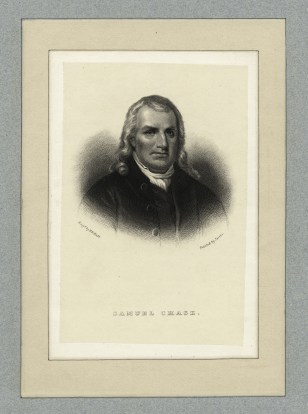
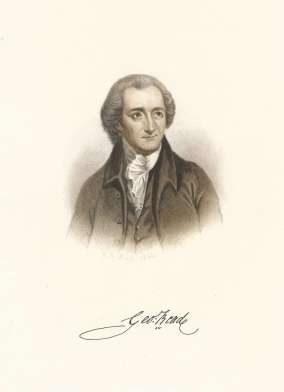
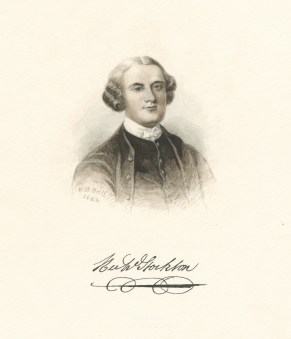
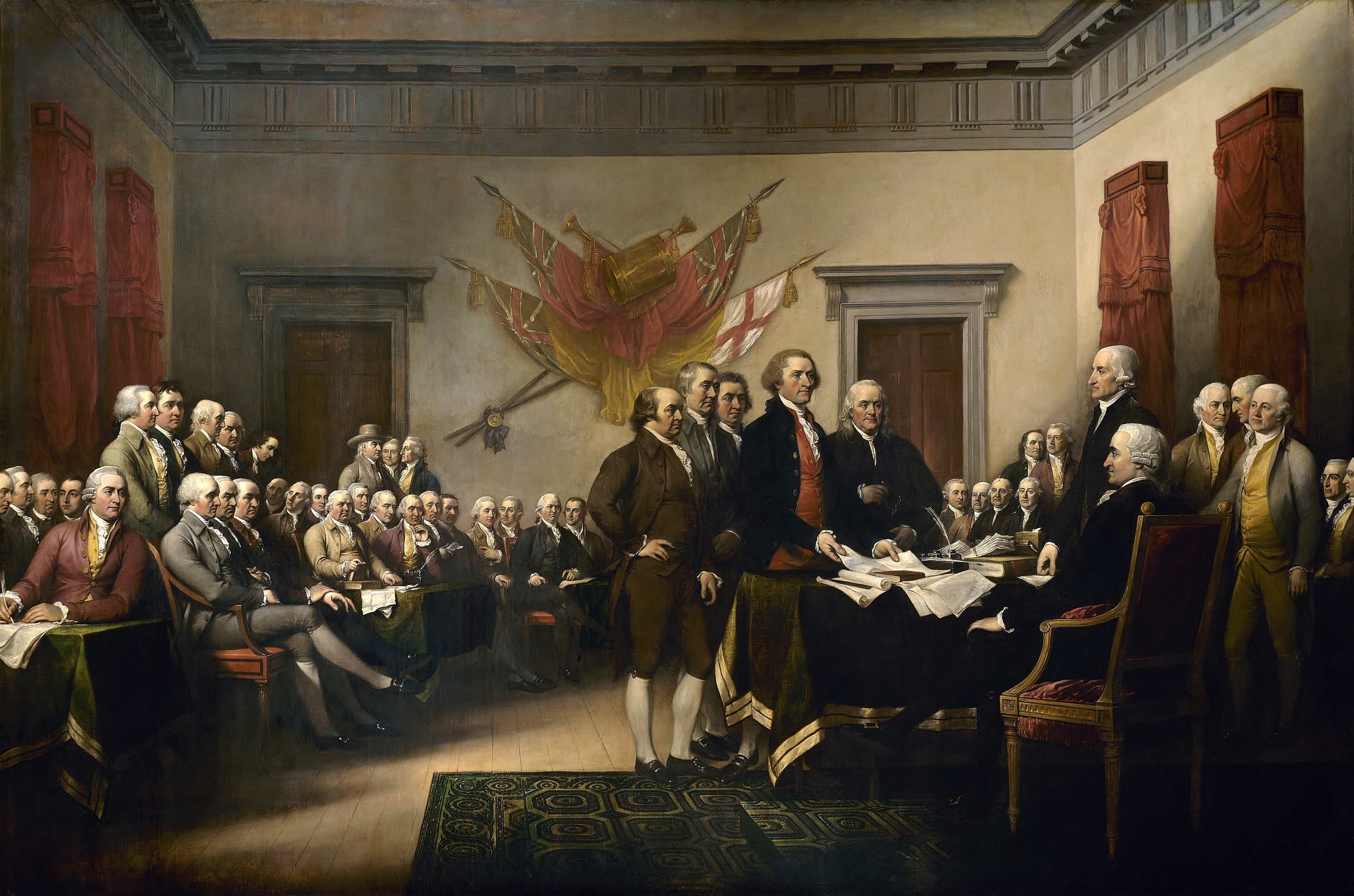
Some historians would have us believe most of our founding fathers were Deists, not Christians—that they believed in a distant God who created the universe but who does not intervene in human events.

Those historians are choosing to ignore the many sources that would indicate otherwise.

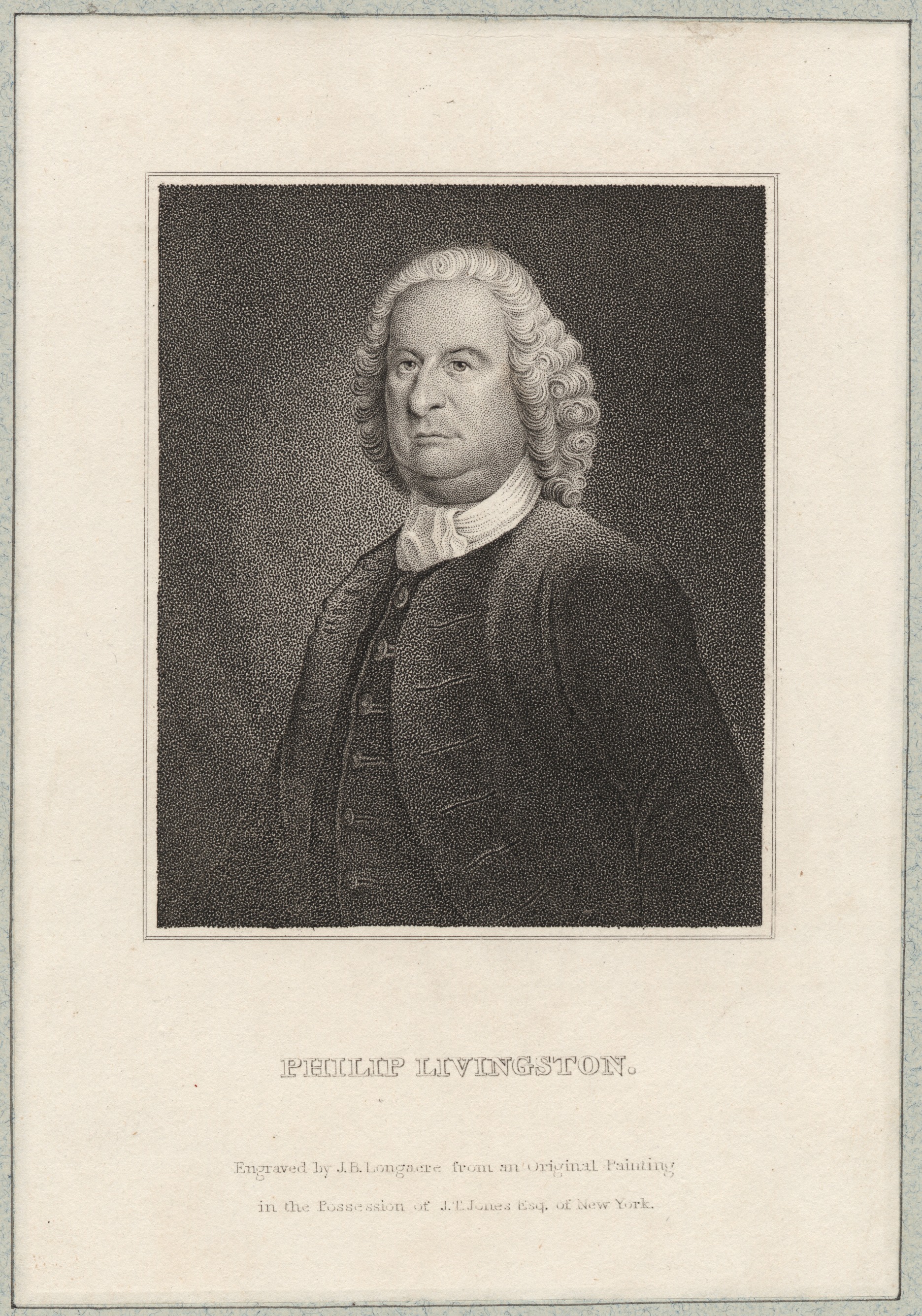
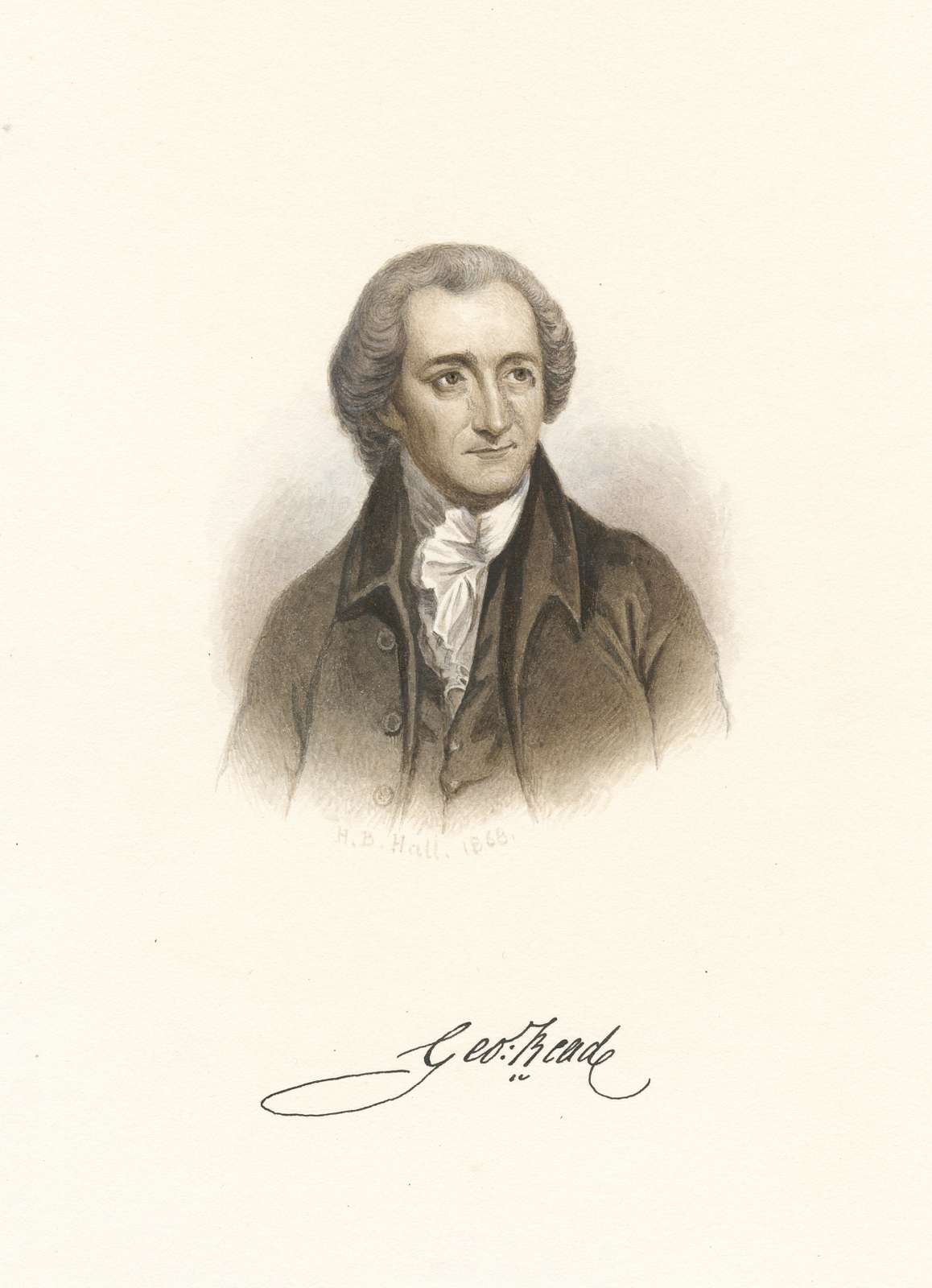
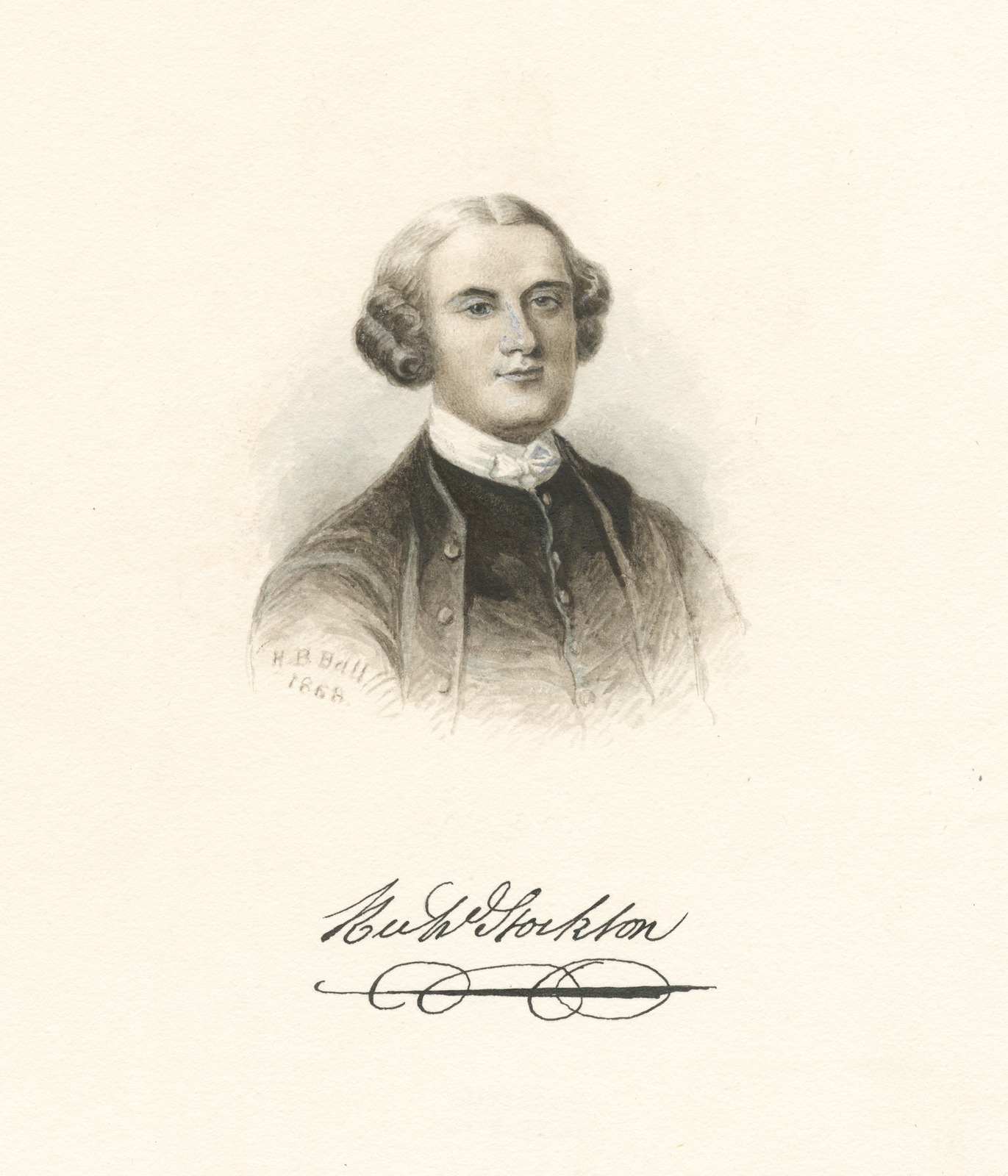
In honor of those who signed the Declaration of Independence 243 years ago today, and sacrificed much for our freedom, I present the following proofs of Christian faith. (This post is long; you have my permission to skim read!):


John Adams

  1. In a letter to Thomas Jefferson on June 28, 1813 John Adams wrote:

“The general principles on which the fathers achieved independence were the general principles of Christianity. I will avow that I then believed, and now believe, that those general principles of Christianity are as eternal and immutable as the existence and attributes of God.”


Samuel Adams

  1. In his Last Will and Testament, attested December 9, 1790, Samuel Adams wrote:

“I…[rely] upon the merits of Jesus Christ for a pardon of all my sins.”


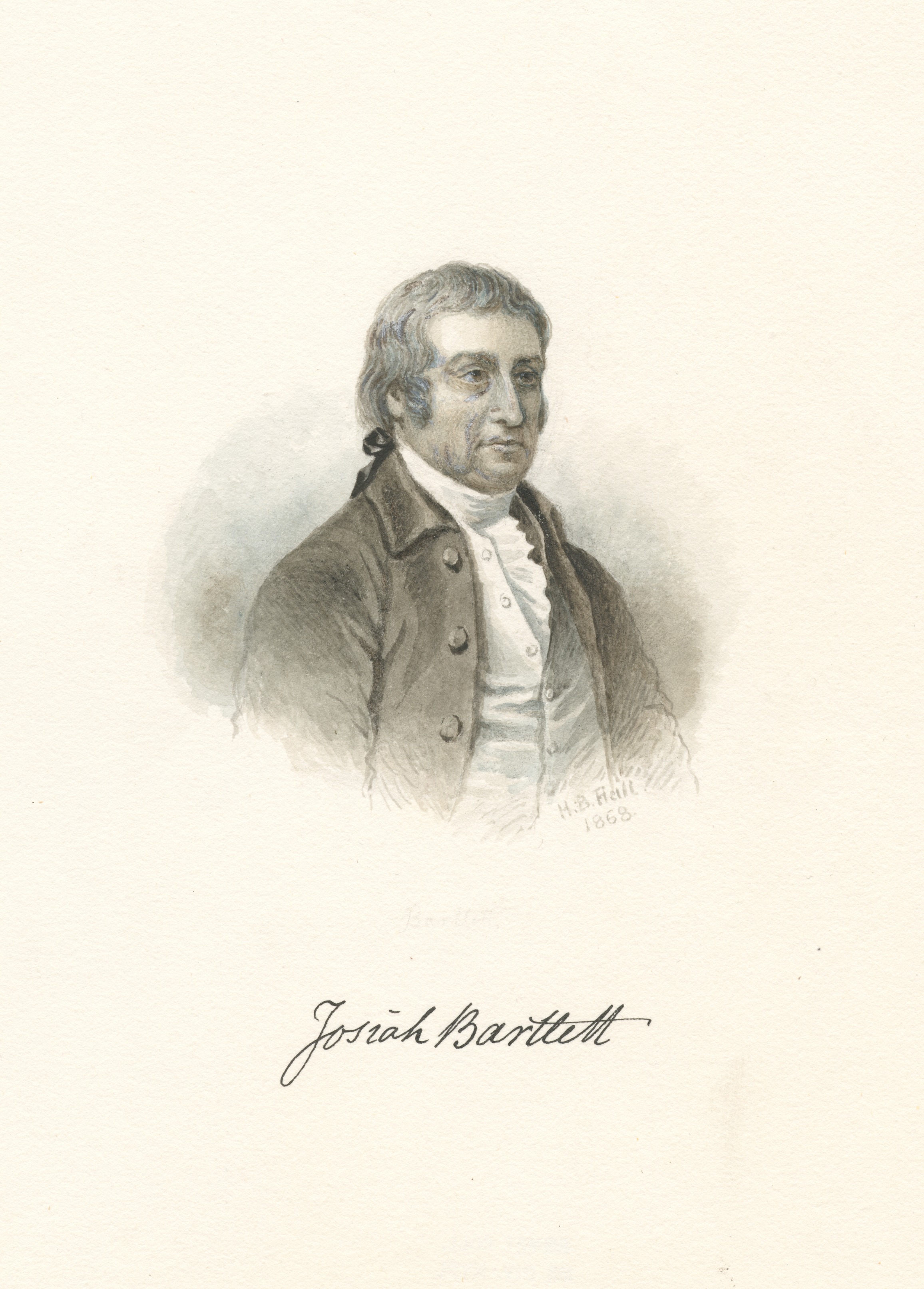
  1. In his Proclamation for a Day of Fasting and Prayer, March 17, 1792, Josiah Bartlett called on the people of New Hampshire…

. . . “to confess before God their aggravated transgressions and to implore His pardon and forgiveness through the merits and mediation of Jesus Christ . . . [t]hat the knowledge of the Gospel of Jesus Christ may be made known to all nations, pure and undefiled religion universally prevail, and the earth be fill with the glory of the Lord.”


Charles Carroll

  1. In a letter written to Charles W. Wharton, Esq. on September 27, 1825, Charles Carroll wrote:

“On the mercy of my Redeemer I rely for salvation and on His merits; not on the works I have done in obedience to His precepts.


Elbridge Gerry

  1. In his Proclamation for a Day of Thanksgiving and Praise on October 24, 1810, Elbridge Gerry called on the State of Massachusetts to pray that…

…”with one heart and voice we may prostrate ourselves at the throne of heavenly grace and present to our Great Benefactor sincere and unfeigned thanks for His infinite goodness and mercy towards us from our birth to the present moment for having above all things illuminated us by the Gospel of Jesus Christ, presenting to our view the happy prospect of a blessed immortality.”


John Hancock

  1. In his Proclamation for a Day of Public Thanksgiving in 1791, John Hancock called on the entire state to pray…

…“that universal happiness may be established in the world [and] that all may bow to the scepter of our Lord Jesus Christ, and the whole earth be filled with His glory.”


John Hart

  1. In his last will and testament, John Hart wrote:

“Thanks be given unto Almighty God therefore, and knowing that it is appointed for all men once to die and after that the judgment [Hebrews 9:27]…principally I give and recommend my soul into the hands of Almighty God who gave it and my body to the earth to be buried in a decent and Christian like manner…to receive the same again at the general resurrection by the mighty power of God.”


Samuel Huntington

  1. In his Proclamation for a Day of Fasting, Prayer, and Humiliation on March 9, 1791, Samuel Huntington wrote:

“It becomes a people publicly to acknowledge the over-ruling hand of Divine Providence and their dependence upon the Supreme Being as their Creator and Merciful Preserver . . . and with becoming humility and sincere repentance to supplicate the pardon that we may obtain forgiveness through the merits and mediation of our Lord and Savior Jesus Christ.”


Robert Treat Paine

  1. In The Papers of Robert Treat Paine (1992), editors Stephen T. Riley and Edward W. Hanson included Paine’s Confession of Faith from 1749:

“I desire to bless and praise the name of God most high for appointing me my birth in a land of Gospel Light where the glorious tidings of a Savior and of pardon and salvation through Him have been continually sounding in mine ears.”


Benjamin Rush

  1. In his autobiography, Benjamin Rush wrote:

“The Gospel of Jesus Christ prescribes the wisest rules for just conduct in every situation of life. Happy they who are enabled to obey them in all situations! . . . My only hope of salvation is in the infinite transcendent love of God manifested to the world by the death of His Son upon the Cross. Nothing but His blood will wash away my sins [Acts 22:16]. I rely exclusively upon it. Come, Lord Jesus! Come quickly! [Revelation 22:20].”


Roger Sherman

  1. In correspondence to Samuel Hopkins in October of 1790 (as cited in Correspondence between Roger Sherman and Samuel Hopkins by Charles Hamilton, 1889, p. 26) Roger Sherman wrote:

“True Christians are assured that no temptation (or trial) shall happen to them but what they shall be enabled to bear; and that the grace of Christ shall be sufficient for them.”


James Wilson

  1. From The Works of the Honorable James Wilson, edited by Bird Wilson, 1804, James Wilson wrote:

“Our all-gracious Creator, Preserver, and Ruler has been pleased to discover and enforce His laws by a revelation given to us immediately and directly from Himself. This revelation is contained in the Holy Scriptures.”


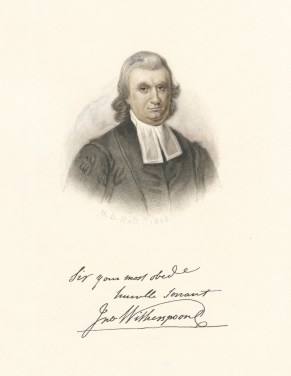
John Witherspoon

  1. In a sermon titled, “The Absolute Necessity of Salvation Through Christ (January 2, 1758) John Witherspoon wrote:

“I shall now conclude my discourse by preaching this Savior to all who hear me, and entreating you in the most earnest manner to believe in Jesus Christ; for “there is no salvation in any other” [Acts 4:12].”

____________________


These thirteen signers of the Declaration were obviously committed to Christian principles, based on their faith in a participatory God, who provides salvation to all who ask through his Son, Jesus.

Given more time and access to more resources, we’d surely find additional proofs for the Christian faith of other signers. It is verifiable that all of them were members of churches, many contributing significantly to their congregations with monetary support and service.

Would Deists consider it important to be contributing members of Christian churches?

We know this too: In the last paragraph of the Declaration of Independence, the signers, “with a firm reliance on the protection of divine Providence,” pledged to each other their lives, fortunes, and sacred honor.

I have to ask: Would the majority–if Deists–vote to include such a statement?

Seems more than unlikely.


Sources:

  1. The Founders’ Bible, Shiloh Road Publishers, 2012
  2. https://wallbuilders.com/founding-fathers-jesus-christianity-bible/
  3. http://www.freerepublic.com/focus/news/2546951/posts
  4. www.libertyunderfire.org


Art credits:  http://www.wikipedia.org; wikimedia.com (3); wikimedia.org; wikimedia.com; wikimedia.org (2); wikimedia.com; wikimedia.org (4); http://www.flickr.com.


Read Full Post »


How would you fill in the blanks of this quote?


“Nothing is so strong as _______________,

Nothing so _______________ as real strength.”

–St. Frances de Sales (1567-1622)


Possibilities include:

  1. Discipline / disciplined
  2. Gentleness / gentle
  3. Steadfastness / steadfast

According to de Sales, the answer is 2.

Yet gentleness is not a trait that readily comes to mind when we hear the word strength. We’re more likely to describe the strong person as self-confident, self-reliant, and assertive.


But consider which of the following actions requires more fortitude:

  • Defending one’s own rights or deferring to another’s?
  • Airing one’s views or actively listening to understand someone else’s?
  • Tackling the personal to-do list or taking time to help another person with theirs?

Gentleness includes consideration, kindness, and grace. It is genial, not demanding its own way, and it refuses to manipulate people or circumstances. Neither is it easily threatened, offended, or angered. Gentleness requires humility, maturity, and self-control.


Most of us do not gravitate toward such habits on our own. It takes strength to become gentle—strength that begins with God, as we learn to relax in his sovereignty over all things (Psalm 145:13), and count on him to work in his way (Proverbs 16:4a), in his time (Acts 1:7).

Gentleness begins to grow in our spirits as we:

  • Become acquainted with the One who personifies gentleness–Jesus (Matthew 11:29)
  • Choose to be thankful (1 Thessalonians 5:18), which improves our perspective and calms our spirits
  • Refuse to complain or grumble (Philippians 2:14)
  • Desire to be molded by God and patterned after his purpose (Ephesians 2:10)
  • Affirm trust in his reliability and endless resources (Psalm 62:5-8)
  • Practice his presence (Exodus 33:14) through continual, prayerful connection

And the result? “Blessed are the gentle, for they shall inherit the earth” (Matthew 5:5 NASB, emphasis added).

Or, as Max Lucado interprets the verse, “Blessed are those who acknowledge that there is only one God and have quit applying for his position.” *


That inheritance Jesus promised includes joyful contentment in God’s provision and pleasure in the simple things of life, the delight of blessing others and celebrating their successes.

My grandmother was just such a person.

Before she turned forty, Grandma lost a young sister, a toddler son, and her husband. During the depression she kept the mortgage paid and her family clothed and fed by baking all night, then catching a bit of sleep while the three children were at school. Yet Grandma’s strong faith in God never wavered. (You can read more about this amazing woman in another post, The God of Rachel, Henry, and Clara, Part 1).


I never heard Grandma raise her voice or speak unkindly. What I do remember is hearing her humming along with the hymns on the radio as she worked in the kitchen.

She spent much of her time serving others, beginning with family. When Grandma stayed with us, she mended and hemmed our clothes, helped turn the apples from our tree into applesauce for the freezer, and braided old woolens into small rugs to place in front of our doors.

Grandma was gracious with praise and gratitude. One time I noticed tiny aphids on her prized African violets. You’d think I’d saved the neighborhood from a locust invasion. “Well aren’t you my Little Bunny Bright-Eyes!” Grandma cried, and hugged me tight. “I hate to think what would have happened if you hadn’t been here. Thank you!


Later in life she developed neuralgia in her right cheek. The slightest breeze could cause an agonizing bout of pain. Grandma would grimace and gasp as her hand flew to her face. But she did not complain.

In these ways and many more Grandma Rachel proved that the strong of faith are also gentle of spirit.


*     *     *     *     *     *     *     *     *     *


O God, I know the quality of gentleness is precious to you, and I want to cultivate a life that brings you honor and pleasure. Keep me mindful of your empowering presence so that your gentle spirit of grace, kindness, and goodness will flow through me to others.


(1 Peter 3:4; Psalm 147:11; Isaiah 40:11; Galatians 5:22-23)


Who provided an example of gentle strength in your life?  Tell us about them in the comment section below!


* Grace for the Moment, Thomas Nelson, 2000, p. 277.


Photo credits:  http://www.needpix.com (2); http://www.heartlight.org (3); dailyverses.net (2).


Read Full Post »
 

Emily* and I met at a meeting, and afterward the subject of the Bible came into the conversation—a conversation that went something like this:

“The Bible is just fairy tales,” she declared.

“That is a popular viewpoint,” I replied. “How did you come to that conclusion?”

“Well, it’s full of crazy, unbelievable stories,” Emily asserted passionately. “Noah and the ark, David and Goliath, not to mention Jesus and his supposed miracles. Who in their right mind would believe such stuff?”


I began to pray silently as our conversation continued. Lord, help me speak your words.  May Emily reconsider her position and seek truth.

“I agree such events seem incredible,” I offered. “But I’ve come to believe the Biblical record is truth, backed up by decades of archaeological research, hundreds of ancient manuscripts—including the Dead Sea Scrolls, and dozens of scientific and medical corroborations. Also, numerous prophecies have been fulfilled with amazing accuracy. I can recommend some books written by experts if you’d like to know more.”

But Emily became defensive, insisting such proofs were either coincidental or made up by misled people determined to keep the fairy tales alive.


(The Ark Encounter at the Creation Museum, Petersburg, KY)


The conversation did not end well. Emily only became more vehement so I let her have the last word and bowed out as gracefully as I could. It felt like failure. Somehow in spite of my prayer, I must not have spoken God’s words for her.

Since that encounter, however, I’ve come to realize:

We can trust God with our words if we’re seeking his wisdom (James 1:5) and speaking in love (1 Corinthians 13:4).

Remember what God told Moses, upon commissioning the wilderness shepherd to be his voice to Pharaoh?


It would stand to reason that with God teaching him exactly what to say, Moses would eloquently convince Pharaoh to release the Israelites on the first encounter.

Instead, Moses had to confront Pharaoh numerous times. Even a constant barrage of plagues didn’t deter Pharaoh from refusing Moses’ request—until every firstborn son died in every Egyptian household, including Pharaoh’s. The hard-hearted ruler was brought low by grief, and finally let the Israelites go.

Does such a record indicate that God’s words through Moses failed repeatedly? NO. God had his reason for the delay:


Then the Lord said to Moses,

“Go to Pharaoh, for I have hardened his heart…

so that I may perform these signs of mine among them

that you may tell your children and grandchildren

how I dealt harshly with the Egyptians

and how I performed my signs among them,

and that you may know that I am the Lord.”

–Exodus 10:1-2 NIV


These verses offer me great comfort for my conversation with Emily and others. I can trust God with the words I prayerfully spoke to her that day. They may have caused one more chink in her wall of defense against Christianity, so that she will one day know “that [he] is the Lord” and accept Jesus as Savior.

Such prayers are the kind God especially loves to answer.


What could be closer to God’s heart than the eternal destiny of one of his children?

Perhaps Emily will contact me one day and say, “I remembered what you said about the Bible and it got me to thinking…”

So I continue to pray.

*     *     *     *     *     *     *     *     *     *

As I submit myself to you, O God, may my words be characterized by your wisdom that gently persuades and winsome grace that draws people to you–all from a heart motivated by love.  Then may your words echo in the minds of those who hear until doubt is transformed into faith.     


*Name changed.


Photo credits:  http://www.flickr.com; http://www.wikimedia.com; http://www.pixabay.com; http://www.canva.com; http://www.pixabay.com; http://www.dailyverses.net(2).


Read Full Post »
 

“Here comes another one!” little Jim cried to his dad, as they stood atop the small airport terminal not far from their house. Father and son spent occasional afternoons watching the planes take off and land, much to Jim’s delight.

His sharp ears would pick up a plane’s droning buzz before his eyes could make out the small dot in the sky. He hardly breathed as the plane slowly descended, then lightly touched down on the landing field.

The wonder never grew old. And Jim wished more than anything to be in the cockpit, participating in the miracle of flight, not just observing.

That dream stayed with Jim all through school. Upon graduation he attended the U.S. Naval Academy, and then entered the Air Force. His plan was to become a commercial pilot after his term of service.


(The P-51 Mustang)


And then Jim chanced to fly a P-51, the fastest jet of the time and capable of flying almost vertically. After that experience, commercial piloting seemed much too tame.

Jim went back to school to earn his master’s degree in aeronautical and instrumentation engineering and graduated in 1957.

The National Aeronautics and Space Administration (NASA) was established the following year and Jim Irwin set his sites on becoming an astronaut. To achieve that goal he needed to become a test pilot.


Jim entered that program in 1960. Once qualified he was assigned to a top-secret mission: testing a plane that flew higher and faster than any previous aircraft.

Three times he applied for the astronaut program; twice he was rejected. Finally in 1966 his acceptance letter arrived. Jim’s first assignment was to direct the testing of a lunar landing module that engineers were designing.


Then came the moment he’d been waiting for. He and fellow astronauts David Scott and Alfred Worden were chosen for the Apollo 15 mission, scheduled to take place the summer of 1971.

Eighteen months of intense training were required to prepare the men for the twelve-day expedition, three of which would be spent on the moon.

The boy who wanted to fly would soar where only a dozen men had traveled before him.


Their mission included collecting rock samples and conducting experiments in an unexplored region of the moon. They would also be the first astronauts to drive a Lunar Rover that allowed investigation of a larger area than that of previous missions.

Jim was the eighth person to walk on the moon—certainly a thrill-of-a-lifetime. But later he would insist, those moments on the moon weren’t exciting because he was there, but because God was there. Jim profoundly sensed his presence.


He’d been a Christian for over twenty years by 1971, but “I was…[a] silent Christian,” he would explain.

On the moon, as Jim looked up at Planet Earth against the black backdrop of the universe, he marveled at its fragile appearance—so delicate that if someone reached out to touch it, the world would surely crumble and fall apart, he said. Jim experienced overwhelming awe for the creation of God and his love for the entire human race—love that sent his Son Jesus earthward to die in their place.


One of Jim’s responsibilities on the mission was to set up the mechanism for lunar experiments. Not all steps proceeded successfully. But instead of inquiring the NASA engineers, Jim prayed, because waiting for a reply from Houston would take too long.

Each time he sensed God telling him what to do, and he felt the supernatural presence of God with him as he worked. That sensation was so strong, Jim felt sure if he turned around, Jesus would be standing right there at his shoulder.

As complicated as the moon landings were, Apollo 15 proceeded without major problems. The three astronauts landed safely in the Pacific Ocean on August 7, even though one parachute (out of three) didn’t deploy.


A little more than two weeks later Irwin, Scott, and Worden were honored by a ticker tape parade in New York City. As Jim waved to the thousands gathered along the street, his heart ached for those who did not know Jesus as a personal Friend, and he felt God wanted him to tell others about his Son.

A year later Jim resigned from NASA and formed the High Flight Foundation to share about Jesus from his experiences as an astronaut, and to encourage archaeological research, confirming the accuracy of the Bible.

Jim even participated in exploration of Mt. Ararat in Turkey, where other adventurers claimed to have seen what looked like ship remains, high up on the slopes. Conjecturers proposed that perhaps Noah’s ark had been found.


(Mount Ararat, nearly 17,000 ft. in elevation)


Jim’s astronaut-status provided opportunities that other exploratory teams had not been able to achieve. Government officials allowed the High Flight Foundation access to sites that had been refused to others. Yet in spite of these privileges, Jim and his crew never found the ancient ark.

For twenty years after his moon-landing adventure, Jim Irwin told others that “Jesus walking on earth was much more important than man walking on the moon, that Jesus was the way to know God and receive eternal life.”*


The day before the twentieth anniversary of his homecoming from the moon, the boy who wanted to fly flew further still. Jim experienced his homecoming in heaven, due to a massive heart attack. He was survived by his wife Mary and their five children.

No doubt, James Benson Irwin heard those beautiful words, “Well done, good and faithful servant (Matthew 25:21)!” Only this time, Jim didn’t just feel Jesus’ presence. This time, Jim was able to see his Savior and Friend face to face.


* https://godreports.com/2100/03/encounter-with-jesus-on-the-moon-left-astronaut-changed/


Sources:

  1. https://biography.yourdictionary.com/james-benson-irwin
  2. https://crev.info/scientists/james-irwin/
  3. https://defendingthechristianfaith.org/others-who-testify-of-faith-in-christ.html
  4. https://godreports.com/2011/03/encounter-with-jesus-on-the-moon-left-astronaut-changed/
  5. https://ramsheadpress.com/messiah/ch17.html
  6. https://www.rocketstem.org/2015/07/07/rovering-across-the-moon-during-apollo-15/


Photo credits:  http://www.ebay.com; http://www.commons.wikimedia.org; http://www.nationalmuseum.af.mil; http://www.nasa.gov; http://www.jsc.nasa.gov; http://www.wikipedia.org; http://www.picryl.com; http://www.wikimedia.com (3); http://www.canva.com.


Read Full Post »


Along with spring-cleaning of the house, I thought perhaps a purging of the blog-post-ideas file would be worthwhile. Six years of collecting starters has produced thirty-five pages of possibilities.

Some ideas have languished in a notebook nearly the whole six years. It’s probably time to admit they’re never going to amount to anything, I decided.

Then you came to mind! Maybe you’ll see potential where I’ve given up hope. And with a deft question or suggestion you’ll send me off researching and keyboarding with your fresh insight.

Or, you’ll say, “I’d like to know more about that. Keep that one in the hopper!” And the life of that idea will thus be saved.

So what occurs to you about these topics, dear readers? Do you see any possibilities here for a worthwhile post or two?

  1. From Anxiety to Joy. Psalm 94:19 says, “When anxiety was great within me, your consolation brought me joy.” What might those consolations be that can bring joy in the midst of anxiety? (That’s quite a feat!)


2.  God’s ways are an outgrowth of his character—even when tragedy strikes. How can hurt and pain be the outgrowth of God’s beautiful and perfect attributes?

3.  Delight and Desire. Psalm 37:4 says, “Take delight in the Lord, and he will give you the desires of your heart.” How do we learn to delight in the Lord and desire what he desires?

4.  The Adventure of Grace. What insight might we gain from the definition of adventure? How is the life of grace is like an adventure, and why is that attitude helpful? How can we embrace the adventure more enthusiastically?


5.  The power of right attitudes over body, mind, and spirit. What have medical science and psychology discovered about the impact of attitudes? What does scripture have to say? How can we change our attitudes?

6.  “He who keeps one end in view makes all things serve”—Robert Browning.   That statement is true in the Christian life: if our main ambition is to fulfill God’s purpose, then all events will serve equally well.

7.  Goodness is not only good for those around us, it’s good for us.

8.  How do we accept with grace the circumstances that are unpleasant and outside our control?

9.  Turning Boredom into Contentment. Life can be full of mundane tasks that sap the joy right out of our spirits. What’s a person to do?!


10.  Game-Changers. Our viewpoints of life’s circumstances are perhaps more important than the circumstances themselves. Sometimes all it takes is a pithy statement to change our attitude. Possibilities include: “We obey God, not because we have to but because we get to” (A quote from one of the lay pastors at our church.) Or, how about this statement: “If the Lord does not change the place for the better, he will make us better in the place” (Charles Spurgeon). What other perspective-changers can we apply on a circumstantial rainy day?

11. Taking offense at less and less provocation seems to have pervaded our culture. What happened to resilience? Is it important? Does the Bible give us instruction for this attribute? How do we develop it?

12.  Rock Climbing—a metaphor for life. We need the handholds of God’s character when life becomes a difficult climb. We must cling to his attributes.


That’s enough for today. I’ll look forward to reading your creative suggestions in the comment section below!


(Photo credits:  http://www.thebluediamondgallery.com; http://www.heartlight.org; http://www.pixabay.com; http://www.nps.gov; http://www.flickr.com.)


Read Full Post »

« Newer Posts - Older Posts »

When the House is Quiet

Impressions Becoming Expressions

Mitch Teemley

The Power of Story

Still Traveling

Impressions Becoming Expressions

Living Our Days

Gaining a heart of wisdom

He Said What?!

I'm Patty, and my husband and I are living with our adult son who has autism and epilepsy. I love sharing lessons learned from life around me, especially life with Aaron.

Meditations of my Heart

Impressions Becoming Expressions

Linda Stoll

Impressions Becoming Expressions

Signora Sheila

Where faith meets la dolce vita

Heidi Viars

Finding the Image of God