Feeds:
Posts
Comments

Archive for the ‘Faith’ Category


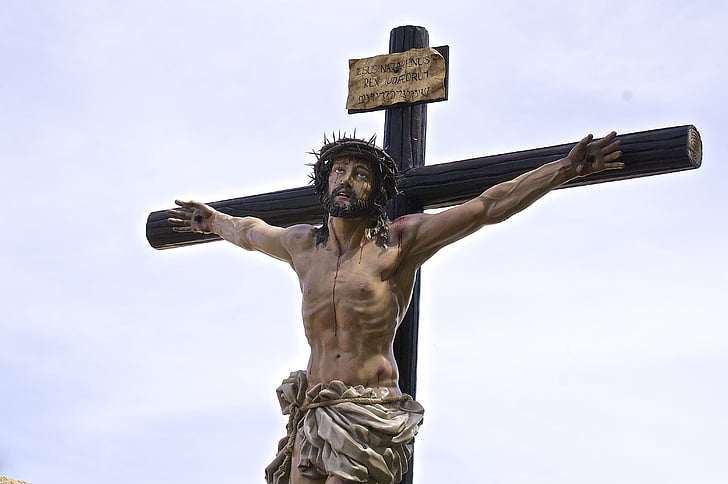
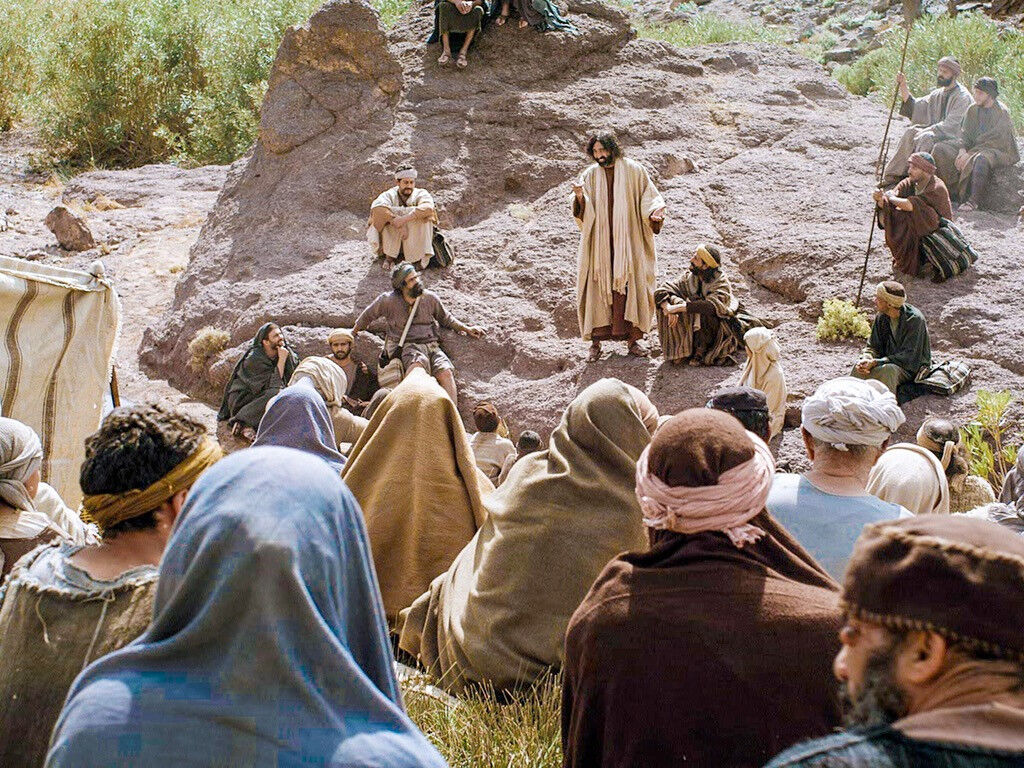
Preparations were complete for the Passover meal. Jesus and the disciples had gathered to celebrate together.

Perhaps they were beginning to recline around the table when Jesus said, “I’ve been looking forward to eating this Passover feast with you, before I suffer.”

Surely the disciples froze for a moment.

Why would their Master be talking about suffering now, as they were about to share this sacred meal?

Yes, he had mentioned it before—even spoke several times about being killed one day (Matthew 16:21). But such an actuality seemed impossible. He was the Messiah after all—come to establish God’s kingdom on earth as the Everlasting Father (Isaiah 9:6-7). How could Jesus do that if he was dead?


The disciples undoubtedly tried to ignore such puzzling and gruesome thoughts, wanting to focus on the beloved celebration of Passover. But a few moments later Jesus startled them again.

“One of you is going to betray me.”

Preposterous. Who would do such a thing to their beloved Master? Yet Jesus had never been wrong about anything before. What could he mean?

And then a third troubling statement soon followed: “I will be with you only a little longer.”

Unthinkable. They had been together for three years—over a thousand days. They had listened to his teaching—wiser than Solomon’s—and witnessed his miracles—greater than Elijah’s.


Their lives had been changed by what they’d heard and seen. And now Jesus was leaving?

Perhaps after three hard sayings the disciples began to look at one another with uncertainty and fear on their faces. Something was wrong, but understanding eluded them.*

And Jesus, knowing their thoughts before they did, spoke a proclamation that is familiar to us today.

“Stop letting your hearts be troubled.”

I wonder if he paused and pointedly made eye contact with each one to focus their attention on what he would say next.

“You believe in God; believe also in me” (John 14:1).


What did they believe about God? Their scriptures (our Old Testament) taught them much about the Lord Almighty, including:

  • God is in control
  • He knows what he is doing
  • He exercises his unlimited power with wisdom and love
  • God is good (1)

And what did they know and believe of Jesus?

  • He too was good
  • He demonstrated divine power, wisdom, and love
  • He was the Son of God
  • God’s honor and glory was bestowed on him (2)

The choice was up to the disciples. They could continue to stew in anxious thoughts or they could stop, and choose to believe in their powerful and perfect Lord Jesus.

They could choose faith over fear.


And the same choice confronts us today. We can believe that:

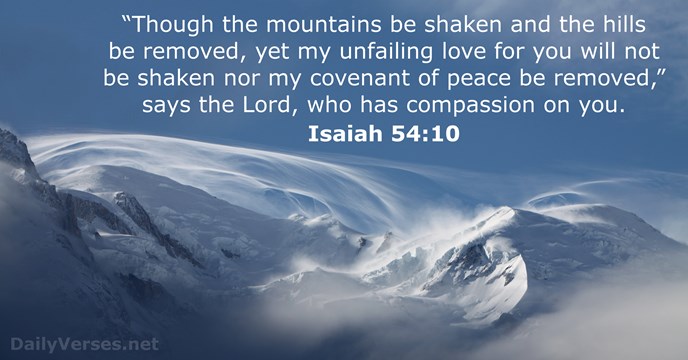
  • God is enthroned in heaven and rules over all (Psalm 103:19)—or believe the lie that the world is spinning out of control.
  • The God of the universe is on our side, and nothing could possibly come against us and win (Romans 8:31)—or believe the lie that suffering proves God’s lack of caring.
  • All his glorious attributes (those mentioned above as well as many more) are always at work to achieve his good purpose (Romans 8:28)—or believe the lie that no good can come out of trouble (3).

We can also believe in Jesus, who has proven himself our trustworthy Savior, who is called Faithful and True, because:

  • He lives to intercede for us. Is it likely the Father will ignore his Son’s pleas? Never.
  • He died and rose again that we might live forever with him. The promise of eternal Life can provide luminous light even on the darkest of days.
  • He will come again and take us to be with him (4). We’d do well to remember:


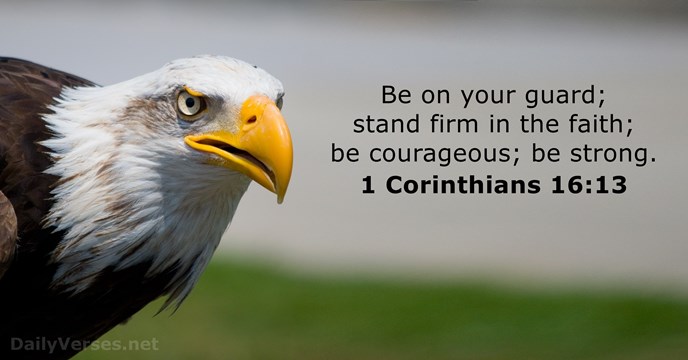
And when we choose to trust, tranquility follows.


_____________________________________________


*The events of the Last Supper mentioned here are based on John 13.


Scriptures referenced:

  1. Isaiah 14:24; Job 11:7-9; Daniel 2:20; Jeremiah 31:3; Exodus 34:6
  2. Acts 10:38; Matthew 8:27; Mark 6:2; Matthew 14:14 and 33; Matthew 3:17 and 17:5
  3. Psalm 103:19; Romans 8:31 and 8:28
  4. 1 John 4:14; Revelation 19:11; Hebrews 7:25; Romans 8:34; 1 Peter 1:3-4; John 14:3


Art and photo credits:  http://www.freebibleimages.org; http://www.canva.com; http://www.freebibleimages.org; http://www.dailyverses.net; http://www.canva.com (2).


Read Full Post »

Today’s post is an acrostic poem (I use that term lightly!) of praise and prayer, based on the phrase, “peace in the midst of the storm.” For each letter, I chose scriptural affirmations that seemed especially appropriate for this time of upheaval and uncertainty.  (You’ll find the references at the end of the post.)

Why the Bible? There is no better source of hope and strength.

Abraham Lincoln expressed it this way during his time of trouble:

(Photo taken in 1863, in the midst of the Civil War.)

I believe that the Bible is the best gift

that God has ever given to man.

All the good from the Savior of the world

is communicated to us through this book.

I have been driven many times to my knees

by the overwhelming conviction

that I had nowhere else to go.

While collecting biblical truths that apply to our current situation, I felt my own heart uplifted.

May the following be an encouragement to you as well.

Praise be to the Lord our mighty Rock; from

Everlasting to everlasting he is God.

As we cast our cares on him, he will sustain us.

Call on him when in distress and he will answer; his

Ears are attentive to our cry.

I trust in your unfailing love, O Lord.

Nothing is too hard for you.

The Lord watches over the way of the righteous.

He performs miracles and displays his power among the people.

Every promise he has fulfilled; not one has failed.

My shield is God Most High.

In him I take refuge.

Do not fear; he is with us…and will help us. He will

Satisfy our needs and strengthen our frame.

Truly, our souls can find rest in God; our salvation comes from him.

Our Lord is gracious, righteous, and full of compassion; the

Fruit of his righteousness is peace.

Those who know his name trust in him, for he has never

forsaken those who seek him.

He hides us in the shadow of his wings; the

Eyes of the Lord are on those who fear him,

who hope in his unfailing love.

Send us your light and your faithful care, O God. Let them guide us

day by day.

Thank you for always leading us in triumph.

Our enemies you will trample; with you we will gain the victory.

Righteous and kind are all your ways and all your works.

My hope is in you.

Scriptures used:

  • Peace–Psalm 144:1; 90:2; 55:22; 86:7; 34:15b
  • In–Psalm 13:5a; Jeremiah 32:17b
  • The–Psalm 1:6; 77:14; Joshua 23:14
  • Midst–Psalm 7:10a; 16:1b; Isaiah 41:10; 58:11; Psalm 62:1
  • Of–Psalm 116:5; Isaiah 32:17
  • The–Psalm 9:10; 17:8b; 33:18
  • Storm–Psalm 43:3a  ISV; 2 Corinthians 2:14; Psalm 60:12; Psalm 25:21b

Photo credits:  http://www.flickr.com; http://www.wikipedia.org; http://www.geograph.org.uk; http://www.pickpic.com; http://www.dailyverses.net; http://www.flickr. com; http://www.dailyverses.net; http://www.needpix.com.

Read Full Post »

While perusing old photos, I came across this one, taken when our middle granddaughter was a toddler.


E. loved to be buried under those pillows, then explode out of them like a jack-in-the-box.  She’d stand tall with arms stretched toward the ceiling, and look up at me with triumph—all while giggling with delight.

It occurred to me: what if all those pillows represented our fears about the coronavirus? Our worries for family and friends? Our anxiety about losing income?   Our uncertainty of how long self-isolation might continue? Our apprehensions about the economy and the added debt we’re accruing?

Altogether these concerns may appear to be a heavy, insurmountable burden. But just like E. under her pillows, we can cast off our anxiety, stand tall, and look up in triumph.

How?

We can cast off worry with prayer and gratitude.

When the realization dawns that we’re buried in worry, our best tactic is to follow Paul’s instructions in Philippians 4:6-7. You’re probably familiar with these verses already. Now might be a good time for us to post them around the house–even memorize them:


Did you notice the word thanksgiving sandwiched in the middle there? Now why would God consider that important?

Because gratitude expresses trust in him. It’s an affirmation that God is always at work, bringing hope out of despair, joy out of sadness, and peace out of turmoil (1).

It’s not that gratitude takes away our difficulties, but it does transform us for the better in the midst of them (2).

We can stand tall in Christ’s strength.

Let’s admit it. We’re weak. But the omnipotent One of the universe is our Heavenly Father. And what has he promised? First, he never assigns an overload, and second, his strength equips us for all circumstances (3).

With such firm promises as those to bolster our confidence, we do possess the wherewithal to stand tall.

We can look up in faith.

Way up–to Jesus. And where does he sit? In the highest place, at the right hand of God (4).

He is:

  • Shepherd and Overseer of our souls (1 Peter 2:25)
  • Head over every power and authority (Colossians 2:10)
  • Ruler over all (Colossians 1:17)


Our circumstances can change overnight. One day we’re free to come and go as we please; the next day we’re self-isolating except to pick up necessities or handle emergencies.

But Jesus is our never-changing Hope. If we habitually make him our focal point, we’ll never walk in the darkness of ignorance and fear (5).

“Worry looks around but faith looks up.

—Barbara Johnson (6)

Years ago, I heard Dr. Howard Hendricks (7) tell about this exchange:

He asked one of his students how he was doing, and the young man replied, “Well, under the circumstances, I suppose I’m doing alright.”

Dr. Hendrick’s response must have caught the student off-guard.

“Under the circumstances? What are you doing under there?”

Those words have stayed with me through the decades, reminding me that under the circumstances—buried beneath fear and apprehensionis not where I belong, as a believer in Jesus, and it’s not where I want to live either. I’m guessing you feel the same.

Let’s determine to put our energy into casting off our burdens with prayer and gratitude, standing tall in Christ’s strength, and looking up consistently with faith.


And then let’s add a flourish of joy—just like E. with her squeals and giggles as the pillows tumbled.

*     *     *     *     *     *     *     *     *     *

I praise you, O God, for the joy of your comforting presence, your residing power enabling us to persevere, your hope-filled promises, and the joy that results from contemplating your magnificence. Thank you for providing the way to triumph through our Savior and your Son, Jesus.  AMEN.

(Psalm 16:11; James 1:2-3; Psalm 119:162;

Psalm 92:4; Psalm 126:3, 1 Corinthians 15:57)

Notes:

  1. John 15:7; Psalm 42:11; Psalm 126:5; 2 Thessalonians 3:16
  2. David Vryhof, https://www.ssje.org/monasticwisdom/gratitude/
  3. Psalm 55:22; 1 John 5:5; Philippians 4:13
  4. Philippians 2:9; Hebrews 1:3
  5. Hebrews 12:2; John 8:12
  6. Joyful Journey Daybreak, Perpetual Calendar, May 20
  7. Professor at Dallas Theological Seminary, author and speaker (1924-2013)

Art & photo credits:  Nancy Ruegg; http://www.dailyverses.net; http://www.heartlight.org; http://www.uihere.com.

Read Full Post »

Check out this baby oak tree. Isn’t it adorable, sporting those glossy, miniature leaves on its spindly stem?


Every other spring or so our yard becomes a forest of miniature oak sprouts, peeping up over the grass. They’re birthed from the thousands of acorns produced by our neighbor’s mammoth oak tree.

Not so adorable by the dozens. They look like weeds. Thankfully most of them stop growing after being mowed down again and again.

But then there are the acorns that squirrels diligently plant among the bushes, plants, and flowers in front of the house—sometimes right at the base. A sincere effort is required to dig them all out, because their taproots grow surprisingly deep for such tiny trees.


Of course there’s good reason to reach deep. The developing oak must absorb moisture and minerals for the monumental growth that’s ahead (should the sprout be allowed to mature, that is!). The deep root also provides support for the above-ground portion.

Perhaps these two purposes were on Paul’s mind as he encouraged the Ephesian Christians to be “rooted and established in God’s love” (3:17).

But how do those root-tasks of absorbing and supporting relate particularly to God’s love?

Actually, “love” is a perfect choice for Paul’s metaphor because so many of God’s attributes come to us out of his love—such attributes as his mercy, forgiveness, grace, patience, compassion, faithfulness, goodness, attentiveness, and generosity.


To be rooted in God’s love is to draw sustenance from all that he is, in order to grow into all we can be (Isaiah 61:3b). In addition, God’s love provides stability against the winds of trouble.

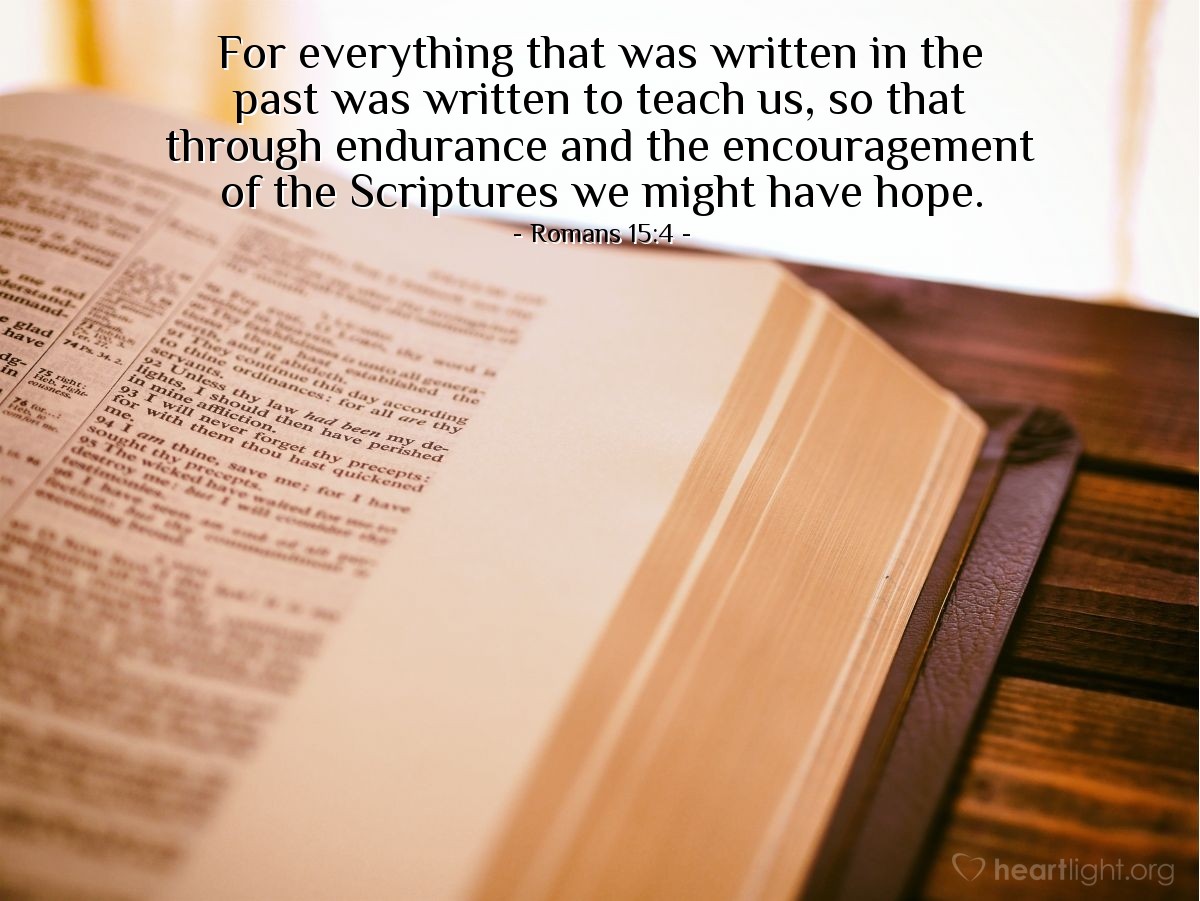
Such nourishment and support for our spiritual lives is essentially found in his Word, the Bible. That’s where we learn about the many facets of God’s love:

  • His mercy—so abundant it covers every sin (Psalm 86:15)
  • His forgiveness—so complete it washes us white as snow (Isaiah 1:18)
  • His grace—so generous it overflows (Romans 5:17)
  • His patience—so extreme, he endures our pride and self-will, waiting for us to come to him (2 Peter 3:9)
  • His compassion—so reliable it never fails (Lamentations 3:22)
  • His faithfulness—so vast it reaches to the skies (Psalm 36:5)
  • His goodness—so great he has to store it up (Psalm 31:19)
  • His attentiveness—so individualized he knows the number of hairs on our heads (Luke 12:7)
  • His generosity—so magnanimous he supplies every need—and then some (Philippians 4:19; Psalm 40:5)


Like a far-reaching root system, this network of truths about God’s love supplies nourishing strength and firm support—especially during the winds of crisis like we’re enduring right now.

God’s love also sustains us against fear and uncertainty. Again, his comfort and assurance are found in the Bible—familiar passages like Psalm 23, Psalm 56:3-4, and Philippians 4:6-7.

But there are many more—very appropriate for these days of battle against the coronavirus.

For example:

Are you wondering whether you can endure until it’s over?


“Praise be to the Lord, to God our Savior,

who daily bears our burdens.”

–Psalm 68:14


“You are my strength, I sing praise to you;

you, God, are my fortress, my God on whom I can rely.”

–Psalm 59:16-17


(And don’t forget Matthew 6:26-27!)


Do worries refuse to budge from your thoughts?


“When anxiety was great within me

your consolation brought me joy.”

–Psalm 94:19*


Are there difficulties to be overcome?


“Lord, hear my prayer,

listen to my cry for mercy;

in your faithfulness and righteousness

come to my relief…

…Let the morning bring me words

of your unfailing love,

for I have put my trust in you.

Show me the way I should go,

for to you I entrust my life.”

–Psalm 143:1, 8


Reach deep into the rich soil of God’s loving assurance, provided among the pages of his Word.

The result will be peace (Isaiah 26:3).


*What does that last line mean?  Just what we’re seeking to accomplish in this post:  joyful consolation through the contemplation of God’s attributes, affirmations, and promises.


Photo credits:  http://www.pxfuel.com; http://www.commons.wikipedia.org; http://www.pxfuel.com; http://www.maxpixel.freegreatpicture.com; http://www.pickpik.com; http://www.peakpx.com.

Read Full Post »

(www.thecove.org)


Have you visited the Billy Graham Training Center outside Asheville, North Carolina? You’d be hard-pressed to find a better place for retreat, relaxation, and renewal.

Ruth and Billy chose the location well, tucked as it is onto a peaceful Appalachian mountainside.

My husband and I visited years ago and reveled in five days of morning-and-evening teaching sessions under Warren Wiersbe. The afternoons were unscheduled—for the relaxation part.

One day we decided to tackle a long trail-hike and walk off some of the scrumptious food (and nightly, all-you-can-eat soft-serve ice cream!) we’d been consuming.

A staff member promised the mountain view from the lookout point at the end would be well worth the effort.

But in no time the hike became rough going. The miles we were accustomed to walking back home in the flatland of Florida hadn’t prepared us for the unrelenting incline of this trail.


I started to grunt and groan. My leg muscles begged for mercy until we had to stop and rest—several times.

For the entire distance trees surrounded us—lovely to be sure, but not once did we catch even a glimpse of the vista to come.

Finally we approached the rail of the platform lookout, and my grunts and groans turned to oohing and wowing.


Row upon row of gentle peaks stood sentry before us, stretching immeasurable miles to the horizon. Cumulous clouds above produced large patches of shade below—a jigsaw of light and shadow.

The staffer had been right. To see such a grand panorama of God’s handiwork was indeed worth the struggle.


“God has made everything beautiful in his time,” King Solomon wrote (Ecclesiastes 3:11).

“Everything beautiful” certainly includes the splendorous moments on that platform, especially in contrast to the arduous process to get there.

But equally wondrous, God knows how to create beauty out of difficult life-circumstances—circumstances like:

  • A disturbing diagnosis
  • Ongoing frustration at work
  • A hurtful relationship
  • Financial struggles

How can that be? Because those are the times that push us toward maturity (James 1:2-4)—and maturity is indeed a beautiful thing.


Our problem is, we crave a smooth pathway through life—level, broad, and full of pleasure. But God knows what spoiled, useless creatures we’d become on such a course.

So he allows uphill climbs as the training ground for developing patience, perseverance, persistence, and self-discipline—important facets of maturity.

All the while we can rest assured the day will come when we finally understand how our ugly struggles fit into God’s great and beautiful plan—“a plan so overwhelming, magnificent, and joyful, we will laugh with wonder and delight”—Arthur Christopher Bacon (1).

And how do we know that’s true?

Consider God’s attributes, including his

  • Love and faithfulness (Psalm 117:2)
  • Wisdom (Romans 11:33)
  • Rghteousness (Psalm 145:17)
  • Justice and fairness (Deuteronomy 32:4)


Such a God does not allow useless distress; there is always purpose.

And note the verse says, “He has made everything beautiful in its time.”


Every detail of your life

is fitting together to create

a tapestry of praise.

–Jane L. Fryar (2)


Sometimes we do see the details of our lives fitting together in beautiful, praise-evoking ways.

Our stories of struggle-turned-into-beauty can:

  • Inspire someone to start their own journey with Jesus
  • Offer comfort to another who’s struggling on the same stretch of pathway
  • Provide guidance for a wanderer
  • Encourage a hiker-believer to keep climbing to the heights


But I have a feeling God is saving the best and most beautiful revelations until we’ve reached the lookout of heaven.

For now we can cling to this:

All things are from him—for a purpose (Romans 11:33-36), and we will behold the beauty—when the time is right.


Notes:

  1. From Streams in the Desert, edited by Jim Reimann, Zondervan, 1997, p. 72.
  2. Be Blessed, CTA, Inc., 2009, p. 60.


Photo credits:  http://www.thecove.org; http://www.flickr.com; http://www.wikipedia.org; http://www.bible.com; http://www.canva.com;  http://www.heartlight.org; http://www.maxpixel.net.
 

Read Full Post »

Joanne examined the young woman again, hopeful that after another hour of labor, she would show signs of progress toward birthing her child. But change was imperceptible.

The prolonged labor was sapping the young woman’s strength.  If intervention didn’t occur soon, Lorsan and the baby would die.

Even so, Joanne smiled reassuringly at the mother-to-be and announced, “We’re going to get some help for you, Lorsan.”*


Joanne had been midwife for many women of the Biliangao jungle-village in the northern Philippines.  But she didn’t have the training or equipment for a C-section.

As a Wycliffe Bible Translator, her expertise lay in linguistics. Granted, her preparation for remote mission service had included a modicum of medical training, but certainly not for surgery.

Praise God we can arrange for help, thought Joanne. She asked her colleague Anne to use their newly acquired radio (no generator needed for this one) and call for an airlift from JAARS–Jungle Aviation and Radio Service.


(Founded in 1948; still in operation today.)


Meanwhile, Joanne prayed for her patient, and the villagers who’d gathered listened with wary attention.

Their faith was in the spirits of the jungle and the frequent sacrifices offered to appease them (even though the practice gravely depleted their food supply). The villagers were convinced that all trouble was due to angry spirits, including Lorsan’s difficult delivery.

Of course the JAARS operator who answered Anne’s distress signal knew the missionaries well. They were two of the most courageous women she’d ever met, living as they did in a remote, mountainous region, with people who’d been headhunters in the not-so-distant past.


(Mangyan village, Philippines)


But Joanne and Anne had been confident this was the people-group God wanted them to reach, and had talked the reluctant Wycliffe director in letting them go–despite their youth and gender. That was in 1962.

Now it was 1967. For five years Joanne and Anne had been learning the language, determining a way to transcribe it, and then translating the New Testament into the Baliangao language.

All the while they built relationships, helped the people as they could, and told them about Jesus.

The villagers were anxious for their language to be available in written form. But a New Testament about a new God? They had serious doubts about his significance and power.

Only a few villagers had accepted Jesus; everyone else feared what the spirits might do in retaliation.

The JAARS radio operator soon dispatched a plane to transport Lorsan to a lowland clinic. Days later she and her healthy baby were returned to the village.


The people were amazed that mother and child had survived.  Perhaps some also wondered at the kindness of strangers to help a young mother.

They began to ask Joanne and Anne, “Who is this God, the one you’re always talking about?” Among them were several spiritists–witch doctors–desperate for release from their fear and the evil spirits who tormented them.

Joanne prayed as they acknowledged God, the powerful One over all spirits, accepted Jesus into their lives, and committed to end the useless practice of sacrificial appeasement.

Soon there were enough believers to start a church in Baliangao. Joanne’s village “father” and protector soaked up her Bible teaching and became a teacher himself.

By this time, Joanne’s coworker, Anne, had accepted a marriage proposal back in the States. The Wycliffe director recommended that Joanne leave also, but she refused, wanting to complete the New Testament translation for these people she’d grown to love.

While she worked, villagers traveled to near-by villages, telling them about the one true God and his Son Jesus. These neighbors were enemies who warred one another frequently. Many had died in the skirmishes.

But the message of a God who loved them (John 3:16) and offered peace of heart (Psalm 85:8), turned these enemies into brothers and sisters.


Bible classes grew into village-style conferences, and during the twenty-two years Joanne worked to translate the New Testament, she witnessed several thousand Baliangao people turn from fear of spirits to peace in Jesus.

As for the original village, they are now sending out a second generation of missionaries into other parts of Asia.

And as of February 2019, Joann was still serving God as a speaker with Scripture Engagement International, presenting workshops around the world.

The author of Hebrews wrote:


Joanne Shetler is certainly a heroine to consider and imitate–for her courage, perseverance, and faith.


*Real name unknown


Sources:

https://www.jaars.org/updates/my-story-jaars-was-there-for-me/

https://billygraham.org/decision-magazine/june-2006/a-message-for-all-people/

https://bulletininserts.org/inspiration-from-a-bible-translator-whose-work-was-offensive/

http://www.thetravelingteam.org/articles/joanne-shetler 

https://www.westsidebiblechapel.ca/1_3_109_missions-history-joanne-shetler.html

http://magazine.biola.edu/article/16-summer/meet-the-2016-alumni-award-winners/

https://www.checkitout.org/check-it-out/speakers/


Photo credits:  http://www.wikipedia.org; http://www.flickr.com; http://www.commons.wikimedia.org; http://www.flickr.com; http://www.dailyverses.net; http://www.pikrepo.com.


Read Full Post »

Pretend you’re a crew member on a cargo ship, and the captain has just announced rough seas ahead. That means just walking will be a challenge. Things on tabletops and floors will tumble and roll if not secured, and sleeping will require wedging yourself into position to keep from being tossed back and forth.

But the captain reminds you, there is good news. A full load of heavy freight in the hold will provide stability and safety against the waves. The rocking will be greatly curtailed.

All of us at some time or other face storms in life, and the same principle applies: certain kinds of cargo provide stability–not the lightweight freight of feel-good pep talks, relaxation techniques, or plain avoidance.

Cargo of substance is required, such as:

Joy

“The joy of the Lord is our strength” (Nehemiah 8:10).

Simply affirming all the ways God demonstrates his love to us will quickly fill a large compartment with delight.   Last week’s post, Be Glad, included many reasons to rejoice in God.

Quietness and Trust

“In quietness and trust is your strength” (Isaiah 30:15).

If you haven’t already done so, make space in the hold of your heart for frequent quiet times with God, perhaps by going to bed earlier and rising earlier.

Very soon time spent in his presence and in his Word will become one of your favorite times of day.   You’ll find it transformative also, creating strong bonds of trust with your Heavenly Father. Just ask anyone who has established the habit.

Promises

“He has given us great and precious promises” (2 Peter 1:4).

But they can offer no stability if we’ve not stored them in the hold of our hearts.

“Grasp them by faith,” Charles Spurgeon wrote long ago.   “Plead them by prayer, expect them by hope, and receive them by gratitude.”

Not that a compartment full of promises will protect us from all harm. But our attitude toward the storms of life will be very different as fear is replaced by faith.


God’s Grace

“It is good for our hearts to be strengthened by grace” (Hebrews 13:9b).

And what is grace?  I like the old standby definition, an easy-to-remember acronym:  God’s Riches At Christ’s Expense.

This compartment is worth checking often, to examine the wealth of substantial contents stored there.

Several years ago I surveyed scripture for that wealth and discovered forty-seven gifts tucked behind the door of grace.*

Thomas a Kempis was right:

So if you don’t feel quite strong enough to face the challenges of 2020, add more weight in the cargo hold of your heart:

  • More joy in who your God is and more delight in what he does
  • Frequent quiet times alone with God, for meditation on his Word, talking with him and listening to him
  • A collection of promises, especially those that apply to your situation
  • Attention to the many facets of God’s grace and how each one impacts your life

Of course, if these blessings could be placed in the cargo hold of a ship, a record would be kept of each compartment’s contents.

The same is true of the cargo holds of our hearts, though for different reason. We can enhance our joy, strengthen our faith, increase our wisdom, encourage our spirits, and augment our worship of God—all as we keep record in a journal or notebook.

“The deepest satisfaction of writing

is precisely that it opens up new spaces within us

of which we were not aware before we started to write.”

–Henri Nouwen

M-m-m. More space for more compartments to add more cargo.

What would you put into one of them?

*(You can compare your list of God’s graces to mine at Undeserved Goodness Part 1 and Part 2.)

Art & photo credits:  http://www.wikimedia.org; http://www.flickr.com (2); http://www.pxhere.com; http://www.flickr.com; http://www.wikimedia.org; http://www.pexels.com.

Read Full Post »


While Steve and I savor the last few days of family gathered in one place, I hope you’ll find wisdom to savor, among these seven quotes:


The bad news is time flies.

The good news is God is the pilot.

–Unknown


I wish, my brothers and sisters, that during this year you may live nearer to Christ than you have ever done before. Depend upon it: it is when we think much of Christ that we think little of ourselves, little of our troubles, and little of the doubts and fears that surround us.–Charles Spurgeon


REFLECT. REVIEW. REPENT. RENEW.

–Unknown


Renewal is rooted in faith, not in resolutions! They are made for New Year’s and forgotten on an average of thirteen days later, say the surveys. Faith is the result of a decision about Christ. I cannot make a new me or a new you, but Christ can make you new and me new, as well, if we decide for Him.–Frank Harrington


If this is to be a Happy New Year,

a year of usefulness, a year in which we shall live to make this earth better,

it is because God will direct our pathway.

How important then, to feel our dependence upon Him!

— Matthew Simpson


Trust an unknown future to a known God.

–Corrie ten Boom


Recipe for a Happy New Year

Take twelve fine, full-grown months; see that these are thoroughly free from old memories of bitterness, rancor and hate, cleanse them completely from every clinging spite; pick off all the specks of pettiness and littleness; in short, see that these months are freed from all the past—have them fresh and clean as when they first came from the great storehouse of Time.

Cut these months into thirty or thirty-one equal parts. Do not attempt to make up the whole batch at one time (so many persons spoil the entire lot this way) but prepare one day at a time.

Into each day put equal parts of faith, patience, courage, work (some people omit this ingredient and so spoil the flavor of the rest), hope, fidelity, liberality, kindness, rest (leaving this out is like leaving the oil out of the salad dressing—don’t do it), prayer, meditation, and one well-selected resolution.

Put in about one teaspoonful of good spirits, a dash of fun, a pinch of folly, a sprinkling of play, and a heaping cupful of humor.—Anonymous


___________________________________


Which quote was most meaningful to you?  Tell us about it in the comment section below.


May 2020 be a year of increasing spiritual strength and prosperity of soul for us all!


Photo credit:  http://www.pxfuel.com.


Read Full Post »


With Advent near the surface of my thinking these days, I was primed to notice a new-to-me phenomenon in the word adventure.

It begins with Advent!

I don’t know how I’ve missed that similarity before. But once the word-within-a-word jumped out at me, I began to wonder: Are the two words related or is it just coincidence? Might there be significance to the similarity?

Research uncovered several interesting insights.

The Oxford English Dictionary defines Advent as “the arrival of a notable person or thing.” It comes to us from Latin; ad- means “to” and venire means “come” (1).


Adventure refers to an undertaking that may involve danger and unknown risks, and/or an exciting or remarkable experience (2).

Etymologically the words are more like distant cousins than siblings. But they do come together at Christ’s advent into the world—and in our individual lives—because he does offer grand adventure—the adventure of faith.

Mary certainly chose such an adventure as Gabriel announced she would conceive the Son of God. “I am the Lord’s servant,” she affirmed. “May your word to me be fulfilled” (Luke 1:38).

Joseph also stepped into the adventure of the Messiah’s birth, risking the derision of his community (Matthew 1:18-25).  If his neighbors didn’t know it yet, they’d learn soon enough that his betrothed was pregnant.


Neither Joseph nor Mary knew the dangers they’d face (including King Herod’s paranoia) and the uncertainties of parenting the perfect Son of God who would be misunderstood, scorned, and even murdered.

For their adventure, the shepherds ignored the first rule of sheep-tending: never leave the flock to fend for themselves. Instead, these men  threw caution to the wind and participated in a remarkable experience. They were among the first to see the long-anticipated Christ Child (Luke 2:8-18).

The wise men most likely adventured for two years, traveling to Judea from Babylon or Persia in order to worship the newborn King (Matthew 2:1-12). Imagine the stories of danger, risk, and astonishment they had to tell.


And now it’s our turn to choose. Will we step into the adventure of faith as they did—not knowing exactly what will happen and not being in control?

Yes, we might encounter danger or risk, but we are also guaranteed remarkable experiences, including:

  • Being used by God for eternal good, as we offer ourselves as his servants, just like Mary did.
  • Becoming the best version of ourselves as God works within us, developing our character and maturity (Galatians 5:22-23).
  • Looking for the miracle-drenched moments—taking holy delight in the ordinary (Psalm 40:5).
  • Getting acquainted with the Bible, finding sincere pleasure in knowing God’s Word. The more we know him, the more we love him, and the more wonder we experience (Psalm 112:1).
  • Participating in God’s work through prayer (James 5:16b).


Two years ago our son and daughter-in-law gave us three wooden Christmas ornaments, created by a girl overseas. We’ll call her Kiana. Kiana works in a factory run by a missionary couple sent out from our church.

On the tag attached to the ornaments was Kiana’s name and picture. Her sparkling eyes and joyous smile grabbed my heart and seemed to indicate Kiana just might know Jesus.

I began to pray for this young woman on a regular basis, thanking God for his promised provision and protection over her. I asked God to honor Kiana, bringing her to Jesus if she did not know him yet, and using her to impact others if she was already a believer.

Not long ago, those missionaries came home on furlough. I had the chance to ask about Kiana and learned she is a sweet Christian and even leads a Bible study.

My eyes filled with tears as I realized the privilege God had given me, to participate with him in the work he’s doing half-way around the world—through the adventure of prayer.


(One of the ornaments created by Kiana)


‘You see how gracious God is? Advent is only the beginning. The joy of this season can become an extended adventure that unfolds day after day, year after year, as we make ourselves available to him.

And that’s not all. The remarkable experience of heaven is yet to come.

The question is: will we embrace the adventure that begins with Advent, or will we withdraw?


Notes:

  1. https://www.europelanguagejobs.com/blog/turning_advent_into_adventure.php
  2. Mirriam-Webster’s Collegiate Dictionary, Tenth Edition, 2001.


Photo and art credits:  http://www.thebluediamondgallery.com; http://www.canva.com; http://www.wikimedia.com (painting by James Tissot); http://www.flickr.com; http://www.canva.com; Nancy Ruegg


Read Full Post »

(from https://quotefancy.com)


Heaven to our souls.

Sounds glorious, doesn’t it? No stress, no pain, no enigmas.

But on any given day, doubt and worry crowd heaven out:

  • When will God answer our prayer? And what if it’s not the answer we’re hoping for?
  • Where is God? Why doesn’t he come to our rescue?
  • Did I miss his guidance?

Such questions have plagued us all at sometime or other. But watch the saints of great faith. You’ll see men and women who demonstrate considerable confidence and assurance with negligible doubt and worry.


Their great faith isn’t just happenstance. Observe closely and you’ll note various habits of those saints—habits we’d do well to adopt:

To begin, Ask God for more faith. Such an obvious step; so easy to overlook. Yet it’s a request God surely delights to fulfill (1).

Affirm the truths and promises of the Bible. Soak up its wisdom, examples, and encouragement (2)—daily.

Pray about everything to ward off the worry. Write down requests, leaving room to record answers. As visible evidence of God’s faithfulness increases, so will our faith in him.

Twenty years ago I switched from using a prayer list to writing requests on 3 x 5s. They offer more room to note progress and resolutions when they come. I’ve kept the cards as concrete proof of God’s faithfulness.

Here’s the 3″ stack of answered prayers so far.  (Some cards contain multiple concerns and answers.):


Granted, God has not fulfilled every request to my preference. Instead, he did what was right, according to his infallible wisdom and far-reaching purpose (3)—and for that I’m most grateful.

Thank God—in advance—for his responses to prayer. “There is nothing that so fully solidifies faith as being so sure of the answer that you can thank God for it” (Rev. Charles Henry Parkhurst, 1842-1933).

In addition, praise God for his power at work, even though there’s no evidence yet (4).


Envision the outcome, perhaps something like this:

 It breaks our hearts, Father, to see _______________ suffer because of health issues, a dysfunctional family, and financial pressures. We put our hope in you, our Great Physician, the Prince of Peace, and the Lord who Provides. We look forward to the day when physical limitations are removed, family members respond to your Spirit, and miraculous provision eases her financial burden. We praise you in advance, knowing you are already at work to bless ________________.  Amen! 

Surround yourself with other believers in pursuit of great faith. “Iron sharpens iron” (5); faith-seekers sharpen faith-seekers–with their support, challenge, and encouragement.


Adopt faith-building practices. For example, post encouraging scriptures around the house. One useful spot is the bathroom mirror. While face-washing and teeth-brushing, recite faith-enhancing words from the Bible.


Expect your faith to be tested. Just as our physical bodies require strenuous exercise for optimum health, so does our faith. It’s the difficulties of life that provide it.

“Faith untried is simply a promise and a possibility,” said Oswald Chambers. “Tried faith is pure gold.”

~  ~  ~ ~  ~  ~  ~  ~  ~  ~  ~  ~  ~  ~  ~

These seven habits will produce great faith, which in turn bring heaven of the soul.

 And what might heaven of the soul include? Three elements make my short-list:

  • Peace

As we pour out our concerns in prayer, God pours in his peace—peace so profound it transcends all understanding (6).


  • Joy

Author and life coach Paul Sailhamer offers this definition of joy born out of great faith: “Joy is that deep settled confidence that God is in control of every area of my life.” Such joy provides rock-solid strength, not shaken by circumstances.

  • Optimism

People of great faith focus on the positive, affirm God will bring good out of every situation, and look forward with eager anticipation to see what God will do (7).

Imagine the interior of your soul filled with the ambiance of peace, the beauty of joy, and the golden light of optimism. Sound heavenly?


Great faith makes it happen.


What habits of faith-filled people have you noticed?  Or, what habits do you personally practice that build confidence in God?  Please share your observation/experience in the comment section below!


Notes:

  1. Matthew 21:22
  2. Romans 10:17
  3. Romans 11:33-36
  4. Hebrews 11:1
  5. Proverbs 27:17
  6. Philippians 4:6-7
  7. Philippians 4:8; Romans 8:28; Ephesians 3:20


Photo credits:  http://www.quotefancy.com; http://www.maxpixel.net; Nancy Ruegg; http://www.dailyverses.net; http://www.jble.af.mil; http://www.maxpixel.net; http://www.dailyverses.net; http://www.pxhere.com.


Read Full Post »

« Newer Posts - Older Posts »

When the House is Quiet

Impressions Becoming Expressions

Mitch Teemley

The Power of Story

Still Traveling

Impressions Becoming Expressions

Living Our Days

Gaining a heart of wisdom

He Said What?!

I'm Patty, and my husband and I are living with our adult son who has autism and epilepsy. I love sharing lessons learned from life around me, especially life with Aaron.

Meditations of my Heart

Impressions Becoming Expressions

Linda Stoll

Impressions Becoming Expressions

Signora Sheila

Where faith meets la dolce vita

Heidi Viars

Finding the Image of God