Feeds:
Posts
Comments

Archive for the ‘Faith’ Category

How would you finish the title-statement above?

The writer of Hebrews described faith like this:
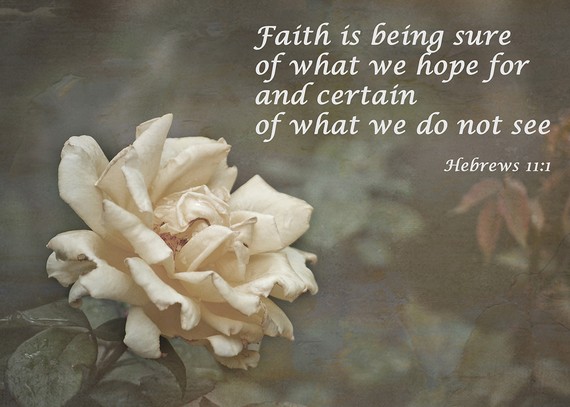
 

il_570xN.189993668

(“Faith is being sure of what we hope for

and certain of what we do not see.”

–Hebrews 11:1, NIV)


Other commentators and authors have added the following:

  • “Faith is to believe what we do not see, and the reward of this faith is to see what we believe.” – St. Augustine
  • “Faith is believing that Christ is what He is said to be, and that He will do what He has promised to do, and then to expect this of Him.” – Charles Spurgeon
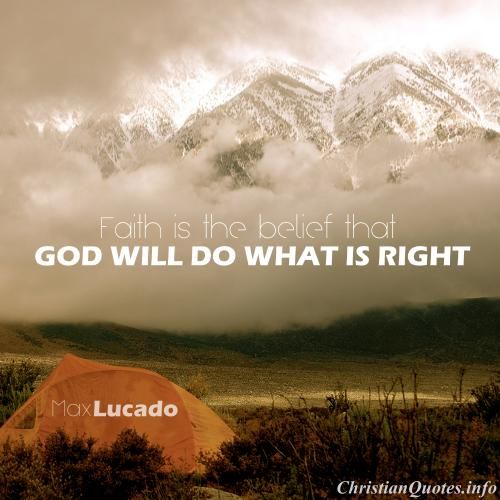
  • “Faith is the belief that God is real and that God is good…Faith is the belief that God will do what is right.” – Max Lucado (1)
 

02eda6889115e500dfd208b0af671e31


  • “Faith is more than a feeling; it is acting on our belief that God is able to bring a redeeming value to any situation.” – Carole Ladd (2)

And my personal favorite:

  • “Faith is expectancy.” – Selwyn Hughes (3).

Now if true expectancy characterizes my faith, it’s going to be evident in the way I live.

That evidence will no doubt include:


  • Optimism and hope, not pessimism and despair.


9


Scripture provides numerous statements that generate a positive outlook.   One of my favorites:


“Blessed are those who have learned to acclaim you,

who walk in the light of your presence, O Lord. They rejoice in your name all day long;

they exult in your righteousness.

For you are their glory and strength.”

–Psalm 89:15-17a)


Collecting faith-building quotes can also contribute to a positive outlook. For example:


“He is beneath me as my foundation, beside me as my friend,

within me as my life. There’s no need to worry about limited visibility.”

–Barbara Johnson


  • Gratitude, not grievances.


gratitude


“Our words are the evidence of the state of our hearts

as surely as the taste of the water

is an evidence of the state of the spring.”

– J. C. Ryle (3)


That includes the words I speak only in my mind. Silent prayers of gratitude to God will bolster my faith; rehashing the challenges I face will weaken it.


  • Affirmation of truth, not doubts.


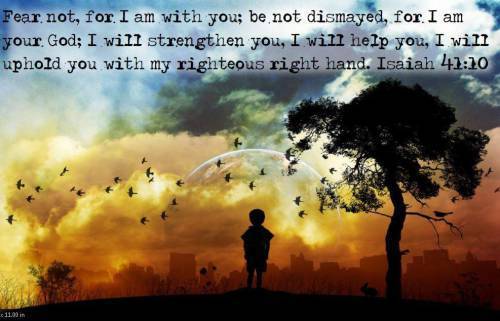
Isaiah 41:10 might be a good place to begin.
 

924735.large


Am I feeling afraid and alone? God says, “Do not fear; I am with you.”

Am I plagued by worries and what-ifs? God says, “Do not anxiously look about you, for I am your God.”

Do I feel weak and helpless? God says, “I will strengthen you, surely I will help you, surely I will uphold you with my righteous right hand.”


  • Pressing on, not giving up.


c5ea0099d8e0e24f258e811759f8dd33


Exercising my faith will move me forward; giving in to despair will bring me to a dead stop.

But just how do I move forward by faith? Philip Yancey says, simply respond to the next task that lies before me (4)—in a faith-directed manner. That might include making the bed while humming a praise song, sending the kids to school with hugs and a prayer, entering the office with cheerful greetings and a smile.

That monstrous problem may not be solved yet, but positive action while I wait will affirm my faith: God is at work; I can rest in his supreme competency. (That’s easier-said-than-done for me. I must continually reset my mind and spirit on him and the truth of his Word.)


  • Confidence, not discouragement.

ac60e76d12fa3e46123f68f314337e5d


Yes, I may be stymied by the circumstances facing me now. And who knows what will happen tomorrow? But you and I do know the One in charge!

He is:

Almighty (Revelation 11:17)

All-wise (Romans 11:33)

An immovable pillar of strength (Psalm 46:1-2)

Rich in love (Psalm 103:6)

Sovereign (Psalm 22:28)

Gracious (Exodus 34:6)

Trustworthy (2 Samuel 7:28)

Our Provider (Philippians 4:19)

Our Protector (Psalm 32:7)*

Our Guide (Psalm 48:14)

Perhaps our exercise of faith should begin with attribute stretches—stretching the mind and spirit with a character-review of the One in whom we trust, to build our muscles of confidence and strength.

_________________________

*Protection sometimes comes through trouble rather than from trouble. If God chooses to bring us through, he provides the wisdom and fortitude necessary.   Either way, the outcome is always for his glory.


Notes:

  1. Grace for the Moment, p70.
  2. Thrive, Don’t Simply Survive, p93
  3. Same as above, p. 130
  4. Every Day Light , p. 253.
  5. Grace Notes, p233.


What evidence of faith have you witnessed in others or recognized in yourself? Please share in the Comments section below!


(Art & photo credits:  www.etsy.com; http://www.pinterest.com; http://www.allpoetry.com; http://www.turnbacktogod.com; http://www.godinterest.com; http://www.pinterest.com (2).

Read Full Post »


Digital StillCamera


My knowledge of boat parts is limited, but this much I know: throw an outboard motor in the water; it will sink. Throw a propeller in the water; it, too, will plunge to the bottom. So will seats, cleats, and other parts. But when they are assembled together on a strong hull, the boat floats.

Similarly, our lives are comprised of a variety of experiences: some heavy and hurtful, others light and joyful. When properly assembled as a whole, they create a life that floats, and one that’s headed on a course toward worthwhile purpose.

Proper assembly of negative as well as positive events requires the trait of resiliency—the ability to press on through setbacks again and again.

Do those words, press on, sound familiar? The great missionary-adventurer, Paul, said he pressed on toward the goal of becoming what God intended for him (Philippians 4:12-14).  Paul is a worthy case-study for resiliency.

Saint_Paul,_Rembrandt_van_Rijn_(and_Workshop?),_c._1657

(The apostle Paul by Rembrandt)


He suffered plenty of hurt, disappointment, and failure. For example, Paul was:

  • stoned (Acts 14:19),
  • flogged and imprisoned (Acts 16:23),
  • unjustly charged with treason (Acts 18:13),
  • nearly killed on at least several occasions (Acts 21:30-31), and
  • rejected by many, even after brilliantly preaching about God and his Son, Jesus (Acts 17:16-34).


How do you bounce back from such defeats? Researchers have identified the following ways to cultivate resiliency:


  1. Get real.

No one sails through life problem-free. Accept the reality that troubles will come, then apply those strategies that provide relief, strategies such as: exercise and proper nutrition, sufficient sleep, laughter, and meaningful activity, including acts of kindness each day.


b8a886a4d226b7c342d7be36add4f9e6


  1. Get hope.

Be watchful for God’s blessings in spite of the circumstances, and thank him for his loving attention. Gratitude does indeed transform attitudes.

Find fresh strength in God’s Word, especially in his promises and assurance of his faithfulness to keep those promises (Romans 15:4; Psalm 145:13; 1 Corinthians 1:9).

We can ask God to help us set new, worthwhile goals, then look forward to the day when those goals will be met.

Researchers have noted that resilient people do not strive for riches, fame, power, or recognition. Instead they are focused on their legacies—what contributions their lives will make to those around them.  Hope in God—in all circumstances—is in itself an invaluable legacy.


dc018940ab0edea3d3f776dc4336173f


  1. Get in community with other Christians—not just by being present, but by actively participating.

Years ago while I was dealing with an ongoing disappointment, Sunday morning worship on the praise team and mid-week rehearsals did much to recharge my spirit. (Not that all was smooth sailing in between! I still struggled to stay on an even keel; but with God’s help I didn’t stop trying.)

In addition, when we contribute hope to others through listening and encouragement, we find our own outlook much improved.


d64f6b0348399c6ab1a2db4d6da0e560


*           *          *

A boat that floats is not built by just lining up the various parts in the boatyard. It requires the hands and expertise of a master boat builder, to craft a skiff of beauty, function, and purpose.


017c661391a97e6ad96158e0211995fb


A satisfying, meaningful life cannot be achieved by mere acceptance of the various events in our lives. It requires the hands and expertise of the Master. He takes all of it—the delightful and the demoralizing—to craft a life of beauty, function, and purpose.


(The boat metaphor idea came from Ralph W. Sockman, author of The Higher Happiness (1950).


Art & photo credits:  www.inland-boats.com; http://www.slideplayer.com; http://www.wikipedia.org; http://www.pinterest.com (3).


Read Full Post »


“The whole meaning of history is in the proof that

there have lived people before the present time

whom it is important to meet” (1).


I greatly enjoy meeting the heroes of history and hope you do, too.

One such hero, a founding father of America, is remembered more for his words than his deeds–words such as:


“Give me liberty or give me death.”


His name: Patrick Henry, born May 29, 1736. (His birthday is this Sunday.)


Imacon Color Scanner


But what brought Patrick Henry to that pivotal moment in history and that immortal statement? What influence did he carry afterwards?

A bit of exploration revealed the following:

Patrick Henry’s education and faith began at home, under the guidance of his college-educated father and his namesake-uncle, an Episcopal minister. Uncle Patrick’s teaching, example, and encouragement helped instill in young Patrick the Christian virtues that would impact his entire life.

As Henry grew into manhood, he transitioned from business to law to government. He was elected to the Virginia House of Burgesses in 1765.

Soon after, Great Britain established the Stamp Act, which required almost everything printed in the American colonies to be inscribed on specially stamped paper, available only from agents of the British crown–with the payment of a hefty tax.

Henry spoke eloquently against the Stamp Act: “If this be treason, make the most of it,” he challenged. The Virginia Stamp Act Resolutions passed, and those with pro-British leanings did consider the action treasonous.


sku-gt184


In 1774, Patrick Henry was elected to the First Continental Congress. Delegates met to determine a course of action for the colonies, in response to Great Britain’s offenses: taxation without representation, searches and seizures without probable cause, confiscation of firearms, and more.

On March 23, 1775, Henry rallied the Second Virginia Convention, calling them to arms against advancing British troops. England was already at war against the colonies, he reasoned. Then Henry concluded with those famous, rousing words:


2015-06-03-d50a1173_large


(“Is life so dear, or peace so sweet

as to be purchased at the price of chains and slavery?

Forbid it, Almighty God!

I know not what course others may take;

but as for me, give me liberty, or give me death!”)


No doubt such eloquent and impassioned words held the delegates spellbound. But more astounding still? Henry had not prepared a speech for that day; he held no notes in his hands.

Another surprise for most of us: Henry spoke of God throughout that speech, and quoted from the Bible.  In one short paragraph, he used eight scriptural phrases.


patrick_henry5


Other examples include:

  • “Gentlemen may cry, Peace, Peace—but there is no peace (Jeremiah 6:14). The war is actually begun! 
  • “The battle, sir, is not to the strong alone” (Eccl. 9:11). 
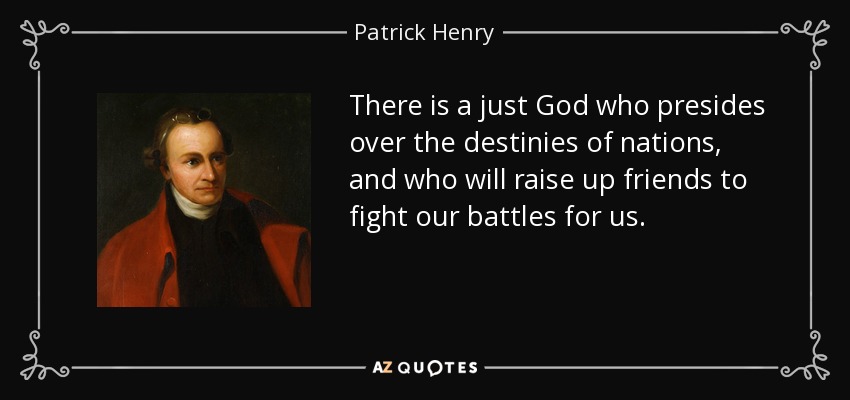
  • “There is a just God who presides over the destinies of nations, and who will raise up friends to fight our battles for us” (2 Chron. 32:8).


quote-there-is-a-just-god-who-presides-over-the-destinies-of-nations-and-who-will-raise-up-patrick-henry-53-32-60


Remember, his speech was delivered with no notes. These verses and many more were imprinted in Henry’s memory.

On many occasions during the war that ensued, he encouraged the beleaguered soldiers to pray for divine intervention, reminding them that:


“…the same God whose power divided the Red Sea for the deliverance of Israel,

still reigns in all of his glory, unchanged and unchangeable…” (3).


The American Revolution officially began April 19, 1775 at the Battle of Lexington and dragged on for  eight long years.  At first, Henry served in the military, as commander-in-chief of the Virginia militia.  But in 1776, Henry shifted his attention from the military to governmental aspects of the war and the development of a new nation.

In fact, governmental affairs were to be his main focus from that time forward. Henry served five terms as governor of Virginia and as a representative in the state legislature.

Yet it was not his accomplishments that he prized most.


thumbs_ph-beingachristian

(“Being a Christian…is a character which I prize

far above all this world has or can boast” (4).


After Henry’s death, this note was found, containing truth just as appropriate for today as in 1799:


“Whether this [the American Revolution] will prove a blessing or a curse

will depend upon the use our people make of the blessings

which a gracious God hath bestowed on us.

If they are wise, they will be great and happy.

If they are of a contrary character, they will be miserable.

Righteousness alone can exalt them as a nation [Proverbs 14:34].

Reader! – whoever thou art, remember this! –

and in thy sphere practice virtue thyself and encourage it in others.

–P. Henry” (5).


Patrick Henry certainly practiced Christian virtue himself, and is still encouraging it—in those who will listen.


Notes:

(1) Eugene Rosenstock Huessy, Speech and Reality, Argo Books, 1970, p. 167.

(2) The Founders’ Bible, p. 1734

3) http://www.christianhistorysociety.com

(4) www.faithofourfathers.net

(5) The Founders’ Bible, p. 957


Sources:

www.christianhistorysociety.com

www.faithofourfathers.net

The Founders’ Bible, Shiloh Road Publishers, 2012

www.patrickhenrycenter.com

www.wallbuilders.com


Art credits:  www.wikitree.com; http://www.thinkershirts.com; http://www.patriotpost.us; ce-wiki.wikispaces.com; http://www.azquotes.com http://www.thefederalistpapers.org.)

Read Full Post »

Say the word, “blessing,” and what immediately comes to mind?

For me, it’s happy events and lovely gifts, engineered or bestowed by God out of his loving kindness.

But James, the brother of Jesus, saw a different side of blessing: “Consider it a sheer gift, friends, when tests and challenges come at you from all sides” (James 1:2, MSG, italics added).

Tests and challenges as gifts?! Sounds a bit daft—until we consider:

What-Seems-To-Us-As-Bitter-Trials-Are-Often-Blessings-In-Disguise

Take, for example…

THE CRAZY BLESSING OF WANT

Do you wish you had a bigger house? A newer car? Better furniture? Consider yourself blessed, that you’re not like King Solomon–the wealthiest person who ever lived. For all his striving to achieve and accumulate, Solomon discovered that when every desire is gratified, the end result was nothing but meaningless smoke (Ecclesiastes 1:2, MSG).

The blessing of want protects us from the pit of depression caused by self-indulgence.

The blessing of want fosters contentment, as we learn to enjoy and be grateful for what we already have.

THE CRAZY BLESSING OF DIFFICULTY

Difficulties provide a surprising number of positive opportunities. Here are ten:

  • To press in closer to God and trust him more completely.
  • To experience the adventure of God’s sufficiency (Philippians 4:13) as he enables us to endure—in ways we never thought possible.

Philippians4_13

  • To see how God will bring beauty out of ashes (Isaiah 61:3).
  • To discover more of who God is.
  • To witness the fulfillment of his never-failing promises.
  • To present a sacrifice of praise to God, beginning with the affirmation that he has our best interests at heart—in spite of what we see.
  • To be prepared for greater usefulness for God (John 15:2), which fosters greater fulfillment and satisfaction in our spirits.

46dd131cacc19b855d589b3358b83851

  • To have a compelling story to share, as encouragement for others. Years ago I heard a speaker say, “With no test there is no testimony.” In the final analysis, I’d rather have the latter. You, too?
  • To become mature, complete, not lacking anything (James 1:4). That doesn’t happen without trials.  As Thomas Carlyle wrote:

quote-no-pressure-no-diamonds-thomas-carlyle-31833

  • To love our Savior more passionately. Josif Trif, a pastor from Romania during the days of Communism, said, “If it weren’t for Communism, I would not have loved our Lord as much. I kissed the cross the Communists gave me” (1).

THE CRAZY BLESSING OF FAILURE

If failure served no purpose in our lives, God would not allow it to happen. But since he does, we can know that failure is either for our benefit or for God’s glory—often both.

Failure is the soil from which great success can grow, beginning with a crop of positive character traits, such as perseverance, humility, and greater reliance upon God.

Green-Bean-Sprouts1

Out of failure comes experience; from experience comes greater wisdom; and wisdom leads to a godly life.

“How blessed are those who are hungry and thirsty for righteousness, because it is they who will be satisfied (Matthew 5:6, ISV)!

*    *     *     *     *     *     *     *     *     *

Crazy as it sounds, I want to praise you, Father, for the blessings of challenges and tough times. Thank you for your loving attention that carries me through, transforming me and makes me a better version of myself.  I also praise you for the glorious promise that through trouble, hardship, disappointment, or pain–“overwhelming victory is ours through Christ” (Romans 8:37, NLT)!

What crazy blessing have you experienced in the crucible of trouble, hardship, disappointment, or pain?  Please join the conversation below!

(1) His Imprint, My Expression, Kay Arthur, Harvest House, 1993, p. 135.

(Art & photo credits:  www.imagesbuddy,com; http://www.wallpaper4god.com; http://www.pinterest.com; http://www.izquotes.com; http://www.pinterest.com; http://www.harvesttotable.com.)

Read Full Post »

woman_sick_with_cold_314_208


After more than a week of full-blown cold symptoms—painful sore throat, totally stuffed-up nose, throbbing headache, and complete lack of energy–I finally woke up feeling more like my old self.

Such euphoria!  I could swallow without pain, take in glorious gulps of air through my nose, and function without the tight hat of sinus pressure on my head or the virtual suit of heavy armor on my body.  Throat, nose, head, and limbs were once again operating in unified wholeness!

But what if I still carried deep heartache, suffered from depression, or continually dealt with on-going stress at work? Relief of cold symptoms would be a small matter by comparison.

Unified wholeness must include mind and spirit as well as body.

This was the kind of completeness Jesus was referring to when he told a healed leper, “Arise, go your way: your faith has made you whole (Luke 17:19, King James 2000 Bible).


maxresdefault


You no doubt remember him, the one-out-of-ten healed lepers who took an extra step beyond healing, returned to Jesus, and expressed his gratitude.

Such effort demonstrated a spirit of humility and righteousness as he set aside his own agenda and did the right thing. His faith had impacted his body, yes, but also his mind and spirit.

The leper’s wholeness* manifested holiness—not perfection or proud piousness—but completeness and health of the total person as God fully intended.

Thomas Carlyle (1795-1881) explained it like this:

“The old word for holy in the German language, heilig, also means healthy. And so Heilbronn means holy-well, or healthy-well. You could not get any better definition of what holy really is than healthy—completely healthy.”

Wholeness is holiness, and God is our example. He is the picture of complete perfection with the sum of his glorious attributes: love, joy, peace, wisdom, and more.

By contrast, we are pictures of imperfection, with our deficient condition and inability to perfect ourselves on our own.

Yet God comes to us, arms outstretched in welcome, and says, “Your faith can make you whole.” We can turn to him like that one leper did, and he will begin the work of making us like him.


ephesians4_24


Oh, that sounds wonderful! Just as I desperately want to be made whole when a cold wreaks havoc in my body, so I want to be made whole as sin wreaks havoc in my spirit.

But such transformation involves choices.

During a cold, the choices of rest and plenty of fluids will speed the healing process toward wholeness.

My mental and spiritual wholeness this side of heaven will also require at least two choices:


120817-590x393


  1. “Look to the Lord and his strength; seek his face always” (1 Chronicles 16:11, NIV).
  1. Distill the positive out of the negative—goodness out of evil, peace out of pain, joy out of sorrow.


2corinthians12_9

And from the fullness of Jesus’ grace we will receive one blessing after another (John 1:16)—beginning with his power and wisdom to make these sound choices toward wholeness.


*     *     *     *     *     *     *     *     *     *


Oh Father, sound choices are easy to talk about, not so easy to live out. Remind me that from your wholeness, you provide grace upon grace—if only I look to you. Help me turn away from fear, self-pity, and anger, which lead to brokenness, not wholeness. How I praise you for your good will toward me and the good work of restoration you continue to develop within me!


*Synonyms from Webster’s New College Dictionary include: health, restoration, healing, and completeness.


(Art & photo credits:  www.families.com; http://www.youtube.com; http://www.verseoftheday.com; http://www.ourdailyblossom.com; http://www.verseoftheday.com.)


Read Full Post »

(a personalized psalm)

“Trust in the Lord and do good;

dwell in the land and enjoy safe pasture.

–Psalm 37:3 NIV

I praise you, oh God, that you are trustworthy. Your motives are always pure, your guidance always wise, your actions always righteous. Everything you do in my life is for my good.

Now, Father, I want to do good for you. May I dedicate myself each day to fulfill the to-do list you’ve designed. Remind me that interruptions may be divine appointments, ordained by you to accomplish a specific purpose.

I praise you that I can “dwell in the land and live securely” (v. 3, HCSB). How comforting to know my dwelling place is in you (John 15:5), where I find:

  • Refuge (Psalm 46:1)
  • Good things (Psalm 65:4)
  • Rest (Psalm 91:1)
  • Enjoyment of all your glorious attributes (Ephesians 3:17-19)

Delight yourself in the Lord

And he will give you the desires of your heart.

–Psalm 37:4 NIV

At first glance it would appear this verse teaches that as long as I’m worshiping you, you’ll grant what I want. But that would discount your wisdom, compelling you to do only what’s good for me.

No, undergirding this verse is an important truth: the more I delight in you, the more I’ll want what you want. Your desires become my desires, as I’m influenced by your infinite wisdom.

I praise you, Father, that steadily over time you have molded my spirit to be more accepting of your delights. Jeremiah’s words are more readily becoming my prayer: “As for me, I am in your hands, do with me whatever you think is good and right” (26:14*).

I praise you, too, that when a particular delight of my heart does not come to pass, you ultimately cause it to melt away!

Commit your way to the Lord;

Trust in him and he will do this.”

Psalm 37:5 NIV

I praise you, oh God, that you provide guidance in what I should do, wisdom for how to accomplish that plan, and strength to see it to completion. I can depend upon your enablement for success in the endeavors you have ordained.

How comforting to know:

  • This is your world (Psalm 24:1). That includes the little corner where I live and work and love. I can relax, knowing that Someone much wiser and stronger is in charge.
  • You’ve already planned out the events of my life in advance (Psalm 139:16). You don’t make decisions as you go along, nor do you leave everything to chance.
  • Your plan is good (Jeremiah 29:11). No matter what happens, good will come out of it.

With your goodness that desires my highest welfare, your wisdom to plan it, and your power to achieve, I. Lack. No. Good. Thing!**

All praise to you, my loving Heavenly Father!

___________________________________________

* These words of Jeremiah were not a prayer to God, but a response to the officials of Judah who wanted the prophet sentenced to death. However, when addressed to God, they do communicate heartfelt trust and submission to Him.

** Based on a quote from A. W. Tozer: “With the goodness of God to desire our highest welfare, the wisdom of God to plan it, and the power of God to achieve it, what do we lack?”

(Art credit:  www.pinterest.com; http://www.holy-bible.org; http://www.indulgy.com.)

Read Full Post »

“This world can be saved from political chaos and collapse

by one thing only, and that is _______________.”

How would you fill in the blank?

A. Wise leadership?

B. Liberal generosity?

C. Open-hearted worship?

D. Unconditional love?

Before we consider the answer, let me introduce the author of that quote, William Temple, who served as Archbishop of Canterbury from 1942-1944.

220px-WTemple

You may remember those were three of the six years when Great Britain and her allies fought against the Nazis. In fact, when Bishop Temple took office, England faced the real possibility of a German invasion.

Temple did not cloister himself within the church walls. He worked to aid Jewish refugees from Nazi Germany, supported a negotiated peace (instead of the unconditional surrender that Allied leaders desired), and traveled frequently throughout England, encouraging British citizens to take courage in their fight against evil and hold onto hope in God.

It was part of a radio broadcast during those grim days of German air attacks that Bishop Temple spoke about “one thing only.” His last word of that statement was Answer C, worship.

Now how did he expect a bit of hymn singing, scripture reading, and a sermon in church to make a difference?

He didn’t. Bishop Temple was referring more to personal worship than public.

His own definition of worship clarifies what he had in mind:

CfTp0ojVIAAXMCN

Imagine a world where each person worshiped God by:

  • Submitting his conscience to God as David did, when he asked for a pure heart and steadfast spirit (Psalm 104:10).
  • Seeking to fill his mind with the truth of God’s Word, recognizing that all his commands are trustworthy (Psalm 119:86a).
  • Replacing negative, impure, unkind, and prejudiced thoughts with whatever is true, noble, pure, and admirable (Philippians 4:8).
  • Availing himself of God’s love and then imitating him—his mercy to forgive, his grace to provide, his benevolence to bless (Ephesians 5:1).
  • Putting aside selfish desires and focusing effort on what God would have him achieve (1 Corinthians 10:31).

Surely there would be less animosity and power-grabbing in our world.

But I can’t point fingers at others when the truth is, I have yet to experience the fullness of what Bishop Temple asserted. An honest inventory of my life includes:

  • A heart not consistently pure, and a spirit not always steadfast.
  • Faith that sometimes falters in God’s trustworthy commands.
  • Thoughts that can grovel in the negative.
  • Choices and actions that do not always reflect God’s love.
  • Selfishness that still rears its ugly head.

On the other hand, guilt is not what God intended as the motivation for worship.

No, he designed it to be a delight, not a duty. He wants to expand our joy (Psalm 16:11), provide rest and refuge (Psalm 91:1-2), bestow his strength (Psalm 138:2-3), and more–through the acts of worship. We short-change ourselves by neglecting its pleasure each day.

Perhaps there’s a reciprocal relationship among all these processes. As we worship God with our adoration and appreciation, praise and prayer, might those other aspects of worship highlighted by Bishop Temple–submission, faith, a renewed mind, love-in-action, and selflessness–be the result?

Might there be an upward spiral effect because, the more a person worships, the more she’ll be transformed? And the more she’s transformed, the purer and more passionate her worship will become?

The influence of such a person—even against political chaos and collapse—knows no bounds, as God magnifies the impact.

One thing only is necessary: worship—with all its many facets.

God will do the rest.

(Art & photo credits:  www.wikipedia.org; http://www.twitter.com; http://www.piqsels.com; http://www.pixfuel.com.)

Read Full Post »


Salmon-Salad_634


“This is the best salmon I’ve had in a long time,” commented my husband, Steve, after taking the first bite. He quickly forked another. “How’s your salad?”

“Delicious!” I enthused. “’Love this combination of turkey, feta, and cranberries!”

After a morning of shopping for the granddaughters (birthday gifts and summer clothes), we had stopped at a familiar café for a late lunch. The host graciously seated us in a back corner.

Patrons were leaving; our waiter chatted pleasantly with us, no longer responsible for multiple tables waiting to be served. Soft jazz played in the background, adding more charm to the experience.

Halfway through our meal, a waitress seated herself at the empty table across from us, a caddy of flatware and napkins in tow.  She proceeded to polish the former and wrap sets with the latter.


4ea6d15e075bcc99c1ba90cc1a875705


Clunk-clunk-ka-clunk, the knives, forks, and spoons clattered on the table after each piece received its shine. (Why couldn’t she at least spread out some of the cloth napkins from her caddy to absorb the racket?)

But the clamor wasn’t the worst of it. She had not disinfected the table. And two gentlemen had been sitting there when we first arrived. That tabletop received no more than a precursory wipe. I had to wonder about her hands, too—touching fork tines, spoon bowls, and knife blades as she polished.

If only the host had taken us to another corner. We’d never have witnessed this breach of sanitization-protocol, and our ignorance would have been bliss (unless we got sick, which we didn’t)!

Sometimes ignorance is a good thing.

I, for one, am glad the future is unknown to me, protecting me from worry. In my opinion, we’re better off not knowing everything that will happen next month or next year.

Our lack of knowledge—even about tomorrow–draws us to trust in God more intently. And growing trust allows us to delight in him more fully.


father-son-holding-hands


Think of a young child holding Dad’s hand while crossing a busy street. He revels in this one-on-one time with his hero, enjoying the security of his small hand in Dad’s big, strong one. He happily chatters on about what color sneakers to purchase when they reach the shoe store.

The boy doesn’t see Dad’s watchful eye on the traffic light, on the car that might turn into the lane where they’re walking, or on the texting teenager–heading straight toward them.

But Dad has the situation under control. All possible mishaps are avoided.

Ignorance is bliss for the little boy. He trusts his father to care for him and protect him, because Dad has proven himself over and over again.

And hasn’t our Heavenly Father repeatedly proved himself to us?

  • He has provided (Psalm 23:1).  All of our needs are met.
  • He has led (Psalm 23:3). God guides us in the way we should go.
  • He has been trustworthy (Psalm 9:10). He never forsakes his own.


encouraging-bible-verse-17


We can live in ignorant bliss of the future when we embrace child-like trust in God.

A child knows he is weak and helpless, lacking in knowledge and wisdom. He recognizes his dependence on adults.

In the spiritual realm, that translates to an attitude of humility, receptiveness, and neediness before God.

And the final result of ignorant bliss?  Peace.


751b7e9d6085438c5ca66116d6690f1b

(“You will keep in perfect peace him whose mind is steadfast,

because he trusts in you.”  –Isaiah 26:3)


(Art & photo credits:  www.cookdiary.net; http://www.pinterest.com; http://www.quotesgram.com; http://www.bibleverseimages.com; http://www.pinterest.com.)


Read Full Post »

7

Nancy and I taught together at the same school for seventeen years until she retired. (Yes, the same name, teaching the same grade.)

One morning she and I simultaneously climbed out of our vans, side-by-side in the parking lot, said good-bye to our kids, grabbed our multiple totes of stuff (teachers were the original bag ladies, you know), and headed to our classrooms.

As we traipsed up the slight rise to our building, we commiserated over the long-to-do list requiring completion before Spring Break. Our hands were on the doorknobs when Nancy said, “ ‘You know what we need?”

And in the split second before she answered her own question, I thought, Hallelujah! Nancy, with all her wisdom, common sense, and problem-solving skills has an idea to lighten our loads!

 “What we need,” she concluded, “is our lipstick!”


lipstick-quotes-7


I burst out in a very unladylike guffaw. You see, neither one of us had yet completed that step of our morning routine. And though life does go better lipstick (as most women would agree), it does fall short of erasing to-do-list chores.

Nonetheless, as I entered my classroom that morning, the tension in my spirit and shoulders was erased.  I felt renewed, powered up to face the challenges of the day. Nancy’s humorous comment had indeed lightened my load—at least attitudinally.

That old song we used to sing years ago at church was right:

  • Verse 1: “The joy of the Lord is our strength” (Nehemiah 8:10c, repeated four times).
  • Verse 2: “If you want joy you must laugh for it” (4 times).
  • Verse 3: “Ha-ha-ha-ha-ha-ha-ha-ha-ha-ha-ha-ha” (4 times).

Who could finish a song like that without a genuine case of the giggles?

Laughter works wonders to stir up happiness, contentment, and even improved health.

Remember King Solomon’s observation?


dc7baaf1e8c89cd88165ed062bc21dda


(“A cheerful heart is good medicine.”

–Proverbs 17:22)


And the medicine is all the more powerful when enjoyed in pleasant company.

Laughter shared is multiplied.

With improved health may very well come longer life.


He-who-laughs-lasts


(“He who laughs, lasts.”

–Mary Pettibone Poole)


And even if that’s not quite true, this bit of wisdom certainly is:


always-find-a-reason-to-laugh-life-daily-quotes-sayings-pictures


(“Laughter may not add years to your life,

but it will add life to your years.”

–Anonymous)


Besides laughter, another ingredient for that cheerful-heart medicine is: trust.


691f8e21811785da8bdf30fecfd46e5f


(“The one who trusts in the Lord will be happy.”

–Proverbs 16:20b, HCSB)


When our trust is strong, we can be light-hearted and content. After all, God is:

  • Completely trustworthy, never forsaking those who seek him (Psalm 9:10).
  • Gracious, surrounding us with his favor (Psalm 5:12).
  • Wise, making known to us the path of life (Psalm 16:11).
  • Attentive, sustaining us here on earth (Psalm 18:35), and
  • Loving, preparing our eternal home in heaven (John 14:2).


Childlike trust in God allows us to relax and enjoy childlike fun–even exuberant hilarity, belly laughs and irrepressible giggles.


job-8-21


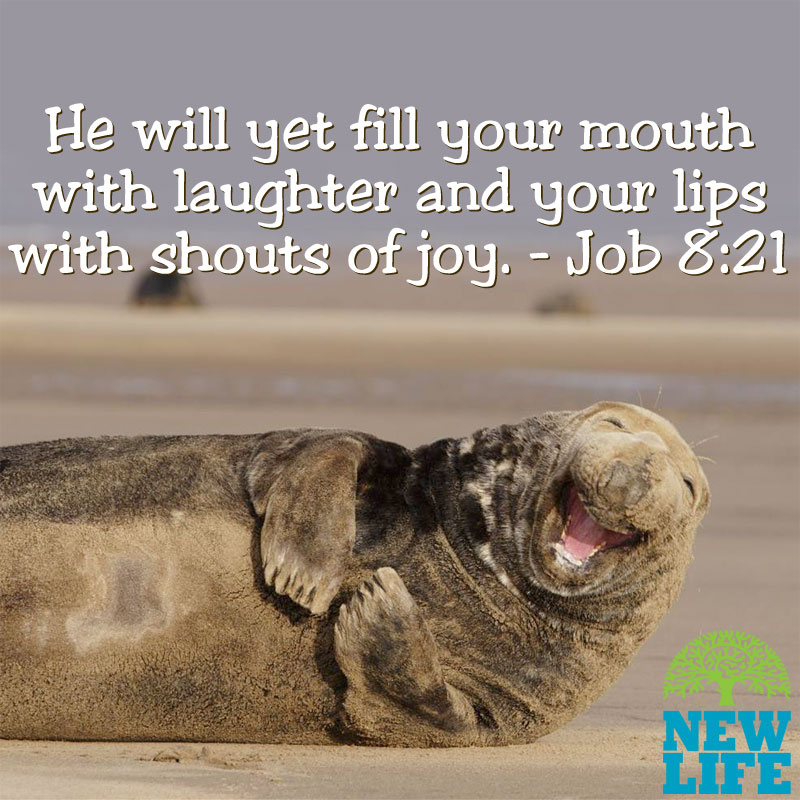
(“He will yet fill your mouth with laughter

and your lips with shouts of joy.”

–Job 8:21)


So look for laughter. It’s everywhere!


Just this morning, our daughter-in-law (a medical resident), shared this story with me:

She was headed out the door to see a massage therapist for her aching neck.

“Where are you going?” asked her daughter, Elena.

Mommy explained.

“You need to see a doctor,” remarked Elena. After a pause, she added, “Wait a minute…

… I’M a doctor!” (Her toy physician’s kit has three-year old Elena convinced she’s as qualified as Mommy to advise and treat patients.)


*     *     *     *     *     *     *     *     *     *


Where has laughter and good cheer provided therapeutic medicine for you this week? Please share in the comments below. Laughter shared is multiplied!


(Art & photo credits:  www.ice-inc.net; http://www.quotationof.com; http://www.pinterest.com; http://www.quotio.com; http://www.thedailyquotes.com; http://www.pinterest.com; http://www.newlife.com.)


Read Full Post »

What might have been uppermost in Jesus’ mind the morning after his triumphal entry into Jerusalem? Surely his thoughts were already swirling around the inevitable suffering just days away.   Perhaps the emotional anguish that peaked in the Garden of Gethsemane (Luke 22:39-44) was already starting to build.

How did he maintain the presence of mind to continue teaching his disciples and the crowds, telling parables, and answering the religious leaders’ trick questions?


Scene 07/53 Exterior Galilee Riverside; Jesus (DIOGO MORCALDO) is going to die and tells Peter (DARWIN SHAW) and the other disciples this not the end.


Then, as the Last Supper, Judas’ betrayal, and the horrors of the crucifixion took place, how did he endure, much less maintain his calm and resolute demeanor?

The writer to the Hebrews reveals at least part of the answer: Jesus kept his focus on “the joy set before him” (12:2).

What might that joy have included?

  • Returning to heaven. No doubt he could vividly see in his mind the splendor and bliss of his home that he’d given up some thirty-three years before.
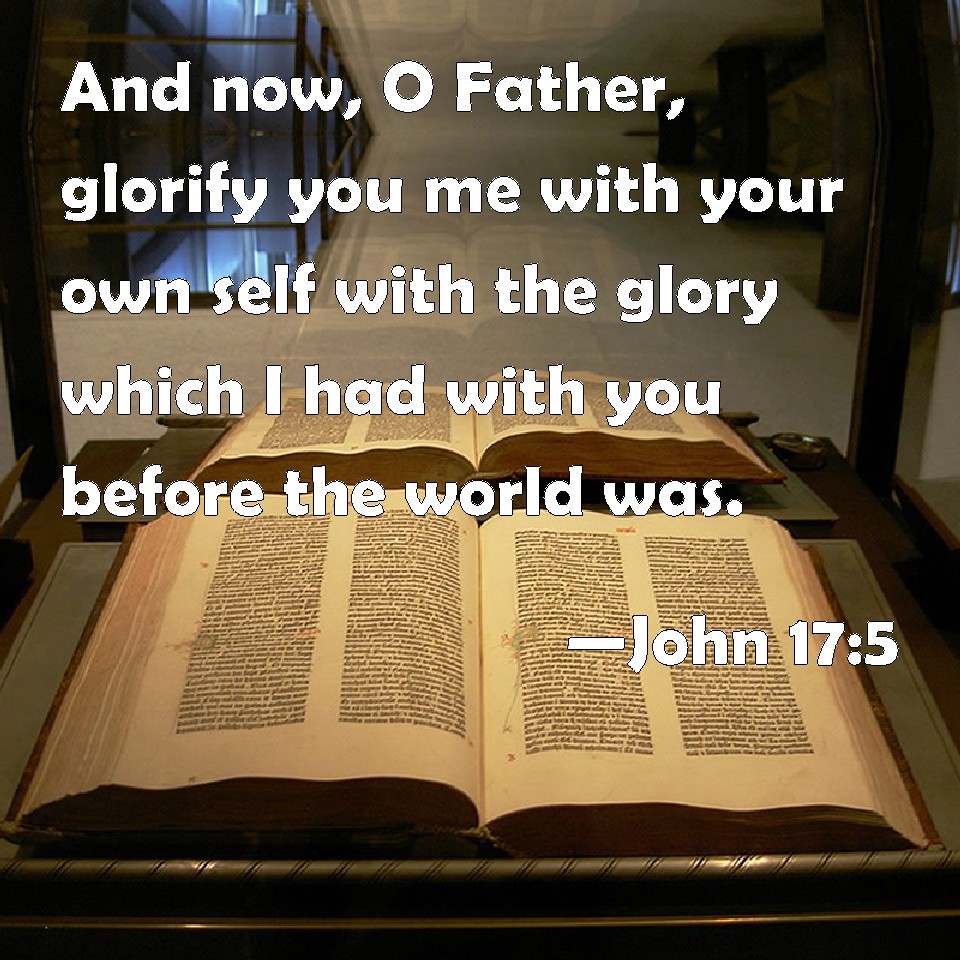
  • Returning to his Father. Jesus looked forward to being glorified with God, reveling in the glory he had enjoyed with the Father before the world began (John 17:5).


26765


  • Commanding angels, authorities and powers subjected to him (1 Peter 3:22). This privilege was not a self-aggrandizing end in itself. It was a means of aiding and rescuing his people–us (Acts 5:31).
  • Becoming our mediator and saving us from the natural consequence of our sin: eternal death (Hebrews 7:25).
  • Offering glory to God for the work he had faithfully and perfectly completed on earth (John 17:4).

These joys were set before Jesus. They provided sublime assurance of what was to come.

These joys helped to sustain him through horrific agony—agony that was swallowed up in anticipated and certain victory (1 Corinthians 15:54).


ac7e84ccd3f21b2fff7bc9c1293097e7


We, too, can fix our attention on the joy set before us. And just what do we have to look forward to?

  • Discovering heaven as our splendorous, blissful home.
  • Residing in the realm of our perfect Heavenly Father, the King of the universe.
  • Ruling with Jesus, at the right hand of God, as joint heirs of the kingdom (Romans 8:17, Revelation 20:6).
  • Offering glory and honor to the Lord (Revelation 4:11). I imagine a grand choir made up of all of us–millions of voices, singing heart-stirring melodies with intricate harmonies.  I see our arms raised toward the throne, reaching out in holy reverence toward our awesome King.

Years ago, a talented singer named Helen Lemmel (1863-1961) enjoyed the fulfilling life of a concert soloist, sharing her faith through song in many churches throughout the Midwest. For a number of years Helen ministered with evangelist, Billy Sunday, singing and song-writing for his crusades. (She composed over 500 poems and hymns in her lifetime.)

Suddenly in midlife Helen began to go blind, her husband left her, and other heartaches enveloped her as well. Through it all, however, the singer/composer maintained her faith and joy—all ninety-seven years of her life.

One of her best-known songs, perhaps, is “Turn Your Eyes Upon Jesus” (1918), written in the midst of her trials. You might recognize the chorus:


slide_31


(“Turn your eyes upon Jesus,

Look full in His wonderful face,

And the things of earth will grow strangely dim

In the light of His glory and grace.”)


Peace, determination, and strength result from focus—focus that’s riveted on Jesus and the joy set before us.


(Photo credits:  www.truthforfree.com; http://www.biblepic.com; http://www.pinterest.com; http://www.slideplayer.com.)

Read Full Post »

« Newer Posts - Older Posts »

When the House is Quiet

Impressions Becoming Expressions

Mitch Teemley

The Power of Story

Still Traveling

Impressions Becoming Expressions

Living Our Days

Gaining a heart of wisdom

He Said What?!

I'm Patty, and my husband and I are living with our adult son who has autism and epilepsy. I love sharing lessons learned from life around me, especially life with Aaron.

Meditations of my Heart

Impressions Becoming Expressions

Linda Stoll

Impressions Becoming Expressions

Signora Sheila

Where faith meets la dolce vita

Heidi Viars

Finding the Image of God