Feeds:
Posts
Comments

Archive for the ‘Faith’ Category

‘Ever drive on a highway carved out of a mountainside or high hill where craggy cliffs border each side? Signs along the way warn drivers: Beware of falling rocks.

I wonder how much good those signs accomplish. Is it really possible to stop in time, should a rock come plummeting down the hillside right in front of your car?

When falling rocks do cause accidents, insurance companies usually categorizes the event as an “act of God.” It’s considered an unavoidable natural disaster that no amount of cautionary measures could have prevented.

Not that God would deliberately cause such an accident. Every good gift comes from him (James 1:17).  But he has set into motion certain natural consequences and laws that govern his creation. Erosion and gravity would be two examples at play in the case of falling rocks.

So what are we supposed to do when the road from Point A to Point B includes potential danger? (And doesn’t it always?)

For that matter, what are we supposed to do when the road of life includes potential danger? (Again, doesn’t it always?)

Many of us allow worry to niggle in our minds:

  • How many rocks do you suppose have fallen along this stretch already?
  • Does the Corps of Engineers check regularly for erosion?
  • Is that jutting rock up ahead breaking loose?
  • What’s up with that pile of rocks by the side of the road? That can’t be a good sign.

How do we steer clear of such thoughts? A good way to begin:

  1. Replace fearful thoughts with faith-filled thoughts.

“The only happy way to deal with [falling rocks and other such adversities] is the way of faith: faith in the purposes of God, in the presence of God, in the promises of God, and in the power of God” (Peter Marshall*).

  1. Affirm that God does indeed have loving purpose in it all. 

Even when rocks fall?

Yes, because God is sovereign (Psalm 103:19) and God is good (Psalm 145:9). Many saints through the ages have endured pain, suffering, and calamity, yet came to understand that God accomplished positive purpose(s) through it all.

Just one such saint out of many: Elisabeth Elliot.  Perhaps you already know the story. Her young husband, Jim, was one of five missionaries brutally murdered by Auca Indians in Ecuador, 1956. Their daughter was just ten months old. Yet Elisabeth was able to write this:

“I am not a theologian or a scholar, but I am very aware of the fact that pain is necessary to all of us. In my own life, I think I can honestly say that out of the deepest pain has come the strongest conviction of the presence of God and the love of God.”

And no doubt, those two realities in Elisabeth’s life, the presence of God and the love of God, were precious treasures indeed.

In addition, hundreds of young men and women vowed to become missionaries as a result of the example and inspiration of those five young martyrs.  Most amazing of all, numerous members of the Auca tribe eventually became Christians, including the killers of Jim Elliot and the other four missionaries with him.  (You can read more of the incredible story here.)

  1. Decide like the Apostle Paul: the only thing that really matters is exalting Jesus (Philippians 1:19-21).
And exalting Jesus can be achieved in any circumstance.

  1. Understand that tests and challenges are “sheer gifts” (James 1:3 MSG).

Why? The testing of faith develops perseverance. And perseverance leads to maturity and strength of character (vs. 3-4).

I like the sound of that: maturity and strength of character. So when I’m the victim of falling rocks and start to give in to self-pity, worry, or complaining, please remind me of these principles.

*     *     *     *     *     *     *     *     *     * 

Thank you, Father, for providing the way of faith on the treacherous road of life.  We can trust your purpose for all things, your presence in all situations, your scripture promises of hope and comfort, and your power to see us through.  Hallelujah!

 (Romans 8:28; Hebrews 13:5b; Psalm 145:13; Matthew 19:26b)

(1) Author, pastor, and chaplain of the United States Senate in the late 1940s.

(Art & photo credits:  http://www.wikimedia.com; http://www.pixabay.com (2); http://www.pexels.com;  http://www.inspirationalchristians.org; http://www.pixabay.com.)

Read Full Post »


On May 30, 1778, eighty-three year old Voltaire lay dying. His had been a writerly life, as he produced plays, poetry, essays, historical and scientific works, over 21,000 letters and over two thousand books and pamphlets.

Now he would never pick up his pen again.

Some of that writing criticized the Christian faith and the church. He had no use for them personally, asserting that a person could achieve moral character through reason. Wasn’t that what Christianity was all about anyway?

But Voltaire had also decided the way to dissolve the tight alliance between the self-serving state church and the totalitarian government of France was to discredit God and the Bible. Then the people would abandon Christianity and the church would become useless.

To that end he wrote in 1758:


Those twenty years passed. God was not in a pretty plight.

Voltaire made a new prediction around 1775: “Fifty years from now the world will hear no more of the Bible.”*

Of course, Voltaire was eighty years old by this time. He had no hope of being alive to see if his prediction came true.

Three years later on his deathbed, however, Voltaire was not concerned about his predictions. It would seem he was reconsidering if the Christians and their Bible may have been right after all about the importance of faith in Jesus.

Voltaire’s last words, as reported by his doctor, were these:


“I am abandoned by God and man! I shall go to hell!

O Christ, O Jesus Christ!”


Such a sad end for a brilliant man. We can only hope his last thoughts expressed the faith he fought against for so long.

But what about dying saints? Are they too tortured by doubt, fear, and aloneness?

Far from it.

“The very happiest persons I have ever met with have been departing believers,” said Charles Spurgeon. As a pastor to thousands over thirty-eight years of ministry, he must surely have visited many.


(Charles Spurgeon preaches to a crowd in 1858.)


In reality, the last remarks of saints most often offer hope, encouragement, and affirmation.

We can look forward to death, like Sir David Brewster (1781-1868)—a Scottish physicist, mathematician, astronomer, inventor of the kaleidoscope, and writer:


“I will see Jesus; I shall see Him as He is!

I have had the light for many years.

Oh how bright it is! I feel so safe and satisfied!”


Willielma Campbell (1741-1786), patroness of missionary work in Scotland and elsewhere, expressed complete contentment:


“If this is dying, it is the pleasantest thing imaginable.”


And John A. Lyth (1821-1886), a minister who served as a missionary in Ceylon (now Sri Lanka), died with his heart bursting with joy:


“Can this be death? Why it is better than living!

Tell them I die happy in Jesus!”


Another missionary, Adoniram Judson (1788-1850), created a delightful visual with his last words:


“I go with the gladness of a boy bounding away from school.

I feel so strong in Christ.”


And the famous evangelist, D. L. Moody, gave us a brief but bright glimpse of what awaits us beyond death.

Moody had been sleeping, although fitfully. When he awoke, Moody said, “Earth recedes. Heaven opens before me!” His son thought his father had been dreaming. “No, this is no dream, Will. It is beautiful. It is like a trance. If this is death, it is sweet. There is no valley here. God is calling me, I must go.”


*     *     *     *     *     *    *     *     *     *


O Father, thank you for this wonderful record of  joy-filled hope for the day when we, too, must go.

Even better, thank you for your great promises that you will be our refuge, even as we die. You will be our guide beyond death. And though we must walk through the valley of the shadow of death, we have no need to fear for you are with us. Hallelujah!

(Proverbs 14:32b; Psalm 48:14 (GW); Psalm 23:4)


*Fifty years after Voltaire’s prediction, the Geneva Bible Society was printing Bibles in the house where Voltaire had lived. They even used Voltaire’s printing presses.


(Art & photo credits:  http://www.wikimedia.com; Nancy Ruegg; http://www.wikimedia.com (2); http://www.wikipedia.com; http://www.wikimedia.com (2); http://www.flickr.com.)


Read Full Post »


“Well, that’s about as good as I can make it,” Steve announced.

We stood at the end of the hall in the parsonage where we lived, surveying his handiwork: a fort.

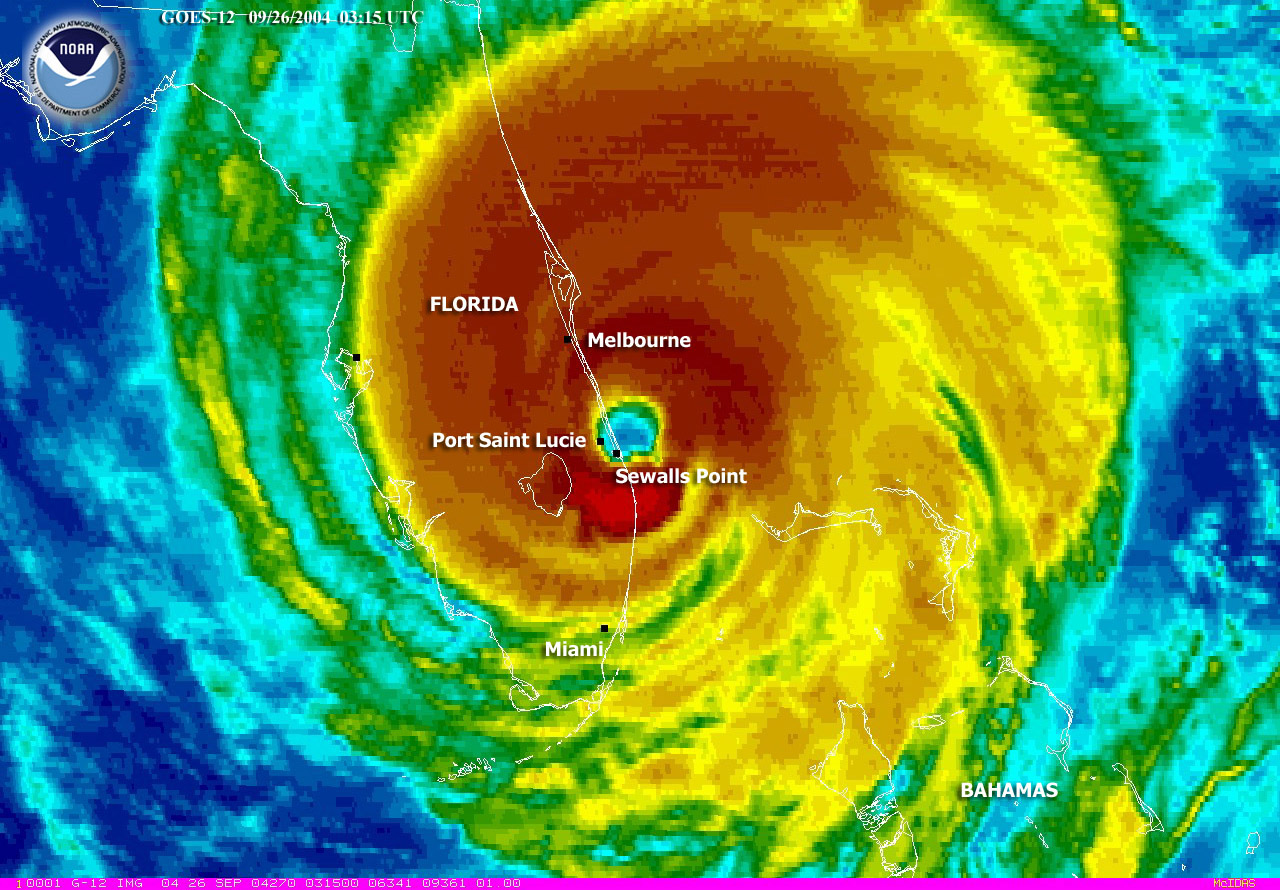
You see, a hurricane was roiling toward all of us who lived in South Florida, the second storm in two weeks.

The first one, named Frances, had torn branches from our trees, ripped numerous shingles off the roof, mangled the screened enclosure and thrown it in the pool.

It could have been so much worse.


(Jeanne at Landfall.  We lived south of the eye–in that bright red area.)


Now we were facing Hurricane Jeanne. We had no idea if Frances had compromised the roof structure, and of course we were among thousands waiting for an inspection to assess such damage.

Because of the uncertainty of our situation, Steve built that fort. He dragged two dressers into the wide area at the end of the hall where doors opened to three bedrooms, two storage closets and a bath. Over the dressers he put two mattresses, and on top of that, two long, folding tables.

He tightly looped rope around all the doorknobs (to help hold them shut) except the door to our bedroom and bath. Then he laced the rope across the dresser-mattress-table structure like a web, and tied it all together snugly.

Now I know why little boys build forts, I thought, so when they grow up they can keep their families safe during a hurricane.

In spite of Steve’s efforts, however, we could not be sure his structure would withstand the pressure of the wind, especially if the roof gave way. And even a well-built fort could not keep out water should flooding become an issue.

But thankfully our fate was not in Steve’s hands, reliant on his fort-building skills (stellar though they be).  Our lives were–as they always are–in the sure hands of God.


No, those verses are not meant to imply God’s perfect protection for his people at all times. The historical record and present day tragedies bear out: Many wonderful men, women, and even children have suffered and died through no fault of their own.

However, those of us who have “made the Most High our dwelling,” can be assured of these truths:

  1. Any number of catastrophes could have overtaken us already, but God has safeguarded us.

For example, if it were not for his providential care I may already have died from:

  • Any number of illnesses as a child. Thanks to penicillin and antibiotics I survived.
  • Car accidents.  At least several times I’ve come that close to a horrific crash.
  • Falls from high places. (You can read about one such escapade here.)

No doubt you have your own stories to tell of potentially disastrous circumstances.

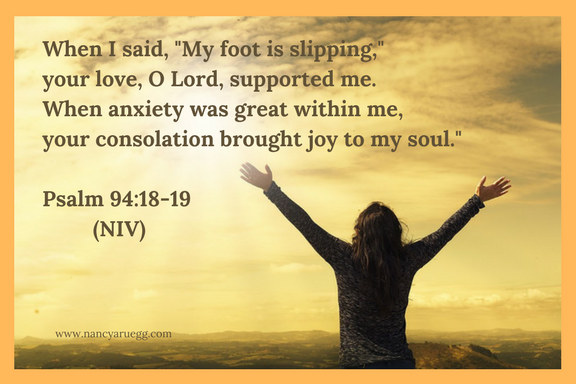
2. God always brings good out of distress—beginning with heightened awareness of his presence (Psalm 94:18-19).


Another positive outcome:  By the wind of his Spirit, he stirs up the ripple effect of his work in us to impact the lives others.


3.  In the context of eternity, our time on earth is no more than a blink.

One day we will be delivered out of this broken world into a place where no harm or disaster will ever occur, all troubles, frustrations, and pain will fade into insignificance.


Such truths gave me comfort that night as I hunkered down in our fort.  Wind and rain pounded against the house, sounding like hundreds of stomping feet on gymnasium risers.

Yet I slept.

*     *     *     *     *     *     *     *     *     *

Afterword: Obviously we survived that storm. The roof held firm and we experienced no flooding. Yes, the region was without power again for a number of days, and there was more debris to clean up. But God honored us with his loving protection–again.


(Photo credits:  http://www.wikimedia.org; http://www.maxpixel.com; http://www.pixabay.com.)


Read Full Post »

A certain king known for his wealth and brutality, took a stroll one evening on the rooftop of his imposing palace. From his lofty vantage point, he could view the large and glorious city he’d created–with the back-breaking labor of thousands of slaves.

Numerous, handsome buildings made of brick and stone displayed the best architectural design of the time. He had spared no expense in their construction. Many said it was the most beautiful city on earth.

But the king had also been careful to reserve space for parks and gardens. Most awe-inspiring of all were the “hanging gardens” of Semiramis. Planted on the rooftops, they kept cool the rooms below and offered stunning beauty as well. Soon they had earned the prestigious recognition as one of the Seven Wonders of the World.


(One artist’s idea of what the hanging gardens may have looked like.)


The king threw his arms outward. “Look at this great and glorious city I have built,” he cried, “a fitting residence for a king of such mighty power as I!”

Someone heard the king’s boast–someone who detests the proud of heart (Proverbs 16:5), and who wields the power to bring disgrace to the prideful (Proverbs 11:2).

No sooner had King Nebuchadnezzar bragged about his glorious accomplishments, than he became insane and lost his throne for a period of seven years (Daniel 4:28-37).


(King Nebuchadnezzar, reduced to groveling among the beasts)


Clearly, we’d do well to avoid such boastful pride as Nebuchadnezzar demonstrated. But the repugnant trait manifests itself in other ways too. The prideful person:

  • Puts self first, others second.
  • Craves recognition, admiration, and attention.
  • Takes credit for what others have done.
  • Becomes defensive when differing views are presented.
  • Rarely acknowledges sins, flaws, or mistakes.
  • Blames others for failures.
  • Resists advice, new information, or techniques.

Not a pretty package.

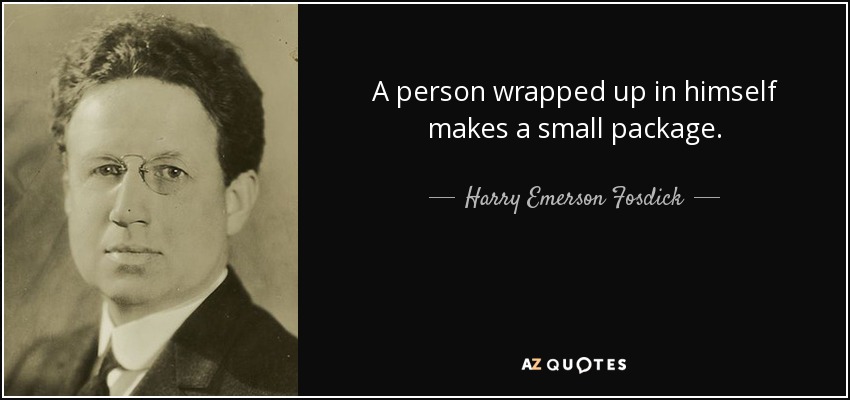
And according to Harry Emerson Fosdick: “A person wrapped up in himself makes a small package” as well (emphasis added).


(Harry Emerson Fosdick. (n.d.). AZQuotes.com. Retrieved January 11, 2018, from AZQuotes.com Web site: http://www.azquotes.com/quote/99920)


I have to admit, at sometime or other over my lifetime, I’ve exhibited every one of these unattractive symptoms of pride.

But what about confidence? Is that different? And what would it look like, to be confident without pride?

Paul exemplifies confidence in Philippians 4:13:


(“I can do all things through Christ who strengthens me.”)


The difference between pride and confidence includes the source of each. Pride grows out of arrogance and conceit; confidence grows out of trust in God.


“Blessed is the man who trusts in the Lord,

whose confidence is in him”

–Jeremiah 17:7


And because the source is different, the resulting traits are different.

For the Christian, confidence is the quiet knowing that God is in control and all will be well in the end. Therefore he/she can set aside self-aggrandizement, express convictions, even confront others when necessary with grace and poise.

In addition, confidence fosters:

  • Consideration of others before self (Philippians 2:3).
  • Collaboration and cooperation with others (Psalm 133:1).
  • Disinterest in the spotlight (Philippians 1:15-18).
  • Recognition and praise to God, the Creator of all accomplishments (2 Corinthians 3:5-6).
  • The desire for self-improvement with the help of God (Philippians 1:6).
  • The desire for wisdom from God and godly people (Proverbs 19:20).


Now that’s a beautiful and grand package.


*     *     *     *     *     *     *     *     *    *


Heavenly Father, thank you for your willingness to help me eradicate prideful thoughts the moment they manifest themselves. Thank you for showing me the way to live with confident trust in you —no longer over-protective of ego or overly concerned about self-interests—but surrendered to you and dependent on you, the Engineer of what’s best and the Source of all competency.


(Art & photo credits:  http://www.wikimedia.com (2); http://www.azquotes.com; http://www.flickr.com; http://www.maxpixel.freegreatpicture.com; http://www.pixabay. com.)


Read Full Post »

Hope.

Such a small word for such a big, important concept.

Multi-syllable synonyms seem to carry more clout:  expectation, assurance, confidence, and conviction offer a few.  (Thank you, Dr. Roget.)

Stir them together and we can create a definition for faith-filled hope:  the constant, confident, assured expectation that God will see us through every circumstance until we’re standing before him in heaven.  Those are words with heft that we can hang onto through dark and stormy nights.


You see, hope is much more than wishful thinking.

But sometimes it hides behind the overwhelming issues we face:  health concerns, financial problems, troubled relationships, difficult circumstances, foreboding futures.


How can we live with confident assurance that all will be well when uncertainty seems to rule the day, the week, the year?

As always, scripture offers us insight:

  • Understand that hope doesn’t come from a hidden reservoir within ourselves.  According to 1 Peter 1:3, our hope comes from God, provided for us out of his loving mercy.  It’s a living hope, breathing energy and strength into our souls.
  • Remember:  we can move forward with positive expectation because He is our all-powerful, grace-filled God—loving, kind, and wise, too.  He’s not just watching from afar; he’s an involved God, tending over us like an attentive Shepherd (Isaiah 40:11a).


  • Rest assured that our faithful God will see us through to a satisfying conclusion—either through events that unfold over time, or perhaps through an instantaneous miracle.  It may be the satisfying conclusion will not come until we cross the threshold into eternity (1 Peter 5:10).  But then, in the glorious ecstasy of that moment, our earthly trials will no longer matter (Philippians 1:21-23).
  • God’s plan is designed for our good (Jeremiah 29:11).
  • Hope involves waiting (Micah 7:7)—expectantly and patiently.

Sometime during second grade I noticed that being a teacher looked like fun.  And soon my favorite pastime became playing school with whomever I could cajole into being students.  When necessary, dolls were pressed into service.

That desire to become a teacher stayed with me all through high school and college.  Finally, after fourteen years, I was the one sitting at my own teacher’s desk, awaiting the arrival of my first students.  My hope, my confident expectation that I would one day be a teacher, had at long last become reality.  The import of the moment was not lost on me.  I had to fight back the tears.


Such euphoric joy does not happen often without waiting.  We appreciate more what we have to wait for.  And frequently, hard work is also involved.

God allows us to be part of the process, teaching us important lessons about patience and perseverance along the way.

Here’s what I need to remember:

Long-term waiting and steady hard work toward a dream makes the fulfillment all the sweeter when it finally comes.

For now, we can enjoy hopeful anticipation of a new reality that is coming, perhaps in this new year 2018—good health, financial security, improved relationships, or fulfilled dreams.  We can take comfort from the knowledge that our God, who is unlimited by the constraints of time, already resides there.  And…


Through the dark and stormy night

Faith beholds a feeble light

Up the blackness streaking;

Knowing God’s own time is best,

In patient hope I rest

For the full day-breaking!

– John Greenleaf Whittier


Let’s step out into each new day breaking with trust and obedience, because God is preparing us for that new reality.

And may these words ring in our ears:


“The Lord is good to those whose hope is in him,

to the one who seeks him.”

–Lamentations 3:25


*     *     *     *     *     *     *     *     *     *


What hope have you been clinging to?  Are there scriptures which contribute to your confidence and expectation?  What experiences of the past give you assurance for your hopes of the future?  Please share your insights below in the comments section!


(Revised and reblogged from January 31, 2013.  I do apologize for posting a reblog again.  Steve and I have been sick, catching a nasty bug on New Year’s Eve.  First I succumbed, and then he did.  A new post will be forthcoming next week!)


Art & photo credits:  http://www.flickr.com; http://www.pixabay.com; http://www.heartlight.org; http://www.pxhere.com; http://www.wikipedia.com; http://www.pixabay.com.

Read Full Post »


In three short days 2017 will melt into memories, and we’ll greet a new year with all its potential for grand possibilities.

These last few days of December offer a time of optimism and expectancy within our spirits. We wonder if 2018 will be the year for:

  • The fulfillment of a long-held dream,
  • The answer to a frequent, heart-felt prayer, or
  • The accomplishment of a hard-won goal.

It’s also a time when our hearts become reflective:


  • What might God have in store for me in 2018?
  • What would he desire me to do over the next twelve months?
  • How would he have me grow in character and maturity?

And so I pray.  (Perhaps you’d like to join me?)

Thank you, Father, for the demarcation between one year and the next, giving us pause to evaluate and encouraging us to:

  • Refocus our attention on priorities,
  • Recalibrate those attitudes that hold us back, and
  • Renew our resolve to live your way for your purpose (and experience your effervescent joy in the process).


To that end:

  • I pray for strength to accomplish what you have ordained for me.

Make clear your plan, Lord, and then help me tackle that plan boldly, mindful that you rarely give strength beforehand; most often you grant strength as we journey.

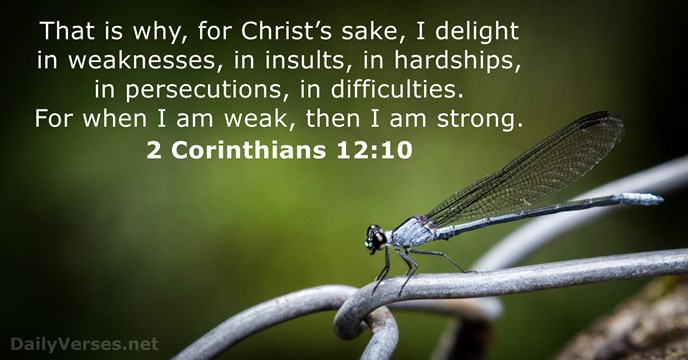
Remind me also: “When I am weak, then I am strong” (2 Corinthians 12:10). That sense of inadequacy in my spirit is actually a positive force. It compels me to rely on you more consistently.


  • I pray for wisdom to choose those areas where you want me to spend my time, energy, and resources.

Remind me my days on Planet Earth are growing short (Psalm 90:12). I need to remain focused.


Thank you, O God, for the delightful promise that the pursuit of wisdom results in joyful satisfaction in life. “Blessed is the man who finds wisdom and the man who gains understanding (Proverbs 3:13). May I be diligent to seek wisdom from your Word and then make choices based on that wisdom.

  • I pray for courage to speak of you everywhere, anytime.

As I pick up the phone or head out the door, may I affirm you are with me (Joshua 1:9). You will spread the knowledge of Christ through me, like a sweet perfume (2 Corinthians 2:14)—if I am a willing participant.


With Pastor Jack Hyles (1926-2001), I do not pray for my fears of rejection or conflict to be removed; I ask for courage equal to my fears.

  • I pray for faith to relish the adventure of a God-honoring life.

Keep me mindful of your promises, Father, that create a rock-solid foundation for my faith, including: 1) You are always working to accomplish your plan (John 5:17). 2) You are always working in me to mold my character into Christ-likeness (Philippians 1:6). 3) Your incomparably great power is always available for us who believe (Ephesians 1:19).


And if I proceed into each day with a simple reliance upon your power, with a single eye to your glory, it is certain you will be with me…And if you are with me, then I must succeed (Charles Spurgeon). Thank you for such emboldening words!

  • Last, I pray for passion to experience even more of your abundant life.

I want to participate with you in what you are doing around me, Lord—in my family, church, neighborhood, community, even in the lives of those I meet in the blogosphere.

I want to live with spiritual intensity, acutely aware of your presence around me and your power within me.

I want to experience the abundant life you offer in John 10:10 until even simple moments sing with significance because they reveal your glory.


O God, as you fulfill these desires and increase these qualities in me–strength, wisdom, courage, faith, and passion–what a year 2018 promises to be!


(Art & photo credits:  http://www.maxpixel.freegreatpicture.com; http://www.pixabay.com (2); http://www.dailyverses.net (2); http://www.wallpaper4god.com; http://www.slideshare.net; http://www.wallpaper4god.com.)


Read Full Post »


“Joseph went up from the town of Nazareth to Bethlehem,

because he belonged to the house and line of David.

He went there to register with Mary,

who was pledged to be married to him and was expecting a child.”

–Luke 2:4-5 excerpts, NIV


The distance from Nazareth to Bethlehem is about eighty-five miles. Can you imagine walking that far, nine months pregnant? I can’t. Even if Mary rode on a donkey, she’d have been jostled and swayed from side to side. How comfortable would that have been? I think I’d rather walk.

And yet, in spite of Mary’s unremitting discomfort and Joseph’s growing concern, the couple surely traveled the road to Bethlehem with great hope in their hearts. Her firstborn would soon enter the world—a Child like no other. The angel, Gabriel, had made it clear to both of them: Mary would bear a son, the promised Messiah, and he would save his people from their sins (Matthew 1:21).

Sure enough, Mary delivered the child while they were in Bethlehem, the exact birthplace identified by the prophet Micah (5:2), centuries before the event.


That same night shepherds cowered in the grass as blinding light pierced the darkness and a startling figure appeared—an angel. Fear quickly gave way to wonder, however, as the shepherds heard the astounding announcement. The Messiah had finally been born, not in the Holy City of Jerusalem as one might expect, but just a stone’s throw away in their own little village.

Soon the shepherds were also traveling a road to Bethlehem. But this was undoubtedly no midnight stroll; they may have even tried to outrun each other. And the exuberant joy that propelled them was accompanied by confident faith in their hearts. They knew the angel’s message had come from the Lord (Luke 2:15).


Many miles to the east wise men took note of a special star and shortly thereafter set out upon their own long road to Bethlehem. It’s possible they followed the star westward for two years, in order to worship the Messiah and present him with precious treasure: gold, frankincense, and myrrh.   Theirs was a road of generosity.

And now it’s our turn to travel the road to Bethlehem—a figurative one. With Thanksgiving behind us, we journey toward December 25, the final destination after a month-long celebration of our Savior’s birth.

Like Mary and Joseph we can travel with hope because our Heavenly Father is a God of his Word, who loves, encourages, strengthens, and more (2 Thessalonians 2:16-17).


Like the shepherds, we can embrace the truth of our Savior’s birth and all its implications for an abundant, God-enhanced life now and unending euphoria in heaven yet to come (John 10:10, 1 John 5:11-13).

Last, like the wise men, we can follow the road of generosity, not only with presents for family and friends or contributions to ministries and charities, but also with such gifts as:

  • A smile for the harried store clerk,
  • Focused attention on the toddler who wants to sing “Rudolph,”
  • A listening ear for the elderly lady at the grocery store,
  • Cheerful patience while waiting in line at the post office, and
  • The benefit of the doubt—for everyone.

Best of all, our road to Bethlehem extends beyond December 25—into eternity—where hope will be culminated, faith will become sight, and generosity will be rewarded (1 Peter 1:3-4; Hebrews 11:1; Ephesians 6:8).


The road may seem long at times.   But the destination will be rapturously worth it.

______________________________

Your turn:

Of course these three–hope, faith, and generosity–aren’t the only roads to Bethlehem.  There are many, including the familiar roads of love, joy and peace.  What road (s) will you travel this Advent season?  Please share your thoughts in the comment section below!


(Art & photo credits:  http://www.flickr.com; http://www.wikimedia.com; http://www.flickr.com; http://www.slideplayer.com; http://www.pexels.com.)


Read Full Post »

The place:  Spindletop, Texas.

A group of five investors formed the Gladys City Oil Company.  Sulphur springs in the area gave them great hope that black gold lay beneath the surface, especially since gas seepages in the area would ignite if lit.

Soon the area was dotted with holes–holes that produced nothing.  Two investors pulled out.

A geologist was brought in.  More investors were convinced to take the risk.

Nine long, unproductive years went by, and  still no oil. That’s 3,285 days of discouragement, disappointment, and exhausting labor.  Yet those men would not give up.

Finally, on January 10, 1901, their long-held dreams were realized.  At the depth of 1,139 feet, the company struck oil.  And it wasn’t just a gurgling flow.  The discovery at Spindletop gave new meaning to the term, “gusher.”  The oil shot over one hundred feet into the air, spewing enough to fill 100,000 barrels a day.  It took nine days to get the well under control.  No oil field in the world, up to that time, had been so productive.

Lucas_gusher

I wonder what those men said to each other each morning, over those 3,000-plus days of working, learning, waiting, and wondering?  Surely their conversations included some positive uplift, or they would have quit.  Perhaps they made such comments as:

  • “If we don’t find oil, at least we can say we gave the effort everything we’ve got.  If we quit before all possibilities are tried?   That‘s failure.”
  • “All the signs indicate there is oil.  We can‘t quit!
  • “Today might be the day!”

Just as oil is sometimes discovered by accident, so God’s blessings fall into our laps as glorious surprises. Other times,  God chooses to postpone a blessing while we dig our way through learning, working, waiting, and wondering–like the oil men of Spindletop, Texas.

How do we press on when circumstances look bleak, when common sense tells us to quit?

1.  Pray!  The key to knowing when to persevere and when to change direction is to spend time with God. Ask him to make clear what the next step is.  Most likely he will not reveal the whole plan at once.  He rarely works that way, because it eliminates the faith factor.  Our moment-by-moment trust in him is too crucial to the abundant living he desires for us.

2.  Believe!  Dozens of promises in scripture probably apply to your situation and mine. We can recite those promises–not as demands (“God, you said this, so I’m expecting you to do it.”) but as faith-builders. (“God, you said this, and I know with you all things are possible.”)

3.  Fight!  Fight against discouragement with plenty of encouragement.  God is very creative in the ways he brings hope to our spirits.  We must keep watching and listening!

A friend or even a stranger can speak uplifting words that resonate in our hearts.  Sometimes it’s as if God is speaking directly. One sign for me, that someone is speaking for God?  Goosebumps!  I can almost feel his light touch on my arm and his voice saying, “Pay attention to this, Nancy.”

Our God is a well of unending supply.  Whatever we need in this life, including wisdom, direction, and perseverance toward a goal, he will provide.  In fact, he will do whatever it takes for his praying, believing, fighting children to discover the oil of gladness, instead of mourning (over failure), a garment of praise instead of a spirit of despair.

That’s one way our loving, supportive Heavenly Father displays his splendor (Isaiah 61:3).

Steven Curtis Chapman Quote: “Out of these ashes beauty will rise.”

[https://quotefancy.com/quote/1129946/Steven-Curtis-Chapman-Out-of-these-ashes-beauty-will-rise]

(Revised and reblogged from February 13, 2014.)

Photo credits:  www.en.wikipedia.org; http://www.heartlight.org; http://www.quotefancy.com.

Read Full Post »

Ever had a sleepless night due to a relentless whirl of what-ifs, a churning jumble of distress and anxiety, a racing heart?

Worry will do that. No wonder we’ve been told worry is bad for us.  In fact, according to Charles Mayo (co-founder of the Mayo Clinic), worry causes adverse affects on the circulatory system, heart, glands, and nervous system.*

But what about concern? Is that different from worry? Is it OK to be concerned?

The answer is yes. Scripture gives much evidence that even our perfect Heavenly Father exhibits concern. He demonstrates:

  • Compassion on all he has made (Psalm 145:9).
  • Care for each of us (1 Peter 5:7).
  • Mindful attention (Hebrews 2:6).
  • Watchful protection (Jeremiah 31:10).
  • Careful planning for us (Psalm 40:5).

As God exemplifies, concern prompts beneficial action; worry, on the other hand, accomplishes nothing but harm.

Worry creates a thick fog of fear; concern invites God into our experience with all his wisdom, power, and comforting presence. He is, after all, the only One who can dispel fog, whether it’s water vapor in nature or worry on our minds.

Just the reminder our loving Father is right in the midst of the mess with us will do much to sweep away worry.  And “there is heaven in the depth of that word—Father!” (Charles Spurgeon, emphasis added).

Indeed. If we dig into the heavenly depths of our Father’s love we’ll see:

  • The support of his powerful right hand (Psalm 65:8).
  • The protection of his everlasting arms (Deuteronomy 33:27).
  • The comfort of being carried close to his heart (Isaiah 40:10).

And that’s just for starters.

If we dig into what we know about him, we can affirm:

  • “Nothing happens in any particular unless God’s will is behind it; therefore [we] can rest in perfect confidence in him” (Oswald Chambers).
  • The God who made us will equip us for whatever lies ahead—even if it’s unpleasant (Habakkuk 3:19).
  • Difficulties most often set the scene for his glory to be displayed (Romans 11:36).

Sometimes, though, the fog of worry shrouds even the strongest mental images and the most affirming truths. We’re forced to admit: trustful concern is not easy.

For most of us, it is a learned discipline that grows over time. Slowly we’re able to embrace the truth that all will be well because all is in God’s perfect and capable hands. Slowly we develop the habit of affirming God’s character and power, to develop a nearly worry-less state of contentment.

And we learn the value of gratitude amidst turmoil—as illogical as that may sound. The very act of thanking God releases our minds from negative focus. When we turn our attention to him, problems fade in significance and the fog is dispersed. That’s why Paul recommended, “Pray with thanksgiving” (Philippians 4:6).

And that’s how we turn worthless worry into productive concern.

*     *     *     *     *     *     *     *     *     *

I thank you, Father, that NO situation is hopeless because you are the God of eternal hope. I can count on you because you are the God of universal sovereignty, complete sufficiency, and abundant goodness.

I thank you for your comforting presence, for your power at work (even though I can’t see it right now), and for your glorious promise that you always bring good from every situation. I praise you that, while we may sow in tears, there will come the day we reap with songs of joy. Hallelujah!

2 Thessalonians 2:16-17; Romans 11:36; 2 Corinthians 3:5; Psalm 145:7;

Matthew 28:20; John 5:17; Romans 8:28; Psalm 126:5

*www.todayinsci.com.

(Art & photo credits:  http://www.flicker.com; http://www.wallpaper4god.com; http://www.youtube.com; http://www.dailyverses.net; http://www.heartlight.org.)

Read Full Post »

Conventional wisdom teaches that success comes to those who work hard to achieve their goals.  And to a point that’s true.

But.  Success can quickly crumble when tragedy strikes.

Ask Job; he’ll tell you.  He was an extremely wealthy man and the greatest among all the people of the East.

He enjoyed a large, loving family.  His children liked each other so much they partied together.

Job was blameless and upright—totally undeserving of what happened to him (Job 1:1-4).

Stripped of everything.  All his wealth.  All his wonderful children.

Some of the recent hurricane victims know the magnitude of such horror. Home and all contents, gone.  Family members, gone.  I can’t even imagine their emotional pain and heartache.

And what was Job’s reaction to his tragedy?

If you had asked me that question a couple of years ago, I would have answered:  Job was incredibly accepting; he didn’t even blame God (1:22).

But there’s more:

“He fell to the ground in worship” (v. 20b).

WHAT?!

How can a person possibly worship at a time like that, when his whole world has collapsed around him?

All Job had left was his foundation—a foundation of faith in God.

And worship was his expression of that faith, declaring God’s worth to him—in spite of horrific calamity.  For Job, God was enough.

From Job we learn that true worship is not reliant upon circumstances.  In fact, a sacrifice of praise (Hebrews 13:15) is surely very precious in God’s view.

Second, true worship is not reliant upon emotions.  We don’t have to be filled with joy in order to worship.  We can worship God with our tears, expressing our trust in spite of the pain.

Job couldn’t rely on answers that would give meaning for his suffering.  God gave him none.  What Job did rely upon was God’s character:

  • “His wisdom is profound, his power is vast” (9:4a).
  • “He performs wonders that cannot be fathomed, miracles that cannot be counted” (9:10).
  • “If it is a matter of strength, he is mighty!  And if it is a matter of justice who will summon him?”  (9:19).
  • “You gave me life and showed me kindness, and in your providence watched over my spirit” (10:12).
  • “To God belong wisdom and power; counsel and understanding are his (12:13).
  • “Can anyone teach knowledge to God, since he judges even the highest” (21:22)?

In the end, knowing God was more important to Job than knowing answers.

*     *     *     *     *     *     *     *     *     *

Heavenly Father, I shake my head in wonder as people of faith such as Job neither blame you nor give up on you in the face of calamity.  Instead, they rely upon you all the more tenaciously.  They worship, affirming that you are still their sovereign, loving God; they testify of your strength and peace. 

Thank you for being a God who comes alongside us with your wisdom and grace, especially when we’re hurting.  Thank you for powerful examples to follow such as Job.

(Art & photo credits:  http://www.flickr.com; http://www.wikimedia.org; http://www.pinterest.com (2); http://www.flickr.com.)
Revised and reblogged from June 17, 2013.

Read Full Post »

« Newer Posts - Older Posts »