Feeds:
Posts
Comments

Archive for the ‘God’s Power’ Category

Before my friend, Elizabeth, even spoke, I knew something was wrong.  The slump of her shoulders, the wrinkled brow, the tears welling up in her eyes–they spoke loud and clear.

“You know how Michael and I would like to have a little brother or sister for Ashley,” my friend said, dabbing at her eyes with a Kleenex.  “Well, it’s become more than just a desire for me.  I so desperately want another child.”  Her voice became tight.  “The waiting and uncertainty are becoming unbearable.”

We stood together, in the emptying sanctuary after church, arms entwined.  And I prayed for Elizabeth and Michael.

Psalm 113:9, a verse which had ministered to me years before, came to mind.  I included the promise in my prayer:  “God, you’ve promised ‘to settle the barren woman in her home as a happy mother of children.’  We are claiming that promise today for Michael and Elizabeth.  Even now we look forward to the day when they are holding a new, precious baby in their arms.”

Note the verse says children, not child.

The prayer came out of my mouth with certainty and brazen expectation, not in keeping with my cautious personality at all.  I have to admit, the thought crossed my mind, What if God intends for Elizabeth and Michael to have just one child?  You’ve gone way out on a limb with that prayer!

But I voiced no disclaimers, no caveats.  I let the prayer stand on its foundation of conviction–conviction that didn’t come from my spirit as much as from the Holy Spirit.

For the weeks that followed, I continued to pray that God would bless this couple with another child.

Weeks later, Elizabeth approached me once again.  Even before she spoke, I knew what she was going to say.  Her outspread arms, wide grin, and sparkling eyes spoke loud and clear.

“I’m pregnant!” she cried.

We hugged each other tight and noisily exclaimed our jubilation.

Would I have been as excited had I not been praying for this family?  Delighted, yes.  But jump-up-and-down-ecstatic?  Probably not.  My joy was greatly expanded because I had invested myself in the outcome—with the effort of prayer.

Yes, there are many reasons to pray, including these benefits:

  • Our wills are aligned to God’s will (Psalm 37:4).
  • Strength of character is developed through the discipline of perseverance (Luke 11:5-8).
  • We have the opportunity to bring glory to God (John 14:13).
  • Prayer is a means for fighting against evil (Ephesians 6:10-18, especially verse 18).

But the wonder of prayer, for me, is the privilege God gives us, to be part of the process, as he engineers circumstances to accomplish his will.

Every time God moves in situations for which we’ve prayed, he is giving us a precious gift:  the gift of participation with him–in a miracle.

Maybe two.

Michael and Elizabeth had twin girls!

*     *     *     *     *     *     *     *     *     *

Heavenly Father, thank you for the splendid privilege of participating with you in the healing, protection, provision, and guidance with which you bless others.  May I never get tired of bringing my requests to you, knowing that the joyful conclusion will be worth every moment spent in prayer!

Read Full Post »

Last fall I read there were more than 150 million blogs on the internet, with approximately 175,000 new ones being launched daily.  At that rate, cyberspace now includes over 213 million blogs!

After much shopping, I have found twelve devotional blogs which I follow regularly.  I’ll introduce six today and six on Thursday–in no particular order.  After reading these sample bits, you might want to visit these blogs yourself, and discover fresh insight from…

IMG_1727…Jennifer Dukes Lee (www.jenniferdukeslee.com), wife of an Iowa farmer, mother of two daughters, professor of journalism, and author of a new book being released in early 2014.  Recently she wrote about “How to Talk Back to Fear:”

“I believe that bravery looks a lot like…believing.  And I believe that there’s really no such thing as failure, because there’s nothing unredeem-able in the hands of Christ.”

Smart woman, that Jennifer.

…Holley Gerth (www.holleygerth.com), life coach and author, tackled the topic, “When You’re Worried What People Think.”

First, Holley quoted 1 Corinthians 4:3 (MSG):  “It matters very little to me what you think of me, even less where I rank in popular opinion…Comparisons in these matters are pointless.”

Holley says.  “When I care very little what other people think of me then I’ve suddenly got room to care a lot about other people.”

Quite insightful, don’t you agree?

Unshakable Hope…Unshakable Hope (www.unshakablehope.wordpress.com), written by Bill, married more than twenty-five years, father of two daughters, diagnosed in 1996 with ALS, or Lou Gehrig’s Disease.  Bill has very little mobility, yet his spirit is more vibrant than ever.

On February 21, 2013, Bill wrote about Shadrach, Meshach, and Abednego (Daniel 3).  They were about to be thrown into King Nebucadnezzar’s furnace and boldly proclaimed, “The God we serve is able to save us…, and he will rescue us from your hand, O king.  But even if he does not…we will not serve your gods or worship the image of gold you have set up (vs. 17-18).

Bill says, “For me, this is more than a great example of strong faith.  I believe this is a pattern of faith that all Christians should emulate regardless of challenges we might be facing.  We can proclaim that, ‘Our God whom we serve is able to deliver us from [insert your trial here].  BUT EVEN IF HE DOES NOT…we are not going to serve…doubt, fear, worry, hopelessness or anything else that destroys faith, hope, joy and peace.’

Strong words from a man of deep strength.

…Morning Story & Dilbert (http://www.morningstoryanddilbert.wordpress.com).  Kenny gleans thought-provoking posts from many sources and serves them up with a Dilbert cartoon — something for the mind and heart; something for the funny bone!

Recently Kenny included an anecdote about Abraham Lincoln, highlighting the president’s humility.  Although Lincoln was wise, responsible, and persevering, surely humility was one of the supreme qualities that contributed to his strong leadership.

Here’s the story Kenny shared:

“After the Battle of Gettysburg, General Robert E. Lee and his Confederate forces were withdrawing to Virginia, and Lincoln felt that they were vulnerable. Eager to get the agony of the war over with, President Lincoln sent word to General Meade to attack.

“With his message, Lincoln also sent a personal note. ‘The order I enclose is not on record,’ said the note. ‘If you succeed, you need not publish it. Then, if you succeed, you will have all the credit of the movement. If not, I’ll take the responsibility.’”

Taking responsibility for failure, but giving others the credit for success.  Now that’s humility.

…Jean Wise of “Healthy Spirituality” (www.healthyspirituality.org), is a former nurse, but now focuses her time on writing My Photoand speaking.

On September 24, 2013, she shared the story of second-string quarterback, Kenny Guiton, of the Ohio State Buckeyes.  Opportunities to get in the game have been few for this senior, but Kenny is always prepared.  Then, on a recent Saturday, he not only had a chance to play, Kenny scored a record six touchdowns!

In contemplating Kenny’s story, Jean said, “My job is to be faithful. To enter each day relying on God’s love and guidance.  To show up every morning with an open mind and heart.  To say to our heavenly coach, ‘Here I am, Lord.  What position do you need me to play today?’  To be ready when He calls me off the bench.  To wait and let God form me as He wills till His time is right.’”

Jean’s prayer resonates with my heart, too.

Diana Trautwein…Diana Trautwein‘s musings at “Just Wondering” (www.dianatrautwein,com).  She’s the mother of three, grandmother of 8, and a graduate of seminary in mid-life.  Currently Diana serves as a spiritual director.  Her post on October 11, 2013 was titled, “Giving Permission to Say No.”  Her words of wisdom include:

“Saying ‘yes’ is central to a full, rich challenging life.  We need to say yes to lots of different things over the course of our [life] journey.”

But!  “Try as we might, we cannot do everything.  (Because God already has.)  We cannot save the world.  (There is only one Savior.)  And we must not work ourselves to death.  (We are meant to enjoy God, and glorify God, not assume responsibilities we were never designed to bear.)”

See what I mean?  Wise woman.

Please return on Thursday to meet six more outstanding bloggers!

Read Full Post »

Years ago in my hometown, when the community pool was built, Dad often took my brother and me swimming.  I marveled at the way my father could slice the water with a smooth dive, roll over on his back, and float.  Without even moving his arms and legs, he could remain on top of the water.  Amazing!

When I tried it, I sank–immediately.

“Daddy!  Show me how to float!” I cried.

First, he helped me to lie flat-out on top of the water.  His hand gently supported the middle of my back.  And then Dad said the strangest thing.

“Now, relax.”

What?!  Every fiber of my being was tense.  I just knew that if I relaxed, my nose would instantly fill up with heavily chlorinated water.

But I trusted Dad.  He wouldn’t trick me into a catastrophe.  So I tried to relax.

Easier said than done.  Try as I might, my body would not relax.  My focus was more on the possibility of sinking than it was on the one thing that would keep me afloat.

“That’s OK,” Dad probably said.  “This is just your first try.  Keep practicing, and all of a sudden you’ll get the feel of it.  That’s how it happened for me.”

This experience came to mind as I read Charles Spurgeon’s comment on an excerpt from Isaiah 30:15.

First, the scripture-excerpt:  “In quietness and confidence shall be your strength.”

And now, the Spurgeon quote:  “We are sinking by our struggles when we might float by faith.”

But learning to relax in the spiritual realm is just as difficult as it was to relax on my back in that swimming pool.  It is so much easier said than done–at least for me.

Why is fretting and worrying my default mode?  It’s so pointless.  Resting in God is the only way to hope and peace (Psalm 62:5).

The big question is how.  How can I relax into quiet confidence that will be my strength, and keep me afloat?

Perhaps the answer is in that word practice.  As I reaffirm over and over God’s glorious attributes, as I review His wonderful promises, my focus will change and my spirit will learn how to rest.

What attributes might be wise to focus on?  King David included a number of them in his glorious psalm of thanksgiving, found in 1 Chronicles 16:8-36:

  • Power (vs. 9, 12, 14) – He is able to work wonders.
  • Integrity (v. 15) – He is totally trustworthy.
  • Holiness (v. 29) – He is absolutely pure and righteous, totally set apart from anyone else in the universe.
  • Goodness (v. 34) – His blessings to us are bountiful and frequently displayed.
  • Love (v. 34) – Not based on our paltry deeds, but on his kind and gracious nature.

And what promises would build my confidence?  Here are three for a good start:

  • “As for God, his way is perfect; the word of the Lord is flawless.  He is a shield for all who take refuge in him” (Psalm 18:30).
  • “My God will meet all your needs according to his glorious riches in Christ Jesus” (Philippians 4:19).
  • “I will lead the blind by ways they have not known, along unfamiliar paths I will guide them; I will turn the darkness into light before them and make the rough places smooth.  These are the things I will do; I will not forsake them” (Isaiah 42:16).

Notice:  He promises protection, provision, and guidance.  Everything we might face is covered.

Thinking back to those summer days at the community pool, I’m reminded of two things that happen when we float:  1) Our eyes are focused upward.  2) Our ears cannot hear very well, situated as they are beneath the surface.  Noise is silenced.

Those two things need to happen in the spiritual realm if we’re to float by faith.  Our eyes need to be focused upward on our powerful, loving, promise-keeping God, and our ears need to be stopped to the voices of worry.

The former will undoubtedly take care of the latter.

(Photo credits:  www.sciforums.com ; www.dailyencouragement.net ; www.flickr.com ; www.confessionsofasmowflake.com )

Read Full Post »

“Glorious and majestic are his deeds,” the psalmist proclaimed (111:3a).

And what might those glorious and majestic deeds include? The creation of every molecule in the universe. The fact that he sustains creation. The blessings he graciously bestows, the miracles.

But also quite glorious and majestic are the fulfillments of detailed predictions he revealed to prophets, sometimes hundreds of years ahead of time. With pinpoint accuracy, those predictions became historical fact.

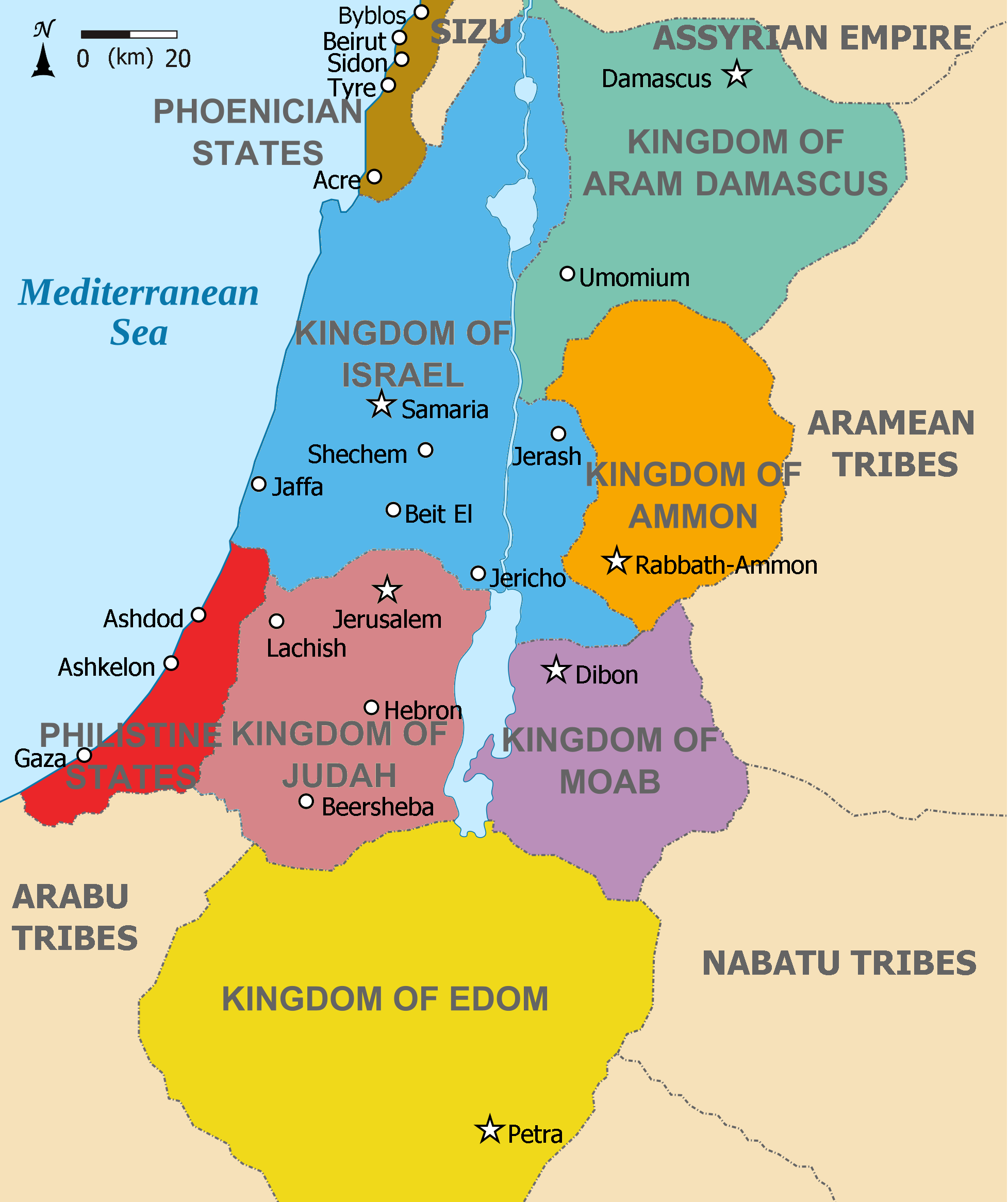
Find Tyre just north of Israel.

Here’s one amazing example.

Tyre, located strategically on the Mediterranean Sea, had become a center for international trade by the 500s B.C. And as a result of its healthy commerce, the city also enjoyed political importance.

Yet the prophet Ezekiel foretold that many nations would come against Tyre (Ezekiel 26:3). Sure enough, the army of the Babylonian king, Nebuchadnezzar (of fiery furnace fame), began siege in 585 B.C., and continued year after year.

No doubt the inhabitants laughed at his folly. Behind the stout fortifications around the city they felt safe from attack, and enjoyed a constant flow of supplies that came by ship on the coastal side of the city. (Nebuchadnezzar had no navy.)

After twelve years the Babylonians finally broke through the gates, only to find the city abandoned. The mainland Tyrians had simply moved to the island portion of their city, a half mile from shore. It too was fortified. The Babylonian army gave up; Tyre probably thought they were home free.

But Nebuchadnezzar wasn’t the only one who coveted this prime seaside location. Remember, Ezekiel proclaimed many nations would come against this city, and historians have proven the accuracy of this statement.

Over the next 150 years, the Persians, Macedonians, Greeks, Romans, Egyptians, and Syrians came against Tyre. For 150 years, no one succeeded in conquering the island city. I can only imagine how proud they must have felt.

But according to Ezekiel, their walls would be destroyed and their watch towers pulled down. The rubble would be scraped away and the site of the prosperous city would be laid bare. The city site would become a place to dry fish nets (vs. 4-5).

Right on God’s schedule, Alexander the Great entered the scene in 332 B.C. He executed a very creative idea, no doubt planted in his mind by the Father of Creativity himself.

Alexander instructed his army to take the rubble from the mainland site and build a wide causeway to the island fortress. Then he marched his men across, and conquered the city.

Bust of Alexander the Great, housed in the British Museum.

Isaiah also prophesied concerning Tyre, that after 70 years of devastation, the city would again become a bustling trade center (23:15).  Numerous times in the New Testament Tyre is mentioned.

So what about Ezekiel’s proclamation that Tyre would become a bare rock? Such a fantastic finish to a prediction that must have seemed impossible.

Along came Saladin, sultan of Egypt, who became ruler of the region between Egypt and Arabia. He completely destroyed the city of Tyre in 1187. 

Soon sand built up in the harbors, rendering them useless for ship traffic. For 600 years, fishermen did indeed dry their nets on the rocks and rubble. The city never regained the prominence it once knew.

The ruins of ancient Tyre

Critics might scoff, “Mere coincidence!” But look at the evidence of seven facts proclaimed about Tyre in Ezekiel 26. Note the details of Nebuchadnezzar’s siege, laid out in verses 7-12. What are the odds that such precise predictions could become fact with 100% accuracy?

Perhaps the story of Tyre is one to remember for those times when someone says, “I just don’t know if I can believe the Bible. How can we know it’s not just a collection of allegorical stories?”

Fulfilled prophecy offers compelling evidence.

*     *     *     *     *     *     *     *     *     *

Thank you, Father, for reminding me of this amazing story, proving once again that You are God, there is no other like you. Your purpose will stand…What you have said, you bring about; what you have planned, you do (Isaiah 46:9-11).  Thank you for being that kind of God, in whom we can have complete trust!

Art & photo credits: http://www.wikimedia.org (2); http://www.worldhistory.org.

Read Full Post »

Years ago, Mom taught me a neat trick for those times when I can’t remember the name of someone or something.

“Go through the alphabet,” she suggested. “Usually a letter will stand out, and it will jog your memory.”

No doubt many of you have discovered the same strategy.

Now that I’m getting older, it has occurred to me: Is it my imagination, or am I using the alphabet to jog my memory more than I used to?

That question brought a silly visualization to my mind. Who is the oldest Person we know? God–he has always existed, even before time itself, right?

What if he experienced memory challenges? I can see him with his elbow propped on the throne, stroking the thick, white wool of his beard, the other hand tapping absent-mindedly against the folds of his glowing robe. He’s talking out loud to himself (another habit of the elderly).

“Oh, what is her name? I can see her face…She’s one of our brown-eyed, brown-haired children. I just love deep, dark eyes…Isn’t she the one We blessed with a raise, even though she didn’t ask for it? Oh, what is her name?”

I told you it was silly. God doesn’t have memory problems! He is all-powerful and all-knowing. Actually, considering his magnificent splendor, it’s really quite amazing he cares about us at all.

David wrote, “What is man that you are mindful of him, the son of man that you care for him” (Psalm 8:4)?

Mindful. I like that. God’s mind is full of us. He not only knows our names, he knows the number of hairs on each of our heads (Matthew 10:30). It stands to reason God knows our favorite colors, and what each of us was doing ten years ago today.

And when we consider he has planets, moons, and stars to orchestrate, it is no small wonder he concerns himself with such little specks as us.

Another psalmist wrote, “The Lord remembers us and will bless us” (Psalm 115:12a).

Not only does he remember who we are, he remembers our needs and blesses us accordingly.

Meditate on that concept for a moment. God supplies our every need.

James Janeway, a Puritan minister and author of the seventeenth century, said that such contemplations are enough to launch us forth into an ocean of goodness, where you can see no shore, nor feel the bottom. I like that, too.

Here’s another concept worthy of careful thought: God’s mindfulness did not begin when each of us was born. “All the days ordained for me were written in your book before one of them came to be” (Psalm 139:16). Could our days have been recorded without God’s knowledge? No. That means we have been on his mind since before each of our birth dates.

And last, God’s mindfulness will never end. He will continue to be mindful of us in the future, into infinity. “I will never stop doing good to them” (Jeremiah 32:40), He said. And “I will never forget you” (Isaiah 49:15b).

Oh, Father, thank you for your constant, caring attention. Thank you for your ocean of goodness from which you bless us. In return, may I be mindful of you, remembering the wonders you have done, your miracles (Psalm 105:5a). I want to praise you continually, and forget not one of all your benefits (103:2).

Read Full Post »

Minnesota Blizzard 10 - 22609

Minnesota Blizzard 10 – 22609 (Photo credit: DavidErickson)

Maria felt compelled to make a big pot of lamb stew one winter morning. By afternoon she knew why. A blizzard paralyzed city traffic. Right down the street from her home a bus load of passengers became stranded. Maria perked coffee for them—pot after pot–and invited them into her home for the lamb stew. Gratefully and incredulously they came, about half a dozen or so at a time. The driver was the last to be served, with the remaining spoonfuls from the bottom of the pot. Maria never even got a taste! But it didn’t matter. Her heart was filled with gratitude that God had prompted her to make that stew. He enabled her to help twenty-plus stranded commuters and show them the love and grace of God.

Gordon burned his hand severely—so badly the doctor said he’d probably have to amputate several fingers. But Gordon’s mother and many others prayed, and day by day the hand got better—not worse. Today, you have to look close to even find the scar.

Nita often wears a favorite pair of gold earrings, given to her by her children. One day while golfing with her husband, she lost one those precious earrings. Nita was heartsick. A few days later, these avid golfers were again on the course. Nita prayed. “Father, I don’t know where that earring is, but you do. Please help me find it.” On the twelfth green, when Nita walked up to where her ball had landed, she saw something glinting in the grass. Not one foot from where her ball landed, there was her earring.

These stories are just three of many, recently shared by members of the Bible study I attend.  Maria, Gordon, and Nita are in that group.  No doubt you’ve heard stories like theirs, too. In fact, you’ve probably experienced a few miraculous situations yourself. It’s important we share our God-stories as encouragement for our faith. Our God-stories prove:

1) God’s Word is true. God is loving, gracious, faithful, and powerful.

2) We are never without hope.

3) God keeps his promises.

4) God continually blesses his children.

5) Christianity works.

Do all of these facts mean we can expect God to intervene in every difficult circumstance? No. We’d become very spoiled children if he did. But the number of times God does provide miracles goes beyond coincidence. They are indeed God-incidents.

Yet we cannot ignore the times God does not answer our prayers as we’d wish. Sometimes he does not step in to provide and protect. He does not always solve our problems for us. It’s in those situations that God works a different set of miracles: patience and perseverance (James 1:2), growth in godliness and spiritual strength, his compassion and mercy (James 5:11).

Such statements might sound glib to someone recently bereaved of a loved one, or an innocent person suffering unfair circumstances. But there are powerful God-stories from suffering saints as well.

G. lost her husband recently and was terribly insecure about living on her own. But God revealed his presence to her in a powerful physical sensation of warmth through her whole body. Although still grieving, G. has felt surrounded by God’s peace and empowering presence.

K. had always dreamed of getting married, creating a home, and raising several children. Then came her fortieth birthday. It appeared that dream was not going come true. Depression seeped into the corners of her life, even though she was a woman of strong faith. But day by day, the truths of God’s Word fed her spirit and hope began to grow again. Not the hope of marriage and a family, but hope in God’s plan to prosper her, to give her a future (Jeremiah 29:11)—albeit in a different direction.

In the final analysis, these miracles are the most wondrous of all. They are miracles of transformed hearts.

“Our troubles have always brought us blessings, and they always will. They are the black chariots of bright grace” – Charles Spurgeon.

Read Full Post »

Henry James, by John Singer Sargent (died 1925...

Henry James, by John Singer Sargent (died 1925). See source website for additional information. (Photo credit: Wikipedia)


“A writer should strive to be a person on whom nothing is lost.” – Henry James.

Some of you may recognize that name from literature class. Does Portrait of a Lady or The Turn of the Screw sound familiar?

Henry James became known for well-developed characters and for stories with an undercurrent of commentary on politics, the social classes, feminism, and morality.

With many works to his credit, his advice for writers–to “live aware”–is advice worth taking.

So we writers become observers–of people, situations, and creation.

We try to see more – the swirling rainbow on a bubble; the slight arch of the eyebrow indicating doubt.

We try to hear more – the squirrel’s staccato tapping as he scampers up a tree; the brief pause of uncertainty.

We try to smell more – the promise of harvest in the freshly turned soil of spring; the aroma of love in a Thanksgiving feast.

We try to taste more – the flavor of winter in a snowflake; the delectable sweetness of moments spent with family or old friends.

We try to feel more – the downy softness of silk on a milkweed seed; the comforting warmth of traditions.

As a result, we’re better equipped to convey meaning to our readers—with clarity and specificity, we hope.

And it occurred to me, Christians should also strive to be persons on whom nothing is lost.

We Christians need to live aware, so as not to miss what God reveals.

We must try to see more – in His Word, His people, and creation.

We must try to hear more – of his still, small voice.

We must try to smell more – in the fragrance of His presence.

We must try to taste more of God’s goodness in our everyday circumstances.

We must try to feel more of the wonder.

And what will be the result?

Out of the glorious riches of all these things, “we may be filled to the measure of all the fullness of God” (Ephesians 3:19). God wants to fill us with His attributes:

His love—everlasting, mindful of our needs, caring.

His wisdom—truthful, trustworthy, impartial.

His holiness—pure, separate from all else, beautiful.

His righteousness—promise-keeping, miracle-working, faithful.

His power—creative, sovereign, protective.

Think of it. The King of the universe wants us to fully enjoy all that He is, all that He has to offer.

Oh, how I want to be a person on which nothing of the King is lost.

Read Full Post »

Crucifixion IV

Crucifixion IV (Photo credit: Remara Photography)

Seems like a cruel oxymoron, doesn’t it—to put the words glory and cross together. Glory carries positive connotations of splendor, radiance, and goodness. The cross is a symbol of horrific pain and suffering.

But the cross is also “an exhibition of the nature of God” (Oswald Chambers). You see, God’s glory is the fullness of who God is, his nature, and includes all his attributes and characters traits. Many of those attributes were at work when God provided the way of salvation for us. The glory of the cross includes:

1. Love

God demonstrated his own love for us in this: While we were still sinners, Christ died for us” (Romans 5:8).

Such love is incomprehensible. How could he possibly desire to be in relationship with us? How could he delight in us, frail and self-centered as we are? It makes no sense.

Yet, he sent his Son, Jesus, to take the punishment we deserved and to offer us eternal life. When we invite Jesus into our lives, God takes us from the gutter of depravity and elevates us to the status of beloved children. We are adopted into the family of God (Ephesians 1:5). Incredible!

2. Grace

“In him we have redemption through his blood, the forgiveness of sins, in accordance with the riches of God’s grace” (Ephesians 1:7).

What is grace? All the facets of God’s love—his forgiveness, benevolence, presence, peace, provision, and more—made available to us, who don’t deserve it. Grace prompted God to provide a way for us to experience his love—through the sacrifice of his only Son.

Did you notice? God is the one who provided the way to him; we do not have to figure it out for ourselves, and then hope for the best. By God’s grace, he has made salvation (rescue from death) a sure thing. We can know our place in heaven is secure!

God’s grace, put on display at Calvary, sets Christianity apart from any other belief system in the world.

3. Power

I pray that…you may know…his incomparably great power for us who believe…, which he exerted in Christ when he raised him from the dead” (Ephesians 1:18-21).

No one can raise someone from the dead except God. When Jesus was resurrected, he demonstrated his power over death, and proved the validity of eternal life, not only for himself, but for all those who believe in him.

But Jesus’ resurrection was not the end of his mission. Read the next couple of verses (22-23) to discover that, after Jesus rose from the dead and ascended back to heaven, God seated His Son at his right hand (the seat of honor). Now Jesus’ power and authority is above all other rule and authority in the universe.

And someday, Jesus will share that power with us. Those of us who have accepted Jesus into our lives will reign with him in heaven (2 Timothy 2:12). My heart is filled with wonder and awe at such a privilege.

4. Faithfulness

God, who has called you into fellowship with his Son Jesus Christ our Lord is faithful” (1 Corinthians 1:7).

Faithful to forgive. Faithful to see us through the journey of this life. Faithful to win the battle over evil in the end. Faithful to keep his promise of eternal life, because of the sacrifice of his Son on the cross.

Our faithful God made salvation so simple for us, but it cost him so much.

5. Justice

“All have sinned and fall short of the glory of God, and are justified freely by his grace through the redemption that came by Christ Jesus…He did this to demonstrate his justice” (Romans 3:23-26).

We all deserve punishment, and our guilty consciences confirm that truth. But God made it possible for us to be forgiven and ushered into relationship with him. He declared us “not guilty” because Jesus paid the penalty..

I love the way Eugene Peterson explains it in his paraphrase, The Message: “Out of sheer generosity he put us in right standing with himself. A pure gift. He got us out of the mess we’re in and restored us to where he always wanted us to be. And he did it by means of Jesus Christ” (Romans 3:23-24).

A pure, precious gift; paid for at Calvary. The glory of the cross.

For you. For me.

Read Full Post »

Long ago, David wrote a prayer of praise, marveling at God’s omnipresence, omnipotence, and omniscience—Psalm 139. David celebrated that God is present everywhere at the same time, he is all-powerful, and he knows all.  It’s one of my favorite psalms.

In the middle of this prayer, David says, “You created my inmost being; you knit me together in my mother’s womb. I praise you because I am fearfully and wonderfully made; your works are wonderful, I know that full well” (vs. 13-14).

Even back in 1000 B.C., David recognized that the human body is an amazing work of engineering and art. But centuries of scientific discoveries only increase our wonder as we begin to understand the intricacies of how the human body works.

One of the most amazing finds occurred in the middle of the twentieth century: the discovery of DNA, researched by Francis Crick, James Watson, Rosalind Franklin, and Maurice Wilkins.


Maclyn McCarty (June 9, 1911, to January 2, 20...

(Maclyn McCarty with Francis Crick and James D. Watson.

Photo credit:  Wikipedia)


You may recall from biology class that all living cells contain a chromosome, a single molecule of DNA bonded to various proteins. These chromosomes contain the genes that determine inherited traits. In all eukaryotic cells (those that contain complex structures enclosed within membranes), the chromosomes are thread-like strands, located in the nucleus.

75 pxThese thread-like strands form a spiraled ladder, called a double helix. One side goes up, the other goes down. “Base pairs” interlock in the middle, keeping the distance constant between the two helixes.

(If you remembered all that, you either studied biology recently or have an incredible memory! And if I have misread the research and reported the facts wrong, please set me straight in the Comments section.)

Scientists now know just how many bits of information are coded onto each chromosome: twenty billion! That amount of information would take three billion letters to record.

If the average word contains six letters, the information on one human chromosome equals about 500 million words.

If there are 300 words on a printed page, the information would require two million pages to record.

If these pages were bound into 500-page books, the resulting library would contain 4,000 books.

The human chromosome carries 4,000 large books of information!

Chromosome segregation during mitosis

Chromosome segregation during mitosis (Photo credit: TheJCB)

Part of that information is to instruct each cell about its job. There are more than 200 different cell-types in the human body. DNA instructs each one how to function—as bone, muscle, organ, brain, hair, fingernails, blood vessels, etc. DNA programs all 100 trillion of each body’s cells. And every hour one billion of those cells are being replaced.

Suddenly, David’s words, “We are fearfully and wonderfully made” take on fresh meaning. We shake our heads in amazement. And we’ve only considered one tiny miracle out of thousands that occur every day within our own bodies, much less everything else happening on our planet, in the galaxy, and in the universe.

Almighty God, our hearts fill with awe and praise as we consider your infinite genius, manifested in the wonders you have made. You are the all-wise Designer of everything, a perfect God whose work is perfect.

“You are worthy, our Lord and God, to receive glory and honor and power; for you created all things, and by your will they were created and have their being” (Revelation 4:11).

We proclaim your glory and honor and power!

*      *      *      *      *      *      *      *      *      *

What wonder of God’s creation fills you with awe? Share with us a fact or two that has caused you to marvel.

Read Full Post »

Given: the Baby Boomer generation is quite large.

Given: As children, many of those Boomers accompanied their parents to church.

Given: Many readers of this blog belong to that fine group!

Therefore, the following lyrics may sound familiar to you.

Come, thou Fount of every blessing,
Tune my heart to sing thy grace…

Here I raise mine Ebenezer;
Hither by thy help I’m come.

Yes, I am at church. Amen

While singing this energizing hymn in the church of my youth, I wondered more than once, What on earth is an Ebenezer?  But by the time I arrived home, my mind was on the roast beef in the oven or the comics in the paper.

So, for any of you who live with a curious mind (albeit forgetful) as I do, here it is finally—an explanation of that puzzling term, raising an Ebenezer.

The answer is hiding in the Old Testament book of 1 Samuel. During this period of Israel’s history, their archenemy was the Philistines.

The prophet, Samuel, explained the way to victory. “Rid yourselves of the foreign gods, and commit yourselves to the Lord and serve him only, and he will deliver you out of the hand of the Philistines,” Samuel said (7:3).

The people obeyed the word of the Lord, given through the prophet, Samuel. God did indeed come to the rescue. “The Lord thundered…against the Philistines and threw them into such a panic that they were routed before the Israelites” (v. 10).

In celebration of the victory, Samuel took a stone and set it up as a memorial of what God had done that day. He named it Ebenezer, saying, “Thus far has the Lord helped us” (v. 12). The word, Ebenezer, means “stone of help.”

English: Large Rock Giant rock at the side of ...

Every time an Israelite walked by that memorial, he would be reminded of God’s miraculous help against the Philistines that day. It would bring to mind the faithfulness and goodness of the Lord to his children.

Years ago I read about a family who kept a special rock collection in a glass jar, up on a bookshelf. On each flat stone, in permanent ink, was recorded a brief description of a special event that demonstrated God’s power and goodness to their family. They raised their own Ebenezers. The jar of stones represented the ways thus far the Lord had helped them (1 Samuel 7:12).

I don’t have such a jar of river stones. What a lovely tradition! But I do have a blessings journal, started in 1983. I’ve mentioned this collection before. Recorded within its pages are the wonderful, miraculous works God has accomplished for our family. The number of entries is now approaching nine hundred.

A few samples:

1985 – We were in need of some furniture; the choir director of our church “just happened” to have some in storage. Most of it was exactly what we needed.

1991 – My daughter and I were almost involved in a 4-car pile-up on an expressway entrance ramp. God protected us.

1994 – ‘Came out of the mall, after shopping for an hour, and discovered I’d left on the lights of the car. I prayed; God answered. The car started up just fine.

1998 – Our son, who never had much use for school, made the dean’s list.

Dean's List certificate

2003 – That same son was working for a dying business, and his paycheck was ten days past due. A friend offered him a job in their family business at the same salary, and allowed him to start immediately.

2008 – We attended an out-of-state wedding at which a small acappella ensemble sang. I thought, Wouldn’t it be fun to sing in such a group. Less than two months later, that’s exactly what I was doing! Our church choir director invited me to join a quintet he had been inspired to form.

2011 – We needed a china cabinet and hutch. While visiting the home of a friend, I couldn’t help but notice theirs—the exact style I would have liked. But M. had found hers at a thrift store and refurbished it. What were the chances we’d find a similar one? A month later, at a warehouse of estate sale finds, our china cabinet was waiting for us—very similar to M.’s.

Come to think of it, perhaps it’s a good thing I haven’t used rocks for our nine hundred Ebenezers. They’d never fit in a jar! For us, numerous pages in a notebook prove that “thus far the Lord has helped us (1 Samuel 7:12).”

Writing

And, no doubt, the Ebenezer-collection will continue to grow. God isn’t finished with us yet.

*      *      *      *      *      *      *      *      *      *

What Ebenezers can you raise, that prove thus far the Lord has helped you? Share an example in the Comments section, to encourage the rest of us.


Read Full Post »

« Newer Posts - Older Posts »

When the House is Quiet

Impressions Becoming Expressions

Mitch Teemley

The Power of Story

Still Traveling

Impressions Becoming Expressions

Living Our Days

Gaining a heart of wisdom

He Said What?!

I'm Patty, and my husband and I are living with our adult son who has autism and epilepsy. I love sharing lessons learned from life around me, especially life with Aaron.

Meditations of my Heart

Impressions Becoming Expressions

Linda Stoll

Impressions Becoming Expressions

Signora Sheila

Where faith meets la dolce vita

Heidi Viars

Finding the Image of God