Feeds:
Posts
Comments

Archive for the ‘God’ Category


Salmon-Salad_634


“This is the best salmon I’ve had in a long time,” commented my husband, Steve, after taking the first bite. He quickly forked another. “How’s your salad?”

“Delicious!” I enthused. “’Love this combination of turkey, feta, and cranberries!”

After a morning of shopping for the granddaughters (birthday gifts and summer clothes), we had stopped at a familiar café for a late lunch. The host graciously seated us in a back corner.

Patrons were leaving; our waiter chatted pleasantly with us, no longer responsible for multiple tables waiting to be served. Soft jazz played in the background, adding more charm to the experience.

Halfway through our meal, a waitress seated herself at the empty table across from us, a caddy of flatware and napkins in tow.  She proceeded to polish the former and wrap sets with the latter.


4ea6d15e075bcc99c1ba90cc1a875705


Clunk-clunk-ka-clunk, the knives, forks, and spoons clattered on the table after each piece received its shine. (Why couldn’t she at least spread out some of the cloth napkins from her caddy to absorb the racket?)

But the clamor wasn’t the worst of it. She had not disinfected the table. And two gentlemen had been sitting there when we first arrived. That tabletop received no more than a precursory wipe. I had to wonder about her hands, too—touching fork tines, spoon bowls, and knife blades as she polished.

If only the host had taken us to another corner. We’d never have witnessed this breach of sanitization-protocol, and our ignorance would have been bliss (unless we got sick, which we didn’t)!

Sometimes ignorance is a good thing.

I, for one, am glad the future is unknown to me, protecting me from worry. In my opinion, we’re better off not knowing everything that will happen next month or next year.

Our lack of knowledge—even about tomorrow–draws us to trust in God more intently. And growing trust allows us to delight in him more fully.


father-son-holding-hands


Think of a young child holding Dad’s hand while crossing a busy street. He revels in this one-on-one time with his hero, enjoying the security of his small hand in Dad’s big, strong one. He happily chatters on about what color sneakers to purchase when they reach the shoe store.

The boy doesn’t see Dad’s watchful eye on the traffic light, on the car that might turn into the lane where they’re walking, or on the texting teenager–heading straight toward them.

But Dad has the situation under control. All possible mishaps are avoided.

Ignorance is bliss for the little boy. He trusts his father to care for him and protect him, because Dad has proven himself over and over again.

And hasn’t our Heavenly Father repeatedly proved himself to us?

  • He has provided (Psalm 23:1).  All of our needs are met.
  • He has led (Psalm 23:3). God guides us in the way we should go.
  • He has been trustworthy (Psalm 9:10). He never forsakes his own.


encouraging-bible-verse-17


We can live in ignorant bliss of the future when we embrace child-like trust in God.

A child knows he is weak and helpless, lacking in knowledge and wisdom. He recognizes his dependence on adults.

In the spiritual realm, that translates to an attitude of humility, receptiveness, and neediness before God.

And the final result of ignorant bliss?  Peace.

 

751b7e9d6085438c5ca66116d6690f1b

(“You will keep in perfect peace him whose mind is steadfast,

because he trusts in you.”  –Isaiah 26:3)


(Art & photo credits:  www.cookdiary.net; http://www.pinterest.com; http://www.quotesgram.com; http://www.bibleverseimages.com; http://www.pinterest.com.)


 

Read Full Post »

2205254


Picture great cloudbanks gathered to the west, blocking the late afternoon sun except for several small openings. Through those fissures, glowing beams of ethereal light stretch earthward.

Have the windows of heaven actually opened so God’s celestial Light could burst forth?

So it seems.

Other glimpses of heaven present themselves, too.


sky-tree


Think of a perfect morning with a cloudless azure canopy overhead, soft, silken breezes brushing against your skin, and birds in every tree praising God with their songs. Heavenly, you might sigh. And no one would argue otherwise.

Consider standing atop a mountain for a long-distance view of God’s majestic creation—ridge upon ridge, as far as the eye can see, covered with countless trees, and teeming with wildlife.

Consider cradling a newborn infant for the first time—peering into a pixie face with Daddy’s eyes and Mommy’s chin, coaxing tiny fingers to grasp one of your own.

Consider embracing that long absent loved one, finally returned home safely, and seeing happy tears in his eyes through tears of your own.


b1c151687729bf88fdc240740b0840ea


Such euphoric moments surely provide us glimpses of heaven, a preview of the splendor to come that God has so lovingly prepared.

Yet there are more hints, when:

  • We sense God’s presence in the midst of a prayer, the melody of a song or the message of a timely scripture. “Heaven and earth are filled with his glory” (Isaiah 6:3; Psalm 8:1). Surely one hint of heaven is God with us now—everywhere and at all times.
  • We experience bona-fide God-enhanced moments, and holy God-bumps rise up on our skin. Perhaps you receive a phone call from someone you were just thinking about and praying for, or a thoughtful gift turns up on your doorstep the same day you received disheartening news. These are more than coincidences; they’re God-incidents.
  • We enter a peaceful, uplifting sanctuary with other folks who genuinely care about God’s ways and each other. Just entering the door lifts our spirits and warms our hearts. (The Church ought to offer the most brilliant glimpse of heaven.)
  • We revel in the sheer pleasure of worship, focused on celebrating our gracious God—a hint of the euphoric adoration of our King that we’ll enjoy in heaven.
  • We sing with focused passion and the angels seem to join us. The classic, “Total Praise” by Carolyn Cymbala, inspires just that kind of singing. Do you know it?

https://youtu.be/xCsJyzm83W0

  • We witness a healing. Who has not been moved to joyful tears when the illness abates, the lame walk, the blind see, the deaf hear?

https://youtu.be/3m3r5xoYod8

  • We join with the Holy Spirit to introduce someone to Jesus, and the person accepts him into his/her life. There. Is. No. Greater. Joy.

These twelve circumstances, some repeated frequently throughout our earthly lives, prove* that “heaven-on-earth” experiences are not rare.

As Psalm 16:11 makes clear:


5894100d1bd97ab7c7b8895e1bd2dd22


In God’s presence (here and now) is fullness of joy. In his right hand, (held out to us daily) are pleasures forevermore.

But, these wondrous events we enjoy in the present are just hints of what God has prepared for us in the future, for those who love him (2 Corinthians 2:9).

Just think:


What is to come will be 

more breath-taking, 

more joyous, 

more miraculous, 

more exciting

YET!


*In my humble opinion!


(Art & photo credits:  www.outdoor-photos.com; http://www.freebigpictures.com; http://www.pinterest.com (2).


Read Full Post »


hqdefault


Back in the early 60s when I was a young teen, Dad took me to an Artur Rubenstein concert. For those of you too young to recognize that name, Mr. Rubenstein was a well-known pianist of the last century.

You’d think a thirteen-year old would be bored at a classical performance. Far from it. Mr. Rubenstein’s flying fingers held me spellbound. Sometimes he’d even come up off the bench, putting body and soul into the piece.

One selection in particular Dad and I will never forget. While performing “Ritual Fire Dance” by DeFalla, Mr. Rubenstein’s arms beat up and down like hummingbird wings, from head level to keyboard, in rapid succession. How could he possibly bring his fingers down to the right keys from such a height and at such speed? It was a marvel of power and precision—from a man who was seventy-five at the time.

(You can access a video of Mr. Rubinstein playing “Ritual Fire Dance” here:  https://youtu.be/3SDeN9ZrRRI.  To view just the DeFalla piece, skip ahead to minute #11; to see just the portion described above, skip to 11 minutes, 30 seconds.)

Yes, older folks can still fly—maybe not physically like Mr. Rubenstein’s fingers, but certainly attitudinally and spiritually.


stock-photo-7776807-laughing-senior-man-portrait


Our youth can be renewed like the eagle’s (Psalm 103:5).

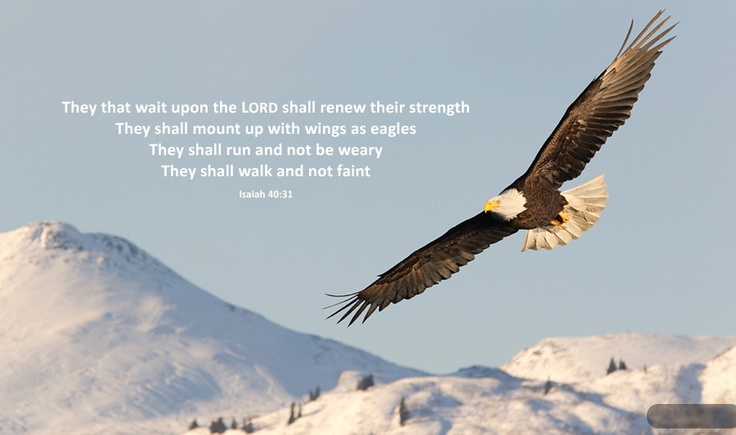
The eagle enjoys a long life compared to many other animals–up to thirty years in the wild and fifty years in captivity. Each year its feathers are renewed, providing new strength for flight.

We can renew our strength attitudinally by focusing on the benefits of growing older.

Yes, research has uncovered a number of advantages, including:

  • Improved self-esteem, self-control, and selflessness.
  • Decreased sadness, anger, fear, and other negative emotions. Stress and worry also decline.
  • Less concern for the trivial; more focus on what’s important.
  • Increased wisdom, due to a wide base of experience and a broader perspective on life.
  • Less attention on the negative, more focus on the positive.

As a Christian senior, I’d have to add:

  • Increased faith in God as I’ve seen more evidence of God’s faithfulness.
  • Greater appreciation for the simpler things of life—each one a precious gift from my loving Heavenly Father.
  • The glorious hope of heaven as it grows closer to becoming reality.  John Newton said:


quote-i-am-still-in-the-land-of-the-dying-i-shall-be-in-the-land-of-the-living-soon-his-last-john-newton-37-35-68

(“I am still in the land of the dying;

I shall be in the land of the living soon.”)

I like his perspective.

We can also renew our strength spiritually with the help of God.

eagle-in-rainbow-small


Just as the eagle rides on the wind high above the earth, we too can ride above our infirmities on the wind of the Spirit. He provides renewal of faith, strength, and passion in numerous ways—through scripture, song, other biblical reading, strong teaching, mature Christians, and more. Then we can:

  • flourish and be fruitful (Psalm 92:14).
  • stand firm and immovable (1 Corinthians 15:58).
  • always give ourselves fully to God’s work (same verse).
  • run and not be weary (Isaiah 40:31).


f9e249d4cf00edc142a701994e9771e6


Here’s an idea:  Let’s start a list of advantages we observe in growing older, to help keep us uplifted on wings of praise.

What “blessings of aging” have you noticed? Please share in the comments section below. (If you’re still enjoying the first half of life, tell us what you’ve observed in others, or what you’re looking forward to.)


“The last chapter in life can be the best!” – Vance Havner


(Art & photo credits:  www.youtube.com; http://www.freeimages.com; http://www.azquotes.com; http://www.wildlifeworkshops.com; http://www.pinterest.com.


Read Full Post »

41pJcI5AU1L


“Haste makes waste,” Benjamin Franklin wisely observed. And most of us would agree. When we hurry, we spill things, drop things, forget things, trip over things.

But Ben’s proverb may be true in a way he never intended.

Haste makes waste of the beauty around us, the joy and goodness to be found in the present moment.

 If we’re not careful, we rush right by such priceless splendors as:

  • Tiny leaves courageously reaching for sun in spite of snow


tulip-spears-in-snow


  • Evergreens encrusted with raindrop jewels


IMG_0545

  • The first butterfly of spring (‘Just spotted one like this yesterday!)


white butterfly


  • An impromptu hug from family member or friend


hug


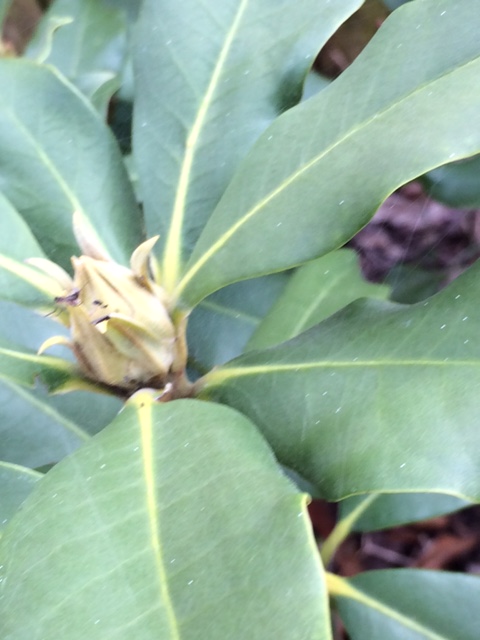
  • A wisp of a bug living between flower bud and leaf


IMG_0564

(See it?  On the left side of the bud!)

  • A child’s giddy grin, wreathed in chocolate


boy-709943_960_720


But how do we become people who live aware—vigilantly watchful for beauty, goodness, and joy?

Ann Voskamp would say: begin a list of wonders. Many of you know she challenged herself to live aware and record One Thousand Gifts (the title of her book about the quest and its impact on her life). Somehow the act of collecting and writing helps us become more intentional.

Spring is the perfect time to practice living with joyful awareness.

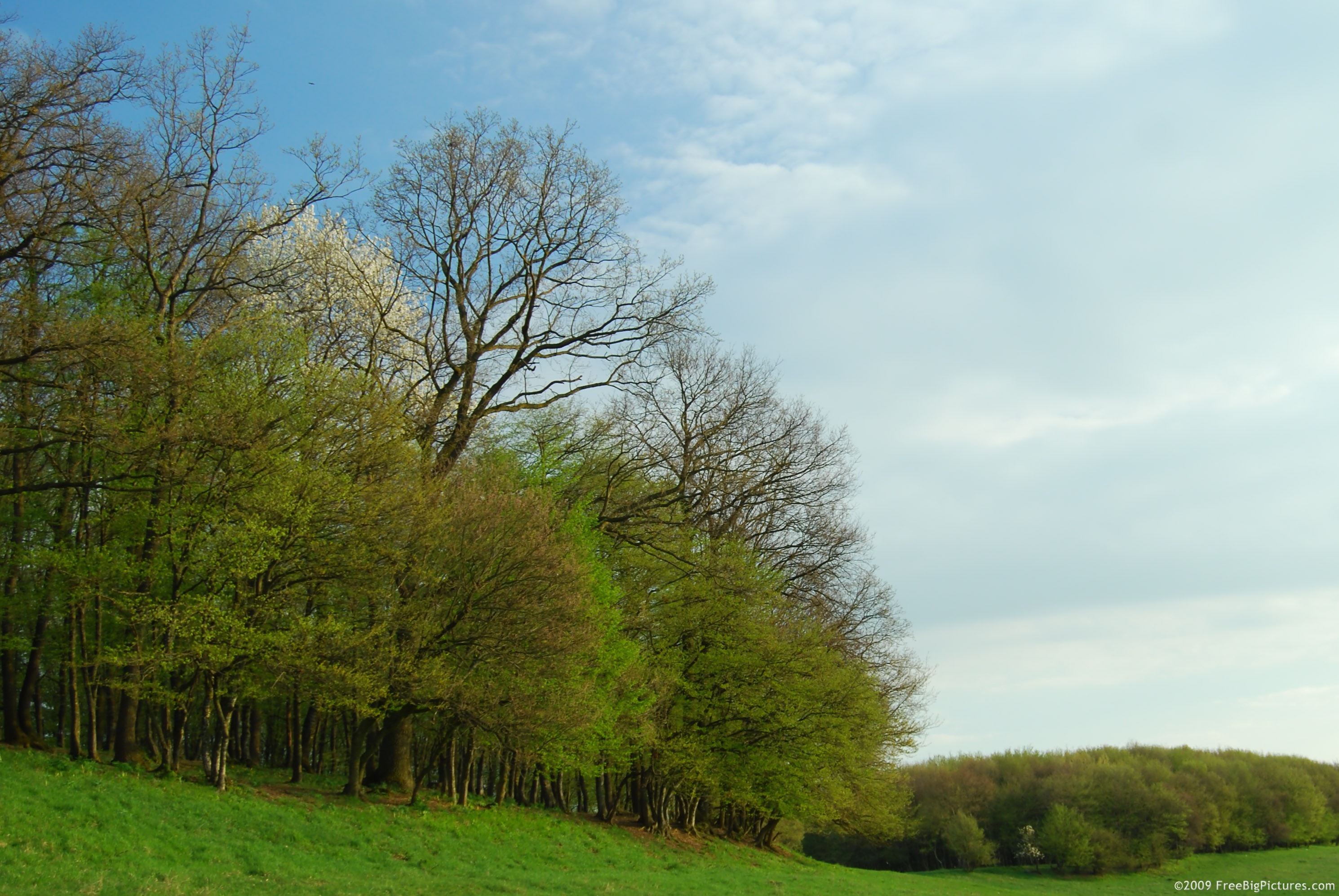
Have you noticed the greening of the landscape, beginning at ground level with the grass, and working skyward through bush and shrub? The largest trees will be the last to unfurl their leaves in a grand display of emerald luxuriance.


spring-forest


Perhaps even more glorious is the splendor of the magnolia, dogwood, and redbud in full bloom. Their individual beauty can only be surpassed when clustered together.


50c5394d8fb4fdfd00476cf7b7962bd9


And of course, the blooming of flowers, the songs of birds and the scampering of squirrels give us much to savor.

But beautiful or joyful as these may be, what’s the value of paying attention to such details?

Heightened awareness of all these gifts (and more) fosters gratitude.   And gratitude positively impacts the way we see the world and experience life.

Of course, appreciation in itself is rather meaningless. How silly to say “thank you” to the air. No, gratitude must be expressed to someone. And all we have, all we enjoy, is due to the loving kindness of a singular Someone—our benevolent Father.

When we express our thankfulness to him, we’re ushered into his presence.  Yes, right into the throne room of Almighty God.

Now you may have been wondering as you skimmed this post, When is she going to get to the part about “How to Be Rich—Today?” (That was the title, in case you missed it!)

Here’s what we can do:

Focus on what we already have, not on what we lack.


111123-580x386


“It is only with gratitude that life becomes rich.”

(Dietrich Bonhoeffer)

You see?  We’re already rich.

*     *     *     *     *     *     *     *     *     *


Thank you, God, for countless, precious blessings every day—blessings that make me smile or gaze in awe at the wonders you’ve created. May your praise always be on my lips, as I seek to live aware of your bounty around me. And may my gratitude bring joy to your heart also.


(Art & Photo Credits:  www.amazon.com; http://www.tulipsinthewoods.com; Nancy Ruegg; http://www.scalar.usc.edu; http://www.hookedonthebook.com; Nancy Ruegg; ww.pixabay.com; http://www.freebigpictures.com; http://www.pinerest.com (2).

Read Full Post »

Yes, the title is a bit of word play, generated by the discovery of this quote:

0725d644e0e4eb43f7a1c2e9904a02e5

M-m-m. Spiritual lessons in the woods are relatively easy to extrapolate.  The Bible offers several inspiring metaphors/similes from trees (1).

But stones—lifeless, drab stones? What can we learn from them?

stones-02

So began my query into stones, and a bit of research turned up the following:

There are at least 120 different sub-categories of rocks, within the igneous, sedimentary, and metamorphic groupings. Another thirty-one types make up a group of their own, not fitting those three common categories.  One website stated there are over 700 varieties of igneous rocks alone.

Geologists and rock collectors will tell you:

There is delight in diversity.

Beach stones washed in the surf

That goes for people, too, doesn’t it. A planet inhabited by identical beings would be painfully boring.

But even similar, ordinary stones can generate interest. For example, take this little pebble:

med_ap025s5408

Rather dull and ordinary, right?

But what if you put it with numerous, similar stones? What then?

water_landscapes_rocks_pebbles_ocean_beaches_cool

We discover that:

Many ordinary stones together can provide breathtaking beauty.

Within the church that truth applies to people. Regular folks become remarkable as we join together and serve under the power of God. Someone put it this way:

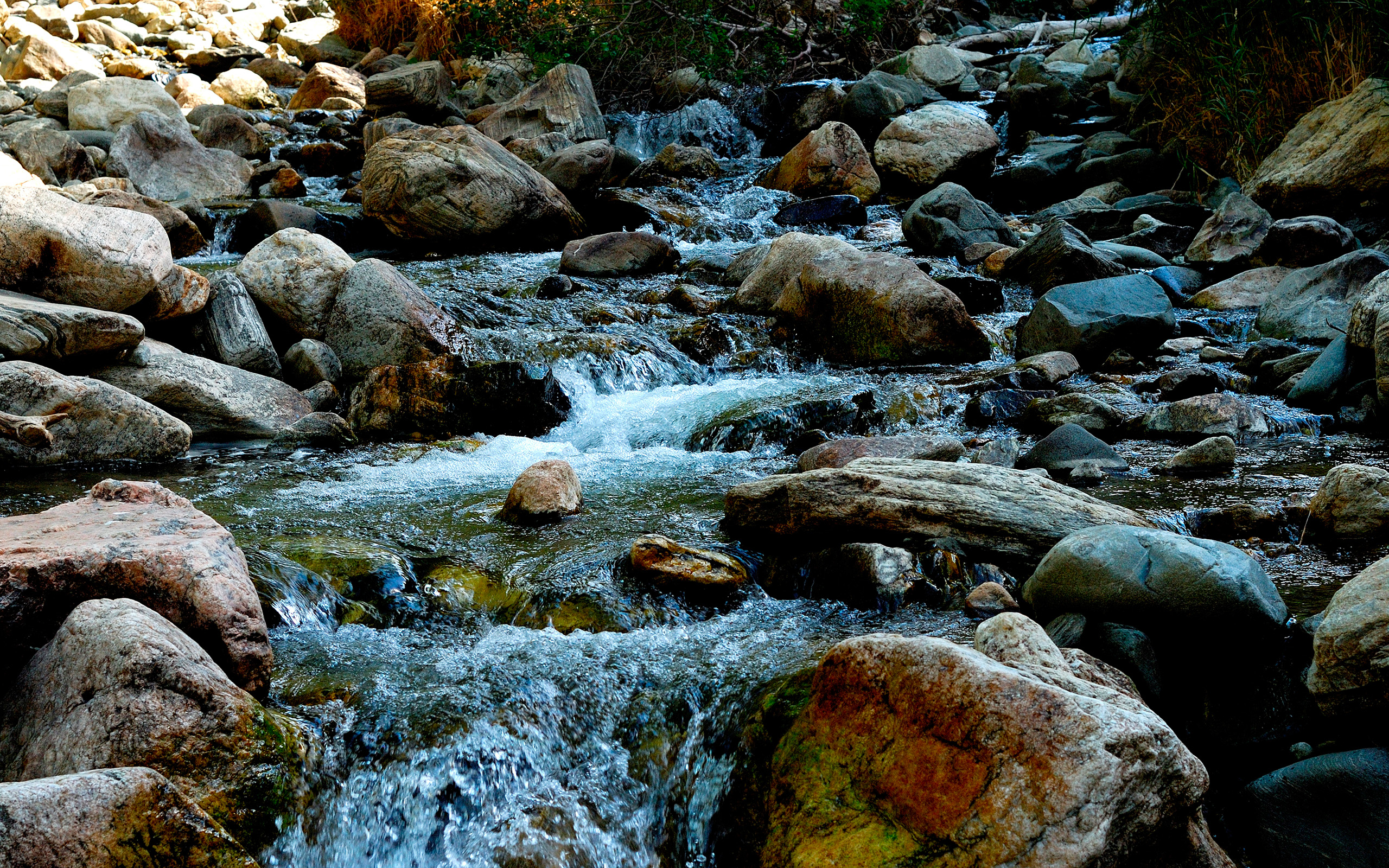
When a river sings, it is thanks to the stones.

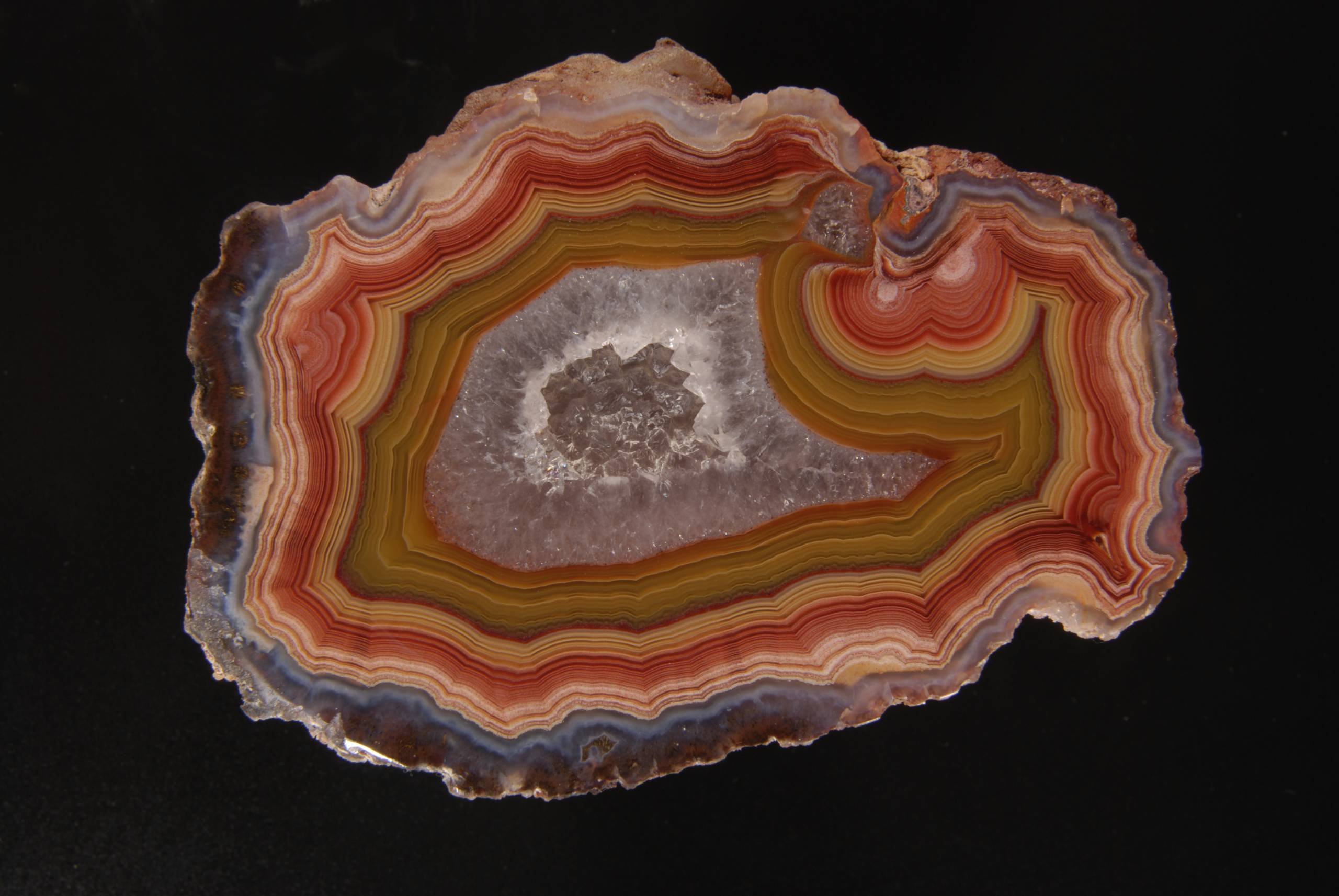
Now some stones appear dull and plain on the outside. The casual observer passes them by. But the trained eye detects a hint of the splendor within.   And when such a rock is split open, a colorful, gleaming wonder is revealed.

LagunaAgate1
an agate

You have to open up some stones to discover their treasures.

Agates of a different nature are all around us—in our neighbors, coworkers, church acquaintances, etc. What if we reached out with a friendly question or two and gave them opportunity to open up? Perhaps gleaming treasure awaits.

Beauty in stone can occur in other ways, too.  For example:

A stone in the hand of a master sculptor becomes a new creation.

 The genius of Michelangelo gives us a glimpse of such transformation. Out of nondescript marble he chiseled exquisite, life-like statues.

Madonna from the Pieta

Praise God that even dull, ordinary people of stone can become works of art when we give ourselves over to him.

God, our Rock, is Lord of stones. 

*     *     *     *     *     *     *     *     *     * 

I praise you, oh God, for being a Rock of constancy, stability, and protection. You graciously build us into a spiritual house—individually and corporately– where the Holy Spirit can reside.  As “living stones,” we too become everlasting and durable, united together with the One Living Stone, your Son, Jesus (1 Peter 2:5).

(1) For metaphors/similes of trees, see Psalm 1:3, 52:8, and 92:12; Jeremiah 17:8; Micah 4:4.

Photo Credits:  www.pinterest.com; http://www.free-pictures-photos.com; http://www.pxhere.com; http://www.freephotosbank.com; http://www.hdwallpapers.com; http://www.bhmpics.com; http://www.d.umn.edu; http://www.flickr.com.

Read Full Post »

“Matt* and Loren* are coming to visit the weekend after next. Would you be able to join us for dinner that Saturday night?” I asked, Dave*, the worship leader of our church.

I had just arrived at ensemble practice.  Dave was already there organizing music.

“Yeah, I’ll come. It’ll be great to catch up with them.” Matt and Loren were mutual friends who had moved away.

“We’ll probably eat around six, but come early—say five? That’ll give us more time to chat,” I added.

Dave whipped a pen off the piano and wrote a note to himself—on his hand.

I had to smile. Dave was/is one of the most creative, musically talented young men I’ve ever met. Not only is he a concert-trained pianist, he’s a composer with a gift for turning artful melodies into worship.

But in those days, he would have been the first to tell you that keeping track of details or appointments was a challenge; thus the notes-on-the-hand habit. If the commitment was right there in front of him, he’d most likely remember to put it on his calendar later. The message wouldn’t be forgotten amidst all the ideas and musical themes racing through his head.

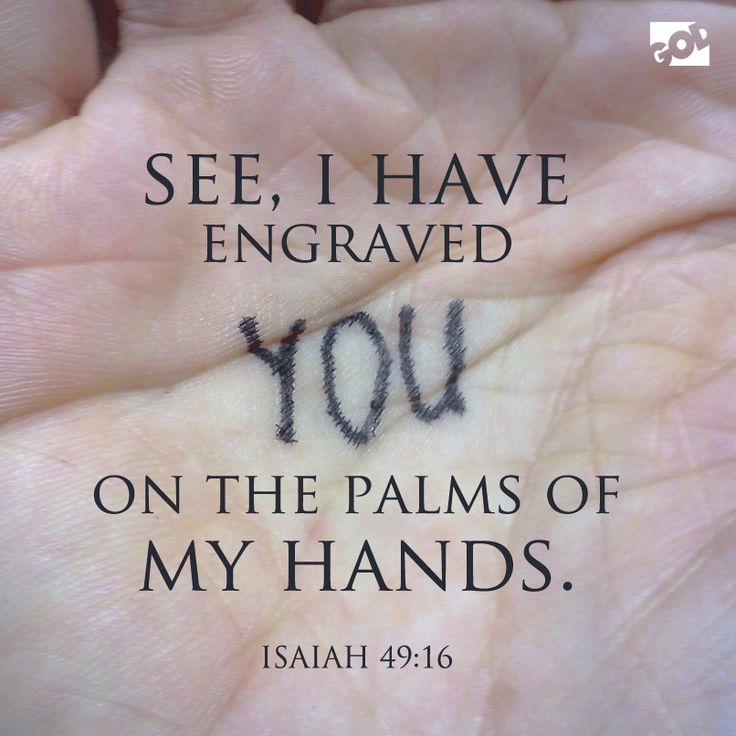
I know someone else who writes information on the palm of his hand. The information is your name and mine. The someone? Our Heavenly Father.


1660084f44a0e4b7a47d6c0c97fbbb65


(“See, I have engraved you on the palms of my hands.”

–Isaiah 49:16 NIV)

Of course, this assurance was addressed to the people of Israel, but it’s applicable to each of us, because: 1) those of us who believe in Jesus have been adopted into Abraham’s family (Galatians 3:6-9), and 2) God does not lose sight of the individual within the multitude (Luke 3:3-7).

“God loves each of us as if there was only one of us.”

–St. Augustine

But don’t think of God’s love as perfunctory or pity-driven.

You are a treasure to your Heavenly Father—the delight of his heart (Deuteronomy 7:6; Psalm 149:4).


28c54369c8dcb691a13ff44f54e136bf


You and I are constantly in his thoughts (Psalm 139 17-18).

And the imagery of our names engraved (cut, carved, or etched) on his palms brings to mind several important truths:

  1. God cannot and will not forget us or abandon us.
  1. His omniscient knowledge doesn’t just include our names, but also who we are—our personalities, dreams, circumstances, strengths and weaknesses—everything about us—is on his mind.
  1. Our images engraved on God’s palms represent an incredible role reversal. In ancient times, slaves bore the brand mark of their masters. But our Master has sacrificially submitted himself to inscribe our names on his palms.
  1. The image represents who we are becoming in God’s view, which is undoubtedly different from ours. “Reality is not what we see; reality is what God sees” (Biblical Illustrator). And that reality is perfection.


67bc5cb27ae7404c8049303ad1857bf5


(“By one sacrifice he has made perfect forever

those who are being made holy.”

–Hebrews 10:14 NIV)


Of course, that one sacrifice was Jesus, who bled and died on a cross so we might be made right with God and receive the gift of eternal life.

As a result, Isaiah 49:16 (about our names written on God’s palms)  has taken on new meaning:


“See, I have engraved you—in blood—on the palms of my hands.”


*     *     *     *     *     *     *   *     *     *

I praise you, Heavenly Father, that it is totally impossible for you to forget your own.  How humbling to realize I am engraved on your hands—hands that withstood the nails for me. But gratitude alone is terribly insufficient.

I want your name, Lord, engraved on my palms, so I might become that perfected reality you already see.


*Names have been changed.

Art & photo credits:  www.pinterest.com (3)


Read Full Post »

(a personal psalm)

2623c0fd18c33f4b8cf93ca72614c796

(I will praise you;

for I am fearfully and wonderfully made:

marvelous are your works;

and that my soul knows right well.

–Psalm 139:14, King James Bible 2000

I do praise you, oh God, for the breathtaking wonder of the human body.

You put together trillions of cells that perform a multitude of functions in one harmonious whole.

maxresdefault

As each of us was formed in our mothers’ wombs, you carefully engineered the transformation of cells into:

  • blood vessels—an estimated 60,000 miles of them.
  • more than 600 individual skeletal muscles. Two hundred of them are required for just one step—an indication of the complexity of the muscular system.
  • organs, including the liver. Scientists have discovered five hundred functions for this highly important body part that we rarely think about.
  • The heart–strong and reliable enough to beat more than 2.5 billion times over an average lifespan.

Within each cell nucleus is the DNA double helix, just 80 billionths of an inch long, yet “comprised of chemical bases arranged in approximately 3 billion precise sequences. Even the DNA molecule for a single-celled bacterium,  E. coli, contains enough information to fill all the books in any of the world’s largest libraries.”*

DNA_orbit_animated_static_thumb

(Model of the DNA double-helix)

Once this amazing organism called “human” begins functioning, you, oh God, orchestrate more wonder:

  • Nerve impulses travel to and from the brain at 170 miles per hour.
  • Noses (in conjunction with the brain) begin cataloging up to 50,000 scents.
  • The heart pumps the equivalent of 2,000 gallons of blood through the vessels every day.
  • The blood circulates through the body three times every minute.
  • Cell replacement must occur frequently.  Approximately 25 million new cells are being produced every second.

cells-dividing

Yet the wonder continues. You’ve given us the power to think and reason.

  • All the grooves or wrinkles in the brain provide more surface area, which equates to more processing power within the small confines of the skull.
  • The brain is surrounded in fluid that acts like a cushion in case of impact, and as a barrier in case of disease.
  • More than 100,000 chemical reactions occur in the brain every second.
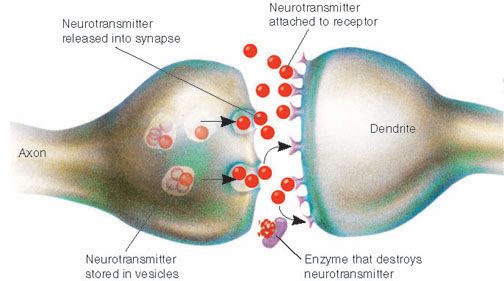
  • The brain contains billions of neurons that send electrical and chemical messages to the body. If all the neurons were lined up end to end, they’d stretch 600 miles.
  • And for each neuron there are 1000 to 10, 000 synapses.

7a4efdec4c1a76004113fc4dcacf8fa3

But you, oh God, weren’t finished yet! You created within each of us wonderful and unique abilities. Just among our family you’ve designed a (n):

  • imaginative artist,
  • caring school psychologist,
  • attention-holding preacher,
  • passionate psychiatrist,
  • self-taught tech wizard, and
  • talented graphics designer

IMG_0596

(2010 — Shame on us for not having

a more recent photo of the whole family!)

How glorious to contemplate, O Lord, the breathtaking wonder of how we’re made. Hearts keep pumping, lungs keep breathing, nerve impulses keep sending messages–without a single voluntary thought. Our brains are capable of learning and storing an enormous amount of information. And everything works together in perfect unity.

I cannot begin to fathom your creativity, expert engineering, and attention to detail. Even if we were identical robots, we would have to stand in awe of your holy genius.

But you have made each person unique, designed to fulfill a specific purpose.

May I live close to you in order to be transformed day by day into the one you designed me to be.

*www.allaboutscience.org

Other sources: www.facts.randomhistory.com; www.health.howstuffowrks.com; www.icantseeyou.typepad.com, www.medindia.net; www.nursingassistantcentral.com; http://www.sciencekids.co.nz

Art & photo credits:  www.pinterest.com; http://www.youtube.com; http://www.tr.wikipedia.org; http://www.superteachertools.us; http://www.pinterest.com; Nancy Ruegg

Read Full Post »

Ever try sleeping on a rock pillow? I, for one, can’t imagine actually falling asleep on such a hard surface.

The only person I know who had to try was Jacob of the Bible. (The story of that night is found in Genesis 28:10-22. It was also the subject of a previous post, which you can access here: Surely God Is in This Place.)


jacob


The scene above of Jacob resting on his rock pillow provides a worthwhile image for a Spurgeon quote I encountered recently:


“Use the Lord’s words as your pillows.

Lie down and [rest] in Him.”


Indeed, resting on the rock-solid assurances of God’s Word is wise advice, fostering peace within our spirits.

Just reciting scripture can provide effective comfort.

A good place to start? In the book of Beginnings. This example comes from Jacob himself:


fd3ddff270b84696468cc48b3a806d08


“Let us go up to Bethel where I will build an altar to God,

who answered me in the day of my distress

and who has been with me wherever I have gone.”

–Genesis 35:3 (NIV)


Notice this excerpt is seven chapters and many years past the “rock pillow” event. Jacob is no longer a young man; he’s seventy-seven as he embarks for Bethel. And during those intervening years, Jacob has experienced many days of distress as he:

  • ran away from home (Genesis 27-28),
  • worked for his Uncle Laban who took advantage of him (chapter 29 and 31:7), and then
  • set out on his own through enemy territory to return to Bethel, the home of his father, Isaac (chapters 35).

But in the verse quoted above, Jacob recognizes that through all those challenges, God demonstrated his favor, because with the Lord’s presence comes his guidance, provision, and protection.

I, too, have experienced distressing days. Who hasn’t?

But God has been with me through them all—circumstances such as these:

  • When my husband’s boss caused turmoil for us week after week,
  • When we received the unwelcome news (five times) that we were being moved to another church*, and
  • When pressure from certain administrators and parents caused ongoing stress at school (during my twenty-six years in the elementary classroom).

Yet now, looking back, I see that in each situation God was teaching me patience, perseverance, and reliance upon him. In fact, some distressing experiences were undoubtedly designed specifically to accomplish those benefits.

From the advantage of hindsight, I can see the pathway God prepared, to get us/me through those stressful days, and how he richly blessed on the other side.

As Charles Udall observed:


2b474d3c1facc1c1b3f28bfe6339057d

(“In life you will always be faced with a series of

God-ordained opportunities

brilliantly disguised as problems and challenges.”)


I wish I could say that through all of life’s challenges I’ve rested completely on pillows of promise and statements of faith. That wouldn’t be true. But I know that scripture-promises, prayer, and faith-statements have made a positive difference. And the strength of my faith did grow through each experience.

Notice Mr. Udall says we’ll always face challenges. I can give in to the distress of that fact or choose to rest on the pillow of promise that God is preparing me for what lies ahead as well as preparing the way through it.

*     *     *     *     *     *     *     *     *     * 

I praise you, Father, for being an all-knowing God.  No event catches you by surprise; you know every challenge I may yet face. Like Jacob, I think back upon stressful days of the past and affirm your comforting presence, attentive provision, and wise guidance through it all. May I be mindful to rest on your rock-solid pillows of promise from this day forward.

Art & photo credits:  www.keyway.ca; http://www.pinterest.com (2).


*For those who may not know, my husband was a pastor for forty years.

Read Full Post »

(Based on the story of the Prodigal Son, Luke 15:11-24)


019-prodigal-son300x225


Eliab plodded to the top of a familiar rise.  Just ahead he could see the flat rooftop of his ancestral home. Eliab’s heart began to drum in his ears, his face grew hot with shame, and sweat trickled down his back. Soon Eliab would face his father.

As he watched his feet take one step after another, thoughts circled around one question:

What would his father say?

Perhaps, “Get out of my sight! I no longer have two sons, only one.”

Perhaps, “Alright, Eliab, you may work in the fields and barn to pay back your debt. You may also sleep in the barn and take your meals with the other hired hands. Such flagrant waste of your inheritance must be recompensed.”

Eliab would soon know the response that would determine his fate.  He looked up once again to check his progress.  A man was running toward him down the road. What would cause him to be in such a hurry?

No sooner had the question formed in his mind than he recognized the bearing of the approaching figure. It was his father. Eliab’s knees grew weak, and not just from hunger. He collapsed to the ground in a heap, tears streaming down his face.

Quick steps approached; strong arms lifted Eliab up and grasped him in a tight embrace. He heard his father cry, “Oh, Eliab!” And together they wept.


prodigalson


Moments passed and Eliab steeled himself for the speech he had prepared during his long journey.

“Father,” he choked, “I’ve sinned against God and I’ve sinned before you. I know I can no longer be considered your son, but…”

Eliab’s father wasn’t even listening. He turned to call out to his servants, “Get a clean set of clothes and new sandals. Bring the family signet ring. Then prepare the grain-fed heifer for roasting.   We are going to have the grandest celebration our village has ever seen! My son that was as good as dead to me is alive again!”

And with that, Eliab, caretaker of pigs, was lavishly honored because his father:

  • Forgave him for being so foolish, squandering his inheritance.
  • Restored his position in the family, symbolized by the specific request of shoes. (Family members wore shoes; slaves did not.)
  • Clothed him in fresh, clean robes.
  • Honored him with the signet ring, a symbol of authority.
  • Loved him, pure and simple.


return-of-prodigal-son-celebrated


Now I’ve never been a caretaker of pigs. You probably haven’t been either. But I’ve certainly committed my own foolish acts of selfish rebellion. Maybe you have, too.

And yet, when we throw ourselves on God’s mercy, he

  • Forgives our sins and remembers them no more (Hebrews 8:12).
  • Adopts us into his family, making us his children (John 1:12-13).
  • Clothes us in the righteousness of Jesus (Isaiah 61:10), and God sees us as if we had never sinned (Colossians 1:21-22).
  • Honors us (Psalm 91:15)—with his presence and countless gifts. Someday we’ll receive a crown of glory that will never fade away (1 Peter 5:4).
  • Loves us, pure and simple, for now and always (Jeremiah 31:33).

tumblr_nc8rcivx4e1ttry05o1_500

*     *     *     *     *     *     *     *     *     *

How I thank you, Heavenly Father, for taking pity on me, as the father did in the story of the prodigal son.  You redeemed my life from the pig sty.  You forgive my sins–every one of them.  You have more than satisfied me with your goodness and faithful love.  Never do I want to lose the wonder of your love and grace!

(Psalm 103:1-5, 13)

Eliab means “to whom God is Father.”

(Art & photo credits:  www.childrenschapel.org; http://www.ncregister.som; http://www.susaneball.com; http://www.spiritualinspiration.tumblr.com.)

Read Full Post »

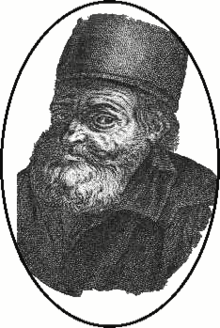
220px-Nicholasflamel

Nicolas Flamel (ca. 1310-1418, pictured above) looks like he could be St. Nicholas, with that full beard and impish face. In fact he lived long after and far away from the well-known saint. Flamel was a French scribe and manuscript seller. He also dabbled in alchemy.

Alchemists were those who, especially during the Middle Ages, experimented with various materials and procedures to turn ordinary metals like lead into gold.

Another dream of theirs was to discover an elixir of life—a potion that would provide eternal life.

Sir William Fettes Douglas The Alchemist 19th cent.

“The Alchemist,” by Sir William Fettes Douglas, 1855

By the seventeenth century, legends had developed around Nicolas Flamel. Some claimed that he had discovered the Philosopher’s Stone, the alchemical substance that would turn lead into gold and produce the elixir of life.

But the only immortality he achieved is in print. Victor Hugo mentioned him in The Hunchback of Notre Dame, and R. K. Rowling in Harry Potter and the Philosopher’s Stone.

Nicolas Flamel is buried in Paris at the Musée de Cluny.

By the 1600s, alchemy was, for the most part, abandoned.

Alchemy simply did not work in the physical realm.

However! In the spiritual realm, with God exercising his supernatural power, the alchemy of grace (1) performs great wonders:

gracechangeseverything4-w855h425

The lost become found (Luke 19:10)

Darkness becomes light (John 8:12)

Death becomes life (Ephesians 2:4-5)

Mourning becomes joy (Jeremiah 31:13)

Ashes become beauty (Isaiah 61:3)

dae3bd5f8c1b4d3b842eb316d9202c90

Hatred becomes love (Acts 9:1-2; Philippians 4:1)

Discouragement becomes hope (Romans 5:1-2)

Fear becomes peace (John 14:27)

Striving becomes resting (Exodus 33:14)

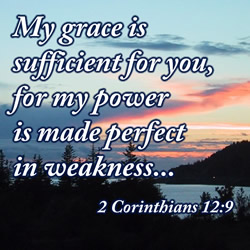
Weakness becomes strength (2 Corinthians 12:9)

2_corinthians_12-9

No doubt we could mention many more magnificent facets of transformation that occur because of God’s alchemy of grace—a transformation even more miraculous than turning lead into gold.

To appreciate just how miraculous, consider what happens when we’re left to our own devices:

Darkness begets depression

Hatred begets ulcers

Fear begets paranoia

Striving begets stress

Discouragement begets self-pity

Would it be disrespectful to say that Jesus is our Philosopher’s Stone? He is the one and only Way to experience the alchemy (and grandeur and wonder!) of God’s grace (2).

3c06d8c8fc3f09557711b1bb7679f3a5

Do you find your heart swelling with gratitude and praise?

“Trace the roots of grace, or charis in the Greek, and you will find a verb that means ‘I rejoice, I am glad” – Phillip Yancey (3).

*     *     *     *     *     *     *     *     *     *

Holy Father, how astounding to consider that we are being transformed into the likeness of your Son with ever-increasing glory. Thank you for the alchemy of your grace that transforms our leaden lives into lustrous, 24-carat gold! 

(2 Corinthians 3:18; Job 23:10)

* The “alchemy of grace” is a phrase borrowed from Charles Spurgeon.

(1) Grace is undeserved love, manifested in unmerited favor.

(2) John 14:6, Acts 4:12, 1 Timothy 2:5-6

(3) Phillip Yancey, What’s So Amazing about Grace?, Zondervan, 1997, p. 13.

(Art & photo credits:  www.wikipedia.org (2), http://www.theodysseyonline.com; http://www.pinterest.com; http://www.biblehub.net; http://www.pinterest.com.)

Read Full Post »

« Newer Posts - Older Posts »

When the House is Quiet

Impressions Becoming Expressions

Mitch Teemley

The Power of Story

Still Traveling

Impressions Becoming Expressions

Living Our Days

Gaining a heart of wisdom

He Said What?!

I'm Patty, and my husband and I are living with our adult son who has autism and epilepsy. I love sharing lessons learned from life around me, especially life with Aaron.

Meditations of my Heart

Impressions Becoming Expressions

Linda Stoll

Impressions Becoming Expressions

Signora Sheila

Where faith meets la dolce vita

Heidi Viars

Finding the Image of God