Feeds:
Posts
Comments

Archive for the ‘Jesus’ Category


07dc15999a0da94f13bff356c829f3e3


Three times in the New Testament, Jesus is referred to as Author. Peter called him the Author of life (Acts 3:15), and the writer of Hebrews referred to him as the Author of salvation (2:10) as well as the Author and Finisher of our faith (12:2).

As someone who enjoys writing, I’m intrigued by this title for Jesus. How is he like an author? And how should his role as Author impact my life?

Research and ponderings took me down these pathways:


colossians-116_5541_1024x768


Writers are creators.  Where a character, place, or idea did not exist before, an author brings them to life.  Without C.S. Lewis, for example, we would not know Aslan, the great and noble lion, the land of Narnia, or the concept of a New Narnia with its astounding dimensions: ” The further up and the further in you go, the bigger everything gets.  The inside is larger than the outside” (The Last Battle, Book #7 of the Narnia series, p. 180).

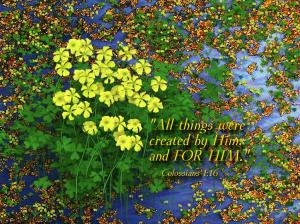
Jesus, the Author of life, participated in the creation of the world, including us.  “By him all things were created in heaven and earth…all things were created by him and for him.”  (See also Note #1.)

Writers animate settings, characters, and ideas with the choicest words they can find. The sentence, “A bird sat on the gate looking over the snowy field,” becomes “A black and white magpie, sitting on the rail of a gate, reigned benevolently over the tranquility of a snowy field” (from Lisette’s List by Susan Vreeland, p. 322). Jesus animates our lives with his choicest blessings: purpose, hope, contentment, and joy.


c55bcecf2b75dbddc64093d554ffd077


Writers cajole their ideas on the page, striving to form nebulous concepts into clear, solidly built statements. They organize their thoughts, structure sentences, and decide upon word selection. Jesus lovingly coaxes us along, slowly over time sharpening the fuzzy understandings of our faith into solidly built knowledge, wisdom, and conduct.

Writers peel away redundancies, wordiness, and boring details. Jesus peels away our sins, spiritually unhealthy habits, and weighty emotions like discouragement, anxiety, and fear—any excesses that keep us from being our best selves.

According to author, Joan Lowery, writing is “a complicated mixture of art, craft, structure, free-flowing ideas, unleashed imagination, soaring hopes, wondrous insights, giddy joy, deep satisfaction, strong persistence and solid determination” (from The Making of a Writer, pp. 1-2).


15195-ephesians-2-10


As we allow the Author of Life (2) to write upon our souls, he applies these same processes. Persistently and determinedly he:

  • crafts our spirits into works of poetry (Ephesians 2:10) (3),
  • offers us safe structure in which to function (Proverbs 2:6-8),
  • exposes us to ideas of freedom we never knew existed (John 8:31),
  • surprises us with more blessings than we could ever imagine (Ephesians 3:20),
  • fills us to overflowing with hope (Romans 15:13),
  • imparts wondrous insights, especially through his Word (Psalm 119:130),
  • bestows his complete joy upon us (John 15:11), and
  • fills our hearts with deep satisfaction (Luke 6:21, John 10:10).


4f432dd9f0d297c6db04e6342ac30d58


Joan Lowery’s long list of writing components (above) appears daunting. It’s a wonder anyone puts pen to paper or fingers to keyboard.

Yet there are many of us who actually enjoy the process—the discovery of new information and ideas as we research, the development of clearer understanding while wrestling with a concept; the puzzle-assembling of thoughts into organized paragraphs and words into precise sentences; the delight of creating a musical rhythm among the syllables.

In fact, Truman Capote asserted:


723b897eebef7b17d26576f4073d0477

(“The greatest pleasure of writing is not what it’s about,

but the inner music the words make”

–Truman Capote)

Surely Jesus feels the same. His purpose as Author is not to produce best sellers of our life stories. He’s interested in relationship. In collaboration with each of us, Jesus wants to write upon our souls and create inner music together: symphonies of joy, madrigals of peace, and songs of love.

Praise God, he takes great pleasure in the process (Psalm 149:4, Philippians 2:13).

*     *     *     *     *     *     *     *     *     *

NOTES:

  1. For the record, Genesis 1:2 and Psalm 104:30 give us glimpses of the Holy Spirit’s role as well.
  2. God the Father and the Holy Spirit are also involved in the process, of course, as three-in-one.
  3. Paul said, “We are God’s workmanship, created in Christ Jesus” (Ephesians 2:10). That word, workmanship, is translated from the Greek word, poema, from which we derive our English word, poem. Our triune God is making us into heavenly pieces of poetry—“the highest, finest, most beautiful expressions of his thought and purpose!” (Herbert Lockyer, Seasons of the Lord, 330).

(Art & photo credits:  www.pinterest.com; http://www.wallpaper4god.com; http://www.pinterest.com; http://www.crosscards.com; http://www.pinterest.com (2).

Read Full Post »

Yes, the title is a bit of word play, generated by the discovery of this quote:

0725d644e0e4eb43f7a1c2e9904a02e5

M-m-m. Spiritual lessons in the woods are relatively easy to extrapolate.  The Bible offers several inspiring metaphors/similes from trees (1).

But stones—lifeless, drab stones? What can we learn from them?

stones-02

So began my query into stones, and a bit of research turned up the following:

There are at least 120 different sub-categories of rocks, within the igneous, sedimentary, and metamorphic groupings. Another thirty-one types make up a group of their own, not fitting those three common categories.  One website stated there are over 700 varieties of igneous rocks alone.

Geologists and rock collectors will tell you:

There is delight in diversity.

Beach stones washed in the surf

That goes for people, too, doesn’t it. A planet inhabited by identical beings would be painfully boring.

But even similar, ordinary stones can generate interest. For example, take this little pebble:

med_ap025s5408

Rather dull and ordinary, right?

But what if you put it with numerous, similar stones? What then?

water_landscapes_rocks_pebbles_ocean_beaches_cool

We discover that:

Many ordinary stones together can provide breathtaking beauty.

Within the church that truth applies to people. Regular folks become remarkable as we join together and serve under the power of God. Someone put it this way:

When a river sings, it is thanks to the stones.

Now some stones appear dull and plain on the outside. The casual observer passes them by. But the trained eye detects a hint of the splendor within.   And when such a rock is split open, a colorful, gleaming wonder is revealed.

LagunaAgate1
an agate

You have to open up some stones to discover their treasures.

Agates of a different nature are all around us—in our neighbors, coworkers, church acquaintances, etc. What if we reached out with a friendly question or two and gave them opportunity to open up? Perhaps gleaming treasure awaits.

Beauty in stone can occur in other ways, too.  For example:

A stone in the hand of a master sculptor becomes a new creation.

 The genius of Michelangelo gives us a glimpse of such transformation. Out of nondescript marble he chiseled exquisite, life-like statues.

Madonna from the Pieta

Praise God that even dull, ordinary people of stone can become works of art when we give ourselves over to him.

God, our Rock, is Lord of stones. 

*     *     *     *     *     *     *     *     *     * 

I praise you, oh God, for being a Rock of constancy, stability, and protection. You graciously build us into a spiritual house—individually and corporately– where the Holy Spirit can reside.  As “living stones,” we too become everlasting and durable, united together with the One Living Stone, your Son, Jesus (1 Peter 2:5).

(1) For metaphors/similes of trees, see Psalm 1:3, 52:8, and 92:12; Jeremiah 17:8; Micah 4:4.

Photo Credits:  www.pinterest.com; http://www.free-pictures-photos.com; http://www.pxhere.com; http://www.freephotosbank.com; http://www.hdwallpapers.com; http://www.bhmpics.com; http://www.d.umn.edu; http://www.flickr.com.

Read Full Post »

“Matt* and Loren* are coming to visit the weekend after next. Would you be able to join us for dinner that Saturday night?” I asked, Dave*, the worship leader of our church.

I had just arrived at ensemble practice.  Dave was already there organizing music.

“Yeah, I’ll come. It’ll be great to catch up with them.” Matt and Loren were mutual friends who had moved away.

“We’ll probably eat around six, but come early—say five? That’ll give us more time to chat,” I added.

Dave whipped a pen off the piano and wrote a note to himself—on his hand.

I had to smile. Dave was/is one of the most creative, musically talented young men I’ve ever met. Not only is he a concert-trained pianist, he’s a composer with a gift for turning artful melodies into worship.

But in those days, he would have been the first to tell you that keeping track of details or appointments was a challenge; thus the notes-on-the-hand habit. If the commitment was right there in front of him, he’d most likely remember to put it on his calendar later. The message wouldn’t be forgotten amidst all the ideas and musical themes racing through his head.

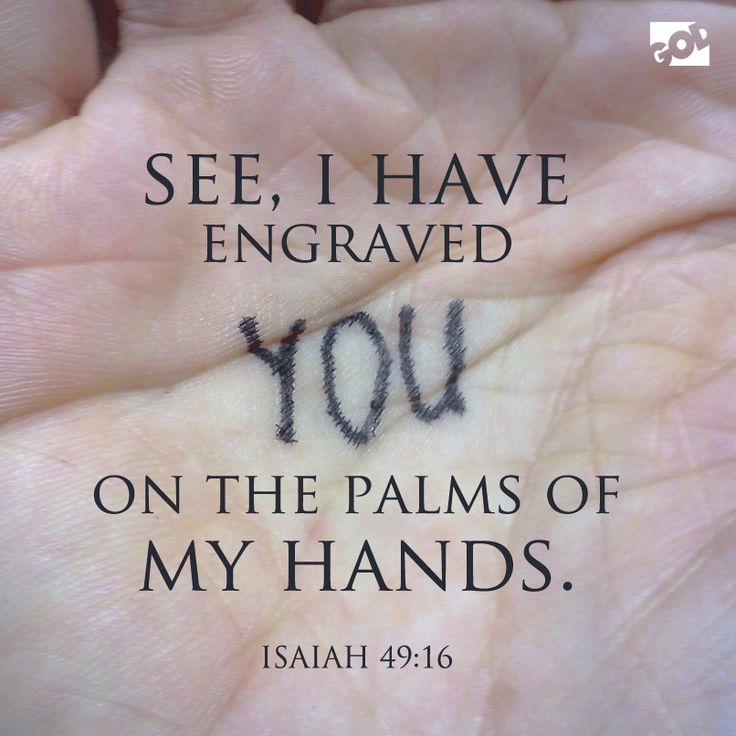
I know someone else who writes information on the palm of his hand. The information is your name and mine. The someone? Our Heavenly Father.


1660084f44a0e4b7a47d6c0c97fbbb65


(“See, I have engraved you on the palms of my hands.”

–Isaiah 49:16 NIV)

Of course, this assurance was addressed to the people of Israel, but it’s applicable to each of us, because: 1) those of us who believe in Jesus have been adopted into Abraham’s family (Galatians 3:6-9), and 2) God does not lose sight of the individual within the multitude (Luke 3:3-7).

“God loves each of us as if there was only one of us.”

–St. Augustine

But don’t think of God’s love as perfunctory or pity-driven.

You are a treasure to your Heavenly Father—the delight of his heart (Deuteronomy 7:6; Psalm 149:4).


28c54369c8dcb691a13ff44f54e136bf


You and I are constantly in his thoughts (Psalm 139 17-18).

And the imagery of our names engraved (cut, carved, or etched) on his palms brings to mind several important truths:

  1. God cannot and will not forget us or abandon us.
  1. His omniscient knowledge doesn’t just include our names, but also who we are—our personalities, dreams, circumstances, strengths and weaknesses—everything about us—is on his mind.
  1. Our images engraved on God’s palms represent an incredible role reversal. In ancient times, slaves bore the brand mark of their masters. But our Master has sacrificially submitted himself to inscribe our names on his palms.
  1. The image represents who we are becoming in God’s view, which is undoubtedly different from ours. “Reality is not what we see; reality is what God sees” (Biblical Illustrator). And that reality is perfection.


67bc5cb27ae7404c8049303ad1857bf5


(“By one sacrifice he has made perfect forever

those who are being made holy.”

–Hebrews 10:14 NIV)


Of course, that one sacrifice was Jesus, who bled and died on a cross so we might be made right with God and receive the gift of eternal life.

As a result, Isaiah 49:16 (about our names written on God’s palms)  has taken on new meaning:


“See, I have engraved you—in blood—on the palms of my hands.”


*     *     *     *     *     *     *   *     *     *

I praise you, Heavenly Father, that it is totally impossible for you to forget your own.  How humbling to realize I am engraved on your hands—hands that withstood the nails for me. But gratitude alone is terribly insufficient.

I want your name, Lord, engraved on my palms, so I might become that perfected reality you already see.


*Names have been changed.

Art & photo credits:  www.pinterest.com (3)


Read Full Post »

What might have been uppermost in Jesus’ mind the morning after his triumphal entry into Jerusalem? Surely his thoughts were already swirling around the inevitable suffering just days away.   Perhaps the emotional anguish that peaked in the Garden of Gethsemane (Luke 22:39-44) was already starting to build.

How did he maintain the presence of mind to continue teaching his disciples and the crowds, telling parables, and answering the religious leaders’ trick questions?


Scene 07/53 Exterior Galilee Riverside; Jesus (DIOGO MORCALDO) is going to die and tells Peter (DARWIN SHAW) and the other disciples this not the end.


Then, as the Last Supper, Judas’ betrayal, and the horrors of the crucifixion took place, how did he endure, much less maintain his calm and resolute demeanor?

The writer to the Hebrews reveals at least part of the answer: Jesus kept his focus on “the joy set before him” (12:2).

What might that joy have included?

  • Returning to heaven. No doubt he could vividly see in his mind the splendor and bliss of his home that he’d given up some thirty-three years before.
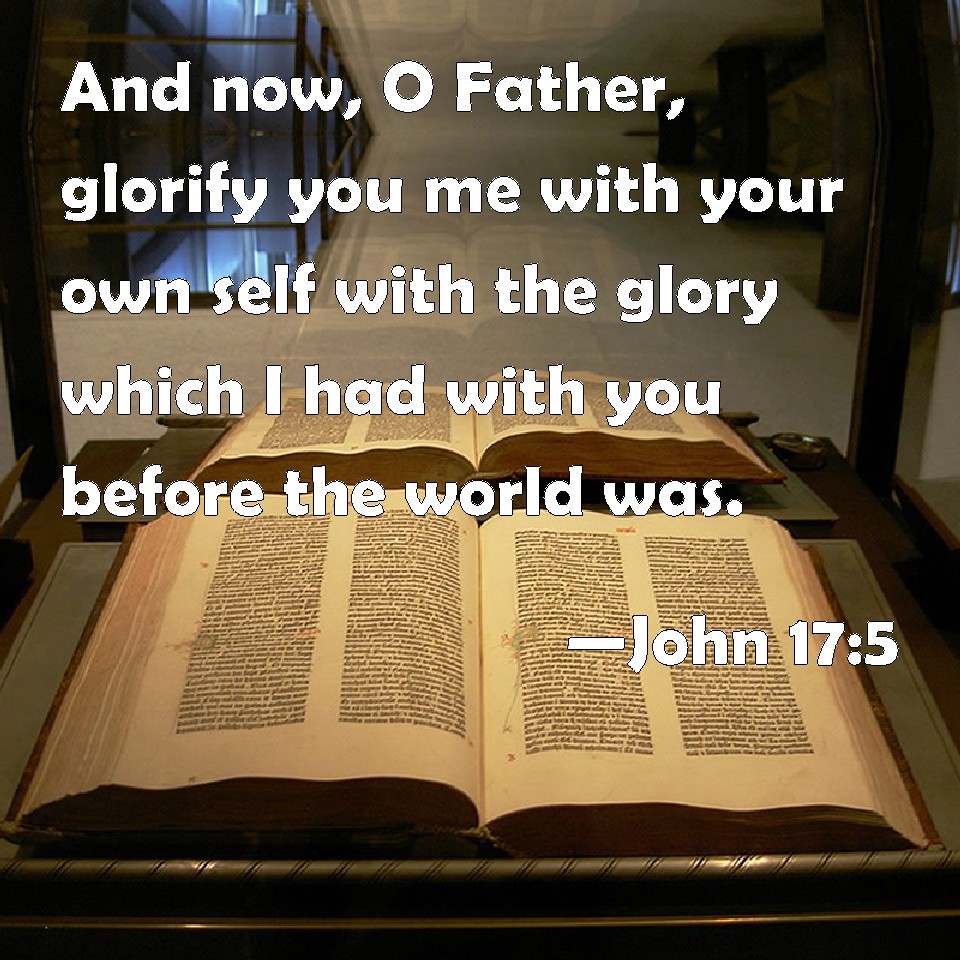
  • Returning to his Father. Jesus looked forward to being glorified with God, reveling in the glory he had enjoyed with the Father before the world began (John 17:5).


26765


  • Commanding angels, authorities and powers subjected to him (1 Peter 3:22). This privilege was not a self-aggrandizing end in itself. It was a means of aiding and rescuing his people–us (Acts 5:31).
  • Becoming our mediator and saving us from the natural consequence of our sin: eternal death (Hebrews 7:25).
  • Offering glory to God for the work he had faithfully and perfectly completed on earth (John 17:4).

These joys were set before Jesus. They provided sublime assurance of what was to come.

These joys helped to sustain him through horrific agony—agony that was swallowed up in anticipated and certain victory (1 Corinthians 15:54).


ac7e84ccd3f21b2fff7bc9c1293097e7


We, too, can fix our attention on the joy set before us. And just what do we have to look forward to?

  • Discovering heaven as our splendorous, blissful home.
  • Residing in the realm of our perfect Heavenly Father, the King of the universe.
  • Ruling with Jesus, at the right hand of God, as joint heirs of the kingdom (Romans 8:17, Revelation 20:6).
  • Offering glory and honor to the Lord (Revelation 4:11). I imagine a grand choir made up of all of us–millions of voices, singing heart-stirring melodies with intricate harmonies.  I see our arms raised toward the throne, reaching out in holy reverence toward our awesome King.

Years ago, a talented singer named Helen Lemmel (1863-1961) enjoyed the fulfilling life of a concert soloist, sharing her faith through song in many churches throughout the Midwest. For a number of years Helen ministered with evangelist, Billy Sunday, singing and song-writing for his crusades. (She composed over 500 poems and hymns in her lifetime.)

Suddenly in midlife Helen began to go blind, her husband left her, and other heartaches enveloped her as well. Through it all, however, the singer/composer maintained her faith and joy—all ninety-seven years of her life.

One of her best-known songs, perhaps, is “Turn Your Eyes Upon Jesus” (1918), written in the midst of her trials. You might recognize the chorus:


slide_31


(“Turn your eyes upon Jesus,

Look full in His wonderful face,

And the things of earth will grow strangely dim

In the light of His glory and grace.”)


Peace, determination, and strength result from focus—focus that’s riveted on Jesus and the joy set before us.


(Photo credits:  www.truthforfree.com; http://www.biblepic.com; http://www.pinterest.com; http://www.slideplayer.com.)

Read Full Post »

Dear Father,

Christmas 2015 is almost here. Soon, all preparation will have to cease.

However (as You well know), my to-do list is still not complete; I’m going to have to prioritize and leave some things undone. That’s probably just as well, so my OCD tendencies don’t win over reasonableness!

But even as I try to settle myself, to pray and worship You on this holy day of Christmas Eve, distracting thoughts continue to ping around in my brain:

  • Did I dust the windowsills in the guest room? ‘Can’t remember.
  • Hey! We now have an evergreen tree in the yard. I could clip off some low branches and put them in the deck planters. That might look pretty.
  • Don’t forget to make sure the oil lamp is clean and ready for lighting.

I keep writing these thoughts down so they’re on paper and not in my head, because what I really want to do in these quiet moments is focus on You. I want to wonder again at the magnificent mystery of God becoming man. And I want to thank and praise You for sending Your Son to save me from the consequences of my sins.

Hush my mind, Lord; still my spirit as I pray…


bright-light


You are the God of the heavenly lights who lovingly sheds Your radiance over us.

With the angels, we praise You: “Glory to God in the Highest!”

All honor, splendor, and glory are Yours!

No one on earth or in heaven is as perfect and splendorous as You.

Who else can wrap himself in light as if it were a robe (Psalm 104:2)?

No one.  No one is Your equal.

What a comfort to know that Someone smarter and wiser than mere man is Sovereign over all.

What peace of mind You provide when I turn over to You the concerns of my life.


banner4


Light of the World, Lord Jesus,

All praise to You for leaving Your glorious, heavenly home to dwell with us.

You are our Emmanuel—God with us.

More astounding yet, Your dwelling is not a general presence in the world, but personal.

You actually reside within each of us—when we invite You to do so. Another magnificent mystery.

And You have promised never to leave us or forsake us (Hebrews 13:5).

In addition, Your Light provides guidance for our choices of action, strength to meet all life’s situations, confident hope for our future in heaven with You, and more.


eso1031a


Help me, I pray, to rise up and shine like a brilliant star, because Your. Light. Has. Come (Isaiah 60:1; Philippians 2:14-15)! What a glorious privilege–to reflect Your Light, pointing the way to abundant life in You.

How I praise you, Lord Jesus, that Your glory, splendor, and power have risen upon me–an incomparable blessing I now enjoy in part, but one day in resplendent totality!


(Photo credits:  www.talkofjesus.com; http://www.themelight.radiantwebtools.com; http://www.eso.org.)


Read Full Post »


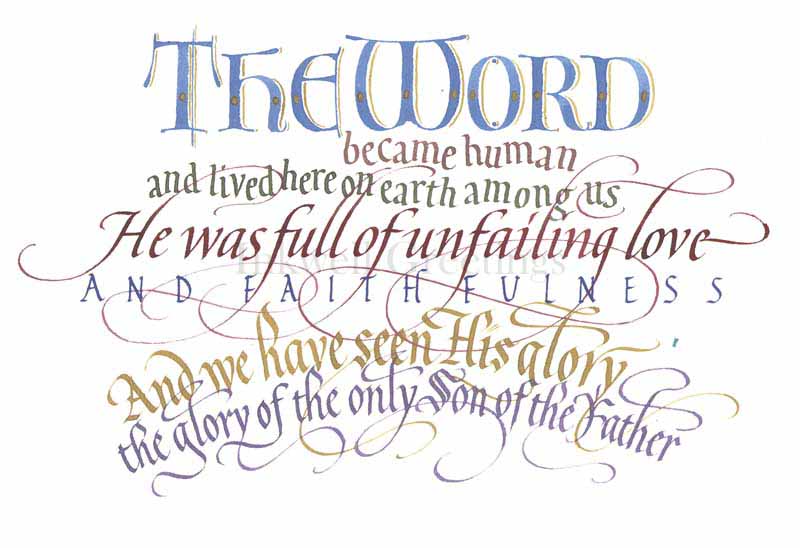
The Word, Jesus, became human and lived among us (1).


5592_pd73790full


Think of it:


He is “the image of the invisible God” (2), and

“The radiance of his glory (3),

The Creator of the universe (4), and

The Sustainer of all things (5).

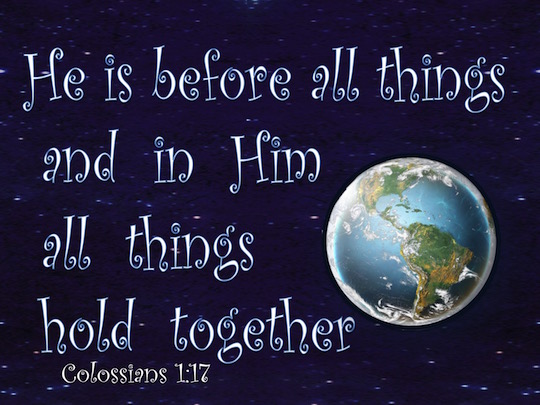
He is “before all things, and in him all things hold together” (6).

He is glorious in power and grandeur because

God was pleased to have all of his divine essence inhabit him (7).


Colossians-1-17-He-Is-Before-All-Things-blue-copy


Who can fathom such transcendence?


The Word dwelled in the perfection and beauty of heaven (8),

In an atmosphere of tranquil peace and effervescent joy,

Where every longing of the soul is fulfilled,

Where angel-songs waft on the breeze.


finding-heaven


Who can fathom such splendor?


Then, The Word humbled himself beyond comprehension (9).

The Infinite One entered time and space.

He submitted himself to our realm of hurt and greed and struggle.

He even accepted the confines of a helpless infant—

Unable to feed himself, dress himself, or speak.


the_baby_jesus_nativity_scene_manger_spirit_hd-wallpaper-1287447


For a time, the Word relinquished the privilege of words.

And the most important event of all history took place in a stable-cave, where

God’s infinite love was wrapped in swaddling cloths, and

The most important Person of all history was placed in an animal feed trough.

For this King, no trumpets heralded his arrival to the royals in their castles,

No loud pronouncements proclaimed his birth to officials in their chambers of government.

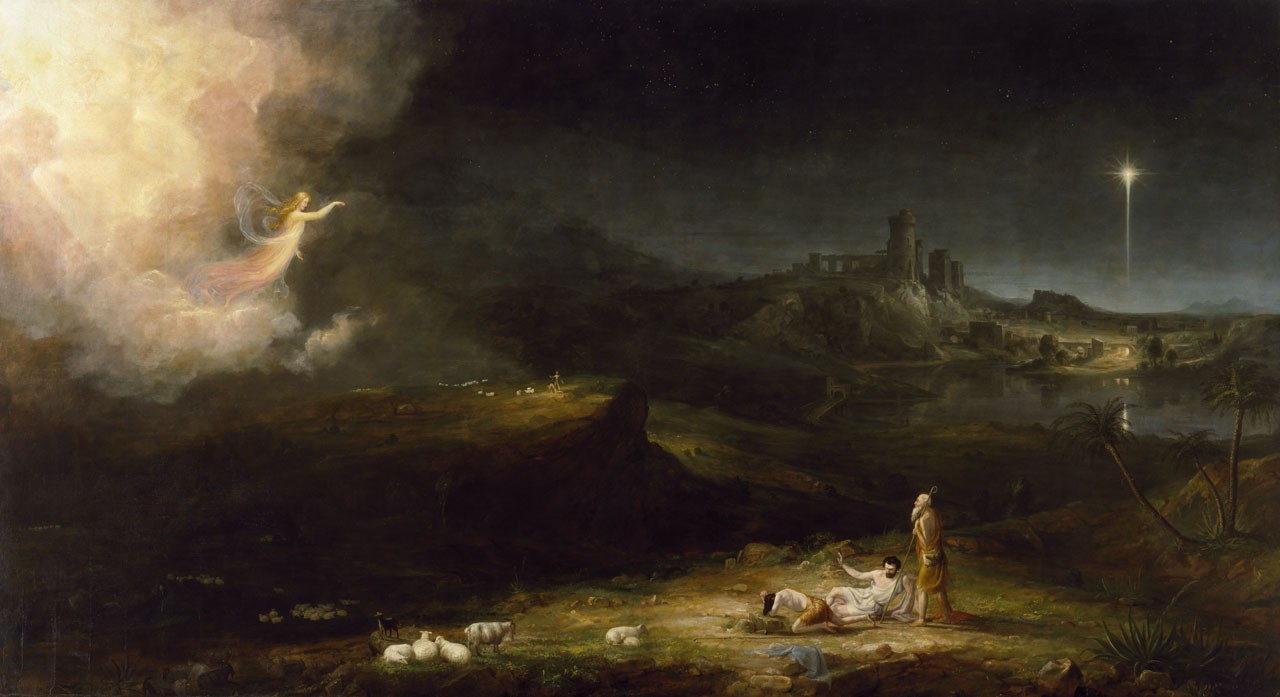
Instead, an angel choir hailed His coming to humble shepherds on a hillside.


cole-angel-shepherds


Who can fathom the glory of such humility?


The Word grew to manhood and proclaimed the way to know God as Heavenly Father (10).

The Word spoke radical truth about believing in him and receiving eternal life (11).

The Word sacrificed his life that we might escape darkness

And live forever with him in the kingdom of light (12).


1fb891d81370bdf5ab21bd2fd4ff2f66


Who can fathom such love?

________________________________________

  1. John 1:14
  2. Colossians 1:15
  3. Hebrews 1:3
  4. Colossians 1:16-17
  5. Hebrews 1:3
  6. Colossians 1:17
  7. Colossians 1:19, ISV
  8. John 6:38
  9. Philippians 2:7
  10. John 1:9
  11. John 5:24
  12. 1 Peter 2:9


(Art credits:  www.inkwellgreetings.com; http://www.knowing-jesus.com; http://www.churchofchristarticles.com; http://www.hdwallpapers.cat; http://www.chrusler.org; http://www.pinterest.com.)


Read Full Post »


persuasive-landing-pages-words-have-power


Companies spend much time and money analyzing factors that grab our attention to their advertisements. They’ve discovered that certain colors, shapes, and layouts create impact upon buyers.

In fact, researchers have even determined the most powerful, persuasive words. They recommend  advertisers use these top ten:

  • You – you matter; you deserve the product
  • Free – after all, everyone likes a deal
  • Because – people need reasons why they should buy
  • Instantly – we care about immediate results
  • New – everyone appreciates an improved product
  • Save – people like a bargain
  • Proven – we appreciate research that backs up an advertiser’s claim
  • Love – taps into what’s important to us, like family, safety, and security
  • Discover – hints of a promise that we’ll be satisfied
  • Guarantee – removes the feeling of risk

As I read through this list it occurred to me all these words are part of the glorious message of Christmas:

IC1445820_l

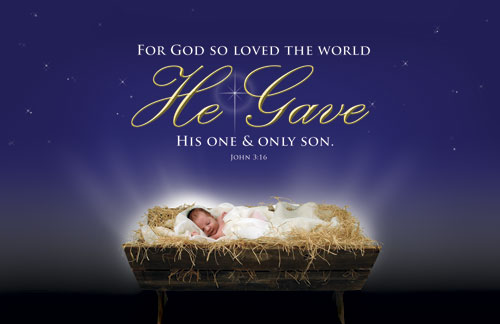
On that quiet night in sleepy Bethlehem, God sent his only Son into the world to be our Savior. Why? Because he loves us. Whoever believes on him will be saved from death and will receive the free gift of eternal life (John 3:16). That includes you!

 Oh, but there’s more. When we fuse ourselves to Jesus, we become brand new people (2 Corinthians 5:17).   Our outlook on life is revitalized; our values and motivations change. We instantly experience the peace of God and his joy (John 14:27 and 10:10). Each day is an opportunity to discover more of what it means to live a God-enhanced life.

And how do we know those statements are true? God’s Word is our guarantee that these blessings become ours through Jesus. The truth presented within its pages has been proven. 

  • Over 150 years of archaeological studies back up the accuracy of numerous facts in scripture. Not one discovery has uncovered an inaccuracy.
  • Dozens of Old Testament prophecies about the Messiah were fulfilled by Jesus. The mathematical laws of chance refute the possibility of coincidence.
  • Scientific and medical information in the Bible has been verified centuries later.*
  • Thousands of ancient manuscript fragments and letters (which include Bible quotes) corroborate the scriptures – many more than any other ancient text.
  • The influence of the Bible has been evident in the lives of individuals and upon the culture and history of the Western world. No other book has produced such impact.

There you have it. Ten words that researchers have found to be powerful and persuasive for selling products, or ten words that persuasively express the significance of Christmas and why it makes sense to embrace it.

The apostle John summarized the central truth of Christmas with these ten words:

nativityscene

(“The Word became flesh and made his dwelling among us.” John 1:14)

That is glorious, incredible news worth celebrating.

But Christmas isn’t just a happy one-day celebration, it’s meant to be a joyous, whole new way of living with Jesus — all year, every year.

Better yet?  A day is coming when the joy of Christmas will be purified, intensified and extended for all eternity–on the day when he comes again!


*For one small example, see “Pathfinder of the Seas” about Matthew Maury and his discoveries.


(Art & photo credits:  www.wordstream.com; http://www.beyondwaiting.com; http://www.outreach.com.)

Read Full Post »

5c1cdef89b871e8095f70ce44bf2c898

(“Thanks be to God for his indescribable gift!”

–2 Corinthians 9:15 NIV)

Consider.

Jesus, our Savior, is:

  • Incomparable – without equal or rival (Psalm 86:8)


85d81ac7ab8a0b3947d92604f1091b4f


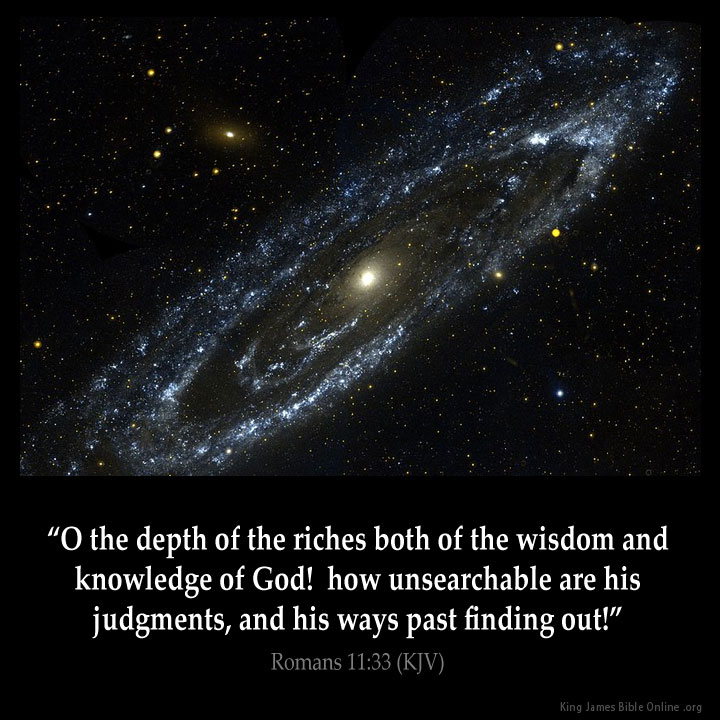
  • Incomprehensible – beyond understanding or knowing; unfathomable (Romans 11:33)


Romans_11-33


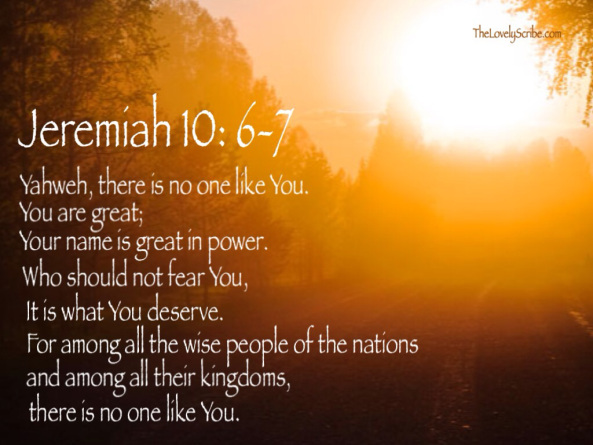
  • Indescribable – exceeding description (Jeremiah 10:6-7)


image10

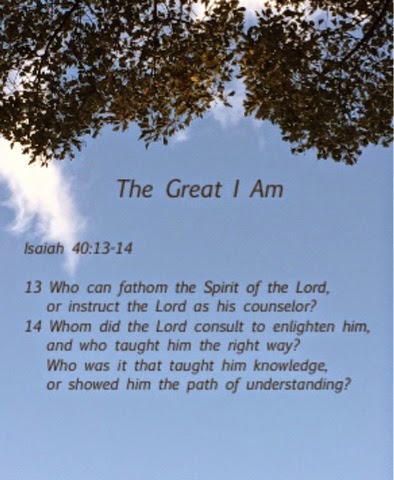
  • Indisputable — incontestable (Isaiah 40:13-14)


blogger-image-1447150886


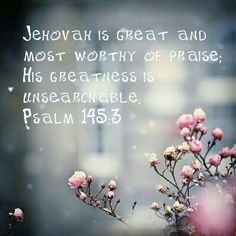
  • Inestimable – of incalculable value (Psalm 145:3)


fbf41a5427ef67c257c65dc01af288ff


  • Inexhaustible – incapable of being used up or consumed or becoming tired (Revelation 1:8; Psalm 121:3)


d9d9e4567f79b10eb2ca1ee33f55e92d


  • Infallible – cannot fail or even make a mistake (Psalm 145:17)


f65a18471e84ba787378cce22761e36d


  • Invariable – never-changing (Hebrews 13:8)


1ac798f9a8c3556236c4b2b9561ce3e6


  • Invisible – John 1:18


98e17694c4978f1297c069388e500041


And those nine descriptors only begin to define Jesus. No matter how many fancy, multi-syllable words we might collect, the attributes of God’s Son are beyond full comprehension.  And he is God’s gift to us.

*     *     *     *     *     *     *     *     *     *

Oh, Jesus, how we thank you for giving up the splendor of heaven and the glory of your deity, to take on human form and become our Savior. How incomprehensible that you could love such pitiful creatures as mankind. Nevertheless you came so that we, too, could become God’s sons and daughters. Even more incredible, many of the descriptors above will be true of us—on that day when you appear again, and  We.  Shall.  Be.  Like.  You. 

(Philippians 2:6-7; John 3:16; Romans 8:29; 1 John 2:2)

(Art & photo credits:  www.pinterest.com; http://www.kingjamesbibleonline.org; http://www.thelovelyscribe.com; http://www.tgreatiam.blogspot.com; http://www.pinterest (5).


Read Full Post »

The Christmas season is well underway at our house. The tree is lit and ornamented,


IMG_0370


other decorations are in place,


IMG_0378


some of the Christmas cards are complete as well as some of the shopping.

But none of this would matter much if the whole family were not able to gather in just a few weeks. Eager expectation mounts for the noise and laughter, thought-provoking conversations, fabulous meals (prepared by several gourmet cooks in the family), and more.


IMG_0067


I actually find much to enjoy just in the anticipation of all this activity. In my imagination I visualize joyful faces, hear the good-natured teasing, smell the wonderful aromas wafting from the kitchen, and feel the warmth and camaraderie of loved ones who even like each other.

Our spirits are lifted as we relish these sublime moments–even before they’ve become reality–because pleasant anticipation is…


“..that sanguine expectation of happiness

which is happiness itself.”

Jane Austen, Sense and Sensibility


But there is much to be said for delightful surprises as well, when:

  • The florist delivers a fragrant Christmas centerpiece from friends.
  • The doorbell announces the arrival of uninvited guests–carolers.
  • The check at a restaurant is paid for by friends who happen to be dining at another table.
  • An unexpected, especially thoughtful gift is drawn out from behind the tree.


hand-small-christmas-gift-box-man-present-luxury-life-48215666


Our hearts beat a little faster, and feel-good endorphins flood the system.

How glorious that the story of the first Christmas gives us both: delicious anticipation and delightful surprises.

First, the anticipation:

  • Hundreds of years before Jesus was born, the prophets foretold his coming, including his birth to a virgin (Isaiah 7:14), his birthplace in Bethlehem (Micah 5:2), his ancestry from the house of David (Isaiah 11:1-2), and more.
  • Devout Jews such as Simeon and Anna (Luke 2:25-38) had waited all their lives for the Messiah to come. Their eager expectation was finally fulfilled with the birth of Jesus.


Simeon


Then the story includes several surprises.

  • Imagine yourself occupied in ordinary tasks on an ordinary day, when the angel, Gabriel, appears out of nowhere, telling you not to be afraid. (Impossible under the circumstances!)  Imagine hearing the words, “You will be the mother of the Son of the Most High.”

Or,

  • An angel visits you in a dream to explain that the baby boy your fiancé is carrying was put there by the power of the Holy Spirit. (I wonder if Joseph asked the angel to please repeat his message?)
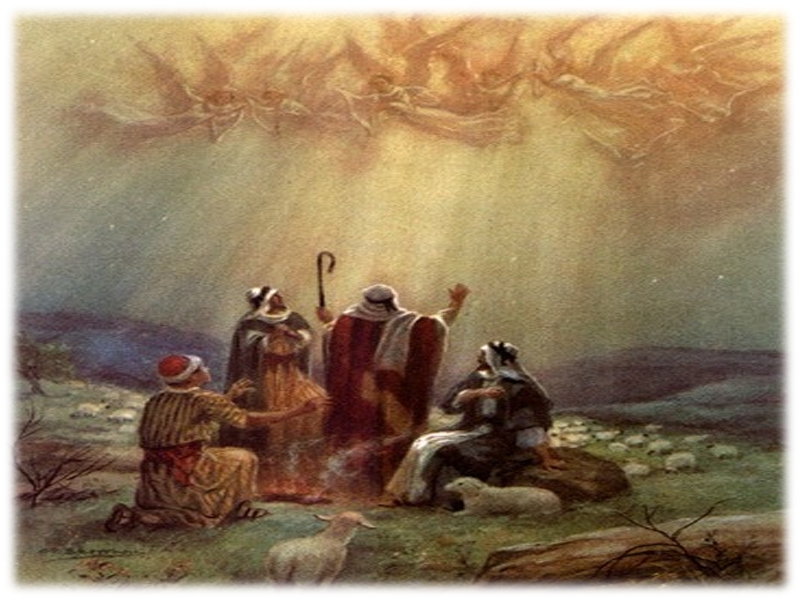
  • Picture yourself as a shepherd, drowsily watching your flock at night, when POOF! An angel appears, casting ethereal light all around you and announcing the birth of the long-awaited Messiah, the Lord of all. He’s finally here! And his birth is being declared to you—lowly shepherds at the bottom of the social strata. You try to absorb the news while your heart hammers in your chest.


ShepherdsBethlehem


Whichever you prefer—anticipation of the expected or out-of-nowhere surprises—the season offers opportunity for both.

We look forward to the well-loved traditions, familiar carols, and warm family gatherings. These activities can surely be counted among God’s precious gifts to us.

And just as the Jews longingly looked toward the coming of their Messiah, so we anticipate the second Advent or coming of Jesus, when he will begin his reign as the King of kings.

And if you prefer surprises, remember: God still performs wonders and miracles! In fact, he loves to display his glory as he works for our ultimate good in ways we don’t expect.

Perhaps our best attitude is to embrace them both.

Delicious anticipation embodies hope; delightful surprise unfolds into great joy.


il_214x170.866041452_t17z

(Art & photo credits:  Nancy Ruegg (3), gift:  www.dreamstime.com; Simeon:  www.deliveredbygrace.com; angel visitation: http://www.freerepublic.com; hope and joy:  www.etsy.com.)
Read Full Post »

When you say the name, Jesus, do images from his life flash to mind?  Images such as:


hqdefault

  • His healing hand gently touching a hideous leper, the lesions disappearing, fingers and toes miraculously being restored?  Do you see the love and joy on Jesus’ face as he watches the healed one, his eyes darting between arms and legs, elbows and knees, rejoicing that every inch of his skin glows with health (Matthew 11:5)?
  • Jesus standing in the bow of a lurching boat with arms raised, sleeves flapping in the whipping wind of a squall?  Do you hear his authoritative voice above the mayhem shouting, “Be still!”  Do you feel the boat stop pitching and rolling as the fearsome waves settle into calm ripples (Luke 8:22-25)?
  • Do you see Jesus leaning in, listening intently to the Samaritan woman at the well, eyes focused only on her, indicating genuine interest and tender compassion?  Do you sense his pleasure as she becomes a passionate believer (John 4:4-30)?
  • Do you breathe in the aroma of fresh bread and dried fish that permeated the hillside where 5,000 men (plus women and children) ate lunch one day, supplied by one boy’s meager fare–likely two small barley loaves and five sardines (Luke 9:10-17)?
  • Do you see Jesus reclining with his disciples at the Last Supper?  Do you hear the reverent tone of the ceremonial words?  Do you see the astonished expressions on the disciples’ faces, as Jesus changed the well-known ritual to speak of his body, his blood, and a betrayer among them?

Do you recognize the rich symbolism of his sacrifice-to-come in the elements of the meal?  1)  The unleavened matzah bread with its grill marks, reminding us of the stripes he bore on his back (Matthew 27:26).  2) The breaking of that bread, representing Jesus’ body broken for us (Matthew 26:26-28).   3) The lamb, symbolizing Jesus as the Lamb of God, sacrificed for our sakes that we might have eternal life (Romans 3:23-24).  4)  The third cup of wine during the Passover meal, called the cup of redemption, representing Jesus’ blood.**

Without our Jesus of gentleness, power, compassion, and sacrifice, we’d be reduced to lives of futility and fear.  Without our Jesus, we’d have no hope and promise of heaven’s ecstasy.

Every moment of his earthly life proved his perfection, his singular purpose, his love.

He is the sum total of all delights.

His name is:

music with which the bells of heaven sing;

a song in a word;

an ocean for comprehension,

although a drop of brevity;

a matchless oratorio in two syllables,

a gathering up of the hallelujahs of eternity

in five letters”

— Charles Spurgeon

    *     *     *     *     *     *     *     *     *

Precious Jesus, we praise you that the same attributes you demonstrated in Galilee and Judea so long ago are still at work among us today.  You are our faithful Rock, a Friend who never fails, a Shepherd who always attends.  May your name continually be on our lips!

**Jesus referred to his blood as the seal of a new covenant, a new promise.  By his death, the debt was paid–the one we owed because of our sin (Luke 22:20; Romans 3:23-25a).

(Photo credit:  http://www.youtube.com.)
Read Full Post »

« Newer Posts - Older Posts »

When the House is Quiet

Impressions Becoming Expressions

Mitch Teemley

The Power of Story

Still Traveling

Impressions Becoming Expressions

Living Our Days

Gaining a heart of wisdom

He Said What?!

I'm Patty, and my husband and I are living with our adult son who has autism and epilepsy. I love sharing lessons learned from life around me, especially life with Aaron.

Meditations of my Heart

Impressions Becoming Expressions

Linda Stoll

Impressions Becoming Expressions

Signora Sheila

Where faith meets la dolce vita

Heidi Viars

Finding the Image of God