Feeds:
Posts
Comments

Archive for the ‘Meditation’ Category

Paul told his beloved friends in Philippi:  “You’ll do best by filling your minds and meditating on things true, noble, reputable, authentic, compelling, gracious—the best, not the worst; the beautiful, not the ugly; things to praise, not things to curse” (Philippians 4:8, The Message).

As a meditative exercise, I decided to choose one event, object, or truth which embodied adjectives from this verse.  Which examples below are similar to choices you would make?  What might you select that would be different?

One important truth:
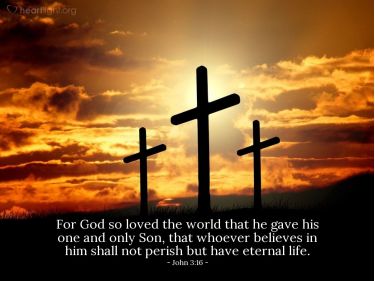
 

“God so loved the world that he gave his one and only Son, that whoever believes in him shall not perish but have eternal life” (John 3:16).

That one was rather obvious, wasn’t it.  The veracity and certainty of eternal life colors every moment of life with peace and joy.   How incredibly splendorous!

One supreme example of nobility:

First, a definition.  Nobility includes qualities of high moral character such as honor, generosity, and courage.

I have been blessed and influenced by many noble people.  Any one of them would be worthy to contemplate and hold up as an example:  family members, pastors, Sunday School teachers, youth group leaders, missionaries, colleagues, friends.

So if I stick my hand into an imaginary hat filled with their names on slips of paper, I might pull out…M. and L.

M. lost his job unfairly and in a hurtful way.  But they persevered through that dark time with honor and courage.  These two are also known for generosity and hospitality, in their church community and beyond.

 One person of good repute: 

 Again, I have to put my hand into that hat and pull out . . .

…Rachel Asherman, my grandmother.  To this day her grandchildren arise and call her blessed (Proverbs 31:28), because of her kind, gracious ways. Everyone loved Grandma Rachel.

One example of holy authenticity:

The Bible.  How grateful I am for the reliability of God’s Word—filled with wisdom, promises, and encouragement.  The more I learn of archaeology, prophecy, history, and creation science, the more astounded I am by the great volume of proof upholding its authenticity.

One item that demands compelling attention:

An impossible choice!  As I contemplate towering mountains and tiny snowflakes, colorful flowers and majestic trees, soaring birds and fluttering butterflies, radiant rainbows and ethereal sunbeams, crashing waves and delicate seashells…my heart is filled with wonder and appreciation.  And yet there is so much more!

God created such astounding beauty to display his attributes to us.  With  his power he carved out ocean beds.  In wisdom he designed the evaporation cycle.  With creative genius he splashed color over the earth–even out into the galaxies.  His engineering prowess is highlighted in a honeycomb, and his artistry in a rose.

“The whole earth is full of his glory” (Isaiah 6:3)!

So where might that glory be most evident?  Perhaps at the birth of a baby, when the little one takes that first breath of life and greets everyone with a wobbly cry.  And surely there is glory in that moment when the parents first glimpse this new little person who will forever be entwined around their hearts.

Who is not compelled to give attention to that wonder?  “The Spirit of God has made me; the breath of the Almighty gives me life” (Job 33:4)!

One example of graciousness: 

A dear friend, Dixie, died of a brain tumor a number of years ago.  Her treasure of life stories included great heartache, but you wouldn’t have known that to look at her.  Dixie seemed to live in a cloud of contentment and peace, never showing anger, never gossiping, never complaining.  Her example is still an encouragement to me today.

*     *     *     *     *     *     *     *     *     *

Thank you, Heavenly Father, for the bounty of beautiful things and inspiring people you have brought into my life.  Meditation on all your blessings can keep me happily occupied for hours!

But you have ordained greater purpose in the exercise, because there is power generated by our thoughts.  “The good man brings good things out of the good stored up in his heart,” Jesus said, “. . . for out of the overflow of his heart his mouth speaks (Luke 6:45).”

That means the more I meditate on your goodness, the more goodness will come out of my mouth.  And the more goodness that comes out of my mouth, the more will be evident in my life, because a man [woman] reaps what [s]he sows (Galatians 6:7).

May I make choices, moment by moment, that will demonstrate the overflow of your Spirit.  

Top choices.

(Photo credits: http://www.heartlight.org; http://www.pexels.com; http://www.commonswikimedia.org; http://www.flicker.com; http://www.whattoexpect.com.)


Read Full Post »


“I can’t remember the last time I felt truly happy.”

“Nobody understands what this situation is like.”

“I don’t know what I’m going to do.”

Chances are, at some point in your life, you’ve experienced one or more of the emotions behind those statements,  including:  discouragement, self-pity, hopelessness, and fear.

When circumstances seem out of control and problems defy solution, what can we do?

A good place to start:  praise God.

I know.  That seems an odd course of action and counter-intuitive.  But that’s what God instructs us to do (1 Thessalonians 5:18).

Now why would that be?

Reason #1:  Praise is a powerful weapon against those emotions listed above. It fosters peace and contentment by taking our minds off our problems and focusing our attention on God.

David shows us the way in Psalm 103.  In verse two he says,  “Forget not all [God’s] benefits.”  Then he lists  a number of them:  forgiveness of all sins, healing of all diseases*,  redemption from the pit, God’s love, compassion, righteousness, and justice (vs. 3-6).

What would your personal list include?  What specific ways has he provided for you, guided and protected you, fulfilled promises to you, and empowered you?

“Praise is the honey of life

which a devout heart extracts

from every bloom of providence and grace.”

–Charles H. Spurgeon

Reasons #2:  Praise invites his presence, and with his presence comes his strength and help.

“Praise be to the Lord, for he has heard my cry for mercy.  the Lord is my strength and my shield; my heart trusts in him, and I am helped.” (Psalm 28:6-7).

I have to be honest here.  There have been times when my praise to God had to be squeezed through gritted teeth.  And the first words of affirmation did not immediately lift me into golden clouds of euphoria.

What I can tell you is this:  Depression, discouragement, self-pity, and hopelessness were kept at bay.  And I felt the presence of God around me, giving me strength to press on.

How has praise brought God’s strength and help into your life?

Reason #3:  Praise lifts our spirits and gives us hope.  When words won’t come, we can turn to the psalms.  Chapter 145 offers one example of eloquent praise:

“God is magnificent; he can never be praised enough.  There are no boundaries to his greatness. ..

“God is all mercy and grace–not quick to anger, is rich in love.  God is good to one and all; everything he does is suffused with grace…

“Generous to a fault, you lavish your favor on all creatures.  Everything God does is right–the trademark on all his works is love…

“My mouth is filled with God’s praise” (vs. 3, 8-9, 16-17, 21,  The Message)!

Can you feel the hope, comfort, and strength stirring in the depths of your soul?

Keep praising!

*     *     *     *     *     *     *     *     *     *

Oh, yes, Lord, may my mouth be filled with your praise, whether I’m celebrating on a mountaintop or plodding through a valley.  Thank you for the delight of the former and your comfort and care through the latter.  I praise you that all things are under your control.  With a grateful heart,  I put my hope and trust in you. 

* All of our diseases are healed:  1) instantly and miraculously, often as the result of prayer, 2) slowly over time, often with extended prayer and medical intervention, or 3) eternally, when we reach heaven.

(photo credits:  www.pxhere.com; http://www.stockvault.com.)

Read Full Post »

“Mail’s here early today!” called Lorna, as she entered the kitchen.

Oh, that was good news.  Living far from home in Quito, Ecuador made letters a very precious commodity.

“Terrific!” I responded, and dashed upstairs to get my keys.

Lorna and her husband, Elbert, served as missionaries with HCJB.  I was a short-termer, living with them for the four months of my assignment as a preschool and kindergarten teacher.

English: Radio HCJB Deutsch: Radio HCJB

The compound was only a brief walk from the house.  Once there, it was just a matter of unlocking the gate, heading down the main walkway a short distance, up a few steps, and into the post office alcove where all of our mailboxes were located.

I jogged the whole way there and back, excited to read my mail.  But no sooner did I return home than my head started to pound, nausea engulfed me, and all I wanted to do was lie down.  Never mind those coveted letters!

My problem was not a sudden onset of the flu, but mild hypoxia–oxygen deprivation. Quito is located 10,000 feet above sea level in the Andes Mountains.

My experience proves, as well as those of countless others:  we humans require oxygen—lots of it.

Even folks who live near sea level can suffer from lack of oxygen, because they’ve become accustomed to shallow breathing.  Their bodies never receive enough oxygenated air, causing them to feel short of breath and anxious.

On the other hand, research has proven that deep breathing helps us manage stress and anxiety, lower blood pressure and heart rate, and even spark brain growth.  By not taking slow, deep breaths now and again, we deprive ourselves of these benefits.

M-m-m.  Reminds me of Ecclesiastes 2:10-11, where King Solomon lamented the results of shallow living:  chasing after wealth, accomplishments, and pleasure.  In the end, nothing gave him lasting satisfaction and fulfillment.

Shallow living brings on symptoms in the spirit, similar to oxygen deprivation in the mind and body: heartache, fatigue with life, nausea from repetitive, meaningless activity, and shortness of temper.

In contrast to Solomon’s lament in Ecclesiastes is Paul’s praise to God for the power and strength of deep living:

“Oh, the utter extravagance of his work in us who trust him—endless energy, boundless strength” (Ephesians 1:19, The Message)!

Deep living happens when we breathe in God’s strength with a prayer, his wisdom and encouragement with a scripture, his joy with a song.

Deep living happens when we practice his presence as automatically as we breathe.

And how do we do that, “practice his presence?”

It’s just a matter of  pausing frequently throughout each day, to turn our attention to God.

I might say such things as:

  • Thank You, Lord, for this new day.  Work through me to accomplish your purpose.
  • I  love you, Heavenly Father.  Thank you for filling my heart with peace and joy every time I turn my attention to you.
  • Thank you for your power at work in me as I complete this task.
  • The wonders of your creation–graceful tree branches dancing in the breeze, lyrical songs of the mockingbirds, delicious aromas of pine and orange blossoms–They make my heart sing with praise!
  • Oh, Lord, I shouldn’t have spoken to Mary like that.  Forgive me, I pray.  Help me to think before I speak.  And yes, I will apologize to her.

Refreshing.  Energizing. Purifying.  Like a deep breath of oxygen.

Shallow breathing causes a lesser quality of life.  So does shallow living.

Deep breathing fosters strength of mind and body.  Deep living does that and more.

Deep living radically transforms the spirit.

Let’s breathe/live deep!

*     *     *     *     *     *     *     *     *     *

What deep living habits help you practice the presence of God?

(photo credits:  www.wikipedia.com , http://www.picstopin.com , http://www.vineyardcs.org )

Read Full Post »

“You are a shield around me, O Lord;

You bestow glory on me and lift up my head.

To the Lord I cry aloud,

And he answers me from his holy hill.

Selah

(Psalm 3:3-4, NIV).

Seventy-one times in psalms we find that word, selah.

And no one can say definitively what it means, because the Hebrew root word is uncertain.  One humorist suggested it was a word spoken by David when a string broke on his harp!

Here’s a review of what more serious Bible scholars have proposed.

One possibility:  selah is related to calah which means “to hang” or “to measure or weigh in the balances.”

Or,  selah may come from three Hebrew words, s_lah (to praise) and s_lal, (to lift up), or salah (to pause).

Selah may have been a musical direction, for a pause in the vocal music and an interlude of instruments only.

I personally like how the Amplified version translates Selah: “pause and calmly think about that.”  An instrumental interlude would certainly lend itself to meditation on what was just sung, to weigh in the balance of the intellect the value of the statement, to give praise for its certain truth.

For a bit of practice, I skimmed through the psalms looking for the word, Selah, and quickly discovered places where pausing and calmly thinking about a passage could have heart-changing results:

Feeling alone and powerless against difficulty?  Pause and calmly think about Psalm 24:10.

“Who is he, this King of glory?  The Lord Almighty—he is the King of glory.  Selah.”

I’m reminded that nothing is too hard for our splendorous God.  He is all-powerful and all-wise.

Feeling worried?  Pause and calmly think about Psalm 32:7.

“You are my hiding place; you will protect me from trouble and surround me with songs of deliverance.  Selah.”

The hiding place of God’s presence is in the spiritual realm, where he makes his sweet peace and gentle comfort available.  Troubles may come, but they cannot destroy me.  My soul is secure for eternity because Jesus has delivered me from the consequences of my sin.  And  one day I will live with him forever!

Feeling frightened?  Pause and calmly think about Psalm 46:1-3.

“God is our refuge and strength, an ever-present help in trouble.  Therefore we will not fear, though the earth give way and the mountains fall into the heart of the sea, though its waters roar and foam and the mountains quake with their surging.  Selah.

Whatever calamity I might have to face, God will supply the necessary strength.  Again, God is my refuge—a personal retreat.  I can go to him for peace and comfort   He is always present, as close as a whispered prayer, not just ready to help, but eager.

Feeling useless?  Pause and calmly think about Psalm 57:2-3.

“I cry out to God Most High, to God, who fulfills his purpose for me.  He sends from heaven and saves me, rebuking those who hotly pursue me; God sends his love and his faithfulness.  Selah.”

God doesn’t waste his time making useless beings.  Every one of us has purpose, and as I cry out to him and make myself available to him, he has promised to fulfill that purpose.  He will also put passion and joy into my heart for his plan.  He “is too gracious to ask [me] to do something [I] hate” (Max Lucado, Just Like Jesus).

And so, a Selah interlude, I find, affirms, uplifts, and strengthens.

It can also be a moment of worship as I turn my thoughts into praise.

*     *     *     *     *     *     *     *     *     *

Heavenly Father, thank you for giving us the capacity to think deeply, to meditate and discover.  Truly, Selah interludes provide for the renewal of my mind and the transformation of my state of being.  Help me to remember to pause and calmly think about your Word—often!

(Photo credits:  www.flickr.com , http://www.marthaspong.com , http://www.ministrylift.ca )

Read Full Post »

Think of the last time you . . .

. . . gazed in wonder at a blazing sunset,

. . . marveled at the heavenly aroma of lilacs or orange blossoms, or

. . . listened to a melody that brought tears to your eyes.

God has equipped us with amazing physical senses, enabling us to experience and enjoy the display of his creative genius.

But physical manifestations are not his only outlet of expression.  God also revels in displaying his fullness in our hearts.  The question is:  how do we become aware of such revelations in the abstract realm of our spirits?

A.W. Tozer presents a possibility in his classic, The Pursuit of God.  He suggests we use the senses of our hearts.

The Bible gives us glimpses of how these internal senses might work.

1.  TASTE

David urges us to “taste and see that the Lord is good (Psalm 34:8).  That verse reminds me of a father urging his child to try a bite of some new food.  “Try it—you’ll like it!” he says.

As Christians, we can “try” God—offer him a prayer, believe in a promise, trust in his love and care.  He will not ignore such efforts!  When we come near to God, he will come near to us (James 4:7).

2.  SMELL

Although Psalm 45 was written as a wedding song, perhaps for King Solomon, it also has prophetic qualities, looking forward to the day when Christ and his bride, the church, will be united forever.  Verse 8 mentions the groom’s fragrant robes:

“All your robes are fragrant with myrrh and aloes and cassia,” wrote the psalmist.

Think of a favorite candle with a delightful aroma.  Do you light it and then leave it?  No, more than likely you place that candle in close proximity, so you can breathe in deeply the lovely fragrance and relish the pleasure.

We can draw near to God and relish the pleasure of his presence—the fragrance of his peace, joy, and comfort.

3.  HEARING

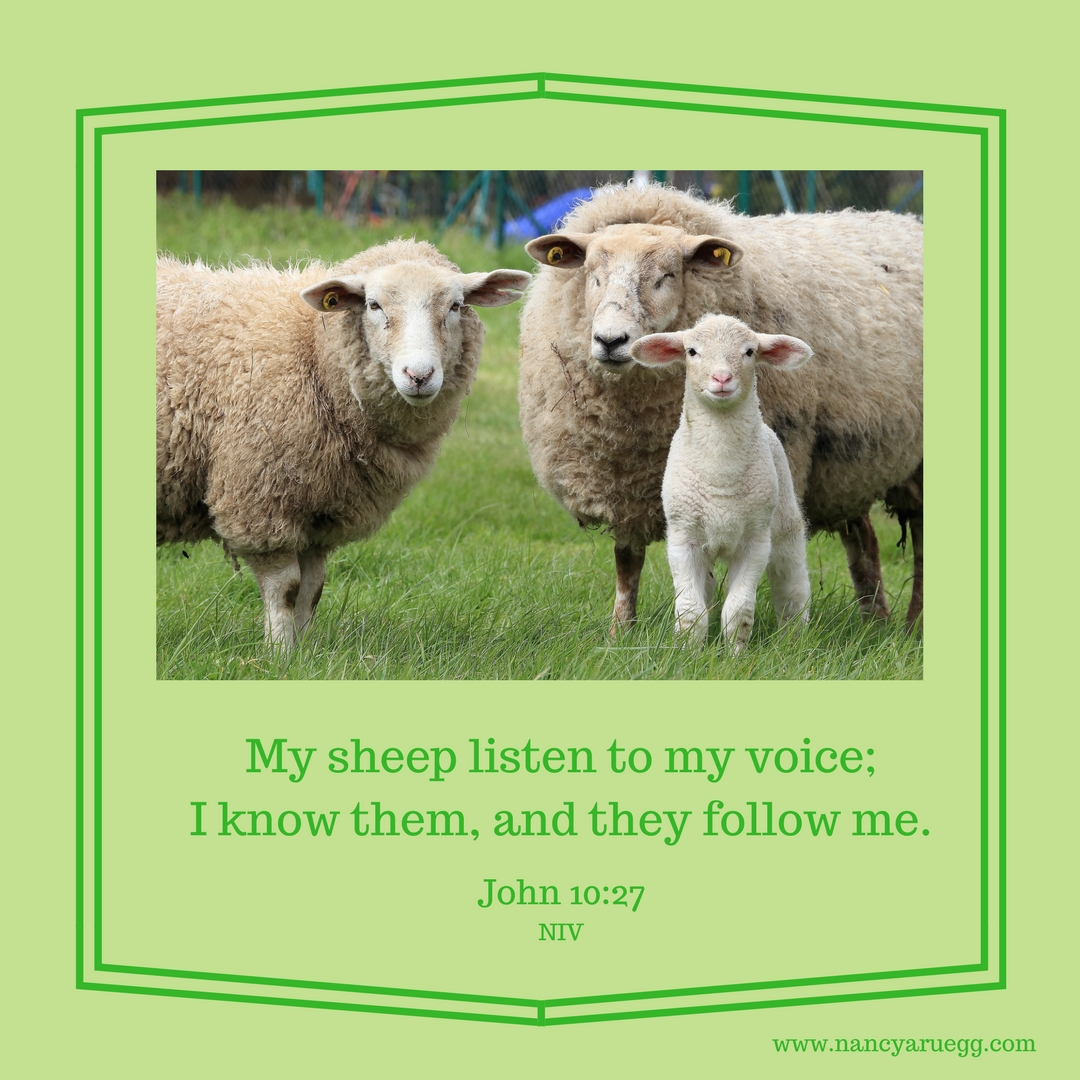
Jesus said, “My sheep listen to my voice; I know them, and they follow me” (John 10:27).

His voice represents wisdom, guidance, encouragement, and security.  Our primary source for those benefits?  The Bible.  But God also speaks to his children in other ways:  through creation, other people, events, even inner impressions.

Times of stillness are necessary.  If every moment is filled with chatter, we will not be able to hear God.

4.  TOUCH

Talk to those who have sought God during a crisis and without exception they will attest to sensing God’s presence with them.  For me, it’s like a holy heart-hug, infusing me with peace of mind and strength of heart.  Not that I am impervious to hurt or discouragement, but the touch of God provides respite and hope.

How?  Through praise and worship, especially as I meditate in the psalms.

5.  SIGHT

“Blessed are the pure in heart, for they will see God” (Matthew 5:8).

The verb tense used here is called “future continuous.”  The verse could read:  “They shall be continually seeing God for themselves.”

I’m reminded of a time Steve and I visited friends at their new home.  We turned off a familiar busy street and were almost immediately surrounded by tall trees.  The homes were set back from the road, barely visible.  The neighborhood was a bit of country set down in the middle of our metropolis.


“Who knew this area even existed?” I said to Steve.  He agreed.

We had both passed that street numerous times, but never saw it.

Isn’t that how it is with God?  We’re so busy, dashing from one task to the next, we never see God at work around us.  We aren’t looking for him so we miss him.

But!  When we are attentive for evidence of God’s presence and power, we will see him!

“When the habit of inwardly gazing Godward 

becomes fixed within us,

we shall be ushered onto

a new level of spiritual life.”

– A.W. Tozer

*     *     *     *     *     *     *     *     *     *

Thank you, loving Father, that you do expand my understanding as I seek to know you more and strive to comprehend more fully the greatness of your glory.  Teach me to use the five senses of my heart to accomplish those goals.  With great anticipation, I look forward to the new levels of spiritual life to which you will guide me!    

(Photo credits:  www.flickr.com (2); www.roshchodeshnewmoon; http://www.canva.com http://www.pixabay.com; www.flickr.com.)

Read Full Post »

[I am sorry for neglecting the blog this past week.  A flu bug got the better of me, in spite of getting the shot.  Hopefully I’m back on track now!]

Bee on a flower

Thomas Brooks, a Puritan preacher and author of the 1600s, wrote the following about meditation. This is a paraphrase:

A bee cannot gather honey by merely touching the flower. 

She must abide for a time on the flower, to draw out the sweet.

A Christian cannot gather heavenly truths through hasty reading.

It is serious meditation that draws out the sweet.

It is not he who reads most, but he who meditates most,

who will prove to be the choicest, sweetest, wisest and strongest Christian.

That’s my desire—to be the choicest, sweetest, wisest, and strongest Christian I can be. My guess is you feel the same.

Evidently, meditation is key. Did you know it’s mentioned twenty times in the Bible?

And what does meditation include? Reflection, pondering, intending the mind, and contemplation.

This is what it might look like:

1) Praying while reading the Bible, asking God to give understanding.

2) Asking God also, How should this verse impact my thinking and my actions?

3) Celebrating his miracles, works, and mighty deeds (Psalm 77:11-14) with words of appreciation.

4) Reviewing his promises (Psalm 119:148).

5) Praising God for his attributes.

6) Contemplating whatever is true, honorable, right, pure, lovely, and of good repute (Philippians 4:8).

Meditation takes effort. To be of any profit, it must also lead to application.

Meditation requires stillness. “Be still and know that I am God” he tells us (Psalm 46:10). To be reflective, we need time to listen, to just wait before God. That’s not going to happen if the email inbox is visible on the laptop nearby or one eye is on the clock.

As always, Jesus is our perfect example. He frequently participated in meditative prayer—pulling away from the crowds, even from the disciples, to a place of solitude and quiet.

Meditation means slowing down the thought processes so new discoveries can emerge. For some, that might mean praying, others may meditate through song, still others by writing.  Writing thoughts about God, and especially to God can be very meaningful ways to meditate. Such exercises  help us notice and realize truths that would otherwise be left undeveloped and nebulous in our minds.

Meditation ushers us into more intimate communion with God, and a deeper relationship with him. In fact, meditation is bound to produce greater peace, increased passion for God, and heightened joy.

All the more reason to make time for meditation.

Here’s a habit I’m trying to practice: As I go to bed each evening, I meditate on what God has done for me that day, and where I witnessed his glory. The experts say that such reflection provides several benefits:

1) The body begins to relax. (Have trouble falling asleep? Try meditation!)

2) Breathing and heart rate slow down.

3) Even emotions and the flurry of thoughts will settle down.

4) As we put aside the anxieties and frustrations of the day to concentrate on God’s goodness, gratitude, peace and joy flood into our spirits.

5) In the stillness, God makes himself known.

But morning quiet-time meditation and bedtime contemplation aren’t enough. With David I want to extol the Lord at all times and always have his praise on my lips (Psalm 34:1).

What could be sweeter than that?

Read Full Post »

“Glorify the Lord with me” David invited.  “Let us exalt his name together” (Psalm 34:3). 

M-m-m.  That’s puzzling.  Why didn’t David say, “exalt his names?” 

He has dozens—Creator, Father, Holy One, King, I AM, —to name just a few. 

My question led to three observations. 

One, most of us do have at least three names:  first, last, and middle.  Royals are often given multiple names.  Prince William of Great Britain, for example, is actually William Arthur Philip Louis Windsor.  Yet even when he’s asked to give his full name, that word “name” is used in singular form. 

Two, most parents, including royalty, take great care in choosing names for their progeny.  They not only consider how first, middle, and last sound when spoken together, they consider the meanings of  the names.


Three, some moms and dads choose names that honor family members or friends.  Perhaps they hope that the name will also bequeath to their child the positive traits and accomplishments of the honorees. 

Based on these observations, it would seem appropriate to do the following when we desire to praise or rejoice in God’s name: 

  • Think on at least several of his names
  • Consider their meanings, especially as they relate to personal experience
  • Meditate on the attributes and accomplishments of God associated with that name. 

Let’s try it.  The name-list above offers a start.  

God of heaven and earth, you are Creator of all.  My mind cannot begin to fathom your power, wisdom, and creative genius that brought this universe into existence—out of nothing.  From vast planetary movements to intricate ecosystems, your divine proficiency produces perfect function. 

  English: A Blue Starfish (Linckia laevigata) r...

You are the Holy One of the universe—completely righteous and totally separate from anything or anyone else.  You are the only one who is omnipotent, omniscient, and omnipresent.  There is no one like you. 

Yet you are my Heavenly Father!  You lovingly and patiently care for me, providing guidance and instruction on how best to live.  You graciously bestow blessings—sometimes the desires of my heart, and sometimes serendipity gifts that I haven’t even asked for. 


 You are the King of the universe, in control of everything.  But unlike some overlords, you know what you’re doing.  Everything you do is perfect.   I can trust you with the concerns of my life because of your great wisdom and understanding. 

You are the great I AM, who always was and always will be.  You live in a perpetual present tense.  And you are always the same—dependable and faithful, loving and gracious to your children. 

Thank you, God, for revealing these names to us—and many more.  They help us to understand who you are and how you respond to your children.  And as we meditate upon them, our hearts are filled with wordless wonder and overwhelming gratitude. 

Read Full Post »

« Newer Posts

When the House is Quiet

Impressions Becoming Expressions

Mitch Teemley

The Power of Story

Still Traveling

Impressions Becoming Expressions

Living Our Days

Gaining a heart of wisdom

He Said What?!

I'm Patty, and my husband and I are living with our adult son who has autism and epilepsy. I love sharing lessons learned from life around me, especially life with Aaron.

Meditations of my Heart

Impressions Becoming Expressions

Linda Stoll

Impressions Becoming Expressions

Signora Sheila

Where Faith Meets La Dolce Vita

Heidi Viars

Finding the Image of God