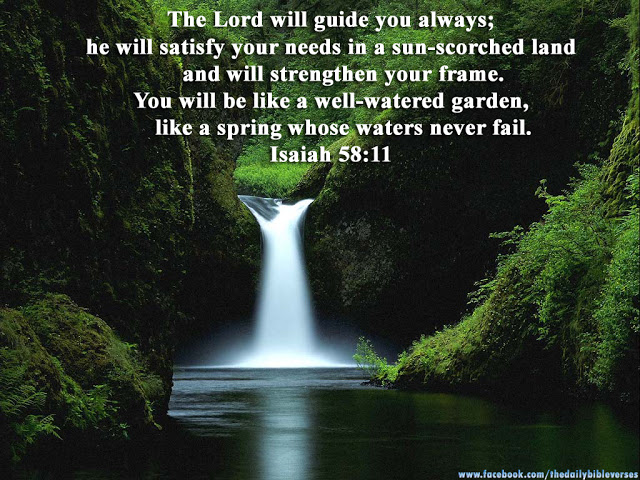
(“You thrill me, Lord, with all you have done for me! I sing for joy because of what you have done” — Psalm 92:4 NLT.)
God lavishes his gracious kindness upon us in countless ways, doesn’t he?
In appreciation for all he’s done, I have a suggestion. Let’s each write him a personal psalm for Valentine’s Day. A love gift, on a love-focused holiday, for our loving God. (You have more than a week to prepare your gift!)
Is that an overly sentimental idea?
Perhaps the timing is, but the matter of creating personal psalms has nothing to do with sentimental poetry.
I can hear some of you already. “Me—compose a psalm? I struggle to put a personal message on a birthday card!”
If that sounds like you, “Be strong and courageous. Do not be terrified; do not be discouraged, for the Lord your God will be with you” (Joshua 1:9)!
God waits with eager anticipation for you to enjoy an intimate Father/child relationship with him (2 Corinthians 6:18).

And what parent is not overjoyed when a son or daughter shares his/her innermost thoughts and feelings?
Remember, a psalm is simply a heartfelt prayer or song. Key word: heartfelt. Our psalms do not have to rhyme. We don’t have to use fancy literary devices like metaphors, imagery, or parallelism unless we want to.
These psalms are for our Heavenly Father. He takes great pleasure in the sincere, unpretentious efforts of his children, just as all parents do. We can even ask for his help to string the words together that will express our hearts.
Sometimes the hardest part is getting started—that first thought. An easy solution is to use a biblical psalm as a model.

To begin, you might choose a favorite verse. Read it slowly, several times. Rewrite it in your own words. These questions might help to push your thinking further:
- Is there a phrase or word that stands out? Explain to God why it is important to you.
- Do you feel a connection with this particular verse? Add a personal experience when God’s activity in your life made this verse especially meaningful for you.
Following is one way to create a personal psalm, based on Psalm 3:3a: “You are a shield around me, O Lord.”
1. Choose a key word. “Shield” is an obvious choice.
2. Use the question-words who, what, where, when, why, and how to jump-start your thought processes. Not all of them will spark an idea, but several will. For example: How is God a shield for me? What is he shielding me from? Why is it important for me to remember that he is my shield?
3. Prayerfully and thoughtfully answer your questions. Meditate for a moment, then begin to write. One word can become the basis for the first sentence. A word or idea from that sentence can be expanded upon and become another sentence.
Before you know it, a psalm is born!
I praise you, oh God, for being like a shield
when disturbing thoughts are hurled my way.
You deflect those poisoned-arrows
with your shield of scriptural truth
and tender compassion.
Help me remember
you are all-powerful and all-wise.
There is no circumstance or emotional battle
that you cannot handle.
Your strong shield protects me
from the assault of Satan and his cohorts—
those negative, discouraging thoughts
that try to attack the peace and joy you’ve given me.
You are my almighty Warrior-God,
unsurpassed in power.
Satan cowers in your presence!
Help me avail myself of your protection
at every onslaught.
Once your psalm is complete, it’s time for presentation. Read your psalm out loud to God. You will sense his presence as he comes to listen! How do I know?
(“Come near to God and he will come near to you” — James 4:8.)
Keep your journal or notebook handy. Further thoughts may occur to you as you read, or afterward as you reflect. One more question to consider: In what ways has your relationship to God been impacted through this composing process? You may wish to write about that, too.
I must confess, I’ve written a number of personal psalms. But recent reading on the subject has inspired me to pursue new avenues of this form of worship.
In future psalms I want to increase my reflection time, be more specific, add more detail, and actually read my psalms out loud. I’m looking forward to expressing the depths of my heart more openly and discovering new depths of my Heavenly Father.
If you already write personal psalms, or should decide to write one, I’d love to hear about your experience!
(Art and photo credits: www.pinterest.com; http://www.healthcentral.com; http://www.dwellingintheword.wordpress.com.)










 From the Inside Out
The Mind of Christ
Posted in Bible Study, Blessings, Encouragement, Godly Character, Maturity, Meditation, Uncategorized, tagged 1 Corinthians 2:16, 1 Corinthians 2:16 commentary, Bible Study, Galatians 2:20, Galatians 5:22-23, God's Creative Genius, Philippians 1:6, Romans 8:6, The mind of Christ on November 3, 2014| 10 Comments »
“Who has known the mind of the Lord?” Paul asked (1 Corinthians 2:16).
That’s an easy question to answer: Nobody! His intellect and wisdom are far beyond our human ability to comprehend.
After all…
God has worked out the complexities of every living cell–with perfect precision.
(X-ray microscopy combine to picture interior of living cell)
He has engineered a staggering number of specialized plants and creatures, carefully interrelated in a web of reliance upon one another.
He has created the unfathomable reaches of the universe filled with countless heavenly bodies of immeasurable proportions.
(Spiral Galaxy M74)
Such intellect and wisdom to accomplish these feats is incredible.
Yet, at the end of that same verse above, Paul makes a statement even more astounding. In fact, at first glance it seems ludicrous.
“We have the mind of Christ.”
What? How is that possible? His knowledge and wisdom are infinite; ours is markedly limited.
But Paul makes clear: we have the mind of Christ because he lives within us (Galatians 2:20).
Not that we can know everything and respond with pure wisdom in all situations. Our perfection is a process that won’t be completed until Jesus returns (Philippians 1:6).
But my heart beats a little bit faster to realize that, each day and for all my tomorrows, I might think more like Jesus, understand more like Jesus, and react more like Jesus.
One particular action will encourage progress: spending time with him, especially in his Word.
Here’s an analogy, though far from perfect. Steve and I have been married a very long time—forty-four years. At this point, we can finish each other’s sentences, supply missing information or words in a conversation, and sometimes even know what the other is thinking.
It’s as if we’ve acquired a bit of the other person’s mind. And it’s happened bit by bit, over time.
So I repeat: We will have the mind of Christ as we spend time with him day by day– especially in his Word.
And how will we know that his way of thinking is becoming our way of thinking? After all, there’s no measuring stick for spiritual growth.
Oswald Chambers, in My Utmost for His Highest, posed an excellent question that can help us determine our progress:
“Are other people beginning to see God in my life more and more (p. 78)?” Because a person with the mind of Christ will demonstrate Christ-like behavior.
Perhaps we could take an occasional inventory, based on the fruit of the Spirit (Galatians 5:22-23). The attributes listed in these two verses characterize a person with the mind of Christ–someone who is loving, joyful, peace-filled, patient, kind, good, and so on. We could ask ourselves, how have I demonstrated these attributes this week?
And what will be the result of cultivating the mind of Christ? “The mind controlled by the Spirit is life and peace” (Romans 8:6).
Life that is characterized by vitality and purpose.
Peace that includes inner-contentment, freedom from guilt, and security for eternity.
That sounds awfully good to me.
* * * * * * * * * *
Heavenly Father, we praise you for taking us into the high places of blessing in Jesus. That includes this gift: the mind of Christ. And day by day you are transforming us into his likeness, with ever-increasing glory. May I seize this day and its opportunities to think like you, understand like you, and react like you.
(Ephesians 1:3; 2 Corinthians 3:18)
Art and photo credits: www.lbl.gov; http://www.chesapeakebay.net; http://www.hubblesite.org; http://www.crosspointenwa.com; http://www.pinterest.com; http://www.changingthefaceof christianity.com; http://www.footsoldier4christ.com; http://www.motivationalquotes.com.
Read Full Post »