Feeds:
Posts
Comments

Archive for the ‘Perseverance’ Category

(A conversation between God and me)


802de68370f2622d1d5a0480b8fa4667


GOD: In quietness and trust is your strength.* 

Me: Wait a minute, Lord. I don’t understand. Quietness and trust result in strength?  How can such static activities result in power?

GOD: Let’s analyze the key words of that statement I first spoke to Isaiah.

Quietness is the atmosphere within a tranquil, peaceful spirit where agitation and turmoil are not allowed access.

Me: How do I keep out agitation and turmoil, God?

GOD: Keep your spirit filled to the brim with other thoughts: 1) praise and gratitude, 2) scripture truth and promises, 3) memories of how I’ve guided you and provided for you in the past, and, of course, 4) prayer (Philippians 4:4-8, Psalm 119:15-16; Psalm 105:5a).

You can even thank me for the circumstances that are threatening your peace right now, because they are turning you towards me and accomplishing my purpose (1 Thessalonians 5:18). When your spirit is filled with these things, there will be no room for agitation or turmoil.

Me: I know you’re right, Father. But sometimes it’s so hard to stay focused on the positive while negative thoughts shout at me.

GOD: I know, Child.  Be mindful that many people of faith before you have fought the same fight. Remember King Jehoshophat? He and the people of Israel faced war with strong neighboring tribes. And in his prayer for deliverance, Jehoshophat said: “We do not know what to do, but our eyes are upon you” (2 Chronicles 20:12).

Me: What did King Jehoshophat mean when he said, “Our eyes are upon you?”

GOD: That’s a word picture for trust. He and the people of Israel were not looking to their own tactics or their own power to overcome. They looked to me—the Omniscient One—for wisdom on how to proceed. They looked for me—the All-Powerful One—to intercede on their behalf.

Trust is total confidence in the integrity, ability and good character of another. I am your most trustworthy Ally, just as I was for King Jehoshophat. No matter what uncertainty you may face, I am with you, working for you and enabling you to cope.

Keep your attention focused on me, not your circumstances, by:

  • Affirming my attributes—attributes like sovereignty, omnipotence, grace, and perfect love,
  • Naming your blessings—including those occasions when I’ve interceded for you and bestowed gifts you didn’t even ask for, and
  • Remembering how I’ve guided you, especially when you weren’t aware until hindsight gave you a clearer view.

Did you notice? The same strategies that quiet your spirit also expand your trust.

Me: Yes, I see how serenity and trust are intertwined. As I quiet my spirit, trust has an opportunity to develop. As trust flourishes, my spirit grows all the more tranquil.   But how do these two qualities of quietness and trust result in strength?

GOD: Strength of spirit includes power to endure stress and resist attack. It is developed by: persevering with calm patience, looking forward with expectant hope, affirming what you know in order to withstand doubt and worry, and declaring trust in spite of circumstances.

My desire is for you to become like the eagle, allowing the winds of storm to lift you higher on the wind of my Spirit (Isaiah 40:31).


isaiah-40-31-scripture-renewed-strength


Me: I praise you, Oh God, for your ability to take the storms of life and use them to develop my strength. Remind me to choose quiet rest in your loving care and confident trust in your powerful competence. “In your hands are strength and power to exalt and give strength to all” (1 Chronicles 29:12).  Hallelujah!


*Isaiah 30:15 NIV


Art & photo credits:  www.pinterest.com; http://www.christianquotes.info.


Read Full Post »

Imagine eighty-year old Moses, tending sheep on a mountainside, just as he had for the previous 14,600 days (forty years)—give or take a few.   He had absolutely no reason to think this day would be different from the thousands before.

But it was.


Moses at the burning bush


This was the day he spotted the burning bush and God spoke to him:

“I have seen the misery of my people in Egypt, and I have heard them crying out because of the slave drivers. I know how much they’re suffering. I have come to rescue them from the power of the Egyptians and to bring them from that land to a good land with plenty of room [for everyone]. It is a land flowing with milk and honey” (Exodus 3:7-8, GWT).

According to Acts 7:6, God’s people had endured slavery for four hundred years. That’s 146,000 days—give or take a few. God saw their misery, heard them crying out, and was concerned about their suffering.

So why would God wait so long? Think of the generations who prayed for deliverance and the answer did not come.

Why?

They never knew. Even now, although Bible scholars have speculated, we have no definitive answer. God chose not to tell them/us.

But the experience of the ancient Israelites, as well as those of countless others through the centuries, prove:  even in the Christian life, questions go unanswered, uncertainty can become a constant companion, and doubts linger in the shadows.


b5d998777273b1dc973e595b42cfc38b


What’s to be done when the answers don’t come?

Actually, there are at least four categories of action to pursue:

1. Reaffirm what we know to be true. 

  • God has good reason to be silent or he wouldn’t do it. Whether he ever reveals the reason(s) is up to his discretion. But one reason is certain: If he answered every request immediately, we’d become very spoiled and never develop our faith. And faith is very important to him (Hebrews 11:6). Our trust in his always-perfect capabilities is to our benefit.


And-without-faith-it-is-impossible-to-please-God


  • Consider that at this very moment you are traveling 67,000 miles per hour. (And you thought you were sitting still!) The whole planet is orbiting the sun at that mind-boggling speed. Just as we forget we’re flying through space, so we sometimes forget that God is moving, always working on our behalf (Romans 8:28)—even when there’s no evidence of the fact. 
  • “His silence is the sign that he is bringing us into an even more wonderful understanding of himself” – Oswald Chambers.*  In the silence we seek him with more diligence.

2. Prayerfully analyze the possibilities why God may be silent: 

  • I have unconfessed sin in my life. 
  • He’s given me direction but I have yet to follow. He’s waiting for me to cooperate. 
  • I’m trying to work things out on my own, creating such a racket of busy-ness I can’t hear his gentle whisper (1 Kings 19:12).


cd2414786684b38df3513695754f56d6


  • He’s growing my faith (Isaiah 50:10) and building my character (James 1:2-4) to make me more useful for his purpose. Fulfilling his purpose will satisfy my soul also, on a level unknown to me now (Luke 6:38). 
  • He’s accomplishing a purpose only he knows about at present.

3. Implement these behaviors: 

  • Rely on scriptural fact, not emotions. God is loving, faithful, and present with us. He never overlooks a child, and will see us through whatever he deems best (Psalm 145:8, 13, 18, 20 and Psalm 23:4).
  • Take encouragement from Bible promises, even pray them back to God. But hold onto them with a light grasp because we are subject to God’s plan for fulfillment and his timetable. Good thing, too.  He is the all-wise One in total, proficient control of everything.

 

Pilgrims-Rock-god-is-sovereign-psalm47-7to8-300w-300x225


  • Take time to be quiet and receptive. Praise God for what’s right in your life. Chances are, current blessings far outweigh pending requests. Our praise can begin with another encouragement from Oswald Chambers*: “If God has given us a silence,…he is bringing us into the great run of his purpose.”

_________________________


Even as I wait in the silence for your intervention, Lord God, I praise you for your sovereignty and affirm: you know the best way and the best time to fulfill your plan. I thank you for your strength that empowers me to persevere, and the assurance of ultimate victory in the end as I rely upon you.  


Isaiah 55:9, Philippians 4:11-13, Romans 8:35-36


Is there a scripture, quote, or thought you find helpful when the answers don’t come?  Please share in the comment section below!


*My Utmost for His Highest, Dodd, Mead, & Co., 1966, p. 285.


(Photo & art credits:  www.cgtruth.org; http://www.pinterest.com; http://www.thekingjamesbible.us; http://www.pinterest.com; http://www.pilgrimsrock.com.)


Read Full Post »

DSCN1912


M.’s heart picked up its pace as her eyes took in the return address. Would this letter contain news to celebrate? It was her birthday—her fortieth. What could be more perfect than to receive the announcement she longed to read? M. tore open the envelope.


“Thank you for your recent manuscript submission. Regretfully

it does not coincide with our current publishing objectives…”


This was not the first rejection letter M. had received. In spite of early triumphs as an author, she had not written a successful book in a decade. This letter, on this day, brought tears to her eyes, and M. considered giving up.

“But I’m a writer,” she wrote in her journal. “That’s who I am, even if I’m never published again.”

M. began work on another book only to have it rejected nearly thirty times. Finally it sold. The book? A Wrinkle in Time, a beloved book of millions. And for it, Madeleine L’Engle was awarded the Newbery Medal for Children’s Literature in 1962 (1).


220px-Madeleine_lengle


Surely Mrs. L’Engle would be among those to tell us: Failure is a reality of everyone’s life. Even the most successful people have failed at one time or another.

But when we’re drowning in the despair of failure, we tend to forget its universality.

We also forget:

1. God always makes good use of failure—to develop maturity, wisdom, and humility. 

Think of Peter, who denied Jesus three times as his Messiah was being interrogated by the chief priests and Sanhedrin (Matthew 26). Yet Peter became the rock on which Christ built his church (Matthew 16:18).


6107b5eb17b92aa656e8515e449a5c41


2.  Our failures may well be part of God’s bigger purpose.

General Robert E. Lee, commander of the Confederate army during the Civil War, wrote this in 1869:


quote-we-failed-but-in-the-good-providence-of-god-apparent-failure-often-proves-a-blessing-robert-e-lee-17-15-42

(“We failed, but in the good providence of God

apparent failure often proves a blessing.”)


Even out of the horrific devastation of that war, God did bring blessing. Among them: The Red Cross was founded, a number of hospitals were established, and in the decades that followed, America rose from the ashes stronger than ever.


3,  The lack of results does not necessarily indicate failure.

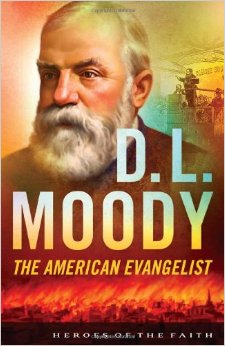
 ‘Ever hear of Edward Kimball? I hadn’t—until recently. Edward once introduced a young shoe salesman to Jesus. That salesman grew in faith by leaps and bounds, and strongly desired that others know the One who changed his life so dramatically. The salsman’s name: Dwight L. Moody—evangelist extraordinaire and founder of Moody Bible Institute.


51onpscfGYL._SY344_BO1,204,203,200_


By comparison to Moody’s stellar accomplishments and resulting fame within the Christian community, Mr. Kimball seems a nobody. But the ripple effect that still reaches around the world today through Moody (2) can be traced back to Kimball.

Most of us will never know the ripple effect emanating from our lives until we reach heaven. It’s probably just as well. What we don’t know can’t go to our heads.


4.  True success is not financial security, great respect from throngs of people, or high rank in the public arena.  “True success is growing intimacy with God” (3). 

My eyes are often distracted by the wrong prize.


Big Stones in Sand Hills of Samaria, Israel, Retro Effect

(“Our greatest fear should not be of  failure

but of succeeding at something

that doesn’t really matter.”

–D. L. Moody)


Failure is actually a blessing. God uses it to:

  • a) foster spiritual growth,
  • b) accomplish his purpose,
  • c) guide us into greater intimacy with him, and
  • d) redirect our focus.

Oh, God, help me to embrace failure and the blessed lessons it brings!


Notes:

(1) Information about Madeleine L’Engle from http://www.neh.gov.

(2) Thousands of graduates from Moody Bible Institute have served God as pastors, missionaries, and more over the 130 years since its founding in 1886. Millions more have been impacted by Moody Radio and Moody Publishing.

(3) J. I. Packer, Knowing God, 1973, p. 314.


Art & photo credits:  www.savannahnow.com; http://www.wikipedia.org; http://www.pinterest.com; http://www.azquotes.com; http://www.likesuccess.com; http://www.quotesgram.com.


Read Full Post »

Staff Sgt. Jacob DeShazer, a member of the famed Doolittle Raiders, was the bombardier of Crew No.16, the last of the 16 B-25 Mitchell bombers to launch from the USS Hornet April 18, 1942, on the famous bombing run over Tokyo. Sergeant DeShazer, 95, died March 15. (U.S. Air Force photo)

Jake DeShazer sat on a narrow bench facing the back wall of his cell, a position he was forced to keep hour after hour, day after day, as his imprisonment dragged on.

The year was 1945. DeShazer had been a prisoner of war in Japan for forty long months, enduring suffocating heat in summer, bitter cold in winter, solitary confinement, near-starvation, cruel treatment, and torture.

As he sat, perhaps Jake thought of his comrades among the eighty flyers of Dolittle’s Raiders, the bombing run over Japan that helped turn the tide of the war in favor of the Allies in 1942.

DeShazerTakeOffFinal_md

But DeShazer’s plane was among those shot down, its crew members captured. How many of the original eighty had survived? Jake had no way of knowing, except for the few in his own cell block.

During those long, solitary hours, perhaps Jake reviewed the encouragements from scripture he had learned and the verses he’d memorized when–for three short weeks–he was allowed to have a Bible. What a change had taken place in his heart.

Prior to his captivity, Jake had no interest in Christianity. But the cruel treatment from his captors month after month nearly drove him crazy. Hatred consumed him. He remembered that Christianity supposedly changed hatred into brotherly love. Was that really possible?

He had begged for that Bible, but it was a long time coming. When the emperor of Japan told prison guards to treat their captives better, DeShazer’s request was finally honored. And as a result of studying the scriptures, he put his faith in Jesus. Bitter hatred for the Japanese transformed into loving pity.

As Jake’s thoughts focused on his captors, he may have prayed again the words from scripture that first melted his heart: “Father, forgive them, for they know not what they do” (Luke 23:34). Perhaps DeShazer reaffirmed what God’s Spirit had revealed to him earlier: His captors knew nothing of a Savior.  Without Jesus it was only natural for them to be cruel.

And so, as he lifted up loved ones and fellow soldiers, as he expressed his longing for the war to end, Jake also prayed for his captors to know Christ.

Finally, on August 10, 1945  the emperor of Japan surrendered to the Allied forces, following the atomic bombings of Hiroshima and Nagasaki.

The horror was finally over; DeShazer and thousands of other soldiers returned home to pick up the pieces of their lives.

Jake chose to pursue a degree at Seattle Pacific University, which he accomplished in three years. By December of 1948, he and his wife, Florence, along with their first baby, were headed for the mission field, to—of all places—Japan.

Every time DeShazer met someone in his new home country and told his story, almost always the person would ask, “Why did you come back here?” And he would introduce them to Jesus.

DeShazer-with-kids-1952

(DeShazer with Japanese children, 1952)

It is estimated that some 30,000 people accepted Christ into their lives—just in the first year of Jake’s ministry in Japan. Among them, a number of former prison guards who had held Jake and his comrades captive.

Another surprising convert: Mitsuo Fuchida, the pilot who led the attack on Pearl Harbor. He “happened” to read a pamphlet Jake had written, “I Was A Prisoner of Japan.” Fuchida began to study the Bible, became a Christian, and served as a missionary himself in Asia. He and Jake eventually met and became friends.

fuchida

(DeShazer and Fuchida)

For nearly thirty years the DeShazers served God in Japan, helping to found sixteen churches throughout the country.

Someone has said:

e29eb6e78638f02633d911339071451d

(“Forgiveness does not change the past,

but it does change the future.”)

DeShazer’s story proves just how mind-boggling and miraculous that future can be.

*     *     *     *     *     *     *     *     *     *

Thank you, Father, for DeShazer’s story, proving it is possible to love our enemies, bless those who curse us, do good to those who hate us, and pray for those who persecute us (Matthew 5:44). By comparison to DeShazer’s horrific experiences, my hurts and resentments are embarrassingly puny. Yet I still need your Spirit to transform them into compassion and love. As a starting point, may I never lose sight of the totally underserved forgiveness you have lavished upon me.

You can access more of Jacob DeShazer’s story at:

(Art & photo credits:  www.verterantributes.org; http://www.worldevangelism.net; http://www.spu.edu; http://www.jacobdeshazer.com; http://www.pinterest.com.)

Read Full Post »


o-M2QbOH


Have you heard or read such statements as these?

  • Dream big! With God you can go as far as you can think or imagine.
  • Faith may not make things easy; but it does make them possible.
  • When God makes a promise he also makes a provision.

All three statements are valid IF the promises we’ve embraced coincide with God’s plan. If not, God may not be making that dream come true, or turning the unimaginable into possible, or making provision for a particular fulfillment.

That means the perfect wife or husband may not show up, the perfect job may not open up, the perfect family may not be delivered up, and the perfect ministry opportunity (in our view) may not match up with those making the choices.

What do we do when our dreams seem to be fading away like vapor?


maxresdefault


We need to remember:


  1. God is not limited to our timeframe.


We know that, right?  Sometimes God requires a waiting period before making our dreams reality. The dream will be fulfilled—but in his time.  Scripture is full of examples of those who had to wait; we’ve considered them before:  Abraham, Jacob, Joseph, David—to name a few.

Eventually their dreams came true.  Abraham became a father, Jacob was blessed with twelve sons, Joseph  became prime minister of Egypt, and David, the king of Israel.

However, we’d be wise to hold onto our dreams with a light grip, as these same four patriarchs demonstrate:

  • Abraham saw the birth of only one son of promise, not exactly the nation God foretold.
  • The full extent of blessing promised to Jacob was not fulfilled until the birth of Jesus.
  • David dreamed of erecting a temple for God, and though he collected an impressive store of materials, the privilege of building went to his son, Solomon.


SolomonTempleCropped2


Perhaps, like these Bible heroes, God has chosen to fulfill our dreams after we’re gone.

I have to decide: Will I balk at such a reality or embrace it?


  1. Maybe my heart is set on the wrong dream—even though it seems right and worthwhile.

God may desire that I set aside my Plan A and take hold of his Plan B. Oh, but that sounds like settling, doesn’t it? Not at all. God’s plan is never second best. It’s always better (Hebrews 11:39-40)!

Also important to understand: God may have chosen me to be a foundation-builder—part of the preparation process. Someone else will be the presentation. John the Baptist is a perfect example, as he prepared the way for Jesus.


john-baptist


Foundation builders serve as mentors, planners, and seed planters. Again, will I balk at such a reality or embrace it?


  1. We can be “certain of what we do not see” (Hebrews 11:1).

That includes this truth: When we do not see one promise (or more) being fulfilled, we can be certain other promises are. God is loving and good. Always. He will demonstrate his grace and compassion–no matter what.

Part of God’s goodness prompts him to foster within us: a) a deeper relationship with him (Jeremiah 33:3); b) greater obedience to his all-wise ways (Hebrews 12:7-11, 14), and c) greater spiritual strength (2 Corinthians 12:7-10). Once we begin to realize the benefit of these blessings, other desires will fade in importance.

(Note to self: When my appreciation for spiritual blessings overrides my celebration of material and circumstantial blessings, I’ll know that the maturity James talked about is taking root.)


James-1-4-Let-Patience-Have-Its-Perfect-Work-brown-copy


*     *     *     *     *     *     *     *     *     *


I praise you, oh God, for your omnipotent ability to supply, guide, sustain, change, correct, and improve–in your time, for your good purpose. Help me to rely upon your love and wisdom to choose what’s best for me, and your power to live in godly ways for your glory. That is the way to a fulfilling, satisfying life!


(Art & photo credits:  www.twitter.com; http://www.youtube.com; http://www.saltlakebiblecollege.org; http://www.pinterest.com; http://www.knowing-jesus.com.)


Read Full Post »


Joseph_and_the_Amazing_Technicolor_Dreamcoat_(3640665731)


We’ve all heard the story of Joseph (or seen the musical, Joseph and the Amazing Technicolor Dream Coat). You’ll remember he’s the one who endured years of slavery and prison before his dreams (of bowing wheat sheaves and stars paying homage) came true.

We also know about Moses, an adopted prince in Pharaoh’s household who ended up in the wilderness herding sheep.  Forty years later God called him to lead the Hebrews out of Egypt.

And we’re familiar with Paul who spent years traveling from place to place and, yes, suffering all kinds of trials—beatings, imprisonment, dangers, shipwrecks—all for the privilege of serving God, introducing people to Jesus and establishing churches.

These Biblical stories and others teach us to never give up, because we never know when God will show up to turn a prisoner into a prime minister, a shepherd into a great leader, or a Pharisee tentmaker into a world evangelist.

Then there’s Jeremiah. His is a different kind of story altogether. He was called by God to warn the inhabitants of Judah that destruction would come if they did not return to God and follow his ways. It was not a one-time message. Over a period of forty years Jeremiah spoke many times of coming doom.


4ef160f6525a2c685725524e6193fbd9


Almost no one listened. (A brief revival took place under King Josiah, but when he died, the people returned to their complacency and evil ways.)

We love the stories of Joseph, Moses, Paul, and others, whose perseverance was rewarded with success. But what about Jeremiah?

He, too, persevered through trials–poverty and deprivation, imprisonment and ill-treatment, rejection and ridicule. For what? According to the evidence (minimal results for his efforts), Jeremiah was a wretched failure. Yet he had obeyed God faithfully, endured patiently, and preached courageously.

Perhaps visible evidence is not the best way to quantify success.

Instead, the true measure of success involves our characters, not our acquisitions (Joshua 1:8).


eac79fb6c5313818bb8b68fb51b50b24


The true measure of success may include the tenacity to get up every day and face the same tasks as yesterday, to persistently make choices that further God’s objectives for each of us, and to remain steadfast even when discouraged (1 Corinthians 15:58).

Last, a true measure of success is how our choices honor God (1 Kings 2:3). Jeremiah may not have turned thousands back to Yahweh, but that was not due to his lack of effort or disobedience to God. Jeremiah doggedly preached to the people of Judah—month after month, year after year.

So the true measure of success includes: 1) pursuing godly character, 2) persevering toward God-given purpose, and 3) making choices that honor him.


Zac-Poonen-Quote-Mans-Greatest-Honor1


Today, such successful people might look like:

  • The parent who has put his career on hold to invest time in his young children.
  • the business owner who drives a twelve-year old car so he can give generously to ministries.
  • The college student slowly working her way through school, anxious to return to her inner city neighborhood and teach school

For those of us looking for that kind of success, Jeremiah is our hero.

He lived out these precepts :

  • Do our prayerful best and leave the results with God.
  • Press on–day by day, month by month, year by year if necessary. Allow such perseverance to build our trust in God and strengthen our character.
  • Persist until God tells us to stop. (How do we know we’ve reached that moment? Peace, not uncertainty, will fill our spirits.)

We may not understand what God is doing, but we know him. And he is holy love and perfect wisdom.*


Pilgrims-Rock-gods-wisdom-is-faultless-application-of-his-perfect-knowledge-300w


*Oswald Chambers, My Utmost for His Highest, p. 129.


(Art & photo credits:  www.commons.wikimedia.org; http://www.pinterest.com (2); http://www.christianquotes.info; http://www.pilgrimsrock.com.)


Read Full Post »


Digital StillCamera


My knowledge of boat parts is limited, but this much I know: throw an outboard motor in the water; it will sink. Throw a propeller in the water; it, too, will plunge to the bottom. So will seats, cleats, and other parts. But when they are assembled together on a strong hull, the boat floats.

Similarly, our lives are comprised of a variety of experiences: some heavy and hurtful, others light and joyful. When properly assembled as a whole, they create a life that floats, and one that’s headed on a course toward worthwhile purpose.

Proper assembly of negative as well as positive events requires the trait of resiliency—the ability to press on through setbacks again and again.

Do those words, press on, sound familiar? The great missionary-adventurer, Paul, said he pressed on toward the goal of becoming what God intended for him (Philippians 4:12-14).  Paul is a worthy case-study for resiliency.

Saint_Paul,_Rembrandt_van_Rijn_(and_Workshop?),_c._1657

(The apostle Paul by Rembrandt)


He suffered plenty of hurt, disappointment, and failure. For example, Paul was:

  • stoned (Acts 14:19),
  • flogged and imprisoned (Acts 16:23),
  • unjustly charged with treason (Acts 18:13),
  • nearly killed on at least several occasions (Acts 21:30-31), and
  • rejected by many, even after brilliantly preaching about God and his Son, Jesus (Acts 17:16-34).


How do you bounce back from such defeats? Researchers have identified the following ways to cultivate resiliency:


  1. Get real.

No one sails through life problem-free. Accept the reality that troubles will come, then apply those strategies that provide relief, strategies such as: exercise and proper nutrition, sufficient sleep, laughter, and meaningful activity, including acts of kindness each day.


b8a886a4d226b7c342d7be36add4f9e6


  1. Get hope.

Be watchful for God’s blessings in spite of the circumstances, and thank him for his loving attention. Gratitude does indeed transform attitudes.

Find fresh strength in God’s Word, especially in his promises and assurance of his faithfulness to keep those promises (Romans 15:4; Psalm 145:13; 1 Corinthians 1:9).

We can ask God to help us set new, worthwhile goals, then look forward to the day when those goals will be met.

Researchers have noted that resilient people do not strive for riches, fame, power, or recognition. Instead they are focused on their legacies—what contributions their lives will make to those around them.  Hope in God—in all circumstances—is in itself an invaluable legacy.


dc018940ab0edea3d3f776dc4336173f


  1. Get in community with other Christians—not just by being present, but by actively participating.

Years ago while I was dealing with an ongoing disappointment, Sunday morning worship on the praise team and mid-week rehearsals did much to recharge my spirit. (Not that all was smooth sailing in between! I still struggled to stay on an even keel; but with God’s help I didn’t stop trying.)

In addition, when we contribute hope to others through listening and encouragement, we find our own outlook much improved.


d64f6b0348399c6ab1a2db4d6da0e560


*           *          *

A boat that floats is not built by just lining up the various parts in the boatyard. It requires the hands and expertise of a master boat builder, to craft a skiff of beauty, function, and purpose.


017c661391a97e6ad96158e0211995fb


A satisfying, meaningful life cannot be achieved by mere acceptance of the various events in our lives. It requires the hands and expertise of the Master. He takes all of it—the delightful and the demoralizing—to craft a life of beauty, function, and purpose.


(The boat metaphor idea came from Ralph W. Sockman, author of The Higher Happiness (1950).


Art & photo credits:  www.inland-boats.com; http://www.slideplayer.com; http://www.wikipedia.org; http://www.pinterest.com (3).


Read Full Post »

Say the word, “blessing,” and what immediately comes to mind?

For me, it’s happy events and lovely gifts, engineered or bestowed by God out of his loving kindness.

But James, the brother of Jesus, saw a different side of blessing: “Consider it a sheer gift, friends, when tests and challenges come at you from all sides” (James 1:2, MSG, italics added).

Tests and challenges as gifts?! Sounds a bit daft—until we consider:

What-Seems-To-Us-As-Bitter-Trials-Are-Often-Blessings-In-Disguise

Take, for example…

THE CRAZY BLESSING OF WANT

Do you wish you had a bigger house? A newer car? Better furniture? Consider yourself blessed, that you’re not like King Solomon–the wealthiest person who ever lived. For all his striving to achieve and accumulate, Solomon discovered that when every desire is gratified, the end result was nothing but meaningless smoke (Ecclesiastes 1:2, MSG).

The blessing of want protects us from the pit of depression caused by self-indulgence.

The blessing of want fosters contentment, as we learn to enjoy and be grateful for what we already have.

THE CRAZY BLESSING OF DIFFICULTY

Difficulties provide a surprising number of positive opportunities. Here are ten:

  • To press in closer to God and trust him more completely.
  • To experience the adventure of God’s sufficiency (Philippians 4:13) as he enables us to endure—in ways we never thought possible.

Philippians4_13

  • To see how God will bring beauty out of ashes (Isaiah 61:3).
  • To discover more of who God is.
  • To witness the fulfillment of his never-failing promises.
  • To present a sacrifice of praise to God, beginning with the affirmation that he has our best interests at heart—in spite of what we see.
  • To be prepared for greater usefulness for God (John 15:2), which fosters greater fulfillment and satisfaction in our spirits.

46dd131cacc19b855d589b3358b83851

  • To have a compelling story to share, as encouragement for others. Years ago I heard a speaker say, “With no test there is no testimony.” In the final analysis, I’d rather have the latter. You, too?
  • To become mature, complete, not lacking anything (James 1:4). That doesn’t happen without trials.  As Thomas Carlyle wrote:

quote-no-pressure-no-diamonds-thomas-carlyle-31833

  • To love our Savior more passionately. Josif Trif, a pastor from Romania during the days of Communism, said, “If it weren’t for Communism, I would not have loved our Lord as much. I kissed the cross the Communists gave me” (1).

THE CRAZY BLESSING OF FAILURE

If failure served no purpose in our lives, God would not allow it to happen. But since he does, we can know that failure is either for our benefit or for God’s glory—often both.

Failure is the soil from which great success can grow, beginning with a crop of positive character traits, such as perseverance, humility, and greater reliance upon God.

Green-Bean-Sprouts1

Out of failure comes experience; from experience comes greater wisdom; and wisdom leads to a godly life.

“How blessed are those who are hungry and thirsty for righteousness, because it is they who will be satisfied (Matthew 5:6, ISV)!

*    *     *     *     *     *     *     *     *     *

Crazy as it sounds, I want to praise you, Father, for the blessings of challenges and tough times. Thank you for your loving attention that carries me through, transforming me and makes me a better version of myself.  I also praise you for the glorious promise that through trouble, hardship, disappointment, or pain–“overwhelming victory is ours through Christ” (Romans 8:37, NLT)!

What crazy blessing have you experienced in the crucible of trouble, hardship, disappointment, or pain?  Please join the conversation below!

(1) His Imprint, My Expression, Kay Arthur, Harvest House, 1993, p. 135.

(Art & photo credits:  www.imagesbuddy,com; http://www.wallpaper4god.com; http://www.pinterest.com; http://www.izquotes.com; http://www.pinterest.com; http://www.harvesttotable.com.)

Read Full Post »


talk_too_much


Oh, boy. Here she comes again. ‘Seems like she seeks me out every week. Lord, help me.

As Mrs. T. approached me after church, I braced myself for a lengthy, one-sided conversation. Mrs. T. loved to talk, usually about herself, her pains and struggles. As annoyance and frustration would build within me, all I could think about was how to get away without offending.

Now I realize there is a remedy for such situations.

I could have had V-8!

No, not the fortified tomato juice—the VICTORY x 8!


field of spring grass and sunset


I can win over annoyance and frustration—when faced with situations I cannot change—even those circumstances much bigger than aggravating people.

The “times eight” refers to eight ways the battle can be fought. By implementing the following actions, victory can be mine:

  1. Confession and repentance provide the best place to begin. Lord, my attitude toward Mrs. T is negative and unloving; bitterness and self-pity have taken root. Help me to abandon those roots so they shrivel up and die.
  1. Forgiveness.  You, oh God, have forgiven me of so much; how dare I withhold forgiveness from Mrs. T? Help me to remember that forgiveness is not a feeling; it’s a commitment to lay aside the offense—as many times as necessary.
  1. Prayer for the person(s). Father, my first inclination is to pray you reveal to Mrs. T. how annoying her self-centered chatter can be! But your wisdom dictates I pray blessing upon her (Luke 6:28). Ease the distresses and frustrations in her.  Show me how I can help, beyond providing a listening ear.


d520ea38daca324cb2f460f1ce679ee6


  1. Thought Control. Those resentful, self-pitying thoughts in my mind want front-and-center attention, Lord. Turn my focus instead to gratitude. Thank you for the privilege of being your ears and perhaps your voice for Mrs. T.  
  1. Attitude Adjustment. Oh God, help me keep a proper perspective. On a “Scale of Measurement for Difficulties in Life”, Mrs. T rates only a 1 or 2. Forgive me for allowing such a small annoyance to steal my joy.
  1. Affirmation of God’s sovereignty and attributes. It is well within your power to redeem this situation, Lord. Help me to embrace the fact you may have a different plan– that redemptive change take place within me rather than in the situation. May I avail myself of your strength, determination, and wisdom for that change.
  1. Expectation. As Mrs. T. approaches, Father, remind me that you are working for my good and hers. My good undoubtedly includes growing the fruit of the Spirit. But it’s also possible you have planned an additional positive outcome that will surprise and delight—at the proper time.


b970a1bf7167a0962eeebd02bb23cda4

  1. Perseverance.  Thank you for that glorious promise in James 1:4–that perseverance in faith principles produces maturity and sound character. Thank you for the joy and peace that results—so much more satisfying that allowing frustration to fester!


9a2544d9327a7da1f434c3cfa2c08232


Since those days of listening to Mrs. T, have I always applied V-8 to difficult situations? No. Annoyance, bitterness, and a host of other negative emotions can still crop up as challenges arise. This post was much more for me than anyone else.

When the next problem occurs and I feel weak to handle it, I’m serving up some V-8!


(Art & photo credits:  www.quotes.gram.com; http://www.faithmessenger.com; http://www.pinterest.com; http://www.indulgy.com; http://www.pinterest.com.)


Read Full Post »

What might have been uppermost in Jesus’ mind the morning after his triumphal entry into Jerusalem? Surely his thoughts were already swirling around the inevitable suffering just days away.   Perhaps the emotional anguish that peaked in the Garden of Gethsemane (Luke 22:39-44) was already starting to build.

How did he maintain the presence of mind to continue teaching his disciples and the crowds, telling parables, and answering the religious leaders’ trick questions?


Scene 07/53 Exterior Galilee Riverside; Jesus (DIOGO MORCALDO) is going to die and tells Peter (DARWIN SHAW) and the other disciples this not the end.


Then, as the Last Supper, Judas’ betrayal, and the horrors of the crucifixion took place, how did he endure, much less maintain his calm and resolute demeanor?

The writer to the Hebrews reveals at least part of the answer: Jesus kept his focus on “the joy set before him” (12:2).

What might that joy have included?

  • Returning to heaven. No doubt he could vividly see in his mind the splendor and bliss of his home that he’d given up some thirty-three years before.
  • Returning to his Father. Jesus looked forward to being glorified with God, reveling in the glory he had enjoyed with the Father before the world began (John 17:5).


26765


  • Commanding angels, authorities and powers subjected to him (1 Peter 3:22). This privilege was not a self-aggrandizing end in itself. It was a means of aiding and rescuing his people–us (Acts 5:31).
  • Becoming our mediator and saving us from the natural consequence of our sin: eternal death (Hebrews 7:25).
  • Offering glory to God for the work he had faithfully and perfectly completed on earth (John 17:4).

These joys were set before Jesus. They provided sublime assurance of what was to come.

These joys helped to sustain him through horrific agony—agony that was swallowed up in anticipated and certain victory (1 Corinthians 15:54).


ac7e84ccd3f21b2fff7bc9c1293097e7


We, too, can fix our attention on the joy set before us. And just what do we have to look forward to?

  • Discovering heaven as our splendorous, blissful home.
  • Residing in the realm of our perfect Heavenly Father, the King of the universe.
  • Ruling with Jesus, at the right hand of God, as joint heirs of the kingdom (Romans 8:17, Revelation 20:6).
  • Offering glory and honor to the Lord (Revelation 4:11). I imagine a grand choir made up of all of us–millions of voices, singing heart-stirring melodies with intricate harmonies.  I see our arms raised toward the throne, reaching out in holy reverence toward our awesome King.

Years ago, a talented singer named Helen Lemmel (1863-1961) enjoyed the fulfilling life of a concert soloist, sharing her faith through song in many churches throughout the Midwest. For a number of years Helen ministered with evangelist, Billy Sunday, singing and song-writing for his crusades. (She composed over 500 poems and hymns in her lifetime.)

Suddenly in midlife Helen began to go blind, her husband left her, and other heartaches enveloped her as well. Through it all, however, the singer/composer maintained her faith and joy—all ninety-seven years of her life.

One of her best-known songs, perhaps, is “Turn Your Eyes Upon Jesus” (1918), written in the midst of her trials. You might recognize the chorus:


slide_31


(“Turn your eyes upon Jesus,

Look full in His wonderful face,

And the things of earth will grow strangely dim

In the light of His glory and grace.”)


Peace, determination, and strength result from focus—focus that’s riveted on Jesus and the joy set before us.


(Photo credits:  www.truthforfree.com; http://www.biblepic.com; http://www.pinterest.com; http://www.slideplayer.com.)

Read Full Post »

« Newer Posts - Older Posts »

Sylvia Schroeder

Impressions Becoming Expressions

Mitch Teemley

The Power of Story

Still Traveling

Impressions Becoming Expressions

Living Our Days

Gaining a heart of wisdom

He Said What?!

I'm Patty, and my husband and I are living with our adult son who has autism and epilepsy. I love sharing lessons learned from life around me, especially life with Aaron.

Meditations of my Heart

Impressions Becoming Expressions

Linda Stoll

Impressions Becoming Expressions

Signora Sheila

Where faith meets la dolce vita

Heidi Viars

Finding the Image of God