Feeds:
Posts
Comments

Archive for the ‘Seeking God’ Category

Depressed young woman


“I don’t understand why this is happening,” Kelly cried. “Doesn’t God want me to be happy?”

*     *     *

“I’m not sure what God is doing, but business is bound to pick up soon,” Dave asserted. “I’m working harder than ever—like seventy hours a week. God helps those who help themselves, right?”

*     *     *

“I thought I was where God wanted me to be, but that loser job was not a good fit—such boring work and for such a lousy salary,” moaned Erika. “I just had to quit! But I’ll be OK. God loves me; he’ll take care of me.”

*     *     *

Ever hear comments similar to these? Each one represents a misunderstanding about God. The truth is:

  • God’s primary concern is our welfare, not necessarily our happiness (Philippians 4:19). The two are not synonymous.
  • God has not promised to help those who help themselves. That proverb is not in the Bible.
  • Neither has God promised to take care of us if we live irresponsibly (2 Thessalonians 3:10).

So, I’m sorry, Kelly, Dave, and Erika. Somewhere along the way you’ve heard these ideas about God’s ways which were misrepresented as truth.

But how can we know the truth of how God works in our lives? (They might ask!)

By becoming better acquainted with God’s Word. Within its pages we find such wonders as perfect wisdom, inspiring encouragement, hope-giving promises, and practical instruction.

For example:

Kelly, God loves you too much to grant everything you want. Over-indulgence leads to spoiled children. Discipline demonstrates true love; permissiveness demonstrates foolishness. Sometimes God exercises tough love in order to develop our characters, grow our faith, and prepare us to serve him in greater capacities.


no-pain-no-gain

(“The Lord disciplines those he loves”–Hebrews 12:6a).

Dave, God is compassionate and good to his people (Psalm 103:4-5). He has promised to be our help, but it has nothing to do with our effort prompting him to come alongside. It’s the person who trusts in God wholeheartedly and follows his ways who may anticipate divine help:

“You who fear him, trust in the Lord—

he is their help and shield.”

–Psalm 115:11

and…


16072

(“May your hand be ready to help me, for I have chosen your precepts” –Psalm 119:173.)


Erika, God certainly does care for you (1 Peter 5:7), but he does not condone irresponsibility. A wise course of action would include prayerful assessment of the current job as well as other possibilities, while asking God for his guidance. Meanwhile:

“Do your best.

Work from the heart for your real Master, for God,

confident that you’ll get paid in full

when you come into your inheritance.

Keep in mind always that

the ultimate Master you’re serving is Christ.”

–Colossians 3:22-24 (The Message)

To all of us: When our corner of the world is rocked by challenges and disappointment, our best strategy is to turn to God’s Word. We can steady ourselves with the truth about his character and his ways, even experience joy and peace as those truths soak deep into our hearts (Psalm 119:35, 165).

“It is only when we understand who God is

that we begin to understand what he does.”

– Selwyn Hughes

*     *     *     *     *     *     *     *     *   *

Thank you, Father, for the precious gift of your Word, for the way it continues to minister afresh, day by day, year after year, with reliable truth and uplifting encouragement. As if that wasn’t enough, you reveal yourself through its pages, allowing us to know you, the King of the universe. Open my eyes that I may see even more wonderful things in your Word (Psalm 119:18)!

b4015e676ff0bec5726ece111fd8d5ee

(Art & photo credits:  www.med-health.net; http://www.kristamcgeebooks.com; http://www.biblepic.com; http://www.pinterest.com.)


Read Full Post »

portrait_bf

Benjamin Franklin was the thirteenth child of a humble soap-and-candle maker. Obviously, no family fortune provided him easy success in life. Neither did a stellar performance in school that would lead to scholarships. His formal education lasted all of two years, from ages eight to ten. Yet Ben became:

  • a respected publisher
  • the country’s first millionaire
  • a world-famous scientist
  • an influential voice as the thirteen colonies fought for independence and established a nation
  • a distinguished diplomat in Europe

No wonder Franklin was proclaimed a self-made man. But there are other factors, outside his control, that contributed to his success, including:

INTELLIGENCE

His varied accomplishments as writer, statesman, and diplomat prove his sharp intellect.

CHARACTER

Ben was  curious and skeptical–useful attributes for a scientist. His astuteness, sense of humor, and ability to communicate served him well as publisher of Poor Richard’s Almanac. And all of these traits came into play when Franklin participated in the forming of our nation.

Writing_the_Declaration_of_Independence_1776_cph.3g09904

TEMPERAMENT

Surely Ben was an energetic and passionate individual. He was always in pursuit of something—things like:

  • Solving problems. Numerous inventions credited to Franklin grew out of need. For example, his desire to create more heat in his home led to his invention of the wood stove.
  • Acquiring new knowledge. Ben attempted his well-known key-and-kite experiment because of his curiosity about lightning.
  • Improving the lives of his fellow colonists. Franklin wrote, met with other delegates, sought the help of France, and more, in America’s struggle to gain independence from England. In 1789, at age 84, he was still writing and working. His cause? The abolition of slavery in America.

OPPORTUNITY

Franklin was often in the right place at the right time. One example: through his connections in the publishing industry of Philadelphia, Ben secured a contract to print the colony’s paper money.

Seems that Ben’s success had much to do with factors outside his control. These elements just mentioned–intelligence, character, temperament, and opportunity–came from God. In fact, for all of us, “Our sufficiency is from God” (2 Corinthians 3:5).

28847

In reality, the idea of a self-made man/woman is myth. No one is truly self-sufficient.

On the other hand, God has ordained work and effort. From beginning to end, scripture proclaims the value of industry. In Genesis 2:15 we see God placing Adam in the Garden of Eden to tend and keep it. In 2 Thessalonians 3:10, Paul says, “If a man will not work, he shall not eat.”

So how do we balance working with our God-given abilities and depending on God?

  1. Pray.  Thank God for the gifts he has given us.  Then prayerfully seek to determine what God is doing and cooperate with him. If we are earnest in this desire, he’ll make each step clear. As seminary professor, Howard Hendricks, used to say: God does not play hide-and-seek in the trees with his will.
  1. Nourish.  The effectiveness of our giftedness requires preparation and inspiration. Preparation includes study and practical experience. (Even a talented pianist must take lessons and practice.) Preparation includes nourishing the spirit, too, with study of scripture and practical experience of worship and service. Inspiration comes from the Holy Spirit as he works within us.
  1. Embrace.   Embrace the teaching of wise, godly leaders. Embrace the help of others. Keep in mind that self-sufficiency is not a praiseworthy quality; it’s a form of pride. The person who thinks he knows everything and needs no input, or who is too proud to ask for help, is someone to be pitied, not celebrated.

As dependents upon God, we are meant to work. As workers, we are meant to be dependent upon God.

And…

13498c445c1e1c4e8f0c84056a33f287

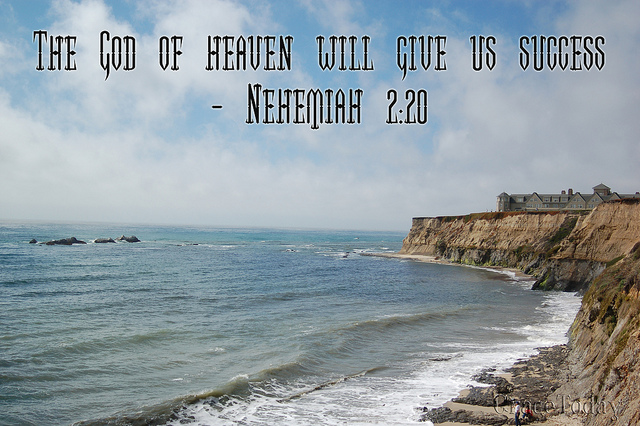
(“The God of heaven will give us success”–Nehemiah 2:20)

*     *     *     *     *     *     *     *     *     *

I praise you, Father, for being my all-sufficient God, Someone I can trust completely for guidance, direction, and training. Help me find that balance between working for you and depending on you. May I not neglect preparation, but also look to you for inspiration.  And may I be a humble, grateful recipient of help.  Amen.  

Read Full Post »

Christmas is a season of lights.

Candles glow and twinkling lights glimmer from houses, buildings, and trees.

People love all the flickering and shimmering!  Some spend weeks decorating their yards and rooftops in spectacles of light.  If you asked them why, they might be hard-pressed to express more than, “They’re beautiful, that’s all.”


But perhaps it’s more than just aesthetics.  Perhaps it’s a heart-response.

Light is symbolic for:

  • Beauty.  Light grabs our attention, whether it’s  soft and luminous, or sparkling and dazzling. It can also be refracted into a glorious spectrum of colors.
  • Safety.  Where there is light, we can see our surroundings.
  • Comfort.  A nightlight offers just that for many a child who is afraid of the dark.
  • Hope.  Light gleams triumphantly over the darkness, at the end of a tunnel.
  • Guidance.  Light illuminates the way.

Might it be that people are drawn to the lights of Christmas because the human spirit is drawn to the Light?

Jesus said, “I am the Light of the world (John 8:12).  He is Light because God the Father is Light (1 John 1:5).

And the Light of God the Father and God the Son is not merely symbolic.

God the Son is safety, because he offers eternal life.  “My sheep listen to my voice; I know them and they follow me.  I give them eternal life, and they shall never perish; no one can snatch them out of my hand.” (John 10:28-29).

God the Father is comfort, because he is loving and compassionate.  “Praise be to the God and Father of our Lord Jesus Christ, the Father of compassion and the God of all comfort, who comforts us in all our troubles” (2 Corinthians 1:3-4a).

God the Son is hope, because of his resurrection.  He was raised from the dead, and we will be also.  “In his great mercy [God] has given us new birth into a living hope through the resurrection of Jesus Christ from the dead, and into an inheritance that can never perish, spoil or fade—kept in heaven for you” (1 Peter 1:3b-4).

God the Father is beauty, because of all his glorious attributes.  “I’m asking God for one thing…To live with him in his house my whole life long.  I’ll contemplate his beauty; I’ll study at his feet” (Psalm 27:4, The Message).

God the Father is guidance.  “He will guide you always” (Isaiah 58:11a).

Christmas lights cast a soft glow; spotlights illuminate large areas.  But Jesus said, “I am the Light of the World.”   To every person in every corner, he offers his Light.

Let’s make time to linger in his dazzling Light this season!

“Blessed are those…who walk in the light of your presence, O Lord” (Psalm 89:15)!

(photo and art credits:  www.onebestwall.com, http://www.moyerlawncare.com, http://www.8thfire.net, http://www.naturewatcher.wordpress.com)

Read Full Post »

Think of the last time you . . .

. . . gazed in wonder at a blazing sunset,

. . . marveled at the heavenly aroma of lilacs or orange blossoms, or

. . . listened to a melody that brought tears to your eyes.

God has equipped us with amazing physical senses, enabling us to experience and enjoy the display of his creative genius.

But physical manifestations are not his only outlet of expression.  God also revels in displaying his fullness in our hearts.  The question is:  how do we become aware of such revelations in the abstract realm of our spirits?

A.W. Tozer presents a possibility in his classic, The Pursuit of God.  He suggests we use the senses of our hearts.

The Bible gives us glimpses of how these internal senses might work.

1.  TASTE

David urges us to “taste and see that the Lord is good (Psalm 34:8).  That verse reminds me of a father urging his child to try a bite of some new food.  “Try it—you’ll like it!” he says.

As Christians, we can “try” God—offer him a prayer, believe in a promise, trust in his love and care.  He will not ignore such efforts!  When we come near to God, he will come near to us (James 4:7).

2.  SMELL

Although Psalm 45 was written as a wedding song, perhaps for King Solomon, it also has prophetic qualities, looking forward to the day when Christ and his bride, the church, will be united forever.  Verse 8 mentions the groom’s fragrant robes:

“All your robes are fragrant with myrrh and aloes and cassia,” wrote the psalmist.

Think of a favorite candle with a delightful aroma.  Do you light it and then leave it?  No, more than likely you place that candle in close proximity, so you can breathe in deeply the lovely fragrance and relish the pleasure.

We can draw near to God and relish the pleasure of his presence—the fragrance of his peace, joy, and comfort.

3.  HEARING

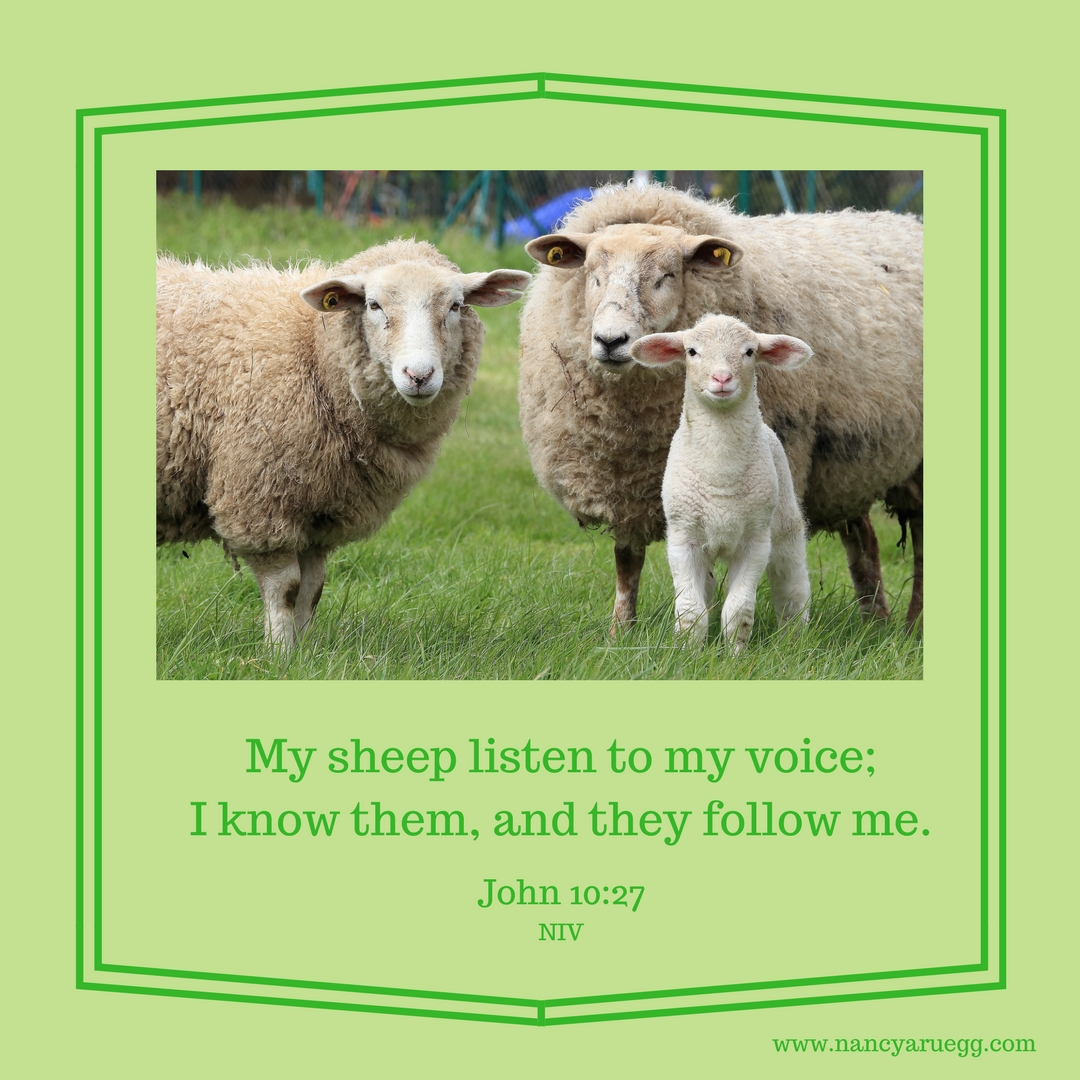
Jesus said, “My sheep listen to my voice; I know them, and they follow me” (John 10:27).

His voice represents wisdom, guidance, encouragement, and security.  Our primary source for those benefits?  The Bible.  But God also speaks to his children in other ways:  through creation, other people, events, even inner impressions.

Times of stillness are necessary.  If every moment is filled with chatter, we will not be able to hear God.

4.  TOUCH

Talk to those who have sought God during a crisis and without exception they will attest to sensing God’s presence with them.  For me, it’s like a holy heart-hug, infusing me with peace of mind and strength of heart.  Not that I am impervious to hurt or discouragement, but the touch of God provides respite and hope.

How?  Through praise and worship, especially as I meditate in the psalms.

5.  SIGHT

“Blessed are the pure in heart, for they will see God” (Matthew 5:8).

The verb tense used here is called “future continuous.”  The verse could read:  “They shall be continually seeing God for themselves.”

I’m reminded of a time Steve and I visited friends at their new home.  We turned off a familiar busy street and were almost immediately surrounded by tall trees.  The homes were set back from the road, barely visible.  The neighborhood was a bit of country set down in the middle of our metropolis.


“Who knew this area even existed?” I said to Steve.  He agreed.

We had both passed that street numerous times, but never saw it.

Isn’t that how it is with God?  We’re so busy, dashing from one task to the next, we never see God at work around us.  We aren’t looking for him so we miss him.

But!  When we are attentive for evidence of God’s presence and power, we will see him!

“When the habit of inwardly gazing Godward 

becomes fixed within us,

we shall be ushered onto

a new level of spiritual life.”

– A.W. Tozer

*     *     *     *     *     *     *     *     *     *

Thank you, loving Father, that you do expand my understanding as I seek to know you more and strive to comprehend more fully the greatness of your glory.  Teach me to use the five senses of my heart to accomplish those goals.  With great anticipation, I look forward to the new levels of spiritual life to which you will guide me!    

(Photo credits:  www.flickr.com (2); www.roshchodeshnewmoon; http://www.canva.com http://www.pixabay.com; www.flickr.com.)

Read Full Post »


Seeking after God.  It’s a concept we come across frequently in scripture.  But God is Spirit; he’s invisible to us.  How do we seek after someone we can’t see?

Perhaps we can answer that question by considering the ways we seek a person, who can be seen.

Example #1:

When my husband, Steve, and I are separated in a crowd, it’s quite amazing how quickly I can spot him.  Beyond height, hair, and eye color, I know the breadth of his shoulders, the way the hair grows on the back of his head, the shape of his ears.  In fact, it’s such nuances as these that draw my attention, even more than the descriptors listed on his driver’s license.

Perhaps our first step in seeking God is to get to know what he looks like, although not his physical Being, since he’s chosen not to reveal himself that way.  But as we read his Word, the Bible, we become familiar with who he is.  Through frequent, thoughtful study—not occasional reading—we learn about his character and his ways.  One guiding question can train us to seek God as we study:  What does this passage teach me about God?

Example #2:

Sometimes I find Steve in a crowd when I hear his voice or the timbre of his laugh.

Step two in seeking God:  We can listen carefully for his voice, although he rarely chooses to speak audibly.  More often he communicates his wisdom and encouragement to us through the Bible, and the voices of wise and mature Christians—spoken and written.

God also speaks directly into our spirits, so we must cultivate the habit of listening carefully for strong but silent impressions.  We can ask God to make clear if those thoughts are indeed from him.  He will affirm.

Example #3:

I know Steve’s signature.  Give me a sheaf of papers with Steve’s name written by different people, and his distinctive style will stand out from the others.

Step three in seeking God:  Look for his distinctive signature of wisdom and power in his people and in God-incidents.

Even in creation, “God’s invisible qualities—his eternal power and divine nature—have been clearly seen, being understood from what has been made” (Romans 1:19).


Take note of the slow loops of a circling hawk, the graceful curve of a flower stem, the straight, tall sentries of a pine forest.  Pay attention to the perfect oval of a ladybug, the teardrop shape of  a milkweed seed, or the mounds of clouds in a summer sky.  You’ll soon find that God loves variety, pattern, organization, beauty, intricacy, and color.  Your heart will begin to respond with wonder and praise for your magnificent, powerful God.

Example #4:

Steve doesn’t even have to be with me, and my thoughts will turn to him.  A song, a phrase, a person who reminds me of someone from our past, and I think, “Oh, Steve would like this,” or, “I’ll bet Steve would agree he looks just like So-and-So.”

Just looking down at my new Mother’s Day watch, and I’m reminded of my thoughtful, generous husband.

Step four in seeking God:  As we get to know God through the Bible, as we learn to hear his voice, as we see his signature everywhere, we find our thoughts turning to him throughout the day.  A song may urge a response of praise.  A phrase might prompt a prayer, a person’s gracious kindness causes us to reflect upon his character shining through that individual.

And every blessing should result in gratitude.

Seeking God is an ongoing, progressional process.  Awareness of his presence grows slowly yet continually.  Perhaps God planned it that way so we always have more delights to discover about our Heavenly Father until we do see him face to face.


Seeking after God can begin with a simple prayer:  God, I want to know you more intimately,  to sense your presence  even though I can’t physically see you.  And I want you to be an integral part of my life and thoughts.  Nothing could be more satisfying than a close relationship with you.  This is what I seek.

That’s my prayer.  Will you seek God with me?  What steps have helped you to seek after God?

(Art & photo credits:  www.experienceproject.com; http://www.luddite1811.blogspot.com; http://www.revelife.com; http://www.finartamerica.com;  www.hullquist.com.)

Read Full Post »

« Newer Posts

Sylvia Schroeder

Impressions Becoming Expressions

Mitch Teemley

The Power of Story

Still Traveling

Impressions Becoming Expressions

Living Our Days

Gaining a heart of wisdom

He Said What?!

I'm Patty, and my husband and I are living with our adult son who has autism and epilepsy. I love sharing lessons learned from life around me, especially life with Aaron.

Meditations of my Heart

Impressions Becoming Expressions

Linda Stoll

Impressions Becoming Expressions

Signora Sheila

Dove la fede incontra "slow living"

Heidi Viars

Finding the Image of God