Feeds:
Posts
Comments

Promises Kept


Oh, no. Where’s the cream? A thorough search of the fridge had just revealed an inconvenient truth. I’d forgotten to purchase the whipping cream.

With dinner guests arriving in a few hours, and three little ones underfoot, I dreaded the thought of packing everybody into the car to purchase one item at the grocery store. Besides, the to-do list still included many tasks. What’s a woman to do?

Call her husband.

“I’m so sorry to bother you, but could you stop at the store on your way home from the office and pick up some whipping cream? I need it for tonight’s dessert, and somehow came home without it yesterday.”

“Sure, I can do that,” he replied. “No problem.”

Two hours later Steve walked in the door, cream in hand.

I knew I could count on him; he’d proven himself trustworthy countless times before. (Even if he’d forgotten, Steve would have gone back to the store and made good on his promise.)

So why is it, when God says, “What I have said, that I will bring about; what I have planned, that I will do” (Isaiah 46:11b), my response is sometimes doubt?


Of course, the promises I ask God to fulfill usually require more than two hours of wait time. It’s in the long siege on pause I begin to wonder: Maybe this promise that seemed so perfect for my situation isn’t really for me after all (1).

Have such thoughts occurred to you also?

Here’s what I’m trying to remember: If I trust Steve, based on promises he’s kept in the past, how much more should I take God at his word?


In addition, he is perfect in all his ways, loving and compassionate, abundantly good and righteous (2).  Our faith in God’s promises can remain firm because:


So as I wait for fulfillment, I can remember: out of the several thousand promises in scripture, he has already kept many of them in specific, personal ways.

He’s done the same for you too.

It would be impractical to make a list here of all those Bible promises, checking them off one by one as we remember occasions when each was fulfilled. But what if we identify categories, and check off those? Categories such as:

  • Salvation and the gift of eternal life (John 6:40)
  • A relationship with God Almighty and his continual presence (Revelation 3:20; Psalm 145:18)
  • Forgiveness (1 John 1:9)
  • Emotional stability (Psalm 27:1), peace ((Isaiah 26:3), and joy (John 15:11)


  • Protection (Psalm 32:7)
  • Provision (Philippians 4:19)
  • Guidance (Isaiah 58:11)
  • Satisfaction in life (John 10:10)


  • Help (Psalm 46:1)
  • Answered prayer (1 John 5:14-15)
  • Blessings (Psalm 84:11-12)


No doubt all of us can name events when such promises have been fulfilled—the day we said yes to Jesus, the times we experienced an unearthly reassurance of God’s presence, or received miraculous provision, enjoyed divine contentment, felt his inexplicable peace, and more.

In remembering we foster the courage to persevere and the faith to hope with confident expectation.

So what event, what answer to prayer are you hoping for today? Can you identify an appropriate promise? The scriptures above offer a place to start. And then let’s pray our promises.


For example:

I praise You, O God, for your promise of protection from trouble. Not that I expect to never experience difficulty, but I can count on You to guard me as we pass through it.

 As long as the trouble may last, you will be with me, to shelter me in your comfort and be my helper through the challenge. Never will you abandon me; I am secure in you.

I look forward, Father, to every statement here coming to fruition, because you have said it. My heart is steadfast, trusting in you.


(Psalm 32:7; James 1:2-4; Psalm 23:4; 9:9; 34:19;

Hebrews 13:6; Proverbs 14:26, Psalm 112:7)


What is a favorite scripture promise you turn to again and again?  Please share in the comment section below!


Notes:

  1. Sometimes there are good reasons why promises are not fulfilled.  See “Unfulfilled Promises” for several possibilities.
  2. Psalm 18:30; Psalm 103:4; Psalm 145:7, 17


Art & photo credits:  http://www.flickr.com; http://www.canva.com; Nancy Ruegg; http://www.canva.com (3); http://www.needpix.com; http://www.canva.com.


And just what might that decision be?

A. Your food choices to stay healthy and energized?

B. The tasks you’ll complete to use your time wisely?

C. The attitudes you’ll adopt to influence your emotions?

Author/pastor Charles Swindoll chose C: “I believe the single most significant decision I can make on a day-to-day basis is my choice of attitude” (1).

Now why would that be? “Attitude is that ‘single string’ that keeps me going or cripples my progress,” he added.

Zig Ziglar explained the impact of attitude this way:

Science actually supports such statements.

According to an article in the British Medical Journal, “There is not a tissue or an organ in the body that is not influenced by the attitude of the mind and spirit” (2).

So the question becomes, how do we foster a positive attitude when circumstances conspire against us, or our days are a treadmill of monotonous routine, or we’re just glass-half-empty-kind-of-people by genetics?

The fact is, it’s still a matter of choice. And that choice alone wields great effect because:

“The inward impacts the outward” (3).

This principle is even evident in nature. Did you know that the color of silk can be altered depending on what is fed to the silkworms? Red dye in their food results in pink silk. Even the worms turn pink.

What we feed our minds and spirits colors our attitudes. We can choose to feast on the delights of God’s grace—his love, provision, promises, and blessings—or we can gorge ourselves on pig slop—disappointments, hurts, injustice, and the failures of others.

The Apostle Paul provided the perfect example while imprisoned in Rome. He never referred to himself as prisoner of Festus or Caesar or a victim of the Sanhedrin’s unjust treatment. He called himself a prisoner of the Lord (Ephesians 4:1), and saw his detainment as helping to spread the good news about Jesus (Philippians 1:12).

Paul also told his readers to pattern their lives after his (3:17). Years ago I wrote Wow! next to that verse in my Bible. Such a claim. But the book of Acts provides the evidence of his selflessness, integrity, and passion for Christ.

So when he wrote to the Philippian Christians from prison to rejoice in the Lord always (4:4), we can be sure he was choosing the same habit. When he recommended they focus on what’s excellent and praiseworthy (4:8), it’s a given that’s what he was doing too.

And now neuroscience has proven what God inspired Paul to write centuries ago: think positive thoughts and the brain will produce serotonin, which creates a sense of well being and helps the brain function at is best.

Think on negative thoughts and the brain produces cortisol, diminishing brain function and even causing depression (4).

https://www.azquotes.com/quote/662828

But controlling our thoughts is not easy.  Here are several strategies I’ve found to be helpful:

1. Keep in God’s Word.

We’ve considered this important step before (5); it’s number one for a reason.

2. Keep coming back to the center.

Ever play tennis or watch it on TV? After every shot a player returns to the center of the court, so he’s not caught too far afield when the ball comes back. When you find your thoughts crouched in a dark corner, come back to the Center: Jesus. Keep your mind happily occupied on all the ways He is excellent and praiseworthy.

3.  Keep a record.

We can train ourselves to see God all around us as we keep a journal of God’s faithfulness. I began mine in 1983, in response to a Bible study (6), and now there are over 1300 entries. Just the weight of that notebook encourages my spirit.

How about a gratitude journal, to record at least one thing every day for which you’re thankful? I didn’t start that one until three years ago. It’s a delightful exercise to review God’s gifts of the day and choose one to highlight (7). It’s also fun—and spirit lifting—to look back and remember previous gifts.

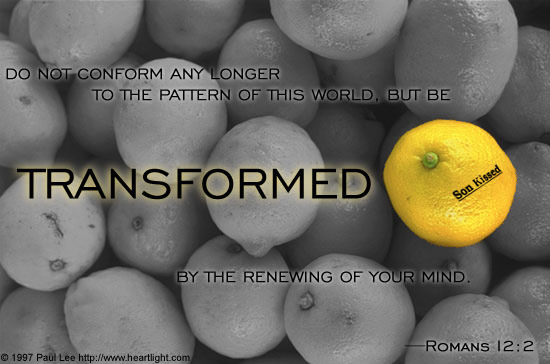
Slowly but surely, the most amazing thing happens. Our joy begins to expand and we start to become transformed into our best selves—with an increased ability to live freely and enjoy God’s presence—just by choosing a better attitude through the way we think (Romans 12:2 NLT).

Notes:

  1. Strengthening Your Grip, p. 207
  2. Quoted by Selwyn Hughes in Every Day Light, p. 132.
  3. Charles Spurgeon, Morning by Morning, p. 335.
  4. https://www.psychologytoday.com/us/blog/prime-your-gray-cells/201108/happy-brain-happy-life
  5. https://nancyaruegg.com/2018/08/23/perfect-trouble/
  6. See  https://nancyaruegg.com/2012/11/12/proving-gods-presence/   for the full story.
  7. The post that started my gratitude journal: https://nancyaruegg.com/2017/03/30/eating-live-frogs-and-other-blessings/

Art & photo credits:  http://www.publicdomainpictures.net; http://www.canva.com; http://www.wallpaperflare.com; http://www.pixabay.com; http://www.heartlight.org; http://www.azquotes.com; http://www.canva.com; http://www.pickpik.com; http://www.heartlight.org.

Certain Glory


Shakespeare was right when he wrote about “the uncertain glory of an April day.”*  A balmy afternoon this time of year can quickly turn rainy and cold, right?

However.  There is certain glory–even on the dreary days–if we look for it.

That’s what I attempted to do this week, and in celebration of God’s springtime glories, turned my observations into haiku.  (April is Poetry Month, you may remember.)

Following are a few samples.


Early Spring

Tall, brave daffodils

Stand amidst gathering snow.

Season-confusion.


Rainy Afternoon

A scatter of books

Takes me away from the gloom;

My corner shines bright.


(Our middle granddaughter, 2015)


Cloud Skyscapes

Pushed into mounds or

Pulled by the wind into wisps–

Never the same twice.


Trees

Stable.  Protective.

Majestic.  Strong.  Maker of

Trees is all of these.


Raindrops on Tree Branches

Sparkling spangles

Cling in a row. Beauty shouts

Praise into silence.


Young Robin

Lights on nearby perch,

Questions me with keen eye:

“And what might you be?”


Cherry and Pear Trees

On the avenue,

Dressed in pastel lace, dancers

Waltz on warm breezes.


Worship in the Woods

Newly unfurled, they

Flutter and flounce, clap and laugh.

Leaves praise their Maker.

(Isaiah 55:12)


Now it’s your turn to share in the fun.  Just compose three lines containing five, seven, and five syllables respectively.

When you’re finished, please share the results in the comment section below.


And Happy Spring, Happy Poetry Month to all!


*from The Two Gentlemen of Verona


Photo credits:  http://www.pxfuel.com; http://www.pxhere.com; http://www.rawpixel.com; Nancy Ruegg; http://www.commons.wikimedia.org; http://www.piqsels.com; http://www.pickpic.com; http://www.flickr.com; http://www.publicdomainpictures.net (2); http://www.pikrepo.com, http://www.canva.com.


Unconquerable

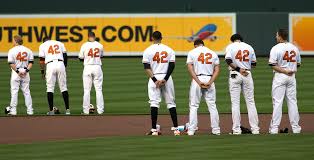
If we could gather in large crowds right now, and if our plans had included a baseball game yesterday, we would have witnessed an interesting phenomenon: every player wearing the same number—42.

Yesterday was Jackie Robinson Day, when all major league teams celebrate his first game with the Brooklyn Dodgers, April 15, 1947, wearing #42. As you may know, for the preceding seventy years, all players had been white.  Jackie Robinson was African-American.

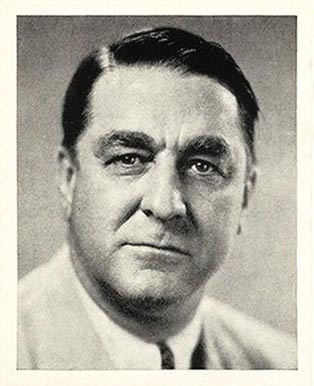
You may also know how such an opportunity opened up for Jackie, through president and general manager for the Dodgers, Branch Rickey.

But perhaps you didn’t know (because many books and films have omitted this information) both Branch Rickey and Jackie Robinson were Christian men of high integrity.

So what inspired Branch Rickey to put his faith in action by fighting against racial prejudice? It began with an incident in 1906.

Rickey coached the college baseball team at Ohio Wesleyan. When they traveled to South Bend, Indiana to play Notre Dame, his star catcher Charles Thomas, a black player, was denied lodging with the rest of the team at the Oliver Hotel.

Rickey asked if Thomas could stay in his room on a cot. With reluctance, management agreed. Later that evening when Rickey returned to their room, he found Thomas crying and rubbing his skin.

“If only I could make it white; if only I could make it white,” he sobbed.

Rickey made a vow to God that night. If he ever had a chance to combat racial prejudice, he would take it (1).

Not until 1942 did the opportunity present itself, when Rickey was hired to manage the Dodgers. The timing seemed perfect.

All races of Americans were fighting against the racist Nazi regime in Europe—even as racism continued in the States. The incongruity was obvious to anyone who considered the evidence.

Rickey spent two years contemplating the impact of integration on baseball and looking for the best candidate—a man of athletic ability and godly faith who could withstand the maelstrom of trouble sure to come.

Finally, in 1945, Rickey found Jackie. Not only could he play ball with the best of them, he was a strong Christian.

The two men met and Rickey offered Robinson a place on the team. He warned the recruit that racially motivated abuse would likely occur. “I’m looking for a ballplayer with guts enough not to fight back,” Rickey told him (2).

That meant Jackie could not retaliate. Only then might their experiment succeed, so more players of other races would be able to join major league teams. And once the color-barrier in sports was broken, perhaps change would come in business, entertainment, education, and more.

In October 1945, Branch Rickey told his friend and well-known broadcaster Lowell Thomas he was about to announce the signing of an African-American to the Dodgers.

“Branch! All H-___-___-L will break loose!” Thomas cried.

“No, Lowell,” Rickey responded, “all heaven will rejoice” (3).

Thomas’s words seemed prophetic. That first year, Jackie Robinson suffered vehement loathing—ridicule, defamation of character, death threats, and more–not just from baseball fans or opposing teams. His teammates added their own abuse with snide remarks and exclusion.

How could Jackie withstand such contempt day after day, week after week?

He prayed—on his knees—asking God for strength to resist fighting back, and Jackie trusted God to guide him and sustain him.

“I can testify to the fact it was a lot harder to turn the other cheek and refuse to fight back than it would have been to exercise a normal reaction,” he later wrote. “But it works, because sooner or later it brings a sense of shame to those who attack you. And that sense of shame is often the beginning of progress” (4).

Progress was enhanced by the support of Leo Durocher, Dodgers’ player-manager, Ed Stankey, second baseman, and PeeWee Reese, shortstop and team captain.

(PeeWee Reese)

By the next season, a few black players were hired by other teams and two more by the Dodgers. Pressure on Jackie eased.

Years later, Jackie wrote of Branch Rickey: “Others have insinuated that he is not sincere because he speaks so frequently and so emotionally about the Fatherhood of God and the brotherhood of man. It is the way of some people to make light of sincerity of this kind, because they themselves are too small to speak, think, and live big” (5).

As for Jackie, sportswriter Red Smith wrote, “[Jackie Robinson] would not be defeated. Not by the other team and not by life. The word for Jackie Robinson is ‘unconquerable’” (6).

______________________________

We too can be unconquerable in our challenges if we remember:

Jackie Robinson showed us the way.

Notes:

  1. https://godreports.com/2013/04/jackie-robinson-how-god-used-two-faith-filled-believers-to-desegregate-baseball/
  2. https://www.foxnews.com/opinion/jackie-robinson-100th-birthday-his-faith-in-god-was-the-secret-ingredient-to-his-success
  3. https://www.investors.com/news/management/leaders-and-success/branch-rickey-revolutionized-baseball-in-more-ways-than-one/
  4. https://www.foxnews.com/opinion/jackie-robinson-100th-birthday
  5. https://sportsspectrum.com/sport/baseball/2017/07/18/jackie-robinsons-faith-god-detailed-new-book
  6. https://goodnewsmag.org/2011/03/the-life-and-faith-of-jackie-robinson/

Other sources:

http://www.davidprince.com/2015/04/15/the-ferocious-christian-gentleman-behind-jackie-robinsons-famous-moment-2/

https://www.usatoday.com/story/opinion/2013/04/11/jackie-robinson-a-man-of-faith-column/2075367/

Photo credits: http://www.flickr.com (2); http://www.wikimedia.org; http://www.militarytimes.com; en.wikipedia.org; http://www.canva.com; www,wikimedia.com; http://www.canva.com.


Preparations were complete for the Passover meal. Jesus and the disciples had gathered to celebrate together.

Perhaps they were beginning to recline around the table when Jesus said, “I’ve been looking forward to eating this Passover feast with you, before I suffer.”

Surely the disciples froze for a moment.

Why would their Master be talking about suffering now, as they were about to share this sacred meal?

Yes, he had mentioned it before—even spoke several times about being killed one day (Matthew 16:21). But such an actuality seemed impossible. He was the Messiah after all—come to establish God’s kingdom on earth as the Everlasting Father (Isaiah 9:6-7). How could Jesus do that if he was dead?


The disciples undoubtedly tried to ignore such puzzling and gruesome thoughts, wanting to focus on the beloved celebration of Passover. But a few moments later Jesus startled them again.

“One of you is going to betray me.”

Preposterous. Who would do such a thing to their beloved Master? Yet Jesus had never been wrong about anything before. What could he mean?

And then a third troubling statement soon followed: “I will be with you only a little longer.”

Unthinkable. They had been together for three years—over a thousand days. They had listened to his teaching—wiser than Solomon’s—and witnessed his miracles—greater than Elijah’s.


Their lives had been changed by what they’d heard and seen. And now Jesus was leaving?

Perhaps after three hard sayings the disciples began to look at one another with uncertainty and fear on their faces. Something was wrong, but understanding eluded them.*

And Jesus, knowing their thoughts before they did, spoke a proclamation that is familiar to us today.

“Stop letting your hearts be troubled.”

I wonder if he paused and pointedly made eye contact with each one to focus their attention on what he would say next.

“You believe in God; believe also in me” (John 14:1).


What did they believe about God? Their scriptures (our Old Testament) taught them much about the Lord Almighty, including:

  • God is in control
  • He knows what he is doing
  • He exercises his unlimited power with wisdom and love
  • God is good (1)

And what did they know and believe of Jesus?

  • He too was good
  • He demonstrated divine power, wisdom, and love
  • He was the Son of God
  • God’s honor and glory was bestowed on him (2)

The choice was up to the disciples. They could continue to stew in anxious thoughts or they could stop, and choose to believe in their powerful and perfect Lord Jesus.

They could choose faith over fear.


And the same choice confronts us today. We can believe that:

  • God is enthroned in heaven and rules over all (Psalm 103:19)—or believe the lie that the world is spinning out of control.
  • The God of the universe is on our side, and nothing could possibly come against us and win (Romans 8:31)—or believe the lie that suffering proves God’s lack of caring.
  • All his glorious attributes (those mentioned above as well as many more) are always at work to achieve his good purpose (Romans 8:28)—or believe the lie that no good can come out of trouble (3).

We can also believe in Jesus, who has proven himself our trustworthy Savior, who is called Faithful and True, because:

  • He lives to intercede for us. Is it likely the Father will ignore his Son’s pleas? Never.
  • He died and rose again that we might live forever with him. The promise of eternal Life can provide luminous light even on the darkest of days.
  • He will come again and take us to be with him (4). We’d do well to remember:


And when we choose to trust, tranquility follows.


_____________________________________________


*The events of the Last Supper mentioned here are based on John 13.


Scriptures referenced:

  1. Isaiah 14:24; Job 11:7-9; Daniel 2:20; Jeremiah 31:3; Exodus 34:6
  2. Acts 10:38; Matthew 8:27; Mark 6:2; Matthew 14:14 and 33; Matthew 3:17 and 17:5
  3. Psalm 103:19; Romans 8:31 and 8:28
  4. 1 John 4:14; Revelation 19:11; Hebrews 7:25; Romans 8:34; 1 Peter 1:3-4; John 14:3


Art and photo credits:  http://www.freebibleimages.org; http://www.canva.com; http://www.freebibleimages.org; http://www.dailyverses.net; http://www.canva.com (2).


Today’s post is an acrostic poem (I use that term lightly!) of praise and prayer, based on the phrase, “peace in the midst of the storm.” For each letter, I chose scriptural affirmations that seemed especially appropriate for this time of upheaval and uncertainty.  (You’ll find the references at the end of the post.)

Why the Bible? There is no better source of hope and strength.

Abraham Lincoln expressed it this way during his time of trouble:

(Photo taken in 1863, in the midst of the Civil War.)

I believe that the Bible is the best gift

that God has ever given to man.

All the good from the Savior of the world

is communicated to us through this book.

I have been driven many times to my knees

by the overwhelming conviction

that I had nowhere else to go.

While collecting biblical truths that apply to our current situation, I felt my own heart uplifted.

May the following be an encouragement to you as well.

Praise be to the Lord our mighty Rock; from

Everlasting to everlasting he is God.

As we cast our cares on him, he will sustain us.

Call on him when in distress and he will answer; his

Ears are attentive to our cry.

I trust in your unfailing love, O Lord.

Nothing is too hard for you.

The Lord watches over the way of the righteous.

He performs miracles and displays his power among the people.

Every promise he has fulfilled; not one has failed.

My shield is God Most High.

In him I take refuge.

Do not fear; he is with us…and will help us. He will

Satisfy our needs and strengthen our frame.

Truly, our souls can find rest in God; our salvation comes from him.

Our Lord is gracious, righteous, and full of compassion; the

Fruit of his righteousness is peace.

Those who know his name trust in him, for he has never

forsaken those who seek him.

He hides us in the shadow of his wings; the

Eyes of the Lord are on those who fear him,

who hope in his unfailing love.

Send us your light and your faithful care, O God. Let them guide us

day by day.

Thank you for always leading us in triumph.

Our enemies you will trample; with you we will gain the victory.

Righteous and kind are all your ways and all your works.

My hope is in you.

Scriptures used:

  • Peace–Psalm 144:1; 90:2; 55:22; 86:7; 34:15b
  • In–Psalm 13:5a; Jeremiah 32:17b
  • The–Psalm 1:6; 77:14; Joshua 23:14
  • Midst–Psalm 7:10a; 16:1b; Isaiah 41:10; 58:11; Psalm 62:1
  • Of–Psalm 116:5; Isaiah 32:17
  • The–Psalm 9:10; 17:8b; 33:18
  • Storm–Psalm 43:3a  ISV; 2 Corinthians 2:14; Psalm 60:12; Psalm 25:21b

Photo credits:  http://www.flickr.com; http://www.wikipedia.org; http://www.geograph.org.uk; http://www.pickpic.com; http://www.dailyverses.net; http://www.flickr. com; http://www.dailyverses.net; http://www.needpix.com.

While perusing old photos, I came across this one, taken when our middle granddaughter was a toddler.


E. loved to be buried under those pillows, then explode out of them like a jack-in-the-box.  She’d stand tall with arms stretched toward the ceiling, and look up at me with triumph—all while giggling with delight.

It occurred to me: what if all those pillows represented our fears about the coronavirus? Our worries for family and friends? Our anxiety about losing income?   Our uncertainty of how long self-isolation might continue? Our apprehensions about the economy and the added debt we’re accruing?

Altogether these concerns may appear to be a heavy, insurmountable burden. But just like E. under her pillows, we can cast off our anxiety, stand tall, and look up in triumph.

How?

We can cast off worry with prayer and gratitude.

When the realization dawns that we’re buried in worry, our best tactic is to follow Paul’s instructions in Philippians 4:6-7. You’re probably familiar with these verses already. Now might be a good time for us to post them around the house–even memorize them:


Did you notice the word thanksgiving sandwiched in the middle there? Now why would God consider that important?

Because gratitude expresses trust in him. It’s an affirmation that God is always at work, bringing hope out of despair, joy out of sadness, and peace out of turmoil (1).

It’s not that gratitude takes away our difficulties, but it does transform us for the better in the midst of them (2).

We can stand tall in Christ’s strength.

Let’s admit it. We’re weak. But the omnipotent One of the universe is our Heavenly Father. And what has he promised? First, he never assigns an overload, and second, his strength equips us for all circumstances (3).

With such firm promises as those to bolster our confidence, we do possess the wherewithal to stand tall.

We can look up in faith.

Way up–to Jesus. And where does he sit? In the highest place, at the right hand of God (4).

He is:

  • Shepherd and Overseer of our souls (1 Peter 2:25)
  • Head over every power and authority (Colossians 2:10)
  • Ruler over all (Colossians 1:17)


Our circumstances can change overnight. One day we’re free to come and go as we please; the next day we’re self-isolating except to pick up necessities or handle emergencies.

But Jesus is our never-changing Hope. If we habitually make him our focal point, we’ll never walk in the darkness of ignorance and fear (5).

“Worry looks around but faith looks up.

—Barbara Johnson (6)

Years ago, I heard Dr. Howard Hendricks (7) tell about this exchange:

He asked one of his students how he was doing, and the young man replied, “Well, under the circumstances, I suppose I’m doing alright.”

Dr. Hendrick’s response must have caught the student off-guard.

“Under the circumstances? What are you doing under there?”

Those words have stayed with me through the decades, reminding me that under the circumstances—buried beneath fear and apprehensionis not where I belong, as a believer in Jesus, and it’s not where I want to live either. I’m guessing you feel the same.

Let’s determine to put our energy into casting off our burdens with prayer and gratitude, standing tall in Christ’s strength, and looking up consistently with faith.


And then let’s add a flourish of joy—just like E. with her squeals and giggles as the pillows tumbled.

*     *     *     *     *     *     *     *     *     *

I praise you, O God, for the joy of your comforting presence, your residing power enabling us to persevere, your hope-filled promises, and the joy that results from contemplating your magnificence. Thank you for providing the way to triumph through our Savior and your Son, Jesus.  AMEN.

(Psalm 16:11; James 1:2-3; Psalm 119:162;

Psalm 92:4; Psalm 126:3, 1 Corinthians 15:57)

Notes:

  1. John 15:7; Psalm 42:11; Psalm 126:5; 2 Thessalonians 3:16
  2. David Vryhof, https://www.ssje.org/monasticwisdom/gratitude/
  3. Psalm 55:22; 1 John 5:5; Philippians 4:13
  4. Philippians 2:9; Hebrews 1:3
  5. Hebrews 12:2; John 8:12
  6. Joyful Journey Daybreak, Perpetual Calendar, May 20
  7. Professor at Dallas Theological Seminary, author and speaker (1924-2013)

Art & photo credits:  Nancy Ruegg; http://www.dailyverses.net; http://www.heartlight.org; http://www.uihere.com.

Rooted

Check out this baby oak tree. Isn’t it adorable, sporting those glossy, miniature leaves on its spindly stem?


Every other spring or so our yard becomes a forest of miniature oak sprouts, peeping up over the grass. They’re birthed from the thousands of acorns produced by our neighbor’s mammoth oak tree.

Not so adorable by the dozens. They look like weeds. Thankfully most of them stop growing after being mowed down again and again.

But then there are the acorns that squirrels diligently plant among the bushes, plants, and flowers in front of the house—sometimes right at the base. A sincere effort is required to dig them all out, because their taproots grow surprisingly deep for such tiny trees.


Of course there’s good reason to reach deep. The developing oak must absorb moisture and minerals for the monumental growth that’s ahead (should the sprout be allowed to mature, that is!). The deep root also provides support for the above-ground portion.

Perhaps these two purposes were on Paul’s mind as he encouraged the Ephesian Christians to be “rooted and established in God’s love” (3:17).

But how do those root-tasks of absorbing and supporting relate particularly to God’s love?

Actually, “love” is a perfect choice for Paul’s metaphor because so many of God’s attributes come to us out of his love—such attributes as his mercy, forgiveness, grace, patience, compassion, faithfulness, goodness, attentiveness, and generosity.


To be rooted in God’s love is to draw sustenance from all that he is, in order to grow into all we can be (Isaiah 61:3b). In addition, God’s love provides stability against the winds of trouble.

Such nourishment and support for our spiritual lives is essentially found in his Word, the Bible. That’s where we learn about the many facets of God’s love:

  • His mercy—so abundant it covers every sin (Psalm 86:15)
  • His forgiveness—so complete it washes us white as snow (Isaiah 1:18)
  • His grace—so generous it overflows (Romans 5:17)
  • His patience—so extreme, he endures our pride and self-will, waiting for us to come to him (2 Peter 3:9)
  • His compassion—so reliable it never fails (Lamentations 3:22)
  • His faithfulness—so vast it reaches to the skies (Psalm 36:5)
  • His goodness—so great he has to store it up (Psalm 31:19)
  • His attentiveness—so individualized he knows the number of hairs on our heads (Luke 12:7)
  • His generosity—so magnanimous he supplies every need—and then some (Philippians 4:19; Psalm 40:5)


Like a far-reaching root system, this network of truths about God’s love supplies nourishing strength and firm support—especially during the winds of crisis like we’re enduring right now.

God’s love also sustains us against fear and uncertainty. Again, his comfort and assurance are found in the Bible—familiar passages like Psalm 23, Psalm 56:3-4, and Philippians 4:6-7.

But there are many more—very appropriate for these days of battle against the coronavirus.

For example:

Are you wondering whether you can endure until it’s over?


“Praise be to the Lord, to God our Savior,

who daily bears our burdens.”

–Psalm 68:14


“You are my strength, I sing praise to you;

you, God, are my fortress, my God on whom I can rely.”

–Psalm 59:16-17


(And don’t forget Matthew 6:26-27!)


Do worries refuse to budge from your thoughts?


“When anxiety was great within me

your consolation brought me joy.”

–Psalm 94:19*


Are there difficulties to be overcome?


“Lord, hear my prayer,

listen to my cry for mercy;

in your faithfulness and righteousness

come to my relief…

…Let the morning bring me words

of your unfailing love,

for I have put my trust in you.

Show me the way I should go,

for to you I entrust my life.”

–Psalm 143:1, 8


Reach deep into the rich soil of God’s loving assurance, provided among the pages of his Word.

The result will be peace (Isaiah 26:3).


*What does that last line mean?  Just what we’re seeking to accomplish in this post:  joyful consolation through the contemplation of God’s attributes, affirmations, and promises.


Photo credits:  http://www.pxfuel.com; http://www.commons.wikipedia.org; http://www.pxfuel.com; http://www.maxpixel.freegreatpicture.com; http://www.pickpik.com; http://www.peakpx.com.

Agents for God


It happened again.

Steve and I had just finished our meal in a local restaurant when the waitress stopped by to check on us. We’ll call her Sarah.

“How was your dinner?” she asked.

“My chicken was delicious” I enthused. And then she looked to Steve.

“Well, this could have been better,” and he indicated his plate where a third of his steak remained. “It was left on the grill a little too long,” he explained. The dark, dry cast of the meat provided the undeniable evidence.

Sarah’s smile morphed into furrowed concern. “Oh, I am so sorry,” she exclaimed. “We have a new guy training on the grill tonight. He clearly let that steak overcook. Shall I have the chef fix you another?”


“No,” Steve replied. “That’s okay; I had enough.”

“Well, if you’re sure…Thank you for being so nice about it. I just took back five steaks from one table. They were not happy.”

“As a pastor for forty years, I know how people can be sometimes, forgetting their manners when they feel wronged. But this isn’t your fault,” Steve asserted.

Sarah nodded. “I’ll get your check,” she announced and dashed off.

Upon her return, Steve handed Sarah her tip in cash.

Now those of you who know Steve may guess her reaction to what she received, because he’s always been a very generous tipper. It’s part of his mission to be God’s agent, blessing other people in the name of Jesus (Matthew 25:40).


But Sarah’s response was a surprise. She began to cry. We could tell Sarah wanted to say something but she couldn’t speak for a moment.

“You don’t know what this means to me,” she choked. “I know God brought you in here tonight. It’s my fifth anniversary today for being sober, but it’s been a difficult day—not much of a celebration.

“When you said you’d been a pastor, I felt like God was saying he knows what I’ve been through. He sees the progress I’ve made. And now this.” Sarah indicated the bills in her hand as the tears continued to flow.

Now my eyes started to fill. To think: God had used us at just the right time to honor this young woman for her faith and perseverance.

“Well, you have to know,” Steve continued, “as a pastor, and Nancy here, a teacher, we didn’t make a fortune during our working years. But God has blessed us over and over and we just want to bless others—like you.”

“Thank you so much,” Sarah enthused. “I will never forget this.”

Steve and I won’t forget that encounter either. Surely as we left the restaurant our faces glowed as much as Sarah’s with the supreme joy of affirming her.

And Jesus’ beatitude that Paul quoted was proved yet again: It is more blessed to give than to receive (Acts 20:35).


In the last few years, scientific research has confirmed those words of Jesus. Now we know that generosity:

  • Lowers blood pressure
  • Increases self-esteem
  • Lessens depression
  • Lowers stress levels
  • Contributes to longer life
  • Increases happiness, as the “feel-good” chemicals of serotonin, dopamine, and oxytocin are released.*

But that’s not all. When we give what we have, it may prove to be a treasure.

Our gift to Sarah returned a treasure to us of sublime satisfaction and euphoria—results far beyond what we expected. But Sarah’s gift of honesty and appreciation certainly blessed us beyond what she expected also.


https://www.azquotes.com/quote/539952


“Give what you have.

To someone, it may be better

than you dare to think.”

–Henry Wadsworth Longfellow


* https://health.clevelandclinic.org/why-giving-is-good-for-your-health/


Art & photo credits:  http://www.unsplash.com; http://www.pixfuel.com; http://www.canva.com (2); http://www.azquotes.com.


Ah-HA Moments


During a former chapter of my life, I taught fourth grade language arts and social studies.

One of the reading strategies we emphasized was looking for Ah-HA Moments—places in a book where readers finally receive answers to the questions they’ve been asking—questions like:

  • Why is the main character doing that?
  • Who could be responsible for this situation?
  • How will the main character(s) solve this problem?

The quest for Ah-HA Moments helps keep readers engaged, aids comprehension, and adds more pleasure to the reading experience.

I took great delight in seeing my students internalize this strategy. Even during other subjects, I’d hear “Ah-HA!” now and then, as a student found the perfect verb for her writing or a history research-team discovered why the Erie Canal was abandoned.

Eons ago the apostle Paul desired Ah-HA Moments for his children—the spiritual offspring he’d led to faith in Jesus.


(“St. Paul” by Rembrandt, c. 1657)


In Ephesians 1:18, Paul prays that his readers would experience spiritual Ah-HA Moments.

No, you won’t find those exact words in any translation. What you will find is a statement with similar meaning:


“I pray that the eyes of your heart

may be enlightened” (NIV).


And then Paul chose to highlight three aspects of our Christian experience that can create those Ah-HA moments: 1) Our hope in Jesus, 2) The riches of his glorious inheritance in his holy people, and 3) God’s incomparable power.

I wonder what Ah-HA Moments we might discover while meditating on each one?

Consider the following:


Hope


“Hope is the reality that is being constructed,

but is not yet visible.”

—William Stringfellow (emphasis added)


And just what does our reality-under-construction include?

  • God’s good work in us that is never-failing and never-ending (Philippians 1:6)
  • Peace and joy, because we hope in Jesus (Romans 15:13)
  • God’s delight in us—not when we’re finally perfectbut when we put our hope in him (Psalm 147:11)
  • Hope that translates into strength—especially strength to persevere (Isaiah 40:31)
  • Refinement, as the anticipation of Jesus’ return “acts as a purifying hope in our lives” (1 John 3:2-3 and Kay Arthur*)


Did any of those statements provide an Ah-HA Moment for you?

For me it was the third bullet point. God delights in me, simply because I hope in him. I don’t have to wait until I’m perfect to receive his approval.


The Riches of His Inheritance


Some Bible scholars believe Paul meant God’s inheritance in us.  

We are his treasured possession, adopted into his family when we accept Jesus into our lives (Deuteronomy 7:6; Galatians 3:29).

As such, he takes care of us, provides purpose for us, and even takes pleasure in us. He enjoys our company and looks forward to the day when we’ll all be together with him for eternity (Revelation 21:3).


Again, any Ah-HA Moments?

I, for one, am astounded to realize God treasures me—sinful and flawed as I am.


God’s Incomparable Power


Every one of us can relate stories of God’s miraculous work, as he’s provided, protected, and guided in ways beyond human explanation.

But sometimes he produces super-human perseverance, inner strength, and even joy through difficult circumstances.

The Christian who avails herself of God’s power is ready for both kinds of intervention. She knows that God will supply all her needs, including the wherewithal to turn every negative into a positive.

That last statement provides my final Ah-HA for this post; maybe for you too. We can find delight—in spite of distress—as we avail ourselves of God’s power.


Of course, these two verses from Ephesians aren’t the only places in scripture where we can experience Ah-HA Moments. In fact, we will never come to the end of them—for which I am very grateful.  You too?


“Nobody ever outgrows Scripture;

the book widens and deepens

with our years.”

–Charles Spurgeon


That’s especially true as we invite God to enlighten the eyes of our hearts—with Ah-HA moments.


*Kay Arthur, His Imprint, My Expression, p. 31.


Photo credits:  http://www.needpix.com; http://www.wikimedia.com; http://www.heartlight.org; http://www.dailyverses.net; http://www.canva.com; http://www.flickr.com.


When the House is Quiet

Impressions Becoming Expressions

Mitch Teemley

The Power of Story

Still Traveling

Impressions Becoming Expressions

Living Our Days

Gaining a heart of wisdom

He Said What?!

I'm Patty, and my husband and I are living with our adult son who has autism and epilepsy. I love sharing lessons learned from life around me, especially life with Aaron.

Meditations of my Heart

Impressions Becoming Expressions

Linda Stoll

Impressions Becoming Expressions

Signora Sheila

Notes on Life, Faith & Italy

Heidi Viars

Finding the Image of God