Feeds:
Posts
Comments


Emily* and I met at a meeting, and afterward the subject of the Bible came into the conversation—a conversation that went something like this:

“The Bible is just fairy tales,” she declared.

“That is a popular viewpoint,” I replied. “How did you come to that conclusion?”

“Well, it’s full of crazy, unbelievable stories,” Emily asserted passionately. “Noah and the ark, David and Goliath, not to mention Jesus and his supposed miracles. Who in their right mind would believe such stuff?”


I began to pray silently as our conversation continued. Lord, help me speak your words.  May Emily reconsider her position and seek truth.

“I agree such events seem incredible,” I offered. “But I’ve come to believe the Biblical record is truth, backed up by decades of archaeological research, hundreds of ancient manuscripts—including the Dead Sea Scrolls, and dozens of scientific and medical corroborations. Also, numerous prophecies have been fulfilled with amazing accuracy. I can recommend some books written by experts if you’d like to know more.”

But Emily became defensive, insisting such proofs were either coincidental or made up by misled people determined to keep the fairy tales alive.


(The Ark Encounter at the Creation Museum, Petersburg, KY)


The conversation did not end well. Emily only became more vehement so I let her have the last word and bowed out as gracefully as I could. It felt like failure. Somehow in spite of my prayer, I must not have spoken God’s words for her.

Since that encounter, however, I’ve come to realize:

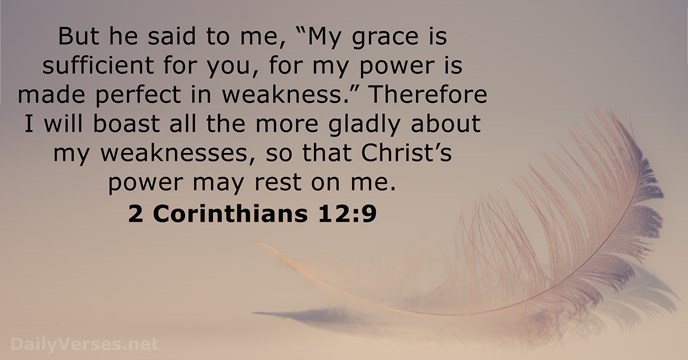
We can trust God with our words if we’re seeking his wisdom (James 1:5) and speaking in love (1 Corinthians 13:4).

Remember what God told Moses, upon commissioning the wilderness shepherd to be his voice to Pharaoh?


It would stand to reason that with God teaching him exactly what to say, Moses would eloquently convince Pharaoh to release the Israelites on the first encounter.

Instead, Moses had to confront Pharaoh numerous times. Even a constant barrage of plagues didn’t deter Pharaoh from refusing Moses’ request—until every firstborn son died in every Egyptian household, including Pharaoh’s. The hard-hearted ruler was brought low by grief, and finally let the Israelites go.

Does such a record indicate that God’s words through Moses failed repeatedly? NO. God had his reason for the delay:


Then the Lord said to Moses,

“Go to Pharaoh, for I have hardened his heart…

so that I may perform these signs of mine among them

that you may tell your children and grandchildren

how I dealt harshly with the Egyptians

and how I performed my signs among them,

and that you may know that I am the Lord.”

–Exodus 10:1-2 NIV


These verses offer me great comfort for my conversation with Emily and others. I can trust God with the words I prayerfully spoke to her that day. They may have caused one more chink in her wall of defense against Christianity, so that she will one day know “that [he] is the Lord” and accept Jesus as Savior.

Such prayers are the kind God especially loves to answer.


What could be closer to God’s heart than the eternal destiny of one of his children?

Perhaps Emily will contact me one day and say, “I remembered what you said about the Bible and it got me to thinking…”

So I continue to pray.

*     *     *     *     *     *     *     *     *     *

As I submit myself to you, O God, may my words be characterized by your wisdom that gently persuades and winsome grace that draws people to you–all from a heart motivated by love.  Then may your words echo in the minds of those who hear until doubt is transformed into faith.     


*Name changed.


Photo credits:  http://www.flickr.com; http://www.wikimedia.com; http://www.pixabay.com; http://www.canva.com; http://www.pixabay.com; http://www.dailyverses.net(2).


Desires and Delight


Father and son take a walk down the road in front of their farm. The father has long been a nature enthusiast, especially interested in trees. He studies the tall oaks bordering the road that his grandfather planted long ago.

He knows that oak trees are among the longest-living organisms on the planet, that large specimens can consume up to one hundred gallons of water per day, and drop 10,000 acorns in a good year.

The father delights in those stalwart oaks; his desire is to keep them strong. More than once he’s called an arborist for advice on their care.

The son, on the other hand, watches the cars and trucks go by. He guesses every make as it comes into view, and he’s usually right. As far as the boy’s concerned, each one is a work of art.


He especially hopes a sports car will pass, so he can enjoy the rev of its large engine. And the whole while he’s dreaming of the day he will sit behind the wheel of a car or truck, wind whipping at his hair as he follows the road to his destiny.

Dad hardly sees the cars; the son barely notices the trees.

What a person delights in captures his attention and impacts his desires.

King David asserted that truth long ago, but in matters of the spiritual dimension rather than physical.


“Take delight in the Lord,” David wrote, “and he will give you the desires of your heart” (Psalm 37:4).

David was not referring to desires for possessions, like sports cars or even healthy trees.  That interpretation doesn’t fit the context of the rest of the psalm.

David stresses that we’re to:

  • Trust in God (vs. 3, 5)
  • Delight in him (v. 4)
  • Commit our way to the Lord (v. 5)
  • Be still before him (v. 7)
  • Wait patiently for him (v. 7)

Those are the signposts of spiritual maturity: 1) to trust God even through the storms of life, 2) to delight in all that God is and all that God does no matter our circumstances, 3) to submit ourselves to his all-wise ways, 4) to remain calm and restful in his care, and 5) wait patiently for him to act.


As we become proficient in each of these areas (and it is a growing process), we often find our desires changing. Over time God molds his desires in our hearts—desires that provide true fulfillment, contentment, and peace.

However, we can accelerate the growing process and augment our delight in God.

Consider how the father and son grew in their delight of trees and cars. They learned. Each had made a study of their favorite subject. The father knew trees; the son knew cars.

We can increase our delight in God by:

  • Pursuing gratitude as an avenue of delight in him
  • Becoming a sleuth among everyday events, tracing the evidence of his love, wisdom, and power
  • Celebrating his blessings
  • Soaking in the Word of God, discovering his attributes and involvement in the lives of humankind
  • Practicing his presence throughout the day–acknowledging him, talking to him, and listening


“If we will let our hearts be filled with God till it runs over with delight,

then the Lord Himself will take care that we shall not want for any good things…

We may have disappointments; but if these bring us nearer to the Lord,

they are things to be prized exceedingly,

for they will in the end secure to us the fulfillment of all our right desires.”

–Charles Spurgeon, Faith’s Checkbook


*     *     *     *     *     *     *     *     *     *


That is my prayer, Heavenly Father, to be filled with the delight of YOU, sensitive to the perfect desires you have for me. Then I will know fullness of joy.


There are many ways to take joy in God.  What fills your heart with the delight of him?  Please share in the comment section below!


Photo credits:  http://www.maxpixel.net; http://www.pixnio.com; http://www.dailyverses.net; http://www.pixabay.com.


Love Notes


Several years ago our daughter dashed off two love notes and hid them in our house just before she and her family returned to their home, more than 2,300 miles away. You can imagine those little notes provided delightful, heartwarming surprise upon discovery. And I’ve kept them, to enjoy again and again.

God also leaves love notes tucked here and there into every day.

Love notes like:


  • A butterfly casually flitting above the traffic in a busy intersection—a dash of delicate beauty amidst concrete and steel


  • The welcome aroma of coffee wafting from the kitchen while golden sunbeams stream in the windows


  • Enthusiastic greetings and hugs whenever we see the granddaughters


  • The first fireflies of the season, drifting upward out of the grass and underbrush to float among the trees—soft, flickering lights, waltzing to silent music


  • A hummingbird lighting upon a flower at one end of the deck planter, even as I’m trimming sprigs at the other. A Close-Encounter-of-the-God-Kind if ever there was one.


  • Lost keys, found. I had dropped them at the grocery store somehow; ‘didn’t even know they were missing for more than twenty-four hours. But God kept them safe for me, and inspired some kind person to turn them in–an unmistakable love note of his compassionate care.


Some of God’s love notes actually include words—but not always from the Word.


Recently at the hairdresser’s I happened to pick up a secular magazine to pass the time. In her introductory letter, the editor wrote about her grandmothers and their important influence in her life. She reaffirmed that investing in our grandchildren is highly worthwhile, and they do remember love expressed, attention bestowed, and examples set.

Her words suddenly became God’s words, and tears came to my eyes. There is significance in the repetition of Goodnight Moon, “The Itsy Bitsy Spider” and pony rides. There is power in appreciation for primitive artwork, impromptu dances, and weed bouquets. There is influence in affirming strong effort, perseverance, and the courage to try new things.


Granddaughter #2,

building a stool for her doll with wood scraps–

with a little help from Dad


Also recently, I encountered a restaurant worker cleaning the drink station as I approached to pump my herbal tea. We exchanged the typical “hellos-and-how-are-yous.   Her greeting was especially positive and cheerful.

“Are you really that fine?” I asked, leaning forward in order to make eye contact.

“Yes, ma’am,” she exclaimed with enthusiasm. “God is so good, I can’t complain!”

“I feel the same!” I answered. “God has been incredibly good to us too.”

The woman finished her task and turned to leave, with more praise on her lips. I wish I could remember her exact words. Nonetheless, I do know those several moments with her provided another love note of affirmation from God, stirring up gratitude and joy in my spirit.


*     *     *     *     *     *     *     *     *     *


Lord, open my eyes to find all your love notes, prepared for me each precious day of life. Then nudge me to turn every note into praise, and joyfully celebrate you.


 (from http://www.quotefancy.com)


Oh, yes. Let me one of those who takes off her shoes.


What love note have you received from God recently?  Tell us about it in the comment section below!


(Photo credits:  Nancy Ruegg; http://www.geograph.ie; http://www.pxhere.com; http://www.wikimedia.org; http://www.wikipedia.org; http://www.pxhere.com; Eric Ruegg; http://www.dailyverses.net; http://www.quotefacy.com.)


(The view from my deck chair)


As spring approaches I look forward to spending my morning quiet time on our deck—taking in the new foliage-finery of the trees, the happy chatter of birds, the whispering breezes, and the sweet aroma of alyssum from the deck planter.

There’s something about sitting with God in his Living Room* that opens our eyes to his glory and draws our spirits closer to his heart.

Saturday was just such a day. And as I sat in His presence, God seemed to say:

I’m so glad you’re here, Nancy! I’ve planned several discoveries for you this morning.


From the Trees


First, lift your eyes to the trees. Rejoice in the reminders of:

  • My strength (Psalm 93:1)–in the stalwart trunks
  • My refuge (Psalm 25:4)–in their far-reaching limbs, offering shelter from the heat
  • My provision (Philippians 4:19)–as they produce oxygen, give shelter to birds and animals, even provide food

Note the evidence of competence in their design–for purpose, beauty, and sustainability.   I am your God of Competence as well, and have designed you to fulfill an individualized purpose, provide the beauty of Christlikeness to those around you, and spend eternity with Me. 


From the Birds


(white-breasted nuthatch)


You can also revel in the birds—symbols of reliance on Me, and again, My provision (Matthew 6:26). Note the variety of color, pattern, song, and habit. Let the joy you experience watching birds remind you how I value your uniqueness.

Choose to celebrate who you are: the colors of your personality, the pattern of your life, the song of gifts and talents I’ve given you to share with the world, the habits of goodness I continue to form in you so you can impact others.


From the Squirrels


Together we can enjoy the antics of the squirrels! They too provide reminders for the life of faith:


  • Even when they walk upside down on a branch, they do not fall. Similarly, I make firm your steps and keep you from falling (Psalm 37:24).


  • With great confidence squirrels jump from limb to limb. You can live in great confidence also, because I’ve equipped you for what I ask you to do. (Ephesians 4:12; Hebrews 13:20-21).


  • Every time they return to their nesting tree, they follow the same pathway through the branches. They remember well which branches offer the best proximity to the next tree.

I have provided a sure pathway for you to navigate through life. You can run in the path of my wise commands; my ways will bring you home safely (Psalm 119:32a; 139:24b).


  • Squirrels can sit quite contentedly, even take a nap, on the very end of a branch—never concerning themselves they might fall or the branch might give way. They provide an example of perfect trust (Isaiah 26:3).

I am your security (Psalm 112:8). Out of My love and faithfulness, I will always protect you (Psalm 40:11)—even as I bring you home to heaven one day.

So when you find yourself at the end of a branch, and fear starts to creep in, send it scurrying away with My Word—verses like Psalm 27:1:


(Another view from our deck)


The Lord is my Light—

[My Joy, Peace, and Guide]

The Lord is my Salvation—

[My Protection, Provision, and Security]

Whom shall I fear?

The Lord is my Stronghold—

[The Treasury of all good things]

Of whom shall I be afraid?


*      *      *


*a creative expression originated by Michael Hyatt, former CEO of Thomas Nelson Publishing


Photo credits:  Nancy Ruegg; http://www.pxhere.com; Nancy Ruegg; http://www.maxpixel.net; Nancy Ruegg


A homeless woman slumped against the familiar brick wall of the warehouse, then grouped her plastic shopping bags snugly around her. Next she looped several bag-handles on her legs, and stretched her arms over the rest. The worry of losing to theft any of her treasured possessions kept her vigilant. Once settled, she succumbed to a fitful doze.

A man approached. “Excuse me, ma’am,” he called gently. “Are you Genevieve Bartlett?”

The woman startled awake, instinctively clutching her belongings more tightly. “What if I am?” she grumbled.

“Well, if you can answer a few questions for me, I may have some excellent news for you,” he replied calmly, recognizing that defensiveness in her position was only to be expected.

Genevieve returned his gaze with a scowl, but sat up straighter, readying herself to listen. The questions were easy: what were the names of her deceased parents and grandparents, when and where had she been born, and where had she attended school.

The man handed her his card and began to explain. “My name is Henry Lewis. I’m a lawyer, here to inform you you’re the last surviving Bartlett of your family, and you’ve just inherited fifty million dollars. If you’ll come with me, we can take care of the details at my office, and start the process of…finding a more comfortable situation for you. Would that be to your liking?”


Genevieve didn’t move for several moments. “Fifty million dollars,” she repeated slowly, and studied the lawyer’s face. Could he possibly be telling the truth? But why else would he seek her out at the warehouse?

Genevieve suddenly slipped the bag-handles off her legs, stood up, and announced, “I’m ready, let’s go!” Without even looking back, Genevieve left her shopping bags and their worthless contents on the pavement.

Out of several interpretations for this story, consider the shopping bags as representative of our fears. Don’t we sometimes hold on to them—worthless as they are—as tightly as Genevieve held on to her belongings?

But as God’s children, we possess tremendous wealth, worth much more than fifty million dollars, because “the kingdom of heaven is like treasure” (Matthew 13:44). And unlike Genevieve during her homeless days, we have access to a good part of that treasure now, if we let go of our worries and lay hold of our wealth.


So what might that treasure include?  Consider the following:

1. God’s Glorious Provision. Unlike Genevieve, we know a glorious inheritance is waiting for us.  Ours is in heaven—an inheritance so magnificent, when we arrive there, we’ll look back on our earthly lives “as an insubstantial dream from which we have happily awoken” (Austin Farrer).

2. God’s Involvement. He is always at work. Take note of his wisdom in creation, his engineering of life-circumstances, and his generosity in the blessings he bestows. God even makes joy available in the midst of trouble. 

3. God’s Sovereignty.  No doubt Mr. Lewis designed a plan for Genevieve to provide for her well-being. God too has designed a perfect and purposeful plan to accomplish much good, in the world at large and for each of us individually.  Whatever we entrust to him, he will take care of much better than we can.


4. God’s Unfailing Love.  We can leave our worries behind, as Genevieve did her shopping bags, when we dwell on the lovingkindness of God. In fact, peace of heart is guaranteed–if we keep our focus upon him. 

5. God’s Constant Presence. He is always with us—even as we wait for him to act. The attentive person recognizes his presence in the aria of a songbird, the sunbeams of a morning, the spontaneous hug of a friend.


6. God’s Kindness and Care.  Surely Genevieve marveled for the rest of her days how Mr. Lewis had changed her life.  We can draw strength and great delight from remembering God’s gracious provisions of our past.

7. God’s Powerful Word. Scripture offers indispensable comfort and encouragement, reminding us that God is our protective Shield and dependable Rock, our caring Shepherd and devoted Helper, our loving Provider and strong Confidence.


In these seven ways and more, God generously shares his inheritance with us now, giving us the opportunity to overcome anxiety with joy.   After all, every fear about our future, safety, health, suffering, death, financial woes, inadequacy, and events beyond our control are good-for-nothing baggage.

The question becomes: Will I let go of my worthless bags of worries and lay hold of my glorious inheritance?


Scripture Notes for:

  1. 1 Peter 1:3-4
  2. Deuteronomy 32:4; 1 Chronicles 29:11; Psalm 94:19
  3. 2 Chronicles 20:6; Romans 8:28
  4. Psalm 94:17-18; Isaiah 26:3
  5. Psalm 23:4
  6. Psalm 92:4
  7. Psalm 3:3; 18:2; 23:1; 46:1; 78:23-29; Proverbs 14:26


(Genevieve’s story is based on an illustration from Charles Spurgeon’s sermon, “To Give You the Kingdom.”)


Photo credits:  http://www.flickr.com; http://www.maxpixel.net; http://www.publicdomainpictures.net; http://www.dailyverses.net; http://www.pexels.com; wwww.canva.com; http://www.dailyverses.net.


“Here comes another one!” little Jim cried to his dad, as they stood atop the small airport terminal not far from their house. Father and son spent occasional afternoons watching the planes take off and land, much to Jim’s delight.

His sharp ears would pick up a plane’s droning buzz before his eyes could make out the small dot in the sky. He hardly breathed as the plane slowly descended, then lightly touched down on the landing field.

The wonder never grew old. And Jim wished more than anything to be in the cockpit, participating in the miracle of flight, not just observing.

That dream stayed with Jim all through school. Upon graduation he attended the U.S. Naval Academy, and then entered the Air Force. His plan was to become a commercial pilot after his term of service.


(The P-51 Mustang)


And then Jim chanced to fly a P-51, the fastest jet of the time and capable of flying almost vertically. After that experience, commercial piloting seemed much too tame.

Jim went back to school to earn his master’s degree in aeronautical and instrumentation engineering and graduated in 1957.

The National Aeronautics and Space Administration (NASA) was established the following year and Jim Irwin set his sites on becoming an astronaut. To achieve that goal he needed to become a test pilot.


Jim entered that program in 1960. Once qualified he was assigned to a top-secret mission: testing a plane that flew higher and faster than any previous aircraft.

Three times he applied for the astronaut program; twice he was rejected. Finally in 1966 his acceptance letter arrived. Jim’s first assignment was to direct the testing of a lunar landing module that engineers were designing.


Then came the moment he’d been waiting for. He and fellow astronauts David Scott and Alfred Worden were chosen for the Apollo 15 mission, scheduled to take place the summer of 1971.

Eighteen months of intense training were required to prepare the men for the twelve-day expedition, three of which would be spent on the moon.

The boy who wanted to fly would soar where only a dozen men had traveled before him.


Their mission included collecting rock samples and conducting experiments in an unexplored region of the moon. They would also be the first astronauts to drive a Lunar Rover that allowed investigation of a larger area than that of previous missions.

Jim was the eighth person to walk on the moon—certainly a thrill-of-a-lifetime. But later he would insist, those moments on the moon weren’t exciting because he was there, but because God was there. Jim profoundly sensed his presence.


He’d been a Christian for over twenty years by 1971, but “I was…[a] silent Christian,” he would explain.

On the moon, as Jim looked up at Planet Earth against the black backdrop of the universe, he marveled at its fragile appearance—so delicate that if someone reached out to touch it, the world would surely crumble and fall apart, he said. Jim experienced overwhelming awe for the creation of God and his love for the entire human race—love that sent his Son Jesus earthward to die in their place.


One of Jim’s responsibilities on the mission was to set up the mechanism for lunar experiments. Not all steps proceeded successfully. But instead of inquiring the NASA engineers, Jim prayed, because waiting for a reply from Houston would take too long.

Each time he sensed God telling him what to do, and he felt the supernatural presence of God with him as he worked. That sensation was so strong, Jim felt sure if he turned around, Jesus would be standing right there at his shoulder.

As complicated as the moon landings were, Apollo 15 proceeded without major problems. The three astronauts landed safely in the Pacific Ocean on August 7, even though one parachute (out of three) didn’t deploy.


A little more than two weeks later Irwin, Scott, and Worden were honored by a ticker tape parade in New York City. As Jim waved to the thousands gathered along the street, his heart ached for those who did not know Jesus as a personal Friend, and he felt God wanted him to tell others about his Son.

A year later Jim resigned from NASA and formed the High Flight Foundation to share about Jesus from his experiences as an astronaut, and to encourage archaeological research, confirming the accuracy of the Bible.

Jim even participated in exploration of Mt. Ararat in Turkey, where other adventurers claimed to have seen what looked like ship remains, high up on the slopes. Conjecturers proposed that perhaps Noah’s ark had been found.


(Mount Ararat, nearly 17,000 ft. in elevation)


Jim’s astronaut-status provided opportunities that other exploratory teams had not been able to achieve. Government officials allowed the High Flight Foundation access to sites that had been refused to others. Yet in spite of these privileges, Jim and his crew never found the ancient ark.

For twenty years after his moon-landing adventure, Jim Irwin told others that “Jesus walking on earth was much more important than man walking on the moon, that Jesus was the way to know God and receive eternal life.”*


The day before the twentieth anniversary of his homecoming from the moon, the boy who wanted to fly flew further still. Jim experienced his homecoming in heaven, due to a massive heart attack. He was survived by his wife Mary and their five children.

No doubt, James Benson Irwin heard those beautiful words, “Well done, good and faithful servant (Matthew 25:21)!” Only this time, Jim didn’t just feel Jesus’ presence. This time, Jim was able to see his Savior and Friend face to face.


* https://godreports.com/2100/03/encounter-with-jesus-on-the-moon-left-astronaut-changed/


Sources:

  1. https://biography.yourdictionary.com/james-benson-irwin
  2. https://crev.info/scientists/james-irwin/
  3. https://defendingthechristianfaith.org/others-who-testify-of-faith-in-christ.html
  4. https://godreports.com/2011/03/encounter-with-jesus-on-the-moon-left-astronaut-changed/
  5. https://ramsheadpress.com/messiah/ch17.html
  6. https://www.rocketstem.org/2015/07/07/rovering-across-the-moon-during-apollo-15/


Photo credits:  http://www.ebay.com; http://www.commons.wikimedia.org; http://www.nationalmuseum.af.mil; http://www.nasa.gov; http://www.jsc.nasa.gov; http://www.wikipedia.org; http://www.picryl.com; http://www.wikimedia.com (3); http://www.canva.com.


Along with spring-cleaning of the house, I thought perhaps a purging of the blog-post-ideas file would be worthwhile. Six years of collecting starters has produced thirty-five pages of possibilities.

Some ideas have languished in a notebook nearly the whole six years. It’s probably time to admit they’re never going to amount to anything, I decided.

Then you came to mind! Maybe you’ll see potential where I’ve given up hope. And with a deft question or suggestion you’ll send me off researching and keyboarding with your fresh insight.

Or, you’ll say, “I’d like to know more about that. Keep that one in the hopper!” And the life of that idea will thus be saved.

So what occurs to you about these topics, dear readers? Do you see any possibilities here for a worthwhile post or two?

  1. From Anxiety to Joy. Psalm 94:19 says, “When anxiety was great within me, your consolation brought me joy.” What might those consolations be that can bring joy in the midst of anxiety? (That’s quite a feat!)


2.  God’s ways are an outgrowth of his character—even when tragedy strikes. How can hurt and pain be the outgrowth of God’s beautiful and perfect attributes?

3.  Delight and Desire. Psalm 37:4 says, “Take delight in the Lord, and he will give you the desires of your heart.” How do we learn to delight in the Lord and desire what he desires?

4.  The Adventure of Grace. What insight might we gain from the definition of adventure? How is the life of grace is like an adventure, and why is that attitude helpful? How can we embrace the adventure more enthusiastically?


5.  The power of right attitudes over body, mind, and spirit. What have medical science and psychology discovered about the impact of attitudes? What does scripture have to say? How can we change our attitudes?

6.  “He who keeps one end in view makes all things serve”—Robert Browning.   That statement is true in the Christian life: if our main ambition is to fulfill God’s purpose, then all events will serve equally well.

7.  Goodness is not only good for those around us, it’s good for us.

8.  How do we accept with grace the circumstances that are unpleasant and outside our control?

9.  Turning Boredom into Contentment. Life can be full of mundane tasks that sap the joy right out of our spirits. What’s a person to do?!


10.  Game-Changers. Our viewpoints of life’s circumstances are perhaps more important than the circumstances themselves. Sometimes all it takes is a pithy statement to change our attitude. Possibilities include: “We obey God, not because we have to but because we get to” (A quote from one of the lay pastors at our church.) Or, how about this statement: “If the Lord does not change the place for the better, he will make us better in the place” (Charles Spurgeon). What other perspective-changers can we apply on a circumstantial rainy day?

11. Taking offense at less and less provocation seems to have pervaded our culture. What happened to resilience? Is it important? Does the Bible give us instruction for this attribute? How do we develop it?

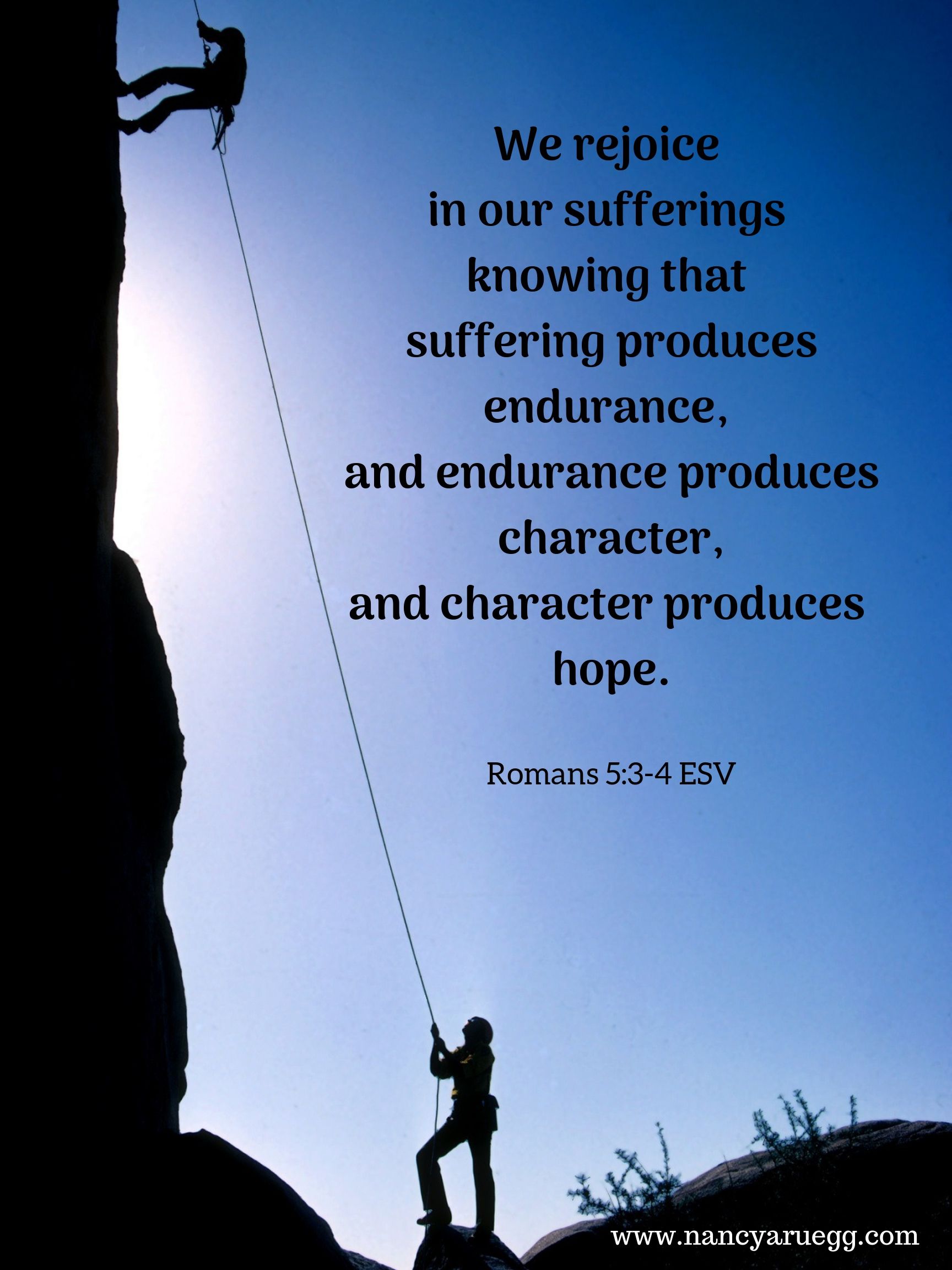
12.  Rock Climbing—a metaphor for life. We need the handholds of God’s character when life becomes a difficult climb. We must cling to his attributes.


That’s enough for today. I’ll look forward to reading your creative suggestions in the comment section below!


(Photo credits:  http://www.thebluediamondgallery.com; http://www.heartlight.org; http://www.pixabay.com; http://www.nps.gov; http://www.flickr.com.)


A-HA!


Years ago when I taught fourth grade, our reading curriculum included a mini-lesson about A-HA Moments—places in a story where the author answers questions the reader has been wondering about.

Watching for those moments keeps the reader alert (thus improving comprehension), contributes to greater understanding of the plot and characters, and makes reading more fun.

Once our students became familiar with the concept, we enjoyed calling out “A-HA!” to one another (occasionally in unison) as other epiphanies occurred, whether it was in class or at recess. The sharing of A-HA Moments developed our classroom community and added to the joy of learning.


Our Heavenly Father also provides A-HA Moments, through such avenues as scripture, other reading, comments from others, and observations in nature. Our God is highly creative, providing personal revelations in numerous ways.

And similar to the benefits of A-HA Moments for students, our discovery moments with God augment our understanding of scripture and spiritual matters, strengthen our relationship with him, and add to the joy of learning from him.

For example:


  • An A-Ha Moment from Scripture

After six delightful years at one church, my pastor-husband received word he’d be assigned to a new congregation in three months’ time. My heart sank. This would be our third such move in thirteen years, and it wasn’t getting easier. As you know, saying good-bye hurts.

In addition, I had just returned that year to full-time teaching, after a long hiatus as a stay-at-home mom. Now I’d face the onerous task of procuring another position.

In the weeks that followed the announcement, we learned about some of the difficult challenges facing the new-to-us congregation.   And I wondered, God, what ARE you doing?


One afternoon a radio host quoted Jeremiah 29:11—a familiar scripture—but that day those words spoke loud and clear to me from God himself: Nancy, there is no reason to worry. I have already worked out my plans for you—plans to prosper you, not harm you, plans to give you HOPE and a thriving future.

Indeed we did prosper at that new church—for thirteen years—as God brought us and taught us through those numerous challenges. But one problem took care of itself—a new teaching position for me. (You can read that story at After the Fact.)


  • An A-HA Moment from other reading


The fact I’m writing about this topic today is the result of an A-HA Moment in itself. First, the seed of an idea was already on my topic list for 2019, but I had no notion how to develop it.

Currently I’m studying Discerning the Voice of God by Priscilla Shirer. And just the other day I read this:


“I know the Lord is speaking to me personally when I read my Bible

and a particular verse or passage seems illuminated

—it just lifts up off the page,

and I seem to hear a gentle, inaudible whisper

as I have an ‘aha moment’ in my heart.”

–Anne Graham Lotz


Anne’s A-HA Moment caused me to have one of my own. God brought to mind the story about moving I just shared above as well as other examples. Then he pointed out other avenues of A-HA Moments, and I knew this was today’s topic.


  • An A-HA Moment in God’s Living Room

That’s what Michael Hyatt* calls the out-of-doors.  Isn’t that a poetically perfect appellation?   My special corner in God’s living room is our back deck overlooking the treetops.

One morning last October, the deck was surrounded by stillness—no birds trilled, no squirrels chattered—until one lone cardinal began to sing. Enthusiastically he filled our little woods with his voice, and his song made me smile.

I was reminded that God often breaks through the stillness of all our lives, with custom-designed lessons, answered prayers, and out-of-the-blue blessings. As a result, we experience hope, peace, and joy—three commodities that make life worth living.


Recorded in my journal is the impression God spoke in my spirit:

I do love to surprise My children! And their subsequent celebrations of praise bring Me great pleasure. But in reality I provide more wonders than they often perceive. Some surprises go unnoticed.

Keep watching and listening, Nancy, so we can smile, laugh, and celebrate together all the delightful surprises I bring into your life.

And therein lies the secret for experiencing life-enriching A-HA Moments with God: keeping watch (Micah 7:7) and listening attentively (Proverbs 1:5).


“Blessed are your eyes because they see,

and your ears because they hear.”

–Matthew 13:16


*former CEO of Thomas Nelson Publishing


What A-HA Moment has God presented to you lately? Tell us your story in the Comments section below!


(Photo credits:  http://www.kadena.af.mil; http://www.calicospanish.com; http://www.maxpixel.net; http://www.heartlight.org; http://www.pixabay.com; Nancy Ruegg; http://www.canva.com; http://www.pixabay.com.)


Who Are You Really?


Every now and then, even positive people are bothered by a niggling, accusatory voice in their heads, offering such (Please note the sarcasm.) helpful comments as:

  • “Look at that guy—one successful venture after another. What have you accomplished lately, Ms./Mr. Nobody?”
  • “Everybody in that group was so articulate compared to you. Why are you such an idiot?”
  • “This assignment is way beyond your abilities. You’re gonna make a fool of yourself.”

Such self-talk is destructive; you know it. But how do you turn it off?  With affirmative battle cries. Positive rebuttal will send those self-critical thoughts into retreat—back to the darkness where they came from.

A proper battle cry can stir up encouragement, inspire perseverance, and be a reminder of who you really are, as well as what you can actually do.

And the very best battle cries are based on scripture.  These examples may provide a good place to start:

  1. You are a cherished daughter/son of God!

You may be focused on your inadequacies and failures, but God is not. His attention is riveted on what you will be—completely perfect and whole.

And as he works within you toward that goal, he rejoices in your progress. Follow his example, and celebrate your steps on the right path.


  1. You are a masterpiece–not a mess!

Consider what constitutes a masterpiece: artistic genius, extraordinary design, superlative craftsmanship, and originality—among other glorious qualities.  That’s YOU!

Never forget: the greatest Artistic Genius of the universe created you. He fashioned a one-of-a-kind mold for your personality, your particular traits and talents, your specific purpose.  Embrace who he made you to be.


  1. You have been created in the image of God himself!

And he’s given you the privilege to brightly reflect his magnificent image to those around you.

Consider yourself a stained glass window, with God’s light (all his magnificent attributes) gleaming through the shapes and colors of your individuality, your abilities, in order to bless those around you.


  1. You are a true Superman/Superwoman!

More than a conqueror,” Paul said.  That makes you a super-conqueror (!), through the one who loves you–Jesus.

And because of him, you are guaranteed victory in the end.  Now each day can be viewed as an adventure with God, not an affliction.


  1. You are capable to accomplish anything God prepares for you to do!

That’s because nothing is impossible for him. He goes ahead of you to prepare the way, and supplies the abilities necessary to complete your mission.

In addition, “[He] will help you deal with whatever hard things come up–when the time comes” (Matthew 6:34, MSG).


  1. You are equipped to thrive!

In the soil of God’s unfailing love, and with the nourishment of his encouraging Word, you can grow seeds of contentment, and they will produce the fruit of joy and peace.


So!  Are you feeling inadequate for the day or frustrated by what you face?

Perhaps a few of these battle cries speak to your situation. State them firmly out loud, and for greater impact, speak in front of a mirror.

Affirm to yourself who you are really.

___________________________________


Scriptural support for each battle cry:

  1. 1 John 3:1-2; Hebrews 10:14; Philippians 1:6; Psalm 147:11; Psalm 119:35.
  2. Ephesians 2:10 NLT; Psalm 139:16; Proverbs 19:21.
  3. Genesis 1:27; 2 Corinthians 3:18.
  4. Romans 8:37; 1 Corinthians 15:57.
  5. Philippians 4:13; Matthew 19:26; Ephesians 2:10; Psalm 37:23 CSB; 1 Peter 4:11; Matthew 6:34 MSG, emphasis added.
  6. John 10:10; Jeremiah 29:11; 2 Timothy 3:17; Ephesians 3:17-19; Psalm 119:24; Philippians 4:12-13; 1 Peter 1:8-9; Isaiah 26:3.


What battle cry against the negative self-talk helps you?  Please add your suggestion in the Comment section below!


(Photo credits:  http://www.pxhere.com; http://www.wikimedia.com; http://www.pxhere.com; http://www.wikimedia.com; http://www.pixabay.com; http://www.dailyverses.net; http://www.pixabay.com.)

Attracting Notice

Contrasts have a way of attracting notice.  Consider:

  • A sparkling diamond against black velvet
  • One lone light shining against the night
  • The first bright flower of spring against pale snow

The stories of Good Friday and Easter are also full of contrasts. Consider:

  • The false witnesses who twisted Jesus’ words—against his sinless life “full of grace and truth” (Matthew 26:59; John 1:14).

  • The frenzied clamor of the crowd—against the self-controlled silence of Jesus (Matthew 27:22-24; 27:14)
  • The mournful wails of women on their way to Golgotha— against the overflowing joy of women on their way to tell the disciples, “Jesus has risen from the dead!” (Luke 23:27; Matthew 28:8)

  • The horrific ugliness of the scourging and crucifixion—against the poignant beauty of Jesus caring for his mother (John 19:23, 26-27)
  • The disbelief of the centurion, guards, and one of the thieves crucified with Jesus—against the newfound faith they all experienced, born out of watching Jesus die (Luke 22:63-65 and 23:36, Matthew 27:48 and 27:54, Luke 23:40-43)

  • The darkness that covered the land during those last hours of Jesus’ crucifixion—against the lightning-brilliance of the angel who announced his resurrection (Matthew 27:45, 28:2-3)
  • The curtain-barrier to the Most Holy Place in the temple—against the free and open entrance to God’s presence, made available to all when he tore that curtain in two from top to bottom (Matthew 27:51; Hebrews 10:19-22)
  • The most grievous and repugnant deed of history—against the most glorious and life-changing reality: Jesus was raised from the dead to eternal life and now offers the same incredible prospect for us (1 Corinthians 15:3-4, 55, 57).

These and other contrasts of the Easter story attract undeniable notice to the perfections of our Savior, the unfathomable love that prompted his sacrifice, and the power of his incomparable resurrection—if we have eyes to see.

And eyes that truly see inspire hearts that fervently respond–in faithful love and grateful obedience.

*     *     *     *     *     *     *     *     *     *

Precious Jesus, how we long for words to fully express our praise to you! Against all the forces of evil, you arose victorious. Now, in place of our guilt you provide healing forgiveness and eternal salvation. Now we needn’t fear the day when our eyes close on earth for the last time, because in the next moment, they will open in heaven. Hallelujah!      

(Zechariah 9:9; Revelation 19:16; Philippians 2:9-11;

Charles Spurgeon, Morning by Morning, p. 113)

Art & photo credits: http://www.pexels.com; http://www.flickr.com;  www.wallpaper4god.com.; http://www.heartlight.com (2); http://www.dailyverses.net.

Still Traveling

Impressions Becoming Expressions

Living Our Days

Gaining a heart of wisdom

He Said What?!

I'm Patty, and my husband and I are living with our adult son who has autism and epilepsy. I love sharing lessons learned from life around me, especially life with Aaron.

Meditations of my Heart

Impressions Becoming Expressions

Linda Stoll

Impressions Becoming Expressions

Debby Thompson

Impressions Becoming Expressions

Signora Sheila

Notes on Life, Faith & Italy

Colleen Scheid

Writing, Acting, Living in God's Love

Mitch Teemley

The Power of Story

Heidi Viars

Finding the Image of God