Feeds:
Posts
Comments

A Remarkable Father


Years ago I created a memory booklet to celebrate my dad on his birthday. Good thing I did. Over the intervening decades, some of those recollections would surely have been forgotten. And now the memories are more precious than ever.

 

(Dad and me 1964)


Their meaning, however, goes deeper than mere sentiment. Throughout my life, Dad has modeled the loving ways of my Heavenly Father.

For example:

Dad often took my brother and me to the community pool or on bike rides through the back streets near our home.  We also accompanied Dad to the hardware store, the lumberyard—even the dump! When he asked us to tag along, we always said yes. It meant quality time with our hero.

How incredible to realize God Almighty desires our intimate company, too (2 Corinthians 6:16).


    *     *     *


John and I had our own personal shoe fitter—Dad. He’d gently press on toes, instep, and heel, to ensure proper fit. Such attention to detail was his modus operandi. As a result, we could trust him. He always had our best interests at heart.

God also carefully attends to the details of our lives (Isaiah 40:11).   For a number of months in 2013 we searched realty websites for a new house. Two weeks before the actual walk-throughs, a perfect brick ranch just happened to become available. Though we looked at other homes, this became his obvious choice for us—a true gift.


 *     *     *


Dad started taking me to the library as a toddler. It was on his lap and my mother’s I learned to appreciate books.

My Heavenly Father guided me to appreciate his Book.  Nowhere else have I found such wisdom, consolation, inspiration, and direction. David was right: The scriptures are more valuable than gold (Psalm 19:10).


 *     *     *


One time I ran out of reading material while sick with a virus. Dad went to the library to remedy the situation. Because he knew me well, Dad could choose books he was reasonably confident I’d like. And sure enough, I read all four.


My Heavenly Father knows me more intimately yet and cares about my interests (Psalm 139:1-3). After I had taken up writing again, a woman at church just happened to invite me to her writers’ group. Not only did the members offer encouragement and challenge, they became delightful friends as well.


  *     *     *


Dad and I were on an errand at Sears when we passed the bicycle display. Suddenly he asked, “If you’re willing to pay half out of your savings, what do you say we get you a new bike today?”   My heart pounded so loudly at such a glorious surprise, I found it difficult to focus on the decision of red or blue. (Blue won.)

God in heaven blesses us in delightful, surprising ways as well (Matthew 7:7-11). One afternoon a member of our church (where my husband, Steve, was pastor) called to seek a recommendation on a car. Why me? he wondered.  Steve thought perhaps she planned to purchase one for her grandson’s graduation. But no, it was for us.



    *     *     *


When I was seven or eight, Dad taught me the card game, “21,” so I could practice addition and subtraction. (Math never was my friend.) Not only did he sacrifice his time to help me, he aimed to make the exercise pleasurable too.

My Heavenly Father has gently taught me life skills too (2 Timothy 3:16-17). Recently I came across Ephesians 5:4 about what should be coming out of my mouth instead of foolish talk. Paul encourages thanksgiving, because it is life changing.   Positive thoughts become positive words that foster positive action. In addition, God knows a grateful heart is a joy-filled heart (Psalm 92:1-2, 4).



  *     *     *


My father is ninety-three, and still a remarkable man of strength, wisdom, and faith. His godly influence greatly helped shape my life.

I wonder how different the world would be if all fathers followed the model of our Heavenly Father (1 Corinthians 13:4-8)?  He lavishes such attentive, everlasting love on his children.  My heart fills with awe and adoration at the wonder that I am his and he is mine.


(Art & photo credits:  Nancy Ruegg (2), http://www.pinterest.com; Nancy Ruegg; http://www.slideshare.net; http://www.pinterest (2).


God IS for Us


“If God is for us,

who can be against us?”

–Romans 8:31 NIV


As I write…

…two friends are fighting cancer, one of them for the second time.

…Another deals with debilitating illness every day while a fourth deteriorates as the result of Alzheimer’s. 

…A married couple among our acquaintances is separated. He is filing for a divorce that she doesn’t want or deserve.

…Families and friends of those who died in the recent terrorist attacks suffer through the aftermath, as well as those injured, their families and friends. My heart aches for the first responders as well.


Though I wish it weren’t so, even devout believers in Jesus endure physical pain, emotional hurt, and horrific circumstances. How can God be for us when so many endure anguish?

Here’s what I’ve come to understand:

#1. My interpretation of a particular verse must be measured against the whole of scripture and the experience of countless saints through the ages.

Evidence from the Bible and church history would indicate that “God for us” does not mean he will engineer a problem-free life—even for one of his beloved. Perfection is reserved for heaven.

What God has promised here and now is to:

  • be with us,
  • provide strength,
  • help us through the situation, and
  • uphold us with encouragement and comfort (Isaiah 41:10).


But when shocking news sends me spinning toward fear, when trouble threatens to destroy my peace and joy, when pain exhausts my strength, those familiar promises seem—dare I say it?—inadequate.

God may have promised:

  • His presence with me, but I want him to show me the way out.
  • His strength, but I don’t feel it Instead, I feel terribly weak.
  • His help through the situation, but I want his help around it.
  • His encouragement and comfort, but I am discouraged and uncomfortable.

Such statements bring immediate clarity to the inadequacy. Look how I am the focus of those statements, how I assert my desires for relief and ease.

The problem is me.


#2. God’s desire for me during my time on earth is not endless comfort and pleasure.

His goals include:

  • maturity (James 1:4)—fully developed character of faith, discipline, and integrity.
  • Heightened awareness of him so that “in the darkness of adversity, [I am] able to see more clearly the radiance of his face”* (2 Corinthians 4:6).
  • Lessened awareness of the inconsequential things on earth (Colossians 2:1-2).


And why are these goals important to him? Because the result is an indescribably glorious prize:


“Our momentary light affliction is producing for us

an absolutely incomparable eternal weight of glory.”

–2 Corinthians 4:17 HCSB


Paul wrote that—a man who suffered much. He was beaten, imprisoned, and even stoned because of his faith in Jesus (2 Corinthians 6:4-5).  

Yet he was able to assert that anything he had suffered was nothing compared to the glorious joys of heaven awaiting him. That’s a critical truth to remember.


Also helpful to keep in mind:

#3. Evidence abounds that God is for us no matter the circumstances.

Just for fun, I counted up God’s attributes in the index of one of my resources—attributes such as God’s Attentiveness, God’s Blessings, and God’s Care. The list includes twenty-eight different categories.  No doubt there are even more.

How can I doubt the motives of such a loving, generous God?

My own experience provides bountiful evidence.

As some of you will remember, I’ve kept a journal since 1983 of God’s faithfulness to our family. Each year I total up the blessings, and praise God for his help, kindness, and miracles during the previous twelve months. To date there are more than 1,200 entries in all.


(Can you see how yellowed and tattered the edges of this first page are?!)


At the end of one particularly difficult year my jaw dropped to discover more entries than any year previously. God had indeed been for me—through it all.

The great missionary to China, Hudson Taylor (1832-91905), was right:


(“All our difficulties are only platforms for the manifestations of his grace, power, and love.”)


Every day, every moment, the Almighty God of grace, power, and love is at work for our benefit.

Who could possibly win against such supremacy?


* Sarah Young, Jesus Calling, Thomas Nelson, p. 361.


*     *     *     *     *     *     *     *     *     *


How have you experienced God’s grace, power, and love during a time of difficulty?  Please share in the comment section below!


(Art & photo credits: http://www.pinterest.com; http://www.wikimedia.com; http://www.pinterest.com; http://www.picturequotes.com; http://www.pinterest.com; http://www.biblesociety.ca; Nancy Ruegg; http://www.quotefancy.com.)


Wouldn’t that be nice—a deep sea of joy—for the days when the washer breaks down in the middle of a load, a tire goes flat on the way to an important meeting, and a jar of spaghetti sauce slips out of hand, splattering bright red ooze and shards of glass over much of the kitchen.

Yup. That’s what we need: a deep sea of joy. We could jump right in and be swallowed up in delightful mirth while everything else conspires to dump us into despair.

But according to that wise preacher of long ago, Charles Spurgeon, that’s exactly what we do have:


“Our God is a deep sea of joy.

My soul will dive therein

And be swallowed up

In the delights of his companionship.” *


Sounds wonderful, doesn’t it? Such sweet relief. But how do we do that? How do we delight in the companionship of an invisible God?

Actually, the relationships we enjoy with our (visible) loved ones give us many cues.


For example, just last weekend we enjoyed three days at Red River Gorge, Kentucky, with our older son and his family. You might recall Eric and Hilja (Hill-ya) have two little girls, ages four and four months. Needless to say our activities at the gorge were limited. No zip-lining, horseback riding, or long treks through the forest. Not this trip.

But we still took great pleasure in interesting conversations on the deck (especially in the evening after the girls were asleep), a short, scenic woodland hike, superb dinners prepared by Eric, reminiscings through some family history, frequent laughter**, and simply basking in the joy of being together.

God offers us similar joys as we delight in him:


  • Conversation—in the form of “simple, short prayers flowing out of the present moment” (Sarah Young, Jesus Calling, 55).


  • Common interests, such as impacting the lives of others–opportunities to participate side by side with God in his work (John 15:5).


  • The splendor of creation–all the more magnificent as we revel in his artistry and genius (Psalm 33:6-9).


  • Celebration of who our God is and what he does (Psalm 145:7, 92:4).


  • Humorous moments–created by God just like everything else, so that with Sarah each of us can say, “God has brought me laughter” (Genesis 21:6).


  • His ever-present, ever-attentive companionship–itself a source of lavish joy (Psalm 16:11).


Oh, but there are still more ways to delight in God as we…

Trust.

Consistent contentment is possible as we affirm, “He is faithful in all he does” (Psalm 33:4).

Thank.

Honoring God with our gratitude is uplifting to us and pleasing to him (Philippians 4:6-7; Psalm 69:30-31).

Praise and sing.

If God delights in us with singing (Zephaniah 3:17), how much more should we delight in him with an expressive, lyrical heart?


Charles Spurgeon was right:


Our God offers a deep sea of joy–

if only we dive into his delights

frequently,

all day long.


*from Morning by Morning by Charles Spurgeon, updated by Whitaker House, 1984.


**Maybe it was only funny to us, but I have to share what four-year old Elena said after her first fishing excursion. She’d been warned to stay out of the greenery along the side of the road in case of poison ivy. Upon returning to the cabin she announced, “I stayed out of the weeds so I won’t get poisonitis.”


(Art & photo credits: http://www.maxpixel.freegreatpictures.com; http://www.azquotes.com; http://www.wikimedia.com; http://www.dailyverses.net; http://www.uk.pinterest.com (2); http://www.pixabay.com.)


Many of us have endured lots of rain this spring, but the payoff has been worth it. On our little hillside, tightly compacted foliage now covers trees and shrubs. Hearty blades of grass press thickly together like subway travelers at rush hour. The whole landscape is so green, you’d think we lived on the Emerald Isle.


(Trees and shrubs behind our house.  ‘Wish the light was better,

but it’s another day of clouds and  rain.)


Close inspection reveals, however, that spring foliage comes in many more shades of green than emerald.


Isn’t green a glorious color? No matter the shade, there’s something about green that breathes restoration and life into our beings.

Researchers have studied the response of the body when a person is surrounded by a particular color. Green causes muscles to relax and blood vessels to dilate. Therefore, it has a calming effect and lowers stress.

The positive effects of green are even more pronounced when we get outdoors. Studies have shown that such capacities as short-term memory, mental energy, creativity and concentration all improve after time spent in nature. Even five minutes can produce positive effects.


Researchers are even discovering restorative responses in the body after a person has been outdoors. For example, inflammation decreases, nearsightedness is less pronounced, and the immune system improves.

What do you suppose accounts for all those benefits? Perhaps God intentionally designed his creation (at least in part) to provide restoration of body, soul, and spirit–for us.


The challenge is getting out there. Too often I’ve allowed indoor tasks and activities to take precedence over sitting on the deck or taking a walk.

And once situated on the deck or strolling in the neighborhood, I need to take note of my surroundings. If my mind is preoccupied with the to-do list or troubling concerns, restoration is not going to happen. I have to pay attention.

How?

Engage the senses.


  • Take note of the light dappling the foliage.
  • Listen to the breezes whisper among the evergreens.
  • Fill the lungs with pure air cleansed by flourishing, CO2-breathing trees.
  • Touch the cool, curled edges of the geranium leaves.


Experience the wonder.

  • Limbs and gentle winds join in an intermittent dance.
  • Leaves bob and sway.
  • Treetops enthusiastically participate; creek bed foliage plays the wallflower, quiet and still.
  • Sun glints through the woods, creating a spotlight effect on some branches. Others are draped in deep, green-black shadow.


And the most important step of all:


Express gratitude.


I thank you, Father, for the gift of greenery, the grandeur of stately trees, the delight of shapely leaves, the peaceful calm of an open field or forest temple.


I thank you for the lessons they teach—reminders to grow our roots deep into your love (Ephesians 3:17), to be watered by your Word (Psalm 1:2-3), and to live in the Light of your Son, Jesus (John 8:12).


It’s not just the infinite heavens that declare your glory and display your wisdom and power (Psalm 19:1). Even the minutest of plants offers evidence of your splendor and artistry.


The whole of nature is your living room, God, and I humbly thank you for the precious privilege of meeting you there.


(“Nature is God’s living room,” a Michael Hyatt creative expression.)


Photo credits:  www.pexels.com; Nancy Ruegg (3), http://www.maxpixel.freegreatpicture.com; http://www.pexels.com; Nancy Ruegg; http://www.pexels.com (2), http://www.publicdomainpictures.net; geograph.org.uk; http://www.maxpixels.freegreatpicture.com; http://www.pexels.com; http://www.maxpixel.freegreatpicture.com; http://www.pexels.com.

“The whole meaning of history is in the proof

that there have lived people before the present time

whom it is important to meet.”

–Eugene Rosenstock Huessy


Betty Greene (1920-1997) is one of them.


Eight year-old Betty sat close to the radio, listening intently to the news all America wanted to hear on May 21, 1927: Charles Lindbergh had landed his tiny plane safely in Paris. He had flown nonstop for thirty-three hours and thirty minutes  to cross the Atlantic Ocean–the first person to do so. As a result, Charles Lindbergh became a hero to many Americans, including young Betty.


The next year, she followed the exploits of Amelia Earhart. In June of 1928, Ms. Earhart also flew nonstop across the Atlantic, from Newfoundland to Wales.


“That’s what I want to do someday—fly airplanes!” Betty asserted. And she began to dream of her own adventures in the sky.

By the time Betty was old enough for flying lessons, however, the Great Depression had settled over the country. Her mom and dad needed every dime to provide necessities for their family of six. Flying lessons were an unaffordable luxury.

But on her sixteenth birthday, Betty received an envelope from one of her uncles. Inside she found one hundred dollars—a small fortune at that time. Betty immediately made arrangements for flying lessons.

Not that she could expect to become a commercial pilot. That career was reserved for men in the 1930s. Unless Betty took up stunt aviation, she would have to be content to fly as a hobby—if she could afford access to a plane.

An elderly family friend suggested a creative possibility. Betty might be able to serve as a missionary pilot. “Think of all the time—and sometimes lives—that could be saved if missionaries didn’t have to spend weeks hacking their way through jungles,” she said.

Immediately Betty knew. This was what God wanted her to do.

Before Betty had a chance to pursue such a radical idea, World War II began. Early in the conflict, it became apparent the number of Air Force pilots was inadequate. But someone decided women could be trained to handle non-combat tasks, freeing up men for the more dangerous assignments.

Betty perfectly fit the criteria to become a WASP in the Women Airforce Service Pilots, and was readily accepted into the program.


Soon she was flying planes from the manufacturing site to military bases and departure points for overseas. She towed aerial targets for soldiers to gain artillery practice—with live ammunition (so say some sources).  And Betty flew missions at high-altitudes, to assist in the development of needed technology for such flights.

Betty’s dream to be a missionary pilot seemed to be on hold as the war continued, but God was about to do immeasurably more than all she could ask or imagine (Ephesians 3:20).

While serving as a WASP, Betty wrote two articles for two different Christian magazines about using planes to help missionaries. Three American pilots read the articles and wrote to Betty about their idea to start such an organization, once the war ended.

On May 20, 1945, the Christian Airmen’s Missionary Fellowship began operation in Los Angeles. Later to become Missionary Aviation Fellowship (MAF)—perhaps because their first pilot was not an airman at all. It was Betty.


(Preparing for the inaugural flight, February, 1946)


That first flight included two women missionaries in need of transportation from southern California to Mexico City, a three-day trip.

On the first leg Betty noticed something coming off the engine, so she made an unscheduled landing at Tuxpan, Mexico to have the plane inspected. The debris turned out to be just flaking paint. Meanwhile the two missionaries made their way to Mexico City on a commercial flight.

Betty and a new passenger, Cameron Townsend (founder of Wycliffe Bible Translators) left Tuxpan for Tuxla Gutierrez, near the Wycliffe Jungle Camp. Along the route Betty stopped in Minatitlan to refuel and then they were off again. However, a heavy storm developed, and they were forced to turn back.

As they headed toward Minatitlan, another setback occurred:  the engine died. Betty kept her head and switched gas tanks, then re-fired the engine. The tactic worked. She and Mr. Townsend safely returned to Minatitlan. Later she discovered that water in the fuel tank had caused the engine to fail.

The next morning, they finally reached Tuxtla. The three-day flight had taken one week. But the troublesome beginnings did not discourage Betty.

She went on to serve as an MAF pilot for sixteen years–in spite of more mishaps, emergency landings on rivers and at least one crash.  She completed 4,640 flights, served in twelve countries, and touched down in another twenty.

Her responsibilities included ferrying aircraft and delivering missionaries, dignitaries, and cargo to remote areas. She also saved lives by transporting ill or injured patients from inaccessible locations back to civilization and medical care.


(Betty, center left, in Papua, Indonesia)


In 1962 Betty transitioned from pilot-in-the-field to representative-and-recruiter for MAF, serving as an advocate for the organization until her death in 1997.

Today, MAF operates 132 aircraft in more than 25 countries worldwide.


(Sites of MAF Bases)


And it all began with a little girl who dreamed of flying.


Sources:  www.dianawaring.com; http://www.footprintsintoafrica.com; http://www.maf.org; http://www.maf-uk.org; http://www.mnnonline.org.


Photo credits:  www.flickr.com (2), http://www.pinterest.com; http://www.maf.org (3).


Unspoken Truth

Though another cold spell (down to 33 degrees!) just moved through our area, spring is still evident everywhere. Small leaves on tree and bush have quickly grown into verdant foliage. Flowers bloom in dazzling colors, and birds happily twitter nonstop. I’m captivated again by the beauty and grandeur of nature, especially as the earth reawakens from winter.


Just being outdoors surrounded by God’s splendor can increase our awareness of him. His attributes are on grand display every day, in every corner of our planet. For example, we see confirmation of:

His glory – God’s magnificence is personified in the splendor of sweeping prairie vistas, the majesty of mountains, and the vastness of oceans.


(Cook’s Inlet, Alaska)


His power – Who else could create innumerable galaxies of stars, planets, and moons, then place them over light years of endless space?


His holiness – God is perfect; his works are perfect.   Evidence abounds in the exact count of petals on a buttercup (It’s always five), the ever-changing hues of a sunset sky, and on the rainbow wings of a Fire Clipper butterfly.


His grace – God keeps Planet Earth in a state of perpetual renewal as the sun provides energy, rain supplies hydration, flora and fauna exchange carbon dioxide and oxygen.


His wisdom – Unlike most substances, water expands when frozen, increasing its volume. As a result, ice floats. Imagine what would happen if glaciers sunk to the ocean floor. Sea water would have chilled dramatically a long time ago and cooled the planet. Life would have been unsustainable.


His ability to work wonders – God made creatures that morph in astounding ways: caterpillars become butterflies, tadpoles turn into frogs, and newborn kangaroos, no more than pink blobs the size of bees, transform into two hundred pound adults.


His goodness – Our world abounds with countless plants and animals in various shapes, colors, textures, and more. Such diversity is surely not necessary for our survival. Wouldn’t a world in shades of gray suffice? Wouldn’t bread and water keep us alive? But God sees fit to bless us with the delight of variety.


His orderliness — God has designed entire ecosystems so precisely that every organism is perfectly provided for in a methodic, rhythmic cycle.


His creativity – Planet Earth is home to at least 9,000 species of birds, 15,000 different kinds of mammals, 27,000 types of fish, 400,000 different sorts of flowers, and 900,000 species of insects. Each one is unique.


(Rainbow Leaf Beetle)


The scope of creation is so vast, the most detailed descriptors only skim the surface of its marvels. Everywhere we look—into the deepest recesses of space with a telescope, or into the minutia placed under a microscope, we see intricacy, precision, and complexity.


(Microbe Organism)


*     *     *     *     *     *     *     *     *


The earth is full of your riches, O God. Day and night the visible things of creation silently shout the unspoken truth that you are the all-powerful, ever faithful, and perfectly wise God. Lead me, I pray, to experience your world with the eyes of worship.

Psalm 104:24 ASV; Romans 1:20; Grace Notes by Philip Yancey, p. 165.


What additional evidence of God’s attributes do you see in creation?  Please share in the comments section below!


(Photo credits:  www.pixabay.com; http://www.maxpixel.freegreatpicture.com; http://www.wikimedia.com; http://www.pinterest.com; http://www.flickr.com; http://www.youtube.com; http://www.wikimedia.com; http://www.pinterest.com; http://www.pixabay.com; http://www.pinterest.com.)


Grounds for Hope

(a personal psalm based on Psalm 36:1, 5-8, 10 and other scriptures)


Our world is in travail, O God.

Wicked men create schemes to fraud others;

They viciously hunt down the innocent.

Their mouths are full of curses, lies, and threats.

Blameless victims suffer at the hands of their selfishness and greed.

In prideful arrogance, they even mock You, Father.


How is it that the wicked accumulate wealth and wield power?

Their dark deeds and unjust treatment of others

stir up frustration and resentment in our hearts.

Then we remember: the days of the wicked are numbered.

Our best course of action is to contemplate You,

And affirm our trust in your wise and loving ways.


Yes, You are our God of steadfast, self-sacrificing love,

As expansive and incomprehensible as the heavens.

Evidence of your attentive love is all around us—

In the gracious people we meet,

The delightful circumstances we experience,

The unexpected gifts we receive and enjoy.


You are our God of reliable and unchanging faithfulness.

You keep all of your scripture promises—all 2,300-plus of them!

You always have and always will act according to your holy character;

Therefore we can forever trust you to do what is right.

Never will you turn your back on us,

Even if we turn our backs on you.


You are our God of perfect and transcendent righteousness,

As firm, immovable, and majestic as mountains.

Everything you do is good,

Motivated by a purity that will not forever tolerate wrong.

Your perfect plans always conform to the prudent purpose of your will.

Everything you say is truth; you cannot lie.


You are a God of certain yet merciful justice.

To be honest, we’re often mystified by your actions.

We see evil men prosper and righteous men suffer.

Your judgments are as unfathomable as the deepest oceans.

But what we do know is this, and we cling to its hope:

In your infinite wisdom you work all things for good.


You are our God of strong and ever-present refuge,

Offering comfort, peace, and security through your Word.

In your Presence we are strengthened; our faith is renewed.

You shelter us from the full force of the storms of life.

You even protect us from what we thought we wanted

And provide for us instead what You know is best.


You are our God of abundant and delightful blessings

That flow continually like a great river.

Who can count all the wonderful works you have done?

But above all, you O Lord, are the embodiment of all blessing—

In you alone we find rest, support, and salvation.

In you alone we place our trust.


Stanza #1: Psalm 10:2, 7

Stanza #2: Psalm 36:1, 10

Stanza #3: Psalm 36:5a, 7, 10

Stanza #4: Psalm 36:5b; Psalm 145:13; Deuteronomy 32:4; 2 Timothy 2:13

Stanza #5: Psalm 36:6a; Psalm 119:68; Habakkuk 1:13; Ephesians 1:11; 1 Chronicles 16:27; Numbers 23:19

Stanza #6: Psalm 36:6b; Jeremiah 12:1; Romans 8:28

Stanza #7: Psalm 36:7; Psalm 46:1; Psalm 31:19-20; Psalm 9:9; Psalm 18:2

Stanza #8: Psalm 36:8; Psalm 105:5a; Psalm 62:5-8; Psalm 31:14

(Art & photo credits:  www.wikimedia.com; http://www.flickr.com (2); http://www.dailyverses.net; http://www.pinterest.com (2); http://www.flickr.com; http://www.dailyverses.net; pinterest.com.)


Each spring, as the outdoor temperatures finally climb to comfortable levels, we can hardly resist opening wide the windows to allow fresh breezes and full sunshine into our homes.

We breathe deep the pure air and revel in the bright light–until we notice the smudges, dirt, and grime, undetected during the dim days of winter.  Suddenly we’re overtaken by the urge to polish the windows, Swiffer baseboards, reorganize closets, and capture dust bunnies under the beds. We embark on spring cleaning, full sweep ahead!


Any concerns of how to clean in the fastest, easiest ways can be researched online.   And even the APP Store can help. BrightNest offers organizing and cleaning tips, a personalized cleaning schedule, and reminders. Chore Monster will get the kids to help (so they say).

I can’t speak for you, but there’s another area in my life that needs cleaning. In addition to the dusting, scrubbing, and polishing throughout our home, a little spring-cleaning of my mind will be beneficial, to remove any melancholy, anxiety, fear, and other muck from my thoughts. There’s an A.P.P. for that, too:

A is for APPRECIATION. Nothing wipes away the grime of doldrums like gratitude, because gratitude leads to joy.


“What a beautiful thing, God, to give thanks,

to sing an anthem to you, the High God!

You make me so happy, God.

I saw your work and I shouted for joy.

How magnificent your work, God!”

–Psalm 92:1, 4 MSG


P is for PRAYER. Sweep up the swirling dust bunnies of worry with statements of trust, based on God’s reliable promises:

  • He will never leave us to struggle through trouble on our own (Deuteronomy 31:6).
  • He will always provide what we need (Matthew 6:25-27).
  • He is a God of infinite power and might, ruling over all people and all circumstances (Psalm 103:19)
  • He is a God of goodness and righteousness, love and compassion, grace and mercy (Psalm 145:7-9).


P is also for PRAISE.  Polish every day with worship, commending God for who he is and what he has done.


“To worship is to…purge the imagination by the beauty of God.”

–William Temple (1881-1944), Bishop of the Church of England


Notice this A.P.P. of Appreciation, Prayer, and Praise, is all about words that don’t even have to be spoken out loud. Is it really possible that mere words can cleanse away hurtful or disturbing thoughts?

Yes! Words are powerful (Proverbs 18:21). Even self-talk wields great influence, because thoughts produce emotions, emotions produce attitudes, and attitudes produce behavior.

For example:

  • Thoughts of Appreciation, Prayer, and Praise create a clean, positive atmosphere in our spirits.
  • That atmosphere allows the emotions of peace, joy, and contentment to shine.
  • From a contented heart come the positive behaviors of cheerfulness, perseverance, faith, and strength—to name a few.

But just as some spring-cleaning tasks require extra effort, ridding our minds of negative self-talk often requires extra effort as well. Our thoughts too easily get mired in complaining, anxiety, and fear.


How do we redirect our thinking? We take our negative thoughts captive (2 Corinthians 10:5), trapping them like dust flecks in a Swiffer! Then we use our A.P.P (as described above) to add the luster of positivity.

There’s nothing like a good spring-cleaning to increase the pleasure we experience in our homes. And there’s nothing like a good cleansing of the mind to bring supreme pleasure to life.


“The Lord is a sun and shield;

The Lord bestows favor and honor;

No good thing does he withhold

From those whose walk is blameless.

O Lord Almighty,

Blessed is the man who trusts in you.”

–Psalm 84:11-12 NIV


(Art & photo credits:  www.publicdomainpictures.net; http://www.flickr.com; http://www.youtube.com; http://www.pinterest.com; http://www.ourdailyblossom.com; http://www.pinterest (2).

 

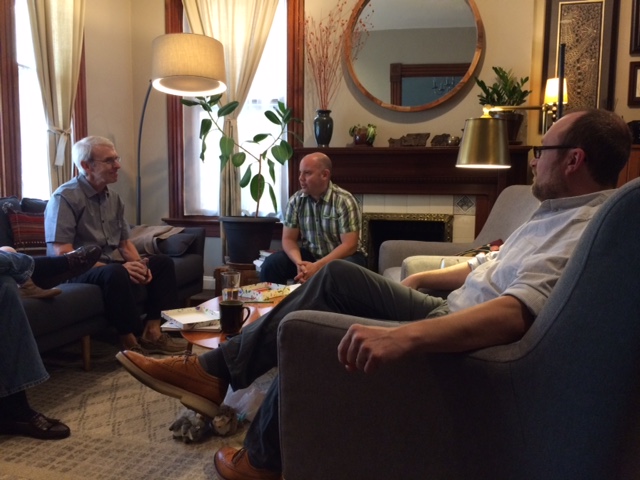
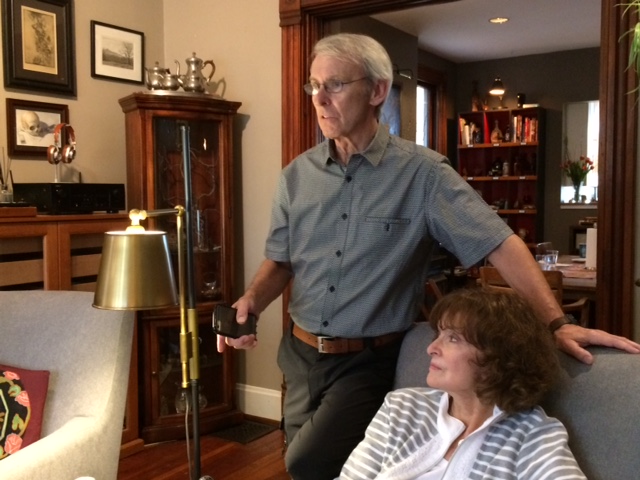
Last week, our three grown children, their spouses, and three granddaughters gathered here–in one place, at one time. Even Steve’s sister and brother-in-law were able to join us for a day.  Such gatherings do not happen often.

For Steve and me, the greatest pleasure in life is the opportunity to enjoy our children– what King Solomon called “God’s best gift” (Psalm 127:3 MSG).

He went on to say: 

How blessed are you parents,

with your quivers full of children!”

–Psalm 127:5 MSG

And what is a quiver-full?  Dr. Howard Hendricks of Dallas Seminary explained years ago that, in Bible times, a quiver most often held six arrows.  Thanks to our three children who chose their spouses wisely, Steve and I now have a full quiver–with three little arrows as well.

Oh yes, we are blessed, and always count down the days until our clan can gather once more.

Even four-year old Elena reveled in the long-awaited together time.

During the week, we  visited several parks with playgrounds…

…and even explored the zoo on Wednesday.  But perhaps some of the sweetest memories will be those associated with home…

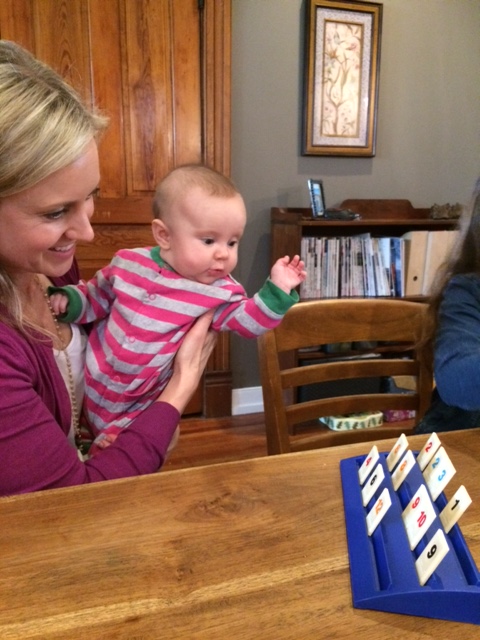
… such as one afternoon at Eric’s and Hilja’s, catching up with one another and playing games.

There were fun moments at Nana’s and Papa’s house, too.

(The Night of the Big Sleepover)

Now these moments are treasures to hold close in our hearts–not so much for what we did as for who we were with.

“Let us be grateful to people who make us happy;

They are the charming gardeners who make our souls blossom.”

–French novelist, Marcel Proust (1871-1922)

How fitting that, as the landscape blossomed last week, so did our souls–because of a family who make us very happy.

*      *      *     *     *     *     *     *     *     *

I thank you, Father, for the joy of doing life with this particular group of folks.  We may not live in close proximity, but because of you, our spirits are intertwined.  Every opportunity to be together is cause for great celebration.  And we praise you for the gift of recollection, so beautiful moments like these may live in our hearts forever.


The Final Lesson


Whether I heard it or read it, I don’t remember. But the words caught me by surprise, and I jotted them down:

“What was uppermost in Jesus’ mind as Good Friday approached?  The answer is, Joy.”

Do you find that surprising too?

Yet at least three times on the eve of his crucifixion Jesus spoke about joy (John 15:11; 16:22, 24; 17:13)–a most unexpected topic and completely unnatural.  Who thinks about joy when they know catastrophe is about to strike?

Jesus, that’s who.

Within the next twenty-four hours he would face excruciating pain, total abandonment by his Father, and the most horrific death ever devised.

But his concern was for his disciples, not himself.  Jesus wanted them to remember the important principles of love, obedience, and joy–an empowering joy that no one could take away from them.

Perhaps you remember the scene. Jesus and his disciples had just finished their last Passover supper together. After the meal, he taught his final lesson.

The first mention of joy came near the end of his teaching about the vine and the branches:


(“I have told you this

so that my joy may be in you

and that your joy may be complete.”

–John 15:11.)


The word, this, refers to the ways Jesus had just mentioned that will contribute to joy:

1.  Live close to him and produce much good in and through your life (vs.4-8).

2.  Live in obedience to Jesus and experience the warmth, peace, and care of His love (vs. 9-10).


Note that Jesus wanted his joy to be in the hearts of his disciples. What characterized his joy compared to that of others?

  1. Strong awareness of the Father’s love for him, and his own love for the Father (vs. 9-10).
  1. Absolute surrender to his Father, and the joy of doing what his father had sent him to do. Even during his great travail in the Garden of Gethsemane, his one desire was to do his Father’s will (Luke 22:42).

Jesus’ joy coexisted with the profound sorrow of impending suffering, because he was already well-acquainted with the satisfaction and fulfillment of obedience.

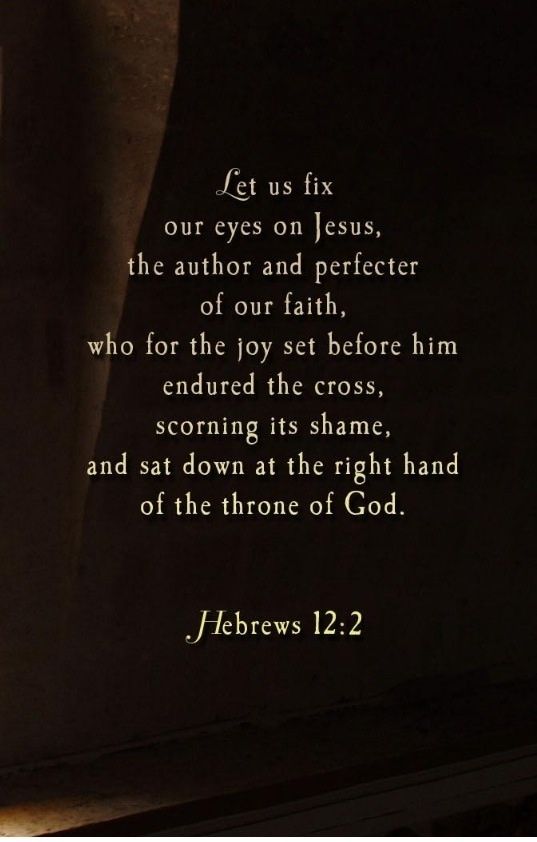
  1. The understanding that joy deferred to the future is anticipatory joy in the present. “For the joy set before him he endured the cross” (Hebrews 12:2).


And finally, Jesus told his disciples that he desired complete joy for them. What does complete joy look like? It is:

  • Not so much an emotion as it is a conviction (Keith Krell, “Moment by Moment,” http://www.bible.org).
  • Inner contentment, resulting from continually cultivating an intimate relationship with Jesus.
  • Constant, not dependent on circumstances.
  • Enduring, day after day. Indestructible.
  • Perfect—the perfect, joy-filled fulfillment of the destiny for which God created you, even when a portion of that destiny is suffering.

I’m thinking of the martyrs–Stephen, Polycarp, Ignatius of Antioch, John Wycliffe and countless others who demonstrated complete joy even as they died in anguish.


Polycarp, disciple of the Apostle John and Bishop of Smyrna for many years, refused to revile Jesus. For that he was burned at the stake.

But before the flames rose up, Polycarp prayed:

“O Lord God Almighty, Father of thy blessed and beloved Son, Jesus Christ, through whom we have been given knowledge of thyself…I bless thee for granting me this day and hour, that I may be numbered amongst the martyrs, to share the cup of thine Anointed and to rise again unto life everlasting…”

Such devotion, courage, and supernatural strength are impossible to fathom apart from the enablement of the Holy Spirit.

Can you hear the grace in Polycarp’s voice as he blessed God for the privilege of dying a martyr?

That is complete joy, only experienced by those who trust in Jesus implicitly.

Complete joy that Jesus purchased for us at Calvary.

*     *     *     *     *     *     *     *     *

We marvel, Heavenly Father, in the extreme paradox that is the cross. Out of the evil unleashed upon your Son comes your holy, righteous goodness–upon us. Out of the horror of the crucifixion that Jesus endured comes inexpressible and glorious joy, to those who put their faith in him–not a temporary feeling of elation, but deep, abiding, abundant joy. 

All praise to you, our loving, gracious God!       

(Acts 3:13-16, 1 Peter 1:8, John 6:47, John 10:10)


(Reblogged from April 7, 2015.  The Ruegg family has gathered this week for an overdue reunion.  Art & photo credits:  www.rejesus.co.uk; http://www.pinterest.com (2); http://www.wikimedia.org; http://www.heartlight.org.)

When the House is Quiet

Impressions Becoming Expressions

Mitch Teemley

The Power of Story

Still Traveling

Impressions Becoming Expressions

Living Our Days

Gaining a heart of wisdom

He Said What?!

I'm Patty, and my husband and I are living with our adult son who has autism and epilepsy. I love sharing lessons learned from life around me, especially life with Aaron.

Meditations of my Heart

Impressions Becoming Expressions

Linda Stoll

Impressions Becoming Expressions

Signora Sheila

Notes on Life, Faith & Italy

Heidi Viars

Finding the Image of God