Feeds:
Posts
Comments

Butterfly Encounter

7615789806_fecc12133d


One evening last week, before a sweltering heat wave arrived, I parked on the back deck to read. The sun had dropped behind the old oak tree to the west. Shadows danced and flickered on leaf, grass and flower; a few birds added soft background chatter.

All of a sudden I had company. A butterfly joined me, landing gracefully on my knee. I don’t remember ever being visited up-close-and-personal by a butterfly. I studied him in wonder.

Orange stripes and white splotches stood out against black and chocolate-brown wings. Along the feathery perimeter, white scallops created a fluted edge.

But what astounded me most were his antennae. Tiny black and white stripes encircled each one. And the tips appeared dipped in fluorescent yellow paint.

I didn’t dare move, anxious to prolong the magical moment as long as possible, to enjoy his presence and inspect him further.

His markings were remarkably symmetrical, and I wondered if, while in the cocoon, butterfly wings grow folded in such a way to produce the effect—much like folded-paper ink blots. (I did check online, but found no answer to this specific question. Do you happen to know?)

I  even studied the vein lines—dozens and dozens of them—some large and pronounced, others barely visible. They, too, appeared symmetrical.

For the duration of his visit, the butterfly remained quite still. I found myself stilled, too, enveloped in a sweet interlude of peace.

Twice my new friend winked his wings at me. “Good evening,” I imagined him saying. “Isn’t our Creator God amazing? ‘In wisdom he made us all. We are both marvelously made!’”*

Oh, yes. This butterfly was marvelously made alright. Stunning, actually. And I felt the beauty of the Lord upon me (Psalm 90:17)—his favor and splendor–as one of his loveliest, most graceful creatures honored me with his presence.

I was also reminded:

  • A butterfly visitation is a God-visitation, as his eternal power and divine nature are magnificently displayed (Romans 1:20).
  • God is a Master Artist. How awe-inspiring to discover such minute details as tiny, even stripes on an insect’s antennae.
  • Just as I delighted in the butterfly’s presence, God offers supreme delight to those who bask in his presence (Psalm 16:11).
  • God’s presence also offers calm and peace, not only for a moment but forever (Isaiah 26:3).
  • God’s blessings sometimes come in surprising, unexpected ways. He even provides unnecessary blessings—like butterfly landings–just because he loves us.

All too soon my delicate visitor departed. But the delight lingers, because a God-visitation is not quickly forgotten.

Psalm.......

He has caused his wonders to be remembered;

the LORD is gracious and compassionate.

–Psalm 111:4

Later, on the internet I found this picture, a member of the same family as my winged friend. His kind are known as Red Admirals.  Can you see those tiny stripes?

 

Red Admiral Butterfly


What experience in nature lingers in your mind as a God-visitation? Tell us about it in the comment section below!


*Psalm 104:24b; 139:14


(Photo credits:  www.flickr.com; http://www.allaboutgod.net; http://www.goodpixgallery.com.)


89211a5ee0ee45323b75c828d833bbb6


In one scene of What’s Up Doc? (an old screwball comedy from 1972, starring Barbra Streisand and Ryan O’Neal), a hotel concierge wants the gruff house detective to stop a particular woman from leaving the hotel.

“And how am I supposed to do that?” inquires the detective with much sarcasm.

“Use your charm,” replies the concierge.

So when the woman enters the lobby and heads for the doors, the detective…

…trips the unsuspecting victim, causing her to sprawl in a most unladylike fashion on the floor.

Charming indeed.

I dare say some folks are just about as clueless as that detective when it comes to such an illusive quality as charm. Just what is it that makes a person charming?

One important quality, for sure, is respect.

And it happens to be a biblical concept:

“Show proper respect to everyone.”

(1 Peter 2:17)

M-m-m. Everyone. Not just the people at church on a Sunday morning, or at the meeting with the boss on Monday—but with family, and those with whom we have little in common, and even those we don’t particularly like.

But how do we demonstrate such over-arching respect?

Here are ten possibilities. (And while you’re reading, consider:  Which of these strategies, when administered to you, have made you feel especially respected?)

  1. Politeness – even at home. Be on the alert for rudeness, sarcasm, and inconsiderate comments or behavior. Even family members deserve to be treated politely. Make home a haven of kindness.
  1. Tact.  Perhaps your mother was like mine, offering the frequent reminder, “THINK before you speak.” It was wise advice.

think_T

  1. Gratitude.  Never let an opportunity pass by to say “thank you” for the least of favors or the smallest of gifts. Try to be a person who notices.
  1. Thoughtfulness — demonstrates that you value the other person. Let the Golden Rule be your guide.
  1. Compliments — especially in the hearing of others. Plant a lot of positive input into the people around you, and make their souls blossom.

56f7958a5053fef8b1e517686af11ee8

  1. Focused Listening—with eyes as well as ears. Even if you can recite his last sentence word for word, but your eyes were on the door, on the kids, or on a screen (as in TV, computer, iPhone, etc.) he will assume you’re not interested.
  1. Reliability.  Keep promises and commitments; be on time for appointments or engagements. Consideration of these matters indicates you truly care about the other person.

Respect also requires that we avoid certain behaviors:

  1. Avoid comparisons to others. Suggesting that Jake be more like Zeke is deflating and demoralizing, not helpful.
  1. Avoid criticism unless absolutely necessary. Share judgments carefully, sandwiched between positive and affirming comments. NEVER criticize in front of others.

It-is-usually-best-to__quotes-by-Author-Unknown-72

  1. Avoid making corrections, especially in the company of others. Does it really matter if an event happened on Tuesday, not Wednesday, or that the car was a Ford and not a Chevy? Interrupting with unimportant corrections borders on rudeness. Yes, it does.

I’ve heard some people say, “If So-and-So wants respect, she needs to earn it.”

In my younger years, I made similar remarks, too. I wish I’d known better.

The truth of the matter is:

“The way we treat others is more about who we are,

not who they are.”

(Source unknown)

Perhaps the above list can be our guide.

So! Did you agree wholeheartedly with one or more of these evidences of respect–because you’ve been treated that way, and felt valued as a result? Tell us about it in the comment section below!

(Art & photo credits:  www.pinterest.com; http://www.wpclipart.com; http://www.pinterest.com; http://www.quotescover.som.)


The Heavens Declare

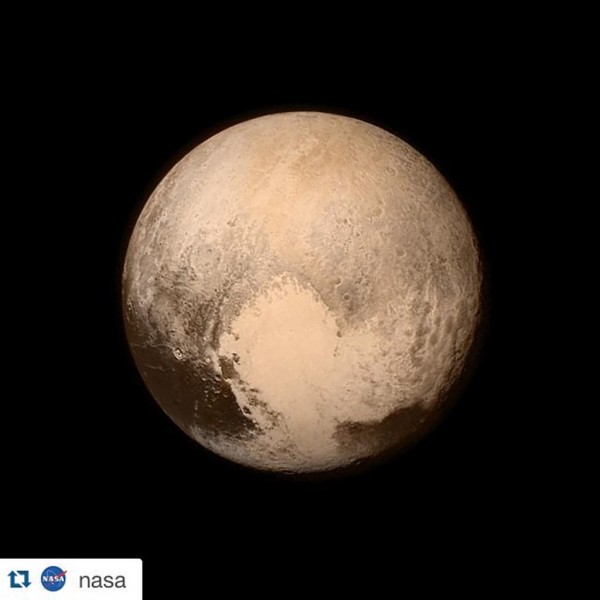
Tuesday afternoon, our older son, Eric, held up his iPhone so I could see the screen. On display was an unimpressive image of a sphere, various shades of beige to brown against a black background. Not much of an attention-grabber.

“What am I looking at?” I inquired.

pluto-best-image-new-horizons-e1436876696310

“Get ready to be amazed,” he teased. “It’s Pluto.  The New Horizons spacecraft just arrived there after a 9 ½-year flight, and sent this photo back to NASA.”

First, I was impressed by how far the spacecraft had traveled: over three billion miles. Even at thousands of miles per hour, it took New Horizons almost a decade to reach Pluto.  Incredible.

Then I noticed how well-lit the dwarf planet appeared, considering its distance from the sun (3.6 billion miles).  Also astounding.

And I marveled how a tiny sphere of rock that far-distant, is still controlled by the sun’s strong gravitational pull, keeping it in orbit within the solar system. In fact, there are even more dwarf planets beyond Pluto that are maintained in a stable, elliptical orbit around the sun.

It’s no wonder David proclaimed:

maxresdefault


“The heavens declare the glory of God;

the skies proclaim the work of his hands.”

–Psalm 19:1

We’d be smart to consider the heavens with David.  Our attention is so often focused on to-do lists, calendars, and bank accounts, we forget we’re just specks in the cosmos. Even Planet Earth is less than a tiny pinhead of matter, when compared to the universe.

Yet we view the sun as playing a supporting role in our lives, giving us light and keeping us warm. In fact, the sun is the star (pun intended!) of the Solar System Show. It occupies center stage, and accounts for 99.8% of the mass in our planetary system.

In actuality, the sun is the most important influence to our existence. It is perfect in size, perfectly distanced from earth, burning at the perfect temperature and brightness in order to sustain life here on our little planet.

Sun

Yet another sun is even more perfect.   “The Lord is a sun” (Psalm 84:11).

Just as the physical sun is a glorious object in creation, so our God is glorious in light and splendor (Psalm 104:1-2).

The sun has existed since time began, and will continue to exist until time (as we know it) ceases. God, too, spans all of time (Isaiah 40:28).

The sun is a source of incomprehensible power. To produce the same amount of energy as the sun, 100 billion tons of dynamite would have to be detonated every second! Yet our God is even more powerful. He is the Creator of our mighty sun, the sovereign Lord of the universe (Jeremiah 32:17).

The sun provides light; the Lord provides the light of his presence and understanding (Psalm 44:3; 2 Corinthians 4:6).

The sun provides warmth; our God provides the warmth of comfort and consolation (2 Corinthians 1:3).

Without the warmth and light of the sun we would soon die. Without the Light of Life (Jesus) in our lives, we would forfeit eternal life (1 John 1:5-7).

The sun’s glowing beams shed beauty and joy; our God sheds beauty and joy into our hearts (Isaiah 61:3).

mark-mawson-sun-beams-through-stormy-sky-sydney-new-south-wales-australia-pacific

*     *     *     *     *     *     *     *     *     *

Thank you, Father of the heavenly lights, for illuminating our lives from without and within.  We praise you for your dazzling splendor!  May we walk in the light of the Sun of Righteousness, and reflect his radiance to those around us.

 James 1:17; Malachi 4:2, 1 Corinthians 3:18

(Photo credits:  www.earthsky.org; http://www.youtube.com; http://www.suddenlinkfyi.com; http://www.allposters.com.)

portrait_bf

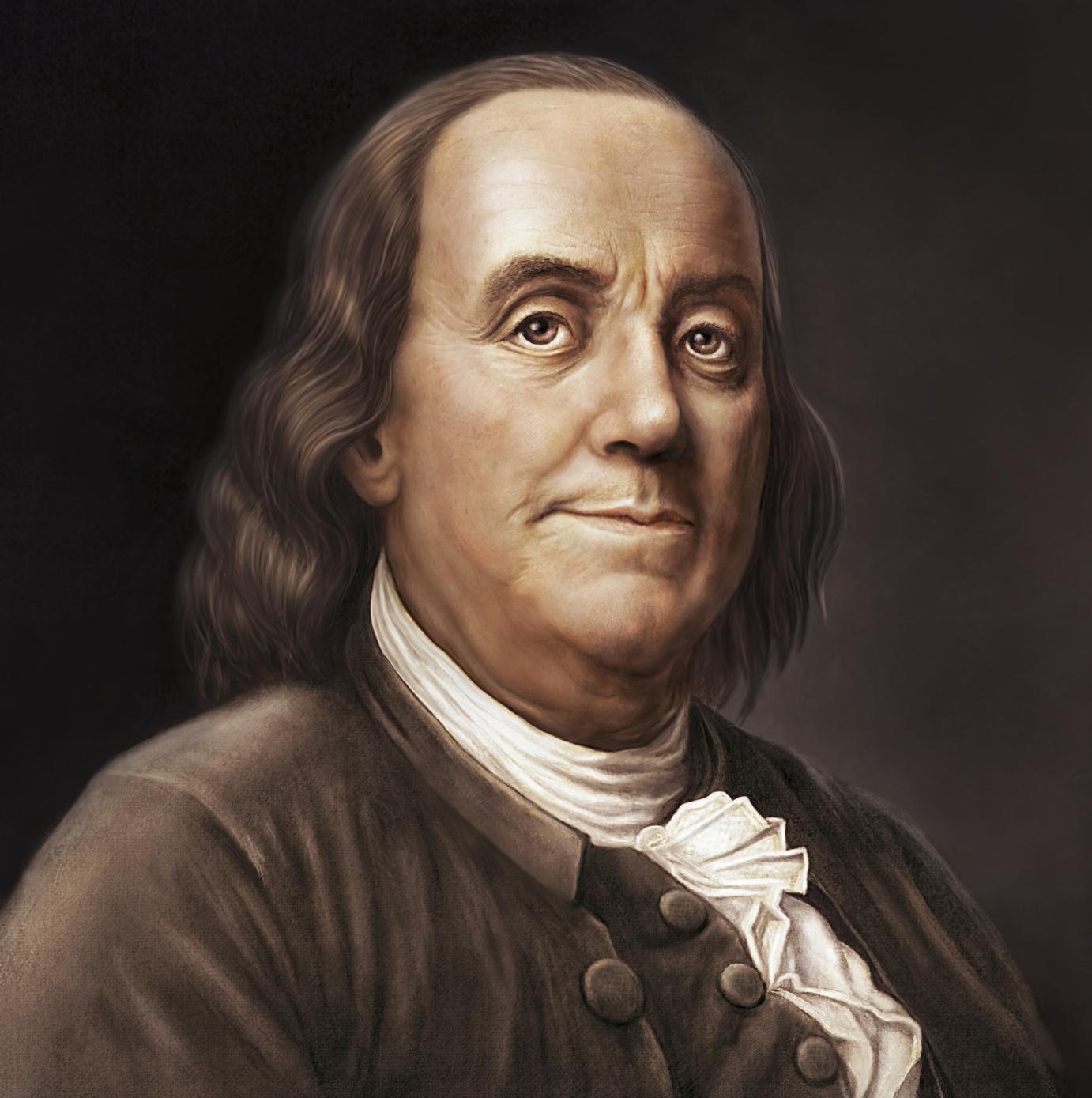
Benjamin Franklin was the thirteenth child of a humble soap-and-candle maker. Obviously, no family fortune provided him easy success in life. Neither did a stellar performance in school that would lead to scholarships. His formal education lasted all of two years, from ages eight to ten. Yet Ben became:

  • a respected publisher
  • the country’s first millionaire
  • a world-famous scientist
  • an influential voice as the thirteen colonies fought for independence and established a nation
  • a distinguished diplomat in Europe

No wonder Franklin was proclaimed a self-made man. But there are other factors, outside his control, that contributed to his success, including:

INTELLIGENCE

His varied accomplishments as writer, statesman, and diplomat prove his sharp intellect.

CHARACTER

Ben was  curious and skeptical–useful attributes for a scientist. His astuteness, sense of humor, and ability to communicate served him well as publisher of Poor Richard’s Almanac. And all of these traits came into play when Franklin participated in the forming of our nation.

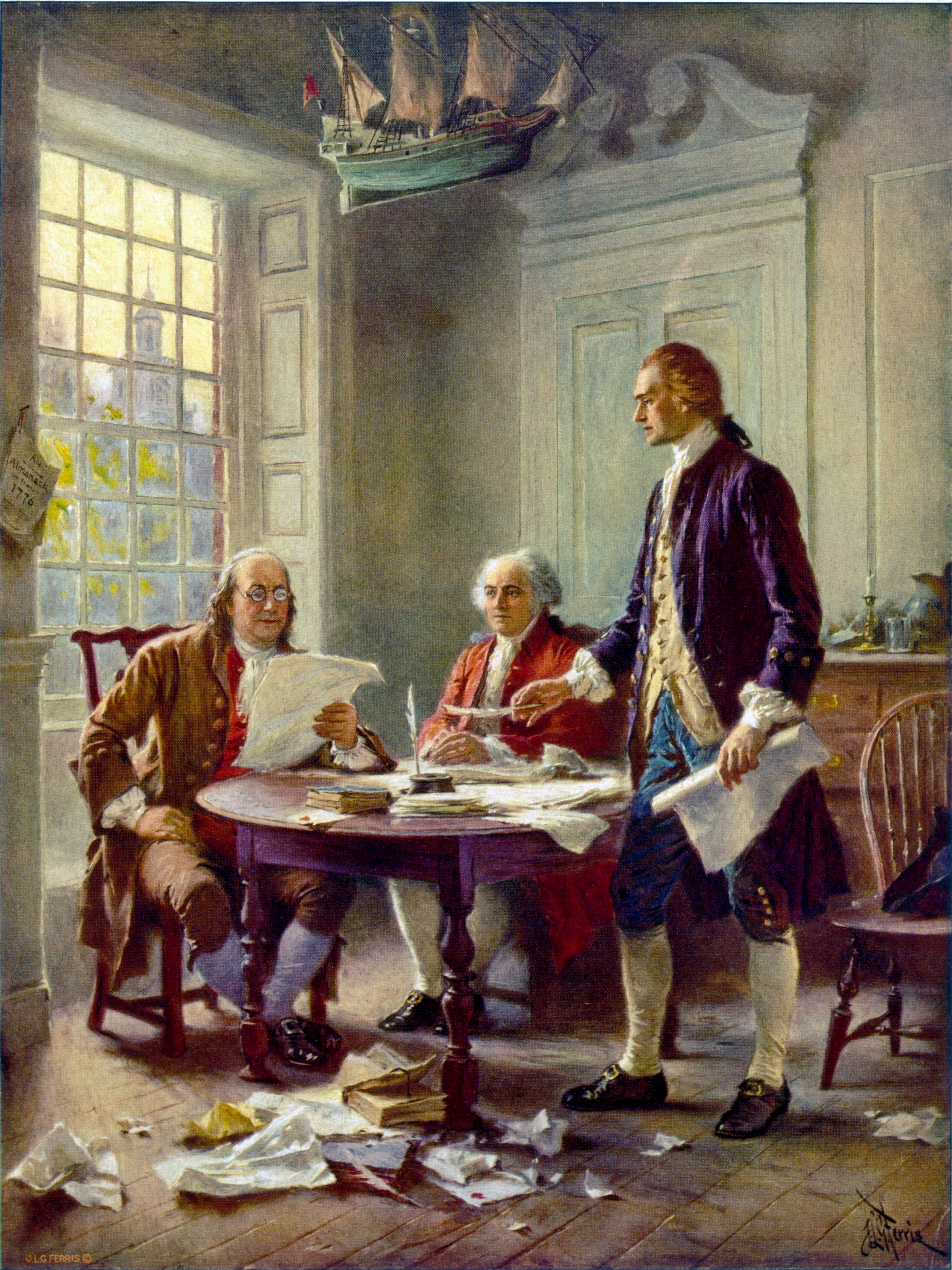
Writing_the_Declaration_of_Independence_1776_cph.3g09904

TEMPERAMENT

Surely Ben was an energetic and passionate individual. He was always in pursuit of something—things like:

  • Solving problems. Numerous inventions credited to Franklin grew out of need. For example, his desire to create more heat in his home led to his invention of the wood stove.
  • Acquiring new knowledge. Ben attempted his well-known key-and-kite experiment because of his curiosity about lightning.
  • Improving the lives of his fellow colonists. Franklin wrote, met with other delegates, sought the help of France, and more, in America’s struggle to gain independence from England. In 1789, at age 84, he was still writing and working. His cause? The abolition of slavery in America.

OPPORTUNITY

Franklin was often in the right place at the right time. One example: through his connections in the publishing industry of Philadelphia, Ben secured a contract to print the colony’s paper money.

Seems that Ben’s success had much to do with factors outside his control. These elements just mentioned–intelligence, character, temperament, and opportunity–came from God. In fact, for all of us, “Our sufficiency is from God” (2 Corinthians 3:5).

28847

In reality, the idea of a self-made man/woman is myth. No one is truly self-sufficient.

On the other hand, God has ordained work and effort. From beginning to end, scripture proclaims the value of industry. In Genesis 2:15 we see God placing Adam in the Garden of Eden to tend and keep it. In 2 Thessalonians 3:10, Paul says, “If a man will not work, he shall not eat.”

So how do we balance working with our God-given abilities and depending on God?

  1. Pray.  Thank God for the gifts he has given us.  Then prayerfully seek to determine what God is doing and cooperate with him. If we are earnest in this desire, he’ll make each step clear. As seminary professor, Howard Hendricks, used to say: God does not play hide-and-seek in the trees with his will.
  1. Nourish.  The effectiveness of our giftedness requires preparation and inspiration. Preparation includes study and practical experience. (Even a talented pianist must take lessons and practice.) Preparation includes nourishing the spirit, too, with study of scripture and practical experience of worship and service. Inspiration comes from the Holy Spirit as he works within us.
  1. Embrace.   Embrace the teaching of wise, godly leaders. Embrace the help of others. Keep in mind that self-sufficiency is not a praiseworthy quality; it’s a form of pride. The person who thinks he knows everything and needs no input, or who is too proud to ask for help, is someone to be pitied, not celebrated.

As dependents upon God, we are meant to work. As workers, we are meant to be dependent upon God.

And…

13498c445c1e1c4e8f0c84056a33f287

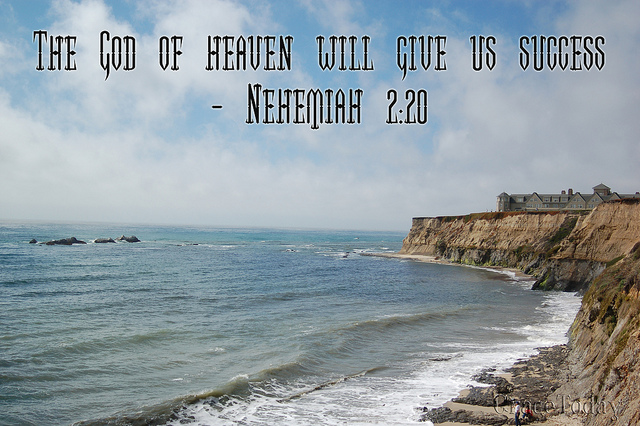
(“The God of heaven will give us success”–Nehemiah 2:20)

*     *     *     *     *     *     *     *     *     *

I praise you, Father, for being my all-sufficient God, Someone I can trust completely for guidance, direction, and training. Help me find that balance between working for you and depending on you. May I not neglect preparation, but also look to you for inspiration.  And may I be a humble, grateful recipient of help.  Amen.  

10256822_s-300x200

Years ago, friends of my parents decided to name their second son after a family member: Glenn Allen. But as the little guy began to demonstrate his extrovert personality (with humor and lots of energy!), they chose to legally have his name changed. Glenn just didn’t fit the bouncy, talkative toddler he had become.

Glenn Allen became Peter Glenn. But then someone in the family started calling him Breezy, for the way he merrily careened through life. And that’s the name that stuck.

Just as Breezy’s parents desired a personality-defining name, Old Testament patriarchs called God by new names as his personality, as well as his power, were revealed to them.

For example, Abraham was the first to call God, Jehovah-jireh (the Lord Will Provide), when God produced the ram to take the place of Isaac on the altar (Genesis 22).

31118_000_011_09

Hagar, a servant girl in Abraham’s household, was the first to call God, El Roi (the God Who Sees), when she fled to the desert (Genesis 16).

Other names given by Old Testament personalities include:

  • Jehovah Nissi (the Lord Is My Banner), proclaimed by Moses after the defeat of the wicked Amalekites (Exodus 17).
  • Jehovah Shalom (The Lord Is Peace), declared by Gideon as God prepared him to defeat Israel’s enemy, the Midianites (Judges 6).
  • Jehovah Raah (The Lord my Shepherd), given by David in Psalm 23.

I wonder, dare we create new names for God—names that indicate those moments when our understanding of him was enriched? For example:

  • El Pele (The God Who Surprises)

Home_Depot_Store_Wide

Last summer, shortly after moving into our new house, we headed out to purchase tools and supplies. Our neighbor happened to be in her yard, and we stopped to introduce ourselves. In the conversation Steve mentioned an electrical problem we were experiencing that required a trip to Home Depot.

“Well, be sure to ask for Bill*,” she said. “That’s my husband and he just happens to work in the electrical department there.”

Sure enough, Bill was able to help us purchase what we needed. He even stopped by when his shift ended to work on our circuit breakers.

  • El Naphash (The God of Catharsis)

St.-Petersburg-Beach-Florida-Sunset

How often has God sent encouragement, exactly when needed, or provided respite and refreshment during a stressful time?

Years ago one Sunday morning, I sat in church with Kleenex pressed to my cheeks.  The tears would not stop.  In two weeks we would be sitting in a new church, in a new community, where my pastor-husband had been assigned by our denomination.  Soon our five years with this congregation on the Florida Gulf Coast would only be memories.  It seemed much too soon to say good-bye.

After church, Garry and Cindy approached us.

“Listen,” Garry explained.  “I just won a weekend getaway at one of the hotels out on the beach, and we want you two to have it.”

After a bit of “Oh-no-we-couldn’t-possibly” and “Yes, we insist,” Steve and I consented.  I worried that the packing and long to-do list wouldn’t be completed on time; Steve thought we were on track.  (Turned out, we were!)

For two blissful days we forgot about boxes and focused on beach walks, shell gathering, and sunsets over the Gulf.  We returned home refreshed and reenergized to finish the tasks at hand.

Through Garry and Cindy, God provided the stress-relief we desperately needed.

  • El Neshamah (The God of Ideas) 

inspiration

Numerous times over the years I’ve needed ideas for: 1) teaching concepts to my elementary students, 2) communicating truths to Sunday School classes or Bible study groups, or 3) a fresh perspective in a blog post.  Numerous times God has supplied.

Sometimes I hear or read some little snippet, and God turns that spark into an idea.

One Sunday, not long ago, the worship leader used three words within the same prayer: salvation, restoration, and transformation.   For the next day or two I collected more  ____-tion words, thinking they might be expanded into a post somehow. The result? “Oh God,” published June 18.

Praise God he is always revealing himself in fresh, new ways, inspiring greater trust in him and informing us more fully of his character and provision.

*     *     *     *     *   *     *     *     *     *

To our God of Never-Ending Glory: Thank you for your love and faithfulness expressed in countless ways. You are holy and magnificent, yet you crown us with goodness and compassion, blessing and honor.  You care about every aspect of our lives.  For these reasons and more, we praise your glorious name(s)!

What new name would you declare for God, based on your experiences with him?  Share your contribution in the Comment section below!

*Name changed.

(Art & photo credits:  www.growingyourbaby.com; http://www.lds.org; http://www.dailytech.com; http://www.floridaescape.com; http://www.633woman.com.)

father-playing-with-kids-in-park

Lauren’s husband, Mike, was the quintessential family man. He took the kids to the park, in order to give Lauren a break from mothering and homeschooling. He pitched in with the folding of laundry and the execution of science experiments. He quickly turned the Honey-Do list into Honey-Did, because Mike actually enjoyed puttering around the house, making repairs and improvements.

One Saturday he climbed up on the roof to check for a leak around the chimney. Somehow he lost his footing, tumbled to the ground, and hit his head on the cement driveway. He never regained consciousness, and died the next day.

FOR THOSE WHO GRIEVE

When such unspeakable tragedies occur to those we know and love, what words can we say to the family in order to comfort or help? Every possibility seems terribly inadequate:

  • “Mike was such a good guy.”
  • “We’re going to miss him.”
  • “We are so sorry.”

Actually, those three statements offer good places to begin.  Experts in grief support tell us that affirming the positive qualities of the loved one is very meaningful to a grieving family. A short story that highlights one of those qualities is also appropriate. The assurance that the loved one will be missed offers comfort as well.  And even a simple but heartfelt “We-are-so-sorry” communicates caring and support.

FOR THOSE WHO SUFFER

In addition to the loss of a loved one, there are other situations that may be less traumatic, but still leave us tongue-tied, wondering what we can say—situations like divorce, lay-offs, scandal, and serious illness.

Again, we’d do well to turn to the experts who tell us to:

  • Express sympathy. “I am so sorry you are going through this tough time.”
  • Offer affirmation. “I’ve always been impressed by your _____.”  Then name the strengths and personality traits that will be especially valuable during this time of trial. Such encouragement may help her see that God has equipped her, and he will see her through.
  • Listen.

Serious-Conversation

Yes, just listen.

Perhaps instead of worrying about saying the right thing, we’d be wise to let the hurting person share what’s on her heart.

A listening ear is a precious gift we can give in a world that overflows with chatter from electronics, technology, family, friends, coworkers, neighbors, etc. In fact, there seem to be more talkers these days than listeners.

Rearrange the letters of listen and you can make the word silent. To be good listeners we have to be silent and let the other person talk, uninterrupted. However, communication should still occur through:

  • eye contact, which indicates our interest and her importance to us,
  • facial expressions, as we respond to her words,
  • brief comments or questions now and then, that indicate we’ve heard her.

FOR THOSE WHO ARE DISCOURAGED

It is vital that we keep each other supported because Satan and his cohorts constantly whisper lies into our spirits. Lies such as:

“Who do you think you are anyway? And what makes you think you’re capable of accomplishing anything worthwhile? You are inadequate, unimportant, and practically useless. Get to the back of the line where you belong!”

The truth is: We’re sons and daughters of the King.  He has created each of us with spiritual gifts and talents to fulfill a specific purpose.

We can affirm others with such comments as:

  • “I am so glad God created you with _____.”  Again, name the strengths, talents, and personality traits that you admire.
  • “You know what else I appreciate about you?” Share your observations of her being courageous or wise or persevering—whatever might encourage her most, considering her current circumstances.
  • “For these reasons and more, I count it a great privilege to know you.”

Such “pleasant words are like honeycomb, sweetness to the soul and health to the body” (Proverbs 16:24).

honey(pp_w350_h233)

*     *   *     *     *     *     *     *     *     *

Father, I thank you for the privilege of being your voice, to minister encouragement to others. You’ve given us your heart to express love and compassion to a hurting world. We pray for your Spirit’s wisdom and strength to be at work in us and through us, because we so desire to offer your right words at the right time.

(Photo credits:  www.visualphotos.com; http://www.thecripplegate.com; http://www.celebrationchurchlive.com.)

picnic-table

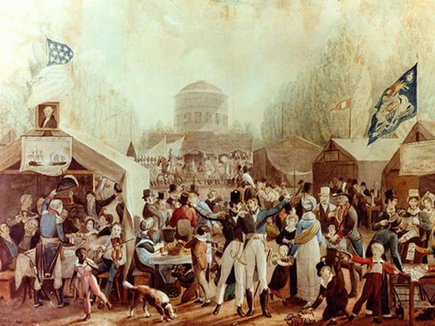
During my growing up years, the Fourth of July was usually celebrated at an extended-family picnic, attended by aunts, uncles, and lots of cousins. At least two tables were required for the hamburgers, hot dogs, numerous side dishes, homemade lemonade, watermelon, and Grandma’s pies and cookies.

But the highlight of the celebration didn’t happen until dark: sparklers and fireworks. What a delightful wonder to stare into a sizzling starburst and spin circles and figure-eights with a thread of light.

And then, after much painful waiting, the real show would begin. Fireworks.

A soft phoom alerted us to each explosion of color.

My favorite was a yellow-orange burst that would remain brilliant for several moments, as each spark gracefully drifted downward. The effect resembled a mammoth weeping willow tree, lit from within.

Independence Day celebrations on The Mall in Washington on July 4, 2008.

I wonder, how did the custom of fireworks become a tradition for Independence Day?

Here is what I discovered.

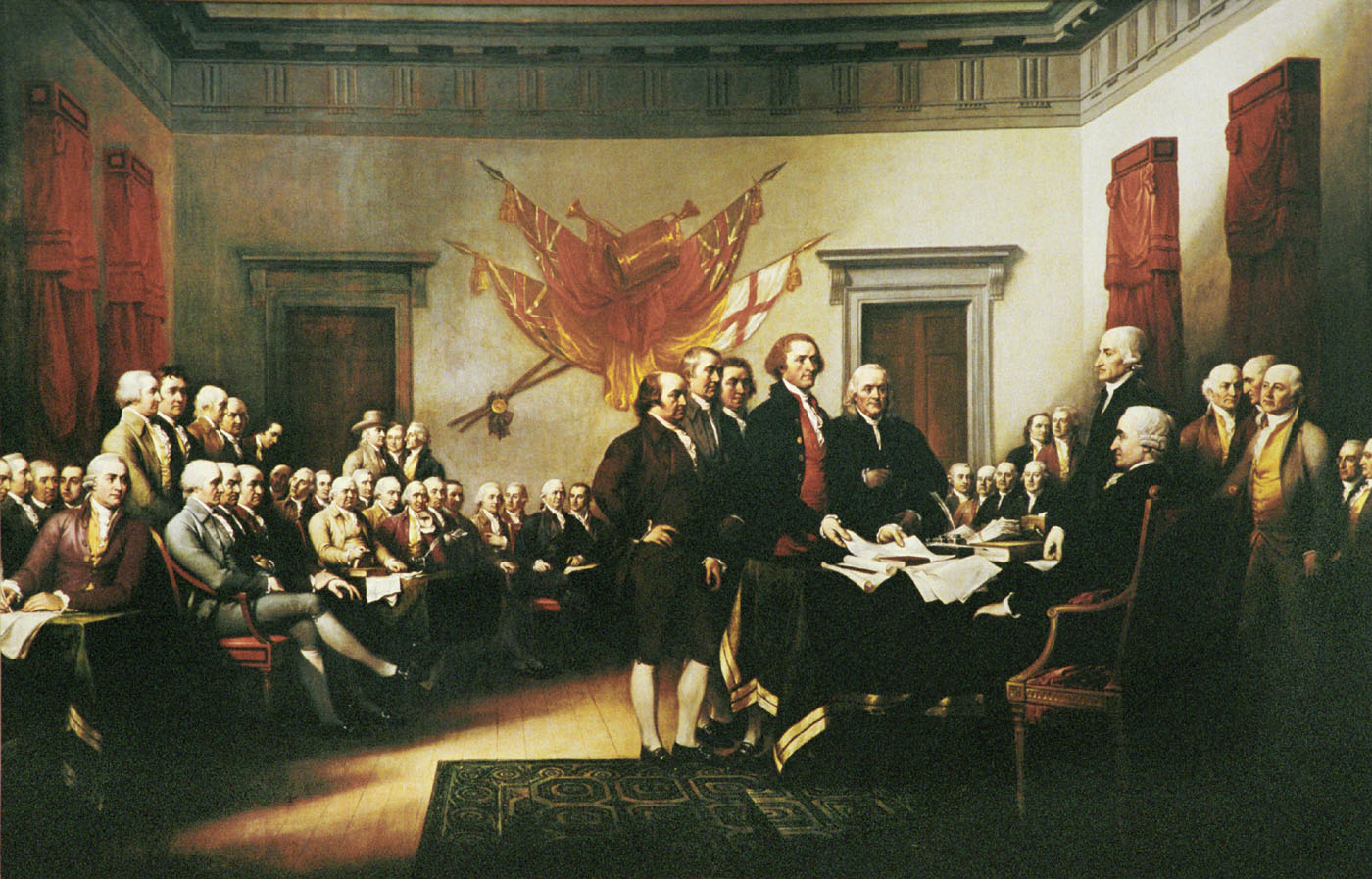
It began with founding father, John Adams, in a letter to his wife, on July 3, 1776. Just the day before, fifty-six patriots had signed the Declaration of Independence. Mr. Adams thought that would be the day the new nation would celebrate. Instead, it would be the day after, July 4, when the final wording of the Declaration was approved.

trumbull-large1

Following, in bold print, is an excerpt of Mr. Adams’ letter to Abigail. The inserted comments are my own thoughts.

“The second day of July 1776 will be the most memorable epoch in the history of America. I am apt to believe that it will be celebrated by succeeding generations as the great anniversary festival.”

John Adams correctly predicted the importance of this event to Americans. The first great anniversary festivals occurred the next year in Philadelphia and Boston. Such commemoration caught on quickly throughout the thirteen colonies.

435_colonialfourth

“It ought to be commemorated as the day of deliverance, by solemn acts of devotion to God Almighty.” 

Now that would be a worthy addition to our Fourth of July gatherings. Solemn acts of devotion to God Almighty might include prayers of thanksgiving and praise for our great nation, then asking God for his continued guidance and blessing upon America.

“It ought to be solemnized with pomp and parade, with shows, games, sports, guns, bells, bonfires, and illuminations, from one end of this continent to the other, from this time forward forever.”

DCParade1Edit

That word, solemnized, caught my attention. It means, “to celebrate or observe with formal ceremonies or rites.” Although Mr. Adams and other patriots would no doubt approve of family picnics and parties with friends, our choices of activities ought to be respectful of the Declaration and the lives lost to achieve and uphold our independence.

“You will think me transported with enthusiasm, but I am not. I am well aware of the toil and blood and treasure that it will cost to maintain this Declaration and support and defend these States.”

Again, John Adams’ words were prophetic. Eight long years of toil, from 1775 to 1783, were required for the colonists to achieve freedom from Britain. The blood of 25,000 patriots paid for that freedom and the treasure of 400 million dollars.

Pyle-Painting

Of those who signed the Declaration, nine died in the conflict, five were captured and treated brutally, several lost family members, twelve had their homes completely burned, and seventeen lost everything they owned.

“Yet through all the gloom I can see the rays of ravishing light and glory.”

Even with his vision of ravishing light and glory, Mr. Adams could not have imagined the growth of prosperity in America. No country on earth has enjoyed such rich and varied resources, provided such strong influence in the world, and so generously offered aid across the globe when needed.

1_aerial_farmscape

Then again, perhaps God did give Mr. Adams a glimpse into the future, when he wrote: 

“I can see that the end is worth more than all the means; that posterity will triumph in that day’s transaction, even though we [may regret] it, which I trust in God we shall not.”

Posterity has indeed triumphed, and John Adams was blessed to witness firsthand the beginnings of that triumph, as the thirteen colonies became a nation.  He helped negotiate the Peace of Paris, which ended the Revolutionary War. He served as vice-president under Washington, and became the second U. S. president in 1796.  Before his death on July 4, 1824, he witnessed the Louisiana Purchase and the annexation of eleven more states.

United_States_1805-07-1809

  John Adams recognized that the principles which resulted in such triumph would never change:

“The general principles on which the fathers achieved independence were the general principles of Christianity. I will avow what I then believed, and now believe, that those general principles of Christianity are as eternal and immutable as the existence and attributes of God.”*

 Indeed. A republic such as ours cannot survive unless its citizens live by certain principles, including integrity, compassion, and personal responsibility. Such Christian principles cannot be legislated; they must come from the heart.

The ravishing light and glory John Adams declared for our nation can be achieved and maintained no other way.

God help us.

*     *     *     *     *     *     *     *    *     *

*This last excerpt from a letter to Thomas Jefferson, June 28, 1813.

(Art & photo credits: http://www.dianacarbonell.com; http://www.pinterest.com; http://www.ushistory.org; http://www.mentalfloss.com; http://www.theepochtimes.com; http://www.groundreport.com; http://www.discovernewengland.org; http://www.wikipedia.org.)

“You have given me the shield of your salvation,

and your right hand supported me,

and your __________ made me great.”

–Psalm 18:35 (EST)


What word would you put in that blank?

  • Power?
  • Grace?
  • Mercy?


The word chosen most often by translators* may surprise you. It certainly surprised me.

“Your GENTLENESS made me great.”

In addition to being surprised, I was puzzled. How can God’s attribute of gentleness make a person great?

A good place to begin our search for understanding is the background of this psalm.  It was written by King David, perhaps during his later years. He may have been pondering the incredible progression of his life from lowly shepherd boy to exalted king.


89446669


Surely young David never even daydreamed of becoming the most powerful man in Israel, as he sat on the hillsides of Bethlehem watching over his father’s sheep.

Neither could he have known at least fifteen years would pass between his anointing as king (a ceremony indicating a setting apart) and his actual coronation.

And contrary to human logic, those intervening years would not be spent as a student in preparation, but as a fugitive and outlaw, running for his life.  Seems like such a waste of time, doesn’t it? As David hid from King Saul in the Cave of Adullam, did he wonder, Lord God, what ARE you doing?

In hindsight we can see that God was gently teaching and preparing David his way, with practical, hands-on lessons such as:


d61f0ae266f6e653dd1702ccdb3a4b40


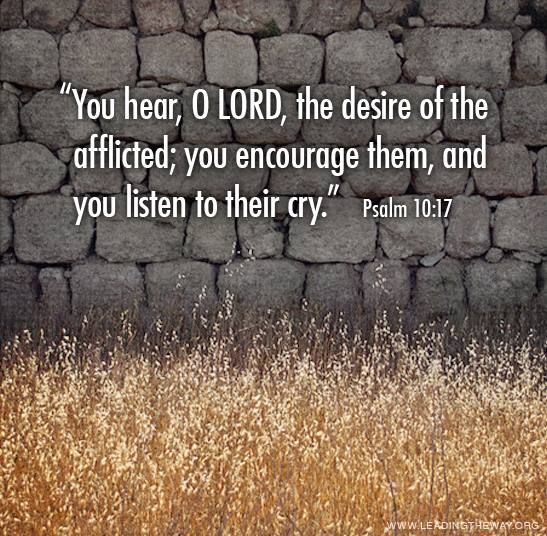
  • The Lord hears the prayers of the afflicted and encourages them (Psalm 10:17).
  • The Lord’s unfailing love can be trusted (Psalm 13:5).
  • The Lord gives wise counsel (Psalm 16:7).
  • The Lord is like a rock. His people can take refuge in him (Psalm 18:2).
  • There is no need to fear evil, because the Lord is always present with his own (Psalm 23:4).

One definition of gentle is “considerate or kindly.” God certainly demonstrated gentleness of this nature by endowing David with certain character traits–traits that would serve him well as monarch over Israel:


david-goliath-carousel


  • Courage—most obvious, perhaps, when teenaged David took on nine-foot-plus Goliath (1 Samuel 17)
  • Perseverance—when he spent those years waiting for God’s plan to be fulfilled, all the while fleeing from Saul’s vengeful rage (1 Samuel 19-2 Samuel 1)
  • Cleverness—on display when David pretended madness in order to avoid death at the hands of the Philistines (21:10-15)
  • Restraint—when he twice resisted the opportunity to kill Saul before the king killed him (chapters 24 and 26)
  • Respectability—During his years as a fugitive, six hundred men gathered in support of David and fought with him (27:3-4).


Another definition of gentle is “tender hearted.” No doubt it was with a tender heart that God:

DAVIDHARP


  • Bestowed upon David  the gifts of poetry and music (1 Samuel 16:18)
  • Demonstrated his wonderful love (Psalm 31:21)
  • Forgave David (32:1-2)
  • Remained faithful to him (57:3)
  • Protected David in the shadow of his wings (61:4)


But here’s even better news about God’s gentleness: It wasn’t reserved just for David or other Bible heroes. God displays his gentle nature to all of his children, every day.

In hindsight, we, too, can often see God’s gentle teaching and preparation for what he has called us to do. (If you’re in the middle of that process, rest assured those tough life-lessons you’re enduring now will not be for nothing!)

Second, with kind and gentle consideration, God has bestowed upon each of us specific character traits that qualify us to accomplish his plans. (And that plan isn’t complete until we hear the angels sing!)

Third, God has surely demonstrated his gentle, tender-hearted love for us, beginning with the death of his Son on a cross and ending with…

…well, there is no end to his faithfulness, grace, mercy, attentive care, peace, joy, and more.  How glorious is that?

And though it’s very doubtful you or I will ever be great monarchs like David, we can aspire to greatness in God’s eternal kingdom.

How? By serving him wherever we are with the specific gifts and traits he has given us.

Jesus spoke that truth very clearly:


deb571b6619a70af4ad01348af4191b3

(“The greatest among you will be your servant.” –Matthew 23:11)


*     *     *     *     *     *     *     *     *     *

I praise you, God, for your gentleness that tenderly prepares us for our purpose, kindly endows us with attributes for that calling, and graciously showers us with the benefits of your character, all throughout life.

Help me, I pray, to be compliant under your tender hand, ready and willing to follow your gentle lead, and generous to bestow upon others the graces of your character which I have enjoyed.  Amen.


(Photo and art credits:  www.panoramio.com; http://www.pinterest.com; http://www.donnarios.com; http://www.plusii.blogspot.co.uk; http://www.pinterest.com.)


* www.biblehub.com provides easy access to twenty translations of the Bible. Fifteen out of twenty include the word “gentleness” at the end of Psalm 18:35, or a synonym: humility, lowliness, or meekness.

Munttar17

In a desert land he found him,

in a barren and howling waste.

He shielded him and cared for him;

he guarded him as the apple of his eye

(Deuteronomy 32:10, italics added).

Notice the verbs: found, shielded, cared for, and guarded. Just as God watched over the Hebrew nation in the wilderness, God is surely watchful over each of us. See if these stories trigger memories of your own–when God found, shielded, cared for, and guarded you.

FOUND:

Growing up in a Christian home, I learned about Jesus before taking my first steps. At age four, after hearing the crucifixion story, I asked Jesus to be my Savior and constant Companion. Even as a preschooler, I understood my need for Someone to take the punishment I deserved for my naughtiness, so I could receive God’s gift of eternal life. If Jesus was willing to suffer and die in my place, how could I say, “no?”

81dcb5dcf618c976c041e845ebb0dd25

Praise God he seeks after lost sheep—even the little ones (Luke 15:4)!

Where did God find you?

 SHIELDED:

Numerous times over the years I have felt shielded from harm, including serious car accidents.

One time while approaching a stoplight, I hit a rain-slicked patch of city street, with cars in front of me and a bus to the right. My car began to slide and swerve; I started pumping the brakes. But there was no way to stop soon enough and avoid collision with the slowing line of vehicles ahead.

I took a chance and turned a bit to the right, hoping beyond hope there would be enough room for me to squeeze ahead of the bus, where the lane was open. Surely God intervened and created the needed space. (I think he also alerted the bus driver to apply his brakes and leave room for me!) My car did come to a safe stop, with room to spare.

God has shielded me in other important ways, too. He’s protected me from life-choices that would have led me down treacherous paths. He’s saved me from unhealthy relationships.

Psalms_28-7

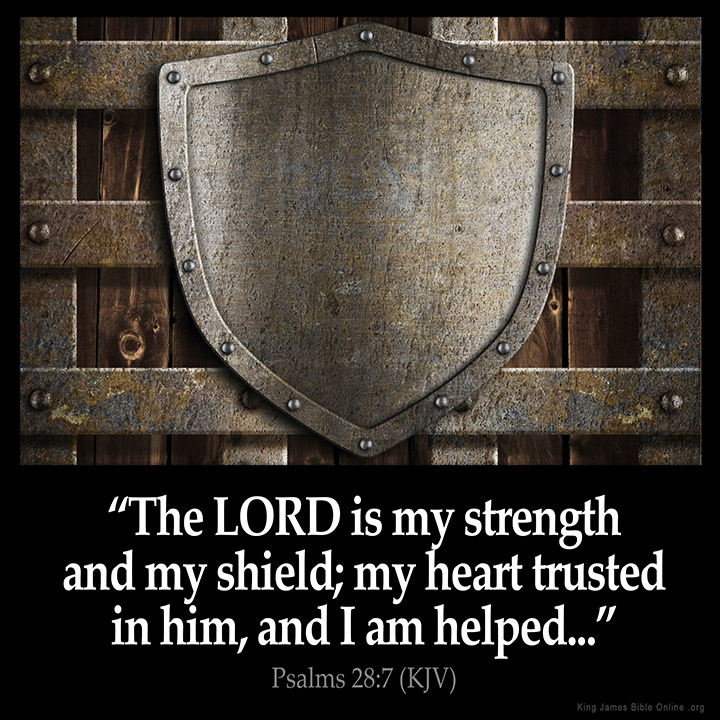
Praise God he is our shield! We can trust in him, and receive the help we need (Psalm 28:7).

How has God shielded you?

CARED FOR:

I couldn’t find the dental insurance form I needed to drop off at Dr. H.’s office. Jeremy (our younger son and a middle schooler at the time) assisted me in a thorough search.  No form. While out on my walk, it suddenly occurred to me the form may have been gathered up with the newspaper. Sure enough, that’s where it was. Being Wednesday, those papers—and the dental form—should have been long gone in the recycling truck, but Jeremy was saving newsprint for his art teacher. God not only revealed to me the location of that form, but kept it safe, saving me the hassle of getting a new one and filling it all out again.

a6b7d3947c75be26393ae18a51f35ccc

Praise God for his loving attention, even in small matters like dental forms (1 Peter 5:7)!

How has God cared for you?

GUARDED:

One spring day in 1985, an elderly gentleman hit the gas pedal instead of the brake, at the stop sign on our corner. He drove his station wagon right through the garage wall. Several feet more to the right and he would have plowed into our daughter’s room, and she was playing there at the time. The driver was protected, too, sustaining only minor injuries.

god-of-the-bible-gcsrw-25-638

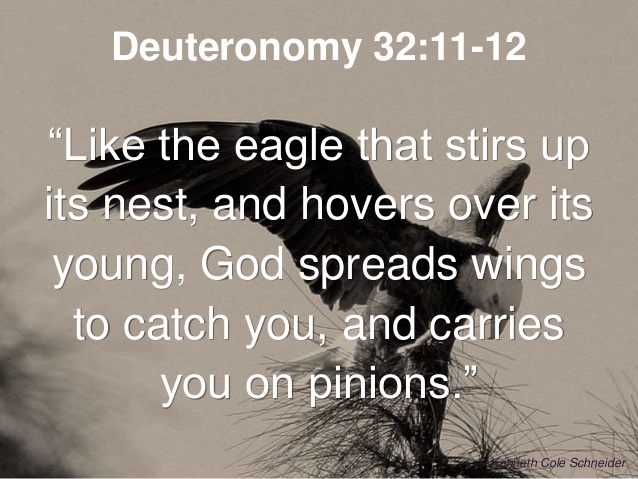
Praise God he guards us like an eagle, hovering over its young (Deuteronomy 32:11).

How has God guarded you?

THE APPLE OF HIS EYE:

The last phrase of Deuteronomy 32:10 explains why God is so attentive to his people. We are the apple of his eye. Some translations replace apple with pupil. God protects us as the pupil of his eye.

Just as our eyesight is precious to us, so we are precious to God.

As we’re careful to provide protective care for our eyes, shielding them from danger, for example, so God provides loving, protective care of us.

May we continually praise our God for all he is to us. First, he found us, and then became our attentive Shield, Provider, and Guard.

bbd550f7373b204033320b16c5638e3c

(“You make me glad by your deeds, O Lord; I sing for joy at the works of your hands” — Psalm 92:4.)

 In the Comments below, please share your personal stories of how God found you, or how he has proved himself as your Shield, Provider, and Guard. Let’s celebrate together God’s powerful deeds on our behalf!

(Art and photo credits:  www.biblewalks.com; http://www.pinterest.com; http://www.kingjamesbibleonline.com; http://www.imagefriend.com; http://www.slideshare.net; http://www.pinterest.com.)


FORTUNE COOKIE WITH BLANK FORTUNE

‘Cracked open a fortune cookie not long ago and discovered this bit of wisdom:

“It’s not the years in your life,

but the life in your years

that counts.”

Come to find out, that’s not from Confucius or any other Chinese sage.  It’s from a beloved, former U.S. president, Abraham Lincoln.

Many folks might interpret this proverb to mean:

Live each day to the fullest; a full life is a meaningful life.

But what brings fullness to the day? And what makes a life meaningful?

The answers to those questions lie in another collection of proverbs, not found in fortune cookies, but in the Bible:

  1. A meaningful life comes from finding favor with God and with others (Proverbs 3:4; 21:21). 

Proverbs 3:3 names the qualities that garner favor: faithfulness and love.

It’s true.  Those two character traits play out in goodness, generosity and grace. Without fail, that kind of person experiences great satisfaction in her relationships. After all, that’s how God designed us (Acts 20:35).

“A full life cannot be measured by the quantity

but rather the quality of one’s relationships

with others and with God.”

–Warren Mueller

  1. A meaningful life comes from living wisely (Proverbs 8:35).

And just how do we do that? By applying integrity to our actions, discretion in our conversations, and prayerful, Spirit-led discernment in our decisions.

“Wisdom is the power to see

and the inclination to choose

the best and highest goal,

together with the surest means of attaining it.”

–J. I. Packer

And wisdom leads to peace of mind, contentment, and a clear conscience—important foundation stones for a meaningful life.

  1. A meaningful life comes from internalizing God’s ways (Proverbs 11:28, 21:21). 

These proverbs, (11:28 and 21:21), provide a corollary to the previous one. A wise person follows the course of conduct established by the Father of Wisdom and revealed in the Bible.  He made us; he knows the best way for us to live.

Countless millions have devoted their lives to the accumulation of stuff, the pursuit of fame, and the climb to a position of power.

Yet King Solomon (who had it all) proclaimed: “Meaningless! Meaningless! Utterly meaningless! Everything is meaningless” (Ecclesiastes 1:2).  Did you notice that four words out of seven in that verse are the same?   “Meaningless!” I hear a bit of frustration in Solomon’s voice, don’t you?

Wouldn’t it be wise for us to avoid the mistakes he made? Maybe we should post that verse on the fridge, to keep us grounded in what really matters: God’s purpose for our lives.

“No real meaning exists

apart from linking our lives

to God’s purpose.”

–John Maxwell

  1. A meaningful life comes from reverencing God (Proverbs 14:27; 19:23). 

And reverence includes honor, respect, adoration, and awe. Embracing these attitudes toward God leads to deep satisfaction, complete peace, and true joy, because:

“The man who has God as his treasure

has all things in One.”

–A.W. Tozer

  1. A meaningful life comes from trusting God (Proverbs 16:20b).

God alone knows me better than I know myself. He alone is aware of what’s going on in the lives of those around me. And he alone can see into the future. Why do I think I’m capable of moving ahead on my own?

Even when trouble comes to call, I can rest assured that such experiences have purpose and meaning (Romans 8:28).

I would do well to remember: 

“Relinquishment is a prerequisite to fulfillment.”

–Eugene Peterson

  1. A meaningful life comes from an attitude of humility (Proverbs 22:4).

Humility is the proper perspective of oneself, especially in relation to God. He is all-powerful, all-wise, all-seeing, and more. Reminding ourselves of his magnificence is one way to foster humility.

Another way is to be thankful. A full, satisfied life is grounded in humble gratitude.

“Gratitude can transform common days into thanksgiving,

turn routine jobs into joy,

and change ordinary opportunities into blessings.”

–William Arthur Ward (italics added)

M-m-m. Living thankfully, joyfully, and blissfully aware of each blessing. Yes, that does sound like a highly satisfactory way to live.

*     *     *     *     *     *     *     *     *     *

Service, Wisdom, Obedience, Reverence, Trust, Humility, and Gratitude.  That’s a long list, Lord.  Perhaps the full, meaningful life is out of reach for me.  Oh, but if I consider the interrelatedness of these qualities, the reach is shortened considerably.  Obedience includes service, and reverence naturally leads to humility.  Humility includes gratitude, and trust leads to wisdom.  Most important of all, YOU want all of your children to experience life to the fullest. Oh, how  I praise you for your direction and provision to make that happen! 

(John 10:10; Philippians 1:6; 2 Peter 1:3)  

(Photo credit:  www.kitchendaily.com.)


When the House is Quiet

Impressions Becoming Expressions

Mitch Teemley

The Power of Story

Still Traveling

Impressions Becoming Expressions

Living Our Days

Gaining a heart of wisdom

He Said What?!

I'm Patty, and my husband and I are living with our adult son who has autism and epilepsy. I love sharing lessons learned from life around me, especially life with Aaron.

Meditations of my Heart

Impressions Becoming Expressions

Linda Stoll

Impressions Becoming Expressions

Signora Sheila

Where faith meets la dolce vita

Heidi Viars

Finding the Image of God