Feeds:
Posts
Comments

Posts Tagged ‘Faith’

Jesus-Praying-Last-Supper-570x377


Whether I heard it or read it, I don’t remember. But the words caught me by surprise, and I jotted them down:

“What was uppermost in Jesus’ mind as Good Friday approached?

“Joy.”

Do you find that surprising, too?

Yet at least three times on the eve of his crucifixion Jesus spoke about joy (John 15:11; 16:22, 24; 17:13)–a most unusual topic and completely unnatural.  Who thinks about joy when they know that catastrophe is about to strike?

Jesus, that’s who.

Within the next twenty-four hours he would face excruciating pain, total abandonment by his Father, and the most horrific death ever devised.

But his concern was for his disciples, not himself.  Jesus wanted them to remember the important principles of love, obedience, and joy–an empowering joy that no one could take away from them.

Perhaps you remember the scene. Jesus and his disciples had just finished their last Passover supper together. After the meal, he taught his final lesson.

The first mention of joy came near the end of his teaching about the vine and the branches:

“I have told you this

so that my joy may be in you

and that your joy may be complete”

(John 15:11).

The word, “this,” refers to the ways Jesus had just mentioned that will contribute to joy:

1.  Live close to him and produce much good in and through your life (vs.4-8).

2.  Live in obedience to Jesus and experience the warmth, peace, and care of His love (vs. 9-10).

 Note that Jesus wanted his joy to be in the hearts of his disciples. What characterized his joy, compared to that of others?

  1. Strong awareness of the Father’s love for him, and his own love for the Father (vs. 9-10).
  1. Absolute surrender and self-sacrifice of himself to his Father, and the joy of doing what his father had sent him to do. Even during his great travail in the Garden of Gethsemane, his one desire was to do his Father’s will (Luke 22:42).

Jesus’ joy coexisted with the profound sorrow of his impending suffering, because he was already well-acquainted with the satisfaction and fulfillment of obedience.

  1. The understanding that joy deferred to the future is anticipatory joy in the present. “For the joy set before him he endured the cross” (Hebrews 12:2).

And finally, Jesus told his disciples that he desired complete joy for them. What does complete joy look like? It is:

  • Not so much an emotion as it is a conviction (Keith Krell, “Moment by Moment,” http://www.bible.org).
  • Inner contentment, resulting from continually cultivating an intimate relationship with Jesus.
  • Constant, not dependent on circumstances.
  • Enduring, day after day. Indestructible.
  • Perfect—the perfect, joy-filled fulfillment of the destiny for which God created you, even when a portion of that destiny is suffering.

I’m thinking of the martyrs–Stephen, Polycarp, Ignatius of Antioch, William Tyndale, John Wycliffe and countless others who demonstrated complete joy even as they died in anguish.

Polycarp, disciple of the Apostle John and Bishop of Smyrna for many years, refused to revile Jesus. For that he was burned at the stake.

But before the flames rose up, Polycarp prayed:

“O Lord God Almighty, Father of thy blessed and beloved Son, Jesus Christ, through whom we have been given knowledge of thyself…I bless thee for granting me this day and hour, that I may be numbered amongst the martyrs, to share the cup of thine Anointed and to rise again unto life everlasting…”

Such devotion, courage, and supernatural strength are impossible to fathom apart from the enablement of the Holy Spirit.

Can you hear the grace in Polycarp’s voice as he blessed God for the privilege of dying a martyr?

That is complete joy, only experienced by those who trust in Jesus implicitly.

Complete joy that Jesus purchased for us at Calvary.

*     *     *     *     *     *     *     *     *

We marvel, Heavenly Father, in the extreme paradox that is the cross. Out of the evil unleashed upon your Son comes your holy, righteous goodness–upon us. Out of the horror of the crucifixion that Jesus endured comes inexpressible and glorious joy, to those who put their faith in him–not a temporary feeling of elation, but deep, abiding, abundant joy. 

All praise to you, our loving, gracious God!       

(Acts 3:13-16, 1 Peter 1:8, John 6:47, John 10:10)


(Photo credit:  www.rejesus.co.uk.)


Read Full Post »

 cartoon-little-green-men-5535229


I was talking to a few aliens the other day–little green guys from outer space–trying to explain some earth-phenomena, since life in their galaxy is so different from ours.

First, a bit of background to explain what prompted the conversation.

Elena, our two-year old granddaughter, and I were exploring the church grounds across the street from her house.  She loves looking for treasures: sticks, stones, acorns, leaves, etc.


tumblr_ml0oqnNcYG1r68th6o1_1280


On this particular day I noticed the oak trees sporting chubby little buds. Another pair of trees were bursting with bud-clusters, ready to explode into bright pink finery.

Elena and I inspected the juvenile growth. I tried to explain what would soon happen. But with no remembrance of last spring, her understanding was no doubt very limited. I might as well be explaining this to an alien, I thought.

That’s when my imagination kicked in.

What if inhabitants from another galaxy did come to visit Earth? And what if they had never seen buds or seeds before?  Imagine trying to educate them on the process of germination…

“Now, inside this seed is the beginning of life. If we plant it in soil, making sure to choose a sunny spot, and we shower it with water when the weather doesn’t supply rain, it will grow into a plant, bush, or tree.”

They look at me with doubt in their big, round eyes.

“I know it seems impossible. The seed is just a small, lifeless speck.  But I can tell you, having seen it happen repeatedly, that’s what seeds do.”

So the little green guys and I plant the seed in a sunny spot and shower it with water.

A few moments later, one of them wants to dig it up to see the first signs of life.

“Oh, no,” I explain. “It takes time for the water to seep into the seed and for the miracle of germination to take place. But believe me. If we come back in a week or ten days, there will be a little green shoot coming up out of the soil in that very spot.”


Oak sapling


They like the idea of green, but shake their little round heads in disbelief.

I have to admit.  The progression of tiny seeds to plants, much less tall trees, does sound ludicrous.

And yet that’s exactly what God does.

Sometimes our lives resemble brown, lifeless seeds. There is no sign of hope that circumstances might change for the better.

Sometimes we think it’s too late for a reversal of destiny. It seems our best, productive years are behind us.

Not so fast.

Consider George*, our friend who has retired.  Twice. During his first career, George worked his way up in law enforcement to chief of police; his second career, associate pastor. Ten years or so later, he and his wife moved north to be near family.  When the boxes were unpacked and the pictures hung on the walls, George sat down and thought, Now what? I’m not ready to park on the porch and drink iced tea. What can I do, Lord?

No immediate answer.


four-men-walking-on-a-golf-course


One day George went golfing with his brother-in-law. They were paired with two more men at the course, to make a foursome. One just happened to be a high-ranking officer on the police force. As George and Tom* became acquainted, Tom expressed how they needed a chaplain on the force to minister to the officers. Stress was high, their jobs becoming more and more difficult as the years passed.

George’s heart started beating faster. A chaplain to police? Could this be the answer to his prayer? It would almost be like a merger of his first two careers into one challenging and fulfilling third career.

Yes, it was. For the next five or six years, George served as chaplain of police in his new community, impacting hundreds of lives in the name of Jesus.

We’ve all known people whose circumstances looked as promising as brown, lifeless seeds. Yet God caused miraculous change, and the lives of those folks burgeoned into glorious fruitfulness.

We can learn like those little aliens of my imagination. We can feed our hope by feasting on the miraculous springtime evidence around us. We can wait with confident expectation for the fulfillment of God’s plan.

And if hope seems all but gone, we can cling to the Source of hope.


romans_15_13_the_power_of_the_holy_spirit_powerpoint_church_sermon_Slide03


(“May the God of hope fill you with all joy and peace as you trust in him, so that you may overflow with hope by the power of the Holy Spirit”–Romans 15:13.)


*Names have been changed.


(Art & photo credits:  www.dreamstime.com; http://www.brilliantbotany.com; http://www.imagkid.com; http://www.allposters.fr.; http://www.slideteam.net.)


Read Full Post »

life-is-not-fair


“Here’s something that happens all the time and makes no sense at all: Good people get what’s coming to the wicked, and bad people get what’s coming to the good. I tell you, this makes no sense.”

Haven’t we all said or at least heard such comments? It’s a fact: life is not fair. But knowing it and accepting it are two different responses.

That quote above came from a guy who had it all—fame, wealth, and power. If anyone could claim that life had been fair to him, it was this guy. Yet in spite of the veneer of an enchanted life, he, too, experienced disappointment and confusion.

What was his name? King Solomon, the wisest man who ever lived. Those sentiments of his at the beginning of the post come from Ecclesiastes 8:14, as interpreted in The Message.

No doubt you’ve experienced your share of disappointment and confusion, too. Perhaps you’re floundering right now, desperately in need of a handhold to keep you from falling.

Selwyn Hughes, that wise, Welsh pastor from a generation ago, recommends we fight uncertainty with certainties.

Certainties would include truths from scripture that apply to our situations. Truths that we can hold tightly in our hearts, such as:

  1. God is in control over the difficulties as well as the blessings. Yes, he could rescue us from trouble in an instant. But in his infinite, all-knowing wisdom, he has chosen not to. The reasons why may never be revealed. What we do know is this: God never acts or withholds action without purpose.

 Think of Joseph, a poster-child for unfair treatment. Yet, to the brothers who sold him into slavery, he said, “You intended to harm me, but God intended it for good to accomplish what is now being done, the saving of many lives” (Genesis 50:20).


Joseph-brothers-reunited


God brings good out of all things—even the problems, hurts, and pain (Romans 8:28).

  1. God has you in his mighty hand—mighty in power (Psalm 89:13), mighty to save (Zephaniah 3:17), mighty in deed (Jeremiah 32:19).
  1. Out of his infinite might, God will provide strength to get us through. “God is our refuge and strength, an ever-present help in trouble” (Psalm 46:1).
  1. Even as we plod through adversity, “The Lord is good to those whose hope is in him, to the one who seeks him” (Lamentations 3:25). That goodness includes his comforting presence, his provision, his blessings in the midst of difficulty, and more.

King Solomon also observed:

“The good life is reserved to the person who fears God, who lives reverently in his presence,…the evil person will not experience a “good” life. No matter how many days he lives, they’ll all be as flat and colorless as a shadow—because he doesn’t fear God” (Ecclesiastes 8:12-13, The Message).

 In other words, life with God is far superior to life without God–no matter what.

These certainties are just a few God has graciously provided in his Word that can be applied when uncertainty threatens. But if you’re like me, simply reading them doesn’t help for very long. “Out of sight, out of mind” happens frequently.

Perhaps we can make the most of God’s promises by:

  • Keeping a list, particularly those that apply specifically to our situations. As the list grows, so will our faith.
  • Copy especially meaningful promises on Post-Its and tuck them in unlikely places. When we spot them they’ll provide a pleasant surprise and uplift. Possibilities include: inside a cabinet door, on the coffee container, on the dashboard. Move them every week to keep the surprise (and uplift) fresh.
  • Memorize promises while doing mindless tasks like washing the dishes, waiting at red lights, taking a walk. Soon you’ll be able to pray the promises back to God—anytime, anyplace–to bolster your spirit and strengthen your faith.


 Rainbow


Let’s stand on the certainties of scripture and God’s promises because:


“To stand is more important than to understand.”

–Selwyn Hughes, Every Day Light


*     *     *     *     *     *     *     *     *     *


Thank you, Heavenly Father, for the handholds in scripture, the truths and promises that help us keep our balance, so we can stand in the midst of adversity. Although I do not understand why troubles and heartache sometimes attack, I do understand that you are unequivocally reliable and you will see us through. I praise you, for you are the strength of my heart (Psalm 73:26b).


(Photo & art credits:  www.mygratitudelife.wordpress.com; http://www.ncbv.org; http://www.sjeciowa.org.)


Read Full Post »

 picture-uh=715ce81d4af48c56d62e992073bfe9-ps=3da463e4536b201b56c385877e59a7

 (Photo from http://www.trulia.com.)

“There it is, Mom, “ Steve remarked, as he pointed to a little white house in the middle of a city block. “That’s where we lived when I was growing up.”

“Oh, yes,” she replied. But did Mom really remember?

We were on an excursion through Columbus, Ohio, taking Steve’s mother past the landmarks of her life. Alzheimer’s disease had already stolen away much of her vibrancy and warmth, and, of course, her memory.

 corner

Steve drove by West High School and continued his commentary. “That’s where we all went to school, you, Dad, Karen, and me. You were the very first homecoming queen.  How about that?  No wonder Dad asked you out.”

She murmured assent to Steve’s comments, but added nothing of her own.

 unnamed

We drove past the brick ranch they built out in the country in 1966. Horses used to reside beyond the back fence. Just a few houses had dotted the area back then. By this time, however, they had been swallowed up by dozens more. The saplings Mom and Dad had planted were now tall shade trees.  And the glorious flower beds and window boxes that Mom had tended were gone. She registered no recollection.

 unnamed

But when we approached her childhood home, a white Dutch Colonial on a quiet street, all of a sudden she perked up.  Pointing to a second-story window, Mom stated firmly, “That was my room, right up there.”

In the midst of the fog that is Alzheimer’s, one memory–one glimmer of light–shone through that morning. Steve and I almost gasped at the wonder of the moment. Mom remembered!

And the rarity of her memories pointed to the preciousness of this ability. Memory is a gift to be treasured. The older I grow, the more I appreciate the miraculous power of the brain to store millions of memories—with astounding detail–and yet access a particular one in a mille-second.

 1033249144001_2034162247001_900944612-159-1355440419795

Not only do sights trigger memories, but also smells. Researchers say this sense is the most powerful memory-inducer. For me, the aroma of fresh-baked bread always takes me back to my grandmother’s kitchen.

Sounds trigger memories as well—particularly music. Tastes and textures work the same phenomenon.

But surely God had more purpose in mind for giving us memory than the pleasant pastime of reminiscing.

Indeed.

Memories foster gratitude, as we contemplate God’s goodness to us in the past:

  • His countless blessings (even when we haven’t been a blessing to him).
  • Those times he led us through the shadow of death, so that we might experience more completely the glory of his light.
  • Moments when we almost gave up hope, and God surprised us with his creative, abundant provision.
  • Leaving behind what we once were and celebrating what we have become, solely because of his Son, Jesus.

Memories foster faith, as we remember how God has met our needs in the past. See if each phrase from Psalm 103 doesn’t trigger a memory in your mind, and a song of praise in your heart:

“Oh, my soul, bless God,

Don’t forget a single blessing!

He forgives your sins—every one.

He heals your diseases—every one.

He redeems you from hell—saves your life!

He crowns you with love and mercy—a paradise crown.

He wraps you in goodness—beauty eternal…

…God makes everything come out right.

He puts victims back on their feet…

…God is sheer mercy and grace;

Not easily angered, he’s rich in love.

He doesn’t treat us as our sins deserve,

Nor pay us back in full for our wrongs.

(Psalm 103:2-10, The Message)

Memories inform the present and provide hope for the future. As we meditate on all those times God has wrapped us in his goodness (v. 5), we are strengthened for what we face today. As we consider the many times he made everything come out right (v. 6), we can trust he will continue to make our paths straight.

Of course, there are some memories we would like to erase—those that generate sadness, hurt, or regret. How do we deal with those? Here are a few suggestions I’ve collected over the years:

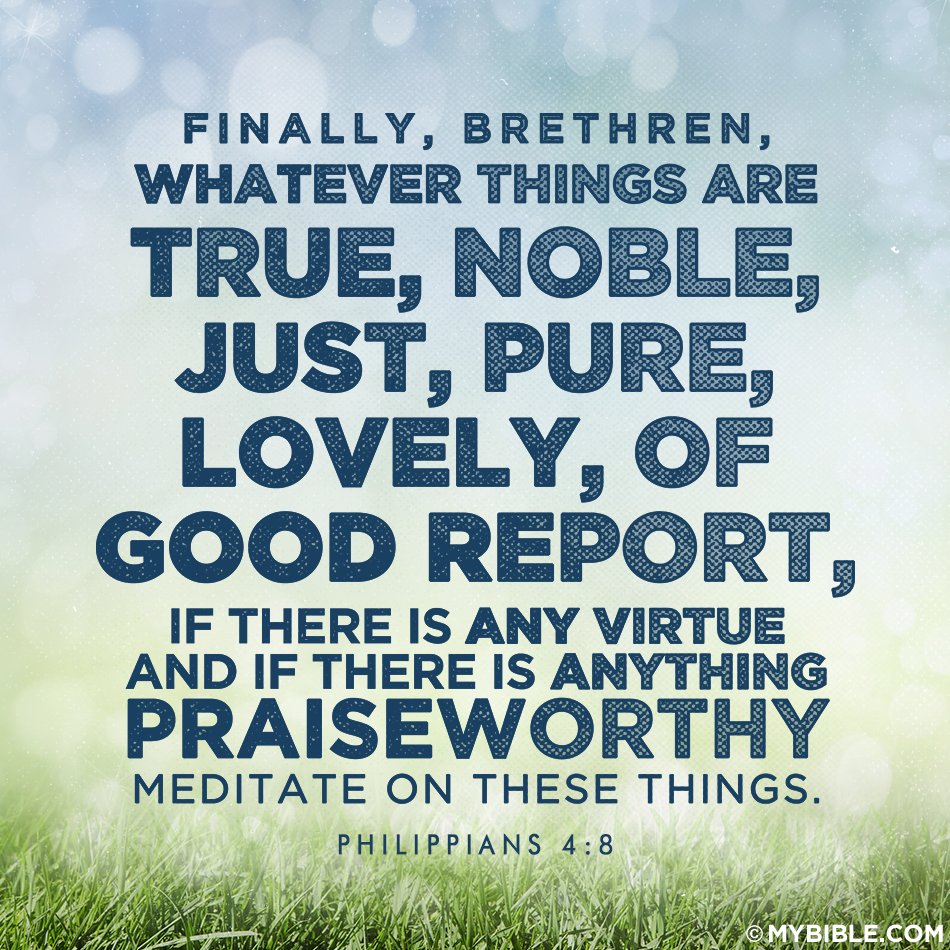
  1. We must resist self-pity—even in our thought life. Nowhere in scripture do we read that rehashing the negative is therapeutic. God’s way is to focus on the positive (Philippians 4:8).

Phil-4-8


  1. We can follow Paul’s example. He forgot what was in his past and pressed on to what lay ahead (Philippians 3:13). Not that amnesia had set in. Paul simply did not allow past failures to cripple his relationship with God and his service for God. God had forgiven and forgotten; Paul did too. No doubt he applied Philippians 4:8, not only to self-pity, but also to guilt. 
  1. We can leave the past in God’s hands. Oswald Chambers said it so well:

 c6d7d32bbdc18d2507a48f8aefa26359

(“Leave the irreparable Past in His hands, and step out into the Irresistible Future with Him”

–My Utmost for His Highest, Dec. 31.)


*     *     *     *     *     *     *     *    *     *    

Father, I do thank you for the gift of memories—the ability to remember with joy and appreciation the people, places, and experiences of the past. I even thank you for the not-so-good memories, knowing that you use every difficult situation for the development of my maturity (James 1:2-3). And may I take advantage of the wisdom gained in the past to guide me in the present, and lead me into the Irresistible Future with you.


Art & Photo credits:  www.trulia.com; http://www.westhighalumni.com; Steve’s photo collection; http://www.allrecipes.com; http://www.god.com; http://www.pinterest.com.

Read Full Post »

 Pretend you’re on an ocean liner that has embarked from New York City and is sailing to England.   You and several thousand other passengers enjoy your days at sea, free to choose from dozens of activities—games, shopping, shows, sports, crafts, and more.

You can eat anytime you like, sleep whenever you feel drowsy, make friends among the other passengers, or remain solitary. In other words, you make many choices during the voyage, but all the while the ship is headed towards its predetermined destination.

A.W. Tozer gave us this illustration in his classic, The Knowledge of the Holy, to help us understand God’s sovereignty:

  • Our all-powerful God has total authority in the universe, just as the shipping authorities exercise sovereignty over the course of a ship.
  • We have been given much freedom, within the confines of God’s sovereignty, to move about and make choices.

Now some folks take issue with God’s control. They want to direct the course of their life-ships.  I, for one, find great comfort in the numerous, reassuring scriptures about God’s sovereignty.

For example, everything in heaven and earth belongs to Him. He is the glorious head over all, the ruler of all things (1 Chronicles 29:11-12). That includes us–those who know Jesus and belong to the family of God. As our Heavenly Father, he provides for our needs, guides us through decisions, bestows many blessings, and more. What encouraging truth! The Almighty God of the universe is in charge of our lives, as we submit to him. We don’t have to navigate alone.

The key, however, is submission. God is a gentleman and will not force himself upon us. He has chosen to limit his sovereignty, to allow man free choice.

Another reassuring truth: God is totally competent. We’ve all known inept leaders who could not fulfill their responsibilities. But our Ruler is supremely capable.  Nothing is too hard for him (Jeremiah 32:17).  As we focus on his complete sufficiency, our worries shrink in significance.

In addition, no plan of God’s can be thwarted (Job 42:2).   What God says, happens.

His sovereign plan is efficient and goal-oriented. He works out everything in conformity with the purpose of his perfect plan (Ephesians 1:11).

God’s sovereignty is also employed with infinite wisdom (Job 12:13).  No foolish decisions come from God’s throne!

And contrary to appearances, he does maintain over-arching rule on mankind (Jeremiah 32:27). That would include the barbaric Babylonians of Jeremiah’s day, who destroyed Jerusalem, murdered the nobles of Judah, and took thousands of Jewish captives to Babylon.  God’s over-arching rule also applies to the wicked forces creating havoc in our day.

Good people are often hurt in the process, and it breaks our hearts.   Every century has had its martyrs for the faith. And our questions of why God allows bad things to happen to good people don’t always get answered. We’re not privy to everything God knows or to all the reasons behind his decisions (Romans 11:33-36).

What we do know is this: Evil never wins in the end. Every evil empire of history that rose in prominence and power eventually fell in ruin. Our sovereign God knows what he is doing. He will have the last word.

So when the squeaky wheels of worry, doubt, or fear begin to spin in your head, and you wonder, Is God in control?, apply the oil of gladness in who God is—our all-powerful, all-knowing, all-wise, and yes, in-control God!

Take joy in the knowledge that “If God is for us, who can be against us” (Romans 8:31)?

And rest in the affirmation that “from him and through him and to him are all things” (Romans 11:36, emphasis added).

*     *     *     *     *     *     *     *     *     *

Sovereign Lord of the universe, we bow in worshipful wonder of your magnificence. Your greatness shatters all boundaries! We stand in awe of your vast power and infinite wisdom, always at work in the world.

“And when I cannot understand” [your plan or your ways], “help me just to stand” (Selwyn Hughes).

Read Full Post »


Title

Have you ever heard statements like these?

  • “Oh, yes.  God wants me to be happy. He’s promised to give me the desires of my heart.”
  • “If you have enough faith, anything you ask of God can be yours.”
  • “God will take care of me. I don’t need to budget or plan ahead.”
  • “I can’t help it if I’m moody; that’s the way God made me. He understands.”

Any person who holds such beliefs can point to a verse or two in scripture, proving their points.

The problem is, the Bible was not written in brief, stand-alone statements. Bible truths are based on the context of the whole. Historical and literary understanding are also important.

Another problem? We wish for God to conduct himself in a certain way.  We even find scriptures that seem to back up our desires. But the truth is, we must know God as he is.

If we don’t, we’re living in confusion.

“The sooner we accept God as he is, and do not imagine him as we would like him to be, the sooner we will move from the path of confusion to confidence” (Selwyn Hughes, 1928-2006, Welsh pastor and author).

However, so much of God is beyond our understanding.


ecclesiastes11_5


“Just as [we’ll] never understand

the mystery of life forming in a pregnant woman,

so [we’ll] never understand

the mystery at work in all that God does.”

Ecclesiastes 11:5, The Message.

Our finite brains cannot fully comprehend our infinite God. But that shouldn’t stop us from learning and experiencing all we can.

Learning comes from the Bible. In its pages we find a glorious treasure trove of wisdom, encouragement, and guidance.

Experience comes through exercising our faith.

“If we begin to worship and come to God again and again by meditating, by reading, by prayer, and by obedience, little by little God becomes known to us through experience” (Saint Bernard of Clairvaux, twelfth century monk).

It is impossible to fully explain this life of faith, just as you can’t fully explain what it’s like falling in love, getting married, or becoming a parent. Words fail to describe such beautiful and strong emotions.

We had to trust those who told us:

  • “You’ll know you’re in love when it happens to you.”
  • “Your wedding day will be the best day of your life to that point.”
  • “Perhaps the only ‘high’ better than falling in love or getting married is holding your newborn baby in your arms for the first time.”


slide_353491_3844254_free


Similarly, we have to trust what God tells us through his spokesmen in the Bible. For example:

“He is the Rock, his works are perfect,

and all his ways are just.

A faithful God who does no wrong,

upright and just is he.”

Deuteronomy 32:4

You might want to read that third line again. Our God is faithful—reliable, loyal, and completely trustworthy. HE. DOES. NO. WRONG.  Now that’s Someone in whom we can place our confidence!

Here is another example of scripture-truth about him:


ddc66ab5b08721b26a4ea53ab1bba3b7

 “Righteousness and justice

are the foundation of [God’s] throne;

love and faithfulness go before [him].”

Psalm 89:14

Those four characteristics—right-doing, justice, love, and faithfulness—are the bedrock of who our God is. Everything he does flows from those attributes, including difficult circumstances and painful events that make no sense to us.

“Our inability to discern why bad things sometimes happen to us does not disprove God’s benevolence; it merely exposes our ignorance” (Ravi Zacharias and Norman Geisler, Who Made God? And Answers to Over 100 Other Tough Questions of Faith, p. 46).

Someday we will understand why such events occur. For now we must trust.

But our trust is not blind. We can be confident in our God because:

“True faith rests in the character of God” (A.W. Tozer).


(Art & photo credits:  www.whatmykidsread.com; http://www.photobucket.com; http://www.huffingtonpost.com, http://www.pinterest.com.)

Read Full Post »

(In honor of Black History Month)


Isabella, the daughter of James and Elizabeth Baumfree, was born a slave in New York state about 1797. No one knows the exact date, because birth records weren’t kept for “property.”

Did her parents know the name means, “consecrated to God?” Even if they chose the name for its meaning, those parents could not have dreamed of the future awaiting their Baby Belle.

Her early years were difficult.  Belle was sold five times, several times to cruel masters.

At age eighteen or so, Belle fell in love with Robert, a young slave from a nearby farm. The couple had a daughter. But Belle’s master, John Dumont, forbade her to see Robert again. According to the law, all children of the union would belong to Robert’s master, not Dumont.

Two years later, Dumont forced Belle to marry an older slave. They had three children: Peter, Elizabeth, and Sophia.

In 1826, Belle escaped the Dumont farm with Baby Sophia. In a vision, God showed her a particular home to go to. That home belonged to a Quaker family, the Wageners, who took in the young woman and her baby. They even paid Belle’s price to Dumont and made her a free woman. Belle became a housekeeper, then a maid.

Shortly after her escape from slavery, Belle learned that her five-year old son, Peter, had been illegally sold in Alabama. She took the matter to court and won her case. Peter was returned to New York. That was the first time a black woman challenged a white man in a U.S. court. It was also the first time of many that Belle’s resolve and courage were put on display.

Several years later Belle was falsely accused of poisoning her former employer. In 1835 she took that case to court and won again.

Someone must have encouraged Belle to tell her story of being a slave and becoming a free woman. But she had never learned to read or write, so a friend wrote as Belle dictated. A Northern Slave was published in 1850.

In her book, Belle explained that several years after she was freed, God revealed himself to her, “with all the suddenness of a flash of lightning, showing her, in the twinkling of an eye, that he was all over, that he pervaded the universe, and that there was no place where God was not.”

The book sold many copies and Belle became well-known. She was asked to speak at a women’s rights convention in Massachusetts. Before long, Belle was traveling with abolitionist, George Thompson, speaking against slavery and for human rights.

In 1851, Belle gave a speech at another women’s conference, this time in Ohio. She spoke convincingly (and extemporaneously) about women being every bit as capable as a man:

“I have plowed and reaped and husked and chopped and mowed, and can any man do more than that?”

And, no doubt with a twinkle in her eye, she added:

“As for intellect, all I can say is, if a woman have a pint, and a man a quart — why can’t she have her little pint full? You need not be afraid to give us our rights for fear we will take too much, for we can’t take more than our pint’ll hold. The poor men seems to be all in confusion, and don’t know what to do. Why children, if you have woman’s rights, give it to her and you will feel better. You will have your own rights, and they won’t be so much trouble.”

She concluded by asking: “And how came Jesus into the world? Through God who created him and the woman who bore him. Man, where was your part?”

It’s not surprising that some were displeased with Belle’s speeches. One time she was told that the building where she was to preach would be burned down if she dared to speak. “Then I will speak to the ashes,” she replied.

Belle was also physically assaulted. One brutal attack caused permanent injury, and she had to walk with a cane for the rest of her life.

In 1863, Harriet Beecher Stowe wrote an article about Belle for the Atlantic Monthly:

“I do not recollect ever to have been conversant with anyone who had more of that silent and subtle power which we call personal presence…She seemed perfectly self-possessed and at her ease. An audience was what she wanted—it mattered not whether high or low, learned or ignorant. She had things to say, and was ready to say them at all times, and to anyone.”

Imagine. A slave woman who never had the opportunity to go to school, never learned to read or write. Yet the power of her spoken word helped bring the end of slavery and pave the way for women to be granted the right to vote.

Belle proved:

“There is no difficulty that cannot be defeated.

There is no victory that cannot be achieved,

if you believe in the power of God!”

— Anonymous

Of course, by the time she achieved notoriety, Belle was known by another name.

You see, Belle had asked God for a new name several decades before the Civil War. Again, it was the result of a vision. She said God chose her new first name based on the fact she would travel. Then Belle asked God for a second name, “’cause everybody has two names.” And the Lord granted her request. Her second name proclaimed what Belle always declared from her podium.

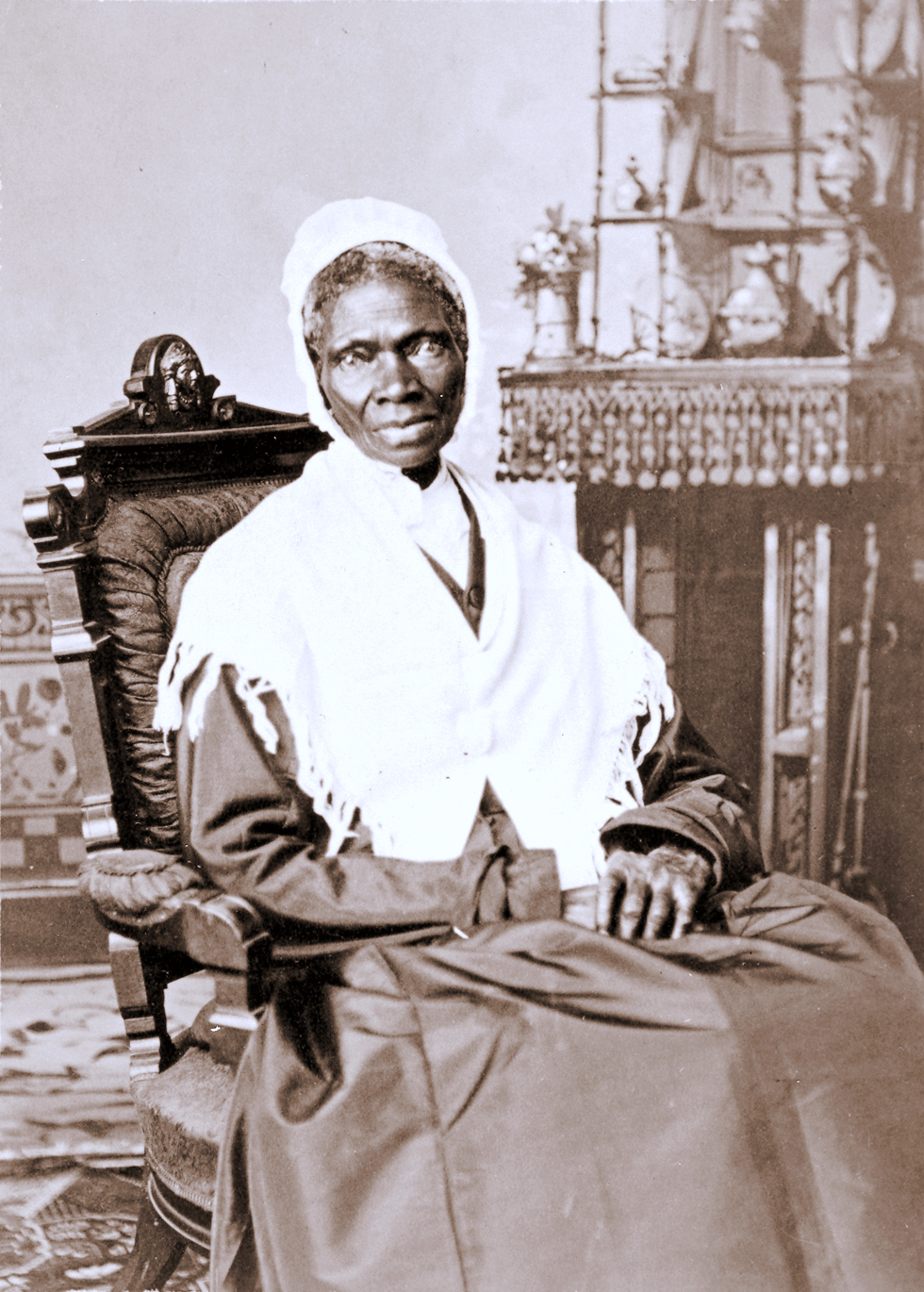
Perhaps you remember Sojourner Truth.


Sojourner_truth_c1870

(Photo from http://www.wikipedia.org.)


Sources:  www.biography.com; http://www.sojournertruth.org; http://www.; http://www.blackpast.org; http://www.americanswhotellthetruth.org; http://www.christianitytoday.com.)

Read Full Post »

sepia-praying-woman

Abby has prayed for years that her estranged son would come home.

Stacie has faced the loss of one job and a stressful transition to another–with a broken leg.

Jack has worked hard to qualify for a prized promotion, but the boss’s unpleasant nephew was awarded the position instead.

Tricia can’t seem to shake a gray cloud of despondency, ever since her fiancé broke off their engagement.

Kate goes through the motions at church and even continues with her quiet time. But God seems to have distanced himself. She hasn’t sensed his presence for weeks.

These circumstances and more can cause a downward spiral in our spirits, as debilitating emotions take over–emotions like frustration, anger, hurt, worry, and depression. If we feed these emotions with negative thoughts, our faith in God begins to falter.

The devil’s lies begin to sound like truth:

  • So much time has passed; God is never going to answer your prayer.
  • Bad things keep happening; God has obviously abandoned you.
  • God doesn’t care about your life. Otherwise, why would he allow you to fail?
  • They say God offers love, hope, peace, and joy. Right. None of it is coming your way.
  • It looks like God has forsaken you and to make matters worse, you don’t even know why.

Is it possible to fight against such feelings and fortify our faith? Oh, yes!

Our fight begins with truth—straight from God’s Word. We have to choose fact over feelings—just like a pilot does, as he flies through miles of thick clouds. In order to stay on course, he can’t trust what he feels is proper speed, direction, and altitude; he has to rely on the facts presented by his instruments.

47056693.14

So what scriptural truths might help us maintain our spiritual equilibrium? There are dozens, perhaps hundreds of passages that address our various needs with pinpoint perfection.

Other scriptures provide broad-sweeping truth that covers almost any situation. One example:

“The Lord is faithful to all his promises and loving toward all he has made.  The Lord upholds all those who fall and lifts up all who are bowed down” (Psalm 145:13-14).

If we read the Bible with the intent of finding applicable truth for our circumstance, we will not be disappointed.

april13

(“Such things were written in the Scriptures long ago to teach us.  And the Scriptures give us hope and encouragement as we wait patiently for God’s promises to be fulfilled”–Romans 15:4, NLT.)

 Now the question is: Are we going to take God at his word and then act upon it?

Hebrews 11 gives us a line-up of faith-stars who did just that–based their actions on faith, not feelings.

By faith Noah built at ark (v. 7).   He did not allow feelings of inadequacy to stop him.

By faith Abraham left home with no notion of where he was going (v. 8). He did not allow fear of the unknown to deter him from following God’s direction.

By faith, the parents of Baby Moses hid him from Pharaoh. They did not allow fear of punishment to stop them. “They were not afraid of the king’s edict” (v. 23).

By faith the people of Israel marched around Jericho seven times, even though it didn’t make sense (v. 30).

Bottom line: Faith is the exercise of our minds, based on the stable truth of God’s Word, in spite of what we might feel. Emotions are just the unreliable, fluctuating condition of our minds (J. Clarke, http://www.writtentreasures.org).

On the other hand, God doesn’t ask us to ignore our feelings. Job, David, and the prophets honestly expressed frustration, fear, disappointment, and discouragement. But they didn’t allow their emotions to cripple them.

f7ea3e3945226580cc4cd80213db5133

Also worth noting:  None of these faithful people were perfect, yet God honored their faith.  He doesn’t need perfect people to accomplish his purpose, just willing and faithful ones.


*     *     *     *     *     *     *     *     *     *


Forgive me, Lord, for allowing feelings to impact my faith, to weaken my trust in you. Together with you, may I fit every thought and emotion and impulse into the structure of life shaped by Christ.  Thank you for listening and offering encouragement as I confess to you my feelings.  You even supply strength, peace, and hope.  And finally, I praise you that you preserve the faithful. I am secure in you.  In fact, you, my all-powerful God, are security itself.      

(2 Corinthians 10:5, MSG; Psalm 10:17; Psalm 29:11; Psalm 31:23.)

Art & Photo credits:  www.hem-of-his-garment-bible-study.org; www. pbase.com; http://www.scentoffaith.com; http://www.pinterest.com.

Read Full Post »

Check a map that traces the trek of the Israelites from Egypt to Canaan, and you’ll see a meandering, looping pathway:

Wilderness Journey

God could have taken them along the coast of the Mediterranean Sea, a much more direct route. One commentator says that route would have required just days of travel. A short journey would have been so much easier on everyone, right?  Less chance of fatigue, boredom, and impatience to develop and create problems.

But God had his reasons for a long, winding route.

Reason #1: The Philistines. That’s not conjecture; that’s exactly what scripture tells us. “When Pharaoh let the people go, God did not lead them on the road through the Philistine country though that was shorter. For God said, ‘If they face war, they might change their minds and return to Egypt’ ” (Exodus 13:17).

The Philistines’ territory stretched for fifty miles along the Mediterranean Sea, with the southern border touching Egypt. They were a well-organized, warring people. Five great cities, strategically located throughout their coastal holdings, created an alliance, the famous Philistine pentapolis.

A people suppressed by slavery for four hundred years would not be able to fight such an adversary. The Israelites didn’t have any trained soldiers among them either. Could God have given them a rousing victory over the Philistines anyway? Of course. But he chose not to.

Reason #2: Perhaps God determined his people needed some wilderness experience to train them in his ways and build their trust in him. Instead of quick and easy, God chose slow, step-by-step progress. He was like an eagle, teaching his fledglings by degrees how to fly (Deuteronomy 32:11).

4ffd5fa25fbd4e401e15ae1fe344938f

I wonder if the Israelites thought, Does God have any idea where he’s taking us? What is he DOING?!

In hindsight we can see God’s purpose:

  • To prepare them to be his holy people by giving them the law. (By the way, according to Exodus 19:1, Moses went up to Mount Sinai during the third month after they left Egypt. God was certainly in no hurry to get his children to the Promised Land.)
  • To teach them.  Through the laws he gave Moses, God taught the Israelites how to treat one another and how to worship him. They were to be different from all other peoples on earth.   “I am the Lord your God; consecrate yourselves and be holy,” he said, “because I am holy” (Leviticus 11:44).
  • To challenge them. For example, God let them experience great thirst and hunger. Then he stepped in and supplied their needs. By degrees God taught them to trust him.

I have to admit: my life experiences have paralleled the Israelites’ in a number of ways. I’ve encountered a few winding roads, puzzling detours, uncomfortable wait times, and unanswered questions of my own.

You, too?

Here’s what we can remind ourselves of: God may not direct us by the nearest, fastest way—even though he could. In his omnipotent wisdom, he knows a better way. And he has perfectly sound reasons for his decision.

My choice in the matter? I can plead for the shorter route, complain about the delay, try to forge ahead on my own self-chosen fast track, OR…

…trust my all-knowing, all-wise Heavenly Father.

5db138f980d331b5ee31f939d399464e

Seeing the choices laid out in black and white, here on my computer screen, the decision is easy. However, complete trust in the moment of uncertainty, fatigue, and discomfort is much more challenging.

Perhaps I can encourage myself by reviewing God’s purposes for the Israelites. Chances are, he desires the same results in me:

  • God prepared the Israelites; he may be preparing me for the next chapter in my life.
  • God taught the Israelites; he may be teaching me what the next level of maturity includes.  (Yes, even an old Christian like me still has growing to do!)
  • God challenged the Israelites; he may be challenging me to trust him—in spite of a long, winding road and uncomfortable wait time.

In summary:  As I cooperate with him, God can transform me into a prepared, mature, trusting servant for the next chapter of my life.   I like the sound of that!

You, too?

*     *     *     *     *     *     *     *     *     *

“Who compares with you, O God?  Who compares with you in power, in holy majesty, in awesome praises, wonder-working God” (Exodus 15:11, The Message)?  You are over-the-top trustworthy!  So, in advance, I thank you for the good that will come out of the winding road, detours, and wait time in my life–experiences you ordained for me, before one of them came to be (Psalm 139:16).  I place my hand in yours, my caring, constant Companion.  Help me to focus on your strong grip, not the uncertainties ahead.  Amen.


(Art credits:  www.registrypartners.net; http://www.pinterest.com.)

Read Full Post »


6a00e54f0d380188340133f2ef50d4970b 

One of the delights of grand-parenting is recapturing the joys of childhood. In the name of entertaining the little ones, we get to return to such fun activities as drawing with crayons, molding Play-Doh, and building with blocks.

Little eyes watch in wonder as we sketch a flower, create a clay nest of eggs, or fashion a tall tower. It doesn’t take much to wow the little tykes.

Just the other day I demonstrated for our toddler granddaughter the first rule of constructing block skyscrapers: A solid, level foundation is a must. Without that strong base, the tower will lean and fall.

For centuries, the success of constructing real buildings depended on one foundation stone in particular: the chief cornerstone. Without the sophisticated tools of today, stone masons had to be certain that first stone was level and its corners squared accurately. The rest of construction conformed to that one stone. If the cornerstone was faulty in any way, the building would lean and fall.

The chief cornerstone also carried the weight of the structure. If laid properly, the weight of the building was evenly distributed and the structure remained sound.

Scripture tells us that Jesus is our cornerstone. God said,

“See, I lay a stone in Zion, a tested stone, a precious cornerstone for a sure foundation; the one who trusts will never be dismayed” (Isaiah 28:16).

Oh, my. So much good news in one short verse!

The “stone in Zion” is Jesus, our Rock (1 Corinthians 10:4), who has been tested for two thousand years. Billions of believers over the centuries have found him to be a trustworthy Savior, Shepherd, Friend, Prince of Peace, Teacher, and more.

Jesus is our precious cornerstone—highly valuable to us who believe in him. Think of the excellency of his character and his perfect, holy life. Think of his position. God exalted him to the highest place and gave him the name that is above every other name in the universe (Philippians 2:9). Think of the myriad ways he blesses, guides, comforts, and strengthens us, his followers.

He is also our sure foundation—strong and reliable. In his divine power he gives us everything we need for life. We can depend on his great and precious promises (1 Peter 1:5).

Those who trust in him will never be dismayed; their lives will not topple and fall into ruin. However, commitment to obedience is crucial. If I’m not following his blueprint for life, as provided in the Bible, I’m not demonstrating trust.  (Still working on that!)

Also important to understand: God’s architectural plan does not end with the placement of the chief cornerstone, his Son, in our individual lives. Each of us who believe in Jesus are like a stone or brick in the building of the Church universal.

The truth is, individual bricks by themselves are practically useless. They must be mortared together to realize their full potential. As Christians, we, too, must come together as the Church to realize our full destiny.

We become more significant, not less, as we gather to pray, encourage one another to lead godly lives, work together, and share with others the good news about Jesus.

We also become stronger, able to withstand storms and hardships because the stress from such forces is distributed over numerous bricks. We carry one another’s burdens.

Even better, we have a strong, sure foundation in Jesus. He is more than sufficient to carry the weight of our cares. On him rests the Spirit of power, which he dispenses on our behalf (Isaiah 11:2; Philippians 4:13).

*     *     *     *     *     *    *     *     *     *

Thank you, Father, for the wonderful, rock-solid saints you have brought into my life over the years, shining examples of living stones, spiritually well-hewn, and set apart for your service. I’m thinking of family members, pastors, Sunday School teachers, youth leaders, Bible study teachers, mentors, authors, friends. Countless saints have helped, encouraged, and challenged me to become a living stone for you also.

And oh, Lord Jesus, how I praise you for the sure foundation you provide in my life. When a storm of worry begins to stir, you offer reassurance of your power and strength. When I’m ready to topple from a multitude of cares, you uphold me. When fear wants to consume me, you soothe me with your Word. Over and over, with calm stability, you have steadied me. You are my foundational Rock.

(1 Peter 1:5; Isaiah 28:16; Matthew 6:25-26; 1 Peter 5:7; Isaiah 26:3; Psalm 18:31)

Photo credit:  www.amberdusik.com.

Read Full Post »

« Newer Posts - Older Posts »

When the House is Quiet

Impressions Becoming Expressions

Mitch Teemley

The Power of Story

Still Traveling

Impressions Becoming Expressions

Living Our Days

Gaining a heart of wisdom

He Said What?!

I'm Patty, and my husband and I are living with our adult son who has autism and epilepsy. I love sharing lessons learned from life around me, especially life with Aaron.

Meditations of my Heart

Impressions Becoming Expressions

Linda Stoll

Impressions Becoming Expressions

Signora Sheila

Where Faith Meets La Dolce Vita

Heidi Viars

Finding the Image of God