Feeds:
Posts
Comments

Posts Tagged ‘God’s Strength’

article-step-by-step_ds-photo_getty_article_178_67_200377237-001_XS

Back in the 1970s somebody came up with the idea of worry stones—small, smooth pebbles that people could rub between their fingers to release their worries. (What a great money-maker, huh?  Collect some free pebbles, clean ’em up and sell for 100% profit.  Genius.)

According to enthusiasts, the constant rubbing activates the nerves at the base of the thumb, releasing endorphins. As a result, a sense of calmness purportedly settles in the user’s mind.

Even if that’s true, what happens when the person stops rubbing? Since the worry has not been resolved; isn’t it likely to return? I can’t see myself rubbing a stone until I fall asleep at night, can you?

Here’s a better idea.  Instead of going to a small pebble for worry-relief, go to the Rock.

What Rock, you ask?

“There is no one holy like the Lord; there is no one besides you; there is no Rock like our God” (1 Samuel 2:2).

Next question:  Why go to the Rock?

1.  God our Rock is more stable and reliable than Gibraltar.

igibrat001p4

The Rock of Gibraltar has become a symbol for stability, having stood sentry on the southern coast of Spain for centuries. Some say it dates back to the Jurassic Period.

But our God is older still, isn’t he.

“Trust in the Lord forever, for the Lord is the Rock eternal” (Isaiah 26:4).

And he is the same yesterday, today, and forever (Hebrews 13:8).  Now that’s reliable.

2.  God our Rock is more sheltering than a deep cave.
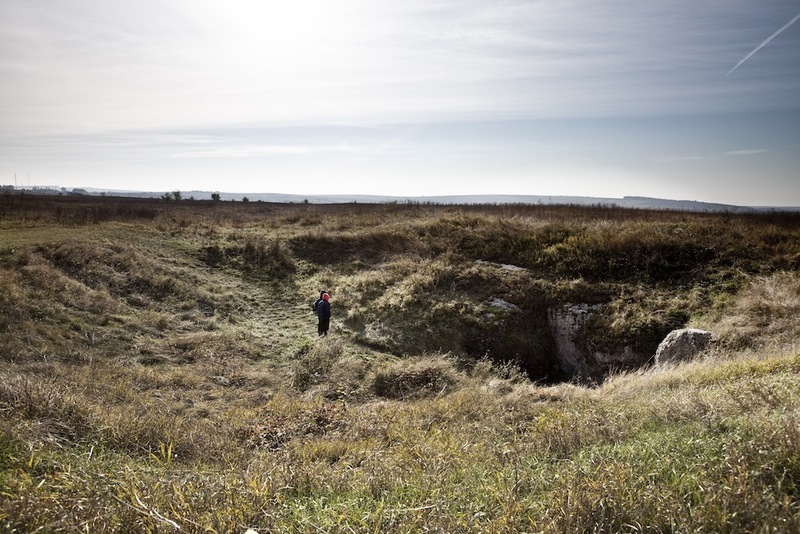
Verteba_Cave

(Verteba Cave, Ukraine)

During World War II, a small group of Ukrainian Jews found a way to escape the Nazis. They lived underground in caves for a year and a half.

At night they foraged for food. They even built showers and latrines deep inside.

But imagine living every day in pitch blackness and in fear of being discovered.

One day it happened. Nazi soldiers stumbled upon their hiding place. A courageous woman spoke for the group, as German guns pointed straight at her.

“What are you afraid of here?” she said. “Is the Furhrer going to lose the war because we live here?” Miraculously the soldiers left without doing anyone harm.

The band of Jewish villagers found relative safety in those caves,  and in April, 1944, the cave dwellers were liberated, able to return to the light.

But God our Rock offers guaranteed eternal safety for our souls. His Son, Jesus “became the source of eternal salvation for all who obey Him” (Hebrews 5:9)

3.  God our Rock is more protective than Masada.
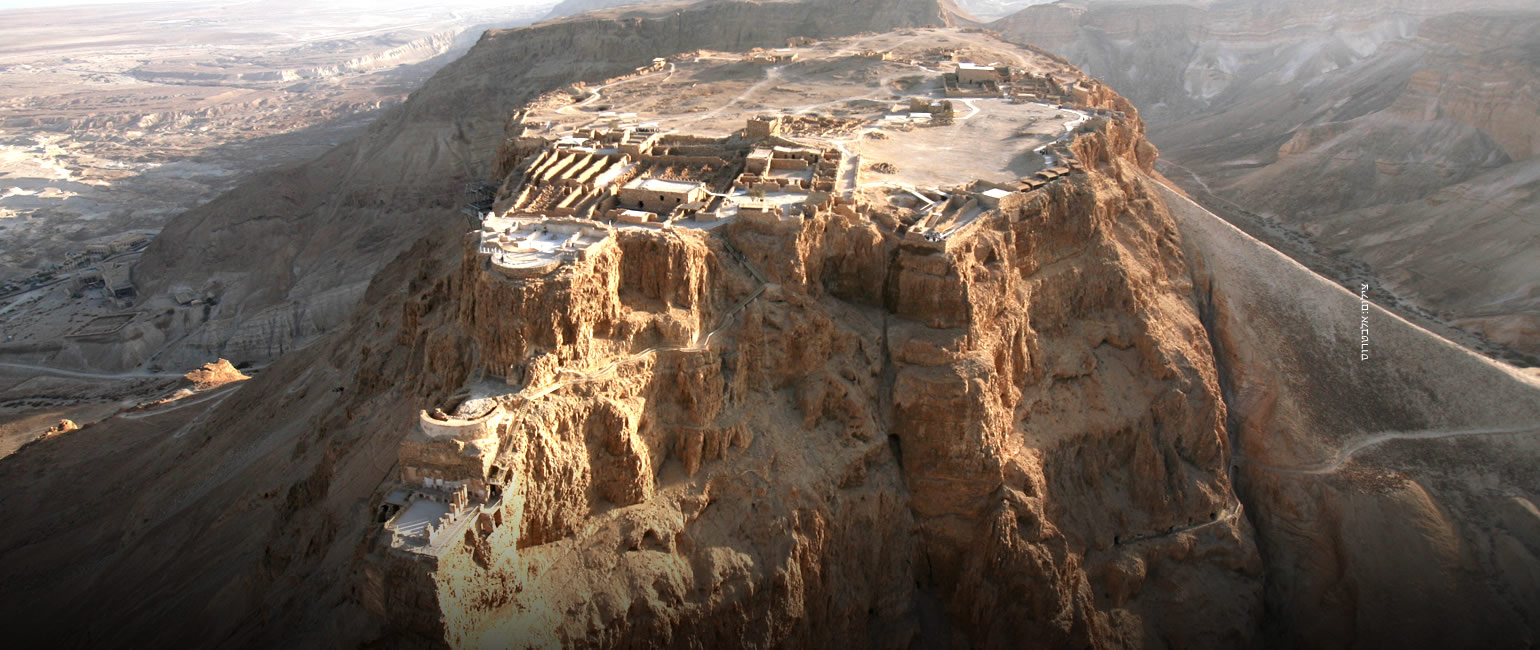
slide-static

Perhaps you’re familiar with the mountaintop fortress, towering 1500 ft. above the Dead Sea.   The refuge was built by Herod the Great, from 37 to 31 B.C., to showcase his power.

Infamous for his brutality, Herod had good cause to be paranoid. He spared no expense to make sure this desert fortress could withstand attack and provide long-term refuge. His plan included protective casement walls, an ingenious water-collection system and cisterns for storage, storehouses, barracks, palaces, an armory and more.

Impregnable? Almost.

When Herod died, Jewish rebels were able to overtake the Roman guard remaining at the fortress. A thousand Jewish zealots lived atop Masada for three years.

Yet nothing or no one on earth can compare to God our Rock.

“Lead me to the Rock that is higher than I,” cried David. “For you have been my refuge, a strong tower against the foe” (Psalm 61:2-3).

And how do we avail ourselves of God’s refuge?  Through gratitude, praise, and prayer.  We can:

  • Thank him for his promises, for the times he has protected and provided in the past.  We must feed our confidence in God rather than our fear.
  • Praise him for his glorious attributes that he is bringing to bear upon our situations–attributes such as power, wisdom, trustworthiness, and love.
  • Affirm our faith. If we occupy our minds with expressions of trust, there won’t be room for thoughts of worry.

“My soul finds rest in God alone;

my salvation comes from him.  

He alone is my rock and my salvation;

he is my fortress, I will never be shaken…

Find rest, O my soul, in God alone;

my hope comes from him”

(Psalm 62:1-2, 5).

(Photo credits:  www.ehow.com; http://www.kids.brittanica.com; http://www.noplaceonearthfilm.com; http://www.masada.org.il.)


Read Full Post »

 frazzled-career-woman


Ever had a pending appointment you didn’t want to keep? A person you didn’t want to encounter? A task you didn’t want to complete?

Some days are filled with unpleasantries. And if I’m not careful, it’s an easy slide down into a gloomy funk.

How does that happen?

My thoughts provide the slippery slope…

What a lousy day this is going to be. I sure hope So-and-So is in a good mood for that meeting this afternoon. Last time he was as irritable as Oscar the Grouch. And while I’m looking forward to that (Ha-Ha!), look at this impossible to-do list. Talk about crazy. And then there’s our double-date tonight with that new couple from church. I am in no mood to be sociable. All I want to do is go home, put on my sweats, and park on the couch!

 Can you identify my problem here? I’m focusing on the negative. The solution is obvious: turn my thoughts to the positive.

But some days that is next to impossible. It’s as if the problems and challenges are shouting giants, jumping up and down, with arms waving no less. They block any view of the positive.

Making the effort to think about praiseworthy things works for a while, but those negative thoughts often return, unbidden and oh, so unwanted. To make matters worse, I feel guilty for allowing those giants access to my mind and spirit.

Why can’t I get rid of them once and for all?

Maybe I’m not supposed to. Maybe God wants me to become more watchful, to learn perseverance, and to practice proactive behaviors, like gratitude and praise.

But one strategy for fighting the giants is particularly important: Get out my sword.

I’m talking about the Sword of the Spirit, which is the word of God (Ephesians 6:17).

Scripture is full of wisdom and encouragement for doing battle, like Psalm 73.

Asaph writes about his challenge: arrogant and wicked people (v. 3) who scoff and speak malice (v. 8).

“What is going on here?” he writes. “Is God out to lunch? Nobody’s tending the store. The wicked get by with everything; they have it made…When I tried to figure it out, all I got was a splitting headache” (vs. 11-14, The Message).

Sounds like the giants of negativity had been pestering Asaph, too.

But at the end of the psalm, Asaph affirms what he knows about God and his ways:


“You [God] hold me by my right hand.

You guide me with your counsel,

And afterward you will take me into glory.

Whom have I in heaven but you?

And earth has nothing I desire besides you.

My flesh and my heart may fail,

But God is the strength of my heart

And my portion forever.”

(Psalm 73:23-26)


I need to meditate on Asaph’s affirmations and make them my own:

  1. My loving Heavenly Father holds me by the hand, offering protection and security.
  1. He guides me with wisdom, especially through his Word, infusing me with comfort and strength.
  1. God gives me perspective for my earthly troubles as I look forward to blissful eternity with him.
  1. He is all I need.


Thank you, Asaph. I’m going to memorize those verses so they’re ready to draw like a sword—on a moment’s notice!


(photo credit:  www.ideas.tome.com.)


Read Full Post »

Does your to-do list for tomorrow include such items as:

  • Send birthday, get-well, or encouragement cards?
  • Attend a meeting or rehearsal at church?
  • Prepare for teaching a Bible study or Sunday School lesson?
  • Pick up your husband’s prescription?
  • Prepare for dinner guests?

Young woman cooking in her kitchen

Our days are often filled with small deeds. We tend to think they’re insignificant and therefore, so are we.

But that negative evaluation is not from God!

“Who despises the day of small things?” he spoke to Zechariah (4:10).

In fact, evidence indicates that God loves to take small, seemingly insignificant actions, and use them in creative, powerful ways:

  • A piece of wood thrown into bitter water turned it sweet (Exodus 15:25).
  • A cord hung from a window saved a family from destruction (Joshua 2:17-21).
  • An army of 300 defeated a powerful enemy, just by blowing trumpets and breaking clay jars to expose torchlight (Judges 7).
  • A dab of mud applied to a man’s blind eyes restored his sight (John 9).
  • Paul’s handkerchiefs and aprons became healing agents as they were laid upon the sick ((Acts 19:12).

mud

It doesn’t matter that we’re not famous, wealthy, intellectual, or strong, because it is “‘Not by might nor by power, but by my Spirit,'” says the Lord Almighty” (Zechariah 4:6).

Might = strength, resources, and ability.  If that describes you, wonderful!  But those blessings alone will not guarantee significance.

Power = persistence, resolve, and consistency.  Again, if you are able to power through with effort and efficiency to accomplish much, terrific!  But what’s truly important is if the effort is achieving God’s purpose.

Granted, God has given us talents and gifts, opportunities and choices.  We must be prayerful and wise in the ways we use them.

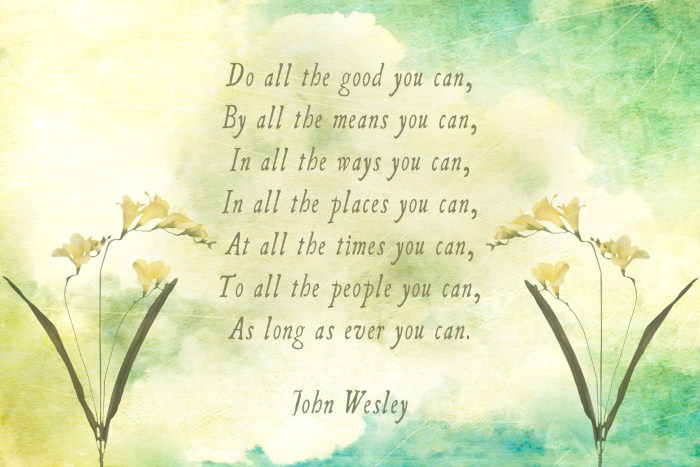
John Wesley advised:

025-All-You-Can-John-Wesley

(“Do all the good you can, by all the means you can, in all the ways you can, in all the places you can, at all the times you can, to all the people you can, as long as ever  you can.”)

Just remember:  apart from the Lord Almighty, we accomplish nothing worthwhile (John 15:5).

On the other hand, little is much–IF God is in it.

He rejoices in what is right, you see, not necessarily in what is big.

So, when you feel like a nobody who’s accomplishing nothing, be mindful of this:

Does the place you’re called to labor

Seem small and little known?

It is great if God is in it

And He’ll not forget His own.

–Kitty Suffield

(Art & photo credits:  www.whattoexpect.com; http://www.auyouth.com; http://www.kokabella.com.)

Read Full Post »

Wise Man - Foolish Man House

You probably remember the story.

A foolish man built his house on sand; a wise man built his home on rock.  When a storm came, the house built on sand fell with a great crash.  But the wise man’s house stood firm (Matthew 7:24-27).

With this parable Jesus offers visual imagery for choosing man’s way to live or God’s way:

1) You can choose to build your life on getting ahead and having a good time, but in the end you will have nothing.

Or,

2) You can choose to build your life on faith in Jesus, and in the end you will receive great gain–a Rock of stability to depend on now, and perfect bliss in heaven for eternity.

Jesus is:

  • Reliable.  “He is the Rock, his works are perfect, and all his ways are just.  A faithful God who does no wrong, upright and just is he” (Deuteronomy 32:4).
  • Unchanging.  “Jesus is the same yesterday and today and forever” (Hebrews 13:8).
  • Protective.  “In the day of trouble he will keep me safe in his dwelling..and set me high upon a rock” (Psalm 27:5).

But I’m thinking the story about houses built on sand and rock could be applied to our thought lives, too.

For example, if we allow our minds to focus on the shifting sands of circumstance,  we sink into negativity, worry, and fear.

If we focus on a firm foundation of scriptural absolutes, a sense of tranquility and strength pervades our spirits.

What are those absolutes?  The Bible teaches many, including the following:

God loves us — so much that he sent his only Son to die in our place.  Jesus took the punishment for our sins that we deserve (John 3:16).  Now, I’ve heard that statement thousands of times.  Perhaps you have, too.  But we mustn’t allow familiarity to reduce this truth to banality. His love for us is everlasting.   Deep.   Caring.   Forgiving.   Full of grace.  Let’s bask in the wonder of his love!

God has a plan for each of our lives, and it’s a good plan (Jeremiah 29:11).  Notice God doesn’t promise a pleasurable plan.  God loves us too much to allow addiction to fun.  With his goodness comes discipline, so that we become mature. In the final analysis, immature people are not the most content anyway.  They are self-centered and tend to whine and complain.  I don’t want to be that kind of person, and I’ll bet you don’t either.  So let’s accept the absolute goodness of God’s plan.

God will equip and empower us for his plan (Isaiah 41:10).  He’s the one who formed mountains, engineered ecosystems, and filled infinite space with countless stars.  This same God lives within us and works through us, fostering resolve, strength, and perseverance.  Let’s turn to him moment by moment to avail ourselves of his power.

And as we affirm such truths, we are reinforcing our foundation upon the Rock. Stone upon stone.  Solid, firm, and strong.  When the storms come– economic setbacks, health problems, emotional hurts–we will not collapse into a heap.

With David we will be able to exult in God’s provision:

“I waited patiently for the Lord; he turned to me and heard my cry.  He lifted me out of the slimy pit, out of the mud and mire; he set my feet on a rock and gave me a firm place to stand…Blessed is the man who makes the Lord his trust” (Psalm 40:1-2, 4b).

*     *     *     *     *     *     *     *     *     *

What scriptural absolutes are part of your foundation?  Please share your thoughts in the comment section below!

( art credit:  www.intheleafytreetopsthebirssing.blogspot.com)


Read Full Post »


“There is no fear in love.  But perfect love drives out fear.”

1 John 4:18a

M-m-m.  Interesting.  John doesn’t say perfect courage drives out fear.  Not even perfect faith.  Why does he say perfect love will drive out fear?

First of all, this verse is not talking about fears of financial ruin or life-threatening events.  Verse eighteen gives us the context.  John is talking about Judgment Day.  He’s reminding us that, if we know Jesus, there is nothing to fear when we leave this earth for eternity.  Jesus gave his life to save us from the consequences of our sin.  Our place in heaven is secure, if our faith is in him.

And once that matter has been settled, other fear-producing questions can be put in proper perspective. We have to remind ourselves that earthly life fades quickly like the leaves (Isaiah 64:6).  These questions will cease to matter–questions like:

  • Will my job survive the cutbacks?
  • Will I be able to keep my health insurance?
  • Will my kids make it through their personal crisis?

But such questions can cause torment to the point of ulcers and high blood pressure.  If we allow fear to control us, we’re saying that the troubles we face are more powerful than our God.

So here are a few ways to fight against fear:

  • Rename your difficulties as possibilities—possibilities for God to do something glorious.  Without a problem, there’s no opportunity for a miracle.
  • Picture God Almighty accompanying you all day long.  He’s standing right behind you at the sink.  He’s sitting beside you in the car.  His ever-watchful eye is upon you,  his infinite strength is available to you, and his perfect wisdom will guide you.
  • Don’t feed your fear with worry; feed your faith with the truth of God’s Word.  Psalm 23 is a perfect place to begin.  Remember verse four?  “Even though I walk through the valley of the shadow of death, I will fear no evil, for you are with me; your rod and your staff, they comfort me.”
  •  Listen to what he says:  “I am the Lord, your God, who takes hold of your right hand and says to you, do not fear; I will help you (Isaiah 41:13).  Visualize God holding you by the hand as you walk through each day.

Years ago, when a I was a young teenager, my family visited Lookout Mountain in Tennessee.  Dad and I were hiking over the mountain paths when we came to a deep, narrow ravine.  He easily jumped across, turned, and held out his hand for me.

“I can do it myself,” I announced confidently.  Then I looked down into that deep ravine.  What if I fall? I thought.  Grinning sheepishly at Dad, I said, “’Guess you’d better help me after all!”  I had great confidence in my father.  I knew he loved me and would never let me fall.

God is ready to walk hand-in-hand with me along the mountain paths of life.  Problems arise, though, when I repeat that moment on Lookout Mountain and focus on the ravine, the what-ifs.  The  result?  I’m frozen with fear.

How downright foolish of me, when my loving, trustworthy Heavenly Father has assured me:

“Don’t panic.  I’m with you.  There’s no need to fear for I’m your God.  I’ll give you strength.  I’ll help you.  I’ll hold you steady, keep a firm grip on you” (Isaiah 41:10, The Message).

 You see, perfect love drives out fear because we can trust the perfect love of our perfect God.

Read Full Post »

Those of us who believe in Jesus are on a faith journey.

Sometimes we fly.

He carries us on eagles’ wings.


One example from scripture is God’s deliverance of the Israelites from Egypt.  He said, “You yourselves have seen what I did to Egypt, and how I carried you on eagles’ wings and brought you to myself” (Exodus 19:4).

The Israelites had done nothing to secure their release from Pharaoh.   God caused the plagues, God opened the Red Sea for the Israelites’ escape, and God destroyed the Egyptian army.

Moses and his sister, Miriam, sang a song to the Lord, to celebrate their deliverance.


“Who among the gods is like you, O Lord?  Who is like you–majestic in holiness, awesome in glory, working wonders?” (Exodus 15:11).

Has your heart soared on the euphoria of an awesome and glorious miracle?

We have.  A number of times.  One day D. called to announce she wanted to buy us a car.  Arrangements were made with a dealership; all we had to do was go and pick one out.

“Oh–and get leather seats,” she insisted.  “They’re so much more comfortable.”

Can you imagine?  What an incredible blessing!  Our hearts soared for weeks on that miracle.   Even now, more than thirteen years later, that car is a constant reminder of God’s supernatural provision.  (Yes, it’s still running smoothly!) Through D., God proved unequivocally his love and power.

Sometimes we soar; sometimes we runon supernatural strength.

We feel the supernatural power of the Spirit coursing through our veins, providing strength and passion for the task at hand.  It is a spontaneous sprint, energized by omnipotent God.

New Christians are often empowered for a running start in their burgeoning faith. Eagerly they soak up Bible knowledge in small groups and personal Bible study.

In other cases, God places a special call on someone’s life to fulfill a need.  And with the call comes supernatural strength to meet the challenge.

That’s what happened to J.B.  God infused him with a passion to upgrade the sound system of our church.  Night after night, he worked at rewiring the sanctuary.  Much of that time was spent climbing about in the rafters.  This after working each day at his business.

When I asked J.B. about exhausting himself, he assured me  he was having fun!  He didn’t feel worn out at all.  God was giving him the strength to complete the project.

Yes, it’s exhilarating to fly on eagles’ wings of miracles and run on supernatural strength.  But…

…most of the time on our faith journey, we walk.

Step by step.  Choice by choice.  Slowly approaching the destination—the day of Christ Jesus (Phil. 1:6).  Sometimes the path is uphill and rocky.  We strain with effort to make progress.  Some days the path is winding, and we cannot see ahead.

Yet in spite of struggle and uncertainty, the walk can still bring much pleasure to the heart.  “Blessed are those…who walk in the light of your presence, O Lord” (Psalm 89:15).  You see, we do not walk alone.  The Company we keep makes all the difference.

Walking in faith involves plenty of ordinary tasks and days without miracles. Children to care for.  Laundry to do.  Meals to cook.  Calls to make.   Students to teach.  Sales to close.

But!  Whatever needs to be accomplished, we can walk through it and not collapse under the repetition and frustration.  How?  By inviting God to walk with us.


Years ago, when our three children were young, my life was a routine of laundry, cleaning, cooking, errands, and child care.  I was not one of those mothers who derived great fulfillment from these tasks.  Instead of walking joyfully through each day,  I often plodded.

Then I came across Colossians 3:23-24.  “Whatever you do, work at it with all your heart, as working for the Lord, not for men, since you know that you will receive an inheritance from the Lord as a reward.  It is the Lord Christ you are serving.”

In the margin of my Bible, next to those verses, I wrote, “including housework!”  I wanted Who I served to be more important than what I was doing.  Plodding didn’t end once and for all, but I learned to walk at a believer’s pace more frequently, as I invited God to cook, clean, and launder with me!

Those verbs–soar, run, and walk–are found in Isaiah 40:31, in that order:


“Those who hope in the Lord will renew their strength.  They will soar on wings like eagles; they will run and not grow weary, they will walk and not be faint.”

Perhaps soaring is first because  the euphoric wonder of flying on eagle’s wings seizes our attention with intensity.

Running is second.  Adrenalin runs high during spurts of divinely inspired growth and service.

And walking is last.  Did God save the most important until the end?  Because it’s in the persevering that we become strong.  It’s in the trusting  that our faith grows deep.  And it’s in practicing his presence that we learn consistency of character.

So revel in occasional soaring.  Rejoice in periodic  running.  But take deep satisfaction in the day-by-day walk on the paths of righteousness (Psalm 23:3).


“Come…let us walk in the light of the Lord” (Isaiah 2:5)!

(photo credits:  www.betterphoto.com; http://www.linksterdiversions.blogspot.com; http://www.BlackburnNews.com; http://www.foxnews.com; http://www.photobucket.som/user/jamiesolome/media.com; http://www.faithgateway.com; http://www.pinterest.com)

Read Full Post »

“Mail’s here early today!” called Lorna, as she entered the kitchen.

Oh, that was good news.  Living far from home in Quito, Ecuador made letters a very precious commodity.

“Terrific!” I responded, and dashed upstairs to get my keys.

Lorna and her husband, Elbert, served as missionaries with HCJB.  I was a short-termer, living with them for the four months of my assignment as a preschool and kindergarten teacher.

English: Radio HCJB Deutsch: Radio HCJB

The compound was only a brief walk from the house.  Once there, it was just a matter of unlocking the gate, heading down the main walkway a short distance, up a few steps, and into the post office alcove where all of our mailboxes were located.

I jogged the whole way there and back, excited to read my mail.  But no sooner did I return home than my head started to pound, nausea engulfed me, and all I wanted to do was lie down.  Never mind those coveted letters!

My problem was not a sudden onset of the flu, but mild hypoxia–oxygen deprivation. Quito is located 10,000 feet above sea level in the Andes Mountains.

My experience proves, as well as those of countless others:  we humans require oxygen—lots of it.

Even folks who live near sea level can suffer from lack of oxygen, because they’ve become accustomed to shallow breathing.  Their bodies never receive enough oxygenated air, causing them to feel short of breath and anxious.

On the other hand, research has proven that deep breathing helps us manage stress and anxiety, lower blood pressure and heart rate, and even spark brain growth.  By not taking slow, deep breaths now and again, we deprive ourselves of these benefits.

M-m-m.  Reminds me of Ecclesiastes 2:10-11, where King Solomon lamented the results of shallow living:  chasing after wealth, accomplishments, and pleasure.  In the end, nothing gave him lasting satisfaction and fulfillment.

Shallow living brings on symptoms in the spirit, similar to oxygen deprivation in the mind and body: heartache, fatigue with life, nausea from repetitive, meaningless activity, and shortness of temper.

In contrast to Solomon’s lament in Ecclesiastes is Paul’s praise to God for the power and strength of deep living:

“Oh, the utter extravagance of his work in us who trust him—endless energy, boundless strength” (Ephesians 1:19, The Message)!

Deep living happens when we breathe in God’s strength with a prayer, his wisdom and encouragement with a scripture, his joy with a song.

Deep living happens when we practice his presence as automatically as we breathe.

And how do we do that, “practice his presence?”

It’s just a matter of  pausing frequently throughout each day, to turn our attention to God.

I might say such things as:

  • Thank You, Lord, for this new day.  Work through me to accomplish your purpose.
  • I  love you, Heavenly Father.  Thank you for filling my heart with peace and joy every time I turn my attention to you.
  • Thank you for your power at work in me as I complete this task.
  • The wonders of your creation–graceful tree branches dancing in the breeze, lyrical songs of the mockingbirds, delicious aromas of pine and orange blossoms–They make my heart sing with praise!
  • Oh, Lord, I shouldn’t have spoken to Mary like that.  Forgive me, I pray.  Help me to think before I speak.  And yes, I will apologize to her.

Refreshing.  Energizing. Purifying.  Like a deep breath of oxygen.

Shallow breathing causes a lesser quality of life.  So does shallow living.

Deep breathing fosters strength of mind and body.  Deep living does that and more.

Deep living radically transforms the spirit.

Let’s breathe/live deep!

*     *     *     *     *     *     *     *     *     *

What deep living habits help you practice the presence of God?

(photo credits:  www.wikipedia.com , http://www.picstopin.com , http://www.vineyardcs.org )

Read Full Post »

Church bells rang all across Philadelphia. Men on horseback rode far and wide to spread the news. People shouted and fired their guns. It was July 4, 1776. The Declaration of Independence had been approved by the Second Continental Congress.

In spite of the celebratory noise, those fifty-six delegates gathered in the Pennsylvania State House knew the gravity of their actions. By signing the declaration (which would not happen until August 2) they were guilty of treason against the British crown–punishable by hanging.

Congress Voting Independence, a depiction of t...

Congress Voting Independence, a depiction of the Second Continental Congress voting on the United States Declaration of Independence. Oil on canvas. (Photo credit: Wikipedia)

In fact, Ben Franklin told the delegates that day, “Indeed we must all hang together, otherwise we shall most assuredly hang separately.”

On what confidence were they willing to risk their lives against an enemy as strong as England? After all, the colonies were loosely organized, just a far-spread collection of farmers for the most part. They had no army or navy trained and ready to launch into battle. Small-town militias were all the Congress had to work with. And because the British were seizing guns and ammunition, the militias were disadvantaged further.

By contrast, the powerful British empire had a trained army and at least thirty ships ready for battle as the war began.

Perhaps those fifty-six delegates were reflecting on a providential event of September 7, 1774.  On that day, Rev. Jacob Duche had been invited to the First Continental Congress to begin the day’s proceedings with prayer. But Rev. Duche also read the psalm designated for September 7, from the Book of Common Prayer. The passage was Psalm 35.

English: Painting: The Rev Jacob Duche offers ...

Now it’s important to know that Congress had just been told Boston was under attack by the British. Depressing news to be sure. Here is an excerpt of what they heard:

“Contend, O Lord, with those who contend with me; fight against those who fight against me. Arise and come to my aid.

“May those who seek my life be disgraced and put to shame; may those who plot my ruin be turned back in dismay. Since they hid their net for me without cause…may the net they hid entangle them.

“You rescue the poor from those too strong for them, the poor and needy from those who rob them…O Lord, how long will you look on? Rescue my life from their ravages, my life from these lions” ((Psalm 35:1-17).

John Adams is the one who called the day’s reading “providential.” The whole psalm spoke directly to their situation.

Yet, even with such promises still in their minds, those delegates knew full well that war would mean deprivation for everyone, suffering for most, and death for many. They were potentially signing a death warrant for themselves and/or their sons. What would cause such willingness to sacrifice themselves?

John Adams wrote to his wife, Abigail:

“I am well aware of the toil, and blood, and treasure, that it will cost us to maintain this declaration…I can see that the end is more than worth all the means, and that posterity will triumph in the day’s transaction.”

The end is worth the means: that posterity will triumph. They sacrificed so very much so that we, their posterity, might enjoy life, liberty, and the pursuit of happiness.

Of those 56 who signed the Declaration of Independence, nine died of wounds or hardships during the war. Five were captured, imprisoned, and treated brutally. Several lost wives, sons or entire families. One lost his 13 children. Two wives were brutally treated. All of the delegates were, at one time or another, the victims of manhunts and driven from their homes. Twelve signers had their homes completely burned. Seventeen lost everything they owned.

Yet not one defected or went back on his pledged word.

Such conviction, strength of character, courage, and perseverance; such willingness to suffer is difficult to fathom.

*     *     *     *     *     *     *     *     *     *

Heavenly Father, it pains us to realize that thousands upon thousands have died for the cause of liberty. May we always remember: our freedoms have been purchased for us at a Very. High. Price. May we never take those freedoms for granted, or, worse yet, abuse them.

It also pains us to realize that your Son, Jesus, had to die, to liberate us from death. May our lives be characterized by heartfelt gratitude, motivating us to live for you and not for our own selfish desires.

Strengthen us, Lord, to please you and honor our dead heroes. You deserve our obedience; they deserve to be respectfully remembered. Always.

And last, we pray for those who are now serving in the military, protecting our freedoms today. Watch over them and bless them, we pray.  Amen.

Read Full Post »

Steve and I received a calendar for Christmas with a quote for each day. Sometimes the choice is quite meaningful, such as:

Babe Ruth, full-length portrait, standing, fac...

“Never let the fear of striking out get in your way” – Babe Ruth.

We can actually find similar truth in scripture.

“Be strong and courageous. Do not be terrified; do not be discouraged, for the Lord your God will be with you wherever you go” (Joshua 1:9).

Sometimes, as I turn the calendar page to a new day, I have to wonder what the selection committee was thinking. See if you agree.

Sample #1:

“Do not fear mistakes. There are none.” (I won’t name the person who said that!)

Forgive me, but that makes no sense. Am I missing something? If so, please set me straight.

But here’s what makes sense to me:

Winston Churchill, Prime Minister of the Unite...

“All men make mistakes, but only wise men learn from their mistakes” — Winston Churchill.

Wise men also admit mistakes and correct them. When we don’t, we heap another mistake on top of the first: pride.  Ouch!

When we do admit and correct, we develop humility and maturity. And God values those traits (James 4:6, 1:4)

Sample #2:

“Every day is a journey, and the journey itself is home.”

Here’s what makes sense to me:

Although there is joy in the journey, it is not home. Our final home is heaven. I do not want to become enamored with the journey and lose sight of my home.

With Paul, I want to “press on toward the goal to win the prize for which God has called me heavenward in Christ Jesus” (Philippians 3:14).

Heaven

(Photo credit: irunandshoot)

Sample #3:

“Take care of your body. It’s the only place you have to live.”

Problem is, no matter how well we take care of ourselves, these bodies have expiration dates. But praise God our earthly bodies are not the only place to live!

In fact, for those of us who know Jesus, “to die is gain” (Philippians 1:21). We’ll have new, spiritual bodies fit for heaven — strong and vibrant, with no expiration date.  Can you imagine?

Paul said, “I desire to depart and be with Christ, which is better by far” (v. 23).

Oh, yes.

Quadruple combination opened to the Book of Is...

Thank you, Father, for your Word that speaks reliable wisdom and truth—truth that guides, teaches, and protects. But I need your help to live by its truths. Remind me that only fools despise your wisdom (Proverbs 1:7).

Read Full Post »

Hardship

Hardship (Photo credit: Wikipedia)

On Monday our starting point was Acts 14:22: “We must go through many hardships to enter the kingdom of God.” Not exactly an encouraging affirmation, is it!

But we discovered that problems can actually be opportunities—opportunities to improve our perspective, foster appreciation, and draw us closer to God.

Another benefit? Problems build character.

And why is that a valuable endeavor? Wise King Solomon answered that question eons ago: “I know, my God, that you test the heart and are pleased with integrity” (1 Chronicles 29:17).  That means,  when I face problems with integrity, I bring pleasure to my Heavenly Father.  Now that’s a goal worth pursuing.

integrity

integrity (Photo credit: glsims99)

Integrity is firm adherence to a code or standard of values. The one and only true standard is God’s standard, laid out in his Word.  Integrity includes righteousness, courage, perseverance, and faith–character traits that don’t develop without pressure.

The key is to live within the spiritual realm with him. Then the physical realm becomes less important. It’s as if we exist in an alternative reality. No wallowing in self-pity. No rehashing the negative aspects of the situation. No time wasted considering the “what-ifs.”

Instead we “count it all joy when we meet various trials” (James 1:2). How?

1. Practice his presence by speaking to him throughout the day.   Keep rehearsing God’s attributes. Remember all his benefits. Think of the blessings he has already provided.

2. Acknowledge those little demons of worry, shame, or inadequacy. Call them by name and present them before God. Notice how they cower as God proclaims his everlasting love (Jeremiah 31:3). Watch them retreat as he affirms his infinite power (Jeremiah 32:27).

3. Anticipate what God might accomplish through these difficult circumstances. Wonderful possibilities exist as he sends us in new directions and uses us to minister to others.

No doubt there are more steps we can take. But these offer a good start. And what will be the result? Difficulties develop perseverance, and perseverance produces maturity—the one positive character trait that covers them all (James 1:2).

Heavenly Father, you know even better than I how easy it is to verbally affirm these truths; it’s another to live by them moment by moment. I still have much to learn about counting it all joy in the midst of trials. But I do aspire to be a mature person, able to say, “It is well with my soul.”   No.   Matter.   What.   Thank you for continuing to work on me, for never giving up.

IT IS WELL

IT IS WELL (Photo credit: Amydeanne)

Read Full Post »

« Newer Posts - Older Posts »

Still Traveling

Impressions Becoming Expressions

Living Our Days

Gaining a heart of wisdom

He Said What?!

I'm Patty, and my husband and I are living with our adult son who has autism and epilepsy. I love sharing lessons learned from life around me, especially life with Aaron.

Meditations of my Heart

Impressions Becoming Expressions

Linda Stoll

Impressions Becoming Expressions

Debby Thompson

Impressions Becoming Expressions

Signora Sheila

Notes on Life, Faith & Italy

Colleen Scheid

Writing, Acting, Living in God's Love

Mitch Teemley

The Power of Story

Heidi Viars

Finding the Image of God