Feeds:
Posts
Comments

Archive for the ‘Appreciation’ Category

5459475850_7887e5c453_z


Steve came into the kitchen carrying a lovely rose, its dewy petals just beginning to open.  Delicate baby’s breath surrounded the bloom; emerald-green tissue and a red satin bow created a fitting frame.

He passed the rose to me with love in his eyes and a sweet smile on his face.

I took the rose and threw it on the floor.

What?! you say. How could you do such a thing?

The truth is, I didn’t. I made that up. Not the part about Steve bringing me roses. He has surprised me with flowers numerous times over the years. I made up the part about taking a rose from him and throwing it on the floor.

That would be terribly rude, wouldn’t it. But the scenario described above does provide an allegory for the way we sometimes accept verbal gifts–occasions when we’ve treated kind words as trash:

 

who-me


“Who, me? Oh, no. Not really. So-and-So is much better at __________ than I am.”

“You liked what I said? You must not have been listening very carefully!”

“I can’t believe you actually liked it. I thought it was terrible.”

Compliments are like roses, offered in an effort to bring a smile, provide good cheer, express appreciation and encouragement. When we discount them, it’s as if we’re throwing these verbal gifts on the floor. The compliment-giver feels put down, awkward, and lacking in good taste.

You may be thinking: Wait a minute.  As Christians, aren’t we supposed to be humble? Accepting compliments seems so prideful.

Not if you view positive remarks as declarations of God’s glory, as it’s reflected through you. Not when you consider that denying sincere, truthful compliments detracts from God’s glory.

So how can Christians accept compliments with grace? Here are several possibilities:

thank-you

  1. Simply say “thank you” and give the glory–the credit–to God. He is the one who gave you the ability to accomplish the task for which you are being praised. Pass the compliment on to God.
  1. Consider the compliment as encouragement. God is at work in you and he’s using you to minister to others. Thank the person for their kind words, and praise God for the opportunity to be used for his purpose, in ways that bless others.
  1. God often uses his people as agents for his encouragement. It’s possible those kind words are coming straight from God’s heart to yours. Take joy in the blessing.
  1. A gracious “thank-you-so-much-for-your-kind-words” will prompt the compliment-giver to continue offering encouragement to others.   Wise King Solomon compared inspiring/supportive words to gold (Proverbs 25:11). That’s how valuable they are.


0777cfe0888d0ce2d663e3f568f48efa


  1. If others were involved in your achievement, be sure to give them credit. Sharing the glory will increase the pleasure of the compliment.
  1. Later, when the kind words come to mind again, whisper a prayer.  For example:

“Heavenly Father, thank you for blessing my effort and touching that woman’s heart. What an honor to be used by you to minister to her.”

Turn compliments into praise and they won’t turn into pride.


(Photo & art credits:  www.flickr.com; http://www.handmaidcraftday.com; http://www.pinterest.com; http://www.wimempowerment.org.)

 

Read Full Post »

 d30200c131346a4ffed9f197bbee764d

(“You thrill me, Lord, with all you have done for me!  I sing for joy because of what you have done” — Psalm 92:4 NLT.)

God lavishes his gracious kindness upon us in countless ways, doesn’t he?

In appreciation for all he’s done, I have a suggestion. Let’s each write him a personal psalm for Valentine’s Day.  A love gift, on a love-focused holiday, for our loving God.  (You have more than a week to prepare your gift!)

Is that an overly sentimental idea?

Perhaps the timing is, but the matter of creating personal psalms has nothing to do with sentimental poetry.

I can hear some of you already. “Me—compose a psalm? I struggle to put a personal message on a birthday card!”

If that sounds like you, “Be strong and courageous. Do not be terrified; do not be discouraged, for the Lord your God will be with you” (Joshua 1:9)!

God waits with eager anticipation for you to enjoy an intimate Father/child relationship with him (2 Corinthians 6:18).

f2c43794cde3dc013fef692a6c7eabf1

 And what parent is not overjoyed when a son or daughter shares his/her innermost thoughts and feelings?

Remember, a psalm is simply a heartfelt prayer or song.  Key word: heartfelt.  Our psalms do not have to rhyme. We don’t have to use fancy literary devices like metaphors, imagery, or parallelism unless we want to.

These psalms are for our Heavenly Father.  He takes great pleasure in the sincere, unpretentious efforts of his children, just as all parents do.  We can even ask for his help to string the words together that will express our hearts.

Sometimes the hardest part is getting started—that first thought. An easy solution is to use a biblical psalm as a model.

?????????????????????????

To begin, you might choose a favorite verse. Read it slowly, several times. Rewrite it in your own words.  These questions might help to push your thinking further:

  • Is there a phrase or word that stands out?   Explain to God why it is important to you.
  • Do you feel a connection with this particular verse?  Add a personal experience when God’s activity in your life made this verse especially meaningful for you.

Following is one way to create a personal psalm, based on Psalm 3:3a: “You are a shield around me, O Lord.”

f74d4bae680c7ed0bb80f31d68a4bd72

1.  Choose a key word.  “Shield” is an obvious choice.

2.  Use the question-words who, what, where, when, why, and how to jump-start your thought processes.  Not all of them will spark an idea, but several will.  For example:  How is God a shield for me? What is he shielding me from? Why is it important for me to remember that he is my shield?

3.  Prayerfully and thoughtfully answer your questions. Meditate for a moment, then begin to write. One word can become the basis for the first sentence. A word or idea from that sentence can be expanded upon and become another sentence.

Before you know it, a psalm is born!


I praise you, oh God, for being like a shield

when disturbing thoughts are hurled my way.

You deflect those poisoned-arrows

with your shield of scriptural truth

and tender compassion.

Help me remember

you are all-powerful and all-wise.

There is no circumstance or emotional battle

that you cannot handle.

Your strong shield protects me

from the assault of Satan and his cohorts—

those negative, discouraging thoughts

that try to attack the peace and joy you’ve given me.

You are my almighty Warrior-God,

unsurpassed in power.

Satan cowers in your presence!

Help me avail myself of your protection

at every onslaught.


Once your psalm is complete, it’s time for presentation.  Read your psalm out loud to God. You will sense his presence as he comes to listen! How do I know?

OLYMPUS DIGITAL CAMERA

(“Come near to God and he will come near to you” — James 4:8.)

Keep your journal or notebook handy. Further thoughts may occur to you as you read, or afterward as you reflect. One more question to consider: In what ways has your relationship to God been impacted through this composing process?  You may wish to write about that, too.

I must confess, I’ve written a number of personal psalms. But recent reading on the subject has inspired me to pursue new avenues of this form of worship.

In future psalms I want to increase my reflection time, be more specific, add more detail, and actually read my psalms out loud.  I’m looking forward to expressing the depths of my heart more openly and discovering new depths of my Heavenly Father.

If you already write personal psalms, or should decide to write one, I’d love to hear about your experience!


(Art and photo credits:  www.pinterest.com; http://www.healthcentral.com; http://www.dwellingintheword.wordpress.com.)

Read Full Post »


finding_contentment_wide_t_nv


According to research, guess what percentage of our happiness is based on circumstances.

A. 10%?

B. 25%?

C. 50%?

D. 80%?

 The answer? Just 10%.

Now why would that be? My guess is, our perspective matters more than our circumstances.


Contentment-723x1024


 (“Contentment is not the fulfillment of what you want,

but the realization of how much you already have.”)


Ah, yes. Gratitude. Definitely an important attitude, contributing to the sweet, even-keel life of contentment. But it doesn’t come naturally to most of us.

Our thoughts, if left untended, can easily fall into a dark hole of:

  • Self-centeredness. “Yeah, the budget’s tight, but I really need a new car. It’s downright embarrassing to drive around in our old clunker.”
  • Self-pity. “It’s not fair that I’m not paid what I’m worth. I work so hard.
  • Self-justification.  “I deserve that new car.”

Note the focus on self. And half the time (or more) we don’t even realize how much of our thought life spins around in that dark hole.

How can we possibly climb out?   Time and attention are required to develop a mind that frequently contemplates thanks-giving and praise instead of complaint-making and dissatisfaction.

Even the apostle Paul said he had to learn how to be content whatever the circumstances (Philippians 4:12).  And like any new skill, developing contentment requires a bit of knowledge and a lot of practice.


dad1ef5d3113528298849bf74da82f41


The best place for knowledge on such a topic is scripture. Several passages can inform our understanding of contentment.

  1. King Solomon said, “The fear of the Lord leads to life; then one rests content, untouched by trouble” (Proverbs 19:23).

Not that reverencing God protects us from trouble and every day is glorious. Bad things still happen to good people. But those who reverence God and worship him see life from a different perspective. They can be content even when catastrophe strikes, knowing that God will see them through.

 Think about Daniel in the lions’ den, or Peter and Paul in prison.

  1. Paul said he didn’t really care if he was living in plenty or in want (Philippians 4:12).  How is that possible? He answers in the next verse, and it’s a familiar one: “I can do everything through him who gives me strength.”

Living in plenty–with God–taught Paul how to keep his priorities straight.   Living in want–with God–taught Paul to detach himself from “things.”

  1. Paul told Timothy, “Godliness with contentment is great gain” (1 Timothy 6:6).

 When we think of a man with “great gain,” we imagine a person with a large, beautifully decorated home, designer suits, two or three cars (for his own use—family members have their own cars), and the capability to go on expensive vacations.

But what about the young Christian father who thanks God every day for his loving wife and two precious kids? Who enjoys a circle of fun, supportive friends at church that also help him keep his priorities straight? This guy lives in a two-bedroom ranch, drives a ten-year old car, and spends vacations taking day trips from home.

Yet he’s rich, too–maybe even more so. It’s just that his riches fall into a different category. He’s rich in relationships, especially with God. “True godliness with contentment is itself great wealth” (I Timothy 6:6, NLT).


contentment


Now that we’ve absorbed a bit of scriptural understanding, it’s time to practice what we’ve learned. How can we foster contentment in our spirits?

  1. Cultivate a positive, faith-filled perspective by turning “I wish” statements into “I praise” statements.

Paul was under house arrest in Rome when he wrote to the Christians at Philippi. His days as an adventuring missionary were most likely over; the future looked bleak. Once his trial took place before Nero, Paul knew he could be facing execution.

He might well have said, “I wish I could be back on the road again preaching the gospel. It makes no sense why God has let this happen. I wish he’d get me out of here!“

But Paul’s response was far removed from wishful thinking. He actually praised God that his circumstances were advancing the gospel (Philippians 1:12-18).

  1. Feed our confidence in God, not our comparisons to others. Contentment wells up in our spirits when our thoughts are grounded in scripture, praise, worship, and gratitude.
  1. Focus on the present—look for the blessings of right now. “We will become content as we enjoy each day for what it is rather than moan about what we imagine it could have been” – Bruce Goettsche.


833b4774bad851af93b88d4b5f8824e3_new_medium


An airline pilot was flying over a lake when he turned to his copilot and remarked, “See that little lake? I used to fish there a lot when I was a kid. Every time a plane would fly overhead I’d think, “Boy, I sure wish I was flying that plane. It must be so wonderful to soar through the sky and see for miles and miles. Now do you know what I’m thinking? How I wish I was down on that lake fishing!”

I don’t want to be like that pilot. I want to be like Paul.


(Art credits:  www.covgrace.org; www,janellenichol.com; http://www.quoteimage.com; http://www.ponderingtheheartofjesus.com;  www.i.mobypicture.com.)


Read Full Post »

Our neighbor, Christine, happened to be in her yard yesterday morning (in spite of frigid temperatures), as I was leaving to babysit our granddaughter. Christine was picking up trash that had blown in front of her house.

“I’ll be so glad when this weather warms up,” she called, stooping to gather more bits in her bag-covered hand. We encouraged each other with the forecast for the weekend: temperatures approaching fifty degrees.

Actually, I haven’t minded the deep freeze that has gripped the Midwest for most of January.  After living in Florida for forty years, I see cold weather as a pleasant change from stifling hot temperatures and hard-to-breathe humid air. (Give me a few years up here, and I might be longing for that heat again.)

th1

For now, these wintry January days offer a multitude of pleasures:

  • A bit of rest after the bustle of Christmas.
  • Feathery cirrus clouds gracing the sky.
  • Cardinals, juncos, and flickers cavorting in the trees on the occasional temperate, sunny day. (Without foliage to obscure the view, we can watch their antics unobstructed.)
  • The soft, pale glow of winter sunsets.
  • Plumes of smoke winding lazily upward from the neighbors’ chimneys.

stock-footage-little-town-s-morning-winter-view-the-main-accent-in-the-shot-is-rising-sun-and-rising-up-smoke

  • Candles glimmering cheerily as dusk falls.
  • The scent of homemade chicken soup simmering on the stove. (Granted, soup can be enjoyed anytime, but it takes a chilly evening to bring out the best of a savory bowl.)
  • Hibernating by the fire, computer on my lap, hot tea in a thermal mug at my side.
  • Layering myself in soft, cozy clothing—and Smartwool socks!
  • Quenching my thirst with a drink of water from the faucet–and it’s already cool – no ice necessary.
  • That first “Ah” moment upon entering the warm house. (Entering a cool house in Florida is more of a “Whew!” moment!) The coziness of home is most appreciated when cold winds blow outside.
  • Nature renewing itself for the life-burst of spring. One sign: buds on the magnolia tree are already growing plump.

Winter_Snow-covered_trees_at_the_lake_046387_

And what about those times when snow covers the landscape? Oh my. The enjoyment is magnified ten times.

  • Delicate flakes waltz in quiet descent.
  • Trees become dressed in lace.
  • Light glistens and sparkles from the brilliant snowscape.
  • A quiet hush surrounds us, as the freshly fallen snow absorbs sound.

All precious gifts, indeed.

*     *     *     *     *     *     *     *     *     *

Heavenly Father, I thank you that the whole earth is full of your glory, even in bleak winter.

In the snowflakes we see your never-ending creativity.

In the full magnolia buds we see the hope of spring, symbolic of our sure hope in you.

In the pleasure of a warm home and crackling fire we glimpse the refuge you offer to us: a place of safety, comfort, rest, and delight.

In the purity of white snow that covers the gray and the dismal, we see a reminder that you cleanse away our sins and make them white as snow (Isaiah 1:18).

And in the beauty and hush of a winter snowscape, we find our attention drawn to you. In quiet, wondrous worship. we give praise to you, our gracious, glorious God!


*     *     *     *     *     *     *     *     *     *


What gifts of winter do you most appreciate?


(Photo credits:  www.zatavki.com; http://www.blog.snyderac.com; http://www.shutterstock.com.)


Read Full Post »

Ec3.11

“Everything is beautiful in its time,” Solomon wrote (Ecclesiastes 3:11).

That means today is beautiful—in spite of the long to-do-list, the stress, the mess, the frustrations, the disappointments, the uncertainty, the pain.

How can that be?

Because the negative aspects of our lives do not need to supersede the positive.

God’s glory—his splendor, his creative genius, his love—is being expressed all around us, every day, as…

…pinpoints of sunshine glimmer on a fresh dusting of snow.

…cups of hot tea warm the hands and spicy citrus flavors warm the spirit.

…the baby squeals with delight while chasing bubbles in the kitchen.

…the mail includes a handwritten note.

…a song on the radio speaks encouragement, perfectly suited to a current situation.

…the fire crackles merrily, enticing one to sit and rest in its glow.

The question is, am I aware of the God-infused beauty around me? Am I pausing from my work every now and then to look for it?

Sometimes my vision is clouded by the past. Guilt over poor choices and hurt over unfair treatment can interfere with the enjoyment of now. Even past blessings can be a distraction, if my attitude is, “Oh, if only I could go back to __________. Those were the best years of my life.”

Not that the past doesn’t serve us in the present. Experience is an important teacher. But when I keep looking back with longing, I miss the present.

On the other hand, a preoccupation with the future (the way I would like life to be next month or next year) can also interfere with my full participation in the present. Wishful thinking can easily slip into covetousness.

“Watch out!” Jesus said. “Be on your guard against all kinds of greed; a man’s life does not consist in the abundance of his possessions” (Luke 12:15). Would I be stretching the truth of his statement to say: A beautiful life does not consist of the perfect spouse, perfect children, a perfect house, and a perfect job—even if such perfection existed.

A joy-filled life comes from embracing the gifts of each day. “We should make the most of what God gives, both the bounty and the capacity to enjoy it, accepting what’s given and delighting in the work. It’s God’s gift! God deals out joy in the present, the now (Ecclesiastes 5:19-20a, MSG).

I need to train myself to stay in the present, to enjoy the beautiful moments God is granting me now—to the fullest.

If the to-do list is long, I want to invite God to set the priorities and help me accomplish what is needful for that day. Those items that must be held over to another day may be postponed guilt free, because “there is a time for everything” (Ecclesiastes 3:1). A simpler, slower-paced life will certainly be a more beautiful life.

If uncertainty plagues my thoughts, I want to embrace the truth that God is in control, including the timing of events. He will keep me in perfect peace when I keep my mind steadfastly on him and trust in him (Isaiah 26:3). Trust is at the heart of a beautiful life.

If Plan A (that I was counting on) suddenly becomes Plan B (a debilitating disappointment), I want to accept and even appreciate the change of plan as an opportunity to grow. After all, Plan B did not catch God by surprise. There will be beauty in Plan B, too.

*     *     *     *     *     *     *     *     *     *

Dear God, I thank you that you have made everything beautiful in its time. May I rest in the knowledge that this season of my life, with its particular challenges, was appointed by you. On this day may I:

  • embrace the blessings of NOW,
  • celebrate the completed tasks you gave me to do,
  • handle the challenges with grace and trust in you,
  • grow to be a little more like your beautiful Son, and
  • behold your beautiful glory, on display all around me.  

(Art credit:  www.biblia.com.)

Read Full Post »

thanksgiving-table-with-food-4-1

Abundance: a word that easily comes to mind as we contemplate Thanksgiving Day.

Many dining room tables will be filled to overflowing with delectable offerings this afternoon. Most Americans will consume a plentiful amount of turkey, salads, vegetables, and pies. Food in abundance has become synonymous with Thanksgiving.

Very soon Steve and I will head over to our son’s house to celebrate Thanksgiving with family–for the first time in about ten years.  We and our three children, their spouses, and children have lived states apart for that long, and we’ve had to wait until Christmas each year for get-togethers.  (Sadly, not all of us will be able to gather today, but most.)  In June, Steve and I moved close to our older son and his family, not far from our younger son and his wife.

Friends will also be joining us this afternoon, making for a full, heart-warming day. Even more than the abundant feasting, I look forward to the abundant togetherness—the camaraderie, affection, story-telling, reminiscing, and humor.

But abundance also describes the plentiful amount of blessings bestowed by another family member, our Heavenly Father.

His abundance includes:

Grace.

“Those who receive the abundance of grace and of the gift of righteousness will reign in life through the One, Jesus Christ(Rom. 5:17, Ryrie).

We were ruined by sin. But out of his loving forgiveness and acceptance, God offers the gift of eternal life through his Son, Jesus.

Mercy.

“Blessed be the God and Father of our Lord Jesus Christ, who with his ample mercy has given us new birth into a life of hope, due to the resurrection of Jesus Christ from the dead” (1 Peter 1:3, Berkely Version).

When God gives us what we do not deserve, that’s grace. When God does not give us what we do deserve, that’s mercy.   He is abundantly generous with both.

Peace and security.

 “I will heal my people and will let them enjoy abundant peace and security” (Jeremiah 33:6).

We can rest in calm assurance of God’s loving care and his provision of salvation.

Love and faithfulness.

“The Lord, the compassionate and gracious God, slow to anger, abounding in love and faithfulness(Exodus 34:6).

God expresses his love in countless ways.  He is faithful, never forgetting a promise.  And he never fails to provide for our needs.

Goodness.

“They will celebrate your abundant goodness and joyfully sing of your righteousness” (Psalm 145:7).

All of God’s glorious attributes are generously poured out upon us day by day.

Holy Spirit.

“He saved us, not because of righteous things we had done, but because of his mercy. He saved us through the washing of rebirth and renewal by the Holy Spirit, whom he poured out on us generously” (Titus 3:5-6).

Empowerment, renewal, guidance, and comfort are just a few of the benefits our precious Holy Spirit provides.

Life

“I am come that they might have life, and that they might have it more abundantly” (John 10:10, KJV).

 Not mere existence, but a rich, full, satisfying life, in relationship forever with The. King. Of. The. Universe.  Incredible.

*     *     *     *     *     *     *     *     *     *

How is it possible, Lord, you would even want to open the storehouses of heaven to pour out this abundance upon us? How do we begin to thank you for such rich, abounding blessings? Words are pathetically inadequate.  All we can offer you is our lives—to live for the praise of your abundant glory. Help me to do so—today and always.

(Photo credit:  www.happyfathersday.com.)

Read Full Post »


Mayflower_compact


They had been at sea for sixty-six days, enduring overcrowded conditions. Storms had caused damage to their ship and sea sickness plagued them all– passengers and crew alike. Meager provisions and no heat on chilly autumn days caused further discomfort.

So on November 9, 1620, when they finally saw the coastline of North America in the distance, the Pilgrims and others aboard the Mayflower must have cheered enthusiastically. Soon they could abandon the cramped, cold, and fetid ship and begin new lives in a new world.

But. All had not been peaceful and congenial among the passengers during the crossing. And when it became apparent the storms had blown them too far off course to land in the Virginia Colony as planned, relations deteriorated further.

Not all of the travelers were Pilgrims. Also aboard were merchants, craftsmen, skilled workers, and indentured servants. The Pilgrims called them “strangers.”

No sooner had the decision been made to anchor off Cape Cod, than an argument ensued. Several of the “strangers” pointed out that, since they were not going to be under the jurisdiction of the Virginia Company, they would “use their own libertie” and do as they pleased. “None had the power to command them, they said.” (Quoted words are from William Bradford’s records. He served as historian for the Pilgrims.)

To avoid anarchy, five men gathered in the cabin of the ship to create a basis for law and order. The result of their efforts: the Mayflower Compact.

The first words of the document give strong indication of the Pilgrims’ hearts.

In the name of God, Amen.

“Everything they did started with God” (The Founders’ Bible, p. 187).

Next, the Pilgrims stated their purpose for coming to America.

We, whose names are underwritten,…by the grace of God,…having undertaken for the glory of God, and advancement of the Christian faith, and honor of our King and country…

Several phrases indicate the Pilgrims’ desires for their new colony:

  • “For the glory of God” would be a guide for all manner of decisions.
  • “Advancement of the Christian faith” would encourage them to remain strong in Christian faith among themselves and to introduce others to Jesus.
  • “Honor of our King and country” indicates their loyalty to native England and its monarch, in spite of his untoward actions that caused their flight to America in the first place.

…[We] do solemnly and mutually in the presence God and of one another, covenant and combine ourselves together into a civil body politic…

The Mayflower Compact expressed their commitment to live together in a civil manner, in the sight of God.

[We] will enact…such just and equal laws, ordinances, acts, constitutions, and offices, from time to time, as shall be thought most meet and convenient for the general good of the colony, unto which we promise all due submission and obedience.” 

Note:  there is no mention of a leader who would oversee the colony. The Pilgrims created a democratic, representative form of government, in covenant with one another, rather than by a monarchy or dictatorship.

It was the first document of its kind in the history of the world.

But the Mayflower Compact would only be as good as the commitment of Pilgrims and Strangers alike to abide by its guidelines.

Would the mutinous Strangers sign?

John Carver, church deacon and one of the organizers of the voyage, was the first to affix his signature. Other Pilgrims followed.

One book says there was a long pause. Then Captain Myles Standish stepped forward to sign. Standish had been hired by the Pilgrims to be their military captain; he was with them, but not one of them.

Soon other Strangers followed Standish’s example.  In total, forty-one signatures appeared on the document. One freeman, two hired men and seven servants declined.

At long last, Pilgrims, Strangers, and crew were able to disembark. And what did they choose to do first?

Pray.

According to Bradford, they “blessed the God of heaven, who had brought them over the fast and furious ocean..and a sea of troubles before.” Then he quoted scripture:

“Let them therefore praise the Lord, because He is good and His mercies endure forever.” (Psalm 106:1).


*     *     *     *     *     *     *     *     *     *


We, too, praise you, Lord, for your goodness and mercy upon America all these years.  As we celebrate Thanksgiving on Thursday, may we remember the solemn history behind this occasion.  Thank you for the supreme example and sacrifice of our Pilgrim forefathers–strong in faith, commitment, and perseverance.  May we follow their example, not only because you are faithful to the faithful (2 Samuel 22:26), but out of appreciation for what you, our loving God, have already done.


(Sources:  By These Words by Paul M. Angle; The Founders’ Bible; The Intellectual Devotional:  American History by David S. Kidder & Noah D. Oppenheim; The Rebirth of America;  http://www.learningtogive.org; http://www.humanities360.com; http://www.crf-usa.org; http://www.americanhistory.about.com; http://www.tparents.org; http://www.mrkash.com; http://www.mayflowerhistory.com; http://www.plimoth.org.)


Art credit:  www.washingtonmayflower.org.  


Read Full Post »

desert

Last Thursday we pondered these promises from Isaiah 58:11:

 “The Lord will guide you always,” and

“He will satisfy your needs in a sun-scorched land.”

 Today, more discoveries and encouragement await as we meditate upon the last two promises:

  • “[He] will strengthen your frame.”
  • “You will be like a well-watered garden, like a spring whose waters never fail.”

garden-waterfall-design


Do you long for strength within your frame, that is, inner strength? Perhaps you’re moving as fast as you can, but never quite reaching the end of the to-do list. And you’re bone-weary from the effort.

Perhaps the stresses of life—difficult relationships, a high-pressure job, financial obligations—are squeezing in hard.

Perhaps boredom or depression surround you in a gray shroud, and you haven’t the energy to fight against them.

“He will strengthen your frame.”

But God doesn’t wave a magic wand over us and suddenly turn weakness into strength. Usually he invites us to be part of the process.   And his solutions are radical.

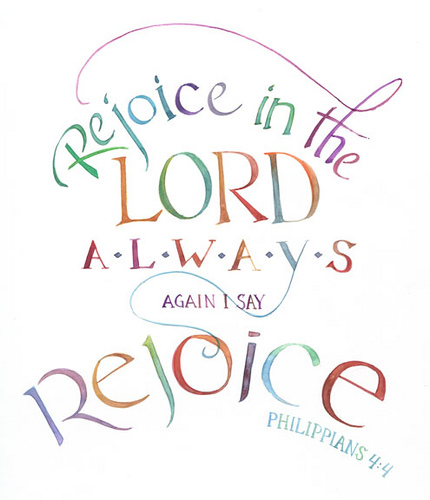
For example, celebrate anything and everything (Philippians 4:4).

3095781994_90a392c03f

Take joy in:

  • Your cozy robe to ward off the morning chill
  • That cute tuft of hair sticking up on your toddler’s head
  • A parking place opening up when and where you need it
  • Licking the stamp just as the mail carrier pulls up in her truck
  • An earring lost last week turns up between the counter and stove this week.

You see, joy and strength are closely related. Ezra told the people of Israel, “The joy of the Lord is your strength” (Nehemiah 8:10).

Those five examples above, and thousands like them, are gifts from your Heavenly Father. “Every good gift and perfect gift is from above, coming down from the Father of the heavenly lights” (James 1:17).

In the same way we can build up physical strength with exercise, we can build up spiritual strength with praise—by expressing gratitude and joy for every good and perfect gift.

And now, the last promise of this verse describes in metaphor the result of living according to God’s design.

“You will be like a well-watered garden, like a spring whose waters never fail.”

TotalChildCareVegetables7 

Visualize a flourishing garden, with rich, green plants overflowing with healthy, ripe produce.

Those can be descriptors of you and me.  We are:

  • Rich in God’s grace, which he has lavished on us with all wisdom and understanding (Ephesians 1:8).
  • Green and flourishing, because we spend time with the Master Gardener and allow him to cultivate our spirits (Psalm 1:2-3).
  • Healthy and prosperous of soul (v. 3). As we soak up God’s Word, we’ll produce actions and attitudes that honor God and bring us inner satisfaction.
  • Ripe and mature, lacking in nothing (James 1:3).

God offers us “a continual source of thirst-quenching, drought-ending, fruit-producing, spiritual hydration” (James MacDonald).

Doesn’t that sound refreshing?  Who could turn down such provision?

*     *     *     *     *     *    *     *     *     *

Thank you, Father, for the precious assurances of these promises: 

  • You are leading me along the path you preordained before time began.
  • Every day of this earthly journey I can count on you to supply my needs.
  • Every day you provide fresh strength. One way is through the exercise of praise.  
  • As I spend time in your presence, I will be transformed–like a garden replenished by hydration. In fact, I can grow into your likeness with ever-increasing glory!

 “Such knowledge is too wonderful for me. It is too lofty for me to attain.” Yet I know it to be true because these are truths from your reliable Word.  My heart overflows with wonder and gratitude.

(Psalm 139:16; Philippians 4:19; 2 Corinthians 3:18; Psalm 139:6)

(Photo and art credits:  www.dayofgrace.me; http://www.anativegarden.blogspot.com; http://www.flickr.com; http://www.naturalearning.org.)


Read Full Post »

mri-scanner


My brother had to get an MRI last week. The technician warned him the machine was very loud—similar to a large motorcycle.

“I like motorcycles!” John told her.

Nevertheless she gave him earplugs, to block the noise as much as possible, and a set of headphones, through which he could listen to the music of his choice.

Earplugs and headphones. That’s what I need to drown out the devil’s loud voice.   Sometimes he can be incredibly persistent with his irritating chatter in my spiritual ears, saying things like:

  • “You are past your prime. Why bother trying to accomplish anything?”
  • “Look how blessed your neighbor is. You must have upset God in some way or you’d be blessed like that, too.”
  • “Can you believe how insensitive Ms. __________ is? How can she be so hurtful and not even realize it?

Wouldn’t it be nice if God handed out earplugs and headphones for our spiritual ears?

Maybe God wants us to develop some worthy habits in the process of manufacturing our own auditory devices.

And how might we do that?

Earplugs could be fashioned out of gratitude. We can occupy our minds with continual rejoicing in the blessings of this moment. Then we won’t be able to hear the devil’s negative and critical comments.

Let’s see…I wonder if I could name a blessing for each of the five senses, for what I am experiencing right now?

  • Thank you, Lord, for books and the gift of sight that allows me to read and enjoy them, as well as learn from them.
  • Thank you for soft breezes that create a cheerful rustling of fall leaves.
  • Thank you, Father, for the cozy warmth of my fleece jacket.
  • Thank you for the nutty goodness of hazelnut coffee,
  • And thank you, Lord, for the homey aroma of vanilla, coming from a nearby candle.


candleflame


Oh! That was fun, and I didn’t have one negative thought during the exercise. No wonder Paul told us to rejoice always.

Alright–earplugs are in place. Now it’s time for the headphones—something worthwhile to pay attention to, that drowns out the noise of negativity and criticism.

And what could be more worthwhile than scripture, where God offers reassurance, encouragement, and strength? The psalms are a perfect place to begin:

  • “Blessed is the man who makes the Lord his trust” (Psalm 40:4).
  • “I will sing of your strength, in the morning I will sing of your love; for you are my fortress, my refuge in times of trouble” (Psalm 59:16).
  • “Your ways, O God, are holy. What god is so great as our God? You are the God who performs miracles; you display your power among the peoples” (Psalm 77:13-14).

And one of my favorites:


Ps.89.15.16


(“Blessed are those who have learned to acclaim you, who walk in the light of your presence, O Lord. They rejoice in your name all day long; they exult in your righteousness. For you are their glory and strength” (Psalm 89:15-17).)

Notice: We are blessed when we acclaim God. Disparaging ourselves or others, bemoaning our circumstances—even just in our thought life—is counter-productive.  It is worship that transforms our minds and spirits.

So let’s insert those earplugs and pop on those headphones! The difference will be remarkable.


(Photo and art credits:  www.cancerresearchuk.org; http://www.cozyhearthcandles.com; annemateer.com.)


Read Full Post »

autumn5

“The land is lit with autumn blaze.”

–Helen Hunt Jackson (1830-1885)

I’ve been anticipating these few weeks of October ever since we moved back to the Midwest in June—the gilding on tree-covered hillsides, the crimson coats on sumac trees, and, of course, the swaths of gold and vermilion among the maples.

The trees appear dressed for a grand party!

Indeed, autumn was the season I missed most during our forty years in Florida.

So Friday afternoon I sat on our second-story deck, to observe more closely the magnificent display in our back yard. You see, a shallow woods stands sentry between the houses on our street and the houses behind us. Among the tree-fellows, chestnut, elm, oak, and others stretch their colorful arms heavenward.

But already the trees are beginning to lose their leaves.

Elm leaves somersault while they plummet, flashing sparks of sunlight from their luminous topsides.

Oak leaves drift downward, gracefully zigzagging side to side.

But whether they tumble or drift, the leaves of all deciduous trees will eventually fall, having fulfilled their purpose: photosynthesizing light, absorbing carbon dioxide and releasing oxygen.

As human beings, we, too, have purpose to our existence: to live for the praise of God’s glory (Ephesians 1:11).  What an honor is ours, to inspire others to give praise to the King of the universe.

And how might we do that?

  1. Reflect God’s character, like the elm leaves flashing in the sunlight. Wherever we are, whatever we’re doing, we can shine as lights (Matthew 5:14)–offering assistance or a listening ear, being a positive voice and example, exercising self-control and patience.
  1. Give praise to God at every opportunity. As tree leaves fall, the lacey branches are exposed, all reaching upward toward the sunlight. Our hearts should be raised toward the Light of Life, the Son of God.

df352dd4289de9df98adedcc47361a1a

(“My lips will glorify you.  I will praise you as long as I live,  and in your name I will lift up my hands” — Psalm 63:3-4)

We can:

  • Praise him in the morning for the opportunities of the day ahead.
  • Praise him in the afternoon for the blessings and accomplishments already enjoyed.
  • Praise him in the evening for his guidance and care throughout the day, his strength for the challenges, and the blessing of rest yet to come.
  1. Be content (Philippians 4:11).  God has blessed us with every spiritual blessing in Christ (Ephesians 1:3).  Begin to name those blessings and note how your heart begins to swell with elation–blessings like:
  • relief of forgiveness
  • liberation from guilt
  • assurance of hope
  • confidence of access to his presence
  • certainty of eternal life.

(How long might the list grow if we continued?)

Just as autumn blazes around us, may our hearts blaze to live for the praise of God’s glory!

(Photo credits:  www.galleryhip.com; http://www.media-cache-akO.pinimg.com.)

Read Full Post »

« Newer Posts - Older Posts »

Sylvia Schroeder

Impressions Becoming Expressions

Mitch Teemley

The Power of Story

Still Traveling

Impressions Becoming Expressions

Living Our Days

Gaining a heart of wisdom

He Said What?!

I'm Patty, and my husband and I are living with our adult son who has autism and epilepsy. I love sharing lessons learned from life around me, especially life with Aaron.

Meditations of my Heart

Impressions Becoming Expressions

Linda Stoll

Impressions Becoming Expressions

Signora Sheila

Where faith meets la dolce vita

Heidi Viars

Finding the Image of God