Feeds:
Posts
Comments

Archive for the ‘Faith’ Category

article-step-by-step_ds-photo_getty_article_178_67_200377237-001_XS

Back in the 1970s somebody came up with the idea of worry stones—small, smooth pebbles that people could rub between their fingers to release their worries. (What a great money-maker, huh?  Collect some free pebbles, clean ’em up and sell for 100% profit.  Genius.)

According to enthusiasts, the constant rubbing activates the nerves at the base of the thumb, releasing endorphins. As a result, a sense of calmness purportedly settles in the user’s mind.

Even if that’s true, what happens when the person stops rubbing? Since the worry has not been resolved; isn’t it likely to return? I can’t see myself rubbing a stone until I fall asleep at night, can you?

Here’s a better idea.  Instead of going to a small pebble for worry-relief, go to the Rock.

What Rock, you ask?

“There is no one holy like the Lord; there is no one besides you; there is no Rock like our God” (1 Samuel 2:2).

Next question:  Why go to the Rock?

1.  God our Rock is more stable and reliable than Gibraltar.

igibrat001p4

The Rock of Gibraltar has become a symbol for stability, having stood sentry on the southern coast of Spain for centuries. Some say it dates back to the Jurassic Period.

But our God is older still, isn’t he.

“Trust in the Lord forever, for the Lord is the Rock eternal” (Isaiah 26:4).

And he is the same yesterday, today, and forever (Hebrews 13:8).  Now that’s reliable.

2.  God our Rock is more sheltering than a deep cave.
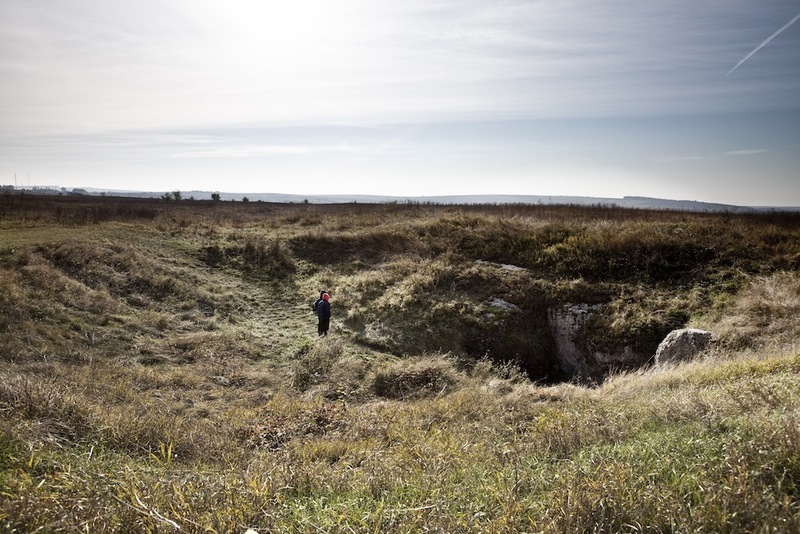
Verteba_Cave

(Verteba Cave, Ukraine)

During World War II, a small group of Ukrainian Jews found a way to escape the Nazis. They lived underground in caves for a year and a half.

At night they foraged for food. They even built showers and latrines deep inside.

But imagine living every day in pitch blackness and in fear of being discovered.

One day it happened. Nazi soldiers stumbled upon their hiding place. A courageous woman spoke for the group, as German guns pointed straight at her.

“What are you afraid of here?” she said. “Is the Furhrer going to lose the war because we live here?” Miraculously the soldiers left without doing anyone harm.

The band of Jewish villagers found relative safety in those caves,  and in April, 1944, the cave dwellers were liberated, able to return to the light.

But God our Rock offers guaranteed eternal safety for our souls. His Son, Jesus “became the source of eternal salvation for all who obey Him” (Hebrews 5:9)

3.  God our Rock is more protective than Masada.
slide-static

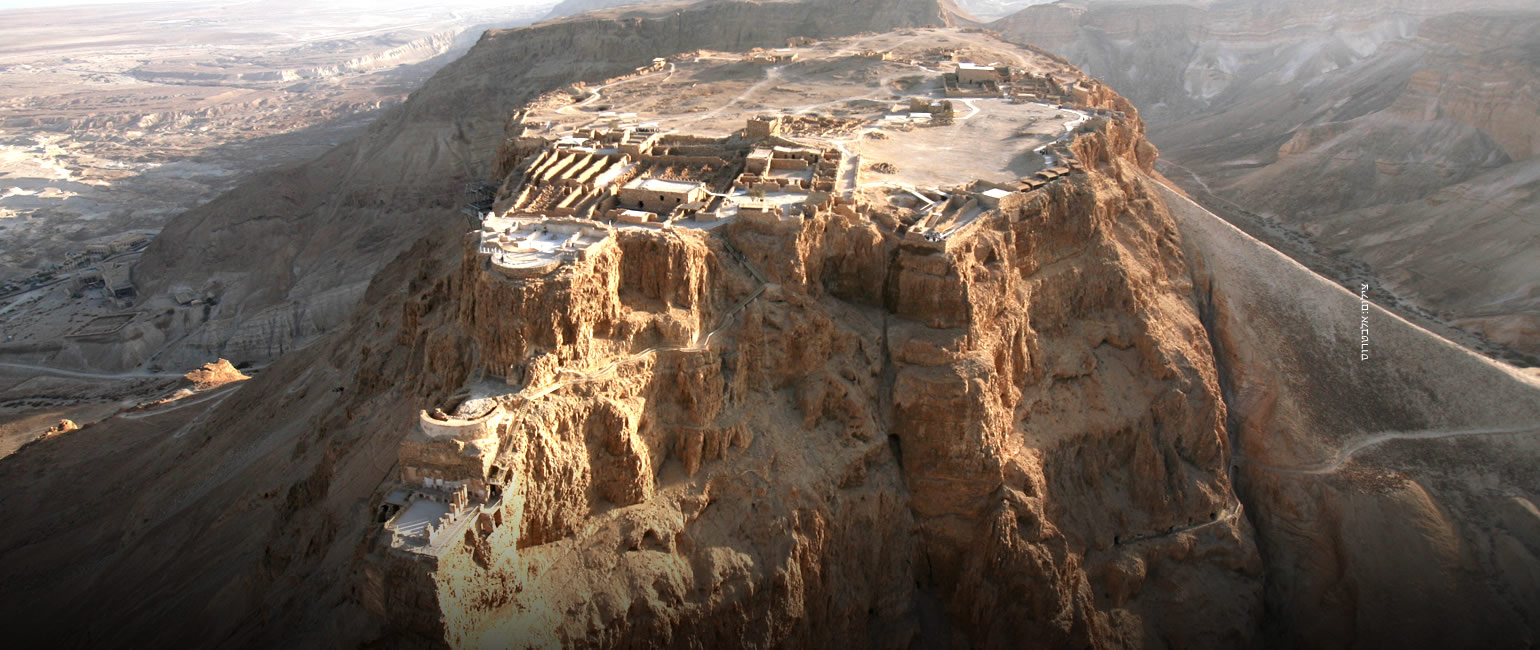
Perhaps you’re familiar with the mountaintop fortress, towering 1500 ft. above the Dead Sea.   The refuge was built by Herod the Great, from 37 to 31 B.C., to showcase his power.

Infamous for his brutality, Herod had good cause to be paranoid. He spared no expense to make sure this desert fortress could withstand attack and provide long-term refuge. His plan included protective casement walls, an ingenious water-collection system and cisterns for storage, storehouses, barracks, palaces, an armory and more.

Impregnable? Almost.

When Herod died, Jewish rebels were able to overtake the Roman guard remaining at the fortress. A thousand Jewish zealots lived atop Masada for three years.

Yet nothing or no one on earth can compare to God our Rock.

“Lead me to the Rock that is higher than I,” cried David. “For you have been my refuge, a strong tower against the foe” (Psalm 61:2-3).

And how do we avail ourselves of God’s refuge?  Through gratitude, praise, and prayer.  We can:

  • Thank him for his promises, for the times he has protected and provided in the past.  We must feed our confidence in God rather than our fear.
  • Praise him for his glorious attributes that he is bringing to bear upon our situations–attributes such as power, wisdom, trustworthiness, and love.
  • Affirm our faith. If we occupy our minds with expressions of trust, there won’t be room for thoughts of worry.

“My soul finds rest in God alone;

my salvation comes from him.  

He alone is my rock and my salvation;

he is my fortress, I will never be shaken…

Find rest, O my soul, in God alone;

my hope comes from him”

(Psalm 62:1-2, 5).

(Photo credits:  www.ehow.com; http://www.kids.brittanica.com; http://www.noplaceonearthfilm.com; http://www.masada.org.il.)


Read Full Post »

2008_003703


We sat on the runway, awaiting take-off clearance for our flight. Low, thick clouds hung above us, shrouding the area in gloom. Folks in the plane sat quietly in their seats. Really quiet. Not very many smiles either. The oppressive bleakness outside seemed to cause a depressive state inside.

Finally we felt the plane move, pick up speed, and lift off the ground. In seconds the view out our windows was obliterated by the gray-white clouds. We could see absolutely nothing, as if curtains had been drawn outside the windows. Was the plane even moving? There was no way to tell, except for the loud drone of the engines and the upward angle of the plane.

Suddenly we escaped the cloud bank and were almost blinded by the brilliant sun. Some people turned off the overhead lights, others closed their window blinds against the glare.

As a result of the bright light, the atmosphere changed inside the plane. The dark mood of moments before turned to cheer. Some passengers shifted in their seats, sitting up a bit straighter. Soft chatter, even a few chuckles, peppered the air.

What a difference sunlight makes.

The physiological connection between sunlight and mood has been studied by scientists. They’ve determined that sunlight increases the production of serotonin in the brain, which is tied to wakefulness and feeling happy.

Those of us who know God can experience another source of light – his light — even when the dark clouds of trouble roll in (Psalm 18:28).  The benefits are incredible.

1.  “In [his] light we see light” (Psalm 36:9b). As we practice God’s presence and live according to the directions of his Word, we see the wisdom of his ways. We also become more aware of God’s glorious attributes shining into our lives—his power, loving kindness, grace, and more.

2.  “Blessed are those who have learned to acclaim you, who walk in the light of your presence, O Lord. They rejoice in your name all day long; they exult in your righteousness. For you are their glory and strength” (Psalm 89:15-17a).

Take note. God is righteous. Everything he does is good and right, absolutely perfect.

Did you catch that amazing statement at the end?  Our God of Light is our glory. He is magnificent, full of splendor, and grandeur, yet he is our Heavenly Father!  Could any state of circumstances be more incredible?

God is the source of all strength. Think of it. The all-powerful, all-knowing, sovereign God of the universe is on our side—all the time. He is completely, forever committed to us, until that day we see him in all his glory, our King of kings!

3.  “The Lord is my light and my salvation—whom shall I fear” (Psalm 27:1)?

Consider what dark clouds might symbolize in our circumstances: stress, problems, fear, and sorrow.

Now consider what the Lord of Light brings to us: guidance, wisdom, joy, provision, comfort, grace, and peace.

He is light within us and around us.

Sometimes when a thick cloud bank of difficulty settles over our lives, we think God has abandoned us. But take note of these wise words:


“Measure not God’s love and favor by your own feeling.

The sun shines as clearly on the darkest day as it does in the brightest.

The difference is not in the sun,

but in some clouds which hinder the manifestation of the light thereof”

– Richard Sibbes (Anglican theologian, 1577-1635).


Praise God for his glorious constancy!


(Photo credit:  www.vision.cs.uiuc.edu.)

Read Full Post »

progressive_detail


Remember your first attempt to use a microscope? If your experience was like mine, countless adjustments had to be made to find the object under the lens and then bring it into focus.

I’m so glad our eyes don’t work that way! God made them to automatically adjust for distance, intermediate, and near. Granted, as we get older glasses are often required. Some of us even need trifocals. But the miracle of physical sight is incredibly precious, even with corrective lenses.

God offers us another miraculous gift of vision—that of spiritual sight. It, too, is trifocal–to see  lessons of the past,  opportunities of the present, and possibilities of the future.

First we need to understand where spiritual vision (godly insight and foresight) comes from.  It is a function of faith and wisdom.

Faith grows with our knowledge of God. For example, our vision of his future for us is based on such truths as: 1) He has designed a special plan for each of us. 2) He can do the impossible.   And, 3) he empowers the weak.  Embrace such truths and wishful thinking for your future can become a statement of conviction.

Faith also focuses on God’s promises.

Do you have a vision of a productive life, fulfilling his purpose? Focus on John 15:5. “I am the vine; you are the branches. If a man remains in me and I in him he will bear much fruit; apart from me you can do nothing.”

Do you need courage to step forward toward a God-inspired goal? Focus on Joshua 1:9. “Have I not commanded you? Be strong and courageous. Do not be terrified; do not be discouraged, for the Lord your God will be with you wherever you go.”

Do you feel overwhelmed and incapable of completing the task God has whispered into your spirit? Focus on Psalm 121:2. “My help comes from the Lord, the Maker of heaven and earth.”

In addition to faith, godly wisdom contributes to spiritual vision.

Godly wisdom grows with our knowledge of God’s Word. Of course, knowledge by itself is not enough; we must apply it (Psalm 19:7).

And as we absorb his truth, God gives us the ability to see those lessons of the past, opportunities of the present and possibilities of the future.

Now before I share a few examples please understand: I am no visionary with extra-spiritual powers to see the invisible. I’ve just lived long enough, had the privilege to learn from stellar Bible teachers, and spent glorious hours getting to know God and discovering his Word for myself. As a result…

…I can see lessons from my past.

One lesson:  God knows what he is doing.  Consider that…

  • He put me in a Christian home and in churches where my spirit and character were formed.
  • As a short-term missionary in Honduras and Ecuador, he grew my reliance upon him.
  • Serving at six churches with my pastor-husband stretched me emotionally and spiritually, but I also experienced much joy and fulfillment.
  • Each of the four teaching positions I held represented God’s ability to engineer circumstances in stunning ways.

Oh, yes, I can see clearly that God knows what he is doing.

I also see opportunities of the present as we babysit our granddaughter. What an awesome privilege to pass on to a new generation the heritage of faith we have treasured. I can envision the value of sweet memories, sound truth, and especially the example of godly integrity in her life. (Lord, help me provide those gifts to both of our granddaughters!)

And, I see possibilities for the future, where my husband and I might serve—perhaps at a soup kitchen. (Steve loves to cook.) And a volunteer tutoring service for under-privileged children might be able to use a retired teacher.  Each locale would provide possibilities for planting seeds of faith into the lives of others.

I want to live out the advice of missionary to India, William Carey (1761-1834):

“Expect great things from God; attempt great things for God.”

But we’ll need tri-focal, spiritual vision for that to happen.

*     *     *     *     *     *     *     *     *     *

What are you envisioning right now?


(Photo credit:  www.prescription.lensesrx.com.)


Read Full Post »

???????????????????????????????????????????????????????????????????????????????????????????????


The days are getting shorter; schools will be in session within a couple of weeks. It must be August.

And with the end of summer comes a tinge of sadness. The days of swimming, boating, and patio parties will soon be over for another year. We wish summer could last a bit longer.

What we need is a holiday in August, even if we invent it for ourselves. Something to lift our spirits.

Perhaps we could celebrate the birthday of Francis Scott Key, born August 1, 1779. (That would place our new holiday neatly centered between Independence Day and Labor Day.)


Francis-Scott Key


Mr. Key would be a worthy man to honor, too, and not just because he penned The Star Spangled Banner.

Francis Scott Key was a man of faith.

From 1818 until his death in 1843, he served as vice-president of the American Bible Society. Mr. Key was also involved in the American Sunday School Union, instrumental in planting thousands of Sunday Schools in settlements throughout the Midwest.

Though only an amateur poet, he penned at least ten hymns in addition to our national anthem. Included below are the first-stanza lyrics of Lord, with Glowing Heart I’d Praise Thee.  I think you’ll find these words  as heart-stirring as The Star-Spangled Banner: 


Lord, with glowing heart I’d praise Thee,

For the bliss Thy love bestows,

For the pardoning grace that saves me,

And the peace that from it flows:

Help, O God, my weak endeavor;

This dull soul to rapture raise:

Thou must light the flame, or never

Can my love be warmed to praise.


Francis Scott Key was a man of courage.

If you’re like me, you remember bits and pieces of the circumstances that inspired Mr. Key to write our national anthem. Sometime during the War of 1812, he was on a boat in a harbor, anxiously watching to see if the fort onshore would survive an onslaught from the British Navy. By the dawn’s early light he caught a glimpse of the American flag still flying over the ramparts, and the first lines of The Star Spangled Banner were born in his mind.

But what was Sir Francis doing in a harbor full of British ships attacking an American fort?

First, it’s important to understand the British had just completed a successful campaign against Washington, D.C., burning many buildings including the White House. Hundreds had fled for their lives, including President Madison.

After Washington, the victorious enemy approached Baltimore, the third largest city in America.  Mr. Key and John Stuart Skinner (an American Prisoner Exchange Agent) had been sent to the British, to negotiate the release of prisoners.  One of those prisoners was Dr. William Beanes. Dr Beanes had been captured in Washington, and was being held aboard ship in Baltimore Harbor.

Why was Mr. Key sent as a negotiator? Perhaps because, as a lawyer, he was gifted at persuasion.

But what guarantee might Francis Key and John Skinner have that they themselves would not be taken prisoners? Surely there was none. Promises can easily be broken, especially during war.

Yet the two men did board an enemy ship and talk the British into releasing Dr. Beanes. However, the battle against Fort McHenry was about to begin. The three Americans were not allowed to return to shore, but were transferred to a small boat behind the British fleet. They had no choice but to anxiously watch the bombardment of Fort McHenry, located on Baltimore Harbor. Would the Americans be forced to surrender?


francis-scott-key-1779-1843-american-lawyer-and-poet-witnessing-the-bombardment-of-fort-mchenry-september-13-14-1814-wood-engraving-american-1885-granger


Into the night the ferocious battle continued. Sixteen British war ships lobbed cannon fire and rockets into the fort from a safe distance out in the harbor. Meanwhile, American gunfire was useless. The ships were out of range.

But the dawn’s early light revealed that the American flag still waved. The fort had remained secure in spite of the onslaught. Mr. Key grabbed an envelope. On the back he wrote out the first phrases of the poem, “The Defense of Fort McHenry.”  Later he added to the poem, creating four stanzas. Soon it was set to a British(!) tune, Anacreon in Heaven, and retitled, The Star-Spangled Banner.

Though the song celebrated that particular victory at Fort McHenry, Mr. Key expressed his faith in God and hope for America in the last stanza:


Oh, thus be it ever when freemen shall stand

Between their loved homes and war’s desolation;

Blest with vict’ry and peace, may the Heav’n rescued land

Praise the Pow’r that hath made and preserved us a nation!

Then conquer we must, when our cause it is just;

And this be our motto: “In God is our trust.”


Did you notice that last line? Mr. Key created our nation’s motto as well as our national anthem.

He’s worthy of a holiday, don’t you think?


(Resources:  www.wallbuilders.com, http://www.christianity.com, http://www.middletownbiblechurch.org, http://www.usflag.org, and http://www.poemhunter.com.

Photo & art credits:  www.scholarshipexperts.com, http://www.oldfloridabookstore.blogspot.com, http://www.fineartamerica.com.)


Read Full Post »

If I asked you, “What’s the most popular flower?”, you’d probably get the answer right. It’s the rose. En masse on the bush, they provide a striking sight—dozens of large blooms framed by dark green leaves.


Rose-bush


But most of us can’t pass by a rose-bush without leaning in close to view the soft petals, and breathe in the singular scent. To study a blossom up close enhances our appreciation.


3513957969_384a6f45ac


We notice the varying colors, the delicate curl of each petal, the intricate, spiraling pattern. Our sense of wonder increases the more we gaze.

Might the same be true as we study the beauty of our God? That’s what David wanted to do:


1b799f481eab9b6e3bb2af8eab01c1dc

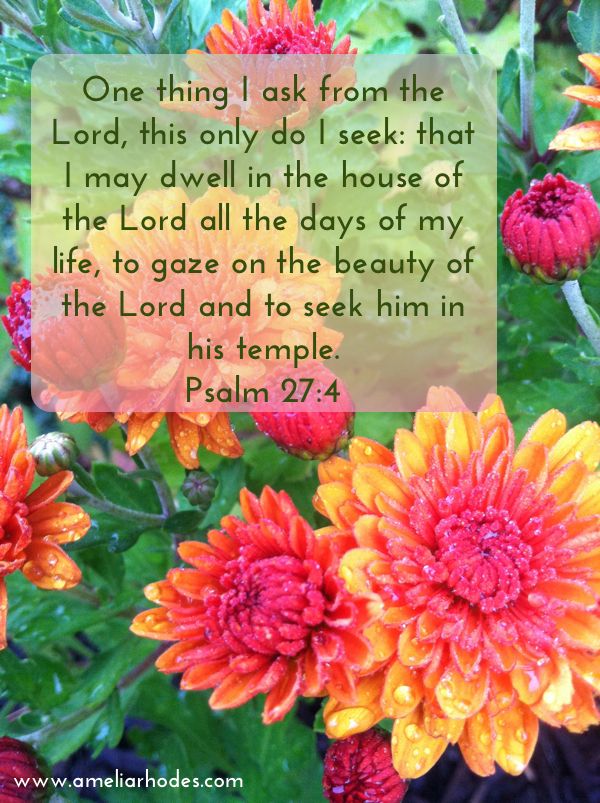
(“One thing I ask of the Lord, this is what I seek: that I may dwell in the house of the Lord all the days of my life to gaze upon the beauty of the Lord and to seek him in his temple” (Psalm 27:4).


But how can we gaze upon an invisible God? By contemplating all his glorious attributes. One commentator described the beauty of the Lord as the harmony of his perfections. I like that.

Just as the petals of a rose create a harmony of color, pattern, symmetry, and form, so the traits of our holy God manifest a harmony of perfect grace, holiness, triunity, and power.

And though we may be acquainted with a number of God’s attributes, appreciation of their beauty expands with a close-up view—through the lenses of scripture and personal experience.  For example:

God’s beautiful grace becomes visible in the story of the prodigal son, as we witness the father actually running to welcome his wayward son home.  He throws his arms around the filthy youth, even kissing him (Luke 15:11-20).

prodigal-son

God’s glorious holiness (purity, righteousness, and separateness from everything else in the universe) is highlighted in Revelation 4:1-11 as John strains for words to describe the Lord of heaven…

… ”Seated on the Throne, suffused in gem hues of amber and flame with a nimbus of emerald…Lightning flash and thunder crash pulsed from the Throne. Seven fire-blazing torches fronted the Throne (these are the Sevenfold Spirit of God)” — vs. 3-5, The Message.  

God’s harmonious triunity (Father, Son, and Holy Spirit) is celebrated in Ephesians 1. Paul reminds us that:

  • God the Father bestows all spiritual blessings upon us (v.3).
  • God the Son provided redemption and forgiveness of our sin (v.7).
  • God the Spirit guarantees our inheritance in heaven and gives us assurance (vs. 13b-14).

And God’s magnificent power is on display throughout scripture and creation, even in our personal lives.  Our Heavenly Father is a God of infinite wisdom, unfailing guidance, strong empowerment, attentive care, competent help,  rich blessings, and more.

We can contemplate each of these attributes as we would the individual petals of a perfect rose.  We can remember occasions when he has demonstrated each trait in our lives.  And perhaps we’ll burst into song as Moses did:


who-is-like-you

(“Who among the god is like you, O Lord?  Who is like you–majestic in holiness, awesome in glory, working wonders?” — Exodus 15:11).

*     *     *     *     *     *     *     *     *     *

My heart fills with wonder and praise, O Lord, because you are a beautiful, holy God.  No one is your equal in power, wisdom, creativity, splendor, or love.  No one else is perfect in all he does.  And you, in all your holy glory are  My.  Heavenly.  Father.   Such statements are too glorious to comprehend!  

But oh, how grateful I am that they are true.

(Photo & art credits:  www.dorsetcereals.com; http://www.flickr.com; http://www.ameliarhodes.com; http://www.luke-15.org; http://www.praisejesustoday.com.)

Read Full Post »

(As most of you know, Steve will soon be retiring from the pastorate, after serving forty years in Florida. Mid-June we move to the Midwest, to be close to our sons and their families. Now if our daughter and her family would just move east from Washington State, life would be near-perfect!

No doubt you’re also aware that packing and unpacking are time-consuming tasks, so I’m putting the blog on hold for a few weeks.  But please continue to visit! I’ll re-blog some previous posts, and hopefully you’ll find them meaningful again, or perhaps for the first time.

The following post was first published 12-3-12.)


When I was a little girl, my parents kept a large garden in the backyard. They grew corn, beans, tomatoes, strawberries, lettuce, and more.

Among all that produce grew something else: garter snakes. I was petrified of those snakes, in spite of assurances from Mom and Dad that they could do me no harm.


Garter_Snake


So what was my reaction if, while playing in the yard, I noticed the slightest bit of slithering? I RAN while emitting eardrum-splitting shrieks. No doubt those snakes took off just as rapidly in the opposite direction, but I never looked back to find out.

Those experiences make a good word-picture of what my response should be when snakes of negativity, worry, or hurt feelings invade my mind. RUN!

James recommended exactly that: “Resist the devil, and he will flee from you” (4:7b).

But where should I run to? As a child, when seeking escape from the garter snakes, I often ran into the house, a safe and secure refuge. (Although I did have the occasional nightmare about smart snakes, who knew how to slither under doors and up stairs, so even the house wasn’t safe!)

As an adult, facing “snakes” of a different nature, where should I run?

“God is our refuge and strength, an ever-present help in trouble (Psalm 46:1).

That means, when my thoughts begin to turn to the negative, I need to run to God, my refuge of hope and help (Psalm 119:114).

When people speak or act unkindly and my emotions are bruised, I need to run to God, my refuge of comfort (Psalm 31:19-20).

When worry overtakes me, I need to run to God, my refuge of peace (Psalm 9:9).

Once my attention is focused on him, I must:

  • Look into his eyes and see the great everlasting love he has for me (Jeremiah 31:3).
  • Sense his strong arms around me, holding me close to his heart (Isaiah 40:11).
  • Hear him reminding me of all his promises and all the times he has blessed me in the past (Psalm 77:11-12).
  • Taste his goodness (Psalm 34:8) in all the flavors of his attributes: power, wisdom, holiness, loving-kindness, grace, and more.

And what will be the end result? “Let all who take refuge in you be glad; let them ever sing for joy” (Psalm 5:11a). That sure beats cowering, fretting, and flustering, doesn’t it?

*     *     *     *     *     *     *     *     *     *

Thank you, Father, for availing yourself to us as a refuge, a person-place we can run to for help, protection, and peace. We love you, O Lord, our strength, because you are our rock, our fortress, and our deliverer (Psalm 18:1).

Thank you for caring for us, those who seek to trust in you (Nahum 1:7). May we avail ourselves of your gladness and joy rather than let the snakes of negativity, worry, or emotional hurt get the best of us!

(Photo credit:  www.wikimedia.org.)

Read Full Post »

(This is the last new post until July 3.  As most of you know, Steve is retiring from the pastorate, after serving forty years in Florida.  Mid-June we move to the Midwest, to be close to our sons.  And if our daughter and her family would just move east from Washington State, life would be near-perfect!

Packing and unpacking are time-consuming tasks, as you know, so I’ll put the blog on hold for a few weeks.

But please continue to visit!  I’ll re-blog some previous posts, and hopefully you’ll find them meaningful again, or perhaps for the first time.)


TODAY’S POST


True or False:

 God will do the right thing at the right time.

–Max Lucado


We believe that’s true, right?  We can even find scripture to back up that statement:

“I choose the appointed time; it is I who judge uprightly” (Psalm 75:2).

Never in a million years would we say, “This statement is false. God can’t be trusted to do the right thing!”

But we do sometimes wonder why our ideas of the right thing don’t seem to match his idea.

And we do unabashedly wonder about his idea of right timing.

We also wonder why there’s not even a hint of progress toward that right thing we desire. We wonder why God is silent.


Wondering


But God’s silence is not like that of people.   He doesn’t give us the silent treatment in some petty game of payback. And it’s not a case of forgetfulness either.

More than likely God is working on other matters rather than that one we’re focused on– other matters such as perseverance, faith, and spiritual maturity. These character traits and others don’t grow so well if we’re always getting what we want when we want it.

We can rest assured there is purpose in the pause.

And just knowing that can ease our impatience.

Something else that’s important to know, too:

There’s really no such thing as silence with God, because we always have his Word, chock full of glorious promises and encouragement.  And it’s always available.  (I’m assuming you have an iPhone or computer–you’re reading this post; therefore you have access to a Bible–even if it’s online!)

One of my favorite promises is Isaiah 65:24.


Unknown


(“Before they call I will answer; while they are still speaking, I will hear.”)

And one more, also from Isaiah:

“I will accomplish all my purpose” (46:10b).

God is not only working in our behalf now, he foresaw our need and began working toward its fulfillment before we uttered the first prayer. He started arranging events and bringing together people and resources so that at just the right time the right thing will happen.

Notice the “I will” in each of those verses above. Isaiah did not record God’s good intentions. These are promises of the Almighty God of the universe, our always-truthful, always trustworthy Heavenly Father.

WHY DO I WONDER?!


*     *     *     *     *     *     *     *     *     *


I praise you, Heavenly Father, for being reliable and trustworthy. I can’t imagine life without you as my foundation. Thank you for every promise in your Word that gives me support. Once again, I avail myself to your plan, so you can do the right thing at the right time—without the interference of my impatience or doubt!


(Art and photo credits:  www.kemingshen.com , http://www.brendaboen.blogspot.com.)


Read Full Post »

images


I am a person of roots and routine. Are you?

Do you grieve when it’s time to leave one community for another, because emotional attachments have grown deep?

Do you take comfort in familiar routine, because you can move forward with confidence?

Then you’ll understand this statement: I am a person who struggles with change.

So this post is for me, to review what I know about accepting–even celebrating–change. You’re welcome to read over my shoulder.

First and foremost: I need to be selective of vocabulary, even in my thoughts. Thoughts impact attitudes; attitudes impact soul and spirit. For example:

  • Instead of change, I need to speak of the circumstances as an adventure.
  • Instead of problem, I should say possibility.
  • Instead of challenge, I can call the situation an opportunity.

Such a small commitment, really. But retooling my word-choices could have a profound impact on my spirit.

First, the change I don’t want to embrace takes on a glowing, new aura when I rename it adventure—the adventure of participating with God to bring about his good purpose (Romans 8:28). Such thinking would surely foster excitement!

Second, the problem I see is nothing compared to the possibilities God is capable of. “God can do anything, you know—far more than you could ever imagine or guess or request in your wildest dreams” (Ephesians 3:20, The Message)! As I consider the possibilities, hope and anticipation will flourish.

Third, the challenge I find so uncomfortable will undoubtedly provide opportunity to see God’s power and provision at work. Perhaps I’ll witness a whole string of God-engineered events. Or, the power and provision may occur in me, as he molds my personality and spirit into a more Christ-like version. (That is even more miraculous!) And who would turn aside from seeing—even participating in—a miracle?

It begins with my words.

*     *     *     *     *     *     *     *     *     *

This might sound strange to some, but thank you, Father, for the uncomfortable changes, challenges, and disappointments you’ve brought into my life. Not one of them was without purpose. Forgive me for the times I have fretted about how circumstances would turn out. How easy it is for me to forget that you hold all things in your hands.

May I anticipate the adventure, the possibilities, and the opportunities of each day, NO MATTER WHAT, because you are by my side–my all-powerful, all-wise, all-loving God. Thank you for the promise that you WILL fill me completely with joy and peace as I trust in you.  Then I can overflow with hope (Romans 15:13).

(Photo credit:  www.desiremercy.wordpress.com.)

Read Full Post »

Unknown


Two weeks ago Steve and I enjoyed a visit with friends we’ve known since college. Last week it was with two other couples we’ve also known for many years.  Shared memories include experiences at church, exceptional dinners at restaurants, excursions to other locales, watching each others’ children grow up, and more. Every time we get together, there’s much story-telling, teasing, laughter, and reminiscing.

One special delight of old friends is the “memory back-up” they offer.

  • “Who was the guy that…?
  • “Where were we when…?”
  • “What was the name of that restaurant where…?”

Have you experienced the flow of feel-good endorphins after such a reunion? Believe it or not, research has verified that our psyches benefit greatly from nostalgia.

New research from the University of Southampton shows that feeling nostalgic about the past increases optimism about the future.  The research examined the idea that nostalgia is not simply a past-orientated emotion, but its influence extends into the future, with a positive outlook.” (http://www.southampton.ac.uk/mediacentre/news/2013/nov/13_202.shtml )

Might that positive outlook grow even stronger if God is included in the remembering?  After all, he’s the one responsible for everything good that happens (James 1:17). He certainly deserves our gratitude for delightful memories.  Each one is a manifestation of his loving care and provision.

With the remembering, we can give God praise: “The Lord has done great things for us, and we are filled with joy” (Psalm 126:3).


AnExtraordinaryDay.net-Psalm-126-verse-3-The-Lord-has-done-great-things-and-we-are-filled-with-joy.-Woodland-photo


And with the remembering, we can strengthen our faith for the future.

On the other hand, all of us have unpleasant memories, too.  Difficulty, hurt, and failure are part of the human experience.  But even in contemplating those times, we can augment a positive outlook as the psalmists did (long before any research validated their strategy).  They often reaffirmed how God had ministered to them in the midst of trials:

  • He did not forsake those who sought him (Psalm 9:10).
  • He encouraged and listened to their cries (10:17).
  • He delivered them from all their fears (34:4).
  • He offered refuge (61:3).
  • He helped and comforted (86:17).

*     *     *     *     *     *     *     *     *     *

Oh, Lord, as I think about my life journey or read my blessings journal, I see your faithfulness displayed again and again.  Thank you for the gift of nostalgic remembering, which expands our joy, encourages our spirits, and grows our faith.


(Photo credits:  http://visualphotos.com ; http://www.anextraordinaryday.net.)

Read Full Post »

 proverbs-36_2821_1024x768

(“In all your ways acknowledge [God] and he will make your paths straight.” — Proverbs 3:6, NIV)

M-m-m.  God will make my paths straight? Sounds as if he is promising a life of ease on a flat, straight course. Smooth transitions from Point A to Point B.

But I know God doesn’t work that way. Life on Easy Street can result in laziness and worthlessness.

In checking other translations of the Bible, I discovered fresh insights for this familiar verse.

Berkeley says, “He will direct your paths.”

The Douay-Rheims Bible presents a nuance of difference: “He will direct thy steps.”

New Living Translation, “He will show you what path to take.”

Holman Christian Standard Bible, “He will guide you on the right paths.”

And my personal favorite: “He’s the one who will keep you on track” – The Message.

I wonder if I could compose my own amplified version, combining all these translations? Something like: “He will direct my steps along the path that he knows is right and keep me on track.”

How glorious that our Heavenly Father cares enough to guide us so attentively. What a relief to know…

…we can trust the One who knows us  better than we know ourselves. After all, God made us.   He can be trusted to choose just the right path for each of us. “He will teach [us] his ways, so that [we] may walk in his paths” (Isaiah 2:3).

…we don’t have to direct our own steps. In fact, “It is not for man to direct his steps” (Jeremiah 10:23). How wonderful to depend on God, who can see into the future. We certainly can’t!

…He won’t just set us off in the right direction, then leave us to our own devices. He will remain by our side, providing guidance all along the way.  Our God is all-wise; we are not.

I’m remembering a visit to the Governor’s Palace in Colonial Williamsburg, Virginia. In back of the large home is a labyrinth of boxwood bushes, replicating the maze that was first constructed there hundreds of years ago. Children and adults alike find it hard to resist the challenge, including me.


D2004-DMD-0413-1176.tif


Oh, my. With my lousy sense of direction, I became hopelessly lost. Every time I thought the next corner would be the way out, a wall of greenery would greet me. What I needed was somebody with a bird’s-eye view of the path who could tell me which way to turn.

That’s exactly what we have in our Heavenly Father.

“Whether you turn to the right or to the left, your ears will hear a voice behind you saying, ‘This is the way; walk in it.’” (Isaiah 30:21).

And we’re talking about much more important matters than a labyrinth of bushes! We’re talking about:

  • Day-to-day choices that form our character
  • Decisions that impact our influence upon those around us
  • Selections of what church to attend, what friendships to cultivate, what activities to pursue, and more
  • Guidance for those unexpected twists and turns of life

In all these ways, “He will direct our steps along the path that he knows is right and keep us on track.”

*     *     *     *     *     *     *     *     *    *

Oh, Lord, help me to look up toward you—often! I want to walk the right path you have chosen for me, with confidence and strength, because I am trusting in you. May I turn my thoughts to you and your Word continually—so I can receive frequent instruction. And thank you for walking with me, offering support and encouragement, every step of the way. “Show me the way I should go, for to you I lift up my soul” (Psalm 143:8b).


(Photo credits:  www.rockchurchofindia.org; http://www.colonialwilliamsburg.photochelter.com.)


Read Full Post »

« Newer Posts - Older Posts »

Sylvia Schroeder

Impressions Becoming Expressions

Mitch Teemley

The Power of Story

Still Traveling

Impressions Becoming Expressions

Living Our Days

Gaining a heart of wisdom

He Said What?!

I'm Patty, and my husband and I are living with our adult son who has autism and epilepsy. I love sharing lessons learned from life around me, especially life with Aaron.

Meditations of my Heart

Impressions Becoming Expressions

Linda Stoll

Impressions Becoming Expressions

Signora Sheila

Dove la fede incontra "slow living"

Heidi Viars

Finding the Image of God