Feeds:
Posts
Comments

Archive for the ‘God’s Faithfulness’ Category


Title

Have you ever heard statements like these?

  • “Oh, yes.  God wants me to be happy. He’s promised to give me the desires of my heart.”
  • “If you have enough faith, anything you ask of God can be yours.”
  • “God will take care of me. I don’t need to budget or plan ahead.”
  • “I can’t help it if I’m moody; that’s the way God made me. He understands.”

Any person who holds such beliefs can point to a verse or two in scripture, proving their points.

The problem is, the Bible was not written in brief, stand-alone statements. Bible truths are based on the context of the whole. Historical and literary understanding are also important.

Another problem? We wish for God to conduct himself in a certain way.  We even find scriptures that seem to back up our desires. But the truth is, we must know God as he is.

If we don’t, we’re living in confusion.

“The sooner we accept God as he is, and do not imagine him as we would like him to be, the sooner we will move from the path of confusion to confidence” (Selwyn Hughes, 1928-2006, Welsh pastor and author).

However, so much of God is beyond our understanding.


ecclesiastes11_5


“Just as [we’ll] never understand

the mystery of life forming in a pregnant woman,

so [we’ll] never understand

the mystery at work in all that God does.”

Ecclesiastes 11:5, The Message.

Our finite brains cannot fully comprehend our infinite God. But that shouldn’t stop us from learning and experiencing all we can.

Learning comes from the Bible. In its pages we find a glorious treasure trove of wisdom, encouragement, and guidance.

Experience comes through exercising our faith.

“If we begin to worship and come to God again and again by meditating, by reading, by prayer, and by obedience, little by little God becomes known to us through experience” (Saint Bernard of Clairvaux, twelfth century monk).

It is impossible to fully explain this life of faith, just as you can’t fully explain what it’s like falling in love, getting married, or becoming a parent. Words fail to describe such beautiful and strong emotions.

We had to trust those who told us:

  • “You’ll know you’re in love when it happens to you.”
  • “Your wedding day will be the best day of your life to that point.”
  • “Perhaps the only ‘high’ better than falling in love or getting married is holding your newborn baby in your arms for the first time.”


slide_353491_3844254_free


Similarly, we have to trust what God tells us through his spokesmen in the Bible. For example:

“He is the Rock, his works are perfect,

and all his ways are just.

A faithful God who does no wrong,

upright and just is he.”

Deuteronomy 32:4

You might want to read that third line again. Our God is faithful—reliable, loyal, and completely trustworthy. HE. DOES. NO. WRONG.  Now that’s Someone in whom we can place our confidence!

Here is another example of scripture-truth about him:


ddc66ab5b08721b26a4ea53ab1bba3b7

 “Righteousness and justice

are the foundation of [God’s] throne;

love and faithfulness go before [him].”

Psalm 89:14

Those four characteristics—right-doing, justice, love, and faithfulness—are the bedrock of who our God is. Everything he does flows from those attributes, including difficult circumstances and painful events that make no sense to us.

“Our inability to discern why bad things sometimes happen to us does not disprove God’s benevolence; it merely exposes our ignorance” (Ravi Zacharias and Norman Geisler, Who Made God? And Answers to Over 100 Other Tough Questions of Faith, p. 46).

Someday we will understand why such events occur. For now we must trust.

But our trust is not blind. We can be confident in our God because:

“True faith rests in the character of God” (A.W. Tozer).


(Art & photo credits:  www.whatmykidsread.com; http://www.photobucket.com; http://www.huffingtonpost.com, http://www.pinterest.com.)

Read Full Post »

Check a map that traces the trek of the Israelites from Egypt to Canaan, and you’ll see a meandering, looping pathway:

Wilderness Journey

God could have taken them along the coast of the Mediterranean Sea, a much more direct route. One commentator says that route would have required just days of travel. A short journey would have been so much easier on everyone, right?  Less chance of fatigue, boredom, and impatience to develop and create problems.

But God had his reasons for a long, winding route.

Reason #1: The Philistines. That’s not conjecture; that’s exactly what scripture tells us. “When Pharaoh let the people go, God did not lead them on the road through the Philistine country though that was shorter. For God said, ‘If they face war, they might change their minds and return to Egypt’ ” (Exodus 13:17).

The Philistines’ territory stretched for fifty miles along the Mediterranean Sea, with the southern border touching Egypt. They were a well-organized, warring people. Five great cities, strategically located throughout their coastal holdings, created an alliance, the famous Philistine pentapolis.

A people suppressed by slavery for four hundred years would not be able to fight such an adversary. The Israelites didn’t have any trained soldiers among them either. Could God have given them a rousing victory over the Philistines anyway? Of course. But he chose not to.

Reason #2: Perhaps God determined his people needed some wilderness experience to train them in his ways and build their trust in him. Instead of quick and easy, God chose slow, step-by-step progress. He was like an eagle, teaching his fledglings by degrees how to fly (Deuteronomy 32:11).

4ffd5fa25fbd4e401e15ae1fe344938f

I wonder if the Israelites thought, Does God have any idea where he’s taking us? What is he DOING?!

In hindsight we can see God’s purpose:

  • To prepare them to be his holy people by giving them the law. (By the way, according to Exodus 19:1, Moses went up to Mount Sinai during the third month after they left Egypt. God was certainly in no hurry to get his children to the Promised Land.)
  • To teach them.  Through the laws he gave Moses, God taught the Israelites how to treat one another and how to worship him. They were to be different from all other peoples on earth.   “I am the Lord your God; consecrate yourselves and be holy,” he said, “because I am holy” (Leviticus 11:44).
  • To challenge them. For example, God let them experience great thirst and hunger. Then he stepped in and supplied their needs. By degrees God taught them to trust him.

I have to admit: my life experiences have paralleled the Israelites’ in a number of ways. I’ve encountered a few winding roads, puzzling detours, uncomfortable wait times, and unanswered questions of my own.

You, too?

Here’s what we can remind ourselves of: God may not direct us by the nearest, fastest way—even though he could. In his omnipotent wisdom, he knows a better way. And he has perfectly sound reasons for his decision.

My choice in the matter? I can plead for the shorter route, complain about the delay, try to forge ahead on my own self-chosen fast track, OR…

…trust my all-knowing, all-wise Heavenly Father.

5db138f980d331b5ee31f939d399464e

Seeing the choices laid out in black and white, here on my computer screen, the decision is easy. However, complete trust in the moment of uncertainty, fatigue, and discomfort is much more challenging.

Perhaps I can encourage myself by reviewing God’s purposes for the Israelites. Chances are, he desires the same results in me:

  • God prepared the Israelites; he may be preparing me for the next chapter in my life.
  • God taught the Israelites; he may be teaching me what the next level of maturity includes.  (Yes, even an old Christian like me still has growing to do!)
  • God challenged the Israelites; he may be challenging me to trust him—in spite of a long, winding road and uncomfortable wait time.

In summary:  As I cooperate with him, God can transform me into a prepared, mature, trusting servant for the next chapter of my life.   I like the sound of that!

You, too?

*     *     *     *     *     *     *     *     *     *

“Who compares with you, O God?  Who compares with you in power, in holy majesty, in awesome praises, wonder-working God” (Exodus 15:11, The Message)?  You are over-the-top trustworthy!  So, in advance, I thank you for the good that will come out of the winding road, detours, and wait time in my life–experiences you ordained for me, before one of them came to be (Psalm 139:16).  I place my hand in yours, my caring, constant Companion.  Help me to focus on your strong grip, not the uncertainties ahead.  Amen.


(Art credits:  www.registrypartners.net; http://www.pinterest.com.)

Read Full Post »

iStock_000013894567XSmall-300x199


“What traits should you look for when determining if someone is trustworthy?” asked the subtitle of a magazine article.

That question piqued my interest, and I read further.

According to the researcher, integrity is a crucial component, but there’s another trait that’s equally important: competence. The author gave the following scenario as an example: His best friend, Charlie, had proven himself completely reliable, but he wouldn’t want that friend performing an operation on him.  Charlie is not a surgeon.

So a trustworthy person is not only honest and fair, he is also competent for what you need him to do.

Those of us who know God have just such a friend.  Think of all we know from scripture about the character of our virtuous, competent God.  He is:

  • just, faithful, and upright (Deuteronomy 32:4).
  • righteous (Psalm 119:142) and holy (Leviticus 19:2).
  • wise (Daniel 2:20) and good (Psalm 106:1).
  • truthful (Psalm 31:5).

An  enlightened understanding of our trustworthy God should calm our fears and doubts, right?

But perhaps you’re like me—struggling a bit from time to time, asking questions like:

  • Lord, I know you have a plan, but when are you going to reveal it to me?
  • Why hasn’t Bill been healed? We’ve prayed so hard and for so long!
  • Dealing with Meredith day after day is sapping my strength, God.  When will the frustration end?

According to Philip Yancey, faith boils down to the matter of trust in the relationship. Do I have confidence in God or not? If I do stand on a bedrock of trust, the worst of circumstances will not destroy the relationship (Grace Notes, p. 198).

Vintage country


So how can I develop that strong bedrock of trust? Saturating myself in scriptures about the character of God, such as those listed above, is a good place to start. Another worthy study-pursuit: the promises of God, because…

…“God is not a man, that he should lie, nor a son of man that he should change his mind. Does he speak and then not act? Does he promise and not fulfill” (Numbers 23:19)?  No, of course not.

To truly impact my trust quotient, a change of habit is necessary–a habit such as: T-squared. Any time I find doubt or fear creeping at the edges of my thoughts, I want to Turn, Trust, and Thank. T x 3 includes:

  1. Turn away from thinking about the what-ifs, the negative, the hurtful.
  1. Express trust in God through song, prayer, and scripture. “Doubts are dismantled by declarations,” says my good blogger-friend, Jody Collins.*
  1. Thank God for his attributes that he’s bringing to bear on any negative situation.  Thank him also for every scripture-promise that applies.

I think I’ll try it right now.

*     *     *     *     *     *     *     *     *     *

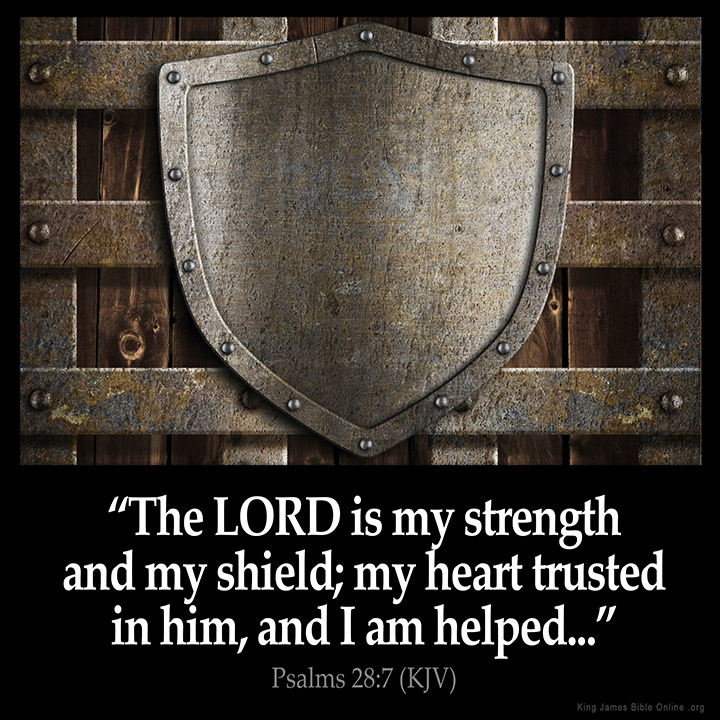
psalm287-nlt1


Oh, Father, I praise you that you are strong, and protect like a shield.   My heart leaps for joy knowing you care for me and will help me. I praise you for surrounding me with your love, because I trust in you. All my life you have proved yourself trustworthy; why would I want to stop trusting you now? Oh, how I praise you that, as I keep my mind steadfast upon you, you will fill me with your peace. You are my trustworthy Rock—reliable and unchanging.      

(Psalm 28:7; 32:10b; 71:5-6; Isaiah 26:3-4)

 *Visit Jody’s blog at http://www.threewaylight.blogspot.com.


(Photo credits:  www.pixgood.com., http://www.katherinepasour.net., http://www.tyndalerewards.com.)

Read Full Post »

blog-prayer-woman


How would you finish this prayer: 

“Oh, Lord, what I need most right now is ____________________.”

What word would you put in the blank?

Guidance?

Provision?

Strength?

Purpose?

One glorious Bible verse tucked into Isaiah presents four comforting promises that cover each of those needs:


Isaiah58.11 

“The Lord will guide you always;

He will satisfy your needs in a sun-scorched land

And will strengthen your frame.

You will be like a well-watered garden,

Like a spring whose waters never fail” (58:11).

Lots of truth packed into five short lines. Each phrase warrants careful consideration. For example:


1.  The Lord will guide you always.


He’s not a life coach, counselor, or psychologist. The almighty God of the universe promises to be your guide—free of charge! And he’s available 24/7. Think, too, of his astounding attributes that make him the perfect guide:

  • God is omniscient—He knows everything (Psalm 139:1-6), including every detail of your situation and the people involved.
  • God is righteous—Everything he does is good (Deuteronomy 32:4). He can be relied upon to lead you down a perfect path.
  • God is merciful—He responds in loving compassion (Psalm 116:5). He’s your understanding Father, your strongest ally.
  • God is truthful—All that he says can be trusted (Titus 1:2). He will not lead you astray.
  • God is faithful—He keeps his Word (Psalm 33:4). God does not lie or forget what he said. Neither does he change his mind.

Notice that first phrase says God will always be your guide. Not every once in a while when you’re really in a quandary, but always. You are never left alone to your own devices—unless that’s the way you want to live. God is a gentleman; he leaves the choice up to you.


2.  He will satisfy your needs in a sun-scorched land.


Not he might satisfy your needs if he feels like it. He will. 

No matter what the landscape of your life looks like, God will see that your needs are met.

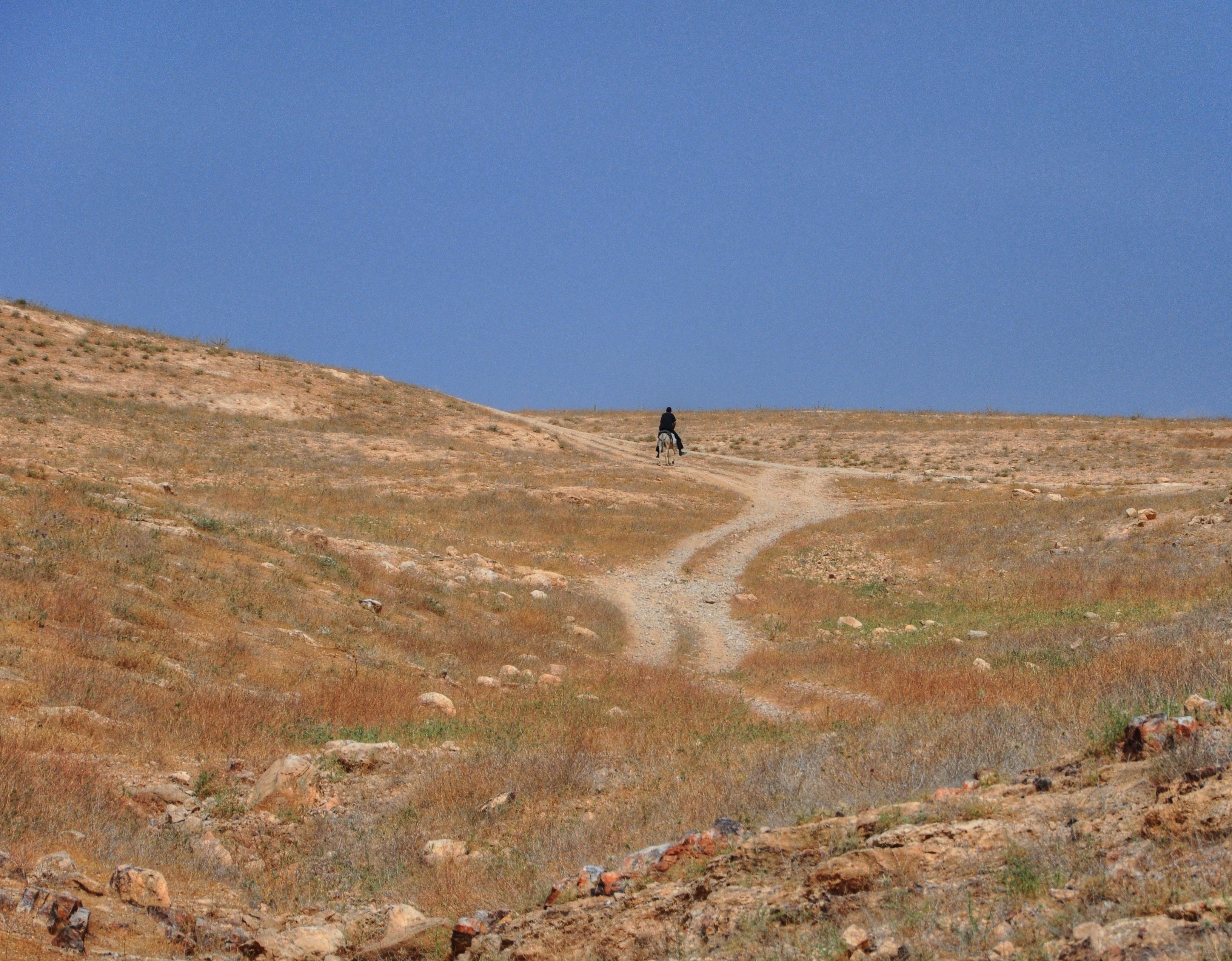
Have you ever been surrounded by sun-scorched land, perhaps a desert or wilderness where no life is visible?

Steve and I visited Israel a number of years ago. One of our tour stops was in the Judean wilderness—a desolate and foreboding sight to behold. Not a single tuft of grass. No bushes or plants of any kind—not even cactus. Only two things are visible when standing in the midst of this desert: sky and pale gray-brown mountainous rock, as far as the eye can see.


judean_wilderness_west_of_jericho_ariel_tb_q010_03


Should you decide to live there, you’d have to bring with you everything necessary for survival: all your food, water, and clothing. For shelter, you might find a cave.

Ah! But what if there was Someone there ahead of you? Someone who already had at his disposal the supplies you required? And they would never run out? That’s the life-giving, unfailing provision of your Heavenly Father.

Let’s you and me rest in the assurance that the essentials—and even many delights!—will be generously supplied. If something is meant to be, he will take care of it—just as he’s been doing since each of us was born.

Think how he has led you through the wilderness of broken relationships and difficult circumstances. His grace has been sufficient for every challenge (2 Corinthians 12:9), right?

Now project that assurance into the future. Even if we walk through the valley of the shadow of death, we have no need to fear. Our all-powerful God is with us (Psalm 23:4)–guiding and providing.

(Please remind me of that when I come to a wilderness-patch, will you?)


*     *     *     *     *     *     *     *     *     *


Heavenly Father, I praise you that day by day, moment by moment, you are delighted to guide us in perfect wisdom. You generously provide for our needs and lovingly care for us body, soul, and spirit. Thank you for your compassion, your faithfulness, and grace to see us through the wilderness valleys. “I trust in you, O Lord; I say, ‘You are my God. My times are in your hands.’” (Psalm 31:14-15a).  


Please come back on Monday. We’ll meditate on the second half of Isaiah 58:11.


(Photo credits:  www.hischurchwomen.com; http://www.freerepublic.com; http://www.biblestudytools.com.)


Read Full Post »

Woman with piggy bank at rainy window


“Save for a rainy day,” financial experts advise.  And they’re right.  It is smart to have funds set aside in case of emergency.

But we would also be wise to save up for another kind of rainy day:

  • The day great disappointment shatters our joy
  • The day the doctor begins a consult by saying, “I’m terribly sorry, but…”
  • The day a loved one calls with disturbing news

What could we possibly save up that would help in such circumstances?

Consider: monetary deposits in a bank account insulate us against financial emergencies.

Similarly, we can make faith-statement deposits into our soul-accounts, to insulate us against life’s emergencies.  A healthy soul-account offers peace of mind, confidence, and a sense of well-being.

The most valuable faith statements are those straight from scripture, since the Bible is our source of truth.

Statements such as these are worthy starting points:

  • God is with me, even in the midst of trial.

“Those who know Your name will trust in You, for You, Lord, have never forsaken those who seek You” (Psalm 9:10).

  • God is my stronghold in time of trouble, offering help and deliverance.

“The salvation of the righteous comes from the Lord; he is their stronghold in time of trouble.  The Lord helps them and delivers them” (Psalm 37:39-40).

  • He will supply all my needs.

“My God will meet all your needs according to his glorious riches in Christ Jesus” (Philippians 4:19).


Sometimes God makes deposits in our soul-accounts through other reading.  Here are a few examples I’ve collected:

  • “God makes good things out of the hard times.” – Erica Hale
  • “Difficulties are sent to make us grow. Move from complaining to proclaiming what God is doing through the problem. Remind yourself, for every Calvary, there is an Easter.” – Barbara Johnson
  • “When we understand that life is not about us, we learn to overlook the trivial and fix our gaze on the eternal. What is an offense compared to His love? What is a rejection compared to His unconditional acceptance? What is a momentary trial compared to an eternity with Him?” – Emmanuelle Gomez


Faith statement deposits also come through experiences, such as:

  • The spontaneous hug of a good friend who knows of our struggles. That’s God’s way of assuring us…

…We are not alone.

  • An answered prayer—and the answer is far beyond what we asked for. That’s God’s way of showing us…

…His love and blessing never fail, even in the midst of difficulty.

  • A transformed spirit through worship.  Worry becomes faith. Fear becomes courage. Depression becomes gladness. That proves…

…The joy of the Lord is our strength (Nehemiah 4:8).


Faith-statements, deposited in our souls even before we have need of them, provide a deep, sweet sense of security.

When difficulties arise, and the time comes to make withdrawals, we can praise God for each truth. Praise will fill our hearts with song and drown out the voices of worry and fear.

*     *     *     *     *     *     *     *     *     *

Your faithfulness, O God, is unwavering and unfailing.   Oh, how I want to be faithful to you, especially during difficult circumstances.  You have provided the tools.  I praise you for the deposits your Spirit makes into my soul account, offering solace, perspective, strength, and wisdom.   Help me to avail myself of your gracious provision.  


(Photo credit:  www.dailyfinance.com.)


Read Full Post »

psalm-42.5


On Friday, September 26, my younger brother, John, called with the heartbreaking news that our mother, age 85, had suffered a massive stroke. Her entire right side was affected; she could neither see nor talk. The prognosis left little room for hope.

By Sunday morning I was on a plane for Austin, Texas, to see Mom and care for Dad (age 90) while John and his wife, Collene, took care of numerous business matters related to Mom’s and Dad’s welfare.

For at least ten years Mom has been Dad’s primary care giver, due to his degenerative arthritis and Parkinson’s disease. But she considered her responsibilities a privilege, often saying, “He took care of me for many years; now it’s my turn. He’s my ministry now.”

For ten days we put our hope in God and witnessed his power at work.  In spite of great sadness, we could say, “For we will yet praise him, our Savior and our God” (Psalm 42:5), as he blessed us with his presence, guidance, and provision.

Mom was taken to Brackenridge, a teaching hospital, where she received conscientious, compassionate care. Doctors and nurses alike spent time with us, patiently explaining Mom’s condition and what we could expect.

Though she could not speak, and her brain had sustained extensive damage due to swelling, Mom communicated her love with hand squeezes. She also drew our hands to her lips for kisses.

My daughter, Heather, received permission from her kind boss to take time away from work and fly to Austin. She was able to stay for three days, visiting her grandmother, offering help, and lifting the spirits of us all.

On Day Five, I believe, it was recommended that Mom be moved to Hospice.   Immediately the name of a highly respected facility came to Collene’s mind. Wouldn’t it be wonderful if Grandma were taken to Christopher House, she thought. But that particular hospice is small. What were the chances that a bed would be available? Collene kept the thought to herself, just in case Mom was assigned elsewhere.

Sure enough, a representative from Christopher House came to the hospital and directed us through the process to have Mom transferred there. An added blessing: John and Collene knew one of the nurses. She asked to be assigned to our mother for the duration of Mom’s stay.

Meanwhile, we visited three nursing homes for Dad. (He had told Mom on numerous occasions, “Just put me in a nursing home!” She wouldn’t hear of it. Only four months ago did she agree to have a care-giver come four hours a day.)

All three facilities were close to John and Collene, all relatively new.   One seemed a particularly good fit for Dad’s needs and interests.

Two doctor’s appointments, many phone calls, and much paperwork later, Dad was approved and processed for admittance to the nursing home we had hoped for.   The day before my flight home I did laundry for Dad, gathered toiletries and other items, and marked his name on all belongings.

The next morning, Wednesday, John and Collene got Dad settled, and I flew home.

Later, John sent me a video of Dad playing a piano duet with a staff member. Granted, he could only play with one finger, but he packed a lot of rhythm and soul into those single notes.  What a delight to see him having a good time–already.

That night we spoke by phone.  Dad told me the folks at his dining table enjoyed his jokes, and he’d already taken advantage of the library.

On Thursday, October 9, Mom graduated to heaven. It was her father’s birthday.

Do they celebrate birthdays in heaven? I’d like to think that my grandmother and grandfather stood at the gate to greet Mom, as Jesus ushered her in. Together with many family and friends who already reside in heaven, they celebrated her arrival as a precious gift for Gramps’ birthday. Somehow it seems very fitting.


*     *     *     *     *     *     *     *     *     *


You can read my mother’s story at http://www.memorialwebsites.legacy.com/gerischaub.


(Photo credit:  www.jeanierhoades.com )


Read Full Post »

(As most of you know, Steve will soon be retiring from the pastorate, after serving forty years in Florida. Mid-June we move to the Midwest, to be close to our sons and their families. If our daughter and her family would just move east from Washington State, life would be near-perfect!

No doubt you’re also aware that packing and unpacking are time-consuming tasks, so I’m putting the blog on hold for a few weeks. But please continue to visit! I’ll re-blog some previous posts, and hopefully you’ll find them meaningful again, or perhaps for the first time.

The following post was first published 11-29-12.)


Breathe in this truth, long and deep:

God delights in you.

“That’s impossible,” you may say. “I can be downright self-centered, lazy, and prideful. Some days I can’t seem to do anything right. How could God possibly be pleased with me?” (I am quite familiar with this train of thought myself!)

Listen carefully.


cc_psalm147_11


(“The Lord delights in those who fear him, who put their hope in his unfailing love (Psalm 147:11).”

Fear, in this case, does not refer to terror. Fear refers to these attitudes:

  • reverence
  • trust
  • respect
  • awe
  • appreciation

The second half of the verse above makes clear that God rejoices in those who turn to him with faith.

If you fear God, as described here, and wholeheartedly hope in him, then the following statements are true of you:

He smiles upon you as you express appreciation for his blessings.

His eyes glisten with love as you pray for guidance and strength.

He revels in the time you spend immersed in his Word.

His heart fills with joy as you exult in creation.

He beams with pleasure when you help a stranger.

He rejoices when your heart is filled with peace and joy.

Yes, there are going to be moments when we stumble back into selfishness and pride. We’re not perfect—at least I’m not. But hallelujah! God does not leave it up to us to work through the perfecting-process alone.

Consider this good news the writer of Hebrews shared:

“May the God of peace…equip you with everything good for doing his will, and may he work in us what is pleasing to him, through Jesus Christ (Hebrews 13:20-21).

Wow. God not only makes clear what pleases him, he works in our hearts and minds to mold us into those kind of people.

Meanwhile, I think he takes great pleasure in progress, just like human parents do.


a0166-000122


You know how it is. Mom and Dad practically shiver with excitement when their tyke takes his first step and speaks his first word.

But did they expect their little one to learn these skills on his own? Hardly. With loving attention they held the little guy upright so he could practice taking steps. They repeated words countless times until their toddler could form them on his own.

Now relate this situation to our Heavenly Father. Isn’t it probable he experiences the same joy as we rely upon him to take faltering steps toward spiritual maturity?

*     *     *     *     *     *     *     *     *     *

Thank you, Lord, for being a gracious God who actually delights in his children. Thank you for loving us in spite of our failings and for smiling upon our efforts, meager as they may be. Our hearts are filled with awe and gratitude to realize you, the ultimate, all-powerful King of the universe, not only care about each step of progress we make, you are right beside us, enabling. You are magnificent—I can never praise you enough!


(Photo credits:  www.crosscards.com; http://www.gettyimages.com.)


Read Full Post »

Unknown


Two weeks ago Steve and I enjoyed a visit with friends we’ve known since college. Last week it was with two other couples we’ve also known for many years.  Shared memories include experiences at church, exceptional dinners at restaurants, excursions to other locales, watching each others’ children grow up, and more. Every time we get together, there’s much story-telling, teasing, laughter, and reminiscing.

One special delight of old friends is the “memory back-up” they offer.

  • “Who was the guy that…?
  • “Where were we when…?”
  • “What was the name of that restaurant where…?”

Have you experienced the flow of feel-good endorphins after such a reunion? Believe it or not, research has verified that our psyches benefit greatly from nostalgia.

New research from the University of Southampton shows that feeling nostalgic about the past increases optimism about the future.  The research examined the idea that nostalgia is not simply a past-orientated emotion, but its influence extends into the future, with a positive outlook.” (http://www.southampton.ac.uk/mediacentre/news/2013/nov/13_202.shtml )

Might that positive outlook grow even stronger if God is included in the remembering?  After all, he’s the one responsible for everything good that happens (James 1:17). He certainly deserves our gratitude for delightful memories.  Each one is a manifestation of his loving care and provision.

With the remembering, we can give God praise: “The Lord has done great things for us, and we are filled with joy” (Psalm 126:3).


AnExtraordinaryDay.net-Psalm-126-verse-3-The-Lord-has-done-great-things-and-we-are-filled-with-joy.-Woodland-photo


And with the remembering, we can strengthen our faith for the future.

On the other hand, all of us have unpleasant memories, too.  Difficulty, hurt, and failure are part of the human experience.  But even in contemplating those times, we can augment a positive outlook as the psalmists did (long before any research validated their strategy).  They often reaffirmed how God had ministered to them in the midst of trials:

  • He did not forsake those who sought him (Psalm 9:10).
  • He encouraged and listened to their cries (10:17).
  • He delivered them from all their fears (34:4).
  • He offered refuge (61:3).
  • He helped and comforted (86:17).

*     *     *     *     *     *     *     *     *     *

Oh, Lord, as I think about my life journey or read my blessings journal, I see your faithfulness displayed again and again.  Thank you for the gift of nostalgic remembering, which expands our joy, encourages our spirits, and grows our faith.


(Photo credits:  http://visualphotos.com ; http://www.anextraordinaryday.net.)

Read Full Post »

let_the_glory_out_tshirts-rf982b89d7b1846dbb186d467bd317390_8naah_324

Defeat may serve as well as victory

To shake the soul and let the glory out.

When the great oak is straining in the wind

The boughs drink in new beauty and the trunk

Sends down a deeper root on the windward side.

Only the soul that knows the mighty grief

Can know the mighty rapture.  Sorrows come

To stretch out spaces in the heart of joy.

–Edwin Markham (1852-1940)

Mr. Markham–educator, author, and poet– gives us much to contemplate in just eight lines, beginning with the first seven words:

“Defeat may serve as well as victory.”

No, thank you, my spirit says.  Defeat is humiliating, uncomfortable, and depressing.

Mr. Markham inspires a different perspective and a note-to-self:  God may very well bring defeats into my life “to shake my soul and let the glory out.”

Reminds me of Jonah, the reluctant prophet who tried to run from God.  The Lord told him to go east to Nineveh, an important city of Assyria.  Instead he headed west, boarding a ship for Tarshish.

But a fierce storm churned the seas into a boil.  In desperation to appease the gods, the sailors hurled Jonah overboard.  Surely in those tense moments of near-drowning and then being swallowed by a great fish, Jonah felt crushing defeat.  His life was over; it was just a matter of seconds.

Yet he didn’t die.  Hour after hour in the utter blackness of the fish’s belly, he remained alive.

No doubt he felt shaken in his soul, and in his distress, he called to the Lord (2:1ff).

God heard his prayer and commanded the fish to vomit Jonah onto dry land.

Jonah_shore

 Then the Lord repeated Jonah’s marching orders: “Go to the great city of Nineveh and proclaim to it the message I give you” (3:1).

This time Jonah obeyed, and the glory came forth.   Jonah preached and the people repented. God had compassion upon the citizens of Nineveh, and did not bring destruction upon them.

What appeared to be a mortal defeat for Jonah turned into a glorious revival for a wicked city.

Read Mr. Markham’s poem again and you’ll discover more benefits of defeat, as outcomes of:

  • Straining in the wind.  Pressing on during adversity results in perseverance and strength of character.
  • Drinking in new beauty.  During times of distress we’re more aware of God’s glorious attributes at work in our spirits–attributes such as empowerment, faithfulness, peace, and grace.
  • Sending down deep roots.  Defeat often brings us to new depths of surrender and submission.  It also brings us to new depths of God’s love (Ephesians 3:17).
  • Experiencing grief.  Only those that know a mighty grief can know the mighty rapture.  Like diamonds against dark velvet, joy needs a backdrop of sadness in order to be appreciated fully.
  • Experiencing sorrow.  Sorrows create space for joy.  Joy is never so sweet and overwhelming as after sorrow.

God knows what he’s doing, and he doesn’t waste time or effort.  False starts and fruitless endeavors just don’t happen with our perfect Heavenly Father.

Therefore, when defeat comes into my life or yours, we can rest assured he is accomplishing his good purpose for us.

There will be victory in defeat.

Guaranteed.


(photo and art credits:  www.zazzle.co.nz.com; http://www.searchforbibletruths.blogspot.com.)


Read Full Post »

“I just got a call from Mary, “ Frieda began.  “And you are not going to believe this.”

Frieda was the chairperson for the parsonage committee of our church.  The congregation had just purchased a newer home for their clergy family (Us!), one that was closer to the church.

Some new furniture would also be required.   (Back then, parsonages were supposed to be furnished, too.)  Frieda  had called to tell me about an interesting development.

She had just happened to mention to Mary, our choir director, that the committee was shopping for parsonage furniture. Mary had said, “Well, I’ve got a whole storage unit full of furniture, and I need to sell it!”

“ What do you have?” Frieda asked.


Monarch-Rectangular-Dining-Table-with-Four-Double-X-back-Chairs-P14606639

The more items Mary listed, the more excited Frieda became:  A dining room table and four chairs, a matching buffet, a bedroom set, a curio cabinet —just happened to match a number of items on our list.

Within a day or two, Frieda and I visited the storage unit with Mary.  The furniture was in good condition and lovely—much of it off-white, which suited our Florida climate.  Dear Mary was more than fair on the price of it all.  That left more in the budget for other expenditures.

My one concern was the number of chairs for the dining room table.   If only there were six, it would be perfect, I thought.  Frieda and I decided to check some thrift stores.  Perhaps we’d find two chairs that would at least coordinate with Mary’s set.


IMGP1825_540


Can you imagine our surprise when we just happened to find two chairs almost identical to Mary’s?  The seat covers were different, but when all six chairs were reupholstered, you’d have to look very carefully to notice any difference.

Each of you  surely have some “just-so-happened” stories of your own.  Isn’t it delightful to be at just the right place at the right time to enjoy such coincidences?

Actually, in a universe under the control of God Almighty, such events are much more than coincidence; they’re God-incidents.  He’s the one doing the orchestrating.  How do I know?  Scripture tells us:

“Before they call I will answer; while they are still speaking I will hear” (Isaiah 65:24).

Jesus taught the same truth:  “Your Father knows what you need before you ask him” (Matthew 6:8).

In addition, the Bible is full of examples:

  • The Egyptian princess just happened to find Moses in the bulrushes.
  • The Israelite spies just happened to meet Rahab, a woman willing to help them escape Jericho’s authorities.
  • Ruth just happened to choose Boaz’ field for gleaning.
  • David just happened to be a marksman with a slingshot, when Goliath and the Philistines threatened Israel.
  • Esther just happened to be chosen queen of Persia, as Haman was plotting to annihilate the Jews.


estherVICTORS1640s


Our all-knowing God foresees each need.  And before we’re even aware of what’s around the corner, he is already there.  He has already supplied.

What a gracious, faithful God he is!

*     *     *     *     *     *     *     *     *     *

Thank you, oh Lord, for the countless times you have engineered events for my benefit.  In actuality, those occasions when I recognize your handiwork are probably just a small sampling of the hundreds (thousands?) of times you’ve supernaturally provided, protected, and guided.

And you’re not finished yet!  Your faithfulness will continue until I am safely home in heaven, because you will not “be false to your faithfulness” (Psalm 89:33b).  Not ever.

Oh, how I want to be faithful to you in return!


(Art and photo credits:  www.overstock.com; http://www.sammyvintage.com; http://www.catholicradiodramas.com.)


Read Full Post »

« Newer Posts - Older Posts »

When the House is Quiet

Impressions Becoming Expressions

Mitch Teemley

The Power of Story

Still Traveling

Impressions Becoming Expressions

Living Our Days

Gaining a heart of wisdom

He Said What?!

I'm Patty, and my husband and I are living with our adult son who has autism and epilepsy. I love sharing lessons learned from life around me, especially life with Aaron.

Meditations of my Heart

Impressions Becoming Expressions

Linda Stoll

Impressions Becoming Expressions

Signora Sheila

Where faith meets la dolce vita

Heidi Viars

Finding the Image of God