Feeds:
Posts
Comments

Archive for the ‘God’ Category

“Would you look at this?” my friend exclaimed. Her outstretched hand waved over a selection of magazines in our favorite place to meet, a local bookstore/cafe.


Do you see what caught Cindy’s* eye? That word “Mindfulness” or “Mindful” shouted from nine different periodicals.

After the initial surprise, we realized why mindfulness is such a hot topic.  These days many adults are under great pressure to push themselves hard, move faster and accomplish more each day. All the while electronic devices are demanding their attention.

Add to that the worries rasping in their minds: the mistakes and failures of yesterday, the tight schedule and uncertainties of tomorrow, and fears for the future.

The pace, stress, and anxiety take their toll in the form of health problems, sleep disorders, and relational strain.


As a result, many have embraced mindfulness—a pleasurable time-out to capture the joy of now–like pausing to savor the tart, crisp, juiciness of an apple, stopping to listen as small bare feet patter down the stairs, or taking a moment to study a chipmunk collecting acorns.

And according to the research, just a brief interlude of mindfulness can calm the nerves, reset one’s emotional equilibrium, and foster contentment—all to positive effect upon our physical, mental, and spiritual well-being.

But I wonder, how many people know God offers even more–if we augment mindfulness with gratitude and praise?


For example, while doing the dishes I can focus on the hot water warming my hands, the clean scent of soap, the rainbowed bubbles floating in a bowl, the burbling water cascading over glasses and cups–then add a short prayer:

Thank you, Father, for giving us five senses

with which to enjoy your world.


While traveling in the car I can take note of the late summer haze clinging to the hillsides, today’s cloud exhibition, and the leaves on the roadside performing pirouettes on the breeze–then honor the Lord of all things:

I praise you, Father, for your creative genius

on display everywhere I look.



While reading a book with my two-year old granddaughter, I can pay attention to the sensation of her little body snuggled into my side, the sweet sound of her toddler-voice “reading” some of the words, and the dimples on the back of her hand as she points to a picture–then express gratitude to the Giver of all good gifts:

Thank you, Father, for the delights to be found

beneath the surface of ordinary experience.


Each day I can pause to observe the rose-pink tint of dawn, the dappled treetops in the noonday sun, and the slow glide of shadows at sunset–then rejoice in God’s power and glory.

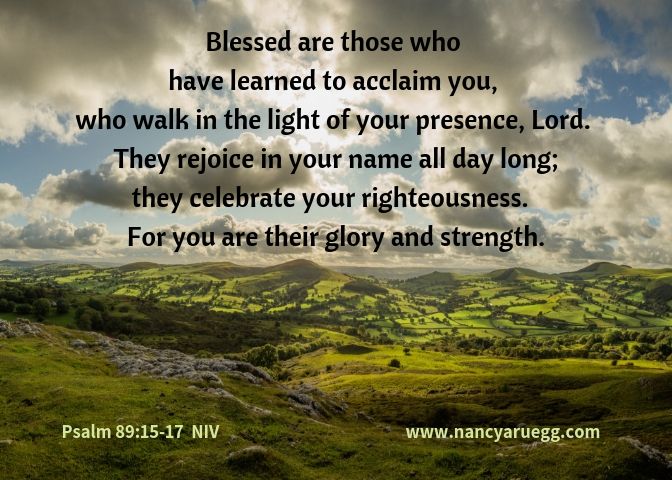
My mouth is filled with your praise, O God,

declaring your splendor all day long.”

–Psalm 71:8


Mindfulness may prod us to notice God’s gifts in the moment, and that’s good.

But mindfulness plus gratitude and praise prompt us to treasure him, and that’s transformational.

God’s presence becomes palpable (James 4:8), joy sings in our hearts (Psalm 92:4), contentment settles in our spirits (Isaiah 26:3).

And the Giver of all good things surely smiles with pleasure in response.



*Name changed.


Photo credits:  Nancy Ruegg; http://www.pxhere.com; http://www.dailyverses.net; http://www.pexels.com; http://www.pixabay.com; http://www.pexels.com; http://www.pixabay.com; ww.canva.com.)


 

Read Full Post »

Interesting, isn’t it, how the slightest trigger can transport us back through time?

  • A song might remind us of that first date with our spouse
  • The fragrance of lilacs brings to mind a previous home
  • The first bite of a family recipe at Thanksgiving conjures up bittersweet memories of another table long ago


They say that the memory of everyone we’ve known, every place we’ve been, and everything that’s happened to us is submerged in our subconscious. And the slightest nudge—haphazard as it might be–can bring a memory bobbing to the surface with surprising force.

But there’s another kind of remembering—a deliberate quest to seek truth for our lives—to understand how the hurts, mistakes, and losses, the treasured times, precious people, and lessons learned, reveal God’s work within us and for us, bringing good from it all.

For example, looking back through our memories we see:


God has given us strength to persevere.

At times we thought we’d never make it. Friends proved unfriendly and while the sting smarted we struggled to understand why the relationship went wrong.

Circumstances turned our lives upside down and we couldn’t see how to make things right again.

Death claimed a loved one and the pain seemed unbearable, unending.


But here we are. We survived, because God brought us through each calamity.


God has taught us the value of his wisdom.

Most of us have made choices along the way that seemed right but proved wrong.

Perhaps it was a relationship with someone whose habits provided troubling warning signs, but we ignored them and later suffered heart-rending hurt.

Or, perhaps we pursued an appealing, self-serving dream, only to discover its fulfillment did not produce the satisfaction we expected.

Some of us had to learn the hard way: God’s wisdom in scripture is truth after all, including his warning against relationships with fools (Proverbs 13:20) and the emptiness of selfish gain (Ecclesiastes 2:1-11).


But he also promised blessing for those who follow his all-wise guidance:


“Whoever gives heed to instruction prospers,

and blessed is the one who trusts in the Lord.”

–Proverbs 16:20


God has demonstrated his faithfulness in countless ways.

Consider the categories listed below and allow your memory to plumb the depths, bringing to the surface people, places, and events from the past that reflect God’s faithfulness:


  • Nurturing family members
  • Loyal, supportive friends
  • Secure places of contentment
  • Health issues resolved
  • Knots of circumstances untangled
  • Necessities miraculously provided
  • Blessings bestowed, not even asked for

 And what can we anticipate as the result of this kind of remembering?

Peace.

Because we realize for all our yesterdays, God has…

…enabled us to power through on his strength,

…provided his wisdom to guide us through murky circumstances,

…and been at work in our lives for our benefit—sometimes in the form of gifts, sometimes in the form of lessons.


Such reassurances can settle fear, doubt, and worry, allowing peace to flourish today and into all our tomorrows.

This kind of remembering intentionally entwines past and future so memories become woven into faith-filled expectation.


(Photo credits:  http://www.flickr.com; http://www.pixnio.com; http://www.canva.com; http://www.needpix.com; dailyverses.net.)


Read Full Post »


Generations ago, an ancestor of pastor Fred Craddock suggested that Sunday afternoons be spent on nature walks to find and admire God’s handiwork. He called it, “going marveling (1).”

That phrase brought to mind the old Christmas carol, “Here We Come A-Wassailing.”  ‘Remember the first few lines?


Here we come a-wassailing

Among the leaves so green,

Here we come a-wand’ring

So fair to be seen.


If we’d accompanied Pastor Craddock’s forbearers on one of those woodland hikes, perhaps we would have sung:


Here we go a-marveling

Among the leaves so green,

All around creation charms;

Such fairness to be seen.


Indeed, our God of wonders provides fairness (as a synonym for splendor) in countless ways:


from the majestic…


…to the minute,


From the firm…


…to the fragile,


From the colorful…


…to the camouflaged.


“Wows come in all shapes and sizes.”

–Anne Lamott


But there are many more sources of jaw-dropping awe that deserve our attention.

We can go a-marveling at the wonder of us.

Consider these wows:

  • Approximately sixty thousand miles of blood vessels course through the human body—enough to wrap the earth more than twice (2).
  • Blood travels 12,000 miles per day through the vascular system.  That’s equivalent to the distance from coast to coast across the U.S.—four times (3).
  • Human hemoglobin that makes our blood red is made up of extremely complex molecules. Each contains 9520 atoms of various elements, hooked together in a precise pattern (4).


Hemoglobin Molecule


Astounding, isn’t it?  And with King David we can certainly affirm:


We can go a-marveling through our memories. Perhaps you remember such delights as these: 

  • Coming in from the cold to be warmed by thick, hot soup and familial love around the table
  • Almost floating down the sidewalk on the first warm day of spring—with no coat or boots to weigh you down
  • A board game with friends—complete with popcorn and laughter


Even such ordinary events as these inspire wonder, because they point to a God who orchestrates satisfying moments into all our days.

We can also go a-marveling through the memories of miracles.

No doubt you’ve experienced spectacular moments such as these:

  • A new job provided just as the old one was terminated
  • The cost of a new refrigerator covered by a surprise check in the mail
  •  A baby born dangerously premature that not only survives but thrives


And while marveling at the miracles…

…We can go a-marveling at the wonder of prayer, which often precedes God’s astounding works.

First, our all-powerful God allows mere humans to come alongside him as he engineers events and accomplishes his good purposes.

Second, and even more marvelous, his Spirit comes alongside us as our partner in prayer, helping us pray as we should.


How wondrous is that?

Finally, we can go a-marveling through scripture.

The Bible was written by at least forty authors from different walks of life, over the span of 1500+ years, on three continents. No other book has come into existence out of such wide-reaching diversity. And yet the reader can’t help but notice the unity of its content.

Within the pages of scripture we find wisdom and inspiration for living, strength for difficulty, comfort for pain, and peace for unrest.

It’s true:  those who know their Bibles best, marvel at its truths the most. They notice “wonder after wonder, and every wonder true” (St. Brude).


And where might all this marveling lead?  To still more wonders:   stronger faith, deeper contentment, and greater joy.


*     *     *     *     *    *     *     *     *     *


Who is like you, O God—majestic in holiness, awesome in glory, continually working wonders? Our lives are FULL of marvels, O God!  May we be lost in wonder, love, and praise, just like the old hymn writer proclaimed. 

(Exodus 15:11; “Love Divine, All Loves Excelling” by Charles Wesley)


What are you marveling in today?  Tell us in the comment section below!


Notes:

  1. Fred B. Craddock, Craddock Stories, ed. Mike Graves and Richard F. Ward, p. 65.
  2. https://my.cleveleandclinic.org>health>articles>17059
  3. https://iheartintelligence.com/35-incredible-facts-about-the-human-body-that-might-surprise-you/
  4. John Phillips, Exploring John’s First Epistle, Kregel Publications, 2003, p. 36.


Art & photo credits:  http://www.pixabay.com (2); http://www.pxhere.com; http://www.usnhistory.navylive.dodlive.mil; http://www.maxpixel.net; http://www.flickr.com (2); http://www.wikipedia.org; http://www.heartlight.org; http://www.maxpixel.net; http://www.usafe.af.mil; http://www.dailyverses.net; http://www.needpix.com.


Read Full Post »


Remember the in-crowd at your high school–the cool kids who wore the latest fashions, knew the latest songs, and seemed more attractive, confident, and important than everyone else?

‘Truth is, research has established “those who cared most about their social standing [as teenagers] often grow up to have difficulties with their interpersonal relationships years later.” Their fixation on status stays with them, and they are the ones most likely to suffer from anxiety, depression, and problems with substance abuse (1).

Now I’m thankful to never have been a part of that group.

But another in-crowd beckons–one that everyone is invited to join–that offers satisfaction in life and purpose.

It’s God’s in-group.


And just what does he have to offer?

God’s in-crowd is in their right minds (2 Timothy 1:7 NKJV).

They strive to focus on the positive, and turn their attention toward God himself—His attributes and works. People in their right minds are Presence-focused, remembering the almighty, all-wise God is with them. They’re also promise-fortified, affirming that God WILL keep their minds calm because they trust in him.

Such trust requires effort, since we often lean toward the negative. But like a wrangler who captures and subdues a wild horse, the in-crowd takes their problematic thoughts captive, and tames them with the bridle of God’s truth (2).

They also pray—perhaps like Selwyn Hughes: Lord, “I give You my mind—so that You can give me Yours” (3).


God’s in-crowd is in balance.

The Apostle John wrote to Gaius: “I pray that you may enjoy good health and that all may go well with you, even as your soul is getting along well” (3 John 2).

That’s quite a compliment. If John had written such a greeting to me, he may very well have reversed his statement, praying that my soul might prosper as well as my physical health.

Of course, both are necessary for overall well being. So just as proper diet, exercise, and sufficient rest are necessary for the body, the in-crowd keeps their souls healthy through a steady diet of God’s Word, the exercise of obedience, and rest in him.


God’s in-crowd is held in his hands.

King David wrote about the phenomenon in a prayer song to God: “My times are in your hands” (Psalm 31:15a). Those hands are powerful and mighty, open and generous, protective and secure—even when someone faces difficult challenges like the Apostle Paul.

While imprisoned in Rome and anticipating his execution, Paul affirmed the strength God provided him, the generosity of God to supply all needs, his contentment in spite of circumstances, and the security of knowing all would be well whether he lived or died (4).

The in-crowd faces their challenges with the same affirmations.


God’s in-crowd lives in God’s ways (Psalm 25:8-10).

Wisdom would have us know this: “Blessed are those who keep my ways. Listen to my instruction and be wise; do not ignore it. For whoever finds me finds life and receives favor from the Lord” (Proverbs 8:32-33, 35).

Critics may say, “Oh, but the Bible is so out-of-date. Times change; morals shift. What was once considered wise has been replaced by post-modern sensibilities.”

They need to observe God’s in-crowd, who delight in his Word because they find instruction for a life of purpose and meaning, preservation of life in his encouragement, and peace of mind in his truth—things post-modern sensibilities do not offer (5).


God’s in-crowd is in unity with one another, just as he desires (Ephesians 4:3; Colossians 3:13-14).

They remember: all God’s people belong to each other (Romans 12:5). So they focus on common ground and find ways to support one another rather than fuss over non-essential differences.

And as a unified group, God’s in-crowd is a force to be reckoned with.

Like snowflakes:


“Snowflakes are one of nature’s most fragile things.

But just look at what they can do when they stick together.”

–Vesta M. Kelly


*     *     *     *     *     *     *     *     *     *


I praise you, Heavenly Father, that as we trust in your Son Jesus for eternal life, you also provide in-crowd status with all its privileges and spiritual blessings—to every believer. You are the God of surpassing goodness to your people!

(John 3:16; Ephesians 1:3-8; Psalm 84:11)


Notes:

  1. https://www.scientificamerican.com/article/cracking-the-popularity-code/
  2. Philippians 4:8; Romans 12:2; Deuteronomy 31:8; Isaiah 26:3; 2 Corinthians 10:5.
  3. Every Day Light, Broadman and Holman, 1997, p. 121.
  4. Psalm 118:15-16; 145:13b-21; John 10:29; Philippians 4:13,19, 11-12, and 1:21-24.
  5. Psalm 119:24, Philippians 2:13; John 10:10; Psalm 119:50 MSG, 93, 165.


Photo credits:  http://www.pexels.com; http://www.dailyverses.net; http://www.pxhere.com (2), http://www.dailyverses.net (2); http://www.flickr.com; http://www.pexels.com.


Read Full Post »


“Be still and know that I am God (1).

Be still and know.

Be still.

Be.

It starts with ‘be.’

Just be, dear one.”

–Shauna Neiquist (2)


Moments of quiet, contemplative silence are rare for many people. We’ve been swept up in the cultural norms of productivity: use time wisely and stay on task. Better yet, multi-task.

But there is tremendous power and blessing in stillness.

Quietness of spirit:

  • creates space for us to hear God’s voice
  • builds bonds of trust between us and God
  • accelerates our understanding of God
  • revitalizes our spirits
  • brings the peace of God to our hearts

Surely these are desirable outcomes that warrant a few minutes each day to just be—in the presence of God.


The question becomes, how do we achieve such a goal when other responsibilities clamor loudly for our attention?

Like any priority, we must make time.   Begin with five minutes; you’ll soon be craving more.

Choose a secluded place. For years I sat at our kitchen table early in the morning, before anyone else in the house got up. Now I enjoy the luxury of a private home office. But when the weather allows, I revel in sitting on the deck with God, surrounded by his creation.

Not everyone has such options. I know one young mother who has chosen the bathroom as her place of stillness!

Put your God-given imagination to work. We considered the gift of imagination a couple of weeks ago, in a post titled: Oh, What We’re MissingYou can borrow my visualization if you like–the one I use if quiet time must take place indoors:


Picture a peaceful lake shrouded in morning mist.  On a dock are two Adirondack chairs, one for you and one for Jesus. He’s already sitting in his, because he loves to spend quality time with his children.  As you settle in your chair, reach out your hand for his. Just sit in companionable silence for a moment.

Another option: picture a place where you’ve experienced Jesus’ peace before, and imagine yourself there with him again.

Be physically still.  Relax.  The original Hebrew word translated “be still” can also be translated “cease striving.” Take several slow, deep breaths, and prayerfully set aside the to-list and concerns.

Focus on Jesus and contemplate his attributes. When distracting thoughts pop up (and they will!), add them to the to-do list or the prayer list as needed (keep them handy!), then turn back to Jesus.

Remember:  He understands how hard it is for us to sit quietly with him; he does not expect perfection. What he does treasure is our persistence to seek him (3).


Listen. “Deep within the center of the soul is a chamber of peace where God lives and where, if we will enter it and quiet all the other sounds, we can hear his gentle whisper (1 Kings 19:12)” (4).

You may wish to keep a journal and pen nearby as God reveals impressions in your heart.  Perhaps it will just be one word or a single thought at first. Write it down. From that starting point you just might grow a paragraph, or even a page of God-thoughts.

But don’t worry if you hear no whisper. “In God’s presence is peace (Isaiah 26:3), joy (Psalm 16:11), and strength (Proverbs 18:10)—whether words are exchanged or not.

In A Quiet Place in a Crazy World, Joni Eareckson Tada wrote about her Uncle Vince, who had constructed a prayer room complete with fake paneling, some stained glass from an old church, and a couple of old, musty tapestries. The only furniture was a small prayer kneeler and a Bible stand.


Joni remembers thinking it was stuffy and tacky. Years later she realized how wise Uncle Vince was to have a special place where he met Jesus. That was undoubtedly the reason he prayed on the golf course and on his hikes with Joni and her family.

“Uncle Vince encountered God every place, because he had one place,” she wrote (5).

How we need such a place…

…to just be.

It starts with be.


Notes:

  1. Psalm 46:10
  2. Shauna Neiquist, Present over Perfect
  3. Sarah Young, Jesus Always
  4. L. B. Cowman, Streams in the Desert
  5. Joni Eareckson Tada, A Quiet Place in a Crazy World


Photo credits:  http://www.wikimedia.org; http://www.dailyverses.net; http://www.maxpixel.net; http://www.pixabay.com; http://www.pexels.com; http://www.pixabay.com.


Read Full Post »

For some of us, seasonal weather changes produce dramatic contrast—from arctic blasts in January to tropical heat in July. For others, the seasonal shift is more subtle, marked by the dry season giving way to rain every day.

Our lives are characterized by seasons too. Sometimes we enjoy periods of joyful calm —when the household is running smoothly, the new job is a perfect fit and friendly coworkers help us learn the systems, the kids are settled in school and enjoying their friends and activities.

Other seasons provide uncomfortable challenge—when differences between family members or friends cause upheaval, a new boss makes too many uninformed changes, or a once-cooperative child becomes a surly teenager.

Such stresses can push us toward those irritating if-onlys and what-ifs. We may work overtime to try and fix the situation–try to fix ourselves too. If I just try harder, we think.

But when others are struggling through challenging seasons, we’re likely to offer them encouragement, hope, and grace. Why do we hesitate offering the same to ourselves?

The following graces offer a good place for us to start.

Gracious Waiting

Waiting for difficult circumstances to resolve is never easy. But we can relieve the discomfort by reminding ourselves:

  • “The stops of a good man are ordered by the Lord as well as his steps” (George Mueller). So let’s wait with expectation. Perhaps God is orchestrating change in preparation for a new work in our lives.
  • Embrace the positive aspects of this season—the growth of faith, the heightened awareness of God’s presence, the assurance that God’s plan will far exceed anything we could devise.
  • “To wait is not to sit with folded hands, but to learn to do what we are told” (Oswald Chambers). Perhaps our best course of action during a difficult season is just to do the next right thing in front of us, and leave the future in God’s capable hands.


Gracious Rest

Jesus provides the perfect example. Surely he felt the pressure of too much to do and not enough time to do it. There were always people clamoring for his attention—to heal an infirmity, solve a problem, or answer a question.

But Jesus took time to rest. He allowed himself the luxury of a nap on a boat, dinner with friends, and quiet hours in the Garden of Gethsemane. Once refreshed, he was able to minister all the more fervently.

Why should it be any different for us?

Gracious Affirmation

We can remind ourselves that: 1) God has brought us through tough times before; he will do it again, 2) no situation is without hope; no situation is without purpose, and 3) we are never left alone to fend for ourselves, because you and I are precious to him. Yes, we are.

Does that sound prideful? Consider this perspective:

Not long ago on Antiques Roadshow an appraiser analyzed a beautiful painting with all the characteristics of a famous master’s work. However, it turned out to be a near-perfect copy. Instead of being worth several million, it was only worth several thousand.

Paintings by the masters are highly valuable because of who created them. Similarly, each of us is a highly valuable, original masterpiece because of who made each of us (Ephesians 2:10 NLT, Galatians 5:26 MSG).

Let’s affirm his power and our worth every day—especially during seasons of challenge.

Gracious Contenting

That heading includes a new derivative of content for me, maybe for you too. It means to make content or satisfied. And what’s the best way to do that? By affirming our faith in God who “does all things well and makes all things work together for our ultimate good” (A. W. Pink).

Let’s content ourselves this moment that our Heavenly Father:

  • uses difficult situations to make us into better versions of ourselves (James 1:2-4)
  • takes us along the best and straightest paths (Proverbs 3:6)
  • carries us in his arms, close to his heart (Isaiah 40:11)
  • cares about the details of our lives (Matthew 10:29-31)
  • weaves blessing into every day—even the difficult ones (2 Corinthians 9:8)

Such statements usher in God’s graces of confidence, peace of mind, and joy of spirit.

The question now becomes: When seasons of challenge overtake us, will we invite God (with all his wisdom, compassion, understanding and more) to come alongside and make it a season of grace as well?

Photo credits:  http://www.publicdomainpictures.net; http://www.pxhere.com; http://www.pixabay.com’ http://www.wikimedia.org; http://www.dailyverses.net; http://www.canva.com.

Read Full Post »


“I made soup,” she says.

I peer into the pot to see a chicken leg, a whole apple, a cluster of green beans and an ice cream cone.

“Eat some!” she coaxes.

I spoon a bite and assure her, “Oh, this is delicious.”

She smiles broadly. “I make dessert.” And two-year old Maarit (Mah-rit), our granddaughter, trots back to her child-size kitchen to bake a plastic cake or pie.


It’s such fun to watch little ones enjoy their vivid imaginations, and it comes so naturally to them. No one has to teach toddlers how to pretend; they just do. But as we grow and leave childish things behind, most of us abandon our imaginings.

Oh, what we’re missing.

In a post a couple of years ago (Oh, Say Can You See), we looked at three ways an active imagination can positively impact our faith, helping us to better understand God, add insight to Bible reading, and see more in this incredible world he’s created.

Today let’s consider three more ways. 

  1. With an active imagination, we are more likely to see people and situations the way God sees them. 

In his Word he calls us to see people for what they could be and will be as they avail themselves of his transforming power. We’re also called to see situations with forward-looking faith in God’s ability to do far more than we can imagine (1).

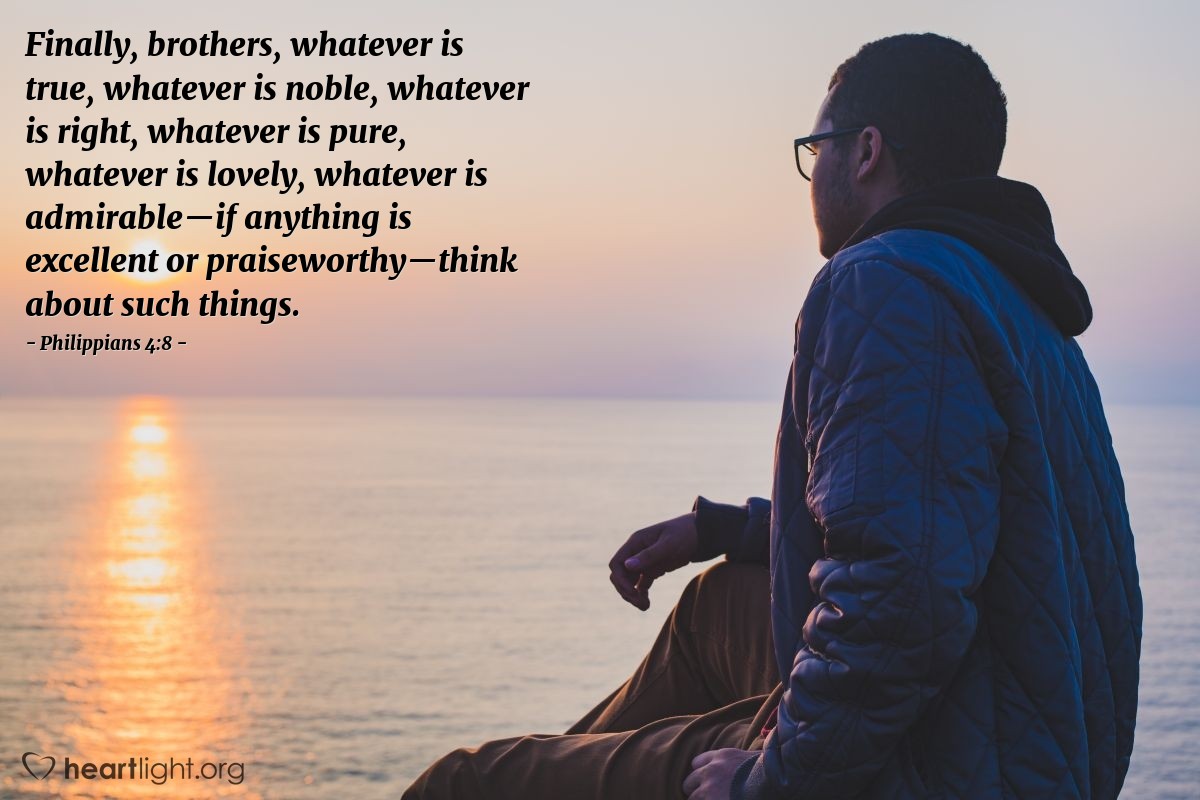
By contrast, our thoughts too often veer to the negative. We forget what the Apostle Paul told us in Philippians 4:8—to think on excellent and praiseworthy things.


C. S. Lewis helped a woman do just that in a letter he wrote as she lay in a hospital contemplating the possibility of death:

“Think of yourself,” he said, “just as a seed patiently waiting in the earth: waiting to come up a flower in the Gardener’s good time, up into the real world, the real waking. I suppose that our whole present life, looked back on from there, will seem only a drowsy half-waking. We are here in the land of dreams. But the cock-crow is coming” (2).

Surely Lewis’s words stirred fresh hope in her heart as he awakened her imagination to a new perspective. In your mind’s eye, can you see excellent, praiseworthy events unfolding in the situation that most concerns you? Allow such imaginings to provide fresh hope for your heart.

  1. With an active imagination we can envision the kingdom of God that exists here and now, even though hidden from view. 

The very nature of faith requires imagination, because the kingdom of God cannot be perceived by the senses. It exists invisibly among and within those who invite King Jesus to rule in their lives (3). But our imaginations can help us access the invisible through the visible as we contemplate:


  • The glory of God in the splendor of creation
  • The rule of God in the organization of the universe
  • The goodness of God in our numerous blessings
  • The wisdom of God in his precepts that usher in abundant life
  • The power of God, as he transforms misery to joy, trouble to triumph, and even bitterness to forgiveness
  1. With an active imagination we can experience God more fully. 

For example, what if we:


  • Imagine God sitting with us as we pray, our hands pressed between his, his head leaning in close to hear our every word. Would it be easier to sense his presence, stay focused, and pray with more intensity?
  • Imagine God at our right hand as we work through our days (Psalm 121:5). He is our ever-present Protector, Guide, and Help. Might such visualization reduce stress? Could mindless tasks become sublime opportunities to enjoy his presence and access his strength?
  • Imagine God on his throne as we worship, with his dazzling radiance signifying splendor, and his voluminous robe representing power (4). Might the joy and passion of our worship-experience be enhanced as we contemplate his magnificence?


You might remember that Jesus held children in great regard. He suggested that adults become like little children to enter the kingdom of God (Matthew 18:1-5). Granted, his emphasis was upon trust, loyalty and humility. But responding to him with the imagination of a child as well will help us fly beyond the stars.


I don’t want to miss that. I’m guessing you don’t either.    


Notes:

  1. Philippians 1:6; Ephesians 3:20
  2. The Collected Letters of C. S. Lewis, vol. 3: Narnia, Cambridge, and Joy, 1950-1963, [2007]
  3. Hebrews 11:1; Luke 17:21
  4. Ezekiel 1:27; Isaiah 6:1-2


Photo credits:  http://www.pxhere.com; http://www.edwards.af.mil; http://www.heartlight.org; http://www.goodfreephotos.com; http://www.pixabay.com; http://www.flickr.com.; http://www.quotefancy.com.


Read Full Post »


The summers of my childhood included a blend of games and activities with neighborhood friends, afternoons at the community pool, bike rides to the library, and a few weeks spent with Grandma Clara and Grandpa Henry who lived four hours away in Iowa.

No doubt some would describe our summer experiences as mundane, not realizing the joy hidden among the ordinary:

  • The delight of lazy Monopoly marathons
  • The wonder of fireflies in a jar
  • The satisfaction of a big bowl of buttery popcorn–after biking to the park and spending several hours of nonstop cavorting in the pool, then biking home again
  • The pleasure of tucking ourselves under the willow tree to read
  • The fun of an evening bike ride with Dad


It’s the small, happy moments—not the grand events—that contribute to satisfying days and a joy-filled life.


The joy of small…makes life large.

–Ann Voskamp (1)


However, I have to admit: my childhood-self took those lovely moments for granted. I lived unaware of God’s glory pervading my everyday experiences: his creative genius on display—even in the backyard, his love, peace, and security within a family grounded on Christian values, and his goodness to provide joy-filled moments that shimmer in my memory with holy perfection.

Now, as the decades have passed, I’m learning to identify more of the transcendent moments God provides, including:


  • A cardinal filling the silence of the woods with his hope-inspiring “Cheer! Cheer! Cheer!”
  • A toddler wrapping her arms around my neck and crying, “I love you!”
  • A devotional that speaks exactly what I need to hear
  • An opportunity to encourage a waitress and see her concern turn to hope
  • A small gathering of family and friends quickly ballooning to twelve—with much laughter, camaraderie, and delightful conversation


God’s glory is on display right “in the middle of our minutes” (2).


So each night before falling asleep, let’s measure the moments of our days:

  • Taking note of God’s blessings and the delights of his creation; singing our praise for his breath-taking handiwork (Psalm 92:4; Job 5:9).
  • Thanking God for the camaraderie and conversation, hugs and support among family members and friends who keep us strong (Ecclesiastes 4:9-10).
  • Counting the riches that result from abiding in God, beginning with peace (Isaiah 26:3), stability (Psalm 16:8), and contentment (1 Timothy 6:6).
  • Celebrating the honor of ministering to others in Jesus’ name (Matthew 25:40), giving us purpose and cultivating fulfillment in our spirits.
  • Delighting in the opportunities to smile, laugh, and find moments of joy—even in the midst of trouble or frustration (Proverbs 17:22).


“Laughter is to life what shock absorbers are to automobiles.

It won’t take the potholes out of the road,

but it sure makes the ride smoother.”

–Barbara Johnson


And just as inches are measured into feet, so we can measure meaningful moments into satisfying days and a joy-filled life–because God is in them.


What meaningful moments are at the top of your list for today?  Please share in the comments section below!


Notes:

  1. One Thousand Gifts, Zondervan, 2010, p. 167.
  2. Sara Hagerty, Unseen, Zondervan, 2017, p. 109.


(Photo credits:  http://www.geauxguard.la.gov; http://www.pixnio.com; http://www.flickr.com; http://www.pxhere.com; http://www.flickr.com; http://www.pexels.com.)


Read Full Post »

It happened again. I was reading a familiar Bible passage when a new question presented itself.

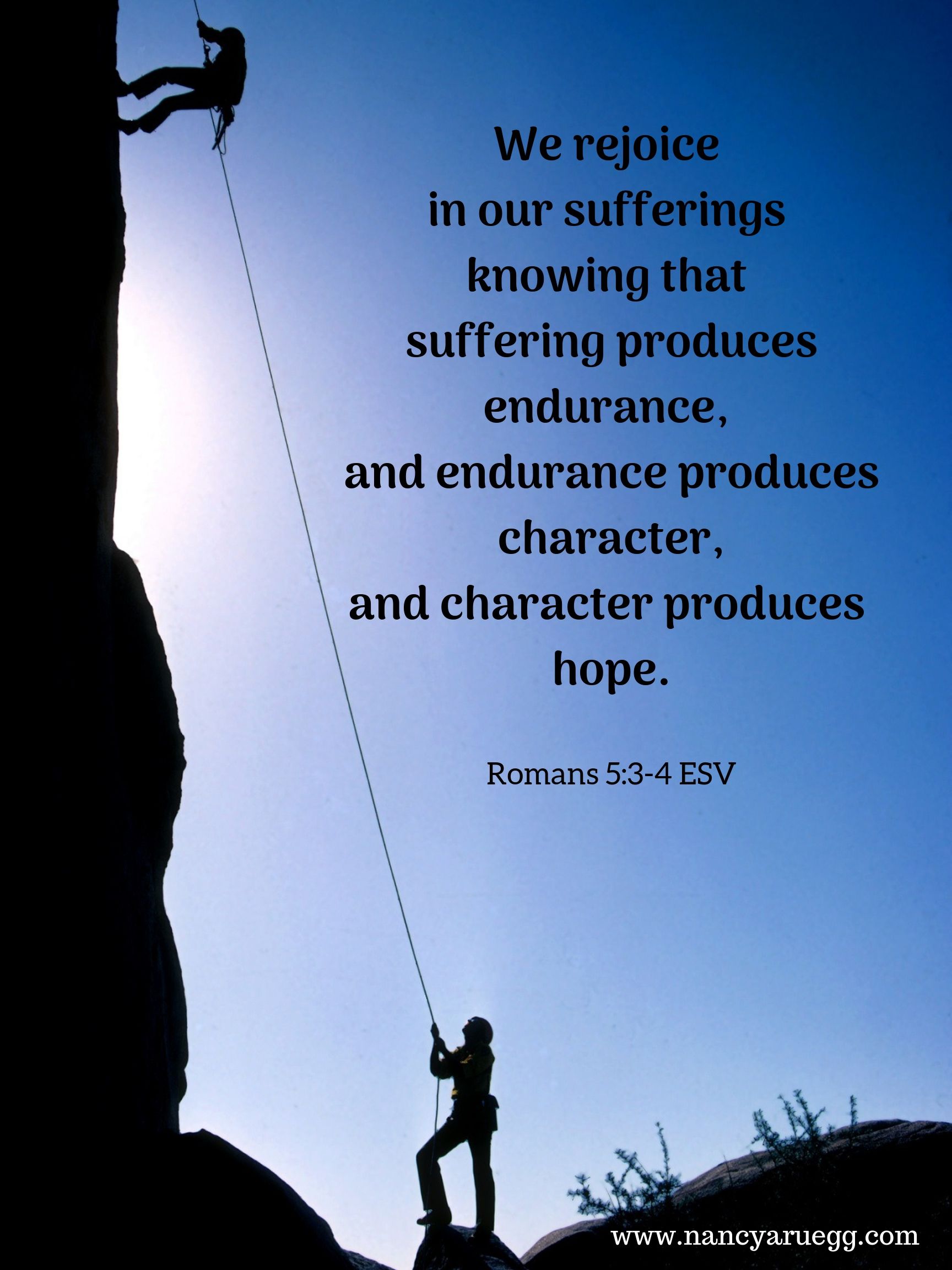
Here’s the scripture:


The first two reasons made perfect sense. Pushing through difficulty does produce endurance, and endurance results in the formation of character–traits like responsibility, self-discipline, and patience.

If Paul had concluded by saying character produced maturity, I’d have heartily agreed and read on. But he says character fosters hope, which led to my question: Why hope?

To begin, we need a clear understanding of what hope means. Which of these definitions do you find most insightful?

Hope is: a) looking forward with confidence and expectation (Beth Moore), b) the reality that is being constructed but is not yet visible (Eugene Peterson), or c) happy certainty (J. B. Phillips).


Actually, instead of choosing, let’s weave them together: Hope is the attitude of looking forward with confidence, expectation, and happy certainty to the reality being constructed though not yet visible.

Author Katherine Paterson would also have us understand: “Hope… is not a feeling. Hope is something we do”–such as:

  • Affirming God’s omnipotent power—power that can accomplish anything (Matthew 19:26).


When we are facing the impossible,

we can count upon the God of the impossible.

–Amy Carmichael


  • Remembering God’s promises of the Bible—promises that never fail (Psalm 145:13b).


Quit studying the problems

and start studying the promises.

–Ruth Graham


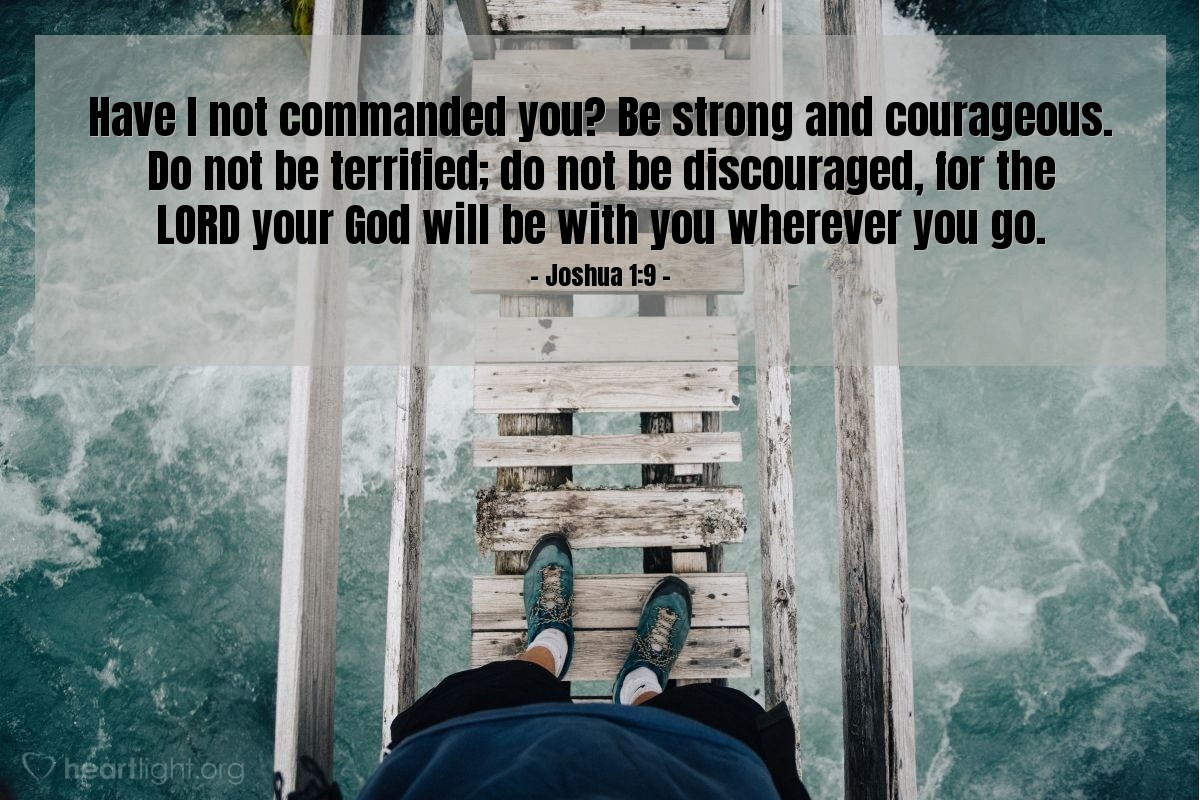
  • Practicing God’s presence—presence that instills comfort, encouragement, and strength (Psalm 94:19; Isaiah 41:10; Joshua 1:9).


Few delights can equal the mere presence

of one whom we trust utterly.

–George MacDonald


In the 1980s, retired millionaire Eugene Lang was asked to speak to the graduating six graders of his East Harlem alma mater. He planned to share his story and encourage them that effort and perseverance do produce success.

But when he took the podium, Lang changed his mind.

“Stay in school,” he charged them. “In fact, it is so important, I’m going to make you a promise. You stay in school, and I’ll help pay the college tuition for every one of you.”


No doubt some of the students thought, “Yeah, right.”

Most of these kids had already experienced a lifetime-worth of disappointment. Why should they believe this old guy?

Yet even the most cynical among them had to admit: Mr. Lang did have the financial power to keep such a promise—a promise announced in front of numerous witnesses.

Soon Mr. Lang founded the I Have a Dream Foundation and convinced others to add their support. He exercised his own financial power to hire a project coordinator, finance field trips, and provide mentors and tutors for each student.


Mr. Lang made his presence known by taking students to restaurants and museums. He personally counseled them through crises, and intervened with school officials on their behalf.

The kids responded. They began to work toward the goal of a college education, learning self-discipline, perseverance, and responsibility along the way. As those character traits and more developed within them, their hope grew that Mr. Lang’s promise would manifest itself in reality.

Six years after that impromptu offer, nearly ninety percent of the students graduated from high school, and close to half were enrolled for college in the fall. Character did indeed lead to hope—hope that looked forward with confidence, expectation, and happy certainty to a reality under construction.*


Mr. Lang typified what God does for us, developing our character so we might grow in hope—a hope for every tomorrow based on his power, promises, and presence, and a hope that can see heaven through the thickest clouds (Thomas Brooks).


Addendum: As of 2017, approximately two hundred I Have a Dream programs were in operation in the United States and in New Zealand, assisting more than 16,000 students.*


* https://www.nytimes.com/2017/04/08/nyregion/eugene-lang-dead-harlem-college.html


Photo credits:  http://www.canva.com; http://www.jbsa.mil; http://www.pixabay.com; Nancy Ruegg; http://www.heartlight.org; http://www.flickr.com; http://www.nps.gov; http://www.vaguard.dodlive.mil.


Read Full Post »


Emily* and I met at a meeting, and afterward the subject of the Bible came into the conversation—a conversation that went something like this:

“The Bible is just fairy tales,” she declared.

“That is a popular viewpoint,” I replied. “How did you come to that conclusion?”

“Well, it’s full of crazy, unbelievable stories,” Emily asserted passionately. “Noah and the ark, David and Goliath, not to mention Jesus and his supposed miracles. Who in their right mind would believe such stuff?”


I began to pray silently as our conversation continued. Lord, help me speak your words.  May Emily reconsider her position and seek truth.

“I agree such events seem incredible,” I offered. “But I’ve come to believe the Biblical record is truth, backed up by decades of archaeological research, hundreds of ancient manuscripts—including the Dead Sea Scrolls, and dozens of scientific and medical corroborations. Also, numerous prophecies have been fulfilled with amazing accuracy. I can recommend some books written by experts if you’d like to know more.”

But Emily became defensive, insisting such proofs were either coincidental or made up by misled people determined to keep the fairy tales alive.


(The Ark Encounter at the Creation Museum, Petersburg, KY)


The conversation did not end well. Emily only became more vehement so I let her have the last word and bowed out as gracefully as I could. It felt like failure. Somehow in spite of my prayer, I must not have spoken God’s words for her.

Since that encounter, however, I’ve come to realize:

We can trust God with our words if we’re seeking his wisdom (James 1:5) and speaking in love (1 Corinthians 13:4).

Remember what God told Moses, upon commissioning the wilderness shepherd to be his voice to Pharaoh?


It would stand to reason that with God teaching him exactly what to say, Moses would eloquently convince Pharaoh to release the Israelites on the first encounter.

Instead, Moses had to confront Pharaoh numerous times. Even a constant barrage of plagues didn’t deter Pharaoh from refusing Moses’ request—until every firstborn son died in every Egyptian household, including Pharaoh’s. The hard-hearted ruler was brought low by grief, and finally let the Israelites go.

Does such a record indicate that God’s words through Moses failed repeatedly? NO. God had his reason for the delay:


Then the Lord said to Moses,

“Go to Pharaoh, for I have hardened his heart…

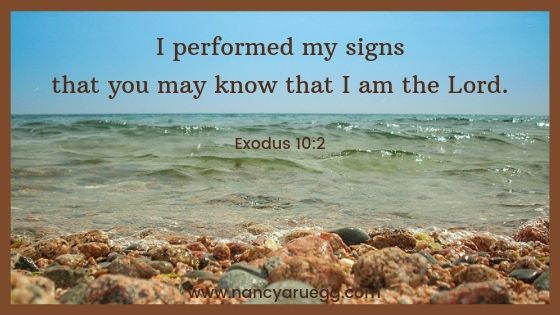
so that I may perform these signs of mine among them

that you may tell your children and grandchildren

how I dealt harshly with the Egyptians

and how I performed my signs among them,

and that you may know that I am the Lord.”

–Exodus 10:1-2 NIV


These verses offer me great comfort for my conversation with Emily and others. I can trust God with the words I prayerfully spoke to her that day. They may have caused one more chink in her wall of defense against Christianity, so that she will one day know “that [he] is the Lord” and accept Jesus as Savior.

Such prayers are the kind God especially loves to answer.


What could be closer to God’s heart than the eternal destiny of one of his children?

Perhaps Emily will contact me one day and say, “I remembered what you said about the Bible and it got me to thinking…”

So I continue to pray.

*     *     *     *     *     *     *     *     *     *

As I submit myself to you, O God, may my words be characterized by your wisdom that gently persuades and winsome grace that draws people to you–all from a heart motivated by love.  Then may your words echo in the minds of those who hear until doubt is transformed into faith.     


*Name changed.


Photo credits:  http://www.flickr.com; http://www.wikimedia.com; http://www.pixabay.com; http://www.canva.com; http://www.pixabay.com; http://www.dailyverses.net(2).


Read Full Post »

« Newer Posts - Older Posts »

When the House is Quiet

Impressions Becoming Expressions

Mitch Teemley

The Power of Story

Still Traveling

Impressions Becoming Expressions

Living Our Days

Gaining a heart of wisdom

He Said What?!

I'm Patty, and my husband and I are living with our adult son who has autism and epilepsy. I love sharing lessons learned from life around me, especially life with Aaron.

Meditations of my Heart

Impressions Becoming Expressions

Linda Stoll

Impressions Becoming Expressions

Signora Sheila

Where faith meets la dolce vita

Heidi Viars

Finding the Image of God