Feeds:
Posts
Comments

Archive for the ‘Heroes of the Faith’ Category

“The whole meaning of history is in the proof that there have lived people before the present time whom it is important to meet” (Eugene Rosenstock Huessey, Speech and Reality, p. 167).

The forefathers of our nation are among them…


John_Hancock_1770-crop


(January 23, 1737-October 8, 1793)


For John Hancock, it was the last straw.

The Stamp Act of 1765 was bad enough, requiring printed materials in America to carry a special stamp, and the obligatory fees sent to England. In the 160-year history of the colonies, Americans had only paid taxes to their colonial governments.

And although the Stamp Act had been repealed, it was replaced with a more detrimental decree: The Declaratory Act of 1766, which proclaimed Britain’s absolute authority over the American colonies.

Then came the Townshend Revenue Acts of 1767, taxing the colonists further.

No wonder they took up the cry, “No taxation without representation.”

Now it was 1768. Customs officials had just confiscated John Hancock’s sloop, Liberty, in the Boston Harbor. They claimed it was being used to transport contraband goods.

And that was the last straw. Hancock had reached the end of his tolerance for sovereign British rule. He and politician, Samuel Adams began orchestrating demonstrations and rallies. They also spread the ideal of liberty to other locales.

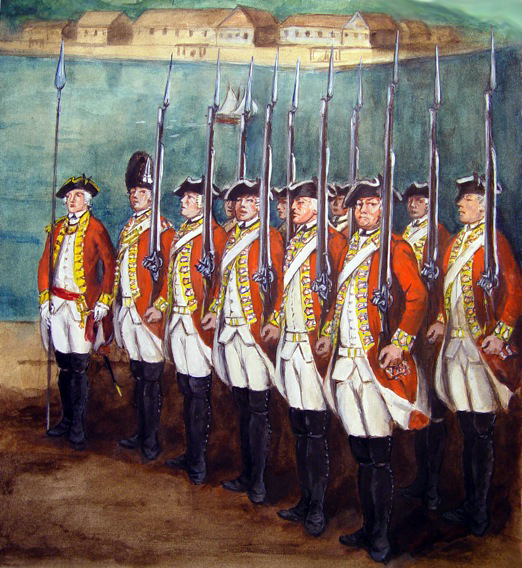
Meanwhile, British reinforcements were sent to Boston—an occupation that would last eight years.


t25-Ft-c1770s-Lawson-ASKB-Lawson-ASKB


In 1770, British soldiers shot into an unarmed crowd, killing five Bostonians and wounding others. The horrific event became known as the Boston Massacre.

For a number of years, that day, March 5, was memorialized in the city. Hancock was asked to speak in 1774. In his speech he said:

“Let us humbly commit our righteous cause to the great Lord of the Universe (Psalm 37:5), who loveth righteousness and hateth iniquity (Hebrews 1:9)…Let us joyfully leave our concerns in the hands of Him Who raiseth up and pulleth down the empires and kingdoms of the world as He pleases (Daniel 2:21).”

Then he quoted Habakkuk 3:17-18, reminding Bostonians that no matter what happened as the conflict continued, or how desperate circumstances might become, “yet we will rejoice in the Lord” (1).

So many scriptures brought together in one brief paragraph give indication of the strong Christian faith John Hancock embraced.

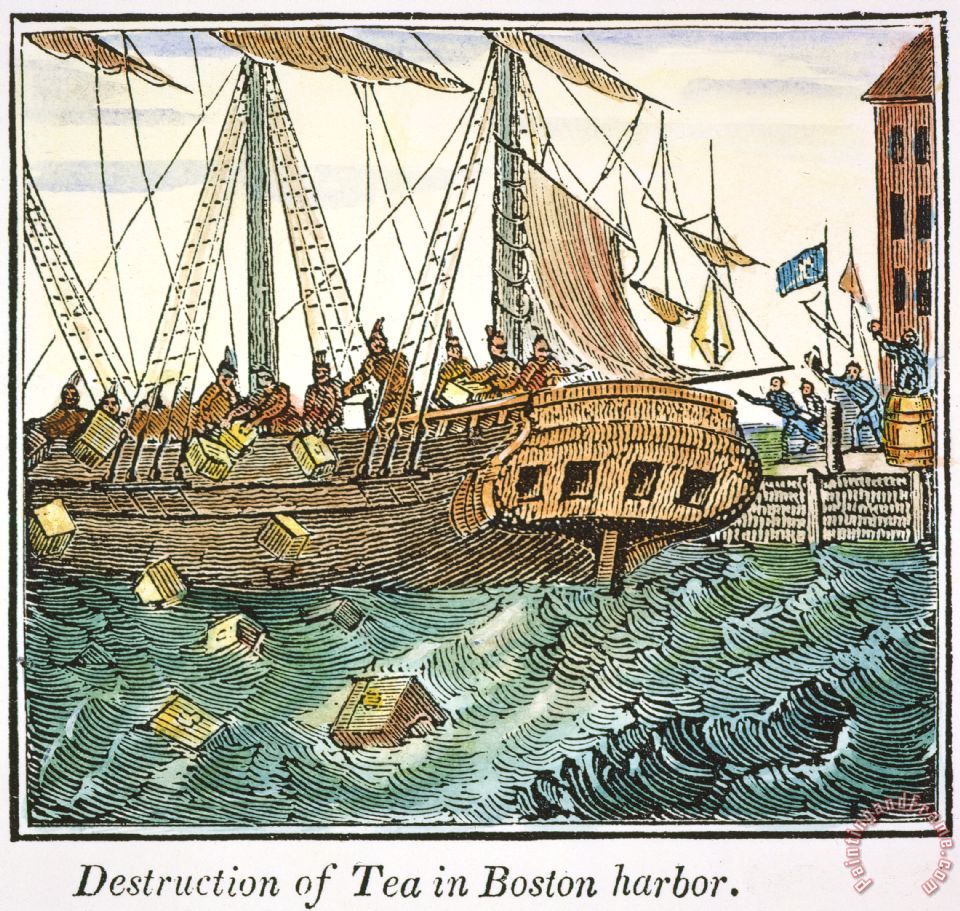
Also in the early 1770s, Hancock, Adams, and several dozen others “hosted” the Boston Tea Party. They dumped 342 chests of tea into the harbor rather than pay import duties to Britain.


The Boston Tea Party, 1773 Painting; The Boston Tea Party, 1773 Art Print for sale


In 1774, Hancock and Adams were elected to the Provincial Congress at Concord, Massachusetts. John was elected president and presided over the Committee of Safety. He and others organized the minutemen, colonial militia who could be ready in a minute to oppose the British.

April 19, 1775, seven hundred British soldiers were sent to Concord to confiscate military supplies and capture Hancock and Adams. Thanks to the warning of Paul Revere, the two men were able to escape.

At nearby Lexington, British soldiers and minutemen engaged in a skirmish, and the Revolutionary War began with the “shot heard round the world.”

Just four days before, John Hancock had written:

“All confidence must be withheld from the means we use; and reposed only on that GOD who rules in the armies of heaven, and without whose blessing, the best human counsels are but foolishness—and all created power vanity (2)”.

Hancock knew that all their efforts toward freedom were in vain if God was not on their side.

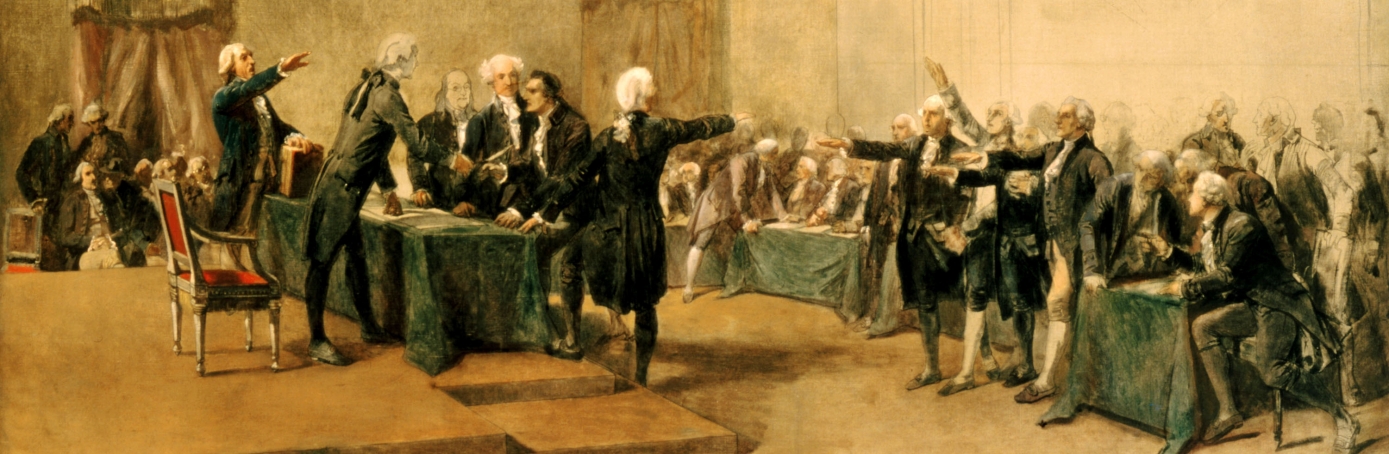
That summer he represented Massachusetts at the Continental Congress held in Philadelphia, to discuss ways of restoring harmony with Britain, yet establish rights and liberties for the colonists. Independence wasn’t on the table – yet.


continental-congress-hero-H


But 1776 brought Thomas Paine’s famous pamphlet, “Common Sense.” American patriotism grew strong, and Congress passed a resolution calling on “the aid of God in the moral cause for independence.” They encouraged fasting and prayer throughout the colonies, and “through the merits and mediation of Jesus Christ, obtain his pardon and forgiveness” (3).

That’s how deep and wide the Christian faith permeated American society.

Of course, the most important resolution of the Continental Congress, under Hancock’s presidency, was the Declaration of Independence, severing all ties to Britain. And, as most U.S. history students know, he was the first to sign in his distinctive script.


John-Hancock-dreamstime1


For almost two and a half years, Hancock tirelessly presided over the Congress, as the war escalated, and the delegates hammered out the first constitution, the Articles of Confederation.

At least four times they had to flee for their lives to other colonies in order to continue their work. In addition, long debates and political rifts took their toll on the delegates, including John Hancock. He also suffered from gout.

When Congress had completed the Articles, Hancock resigned the presidency, but continued public service in Massachusetts, assisting in the formation of the state constitution (4). He and other delegates included this requirement:

“Any person chosen governor, lieutenant governor, counselor, senator, or representative…shall…make and subscribe the following declaration: ‘I, ______________, do declare that I believe the Christian religion and have a firm persuasion of its truth” (5).

I wonder what our institutions of government would look like today if that affirmation were still required.

John Hancock, first governor of Massachusetts, became one of the first to sign that statement of faith. He served eleven years before his death in 1793, at age fifty-five.

Revisionists want to remove from the historical record any mention of God, Jesus, Christianity, and the Bible. But Hancock and many other founding fathers knew: “Without God’s blessing, the best human counsels are but foolishness.”

We had better know that, too.


Citations and Notes:

  1. The Founders’ Bible, p. 1374
  2. faithofourfathers.net
  3. johnhancock.org
  4. The only constitution in the world still in use today and older than the U. S. Constitution
  5. The Founders’ Bible, p. 2097

Sources:

  1. acheritagegroup.org
  2. biography.com
  3. The Founders’ Bible
  4. faithofourfathers.net
  5. johnhancock.org
  6. ushistory.org

Art & photo credits:  www.wikipedia.org; http://www.allthingsliberty.com; http://www.paintingandframe.com; http://www.history.com; http://www.plannersweb.com.

Read Full Post »

eaab14ad79f81660b93f3032488a12eddc3a7b6e

Granville Sharp

(b. November 10, 1735)

Never had thirty-year old Granville Sharp seen such injuries: large swellings about the neck and head, gaping wounds, and a face hideously swollen, streaked with trails of dried blood.

The victim: Jonathan Strong, a young slave who’d been pistol-whipped by his master and left to die on the streets of London, 1765. Somehow Jonathan made his way to the house of Granville’s brother, William, a doctor. And there he sat, waiting in line outside William’s office, when Granville stopped by the house.

quote-the-boy-seemed-ready-to-die-he-almost-lost-the-use-of-his-legs-and-feet-and-to-compleat-his-granville-sharp-266227

The encounter would change Granville’s life forever.

His heart went out to the slave; they became acquainted. Jonathan’s story horrified Granville. To make matters worse, when Jonathan recovered, the master demanded he be returned. Granville determined to help Jonathan, even though he’d “never opened a law-book except the Bible in [his] life” (1).

Those defending the slave owner were evidently intimidated by the case Granville put forth. After a two-year legal battle, they never brought Jonathan’s case to trial.

7149324-Granville_Sharp_1769_Liverpool

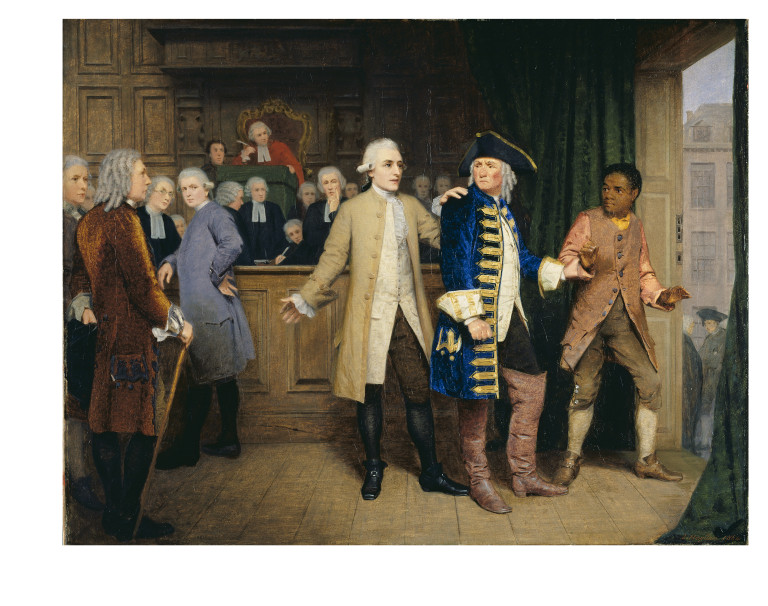
Sharp helped other slaves win their cases against tyrant owners, becoming more and more involved in the abolition of slavery. One case in particular, that of James Somerset, helped to set an important precedent in England.

Somerset had escaped his master, been recaptured, and was about to be shipped to a Jamaican plantation when Granville and others became involved.  They helped the slave win his freedom, arguing that “no master ever was allowed here (in England) to take a slave by force to be sold abroad because he deserted his service…therefore the man must be discharged” (2).

2006BB2012

Granville remained active in the abolition movement his entire life. He wrote frequent letters to many leaders in America and Britain, influencing their thinking about slavery and earning their respect. Among them: Dr. Benjamin Rush (signer of the Declaration), John Jay (first Chief Justice of the U.S. Supreme Court), Benjamin Franklin, and John Adams in America; John Wesley, William Wilberforce, the Archbishop of Canterbury in England; and General Lafayette of France.

But that was only one of his passionate pursuits. Another concern was the illegal treatment of the colonists in America. He published books and pamphlets to help their cause, catching the attention of Ben Franklin during one of his visits to England.

Granville gave Mr. Franklin 250 copies of his pamphlet about people’s natural rights as supported by the British constitution. Franklin sent them to America where several presses reprinted the booklet.

Sharp’s pamphlet influenced Thomas Jefferson as he drafted the Declaration of Independence, evidenced by at least several similarities in both documents.

In 1775, when war broke out in the colonies Granville was employed in the ordnance office (handling all matters concerning weaponry). He wanted nothing to do with the war, so he wrote to his employer: “I cannot return to my ordnance duty whilst a bloody war is carried on, unjustly as I conceive, against my fellow-subjects” (3).

Granville’s brothers agreed to support him, enabling him to pursue his studies, causes, and writing. In fact, beginning with his first book in 1765, Sharp published a new work, sometimes more than one, almost annually for the rest of his life (5).

sharp-title-page-Cropped-543x465

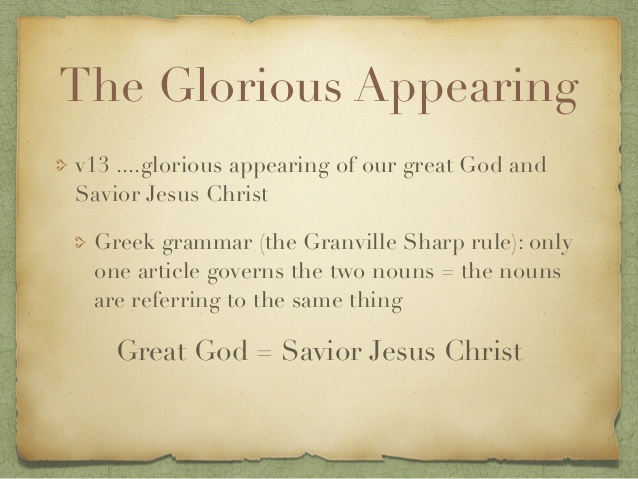
One of those books (with a thirty-six word title!) is now known as “Sharp’s rule” (1777). With his self-taught knowledge of ancient Greek, Granville demonstrated how eight passages of the New Testament had been mistranslated by some Bible scholars, leaving the reader to surmise that God the Father and God the Son were separate Beings. Sharp presented a thorough explanation that God the Father, Son, and Holy Spirit are One, according to the original Greek texts (4).

our-hope-the-appearing-of-jesus-christ-16-638

Yet Granville accomplished still more. In the mid-1780s, Sharp teamed with a Mr. Smeathman to establish a colony for freed English slaves on the west coast of Africa. (Many of them were homeless, subsisting on the streets of London with no hope of improving their lives.) But Smeathman died shortly after he and Granville established their partnership. Sharp continued the work nevertheless.

In April of 1787, the dream for that African colony became a reality with the founding of Sierra Leone. The colonists named the first settlement, Granvilletown.

220px-Province_of_Freedom

Sharp accomplished even more, as he served on a number of boards and societies, in support of mission efforts and philanthropic concerns.

Yet he did not see the fulfillment of his greatest dream—the abolition of slavery. The battle he began with the case of Jonathan Strong in 1765 finally ended in 1833, when slavery was completely abolished in the British Empire.

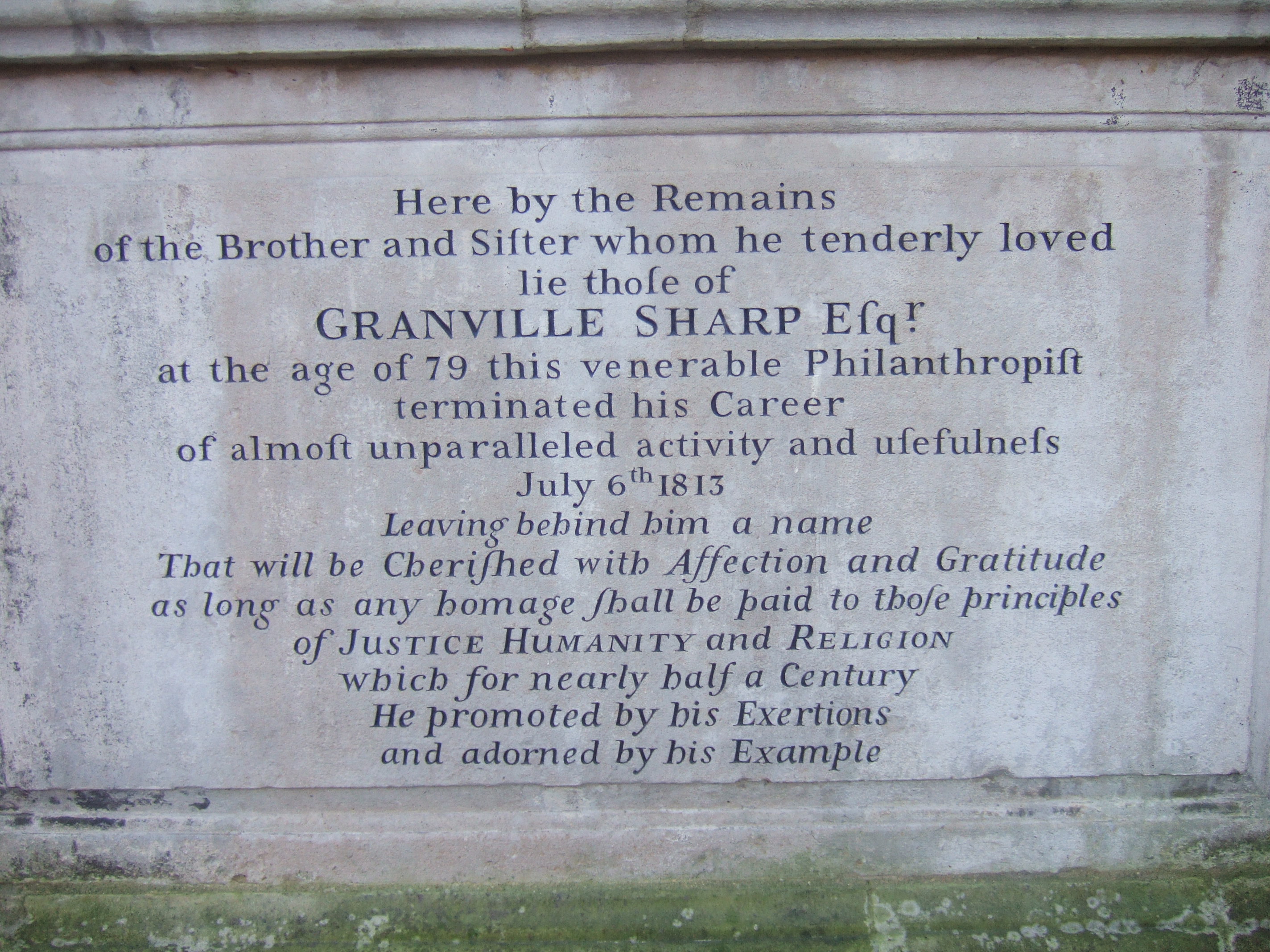
Sharp died in 1813.

Granville_Sharp's_tomb_inscription

His chief biographer, Prince Hoare, said that as he began to study Sharp he intended to “draw a veil over peculiarities of Mr. Sharp’s character,” out of respect for the dead. But when he finished his careful and comprehensive research, he realized Sharp’s “character to be of that high and dignified nature, to leave no necessity for such a precaution…I see nothing to veil.” (6).

Like many other forgotten heroes, Granville Sharp is among that great cloud of witnesses who fixed their eyes on Jesus and ran the race marked out for them (Hebrews 12:1-2a).

May his example and that of others–their faith, integrity, perseverance, and passion–push us along in the race marked for us.

______________________________

  1. history.ac.uk
  2. national.archives.gov.uk
  3. Dr. Daniel Wallace, www.bible.org
  4. christianity.com
  5. brycchancarey.com
  6. Dr. Daniel Wallace, http://www.bible.org

(Art & photo credits:  www.bbc.co.uk; izquotes.com; http://www.virtualtourist.com; http://www.collections.vam.ac.uk; http://www.wikipedia.org; http://www.liverpoolmuseums.org.uk; http://www.slideshare.net; http://www.en.wikipedia.org; )

Read Full Post »

taste_041_hannah_adams_harding

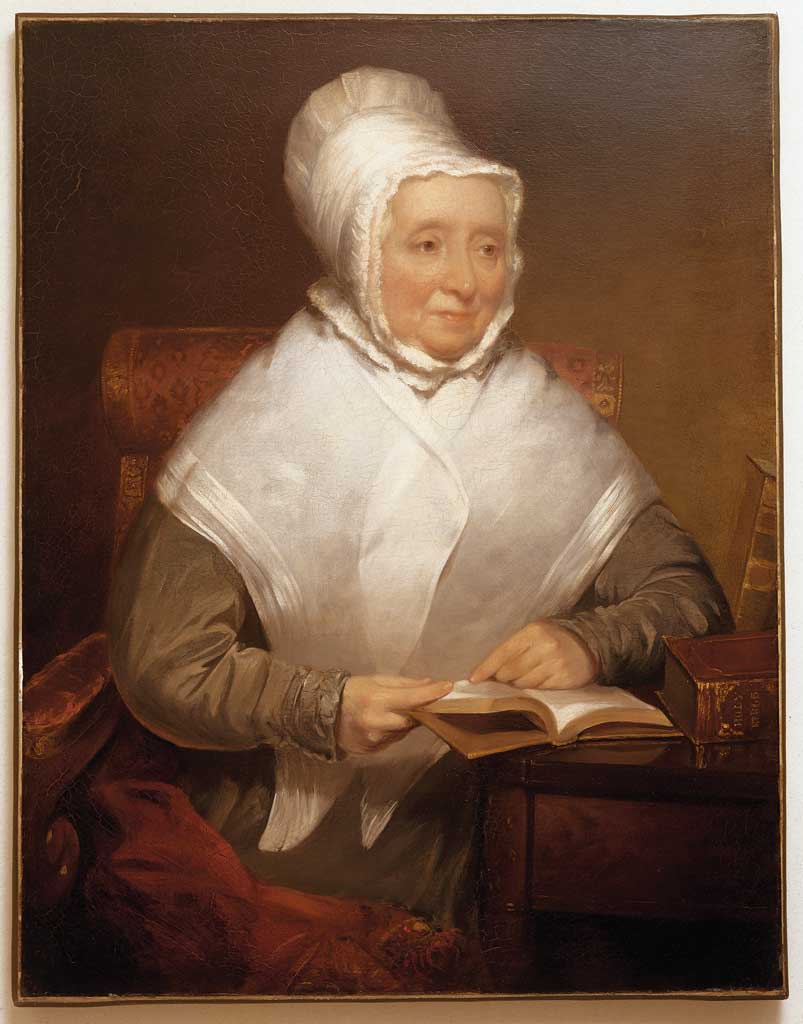
Hannah Adams

(born October 2, 1755)


“Hannah!” Silence. “Han-nah?” Still silence. “HAN-NAH A-DAMS!” her father bellowed.

Hannah finally came scurrying into the keeping room, her long skirts swishing. “I’m sorry, Father.   I was reading one of your books out on the porch and didn’t hear you.” The proof was in her hand, her thumb tucked between the pages.

He should have known. Hannah always seemed to have her nose in a book when chores were done, and easily tuned out the world while reading.  He himself was an avid reader with a large personal collection of books. How could he fault her for a strong desire to learn?

“Yes…well…I’ve something…rather disappointing to share with the family,” he faltered, “and there’s no time like the present, as they say.”

With that introduction, Mr. Adams sat his family down to share dismal, embarrassing news: his business of selling books and English goods had failed; his inherited fortune was gone.

Hannah was only seventeen, but willingly did her part to help support the family. She taught school, tutored, as well as crafted and sold bobbin lace. However, what spare moments Hannah found she continued to devour her father’s books. And with her outstanding memory, she retained much of what she read. Hannah also began to write.

Mr. Adams generated income by taking in Harvard divinity students as boarders and tutoring them. One student gave Hannah a book about the world’s religions. As she read about the Christian denominations, Hannah (a Congregationalist) became more and more disturbed.

This author isn’t offering subjective facts; he’s inserting his own negative opinions about each one–except his own denomination, she thought. I could construct a better volume than this—an unbiased one. And the proceeds could further help the family.

Hannah began her new reference work in 1778. Her intent was “to avoid giving the least preference of one denomination above another and to present the arguments and sentiments of each sect in believers’ own words, according to the group’s general collective sense” (1).

The result: The Alphabetical Compend of the Various Sects Which Have Appeared from the Beginning of the Christian Era to the Present Day. It was published in 1784 and sold well. But Hannah did not benefit; the agent absconded with most of the proceeds from the first edition.

Six years of diligent, painstaking work appeared wasted.

A Bostonian minister, James Freeman, helped Hannah gather a number of subscribers for the second edition (1791). It was even more profitable than the first, and finally Hannah enjoyed a small income from her efforts. As the years passed, she produced two more editions (1801, 1817). Hannah Adams was now the first woman of America to become a professional writer.

In 1799, her Summary History of New-England was published, followed by The Truth and Excellence of the Christian Religion Exhibited in 1804.

In between, Hannah lobbied Congress for the first copyright law (as a result of her first publishing experience, perhaps?). She sent a petition dated July 27, 1789. The law went into effect the following spring.

Several prominent intellectuals in Boston greatly respected Hannah’s work, and became her patrons. They even established an annuity for her. In 1810, she left her home in Medfield, Massachusetts and moved to Boston, where she soon joined company with literary friends “in whose conversation I enjoyed the feast of reason and the flow of soul,” she wrote. (A gifted wordsmith, indeed.)

One of those friends, Joseph Buckminster, allowed her access to his private library. There she researched two works: A History of the Jews (1812), and Letters on the Gospels (1824). In all, Hannah wrote nine books, and became one of the most famous women in America at the time.

People remarked that Hannah was a frail, timid, and modest woman. The latter trait was referenced in an article based on her memoirs, published in The Ladies Magazine after her death (1831):

“She must have had much more to tell of the history of her mind, its struggles, and trials, and triumphs, and the effect of all these in forming her character. But her humble opinion of herself induced her to attach less importance to trifling details than her readers would have done” (2).

Hannah also demonstrated:

  • loyalty–especially to her family,
  • inner strength in the time of trial and disappointment,
  • perseverance and patience, as she conducted careful research to produce each volume of history.

You may wonder if Hannah was related to John Adams, our second president, or his son, John Quincy Adams, the fourth president. She was their distant cousin. In fact, Hannah once visited John Adams’ home, staying for two weeks. She spent most of her time–(Care to guess?)– in the library.

It’s no wonder that, in her girlhood dreams of heaven she said, “[My] first idea..was of a place where we should find our thirst for knowledge fully gratified.”  Indeed, one of the joys of heaven will surely be just that.

Hannah Adams is a woman I look forward to meeting in heaven. And I know just where I’ll find her.*

Notes:

  1.  www.womenhistoryblog.com
  2. http://www.questia.com

Other sources:  www.christianity.com; www.bostonathenaeum.org; www.womenshistory.about.com; www.librarycompeny.org; www.brittanica.com.

Portrait:  www.bostonathenaeum.org

*in the celestial library!


Read Full Post »

(In honor of the beginning of another school year)

Have you ever tackled a long-term project that lasted five or ten years? How about twenty years?

And as part of that undertaking, did you learn twenty-eight languages?

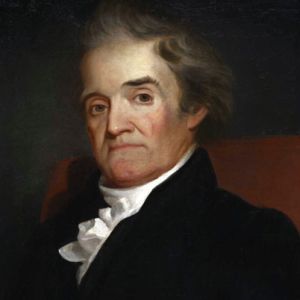
Few if any of us could answer yes to those questions. But at least one person of history could: Noah Webster (1758-1843).

MTIwNjA4NjM0MDA4MDc3ODM2

Webster was a student at Yale during the Revolution. But he left school twice to fight in battle. Upon graduation he became an attorney and a schoolteacher. It was the latter position that prompted him to write textbooks for many disciplines, including: spelling, grammar, history, geography, government, agriculture, economics, meteorology, medicine, zoology, and morality. (Whew!) He earned the title, “Schoolmaster of America”, as a result of advancing education in the fledgling country.

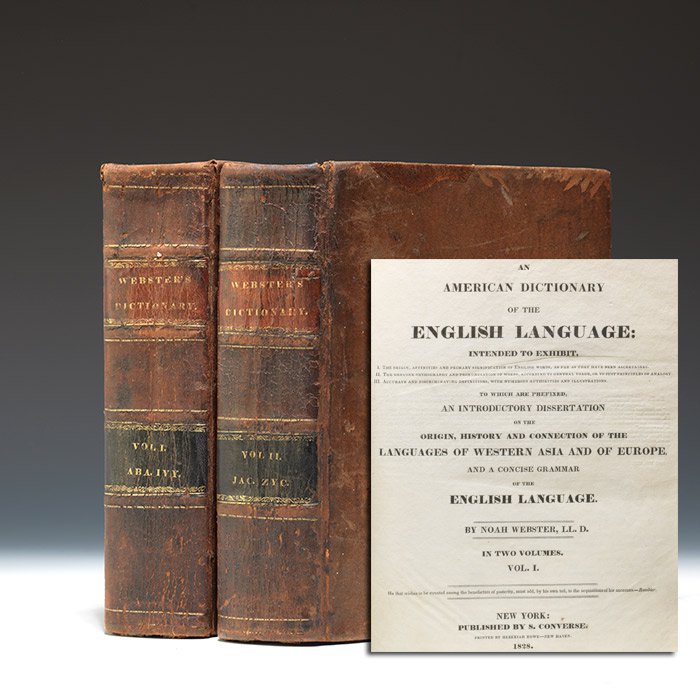
And then, of course, there is his iconic dictionary, the project that took twenty years to complete. As part of his research for that volume, he learned the twenty-eight languages mentioned above, including Anglo-Saxon and Sanskrit. Webster also traveled to England and France in order to access ancient works in their libraries that were not available in America.

Once completed, Webster’s American Dictionary of the English Language contained 70,000 words. Not only were the etymology, pronunciations, and definitions included for every word, he added a sample sentence of how each word should be properly used.   Many of his examples came from the Bible.

100260

Webster also dedicated the work to God: “To that great and benevolent Being…who has sustained me…and given me strength and resolution.”

As if all those textbooks and a meticulously researched dictionary weren’t enough for one lifetime, Noah tackled yet another project, a modern-language Bible. This volume he was able to complete in just five years, taking advantage of all he had learned about words while developing the dictionary.

webster-bible-large

Why did Webster feel another translation of the Bible was warranted? He explained in the preface to his Common Version of the Holy Bible (1833):


“The Bible is the chief moral cause of all that is good and the best

corrector of all that is evil in human society—the best book for

regulating the temporal concerns of men and the only book that

can serve as an infallible guide to future felicity [happiness].”


No doubt there are many who would refute those remarks by saying, “That’s just one man’s opinion.”

But when, for example, the Ten Commandments and the Golden Rule are applied, who can argue that society does not benefit?

Noah Webster also credited Christian principles for the civil liberties enjoyed in the world:

“Almost all the civil liberty now enjoyed in the world owes its

origin to the principles of the Christian religion…the religion

which has introduced civil liberty is the religion of Christ and

His apostles, which enjoins humility, piety, and benevolence;

which acknowledges in every person a brother, or a sister, and

a citizen with equal rights. This is genuine Christianity, and to

this we owe our free constitutions of government.”

(from Webster’s History of the United States, 1832)


Again, can it be argued that a religion which encourages humility, piety, benevolence, fairness and equality is bad for society?

It is for these reasons Webster believed that a Christian education was beneficial:

Any system of education…which limits instruction to the arts

and sciences and rejects the aids of religion in forming the

characters of citizens, is essentially defective. In my view, the

Christian religion is the most important and one of the first

things in which all children under a free government ought

to be instructed.”

(from a letter to David McClure, October 25, 1836)


Webster also gave this advice to civic students which is appropriate for every citizen:

When you become entitled to exercise the right of voting for

pubic officers, let it be impressed on your mind that God

commands you to choose for rulers just men who will rule in

the fear of God (Exodus 18:21).

6b1a5bea871620ef2ae6b214ce090c98 

If the citizens neglect their duty and place unprincipled men

in office, the government will soon be corrupted; laws will be

made not for the public good so much as for selfish or local

purposes; corrupt or incompetent men will be appointed to

execute the laws; the public revenues will be squandered on

unworthy men; the rights of the citizens will be violated or

disregarded. 

(from The History of the United States, “Advice to the Young”)

 As we begin the countdown to Election Day, 2016, I find Noah Webster’s advice to be just as applicable today as it was then.

(Art & photo credits:  www.biography.com; http://www.wikipedia.org; http://www.baumanrarebook.com; http://www.buzzquotes.com.)

Read Full Post »

ucm284632


Research scientists rely on their five senses to collect and analyze data.

Some scientists argue that because we can’t see, touch, or hear God (out loud, in the hearing of others), he cannot exist.

So how can we embrace faith in our invisible God, and be sure of what we hope for, and certain of what we do not see (Hebrews 11:1)?

First, the Christian faith is based on a huge body of proof. Our beginning point of discovery: God’s Word. And why should we believe the Bible? Because its reliability has been proven again and again by:

  • Hundreds of archaeological discoveries. One small example: Remember the Pool of Bethesda where Jesus healed a lame man (John 5:1-8)? According to John, the pool had five porticos, or colonnaded walkways. No such place was found until 1956, because it was buried–forty feet below ground level. But, sure enough, there are five porticos (1).

Also worth noting: Not one artifact has been found to disprove a fact or claim of the Bible (2).


1422113545_7ada8fbca9_z


  • Thousands of manuscript fragments discovered, from ancient copies of the scriptures. The Dead Sea scrolls are one incredible example. Complete copies or portions of ALL books in the Hebrew Bible, our Old Testament, are included in these scrolls.  The book of Esther is the only omission (3).

viewer-Isaiah


  • Scientific and medical discoveries that have corroborated scriptural truth. Again, one example of many: In the late 1960s, deep sea exploration discovered numerous springs of fresh water pouring out of the ocean floor. Job (38:16) spoke of the “springs of the sea” eons ago (4).


Job 38-16


Hundreds of prophecies fulfilled with pinpoint accuracy.  The Old Testament contains hundreds of prophecies. Of those, more than four dozen are about Jesus. Every one of them that refers to his earthly life was fulfilled.  

Those are just a few categories of proof.

But we can also place our confidence in God because of experience.  The Bible and two thousand years-plus of church history include countless stories of believers in God who faced hardships to be sure, but lived adventurous, fulfilling, and miraculous lives of faith.

To experience the same, we have to step out in faith, like:


gen-12-1-ww-wall-9x


  • Abraham, who left his home country at God’s command, with no idea of where he was going (Genesis 12:1).
  • Moses, who confronted Pharoah and ordered the powerful ruler to release God’s people from slavery (Exodus 5:1-5).
  • David, who stepped out onto a battlefield to fight a giant—alone (1 Samuel 17).
  • King Jehoshophat, who led Judah into battle against a vast army (2 Chronicles 20).
  • The centurion who asked Jesus to heal his beloved servant—from a distance. Jesus fulfilled his request and commended the officer for his great faith (Luke 7:1-10).

We have to step out like these more recent heroes, too:


4225983_orig

  • George Muller (1805-1898), who could hardly provide for his own family, yet with great faith and not much else, founded five orphanages in Bristol, England, where ten thousand children were cared for.
  • Florence Young (1856-1940), a missionary to the Kanakas of the Solomon Islands. She and others helped the Kanaka believers minister to villages that practiced cannibalism. Thousands of people became Christians.
  • C. T. Studd (1860-1931), missionary to China, India, and then Africa. He inherited 25 million dollars ( in today’s economy) and gave it all away.
  • Betty Greene (1920-1997), who combined her passion for flying with her faith in God and helped to found Mission Aviation Fellowship.
  • Brother Andrew (1928- ), who smuggled Bibles into communist countries during the Cold War.

How were these biblical and historical heroes able to accomplish such feats? Was it because of courage and perseverance? No doubt, but the foundation underneath those traits was their faith in God.

They believed what they could not see. They were sure of God’s love and care. They were certain their final destiny was secure.  Therefore, they confidently moved forward step by step as God opened the way. That is faith.


il_570xN.189993668


*     *     *     *     *     *     *     *     *     *

Lord, I have said it many times: Whatever you want for my life is OK with me! Forgive me for wavering and fretting that perhaps your will might cause hardship. Shame on me! Help me to rest in you, Father. Since your love is steadfast and everlasting, and you have only my best interest at heart, I can confidently put my faith in you. Help me to be watchful and stand firm, a woman of strength, courage, and love.

(Psalm 116:7; Jeremiah 31:3; 1 Corinthians 16:13)

Notes:

  1. bible-history.com
  2. Grant Jeffrey, The Signature of God, p. 71.
  3. deadseascrollsfoundation.com
  4. Institute of Creation Research (icr.org)

(Photo and art credits:  www.fda.gov; http://www.flickr.com; dss.collections.imj.org.il; http://www.newheartnewspirit.com; http://www.alittleperspective.com; http://www.georgemuller.org; http://www.etsy.com.)

Read Full Post »

“You have made man a little lower than the heavenly beings…

You made him ruler over the works of your hands…

All the beasts of the field, the birds of the air, and…

All that swim the paths of the seas” (Psalm 8:5-8, italics added).


4553514-More-Underwater-Fish-1


“Paths of the seas.” What might that refer to?  That question crisscrossed Matthew Maury’s mind frequently.

Maury had always loved the sea, prompting him to join the U.S. Navy at age 19, in 1825.

Life at Sea

The second ship on which he served, the Vincennes, included a library. Matthew was eager to learn and spent his spare time studying navigation. Sometimes he chalked out problems in spherical geometry on cannon balls. When the Vincennes circumnavigated the world, Matthew received practical experience in the subject.

Upon returning to the States, Matthew took an examination in navigation and passed. He was then appointed acting sailing master on the Falmouth. Along with the ship’s commander, he was responsible for navigating the course, steerage, and sail trim.

Next Matthew determined to learn about winds and currents. He discovered that no one had charted such information for the treacherous Cape Horn off the southern tip of South America. He kept meticulous records during the voyage and wrote about his findings in a paper, published by the American Journal of Sciences and the Arts.

In 1834, Matthew married Ann Herdon, and they settled in Fredericksberg, Virginia.

Maury’s life was certainly following a positive trajectory. And no doubt, as a strong Christian believer since boyhood, he saw each new opportunity as a blessing from God.

Plan B

But in 1839, Matthew was injured in a stagecoach accident.  The final result:   permanent lameness.  Never again would Maury be able to work aboard a naval vessel.  His career came to an abrupt end, and Maury fell into despair.

Surely he must have wondered, What am I to do, Lord? The sea is all I know.

But Maury did not allow his despair to debilitate him. He used his convalescence to continue studying navigation, meteorology, winds, and currents.

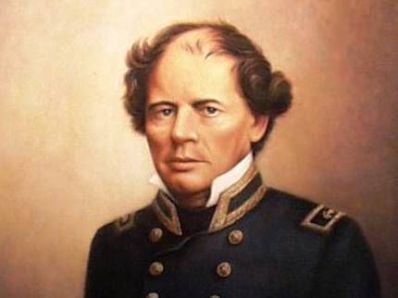
Was God behind that compulsion? Perhaps so. In 1841, Maury was offered a position as manager of the U.S. Naval Observatory and the depot for charts and instruments. This position was perfect for him, requiring the exact knowledge and abilities he had acquired.
 

4 arthur


In 1852-1853, Maury brought together ten major maritime powers of the world. In unanimous agreement, they began to compile unified records benefiting all mankind. For the next thirty-five years, more than a million ships’ logs were sent annually to the observatory. From those records were developed wind and current charts for the globe.

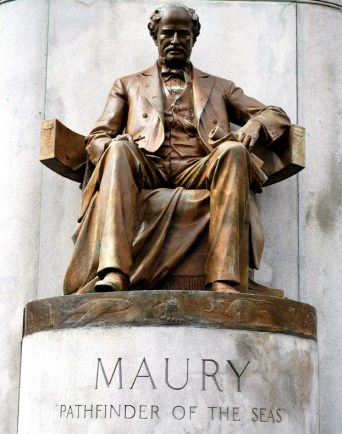
Pathfinder of the Seas

Meanwhile, Maury sought for the meaning of that mysterious phrase in Psalm 8:8, “the paths of the seas.”

As he studied those ships’ logs being sent to the observatory, he compiled charts of ocean-wind and sea currents. He set adrift weighted bottles that would float slightly below the surface of the water, where they would not be impacted by wind.

Instructions inside each bottle informed the person who found it to return the bottle, with the location and date of its discovery. From his charts and experiments, Maury was able to determine the “paths of the seas,” including the Gulf Stream.

Pathfinder of the Wind

Maury also proved the truth of Ecclesiastes 1:6:

“Blowing toward the south, then turning toward the north, the wind continues swirling along; and on its circular courses the wind returns.”

Further study and experiments indicated that the wind did indeed move in circular patterns. Today we call them jet streams. Maury’s investigations led to a better understanding of weather, and predictions became more reliable.

Plan C

But despair entered Maury’s life again when the United States declared civil war. As a citizen of Virginia, he felt obligated to side with the South, giving up the position in Washington at his beloved observatory. Jefferson Davis, President of the South, sent Maury to England as an ambassador for the Confederate States.

After the war Matthew spent three years exiled in England. Many honors were conferred on him during that time, but his heart was still in the U.S.

Did he wonder once again what God might be planning? Perhaps he prayed, “Lord, if it be your will, arrange circumstances so that we may return to America.”

In 1868, the U.S. offered general amnesty to ex-patriots and Matthew sailed back to the States. He accepted a position at Virginia Military Institute as professor of meteorology, a position he held from September 1868 to the day he died, February 1, 1873.
 

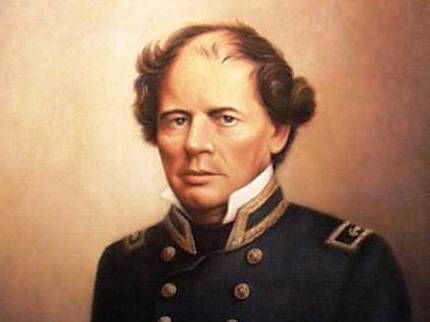
maury2187


Matthew Fontaine Maury, a self-taught navigator of the seas, astronomer, meteorologist, author, and educator, always sought to prove:

“The Bible is true and science is true,

and therefore each, if truly read,

but proves the truth of the other.”

–Matthew Maury


And though he may not have set out to do so, Maury also proved:

“I know the plans I have for you, plans to prosper you and not to harm you, plans to give you hope and a future” (Jeremiah 29:11).

With the advantage of hindsight, we can readily see this promise grandly fulfilled in Maury’s life. Yes, he suffered pain and hardship. All saints of God do (Romans 8:17).

But! God brought Maury through every challenge and used him in mighty ways—ways that impact our world to this day.

*     *     *     *     *     *     *     *     *     *

Lord, I am deeply grateful you are the one who plans each of our lives. What comfort to know that an all-seeing, all-wise God is orchestrating not only the main events of life, but every single day. I pray for your grace, in order to be accepting of disappointments, knowing that you will bring good out of every situation. In fact, you may very well be preparing something important. I want to trust you without hesitation.

(Psalm 139:16; Romans 8:28; Ephesians 2:10)


Sources:  The Founders’ Bible, https://answersingenesis.org; http://www.cbn.com; http://www.creation.com.)

Photo and art credits:  www.travelblog.org; http://www.firstladies.org.)

Read Full Post »

Jesus-Praying-Last-Supper-570x377


Whether I heard it or read it, I don’t remember. But the words caught me by surprise, and I jotted them down:

“What was uppermost in Jesus’ mind as Good Friday approached?

“Joy.”

Do you find that surprising, too?

Yet at least three times on the eve of his crucifixion Jesus spoke about joy (John 15:11; 16:22, 24; 17:13)–a most unusual topic and completely unnatural.  Who thinks about joy when they know that catastrophe is about to strike?

Jesus, that’s who.

Within the next twenty-four hours he would face excruciating pain, total abandonment by his Father, and the most horrific death ever devised.

But his concern was for his disciples, not himself.  Jesus wanted them to remember the important principles of love, obedience, and joy–an empowering joy that no one could take away from them.

Perhaps you remember the scene. Jesus and his disciples had just finished their last Passover supper together. After the meal, he taught his final lesson.

The first mention of joy came near the end of his teaching about the vine and the branches:

“I have told you this

so that my joy may be in you

and that your joy may be complete”

(John 15:11).

The word, “this,” refers to the ways Jesus had just mentioned that will contribute to joy:

1.  Live close to him and produce much good in and through your life (vs.4-8).

2.  Live in obedience to Jesus and experience the warmth, peace, and care of His love (vs. 9-10).

 Note that Jesus wanted his joy to be in the hearts of his disciples. What characterized his joy, compared to that of others?

  1. Strong awareness of the Father’s love for him, and his own love for the Father (vs. 9-10).
  1. Absolute surrender and self-sacrifice of himself to his Father, and the joy of doing what his father had sent him to do. Even during his great travail in the Garden of Gethsemane, his one desire was to do his Father’s will (Luke 22:42).

Jesus’ joy coexisted with the profound sorrow of his impending suffering, because he was already well-acquainted with the satisfaction and fulfillment of obedience.

  1. The understanding that joy deferred to the future is anticipatory joy in the present. “For the joy set before him he endured the cross” (Hebrews 12:2).

And finally, Jesus told his disciples that he desired complete joy for them. What does complete joy look like? It is:

  • Not so much an emotion as it is a conviction (Keith Krell, “Moment by Moment,” http://www.bible.org).
  • Inner contentment, resulting from continually cultivating an intimate relationship with Jesus.
  • Constant, not dependent on circumstances.
  • Enduring, day after day. Indestructible.
  • Perfect—the perfect, joy-filled fulfillment of the destiny for which God created you, even when a portion of that destiny is suffering.

I’m thinking of the martyrs–Stephen, Polycarp, Ignatius of Antioch, William Tyndale, John Wycliffe and countless others who demonstrated complete joy even as they died in anguish.

Polycarp, disciple of the Apostle John and Bishop of Smyrna for many years, refused to revile Jesus. For that he was burned at the stake.

But before the flames rose up, Polycarp prayed:

“O Lord God Almighty, Father of thy blessed and beloved Son, Jesus Christ, through whom we have been given knowledge of thyself…I bless thee for granting me this day and hour, that I may be numbered amongst the martyrs, to share the cup of thine Anointed and to rise again unto life everlasting…”

Such devotion, courage, and supernatural strength are impossible to fathom apart from the enablement of the Holy Spirit.

Can you hear the grace in Polycarp’s voice as he blessed God for the privilege of dying a martyr?

That is complete joy, only experienced by those who trust in Jesus implicitly.

Complete joy that Jesus purchased for us at Calvary.

*     *     *     *     *     *     *     *     *

We marvel, Heavenly Father, in the extreme paradox that is the cross. Out of the evil unleashed upon your Son comes your holy, righteous goodness–upon us. Out of the horror of the crucifixion that Jesus endured comes inexpressible and glorious joy, to those who put their faith in him–not a temporary feeling of elation, but deep, abiding, abundant joy. 

All praise to you, our loving, gracious God!       

(Acts 3:13-16, 1 Peter 1:8, John 6:47, John 10:10)


(Photo credit:  www.rejesus.co.uk.)


Read Full Post »

(In honor of Black History Month)


Isabella, the daughter of James and Elizabeth Baumfree, was born a slave in New York state about 1797. No one knows the exact date, because birth records weren’t kept for “property.”

Did her parents know the name means, “consecrated to God?” Even if they chose the name for its meaning, those parents could not have dreamed of the future awaiting their Baby Belle.

Her early years were difficult.  Belle was sold five times, several times to cruel masters.

At age eighteen or so, Belle fell in love with Robert, a young slave from a nearby farm. The couple had a daughter. But Belle’s master, John Dumont, forbade her to see Robert again. According to the law, all children of the union would belong to Robert’s master, not Dumont.

Two years later, Dumont forced Belle to marry an older slave. They had three children: Peter, Elizabeth, and Sophia.

In 1826, Belle escaped the Dumont farm with Baby Sophia. In a vision, God showed her a particular home to go to. That home belonged to a Quaker family, the Wageners, who took in the young woman and her baby. They even paid Belle’s price to Dumont and made her a free woman. Belle became a housekeeper, then a maid.

Shortly after her escape from slavery, Belle learned that her five-year old son, Peter, had been illegally sold in Alabama. She took the matter to court and won her case. Peter was returned to New York. That was the first time a black woman challenged a white man in a U.S. court. It was also the first time of many that Belle’s resolve and courage were put on display.

Several years later Belle was falsely accused of poisoning her former employer. In 1835 she took that case to court and won again.

Someone must have encouraged Belle to tell her story of being a slave and becoming a free woman. But she had never learned to read or write, so a friend wrote as Belle dictated. A Northern Slave was published in 1850.

In her book, Belle explained that several years after she was freed, God revealed himself to her, “with all the suddenness of a flash of lightning, showing her, in the twinkling of an eye, that he was all over, that he pervaded the universe, and that there was no place where God was not.”

The book sold many copies and Belle became well-known. She was asked to speak at a women’s rights convention in Massachusetts. Before long, Belle was traveling with abolitionist, George Thompson, speaking against slavery and for human rights.

In 1851, Belle gave a speech at another women’s conference, this time in Ohio. She spoke convincingly (and extemporaneously) about women being every bit as capable as a man:

“I have plowed and reaped and husked and chopped and mowed, and can any man do more than that?”

And, no doubt with a twinkle in her eye, she added:

“As for intellect, all I can say is, if a woman have a pint, and a man a quart — why can’t she have her little pint full? You need not be afraid to give us our rights for fear we will take too much, for we can’t take more than our pint’ll hold. The poor men seems to be all in confusion, and don’t know what to do. Why children, if you have woman’s rights, give it to her and you will feel better. You will have your own rights, and they won’t be so much trouble.”

She concluded by asking: “And how came Jesus into the world? Through God who created him and the woman who bore him. Man, where was your part?”

It’s not surprising that some were displeased with Belle’s speeches. One time she was told that the building where she was to preach would be burned down if she dared to speak. “Then I will speak to the ashes,” she replied.

Belle was also physically assaulted. One brutal attack caused permanent injury, and she had to walk with a cane for the rest of her life.

In 1863, Harriet Beecher Stowe wrote an article about Belle for the Atlantic Monthly:

“I do not recollect ever to have been conversant with anyone who had more of that silent and subtle power which we call personal presence…She seemed perfectly self-possessed and at her ease. An audience was what she wanted—it mattered not whether high or low, learned or ignorant. She had things to say, and was ready to say them at all times, and to anyone.”

Imagine. A slave woman who never had the opportunity to go to school, never learned to read or write. Yet the power of her spoken word helped bring the end of slavery and pave the way for women to be granted the right to vote.

Belle proved:

“There is no difficulty that cannot be defeated.

There is no victory that cannot be achieved,

if you believe in the power of God!”

— Anonymous

Of course, by the time she achieved notoriety, Belle was known by another name.

You see, Belle had asked God for a new name several decades before the Civil War. Again, it was the result of a vision. She said God chose her new first name based on the fact she would travel. Then Belle asked God for a second name, “’cause everybody has two names.” And the Lord granted her request. Her second name proclaimed what Belle always declared from her podium.

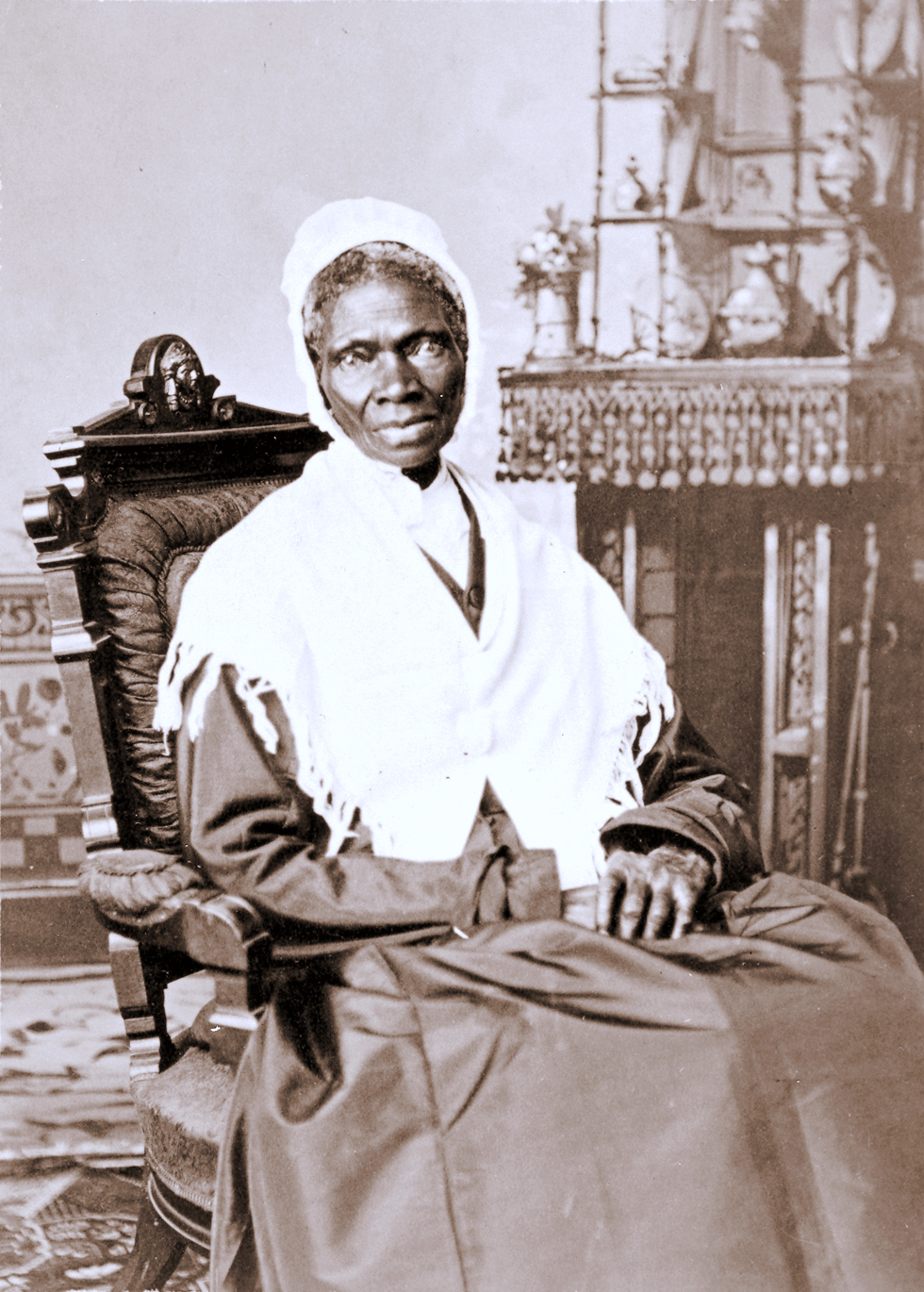
Perhaps you remember Sojourner Truth.


Sojourner_truth_c1870

(Photo from http://www.wikipedia.org.)


Sources:  www.biography.com; http://www.sojournertruth.org; http://www.; http://www.blackpast.org; http://www.americanswhotellthetruth.org; http://www.christianitytoday.com.)

Read Full Post »


Mayflower_compact


They had been at sea for sixty-six days, enduring overcrowded conditions. Storms had caused damage to their ship and sea sickness plagued them all– passengers and crew alike. Meager provisions and no heat on chilly autumn days caused further discomfort.

So on November 9, 1620, when they finally saw the coastline of North America in the distance, the Pilgrims and others aboard the Mayflower must have cheered enthusiastically. Soon they could abandon the cramped, cold, and fetid ship and begin new lives in a new world.

But. All had not been peaceful and congenial among the passengers during the crossing. And when it became apparent the storms had blown them too far off course to land in the Virginia Colony as planned, relations deteriorated further.

Not all of the travelers were Pilgrims. Also aboard were merchants, craftsmen, skilled workers, and indentured servants. The Pilgrims called them “strangers.”

No sooner had the decision been made to anchor off Cape Cod, than an argument ensued. Several of the “strangers” pointed out that, since they were not going to be under the jurisdiction of the Virginia Company, they would “use their own libertie” and do as they pleased. “None had the power to command them, they said.” (Quoted words are from William Bradford’s records. He served as historian for the Pilgrims.)

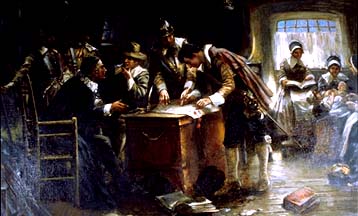
To avoid anarchy, five men gathered in the cabin of the ship to create a basis for law and order. The result of their efforts: the Mayflower Compact.

The first words of the document give strong indication of the Pilgrims’ hearts.

In the name of God, Amen.

“Everything they did started with God” (The Founders’ Bible, p. 187).

Next, the Pilgrims stated their purpose for coming to America.

We, whose names are underwritten,…by the grace of God,…having undertaken for the glory of God, and advancement of the Christian faith, and honor of our King and country…

Several phrases indicate the Pilgrims’ desires for their new colony:

  • “For the glory of God” would be a guide for all manner of decisions.
  • “Advancement of the Christian faith” would encourage them to remain strong in Christian faith among themselves and to introduce others to Jesus.
  • “Honor of our King and country” indicates their loyalty to native England and its monarch, in spite of his untoward actions that caused their flight to America in the first place.

…[We] do solemnly and mutually in the presence God and of one another, covenant and combine ourselves together into a civil body politic…

The Mayflower Compact expressed their commitment to live together in a civil manner, in the sight of God.

[We] will enact…such just and equal laws, ordinances, acts, constitutions, and offices, from time to time, as shall be thought most meet and convenient for the general good of the colony, unto which we promise all due submission and obedience.” 

Note:  there is no mention of a leader who would oversee the colony. The Pilgrims created a democratic, representative form of government, in covenant with one another, rather than by a monarchy or dictatorship.

It was the first document of its kind in the history of the world.

But the Mayflower Compact would only be as good as the commitment of Pilgrims and Strangers alike to abide by its guidelines.

Would the mutinous Strangers sign?

John Carver, church deacon and one of the organizers of the voyage, was the first to affix his signature. Other Pilgrims followed.

One book says there was a long pause. Then Captain Myles Standish stepped forward to sign. Standish had been hired by the Pilgrims to be their military captain; he was with them, but not one of them.

Soon other Strangers followed Standish’s example.  In total, forty-one signatures appeared on the document. One freeman, two hired men and seven servants declined.

At long last, Pilgrims, Strangers, and crew were able to disembark. And what did they choose to do first?

Pray.

According to Bradford, they “blessed the God of heaven, who had brought them over the fast and furious ocean..and a sea of troubles before.” Then he quoted scripture:

“Let them therefore praise the Lord, because He is good and His mercies endure forever.” (Psalm 106:1).


*     *     *     *     *     *     *     *     *     *


We, too, praise you, Lord, for your goodness and mercy upon America all these years.  As we celebrate Thanksgiving on Thursday, may we remember the solemn history behind this occasion.  Thank you for the supreme example and sacrifice of our Pilgrim forefathers–strong in faith, commitment, and perseverance.  May we follow their example, not only because you are faithful to the faithful (2 Samuel 22:26), but out of appreciation for what you, our loving God, have already done.


(Sources:  By These Words by Paul M. Angle; The Founders’ Bible; The Intellectual Devotional:  American History by David S. Kidder & Noah D. Oppenheim; The Rebirth of America;  http://www.learningtogive.org; http://www.humanities360.com; http://www.crf-usa.org; http://www.americanhistory.about.com; http://www.tparents.org; http://www.mrkash.com; http://www.mayflowerhistory.com; http://www.plimoth.org.)


Art credit:  www.washingtonmayflower.org.  


Read Full Post »

DSC_7445-X3 (My mom & dad with their great-granddaughter, Sophie, 2011)


“What we leave behind

is not what is engraved in stone monuments,

but what is woven into the lives of others.”

— Pericles (495-429, B.C.  Greek statesman, orator, and general of Athens)

I love that word, woven. It speaks eloquently of the way my mother, Geraldine Claire  (November 5, 1928-October 9, 2014), influenced my life. Woven into the fabric of my being are memories of Mom’s words and example that still have impact to this day.

Many of those memories involve Mom and Dad because they were such an inseparable team. They even wallpapered together.

Now marriage experts will tell you that completing home improvement projects with your spouse can be detrimental to your relationship. But that was not the case for Mom and Dad. Amidst the measuring, pasting, and hanging, my brother, John, and I saw cooperation and patience in action.

Once the wallpaper was hung in the three homes of our growing-up years, Mom was ready to entertain. Hospitality was definitely one of her gifts. In fact, the last dining room table Mother and Dad purchased could seat fourteen people.

Mom became adept at organizing large gatherings by writing lists, doing everything she could ahead of time, even labeling the serving ware so each item on the menu would have an appropriate bowl or plate. Little did I know then how often I’d be following her routine and recipes, as Steve and I began to entertain.

Mom’s legacy included wise advice. One time I was heartsick over a low report card grade in math—my most challenging subject. She quickly gave me perspective for the tragedy, saying, “Just remember: this grade will not matter in ten years.”  And, of course, she was right.

Countless times over the years as disappointments and difficulties have occurred, I’ve heard Mother’s voice reminding me to consider events with a ten-year perspective.

But that doesn’t mean she accepted excuses. Instead, Mom fostered independence and personal responsibility .

I’m remembering the Sunday School Christmas program from second grade. My part was to recite six verses from Luke, chapter two, about the angel visitation to the shepherds. “This is too much to memorize,” I complained.

Mother replied calmly, “Well, just tell Mr. Faircloth that you can’t manage it, and he’ll ask someone else.”

Mom did not take control of the situation; she left it up to me to decide what course of action to take. Wise mother, indeed.

But perhaps the most astounding aspect of her legacy is the way she exhibited all features of the fruit of the Spirit, listed in Galatians 5:22-23.

For example:

LOVE — Mom lavished love on family, friends, and stranger alike. She could strike up a conversation with anyone, and was always ready with a warm hug.

JOY — Mother was a woman of gladness. She laughed easily and often.

PEACE — Mom and Dad created a peaceful, secure home for John and me.

PATIENCE — She exercised great patience, especially when dealing with my fluctuating moods of early adolescence.

KINDNESS — Mother demonstrated kindness in many ways.  I remember one house where the old wallpaper was in process of removal when Mom and Dad took in a missionary who needed a place to stay.  We have home movies of  that missionary, Miss Hunt, standing in front of  the glue-encrusted plaster.  Another time when a different missionary family stayed with us, Mom did all their laundry while they attended to other affairs.

GOODNESS — Mother’s goodness was also expressed in numerous ways.  In my mind’s eye, I can still see Mom at her desk at Scripture Press, where she was executive secretary to the Vice President of Editorial.  (The visualization is easy to conjure; I sat directly across from Mom, most of my seven summers as an editorial assistant.)  Frequently people stopped by her desk to share a need and ask for advice.  We used to tease her about being the psychologist of Scripture Press!   

FAITHFULNESS — Mother’s faithfulnesss to God never wavered for the seventy-five earthly years she knew Jesus as her Savior and Lord.

GENTLENESS — While John and I were growing up, Mom could be plenty firm with us.  Yet, when we were sick, hurt or experiencing trouble, she readily soothed us with comfort and hugs.

SELF-CONTROL — I have to admit:  I provided Mom and Dad with plenty of parenting challenges.  And though Mom did become angry sometimes, she never lost her temper with me.

For these reasons and so many more, John and I “arise and call her blessed” (Proverbs 31:28).  Mother did indeed weave godly integrity, wisdom, and faith into our lives.

Read Full Post »

« Newer Posts - Older Posts »

Sylvia Schroeder

Impressions Becoming Expressions

Mitch Teemley

The Power of Story

Still Traveling

Impressions Becoming Expressions

Living Our Days

Gaining a heart of wisdom

He Said What?!

I'm Patty, and my husband and I are living with our adult son who has autism and epilepsy. I love sharing lessons learned from life around me, especially life with Aaron.

Meditations of my Heart

Impressions Becoming Expressions

Linda Stoll

Impressions Becoming Expressions

Signora Sheila

Where faith meets la dolce vita

Heidi Viars

Finding the Image of God