Feeds:
Posts
Comments

 d30200c131346a4ffed9f197bbee764d

(“You thrill me, Lord, with all you have done for me!  I sing for joy because of what you have done” — Psalm 92:4 NLT.)

God lavishes his gracious kindness upon us in countless ways, doesn’t he?

In appreciation for all he’s done, I have a suggestion. Let’s each write him a personal psalm for Valentine’s Day.  A love gift, on a love-focused holiday, for our loving God.  (You have more than a week to prepare your gift!)

Is that an overly sentimental idea?

Perhaps the timing is, but the matter of creating personal psalms has nothing to do with sentimental poetry.

I can hear some of you already. “Me—compose a psalm? I struggle to put a personal message on a birthday card!”

If that sounds like you, “Be strong and courageous. Do not be terrified; do not be discouraged, for the Lord your God will be with you” (Joshua 1:9)!

God waits with eager anticipation for you to enjoy an intimate Father/child relationship with him (2 Corinthians 6:18).

f2c43794cde3dc013fef692a6c7eabf1

 And what parent is not overjoyed when a son or daughter shares his/her innermost thoughts and feelings?

Remember, a psalm is simply a heartfelt prayer or song.  Key word: heartfelt.  Our psalms do not have to rhyme. We don’t have to use fancy literary devices like metaphors, imagery, or parallelism unless we want to.

These psalms are for our Heavenly Father.  He takes great pleasure in the sincere, unpretentious efforts of his children, just as all parents do.  We can even ask for his help to string the words together that will express our hearts.

Sometimes the hardest part is getting started—that first thought. An easy solution is to use a biblical psalm as a model.

?????????????????????????

To begin, you might choose a favorite verse. Read it slowly, several times. Rewrite it in your own words.  These questions might help to push your thinking further:

  • Is there a phrase or word that stands out?   Explain to God why it is important to you.
  • Do you feel a connection with this particular verse?  Add a personal experience when God’s activity in your life made this verse especially meaningful for you.

Following is one way to create a personal psalm, based on Psalm 3:3a: “You are a shield around me, O Lord.”

f74d4bae680c7ed0bb80f31d68a4bd72

1.  Choose a key word.  “Shield” is an obvious choice.

2.  Use the question-words who, what, where, when, why, and how to jump-start your thought processes.  Not all of them will spark an idea, but several will.  For example:  How is God a shield for me? What is he shielding me from? Why is it important for me to remember that he is my shield?

3.  Prayerfully and thoughtfully answer your questions. Meditate for a moment, then begin to write. One word can become the basis for the first sentence. A word or idea from that sentence can be expanded upon and become another sentence.

Before you know it, a psalm is born!


I praise you, oh God, for being like a shield

when disturbing thoughts are hurled my way.

You deflect those poisoned-arrows

with your shield of scriptural truth

and tender compassion.

Help me remember

you are all-powerful and all-wise.

There is no circumstance or emotional battle

that you cannot handle.

Your strong shield protects me

from the assault of Satan and his cohorts—

those negative, discouraging thoughts

that try to attack the peace and joy you’ve given me.

You are my almighty Warrior-God,

unsurpassed in power.

Satan cowers in your presence!

Help me avail myself of your protection

at every onslaught.


Once your psalm is complete, it’s time for presentation.  Read your psalm out loud to God. You will sense his presence as he comes to listen! How do I know?

OLYMPUS DIGITAL CAMERA

(“Come near to God and he will come near to you” — James 4:8.)

Keep your journal or notebook handy. Further thoughts may occur to you as you read, or afterward as you reflect. One more question to consider: In what ways has your relationship to God been impacted through this composing process?  You may wish to write about that, too.

I must confess, I’ve written a number of personal psalms. But recent reading on the subject has inspired me to pursue new avenues of this form of worship.

In future psalms I want to increase my reflection time, be more specific, add more detail, and actually read my psalms out loud.  I’m looking forward to expressing the depths of my heart more openly and discovering new depths of my Heavenly Father.

If you already write personal psalms, or should decide to write one, I’d love to hear about your experience!


(Art and photo credits:  www.pinterest.com; http://www.healthcentral.com; http://www.dwellingintheword.wordpress.com.)

Finding Contentment


finding_contentment_wide_t_nv


According to research, guess what percentage of our happiness is based on circumstances.

A. 10%?

B. 25%?

C. 50%?

D. 80%?

 The answer? Just 10%.

Now why would that be? My guess is, our perspective matters more than our circumstances.


Contentment-723x1024


 (“Contentment is not the fulfillment of what you want,

but the realization of how much you already have.”)


Ah, yes. Gratitude. Definitely an important attitude, contributing to the sweet, even-keel life of contentment. But it doesn’t come naturally to most of us.

Our thoughts, if left untended, can easily fall into a dark hole of:

  • Self-centeredness. “Yeah, the budget’s tight, but I really need a new car. It’s downright embarrassing to drive around in our old clunker.”
  • Self-pity. “It’s not fair that I’m not paid what I’m worth. I work so hard.
  • Self-justification.  “I deserve that new car.”

Note the focus on self. And half the time (or more) we don’t even realize how much of our thought life spins around in that dark hole.

How can we possibly climb out?   Time and attention are required to develop a mind that frequently contemplates thanks-giving and praise instead of complaint-making and dissatisfaction.

Even the apostle Paul said he had to learn how to be content whatever the circumstances (Philippians 4:12).  And like any new skill, developing contentment requires a bit of knowledge and a lot of practice.


dad1ef5d3113528298849bf74da82f41


The best place for knowledge on such a topic is scripture. Several passages can inform our understanding of contentment.

  1. King Solomon said, “The fear of the Lord leads to life; then one rests content, untouched by trouble” (Proverbs 19:23).

Not that reverencing God protects us from trouble and every day is glorious. Bad things still happen to good people. But those who reverence God and worship him see life from a different perspective. They can be content even when catastrophe strikes, knowing that God will see them through.

 Think about Daniel in the lions’ den, or Peter and Paul in prison.

  1. Paul said he didn’t really care if he was living in plenty or in want (Philippians 4:12).  How is that possible? He answers in the next verse, and it’s a familiar one: “I can do everything through him who gives me strength.”

Living in plenty–with God–taught Paul how to keep his priorities straight.   Living in want–with God–taught Paul to detach himself from “things.”

  1. Paul told Timothy, “Godliness with contentment is great gain” (1 Timothy 6:6).

 When we think of a man with “great gain,” we imagine a person with a large, beautifully decorated home, designer suits, two or three cars (for his own use—family members have their own cars), and the capability to go on expensive vacations.

But what about the young Christian father who thanks God every day for his loving wife and two precious kids? Who enjoys a circle of fun, supportive friends at church that also help him keep his priorities straight? This guy lives in a two-bedroom ranch, drives a ten-year old car, and spends vacations taking day trips from home.

Yet he’s rich, too–maybe even more so. It’s just that his riches fall into a different category. He’s rich in relationships, especially with God. “True godliness with contentment is itself great wealth” (I Timothy 6:6, NLT).


contentment


Now that we’ve absorbed a bit of scriptural understanding, it’s time to practice what we’ve learned. How can we foster contentment in our spirits?

  1. Cultivate a positive, faith-filled perspective by turning “I wish” statements into “I praise” statements.

Paul was under house arrest in Rome when he wrote to the Christians at Philippi. His days as an adventuring missionary were most likely over; the future looked bleak. Once his trial took place before Nero, Paul knew he could be facing execution.

He might well have said, “I wish I could be back on the road again preaching the gospel. It makes no sense why God has let this happen. I wish he’d get me out of here!“

But Paul’s response was far removed from wishful thinking. He actually praised God that his circumstances were advancing the gospel (Philippians 1:12-18).

  1. Feed our confidence in God, not our comparisons to others. Contentment wells up in our spirits when our thoughts are grounded in scripture, praise, worship, and gratitude.
  1. Focus on the present—look for the blessings of right now. “We will become content as we enjoy each day for what it is rather than moan about what we imagine it could have been” – Bruce Goettsche.


833b4774bad851af93b88d4b5f8824e3_new_medium


An airline pilot was flying over a lake when he turned to his copilot and remarked, “See that little lake? I used to fish there a lot when I was a kid. Every time a plane would fly overhead I’d think, “Boy, I sure wish I was flying that plane. It must be so wonderful to soar through the sky and see for miles and miles. Now do you know what I’m thinking? How I wish I was down on that lake fishing!”

I don’t want to be like that pilot. I want to be like Paul.


(Art credits:  www.covgrace.org; www,janellenichol.com; http://www.quoteimage.com; http://www.ponderingtheheartofjesus.com;  www.i.mobypicture.com.)


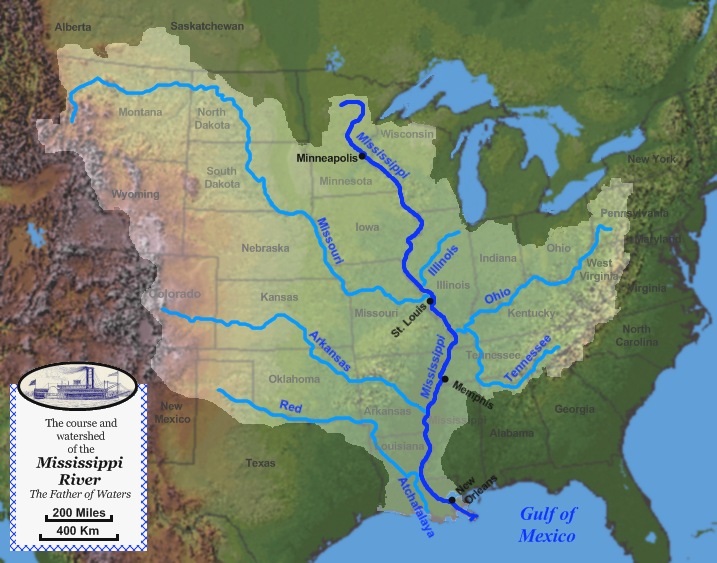
Check a map that traces the trek of the Israelites from Egypt to Canaan, and you’ll see a meandering, looping pathway:

Wilderness Journey

God could have taken them along the coast of the Mediterranean Sea, a much more direct route. One commentator says that route would have required just days of travel. A short journey would have been so much easier on everyone, right?  Less chance of fatigue, boredom, and impatience to develop and create problems.

But God had his reasons for a long, winding route.

Reason #1: The Philistines. That’s not conjecture; that’s exactly what scripture tells us. “When Pharaoh let the people go, God did not lead them on the road through the Philistine country though that was shorter. For God said, ‘If they face war, they might change their minds and return to Egypt’ ” (Exodus 13:17).

The Philistines’ territory stretched for fifty miles along the Mediterranean Sea, with the southern border touching Egypt. They were a well-organized, warring people. Five great cities, strategically located throughout their coastal holdings, created an alliance, the famous Philistine pentapolis.

A people suppressed by slavery for four hundred years would not be able to fight such an adversary. The Israelites didn’t have any trained soldiers among them either. Could God have given them a rousing victory over the Philistines anyway? Of course. But he chose not to.

Reason #2: Perhaps God determined his people needed some wilderness experience to train them in his ways and build their trust in him. Instead of quick and easy, God chose slow, step-by-step progress. He was like an eagle, teaching his fledglings by degrees how to fly (Deuteronomy 32:11).

4ffd5fa25fbd4e401e15ae1fe344938f

I wonder if the Israelites thought, Does God have any idea where he’s taking us? What is he DOING?!

In hindsight we can see God’s purpose:

  • To prepare them to be his holy people by giving them the law. (By the way, according to Exodus 19:1, Moses went up to Mount Sinai during the third month after they left Egypt. God was certainly in no hurry to get his children to the Promised Land.)
  • To teach them.  Through the laws he gave Moses, God taught the Israelites how to treat one another and how to worship him. They were to be different from all other peoples on earth.   “I am the Lord your God; consecrate yourselves and be holy,” he said, “because I am holy” (Leviticus 11:44).
  • To challenge them. For example, God let them experience great thirst and hunger. Then he stepped in and supplied their needs. By degrees God taught them to trust him.

I have to admit: my life experiences have paralleled the Israelites’ in a number of ways. I’ve encountered a few winding roads, puzzling detours, uncomfortable wait times, and unanswered questions of my own.

You, too?

Here’s what we can remind ourselves of: God may not direct us by the nearest, fastest way—even though he could. In his omnipotent wisdom, he knows a better way. And he has perfectly sound reasons for his decision.

My choice in the matter? I can plead for the shorter route, complain about the delay, try to forge ahead on my own self-chosen fast track, OR…

…trust my all-knowing, all-wise Heavenly Father.

5db138f980d331b5ee31f939d399464e

Seeing the choices laid out in black and white, here on my computer screen, the decision is easy. However, complete trust in the moment of uncertainty, fatigue, and discomfort is much more challenging.

Perhaps I can encourage myself by reviewing God’s purposes for the Israelites. Chances are, he desires the same results in me:

  • God prepared the Israelites; he may be preparing me for the next chapter in my life.
  • God taught the Israelites; he may be teaching me what the next level of maturity includes.  (Yes, even an old Christian like me still has growing to do!)
  • God challenged the Israelites; he may be challenging me to trust him—in spite of a long, winding road and uncomfortable wait time.

In summary:  As I cooperate with him, God can transform me into a prepared, mature, trusting servant for the next chapter of my life.   I like the sound of that!

You, too?

*     *     *     *     *     *     *     *     *     *

“Who compares with you, O God?  Who compares with you in power, in holy majesty, in awesome praises, wonder-working God” (Exodus 15:11, The Message)?  You are over-the-top trustworthy!  So, in advance, I thank you for the good that will come out of the winding road, detours, and wait time in my life–experiences you ordained for me, before one of them came to be (Psalm 139:16).  I place my hand in yours, my caring, constant Companion.  Help me to focus on your strong grip, not the uncertainties ahead.  Amen.


(Art credits:  www.registrypartners.net; http://www.pinterest.com.)

Fantasyland_Full_17089

Visit a theme park and you soon learn that part of the adventure is waiting in line–even if you pay extra for fast passes.

Such was our experience at Disney World two years ago. The castle of Beauty and the Beast required wait time—well over an hour. But friends of our daughter had told her, “Don’t miss it,” so we joined the long, looping line.

You may also know that, while you wait, the folks around you can become like friends. Topics such as home state, kids’ ages, and other experiences in the park, get the conversation going. Commiserating over the long line adds to the camaraderie.

Finally we approached the entrance to the castle. Only fifty or so guests were allowed past the gilded rope. This was our first surprise, since most theater-attractions seat hundreds of people. (No doubt there are at least several theaters within the castle, to accommodate the crowds. But each group enters separately, totally unaware that there must be identical venues down alternate hallways.)

First, we were ushered into an outer room, hosted by a footman, I believe. He assigned roles to many of the guests. Among them, the father from Michigan with the four kids became a butler, the little ballerina (who had performed intermittently as we waited in line) became a teacup, our son-in-law, a knight, and our granddaughter, a salt shaker. Each participant was given a colorful placard to identify his or her part. The footman explained what they would need to do, once we entered the library to meet Belle.


Enchanted-Tales-with-Belle1


One particular role seemed completely inappropriate. For the Beast, the footman chose a little girl with an obvious limp.  It seemed cruel to choose such a child for the Beast, of all characters.  As he draped a red cape over her shoulders, I thought, He probably didn’t notice her difficulty walking. But those of us who had become acquainted outside the castle knew full well: this was going to be awkward.

Soon we were ready to enter the library and meet Belle. Our small gathering of almost-friends filed into the dimly lit, cozy room.  Most of us sat close together on benches.

Beautiful Belle, in her yellow satin gown, directed the teacups, salt shakers, and other dancers in a delightful little polka, while the knights stood guard. Such an elegant and charming princess, that Belle.

Then she said it was time for her dance with the Beast.

Our new little friend slowly and carefully approached Belle without any sign of self-consciousness. Her eyes locked with Belle’s, glistening with pleasure and adoration. Gently, they nearly waltzed, Belle being mindful to accommodate Beast’s handicap. And for a few precious moments, that little girl’s physical challenges were forgotten in the inexpressible delight of dancing with Belle.

Suddenly, my eyes filled with tears. That little girl had been the perfect choice for Beast. Her ecstatic joy was obvious in the non-stop smile and luminous eyes. She was the center of attention of a princess—someone whom she dearly loved and greatly admired. Even more poignant, the sweet look of love returned by Belle, her gracious intentness focused entirely upon the child.

Love soon encompassed the entire room. Surely every guest felt it, not just me. We loved the child for her precious innocence. We loved Belle for her warmth and kindness. We even loved each other, as almost-friends, sharing in this  miracle—a once-in-a-lifetime experience, never to be repeated.

But wait.  In actuality such euphoria and reverence is available to us–every day.

We can keep company with Jesus, our Prince of Peace —not just for a few miraculous moments, but  All.  The.  Time.  In fact, like the father of the prodigal son, he waits in eager anticipation for us to come “home” to him and linger there.

We can be transformed, just like that little girl.   For the length of that magical dance, she was blissfully unaware of her handicap. Why? Her attention was riveted on Belle.  Paul challenges us to do the same in the spiritual realm:   “Fix your attention on God,” he said.  “You’ll be changed from the inside out” (Romans 12:2, The Message).

We can experience love beyond imagination. Belle portrayed perfect love for one shining moment; God is perfect love (1 John 4:8). And the love of his Son, Jesus, is wider than any experience we encounter, longer than our lives last here on earth, and higher, purer, and deeper than any other love (Ephesians 3:18).

And then, one glorious gift that even the lovely Belle could not bestow.  We can be healed of our handicap, the handicap of sin.  Jesus paid the price for our sin when he died on the cross.  He sacrificed himself so that we could be healed of the ravages of sin and enjoy a God-enhanced life (1 Peter 2:24; John 10:10).

With ecstatic joy we can revel in all the privileges of one-on-one relationship with our Prince, who loves each of us as if there was only one of us (St. Augustine).

*     *    *     *     *     *     *     *     *     *

Oh, Prince of Peace, what an astounding privilege you grant us, to bask in your perfect love each day.  Thank you for the assurance of your love throughout scripture, reminding us that we are precious and beloved to you.  May our status as your precious ones free us to live unencumbered by self-consciousness, fear, and worry.  And may we never fail to express your gracious love to those around us.


(Photo credits:  www.wdwmagic.com; http://www.galleryhip.com)

Balance

tired_treadmill_workout_exercise_run


Nearly every morning I make myself exercise. I hate it.  All that huffing and puffing, and muscles crying out, “Stop! You’re hurting me!” Add to that the boredom factor.

What I do like are the results. My body feels strong. I can still hop up the stairs, lift our toddler granddaughter with relative ease, and get up from a squat without leverage.

I like the increased energy, and the elevated metabolism, too.

But one benefit I never considered until recently: improved balance.

When our muscles are strong, our bodies have an easier time maintaining balance. That means we can reduce the possibility of sprains, injured joints and back, or broken bones.

Three factors contribute to good balance: Stability, strength, and flexibility.

However, it’s not just our bodies that require those three factors. Our spirits need those same characteristics:

  • Stability to handle disappointment and frustration,
  • Strength to endure loss and pain,
  • Flexibility to manage unpleasant surprises.

But how do we create balance in the abstract world of our spirits?

Just as there are many exercises to improve physical balance, there are numerous strategies that contribute to spiritual balance. For example:

  1. Stability can be enhanced by spending time with stable people. Get in the middle of a Christian support group, and allow them to hold you up with their prayer, concern, encouragement, and counsel. Look for members who demonstrate spiritual maturity and follow their example. 

Stability also grows as we spend time in God’s Word. Just as daily physical exercise is important to the body, so is daily reading and contemplation of the Bible. God’s truths and promises, His encouragement and direction, all contribute to our steadfastness of faith.

  1. Strength can be developed through praise and gratitude. Look for the positive things in your life, and you’ll find yourself experiencing joy.  Joy fosters strength (Nehemiah 8:10).

Another strategy for building spiritual strength is to affirm God’s character.   He is sovereign, all-knowing, and all-powerful. Our Heavenly Father is trustworthy, good and loving. We can stand firm with such a God at our side and in the strength of his mighty power (Ephesians 6:10).

  1. Flexibility is needed when circumstances don’t meet our expectations. We have a choice when life takes a sudden turn down an unexpected pathway: 1) Fuss, fume, and balk or 2) Go with the flow and see where the pathway leads.

Kaye Arthur suggests: “Change the D of Disappointment to an H, and you have His Appointment.”* Such an attitude can relax the tension in our spirits, and prepare us to be flexible, to embrace the unknown.

Several years ago, I heard about an elderly resident of a senior citizen facility.  She was being transferred from the assisted-living apartments to the full-care center.

As the nurse wheeled her through the corridors, the senior saint said, “I just know I’m going to love it.”

The nurse exclaimed, “But Mrs. __________, how do you know? You’ve never seen the full-care section.”

The woman’s profound answer: “I’ve already decided I’m going to love it.”

Such an example of:

Stability—maintaining her emotional equilibrium in spite of circumstances.

Strength—determining ahead of time to look for the positive.

Flexibility—going with the flow to see where the pathway might lead.

Surely, such an attitude reflects trust in a gracious and powerful God, knowledge and application of God’s Word, and a positive attitude of contentment (Philippians 4:11).

If the spiritual stability, strength, and flexibility demonstrated by that elderly woman were transferred into physical traits, she’d be able to balance on one toe.  With her eyes closed.

I want to be like that woman in my spirit.

*     *     *     *     *     *     *     *     *     *

What strategies help you maintain spiritual balance?  Please add your experience and insight to the conversation below!


*His Imprint, My Expression, by Kay Arthur, p. 96.

Photo credit:  www.sparkpeople.com.


2d3c14e3fd1f6d47776b5a17f69d7fbd


With the Sunday morning congregation, she sang enthusiastically and with conviction in her voice:

“Our God is greater, our God is stronger,

God you are higher than any other.

Our God is Healer, Awesome in Power,

Our God! Our God!”*

She raised her hands, palms upward, offering her song as an expression of trust.

Other inspiring songs followed. By the time she sat down, her spirit already felt strengthened and uplifted. Then came the encouraging prayer time and an empowering sermon.

“Thank you, Lord,” she breathed while exiting the sanctuary. “My heart overflows with joy. You are the stronghold of my life—of whom shall I be afraid” (Psalm 27:1)?

Then came Monday morning, with its hectic commute to work, dozens of emails to process, a meeting that went too long and accomplished little, a disturbing phone conversation with a disgruntled caller, a notice from the boss asking for the impossible, etc., etc.

In a matter of hours the storehouse of strength was depleted, her joy gone. And on the way home that afternoon, she whispered, “God, I don’t understand. One day I’m on a mountaintop of faith, the next I’m crawling around in the mud of discouragement!”

How do I know the experience of this woman? Because I am she.

There are times I am no better than the Israelites of Moses’ time, allowing frustration, stress, and self-pity to nibble away at my faith.

Just three days after their miraculous rescue at the Red Sea, the Israelites lost their trust in God. (At least they lasted three days!)

Yes, they had witnessed the ten plagues that chipped away at Pharaoh’s resolve to keep his slaves at all costs.  Yes, they had watched as God parted the waters of the sea so they could walk across on dry land. And they saw all Pharaoh’s horses and chariot-driving horsemen drown.

After four hundred years of slavery, the Israelites walked away from the shores of the Red Sea, a free people. And they had done nothing to make it happen. God did it all.

But by the third day, they were tired and very thirsty. They had been traveling through the Desert of Shur and had found no water. Finally they came to Marah where water flowed. But it was too bitter to drink.

Discouragement quickly gave way to complaining. The people railed against their leader, Moses. “What are we supposed to drink?” they cried.

Note what they did not do. They did not cry out to God. But Moses did. God showed him a piece of wood to throw in the bitter waters, and the water became sweet (Exodus 15:22-25).

Scripture tells us this experience at Marah was a test (v.25). Perhaps God wanted to show them that their actions and reactions did not yet back up their words–words they sang when God rescued the Israelites at the Red Sea: “In your unfailing love you will lead the people you have redeemed. In your strength you will guide them” (Exodus 14:13).

Might miserable Mondays be a type of test for me?  Are you facing a test?  And how do we pass such tests?  Listed below are possible strategies.  We can:

  1. Pour out our hearts to God in total honesty as David did: “How long must I wrestle with my thoughts and every day have sorrow in my heart? How long will my enemy triumph over me?” (Psalm 13:1-2).  Honesty with God puts us in a humble frame of mind so he can help us.
  1. Turn our thoughts to expressions of praise and assurance. Again, that’s what David did. “But I trust in your unfailing love,” David affirmed in the same psalm. “My heart rejoices in your salvation. I will sing to the Lord, for he has been good to me” (vs. 5-6).  We cannot help but strengthen our faith when we meditate on the beautiful attributes of our God.
  1. Reaffirm that our Heavenly Father loves to bring good out of every circumstance (Romans 8:28).   We can look for the good in our lives instead of focusing on the negative.
  1. Resolve to be obedient to God’s Word. What he told the Israelites at Marah is true for us, too: “Listen carefully to the voice of the Lord your God and do what is right in his eyes…I am the Lord, who heals you (Exodus 15:26). He is the One who will heal us of discouragement, frustration, and stress–as we follow his instructions.
  1. Take encouragement from the very next stop in the Israelites’ journey: Elim. “There were twelve springs and seventy palm trees, and they camped there near the water (v. 27)” We can remind ourselves that our personal Elims may very well be just around the corner!

What strategies help when you are faced with frustration, stress, or discouragement?  Please share your ideas/experiences in the Comment section below!

* From the chorus of Chris Tomlin’s song, “Our God” (2010).

(Art credit:  www.pinterest.com.)

The Gifts of Winter

Our neighbor, Christine, happened to be in her yard yesterday morning (in spite of frigid temperatures), as I was leaving to babysit our granddaughter. Christine was picking up trash that had blown in front of her house.

“I’ll be so glad when this weather warms up,” she called, stooping to gather more bits in her bag-covered hand. We encouraged each other with the forecast for the weekend: temperatures approaching fifty degrees.

Actually, I haven’t minded the deep freeze that has gripped the Midwest for most of January.  After living in Florida for forty years, I see cold weather as a pleasant change from stifling hot temperatures and hard-to-breathe humid air. (Give me a few years up here, and I might be longing for that heat again.)

th1

For now, these wintry January days offer a multitude of pleasures:

  • A bit of rest after the bustle of Christmas.
  • Feathery cirrus clouds gracing the sky.
  • Cardinals, juncos, and flickers cavorting in the trees on the occasional temperate, sunny day. (Without foliage to obscure the view, we can watch their antics unobstructed.)
  • The soft, pale glow of winter sunsets.
  • Plumes of smoke winding lazily upward from the neighbors’ chimneys.

stock-footage-little-town-s-morning-winter-view-the-main-accent-in-the-shot-is-rising-sun-and-rising-up-smoke

  • Candles glimmering cheerily as dusk falls.
  • The scent of homemade chicken soup simmering on the stove. (Granted, soup can be enjoyed anytime, but it takes a chilly evening to bring out the best of a savory bowl.)
  • Hibernating by the fire, computer on my lap, hot tea in a thermal mug at my side.
  • Layering myself in soft, cozy clothing—and Smartwool socks!
  • Quenching my thirst with a drink of water from the faucet–and it’s already cool – no ice necessary.
  • That first “Ah” moment upon entering the warm house. (Entering a cool house in Florida is more of a “Whew!” moment!) The coziness of home is most appreciated when cold winds blow outside.
  • Nature renewing itself for the life-burst of spring. One sign: buds on the magnolia tree are already growing plump.

Winter_Snow-covered_trees_at_the_lake_046387_

And what about those times when snow covers the landscape? Oh my. The enjoyment is magnified ten times.

  • Delicate flakes waltz in quiet descent.
  • Trees become dressed in lace.
  • Light glistens and sparkles from the brilliant snowscape.
  • A quiet hush surrounds us, as the freshly fallen snow absorbs sound.

All precious gifts, indeed.

*     *     *     *     *     *     *     *     *     *

Heavenly Father, I thank you that the whole earth is full of your glory, even in bleak winter.

In the snowflakes we see your never-ending creativity.

In the full magnolia buds we see the hope of spring, symbolic of our sure hope in you.

In the pleasure of a warm home and crackling fire we glimpse the refuge you offer to us: a place of safety, comfort, rest, and delight.

In the purity of white snow that covers the gray and the dismal, we see a reminder that you cleanse away our sins and make them white as snow (Isaiah 1:18).

And in the beauty and hush of a winter snowscape, we find our attention drawn to you. In quiet, wondrous worship. we give praise to you, our gracious, glorious God!


*     *     *     *     *     *     *     *     *     *


What gifts of winter do you most appreciate?


(Photo credits:  www.zatavki.com; http://www.blog.snyderac.com; http://www.shutterstock.com.)


6a00e54f0d380188340133f2ef50d4970b 

One of the delights of grand-parenting is recapturing the joys of childhood. In the name of entertaining the little ones, we get to return to such fun activities as drawing with crayons, molding Play-Doh, and building with blocks.

Little eyes watch in wonder as we sketch a flower, create a clay nest of eggs, or fashion a tall tower. It doesn’t take much to wow the little tykes.

Just the other day I demonstrated for our toddler granddaughter the first rule of constructing block skyscrapers: A solid, level foundation is a must. Without that strong base, the tower will lean and fall.

For centuries, the success of constructing real buildings depended on one foundation stone in particular: the chief cornerstone. Without the sophisticated tools of today, stone masons had to be certain that first stone was level and its corners squared accurately. The rest of construction conformed to that one stone. If the cornerstone was faulty in any way, the building would lean and fall.

The chief cornerstone also carried the weight of the structure. If laid properly, the weight of the building was evenly distributed and the structure remained sound.

Scripture tells us that Jesus is our cornerstone. God said,

“See, I lay a stone in Zion, a tested stone, a precious cornerstone for a sure foundation; the one who trusts will never be dismayed” (Isaiah 28:16).

Oh, my. So much good news in one short verse!

The “stone in Zion” is Jesus, our Rock (1 Corinthians 10:4), who has been tested for two thousand years. Billions of believers over the centuries have found him to be a trustworthy Savior, Shepherd, Friend, Prince of Peace, Teacher, and more.

Jesus is our precious cornerstone—highly valuable to us who believe in him. Think of the excellency of his character and his perfect, holy life. Think of his position. God exalted him to the highest place and gave him the name that is above every other name in the universe (Philippians 2:9). Think of the myriad ways he blesses, guides, comforts, and strengthens us, his followers.

He is also our sure foundation—strong and reliable. In his divine power he gives us everything we need for life. We can depend on his great and precious promises (1 Peter 1:5).

Those who trust in him will never be dismayed; their lives will not topple and fall into ruin. However, commitment to obedience is crucial. If I’m not following his blueprint for life, as provided in the Bible, I’m not demonstrating trust.  (Still working on that!)

Also important to understand: God’s architectural plan does not end with the placement of the chief cornerstone, his Son, in our individual lives. Each of us who believe in Jesus are like a stone or brick in the building of the Church universal.

The truth is, individual bricks by themselves are practically useless. They must be mortared together to realize their full potential. As Christians, we, too, must come together as the Church to realize our full destiny.

We become more significant, not less, as we gather to pray, encourage one another to lead godly lives, work together, and share with others the good news about Jesus.

We also become stronger, able to withstand storms and hardships because the stress from such forces is distributed over numerous bricks. We carry one another’s burdens.

Even better, we have a strong, sure foundation in Jesus. He is more than sufficient to carry the weight of our cares. On him rests the Spirit of power, which he dispenses on our behalf (Isaiah 11:2; Philippians 4:13).

*     *     *     *     *     *    *     *     *     *

Thank you, Father, for the wonderful, rock-solid saints you have brought into my life over the years, shining examples of living stones, spiritually well-hewn, and set apart for your service. I’m thinking of family members, pastors, Sunday School teachers, youth leaders, Bible study teachers, mentors, authors, friends. Countless saints have helped, encouraged, and challenged me to become a living stone for you also.

And oh, Lord Jesus, how I praise you for the sure foundation you provide in my life. When a storm of worry begins to stir, you offer reassurance of your power and strength. When I’m ready to topple from a multitude of cares, you uphold me. When fear wants to consume me, you soothe me with your Word. Over and over, with calm stability, you have steadied me. You are my foundational Rock.

(1 Peter 1:5; Isaiah 28:16; Matthew 6:25-26; 1 Peter 5:7; Isaiah 26:3; Psalm 18:31)

Photo credit:  www.amberdusik.com.

Ec3.11

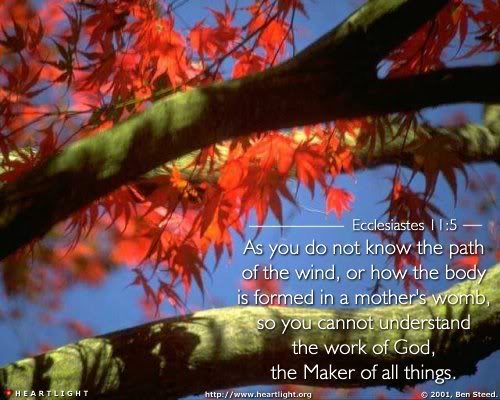
“Everything is beautiful in its time,” Solomon wrote (Ecclesiastes 3:11).

That means today is beautiful—in spite of the long to-do-list, the stress, the mess, the frustrations, the disappointments, the uncertainty, the pain.

How can that be?

Because the negative aspects of our lives do not need to supersede the positive.

God’s glory—his splendor, his creative genius, his love—is being expressed all around us, every day, as…

…pinpoints of sunshine glimmer on a fresh dusting of snow.

…cups of hot tea warm the hands and spicy citrus flavors warm the spirit.

…the baby squeals with delight while chasing bubbles in the kitchen.

…the mail includes a handwritten note.

…a song on the radio speaks encouragement, perfectly suited to a current situation.

…the fire crackles merrily, enticing one to sit and rest in its glow.

The question is, am I aware of the God-infused beauty around me? Am I pausing from my work every now and then to look for it?

Sometimes my vision is clouded by the past. Guilt over poor choices and hurt over unfair treatment can interfere with the enjoyment of now. Even past blessings can be a distraction, if my attitude is, “Oh, if only I could go back to __________. Those were the best years of my life.”

Not that the past doesn’t serve us in the present. Experience is an important teacher. But when I keep looking back with longing, I miss the present.

On the other hand, a preoccupation with the future (the way I would like life to be next month or next year) can also interfere with my full participation in the present. Wishful thinking can easily slip into covetousness.

“Watch out!” Jesus said. “Be on your guard against all kinds of greed; a man’s life does not consist in the abundance of his possessions” (Luke 12:15). Would I be stretching the truth of his statement to say: A beautiful life does not consist of the perfect spouse, perfect children, a perfect house, and a perfect job—even if such perfection existed.

A joy-filled life comes from embracing the gifts of each day. “We should make the most of what God gives, both the bounty and the capacity to enjoy it, accepting what’s given and delighting in the work. It’s God’s gift! God deals out joy in the present, the now (Ecclesiastes 5:19-20a, MSG).

I need to train myself to stay in the present, to enjoy the beautiful moments God is granting me now—to the fullest.

If the to-do list is long, I want to invite God to set the priorities and help me accomplish what is needful for that day. Those items that must be held over to another day may be postponed guilt free, because “there is a time for everything” (Ecclesiastes 3:1). A simpler, slower-paced life will certainly be a more beautiful life.

If uncertainty plagues my thoughts, I want to embrace the truth that God is in control, including the timing of events. He will keep me in perfect peace when I keep my mind steadfastly on him and trust in him (Isaiah 26:3). Trust is at the heart of a beautiful life.

If Plan A (that I was counting on) suddenly becomes Plan B (a debilitating disappointment), I want to accept and even appreciate the change of plan as an opportunity to grow. After all, Plan B did not catch God by surprise. There will be beauty in Plan B, too.

*     *     *     *     *     *     *     *     *     *

Dear God, I thank you that you have made everything beautiful in its time. May I rest in the knowledge that this season of my life, with its particular challenges, was appointed by you. On this day may I:

  • embrace the blessings of NOW,
  • celebrate the completed tasks you gave me to do,
  • handle the challenges with grace and trust in you,
  • grow to be a little more like your beautiful Son, and
  • behold your beautiful glory, on display all around me.  

(Art credit:  www.biblia.com.)

Who Can You Trust?

iStock_000013894567XSmall-300x199


“What traits should you look for when determining if someone is trustworthy?” asked the subtitle of a magazine article.

That question piqued my interest, and I read further.

According to the researcher, integrity is a crucial component, but there’s another trait that’s equally important: competence. The author gave the following scenario as an example: His best friend, Charlie, had proven himself completely reliable, but he wouldn’t want that friend performing an operation on him.  Charlie is not a surgeon.

So a trustworthy person is not only honest and fair, he is also competent for what you need him to do.

Those of us who know God have just such a friend.  Think of all we know from scripture about the character of our virtuous, competent God.  He is:

  • just, faithful, and upright (Deuteronomy 32:4).
  • righteous (Psalm 119:142) and holy (Leviticus 19:2).
  • wise (Daniel 2:20) and good (Psalm 106:1).
  • truthful (Psalm 31:5).

An  enlightened understanding of our trustworthy God should calm our fears and doubts, right?

But perhaps you’re like me—struggling a bit from time to time, asking questions like:

  • Lord, I know you have a plan, but when are you going to reveal it to me?
  • Why hasn’t Bill been healed? We’ve prayed so hard and for so long!
  • Dealing with Meredith day after day is sapping my strength, God.  When will the frustration end?

According to Philip Yancey, faith boils down to the matter of trust in the relationship. Do I have confidence in God or not? If I do stand on a bedrock of trust, the worst of circumstances will not destroy the relationship (Grace Notes, p. 198).

Vintage country


So how can I develop that strong bedrock of trust? Saturating myself in scriptures about the character of God, such as those listed above, is a good place to start. Another worthy study-pursuit: the promises of God, because…

…“God is not a man, that he should lie, nor a son of man that he should change his mind. Does he speak and then not act? Does he promise and not fulfill” (Numbers 23:19)?  No, of course not.

To truly impact my trust quotient, a change of habit is necessary–a habit such as: T-squared. Any time I find doubt or fear creeping at the edges of my thoughts, I want to Turn, Trust, and Thank. T x 3 includes:

  1. Turn away from thinking about the what-ifs, the negative, the hurtful.
  1. Express trust in God through song, prayer, and scripture. “Doubts are dismantled by declarations,” says my good blogger-friend, Jody Collins.*
  1. Thank God for his attributes that he’s bringing to bear on any negative situation.  Thank him also for every scripture-promise that applies.

I think I’ll try it right now.

*     *     *     *     *     *     *     *     *     *

psalm287-nlt1


Oh, Father, I praise you that you are strong, and protect like a shield.   My heart leaps for joy knowing you care for me and will help me. I praise you for surrounding me with your love, because I trust in you. All my life you have proved yourself trustworthy; why would I want to stop trusting you now? Oh, how I praise you that, as I keep my mind steadfast upon you, you will fill me with your peace. You are my trustworthy Rock—reliable and unchanging.      

(Psalm 28:7; 32:10b; 71:5-6; Isaiah 26:3-4)

 *Visit Jody’s blog at http://www.threewaylight.blogspot.com.


(Photo credits:  www.pixgood.com., http://www.katherinepasour.net., http://www.tyndalerewards.com.)

When the House is Quiet

Impressions Becoming Expressions

Mitch Teemley

The Power of Story

Still Traveling

Impressions Becoming Expressions

Living Our Days

Gaining a heart of wisdom

He Said What?!

I'm Patty, and my husband and I are living with our adult son who has autism and epilepsy. I love sharing lessons learned from life around me, especially life with Aaron.

Meditations of my Heart

Impressions Becoming Expressions

Linda Stoll

Impressions Becoming Expressions

Signora Sheila

Where faith meets la dolce vita

Heidi Viars

Finding the Image of God