Feeds:
Posts
Comments

Archive for the ‘Blessings’ Category

Take a walk over wooded hills and chances are you’ll encounter a spring-fed, babbling brook, tumbling over rocks and ever-flowing to its mouth.

Just the sound of it refreshes the soul.

Perhaps in his travels, the Apostle Paul encountered spring-fed brooks, and God brought them to his mind as inspiration for this instruction:

Let your living spill over into thanksgiving.

–Colossians 2:7c MSG

Such a lovely image of refreshing, ever-flowing gratitude.

Paul urged his readers to be thankful seven times in the four chapters of Colossians, and forty more times in his other epistles.

Now why would God inspire Paul to encourage gratitude so often?

Surely God wanted us to discover that when we seek to be thankful, we find our trust growing. Look at all these wonderful ways God is blessing and investing in my life, we begin to realize. He IS a good and loving Father; I CAN depend on him!

Perhaps Paul himself had learned: the more we thank, the more we see to be thankful for.

“The grumbler undoubtedly sees few blessings;

The grateful person finds blessings everywhere.

In fact, blessings seem to find her.

J. E. Yoder (1)

I also like Warren Wiersbe’s reason for cultivating gratitude: “When a believer is abounding in thanksgiving, he is really making progress!”

Surely this was one of Paul’s strong desires—that all Jesus-followers make progress toward becoming all that God intends them to be.

But gratitude doesn’t always come easy. Sometimes we’re more likely to be overwhelmed by our worries than overflowing with thankfulness. Or we’d rather talk about our woes in order to gain sympathy than share our blessings in order to encourage.

So how do we open the channels of our hearts to let gratitude flow?

We might begin with a daily (perhaps hourly ) habit of giving thanks for the benefits we enjoy—no matter what our circumstances—even if the family is in turmoil, or friends have proved unfriendly, or trouble has dropped in our laps.

As noted, ever-flowing gratitude refreshes the soul.  

Perhaps we could begin with these five blessings:

  • The indescribable gift of Christ and all he offers
  • Rescue from the powers of darkness
  • God’s glorious attributes at work in our lives—his goodness, grace, compassion, and more
  • The precious, life-changing truths of scripture
  • God’s constant presence with us (2)

Of course there are many more. We’d do well to keep a written list of such ever-present blessings, ready to refer to when the flow of our gratitude is blocked by disappointment or discouragement.

And at the top of the list we might copy this wonderful reassurance:

There is always good because there is always God . . .

Even when nothing else around us is good,

his presence in the midst of our deepest pain

is a good gift indeed.

Aliza Latta (3)

Picture a glass of water so full it will not hold another drop. Now what if you bump against it? The water is bound to spill over. Similarly, when trouble bumps against us, what’s inside will overflow.

Out of an angry person will come anger, out of a fearful person will come fear, out of a self-centered person will come self-pity. (I have been all three of these people at one time or other!)

But a grateful person? He/she overflows with gratitude, cheering and soothing the soul like a babbling brook. In addition, their trust in God grows and greater maturity develops. Best of all, their thankfulness delights God.

As the Lord loveth a cheerful giver,

So likewise a cheerful thanksgiver.

John Boys (4)

*     *     *     *     *     *     *     *     *     *

O Father, keep me mindful that no matter what I face, there are ALWAYS reasons to rejoice. I don’t want to give in to anger, fear, or self-pity. I want my living to spill over into thanksgiving—a superior way to spend my days and bring you glory as well.

Notes:

  1. Our Daily Bread
  2. 2 Corinthians 9:15; Colossians 1:13; Psalm 145:7-8ff; Psalm 119:72, 93, 103; Psalm 23:4
  3. Take Heart, 16
  4. Dean of Canterbury from 1619-1625, quoted in A Puritan Golden Treasury

Photo credits: http://www.youtube.com; http://www.pxhere.com; http://www.canva.com; http://www.pxhere.com; http://www.canva.com.

Read Full Post »

If you brought together six people with diverse traits and backgrounds, their answers to the title question would likely include six different types of spaces.

Some of us prefer cozy decor, surrounded with precious keepsakes.

Others prefer sleek, white spaces with lots of light.

Some like a rustic, log cabin aesthetic; others prefer the industrial look.

And more than a few gravitate toward the quirky.

But no matter our style preferences, research has confirmed that certain environmental factors impact our mood:

  • A warm, cozy home creates a sense of well-being for most people
  • Clutter can cause a person to feel overwhelmed and anxious; tidy, organized spaces tend to calm
  • Beauty in the form of pleasing colors, sounds, and smells as well as meaningful objects can elevate a person’s mood
  • A dark room can make a person feel lethargic; light energizes and exhilarates
  • Bringing nature indoors with plants and flowers contributes to serenity

But we can’t always control our physical environments. Home isn’t warm and cozy in the midst of ongoing conflict. Children (and maybe a few spouses or roommates out there!) make messes they’re loathe to clean up. And days on end of gray weather can sap energy and joy. What then?

We can shift our focus from what’s around us to what’s within–the spiritual surroundings of our souls. But how do we impact that invisible space, in order to experience equilibrium and calm?

Let’s begin by imagining the soul like a room, and consider the bullet points above.

First, it is God who creates a warm and cozy environment in the depths of our being—a sense of peace and contentment that no one or nothing else can accomplish. To access His peace we only need to ask. And as the atmosphere of our spirits change, we discover: “The very act of breathing in his presence is balm.”[1]

Second, clutter in the soul includes such unsightly messes as sin, negativity, and worry. God knows we can’t remove the muck on our own. But out of his love and mercy, he gladly helps get rid of the filth as we turn to him for forgiveness, help, and strength.[2]

We can enhance our soul-spaces with beauty—thoughts that center on all things lovely, excellent and praiseworthy. Imagine hanging on the walls of your spirit pictures of God’s faithfulness—remembrances of his provisions, guidance, and blessings. View with delightful awe his magnificent deeds.[3]   

A few well-placed lights of scripture[4] will certainly energize and elevate our mood—passages such as these:

  • “Blessed are those who have learned to acclaim you, who walk in the light of your presence, O Lord. They rejoice in your name all day long, they celebrate your righteousness for you are their glory and strength”.
  • “You will keep in perfect peace those whose minds are steadfast, because they trust in you.”
  • “The Lord is good, a refuge in times of trouble. He cares for those who trust in him.”[5]

Last, at least for this post, we can bring the delight of nature into our spirits, much as we enjoy bringing plants and flowers into our homes.

Have you noticed that when we take the time to marvel at the intricacies of a leaf or petal, our pleasure is expanded further?

Similarly, we can take time to marvel in God’s attributes and abilities gloriously displayed in creation:

  • his inventiveness and engineering—from insects designed to walk on water to whales that communicate underwater.
  • His attention to detail as he created a planet that sustains life.
  • His mind-boggling power to fill the universe with stars, planets, moons, galaxies, nebula, comets, and more—all governed by the scientific laws he established.

And as a result of such contemplations, our pleasure in him is expanded.

When all these elements are combined within our spirits—warmth and coziness with God, cleanliness, beauty and light from God, as well as delight in God, we discover true sanctuary, a place where we can enjoy intimate relationship with him and rest for our souls–a place of refuge and calm.[6]

Isn’t that a place where youd like to live?


[1] Philippians 4:6-7 and Jan Karon, A Common Life, 116.

[2] Psalm 51:7, Psalm 94:18-19, Philippians 4:13

[3] Philippians 4:8; Psalm 105:5a; Habakkuk 3:2b

[4] Psalm 119:105

[5] Psalm 89:15-17a; Isaiah 26:3; Nahum 1:7

[6] Matthew 11:28-29; Psalm 55:6; Isaiah 25:4; Psalm 16:11

Photo credits: http://www.rawpixels.com; http://www.pexels.com; http://www.flickr.com (Nicolas Huk); http://www.commonswikimedia.org; http://www.pexels.com; http://www.rawpixel.com; http://www.canva.com; http://www.piqsels.com; http://www.publickdomainpictures.net; http://www.commons wikimedia.org.

Read Full Post »

Long ago in Sunday School, our teachers taught us proper respect for God.  The rules of reverence included:

  • Be quiet and solemn in worship
  • Bow your head, close your eyes, and fold your hands to pray
  • Always treat God’s house with utmost respect

The first rule proved the most difficult to keep. I failed many a Sunday. My legs wanted to swing, my hands wished for crayons and paper, my eyes longed for a book. Would the sermon ever end?!

Years later I came across the Westminster Shorter Catechism, a collection of 107 questions and answers explaining the Christian faith. The list began with, “What is the chief end of man?” The answer shocked me.

The first part made perfect sense. Paul made it clear: “Whatever you do, do it all for the glory of God” (1 Corinthians 10:31).  But the second part caught me off guard.

Enjoy God?

His blessings and benefits certainly brought me joy. But God himself? How could I enjoy Someone who’s invisible?

Over time I’ve discovered that, although God deserves the utmost reverence and respect, we need not always be solemn. We can laugh and sing for joy in his presence (Psalm 68:3 MSG).

In fact, enthusiastic praise of God, especially in the company of others, is an invigorating way to enjoy him–reveling in who he is—our God of goodness, grace, and love.

We can also celebrate what he’s done—supplying our needs, guiding the way, and surprising us with gifts we didn’t even ask for.

While we’re worshiping, we can lift our hands toward God (Psalm 63:4), augmenting our connection to him. Even hands placed palms up on the lap can add to our enjoyment.

Steve and I learned this posture from one of his seminary professors. After a teaching session on prayer, Dr. Stanger instructed us to place our hands in our laps, palms up.

We sat in silence for a few moments, and suddenly I felt a tingling in my hands! Was the Spirit of God actually holding my hands as we prepared to pray?!

Dr. Stanger explained: the pressure on the backs of our hands caused the phenomenon.   But wasn’t it wonderful to imagine God gracing each of us with his personal touch in this way?

Yes, supremely delightful!

We can also take the celebration outside and enjoy God as Creator and King of the universe. For example, look to the sky and contemplate the galaxies of stars. Smile at him in wonder because of their incomprehensible magnitude and indescribable beauty. Consider too, they’re all under his control.

Another way to enjoy God is to delight in his scripture. We can proclaim appreciation to him for the strength, comfort, and peace his Word provides, as well as those passages that bring joy to our hearts (Psalm 119:111).

Those of us who like to write find great pleasure in composing journal entries, poetry, personal psalms, and more, addressed to God, as a way of expressing our delight in him.

Sarah Young, author of Jesus Calling, has inspired some of us to follow her example and go a step further: record thoughts or impressions we receive from God as we wait and listen in his presence (Psalm 25:5; 85:8).

In these ways and more God has made it possible for us to continually enjoy him.

*     *     *     *     *     *     *     *     *     *

Dare I say it?  Is it too irreverent? You are FUN, God! I love spending time with you, rejoicing in you, celebrating your works, reveling in your presence, taking delight in our mutual communication.

What a glorious privilege you’ve granted us, Father, to nestle close to you and experience fullness of joy forevermore!

(Psalm 100:1-2; John 10:27; Psalm 65:2; Isaiah 40:11; Psalm 16:11)

(Revised and reblogged from March 15, 2015, while I recover from Covid. My husband tested positive last Wednesday; I succumbed on Saturday. Symptoms have been uncomfortable but tolerable for both of us; we’re on the mend! ‘Will try to write a fresh post for next week.)

Photo credits: http://www.pxhere.com; http://www.canva.com; http://www.pxhere.com; http://www.wikimediacommons.org; http://www.pxhere.com; http://www.canva.com.

Read Full Post »

Over the years I’ve prayed for a number of people who didn’t even know I was praying—people like:

  • The family of a toddler with a brain tumor
  • a tollbooth worker struggling to make ends meet*
  • the young wife anxious to become a mother

No doubt you’ve also prayed in secret for strangers, unbeknownst to them.

Rarely do we receive updates concerning these people. But one day in heaven, we just may hear their miracle-stories. And won’t it be thrilling to know we played a part through the privilege of prayer?

Secret Prayers

Sara Hagerty in her book Unseen wrote about secret prayers, but has taken the practice to a whole new level—a level I aspire to. Sara silently prays for strangers she happens to see while going about her day:

  • the man in a wheelchair, that he might experience God’s strength
  • the woman with vacant eyes, that God would fill her needful heart
  • the man running to his gate at the airport, that he would run with God

The anonymity of such petitions gives Sara warm satisfaction, and no doubt puts a smile on her face.

Might God smile also? I think so.

It’s occurred to me that we experience other kinds of secrets with our Heavenly Father, and they too make us smile together with him.

Consider:

Secret Deeds

  • M. often wipes down the sink area in public restrooms and then washes her hands. It’s M.’s secret delight to provide this small blessing for the next person.
  • For years Norma frequently walked for exercise along a busy street, picking up refuse with a trash-grabber, then stuffing it into a grocery sack. After covering about a mile on each side, Norma would smile with satisfaction at the pristine street before turning the corner toward home.
  • My husband will often strike up a conversation with restaurant waiters or waitresses. If they’re not too busy he’ll share a bit about the difference God has made in our lives, how he’s provided for us in amazing ways. Then, before we leave, Steve puts a generous tip on the table. It makes us smile to imagine their looks of happy surprise at first glimpse of those bills. And we pray they see the goodness of God behind the gift and seek him for themselves.

Surely God smiles as well. 

Secret Moments

One category would be those times when one of his wild creatures approaches in holy proximity:

  • The hummingbirds who hover close enough to touch as if to say, “Thank you for the flower buffet in the deck planter!”
  • The doe that stood at the bottom of the deck stairs one morning when I exited the kitchen door. I froze; she froze. We stared at one another for long moments before she gracefully sauntered into the trees.
  • The red admiral butterfly that rested on my knee one afternoon, allowing me to marvel at his colorations, the wingtip scallops and tiny stripes on his antennae.

I can’t help but smile in delight at God’s creativity, artistry, and workmanship—especially when observed up close and personal. And while reveling in such exceptional moments, I like to think he smiles too.

Secret Blessings

  • Our youngest granddaughter recently climbed into my lap and nestled for a minute or so—unusual for a child always on the go. You grandparents out there know the special pleasure of each snuggle!
  • Frequently over the years God has used song-lyrics to encourage me. On occasion I’m overcome by happy tears while experiencing his tender care through music.
  • My husband and I basked together under a dazzling full moon the night of my birthday. While gazing at its soft glow, I sensed afresh the soft glow of God’s love, joy, and peace in my spirit.

Moments like these cause smiles of gratitude as our Heavenly Father expresses his personalized goodness. And I’m convinced God smiles with us.

Finally, there’s one more pleasure not to be missed: Sharing secrets and smiles with our Lord fosters intimacy and draws us closer to him. Our challenge is not to miss them.

What secret and smile have you enjoyed recently with your Heavenly Father? Please share in the comment section below!

*You can read the full story at: https://nancyaruegg.com/2017/10/19/tollbooth-encounter/.

Photo credits: http://www.rawpixels.com; http://www.pxhere.com; http://www.commons.wikimedia.org; http://www.canva.com; http://www.commons.wikipedia.org.

Read Full Post »

Pretend you’re on an ocean liner headed from New York City to England.   You and several thousand other passengers enjoy your days at sea, free to choose from dozens of activities—games, shopping, shows, sports, crafts, and more.

You can eat anytime you like, sleep whenever you feel drowsy, make friends among the other passengers or remain solitary. In other words, you make many choices during the voyage, but all the while the ship is headed towards its predetermined destination.

A.W. Tozer gave us this ocean-voyage illustration in his classic, The Knowledge of the Holy, to help us understand God’s sovereignty:

  • Our all-powerful God wields total authority in the universe, just as the shipping authorities exercise sovereignty over the course of a ship.
  • We’ve been given much freedom within the confines of God’s sovereignty to move about and make choices.

Now some folks take issue with God’s control. They want to direct the course of their life-ships.  I for one find great comfort in the numerous, reassuring scriptures about God’s sovereignty.

For example, everything in heaven and earth belongs to Him. He is the glorious head over all, the ruler of all things (1 Chronicles 29:11-12). That includes us–those who know Jesus and belong to the family of God.

As our Heavenly Father, he provides for our needs, guides us through decisions, bestows many blessings, and more. What encouraging truth! The Almighty God of the universe is in charge of our lives as we submit to him. We don’t have to navigate alone.

The key, however, is submission. God is a gentleman and will not force himself upon us. He’s chosen to limit his sovereignty, to allow humans free choice.

Another reassuring truth: God is totally competent. We’ve all known inept leaders who couldn’t fulfill their responsibilities.

But our Ruler is supremely capable. Nothing is too hard for him (Jeremiah 32:17).  As we focus on his complete sufficiency, our worries shrink in significance.

In addition, no plan of God’s can be thwarted (Job 42:2).   What God says, happens.

His sovereign plan is efficient and goal-oriented. He works out everything in conformity with the purpose of his perfect plan (Isaiah 25:1).

God’s sovereignty is also employed with infinite wisdom (Job 12:13).  No foolish decisions come from God’s throne!

And contrary to appearances, he does maintain over-arching rule on humankind (Daniel 4:35).

Consider how circumstances must have seemed to the people of Judah as the barbaric Babylonians destroyed Jerusalem in 586 B. C., murdered all the nobles, and took thousands of Jewish captives to Babylon.

That wasn’t an isolated case of oppression either. Good people have suffered at the hands of the wicked for eons, and it breaks our hearts. It breaks God’s heart too (Isaiah 63:10). 

Our question of why God allows bad things to happen to good people doesn’t always get answered. We’re not privy to everything God knows or all the reasons behind his decisions (Romans 11:33-36).

What we do know is this: evil never wins in the end. Every evil empire of history that rose in prominence and power eventually fell in ruin. Our sovereign God knows what he’s doing.

And he will have the last word.

So when the squeaky wheels of worry, doubt, or fear begin to spin in your head, and you wonder, Who’s in Charge Here?, apply the oil of gladness, delighting in who God is—your all-powerful, all-knowing, all-wise, and yes, in-control God!

Take joy in the knowledge that “if God is for us, who can be against us” (Romans 8:31)?

And rest in thIs affirmation: “from him and through him and to him are all things” (Romans 11:36, emphasis added).

*     *     *     *     *     *     *     *     *     *

Sovereign Lord of the universe, I bow in worshipful wonder of your magnificence. Your greatness shatters all boundaries! I stand in awe of your vast power and infinite wisdom, always at work in the world.

But for those times when I cannot understand your plan or your ways, help me stand in the truth of who you are.

(Revised and reblogged from February 26, 2015, while we enjoy the company of out-of-town family.)

Photo credits: http://www.commons.wikimedia.org; http://www.heartlight.org (2); http://www.dailyverses.net; http://www.canva.com; http://www.dailyverses.net.

Read Full Post »

Many who follow Jesus long for the fulness of blessings he’s promised, like intimacy with God, peace of mind, and life to the fullest (1).

When these blessings aren’t apparent, it’s natural to wonder why. A person might think, I just need to try harder, become more disciplined. Maybe I should severely limit recreation and sacrifice more.

Don’t get me wrong. Self-discipline and sacrifice are part of a dynamic Christian life (2), and actually become delights as we mature in our faith.

But what if:

Intimacy with our Heavenly Father doesn’t require a monk-like lifestyle but stillness and spending time with him in scripture.

“The world applauds achievement; God desires companionship. The world clamors, “Do more! Be all you can be!” But our Father whispers, “Be still and know that I am God.”

Joanna Weaver, Having a Mary Heart in a Martha World

If Bible study sounds like a chore, talk to someone who considers it a joy. Learn from them how to experience the same.

Faith doesn’t require long prayers about inadequate faith, but simply resting in what we know about God.

“If you feed your faith, your doubts will starve to death.”

Debbie MacComber

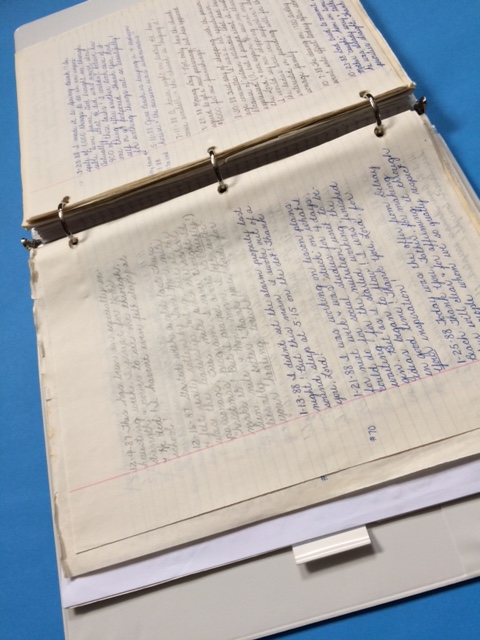
One way to feed your faith is to keep a journal of events that give evidence of God’s work in your life, his guidance, provision, and blessing (3). I promise, you’ll be amazed.

Peace doesn’t come from distracting ourselves with busyness, but from knowing God, focusing on him through worship, and meditating on his attributes.

Reverend Croft M. Pentz expressed it this way:

“No God, no peace. Know God, know peace.”

Croft M. Pentz

And Ruth Bell Graham discovered:

We’d do well to learn from her experience.

Hope isn’t generated by wishful thinking, but by affirming the Word of God.

Some of you will remember the old hymn, “Standing on the Promises.” The second verse offers this encouragement:

Standing on the promises that cannot fail,
When the howling storms of doubt and fear assail,
By the living Word of God I shall prevail,
  Standing on the promises of God.

–Russell K. Carter

For every hope—of a problem to be solved, a relationship to be healed, and a need to be met—there are scripture-promises on which to place our hope. To trust God is to trust his promises. 

Contentment isn’t the result of having all desires fulfilled, it’s the result of gratitude for what we already have.

When we begin to thank God for such delights as the friendly wave of a neighbor, the worshipful toll of church bells, the bright lady bug on a stem, we soon realize how many gifts he bestows.    

Add to his daily delights the assurance that God is with us to support, within us to empower, and going before us to lead the way (4).

Most of our wants pale in comparison to the glories we already enjoy. . .

. . . in creation . . .
. . . in relationships . . .
. . . in usefulness.

A rich and satisfying life doesn’t come through self-centered gratification, but through obedience to God’s ways.

“God’s commands are designed to guide us to life’s very best” (5), including the qualities we’ve considered in this post: delightful intimacy with God, restful peace, constant contentment, and more. That’s a life overflowing with joy.

Pursuing this kind of rich, satisfying life is a bit like making soup! Every ingredient that goes in the pot impacts the flavor of everything else in the pot. In the spiritual realm, everything we do, say, or even think impacts the flavor of our faith.

Gratitude produces contentment but also impacts our worship and quality of life. Faith grows our knowledge of God, but also grows contentment and spiritual strength. Scripture study instills peace, but also nurtures hope and tightens our connection to God. The list could continue but you get the idea.

The bottom line is this:

The question becomes, what actions will we pursue to genuinely impact the flavor of our faith?  


1. James 4:8; John 14:27; John 10:10

2. Galatians 5:22-23; Ephesians 5:2

3. “Christmas Afterglow” includes several examples.

4. Isaiah 41:10; 1 Corinthians 3:16; Deuteronomy 31:8

5. Henry Blackaby

Photo credits: http://www.canva.com; http://www.pxhere.com; http://www.pxhere.com; http://www.wikimedia.org (2); http://www.pexels.com; http://www.canva.com; http://www.pixnio.com.

Read Full Post »

Oh—you’ve never heard of yabbits? Not to worry. If I change the spelling and offer a few examples, you’ll instantly understand. Yabbits are the “Yeah, but . . .” statements that create havoc in our minds, much like rabbits create havoc in a backyard garden.

Who–ME?

For example:

  • YEAH, I know worry doesn’t help . . . BUT I can’t seem to shut it off.
  • YEAH, I know the Bible teaches that God is good . . . BUT what about all the evil in the world?
  • YEAH, I know I’m supposed to forgive . . . BUT this hurts!
  • YEAH, I know Romans 8:28 about all things working together for good . . . BUT I’m not seeing it in this situation, and it’s been going on a long time.
  • YEAH, I know some Christians seem to live in a bubble of joy . . . BUT I’m not feeling it!

These yabbits have names: Distrust, Disbelief, Disappointment, Discouragement, and Discontentment. They’re almost as challenging to keep out of our minds as rabbits are from our gardens.

Of course, the first line of defense against rabbits is a strong, deeply-implanted fence. For yabbits, that fence is scripture—promises and truths deeply implanted in our spirits, that can stand guard when those pesky Yeah-but statements come to devour our faith. Scriptures such as these:

For those times when DISTRUST wants to nibble at your faith, turn to Psalm 9:9-10.

Keep out the yabbits of DISBELIEF with Mark 9:24. [1]

When DISAPPOINTMENT tries to invade our thoughts, we need to remember such affirmations from God as Isaiah 55:8-9.

The yabbits of DISCOURAGEMENT can be turned away with 2 Corinthians 4:16-18.

And last, DISCONTENTMENT can be kept at bay when we adopt Habakkuk’s attitude.

We’d also do well to follow Rev. Charles F. Deems’ (1820-1893) recommendation, as we take on these yabbits:

Believe your beliefs and doubt your doubts.

Most people believe their doubts and doubt their beliefs.”

Of course, the scriptures mentioned above are just a few examples out of many. More scripture planks will create an even stronger fence.

Someone may ask, “How can we know our trust in scripture is well-placed?”

Whole books have been written about the reliability of scripture, but here’s a short, worthwhile article to introduce the topic: “Three Reasons Why the Bible Can Be Trusted.”

We can also bolster our faith with the testimonies of others who’ve embraced the power of scripture:

  • “Every year I live—in fact nearly every day—I seem to see more clearly how all the peace, happiness, and power of the Christian life hinges on one thing. That one thing is taking God at His word, believing He really means exactly what He says, and accepting the very words that reveal His goodness and grace.”—Frances Ridley Havergal, English poet and hymnwriter [2]
Frances Havergal (1836-1879)
  • “Take all of this Book that you can by reason and the balance by faith, and you will live and die a better man. It is the best Book which God has given to man.”—Abraham Lincoln [3]
  • “In the Bible I find a confidence mightier than the utmost evil.”—Helen Keller [4]
  • “The Bible is the book of my life. It’s the book I live with, the book I live by, the book I want to die by.”—N. T. Wright, Biblical scholar and Anglican bishop [5]
N. T. Wright (1950- ____)
  • “The Bible creates endurance. Its promises lift the heart and its panoramic insights strengthen the will.”—Pastor and author Timothy Keller with his wife Kathy [6]

Of course, the occasional reading of a scripture passage won’t suffice. That would be like trying to build a fence with slices of Swiss cheese–too flimsy and full of holes.

No, it’s Bible study and meditation that creates a sturdy fence.

Sound boring?  Hardly.

The Bible is worth all the other books

which have ever been printed.

–Patrick Henry

(1736-1799)

With faith, diligence, and a prayerful heart, every student of the Bible finds that Henry and countless others have been right. In fact, I’ve never met an earnest seeker of scripture-truth who later regretted the time they’d spent absorbing God’s Word.

And when we follow their example, the yabbits prove much less troublesome.

What Bible verse helps keep the yabbits out of your garden of faith? Please share in the comment section below!


Notes:

[1] The father speaking these words was admitting that doubts tainted his trust, yet Jesus still performed the miracle. We don’t have to be perfect pillars of faith for him to intervene for us!

[2] Quoted in Streams in the Desert by L. B. Cowman and edited by Jim Reimann, 127.

[3] Ibid.

[4] https://digitalcommons.liberty.edu/cgi/viewcontent.cgi?article=1070&context=owners_manual

[5] https://www.crosswalk.com/faith/spiritual-life/inspiring-quotes/25-quotes-from-influential-christians-about-the-bible.html

[6] The Songs of Jesus, 310.

Photo credits: http://www.rawpixel.com; http://www.pexels.com; http://www.heartlight.org; http://www.canva.com; http://www.dailyverses.net; http://www.flicker.com; http://www.dailyverses.net; http://www.flickr.com (2); http://www.pexels.com.

Read Full Post »

If you’d asked Robert’s mother Elizabeth about her teenage son, she may have replied, “He is a strong-willed, rebellious daredevil. If God doesn’t get ahold of him, he may not make it to twenty!”

No doubt Robert’s parents wondered if they’d made the right decision, when they allowed him to drop out of school at age fourteen and work in an iron foundry. But given his learning difficulties, on-the-job training seemed appropriate, to prepare Robert for his future.

Two years later in 1904, God answered the concerned parents’ prayers for their son. Robert decided hell was not an option he wanted to risk and at age sixteen invited Jesus into his life.

Later he would write, “No bolts of lightning hit me. No great flash of awareness. I just prayed to the Lord to save me, and then I was aware of another presence. No words were spoken. I received no messages. It was just that all of my bitterness was drained away, and I was filled with such a vast relief that I could not contain it all.”[1]

Robert moved from one uninspiring tradesmen job to another until he became an auto mechanic and discovered his passion—machinery. He opened his own garage with a business partner in 1911.

In April of 1917 the U.S. entered World War I. Robert volunteered for the war effort, working in a naval shipyard north of San Francisco. In August of that year he married Evelyn Peterson.

Upon returning home to Stockton, CA in 1918, Robert discovered his partner had sunk their business into debt. Robert carried $5000 of that liability.

He wondered, was God trying to transition him out of business? Should he become a missionary so he could work for God more directly? Robert sought guidance from his pastor and after praying together the clergyman remarked, “You know God needs businessmen too.”

Not long after, a rancher asked Robert to level a large parcel of land. The job paid well and Robert signed on. He satisfactorily completed the task in good time and actually enjoyed the work.

Earth-moving contracts kept coming Robert’s way. He bought land and built an engineering shop, open for business in May, 1921. Robert put his ingenuity and giftedness for engineering to work, designing machines that completed the earth-moving task more efficiently. Most other companies still used mule- drawn plows and dozens of men with shovels.

(Two of LeTourneau’s early machines)

But even as a top-notch, road-construction contractor, financial struggles still plagued Robert. Now and then he’d sell one of his earth-moving inventions to help make ends meet for his growing family. (He and Evelyn had five children, though tragically their first died during the Spanish influenza epidemic.)

In the early 1930s, Robert’s attorney suggested, “Why don’t you focus on manufacturing your machines? That might prove more profitable.”

Robert decided to try, even though the nation was suffering through the Great Depression. During his first year in 1932, he earned a profit of more than $52,000 and by 1935, well over two million.[2]

(Robert nearly always included reference to his life verse with each signature.)

It was then that he and Evelyn decided to live on 10% of Robert’s income and give 90% to Christian mission work, colleges, and institutions. Meanwhile Evelyn started Sunday Schools and youth camps. God blessed each of their endeavors.

Robert not only invented the earth mover, but also the bulldozer, the electric wheel, the tree crusher, the log picker, the Tournawheel (a two-wheel tractor), and more. Eventually he’d own 300 patents and construction plants on four continents. He’d also design the first off-shore oil rig.

(from the R.G. LeTourneau Museum and Archives, The Margaret Estes Library, LeTourneau University)

During World War II Robert’s company supplied 70% of the U.S. Army’s earth-moving equipment, making it possible for the Allies to quickly build roads, airports, and military bases.

After the war, Robert’s machinery helped construct the 48,000 miles of U.S. interstate highways.

(R.G. LeTourneau:  The Man, Machines, and Mission Collection
Evelyn LeTourneau Collection)

In 1946 he and Evelyn founded the LeTourneau Polytechnic Institute, a Christ-centered school especially for veterans who desired training in engineering. It has since become LeTourneau University.

Business and philanthropy weren’t Robert’s only pursuits. Though he’d always feared public speaking, Robert felt compelled to accept an invitation to share his story at a banquet in 1935. Soon he was speaking all over America and even overseas.  Robert would encourage others to honor God with their wallets and see what God would do.

“You will never know what you can accomplish

until you say a great big yes to the Lord.”

Robert Gilmour LeTourneau (1888-1969)

How has God blessed you as you’ve honored him with your wallet? Please share your story in the comment section below!


 Notes:

[1] https://www.wayoflife.org/reports/christian_inventor_rg_letourneau.html

[2] Ibid

Other sources:

 http://www.giantsforgod.com/rg-letourneau/

https://www.letu.edu/75/exhibit/panel-faith.html, and subsequent panels

https://www.oemoffhighway.com/trends/article/21366254/historical-construction-equipment-association-hcea-the-great-innovator-r-g-letourneau

https://www.peoriamagazines.com/ibi/2011/jan/rg-letourneau

Photo credits: http://www.flickr.com; http://www.picryl.com; http://www.canva.com; http://www.wikipedia.org; http://www.dailyverses.net; http://www.wikimedia.org; Margaret Estes Library, LeTourneau University (2); http://www.dailyverses.net.

Special thanks to Shelby Ware at the Margaret Estes Library, LeTourneau University, for arranging permission to use the two images of R. G. LeTourneau in this post.

Read Full Post »

In 2 Peter 1:17 the apostle calls God, “the Majestic Glory.” Isn’t that an inspired name for God?

This week I chose to use each letter as a portal into aspects of his majestic glory—other names that reveal his Personhood. With each one, my awe for Almighty God expanded.

See if your spirit responds similarly, as you consider God as the:

Maker of All Things (Nehemiah 9:6)

He is responsible for every star in the heavens (200 billion trillion of them, thereabouts), every tree on our planet (all 3 trillion, give or take) and every fish in the seas (among 34,000 or so species)!

A rchitect of Heaven (Hebrews 11:10)

Here on Earth we marvel at God’s handiwork in the towering mountain peaks, delicate butterflies, and far-reaching rainbows. Try to imagine the fresh beauty, new wonders, and absolute perfection he’s prepared for us in heaven!

Jealous (Exodus 34:14)

God’s jealousy is simply passionate eagerness to protect what belongs to him, what is precious to him—you and me. He doesn’t want us following after such false gods as greed, self-gratification, or popularity that will never satisfy. Only he can.

Everlasting God (Genesis 21:33)

In contrast to this ever-decaying world, our God’s perfections never change and his mercies will never end. He is always and eternally available to us.[1]

Song (Psalm 118:14 ESV)

Think of song as a synonym for joy. He is the Author and Giver of joy, even in difficult times. In fact, “He uses troubles to show where true joys are to be found—in him.”[2]

True God (John 17:3)

He’s the one and only Creator and Sustainer of the universe. Yet, as holy, powerful, and awe-inspiring as he is, God invites us to know him—to pull up a chair to his table and talk with him.[3]

I AM (Exodus 3:14)

With this name that encompasses all his glorious complexities, God makes clear: “I AM the God of absolute power and sublime perfection, abiding faithfulness and assured reliability, unfailing love and generous benevolence.” Of course, these descriptors just scratch the surface of his infinite glory!

Comforter (Isaiah 51:12)

We can take comfort in the knoweldge that, even in the dark pit of emotional pain., we are not without hope. God always comes alongside to help us endure until it’s time to bring us out of those depths. And then, when we stand at last on the solid ground of restoration, we experience the exhilaration of greater faith and the enrichment of wisdom-from-experience.

Gardener (John 15:1)

Jesus often used figurative language in his teaching. One time he compared himself to a grapevine and called his Father the Gardener/Vinedresser.

Of course, our God knows intimately what we–the branches–need.  He supplies streams of living water to continually nourish and refresh, and he provides optimum conditions for growth, in order to produce the best yield of the fruit of the Spirit within us.

Light  (Psalm 27:1)

His Light reveals the way on the dark path ahead, lifts the shadows of hurt and despair, and guides us through “the grayness of doubt and uncertainty.”[4]

Only Wise God (Jude 1:25)

Yes, there is darkness and confusion in our world. Wickedness seems to be winning in the battle between good and evil. BUT! Our all-wise God knows what he’s doing—in our personal lives and in the world at large.

When the time is right he’ll dispel the darkness with his dazzling light and bring order out of confusion. One day he’ll rid the world of evil once and for all.

Revealer of Truth (John 16:13)

Our God is the “possessor and giver of all truth. Truth is not men’s discovery; it is God’s gift. . . At the back of all truth there is God.”[5]

And the more we avail ourselves of his truth in scripture, the more we treasure it.

Your Very Great Reward  (Genesis 15:1)

How rich we are because God is in us and with us, wielding his glorious attributes for our best good. How poor we are without him.[6]

Look upon God in all his MAJESTIC GLORY. This is your Heavenly Father who loves you with an everlasting love!

Breathe in the wonder.


[1] Lamentations 3:22; Isaiah 41:10

[2] Timothy Keller with Kathy Keller, Songs of Jesus, 200.

[3] 1 Corinthians 8:16; Colossians 1:17; Jeremiah 33:3

[4] Iris Hesselden, quoted in Grandma’s Inspirational Recipes, 40.

[5] William Barclay, The Daily Study Bible, The Gospel of John, Volume 2, 229.

[6] MacLaren’s Expositions

Photo credits: http://www.rawpixel.com; http://www.dailyverses.net; http://www.flicker.com; http://www.dailyverses.net; http://www.canva.com; http://www.pixnio.com.

Read Full Post »

You probably know it, have even memorized it:

Such a statement begs the question: how does joy—of all things–translate into strength? Wouldn’t it be faith in the Lord that makes us strong? Turns out joy is an important facet of faith.

That phrase “of the Lord” holds the key. When we delight in the Author of joy–who he is and what he does–that’s when our spirits begin to grow strong.

To foster that kind of joy and delight:

Express Gratitude

Tonia Peckover wrote, “The feeling of joy begins in the action of thanksgiving” [1].

Research has proven that keeping a gratitude journal works well to develop our appreciation muscles [2]. Just a few lines per day can get joy percolating in our spirits.

Another strategy: turn mindless tasks like folding laundry, loading the dishwasher, etc. into moments of thanksgiving. Go through the alphabet, perhaps, and thank God for one blessing for each letter.

You might begin with AFFECTION among family and friends, BEDTIME and that first BLISSFUL moment on the pillow after a challenging day, COFFEE—the most delectable flavor to start the morning.

For an extra challenge, you might focus on who God is. He’s ACTIVE in our lives, BENEVOLENT to us, COMPASSIONATE, and DELIGHTFUL—you get the idea. (For a sample of such an alphabet, see “God’s Goodness from A to Z,” a post from 2018.)

Meditate on God’s Word

Here’s another joy-inducing, writing-exercise:

In a journal or on a piece of paper, write your reason(s) for being distressed. Then conduct a scripture search (Online resources abound!) for specific promises and encouraging passages that address your concern.  

Praise God for each one as you copy it on the page. Express expectancy for the day when each promise is fulfilled, and feel radiant joy rise in your spirit as you do.

Martin Luther advised:

It stands to reason that something much smaller, our hearts, will also change when we pick up our pens.

That’s happened for me; the same will hold true for you.

Follow God’s Ways

Countless people through the ages have thought that following their own way—striving for success, accumulating wealth, and participating in self-pleasing pursuits—would bring them joy. But such quests never deliver, because that’s not where joy is found.

Joy is found in obedience to God’s ways [3]. He made us; he knows what’s best for us. Of course, we know that. So why do many of us balk at what will bring maximum blessing?!

Anything God commands of us is so that our joy may be full.

Beth Moore [4]

Note that glorious word, full–as in brimming and bursting at the seams.

And what does fullness of joy include? Beauty and bounty.

Beautiful encounters. Beautiful endeavors. Beautiful moments.

Bountiful blessing. Bountiful fruit. Bountiful satisfaction [5].

When we yield in obedience to God’s voice,

he yields a harvest greater than we can imagine.

Denise J. Hughes [6]

And so, joy becomes strength when we delight in who God is and what God does.

Joy becomes strength as we blissfully trust in the truth of his Word.

And joy becomes strength when we gladly follow his instructions.

*     *     *     *     *     *     *     *     *     *

Lord God, I do want to experience your joy in my life, to delight in you so my spirit might grow stronger. Help me to make choices throughout each day that usher me into your fullness of joy!

(Psalm 112:1; 16:11)


[1] Quoted by Ann Voskamp, 1000 Gifts, 176.

[2] https://cct.biola.edu/thanks-science-gratitude/

[3] John 15:9-11

[4] Values for Life, 169

[5] Ephesians 3:20; 2 Corinthians 9:8 

[6] Deeper Waters, 149

Art & photo credits: http://www.pxhere.com; http://www.flickr.com; http://www.pxhere.com (2); http://www.canva.com (3).

Read Full Post »

« Newer Posts - Older Posts »

When the House is Quiet

Impressions Becoming Expressions

Mitch Teemley

The Power of Story

Still Traveling

Impressions Becoming Expressions

Living Our Days

Gaining a heart of wisdom

He Said What?!

I'm Patty, and my husband and I are living with our adult son who has autism and epilepsy. I love sharing lessons learned from life around me, especially life with Aaron.

Meditations of my Heart

Impressions Becoming Expressions

Linda Stoll

Impressions Becoming Expressions

Signora Sheila

Where faith meets la dolce vita

Heidi Viars

Finding the Image of God