Feeds:
Posts
Comments

Archive for the ‘Blessings’ Category

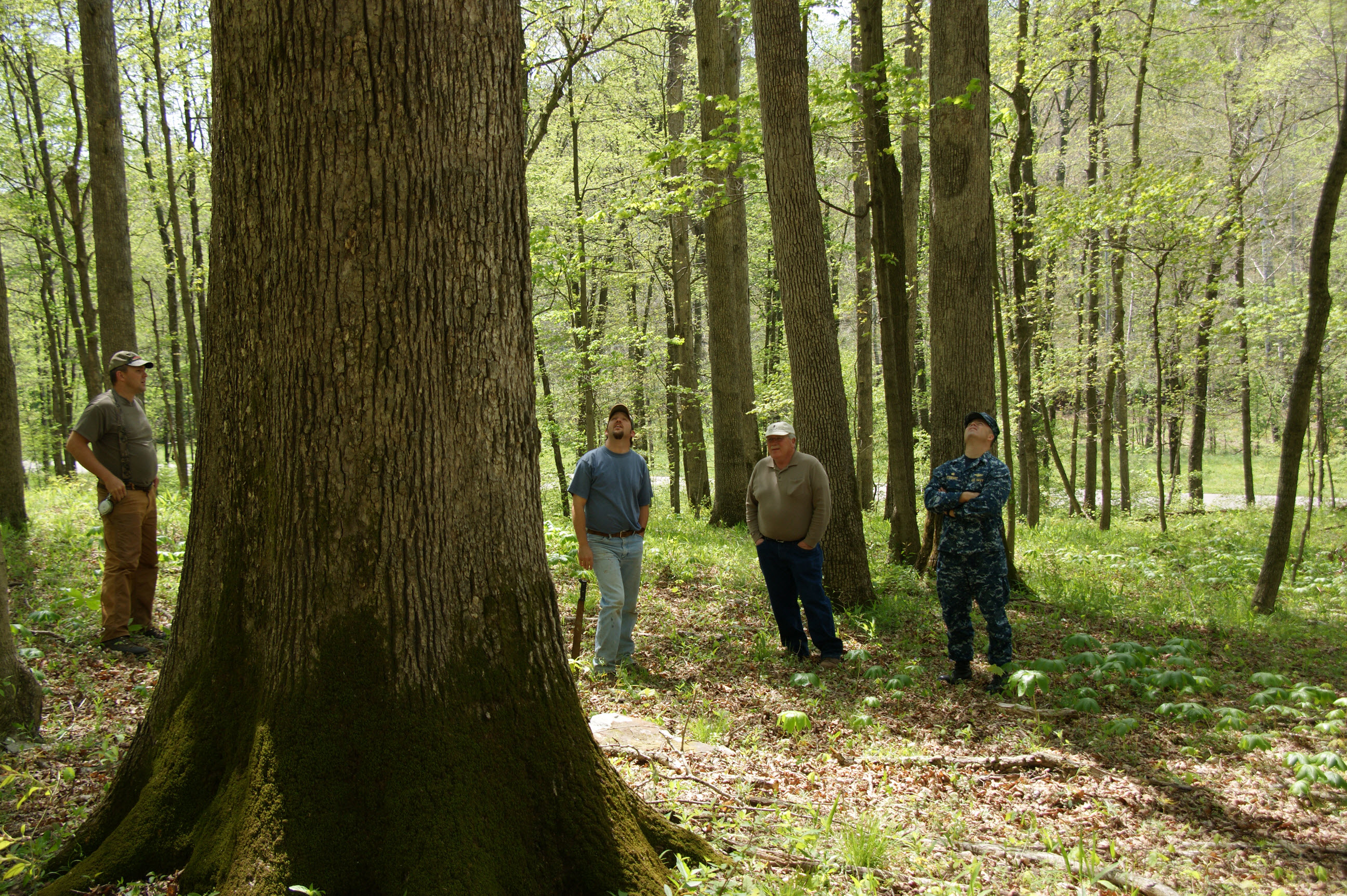
Pretend you’re a crew member on a cargo ship, and the captain has just announced rough seas ahead. That means just walking will be a challenge. Things on tabletops and floors will tumble and roll if not secured, and sleeping will require wedging yourself into position to keep from being tossed back and forth.

But the captain reminds you, there is good news. A full load of heavy freight in the hold will provide stability and safety against the waves. The rocking will be greatly curtailed.

All of us at some time or other face storms in life, and the same principle applies: certain kinds of cargo provide stability–not the lightweight freight of feel-good pep talks, relaxation techniques, or plain avoidance.

Cargo of substance is required, such as:

Joy

“The joy of the Lord is our strength” (Nehemiah 8:10).

Simply affirming all the ways God demonstrates his love to us will quickly fill a large compartment with delight.   Last week’s post, Be Glad, included many reasons to rejoice in God.

Quietness and Trust

“In quietness and trust is your strength” (Isaiah 30:15).

If you haven’t already done so, make space in the hold of your heart for frequent quiet times with God, perhaps by going to bed earlier and rising earlier.

Very soon time spent in his presence and in his Word will become one of your favorite times of day.   You’ll find it transformative also, creating strong bonds of trust with your Heavenly Father. Just ask anyone who has established the habit.

Promises

“He has given us great and precious promises” (2 Peter 1:4).

But they can offer no stability if we’ve not stored them in the hold of our hearts.

“Grasp them by faith,” Charles Spurgeon wrote long ago.   “Plead them by prayer, expect them by hope, and receive them by gratitude.”

Not that a compartment full of promises will protect us from all harm. But our attitude toward the storms of life will be very different as fear is replaced by faith.


God’s Grace

“It is good for our hearts to be strengthened by grace” (Hebrews 13:9b).

And what is grace?  I like the old standby definition, an easy-to-remember acronym:  God’s Riches At Christ’s Expense.

This compartment is worth checking often, to examine the wealth of substantial contents stored there.

Several years ago I surveyed scripture for that wealth and discovered forty-seven gifts tucked behind the door of grace.*

Thomas a Kempis was right:

So if you don’t feel quite strong enough to face the challenges of 2020, add more weight in the cargo hold of your heart:

  • More joy in who your God is and more delight in what he does
  • Frequent quiet times alone with God, for meditation on his Word, talking with him and listening to him
  • A collection of promises, especially those that apply to your situation
  • Attention to the many facets of God’s grace and how each one impacts your life

Of course, if these blessings could be placed in the cargo hold of a ship, a record would be kept of each compartment’s contents.

The same is true of the cargo holds of our hearts, though for different reason. We can enhance our joy, strengthen our faith, increase our wisdom, encourage our spirits, and augment our worship of God—all as we keep record in a journal or notebook.

“The deepest satisfaction of writing

is precisely that it opens up new spaces within us

of which we were not aware before we started to write.”

–Henri Nouwen

M-m-m. More space for more compartments to add more cargo.

What would you put into one of them?

*(You can compare your list of God’s graces to mine at Undeserved Goodness Part 1 and Part 2.)

Art & photo credits:  http://www.wikimedia.org; http://www.flickr.com (2); http://www.pxhere.com; http://www.flickr.com; http://www.wikimedia.org; http://www.pexels.com.


Read Full Post »


“Let all who take refuge in you be glad;

let them ever sing for joy.

Spread your protection over them,

that those who love your name

may rejoice in you.

Surely, Lord, you bless the righteous;

you surround them with your favor

as with a shield.”

–Psalm 5:11-12


Thank you, Father, for each line of encouragement here, presenting truth worthy of contemplation and celebration. To that end this is my prayer:


I praise you, O God, for being my unfailing refuge—my protector and sanctuary.

Year after year you have:

  • Supplied my needs, like the three teaching positions you provided–each one a miracle (1)
  • Brought me through difficult circumstances, including moves to new communities that initially I wanted no part of
  • Surprised my husband and me with delights we didn’t expect, such as a generous check enclosed with a note, suggesting we enjoy much-needed R & R at our favorite getaway


(Aviles Street, St. Augustine, FL)


I’m not just glad you’re my refuge, I’m elated! My heart sings in celebration of your perfections, sovereignty, and kindness. You provide unending delight!

You have been my protection, preserving my life:

  • In dangerous circumstances, including that narrow mountain road outside Quito, Ecuador
  • From near accidents, such as that red-light runner who could have sent me spinning into heavy traffic
  • Through natural disasters, like those hurricanes during our forty years in Florida


(Hurricane Charley damage, 2004)


You have been my protection emotionally, carrying me through:

  • The incomprehensible, like the senseless death of a young friend
  • Hurtful circumstances, when those we trusted proved unreliable
  • Disappointment, as certain hopes were not realized

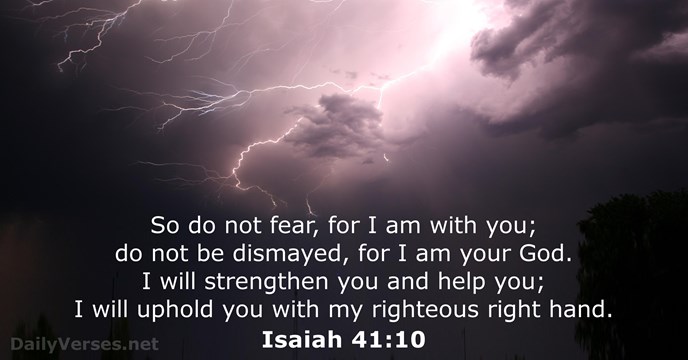
I thank you, Father, for every time you’ve limited our ordeals so we could endure; and when necessary you’ve given us your strength to withstand every difficulty (2).


I praise you, O God, that the righteous are not those who always say and do the right thing. Such a standard would disqualify me. Rather, the righteous include those who trust in you and love your many names–Shepherd, Counselor, Helper, and more.

I praise you that your favor includes adoption into your family, freedom from the eternal consequences of our sin, and freedom from guilt—when we ask Jesus into our lives (3).

You graciously give us access to your presence. And when we come you are always ready to listen, uplift, and advise (4).


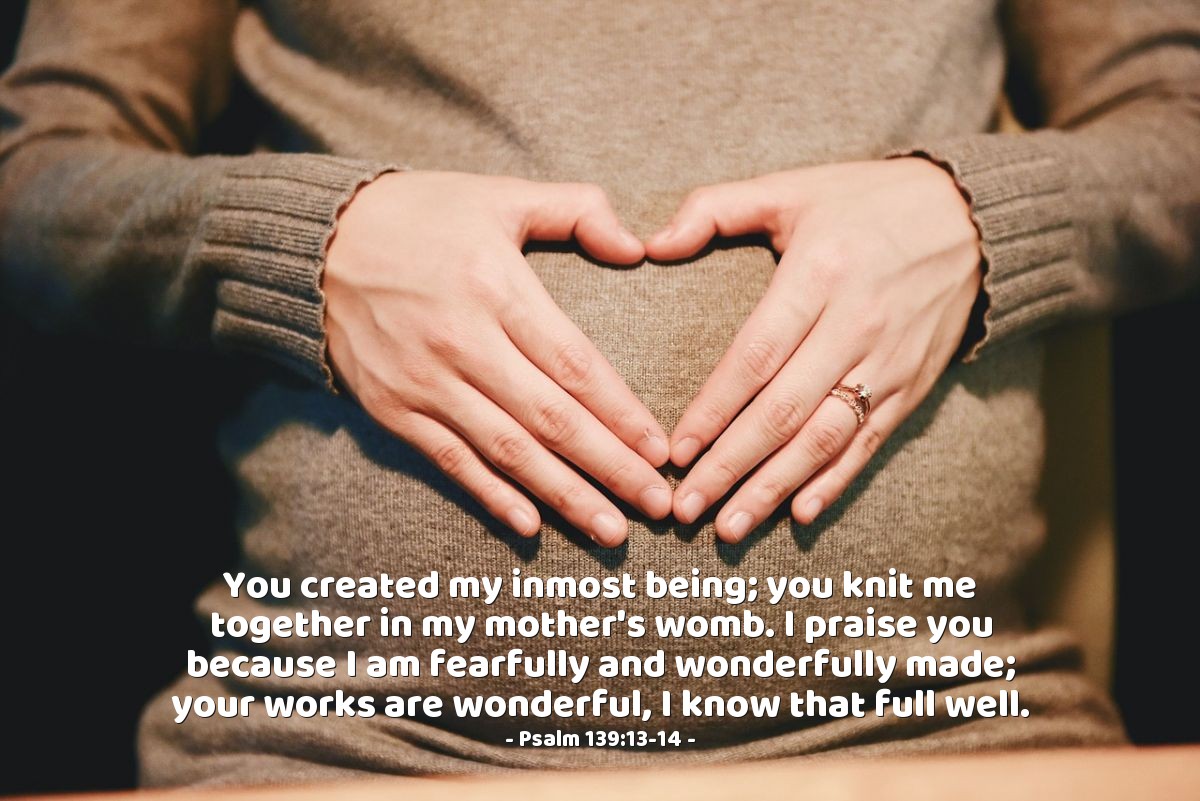
You’ve designed us for purpose, to give us glorious satisfaction in life, and day after day you lavish blessing (5), including:

  • The privilege to watch children grow—from first steps to first race, from mere sounds to sentences, from making scribbles to writing stories
  • The delight of old friends we know well and new friends we want to know well
  • Your creativity all around us, whether it’s azure skies or smoke-like clouds, sunbeam ribbons or raindrop jewels, verdant treetops or bare filigree branches


Your shield of favor also stands between each of us and the evil forces on every side. You are beneath us as a foundation, over us as a shelter, at our right hand as security, before us to lead the way, and within us to provide strength (6).

Keep me mindful of all these glorious truths, O God—truths that make me more than glad. And as this new year begins, may my days be laced with praise to you, my choices motivated by gratitude to you, and my faith be strong in you until that day you take me home.


Notes:

  1. Two of those miracles are detailed in other posts, After the Fact and The Greater Plan.
  2. 1 Corinthians 10:13; Isaiah 41:10
  3. Ephesians 1:3-7
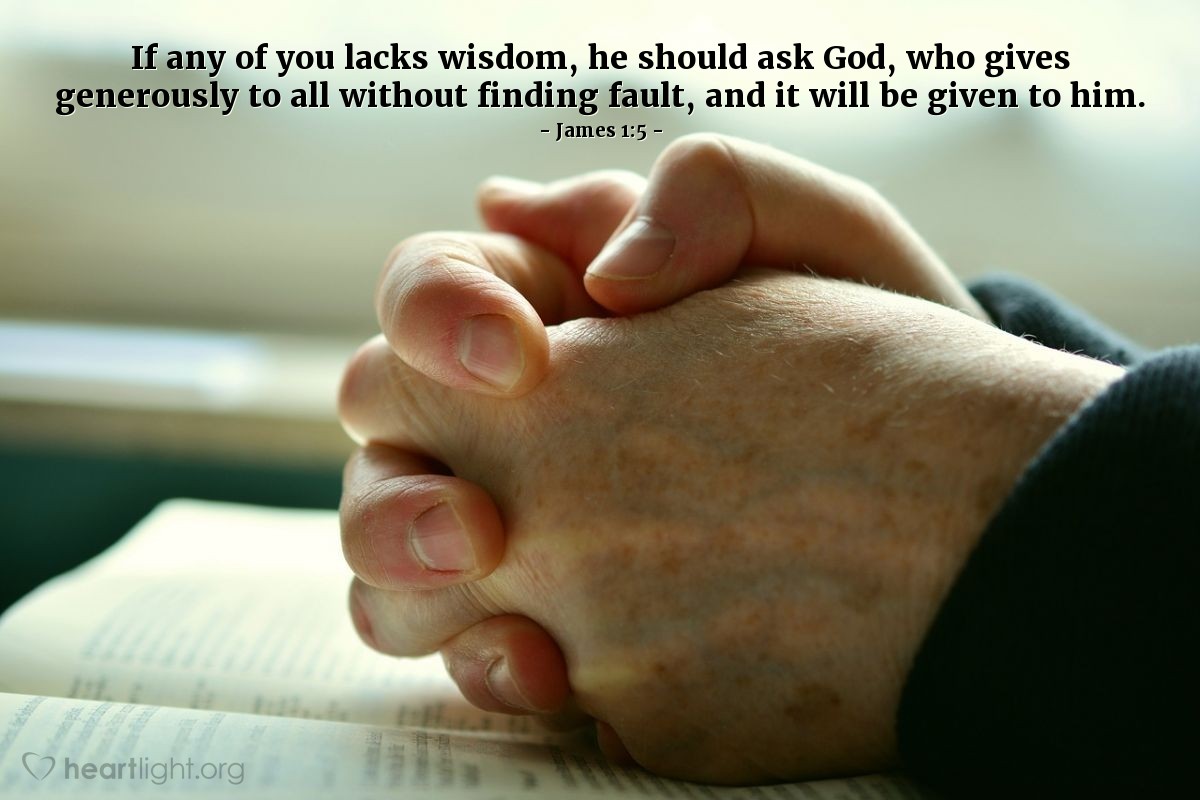
  4. Ephesians 3:18; 1 Peter 3:12; 2 Corinthians 1:3; Psalm 145:14; James 1:5
  5. Ephesians 1:11-12, 2:10; John 1:16
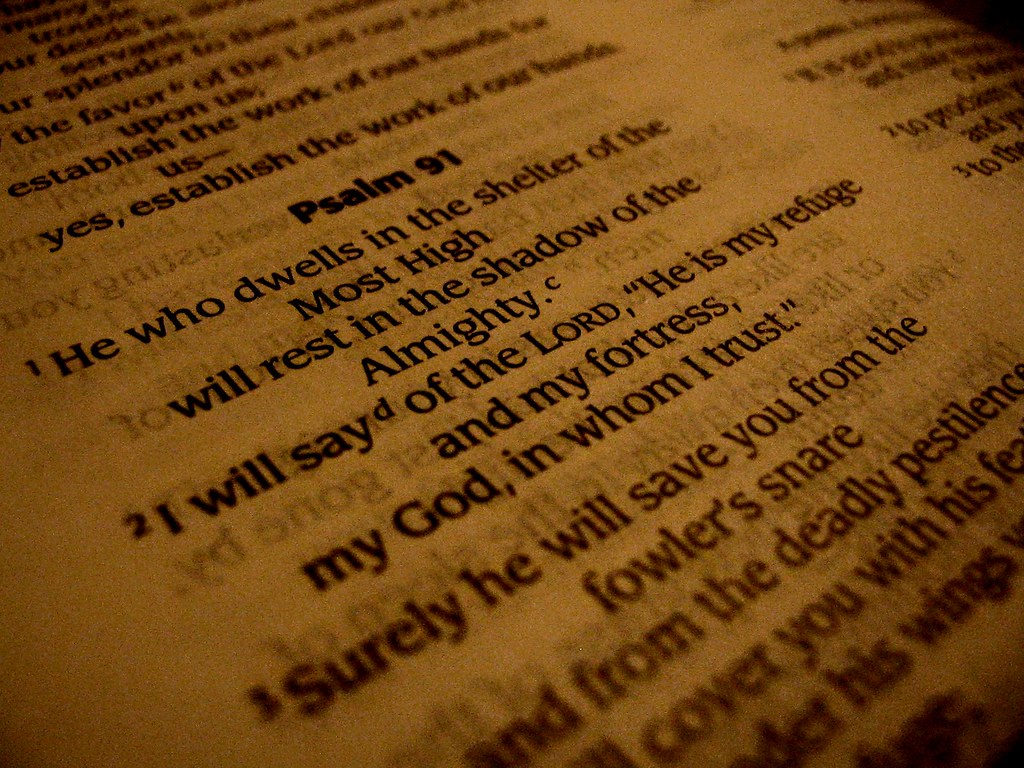
  6. Isaiah 28:16; Psalm 91:1; Psalm 73:23; John 10:3b, 4b; 1 John 4:4


(Photo credits:  http://www.publicdomainpictures.net; http://www.heartlight.org; http://www.publicdomainpictures.net; naplesnews.com; http://www.bible.com; http://www.heartlight.org; http://www.pixabay.com; http://www.commons.wikipedia.org.)


Read Full Post »


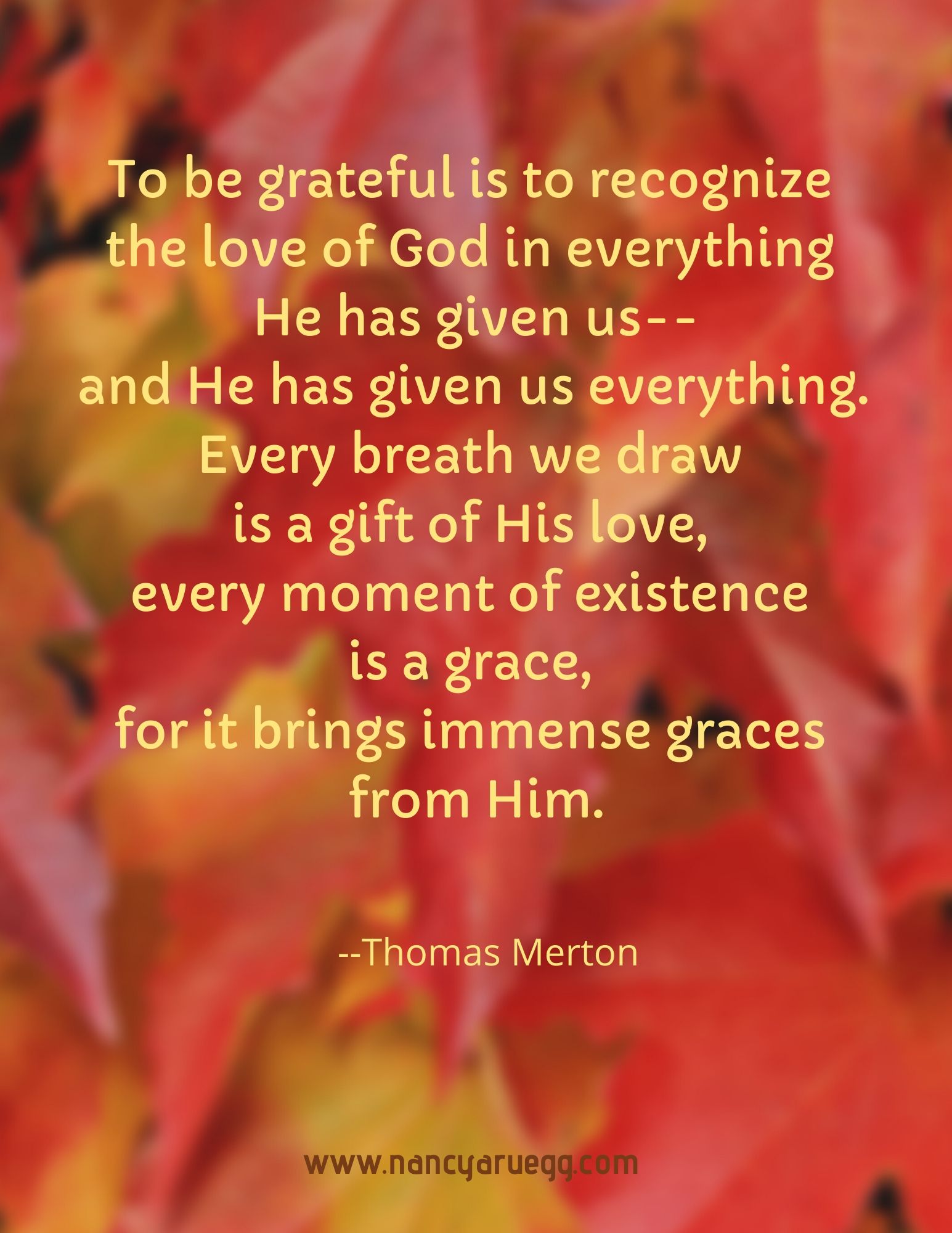
What are the immense graces of this moment for you?  Please share an example in the Comment section below.  Let’s celebrate together the gifts of His love.

 And a joy-filled day of Thanks-giving to all!


Read Full Post »


I know. It’s the week before Thanksgiving. If we start feasting on stuffing, mashed potatoes, and squash casserole now, we’ll gain five to ten pounds before the holiday even arrives.

It’s a different kind of feasting the post-title alludes to, the kind Reverend J. R. MacDuff recommended long ago.

And just for fun I’ll make a fill-in-the-blank from his statement, and you can guess the key phrase:


“Cultivate _______________.

It will be to thee a perpetual feast.”

—J.R. MacDuff


How would you complete the quote?

  1. an attentive outlook?
  2. a thankful spirit?
  3. a cheerful attitude?
  4. a faithful heart?

I’ll bet you guessed correctly, given the season.  MacDuff chose #2, a thankful spirit. But missing from his quote is an explanation of how gratitude could possibly offer the pleasure of a perpetual feast.

Perhaps he would suggest the following.


Gratitude fosters a positive perspective.


“Some people grumble that roses have thorns;

I am grateful that thorns have roses.”

—Jean Baptiste Alphonse Karr


In recent years scientific research has proven the benefits of optimistic thinking, including increased life span, less stress, better sleep, fewer colds, and better cardiovascular health. Gratitude to God surely augments the benefits.


“The optimist says, the cup is half full.

The pessimist says the cup is half empty.

The child of God says, my cup overflows.

–Anonymous


Gratitude develops a sense of awe.


“Gratitude bestows reverence,

allowing us to encounter everyday epiphanies,

those transcendent moments of awe

that change forever how we

experience life and the world.”

—John Milton


Think of the delight young children express when they encounter a ladybug sauntering across a rock, a sliver of rainbow glimmering on the wall, or a leaf shower providing a game of catch.

As we follow their lead, we’ll discover our ordinary days are laced with many transcendent moments to be grateful for.   And our hearts will fill with reverent awe for the Creator of these and all good things.


Gratitude strengthens our faith.


“Count blessings and find out

how many of His bridges have held…

Gratitude lays out the planks of trust

from today into tomorrow.”

–Ann Voskamp, 1000 Gifts


Keep a written record of those planks. You’ll be amazed how quickly they accumulate.


Gratitude ushers in joy!

A nearby church posted the following wisdom on their marquee:


To that end, we can engage our senses with a thankful heart, finding joy in:

  • milkweed maidens poised for dancing
  • crackling leaves breeze-rustled into a huddle
  • a winged wedge of geese honking good-bye
  • flannel shirts and fleece vests—cozy as a hug
  • cinnamon apple tea:  autumn in a cup


Ordinary experiences can be turned into extraordinary blessings–by the power of gratitude.


Gratitude contributes to a heart of humility.


“Pride slays thanksgiving,

but a humble mind is the soil

out of which thanks naturally grow.

A proud man is seldom a grateful man,

for he never thinks he gets

as much as he deserves.”

–Henry Ward Beecher


The humble and grateful person realizes everything comes from God and nothing is deserved.


Gratitude cultivates a calm spirit.


“It’s impossible to give thanks

and simultaneously feel fear.”

–Ann Voskamp, 1000 Gifts


We can express gratitude for all God is—his sovereignty and strength, his wisdom and loving kindness, his grace and glory—thus acknowledging his ability to bring good out of every situation. It releases us from the grip of fear and allows us to rest—in him.


_________________________


There you have it—just a few results from a perpetual feast of gratitude:


  • A positive perspective
  • Awe-inspiring wonder
  • Strengthened faith
  • Continual joy
  • Quiet contentment
  • Holy peace


Let the gratitude-feast begin!


(Photo credits:  http://www.wikimedia.com; http://www.maxpixel.net; http://www.pxhere.com; http://www.pixabay.com; http://www.torange.biz; http://www.heartlight.org; http://www.dailyverses.net, http://www.publicdomainpictures.net.)


Read Full Post »

Ask a church gathering, “What’s your favorite psalm?” and many folks will name #91 for its reminders of God’s goodness and power.

They’d be in good company. The great theologian, Charles Spurgeon wrote:

“In the whole collection there is not a more cheering psalm,

its tone is elevated and sustained throughout,

faith is at its best, and speaks nobly…

He who can live in its spirit will be fearless” (1).

That fearlessness would certainly be encouraged by the eight promises of verses 14-16:

Note that God promises:

Rescue, protection, and deliverance (vs. 14-15)—not from trouble, but through it. He does not promise a life of ease and bliss. However, “the only things faithful people can lose in suffering are things that are finally expendable” (2).

Answers to every prayer (v. 15)—answers that always reflect God’s perfect knowledge of all things, his wisdom and grace, even when the answer is wait, or even no.

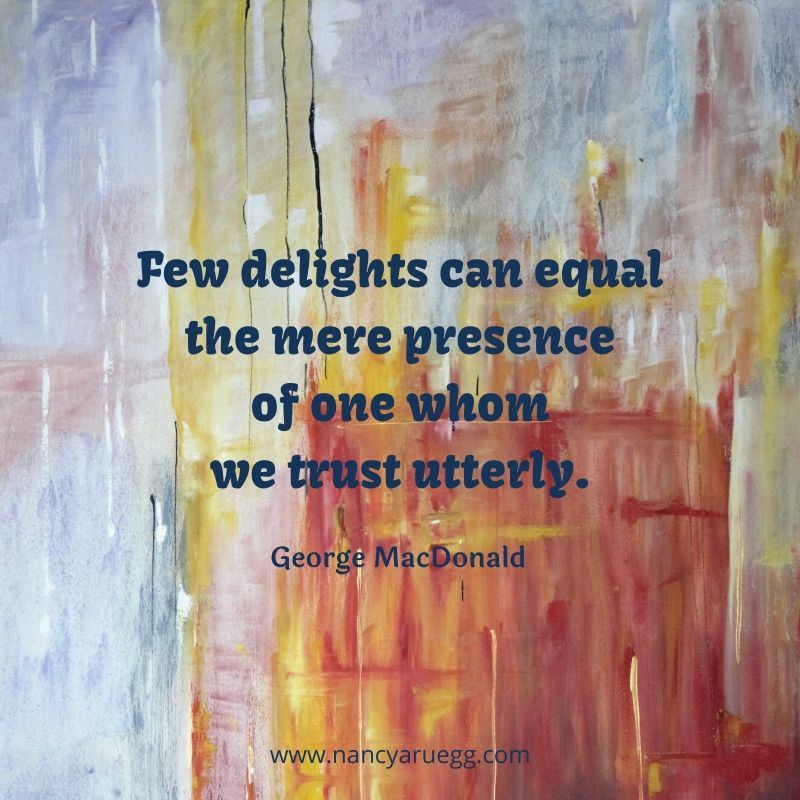
His steadfast presence (v. 15)—“Few delights can equal the mere presence of one whom we trust utterly” (George MacDonald).

Salvation (v. 16)—“I have summoned you by name; you are mine,” God has said (Isaiah 43:1). We belong to him, purchased at an exorbitant price:  the precious blood of his own Son.

But upon first reading, one promise puzzled me, and another actually startled me.

First, the puzzle. In verse 16 God promises long life. And yet all of us have been devastated by lives cut short.  How are we supposed to interpret this promise?

With a long view into eternity.

Once we experience the glory of God and his heaven, we’ll no longer be concerned about the number of days any of us spent on earth. We’ll only delight in the fullness of God’s presence and all the eternal pleasures he’s prepared for us (Psalm 16:11).

And then there is the startling promise: that God will honor us (v. 15), as in confer special esteem, respect, and distinction with deferential regard (3).

But he’s the one who deserves honor. Our God is all-powerful, all-wise, all-knowing, omnipresent and eternal—to name a few of his attributes.  What could we possibly do to warrant his honor?

Not a thing. But scripture assures us: those who honor him he has chosen to honor in return (1 Samuel 2:30).

Imagine standing in the splendorous throne room of almighty God as he announces:

  • The removal of your filthy rags of sin, to be taken as far as the east is from the west (Psalm 103:12)
  • The magnificent robes of His Son’s righteousness placed around your shoulders (Isaiah 61:10)
  • Your official standing as his child (Romans 8:15-17)

  • The privilege of companionship with him any time of day or night (Revelation 3:20)
  • Tasks to provide purpose and satisfaction in life (Ephesians 2:10)
  • Countless blessings to bestow joy and pleasure (Psalm 40:5)
  • Eternal life granted through his Son Jesus (1 John 5:11-12)

These honors and more are the extravagant expressions of God’s infinite love for you.

 https://www.azquotes.com/quote/1404884

An expanded excerpt from Ms. Smith increases the wonder:

Put together all the tenderest love you know,

The deepest you have ever felt,

And the strongest that has ever been poured out upon you,

And heap upon it all the love

Of all the loving human hearts in the world,

And then multiply it by infinity,

And you will begin, perhaps,

To have some faint glimpse of the love God has for you.”

–Hannah Whitall Smith

There are two caveats, however, presented in verse 14. These promises, including the conferral of God’s honor, are reserved for those who love him and acknowledge his name (affirm the reality of his attributes in their lives).

The psalmist is not talking about a warm, congenial feeling for God; he’s talking about a love put into action with trust and obedience.

As humans, our default mode is often self-reliance and independence. But what could be more sensible than to trust and obey One who is all-seeing and all-wise, who loves perfectly and honors lavishly?

*     *     *     *     *     *     *     *     *     *

Oh, Father, how foolish I have been at times, willfully rebelling against your leadership.  May I choose daily the place of honor you’ve sacrificially prepared for me by loving you wholeheartedly, trusting you for guidance, provision, and protection, and following your wise ways.      

Notes:

  1. Charles Spurgeon, The Treasury of David
  2. Timothy Keller and Kathy Keller, The Songs of Jesus, Viking, 2015, p. 226 (emphasis added)
  3. Webster’s II New College Dictionary

Art & photo credits:  http://www.flickr.com; http://www.canva.com (4); http://www.azquotes.com; http://www.pixhere.


Read Full Post »

“Would you look at this?” my friend exclaimed. Her outstretched hand waved over a selection of magazines in our favorite place to meet, a local bookstore/cafe.


Do you see what caught Cindy’s* eye? That word “Mindfulness” or “Mindful” shouted from nine different periodicals.

After the initial surprise, we realized why mindfulness is such a hot topic.  These days many adults are under great pressure to push themselves hard, move faster and accomplish more each day. All the while electronic devices are demanding their attention.

Add to that the worries rasping in their minds: the mistakes and failures of yesterday, the tight schedule and uncertainties of tomorrow, and fears for the future.

The pace, stress, and anxiety take their toll in the form of health problems, sleep disorders, and relational strain.


As a result, many have embraced mindfulness—a pleasurable time-out to capture the joy of now–like pausing to savor the tart, crisp, juiciness of an apple, stopping to listen as small bare feet patter down the stairs, or taking a moment to study a chipmunk collecting acorns.

And according to the research, just a brief interlude of mindfulness can calm the nerves, reset one’s emotional equilibrium, and foster contentment—all to positive effect upon our physical, mental, and spiritual well-being.

But I wonder, how many people know God offers even more–if we augment mindfulness with gratitude and praise?


For example, while doing the dishes I can focus on the hot water warming my hands, the clean scent of soap, the rainbowed bubbles floating in a bowl, the burbling water cascading over glasses and cups–then add a short prayer:

Thank you, Father, for giving us five senses

with which to enjoy your world.


While traveling in the car I can take note of the late summer haze clinging to the hillsides, today’s cloud exhibition, and the leaves on the roadside performing pirouettes on the breeze–then honor the Lord of all things:

I praise you, Father, for your creative genius

on display everywhere I look.


While reading a book with my two-year old granddaughter, I can pay attention to the sensation of her little body snuggled into my side, the sweet sound of her toddler-voice “reading” some of the words, and the dimples on the back of her hand as she points to a picture–then express gratitude to the Giver of all good gifts:

Thank you, Father, for the delights to be found

beneath the surface of ordinary experience.


Each day I can pause to observe the rose-pink tint of dawn, the dappled treetops in the noonday sun, and the slow glide of shadows at sunset–then rejoice in God’s power and glory.

My mouth is filled with your praise, O God,

declaring your splendor all day long.”

–Psalm 71:8


Mindfulness may prod us to notice God’s gifts in the moment, and that’s good.

But mindfulness plus gratitude and praise prompt us to treasure him, and that’s transformational.

God’s presence becomes palpable (James 4:8), joy sings in our hearts (Psalm 92:4), contentment settles in our spirits (Isaiah 26:3).

And the Giver of all good things surely smiles with pleasure in response.


*Name changed.


Photo credits:  Nancy Ruegg; http://www.pxhere.com; http://www.dailyverses.net; http://www.pexels.com; http://www.pixabay.com; http://www.pexels.com; http://www.pixabay.com; ww.canva.com.)


Read Full Post »


Generations ago, an ancestor of pastor Fred Craddock suggested that Sunday afternoons be spent on nature walks to find and admire God’s handiwork. He called it, “going marveling (1).”

That phrase brought to mind the old Christmas carol, “Here We Come A-Wassailing.”  ‘Remember the first few lines?


Here we come a-wassailing

Among the leaves so green,

Here we come a-wand’ring

So fair to be seen.


If we’d accompanied Pastor Craddock’s forbearers on one of those woodland hikes, perhaps we would have sung:


Here we go a-marveling

Among the leaves so green,

All around creation charms;

Such fairness to be seen.


Indeed, our God of wonders provides fairness (as a synonym for splendor) in countless ways:


from the majestic…


…to the minute,


From the firm…


…to the fragile,


From the colorful…


…to the camouflaged.


“Wows come in all shapes and sizes.”

–Anne Lamott


But there are many more sources of jaw-dropping awe that deserve our attention.

We can go a-marveling at the wonder of us.

Consider these wows:

  • Approximately sixty thousand miles of blood vessels course through the human body—enough to wrap the earth more than twice (2).
  • Blood travels 12,000 miles per day through the vascular system.  That’s equivalent to the distance from coast to coast across the U.S.—four times (3).
  • Human hemoglobin that makes our blood red is made up of extremely complex molecules. Each contains 9520 atoms of various elements, hooked together in a precise pattern (4).


Hemoglobin Molecule


Astounding, isn’t it?  And with King David we can certainly affirm:


We can go a-marveling through our memories. Perhaps you remember such delights as these: 

  • Coming in from the cold to be warmed by thick, hot soup and familial love around the table
  • Almost floating down the sidewalk on the first warm day of spring—with no coat or boots to weigh you down
  • A board game with friends—complete with popcorn and laughter


Even such ordinary events as these inspire wonder, because they point to a God who orchestrates satisfying moments into all our days.

We can also go a-marveling through the memories of miracles.

No doubt you’ve experienced spectacular moments such as these:

  • A new job provided just as the old one was terminated
  • The cost of a new refrigerator covered by a surprise check in the mail
  •  A baby born dangerously premature that not only survives but thrives


And while marveling at the miracles…

…We can go a-marveling at the wonder of prayer, which often precedes God’s astounding works.

First, our all-powerful God allows mere humans to come alongside him as he engineers events and accomplishes his good purposes.

Second, and even more marvelous, his Spirit comes alongside us as our partner in prayer, helping us pray as we should.


How wondrous is that?

Finally, we can go a-marveling through scripture.

The Bible was written by at least forty authors from different walks of life, over the span of 1500+ years, on three continents. No other book has come into existence out of such wide-reaching diversity. And yet the reader can’t help but notice the unity of its content.

Within the pages of scripture we find wisdom and inspiration for living, strength for difficulty, comfort for pain, and peace for unrest.

It’s true:  those who know their Bibles best, marvel at its truths the most. They notice “wonder after wonder, and every wonder true” (St. Brude).


And where might all this marveling lead?  To still more wonders:   stronger faith, deeper contentment, and greater joy.


*     *     *     *     *    *     *     *     *     *


Who is like you, O God—majestic in holiness, awesome in glory, continually working wonders? Our lives are FULL of marvels, O God!  May we be lost in wonder, love, and praise, just like the old hymn writer proclaimed. 

(Exodus 15:11; “Love Divine, All Loves Excelling” by Charles Wesley)


What are you marveling in today?  Tell us in the comment section below!


Notes:

  1. Fred B. Craddock, Craddock Stories, ed. Mike Graves and Richard F. Ward, p. 65.
  2. https://my.cleveleandclinic.org>health>articles>17059
  3. https://iheartintelligence.com/35-incredible-facts-about-the-human-body-that-might-surprise-you/
  4. John Phillips, Exploring John’s First Epistle, Kregel Publications, 2003, p. 36.


Art & photo credits:  http://www.pixabay.com (2); http://www.pxhere.com; http://www.usnhistory.navylive.dodlive.mil; http://www.maxpixel.net; http://www.flickr.com (2); http://www.wikipedia.org; http://www.heartlight.org; http://www.maxpixel.net; http://www.usafe.af.mil; http://www.dailyverses.net; http://www.needpix.com.


Read Full Post »


Remember the in-crowd at your high school–the cool kids who wore the latest fashions, knew the latest songs, and seemed more attractive, confident, and important than everyone else?

‘Truth is, research has established “those who cared most about their social standing [as teenagers] often grow up to have difficulties with their interpersonal relationships years later.” Their fixation on status stays with them, and they are the ones most likely to suffer from anxiety, depression, and problems with substance abuse (1).

Now I’m thankful to never have been a part of that group.

But another in-crowd beckons–one that everyone is invited to join–that offers satisfaction in life and purpose.

It’s God’s in-group.


And just what does he have to offer?

God’s in-crowd is in their right minds (2 Timothy 1:7 NKJV).

They strive to focus on the positive, and turn their attention toward God himself—His attributes and works. People in their right minds are Presence-focused, remembering the almighty, all-wise God is with them. They’re also promise-fortified, affirming that God WILL keep their minds calm because they trust in him.

Such trust requires effort, since we often lean toward the negative. But like a wrangler who captures and subdues a wild horse, the in-crowd takes their problematic thoughts captive, and tames them with the bridle of God’s truth (2).

They also pray—perhaps like Selwyn Hughes: Lord, “I give You my mind—so that You can give me Yours” (3).


God’s in-crowd is in balance.

The Apostle John wrote to Gaius: “I pray that you may enjoy good health and that all may go well with you, even as your soul is getting along well” (3 John 2).

That’s quite a compliment. If John had written such a greeting to me, he may very well have reversed his statement, praying that my soul might prosper as well as my physical health.

Of course, both are necessary for overall well being. So just as proper diet, exercise, and sufficient rest are necessary for the body, the in-crowd keeps their souls healthy through a steady diet of God’s Word, the exercise of obedience, and rest in him.


God’s in-crowd is held in his hands.

King David wrote about the phenomenon in a prayer song to God: “My times are in your hands” (Psalm 31:15a). Those hands are powerful and mighty, open and generous, protective and secure—even when someone faces difficult challenges like the Apostle Paul.

While imprisoned in Rome and anticipating his execution, Paul affirmed the strength God provided him, the generosity of God to supply all needs, his contentment in spite of circumstances, and the security of knowing all would be well whether he lived or died (4).

The in-crowd faces their challenges with the same affirmations.


God’s in-crowd lives in God’s ways (Psalm 25:8-10).

Wisdom would have us know this: “Blessed are those who keep my ways. Listen to my instruction and be wise; do not ignore it. For whoever finds me finds life and receives favor from the Lord” (Proverbs 8:32-33, 35).

Critics may say, “Oh, but the Bible is so out-of-date. Times change; morals shift. What was once considered wise has been replaced by post-modern sensibilities.”

They need to observe God’s in-crowd, who delight in his Word because they find instruction for a life of purpose and meaning, preservation of life in his encouragement, and peace of mind in his truth—things post-modern sensibilities do not offer (5).


God’s in-crowd is in unity with one another, just as he desires (Ephesians 4:3; Colossians 3:13-14).

They remember: all God’s people belong to each other (Romans 12:5). So they focus on common ground and find ways to support one another rather than fuss over non-essential differences.

And as a unified group, God’s in-crowd is a force to be reckoned with.

Like snowflakes:


“Snowflakes are one of nature’s most fragile things.

But just look at what they can do when they stick together.”

–Vesta M. Kelly


*     *     *     *     *     *     *     *     *     *


I praise you, Heavenly Father, that as we trust in your Son Jesus for eternal life, you also provide in-crowd status with all its privileges and spiritual blessings—to every believer. You are the God of surpassing goodness to your people!

(John 3:16; Ephesians 1:3-8; Psalm 84:11)


Notes:

  1. https://www.scientificamerican.com/article/cracking-the-popularity-code/
  2. Philippians 4:8; Romans 12:2; Deuteronomy 31:8; Isaiah 26:3; 2 Corinthians 10:5.
  3. Every Day Light, Broadman and Holman, 1997, p. 121.
  4. Psalm 118:15-16; 145:13b-21; John 10:29; Philippians 4:13,19, 11-12, and 1:21-24.
  5. Psalm 119:24, Philippians 2:13; John 10:10; Psalm 119:50 MSG, 93, 165.


Photo credits:  http://www.pexels.com; http://www.dailyverses.net; http://www.pxhere.com (2), http://www.dailyverses.net (2); http://www.flickr.com; http://www.pexels.com.
 

Read Full Post »


“I made soup,” she says.

I peer into the pot to see a chicken leg, a whole apple, a cluster of green beans and an ice cream cone.

“Eat some!” she coaxes.

I spoon a bite and assure her, “Oh, this is delicious.”

She smiles broadly. “I make dessert.” And two-year old Maarit (Mah-rit), our granddaughter, trots back to her child-size kitchen to bake a plastic cake or pie.


It’s such fun to watch little ones enjoy their vivid imaginations, and it comes so naturally to them. No one has to teach toddlers how to pretend; they just do. But as we grow and leave childish things behind, most of us abandon our imaginings.

Oh, what we’re missing.

In a post a couple of years ago (Oh, Say Can You See), we looked at three ways an active imagination can positively impact our faith, helping us to better understand God, add insight to Bible reading, and see more in this incredible world he’s created.

Today let’s consider three more ways. 

  1. With an active imagination, we are more likely to see people and situations the way God sees them. 

In his Word he calls us to see people for what they could be and will be as they avail themselves of his transforming power. We’re also called to see situations with forward-looking faith in God’s ability to do far more than we can imagine (1).

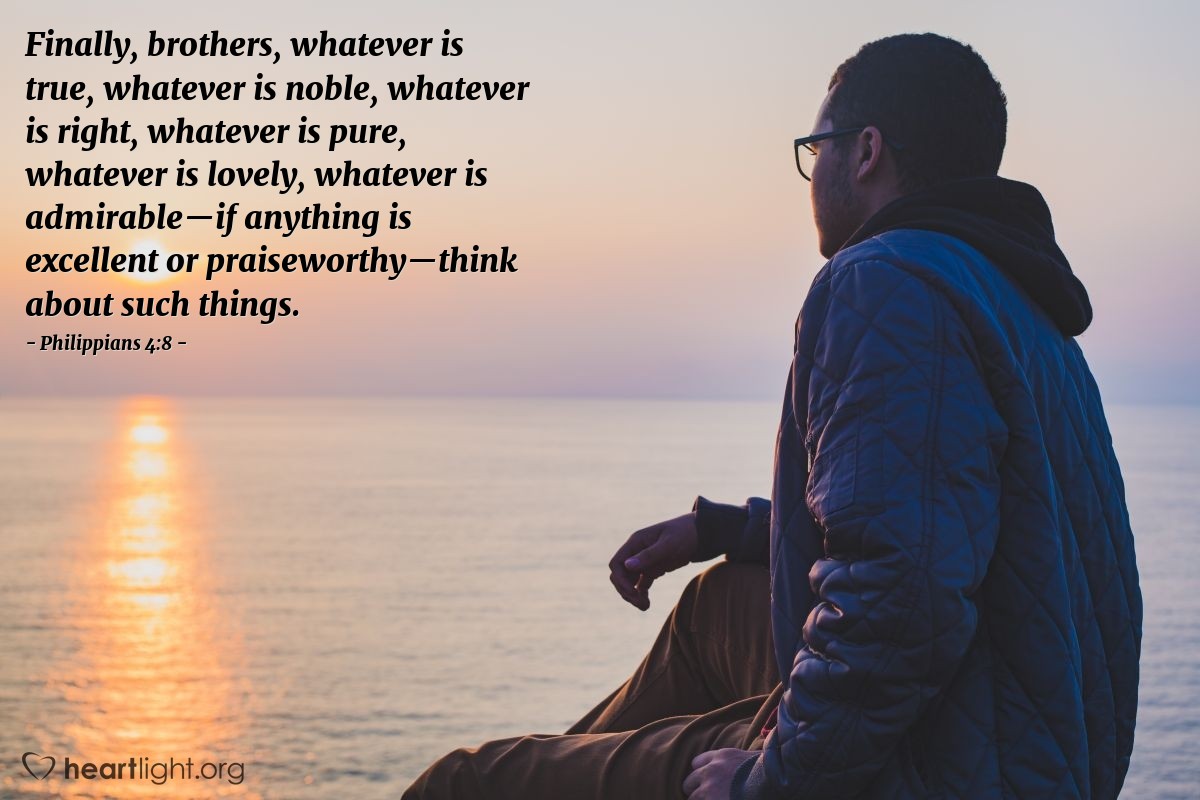
By contrast, our thoughts too often veer to the negative. We forget what the Apostle Paul told us in Philippians 4:8—to think on excellent and praiseworthy things.


C. S. Lewis helped a woman do just that in a letter he wrote as she lay in a hospital contemplating the possibility of death:

“Think of yourself,” he said, “just as a seed patiently waiting in the earth: waiting to come up a flower in the Gardener’s good time, up into the real world, the real waking. I suppose that our whole present life, looked back on from there, will seem only a drowsy half-waking. We are here in the land of dreams. But the cock-crow is coming” (2).

Surely Lewis’s words stirred fresh hope in her heart as he awakened her imagination to a new perspective. In your mind’s eye, can you see excellent, praiseworthy events unfolding in the situation that most concerns you? Allow such imaginings to provide fresh hope for your heart.

  1. With an active imagination we can envision the kingdom of God that exists here and now, even though hidden from view. 

The very nature of faith requires imagination, because the kingdom of God cannot be perceived by the senses. It exists invisibly among and within those who invite King Jesus to rule in their lives (3). But our imaginations can help us access the invisible through the visible as we contemplate:


  • The glory of God in the splendor of creation
  • The rule of God in the organization of the universe
  • The goodness of God in our numerous blessings
  • The wisdom of God in his precepts that usher in abundant life
  • The power of God, as he transforms misery to joy, trouble to triumph, and even bitterness to forgiveness
  1. With an active imagination we can experience God more fully. 

For example, what if we:


  • Imagine God sitting with us as we pray, our hands pressed between his, his head leaning in close to hear our every word. Would it be easier to sense his presence, stay focused, and pray with more intensity?
  • Imagine God at our right hand as we work through our days (Psalm 121:5). He is our ever-present Protector, Guide, and Help. Might such visualization reduce stress? Could mindless tasks become sublime opportunities to enjoy his presence and access his strength?
  • Imagine God on his throne as we worship, with his dazzling radiance signifying splendor, and his voluminous robe representing power (4). Might the joy and passion of our worship-experience be enhanced as we contemplate his magnificence?


You might remember that Jesus held children in great regard. He suggested that adults become like little children to enter the kingdom of God (Matthew 18:1-5). Granted, his emphasis was upon trust, loyalty and humility. But responding to him with the imagination of a child as well will help us fly beyond the stars.


I don’t want to miss that. I’m guessing you don’t either.    


Notes:

  1. Philippians 1:6; Ephesians 3:20
  2. The Collected Letters of C. S. Lewis, vol. 3: Narnia, Cambridge, and Joy, 1950-1963, [2007]
  3. Hebrews 11:1; Luke 17:21
  4. Ezekiel 1:27; Isaiah 6:1-2


Photo credits:  http://www.pxhere.com; http://www.edwards.af.mil; http://www.heartlight.org; http://www.goodfreephotos.com; http://www.pixabay.com; http://www.flickr.com.; http://www.quotefancy.com.


Read Full Post »


The summers of my childhood included a blend of games and activities with neighborhood friends, afternoons at the community pool, bike rides to the library, and a few weeks spent with Grandma Clara and Grandpa Henry who lived four hours away in Iowa.

No doubt some would describe our summer experiences as mundane, not realizing the joy hidden among the ordinary:

  • The delight of lazy Monopoly marathons
  • The wonder of fireflies in a jar
  • The satisfaction of a big bowl of buttery popcorn–after biking to the park and spending several hours of nonstop cavorting in the pool, then biking home again
  • The pleasure of tucking ourselves under the willow tree to read
  • The fun of an evening bike ride with Dad


It’s the small, happy moments—not the grand events—that contribute to satisfying days and a joy-filled life.


The joy of small…makes life large.

–Ann Voskamp (1)


However, I have to admit: my childhood-self took those lovely moments for granted. I lived unaware of God’s glory pervading my everyday experiences: his creative genius on display—even in the backyard, his love, peace, and security within a family grounded on Christian values, and his goodness to provide joy-filled moments that shimmer in my memory with holy perfection.

Now, as the decades have passed, I’m learning to identify more of the transcendent moments God provides, including:


  • A cardinal filling the silence of the woods with his hope-inspiring “Cheer! Cheer! Cheer!”
  • A toddler wrapping her arms around my neck and crying, “I love you!”
  • A devotional that speaks exactly what I need to hear
  • An opportunity to encourage a waitress and see her concern turn to hope
  • A small gathering of family and friends quickly ballooning to twelve—with much laughter, camaraderie, and delightful conversation


God’s glory is on display right “in the middle of our minutes” (2).


So each night before falling asleep, let’s measure the moments of our days:

  • Taking note of God’s blessings and the delights of his creation; singing our praise for his breath-taking handiwork (Psalm 92:4; Job 5:9).
  • Thanking God for the camaraderie and conversation, hugs and support among family members and friends who keep us strong (Ecclesiastes 4:9-10).
  • Counting the riches that result from abiding in God, beginning with peace (Isaiah 26:3), stability (Psalm 16:8), and contentment (1 Timothy 6:6).
  • Celebrating the honor of ministering to others in Jesus’ name (Matthew 25:40), giving us purpose and cultivating fulfillment in our spirits.
  • Delighting in the opportunities to smile, laugh, and find moments of joy—even in the midst of trouble or frustration (Proverbs 17:22).


“Laughter is to life what shock absorbers are to automobiles.

It won’t take the potholes out of the road,

but it sure makes the ride smoother.”

–Barbara Johnson


And just as inches are measured into feet, so we can measure meaningful moments into satisfying days and a joy-filled life–because God is in them.


What meaningful moments are at the top of your list for today?  Please share in the comments section below!


Notes:

  1. One Thousand Gifts, Zondervan, 2010, p. 167.
  2. Sara Hagerty, Unseen, Zondervan, 2017, p. 109.


(Photo credits:  http://www.geauxguard.la.gov; http://www.pixnio.com; http://www.flickr.com; http://www.pxhere.com; http://www.flickr.com; http://www.pexels.com.)


Read Full Post »

« Newer Posts - Older Posts »

When the House is Quiet

Impressions Becoming Expressions

Mitch Teemley

The Power of Story

Still Traveling

Impressions Becoming Expressions

Living Our Days

Gaining a heart of wisdom

He Said What?!

I'm Patty, and my husband and I are living with our adult son who has autism and epilepsy. I love sharing lessons learned from life around me, especially life with Aaron.

Meditations of my Heart

Impressions Becoming Expressions

Linda Stoll

Impressions Becoming Expressions

Signora Sheila

Where faith meets la dolce vita

Heidi Viars

Finding the Image of God