Feeds:
Posts
Comments

Archive for the ‘Blessings’ Category


Remember the in-crowd at your high school–the cool kids who wore the latest fashions, knew the latest songs, and seemed more attractive, confident, and important than everyone else?

‘Truth is, research has established “those who cared most about their social standing [as teenagers] often grow up to have difficulties with their interpersonal relationships years later.” Their fixation on status stays with them, and they are the ones most likely to suffer from anxiety, depression, and problems with substance abuse (1).

Now I’m thankful to never have been a part of that group.

But another in-crowd beckons–one that everyone is invited to join–that offers satisfaction in life and purpose.

It’s God’s in-group.


And just what does he have to offer?

God’s in-crowd is in their right minds (2 Timothy 1:7 NKJV).

They strive to focus on the positive, and turn their attention toward God himself—His attributes and works. People in their right minds are Presence-focused, remembering the almighty, all-wise God is with them. They’re also promise-fortified, affirming that God WILL keep their minds calm because they trust in him.

Such trust requires effort, since we often lean toward the negative. But like a wrangler who captures and subdues a wild horse, the in-crowd takes their problematic thoughts captive, and tames them with the bridle of God’s truth (2).

They also pray—perhaps like Selwyn Hughes: Lord, “I give You my mind—so that You can give me Yours” (3).


God’s in-crowd is in balance.

The Apostle John wrote to Gaius: “I pray that you may enjoy good health and that all may go well with you, even as your soul is getting along well” (3 John 2).

That’s quite a compliment. If John had written such a greeting to me, he may very well have reversed his statement, praying that my soul might prosper as well as my physical health.

Of course, both are necessary for overall well being. So just as proper diet, exercise, and sufficient rest are necessary for the body, the in-crowd keeps their souls healthy through a steady diet of God’s Word, the exercise of obedience, and rest in him.


God’s in-crowd is held in his hands.

King David wrote about the phenomenon in a prayer song to God: “My times are in your hands” (Psalm 31:15a). Those hands are powerful and mighty, open and generous, protective and secure—even when someone faces difficult challenges like the Apostle Paul.

While imprisoned in Rome and anticipating his execution, Paul affirmed the strength God provided him, the generosity of God to supply all needs, his contentment in spite of circumstances, and the security of knowing all would be well whether he lived or died (4).

The in-crowd faces their challenges with the same affirmations.


God’s in-crowd lives in God’s ways (Psalm 25:8-10).

Wisdom would have us know this: “Blessed are those who keep my ways. Listen to my instruction and be wise; do not ignore it. For whoever finds me finds life and receives favor from the Lord” (Proverbs 8:32-33, 35).

Critics may say, “Oh, but the Bible is so out-of-date. Times change; morals shift. What was once considered wise has been replaced by post-modern sensibilities.”

They need to observe God’s in-crowd, who delight in his Word because they find instruction for a life of purpose and meaning, preservation of life in his encouragement, and peace of mind in his truth—things post-modern sensibilities do not offer (5).


God’s in-crowd is in unity with one another, just as he desires (Ephesians 4:3; Colossians 3:13-14).

They remember: all God’s people belong to each other (Romans 12:5). So they focus on common ground and find ways to support one another rather than fuss over non-essential differences.

And as a unified group, God’s in-crowd is a force to be reckoned with.

Like snowflakes:


“Snowflakes are one of nature’s most fragile things.

But just look at what they can do when they stick together.”

–Vesta M. Kelly


*     *     *     *     *     *     *     *     *     *


I praise you, Heavenly Father, that as we trust in your Son Jesus for eternal life, you also provide in-crowd status with all its privileges and spiritual blessings—to every believer. You are the God of surpassing goodness to your people!

(John 3:16; Ephesians 1:3-8; Psalm 84:11)


Notes:

  1. https://www.scientificamerican.com/article/cracking-the-popularity-code/
  2. Philippians 4:8; Romans 12:2; Deuteronomy 31:8; Isaiah 26:3; 2 Corinthians 10:5.
  3. Every Day Light, Broadman and Holman, 1997, p. 121.
  4. Psalm 118:15-16; 145:13b-21; John 10:29; Philippians 4:13,19, 11-12, and 1:21-24.
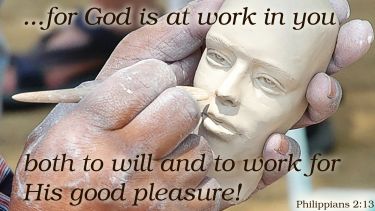
  5. Psalm 119:24, Philippians 2:13; John 10:10; Psalm 119:50 MSG, 93, 165.


Photo credits:  http://www.pexels.com; http://www.dailyverses.net; http://www.pxhere.com (2), http://www.dailyverses.net (2); http://www.flickr.com; http://www.pexels.com.

 

Read Full Post »


“I made soup,” she says.

I peer into the pot to see a chicken leg, a whole apple, a cluster of green beans and an ice cream cone.

“Eat some!” she coaxes.

I spoon a bite and assure her, “Oh, this is delicious.”

She smiles broadly. “I make dessert.” And two-year old Maarit (Mah-rit), our granddaughter, trots back to her child-size kitchen to bake a plastic cake or pie.


It’s such fun to watch little ones enjoy their vivid imaginations, and it comes so naturally to them. No one has to teach toddlers how to pretend; they just do. But as we grow and leave childish things behind, most of us abandon our imaginings.

Oh, what we’re missing.

In a post a couple of years ago (Oh, Say Can You See), we looked at three ways an active imagination can positively impact our faith, helping us to better understand God, add insight to Bible reading, and see more in this incredible world he’s created.

Today let’s consider three more ways. 

  1. With an active imagination, we are more likely to see people and situations the way God sees them. 

In his Word he calls us to see people for what they could be and will be as they avail themselves of his transforming power. We’re also called to see situations with forward-looking faith in God’s ability to do far more than we can imagine (1).

By contrast, our thoughts too often veer to the negative. We forget what the Apostle Paul told us in Philippians 4:8—to think on excellent and praiseworthy things.


C. S. Lewis helped a woman do just that in a letter he wrote as she lay in a hospital contemplating the possibility of death:

“Think of yourself,” he said, “just as a seed patiently waiting in the earth: waiting to come up a flower in the Gardener’s good time, up into the real world, the real waking. I suppose that our whole present life, looked back on from there, will seem only a drowsy half-waking. We are here in the land of dreams. But the cock-crow is coming” (2).

Surely Lewis’s words stirred fresh hope in her heart as he awakened her imagination to a new perspective. In your mind’s eye, can you see excellent, praiseworthy events unfolding in the situation that most concerns you? Allow such imaginings to provide fresh hope for your heart.

  1. With an active imagination we can envision the kingdom of God that exists here and now, even though hidden from view. 

The very nature of faith requires imagination, because the kingdom of God cannot be perceived by the senses. It exists invisibly among and within those who invite King Jesus to rule in their lives (3). But our imaginations can help us access the invisible through the visible as we contemplate:


  • The glory of God in the splendor of creation
  • The rule of God in the organization of the universe
  • The goodness of God in our numerous blessings
  • The wisdom of God in his precepts that usher in abundant life
  • The power of God, as he transforms misery to joy, trouble to triumph, and even bitterness to forgiveness
  1. With an active imagination we can experience God more fully. 

For example, what if we:


  • Imagine God sitting with us as we pray, our hands pressed between his, his head leaning in close to hear our every word. Would it be easier to sense his presence, stay focused, and pray with more intensity?
  • Imagine God at our right hand as we work through our days (Psalm 121:5). He is our ever-present Protector, Guide, and Help. Might such visualization reduce stress? Could mindless tasks become sublime opportunities to enjoy his presence and access his strength?
  • Imagine God on his throne as we worship, with his dazzling radiance signifying splendor, and his voluminous robe representing power (4). Might the joy and passion of our worship-experience be enhanced as we contemplate his magnificence?


You might remember that Jesus held children in great regard. He suggested that adults become like little children to enter the kingdom of God (Matthew 18:1-5). Granted, his emphasis was upon trust, loyalty and humility. But responding to him with the imagination of a child as well will help us fly beyond the stars.


I don’t want to miss that. I’m guessing you don’t either.    


Notes:

  1. Philippians 1:6; Ephesians 3:20
  2. The Collected Letters of C. S. Lewis, vol. 3: Narnia, Cambridge, and Joy, 1950-1963, [2007]
  3. Hebrews 11:1; Luke 17:21
  4. Ezekiel 1:27; Isaiah 6:1-2


Photo credits:  http://www.pxhere.com; http://www.edwards.af.mil; http://www.heartlight.org; http://www.goodfreephotos.com; http://www.pixabay.com; http://www.flickr.com.; http://www.quotefancy.com.

 

Read Full Post »


The summers of my childhood included a blend of games and activities with neighborhood friends, afternoons at the community pool, bike rides to the library, and a few weeks spent with Grandma Clara and Grandpa Henry who lived four hours away in Iowa.

No doubt some would describe our summer experiences as mundane, not realizing the joy hidden among the ordinary:

  • The delight of lazy Monopoly marathons
  • The wonder of fireflies in a jar
  • The satisfaction of a big bowl of buttery popcorn–after biking to the park and spending several hours of nonstop cavorting in the pool, then biking home again
  • The pleasure of tucking ourselves under the willow tree to read
  • The fun of an evening bike ride with Dad


It’s the small, happy moments—not the grand events—that contribute to satisfying days and a joy-filled life.


The joy of small…makes life large.

–Ann Voskamp (1)


However, I have to admit: my childhood-self took those lovely moments for granted. I lived unaware of God’s glory pervading my everyday experiences: his creative genius on display—even in the backyard, his love, peace, and security within a family grounded on Christian values, and his goodness to provide joy-filled moments that shimmer in my memory with holy perfection.

Now, as the decades have passed, I’m learning to identify more of the transcendent moments God provides, including:


  • A cardinal filling the silence of the woods with his hope-inspiring “Cheer! Cheer! Cheer!”
  • A toddler wrapping her arms around my neck and crying, “I love you!”
  • A devotional that speaks exactly what I need to hear
  • An opportunity to encourage a waitress and see her concern turn to hope
  • A small gathering of family and friends quickly ballooning to twelve—with much laughter, camaraderie, and delightful conversation


God’s glory is on display right “in the middle of our minutes” (2).


So each night before falling asleep, let’s measure the moments of our days:

  • Taking note of God’s blessings and the delights of his creation; singing our praise for his breath-taking handiwork (Psalm 92:4; Job 5:9).
  • Thanking God for the camaraderie and conversation, hugs and support among family members and friends who keep us strong (Ecclesiastes 4:9-10).
  • Counting the riches that result from abiding in God, beginning with peace (Isaiah 26:3), stability (Psalm 16:8), and contentment (1 Timothy 6:6).
  • Celebrating the honor of ministering to others in Jesus’ name (Matthew 25:40), giving us purpose and cultivating fulfillment in our spirits.
  • Delighting in the opportunities to smile, laugh, and find moments of joy—even in the midst of trouble or frustration (Proverbs 17:22).


“Laughter is to life what shock absorbers are to automobiles.

It won’t take the potholes out of the road,

but it sure makes the ride smoother.”

–Barbara Johnson


And just as inches are measured into feet, so we can measure meaningful moments into satisfying days and a joy-filled life–because God is in them.


What meaningful moments are at the top of your list for today?  Please share in the comments section below!


Notes:

  1. One Thousand Gifts, Zondervan, 2010, p. 167.
  2. Sara Hagerty, Unseen, Zondervan, 2017, p. 109.


(Photo credits:  http://www.geauxguard.la.gov; http://www.pixnio.com; http://www.flickr.com; http://www.pxhere.com; http://www.flickr.com; http://www.pexels.com.)


Read Full Post »


Several years ago our daughter dashed off two love notes and hid them in our house just before she and her family returned to their home, more than 2,300 miles away. You can imagine those little notes provided delightful, heartwarming surprise upon discovery. And I’ve kept them, to enjoy again and again.

God also leaves love notes tucked here and there into every day.

Love notes like:


  • A butterfly casually flitting above the traffic in a busy intersection—a dash of delicate beauty amidst concrete and steel


  • The welcome aroma of coffee wafting from the kitchen while golden sunbeams stream in the windows


  • Enthusiastic greetings and hugs whenever we see the granddaughters


  • The first fireflies of the season, drifting upward out of the grass and underbrush to float among the trees—soft, flickering lights, waltzing to silent music


  • A hummingbird lighting upon a flower at one end of the deck planter, even as I’m trimming sprigs at the other. A Close-Encounter-of-the-God-Kind if ever there was one.


  • Lost keys, found. I had dropped them at the grocery store somehow; ‘didn’t even know they were missing for more than twenty-four hours. But God kept them safe for me, and inspired some kind person to turn them in–an unmistakable love note of his compassionate care.


Some of God’s love notes actually include words—but not always from the Word.


Recently at the hairdresser’s I happened to pick up a secular magazine to pass the time. In her introductory letter, the editor wrote about her grandmothers and their important influence in her life. She reaffirmed that investing in our grandchildren is highly worthwhile, and they do remember love expressed, attention bestowed, and examples set.

Her words suddenly became God’s words, and tears came to my eyes. There is significance in the repetition of Goodnight Moon, “The Itsy Bitsy Spider” and pony rides. There is power in appreciation for primitive artwork, impromptu dances, and weed bouquets. There is influence in affirming strong effort, perseverance, and the courage to try new things.


Granddaughter #2,

building a stool for her doll with wood scraps–

with a little help from Dad


Also recently, I encountered a restaurant worker cleaning the drink station as I approached to pump my herbal tea. We exchanged the typical “hellos-and-how-are-yous.   Her greeting was especially positive and cheerful.

“Are you really that fine?” I asked, leaning forward in order to make eye contact.

“Yes, ma’am,” she exclaimed with enthusiasm. “God is so good, I can’t complain!”

“I feel the same!” I answered. “God has been incredibly good to us too.”

The woman finished her task and turned to leave, with more praise on her lips. I wish I could remember her exact words. Nonetheless, I do know those several moments with her provided another love note of affirmation from God, stirring up gratitude and joy in my spirit.


*     *     *     *     *     *     *     *     *     *


Lord, open my eyes to find all your love notes, prepared for me each precious day of life. Then nudge me to turn every note into praise, and joyfully celebrate you.


 (from http://www.quotefancy.com)


Oh, yes. Let me one of those who takes off her shoes.


What love note have you received from God recently?  Tell us about it in the comment section below!


(Photo credits:  Nancy Ruegg; http://www.geograph.ie; http://www.pxhere.com; http://www.wikimedia.org; http://www.wikipedia.org; http://www.pxhere.com; Eric Ruegg; http://www.dailyverses.net; http://www.quotefacy.com.)


Read Full Post »

(The view from my deck chair)


As spring approaches I look forward to spending my morning quiet time on our deck—taking in the new foliage-finery of the trees, the happy chatter of birds, the whispering breezes, and the sweet aroma of alyssum from the deck planter.

There’s something about sitting with God in his Living Room* that opens our eyes to his glory and draws our spirits closer to his heart.

Saturday was just such a day. And as I sat in His presence, God seemed to say:

I’m so glad you’re here, Nancy! I’ve planned several discoveries for you this morning.


From the Trees


First, lift your eyes to the trees. Rejoice in the reminders of:

  • My strength (Psalm 93:1)–in the stalwart trunks
  • My refuge (Psalm 25:4)–in their far-reaching limbs, offering shelter from the heat
  • My provision (Philippians 4:19)–as they produce oxygen, give shelter to birds and animals, even provide food

Note the evidence of competence in their design–for purpose, beauty, and sustainability.   I am your God of Competence as well, and have designed you to fulfill an individualized purpose, provide the beauty of Christlikeness to those around you, and spend eternity with Me. 


From the Birds


(white-breasted nuthatch)


You can also revel in the birds—symbols of reliance on Me, and again, My provision (Matthew 6:26). Note the variety of color, pattern, song, and habit. Let the joy you experience watching birds remind you how I value your uniqueness.

Choose to celebrate who you are: the colors of your personality, the pattern of your life, the song of gifts and talents I’ve given you to share with the world, the habits of goodness I continue to form in you so you can impact others.


From the Squirrels


Together we can enjoy the antics of the squirrels! They too provide reminders for the life of faith:


  • Even when they walk upside down on a branch, they do not fall. Similarly, I make firm your steps and keep you from falling (Psalm 37:24).


  • With great confidence squirrels jump from limb to limb. You can live in great confidence also, because I’ve equipped you for what I ask you to do. (Ephesians 4:12; Hebrews 13:20-21).


  • Every time they return to their nesting tree, they follow the same pathway through the branches. They remember well which branches offer the best proximity to the next tree.

I have provided a sure pathway for you to navigate through life. You can run in the path of my wise commands; my ways will bring you home safely (Psalm 119:32a; 139:24b).


  • Squirrels can sit quite contentedly, even take a nap, on the very end of a branch—never concerning themselves they might fall or the branch might give way. They provide an example of perfect trust (Isaiah 26:3).

I am your security (Psalm 112:8). Out of My love and faithfulness, I will always protect you (Psalm 40:11)—even as I bring you home to heaven one day.

So when you find yourself at the end of a branch, and fear starts to creep in, send it scurrying away with My Word—verses like Psalm 27:1:


(Another view from our deck)


The Lord is my Light—

[My Joy, Peace, and Guide]

The Lord is my Salvation—

[My Protection, Provision, and Security]

Whom shall I fear?

The Lord is my Stronghold—

[The Treasury of all good things]

Of whom shall I be afraid?


*      *      *


*a creative expression originated by Michael Hyatt, former CEO of Thomas Nelson Publishing


Photo credits:  Nancy Ruegg; http://www.pxhere.com; Nancy Ruegg; http://www.maxpixel.net; Nancy Ruegg


Read Full Post »


A homeless woman slumped against the familiar brick wall of the warehouse, then grouped her plastic shopping bags snugly around her. Next she looped several bag-handles on her legs, and stretched her arms over the rest. The worry of losing to theft any of her treasured possessions kept her vigilant. Once settled, she succumbed to a fitful doze.

A man approached. “Excuse me, ma’am,” he called gently. “Are you Genevieve Bartlett?”

The woman startled awake, instinctively clutching her belongings more tightly. “What if I am?” she grumbled.

“Well, if you can answer a few questions for me, I may have some excellent news for you,” he replied calmly, recognizing that defensiveness in her position was only to be expected.

Genevieve returned his gaze with a scowl, but sat up straighter, readying herself to listen. The questions were easy: what were the names of her deceased parents and grandparents, when and where had she been born, and where had she attended school.

The man handed her his card and began to explain. “My name is Henry Lewis. I’m a lawyer, here to inform you you’re the last surviving Bartlett of your family, and you’ve just inherited fifty million dollars. If you’ll come with me, we can take care of the details at my office, and start the process of…finding a more comfortable situation for you. Would that be to your liking?”


Genevieve didn’t move for several moments. “Fifty million dollars,” she repeated slowly, and studied the lawyer’s face. Could he possibly be telling the truth? But why else would he seek her out at the warehouse?

Genevieve suddenly slipped the bag-handles off her legs, stood up, and announced, “I’m ready, let’s go!” Without even looking back, Genevieve left her shopping bags and their worthless contents on the pavement.

Out of several interpretations for this story, consider the shopping bags as representative of our fears. Don’t we sometimes hold on to them—worthless as they are—as tightly as Genevieve held on to her belongings?

But as God’s children, we possess tremendous wealth, worth much more than fifty million dollars, because “the kingdom of heaven is like treasure” (Matthew 13:44). And unlike Genevieve during her homeless days, we have access to a good part of that treasure now, if we let go of our worries and lay hold of our wealth.


So what might that treasure include?  Consider the following:

1. God’s Glorious Provision. Unlike Genevieve, we know a glorious inheritance is waiting for us.  Ours is in heaven—an inheritance so magnificent, when we arrive there, we’ll look back on our earthly lives “as an insubstantial dream from which we have happily awoken” (Austin Farrer).

2. God’s Involvement. He is always at work. Take note of his wisdom in creation, his engineering of life-circumstances, and his generosity in the blessings he bestows. God even makes joy available in the midst of trouble. 

3. God’s Sovereignty.  No doubt Mr. Lewis designed a plan for Genevieve to provide for her well-being. God too has designed a perfect and purposeful plan to accomplish much good, in the world at large and for each of us individually.  Whatever we entrust to him, he will take care of much better than we can.


4. God’s Unfailing Love.  We can leave our worries behind, as Genevieve did her shopping bags, when we dwell on the lovingkindness of God. In fact, peace of heart is guaranteed–if we keep our focus upon him. 

5. God’s Constant Presence. He is always with us—even as we wait for him to act. The attentive person recognizes his presence in the aria of a songbird, the sunbeams of a morning, the spontaneous hug of a friend.


6. God’s Kindness and Care.  Surely Genevieve marveled for the rest of her days how Mr. Lewis had changed her life.  We can draw strength and great delight from remembering God’s gracious provisions of our past.

7. God’s Powerful Word. Scripture offers indispensable comfort and encouragement, reminding us that God is our protective Shield and dependable Rock, our caring Shepherd and devoted Helper, our loving Provider and strong Confidence.


In these seven ways and more, God generously shares his inheritance with us now, giving us the opportunity to overcome anxiety with joy.   After all, every fear about our future, safety, health, suffering, death, financial woes, inadequacy, and events beyond our control are good-for-nothing baggage.

The question becomes: Will I let go of my worthless bags of worries and lay hold of my glorious inheritance?


Scripture Notes for:

  1. 1 Peter 1:3-4
  2. Deuteronomy 32:4; 1 Chronicles 29:11; Psalm 94:19
  3. 2 Chronicles 20:6; Romans 8:28
  4. Psalm 94:17-18; Isaiah 26:3
  5. Psalm 23:4
  6. Psalm 92:4
  7. Psalm 3:3; 18:2; 23:1; 46:1; 78:23-29; Proverbs 14:26


(Genevieve’s story is based on an illustration from Charles Spurgeon’s sermon, “To Give You the Kingdom.”)


Photo credits:  http://www.flickr.com; http://www.maxpixel.net; http://www.publicdomainpictures.net; http://www.dailyverses.net; http://www.pexels.com; wwww.canva.com; http://www.dailyverses.net.


Read Full Post »


Years ago when I taught fourth grade, our reading curriculum included a mini-lesson about A-HA Moments—places in a story where the author answers questions the reader has been wondering about.

Watching for those moments keeps the reader alert (thus improving comprehension), contributes to greater understanding of the plot and characters, and makes reading more fun.

Once our students became familiar with the concept, we enjoyed calling out “A-HA!” to one another (occasionally in unison) as other epiphanies occurred, whether it was in class or at recess. The sharing of A-HA Moments developed our classroom community and added to the joy of learning.


Our Heavenly Father also provides A-HA Moments, through such avenues as scripture, other reading, comments from others, and observations in nature. Our God is highly creative, providing personal revelations in numerous ways.

And similar to the benefits of A-HA Moments for students, our discovery moments with God augment our understanding of scripture and spiritual matters, strengthen our relationship with him, and add to the joy of learning from him.

For example:


  • An A-Ha Moment from Scripture

After six delightful years at one church, my pastor-husband received word he’d be assigned to a new congregation in three months’ time. My heart sank. This would be our third such move in thirteen years, and it wasn’t getting easier. As you know, saying good-bye hurts.

In addition, I had just returned that year to full-time teaching, after a long hiatus as a stay-at-home mom. Now I’d face the onerous task of procuring another position.

In the weeks that followed the announcement, we learned about some of the difficult challenges facing the new-to-us congregation.   And I wondered, God, what ARE you doing?


One afternoon a radio host quoted Jeremiah 29:11—a familiar scripture—but that day those words spoke loud and clear to me from God himself: Nancy, there is no reason to worry. I have already worked out my plans for you—plans to prosper you, not harm you, plans to give you HOPE and a thriving future.

Indeed we did prosper at that new church—for thirteen years—as God brought us and taught us through those numerous challenges. But one problem took care of itself—a new teaching position for me. (You can read that story at After the Fact.)


  • An A-HA Moment from other reading


The fact I’m writing about this topic today is the result of an A-HA Moment in itself. First, the seed of an idea was already on my topic list for 2019, but I had no notion how to develop it.

Currently I’m studying Discerning the Voice of God by Priscilla Shirer. And just the other day I read this:


“I know the Lord is speaking to me personally when I read my Bible

and a particular verse or passage seems illuminated

—it just lifts up off the page,

and I seem to hear a gentle, inaudible whisper

as I have an ‘aha moment’ in my heart.”

–Anne Graham Lotz


Anne’s A-HA Moment caused me to have one of my own. God brought to mind the story about moving I just shared above as well as other examples. Then he pointed out other avenues of A-HA Moments, and I knew this was today’s topic.


  • An A-HA Moment in God’s Living Room

That’s what Michael Hyatt* calls the out-of-doors.  Isn’t that a poetically perfect appellation?   My special corner in God’s living room is our back deck overlooking the treetops.

One morning last October, the deck was surrounded by stillness—no birds trilled, no squirrels chattered—until one lone cardinal began to sing. Enthusiastically he filled our little woods with his voice, and his song made me smile.

I was reminded that God often breaks through the stillness of all our lives, with custom-designed lessons, answered prayers, and out-of-the-blue blessings. As a result, we experience hope, peace, and joy—three commodities that make life worth living.


Recorded in my journal is the impression God spoke in my spirit:

I do love to surprise My children! And their subsequent celebrations of praise bring Me great pleasure. But in reality I provide more wonders than they often perceive. Some surprises go unnoticed.

Keep watching and listening, Nancy, so we can smile, laugh, and celebrate together all the delightful surprises I bring into your life.

And therein lies the secret for experiencing life-enriching A-HA Moments with God: keeping watch (Micah 7:7) and listening attentively (Proverbs 1:5).


“Blessed are your eyes because they see,

and your ears because they hear.”

–Matthew 13:16


*former CEO of Thomas Nelson Publishing


What A-HA Moment has God presented to you lately? Tell us your story in the Comments section below!


(Photo credits:  http://www.kadena.af.mil; http://www.calicospanish.com; http://www.maxpixel.net; http://www.heartlight.org; http://www.pixabay.com; Nancy Ruegg; http://www.canva.com; http://www.pixabay.com.)


Read Full Post »


In the midst of my harried day

When I seem farthest from myself

A moment comes to me and beckons,

“Let us fly away.”


Shutting out the din

Of the never-ending to-do

I close my eyes and begin

To wander in thoughts sublime;

And gather flowers in my mind.


–Tara Afriat*


Such delightful imagery Tara creates with that last line. But I wonder, what sublime thoughts might be worthy of a bouquet in my mind?  So far, five varieties have occurred to me:


1. Humor offers blooms of joy.


Just recently my husband was hospitalized and underwent a number of tests. When an orderly came to accompany Steve to a procedure he announced, “One CT scan, coming up. Would you like fries with that?”

I’m thinking a new journal specifically for humor might be fun to keep (and savor later).


2. Quotes provide blooms of wisdom, encouragement, and beauty.

Isn’t it amazing how a few well-chosen words can suddenly enlighten our understanding or give us eyes to see what was invisible just moments before?

A recent addition in my quote journal offers wisdom, encouragement, and the potential for beauty:


“Make one person happy every day and in forty years

you’ll have made 14,600 human beings happy

for a little time at least.”

–Unknown


Such encouragement gives wise perspective to the impact of small kindnesses, doesn’t it?   And what fun to cause 14,600 beautiful smiles!


3. Observations become blooms of refreshment.


Another journal on my shelf is titled “A Celebration of Small Things.” Each day I record at least one observation worth noting, because:


“A grateful heart is one

that finds the countless blessings of God

in the seemingly mundane of

every day life.”

–Anonymous


Pages of entries over the last two years remind me of just how blessed I am. For example:

January 10, 2017: “The birds are singing a “Hallelujah Chorus” of their own this morning, in celebration of the sudden balmy temperatures—into the upper 50s!”


Review of such moments does refresh my attitude.


4. Kindness creates blooms of grace.

In 1983 I began a journal to document God’s grace. So far, the record of more than 1300 entries offers sublime flower-gathering in my mind. Again, one example:

1996/97 proved to be a particularly challenging year at the school where I taught. Frustration plagued many of us faculty members. In late September I confessed to my early morning prayer group my difficulty in letting go of annoyance, and Betty prayed for me.

Minutes later as I drove to school, my attention was drawn to bright sunbeams radiating from behind great billowing clouds. It seemed the windows of heaven had been opened, and the glory of God on his throne radiated from just beyond that cloud bank. I could almost hear him saying, “You’re going to be fine—I’m right here to help you!”


Betty’s kind prayer and that God-given sky-reminder provided perfect affirmation. And now, that entry and many like it remind me: My Heavenly Father has been ever-faithful in the past; I can trust him for the future.


5. Scripture provides blooms of truth.

Within the pages of the Bible we find a variety of flowers for the mind, including those mentioned here: wisdom, encouragement, beauty, refreshment, and grace. But the most important is truth. Absolute truth.

We live in a time when relative truth is embraced by many, but:


(“Truth is incontrovertible. Malice may attack it,

ignorance may deride it, but in the end, there it is.”

–Winston Churchill)


The wise person seeks after truth—truth that revives the soul, gives joy to the heart, and provides insight for a well-lived life. That’s exactly what the Bible provides (Psalm 19:7-8).**

One psalmist who reveled in scripture wrote: “Oh, how I love your law! I meditate on it all day long” (Psalm 119:97).

And no wonder. The Bible is a continual source of flowers for the mind—of the very best, wisest, and most beautiful kind.


Where do you gather flowers of the mind? Share with us in the Comment section below!

__________________________________


*Quoted from Soul Retreats for Busy People, compiled by Lila Emspon


**If you’re not sure whether scripture is reliable truth or not, I recommend Mere Christianity by C. S. Lewis, The Reason for God by Timothy Keller, or The Reason Why Faith Makes Sense by Mark Mittleberg. It is the honest person who invites God to reveal himself.


Photo credits:  http://www.pexels.com; http://www.wikimedia.com; http://www.pixabay.com (2); http://www.nps.gov;  http://www.pocketshare.speedofcreativity.org; http://www.azquotes.com.


Read Full Post »


The first time I saw the above painting by Richard Schem, Times Square in New York City came to mind. If you’ve ever stood at the intersection of Broadway and Seventh Avenue at night, you too may have been overwhelmed by the cacophony of color produced by thousands of neon lights.

But Richard’s painting is titled, “See the World.” That provides a very different perspective.  Now I see the colors of the sea, the brilliant hues of silken saris from India, the verdant hillsides of Ireland, the rich crimson of Chinese lacquer, the terracotta and ochre tones of the Grand Canyon.


In one painting, he’s captured the glory of color that pervades much of our world.

Of course, Richard Schem isn’t the only artist who sees the world with fresh perspective and provides a delicious moment of discovery for those who pause long enough to experience a work of art, not just view it.

I wonder what would happen if we became artists of our days—pausing long enough to find fresh perspective now and then? Might we make a delicious discovery or two? Might our days explode with colorful moments, like Richard Schem’s canvas?

If that sounds enticing, the next question would be: How do we become artists of the everyday? I’m thinking the following strategies might provide a good place to start.


1. Paint the day with positivity.


Why let the drab colors of disappointment, difficulty, and frustration shroud the day when we can choose the cheerful hues of optimism, opportunity, and blessing?


“A joyful heart makes a face cheerful.”

–Proverbs 15:13a


Just this morning (It’s Monday as I begin to draft), Steve and I had to go to the hospital for his weekly blood draw. Unfortunately, Mother Nature played an April Fool’s joke during the night: the SUV was covered in frost. Not being quite tall enough for the job, I attacked the ice on the windshield with some difficulty, and was soon huffing and puffing.**

Well, at least this is good exercise, I thought. And listen to the birds, happily trilling and chirping, not the least bit deterred by the chill this morning. My frustration began to subside.


2. Weave gratitude from morning till night.


(This photo taken last September)


Recent threads in my gratitude tapestry include: hot coffee in a thermal mug, sunshine streaming in the windows, a trio of deer feasting on the backyard hillside, candle-lighting time each evening, and a delightful book intertwining mystery and humor.

God’s goodness comes in many colors and textures.


3. Mold moments into sanctuaries of joyful worship.


 Instead of just waiting for joy to find us, we can create it. Here are a few possibilities:


  • Celebrate the prize of a smile from each person you meet—especially if you’re the one to smile and say hello first.


  • Savor virtual snapshots of delightful observations: a squirrel perched at the very tip of a branch, feather duster clouds sweeping the sky, the dimples on the back of a small child’s hand.


  • Find richness in the commonplace: the miracle of crocus blooming through the snow, fire flames leaping on the hearth (never the same way twice), and raindrop jewels glistening on the foliage.


“For you, O Lord,

have made me glad by your work;

at the works of your hands

I sing for joy.”

–Psalm 92:4 ESV


Design to bless others.

Becoming artists of the everyday for our own hearts’ sake is certainly beneficial, but inspiring others to connect with the Master Artist as the result of our optimism, gratitude, and good cheer? Well, that just multiplies the blessing.

How have you painted your day with positivity, woven gratitude into the hours, or molded moments into sanctuaries of joy? Share with us in the Comment section below!


______________________________


*A phrase borrowed from Run with the Horses by Eugene Peterson.

**My thoughtful husband usually takes care of this chore, but he’s recovering from a subdural hematoma as many of you know. Such exertions as frost removal are not allowed for at least three months.

Art & photo credits:  http://www.horchow.com (Richard Schem); http://www.wikimedia.com; http://www.pexels.com; Nancy Ruegg; http://www.flickr.com; Nancy Ruegg.


Read Full Post »

How would you complete the following sentence?

The most beautiful and beneficial therapy God ever granted humanity is:

  1. Prayer
  2. Worship
  3. Laughter
  4. Camaraderie with other believers

To be fair, all four of those God-given gifts are therapeutic. But pastor/author Charles Swindoll considers Answer C, laughter, as number one (1).


Perhaps he’s familiar with the research documenting the benefits of an enthusiastic guffaw. Laughter has been proven to:

  • Reduce stress, depression, and blood pressure
  • Increase the production of HDL (good cholesterol)
  • Improve immunity, mood, and sleep
  • Improve the function of lungs, heart, and cardiovascular system
  • Help relieve artery inflammation and pain

In fact, “the medical world has verified that laughter releases endorphins, God’s natural painkillers, which are fifty to one hundred times more powerful than morphine” (2).   Wowsers!

No wonder God inspired King Solomon to write: “A cheerful heart is good medicine” (Proverbs 17:22).


I’m thinking our Heavenly Father also receives benefit and blessing as he takes delight in the laughter of his children–just as human parents (and grandparents!) do.

In addition, when we face the day lightheartedly and find humor even when life is hard, we’re actually expressing our trust in God.  That blesses him too.

Phillip Yancey has identified similarities between laughter and prayer–of all things. “In both acts, we stand on equal ground,” he says, “freely acknowledging ourselves as fallen creatures. We take ourselves less seriously…Laughter and prayer unite” (3).

I hadn’t thought of that before. Prayer does unite our hearts as we present together the same requests to God.

Laughter unites us too–young and old, employers and employees–even total strangers. We “become a single group of human beings, enjoying [our] existence”—W. Grant Lee.  And if we include God, the joy is multiplied.


But most of us won’t accumulate enough laughter in a day to do much good unless we intentionally seek it out. So the question becomes: how do we jump-start the habit of laughter and make it a morning-noon-and-night event?

Here are five suggestions to get the laughs rolling:

  • Purchase a joke-of-the-day calendar or access a humor website like Reader’s Digest’s https://www.rd.com/jokes/, and start the day with a few giggles. To increase the benefit further, share the joke with someone else.  Here’s a short sample–easy to remember!


  • Watch a few minutes of humorous YouTube videos. You can’t go wrong with Tim Hawkins, Chonda Pierce, or Michael Jr. I can almost guarantee they’ll have you in stitches, even if you watch them all by yourself.   But for best results, invite one or two others to watch and chuckle along with you.  Here’s Chonda Pierce talking about piano lessons:

https://www.youtube.com/watch?v=wjcfdnqSvT0


  • Spend time with young children. They laugh easily and so delectably, you won’t be able to resist laughing yourself.


  • Start a collection of jokes, cartoons, and humorous statements—whatever makes you laugh. You’ll be prepared with some giggle-makers when stress mounts, anxiety flares, or disappointment deflates the day.


Perhaps you’ll find one or two laugh-prompts here to begin your compilation:


  • “Normal is just a setting on the dryer.”—Patsy Clairmont


  • “Exercise in the morning—before your brain figures out what you’re doing.”—Unknown


  • “Youth is a disease from which we all recover”—Dorothy Fulheim.


  • “Gardening is cheaper than therapy and you get tomatoes”—Unknown.


  • “Grandmas are moms with lots of frosting”—Unknown.


  • When Miss Andrews took her first graders to music class, the teacher, Mrs. Judson, wasn’t there. To keep the children productively occupied until she arrived, Miss Andrews asked the class if they knew the person whose name was written in big letters on the board: John Philip Sousa. One little boy raised his hand. “I don’t know who he is,” the first grader responded, “but if his name is on the board, he’s in big trouble” (4).


*     *     *     *     *     *     *     *     *     *


Thank you, Father, for giving us the ability to laugh. It truly is a gift of your grace, refreshing our spirits and opening our hearts to your joy. Teach us to express our trust in you with laughter, defying our worries and fears with frequent chuckles, giggles, and hoots!


What made you laugh recently?  Please share in the comment section below!


Notes:

  1.  www.christianquotes.info
  2. Marilyn Meberg, Joy Breaks
  3. Philip Yancey, Grace Notes
  4. True story! It happened at the school where I taught for many years.  Teachers’ names have been changed.


Art & photo credits:  http://www.pexels.com; http://www.deviantart.com; http://www.pxhere.com; http://www.canva.com; http://www.pxhere.com; http://www.flickr.com (2); http://www.wikimedia.com; http://www.afgsc.af.mil.


Read Full Post »

« Newer Posts - Older Posts »

When the House is Quiet

Impressions Becoming Expressions

Mitch Teemley

The Power of Story

Still Traveling

Impressions Becoming Expressions

Living Our Days

Gaining a heart of wisdom

He Said What?!

I'm Patty, and my husband and I are living with our adult son who has autism and epilepsy. I love sharing lessons learned from life around me, especially life with Aaron.

Meditations of my Heart

Impressions Becoming Expressions

Linda Stoll

Impressions Becoming Expressions

Signora Sheila

Where faith meets la dolce vita

Heidi Viars

Finding the Image of God