What are the immense graces of this moment for you? Please share an example in the Comment section below. Let’s celebrate together the gifts of His love.
And a joy-filled day of Thanks-giving to all!
Posted in Appreciation, Blessings, God's Grace, God's Love, Thanksgiving, Uncategorized, tagged Gratitude, Thanksgiving on November 28, 2019| 24 Comments »
What are the immense graces of this moment for you? Please share an example in the Comment section below. Let’s celebrate together the gifts of His love.
And a joy-filled day of Thanks-giving to all!
Posted in Appreciation, Blessings, Encouragement, God's Provision, Thanksgiving, Uncategorized, tagged Gratitude, Thanksgiving on November 21, 2019| 13 Comments »

I know. It’s the week before Thanksgiving. If we start feasting on stuffing, mashed potatoes, and squash casserole now, we’ll gain five to ten pounds before the holiday even arrives.
It’s a different kind of feasting the post-title alludes to, the kind Reverend J. R. MacDuff recommended long ago.
And just for fun I’ll make a fill-in-the-blank from his statement, and you can guess the key phrase:
“Cultivate _______________.
It will be to thee a perpetual feast.”
—J.R. MacDuff
How would you complete the quote?
I’ll bet you guessed correctly, given the season. MacDuff chose #2, a thankful spirit. But missing from his quote is an explanation of how gratitude could possibly offer the pleasure of a perpetual feast.
Perhaps he would suggest the following.
Gratitude fosters a positive perspective.

“Some people grumble that roses have thorns;
I am grateful that thorns have roses.”
—Jean Baptiste Alphonse Karr
In recent years scientific research has proven the benefits of optimistic thinking, including increased life span, less stress, better sleep, fewer colds, and better cardiovascular health. Gratitude to God surely augments the benefits.
“The optimist says, the cup is half full.
The pessimist says the cup is half empty.
The child of God says, my cup overflows.
–Anonymous
Gratitude develops a sense of awe.

“Gratitude bestows reverence,
allowing us to encounter everyday epiphanies,
those transcendent moments of awe
that change forever how we
experience life and the world.”
—John Milton
Think of the delight young children express when they encounter a ladybug sauntering across a rock, a sliver of rainbow glimmering on the wall, or a leaf shower providing a game of catch.
As we follow their lead, we’ll discover our ordinary days are laced with many transcendent moments to be grateful for. And our hearts will fill with reverent awe for the Creator of these and all good things.
Gratitude strengthens our faith.

“Count blessings and find out
how many of His bridges have held…
Gratitude lays out the planks of trust
from today into tomorrow.”
–Ann Voskamp, 1000 Gifts
Keep a written record of those planks. You’ll be amazed how quickly they accumulate.
Gratitude ushers in joy!
A nearby church posted the following wisdom on their marquee:

To that end, we can engage our senses with a thankful heart, finding joy in:

Ordinary experiences can be turned into extraordinary blessings–by the power of gratitude.
Gratitude contributes to a heart of humility.
“Pride slays thanksgiving,
but a humble mind is the soil
out of which thanks naturally grow.
A proud man is seldom a grateful man,
for he never thinks he gets
as much as he deserves.”
–Henry Ward Beecher
The humble and grateful person realizes everything comes from God and nothing is deserved.
Gratitude cultivates a calm spirit.
“It’s impossible to give thanks
and simultaneously feel fear.”
–Ann Voskamp, 1000 Gifts
We can express gratitude for all God is—his sovereignty and strength, his wisdom and loving kindness, his grace and glory—thus acknowledging his ability to bring good out of every situation. It releases us from the grip of fear and allows us to rest—in him.

_________________________
There you have it—just a few results from a perpetual feast of gratitude:
Let the gratitude-feast begin!
(Photo credits: http://www.wikimedia.com; http://www.maxpixel.net; http://www.pxhere.com; http://www.pixabay.com; http://www.torange.biz; http://www.heartlight.org; http://www.dailyverses.net, http://www.publicdomainpictures.net.)
Posted in Blessings, Encouragement, God's Goodness, God's Love, Uncategorized, tagged God honors us, Psalm 91:14, Psalm 91:15, Psalm 91:16 on October 31, 2019| 19 Comments »
Ask a church gathering, “What’s your favorite psalm?” and many folks will name #91 for its reminders of God’s goodness and power.
They’d be in good company. The great theologian, Charles Spurgeon wrote:
“In the whole collection there is not a more cheering psalm,
its tone is elevated and sustained throughout,
faith is at its best, and speaks nobly…
He who can live in its spirit will be fearless” (1).
That fearlessness would certainly be encouraged by the eight promises of verses 14-16:

Note that God promises:
Rescue, protection, and deliverance (vs. 14-15)—not from trouble, but through it. He does not promise a life of ease and bliss. However, “the only things faithful people can lose in suffering are things that are finally expendable” (2).
Answers to every prayer (v. 15)—answers that always reflect God’s perfect knowledge of all things, his wisdom and grace, even when the answer is wait, or even no.
His steadfast presence (v. 15)—“Few delights can equal the mere presence of one whom we trust utterly” (George MacDonald).
Salvation (v. 16)—“I have summoned you by name; you are mine,” God has said (Isaiah 43:1). We belong to him, purchased at an exorbitant price: the precious blood of his own Son.
But upon first reading, one promise puzzled me, and another actually startled me.
First, the puzzle. In verse 16 God promises long life. And yet all of us have been devastated by lives cut short. How are we supposed to interpret this promise?
With a long view into eternity.
Once we experience the glory of God and his heaven, we’ll no longer be concerned about the number of days any of us spent on earth. We’ll only delight in the fullness of God’s presence and all the eternal pleasures he’s prepared for us (Psalm 16:11).

And then there is the startling promise: that God will honor us (v. 15), as in confer special esteem, respect, and distinction with deferential regard (3).
But he’s the one who deserves honor. Our God is all-powerful, all-wise, all-knowing, omnipresent and eternal—to name a few of his attributes. What could we possibly do to warrant his honor?
Not a thing. But scripture assures us: those who honor him he has chosen to honor in return (1 Samuel 2:30).
Imagine standing in the splendorous throne room of almighty God as he announces:

These honors and more are the extravagant expressions of God’s infinite love for you.

https://www.azquotes.com/quote/1404884
An expanded excerpt from Ms. Smith increases the wonder:
Put together all the tenderest love you know,
The deepest you have ever felt,
And the strongest that has ever been poured out upon you,
And heap upon it all the love
Of all the loving human hearts in the world,
And then multiply it by infinity,
And you will begin, perhaps,
To have some faint glimpse of the love God has for you.”
–Hannah Whitall Smith
There are two caveats, however, presented in verse 14. These promises, including the conferral of God’s honor, are reserved for those who love him and acknowledge his name (affirm the reality of his attributes in their lives).
The psalmist is not talking about a warm, congenial feeling for God; he’s talking about a love put into action with trust and obedience.

As humans, our default mode is often self-reliance and independence. But what could be more sensible than to trust and obey One who is all-seeing and all-wise, who loves perfectly and honors lavishly?
* * * * * * * * * *
Oh, Father, how foolish I have been at times, willfully rebelling against your leadership. May I choose daily the place of honor you’ve sacrificially prepared for me by loving you wholeheartedly, trusting you for guidance, provision, and protection, and following your wise ways.
Notes:
Art & photo credits: http://www.flickr.com; http://www.canva.com (4); http://www.azquotes.com; http://www.pixhere.
Posted in Appreciation, Blessings, God's Goodness, Meditation, Praise, Renewing the Mind, Uncategorized, Worship, tagged focus on the present, Gratitude to God, ordinary delights, Praise to God, Psalm 71:8 on October 3, 2019| 14 Comments »
“Would you look at this?” my friend exclaimed. Her outstretched hand waved over a selection of magazines in our favorite place to meet, a local bookstore/cafe.

Do you see what caught Cindy’s* eye? That word “Mindfulness” or “Mindful” shouted from nine different periodicals.
After the initial surprise, we realized why mindfulness is such a hot topic. These days many adults are under great pressure to push themselves hard, move faster and accomplish more each day. All the while electronic devices are demanding their attention.
Add to that the worries rasping in their minds: the mistakes and failures of yesterday, the tight schedule and uncertainties of tomorrow, and fears for the future.
The pace, stress, and anxiety take their toll in the form of health problems, sleep disorders, and relational strain.

As a result, many have embraced mindfulness—a pleasurable time-out to capture the joy of now–like pausing to savor the tart, crisp, juiciness of an apple, stopping to listen as small bare feet patter down the stairs, or taking a moment to study a chipmunk collecting acorns.
And according to the research, just a brief interlude of mindfulness can calm the nerves, reset one’s emotional equilibrium, and foster contentment—all to positive effect upon our physical, mental, and spiritual well-being.
But I wonder, how many people know God offers even more–if we augment mindfulness with gratitude and praise?

For example, while doing the dishes I can focus on the hot water warming my hands, the clean scent of soap, the rainbowed bubbles floating in a bowl, the burbling water cascading over glasses and cups–then add a short prayer:
Thank you, Father, for giving us five senses
with which to enjoy your world.

While traveling in the car I can take note of the late summer haze clinging to the hillsides, today’s cloud exhibition, and the leaves on the roadside performing pirouettes on the breeze–then honor the Lord of all things:
I praise you, Father, for your creative genius
on display everywhere I look.

While reading a book with my two-year old granddaughter, I can pay attention to the sensation of her little body snuggled into my side, the sweet sound of her toddler-voice “reading” some of the words, and the dimples on the back of her hand as she points to a picture–then express gratitude to the Giver of all good gifts:
Thank you, Father, for the delights to be found
beneath the surface of ordinary experience.

Each day I can pause to observe the rose-pink tint of dawn, the dappled treetops in the noonday sun, and the slow glide of shadows at sunset–then rejoice in God’s power and glory.
My mouth is filled with your praise, O God,
declaring your splendor all day long.”
–Psalm 71:8

Mindfulness may prod us to notice God’s gifts in the moment, and that’s good.
But mindfulness plus gratitude and praise prompt us to treasure him, and that’s transformational.
God’s presence becomes palpable (James 4:8), joy sings in our hearts (Psalm 92:4), contentment settles in our spirits (Isaiah 26:3).
And the Giver of all good things surely smiles with pleasure in response.

*Name changed.
Photo credits: Nancy Ruegg; http://www.pxhere.com; http://www.dailyverses.net; http://www.pexels.com; http://www.pixabay.com; http://www.pexels.com; http://www.pixabay.com; ww.canva.com.)
Posted in Appreciation, Blessings, God's Power, Praise, Renewing the Mind, Uncategorized, Worship, tagged Exodus 15:11, God's wonders, Praising God on September 19, 2019| 14 Comments »

Generations ago, an ancestor of pastor Fred Craddock suggested that Sunday afternoons be spent on nature walks to find and admire God’s handiwork. He called it, “going marveling (1).”
That phrase brought to mind the old Christmas carol, “Here We Come A-Wassailing.” ‘Remember the first few lines?
Here we come a-wassailing
Among the leaves so green,
Here we come a-wand’ring
So fair to be seen.
If we’d accompanied Pastor Craddock’s forbearers on one of those woodland hikes, perhaps we would have sung:
Here we go a-marveling
Among the leaves so green,
All around creation charms;
Such fairness to be seen.
Indeed, our God of wonders provides fairness (as a synonym for splendor) in countless ways:
from the majestic…

…to the minute,

From the firm…
…to the fragile,

From the colorful…

…to the camouflaged.

“Wows come in all shapes and sizes.”
–Anne Lamott
But there are many more sources of jaw-dropping awe that deserve our attention.
We can go a-marveling at the wonder of us.
Consider these wows:

Hemoglobin Molecule
Astounding, isn’t it? And with King David we can certainly affirm:
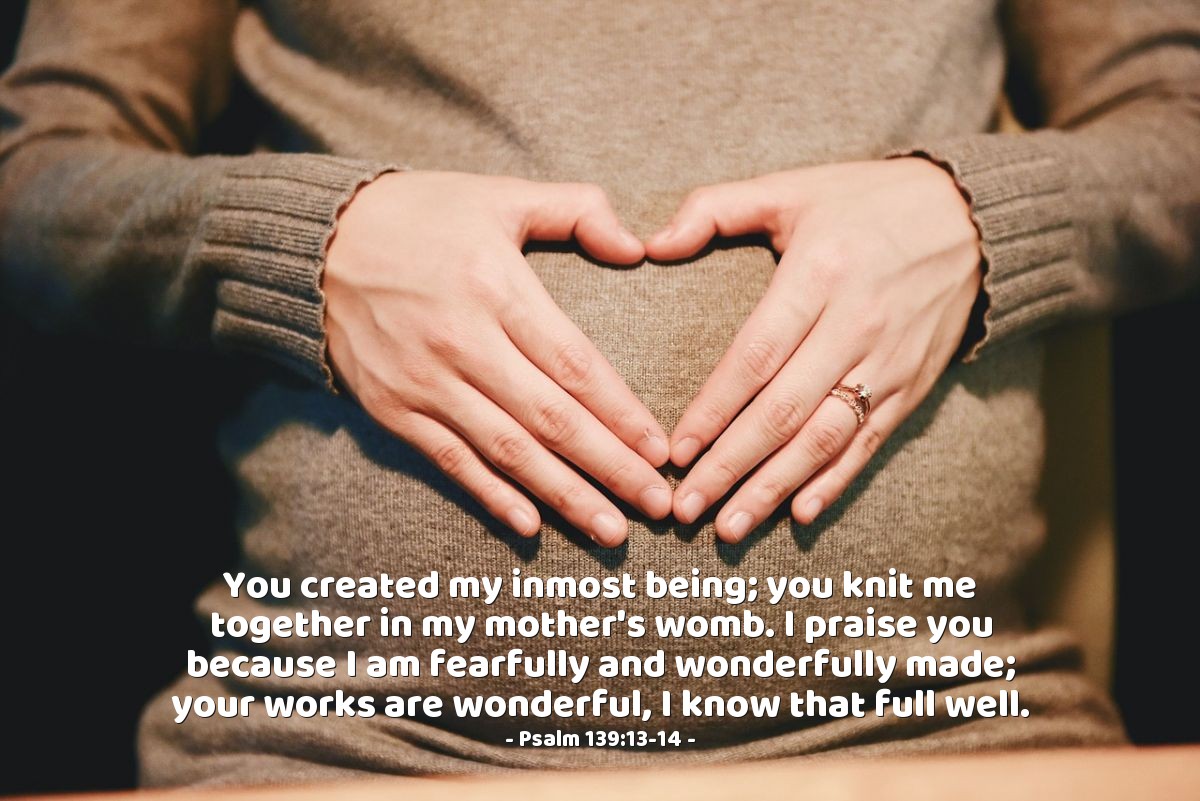
We can go a-marveling through our memories. Perhaps you remember such delights as these:

Even such ordinary events as these inspire wonder, because they point to a God who orchestrates satisfying moments into all our days.
We can also go a-marveling through the memories of miracles.
No doubt you’ve experienced spectacular moments such as these:

And while marveling at the miracles…
…We can go a-marveling at the wonder of prayer, which often precedes God’s astounding works.
First, our all-powerful God allows mere humans to come alongside him as he engineers events and accomplishes his good purposes.
Second, and even more marvelous, his Spirit comes alongside us as our partner in prayer, helping us pray as we should.

How wondrous is that?
Finally, we can go a-marveling through scripture.
The Bible was written by at least forty authors from different walks of life, over the span of 1500+ years, on three continents. No other book has come into existence out of such wide-reaching diversity. And yet the reader can’t help but notice the unity of its content.
Within the pages of scripture we find wisdom and inspiration for living, strength for difficulty, comfort for pain, and peace for unrest.
It’s true: those who know their Bibles best, marvel at its truths the most. They notice “wonder after wonder, and every wonder true” (St. Brude).

And where might all this marveling lead? To still more wonders: stronger faith, deeper contentment, and greater joy.
* * * * * * * * * *
Who is like you, O God—majestic in holiness, awesome in glory, continually working wonders? Our lives are FULL of marvels, O God! May we be lost in wonder, love, and praise, just like the old hymn writer proclaimed.
(Exodus 15:11; “Love Divine, All Loves Excelling” by Charles Wesley)
What are you marveling in today? Tell us in the comment section below!
Notes:
Art & photo credits: http://www.pixabay.com (2); http://www.pxhere.com; http://www.usnhistory.navylive.dodlive.mil; http://www.maxpixel.net; http://www.flickr.com (2); http://www.wikipedia.org; http://www.heartlight.org; http://www.maxpixel.net; http://www.usafe.af.mil; http://www.dailyverses.net; http://www.needpix.com.
Posted in Blessings, God's Goodness, God's Provision, God's Wisdom, Uncategorized, Wisdom, tagged God holds us in his hands, God's Blessings, in your right mind, life in balance, living God's ways, living in unity, popular crowd on September 12, 2019| 14 Comments »

Remember the in-crowd at your high school–the cool kids who wore the latest fashions, knew the latest songs, and seemed more attractive, confident, and important than everyone else?
‘Truth is, research has established “those who cared most about their social standing [as teenagers] often grow up to have difficulties with their interpersonal relationships years later.” Their fixation on status stays with them, and they are the ones most likely to suffer from anxiety, depression, and problems with substance abuse (1).
Now I’m thankful to never have been a part of that group.
But another in-crowd beckons–one that everyone is invited to join–that offers satisfaction in life and purpose.
It’s God’s in-group.

And just what does he have to offer?
God’s in-crowd is in their right minds (2 Timothy 1:7 NKJV).
They strive to focus on the positive, and turn their attention toward God himself—His attributes and works. People in their right minds are Presence-focused, remembering the almighty, all-wise God is with them. They’re also promise-fortified, affirming that God WILL keep their minds calm because they trust in him.
Such trust requires effort, since we often lean toward the negative. But like a wrangler who captures and subdues a wild horse, the in-crowd takes their problematic thoughts captive, and tames them with the bridle of God’s truth (2).
They also pray—perhaps like Selwyn Hughes: Lord, “I give You my mind—so that You can give me Yours” (3).

God’s in-crowd is in balance.
The Apostle John wrote to Gaius: “I pray that you may enjoy good health and that all may go well with you, even as your soul is getting along well” (3 John 2).
That’s quite a compliment. If John had written such a greeting to me, he may very well have reversed his statement, praying that my soul might prosper as well as my physical health.
Of course, both are necessary for overall well being. So just as proper diet, exercise, and sufficient rest are necessary for the body, the in-crowd keeps their souls healthy through a steady diet of God’s Word, the exercise of obedience, and rest in him.

God’s in-crowd is held in his hands.
King David wrote about the phenomenon in a prayer song to God: “My times are in your hands” (Psalm 31:15a). Those hands are powerful and mighty, open and generous, protective and secure—even when someone faces difficult challenges like the Apostle Paul.
While imprisoned in Rome and anticipating his execution, Paul affirmed the strength God provided him, the generosity of God to supply all needs, his contentment in spite of circumstances, and the security of knowing all would be well whether he lived or died (4).
The in-crowd faces their challenges with the same affirmations.

God’s in-crowd lives in God’s ways (Psalm 25:8-10).
Wisdom would have us know this: “Blessed are those who keep my ways. Listen to my instruction and be wise; do not ignore it. For whoever finds me finds life and receives favor from the Lord” (Proverbs 8:32-33, 35).
Critics may say, “Oh, but the Bible is so out-of-date. Times change; morals shift. What was once considered wise has been replaced by post-modern sensibilities.”
They need to observe God’s in-crowd, who delight in his Word because they find instruction for a life of purpose and meaning, preservation of life in his encouragement, and peace of mind in his truth—things post-modern sensibilities do not offer (5).

God’s in-crowd is in unity with one another, just as he desires (Ephesians 4:3; Colossians 3:13-14).
They remember: all God’s people belong to each other (Romans 12:5). So they focus on common ground and find ways to support one another rather than fuss over non-essential differences.
And as a unified group, God’s in-crowd is a force to be reckoned with.
Like snowflakes:

“Snowflakes are one of nature’s most fragile things.
But just look at what they can do when they stick together.”
–Vesta M. Kelly

* * * * * * * * * *
I praise you, Heavenly Father, that as we trust in your Son Jesus for eternal life, you also provide in-crowd status with all its privileges and spiritual blessings—to every believer. You are the God of surpassing goodness to your people!
(John 3:16; Ephesians 1:3-8; Psalm 84:11)
Notes:
Photo credits: http://www.pexels.com; http://www.dailyverses.net; http://www.pxhere.com (2), http://www.dailyverses.net (2); http://www.flickr.com; http://www.pexels.com.
Posted in Blessings, Encouragement, Faith, God's Presence, Intimacy with God, Renewing the Mind, Uncategorized, tagged Faith and imagination, imagination on July 25, 2019| 13 Comments »

“I made soup,” she says.
I peer into the pot to see a chicken leg, a whole apple, a cluster of green beans and an ice cream cone.
“Eat some!” she coaxes.
I spoon a bite and assure her, “Oh, this is delicious.”
She smiles broadly. “I make dessert.” And two-year old Maarit (Mah-rit), our granddaughter, trots back to her child-size kitchen to bake a plastic cake or pie.

It’s such fun to watch little ones enjoy their vivid imaginations, and it comes so naturally to them. No one has to teach toddlers how to pretend; they just do. But as we grow and leave childish things behind, most of us abandon our imaginings.
Oh, what we’re missing.
In a post a couple of years ago (Oh, Say Can You See), we looked at three ways an active imagination can positively impact our faith, helping us to better understand God, add insight to Bible reading, and see more in this incredible world he’s created.
Today let’s consider three more ways.
In his Word he calls us to see people for what they could be and will be as they avail themselves of his transforming power. We’re also called to see situations with forward-looking faith in God’s ability to do far more than we can imagine (1).
By contrast, our thoughts too often veer to the negative. We forget what the Apostle Paul told us in Philippians 4:8—to think on excellent and praiseworthy things.
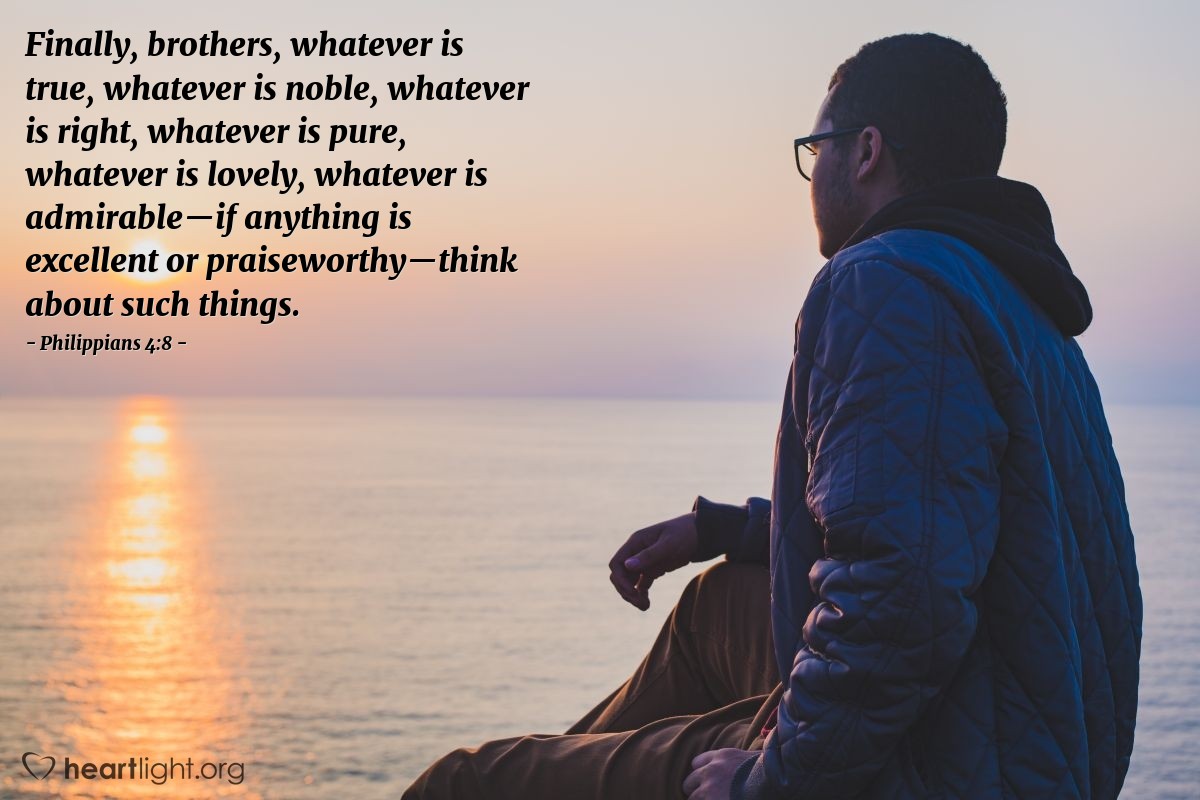
C. S. Lewis helped a woman do just that in a letter he wrote as she lay in a hospital contemplating the possibility of death:
“Think of yourself,” he said, “just as a seed patiently waiting in the earth: waiting to come up a flower in the Gardener’s good time, up into the real world, the real waking. I suppose that our whole present life, looked back on from there, will seem only a drowsy half-waking. We are here in the land of dreams. But the cock-crow is coming” (2).
Surely Lewis’s words stirred fresh hope in her heart as he awakened her imagination to a new perspective. In your mind’s eye, can you see excellent, praiseworthy events unfolding in the situation that most concerns you? Allow such imaginings to provide fresh hope for your heart.
The very nature of faith requires imagination, because the kingdom of God cannot be perceived by the senses. It exists invisibly among and within those who invite King Jesus to rule in their lives (3). But our imaginations can help us access the invisible through the visible as we contemplate:

For example, what if we:


You might remember that Jesus held children in great regard. He suggested that adults become like little children to enter the kingdom of God (Matthew 18:1-5). Granted, his emphasis was upon trust, loyalty and humility. But responding to him with the imagination of a child as well will help us fly beyond the stars.

I don’t want to miss that. I’m guessing you don’t either.
Notes:
Photo credits: http://www.pxhere.com; http://www.edwards.af.mil; http://www.heartlight.org; http://www.goodfreephotos.com; http://www.pixabay.com; http://www.flickr.com.; http://www.quotefancy.com.
Posted in Appreciation, Blessings, Encouragement, God's Faithfulness, God's Goodness, God's Presence, Joy, Praise, Renewing the Mind, Uncategorized, Worship, tagged counting blessings, God's glory all around us, Gratitude, simple pleasures on July 18, 2019| 23 Comments »

The summers of my childhood included a blend of games and activities with neighborhood friends, afternoons at the community pool, bike rides to the library, and a few weeks spent with Grandma Clara and Grandpa Henry who lived four hours away in Iowa.
No doubt some would describe our summer experiences as mundane, not realizing the joy hidden among the ordinary:

It’s the small, happy moments—not the grand events—that contribute to satisfying days and a joy-filled life.
The joy of small…makes life large.
–Ann Voskamp (1)
However, I have to admit: my childhood-self took those lovely moments for granted. I lived unaware of God’s glory pervading my everyday experiences: his creative genius on display—even in the backyard, his love, peace, and security within a family grounded on Christian values, and his goodness to provide joy-filled moments that shimmer in my memory with holy perfection.
Now, as the decades have passed, I’m learning to identify more of the transcendent moments God provides, including:


God’s glory is on display right “in the middle of our minutes” (2).
So each night before falling asleep, let’s measure the moments of our days:
“Laughter is to life what shock absorbers are to automobiles.
It won’t take the potholes out of the road,
but it sure makes the ride smoother.”
–Barbara Johnson

And just as inches are measured into feet, so we can measure meaningful moments into satisfying days and a joy-filled life–because God is in them.
What meaningful moments are at the top of your list for today? Please share in the comments section below!
Notes:
(Photo credits: http://www.geauxguard.la.gov; http://www.pixnio.com; http://www.flickr.com; http://www.pxhere.com; http://www.flickr.com; http://www.pexels.com.)
Posted in Appreciation, Blessings, Encouragement, God's Love, Uncategorized, tagged Attentive living, God's Love, Living Aware on June 6, 2019| 15 Comments »

Several years ago our daughter dashed off two love notes and hid them in our house just before she and her family returned to their home, more than 2,300 miles away. You can imagine those little notes provided delightful, heartwarming surprise upon discovery. And I’ve kept them, to enjoy again and again.
God also leaves love notes tucked here and there into every day.
Love notes like:




Some of God’s love notes actually include words—but not always from the Word.

Recently at the hairdresser’s I happened to pick up a secular magazine to pass the time. In her introductory letter, the editor wrote about her grandmothers and their important influence in her life. She reaffirmed that investing in our grandchildren is highly worthwhile, and they do remember love expressed, attention bestowed, and examples set.
Her words suddenly became God’s words, and tears came to my eyes. There is significance in the repetition of Goodnight Moon, “The Itsy Bitsy Spider” and pony rides. There is power in appreciation for primitive artwork, impromptu dances, and weed bouquets. There is influence in affirming strong effort, perseverance, and the courage to try new things.

Granddaughter #2,
building a stool for her doll with wood scraps–
with a little help from Dad
Also recently, I encountered a restaurant worker cleaning the drink station as I approached to pump my herbal tea. We exchanged the typical “hellos-and-how-are-yous. Her greeting was especially positive and cheerful.
“Are you really that fine?” I asked, leaning forward in order to make eye contact.
“Yes, ma’am,” she exclaimed with enthusiasm. “God is so good, I can’t complain!”
“I feel the same!” I answered. “God has been incredibly good to us too.”
The woman finished her task and turned to leave, with more praise on her lips. I wish I could remember her exact words. Nonetheless, I do know those several moments with her provided another love note of affirmation from God, stirring up gratitude and joy in my spirit.

* * * * * * * * * *
Lord, open my eyes to find all your love notes, prepared for me each precious day of life. Then nudge me to turn every note into praise, and joyfully celebrate you.

(from http://www.quotefancy.com)
Oh, yes. Let me one of those who takes off her shoes.
What love note have you received from God recently? Tell us about it in the comment section below!
(Photo credits: Nancy Ruegg; http://www.geograph.ie; http://www.pxhere.com; http://www.wikimedia.org; http://www.wikipedia.org; http://www.pxhere.com; Eric Ruegg; http://www.dailyverses.net; http://www.quotefacy.com.)
Posted in Blessings, Encouragement, God's Faithfulness, God's Goodness, God's Presence, God's Protection, God's Provision, God's Refuge, Uncategorized, tagged backyard, God's Presence, God's Provision, lessons from squirrels, lessons from trees, outdoors, Psalm 27:1, quiet time, spring on May 30, 2019| 26 Comments »

(The view from my deck chair)
As spring approaches I look forward to spending my morning quiet time on our deck—taking in the new foliage-finery of the trees, the happy chatter of birds, the whispering breezes, and the sweet aroma of alyssum from the deck planter.
There’s something about sitting with God in his Living Room* that opens our eyes to his glory and draws our spirits closer to his heart.
Saturday was just such a day. And as I sat in His presence, God seemed to say:
I’m so glad you’re here, Nancy! I’ve planned several discoveries for you this morning.
From the Trees

First, lift your eyes to the trees. Rejoice in the reminders of:
Note the evidence of competence in their design–for purpose, beauty, and sustainability. I am your God of Competence as well, and have designed you to fulfill an individualized purpose, provide the beauty of Christlikeness to those around you, and spend eternity with Me.
From the Birds

(white-breasted nuthatch)
You can also revel in the birds—symbols of reliance on Me, and again, My provision (Matthew 6:26). Note the variety of color, pattern, song, and habit. Let the joy you experience watching birds remind you how I value your uniqueness.
Choose to celebrate who you are: the colors of your personality, the pattern of your life, the song of gifts and talents I’ve given you to share with the world, the habits of goodness I continue to form in you so you can impact others.
From the Squirrels

Together we can enjoy the antics of the squirrels! They too provide reminders for the life of faith:
I have provided a sure pathway for you to navigate through life. You can run in the path of my wise commands; my ways will bring you home safely (Psalm 119:32a; 139:24b).
I am your security (Psalm 112:8). Out of My love and faithfulness, I will always protect you (Psalm 40:11)—even as I bring you home to heaven one day.
So when you find yourself at the end of a branch, and fear starts to creep in, send it scurrying away with My Word—verses like Psalm 27:1:

(Another view from our deck)
The Lord is my Light—
[My Joy, Peace, and Guide]
The Lord is my Salvation—
[My Protection, Provision, and Security]
Whom shall I fear?
The Lord is my Stronghold—
[The Treasury of all good things]
Of whom shall I be afraid?
* * *
*a creative expression originated by Michael Hyatt, former CEO of Thomas Nelson Publishing
Photo credits: Nancy Ruegg; http://www.pxhere.com; Nancy Ruegg; http://www.maxpixel.net; Nancy Ruegg
Impressions Becoming Expressions
The Power of Story
Impressions Becoming Expressions
Gaining a heart of wisdom
I'm Patty, and my husband and I are living with our adult son who has autism and epilepsy. I love sharing lessons learned from life around me, especially life with Aaron.
Impressions Becoming Expressions
Impressions Becoming Expressions
Dove la fede incontra "slow living"
Finding the Image of God


