Because God says we’re forgiven (Psalm 103:8-12), let’s refuse to dwell on past sins.
Sins are so remitted, as if they had never been committed.
Thomas Adams
Because God proclaims us righteous (1 Corinthians 1:30), let’s refuse to be haunted by past failures.
Do you know what you imply when you say that you are a Christian? It is that you are as guiltless in God’s sight as Christ Himself.
G. V. Wigram
Because God has already asserted his 100% approval of us (Ephesians 1:4-5), let’s stop pursuing perfection.*
Because God has made clear his love for us (Romans 5:8), let’s not tarnish that love with disbelief.
All shall be well, all shall be well . . . For there is a force of love moving through the universe that will hold us fast and never let us go.
Julian of Norwich
Because God pronounces each of us his masterpiece (Ephesians 2:10 ISV), let’s not berate his workmanship.
All who are in Christ form the highest, finest, and most beautiful expression of [God’s] thought and purpose. They are masterpieces upon whom he bestowed his best.
Herbert Lockyer, Seasons of the Lord, 330
Because God says, “Fear not” (Isaiah 41:13), let’s not doubt his unlimited power to help.
Because God affirms he’s our unfailing source of strength (Isaiah 40:29-31), let’s refuse to say we’re weak.
It is impossible for that man to despair who remembers that his Helper is omnipotent.”
Jeremy Taylor
Because God declares he’ll instruct us and watch over us (Psalm 32:8), let’s not strike out foolishly on our own.
With the goodness of God to desire our highest welfare, the wisdom of God to plan it, and the power of God to achieve it, what do we lack?
A. W. Tozer
Because God promises to work for our good (Romans 8:28), let’s not fret about the what-if’s.
Because God provides the way for victorious living (1 John 5:4-5), let’s not live in defeat.
Daily living by faith in Christ is what makes the difference between the sickly and the healthy Christian, between the defeated and the victorious saint.
A. W. Pink
This means, my friends, we can live each day guilt-free, grace-imbued, love-wrapped, purpose-filled, worry-free, strength-infused, fully-equipped, highly blessed, and victory-assured—because God Almighty says so!
*We don’t have to earn God’s love and acceptance. Neither do we have to pursue perfection, as if it’s necessary in order to please God or be accepted by him.
Years ago I came across an amusing, tongue-in-cheek article, “What Your Favorite Color Says about You.” Wish I’d saved it, but alas.
I remember thinking, This will be fun to share with the girls in the faculty lounge during our break. Those girls would be the other fourth grade teachers at my school.
Sure enough, as each colleague revealed her favorite color and I read its meaning, they began to laugh uproariously, because the humorous descriptions fit each person’s personality perfectly. A few times I could hardly get the words out before a giggle-fit would overpower me—even though the article was already familiar.
Had the laughter come while reading to myself? No—not until I shared it.
Surely you’ve noticed this phenomenon, which brings us to the first joy-booster:
Share a joy and expand that joy.
St. Augustine explained it this way:
What a God-given gift—the privilege to contribute happiness to one another, and find our own joy increased as well.
Another joy booster?
Pay attention to detail.
I wonder how many of God’s delightful gifts have escaped my attention because I’ve been distracted?
I’m still striving to live aware and not allow my thoughts to be so focused on events (past, present, or future), what-ifs, or the to-do list, that I miss God’s glory right in front of me.
I want to:
Take note of the graceful sway of the willow trees
Breathe in the aroma of a crisp winter’s morning
Listen attentively to the happy praises of a house sparrow
Pause to truly taste the nutty goodness of freshly brewed coffee
Focus on the cool softness of a rose petal
The incredible gift of the ordinary! Glory comes streaming from the table of life.
Macrina Wiederkehar
Joy Booster #3:
Express gratitude and be filled with joy (Deuteronomy 26:11; Psalm 126:3).
Expressing appreciation for what we already have—even the little things—can profoundly affect our spirits.
For example, I’m grateful for:
Color. God could have created the world in shades of gray; it probably wouldn’t have mattered. But the variety, the interest, and infinite number of color-combinations add such great pleasure to our lives.
Anticipation. The remarkable aroma of garlic and onions simmering in olive oil–a precursor to the savory soup we’ll enjoy in a few hours–all the more flavorful because my husband is making it. (He actually likes to cook!)
The contrast of light and shadow. The security lights on the backsides of the neighbors’ houses create enough glow so tree branches cast lovely criss-cross shadows across the snow.
Steve’s three squeezes when he holds my hand. It means, “I love you;” and we’ve been passing that silent message back and forth for over forty years.
The dimples on a baby’s hand—the epitome of cuteness.
And while contemplating such blessings, I realize afresh why God has told us to rejoice at all times (1 Thessalonians 5:16).
Let’s boost our joy by sharing happiness to those around us, living attentively, and expressing our thanks to God continually!
* * * * * * * * * *
What boosts your joy? Tell us about it in the Comment section below!
(What follows is an imaginary conversation between God and me as I contemplated the verses above.)
ME:
O God, at face value this proclamation excludes me from your presence. How unthinkable! I can’t imagine life without you actively involved, providing strength, wisdom, encouragement, and more.
But I haven’t led a blameless life, I haven’t always done what is right, nor kept my mouth from lies or insincerity. Any effort on my part to warrant access to your presence would fall horribly short of your standard.
However. You understand what I’m made of; you know I’m just dust! You’ve provided the Way for me to enter your presence—even enjoy relationship with you—through your perfect and blameless Son.[1]
Jesus’ sacrifice in my place provided a figurative, pure white robe for me to wear, constructed from his uprightness, which is more than sufficient to cover all the stains of my sins.
It’s not my failures and wrongdoing that you see, but that radiant, spotless robe. “Thank you” seem such paltry words for such a precious gift![2]
And yet, even though I’ve been forgiven of all wrongs and no longer stand condemned, I dearly desire to be pure before you, including my thoughts, motives, and desires.
I want to please you in appreciation for all you’ve done for me. In addition, a pure life of wisdom and goodness will allow me to experience the fullness of your blessings like peace and joy, untainted by any sin, guilt, or shame.[3]
How do I become pure, Father?
GOD:
(Put your name in the blanks.)
It pleases me greatly, __________, that this is your heart’s desire. Remember, just as my Spirit led you to Jesus, he is at work within you creating good.[4]
This is a joint effort, however. You strive toward purity while I strengthen you for the task and augment the outcome. With each step you take, the next one becomes easier as you grow in self-discipline.[5]
Let’s begin with your thought life. I inspired Paul to include eight adjectives that describe the kinds of thoughts that will cleanse the mind of negativity, discouragement, and temptation:
And the purest, most noble truth you can dwell on is my Word.
Within the covers of your Bible you find the guidance you need and the wherewithal to heed it, the encouragement to press on and the strength to do it, the comfort for every wound and the faith to embrace it.
And then pray, dear __________. Seek the quality of purity as King David did when he asked, “Create in me a clean heart within me, O God” (Psalm 51:10).
Thus empowered by noble thoughts, scripture-truth, and heartfelt prayers, you’ll learn to love the sound of your feet walking away from things not meant for you[6] and reveling in the pure things that are.
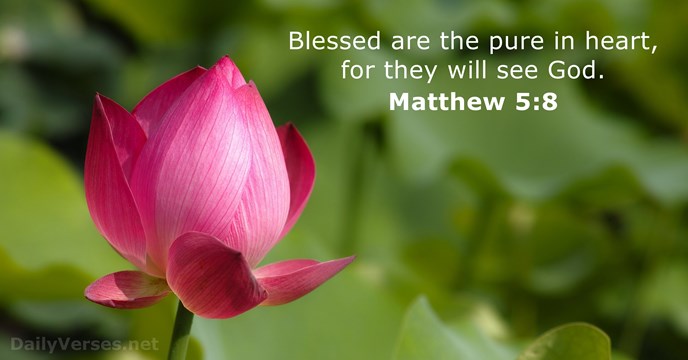
Then–such wonderful blessings I’ve reserved for you! Remember what Jesus said in his Sermon on the Mount?
To see me is to enjoy intimate fellowship with me. You’ll sense my presence with you. Together we’ll enjoy my glory reflected in creation, in the events of your life, and in the lives of others.
I’ll open your eyes to see rare splendors of my glory. From morning till night, __________, you’ll be praising my name and I will smile with delight.[7]
ME:
O Father, grow me in purity so I may present it as a love-gift back to you, and as a means of experiencing the blissful life with you that you so graciously offer.
In the powerful name of your Son Jesus I pray, AMEN.
While exercising last Friday I listened to a podcast of Pete Briscoe’s sermon, “Every Day Jesus.” He made the point that we can actually see “tangible evidence of his intangible love” if we’re paying attention.
Pete told the story of a man who began looking for hearts, as emblems of Jesus’ love for him. He found them everywhere—heart-shaped rocks, shells, clouds, a heart-shaped stain on his jeans, even a heart-shaped dinner roll.
Pete told Jesus, I’d like to find tangible evidence of you too. That very afternoon he spotted a pile of grass clippings on the side of the road, shaped just like a heart. He shared a photo on the sanctuary screen, and sure enough, there was no mistaking it.
Oh Lord, I thought, while finishing a set of push-ups. That sounds like such fun. But I wonder if my emblem might be different than hearts—something personal. What could I look for?
No sooner did I get up from the mat than there it was: a star—a big one—blazoned on the wheel of our exercise bike. (Jesus made sure I didn’t miss it!)
The verse in Revelation came to mind where Jesus calls himself the bright morning star (22:16). And brief research delightfully expanded my understanding, so I’d appreciate more the stars yet to be discovered.
Just as Venus, the morning star, is always present whether we see it or not, so is Jesus. He is FAITHFUL and TRUE (Revelation 19:11), even when there’s no evidence in the moment.
Just as the morning star gives us assurance of approaching dawn, so Christ gives us assurance of approaching eternal life with him in heaven. He is our HOPE (1 Peter 1:3-5).
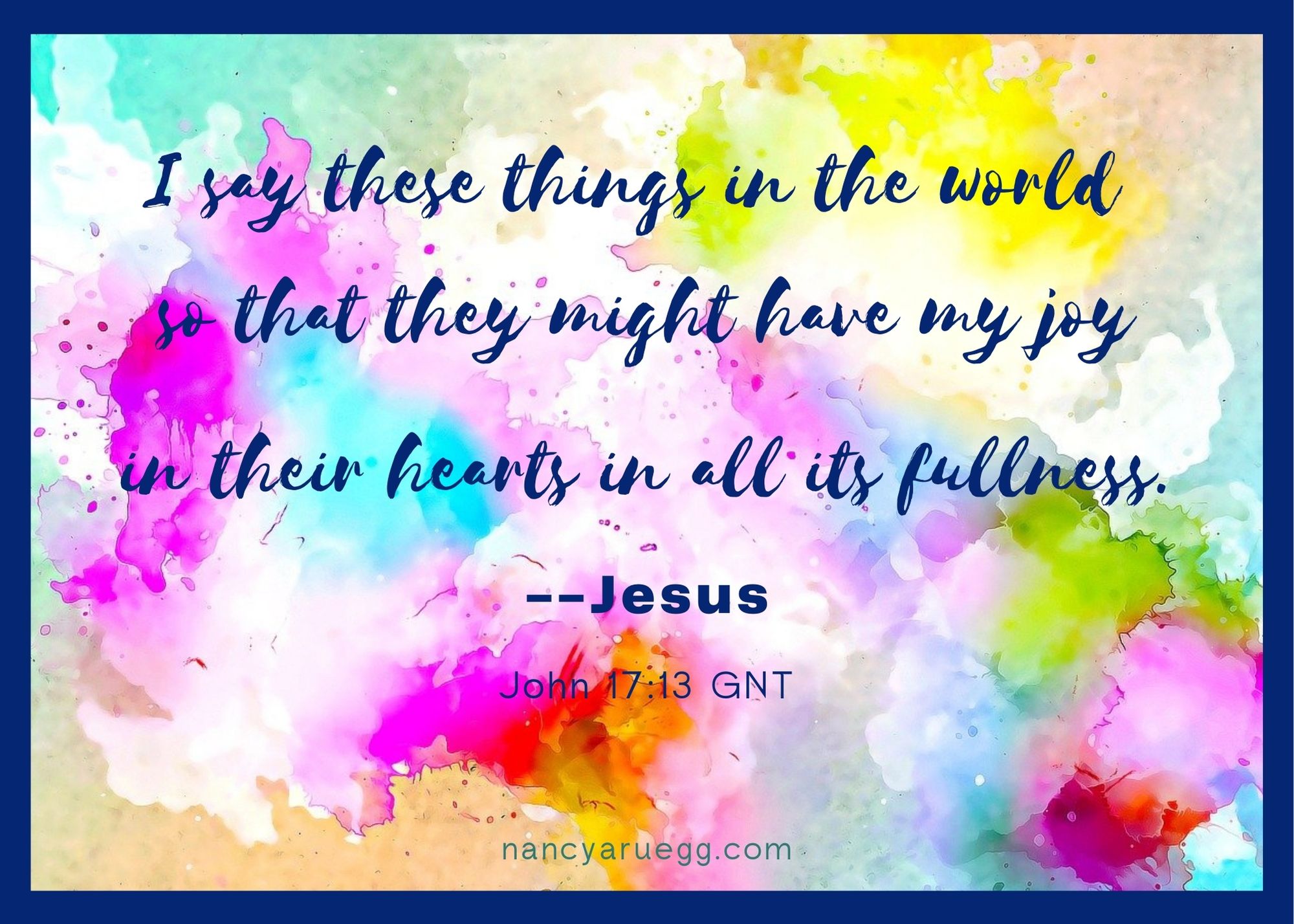
And just as the morning star cheers the night-weary soul, so Jesus brings JOY to the discouraged soul (John 17:13).
Each star then, would be a reminder of my Savior’s unfailing faithfulness, the confident hope I have in him, and the ineffable joy he provides.
Since Friday stars have been appearing with surprising frequency.
For example:
A friend posted a photo of her snow-covered garden. Right of center stood a small windmill –with a star on top.
While looking for an old photo on my phone I came across a springtime star from our own backyard.
We watched our Cincinnati Bengals squeak a win over the Titans last Saturday night. I’d never paid attention before to the NFL logo—with its stars.
The Titans’ helmets also include stars. See them surrounding the T?
In our refrigerator are a half-dozen stars or so. . .
. . . if you were to cut the apples horizontally, instead of stem to calyx.
A devotional reading this week just happened to be titled, “Star Gazing.”
In my office you’ll find paper clips shaped like stars. . .
. . . and on a table sits a Czechoslovakian, star-topped creche that I leave out all year.
On a shelf in the family room a crystal star adds sparkle . . .
. . . and even makes rainbows when placed in the sun.
With each star discovery, my heart sings. He is here—with us—revealing his extraordinary presence among the ordinary moments of our lives.
* * * * * * * * * *
Lord God, after less than a week I’m already rich with stars! You’ve scattered them throughout my days with such creativity. Thank you that each one reminds me: my faith is not misplaced, my hope is assured, and every joy of life is enhanced—because of your loving presence.
Do you find tangible emblems of Jesus’ intangible love as you go about your day? Tell us about it in the comment section below!
Remember Christmas morning as a child—the first glimpse of the enticing packages tucked under the tree? Did you hop and clap with delight?
Or how about that winning touchdown for your team—in the last few moments of the game with your school’s arch rival? Did you jump up and shout in celebration?
Perhaps a family member or dear friend recently announced glorious news—a baby on the way, better employment obtained, or a clean bill of health finally received. Did you find yourself dancing for joy?
Over-the-top pleasure and exciting events will do that to us. And although the body may no longer respond with hops, jumps, or dance, our spirits certainly soar in the moment.
The prophet Habakkuk of Old Testament times wrote about just such a response. I love the way Eugene Peterson paraphrased the verse: “I’m turning cartwheels of joy to my Savior God” (Habakkuk 3:18 MSG). Sounds like the prophet received the answer to a heartfelt prayer or perhaps a miracle had occurred.
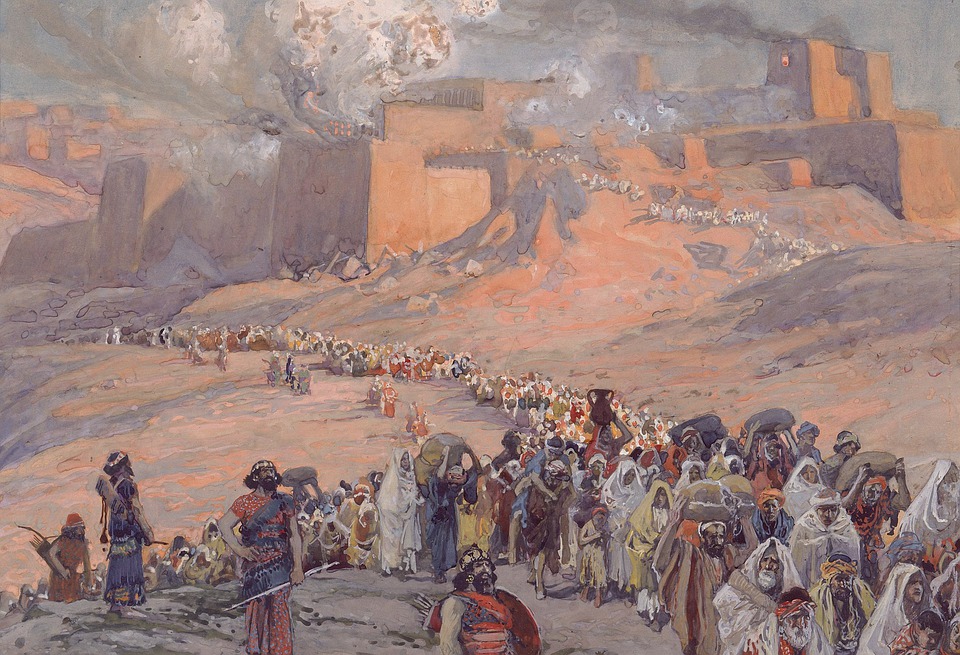
Truth is, Habakkuk’s home city of Jerusalem faced imminent invasion by the brutal Babylonians. Recent conquests of other kingdoms left no question about the city’s fate.
God had made clear why disaster loomed. The people of Jerusalem had continually ignored his wise ways and reveled in wickedness. Multiple warnings had been proclaimed and disregarded.
In response God was about to provide a means of saving his people—not from the ruin of their city—but from the ruin of their souls. He would allow the invasion and a period of captivity in a foreign culture 900 miles away (Isaiah 39:5-8; Jeremiah 25:1-11).
(Isaiah foretold this scene in the latter half of the eighth century BC, Jeremiah in 605 BC. The invasion took place in 586 BC.)
Habakkuk questioned God’s decision, wondering why he would allow the Babylonians, a people more wicked than the inhabitants of Jerusalem, to “swallow those who are more righteous than they are (Habakkuk 1:13)?”
By the end of his book, however, the prophet’s doubts had turned to faith and he declared—in the face of calamity–“Yet I will celebrate the Lord. I will rejoice in the God of my salvation” (3:18 NIV).
The word rejoice in this verse is ‘alaz’ in the original Hebrew, and means to “spin around for joy.”* Can you imagine? Disaster loomed. All Habakkuk had ever known would be destroyed. If not killed, he would be forced into captivity in a hostile country.
Yet Habakkuk determined to dance for joy in his spirit—spin cartwheels even.
How does a person acquire such joy? Not by setting her sights on things that make her momentarily happy. Deep-down dancing joy grows in proportion to our trust in God, and our trust grows in proportion to our knowledge of God—knowledge gained as we spend time in His Word.
We’d also do well to remember the close relationship between joy and gratitude.
As 2022 unfolds, a number of crises threaten—in our cities and states, our country, and around the world. With Habakkuk of old we have a choice: to sink into despair over the real possibility of disaster, or to rejoice in our God who will enable us to endure whatever we may face (James 1:2-4).
It is our turn to spin for joy–in the God of our salvation!
S. Truett Cathy (1921-2014) was just such a person, who grew up in poverty during the Great Depression to become a steadfast and unmovable masterwork of God.
At age eight he started his own business, inspired by a woman in his Atlanta, Georgia neighborhood. She sold cupcakes from her front yard.
M-m-m. What could I sell to earn some money? Truett wondered.
The answer: soft drinks. He purchased six bottles for a quarter and sold them for a nickel apiece. Just twenty six-packs, he figured, and I’ll have a whole dollar.
Truett quickly realized he could expand sales by enticing the door-to-door salesmen with cold drinks. He began to serve ice with the soda.
Soon the young entrepreneur had saved four dollars—enough to buy an old bicycle. Now he could make quicker profits by delivering newspapers. But competition for customers was stiff with three well-established papers in Atlanta.
Truett had learned the value of customer satisfaction, however, so he made sure his papers landed on porches. On rainy days he put them inside the screen doors, and his customer list grew.
Truett delivered papers until high school graduation, after which he was drafted into the Army. Upon honorable discharge in 1945, Truett returned home to pursue his lifelong dream: owning a business.
He decided to open a restaurant, knowing a bit about cooking for a crowd. For years he’d helped his mother as she daily prepared meals not only for their family of nine but also for six boarders.
Truett and his younger brother Ben pooled their resources, took out a loan and bought a piece of land near a Ford assembly plant and Delta Airlines at the airport which provided a large customer base.
The tiny restaurant, aptly named the Dwarf Grill, included just ten counter stools and four tables. The brothers served quick-to-fix burgers and steaks.
(The Dwarf Grill is still in operation, but in a new building with a revised name.)
They worked hard and the business thrived. But in 1949 tragedy struck. Ben, another brother, and two friends were killed.
Later Truett would remark, “I lost two brothers in an airplane crash, both of them leaving a wife and kids. When I get to heaven, that’s probably the first question I’d like to ask: Why was it necessary?”[1]
The heartbreak did not erode Truett’s strong faith in God, which had been inspired by his devout mother and nurtured by Sunday School teacher and life-long mentor, Theo Abbey.
Then more trouble ensued. In 1959 Truett was diagnosed with colon cancer. In an interview he explained that just prior to the successful surgery he experienced a new peace, knowing that whether he lived or died, he would be with God.[2] God granted another fifty-six years.
In 1960 the second restaurant burned to the ground, and then the original Dwarf Grill caught fire in 1965. But instead of becoming discouraged, Truett leaned on his God, growing stronger in faith and more determined than ever.
With only one restaurant to oversee, he focused his time on developing the menu. Truett remembered his mother’s impressive fried chicken, how she seasoned it the night before and put it in the ice box to marinate.
He experimented with recipes, tried his efforts on regular customers and soon created a new menu item: the Chick-fil-A sandwich—a play on the word fillet, but also indicating the meat was grade A.
Customers loved the new sandwich, and in November 1967, Truett opened the first Chick-fil-A restaurant. One successful opening followed another until, in the year 2000, the restaurant chain grossed one billion dollars in sales. By 2018, it surpassed $10 billion in sales.
(Double-click and enlarge this image to read about Truett Cathy’s winning habits based on Biblical principles.)
Today, the company generates more revenue per restaurant than any other fast-food chain, even though all locations are closed on Sundays. (Since his first day in the restaurant business, Truett set aside that day for his employees and himself “to rest and worship if they choose.”[3])
Truett’s commitment to put God first is expressed in the company’s statement of purpose: “To glorify God by being a faithful steward of all that is entrusted to us and to have a positive influence on all who come in contact with Chick-fil-A.”[4]
Truett also delighted to glorify God by spending his fortune to encourage others.
How do you identify someone who needs encouragement?
That person is breathing.
–Truett Cathy
Since 1973, Chick-fil-A has given more than $35 million in college scholarships to its employees. Truett also founded the WinShape Foundation, providing approximately $18 million dollars for the development of foster homes and summer camps.
His legacy of planting Christian ideals in the lives of others continues, even though Masterwork Samuel Truett Cathy now resides in heaven. (He is survived by his wife of sixty-six years, three children, eighteen grandchildren, and nineteen great-grandchildren.)
“God’s presence flowed over me like liquid love.”[1]
Isn’t that delightful imagery?
Perhaps you’ve experienced God’s presence as liquid love—deep-down warmth drenching the soul through a God-enhanced moment, overflowing joy as he lavished favor upon you.
Looking back on 2021, I can identify such glorious moments and have included a few of them below. Perhaps they’ll trigger memories of your own, when you experienced liquid love from God’s river of delights.
First, the highlight of 2021: our youngest two granddaughters invited Jesus into their lives—one in August, one in December. Nothing warms the heart more than seeing loved ones take this all-important step of faith!
Prior to Covid vaccines, a friend arranged a Zoom call for three of us to enjoy a cup of coffee together—virtually. The delightful gab fest, mutual encouragement and prayer for one another did indeed generate the warm flow of God’s liquid love.
A week of balmy weather in April allowed us to bask in sunshine-amidst-bird-song much earlier in the year than usual.
(Deck view of our backyard, mid-April)
Inspiration for blog posts often comes at unexpected times. One morning while getting ready for a women’s Zoom Bible study, an idea suddenly occurred to me. I smiled at the pleasure of it, knowing exactly where the notion came from!
After thirteen months of separation, we reveled in joining our son, daughter-in-law, and two granddaughters for dinner in their home. The best moment: reaching the third floor playroom, seeing the girls’ faces light up as they shouted, “Nana!” and tangling together in a glorious hug.
(Snuggling for a selfie)
Early May Steve and I were able to return to church. Though masks hid smiles and hugs were verboten (at first), we celebrated the togetherness of church family and the joys of in-person, corporate worship.
Mid-spring we watched four fox kits cavorting in the grass—a number of times. Their jumping, wrestling, and teasing nips at one another made us laugh. Better yet, such close encounters with God’s creatures feel like personal love-gifts from him. Indeed, “God’s love notes are stashed everywhere.”[2] They even appear in our own backyard.
Speaking of love-gifts, one lies upon our living room floor—a new rug. Though our wish-list was quite specific, and options studied online weren’t measuring up, the perfect choice presented itself in the first store we visited. (The discovery of a rug that appealed to both of us was a bit of miracle in itself!)
A Ruegg family reunion (13 of us) in a large, rustic cabin took place in August. What a glorious time of hiking, games, reading, long conversations, superb meals (planned and prepared by our older son and daughter-in-law), and even a song-fest around the fire pit one evening—all enjoyed in perfect weather no less.
Another cabin-adventure—this time with old friends–occurred in October. The mountain view out the back windows took our breath away; the laughter, banter, and coziness of our relationship produced a considerable uptick of endorphins.
(Mineral Bluff, Georgia)
Granted, people take pleasure in nature, family, friends, and delightful experiences all the time—without God. But for believers in Christ, the pleasure of each gift is richly augmented because God is in it with us.
Another gift? The overflow of liquid love often becomes blissful tears.
Now it’s your turn. In the past year, how did God’s love flow over you like liquid love? Share your experience in the comment section below!
[1] Pat Chen, Intimacy with the Beloved, quoted by Linda Dillow in Satisfy Your Thirsty Soul, 82.
One of the psalmists proclaimed, “I will go to the altar of God, to God, my joy and my delight” (Psalm 43:4). The statement raises the question, How doyou delight in someone who can’t be seen or touched?
Perhaps we can discover the answer by considering how we delight in the people around us. My father offers a perfect example.
First let me tell you: Dad worked miracles with his numerous tools. He could fix or build practically anything, as well as paint and wallpaper like a pro.
We were probably among the first to have a built-in sound system. Dad wired and hooked up a speaker in every room (each with its own on-and-off switch), so anything on the radio or hi-fi could be heard anywhere in the house.
Dad also built custom-sized furniture: in the living room–a bookcase (with open shelves above and enclosed shelves below) along with Mom’s music cabinet; in the kitchen—new cupboards and a storage cabinet; in Mom’s and Dad’s bedroom—a large dresser; and for my brother John and me—desks. Each project displayed his careful attention to detail.
But Dad’s admirable qualities weren’t only on display in his home improvement projects. He demonstrated patience while teaching us how to play Muggins (an old card game), how to use his tools, and how to plant seeds.
He exemplified selflessness by taking us sledding and kite-flying in the park, swimming at the community pool, and biking around town. Dad proved his generosity by volunteering time and effort to help neighbors and fulfill various needs at church.
When Dad said, “Who wants to pick up some lumber with me?” or “Who wants to go to the hardware store?” John and I were ready to drop whatever we were doing.
It’s not that these were exciting activities in themselves, it was Dad who made them a special delight–conversing with us as we rode to and from, pointing out items of interest along the way, and holding our small hands in his big ones as we crossed streets.
Now all this activity and industriousness took place decades ago of course, yet I still take pleasure in remembering his noteworthy undertakings and attributes. In fact, appreciation and admiration for him have only increased over time. I consider myself privileged to have known Dad and spent time with him.
(Dad and me, mid-1960s)
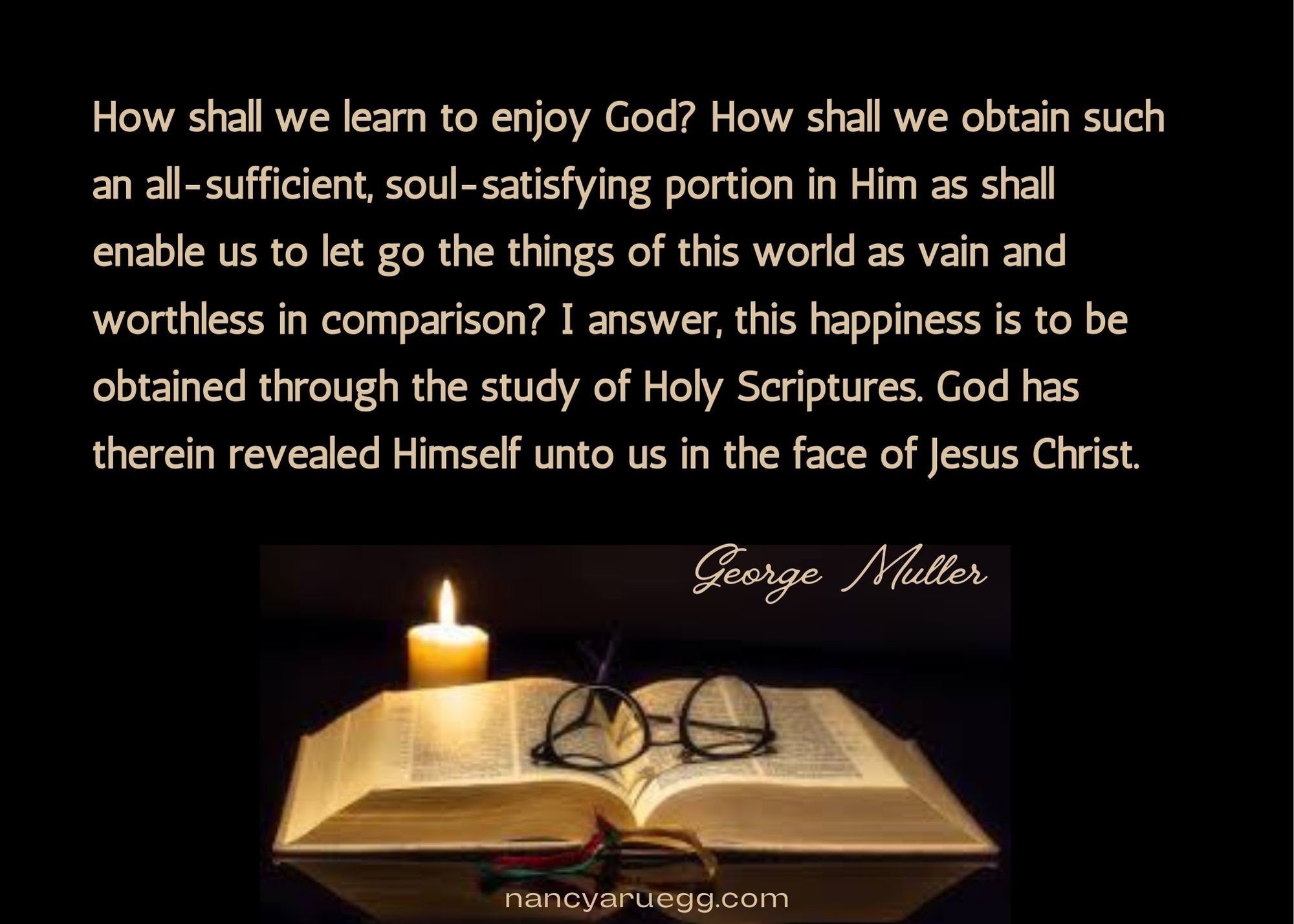
To know our Heavenly Father we turn to the Bible, of course. There we learn about his wonderful deeds and miracles. We see God’s glorious character traits on display, including his astounding abilities, his goodness, generosity, and love. We soon find ourselves delighting in all that he is.
We also delight in God as we spend time with him–celebrating what he’s done in our past and praising him for what he’s accomplishing today. We learn important life lessons from him. And we consider the benefits bestowed by our Heavenly Father, his eternal commitment to us, unfailing love for us, and strength-infusing presence with us.
We find ourselves happily praising God:
Then we turn all these contemplations into gratitude.
The daily practice of the discipline of gratitude
is the way to daily practice the delight of God.
–Ann Voskamp*
And what will be the result of such a practice? Pleasurable wonder, resilient faith, and serene contentment—as a start. Doesn’t that sound glorious? Especially during these turbulent times.
In addition, we’ll bring delight to him also (Psalm 147:11). Imagine that!
Perhaps we’d do well to turn Psalm 43:4 into a New Year’s resolution for 2022:
The psalmists of old seemed to have a favorite metaphor for God: Rock. You’ll find the imagery used twenty-nine times. Sometimes the writers included reasons why this was a meaningful comparison for them; sometimes they included synonyms:
“The Lord is my rock, my fortress” (18:2)
“My God is my rock, in whom I take refuge, my shield . . . my stronghold” (also 18:2)
“Lead me to the rock that is higher than I” (61:2)
“God alone is the mighty rock that keeps me safe” (62:2 CEV)
“Be to me a rock of habitation to which I may continually come” (71:3 NASB)
David seemed especially fond of this metaphor, perhaps because he spent months hiding from King Saul in the rocky terrain of the Judean wilderness. Psalm 57 was written specifically when he escaped into a cave. It may have been the characteristics of the rock walls surrounding him that brought to mind descriptors of God—solid, strong, protective, and unchanging.
Perhaps a cave such as this hid David and his men.
Might such a formation as this have provided the inspiration behind “Be the rock that is higher than I” (Psalm 61:2)?
Later when he became king, David composed Psalm 18, probably after the numerous battle victories summarized in 2 Samuel 8. Four times in that psalm he extolled God as his Rock.
In the New Testament we find Jesus’ parable about a foolish man building his house on sand, and a wise man building his house on rock. The point is clear: God is a reliable foundation-Rock on which to build our lives. He provides:
solid, trustworthy wisdom for decisions
strength and power for life’s challenges
protection from our arch enemy, Satan
unchanging reliability, faithfulness, and love—to name a few unfailing attributes
“Anyone who listens to my teaching and follows it is wise, like a person who builds a house on solid rock” Matthew 7:24. (House in Meteora, Greece.)
One of my favorite examples of Bible imagery is found in Philippians 2:15. To understand the context though, we have to start reading at verse fourteen:
Do everything without grumbling or arguing,
so that you may become blameless and pure,
children of God without fault in a warped and crooked generation.
Then you will shine among them like stars in the sky
as you hold firmly to the word of life.
–Philippians 2:14-15 NIV
Isn’t that a glorious statement in the fourth line above? We can shine into the darkness of the world like stars as we allow the Spirit to foster purity within us!
Ngc 3603 Nebula Cluster Of Stars
Now why would letter-writer Paul choose stars to make his point? Perhaps their beauty reminded him: with kindness, patience, joy, and more we can bring beauty to the world around us–a world darkened by selfishness, greed, and hatred.
Paul would also have known about using stars for navigation. As far back as 3000 B.C. ancient Minoans were using constellations to navigate the Mediterranean Sea (1). Perhaps Paul connected the starlight to God’s wisdom shining in mature believers, enabling them to provide guidance to those around them.
But now, centuries later, we know more about stars than Paul did and further comparisons can be drawn:
Stars shine by burning hydrogen into helium in their cores. We shine as the Holy Spirit burns away the dross in our lives—those unbecoming traits like pride, negativity, and ingratitude. That’s when we can become radiant.
One prominent star in the evening sky of Fall and Winter is Deneb in the constellation Cygnus (the Swan), which is 19 quadrillion miles from earth. The gleam we see left Deneb about 1500 light years ago in 521 A.D (2). The gleam of our lives can also achieve far-reaching effect as one life touches another which touches another, and then another . . . ad infinitum.
Stars not only create beauty but fulfill function. They manufacture and distribute into the universe such elements as carbon, nitrogen, and oxygen (3). As we shine like stars in our circles of influence, we too fulfill function, manufacturing and distributing such elements as goodness, encouragement, and helpfulness.
From earth and sky come these two insightful examples of biblical imagery: rock and stars.
Do you see the connection between the two? As you plant yourself on the firm Rock of Almighty God and shine for him like a star . . .
Consider the bleak projections for the future and become fearful.
Dwell on your own struggles and become discouraged.
Focus on personal inadequacies and become doubtful.
Mull over regrets and become guilt-ridden.
Contemplate fading dreams and become despondent.
Permit negativity free reign and become depressed.
How easy it is to drift away from the truths that provide prosperity of soul.
We must choose to remember the following.
NO MATTER what we see happening, no matter the fear beginning to build, we can affirm: “For every visible reason for terror, there is an invisible and immensely more powerful reason for trust.” [1]
O Lord, God of our ancestors,
you alone are the God who is in heaven.
You are ruler of all the kingdoms of the earth.
You are powerful and mighty;
no one can stand against you!
–2 Chronicles 20:6 NLT
NO MATTER that we may not know the way forward; we do know the loving, all-powerful, and trustworthy Way Maker who has promised:
NO MATTER that life is a struggle right now, God will use it for good. “There is coming a day [when] . . . We will have the glorious truth of our difficult ‘now’ laid out before us in a way that makes perfect sense, that will leave us panting a breathless ‘hallelujah’ for the process we’ve walked to get there.” [2]
“You do not realize now what I am doing,
but later you will understand.”
–John 13:7
NO MATTER how inadequate you feel because of failures, shortcomings, and doubts, you must remember: “Weakness . . . is the very thing that qualifies you. Never mind your feelings of inadequacy; it is God’s work, not yours.
“Simply make yourself available, and let go of any need to impress others, or prove yourself worthy, or achieve ‘success.’ What matters is that God has chosen you, and that God claims you as His own.” [3]
NO MATTER what you’ve done, “You no longer have to fear the consequences of your past, for your sovereign God promises that he will cause everything in your life to work together for your good and Christlikeness.” [4]
“Blessed are those whose transgressions are forgiven. . .
. . . Blessed is the one whose sin
the Lord will never count against them.”
–Romans 4:7-8
NO MATTER that your dreams may be fading; “the death of your dream [is] not the death of God’s dreams for [you].” [5]
NO MATTER that circumstances conspire to steal your joy, you can . . . “Begin to rejoice in the Lord and your bones will flourish like an herb, and your cheeks will glow with the bloom of health and freshness. Worry, fear, distrust, care-all are poisonous! Joy is balm and healing, and if you will but rejoice, God will give power.” [6]
“Do not be worried,
for the joy of the Lord
is your strength and your stronghold.”
Nehemiah 8:10 AMP
NO MATTER the uncertainties and challenges of life, we have an all-powerful, wise and caring Companion for the journey, who provides all we need to experience prosperity of soul.
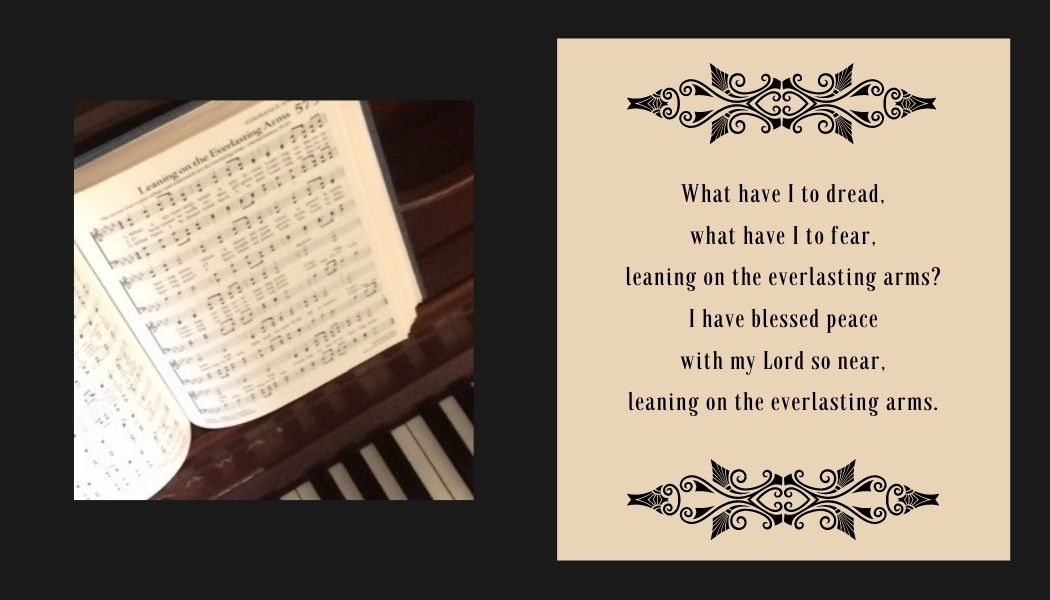
Stanza #3 from “Leaning on the Everlasting Arms” by Elisha A. Hoffman
I'm Patty, and my husband and I are living with our adult son who has autism and epilepsy. I love sharing lessons learned from life around me, especially life with Aaron.














































 From the Inside Out