Feeds:
Posts
Comments

Archive for the ‘Excellence’ Category

After the cold starkness of winter, spring gleefully reawakens our senses with her: 

  • Effusion of colorful flowers
  • Scents of hyacinth, lilacs, and freshly-mowed grass
  • Symphony of bird song
  • Flavors of tender asparagus, luscious strawberries, and tart rhubarb
  • Textures of furry pussy willows, fuzzy moss, and silken magnolia petals

Praise God for our abilities to see, smell, hear, taste, and touch, allowing us to enjoy Spring in so many ways!

Even better, those abilities allow us to meet God in at least five ways.

Our five senses help us understand God more clearly.

Consider how the far-flung stars and planets speak of his power; the clever camouflage of lizard, fawn, and frog display his wisdom; the endless variety of colors, shapes, and textures prove his creativity; the instinctive parenting skills of adult animals demonstrate his goodness.

Our five senses help us experience God’s glory more profoundly.

  • We can see his power at work in the transformation of lives [1].
  • We can hear his wisdom in godly men and women, such as Thomas á Kempis or Corrie ten Boom (just two among millions!):
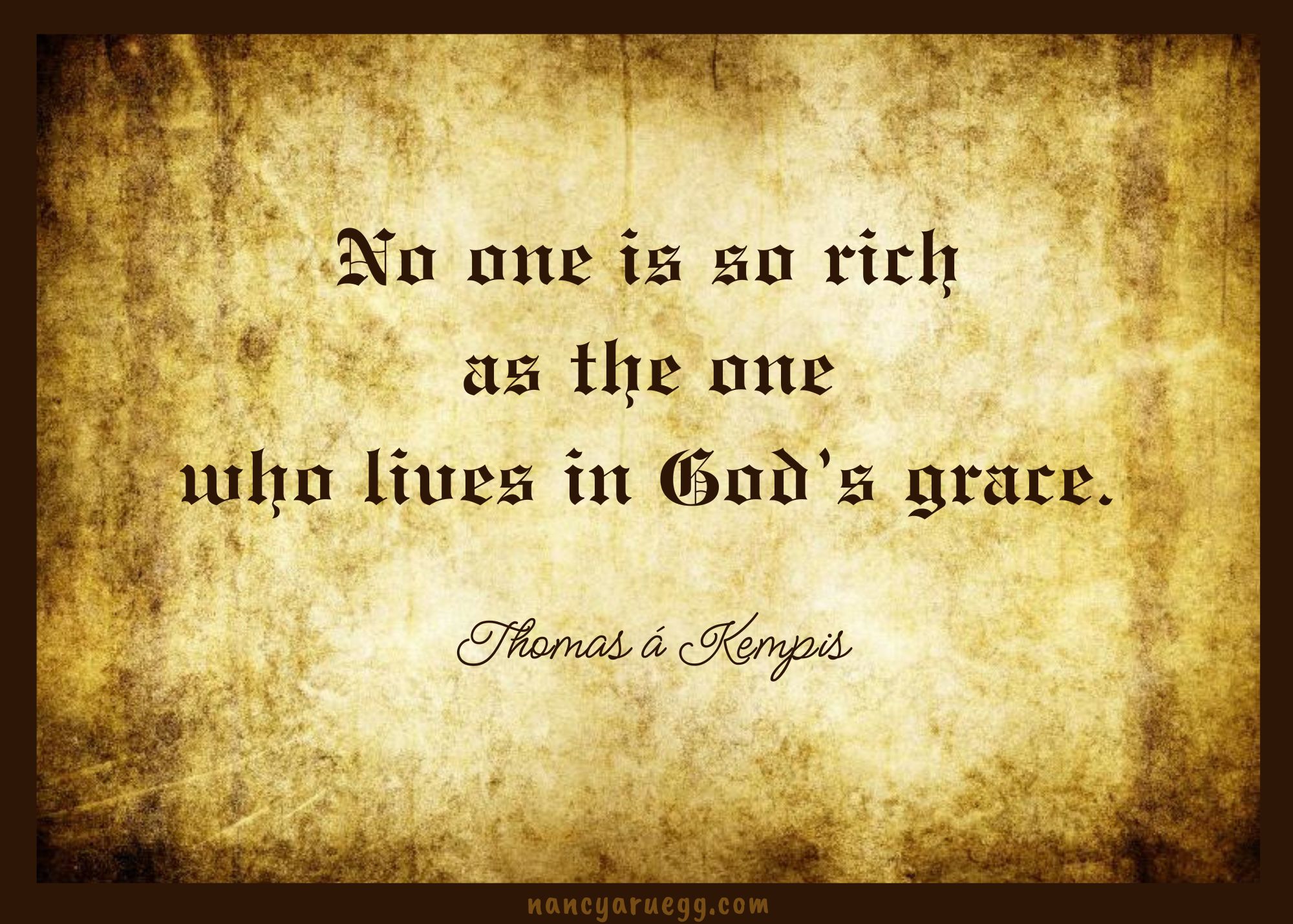
  • We can feel God’s loving touch through a hug that conveys compassion, a worship song that quickens the heart, or a landscape vista that gives us glory-goosebumps.
  • We can taste his goodness in all the variety of blessings we enjoy (Psalm 34:8).
  • We can smell the fragrance of his sweet presence (Psalm 45:6-8)—if we pay attention.

Our five senses help us connect with God more intimately in solitude.

Many people call it Quiet Time—moments they spend with God in scripture reading/study, prayer, perhaps journaling, and/or listening to peaceful worship music.

It’s in the quiet we begin to see important realities of the spiritual realm, hear God’s voice within our spirits providing wisdom and encouragement, feel his presence more palpably as we touch our knees to the floor in prayer, and again, smell the fragrance of his sweet presence as he meets us in our place of solitude.

   Our five senses help us worship God more intently in community.

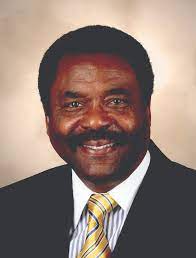
Jerry Kerns [2]

Kerns would have us fully engaged–first to bless God’s heart and then to elevate the experience for us also.

How?

  • See the majesty and splendor of God on his throne–in your imagination. This is who you are worshiping [3]!
  • Hear the music and join in with grateful, enthusiastic praise [4].
  • Feel the presence of God as you pray. Try placing your hands on your lap, palms up—open and empty, symbolic of humility and receptivity [5].
  • Taste the bread and wine/juice with prayerful gratitude. Jesus is our Bread of Life who satisfies our spiritual hunger, who shed his blood for us so we might one day enjoy heaven with him. May we never become desensitized to the magnitude of his sacrifice.
  • Smell the fragrance of God’s saints as they leave the perfume of kindness, uplift, and joy in their wake.

Our five senses help us live out our faith more joyfully.

When our heart’s desire is to serve God by serving others, we’ll aspire to live so people:

  • See the Light of Jesus in our choices, behavior, and attitudes (Matthew 5:14-15)
  • Hear us speak truth, wisdom, and encouragement (Proverbs 10:20-21)
  • Feel the love of God in our interactions with them (John 13:35)
  • Taste the flavorful salt of God’s divine grace within us (Matthew 5:13)
  • Smell the fragrance of Christ in our lives (2 Corinthians 2:15-16)

 And as we engage all five senses in these five ways, what will happen?

We’ll bring more glory to God and enjoy more fully the satisfying, abundant life his Son provides.

That sounds mighty good to me. You too?


[1] Stunning examples include Jake DeShazer (https://nancyaruegg.com/2016/08/18/a-miracle-of-forgiveness/), Johnny Hart (https://nancyaruegg.com/2018/08/09/johnny-and-jesus/), and Isobel Kuhn (https://nancyaruegg.com/2024/04/11/goodness-and-mercy-followed/).

[2] https://www.experiencingworship.com/articles/general/2001-7-great-quotes-on-worship.html

[3] See: https://nancyaruegg.com/2023/07/06/in-awe-of-gods-magnificence/

[4] See: https://nancyaruegg.com/2015/09/07/when-worship-loses-the-wonder/

[5] See: https://nancyaruegg.com/2015/03/23/the-ultimate-delight/

Art & photo credits: http://www.pixabay.com; http://www.pexels.com; http://www.goodfon.com; http://www.stockvault.net; http://www.canva.com; http://www.pickpik.com (2); http://www.heartlight.org.

Read Full Post »

Years ago I served as a short-term missionary in Ecuador. One of my first meals there included a fruit I’d eaten many times back home in Illinois, although more often from a can than the produce section.

But that day the golden wedges provided an uber-delightful surprise: more flavor, more sweetness, and less acidity than any I’d enjoyed in the States. It was as if I was eating a different fruit.

That’s because Ecuador grows some of the world’s best pineapple. Their location on the equator and the volcanic soil of the Andes Mountains provides perfect growing conditions. I gained new appreciation for what pineapple could be.

There’s another kind of fruit that many of us are familiar with, but it’s not the kind we eat. It’s the fruit of the Spirit, listed in Galatians 5:22-23. Many of you can probably recite its nine aspects:

What follows are brief thoughts on each. I pray we gain new appreciation for what this fruit can be—perhaps even uncover a surprise or two.

LOVE

If you were asked, what’s a powerful, practical way to express love for others, what would you say? Theologian John Calvin suggested intercession [1]. To pray for a person is to love that person.

Who might you love with a prayer today?

JOY

Scripture tells us to “rejoice always” [2], but that’s hard to do when problems and pain come our way.

Selwyn Hughes offers this perspective: Even though our difficulties may have begun with the devil, by the time they get to us and through us, they will have a divine purpose running through them [3].

Now that we can joyfully celebrate.

PEACE

“The truly thankful person is a truly peaceful person,” asserts Lysa TerKuerst [4]. And Isaiah 26:3 suggests why:

What better way to fix our thoughts than with thanksgiving? And as we affirm God’s blessings, peace will warm our hearts.

PATIENCE

Patience blossoms best in the soil of God’s promises, as we wait for him to intervene. His promises cover every circumstance; our part is to know them and believe, then patiently anticipate their fulfillment.

Are you clinging to a scripture-promise today? Turn it into a prayer of faith, hope, and patience [5].

KINDNESS

We can grow this attribute with one action: meditate on God’s kindness to us [6]. Meditation fosters appreciation; appreciation fosters emulation, and soon we find God’s kindness becoming more a part of who we are.

GOODNESS

This trait often seems out of reach. But instead of trying harder to be good, author Philip Yancey recommends: simply love God. “A person who truly loves God will be inclined to please God” [7].

Also worth remembering, the inclination to always please self results in dissatisfaction and restlessness [8].

FAITHFULNESS

Every year thousands gather to see Old Faithful, even though it’s not the tallest geyser in the world. Why is it so popular? Dependability. You can count on Old Faithful.

What might dependability look like for you today?

GENTLENESS

A list of traits of successful people rarely includes gentleness. Yet this attribute contributes much to prosperity in life. That’s because: “[Gentleness] creates in us a capacity for the closest possible intimacy with God” [9].

It’s the gentle-spirited souls who lean in toward God with yielding hearts to rest in his sovereignty. And then, think of it: God, with all his glorious attributes, comes close (James 4:8).

SELF-CONTROL

“A person without self-control is like a city with broken-down walls”[10]–vulnerable to all sorts of problems.

Better to take the wise course, prayerfully availing ourselves of the Holy Spirit’s help, to develop those habits we know will bring benefit and usefulness.

*     *     *     *     *     *     *     *     *     *

And now, our fruit bowl is full! Did you find any surprises?

I pray this week, you enjoy one or more aspects of this familiar fruit–with fresh appreciation!


[1] https://gracequotes.org/topic/love-others_for/

[2] 1 Thessalonians 5:16

[3] Every Day Light, 124.

[4] Embraced, 256.

[5] A few favorite scripture-promises include: Psalm 32:8; Isaiah 41:10, 31; Romans 8:28; James 1:5.  

[6] From a sermon our pastor preached last spring.

[7] Grace Notes, 325.

[8] Ecclesiastes 2:10-26

[9] Albert M. Wells, Jr., Inspiring Quotations Contemporary & Classical, 91.

[10] Proverbs 25:28 NLT

Art & photo credits: http://www.needpix.com; http://www.heartlight.org; http://www.pickpic.com; http://www.flickr.com; http://www.negativespace.com; http://www.deviantart.com (vulcanknight).

Read Full Post »

David Steward leaned against the family cow as he milked her, his hands automatically squeezing left, right, left, right. This was his final chore of the day; he’d already cleaned out the barn and fed the pigs and cow.

The twelve-year-old tried not to think about morning chores awaiting him in just twelve hours: emptying the chamber pots, milking the cow again, then collecting the ashes from the potbelly stove and spreading them on the driveway to create traction.

His only consolation was, his seven siblings had their chores too.

David trudged back to the house. He could smell collard greens frying in bacon grease, the pork and beans simmering in the Dutch oven, and cornbread browning in the skillet.

It wasn’t a fancy supper-spread, but all ten of them got enough to eat, thanks to Daddy’s hard work and the whole family pitching in on the farm.

Daddy should have made enough money to support them. He’d been trained as a master mechanic while living in Chicago in the 1930s and ‘40s. But now it was 1963 and the family resided in Mama’s hometown of Clinton, Missouri—a segregated town—and the Stewards were Black. Many businesses didn’t hire people of color.

So Daddy took whatever work he could find as a personal mechanic, nightwatchman, and part-time policeman. He managed a janitorial service, transported coal or trash, even tended bar at parties.

Daddy and Mama could have been bitter; but David and his siblings saw them demonstrate Christian love and kindness, grace and forgiveness, strength and resolve.

Times were changing however; segregation was finally outlawed in 1964. David was among the first Blacks allowed to swim in the community pool.

The next year David started high school and made the basketball team. Four years later he was playing for Central Missouri State University, and after proving himself, earned a sport scholarship. In 1973 he graduated with a degree in business administration.

Over the next eight years, David worked for several companies, including the Missouri Pacific Railroad and Federal Express. In each position David learned skills related to manufacturing, marketing, accounting, sales, and more.

While senior account executive at Federal Express he earned the Salesman of the Year Award and received a trophy—a silver ice bucket engraved with his initials. David looked inside and was struck by its emptiness. Is this all I want out of life? he thought.

The answer was no. He’d long dreamed of owning his own company and managing it with biblical principles.  He and his wife Thelma had faith that now was the time—even with their family of four to support.

In 1984, David launched Transportation Business Specialists, putting to use the lessons he’d learned at Missouri Pacific Railroad. His new company audited bills and overcharges for the rail industry.

Another company was launched in 1987, Transport Administrative Service, and finally, on July 1, 1990, World Wide Technology, Inc., to help companies use technology for solving business-related problems.

Success did not come quickly. And though David always made sure his employees received their paychecks, sometimes his family went without.

But he didn’t give up. David wrote: “What we were doing for our employees and customers was meaningful. I had faith that our company was capable of providing exceptional value” [1].

A unique opportunity presented itself in 1995. U.S. troops in Bosnia needed specialized computer software, so David’s company developed a program customized to their needs. They provided the hardware also.

That success led to the development of more applications for additional functions, useful to other government entities. A company that began with a $2000 investment and a handful of employees is now a Fortune 500 company (#71), bringing in twenty billion dollars in annual revenue and employing 10,000 people [2].

In the early 2000s, the Stewards’ pastor asked them to lead a Bible study about doing business God’s way. That led to a book, Doing Business by the Good Book: Timeless Principles for Making an Eternal Impact (2004).

The overall theme: strong leadership is love, expressed by serving others—employees and their families, customers and associates, as well as your own family.

David considers his company his ministry as he applies biblical principles in the workplace.

Eighty-six percent of his employees say World Wide Technology is a great place to work [3].

David also sees himself as an ambassador for Christ in the business world. He keeps one scripture-based goal in mind.

Every day David asks the question:

“Am I living my life worthy of the sacrifice that was made on my behalf”[4]?

That’s a profitable question for each of us. May we all—no matter our place in life—answer with a joy-filled YES!

David L. Steward (1951 – )


[1] Doing Business by the Good Book, 2004, quoted by https://www.referenceforbusiness.com/biography/ S-Z/Steward-David-L-1951.html

[2] https://www.wwt.com/corporate/why-wwt/overview

[3] https://www.greatplacetowork.com/certified-company/1100933

[4] https://www.youtube.com/watch?v=OCtItBwZEEU (Steward, 3:36-3:46)

Other sources:

1. https://www2.cbn.com/article/not-selected/david-steward-building-business  

2. https://horatioalger.org/members/detail/david-l-steward/

3. https://www.referenceforbusiness.com/biography/S-Z/Steward-David-L-1951.html#google_vignette

4. https://coinnounce.com/the-success-story-of-david-steward-second-richest-black-man-in-the-us/

Photo credits: http://www.rawpixel.com; http://www.picryl.com; http://www.pexels.com; http://www.daiyverses.net; http://www.en.wikipedia.org; http://www.amazon.com; http://www.heartlight.org; http://www.flickr.com.

Read Full Post »

When our daughter Heather was a child, she would sometimes entertain herself and her little brother Jeremy with stories she’d create.

These weren’t ordinary stories, however. Each part of the story was to be followed by a response, such as HOORAY or OH DEAR. Jeremy would supply those. Heather told her story so the responses alternated.

For example:

One day Mrs. Brown said to her children, “Let’s go on a picnic!” (HOORAY!)

But while they were getting ready it started to rain. (OH DEAR!)

Mrs. Brown said, “Don’t worry, we’ll have a picnic in the family room!” (HOORAY!)

Billy Brown counted out apples for everyone. “Uh-oh!” he said. “We don’t have enough apples!” (OH DEAR!)

You get the idea.

Some of us have read Bible promises with the same HOORAY/OH DEAR responses. (Although we’d probably exchange HOORAY for HALLELUJAH!)

Take Deuteronomy 7:9, for example. We read, “Know therefore that the Lord your God is God; he is the faithful God, keeping his covenant of love to a thousand generations . . .” And our response might be HALLELUJAH!

Then we read the second part: “. . . of those who love him and keep his commandments” (emphasis added). (OH DEAR.)

Here are two more examples:

“You will eat the good things of the land . . .” (HALLELUJAH!) “. . . if you are willing and obedient”–Isaiah 1:19. (OH DEAR.)

Or this assurance from Jesus: “You are my friends . . . ,” (HALLELUJAH!) “. . . if you do what I command”–John 15:14. (OH DEAR).

I can’t speak for you but often I’m glad to claim God’s promises, then struggle to comply with the prerequisite: God’s directives—even though I know that sinful, self-centered behaviors can get me into trouble and won’t produce long-term contentment.     

I so easily forget:

What blessing might Jesus have had in mind when he made that promise? Actually, the Bible lists a number of blessings tied to obedience. Here’s a starter-list of ten:

1. God’s watchful care. “The eyes of the Lord are on those who fear him” (Psalm 33:18).

2. Prosperity of soul. “Whoever gives heed to instruction prospers, and blessed is the one who trusts in the Lord” (Proverbs 16:20).

3. Joy of heart. “The precepts of the Lord are right, giving joy to the heart” (Psalm 19:8).

4. Freedom from shame. “Oh, that my ways were steadfast in obeying your decrees! Then I would not be put to shame when I consider all your commands” (Psalm 119:5-6).

5. Freedom from fear. “Surely the righteous will never be shaken . . . They will have no fear of bad news; their hearts are steadfast, trusting in the Lord” (Psalm 112:6a, 8a).

6. Peace of mind. “Great peace have those who love your law, and nothing can make them stumble” (Psalm 119:165).

7. Blessing upon our grandchildren. “The Lord’s love is with those who fear him, and his righteousness with their children’s children—with those who keep his covenant and remember to obey his precepts” (Psalm 103:17-18).

8. Wisdom. “The statutes of the Lord are trustworthy, making wise the simple” (Psalm 19:7b).

 9. Joy of knowing Jesus intimately. “The one who has My commands and keeps them is the one who loves Me. . . I also will love him and will reveal Myself to him” (John 14:21 HCSB).

10. Everything we need and then some. “Those who obey him have all they need . . . Those who obey the Lord lack nothing good” (Psalm 34:9 GNT).

We know it’s true: disobedience can lead to disaster. (OH DEAR!)

But even the short list of blessings listed above proves:

Obedience leads to abundance.

(HALLELUJAH–and thank you, Lord!)

*     *     *     *     *     *     *     *     *     *

O God, I praise you for your promises that assure me: when I follow your ways, all will be well. Give me understanding so I may keep your law and obey it with all my heart–moment by moment. May I wholeheartedly follow your decrees, so I won’t be put to shame!

Jeremiah 7:23; Psalm 119:34, 80

Photo credits: Steve Ruegg; http://www.pxhere.com; http://www.freerangestock.com (Chad Madden); http://www.canva.com (2).

Read Full Post »

Ida Scudder, a senior at Northfield Seminary in Massachusetts, envisioned a future for herself in a small American town that included a charming home with a loving husband, fun times with good friends, adventure, and eventually several children.

Such a dream was the antithesis of her upbringing in Vallore, India—with its crowds, poverty, famine, and disease. Having lived in the States now for several years, Ida had no desire to return.

Her parents served as medical missionaries in Vallore, and her paternal grandparents before them. Ida wanted no part of that kind of life.

But when Mrs. Scudder became seriously ill in 1894, Ida felt compelled to return home to care for her mother and help run the clinic. Following graduation that year, she set sail, praying she’d arrive before the unthinkable occurred. Ida’s prayers were answered [1].

One evening during her visit, a Hindu man knocked at the door, desperate for Ida to come help his wife.

“She’s been struggling for hours to deliver our baby,” he cried. “Now she is growing weak. I’m afraid for her!”

“Let me get my father,” Ida suggested. “He’s the doctor.”

“Oh no,” the man replied. “It is against our beliefs for another man to see my wife. You must attend to her.”

Ida explained she could not help; she knew nothing about childbirth. And the grief-stricken man turned away.

Later that same night a Moslem came to the door with the same request. He too refused help for the same reason. And not long after, the scenario repeated itself a third time with another Hindu.

When Ida finally went to bed, no visions of idyllic living in America filled her mind. Instead she prayed, and a new dream began to form. God meant for her to become a doctor and help the suffering women of India. Even more startling: Ida found herself eager to follow his plan.   

In the morning, she learned that all three mothers and their infants had died. It broke her heart and solidified her resolve.

When Ida returned to the States, she was one of the first women to attend Cornell Medical College. And no sooner had she graduated in 1899, than Ida was on her way back to India, bolstered by a $10,000 grant from a Manhattan banker, in honor of his wife, Mary Taber Schell.

At first Ida treated women in a small medical office set up in her parents’ home. But patients often waited too long to see her, so she decided to go to them.

An ox-pulled cart full of medical supplies became her clinic. And as she tended the sick and injured, Ida spoke of Jesus and asked patients if they’d like to know more about the Great Physician.

In 1902, Ida was able to open the Mary Taber Schell Hospital in Vellore. But with only forty beds, the medical needs in the region far exceeded what Ida could provide.

She set about establishing a school for young women to train as nurses. Critics warned no one would come since the education of girls wasn’t part of Indian culture. But come they did—151 students that first year—and they performed well.

Funding from various denominations in the U.S. and Britain allowed for expansion of the hospital. By 1906, 40,000 patients were being treated annually.

Ida’s next venture, in 1918, was to establish a medical school to train women doctors. Naysayers claimed women would not be able to pass the final exams, but all fourteen of the first class succeeded.

More qualified staff meant more space needed for them to work. A second hospital was built in Vallore in 1923.

Expansion continued in 1928 with an endeavor even Ida could not have envisioned:  the construction of the Vellore Christian Medical College and Hospital, spread over 200 acres. Gandhi himself came to see Ida and the monumental project underway.

Ida seated on left.

Also during this time, Ida traveled back and forth to America to raise funds. Her passion for the work inspired people to give, and she raised millions of dollars.

Back in India, Ida spent less time with patients and more time preparing for the opening of the new college, “negotiating between various missionary agencies, and dealing with a turbulent Indian political scene as fierce demands for independence were growing”[2].

Today the Vallore Medical College and Hospital treat over 8,000 patients a day and are well known for excellence in the fields of research, patient care, and disease prevention. Chaplains pray with the patients, and Bible classes are offered in nine different languages [3].

The main building of Vallore Medical College and Hospital

Dr. Scudder and students

Ida Scudder (1870-1960) was once asked how she was able to accomplish so much. Her answer explains how to fulfill God’s individualized plan for each of us:

“I took only one step at a time; the step God showed me” [4].


[1] Mrs. Sophia Scudder passed to heaven in 1925.

[2] https://canonjjohn.com/2022/11/12/heroes-of-the-faith-ida-scudder/

[3]  https://scudder.org/family-history/ ; https://www.christianity.com/church/church-history/church-history-for-kids/ida-scudder-reluctant-missionary-11635053.html  

[4] https://www.youtube.com/watch?v=tJIHIJpmVTs

Other Sources:

  1. https://scudder.org/about/history/india-medical-missions/ida-scudder-story/

3. “A Life of Consecrated Purpose: The Ministry of Dr. Ida Scudder” by Dr. Rebekah Naylor at http://www.imb.org.

Photo credits: All photos of Dr. Ida Scudder courtesy of The Scudder Association Foundation at http://www.scudder.org. The Indian city street scene, http://www.picryl.com.

Read Full Post »

“I’m sorry, but we cannot treat those who cannot pay,” the doctor explained.

Katie Davis blinked in shock. How could a physician turn away an injured child, even if she was an orphan? Then again, this was Uganda, not Brentwood, Tennessee where she grew up. Fifty percent of the population here lived in poverty, and the under-resourced hospital couldn’t handle all the overwhelming needs.

People waiting in Ugandan hospital

But Katie, a kindergarten teacher, couldn’t accept the doctor’s pronouncement. This child was a student in her school, living in a shack down the street. She was the oldest of three and caretaker of the younger two; their parents had died of AIDS.

The orphanage was already full to capacity; Katie feared for the girls’ future. That very day she managed to secure custody papers, and single Katie became a mother of three—at age nineteen.[1]

What will Mom and Dad say about THIS? she must have thought.

They’d already been hesitant about Katie’s first three-week trip to Uganda, to work at a Christian orphanage her senior year of high school, 2006. Almost as soon as she arrived, Katie fell in love with the staff and students.

Upon returning to the States, Katie couldn’t wait to get back to Uganda after graduation, to take the kindergarten position offered her. The Davises had agreed, with the understanding she’d begin college the following year.

Katie returned home as promised, but her heart remained in Uganda. After one semester, her parents acquiesced and Katie flew back to the people and country she loved.

Uganda–a small land-locked country of East Africa

It was January 2008 when Katie’s adopted daughters moved into her small living quarters, but God soon provided a house to rent.

Over the next eighteen months, more orphans were brought to Katie—girls who’d been abandoned, abused, or whose parents had died of AIDS. One baby was given to Katie by an HIV-positive mother, just twelve years old herself. Child-by-child, Katie’s family grew to thirteen.

Of course, her teacher-salary couldn’t cover all the expenses. But Katie had already researched how to start a nonprofit organization, to aid Uganda’s children. Amazima International Ministries was established in 2008, based in Katie’s hometown of Brentwood.[2]

Soon 150 children were receiving assistance that included school supplies, basic medical care, and two hot meals a day—things their families couldn’t afford.

Two years passed. Katie’s life brimmed with all the responsibilities that thirteen children entail. In addition, numerous houseguests came and went—people in dire circumstances needing temporary lodging.

As with any household, disagreements and frustrations flared. But the word Katie chose to describe the atmosphere was elation—for the laughter, singing, happy noise and gratitude that filled her home.[3]

Then tragedy unfolded. A dear friend and mother of five, died. And the biological mother of one of Katie’s adoptees returned to claim her daughter—a mother unfit for parenting—but Katie had to let the child go. Grief beyond words gripped her heart as she turned to her Heavenly Father for solace. 

Early in 2014, twenty-something Benji Majors arrived in Uganda on a mission trip. He soon recognized the need for young men to be mentored. So Benji decided to stay and come alongside those wanting to become God’s men of integrity.

When Benji asked Katie out–twice, she said no both times, not sure if marriage was part of God’s plan. Besides, what man would commit himself to a woman with thirteen children? Better not to get involved, she thought. 

But Katie found herself attracted to Benji’s passionate heart for God and for people. She finally invited him for coffee—the first of many dates.

The following year Benji proposed over a picnic. When Katie said yes, her thirteen daughters jumped out of the bushes and tossed flowers at the couple. Benji had included them as part of the plan. He and Katie were married in late 2015.

The couple still lives in Uganda, running Amazima Ministries. They provide education for hundreds of children in their own Amazima School, food and health services for thousands of families, as well as job opportunities.

Who could have imagined such a far-reaching outcome when young Katie left for Uganda?

GOD could.

P.S. Ben and Katie no longer parent 13 children; the number has grown to 15 with their two biological sons.


[1] Though Ugandan law specifies an adoptive parent must be at least twenty-one, a judge can override the law in the best interest of the child(ren).

[2] Amazima means “truth” in Lugandan.

[3] https://youngadults.lifeway.com/2012/01/no-ordinary-life-katie-davis-story-of-serving-children-in-uganda/ 

Sources:

https://amazima.org/about/ . Visit here for numerous photos and information about Amazima Ministries.

https://www.christianpost.com/news/katie-davis-majors-young-adoptive-mother-of-13-ugandans-where-is-god-in-suffering-interview.html

https://justbetweenus.org/magazine/exclusive-interviews/extraordinary-love/

https://myhero.com/katie-davis-a-serving-heart-2

https://toptwentyfiveinterviews.transistor.fm/episodes/7-daring-to-hope-part-1-katie-davis-majors

Photo credits: http://www.commons.wikimedia.org (Toshihiro Horii); http://www.wikimedia.org; http://www.flickr.com; sni.no/Skole_og_utdanning_i_Uganda (Richard Lord); http://www.publicdomainpictures.com (Michael Spisak).

Read Full Post »

The Ruegg crew–1980

Years ago when my husband Steve was two-and-a-half years into his first pastorate and our three children were ages five and under, I found myself over-committed.

Sundays, of course, included Sunday School, church, and an evening service. Mondays we hosted a small group in our home that grew to about 30 (which, in my mind, required a clean house plus fresh iced tea and coffee). Thursday evening was choir practice.

From a handful of members to a loft-full; I’m 5th from the left

Every other week, I facilitated a Moms’ support group/Bible study. Also on the to-do list: leading Children’s Church each Sunday for a year, and participating in numerous other activities that happened on a less frequent schedule.

Do you see any issues here?! I didn’t.

All this activity felt important for the growth and community-building of our church that had been dying before we arrived. As a result, I was always on the go between the responsibilities there and at home. Sometimes I resented it (which can be one of the symptoms of striving too hard).  

But the bustle felt gratifying too. In seeking to please the people around me, I was feeding my own neediness for validation. Pride and self-satisfaction lurked in the corners of my soul—wrong reasons for the striving. In addition, I was discovering those attitudes are never satiated.

What’s a Type-A person–who wants to do what’s right–supposed to do?

The following questions can help us evaluate our choices of activity, how many we choose, as well as analyze the motivations behind them:  

Am I propelled most days by determination or devotion?

The determined person rarely reads her Bible or prays except on the run. Her calendar is impressively full of good-deed commitments for others, but contentment is illusive.

This woman may know that a quiet time spent with God refreshes and transforms the spirit, but she can’t seem to make it happen.

Do I find myself pressing on (to the point of exhaustion), while rarely pressing in to be strengthened?

Pressing in includes connecting with God throughout the day, especially in the thick of stress, frustration, or anxiety.  One means is to recite scripture verses that bring our focus back to our all-powerful, all-wise God. [1]

Such verses include:

  • “God is our refuge and strength, a very present help in trouble” (Psalm 46:1).
  • “Call on me in the day of trouble; I will deliver you, and you will honor me” (Psalm 50:15).
  • “The Lord is good to those whose hope is in him, to the one who seeks him” (Lamentations 3:25).

God is ever-ready to help—with the choices before us, when to say yes and when to say no, as well as the right motivations behind those choices.

Does people-pleasing supersede God-pleasing in my life?

Author Shauna Niequist speaks for some of us when she asks: “Why am I doing this? What is it in me that keeps things moving so breakneck fast, . . . that sacrifices my own health and happiness so that people who aren’t me will think I’m doing a good job, in some vague, moving-target kind of way?”[2]

I too find my service for others frequently tinged with people-pleasing. Does that mean I should forego such activity until I can purify my intentions?

No, wrote author and pastor, Tim Keller: “If you wait until your motives are pure and unselfish before you do something, you will wait forever.”[3]

BUT! Our heavenly Father offers this glorious hope:

Because we are covered by Jesus’ righteousness, even our imperfect efforts to please God are acceptable. And as we grow in dependence upon Christ, he’ll purify our hearts more and more.[4]

*     *     *     *     *     *     *     *     *     *

Father, I know it’s downright foolish of me to strive so hard, especially for all the wrong reasons. I want to be free from people-pleasing, self-gratification of the ego, and pride. Forgive me for giving room to such attitudes in my mind.

Help me to be an eager and compliant participant as you work within me to create a pure heart and make my attitudes new.

In the powerful name of Jesus, AMEN.

(Proverbs 4:23; Psalm 51:10; Romans 12:2)


[1] Psalm 72:12 ESV

[2] Present over Perfect, 58.

[3] The Reason for God: Belief in an Age of Skepticism

[4] Isaiah 61:10; Titus 2:11-14

Photo credits: Nancy Ruegg (2); http://www.dailyverses.net; http://www.pixabay.com (TheDigitalArtist); http://www.heartlight.org; http://www.dailyverses.net.

Read Full Post »

Have you noticed how many titles there are for God in the Bible—titles like Ancient of Days, Hiding Place, and Father of Glory?

In fact, there are hundreds of names and titles for him, and each is worthy of study, as it reveals facets of his character.

Scripture also refers to us, his people, by different titles. There’s value in carefully considering these also—titles like:

Sheep

This is one we’d rather not claim, but it’s true. On our own we act very much like sheep, tending to follow the crowd, react out of fear, dig in our heels with stubbornness, and make foolish choices. 

And yet our Good Shepherd has purchased us at great price and made us his own. He actually takes delight in caring for us [1].  

Perhaps you agree with me: I’ll gladly wear the humble title of sheep if it means I can live in his divine pasture!

Saints

When many of us visualize saints, we see practically-perfect, self-sacrificing people. Their halos may be invisible, but we’re sure they’re there.

In reality, the word saint simply means holy one, and holy means set apart.

That describes you if you’ve become a Jesus-follower. God clothes every believer in his Son’s righteousness, and places within his perfect nature [2].

To honor God for all he’s done, saints aspire to unwavering focus on him and on his people.

Masterpieces

“Since you are God’s idea, you are a good idea.”

Max Lucado, Cure for the Common Life, 26.

You may remember the Greek word used for masterpiece or workmanship in Ephesians 2:10: “poema.” And just as quality poems require much effort; God expended great effort to instill quality in each of his children. We are masterpieces, each one uniquely designed to be a heavenly piece of poetry on earth.

May others be blessed as they read the verses of our lives [3]!

Temples

God could have chosen anywhere in the universe as his dwelling place, among the galaxies of stars, towering mountain peaks, or peaceful tropical islands. Instead, the all-powerful, absolutely perfect King of the universe chose to live in you and in me.

Meditate on the wonder of that for a moment.

Light

Then consider the mesmerizing beauty of light in the golden glow of sunrise or radiant sunbeams soaring heavenward into infinity.

Our Savior, the Light of the world, shines with enthralling beauty, giving us “the light of the knowledge of God’s glory displayed in the face of Christ.”

In addition, he’s privileged us with the honor of reflecting his glorious light to others—the light of his compassionate love, effervescent joy, constant peace, and more [4].

Who will you shine on today?

New Creations

To create doesn’t mean to just improve something that already exists. It means to bring something out of nothing. God didn’t simply change us when we accepted Jesus into our lives; he created new persons! We are not the same people we were before saying “yes” to him [5].

“Marvel at the beauty of a life intertwined with God’s Presence.”

Sarah Young, Jesus Calling, 381.

*                    *                    *

Some of us don’t feel like new creatures, saintly masterpieces, or glowing light-bearers. Since we’re still capable of sin and fall short of God’s best, we’ve concluded he must barely put up with us out of his unfailing mercy.

NOT SO!

Think of the last time you saw a colorful butterfly, like the Tiger Swallowtail. Did you say, “Wow! Look at that transformed caterpillar!”

Of course not. Its former state probably didn’t even cross your mind. You saw the swallowtail for what it was in that moment, an exquisite creature of beauty and grace.

That’s how God sees you and me, dear readers, as expressed in these titles we’ve considered. The old is past; we’re new persons, living a new life, resplendent in Christ’s robe of righteousness [6].

May the true identity of who we are emphatically impact how we live.


[1] 1 Corinthians 6:19-20; Psalm 147:11

[2] Isaiah 61:10; Galatians 2:20

[3] Herbert Lockyer, Seasons of the Lord, 330.

[4] 2 Corinthians 4:6; Matthew 5:14-16

[5] Steve McVey, Grace Walk, 43.

[6] McVey, Grace Walk, 48.

Photo credits: http://www.flickr.com; http://www.pixabay.com; http://www.wikipedia.org (Anne Aubert); http://www.pixabay.com; http://www.picryl.com; http://www.peakpx.com; http://www.dailyverses.net; http://www.publicdomainpictures.com.

Read Full Post »

“Forgive me, Mr. Ruskin, but I cannot give myself to painting the way you desire and continue to keep God at the center of my life.” Lilias Trotter looked imploringly into her tutor’s eyes.

After three years of instruction from John Ruskin, the well-known artist, author, and art critic, twenty-five-year-old Lilias had prayerfully made the difficult choice. She would forego the opportunity to become “the greatest living painter in England” (as Ruskin predicted she would be) [1], and devote more time to her mission work.

(Self-portrait of John Ruskin)

“Ah, my dear Lilias, he sighed. “I was afraid our efforts would come to this. Goodness knows how many times I’ve complained that you needed to spend more time with your brushes and less time with the women of ill-repute around Victoria Station. However, I do admire your dedication, and regretfully wish you well.”

From this crossroads, a new path began to open before Lilias Trotter.

For a while she continued her work with women at the lowest rung of society, bringing them to the newly-established YWCA for training in various employable skills and introducing them to Jesus.

But in 1887 Lilias found her heart drawn to Algeria, after hearing a plea for more missionaries to the region. She applied to the North African Mission board but was denied because of her frail health.

(Algiers, Algeria circa 1880)

Undeterred, Lilias and two friends chose to go on their own. A generous endowment from her wealthy father (upon his death in 1865) provided the financial support necessary.

The three women settled in the French Quarter of Algiers and immediately began learning the Arabic language and Muslim culture. Because of the male-dominated society, they chose to engage women and children.

(watercolor sketches from Lilias’ journals)

Lilias put her artistic abilities to work creating leaflets. The charming illustrations drew attention to the spiritual truths she wrote. Her inspiration came from the hours she spent in Bible study, meditation, and prayer.

But inroads into Algerian society didn’t come easily. Nearly everyone was suspicious of them. They were women after all, European and Christian. Opposition came from the French authorities as well as Muslim leaders. Lilias wrote in one of her journals that she and her friends felt like they were knocking their heads against stone walls [2].

In addition, the Muslim women were difficult to reach since they were seldom allowed in public. But after several years one woman accepted Jesus into her life. Sometime later another woman and then another expressed their faith, until they could count their little band of believers on two hands.

Lilias also traveled into Morocco on the west and Tunisia on the west, into the far regions of the Sahara Desert where no European woman had been before. There too she sought out the isolated Arab women as well as the Sufi mystics who resided in the desert.

Lilias shared her pamphlets and booklets that included depictions of Arab life, always praying that her writings and drawings would help these Muslims understand who Jesus is and why he came.

Of course, persecution came to those who chose Jesus. Two of the new Arab Christians were slowly poisoned to death, others were drugged, and still more were punished in additional ways.

After twenty years of struggle, the missionaries still had little to show for their effort. And yet Lilias wrote:

I am full of hope that when God delays in fulfilling our little thoughts, it is to leave Himself room to work out His great ones. And, more and more as time goes on, I feel that the longer He waits the more we can expect, . . . and the greater will be the band of those who will come forth free from their prison walls. When one gets hold of that vision, one can throw back in the devil’s face his taunts over the seemingly wasted years that lie behind us.

Lilias Trotter

Perhaps even more productive than her conversations with people was the impact of her writings. Lilias’ appealing parables, “creatively illustrated in Eastern style” were widely circulated [3].

She felt confident that the Arabs would more seriously consider written material in the privacy of their homes, than in public conversation where opposition was likely. With her knowledge of the culture, language, and arguments of challengers, she was perfectly-suited for the task of producing these materials.

Lilias returned to Europe a number of times because of her health, each time in dire need of rest as well as relief from Africa’s oppressive heat. But Lilias often used these trips to garner interest and support for the organization she founded: the Algerian Mission Band.

A number of people responded, joining Lilias in her work. However she never asked for financial backing. “God’s wealth is boundless,” she said [4].

For forty years Lilias Trotter lived out her passion for the Algerian people. Before her death in 1928, she’d established twelve mission stations. And instead of three workers, a team of thirty had joined them, bringing the joy-filled, abundant life of Christ to the Muslims of Algeria [5].


Notes:

[1] https://ililiastrotter.wordpress.com/about/

[2] https://ishshahsstory.com/2016/08/10/celebrating-lilias-trotter-of-algeria/

[3] https://www.imb.org/2019/06/12/missionaries-you-should-know-lilias-trotter/

[4] https://thiseternalmoment.com/the-life-and-legacy-of-lilias-trotter/

[5] https://pioneers.org/2021/03/15/the-legacy-of-lilias-trotter

Other sources:

https://www.christiantoday.com/article/lilias.trotter.talented.artist.dedicated.missionary/139139.htm

https://liliastrotter.com/about/

Photos of Lilias Trotter and her paintings as well as John Ruskin’s self-portrait, courtesy of Lilias Trotter Legacy at http://www.liliastrotter.com and their Facebook page. Street scene of Algiers: http://www.commons.wikimedia.org.

Read Full Post »

“Living well [the Christian life] is both a discipline and an art,” wrote Sarah Young [1] .

The discipline-part was easy enough to affirm. From experience I know: spiritual practices do enhance the joy of relationship with my Heavenly Father—behaviors like Bible study, prayer, worship, giving, and more.

But what might the art of Christian living look like? For me that was more difficult to qualify.

I turned my thoughts to artists themselves. What actions impel them toward creating art that produces beauty and meaning, and pleases the eye?

(One of our son’s recent paintings)

That question spawned another. What might I learn about producing beauty and meaning in my life that pleases God and my soul?

The following truths presented themselves:

Artists are observant, paying attention to detail. They’re constantly learning; delighting in discovery.

Imagine studying a blade of grass. Take note of the rich green color and subtle striping, its graceful curve downward and sharp, pale-yellow point. Add crystal dew drops and the sight is indeed beautiful and pleasing.

“The moment one gives close attention to anything, even a blade of grass, it becomes a mysterious, awesome, indescribably magnificent world in itself”.

Henry Miller

But how often do we barrel through our days with no attentiveness, no reflection, no listening to God’s voice? In the middle of the bustling, niggling, babbling pother we miss God’s presence and other glorious gifts [2].

Lesson #1: The art of living well includes attentiveness to God’s beauty—in creation, in people, in words and deeds, in everything.

Artists spend time with inspiring people, including other artists.

And who is more inspiring than God?! He invites us to concentrate on staying close to him, the divine Artist [3].

Just think: God wants to spend quality time with us. He looks forward to our time together and misses us when we don’t show up. Quiet time isn’t meant to be a ritual; it’s meant to be a relationship [4].

Lesson #2: The art of living well includes the great privilege and pleasure of keeping company with God.

Artists are deep thinkers and curious about truth.

While the subject matter of the masterpiece, The Girl with a Pearl Earring is obvious enough for a child to understand, it will not yield its astonishing riches except to those who study the painting and reflect on Vermeer’s attention to light, shade, balance, color, and even the brush strokes. (Only two strokes created the pearl.)

The same is true for those of us who seek truth from God’s Word. Its basic message is clear enough for a child to understand [5]. But it will not yield its astonishing riches unless we study and reflect on its teachings (Proverbs 4:20-22).

Lesson #3: Open the treasury of the Bible and delight in its magnificent contents. 

Artists are persistent and patient.

It took Georges Seurat two years to paint A Sunday on Le Grande Jatte—with tiny dots.

Leonardo da Vinci spent about four years to get the Mona Lisa just right.

Michelangelo lay on his back the better part of five years to create the 343 figures on the ceiling of the Sistine Chapel.

Consider: “Even God does not make a glorious sunset in a moment. For several days He gathers the mist with which to build His beautiful palaces in the western sky”[6].

Lesson #4: Take joy in process and progress; stay the course and proceed steadily in the way God reveals (Psalm 119:1 MSG).

Artist, Robert Henri (1865-1929) observed:

“The object isn’t to make art, it’s to be in that wonderful state which makes art inevitable.”

Robert Henri

Such an applicable statement to the art of living well as a Christian! Our object isn’t to perform for God as much as it is to know him, love him, and desire to honor him–which makes a beautiful, God-honoring life inevitable.    


[1] Sarah Young, Jesus Calling, 193.

[2] Leslie William, Night Wrestling, quoted in Refresh My Heart, compiled by Terri Gibbs, 124.

[3] Ibid.

[4] Joanna Weaver, Having a Mary Heart in a Martha World, 73.

[5] Jesus took the punishment we deserved for our wrongful behavior. When we confess our sins, believe in Jesus as our Savior, and accept him into our lives as Lord, he bestows many blessings now, and eternal life in heaven with him to come. Millions of children have responded with simple faith to these wonderful truths. I was one of them.

[6] L. B. Cowman, Streams in the Desert, p. 206.

Art & photo credits: J. Eric Ruegg; http://www.wikimedia.commons.org; http://www.publicdomainpictures.net; http://www.hippopx.com; http://www.wikimedia.commons.org (2); http://www.canva.com.

Read Full Post »

« Newer Posts - Older Posts »

Sylvia Schroeder

Impressions Becoming Expressions

Mitch Teemley

The Power of Story

Still Traveling

Impressions Becoming Expressions

Living Our Days

Gaining a heart of wisdom

He Said What?!

I'm Patty, and my husband and I are living with our adult son who has autism and epilepsy. I love sharing lessons learned from life around me, especially life with Aaron.

Meditations of my Heart

Impressions Becoming Expressions

Linda Stoll

Impressions Becoming Expressions

Signora Sheila

Where faith meets la dolce vita

Heidi Viars

Finding the Image of God