Feeds:
Posts
Comments

Archive for the ‘Faith’ Category

Perhaps you’ve also heard these definitions:

  • A pessimist is a person who is seasick during the entire voyage of life.
  • An optimist is a person who goes in a restaurant with no money, and fully expects to pay for his meal with the pearl he finds among the oysters that he plans to order.
  • A realist is a person who does precise guesswork based on unreliable data provided by those of questionable knowledge.

M-m-m. According to those tongue-in-cheek definitions, who would aspire to any of these three attitudes?

Truth be told, pessimists often do identify worst-case scenarios and sometimes think God doesn’t care or he’d intervene. Optimists can believe God will always make good things happen, if we just have enough faith. Realists might not focus on the negative, yet still be cautious about expecting God’s involvement in their circumstances.

But what if he desires that we expect great things–things like strength to endure, help to solve problems, provision for needs, and guidance for decisions? Nineteenth century pastor/author Andrew Murray suggested:

It occurred to me that we Jesus-followers might aim past pessimism, realism, or optimism, toward up-timism. No, you won’t find that word in Webster’s. But according to the Nancy Ruegg Dictionary of Words We Need the up-timist looks up toward God, trusting that out of his love, goodness, and wisdom, he will do what is right.

Up-timists also take to heart the promises of scripture, they remember God’s faithfulness in the past, and affirm who he is in all his glorious attributes.

This doesn’t mean up-timists are perpetually giddy with cheer. But even as tears of pain or grief course down their cheeks, they rest in their Heavenly Father with joy. They’ve learned how to be “sorrowful but always rejoicing” (2 Corinthians 6:10).

Consider these words from the great preacher Charles Spurgeon: “We ought to be glad and rejoice forever in that which God creates. Ours is a heritage of joy and peace. My dear brothers and sisters, if anybody in the world ought to be happy, we are the people. . . How boundless our privileges! How brilliant our hopes!”[1]

These words were penned when Spurgeon was deathly ill. Though he rallied for a time, the great theologian graduated to heaven six months later.

In the letter to his people excerpted above, he included a main characteristic of the up-timist: hope.

Hope is the confident expectation that God will use our painful circumstances for good . . . it’s what allows us to choose to rejoice amid hardships and to say to God, “I will rejoice in You.”[2]

By contrast, pessimists are often characterized by fatalism, realists by over-confidence in their own perceptions, and optimists by wishful thinking.

But up-timists affirm such confident expectations as these:

  • The Lord preserves those who are true to him . . . Be strong and take heart, all you who hope in the Lord (Psalm 31:23-24).
  • Yes, my soul, find rest in God; my hope comes from him. Truly he is my rock and my salvation; he is my fortress, I will not be shaken (Psalm 62:5-6).
  • You are my refuge and my shield; I have put my hope in your word (Psalm 119:114).

Hope isn’t an automatic response in times of hardship, even for up-timists. We have to exercise our determination. One way is to speak truth to ourselves–with conviction. The scriptures listed above offer a good place to start.

Other truths include:

  • I know God has a purpose in this circumstance (Proverbs 19:21).
  • I know God will bring me through (Isaiah 40:29-31).
  • I know God is a good and loving Father, and he’s working toward the eternal perfection of his kingdom, for the benefit of all who love him (1 Corinthians 2:9).

Note how God is at the center of the up-timist’s hope. She expects God to work in her life and in the world, anticipates the fulfillment of his promises, and looks forward to seeing his will unfold.

Note also that “hope doesn’t change what we see, like the lens of optimism or pessimism, hope changes us to withstand the journey this side of heaven with enduring joy, peace, and contentment.”[3]

So–would you describe yourself as an up-timist? How does that point of view impact your life? Please share in the comment section below!


[1] https://www.epm.org/blog/2019/Oct/23/godly-optimism.

[2] Jennifer Rothschild, Lessons I Learned in the Dark, 95.

[3] Kim Striver, https://www.coreradiate.com/blog/optimist

Photo credits: http://www.canva.com; http://www.freebibleimages.org; http://www.canva.com; http://www.heartlight.org; http://www.dailyverses.net; http://www.flickr.com; http://www.canva.com.

Read Full Post »

That title comes from the New Living Translation of Hebrews 12:2:

Isn’t that a strength-infusing image? Picture our Lord Jesus wearing a spotless white robe, sitting tall on a regal white horse, a golden sash encircling his chest.  See his face glowing like the sun, eyes blazing like fire. And in his hands rests a scepter of iron. Everything about him conveys authority, glory, and power.[1]

Statue located in Hendersonville, TN at Trinity Music City. Photo by Brent Moore.

But more important than how he looks, of course, is what he does. And that list is extensive. 

We have a Champion on our side—an all-victorious One—who is ready to help us win this race of life as we stay focused on him.[2]

Scripture reveals remarkable truths about our Champion. The following sixteen statements not only create an acrostic, but offer glorious reasons for praise.  

Our Lord Christ is:

Jesus, the Son of God through whom all things were created and through whom we live.[3]

Everlasting Father, protecting and providing for us now and always.[4]

Sovereign over all, reigning with wisdom, righteousness, and mercy.[5]

Unfailing and unchanging in his personal love for each of us.[6]

Savior to all who believe in him.[7]

Overcomer of our arch enemy, Satan, who’s already been defeated.[8]

Upholder of justice and truth, always acting with integrity, always speaking rightly.[9]

Rescuer from every evil attack, who will take us to heaven when the time is right.[10]

Conqueror of death who brought us the good news of salvation, offering life to us that never ends.[11]  

Hero of impeccable character and omnipotent power, willing to help us every moment.[12]

Alpha and Omega, the all-sufficient One who always was and always will be.[13] 

Mighty Warrior King, coming to earth again to establish his glorious kingdom.[14] 

Perfector of our faith, who will never give up on us.[15]

Intercessor for all believers, continually pleading for us before God.[16]

One and only Word of God—communicating and manifesting the magnificence of God to us.[17]

Name above all names, the result of his absolute perfections and humble sacrifice in our place.[18]

And what will be the result as we focus our contemplations upon Jesus our Champion?

His influence will penetrate to the core of who we are.

The Apostle Paul put it this way:

We’ll begin to act and react like Jesus, talk and even think like Jesus.

And in the process we’ll become champions ourselves—victors and conquerors, able to triumph over whatever comes our way.[19] 

*     *     *     *     *     *     *     *     *     *

I praise You, Lord Jesus, for being my Champion. What a glorious relief to know that you—the all-sufficient One–go before me each day, ready to defend, protect, guide, and provide. May I keep my eyes fixed on you to bolster my faith and grow me more like you. I do want to live in confident victory!

2 Corinthians 2:14a; Deuteronomy 31:8;

Psalm 91:14-15; 2 Peter 3:18; 1 John 5:4

Scriptural support for this post:


[1] Daniel 7:9; Revelation 19:11-15; 1:13-16; Daniel 7:14

[2] Philippians 3:7-12; Hebrews 12:2

[3] 1 Corinthians 8:6 NLT

[4] Revelation 21:4

[5] Ephesians 1:19b-21; Jeremiah 23:5; Isaiah 42:1; James 5:11

[6] John 15:13

[7] John 3:16

[8] John 16:33; 1 John 3:8

[9] Jeremiah 33:15; Revelation 19:11; 1 Peter 2:22

[10] 2 Timothy 4:18; John 14:2-3

[11] 1 Timothy 1:10 CEV

[12] 1 John 2:1; Ephesians 1:19; Philippians 4:13

[13] Revelation 22:13; Colossians 1:13-20

[14] Isaiah 42:13; Psalm 72

[15] Philippians 1:6

[16] Romans 8:34 GNT

[17] John 1:1; Colossians 1:15; 2:9

[18] Philippians 2:6-11

[19] 1 Corinthians 15:57; Romans 8:37

Photo credits: http://www.canva.com; http://www.flickr.com (Brent Moore); http://www.dailyverses.net; http://www.commons.wikimedia.org; http://www.canva.com; http://www.dailyverses.net; http://www.rawpixels.com; http://www.commons.wikimedia.org.

Read Full Post »

Pretend you’re on an ocean liner headed from New York City to England.   You and several thousand other passengers enjoy your days at sea, free to choose from dozens of activities—games, shopping, shows, sports, crafts, and more.

You can eat anytime you like, sleep whenever you feel drowsy, make friends among the other passengers or remain solitary. In other words, you make many choices during the voyage, but all the while the ship is headed towards its predetermined destination.

A.W. Tozer gave us this ocean-voyage illustration in his classic, The Knowledge of the Holy, to help us understand God’s sovereignty:

  • Our all-powerful God wields total authority in the universe, just as the shipping authorities exercise sovereignty over the course of a ship.
  • We’ve been given much freedom within the confines of God’s sovereignty to move about and make choices.

Now some folks take issue with God’s control. They want to direct the course of their life-ships.  I for one find great comfort in the numerous, reassuring scriptures about God’s sovereignty.

For example, everything in heaven and earth belongs to Him. He is the glorious head over all, the ruler of all things (1 Chronicles 29:11-12). That includes us–those who know Jesus and belong to the family of God.

As our Heavenly Father, he provides for our needs, guides us through decisions, bestows many blessings, and more. What encouraging truth! The Almighty God of the universe is in charge of our lives as we submit to him. We don’t have to navigate alone.

The key, however, is submission. God is a gentleman and will not force himself upon us. He’s chosen to limit his sovereignty, to allow humans free choice.

Another reassuring truth: God is totally competent. We’ve all known inept leaders who couldn’t fulfill their responsibilities.

But our Ruler is supremely capable. Nothing is too hard for him (Jeremiah 32:17).  As we focus on his complete sufficiency, our worries shrink in significance.

In addition, no plan of God’s can be thwarted (Job 42:2).   What God says, happens.

His sovereign plan is efficient and goal-oriented. He works out everything in conformity with the purpose of his perfect plan (Isaiah 25:1).

God’s sovereignty is also employed with infinite wisdom (Job 12:13).  No foolish decisions come from God’s throne!

And contrary to appearances, he does maintain over-arching rule on humankind (Daniel 4:35).

Consider how circumstances must have seemed to the people of Judah as the barbaric Babylonians destroyed Jerusalem in 586 B. C., murdered all the nobles, and took thousands of Jewish captives to Babylon.

That wasn’t an isolated case of oppression either. Good people have suffered at the hands of the wicked for eons, and it breaks our hearts. It breaks God’s heart too (Isaiah 63:10). 

Our question of why God allows bad things to happen to good people doesn’t always get answered. We’re not privy to everything God knows or all the reasons behind his decisions (Romans 11:33-36).

What we do know is this: evil never wins in the end. Every evil empire of history that rose in prominence and power eventually fell in ruin. Our sovereign God knows what he’s doing.

And he will have the last word.

So when the squeaky wheels of worry, doubt, or fear begin to spin in your head, and you wonder, Who’s in Charge Here?, apply the oil of gladness, delighting in who God is—your all-powerful, all-knowing, all-wise, and yes, in-control God!

Take joy in the knowledge that “if God is for us, who can be against us” (Romans 8:31)?

And rest in thIs affirmation: “from him and through him and to him are all things” (Romans 11:36, emphasis added).

*     *     *     *     *     *     *     *     *     *

Sovereign Lord of the universe, I bow in worshipful wonder of your magnificence. Your greatness shatters all boundaries! I stand in awe of your vast power and infinite wisdom, always at work in the world.

But for those times when I cannot understand your plan or your ways, help me stand in the truth of who you are.

(Revised and reblogged from February 26, 2015, while we enjoy the company of out-of-town family.)

Photo credits: http://www.commons.wikimedia.org; http://www.heartlight.org (2); http://www.dailyverses.net; http://www.canva.com; http://www.dailyverses.net.

Read Full Post »

Many who follow Jesus long for the fulness of blessings he’s promised, like intimacy with God, peace of mind, and life to the fullest (1).

When these blessings aren’t apparent, it’s natural to wonder why. A person might think, I just need to try harder, become more disciplined. Maybe I should severely limit recreation and sacrifice more.

Don’t get me wrong. Self-discipline and sacrifice are part of a dynamic Christian life (2), and actually become delights as we mature in our faith.

But what if:

Intimacy with our Heavenly Father doesn’t require a monk-like lifestyle but stillness and spending time with him in scripture.

“The world applauds achievement; God desires companionship. The world clamors, “Do more! Be all you can be!” But our Father whispers, “Be still and know that I am God.”

Joanna Weaver, Having a Mary Heart in a Martha World

If Bible study sounds like a chore, talk to someone who considers it a joy. Learn from them how to experience the same.

Faith doesn’t require long prayers about inadequate faith, but simply resting in what we know about God.

“If you feed your faith, your doubts will starve to death.”

Debbie MacComber

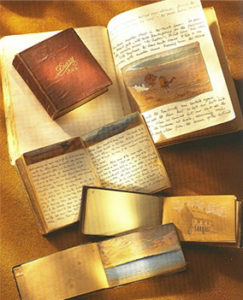
One way to feed your faith is to keep a journal of events that give evidence of God’s work in your life, his guidance, provision, and blessing (3). I promise, you’ll be amazed.

Peace doesn’t come from distracting ourselves with busyness, but from knowing God, focusing on him through worship, and meditating on his attributes.

Reverend Croft M. Pentz expressed it this way:

“No God, no peace. Know God, know peace.”

Croft M. Pentz

And Ruth Bell Graham discovered:

We’d do well to learn from her experience.

Hope isn’t generated by wishful thinking, but by affirming the Word of God.

Some of you will remember the old hymn, “Standing on the Promises.” The second verse offers this encouragement:

Standing on the promises that cannot fail,
When the howling storms of doubt and fear assail,
By the living Word of God I shall prevail,
  Standing on the promises of God.

–Russell K. Carter

For every hope—of a problem to be solved, a relationship to be healed, and a need to be met—there are scripture-promises on which to place our hope. To trust God is to trust his promises. 

Contentment isn’t the result of having all desires fulfilled, it’s the result of gratitude for what we already have.

When we begin to thank God for such delights as the friendly wave of a neighbor, the worshipful toll of church bells, the bright lady bug on a stem, we soon realize how many gifts he bestows.    

Add to his daily delights the assurance that God is with us to support, within us to empower, and going before us to lead the way (4).

Most of our wants pale in comparison to the glories we already enjoy. . .

. . . in creation . . .
. . . in relationships . . .
. . . in usefulness.

A rich and satisfying life doesn’t come through self-centered gratification, but through obedience to God’s ways.

“God’s commands are designed to guide us to life’s very best” (5), including the qualities we’ve considered in this post: delightful intimacy with God, restful peace, constant contentment, and more. That’s a life overflowing with joy.

Pursuing this kind of rich, satisfying life is a bit like making soup! Every ingredient that goes in the pot impacts the flavor of everything else in the pot. In the spiritual realm, everything we do, say, or even think impacts the flavor of our faith.

Gratitude produces contentment but also impacts our worship and quality of life. Faith grows our knowledge of God, but also grows contentment and spiritual strength. Scripture study instills peace, but also nurtures hope and tightens our connection to God. The list could continue but you get the idea.

The bottom line is this:

The question becomes, what actions will we pursue to genuinely impact the flavor of our faith?  


1. James 4:8; John 14:27; John 10:10

2. Galatians 5:22-23; Ephesians 5:2

3. “Christmas Afterglow” includes several examples.

4. Isaiah 41:10; 1 Corinthians 3:16; Deuteronomy 31:8

5. Henry Blackaby

Photo credits: http://www.canva.com; http://www.pxhere.com; http://www.pxhere.com; http://www.wikimedia.org (2); http://www.pexels.com; http://www.canva.com; http://www.pixnio.com.

Read Full Post »

You probably know it, have even memorized it:

Such a statement begs the question: how does joy—of all things–translate into strength? Wouldn’t it be faith in the Lord that makes us strong? Turns out joy is an important facet of faith.

That phrase “of the Lord” holds the key. When we delight in the Author of joy–who he is and what he does–that’s when our spirits begin to grow strong.

To foster that kind of joy and delight:

Express Gratitude

Tonia Peckover wrote, “The feeling of joy begins in the action of thanksgiving” [1].

Research has proven that keeping a gratitude journal works well to develop our appreciation muscles [2]. Just a few lines per day can get joy percolating in our spirits.

Another strategy: turn mindless tasks like folding laundry, loading the dishwasher, etc. into moments of thanksgiving. Go through the alphabet, perhaps, and thank God for one blessing for each letter.

You might begin with AFFECTION among family and friends, BEDTIME and that first BLISSFUL moment on the pillow after a challenging day, COFFEE—the most delectable flavor to start the morning.

For an extra challenge, you might focus on who God is. He’s ACTIVE in our lives, BENEVOLENT to us, COMPASSIONATE, and DELIGHTFUL—you get the idea. (For a sample of such an alphabet, see “God’s Goodness from A to Z,” a post from 2018.)

Meditate on God’s Word

Here’s another joy-inducing, writing-exercise:

In a journal or on a piece of paper, write your reason(s) for being distressed. Then conduct a scripture search (Online resources abound!) for specific promises and encouraging passages that address your concern.  

Praise God for each one as you copy it on the page. Express expectancy for the day when each promise is fulfilled, and feel radiant joy rise in your spirit as you do.

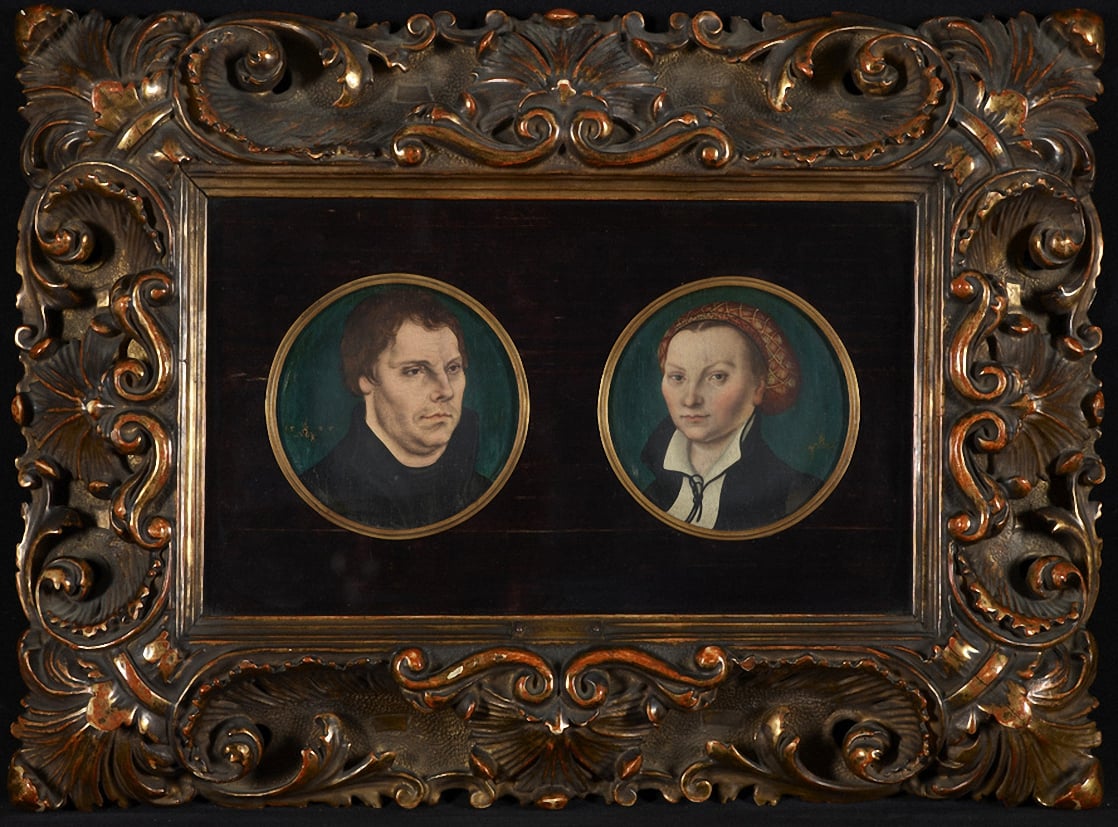
Martin Luther advised:

It stands to reason that something much smaller, our hearts, will also change when we pick up our pens.

That’s happened for me; the same will hold true for you.

Follow God’s Ways

Countless people through the ages have thought that following their own way—striving for success, accumulating wealth, and participating in self-pleasing pursuits—would bring them joy. But such quests never deliver, because that’s not where joy is found.

Joy is found in obedience to God’s ways [3]. He made us; he knows what’s best for us. Of course, we know that. So why do many of us balk at what will bring maximum blessing?!

Anything God commands of us is so that our joy may be full.

Beth Moore [4]

Note that glorious word, full–as in brimming and bursting at the seams.

And what does fullness of joy include? Beauty and bounty.

Beautiful encounters. Beautiful endeavors. Beautiful moments.

Bountiful blessing. Bountiful fruit. Bountiful satisfaction [5].

When we yield in obedience to God’s voice,

he yields a harvest greater than we can imagine.

Denise J. Hughes [6]

And so, joy becomes strength when we delight in who God is and what God does.

Joy becomes strength as we blissfully trust in the truth of his Word.

And joy becomes strength when we gladly follow his instructions.

*     *     *     *     *     *     *     *     *     *

Lord God, I do want to experience your joy in my life, to delight in you so my spirit might grow stronger. Help me to make choices throughout each day that usher me into your fullness of joy!

(Psalm 112:1; 16:11)


[1] Quoted by Ann Voskamp, 1000 Gifts, 176.

[2] https://cct.biola.edu/thanks-science-gratitude/

[3] John 15:9-11

[4] Values for Life, 169

[5] Ephesians 3:20; 2 Corinthians 9:8 

[6] Deeper Waters, 149

Art & photo credits: http://www.pxhere.com; http://www.flickr.com; http://www.pxhere.com (2); http://www.canva.com (3).

Read Full Post »

“This is the property,” his agent told him, as they flew over a great swath of swampy real estate—about 43 square miles worth.  “What do you think?”

The passenger, W.E., smiled with satisfaction. He hardly noticed the scrub pines, cypress groves, and marshy ponds dotting the landscape. In his mind’s eye he saw beauty and grandeur. “I like it!” he cried.

Ground view of the kind of landscape W.E. saw that day

Within days, W.E. and his associates were arranging to purchase the land from the various owners. The final price tag: five million dollars (the equivalent of about 43 million today).

That was in 1963. In 2011, the property was estimated to be worth over 1.3 billion dollars, because of W. E.’s vision and his ability to accomplish what he started.

Development of the property began in 1965. It took thousands of workers and six years to complete the initial phase of W. E.’s plan.

First, the acreage had to be cleared, then lakes dredged as well as canals built in order to control the flow of water. Before the first foundation could be poured, the land had to be elevated. Millions of trees, shrubs, and plants were also installed.

Some might say what followed was pure magic, as the massive project resulted in Disney World. And ever since its opening in 1971, the visionary genius of Walter Elias Disney has dazzled the senses of visitors.

Someone else sees value in places where most of us don’t. The King of the universe recognizes worth in you and me, scrubby and nondescript as we might be. In fact, he smiles with satisfaction on his people of faith, because what he envisions is the beauty and grandeur of what we’re becoming.[1]

The Apostle Paul explained it this way:

And what does God’s good work include? Here’s a partial list:

  • He guides us to know what’s right and then empowers us to do it
  • He creates the desire within us to follow his way of wisdom
  • He draws us toward a heavenly perspective that impacts our choices and motives
  • He grows our love for one another
  • He develops godly traits that minister to others and provide us satisfaction as well
  • He transforms us, day by day, into the beauty and grandeur of Christ’s character[2]

“The life of a Christian is a series of miracles” wrote Charles Spurgeon—miracles that include wisdom, love, godliness, power, and more. Such transformation is much more spectacular than turning swampland into a stunning park. And God will never stop developing his miracles within us until we’re home with him.

Our challenge is to submit to his work.  

God wants to dredge self-centeredness from our spirits so rivers of living water can flow freely. Then we’ll enjoy the continual, life-giving spring of contentment he provides.[3]

God wants to place us on the foundation-rock of his Word, providing peace and security—especially when the storms of life threaten to overtake us.[4]   

God also wants to establish us like trees planted by water. Then we won’t fear the heat of difficulty or a drought of deprivation, because our roots grow deep into the river of God’s delights—delights like His love, his truth as found in the Bible, his strength and presence.[5]

Walt Disney and his team did accomplish incredible feats of innovation, design, and technology. But God shaping us into beautiful, joyful, purposeful people?  That’s mind-boggling miraculous.

*     *     *     *     *     *     *     *     *     *

Thank you, loving Father, for continuing to grow me in your grace until your task within me is finally finished. Thank you for never giving up, for completing what you start. May I be an enthusiastic participant in your good work!

Sources:

https://dozr.com/blog/building-disney-world

https://d23.com/we-say-its-disney/

https://www.forbes.com/sites/megandubois/2021/09/23/looking-back-at-50-years-of-walt-disney-world-history-and-business-strategy/?sh=a0fc33fff209

https://www.themeparktourist.com/features/20140323/17091/making-walt-disney-world-20-amazing-photographs

Notes:


[1] Psalm 147:11

[2] Psalm 119:33-37; Philippians 2:13; Colossians 3:2; Philippians 1:9; Galatians 5:22-23; 2 Corinthians 3:18

[3] John 7:37-39 and footnote to v. 38, The Woman’s Study Bible

[4] Matthew 7:24-27; Psalm 119:24

[5] Jeremiah 17:7-8; Psalm 36:8; Ephesians 3:16-19

Photo credits: http://www.publicdomainpictures.net; http://www.wikimedia.org; http://www.pxhere.com; http://www.heartlight.org; http://www.rawpixel.com; http://www.flickr.com.

Read Full Post »

Nellie Gray listened to the breaking news, not believing her ears.

How is this possible? she wondered. Surely everyone agrees that slavery was wrong, treating men, women, and children as less than human. And have we already forgotten the horrors of Nazi Germany, where revolting experiments were performed on babies?

Nellie’s thoughts transported her back to the days of World War II, when she served as a corporal in the Woman’s Army Corps. And though nearly thirty years had passed since Nazi war criminals faced a panel of judges at the Nuremberg Trials, the atrocities revealed at that time remained fresh in her mind.

Nellie bristled. How can our Supreme Court sanction another atrocity against innocent victims?

And she began to consider what might be done to reverse the decision of Roe vs. Wade, handed down on January 22, 1973.

Not long after a group from Long Island, already involved in the right-to-life movement, asked Nellie to host a meeting in her home. They desired to expand their local efforts to the national stage. “You live near the Capitol—it’s the perfect location,” the spokesperson explained.

Later Nellie would quip, “Be careful who you let into your dining room because you may wind up being the president of a corporation.”[1]

The group first met in October 1973, and someone presented the idea of a march, to be held in Washington D. C. on the first anniversary of Roe vs. Wade. They hoped to draw thousands of people, which would urge Congress to overturn the court’s decision.

Nellie was asked to arrange for speakers, because of her contacts in and around Washington as a federal lawyer. The one role she was unable to fill was emcee, so Nellie provided that function herself.

The event did raise awareness, as twenty thousand people gathered in Washington, and peacefully marched twenty-one blocks on Constitution Avenue to the steps of the Supreme Court Building.

It was supposed to be a one-time-event.

“We thought we were going to march one time and Congress would certainly pay attention to 20,000 people coming in the middle of winter to tell them to overturn Roe vs. Wade,” Nellie said.[2]

But their expectation proved erroneous. And because there were leftover funds after the ‘74 event, someone suggested holding another march the following year.

Nellie decided to retire from practicing law and established the March for Life and Education Defense Fund, dedicating the rest of her life to the pro-life cause. She and the vice-president, Terrence Scanlon, took no salaries; Nellie ran the organization from her home.

As the decades passed, support for their cause continued to grow. In recent years, well over 100,000 have participated in the March for Life, enduring the cold and even snow to draw attention to the plight of unborn babies. In 2011, fifty-three members of Congress spoke at the March for Life Rally.

Also important to the cause: neonatal research, proving fetuses develop much more rapidly than we knew in 1973. For example:

  • Within the first few weeks, the beginnings of a face become apparent.
  • The heartbeat can be heard at 6 weeks.
  • The neural tube (brain, spinal cord, and other neural tissue of the central nervous system) is well formed at 8 weeks.
  • Fingers and toes are easily distinguishable by 11 weeks.
  • Thumb-sucking has been photographed at 18 weeks.
Ultrasound of 12-week old fetus

Of course, Nellie Gray and the March for Life participants have been criticized for their stand against abortion. But she explained her position this way:

“God Almighty created man and woman in his own image, and we recognize that. The United States Constitution recognizes that human beings are endowed with a right to life. We must carry out our patriotism and our love of God through such events.”[3]

In 1998, Nellie asserted the eventual overturn of Roe vs. Wade. “I have complete, utter faith that we are going to get this,” she said.[4]

Nellie Gray led every March for Life through 2012, with undaunted enthusiasm and conviction. But in August of that year, at age 88, she died of natural causes in her home.

I’ve often wondered if good news from Earth becomes known in heaven. If so, might Nellie know what happened last week–that ten years after her arrival in heaven, a giant step has been taken here toward the right-to-life of unborn babies, that her faith is being rewarded and her conviction is becoming fact?

I’d like to think so. 

Notes    


[1]https://religionnews.com/1998/01/15/news-profile-nellie-gray-25-years-behind-the-march-for-life/

[2] https://religionnews.com/2012/08/14/march-for-life-leader-nellie-gray-dead-at-88/

[3] https://heavy.com/news/2017/01/nellie-gary-march-for-life-founder-biography-anti-abortion-pro-life-quotes-2017-date/

[4] https://religionnews.com/1998/01/15/news-profile-nellie-gray-25-years-behind-the-march-for-life/

Other Sources:

http://www.marchforlife.org

http://www.todayscatholic.org

Photo credits: http://www.flickr.com; http://www.wikipedia.org; http://www.flickr.com; http://www.rawpixel.com; http://www.wikimedia.com; http://www.canva.com.

Read Full Post »

Facts are stubborn things; and whatever may be our wishes,

our inclinations, or the dictates of our passions,

they cannot alter the state of facts and evidence.

John Quincy Adams

Many in today’s world want to believe that truth is relative. You’ll hear them say, “What’s true for you isn’t necessarily true for me.”

In the case of taste, that statement may apply. You might love coconut, hard rock music, and skinny jeans ; I do not. And that should be OK. We all have our preferences.

But to understand the absolutes of reality, we must consider the facts and evidence in order to judge rightly and respond accordingly. Truth is truth. And when it comes to our eternal destiny, we cannot risk basing our hopes on untruth, no matter how well-intentioned.

Yet falsehoods frequently masquerade as truth, and have for centuries.

So how are we supposed to know what is right and true concerning our eternal destiny?

Behold the Truth

There’s no getting around the fact that every one of us will die. And though we don’t know the details of what happens next, the Bible is clear: When we trust in Jesus, who took the punishment we deserve for our sins, God graciously grants us eternal life with him in heaven (John 3:16). This is the way he’s established (John 14:6).

But why should we believe the Bible? That‘s a key question every person needs to be able to answer.

Whole books have been written on the subject; I’ve listed a few at the end of this post. But here’s a sample of categories that affirm the Bible is reliable truth, to whet your appetite. And with each I’ve provided just one example or a link to one.

So what facts and evidence prove the Bible is true?

  • Thousands of archaeological discoveries verify names and places mentioned in the Bible. Nothing has been found to repudiate any scripture. (One amazing example: When Truth Unfolds.)
  • Over 5,000 ancient manuscripts or fragments corroborate the Bible.
The Dead Sea Scrolls include 800-900 manuscripts representing every Old Testament book except Esther. They date from about 225 B.C. to 50 A.D.
  • Hundreds of prophecies have come true with 100% accuracy. (Compelling Evidence offers just one set of prophecies concerning one city–all of them fulfilled with mind-boggling perfection.)
  • A number of scientific and medical facts mentioned in the Bible have also been proven accurate. One example:
  • Over the centuries, millions of lives have been transformed because of Christ’s work within them. (When Love Drove Out Hate tells just one miraculous story.)

But don’t take my word for it. Find out for yourself “the state of facts and evidence.”

Study the photos of archaeological finds. Many are available online.

Learn about fulfilled, biblical prophecies and why the argument that they were written after the fact is provably false. (Read Is the Bible True?/ Fulfilled Prophecy as a good starting point.)

Consider all the scientific and medical facts mentioned in the Bible and how unfolding knowledge over the ensuing centuries has verified their accuracy.

Read biographies of those who hit rock bottom in their lives and how God lifted them up, often in miraculous ways.    

We begin to recognize lies

when we know the truth.

Beth Moore, Praying God’s Word, 76

And if we truly seek after God, he has promised, we will find him (Proverbs 8:17).

Believe in the Truth

Many people believe that heaven is earned. If our good deeds outweigh the bad, God will allow us to enter. But that teaching is not in the Bible. And if we’re going to assert the veracity of scripture (which we must, given the overwhelming evidence), then we have to accept:

This is not a matter of taste, choosing our beliefs depending on what we like, as with food, music, or clothing.

This is a matter of life and death.

Now is the time to behold the Truth, believe in the Truth, and belong to the Truth, if you haven’t made that choice before.

You’ll be so glad you did!

If you’re already a Christian, please share in the comment section below about what brought you to accept the Bible as truth and Jesus Christ as the Way to eternal life.

For further reading: The Case for Christ and The Case for Faith, both by Lee Strobel, and Why Should I Trust the Bible by William D. Mounce.

Photo credits: http://www.wikimedia.org; http://www.dailyverses.net; http://www.flickr.com; http://www.jenikirbyhistory.getarchive.net; http://www.heartlight.org; http://www.publicdomainpictures.net; http://www.canva.com.

Read Full Post »

“The Lord is my Shepherd; I shall not want” (Psalm 23:1 KJV).

Many of us memorized those words as children. And some of us may have thought, “Wow! That means God will give me whatever I want!”

So we prayed for new bicycles, the latest gadgets, and swimming pools in our backyards—absolutely certain that if God gave us these hearts’ desires, we’d be truly satisfied.

Some of our prayers were answered affirmatively. A new bicycle with sparkling spokes actually materialized by the Christmas tree. Or Aunt Kate heard the pleas for Mattell’s Magical Music Thing, and sent it as a birthday gift.

But as the years went by, the wise and introspective among us realized:

1. When one desire is fulfilled, another quickly takes its place.

Years ago I heard that a famous actress had accumulated seven houses, each one a different style from the others. Why? Because moving from one to another eased her boredom. (I wonder how long it took to become discontented with House #4, or #5, or #6, before she hired an architect to start the next?)

2. God isn’t in the business of making wishes come true.

Psalm 23:1 doesn’t mean: “I’m one of God’s flock! I’m gonna live on Easy Street!”

If he did grant every whim, we’d soon become self-centered and spoiled.

Perhaps a clarifying interpretation of the opening scripture would be: “God is my loving Care-Giver. All that I enjoy in my relationship with him far outweighs anything this world has to offer. I really don’t need another single thing.”

Ah, to be as soul-satisfied as King David, the author of this psalm!  How can we become that contented?

One place to begin is with gratitude and praise.

Think of all we enjoy as a result of our relationship with God.  Peace, joy, and provision quickly come to mind.

Here are a few more:

  • Companionship with a perfect Friend—every moment of every day–into eternity.  He is always listening, always watchful, always diligent.
  • Hope. No situation is beyond the control of our Almighty God.
  • Settledness, because he is in control, and “makes good things even out of hard times” (Erica Hale).
  • Truth. We don’t have to muddle through life like a do-it-yourselfer with no instruction manual. “The unfolding of [God’s] words gives light; it gives understanding to the simple” (Psalm 119:130).

The bottom-line is this: No possession or position, no place or person on earth can fill our hearts with contentment.

3. True satisfaction flourishes when we affirm that in God we have all we need.

Remember Jesus’ invitation in Matthew 11:28?

Are you weary of the dissatisfaction that results from striving for the next desire?  Are you burdened by unfulfilled wishes and dreams?

Come to Jesus.  Count the scores of blessings he’s already provided in the past, is currently providing this very moment, and has already prepared in the glory of heaven yet to come.

Cultivate true satisfaction in your heart with gratitude and praise!

*     *     *     *     *     *     *     *     *     *

What helps you cultivate true satisfaction?  Please share in the Comments section below!

Art & photo credits: http://www.canva.com; http://www.flickr.com; http://www.rawpixel.com; http://www.wikimedia.org.

(Revised and reblogged from 7-10-14 while we enjoy house guests.)

Read Full Post »

Eliza strained forward as her legs churned beneath her, the underbrush tearing at her long skirts. The small boy in her aching arms whimpered, sensing a danger he couldn’t see.

“Hush, chile,” she gasped in a whisper. “Mama’s gone keep you safe.”

Eliza dared a quick glance behind her. She could see nothing of the slave catchers who’d found her hiding place, a house near the Kentucky side of the Ohio River.  She’d slipped out the back door and into the woods as they approached the front. But they would surely guess her run for freedom, and their long legs, unencumbered by skirts, would quickly bring them close.

Runaways like Eliza Harris

Eliza dared not slow her pace toward the northern side of the river, where she and her baby had a chance to be together. Though her master had been kind, he was planning to sell her son. Eliza could not let that happen; her two older children had already died.

Finally, Eliza could see glimmering flecks through the trees as morning light danced on the water. But this was not what she’d planned. Eliza had expected to walk across the mile-wide river on ice, given the winter season. Instead she found the ice broken up into mammoth chunks, drifting slowly on the current.

With a prayer on her lips, Eliza made the choice to cross anyway, jumping from ice cake to ice cake. Sometimes the cake on which she stood sunk beneath the surface of the water. Then Eliza would slide her baby onto the next cake and pull herself on with her hands. Soon her skirts were soaked and her hands numb with cold. But Eliza felt God upholding her; she was confident he’d keep them safe.

On the northern bank stood William Lacey, one of those who watched the river for escaping slaves in order to help them. Time and again he thought the river would take the woman and child, but she miraculously reached the bank, heaving for breath and weak from cold and exhaustion.

When she’d rested for a few moments, the man helped her to a house on the edge of town. There she received food and dry clothing before being taken to another home and then another, along the Underground Railroad. Finally she reached the home of Quakers, Levi and Catherine Coffin, in Newport, Indiana.[1]

Note the mention of Levi Coffin

By the time Eliza arrived on their doorstep in 1838, the Coffins had been helping escaped slaves for more than a decade. In fact, the following year they would build a house specifically designed for their work as station masters on the Underground Railroad.

A Federalist-style house, similar to the Coffins’ home

In the basement they constructed a spring-fed well, to conceal the enormous amount of water needed for their many guests. On the second floor, they built a secret room between bedroom walls, just four feet wide. Up to fourteen people could hide in the long, narrow room.

Eliza Harris was only one of more than a thousand slaves (some say 3,000) that stayed in the Coffin home on their way to Canada. Had the Coffins (or others) been caught helping runaway slaves, they would have owed a $1000 fine (which few could afford) and would have spent six months in jail (which meant no income for the family during that time). Slave hunters were known to issue death threats as well.

But the Coffins held strong convictions concerning slavery. In the 1870s Levi wrote in his memoirs, “I . . .  risked everything in the work—life, property, and reputation—and did not feel bound to respect human laws that came in direct contact with the law of God.”[2]

For the introduction of Coffin’s book, William Brisbane[3] wrote the following about Levi and two other abolitionists:

“In Christian love they bowed themselves before their Heavenly Father and prayed together for the oppressed race; with a faith that knew no wavering they worked in fraternal union for the enfranchisement of their despised colored brethren, and shared together the odium attached to the name of abolitionist, and finally they rejoiced together and gave thanks to God for the glorious results of those years of persevering effort.”[4]

Should we face such hatred and endangerment in our day, may we stand in the midst of it like Levi and Catherine Coffin—steadfast and unmovable in the power of God.

Addendum:

In 1854 the Coffins visited Canada and happened to encounter a number of former slaves they’d helped. Eliza Harris was one of them–settled in her own home, comfortable and contented.

Her story may sound familiar because Harriet Beecher Stowe, a friend of the Coffins, included the slave’s harrowing escape in her book, Uncle Tom’s Cabin.


[1] Now called Fountain City

[2] https://www.indianamuseum.org/historic-sites/levi-catharine-coffin-house/

[3] a doctor, minister, author, and South Carolina slaveholder who turned abolitionist and moved north where he freed his slaves

[4]https://docsouth.unc.edu/nc/coffin/coffin.html

Other sources:

http://www.womenhistoryblog.com

http://www.rialto.k12.ca.us/rhs/planetwhited/AP%20PDF%20Docs/Unit%206/COFFIN1.PDF

https://mrlinfo.org/famous-visitors/Eliza-Harris.htm

Art & photo credits: http://www.nypl.getarchive.net; http://www.wikimedia.org; http://www.flickr.com; http://www.wikimedia.org; http://www.flickr.com (2); http://www.slr-a.org.uk; http://www.wikimedia.org.

Read Full Post »

« Newer Posts - Older Posts »

When the House is Quiet

Impressions Becoming Expressions

Mitch Teemley

The Power of Story

Still Traveling

Impressions Becoming Expressions

Living Our Days

Gaining a heart of wisdom

He Said What?!

I'm Patty, and my husband and I are living with our adult son who has autism and epilepsy. I love sharing lessons learned from life around me, especially life with Aaron.

Meditations of my Heart

Impressions Becoming Expressions

Linda Stoll

Impressions Becoming Expressions

Signora Sheila

Where faith meets la dolce vita

Heidi Viars

Finding the Image of God