Feeds:
Posts
Comments

Archive for the ‘God’s Grace’ Category

Three weeks ago we embarked upon a reflection of one of the most important songs in the history of the Christian faith: “O Come, O Come, Emmanuel.”

The lyrics beautifully weave together the Old and New Testaments, telling the story of our Messiah, “the chosen One”—who would come to deliver his people from the consequences of their sins and establish his kingdom forever [1].

Each verse helps us place our eyes on Jesus’ return by remembering his first coming and then expressing hope and yearning for his second coming [2].

As noted before, the unknown lyricist (from the eighth or ninth century) carefully based each stanza on scripture. You’ll find references for further reflection listed at the end of this post.

One fact not mentioned thus far: the poet constructed the Latin lyrics in the form of a seven-sentence acrostic. When the first letter of the second word of each sentence (the names of Jesus) are put together, they spell SARCORE.

Read that word backwards, and the letters form two words of sublime hope: Ero cras, which means, “I will be present tomorrow.”

Whatever the future may hold, our Emmanuel will see us through. What a faith-stirring surprise the lyricist created for us [3]!

Now let’s turn our attention to the last two verses [4].

VERSE SIX

I praise you, Lord Jesus, that just as the morning star shines brightly against the darkness of night, you are the glorious Light of the world, shining brightly against the darkness of evil [5].

Just as the morning star glows steadily without a flicker, you shine in our lives with unwavering faithfulness and love [6].

Just as the morning star is a promise of coming day, your light provides hope and assurance that you will come again, to usher in The Day of the Lord, when a new heaven and a new earth will be established and righteousness will dwell [7].

Finally, just as the morning star can guide those at sea, your light guides our way through life. “In your light we see light”—the light of wisdom and discernment [8].

Such truths do bring us comfort, dispelling shadowy thoughts and flooding our spirits with the light of your perfection.

I praise you, Lord Jesus, for turning the darkness of sin, anxiety, discouragement, and more, into the light of your forgiveness, peace, hope, and joy [9]!

VERSE SEVEN  

I praise you, Lord Jesus, our King! How comforting to know that Someone all-wise and supremely gracious is the Ruler of all nations, all things [10].

Yet you are also a respecter of persons. You’ve bestowed upon us the gift of choice, the ability to determine our own way. And what have we accomplished? Our world is tainted by selfishness, pride, and contention [11].

How we need you, Lord Jesus! You are our only hope for our selfishness to be transformed into selflessness, pride into humility, and contention into unity.

So we boldly pray that every person on earth would come to faith in you [12].

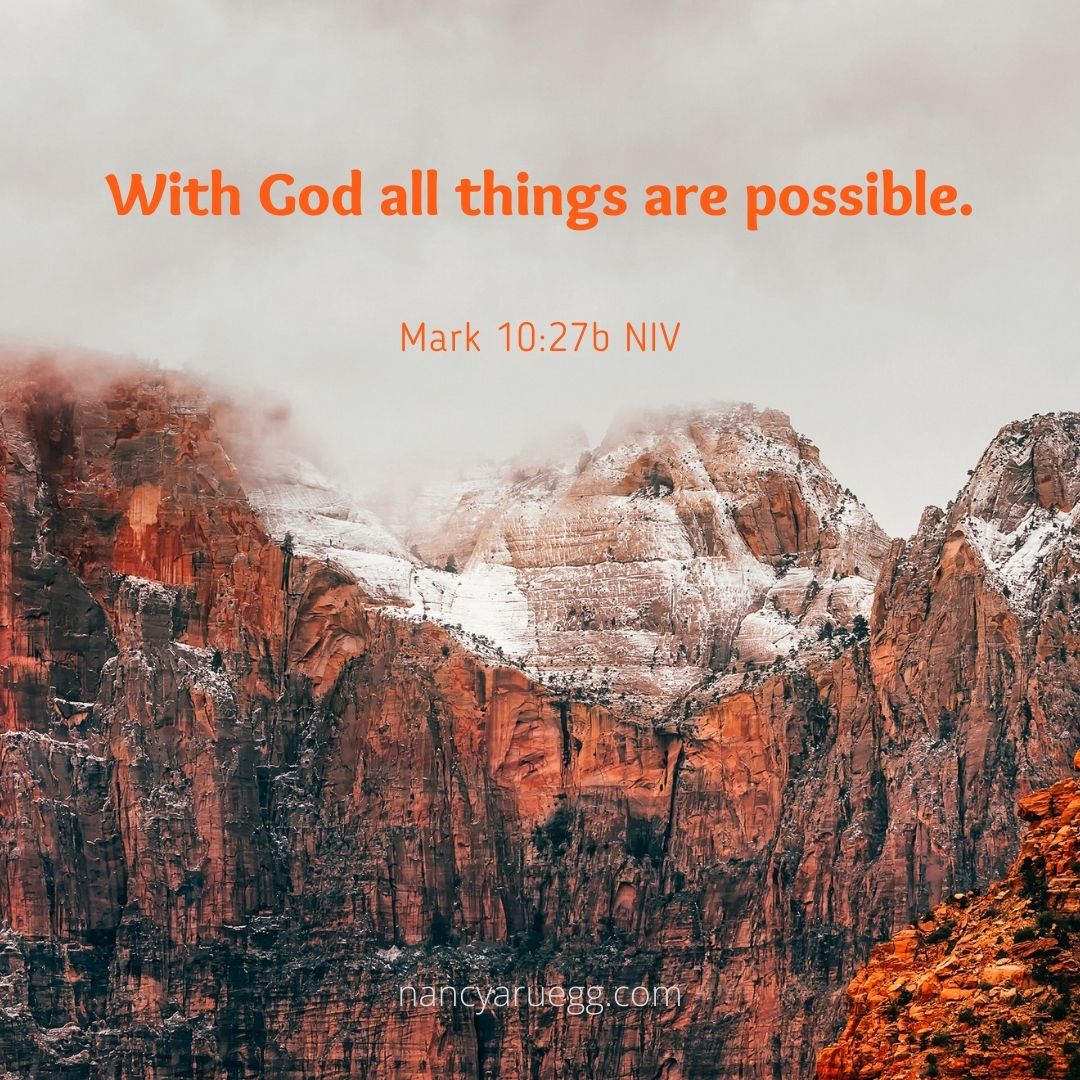
Is that an unattainable dream? No, because you also are unwilling that anyone should perish. And all things are possible with you, our sovereign God and Savior [13].

After all, you:

  • Created all things everywhere
  • Maintain order in the entire universe
  • Control the course of human history
  • Depose kings and raise up others
  • Exist in all places at the same time [14]

I praise you, Lord Jesus, that nothing can prevent you from accomplishing your purpose [15].

And I praise you, Lord Jesus, that you’ve given us the wherewithal to experience harmony with one another, as we demonstrate love and compassion with humility [16].

May we be examples to the world, whetting their appetite for what we experience: the joy of living in the presence of the King of Peace [17]!


[1] Ace Collins, Stories Behind the Best-Loved Songs of Christmas,127; Isaiah 59:20; John 1:40-49; Romans 6:23; Revelation 11:15.

[2] https://www.danielim.com/2017/12/19/the-hidden-theology-and-history-of-o-come-o-come-emmanuel/

[3] https://www.ligonier.org/learn/articles/o-come-o-come-emmanuel

[4] From www.hymnary.org. (Lyrics vary depending on source.)

[5] Revelation 22:16

[6] Psalm 100:5; John 8:12

[7] 2 Peter 3:12-13

[8] Psalm 36:9b; Ecclesiastes 2:13-14

[9] Psalm 18:28

[10] Revelation 19:16

[11] Proverbs 5:23

[12] 1 Timothy 2:1-4

[13] 2 Peter 3:9; Mark 10:27b

[14] Colossians 1:16-17; Daniel 2:21; Jeremiah 23:23-24 GNT

[15] Psalm 115:3

[16] 1 Peter 3:8

[17] Psalm 16:11

Photo credits: http://www.flickr.com; http://www.heartlight.org; http://www.stockvault.net; http://www.rawpixel.com; http://www.stockvault.net; http://www.canva.com; http://www.pickpik.com.

Read Full Post »

Two weeks ago we embarked upon a reflection of one of the most important songs in the history of the Christian faith: “O Come, O Come, Emmanuel.”

The lyrics beautifully weave together the Old and New Testaments, telling the story of our Messiah, “the chosen One”—who would come to deliver his people from the consequences of their sins and establish his kingdom forever [1].

As noted before, the unknown lyricist carefully based each stanza on scripture. You’ll find references for further reflection listed at the end of this post.

Today we turn our attention to verses four and five [2]:

VERSE 4

I praise you, Lord Jesus, for fulfilling all the Messianic prophecies in the Old Testament—at least 300 of them (!), proclaimed long before your birth. The one referenced here offers such glorious hope, as I’m reminded that:

Jesse was the father of King David, and the prophet Jeremiah foretold you’d be a descendant of this king, a man loyal to the Lord. But as the centuries passed, the nation of Judah turned their backs on God. Again and again he urged them to return to him [3].

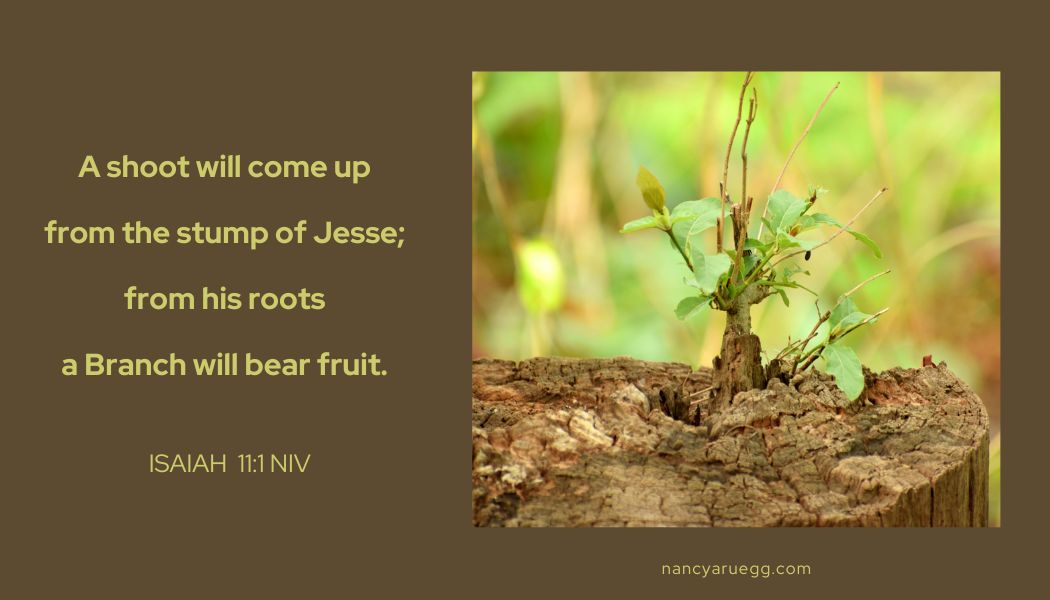
Isaiah (another prophet) painted a word picture of the events that would occur. He compared the kingdom of Judah and the throne of David’s descendants to a tree that would be cut down. All that would remain would be a stump–a remnant of the people [4].

Eleven years later, events unfolded just as Isaiah and four others prophets had foretold. Jehoiachin, the last legitimate king of Judah, was removed from his throne by the Babylonian king, Nebuchadnezzar.

Thousands of Judeans were taken captive so they’d see the error of their ways, seek forgiveness, and follow God once again [5].

But I praise you, Lord Jesus, that Isaiah’s word picture didn’t end there. He proclaimed that out of that hopeless, rotting stump would come a strong sapling.

Six centuries later, you came to earth, the only Righteous One of God, fulfilling that prophecy [6].

Not only were you from the lineage of David on your earthly father Joseph’s side, but also on your mother Mary’s side. This fulfilled the prophecies proclaiming you are the descendant of David that the Jewish people longed for: their Messiah [7].

I praise you, Lord Jesus, for coming to save your people–Jews and Gentiles alike. Because of your great mercy, you rescued me from the specter of hell, taking the punishment I deserved.

And now, the grave has no power over anyone who acknowledges you as their Rescuer [8]!

VERSE 5  

I praise you, Lord Jesus, for possessing the Key of David. That’s significant because a key indicates authority over a domain.  

King David was given authority to rule over all Israel; you rule over all mankind. In fact, God has seated you at his right hand in the heavenly realms, far above all rule and authority, all power and dominion [9].

Out of your magnificence and perfection, you’ve prepared heaven for your people—a place of utter tranquility, blissful and continual joy, eternal and lavish love—beyond what we can imagine.

I praise you, Lord Jesus! You’ve opened wide the gates of heaven; you hold open the door of opportunity for all to enter [10].

As you’ve promised, one day you’ll return and take your children home along “the heavenward road.” Then you will shut the door upon death once and for all [11].

REFRAIN

In all of this and more I REJOICE! You are my Rescuer, saving me from the greatest enemy of all: death.

I praise You, Lord Jesus, for graciously providing the way heavenward. I REJOICE in you, my Savior, my Lord, my King!


[1] Ace Collins, Stories Behind the Best-Loved Songs of Christmas,127; Isaiah 59:20; John 1:40-49; Romans 6:23; Revelation 11:15.

[2] From www.hymnary.org. (Lyrics vary depending on the source.)

[3] Jeremiah 23:5; 1 Samuel 13:14; Isaiah 3:8-9; 55:7

[4] Isaiah 11:1, 10

[5] 2 Kings 24:8-17; 25:21; Isaiah 55:7; Joel 2:12-13

[6] Acts 22:14; 3:18

[7] Matthew 1; Luke 3; Jeremiah 23:5-6

[8] Psalm 86:13 GW; 56:13; Ephesians 1:17; Romans 8:11

[9] Revelation 3:17; Matthew 28:18; Ephesians 1:20—22

[10] Isaiah 22:22; Revelation 3:7

[11] John 14:1-3; Hebrews 2:14; Revelation 21:4

Art and photo credits: http://www.pixexid.com; http://www.stockvault.net; http://www.pexels.com; http://www.pixahive.com; http://www.stockvault.net; http://www.pixexid.com; http://www.stockvault.net.

Read Full Post »

Have you noticed that Bible verses about God’s love often include one particular adjective? In the New International Version, translators chose the word unfailing, as in:

 Just in the psalms alone of that version you’ll find the phrase unfailing love used at least twenty-seven times.

Even more interesting, look up those same verses in other translations and you’ll find no less than eight different expressions in place of unfailing love, including:

  • Gracious love (International Standard Version)
  • Devoted love (Berean Standard Bible)
  • Steadfast love (English Standard Version)
  • Constant love (Good News Translation)
  • Merciful love (New American Standard Bible)
  • Lovingkindness (Amplified Bible)
  • Faithful love (Holman Christian Standard Bible)
  • Loyal love (New English Bible) [1]

Each one adds to the wonder of an all-powerful King of the universe who delights in you, who treasures you.

Yes, he does.

So for the next few moments, let God love on you. Deliciate in the lavish love of your Heavenly Father. [2]

He would have you know:

My love for you, precious child, is gracious

I do not just put up with you!

My grace to you is affirmation of my acceptance

and pleasure in you. [3]

My love for you is devoted

caring, affectionate, and attentive.

Remember, I am always thinking about you;

I am always supplying your needs. [4]

My love for you is steadfast.

“No matter what you might do,

you don’t have to worry about letting Me down,

because you were never holding Me up.” [5]

My love for you is constant.

I already loved you before time began.

Regardless of your performance,

My love for you will never diminish. [6]

My love for you, dear one, is merciful—

forgiving, sympathetic, and ungrudging.

I’ve given you a dazzling crown of mercy and compassion;

will you not wear it? [7]

My love for you is full of kindness.

Through My Son I made it possible

for you to enjoy a rich and satisfying life.

I continually bless you with good things. [8]

My love for you is faithful.

Time and again I have “accomplished wonders,

plans formed long ago—with perfect faithfulness”—

To bless you, provide for you, grow you. [9]

My love for you is loyal

Unchanging, unwavering, and unfailing.

The more you depend on Me,

The more dependable you will find me to be. [10]

*     *     *     *     *     *     *     *     *     *

I can scarcely believe that you, the God of the universe, with all your perfections and glory, would love me—with all my imperfections and shame. Yet you eagerly bestow your gracious favor in wondrous ways. Help me to continually rest in your unfailing love, free from anxiety and fear. Amen.  

How is God loving on you today? Please share in the comment section below!

Art & photo credits: http://www.pickpik.com (2); http://www.heartlight.org; http://www.canva.com; http://www.picryl.com (artist: Richard Jakopic); http://www.pickpik.com (2).


[1] In many Old Testament scriptures, it’s the multi-dimensional Hebrew word hesed (used nearly 250 times) that translators are trying to express.

[2] Based on a statement of Margaret Feinberg, Wonderstruck, 25.

[3] John 1:12; Psalm 147:11

[4] Psalm 139:17-18; Philippians 4:19

[5] Lysa Terkeurst, Embraced, 130.

[6] Jeremiah 31:3; 1 John 4:8; Romans 8:38-39

[7] Psalm 103:2-4

[8] John 10:10 NLT; Psalm 107:9 GNT

[9] Isaiah 25:1; Matthew 7:11; Psalm 23:1; Philippians 1:6

[10] James 1:17; Psalm 145:13b; Cliff Richard, https://www.searchquotes.com/search/Dependable_God/

Read Full Post »

On careful scrutiny, we find

that God’s grace-filled fingerprints

are all over our lives.

—Patsy Clairmont [1]

“Amen!” we say, when life is good.

“I’m not so sure,” we may falter, when life is hard.

But our loving Heavenly Father would have us know several truths, before we presume he’s withholding his grace (his favor, generosity, and loving kindness).

First, we need to remember: not one of us deserves his grace.

All of us have compiled a “long and sorry record as sinners”[2] that should result in punishment. 

 And yet he offers grace upon grace [3].

Second, God proved his over-arching favor with one incomprehensible act.

He sent his Son Jesus to die in our place, to pay the debt for our sins, and provide a way to heaven for us.

Our Savior kneels down and gazes upon the darkest acts of our lives. But rather than recoil in horror, he reaches out in kindness and grace and says, “I can clean that if you want.” And from the basin of his grace he scoops a palm full of mercy and washes away our sin.” [4]

Max Lucado

That alone provides a supreme, grace-filled fingerprint upon our lives. But there is more.

Out of his grace, God supplies an abundance.

Of course, a Kempis wasn’t referring to a problem-free life with every desire fulfilled. That’s not what God has promised.

Those of us who’ve known God for a while can attest to the supreme value of such blessings as God’s strengthening presence, inexplicable peace, effervescent joy, unfailing provision, and more.

Our challenge is to see the evidence of God’s grace. The more we look, the more we’ll find.

Fourth, God’s grace works within us to provide great benefit.

He’s graciously shaping us into what is useful and beautiful to him, what is satisfying and fulfilling to us. Not that the process is always agreeable and pleasant.

We’d do well to keep in mind:

Fifth, even when the severest trouble comes, God’s grace will see us through.

The grace of God, which is sufficient, will enable us to make of our troubles the pearls they can become. It is no mere figure of speech. It is something more than a simile to say that one enters heaven through pearly gates. [6]

Peter Marshall

Consider these men who entered heaven through the pearly gates of calamity:

  • Stephen was the first martyr of the Christian faith. There’s no record that he cried out in terror as men threw rocks at him. Instead, scripture tells us he was praying, “Lord Jesus, receive my spirit.”[7]
  • Polycarp became a disciple of the Apostle John. As he faced martyrdom, Polycarp declared: “Eighty and six years have I served Christ, nor has He ever done me any harm. How, then, could I blaspheme my King who saved me? . . . I bless Thee for deigning me worthy of this day and this hour that I may be among Thy martyrs and drink the cup of my Lord Jesus Christ.” Polycarp was burned alive.
  • Matthew Ayairga wasn’t a Christian when he plus twenty believers were captured by ISIS in 2015. These twenty men of strong faith greatly influenced Matthew’s life. When the executioners asked him if he believed in Jesus Christ, Matthew said, “Their God is my God.” The young man was beheaded that day along with the others, but found life with Christ for all eternity [8].

Each of these martyrs discovered:

*     *     *     *     *     *     *     *     *     *

O Sovereign God! We praise you for the grace of your sustaining power. May we recognize more readily your fingerprints of grace, and in the process become more gracious ourselves–more loving, grateful, and obedient to you.

May that growing awareness prepare us to praise you, serve you, and prosper in our spirits—even unto death.


[1] The Best Devotions of Patsy Clairmont

[2] Romans 3:23 MSG

[3] John 1:16

[4] Grace for the Moment, 352.

[5] Keeping the Heart

[6] The Best of Peter Marshall, 89.

[7] Acts 7:59-60

[8] Matthew 10:39

Art & photo credits: http://www.pickpik.com; http://www.canva.com; http://www.pikist.com; http://www.canva.com; http://www.pexels.com.

Read Full Post »

Perhaps you too watched the episode of Antiques Roadshow when an appraiser analyzed a Kintsugi bowl.

This ancient Japanese art form involves mending broken pieces of pottery with gold or silver. The glimmering veins resurrect the ruins to create a beautiful work of art.

Such a transformation offers imagery for what happens when we allow the golden work of Christ to mend our brokenness from failures, sins, and shortcomings. As a result, each of us becomes a masterpiece [1].

But what about Jesus’ instruction, “Be perfect as my Heavenly Father perfect”[2] and all the itemized directives for Christian conduct in the New Testament—all 1,500 of them, give or take?

I can’t possibly measure up to such a standard, so what’s a cracked pot like me supposed to do? Is the pure gold of Christ’s work (on my behalf at his crucifixion, and in my life now) enough to make me acceptable to God, considering my faults and failures?

We’d do well to remind ourselves often: just as family members love one another in spite of shortcomings and wrongdoing, our Heavenly Father does the same.

Note the above verse doesn’t say the Lord has compassion only on those nearing perfection.

Then what did Jesus mean when he instructed us to be perfect?

The Amplified Version offers clarity for that key word:

“You, therefore, will be perfect [growing into spiritual maturity both in mind and character, actively integrating godly values into your daily life], as your heavenly Father is perfect.”

Matthew 5:48 AMP

‘You see? Jesus isn’t requiring angelic perfection; he’s directing us toward full spiritual maturity.

Jesus would also direct us away from unrealistic expectations.

Some think that unless we’re . . .

  • spending long hours in Bible study and prayer
  • attending every pertinent service and event at church
  • serving those around us
  • extending hospitality in our homes
  • discipling and mentoring others
  • sharing with everyone in need . . .

. . . we’re not doing enough for God.

So when is enough enough?

I’m reminded of the time I sat in the pediatrician’s office with one of our children when a young mom from our church, Nicole*, walked in with her infant son. Sagging shoulders and dark eye-circles gave evidence to the truth about parenting a newborn: it’s exhausting.

But this Mama was dealing with even more: another son, age three (whom Daddy was babysitting at that moment), and a full-time job. She worked nights as a nurse, and her husband worked days so they could avoid childcare costs.

Somehow Nicole was surviving on naps here and there, and a few hours of sleep before her shift, once her husband got home.

During our conversation, Nicole confessed it had become nearly impossible to spend quiet time with God in Bible study and prayer, and she felt terribly guilty.

In that moment God brought to mind an image of my loving, earthly father. If I were in Nicole’s situation and said to him, “Dad, I’d come see you in a minute, but with things the way they are right now . . .”

I knew what he’d do. Dad would interrupt and say, “Don’t worry–I understand! I know you love me, and you know I love you. When your schedule lightens up, then we’ll get together for an extended visit. For now, I’m delighted in these quick phone calls.”

I told Nicole, I think our heavenly Father would respond in the same way. (Remember Psalm 103:13 above?) Her heart was in the right place; she longed to spend quiet hours with God.

But in her current situation, it was perfectly fine to postpone such a plan until that debilitating season ended. Our God of grace understood; there was no cause for guilt.

Our God of grace would have us let go of perfectionism and unrealistic expectations.

He’d have us delight in the golden work Christ has done and continues to perform in our lives [3].

And though we do press on to live by God’s wise ways, he would have us embrace the beauty of imperfect perfection [4].

Like a Kintsugi masterpiece.  

*Not her real name


[1] 2 Corinthians 3:5; Ephesians 2:10 ISV

[2] Matthew 5:48

[3] 1 Peter 1:3-5; Philippians 1:6

[4] Philippians 3:12-14; Lamentations 3:22-23

Photo credits: http://www.commons.wikimedia.org; http://www.heartlight.org; http://www.pexels.com/Tima Miroshnichenko; www. rawpixel.com; http://www.pexels.com/Alexander Dummer; http://www.pxhere.com/Forrest Cavale; http://www.commons.wikimedia.org./Ruthann Hurwitz.

Read Full Post »

The Ruegg crew–1980

Years ago when my husband Steve was two-and-a-half years into his first pastorate and our three children were ages five and under, I found myself over-committed.

Sundays, of course, included Sunday School, church, and an evening service. Mondays we hosted a small group in our home that grew to about 30 (which, in my mind, required a clean house plus fresh iced tea and coffee). Thursday evening was choir practice.

From a handful of members to a loft-full; I’m 5th from the left

Every other week, I facilitated a Moms’ support group/Bible study. Also on the to-do list: leading Children’s Church each Sunday for a year, and participating in numerous other activities that happened on a less frequent schedule.

Do you see any issues here?! I didn’t.

All this activity felt important for the growth and community-building of our church that had been dying before we arrived. As a result, I was always on the go between the responsibilities there and at home. Sometimes I resented it (which can be one of the symptoms of striving too hard).  

But the bustle felt gratifying too. In seeking to please the people around me, I was feeding my own neediness for validation. Pride and self-satisfaction lurked in the corners of my soul—wrong reasons for the striving. In addition, I was discovering those attitudes are never satiated.

What’s a Type-A person–who wants to do what’s right–supposed to do?

The following questions can help us evaluate our choices of activity, how many we choose, as well as analyze the motivations behind them:  

Am I propelled most days by determination or devotion?

The determined person rarely reads her Bible or prays except on the run. Her calendar is impressively full of good-deed commitments for others, but contentment is illusive.

This woman may know that a quiet time spent with God refreshes and transforms the spirit, but she can’t seem to make it happen.

Do I find myself pressing on (to the point of exhaustion), while rarely pressing in to be strengthened?

Pressing in includes connecting with God throughout the day, especially in the thick of stress, frustration, or anxiety.  One means is to recite scripture verses that bring our focus back to our all-powerful, all-wise God. [1]

Such verses include:

  • “God is our refuge and strength, a very present help in trouble” (Psalm 46:1).
  • “Call on me in the day of trouble; I will deliver you, and you will honor me” (Psalm 50:15).
  • “The Lord is good to those whose hope is in him, to the one who seeks him” (Lamentations 3:25).

God is ever-ready to help—with the choices before us, when to say yes and when to say no, as well as the right motivations behind those choices.

Does people-pleasing supersede God-pleasing in my life?

Author Shauna Niequist speaks for some of us when she asks: “Why am I doing this? What is it in me that keeps things moving so breakneck fast, . . . that sacrifices my own health and happiness so that people who aren’t me will think I’m doing a good job, in some vague, moving-target kind of way?”[2]

I too find my service for others frequently tinged with people-pleasing. Does that mean I should forego such activity until I can purify my intentions?

No, wrote author and pastor, Tim Keller: “If you wait until your motives are pure and unselfish before you do something, you will wait forever.”[3]

BUT! Our heavenly Father offers this glorious hope:

Because we are covered by Jesus’ righteousness, even our imperfect efforts to please God are acceptable. And as we grow in dependence upon Christ, he’ll purify our hearts more and more.[4]

*     *     *     *     *     *     *     *     *     *

Father, I know it’s downright foolish of me to strive so hard, especially for all the wrong reasons. I want to be free from people-pleasing, self-gratification of the ego, and pride. Forgive me for giving room to such attitudes in my mind.

Help me to be an eager and compliant participant as you work within me to create a pure heart and make my attitudes new.

In the powerful name of Jesus, AMEN.

(Proverbs 4:23; Psalm 51:10; Romans 12:2)


[1] Psalm 72:12 ESV

[2] Present over Perfect, 58.

[3] The Reason for God: Belief in an Age of Skepticism

[4] Isaiah 61:10; Titus 2:11-14

Photo credits: Nancy Ruegg (2); http://www.dailyverses.net; http://www.pixabay.com (TheDigitalArtist); http://www.heartlight.org; http://www.dailyverses.net.

Read Full Post »

For the last two posts I’ve shared journal-contemplations from the first two stanzas of “Hark! The Herald Angels Sing.” As with most hymns and praise songs, it’s easy to sing through the lyrics and miss their full significance.

But when we put pen to paper and delve into word meanings, explore implications of the lyrics, and ponder the impressions God brings to our spirits, wonderful blessings emerge: increased understanding of God and his Word, renewal of the mind, and augmented intimacy with God.

Contemplations become worship.

With those thoughts in mind, let’s savor the third stanza:

Hail, the heav’n-born Prince of Peace!

I praise You, Lord Jesus, the only One who can mediate reconciliation between the sin-prone people we are and the righteous God of heaven. Without You, we’d have no hope of eternal life.

I praise You also for the peace of mind you provide as we affirm Your attributes. By Your omnipotent strength you will uphold, and by Your omniscient wisdom You will guide, until our days on earth are complete. We are safe in Your hands (1).

Hail, the Sun of Righteousness! Light and Life to all He brings

I praise You, Lord Jesus, that Your radiant presence brings comfort, joy, and prosperity of soul.

Your Light of truth obliterates the lies of our enemy and brings us closer to You.

From Your Light shine beams of blessing such as these:

  • The variety of wholesome pleasures in this world, benefiting us in mind, body, and spirit
  • The love of family and friends, increasing our joy
  • The ability to read and learn, providing knowledge and wisdom
  • The delight of hands, allowing us to pursue a myriad of satisfying activities (2)

Risen with healing in His wings

I praise You, Lord God, for raising Jesus from the dead. Because He’s alive, we who believe in Him can be confident of eternal life also.  

One day Your Son will come on swift wings, ready to bestow perfect healing upon all who’ve come to Him. Our healing from the sickness of sin that causes so much woe will finally be complete. There will be no more pain and suffering, no more harm and brokenness, no more sorrow or death!

But even now, Lord Jesus, just as beams from the sun bring health to every living thing, You bring health to our spirits—a deep-down contentment only You can provide (3).

Mild he lays his glory by, born that man no more may die

I praise You, Lord Jesus, for laying aside Your glory as the Son of God. You left Your celestial throne, the unceasing adoration of angels, and all the splendors of paradise to be born a helpless baby.

During your earthly life, few praised You as You deserved; many found fault with Your glorious perfections.

Nevertheless, You see worth in every human being; you desire that everyone accept God’s gift of eternal life, that “man no more may die.”

I praise You for saving us from the death-sentence of our sin (4).


Born to raise the sons of earth, born to give them second birth.

I praise You, Lord Jesus, for the transformed life You offer, raising each believer out of his plight of eternal death and into the pleasure of eternal life with You–pleasures that begin the moment we say yes to You.

Those gifts include:

  • Security, because our final destiny is secure, and in the meantime You’re always with us, working toward our best good
  • Provision of guidance, strength, help and more
  • Rest for our souls, as Your Spirit of counsel and power takes up residence in our spirits
  • Gladness, as we celebrate Your work around us and in us

One day, Lord God, You will raise all Your children into the magnificence of Your heaven! With joyful expectation we anticipate the wonders You’ve planned for us.

Thank You for making possible this second birth into Your family. All the amazing blessings highlighted in this carol come to us when we choose adoption into Your family (5).

I praise You, Lord Jesus, for providing reconciliation with God, ultimate victory over death, over-arching peace and joy, healing for the wounds of our spirits, and more.

Glory to You, my magnificent, sovereign King!

Notes:

  1. Acts 4:12; 2 Timothy 4:18
  2. Psalm 23:4; John 15:11; Philippians 4:11-13; Hebrews 4:12
  3. John 6:40; Revelation 21:4; Psalm 23:1-3
  4. Philippians 2:6-7; Revelation 5:11-12; 2 Peter 3:8; Romans 6:23
  5. John 11:26; Matthew 28:20; Romans 8:28; Isaiah 11:2; 1 Corinthians 6:19; Psalm 92:4; John 14:3; 2 Corinthians 4:14; John 14:3

Photo credits: Nancy Ruegg; http://www.openclipart.com; http://www.dailyverses.net; http://www.flickr.com; http://www.heartlight.org; http://www.open.life.church/resources; http://www.dailyverses.net; http://www.heartlight.org.

Read Full Post »

Some time ago, wise-and-insightful blogger Michele Morin (at Living Our Days) shared that she was journaling through some of the old hymns. I imagined her digging into the meaning of some of the rich language and theology, personalizing the truths, and/or using them as the basis for prayer.

Putting pen or pencil to paper in such a way slows down our thinking, allowing wonderful blessings to emerge:

  • Increased knowledge of God and his Word
  • Clarity of understanding
  • A record of discoveries
  • A record of faith deposits for later encouragement
  • Renewal of the mind
  • Augmented intimacy with God

If writing a meditation sounds intimidating, adopt the attitude of Isaac Asimov:

“Writing to me is simply thinking through my fingers.”

Isaac Asimov

For Christian journalers, writing can be worshiping through our fingers.

But how do we even begin such a process? Try Anne Sexton’s approach:

When we invite Jesus into our lives, the Spirit of God takes up residence within our spirits (1). We can put our ears down close to our souls and listen hard for him to guide our thoughts and lead us to the insights he would have us discover.

And then, we fill our pages with the breathings of our hearts (2).

The following is an example of a journal entry, based on the first verse of the hymn, “Come, Thou Fount of Every Blessing”(3). The next four images contain the lyrics.

You, oh God, are the Source of every blessing—every provision, every answered prayer, every wise decision, every creative idea, every moment of joy. All good and perfect gifts come from you (4).

Out of your lavish generosity, blessings flow continually from your hand. May I be quick to praise you for each one as they demonstrate your lovingkindness.

This fount of blessing includes your mercy also. I praise you for your forgiveness, undeserving as I am. Thank you for looking upon me with compassion and tenderness in spite of my weaknesses, failures, and sins.

And I praise you that your mercy never ends! You are faithful to forgive me every time I come to you in repentance. Such grace is beyond comprehension. Yes, I want to sing songs of loudest praise, to honor you rightly for all you’ve done for me and continue to do.

Perhaps if I had the voice of an angel and knew the songs of heaven I could sing the full praise you deserve!

Nevertheless, I celebrate your name(s)—Shepherd, Lord of Peace, God of Grace, Father of Compassion and more. I glory in all the attributes indicated by each one. And I remember: the one trait that is part of them all: your unfailing love.

Thank you for loving me, in spite of my shortcomings; thank you for redeeming me from the consequences of my sins so I might enjoy you forever!

Should you decide to journal through a hymn or praise song, remember: perfection is not the goal, getting to know God better and worship him more passionately are the aims.

An added benefit? Our meditations will positively impact our words and actions (5).

Notes:

  1. 1 Corinthians 3:16
  2. based on a quote from William Wordsworth
  3. by Robert Robinson, text adapted by Margaret Clarkson
  4. James 1:17
  5. Joshua 1:8

Photo credits: http://www.pxfuel.com; http://www.canva.com; http://www.pxhere.com; http://www.canva.com (2); http://www.flicker.com; http://www.freebibleimages.org.

Read Full Post »

A glowing horizon and a bright crescent moon provided a delightful inspiration one morning. What if I stayed on the lookout for more of God’s blessings that day and kept a list?

The time was spring—sunbeams spangled the sky, a light jacket warded off cool breezes, daffodils and hyacinths dotted neighbors’ yards, and the birds sang their equivalent of the “Hallelujah Chorus.” By day’s end that list included twenty delights. (You can access that list here.)

Spring is an easy time to count blessings, when creation displays God’s glory in numerous ways.

But what about winter, when skies are often overcast, when much of the landscape offers only shades of gray and brown, and when most birds are silent or absent altogether? Is it possible to find twenty delights in quick succession?

As a matter of fact, yes.

Let’s begin with the first matter of morning: coffee.

Within minutes of hitting the start button, our coffee maker gurgles with gusto as the last of the water pumps through, thus providing the first item for my list:

#1: That happy burbling sound indicating the coffee is almost ready!

#2: The sublime flavor and fragrance of coffee.

#3: The fact that black coffee has no calories! (Yes, I realize the first three mercies on this list involve coffee. But I’m sure you agree: its supreme delight warrants attention to the details!)

#4: The view out the kitchen window, especially when it includes virtual mountains—a pale gray cloudbank spreading along the horizon, looking every bit like a ridge of the Smokies.

#5: For that coffee, my new Ember mug (a Christmas gift), keeping the last sip as hot as the first.

#6: The lamp on my desk perfectly backlighting the graceful steam curls from my mug. Mesmerizing!

#7: Sunshine pouring in the south-facing windows across the back of our house, especially welcome after several days of gray.

#8: Blowing cantaloupe-sized bubbles (sometimes bigger) with my fingers. (I discovered this bit of fun during the early days of pandemic hand-washing. With sudsy hands, make a ring of forefinger and thumb and blow!)

#9: Running an errand in my new, cozy and comfy boots—the outcome of a two-month search.

#10: A collection of herbal teas to choose from, once I’ve met my daily quota of caffeine.

#11:  Lazing in our recliners before the fireplace, with books, computers, and tea, reveling in the warmth, crackle, and wood-scent.  All five senses contentedly engaged.

(The view over our slipper-tops.)

#12: Discovering by chance the last item needed for my Colors of Winter list. Red was easy—cardinals and holly berries. Orange—robins and red foxes. Yellow—prairie grass. . .

. . . Green—the pines and evergreens. Blue—blue jays and blue-gray Northern bayberries. And finally, for purple, a snow-dusted beautyberry shrub. 

For eyes that seek, winter offers more than brown and gray after all.

#13: Restoration through creativity, as a scented candle flickers, restful music provides background, and occasional sips of tea offer refreshment. Again, all senses engaged.

(My latest effort–Thanks to inspiration from Pinterest!)

#14:  Playtime with the grandgirls.

(Calico Critters lined up for their baths.)

#15: The luxury of a cozy nap!

#16: A snow flurry, providing more stars for another list, included in my post two weeks ago, “Emblems of Love.”

(Photo taken on our deck)

#17: Fairy lights and candles to dispel the gloom of a wintry dusk.

#18:  A happenstance glimpse of a fox trotting by, as we view the snowfall one last time before dark.

#19:  Popcorn—a guilt-free snack (if prepared properly) and . . .

#20: . . . dark chocolate–just one square, offering a lesson in savoring. How wonderful researchers have determined dark chocolate is good for us!

The more we look, the more we see of God’s mercies and immense graces—a truth that applies even in bleak winter.

Have you been on the lookout? What mercies and graces have you seen? Please share an example or two in the comment section below!

Photo credits: http://www.maxpixels.net; http://www.pixabay.com; http://www.pixaHive.com; Nancy Ruegg (2); http://www.pxhere.com; http://www.flickr.com; Nancy Ruegg (4).

Read Full Post »

“Father, please try to understand. I cannot go back to medical school. I’m not well-suited to be a doctor.” Francis looked hopefully into his father’s eyes. Perhaps this discussion would finally convince Father to let him follow his heart’s desire:  to become a writer.

“Son, you’ve spent six years in training,” began his father, a physician himself. “It would be foolish to throw away all that time and effort. Besides, think of the security provided by a position in the medical field. If you pursue this notion of becoming a writer, there is no guarantee of success or even a steady income.”

Once again, father and son had reached an impasse. And so, with only a few coins in his pocket, Francis set out on his own.  He traveled more than 220 miles to London, found a job as a bookseller, and wrote in earnest as time permitted. The year was 1885.

Francis’ health began to suffer and he lost one job after another until he ended up selling matches in the Whitechapel slums of London’s East End.

That barely provided food much less rent.  Soon Francis was homeless. To make matters worse, he found himself addicted to the opium he had first taken for relief of neuralgia pain. At one point he attempted suicide.

In 1887 Francis sent some of his poems, “scribbled on sugar paper” [1], to Wilfred Meynell, the editor of a journal, Merrie England. Meynell was highly impressed, in spite of the humble presentation, and agreed to publish them. But the proceeds were meager.

The following year Jack the Ripper stalked the streets of Whitechapel. Francis did what he could to protect the murderer’s would-be victims, the prostitutes of the make-shift brothels. Perhaps it was one of these women who saw Francis collapse in the street one day.  She allowed him to stay with her and even cared for him for a while. (Francis later referred to her as his “savior,” though he never revealed her identity.)

When the publisher Meynell discovered Francis’ dire circumstances, he arranged for the young poet to live at a monastery where he could regain his health and overcome his addiction. The process took five years. As Francis began to heal physically, Meynell and his wife helped Francis renew his faith in God. Sometimes as he walked the peaceful grounds of the monastery, Francis would become overwhelmed by God’s grace to save him, and he’d break out into songs of praise.

(Perhaps scenes such as this caused Francis’ outbursts of praise.)

During this time Francis continued to write—poetry, essays, and short stories—including his most famous work, “The Hound of Heaven.” The autobiographical poem recounts his experience of being lost and God’s persistent pursuit of him.

“Hound of Heaven” begins:

I fled Him down the nights and down the days

I fled Him down the arches of the years

I fled Him down the labyrinthine ways

Of my own mind, and in the midst of tears.

(Such a monastery chapel as this may have inspired line 2 above.)

Later in the poem Francis described God’s pursuit:

From those strong Feet that followed, followed after

But with unhurrying chase and unperturbed pace,

Deliberate speed, majestic instancy,

They beat–and a Voice beat

More instant than the Feet–

‘All things betray thee who betrayest Me.’

Another section provides God’s explanation for removing certain pleasures from the speaker’s life, because they were leading him in the wrong direction. God’s purpose was to guide him toward choosing the right path.

In the end God tells the speaker that “the happiness he sought by running away was following him all the time” (Cummings [2]). And the darkness of deprivation had been but “the shadow of the Divine hand stretched over him in love” (Blamires [3]).

Once Francis had regained his health in 1893, the Meynells invited him to stay with them. That same year Meynell helped Francis publish his first book of poems. “Hound of Heaven” was included.

“It was immediately recognized as a masterpiece” [4]. One critic called it “one of the great odes of which the English language can boast” [5].

Over the ensuing years, “Hound of Heaven” was praised by such respected authors as Oscar Wilde, G. K. Chesterton, Eugene O’Neill, and J. R. R. Tolkien. O’Neill showed his high respect for the poem by memorizing it—all 182 lines. Chesterton said, “it is the most magnificent poem ever written in English,” to which Tolkien responded that Chesterton wasn’t giving the poem the credit it deserved [6].

Francis Thompson subsequently became a well-known, respected poet, essayist, and spiritual writer. But his health suffered due to the hardship of those years in Whitechapel, and he succumbed to tuberculosis in 1907 at the age of 47.

Across the decades since his homegoing to heaven, Francis would surely have us remember these words of the apostle Paul:

Notes:

[1] https://www.christianity.com/church/church-history/timeline/1901-2000/heavens-hound-got-francis-thompson-11630688.html

[2] https://www.cummingsstudyguides.net/Guides3/hound.html

[3] Harry Blamires as quoted in Oxley, The Hound of Heaven: A Modern Adaptation, 81, as quoted by

www.hopechristianchurch.org

[4] http://houndofheaven.com/product/the-hound-of-heaven-the-story-of-francis-thompson/

[5] https://www.patheos.com/catholic/hound-of-heaven-pat-mcnamara-07-10-2012

[6] https://reasonsforhopejesus.com/is-hound-of-heaven-a-name-for-god/

Additional  Sources:

  1. https://www.americamagazine.org/issue/601/faith-focus/poet-return-god
  2. https://www.christiantoday.com/article/opium-addict-and-derelict-the-extraordinary-life-of-francis-thompson-christian-poet/130930.htm
  3. http://www.teleiaphilia.com/a-modern-adaptation-of-thompsons-hound-of-heaven/
  4. https://warwick.ac.uk/fac/arts/english/currentstudents/undergraduate/modules/fulllist/second/en227/texts/thompson-hound.pdf

Art & photo credits: http://www.wikimedia.org; http://www.geograph.org.uk; http://www.pixabay.com (2); http://www.canva.com.

Read Full Post »

« Newer Posts - Older Posts »

Sylvia Schroeder

Impressions Becoming Expressions

Mitch Teemley

The Power of Story

Still Traveling

Impressions Becoming Expressions

Living Our Days

Gaining a heart of wisdom

He Said What?!

I'm Patty, and my husband and I are living with our adult son who has autism and epilepsy. I love sharing lessons learned from life around me, especially life with Aaron.

Meditations of my Heart

Impressions Becoming Expressions

Linda Stoll

Impressions Becoming Expressions

Signora Sheila

Where faith meets la dolce vita

Heidi Viars

Finding the Image of God