Feeds:
Posts
Comments

Archive for the ‘God’ Category

(In honor of Black History Month)
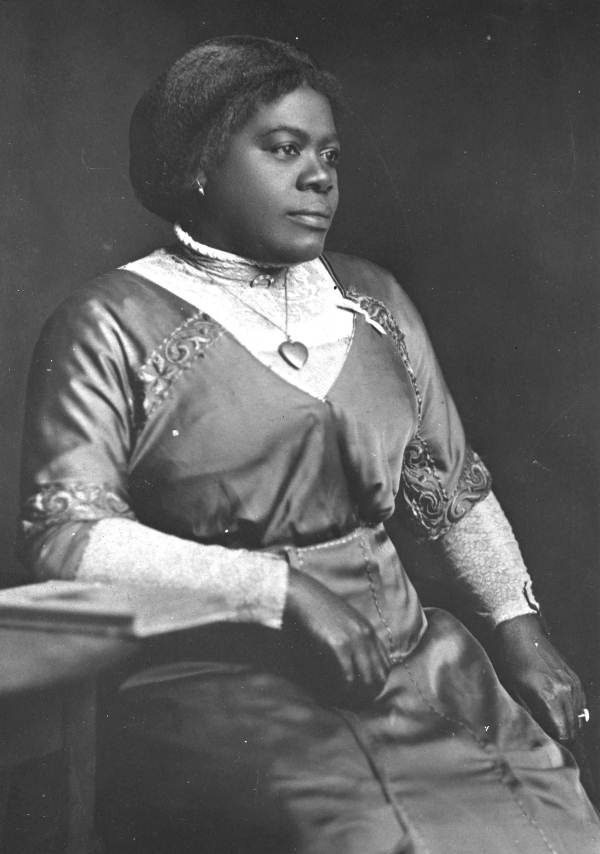
(Mary McLeod Bethune)

Mary turned over in her bed for the umpteenth time seeking a restful position, even though she knew discomfort was not the cause of her sleeplessness–excitement was. Tomorrow morning, October 4, 1904, she would stand in front of her first class of children in her own school: The Daytona Literary and Industrial School for Negro Girls.

Mary smiled, remembering the miracle of learning to read for herself when she was a girl of ten—miraculous because: 1) the provision of education for African-American children was rare in 1885, and 2) out of the seventeen children in her family, she was the one chosen to attend.
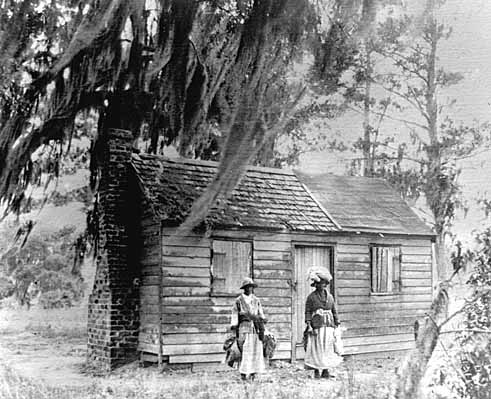
(Cabin where Mary was born, the fifteenth child out of seventeen)

The school was five miles from home, and she had to endure harassment and assault from white children on her daily treks. But Mary knew: this opportunity meant God had purpose for her life.

In 1886 a Quaker missionary financed the continuation of her education at Scotia Seminary in North Carolina.

Seven years later she entered Moody Bible Institute in Chicago as the only African-American among hundreds of white students. Instead of harassment and assault, however, Mary encountered acceptance, proving that “blacks and whites could live and work together with equality” (1).

While at Moody, Mary sensed God leading her to Africa as a missionary. But when it came time to apply, her denomination’s mission board denied her request because she was black.

The disappointment was deeply painful, but Mary soon turned her attention to those of African descent in America, and became a teacher—first in Augusta, Georgia and then in Sumter, South Carolina. She worked tirelessly, not only for her students but also for the surrounding black communities.

Thank you, Lord, for those nine years of teaching experience, Mary prayed. You prepared me well to found this new school.

Granted, there would only be five little girls greeting her in the morning, but it was a beginning. And Mary was confident God would make her school grow.

She chuckled to herself. Of course, Lord, you left an awful lot of work for ME to do!

First she found a community in need of a school: Daytona Beach, Florida. Numerous African-American families were moving there, in order to be employed by the newly formed Florida East Coast Railroad.

(Workers on the East Coast Railway Extension, 1906)

Next Mary found a run-down cottage to rent for eleven dollars per month.  She convinced the owner to accept $1.50 as a down payment.

To supply her school with furniture and other necessities, Mary foraged at the city dump and behind hotels for anything useful. Old peach crates became student desks and chairs, an old barrel became her teacher’s desk.

She retrieved discarded linens, kitchen ware, and cracked dishes for the homemaking and skilled trades she would teach. Everything was scoured, mended and repurposed. Even charred wood had value as substitute pencils.

To cover expenses, Mary sold sweet potato pies and fried fish to wealthy tourists. She canvassed neighborhoods, spoke to church groups and clubs, and distributed leaflets.

Now, opening day was hours away.  And as she finally drifted off to sleep Mary wondered, What might the future hold?

If God had told her, even Mary’s strong faith would have been stretched.

That tiny handful of students in 1904 would grow to almost 250 by 1906, requiring more teachers, an advisory board, and a bigger facility. Among the influential men (black and white) on the board was James M. Gamble of the Proctor and Gamble Company.
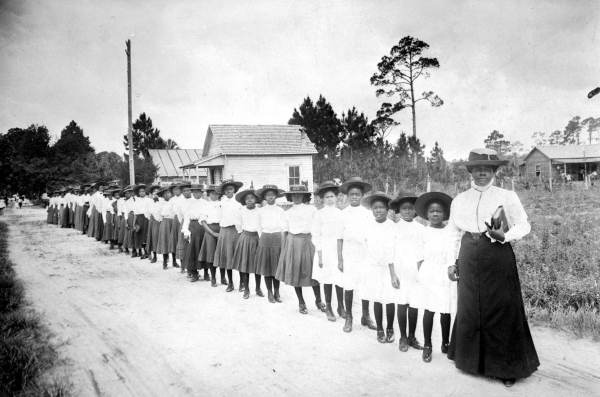
(Mary and her students, ca. 1905)

In 1923 her school would merge with the Cookman Institute, a co-educational school for African-American students in Jacksonville, Florida. Mary was chosen as the first president. Later the Bethune-Cookman Institute became a college and then a university. (Today, nearly 4,000 students attend the school.)

(Faith Hall, built in 1907 to accommodate Mary’s growing school;

now part of Bethune-Cookman University)

In 1935 Mary helped organize the National Council of Negro Women (NCNW) “to connect African-American women across the country and establish a national voice for them” (2).   Mary served as the first president.

A White House Conference of the NCNW met in Washington, DC in 1938. Then president, Franklin D. Roosevelt, offered her the position of Director of the Division of Negro Affairs of the National Youth Administration.

Mary met one-on-one with President Roosevelt several times a year and became good friends with Eleanor.

(Eleanor in the middle; Mary to her right)

Her participation on various government committees actually spanned the terms of four presidents, from Calvin Coolidge to Harry S. Truman.

(Mary’s home in Washington, DC)

Mary often said:
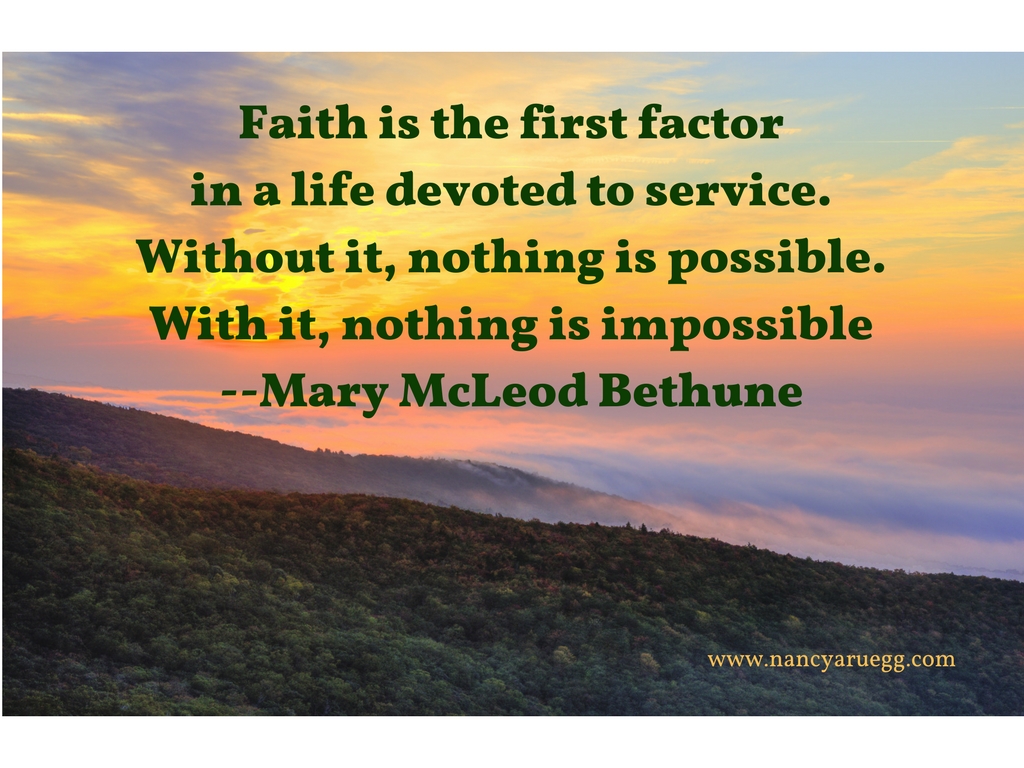
The impossible events of Mary’s life offer ample proof.
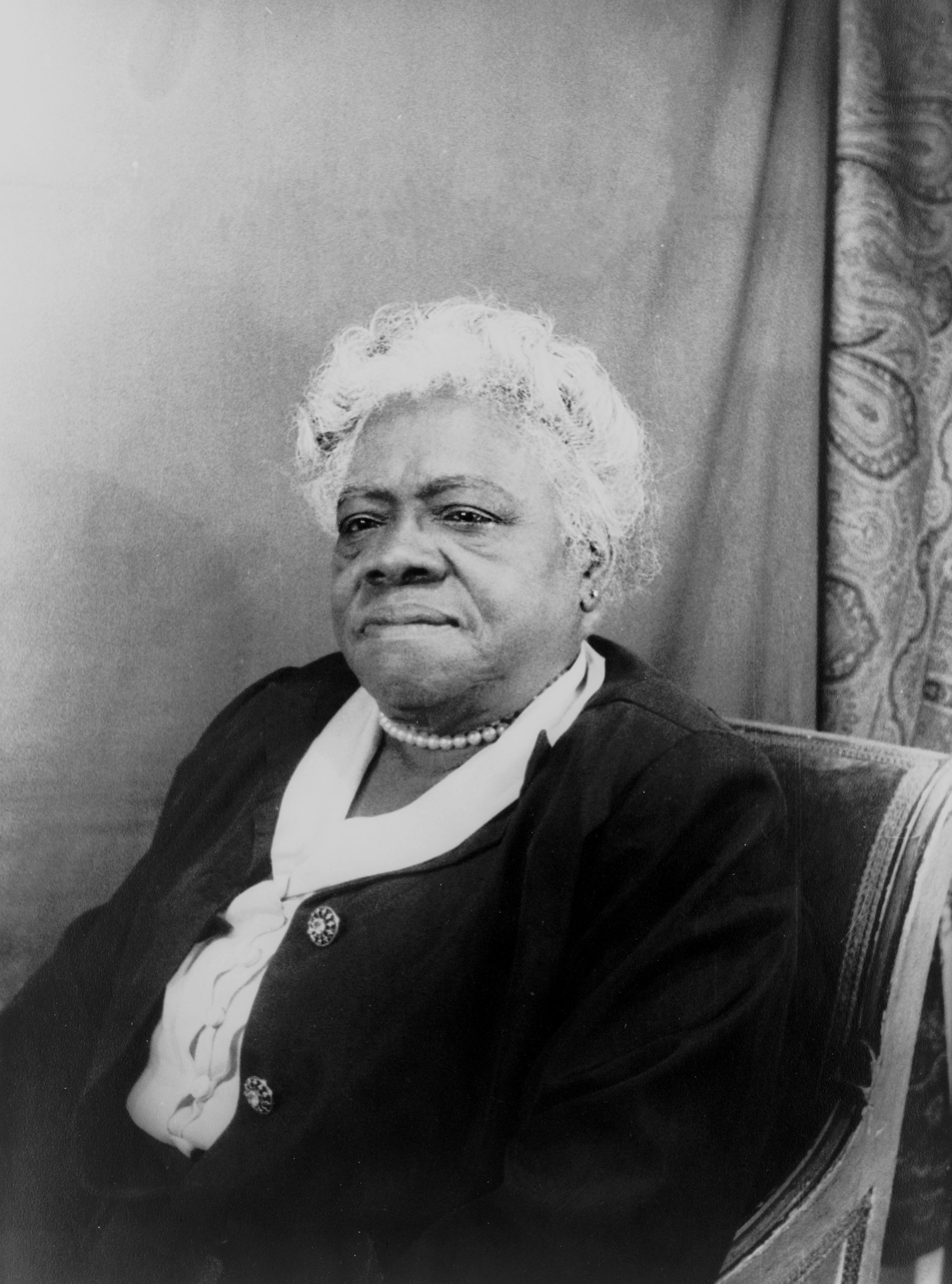
(Mary McLeod Bethune, 1875-1955)

Notes:

(1) http://www.talbot.edu/ce20/educators/protestant/mary_bethune

(2) https://savingplaces.org/stories/mary-mcleod-bethune-bethune-cookman-university-hbcu-history#.WnzP3pM-e8U

Sources:

http://www.talbot.edu/ce20/educators/protestant/mary_bethune

Click to access EJ969859.pdf

https://savingplaces.org/stories/mary-mcleod-bethune-bethune-cookman-university-hbcu-history#.WnzP3pM-e8U

http://www.wciujournal.org/journal/article/mary-mcleod-bethune-an-agent-of-change-and-leadership

Photo credits:  http://www.flickr.com; http://www.wikimedia.org (2); http://www.flickr.com; http://www.wikimedia.org (2); http://www.nationalparkservice.org; http://www.wikimedia.org, http://www.canva.com
Read Full Post »


“Well, that’s about as good as I can make it,” Steve announced.

We stood at the end of the hall in the parsonage where we lived, surveying his handiwork: a fort.

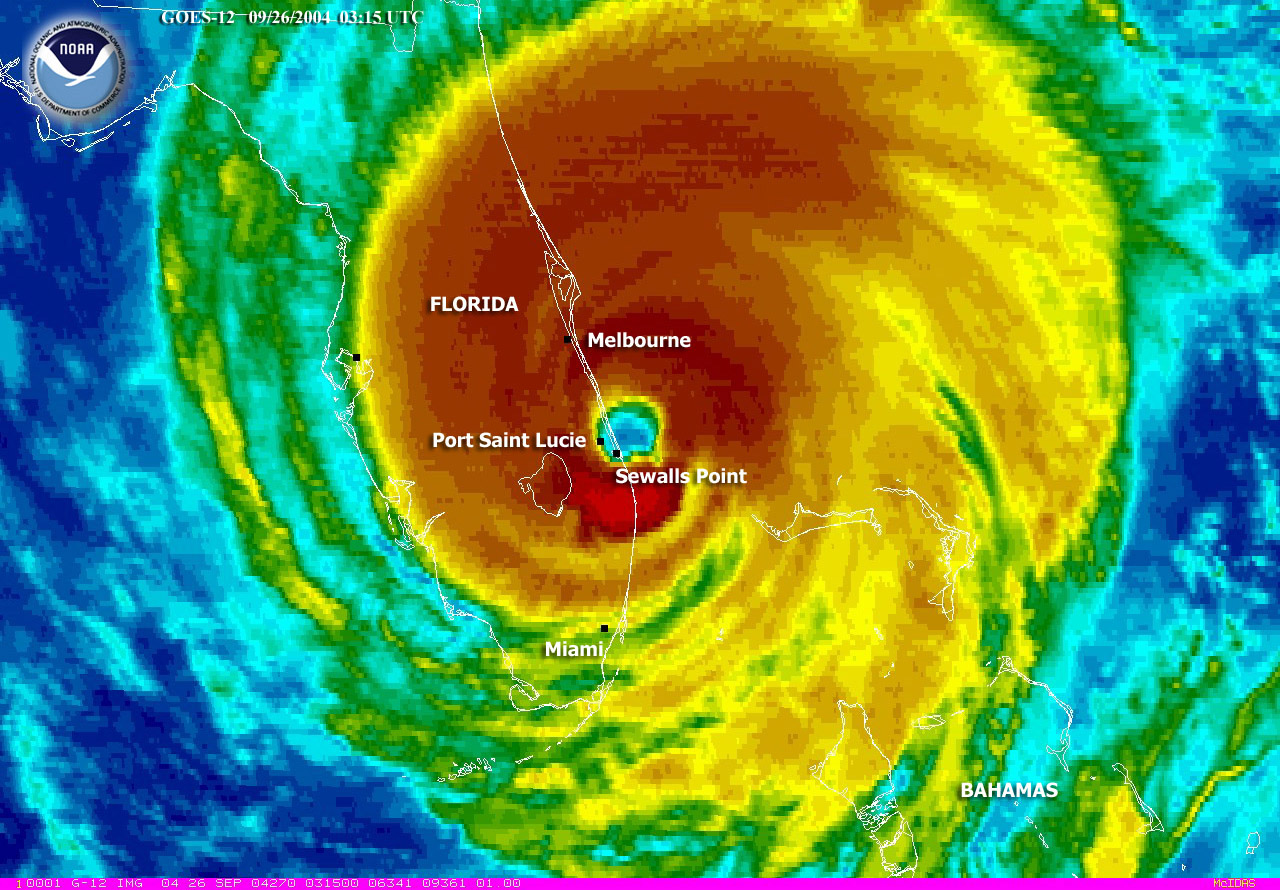
You see, a hurricane was roiling toward all of us who lived in South Florida, the second storm in two weeks.

The first one, named Frances, had torn branches from our trees, ripped numerous shingles off the roof, mangled the screened enclosure and thrown it in the pool.

It could have been so much worse.


(Jeanne at Landfall.  We lived south of the eye–in that bright red area.)


Now we were facing Hurricane Jeanne. We had no idea if Frances had compromised the roof structure, and of course we were among thousands waiting for an inspection to assess such damage.

Because of the uncertainty of our situation, Steve built that fort. He dragged two dressers into the wide area at the end of the hall where doors opened to three bedrooms, two storage closets and a bath. Over the dressers he put two mattresses, and on top of that, two long, folding tables.

He tightly looped rope around all the doorknobs (to help hold them shut) except the door to our bedroom and bath. Then he laced the rope across the dresser-mattress-table structure like a web, and tied it all together snugly.

Now I know why little boys build forts, I thought, so when they grow up they can keep their families safe during a hurricane.

In spite of Steve’s efforts, however, we could not be sure his structure would withstand the pressure of the wind, especially if the roof gave way. And even a well-built fort could not keep out water should flooding become an issue.

But thankfully our fate was not in Steve’s hands, reliant on his fort-building skills (stellar though they be).  Our lives were–as they always are–in the sure hands of God.


No, those verses are not meant to imply God’s perfect protection for his people at all times. The historical record and present day tragedies bear out: Many wonderful men, women, and even children have suffered and died through no fault of their own.

However, those of us who have “made the Most High our dwelling,” can be assured of these truths:

  1. Any number of catastrophes could have overtaken us already, but God has safeguarded us.

For example, if it were not for his providential care I may already have died from:

  • Any number of illnesses as a child. Thanks to penicillin and antibiotics I survived.
  • Car accidents.  At least several times I’ve come that close to a horrific crash.
  • Falls from high places. (You can read about one such escapade here.)

No doubt you have your own stories to tell of potentially disastrous circumstances.

2. God always brings good out of distress—beginning with heightened awareness of his presence (Psalm 94:18-19).


Another positive outcome:  By the wind of his Spirit, he stirs up the ripple effect of his work in us to impact the lives others.


3.  In the context of eternity, our time on earth is no more than a blink.

One day we will be delivered out of this broken world into a place where no harm or disaster will ever occur, all troubles, frustrations, and pain will fade into insignificance.


Such truths gave me comfort that night as I hunkered down in our fort.  Wind and rain pounded against the house, sounding like hundreds of stomping feet on gymnasium risers.

Yet I slept.

*     *     *     *     *     *     *     *     *     *

Afterword: Obviously we survived that storm. The roof held firm and we experienced no flooding. Yes, the region was without power again for a number of days, and there was more debris to clean up. But God honored us with his loving protection–again.


(Photo credits:  http://www.wikimedia.org; http://www.maxpixel.com; http://www.pixabay.com.)


Read Full Post »

For one of his most stunning and delicate works of art, The Supreme Craftsman begins with the most innocuous of materials: dust and water.

His factory/workshop for these masterpieces is the upper atmosphere of Planet Earth where he sets into motion a miracle of formation and intricate design.

God endowed water vapor with the ability to cling, even to the tiniest of dust particles floating high into the atmosphere. And when the temperature drops below freezing, those wet, clinging molecules turn into ice crystals. Very quickly they form a hexagon shape, no more than .008 or .009 of an inch in diameter, and a snowflake is born.

Vapor continues to bond to the hexagons in different ways as temperature, wind velocity, and density of moisture vary—even within the same cloud.

Some snowflakes maintain a hexagon shape.


(Photo by Wilson Bentley)


Others develop arms, and from the arms grow lacy patterns or feathery extensions.


As the snowflake tumbles downward from the clouds, vapor continues to cling and ice crystals continue to form—up to 1,000 microscopic crystals, each impacted by differing conditions. One outcome is certain: the greater the humidity, the more complex the pattern.


 Another photo by Wilson Bentley, 1890)


Is it true what they say, that no two snowflakes are alike? Most meteorologists say yes, because the dust particles themselves come from countless different sources–from sand, soil, and volcanic ash to decayed plant and animal material.

Add to that the wide-ranging variations of weather conditions mentioned above, and it becomes apparent: an infinite combination of factors contributes to the infinite number of patterns.


But God isn’t finished yet.

The awe factor is increased as tiny snowflakes begin to gather:

  • in graceful drifts,


  • on every branch of the trees,


  • and in sparkling swaths across the landscape.


And a few lessons present themselves as well:


  1. If God cares about the formation of snowflakes, he surely cares about the formation of his children.

A practically minded person would take one look inside God’s snowflake-factory and shake his head. “Why bother with all these designs?” he might ask. “Such a waste when they’re just going to turn to slush and eventually evaporate!”

But our God is a true Artist at heart, paying attention to details and creating beauty where it isn’t even necessary.

How much more must he desire to create the beauty of his holiness within our spirits?


  1. By itself, one snowflake is a fragile entity. But think what an avalanche or glacier can do.


By himself, one person can accomplish little. But think what happens when human effort is multiplied.

We weren’t created for isolation; God intends for us to live in community with other believers. Together we can achieve great good. Groups of Christians have generously brought aid to those in need, built schools, hospitals, and orphanages, even accomplished the abolition of slavery—to name a few examples.

There is strength in numbers, whether it’s snowflakes or God’s people.


  1. The miracle of snow occurs in silence; the miraculous power of God works silently, too.


Hours before we catch snowflakes on our gloves, the Supreme Craftsman sets the conditions and engineers the circumstances for their creation. Silently the snow comes, and finally we hold in our hands a breath-taking miracle of dust and ice crystals.

Similarly, long before we take note of an answered prayer or unbidden blessing, The Supreme Craftsman sets the conditions and engineers the circumstances for their fulfillment.

Silently he comes. And suddenly we hold in our hands a breath-taking miracle of his power and love.


*     *     *     *     *     *     *     *     *     *


Maker of Miracles, just as your universe is full of wonder, so are our lives. We can’t begin to recount all the awesome works you have performed for our benefit. All we can do is sing for joy at the work of your hands!


(Psalm 40:5, 66:5, 92:4)


(Art & photo credits:  http://www.wikimedia.com; http://www.flickr (James P. Mann); http://www.wikimedia.com (2); http://www.pixabay.com (Natalia Kollegova); http://www.pixnio.com; http://www.flickr.com (AMagill); http://www.publicdomainpictures.net; http://www.wikimedia.com; http://www.nws.noaa.gov; http://www.paxpixel.freegreatpcitures.com; http://www.flickr.com & Nancy Ruegg.)


Read Full Post »


“You prepare a table before me, 

In the presence of my enemies.” 

–Psalm 23:5


You, oh God, are my Host at the table of life!


You have prepared for me a veritable buffet of experiences and opportunities. Some have been delicious and delightful, created (it seemed) solely for my enjoyment—events such as close encounters with birds or butterflies, an afternoon of laughter and reminiscing with old friends, or a spontaneous hug from a toddler.

Other experiences you’ve prepared because they were good for me: challenges, changes, and uncertainties.   You wanted to build stronger character within me and grow maturity in my spirit.

Sometimes I’ve wondered what you were serving! Forgive me for saying so, but occasionally you’ve created circumstances that seemed as distasteful as dill pickles, cream cheese, and corned beef.  (That combination sounded awful when I was first introduced to it.)  But just as I discovered how delicious Piggles* are, I’ve learned the superiority of your plan–to prosper me and not to harm me (Jeremiah 29:11).


Another observation:  some of the dishes being served aren’t just good for me, but for others at the table—especially the younger ones. Take Brussel sprouts, for example. If the children see me eating my portion, perhaps they’ll be inspired to eat theirs too. In like fashion, as a participant at the table of life, you allow me to join with you in fulfilling larger, far-reaching purposes–way beyond Brussel sprouts.

Even when enemies such as trial or pain try to swoop in and spoil the celebration, I can rejoice because you are with me, to strengthen and uphold. You’ve given me your Word, where I can feast on your attributes and promises. By your power, those enemies will be held at bay—outside the banquet room.

And on this Thanksgiving Day, when many a cook prays his/her feast will turn out perfectly, I praise you that everything you prepare for me is perfect (Deuteronomy 32:4).


Thank you Jehovah-Jireh, my Provider, for your faithfulness and goodness in my life.

May the happy thanks-giving of your people provide happy thanks-receiving for you.

_________________________________

*The name, Piggles, was created the night a bunch of us made pigs of ourselves on this pickle appetizer/snack.


(Revised and reblogged from November 26, 2015.)


Photo credits:  http://www.flickr.com; http://www.pixabay.com; http://www.maxpixel.freegreatpicture.com; http://www.heartlight.org.)


Read Full Post »

In March of this year I began a new journal, A Celebration of Small Things, in an effort to become more aware of God’s daily gifts.  But after discovering the quotes below it became clear: my gratitude list is missing whole categories of blessings.

See what you think of these statements.  (Note that with each quote I’ve included my own prayer-response and a corresponding scripture.)

QUOTE #1

Is the glass half empty or half full?

Just be thankful you have a glass!

—Jack Wellman

You’ve given me a beautiful glass, Father—a life overflowing with loving family and friends, days filled with purpose and pleasure, surprise blessings that satisfy my heart with joy. The words “thank you” seem trivial for such gracious gifts.


“You make me glad by your deeds, O Lord; I sing for joy at the works of your hands.”

Psalm 92:4 NIV

QUOTE #2

Give thanks for ‘all things’ for, as it has been well said,

‘Our disappointments are but his appointments.’

—A.W. Pink

I thank you, Father, for the doors of opportunity you’ve closed, the challenging moves to new communities you’ve ordained, and the wishes of my heart you’ve withheld. Each disappointment I know was for my benefit and your glory. Thank you for hindsight to understand in part, and the promise that one day I’ll understand in totality.


QUOTE #3 

“I thank Thee first because I was never robbed before;

second, because although they took my purse they did not take my life;

third, although they took my all, it was not much;

and fourth, because it was I who was robbed and not I who robbed.

—Matthew Henry,

on the night he was robbed

Thank you, Father, for Henry’s example of grateful positivity. No doubt he lifted his own spirit with such a prayer, and I can imagine your smile of approval as well. When trouble assaults my life, may I be as grateful and positive as Matthew Henry.


“Give thanks in all circumstances, for this is God’s will for you in Christ Jesus.”

1 Thessalonians 5:18 NIV

QUOTE #4

There’s one thing for which you can be thankful—

only you and God have all the facts about yourself.

—Dub Nance

Oh, Lord, thank you for being a God who delights to show mercy, lavishes compassionate forgiveness, and understands well my frailty. Thank you also for molding me day by day into the image of Christ—in spite of my shortcomings (Micah 7:18b; Psalm 103:12-14, and 2 Corinthians 3:18).


QUOTE #5

The best things are nearest:

breath in your nostrils, light in your eyes,

flowers at your feet, duties at your hand,

the path of God just before you.

—Robert Louis Stevenson


Oh, yes, Father. Thank you for numerous “best things” close at hand such as: a spontaneous hug, the chortling giggles of a grandbaby, a carnival of birds frolicking in the backyard trees (at least six species at once), and savory chicken/sausage soup—made by Steve—for a bleak and blustery day.


“Rejoice in all the good which the Lord your God has given to you and your house.”

Deuteronomy 26:11 (emphasis added)

Indeed, ALL the good. Thank you, Father, for bringing to mind these new blessings to count.


And now, precious readers, which quote especially caught your attention? I’d love to hear about it. Please share your choice and thoughts below!

(Art & photo credits:  Nancy Ruegg; http://www.heartlight.org;  www.canva.com (2); http://www.dailyverses.net; http://www.pexels.com.)

Read Full Post »

The place:  Spindletop, Texas.

A group of five investors formed the Gladys City Oil Company.  Sulphur springs in the area gave them great hope that black gold lay beneath the surface, especially since gas seepages in the area would ignite if lit.

Soon the area was dotted with holes–holes that produced nothing.  Two investors pulled out.

A geologist was brought in.  More investors were convinced to take the risk.

Nine long, unproductive years went by, and  still no oil. That’s 3,285 days of discouragement, disappointment, and exhausting labor.  Yet those men would not give up.

Finally, on January 10, 1901, their long-held dreams were realized.  At the depth of 1,139 feet, the company struck oil.  And it wasn’t just a gurgling flow.  The discovery at Spindletop gave new meaning to the term, “gusher.”  The oil shot over one hundred feet into the air, spewing enough to fill 100,000 barrels a day.  It took nine days to get the well under control.  No oil field in the world, up to that time, had been so productive.

Lucas_gusher

I wonder what those men said to each other each morning, over those 3,000-plus days of working, learning, waiting, and wondering?  Surely their conversations included some positive uplift, or they would have quit.  Perhaps they made such comments as:

  • “If we don’t find oil, at least we can say we gave the effort everything we’ve got.  If we quit before all possibilities are tried?   That‘s failure.”
  • “All the signs indicate there is oil.  We can‘t quit!
  • “Today might be the day!”

Just as oil is sometimes discovered by accident, so God’s blessings fall into our laps as glorious surprises. Other times,  God chooses to postpone a blessing while we dig our way through learning, working, waiting, and wondering–like the oil men of Spindletop, Texas.

How do we press on when circumstances look bleak, when common sense tells us to quit?

1.  Pray!  The key to knowing when to persevere and when to change direction is to spend time with God. Ask him to make clear what the next step is.  Most likely he will not reveal the whole plan at once.  He rarely works that way, because it eliminates the faith factor.  Our moment-by-moment trust in him is too crucial to the abundant living he desires for us.

2.  Believe!  Dozens of promises in scripture probably apply to your situation and mine. We can recite those promises–not as demands (“God, you said this, so I’m expecting you to do it.”) but as faith-builders. (“God, you said this, and I know with you all things are possible.”)

3.  Fight!  Fight against discouragement with plenty of encouragement.  God is very creative in the ways he brings hope to our spirits.  We must keep watching and listening!

A friend or even a stranger can speak uplifting words that resonate in our hearts.  Sometimes it’s as if God is speaking directly. One sign for me, that someone is speaking for God?  Goosebumps!  I can almost feel his light touch on my arm and his voice saying, “Pay attention to this, Nancy.”

Our God is a well of unending supply.  Whatever we need in this life, including wisdom, direction, and perseverance toward a goal, he will provide.  In fact, he will do whatever it takes for his praying, believing, fighting children to discover the oil of gladness, instead of mourning (over failure), a garment of praise instead of a spirit of despair.

That’s one way our loving, supportive Heavenly Father displays his splendor (Isaiah 61:3).

Steven Curtis Chapman Quote: “Out of these ashes beauty will rise.”

[https://quotefancy.com/quote/1129946/Steven-Curtis-Chapman-Out-of-these-ashes-beauty-will-rise]

(Revised and reblogged from February 13, 2014.)

Photo credits:  www.en.wikipedia.org; http://www.heartlight.org; http://www.quotefancy.com.

Read Full Post »

Ever had a sleepless night due to a relentless whirl of what-ifs, a churning jumble of distress and anxiety, a racing heart?

Worry will do that. No wonder we’ve been told worry is bad for us.  In fact, according to Charles Mayo (co-founder of the Mayo Clinic), worry causes adverse affects on the circulatory system, heart, glands, and nervous system.*

But what about concern? Is that different from worry? Is it OK to be concerned?

The answer is yes. Scripture gives much evidence that even our perfect Heavenly Father exhibits concern. He demonstrates:

  • Compassion on all he has made (Psalm 145:9).
  • Care for each of us (1 Peter 5:7).
  • Mindful attention (Hebrews 2:6).
  • Watchful protection (Jeremiah 31:10).
  • Careful planning for us (Psalm 40:5).

As God exemplifies, concern prompts beneficial action; worry, on the other hand, accomplishes nothing but harm.

Worry creates a thick fog of fear; concern invites God into our experience with all his wisdom, power, and comforting presence. He is, after all, the only One who can dispel fog, whether it’s water vapor in nature or worry on our minds.

Just the reminder our loving Father is right in the midst of the mess with us will do much to sweep away worry.  And “there is heaven in the depth of that word—Father!” (Charles Spurgeon, emphasis added).

Indeed. If we dig into the heavenly depths of our Father’s love we’ll see:

  • The support of his powerful right hand (Psalm 65:8).
  • The protection of his everlasting arms (Deuteronomy 33:27).
  • The comfort of being carried close to his heart (Isaiah 40:10).

And that’s just for starters.

If we dig into what we know about him, we can affirm:

  • “Nothing happens in any particular unless God’s will is behind it; therefore [we] can rest in perfect confidence in him” (Oswald Chambers).
  • The God who made us will equip us for whatever lies ahead—even if it’s unpleasant (Habakkuk 3:19).
  • Difficulties most often set the scene for his glory to be displayed (Romans 11:36).

Sometimes, though, the fog of worry shrouds even the strongest mental images and the most affirming truths. We’re forced to admit: trustful concern is not easy.

For most of us, it is a learned discipline that grows over time. Slowly we’re able to embrace the truth that all will be well because all is in God’s perfect and capable hands. Slowly we develop the habit of affirming God’s character and power, to develop a nearly worry-less state of contentment.

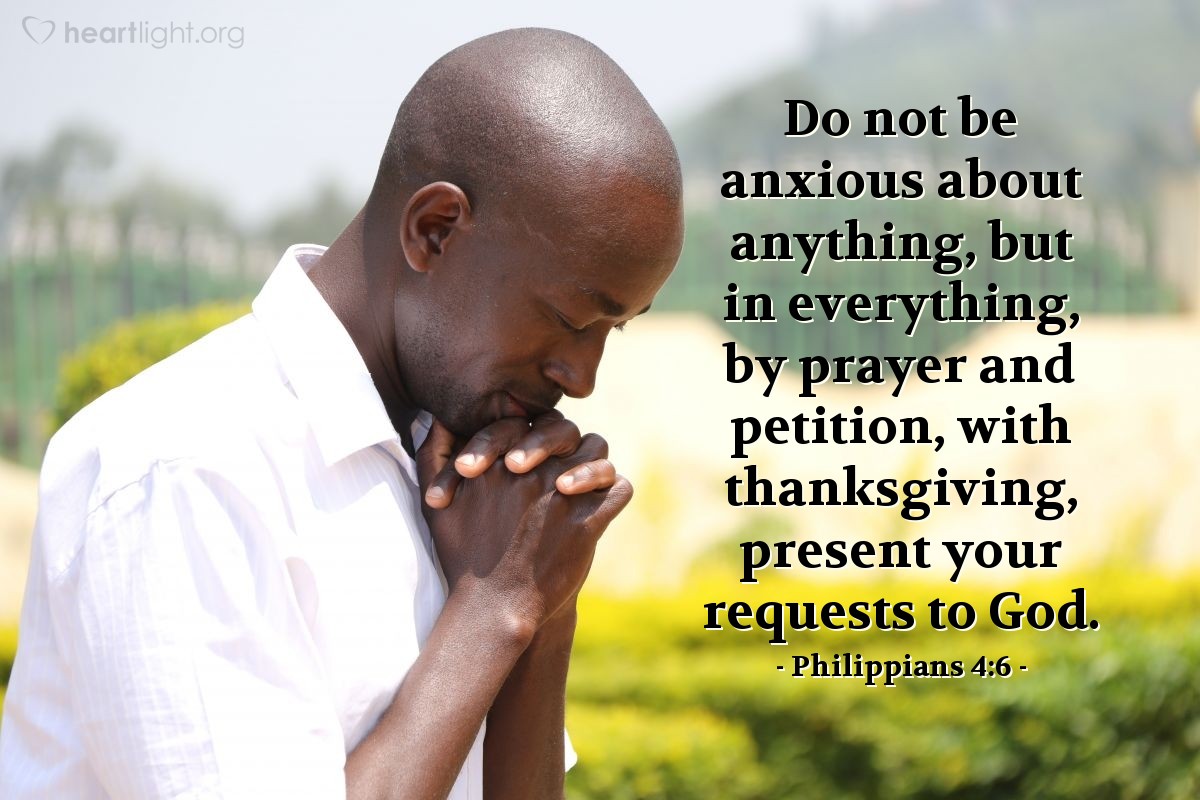
And we learn the value of gratitude amidst turmoil—as illogical as that may sound. The very act of thanking God releases our minds from negative focus. When we turn our attention to him, problems fade in significance and the fog is dispersed. That’s why Paul recommended, “Pray with thanksgiving” (Philippians 4:6).

And that’s how we turn worthless worry into productive concern.

*     *     *     *     *     *     *     *     *     *

I thank you, Father, that NO situation is hopeless because you are the God of eternal hope. I can count on you because you are the God of universal sovereignty, complete sufficiency, and abundant goodness.

I thank you for your comforting presence, for your power at work (even though I can’t see it right now), and for your glorious promise that you always bring good from every situation. I praise you that, while we may sow in tears, there will come the day we reap with songs of joy. Hallelujah!

2 Thessalonians 2:16-17; Romans 11:36; 2 Corinthians 3:5; Psalm 145:7;

Matthew 28:20; John 5:17; Romans 8:28; Psalm 126:5

*www.todayinsci.com.

(Art & photo credits:  http://www.flicker.com; http://www.wallpaper4god.com; http://www.youtube.com; http://www.dailyverses.net; http://www.heartlight.org.)

Read Full Post »

Tuesday evening I returned from an out-of-state visit with family. Steve picked me up at the airport.

“Where would you like to go for dinner?” he asked as we walked toward the luggage carousel.

“How about the Korean restaurant?”

Just thinking about their savory dishes made me even hungrier than I already was.

Minutes later my suitcase was stowed in the trunk.  We drove out of the parking garage and approached the exit tollbooth.

Steve rolled down his window. “Good evening!” he called to the female attendant.

“Hello,” the woman responded dully, without even a hint of smile.

“Hard day?” Steve asked.

She reached out to take the ticket from his hand.  “I’m just frustrated,” she responded.

A quick glance out the rear window assured me no other vehicles were in sight. I felt compelled to engage with the hurting woman; Korean kimchi could wait.

“Nobody’s coming,” I said to the woman. “Would you like to tell us about it?”

After a slight pause she began to share.

“I am a college graduate, but since I’ve become disabled, this is the only job I could find. It’s just three days a week, too, and people are so RUDE!”

We nodded our heads in agreement.

“What’s your name?” Steve asked.

“Ginny*,” she replied, and indicated her nameplate on the booth.

Oops. Steve and I had both missed it.

“Well, Ginny,” Steve continued, “we are people of faith and have seen God answer many prayers and provide many blessings. We’re going to be praying for you.”

Her first blessing was instantaneous. Steve handed Ginny a generous tip, and she smiled.

“You don’t need to do that.” She tried to give the money back.

“No, no. You keep it,” Steve persuaded her. “Maybe it’ll make up a little for the rudeness you’ve dealt with today.”

“Well, thank you SO much! And may God bless you, too!”

“Oh, he does!” I assured her.

Steve pulled away from the booth before other cars approached. And I offered my first prayer for Ginny.

Thank you, Father,  for the opportunity to provide encouragement. What a delight to see Ginny smile. I pray she experiences strengthened hope in you and saving faith in your Son, Jesus.

Yesterday morning, I happened upon Proverbs 13:2a and was reminded of our tollbooth encounter the night before: 

Oh yes, Lord. We did enjoy good things last night with Ginny.

In our effort to lift her spirit, we too were uplifted. What a privilege to draw Ginny’s attention to you, relieve her stress a bit, and boost her morale. There’s also the joy of anticipation, knowing you will honor our prayers for her (1 John 5:14-15).

Then my imagination kicked in. I pictured us driving up to Ginny’s tollbooth sometime in the future. We’ll tell her how we’ve prayed for her.

Steve will ask, “How’s it going?”

And an effervescent Ginny will share that God has blessed her life in jaw-dropping ways.

In reality, however, it’s likely we’ll never see Ginny again. Part of God’s plan may be to graduate her from that booth into more fulfilling employment, long before we have opportunity for another encounter.

Oh, but wait. Perhaps we will get to hear Ginny’s story one day. And we won’t have to watch for cars approaching from the rear.

I’m picturing a picnic—Ginny, Steve, and me—seated by the crystal sea in heaven (Revelation 15:2).  We’ll chatter away like old friends, celebrating God’s glorious blessings and miraculous ways.

Photo by Bob Meadows. Original public domain image from Flickr

Now that will be a very good thing to enjoy.

*Name changed.

*     *      *      *      *      *      *      *      *      *

What good things have you enjoyed lately from the fruit of your lips? Please share your story in the comments below!

(Art & photo credits:  http://www.commons.wikimedia.com; http://www.rawpixel.com; http://www.commons.wikimedia.org; http://www.flickr.com; http://www.scripture-images.com; http://www.rawpixel.com.)

Read Full Post »

Conventional wisdom teaches that success comes to those who work hard to achieve their goals.  And to a point that’s true.

But.  Success can quickly crumble when tragedy strikes.

Ask Job; he’ll tell you.  He was an extremely wealthy man and the greatest among all the people of the East.

He enjoyed a large, loving family.  His children liked each other so much they partied together.

Job was blameless and upright—totally undeserving of what happened to him (Job 1:1-4).

Stripped of everything.  All his wealth.  All his wonderful children.

Some of the recent hurricane victims know the magnitude of such horror. Home and all contents, gone.  Family members, gone.  I can’t even imagine their emotional pain and heartache.

And what was Job’s reaction to his tragedy?

If you had asked me that question a couple of years ago, I would have answered:  Job was incredibly accepting; he didn’t even blame God (1:22).

But there’s more:

“He fell to the ground in worship” (v. 20b).

WHAT?!

How can a person possibly worship at a time like that, when his whole world has collapsed around him?

All Job had left was his foundation—a foundation of faith in God.

And worship was his expression of that faith, declaring God’s worth to him—in spite of horrific calamity.  For Job, God was enough.

From Job we learn that true worship is not reliant upon circumstances.  In fact, a sacrifice of praise (Hebrews 13:15) is surely very precious in God’s view.

Second, true worship is not reliant upon emotions.  We don’t have to be filled with joy in order to worship.  We can worship God with our tears, expressing our trust in spite of the pain.

Job couldn’t rely on answers that would give meaning for his suffering.  God gave him none.  What Job did rely upon was God’s character:

  • “His wisdom is profound, his power is vast” (9:4a).
  • “He performs wonders that cannot be fathomed, miracles that cannot be counted” (9:10).
  • “If it is a matter of strength, he is mighty!  And if it is a matter of justice who will summon him?”  (9:19).
  • “You gave me life and showed me kindness, and in your providence watched over my spirit” (10:12).
  • “To God belong wisdom and power; counsel and understanding are his (12:13).
  • “Can anyone teach knowledge to God, since he judges even the highest” (21:22)?

In the end, knowing God was more important to Job than knowing answers.

*     *     *     *     *     *     *     *     *     *

Heavenly Father, I shake my head in wonder as people of faith such as Job neither blame you nor give up on you in the face of calamity.  Instead, they rely upon you all the more tenaciously.  They worship, affirming that you are still their sovereign, loving God; they testify of your strength and peace. 

Thank you for being a God who comes alongside us with your wisdom and grace, especially when we’re hurting.  Thank you for powerful examples to follow such as Job.

(Art & photo credits:  http://www.flickr.com; http://www.wikimedia.org; http://www.pinterest.com (2); http://www.flickr.com.)

Revised and reblogged from June 17, 2013.

Read Full Post »

If you’re looking for spectacular views of fall foliage this year, do not come to southwest Ohio where we live. It would appear the wetter-than-normal weather of 2017 has contributed to early, lackluster color and quickly dropping leaves.

By contrast, last year offered an autumn extravaganza:


(Spring Grove Cemetery & Arboretum,

Cincinnati, Ohio)


Just what causes the rich jewel tones of color in the fall?  I recently relearned the answer from one of my granddaughter’s picture books (!).

In early fall, due to fewer hours of sunlight, cooling temperatures, and less rain (usually), the leaves no longer receive sufficient light and water. They start to separate from the tree, the chlorophyll fades, and the green color begins to disappear.

Now the yellows and oranges, present in the leaves all along, become visible. Some leaves make new pigments from the extra sugar stored inside. These leaves turn red, rust, pink, and purple.


The variety of hues represents some of the most vibrant shades on the color wheel.

And each hue, you may recall, has been assigned a meaning.

Red symbolizes power and strength;

Yellow, energy and intellect.

Orange represents joy and happiness;

Green, stability and safety.

Purple signifies royalty and power;

Pink, love and friendship (1).

M-m-m. Every one of those attributes describes our God.

As we ooh and aah over the wonder of autumn (even if only in small patches!), what if we allow each color to inspire worship?

For example, the brilliant red of the sugar maples can be a reminder he is tireless, never even needing a nap (Psalm 121:4).


He can accomplish anything–like create human beings and a complex, life-sustaining planet for them–because he is the one and only Lord, strong and mighty (Psalm 147:5).

Creation also demonstrates his superior intellectual abilities (Romans 11:33-36) since mysteries still abound in the universe–even after centuries of human inquiry. Gaze at the luminous golden ginkgo trees and affirm: our God knows all and never makes an unwise decision.


A fiery orange serviceberry tree is sure to make you smile with delight. Turn that smile toward your Heavenly Father, the source of all joy (Romans 14:17).


Evergreens provide a continual reminder of our ever-present refuge in him (Psalm 46:1) and his enduring faithfulness to us (Psalm 100:5).


Sweet gum trees don robes of purple in autumn. This color of royalty since ancient times can remind us of our Ancient of Days, the King of all the earth (Psalm 47:7).


Last, the pink leaves of the burning bush can signify the loving friendship he offers (John 15:15), “practical and down-to-earth, yet saturated with heavenly glory” (2).


Whether or not we live in an area where these splendorous colors are on display, we can remember: God’s glory surrounds us just as autumn blaze can envelope a region.


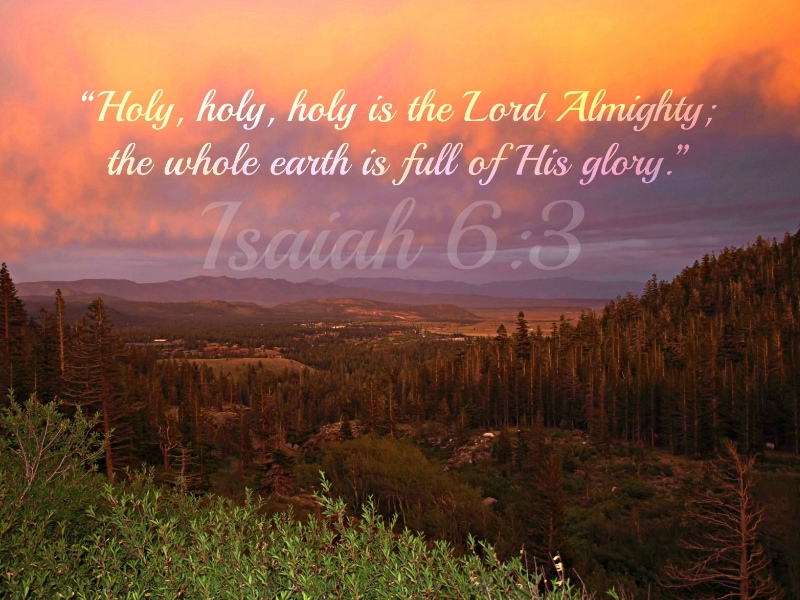
After all, the whole earth is full of his glory” (Isaiah 6:3, emphasis added).


*     *     *     *     *     *     *     *     *     *

Thank you, Lord God, that every facet of your character is on display in your creation, giving us opportunity to “see” you. Even the changing leaves of fall call attention to your magnificent attributes. But even more wonderful—you manifest these qualities in our circumstances and in our hearts. Who is like you—majestic in holiness, awesome in glory, and always working wonders?  We praise you, O Lord, now and forever!

Romans 1:20; Exodus 15:11; Psalm 145:1  


Notes:

  1. colorwheelpro.com
  2. Sarah Young, Jesus Calling, Thomas Nelson, 2004, p. 260.


Photo credits:  http://www.flickr.com; http://www.publicdomainpictures.net; http://www.flickr.com; http://www.pixabay.com; http://www.maxpixel.freegreatpicture.com; http://www.publicdomainpictures.net; http://www.pixabay.com (2); http://www.flickr.com.


Read Full Post »

« Newer Posts - Older Posts »