Feeds:
Posts
Comments

Archive for the ‘Maturity’ Category

No Christmas season would be complete without the reading of the second chapter of Luke—the account of Mary and Joseph traveling to Bethlehem, presiding over the birth of Jesus in a stable or cave, and receiving shepherd-guests.

Toward the end of the account, as those shepherds were spreading the word of Jesus’ birth, Luke wrote, “Mary treasured up all these things and pondered them in her heart” (v. 19).

Indeed. She had much to process:

  • Her baby was the Messiah, the Promised One, who would save his people from their sin. I wonder if she studied him, looking for signs that he was different from other infants.
  • This was the Prince of Peace cradled in her arms. Yet he had been born to a common village girl in very primitive conditions.  Did that seem strange to her?
  • The shepherds had learned of his birth when angels visited them, just as the angel, Gabriel, had visited Mary and then Joseph.  Gabriel had also visited Zechariah, the father of John the Baptist. Four angel visitations in a matter of months. Never had that happened before.

I find myself pondering, too—pondering Mary herself–this dear, young girl who carried a tremendous burden for a long time.

Dear means beloved and valued. Mary is certainly that for numerous reasons.

  • She embraced Gabriel’s announcement with great faith. “May it be to me as you have said,” (Luke 1:38). She put herself in the care of God in spite of incomprehensible circumstances.
  • Her prayer, the Magnificat (Luke 1:46-55), gives indication of a heart fully committed to God.
  • She endured much: shame for her pregnancy, a long, uncomfortable journey to Bethlehem, and crude circumstances for the birth of her Son.

Mary was young—perhaps between thirteen and fifteen years of age. That was the typical age for a girl to be married in Bible times.

Yet, young as Mary was, Gabriel praised her for being “endued with grace” (v. 28, AMP). In addition, Mary demonstrated stamina, maturity, and gentleness beyond her years.

No doubt God graced her with these traits. But I have to believe Mary also had freedom of choice, as we all do, to embrace God’s way for her.

What I ponder most, however, is the fact Mary carried a tremendous burden, given to her by an elderly man, Simeon, eight days after Jesus was born.

You undoubtedly remember the story. Joseph and Mary took Jesus to the temple at Jerusalem to be circumcised.

There they met the righteous and devout Simeon who had been waiting decades for the Messiah. The Holy Spirit had revealed to him he would not die until he had seen the Lord Christ.

Immediately upon seeing the Child, Simeon knew this was the One.

He praised God for keeping his promise, blessed Mary and Joseph, and then spoke particularly to Mary, saying Jesus would cause some to rise and some to fall, he would be spoken against, the thoughts of many hearts would be revealed, and a sword will pierce your own soul too (Luke 2:21-35).

Those last words must have caused Mary’s eyes to grow wide and her heart to skip a beat. Wasn’t the worst behind her? Surely Mary wanted to ask Simeon, “What do you mean?” Scripture gives us no indication that she did so.

For thirty-three years those last words of Simeon must have echoed in Mary’s mind again and again. How does a person live with such long-term foreboding? Perhaps her mind turned back to the night of Gabriel’s visitation.

Perhaps, for thirty-three years, Mary repeated what she had told the archangel: “I am the Lord’s servant. May it be to me as you have said” (1:38).

Mary may very well have developed the calm assurance that even when God’s ways are baffling, we can rest assured he is orchestrating events to accomplish far more than we could ever imagine (Ephesians 3:20). She’d been witness to such orchestration in Bethlehem.

Mary knew that even our personal hardships can fulfill purposes that extend far beyond ourselves.

That’s a lesson for all of us to embrace with calm assurance.

(Revised and reblogged from December 15, 2014, while we enjoy a blessed week with family!)

Photo credit: http://www.stocksnap.io.

Processing…
Success! You're on the list.

Read Full Post »

Looking ahead at the calendar for 2024, I found more than a few wild-and-crazy celebrations in store for those who care to participate. Just in January alone, we can look forward to:

  • National Cream Puff Day—January 2 (Who thought this was a good idea right after the holidays when so many will be embarking on diets?)
  • World Logic Day—January 14 (If only we could fix in one day the irrational and absurd thinking that seems to be increasing these days.)
  • National Popcorn Day—January 19 (This one I can get behind!)
  • National Blonde Brownie Day—January 22 (If you prefer cream cheese brownies, your day is coming February 10.)
  • National Backwards Day—January 31 (Seems like we’d benefit more from honoring evidence of going forward—toward integrity, responsibility, and maturity.)

Didn’t I tell you they were wild-and-crazy observances?

To be honest, we Christians are encouraged to celebrate some wild-and-crazy things—things that make no sense at first glance, like:

Weakness

Too many of us assume we have to be supremely talented and gifted in order to be used by God. But the opposite is true.

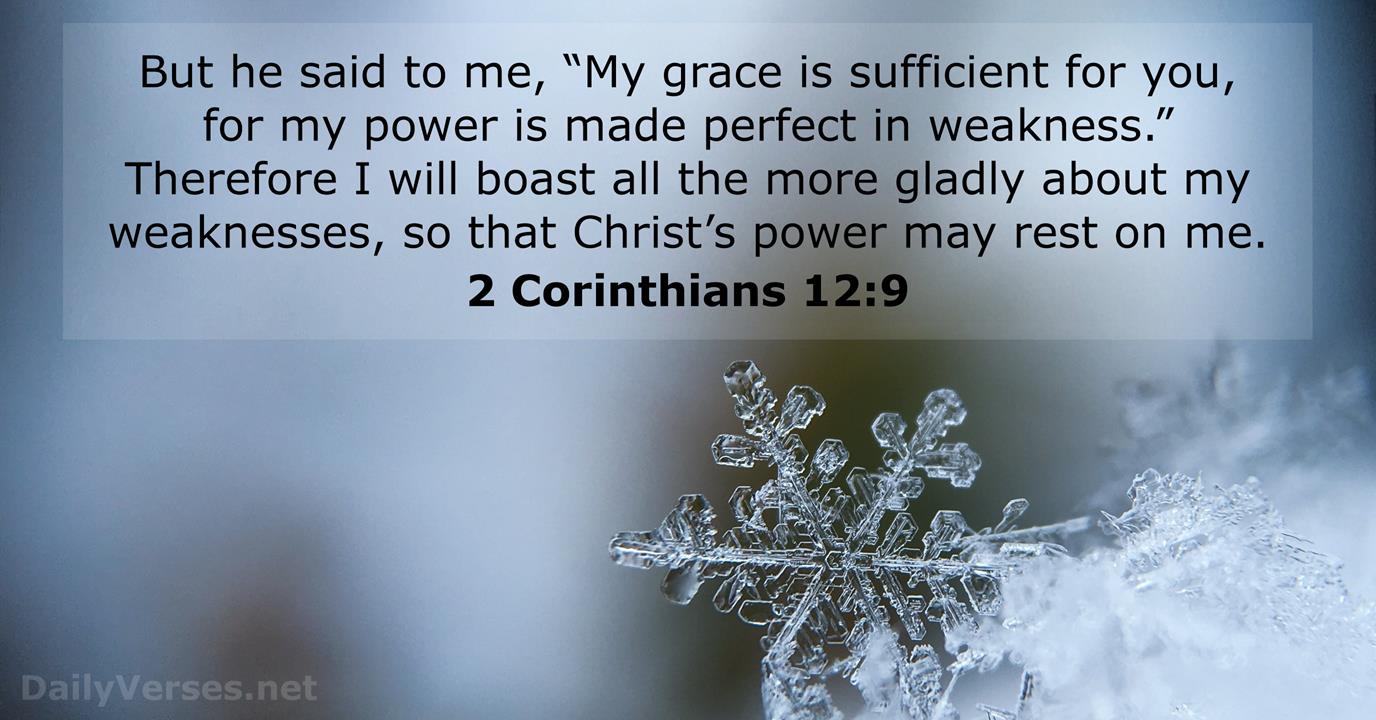
God most often chooses ordinary people who’ve emptied themselves of prideful ambition and self-centered motives. They are the ones whom God can fill with himself, who become the ideal showcases for his greatness and glory [1].

Turns out, when we recognize just how weak we are—with our inadequacies, missteps, and fears—we’re actually in the best position to manifest the power of God.

Now that’s worth celebrating!

Meekness

The Hebrew word for meekness suggests “being molded.” The meek are God-molded; they’ve submitted to him and are patterning their lives after him [2]. The meek delight in leaving everything in God’s capable hands.

That may sound unappealing to some, but little do they know: the meek get the most out of life.

For example:

  • They view life with joyful gratitude, not disgruntled entitlement
  • They appreciate their resources—not for the prestige they offer but for their usefulness
  • They don’t harbor envy or jealousy, but genuinely enter into the joys of others

And note what God promises to the meek in Psalm 37:11 (above): an abundance of peace. Isn’t that a happy reality to celebrate?

Servanthood

Not many of this world are interested in the role of servant. But God’s kingdom works very differently:

Every day is a new opportunity to discover what eternal business might be lurking in the ordinary business of being human [3].

Bruce Wilkerson

Yes, there is eternal business in serving others as we:

  • prepare meal after meal that keeps the family fed, but also nourishes their hearts with comfort and delight
  • perform small deeds of kindness—because they’re woven into the larger expanse of God’s far-reaching grace
  • work for the benefit of others and the glory to God—whether anyone notices or not

There is honor in such serving.

Trouble

Now I’ve gone too far, some will say. Celebrating difficulty seems downright sadistic. But consider:

We can take delight in what God will do through the trial.

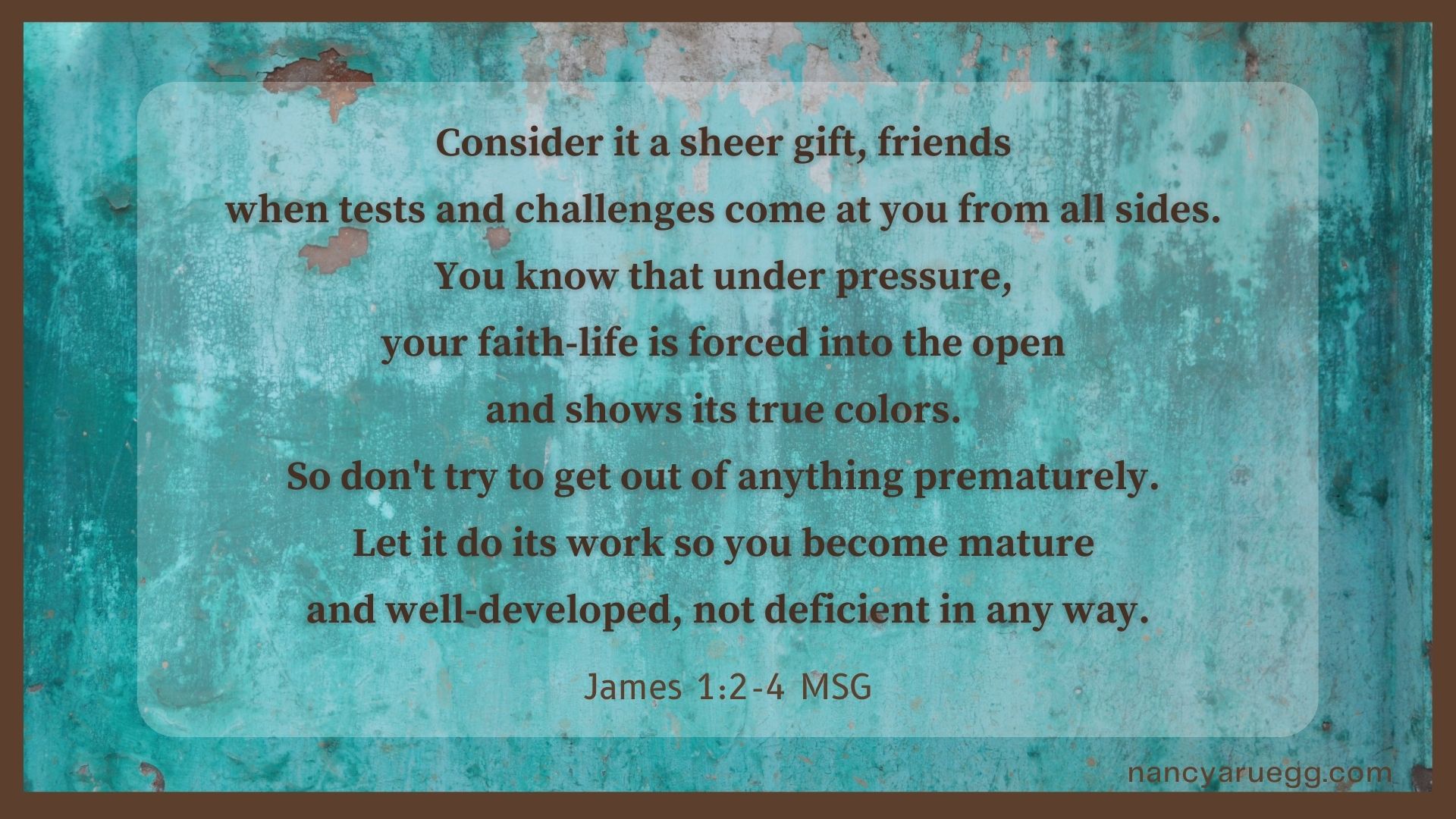
First, God delights in transforming the black-carbon pressures of our lives into diamonds of radiant beauty, as he chips away at the rough places of our character and the distractions in our lives, allowing the Light of Christ to shine with greater clarity.  Such an undertaking rarely happens overnight; it’s a process that takes time [4].

Second, think of those you’ve known or learned about who did shine with the radiant Light of Christ. They undoubtedly faced trouble, yet persevered and triumphed in the end. We too can experience fulfillment as the Light of Christ shines through us to impact others.

Third, while we’re in the midst of the trial, God often brings the sweetest discoveries of himself [5].

These realities also warrant celebration.

The question remains, how will we celebrate?  Perhaps with an ancient song:


[1] Nancy Leigh DeMoss Wolgemuth, Biblical Womanhood in the Home, 67.

[2] Ralph Sockman, The Higher Happiness, 65.

[3] A Life God Rewards, 114, emphasis added.

[4] Joanna Weaver, Having a Mary Heart in a Martha World, 199.

[5] L. B. Cowman, Jim Reimann (ed.), Streams in the Desert, 143.

Art & photo credits: http://www.pixexid.com; http://www.dailyverses.net; http://www.pixexid.com; http://www.depositphotos.com; http://www.canva.com; http://www.commons.wikimedia.org.

Read Full Post »

Perhaps you too watched the episode of Antiques Roadshow when an appraiser analyzed a Kintsugi bowl.

This ancient Japanese art form involves mending broken pieces of pottery with gold or silver. The glimmering veins resurrect the ruins to create a beautiful work of art.

Such a transformation offers imagery for what happens when we allow the golden work of Christ to mend our brokenness from failures, sins, and shortcomings. As a result, each of us becomes a masterpiece [1].

But what about Jesus’ instruction, “Be perfect as my Heavenly Father perfect”[2] and all the itemized directives for Christian conduct in the New Testament—all 1,500 of them, give or take?

I can’t possibly measure up to such a standard, so what’s a cracked pot like me supposed to do? Is the pure gold of Christ’s work (on my behalf at his crucifixion, and in my life now) enough to make me acceptable to God, considering my faults and failures?

We’d do well to remind ourselves often: just as family members love one another in spite of shortcomings and wrongdoing, our Heavenly Father does the same.

Note the above verse doesn’t say the Lord has compassion only on those nearing perfection.

Then what did Jesus mean when he instructed us to be perfect?

The Amplified Version offers clarity for that key word:

“You, therefore, will be perfect [growing into spiritual maturity both in mind and character, actively integrating godly values into your daily life], as your heavenly Father is perfect.”

Matthew 5:48 AMP

‘You see? Jesus isn’t requiring angelic perfection; he’s directing us toward full spiritual maturity.

Jesus would also direct us away from unrealistic expectations.

Some think that unless we’re . . .

  • spending long hours in Bible study and prayer
  • attending every pertinent service and event at church
  • serving those around us
  • extending hospitality in our homes
  • discipling and mentoring others
  • sharing with everyone in need . . .

. . . we’re not doing enough for God.

So when is enough enough?

I’m reminded of the time I sat in the pediatrician’s office with one of our children when a young mom from our church, Nicole*, walked in with her infant son. Sagging shoulders and dark eye-circles gave evidence to the truth about parenting a newborn: it’s exhausting.

But this Mama was dealing with even more: another son, age three (whom Daddy was babysitting at that moment), and a full-time job. She worked nights as a nurse, and her husband worked days so they could avoid childcare costs.

Somehow Nicole was surviving on naps here and there, and a few hours of sleep before her shift, once her husband got home.

During our conversation, Nicole confessed it had become nearly impossible to spend quiet time with God in Bible study and prayer, and she felt terribly guilty.

In that moment God brought to mind an image of my loving, earthly father. If I were in Nicole’s situation and said to him, “Dad, I’d come see you in a minute, but with things the way they are right now . . .”

I knew what he’d do. Dad would interrupt and say, “Don’t worry–I understand! I know you love me, and you know I love you. When your schedule lightens up, then we’ll get together for an extended visit. For now, I’m delighted in these quick phone calls.”

I told Nicole, I think our heavenly Father would respond in the same way. (Remember Psalm 103:13 above?) Her heart was in the right place; she longed to spend quiet hours with God.

But in her current situation, it was perfectly fine to postpone such a plan until that debilitating season ended. Our God of grace understood; there was no cause for guilt.

Our God of grace would have us let go of perfectionism and unrealistic expectations.

He’d have us delight in the golden work Christ has done and continues to perform in our lives [3].

And though we do press on to live by God’s wise ways, he would have us embrace the beauty of imperfect perfection [4].

Like a Kintsugi masterpiece.  

*Not her real name


[1] 2 Corinthians 3:5; Ephesians 2:10 ISV

[2] Matthew 5:48

[3] 1 Peter 1:3-5; Philippians 1:6

[4] Philippians 3:12-14; Lamentations 3:22-23

Photo credits: http://www.commons.wikimedia.org; http://www.heartlight.org; http://www.pexels.com/Tima Miroshnichenko; www. rawpixel.com; http://www.pexels.com/Alexander Dummer; http://www.pxhere.com/Forrest Cavale; http://www.commons.wikimedia.org./Ruthann Hurwitz.

Read Full Post »

I remember the moment; I don’t remember when it took place . . . perhaps in young adulthood, during my quiet time. A Bible verse caught my attention–John 17:21–causing my eyes to widen and fill with tears.

First, a bit of context. That chapter includes Jesus’ prayer after the Last Supper and mere hours before the crucifixion. He asked his Father to sustain him, to manifest God’s power through his death, resurrection, and ascension, and in so doing, prove that Jesus was the Son of God (vs. 1-5).[1] 

Second he prayed for his disciples—for their protection, joy, spiritual growth, and unity (vs. 6-18).

And then (wonder of wonders!) Jesus prayed for you and me, his future followers!

“I pray also for those who will believe in me,” he said (v. 20, emphasis added).

I read on with eager expectation. What did he ask God to do on our behalf? Strength to endure? Guidance for wise choices? Kind and generous hearts?

Those are worthwhile prayers, but it would seem Jesus left those for us to request.

Instead, he prayed for one over-arching blessing to characterize his believers: unity.

“I pray that they may all be one, Father!

May they be in us, just as you are in me and I am in you.”

John 17:21a GNT

Among all the things we need as his followers, why would Jesus pray for unity? We’ll get to that in a moment.

First, we need to understand he wasn’t praying for uniformity, expecting his followers to agree on every issue. The apostle Paul and his co-missionary Barnabas disagreed over their young companion Mark (Acts 15:37-39), and godly men throughout church history have taken different sides of various issues: Martin Luther with Huldrych Zwingli, John Wesley with George Whitefield, and John Stott with Martyn Lloyd-Jones—to name a few.

It’s doubtful Jesus expected his followers to grow into one big denomination. What he did desire was a spirit of love and an attitude of grace to bind us together, equipping us to overlook differences of preference and tradition. He’d have us focus on what we have in common.

At the Christian university I attended, all students were required to take the course, Philosophy and Christian Thought. One of our textbooks (a very thick one!) was titled, The Protestant Faith. And though the differences between denominations were certainly laid out, I was struck by how much doctrine and theology we share in common—much more than what divides us.

That’s what we need to concentrate on: the foundational truths like those we recite in the Apostles’ Creed, and our purpose of introducing others to Christ as well as taking delight in obeying him and growing more like him.

Even more important? A covering of love—love that admits wrong, forgives grievances, allows for differences of opinion on nonessentials, and doesn’t dishonor others but seeks the best for them.

Last but foremost: we must continually look to Jesus through prayer and worship, privately and publicly.

Perhaps you remember A. W. Tozer’s illustration. If one hundred pianos are all tuned to the same fork, they’re automatically in tune with each other. Similarly, if one hundred worshipers look to Christ, they’re going to be much more in tune with one another than if they focus on other matters, worthwhile as they might be. That would include unity itself.[2]

And now to answer that question, why would unity be so important to Jesus? His reason is revealed at the end of John 17:21.

“May they be one, so that the world will believe that you sent me.”

John 17:21b GNT

The world is plagued by ugly divisiveness, hatred, and vitriol.

Jesus desired his followers to be characterized by the beauty of unity as we strive to love like him—overlooking slights, sidestepping fights, and giving up our rights.[3]

When people witness such beauty, there will be those who desire it for themselves and come to faith in Christ.

*     *     *     *     *     *     *     *     *     *

O Father, point out those areas where my preferences and opinions interfere with my love for your people. Help me put aside differences and focus on areas of commonality. May I play an active part in the beauty of unity within my circle of influence, drawing others to you.   


[1] Barnes Notes on the Bible, www.biblehub.com.

[2] A. W. Tozer, The Pursuit of God, 90.

[3] Patsy Clairmont, Boundless Love, 236.

Art & photo credits: http://www.commons.wikimedi.org; http://www.flickr.com (Long Thien); http://www.commons.wikimedia.org (Peter Swain); http://www.commons.wikimedia.org; http://www.rawpixel.com.

Read Full Post »

Most everyone knows her name and a bit about her work. But few know of the discouragement and self-doubt she faced, the depression during her early twenties that led to suicidal thoughts, the criticism she endured, her ruined health, and collapses from overwork.

Yet Florence Nightingale, Mother of Modern Nursing, persevered through it all.

Coloured lithograph by H. M. Bonham-Carter, 1854.

Even as she suffered, Florence wrote, “It is such a blessing to have been called, however unworthy, to be the handmaid of the Lord” [1].

We marvel at her determination and strength, yet such endurance is available to us too. God has provided numerous ways for us to endure all circumstances.

Especially in this time of turmoil and uncertainty in our world, we’d do well to build up a nest egg of intentional faith deposits—deposits that include:

STANDING firm on the Bible

Psalm 119 in particular celebrates the benefits of immersion in God’s Word. A short-list would include: delight (v. 16), counsel (v. 24), understanding (v. 32), hope (v. 49), comfort (v. 52), wisdom (v. 99), truth (v. 160), and peace (v. 165).

Who couldn’t use more of these qualities in their lives?

TIME with God

Turn your mind to worship throughout the day, and in the process of being worshiped . . . God will communicate his presence [2]. Awareness of his presence then leads to strength, and strength leads to quietness of spirit.

TRUST in God’s character

Those of us who’ve known God for awhile can attest to his unfathomable grace, unwavering faithfulness, never-ending compassion, supreme goodness, infinite wisdom, over-arching power, and perfect love.

Meditating on his attributes also replenishes our spiritual strength.

.   

APPROPRIATION of what God has provided

Think of the value of such God-given gifts as forgiveness, prayer, the presence of the Holy Spirit within us, and contentment.

Why would I ever say, “No thank you, God!” to such glorious gifts?

DETERMINATION to stay in the fight

You might remember that composer Ludwig van Beethoven became deaf, beginning in his twenties. Yet he declared, “I will take life by the throat” [3].

May we exercise such determination and embrace our life in Christ with the same tenacity, no matter the circumstances. Strain contributes to strength.

AWARENESS of the evidence

How has God provided for you? Protected you? Guided you?

Contemplate the examples and you’ll find yourself echoing the psalmist: “You make me glad by your deeds, O Lord; I sing for joy at the works of your hands” [4].

And joy in the Lord also fosters strength [5].

ENJOYMENT of God’s blessings

To keep the joy flowing, remember his magnanimous blessings—those gifts beyond necessity and surprises beyond dreams.

More joy; more strength.

FELLOWSHIP with God’s people

Praise God for family and friends whose winsome ways make our lives a little lighter, whose compassion makes our troubles easier to carry, and whose love and encouragement enable us to press on.

They infuse strength when ours begins to wane.

SINGLE-MINDEDNESS on the goal

With the Apostle Paul we can focus on one thing: forget what is behind and do our best to reach toward what is ahead, “which is God’s call through Christ Jesus to the life above” [6].

All of these deposits . . .

S  tanding firm

T  ime with God

E  njoyment of God’s blessings

A  ppropriation of what God has provided

D  etermination to stay in the fight

F  ellowship with God’s people

A  wareness of the evidence

S  ingle-mindedness

T  rust in God’s character . . .

. . . will contribute to the kind of STEADFASTNESS that propelled such people of faith as Florence Nightingale and Ludwig van Beethoven through the adversities they faced.

And do you remember what happens when perseverance finishes its work in our lives?

We become mature, complete, and lacking in nothing [7].

Ready for anything.


[1] https://www.christiantoday.com/article/god-has-spoken-to-me-and-called-me-to-serve-12-inspiring-florence-nightingale-quotes-to-mark-her-birthday/108984.htm

[2] C. S. Lewis, quoted by Linda Dillow in Satisfy the Thirsty Soul, 17.

[3] https://bible.org/illustration/life-throat  

[4] Psalm 92:4

[5] Nehemiah 8:10

[6] Philippians 3:13-14 GNT

[7] James 1:4 HCSB

Art & photo credits: http://www.wikimedia.org; http://www.dailyverses.net; http://www.wkikimedia.org; http://www.canva.com; http://www.piqsels.com.

Read Full Post »

The psalmists of old seemed to have a favorite metaphor for God: Rock. You’ll find the imagery used twenty-nine times.  Sometimes the writers included reasons why this was a meaningful comparison for them; sometimes they included synonyms:

  • “The Lord is my rock, my fortress” (18:2)
  • “My God is my rock, in whom I take refuge, my shield . . . my  stronghold” (also 18:2)
  • “Lead me to the rock that is higher than I” (61:2)
  • “God alone is the mighty rock that keeps me safe” (62:2 CEV)
  • “Be to me a rock of habitation to which I may continually come” (71:3 NASB)

David seemed especially fond of this metaphor, perhaps because he spent months hiding from King Saul in the rocky terrain of the Judean wilderness. Psalm 57 was written specifically when he escaped into a cave. It may have been the characteristics of the rock walls surrounding him that brought to mind descriptors of God—solid, strong, protective, and unchanging.

Perhaps a cave such as this hid David and his men.
Might such a formation as this have provided the inspiration behind
“Be the rock that is higher than I” (Psalm 61:2)?

Later when he became king, David composed Psalm 18, probably after the numerous battle victories summarized in 2 Samuel 8.  Four times in that psalm he extolled God as his Rock.

In the New Testament we find Jesus’ parable about a foolish man building his house on sand, and a wise man building his house on rock. The point is clear: God is a reliable foundation-Rock on which to build our lives.  He provides:

  • solid, trustworthy wisdom for decisions 
  • strength and power for life’s challenges
  • protection from our arch enemy, Satan
  • unchanging reliability, faithfulness, and love—to name a few unfailing attributes
“Anyone who listens to my teaching and follows it is wise,
like a person who builds a house on solid rock” Matthew 7:24.
(House in Meteora, Greece.)

One of my favorite examples of Bible imagery is found in Philippians 2:15.  To understand the context though, we have to start reading at verse fourteen:

Do everything without grumbling or arguing,

so that you may become blameless and pure,

children of God without fault in a warped and crooked generation.

Then you will shine among them like stars in the sky

as you hold firmly to the word of life.

–Philippians 2:14-15 NIV

Isn’t that a glorious statement in the fourth line above?  We can shine into the darkness of the world like stars as we allow the Spirit to foster purity within us!

Ngc 3603 Nebula Cluster Of Stars

Now why would letter-writer Paul choose stars to make his point? Perhaps their beauty reminded him: with kindness, patience, joy, and more we can bring beauty to the world around us–a world darkened by selfishness, greed, and hatred.

Paul would also have known about using stars for navigation.  As far back as 3000 B.C. ancient Minoans were using constellations to navigate the Mediterranean Sea (1).  Perhaps Paul connected the starlight to God’s wisdom shining in mature believers, enabling them to provide guidance to those around them.

But now, centuries later, we know more about stars than Paul did and further comparisons can be drawn:

Stars shine by burning hydrogen into helium in their cores.  We shine as the Holy Spirit burns away the dross in our lives—those unbecoming traits like pride, negativity, and ingratitude. That’s when we can become radiant.

One prominent star in the evening sky of Fall and Winter is Deneb in the constellation Cygnus (the Swan), which is 19 quadrillion miles from earth.  The gleam we see left Deneb about 1500 light years ago in 521 A.D (2). The gleam of our lives can also achieve far-reaching effect as one life touches another which touches another, and then another . . . ad infinitum.

Stars not only create beauty but fulfill function.  They manufacture and distribute into the universe such elements as carbon, nitrogen, and oxygen (3). As we shine like stars in our circles of influence, we too fulfill function, manufacturing and distributing such elements as goodness, encouragement, and helpfulness.

From earth and sky come these two insightful examples of biblical imagery:  rock and stars.

Do you see the connection between the two? As you plant yourself on the firm Rock of Almighty God and shine for him like a star . . .

. . . YOU are a Rock star!

Notes:

  1. https://nationalgeographic.org/encyclopedia/navigation/
  2. https://earthsky.org/space/ten-things-you-may-not-know-about-stars/
  3. https://science.nasa.gov/astrophysics/focus-areas/how-do-stars-from-and-evolve

Photo credits: http://www.hippopx.com; http://www.canva.com; http://www.wikimedia.org (2); http://www.pixfuel.com; http://www.maxpixel.net; http://www.heartlight.org; http://www.maxpixel.net.

Read Full Post »

Long ago one of my cousins (Alice, I think) knitted her brother a sweater for Christmas, and had almost finished it by the end of November when the extended family gathered for Thanksgiving.  However, the sweater had turned out much too big, and Alice was stymied how to downsize it.

“Give it to me,” suggested Aunt Orsie, the most skilled knitter in the group.  “I think we can fix that.”  As she chatted away the afternoon with the other aunts and older cousins, Aunt Orsie helped Alice take apart the sweater, undo the extra rows, snip, knit, and bind off the shortened rows until the sweater had miraculously shrunk to proper proportions.  (That terminology and order of steps is likely inaccurate—I’m not a knitter!)

Alterations make a significant difference, and not only in the way clothing fits.  As we know, standard counter height can be altered to accommodate those especially short or tall, and the print in books can be altered to accommodate the visually impaired.

Some alterations, however, are much more challenging to accomplish—even more difficult than downsizing a sweater.  Take attitudes, for example.  How do we alter negativity into positivity, a critical spirit into grace, discouragement into hope, or frustration into gratitude?

Here are a few possibilities:

Negativity can be altered by a different viewpoint.

Poet Langston Hughes wrote:

How altered our attitude could be if we searched for the rainbows and refused to focus on the dust of life.

A critical spirit can be altered by truth.

Perhaps you’ve heard the story of the family on a beach vacation.  While building a sandcastle their first day, the children spotted an old woman wearing a faded dress and floppy hat, bent over and mumbling to herself as she approached.  Every now and then she picked bits out of the sand and put them in a burlap bag.  

Though the children called hello to her, the woman didn’t respond.  She appeared lost in her own world. The parents watched warily, expressed their doubts about her mental state and a hotel that would allow her on their premises. They warned the children to stay away from her.

Each day the woman combed the beach, muttering and plucking as she went.  Finally the family asked the concierge if he knew about this strange woman.

“Oh yes,” he said.  “That’s Mrs. Thompson, a retired schoolteacher who lives up the road. She’s made it her mission to rid this section of beach of anything that might cut people’s feet, and while she walks, Mrs. Thompson prays for the people nearby.  No doubt she prayed for you!”

Discouragement can be altered by hope.

And in what do we hope? 

  • The promises of God
  • The development of our character, growing us into our best selves
  • The fact that God executes good plans even through our suffering 
  • That for those of us who know Jesus, the best is always ahead*

We know these routes to hope; it’s the determination to take them that requires our diligence.

Frustration can be altered by appreciation.

Sometime during our younger son’s toddler days, he scribbled on several pages of my Bible–splotchy eyesores among my straight-edge underlinings and carefully written comments. 

As the years went by, however, when I’d encounter one of those scrawls, my response completely altered.  “Aw, there’s one of Jeremy’s notes,” I’d smile, remembering the rambunctious and ever cheerful little boy he once was, just trying to be like Mommy and Daddy.

My frustration not only disappeared but became appreciation.

No matter the attitude that needs altering there is a means to transform it.   We can snip away at undesirable attitudes (like negativity and a critical spirit) with proper perspective and truth.  We can bind off the damage of harmful emotions (like discouragement and frustration) with hope and gratitude.

Most beneficial of all, we can invite God to miraculously shrink our erroneous ways of thinking until we’re good and pleasing to him.

What attitude-alteration have you witnessed or experienced?  Please share in the comment section below!  


* See the previous post, Promises Kept as well as Romans 5:3-5 and 1 Corinthians 2:9.

Photo credits: http://www.maxpixel.net; http://www.canva.com; http://www.quotefancy.com; Nancy Ruegg; http://www.canva.com.

Read Full Post »

On January 25, 1905, diamond mine superintendent Frederick Wells inspected the walls of the Premier Diamond Mine in South Africa—as usual.  Suddenly his practiced eye caught a telltale glimmer in the rock.  

Workmen cut free the luminous stone that very day, then took it to be weighed in the office of mine owner Thomas Cullinan.

The miners knew the fist-sized gem was a stellar find, but no one expected what the scale revealed.  Before them lay the largest diamond ever found—3,106 carats worth, and a perfectly clear specimen except for one black spot in the middle.

Frederick Wells with the Cullinan Diamond

Named for the mine owner, the Cullinan Diamond was sold to the Transvaal provincial government and eventually presented as a birthday present to England’s King Edward VII in 1907. 

King Edward hired master-lapidary I. J. Asscher of Amsterdam to divide the stone.  Asscher studied the Cullinan for six months before making the first cut, and subsequently created nine major stones along with ninety-six smaller ones.

Opened in 1854; still in business.

The largest diamond is called the “Star of Africa I” or “Cullinan I” and sits atop the British royal scepter; Star of Africa II is part of the Imperial State Crown.[1]

Star of Africa I is the pear-shaped embellishment atop the scepter.
Star of Africa II, front and center of the crown, just above the band of ermine.

Why did God create diamonds?  For the same reason he created everything in the universe:  to display his glory.[2]

Diamonds offer a magnificent example of God’s creative power, as he applied heat and pressure to simple black carbon and created mesmerizing stones.

Of course, it takes tremendous pressure (50,000 times more than that at the earth’s surface) and severe heat (2000 degrees Farenheit) for the transformation to take place.  Such extreme conditions only occur deep in the ground—at least 90 miles below the surface.

Humans have only been able to drill a little over seven miles into the earth.  So how were diamonds even discovered?  Because of another spectacular display of God’s power:  volcanoes, which spew them up to the surface.

And though raw diamonds do glimmer, their full magnificence is not released until the lapidary cuts the stones on all sides, to maximize the refraction and reflection of light. Today’s popular brilliant cut requires 58 facets. The process takes up to two weeks.

The ancient Greeks believed that a diamond was a chip of star that had fallen to earth.  We smile at their naiveté until we learn astronomers discovered a star in 2009 that has cooled and compressed into a massive diamond—10 billion trillion trillion carats worth!

Imagine the smile on God’s face as the scientists proved lyricist Jane Taylor closer to truth than she knew: “Twinkle, twinkle, little star . . . like a diamond in the sky” (1806).

With Job, we can affirm:

In addition to displaying God’s glory, diamonds also provide valuable lessons—much as he’s used trees, sheep, and ants to teach us.[3]  At least two lessons have been encapsulated in memorable quotes. 

Lesson #1: 

You know what else makes God smile?  Transforming black-carbon lives into radiant diamond-people.  Think of those like Kirk Cameron, George W. Bush, and Franklin Graham, all of whom once lived in dark rebellion and now reflect the light of Christ.

Such transformations require a lengthy process, and most often the heat and pressure of difficult circumstances, but the results are quite spectacular.[4]

Lesson #2:


A lapidary reminds us of our Heavenly Father.  He chips away at our self-centeredness and pride until we’re Stars of Heaven, fit for his crown and radiating his glory in brilliant perfection.[5]

So, my fellow stars-in-process, “let faith and patience have their perfect work, for in the day when the crown will be set on the head of the King Eternal, Immortal, Invisible, one ray of glory will stream from you”—Charles Spurgeon.


Notes

[1] https://www.history.com/this-day-in-history/worlds-largest-diamond-found# and https://www.capetowndiamondmuseum.org/blog/2017/01/worlds-largest-diamond-the-cullinan/

[2] Psalm 19:1

[3] Jeremiah 17:7-8; Psalm 23; Proverbs 6:6-8

[4] Hebrews 12:5-11

[5] Zechariah 9:16; 2 Corinthians 3:18

Photo images: http://www.wikimedia.org; http://www.flickr.com (2); http://www.wikipedia.org; http://www.canva.com (2); http://www.wikimedia.org.

Read Full Post »

Nicole blinked twice as she stared at the number on the doctor’s scale. She knew a few more pounds had glommed on her midsection, but seven?


During the ensuing consult with Dr. Ames, Nicole mentioned her knees had started to hurt, she felt tired much of the time, and seemed susceptible to every virus that came along. Dr. Ames then shared Nicole’s blood work, revealing several more concerns. His treatment solution surprised her. “I’m going to send you to a nutritionist,” he said.

Three months later, Nicole already felt much stronger and healthier—energized even. Her knees no longer hurt, and her blood pressure and cholesterol had dropped dramatically. Nicole had learned her diet included too many simple carbs and high-fat proteins, depleting her body of strength, energy, and good health.

It’s a fact: we can’t function well without proper nutrition.


The same principle applies in the spiritual realm. We can’t function well when our souls are improperly nourished. We need to ingest spiritual vitamins.

For example, consider Vitamin A. As a physical nutrient in our food, it improves our eyesight—specifically night vision. In the spiritual realm, Vitamin A might represent Adoration of God, which improves our “vision” through dark circumstances.


“When we choose to practice adoration anyway

in the midst of whatever we are feeling,

our words lift us over that barrier

and into a deeper connectedness with God.”

—Sarah Hagerty[1]


That deeper connectedness with God results in strength and perseverance for what we face.


The benefits of the Vitamin B complex include converting food into energy. In our spirits, the Bible energizes us as we convert the food of truth into the energy of faith.


“I am sorry for men who do not read the Bible every day.

I wonder why they deprive themselves

of the strength and the pleasure.”

—Woodrow Wilson[2]


Vitamin C enhances the growth of bone, skin, and muscle. Companionship with God causes us to grow in faith, character, and contentment—no matter our circumstances.


“The greater your knowledge of the goodness and grace of God on your life,

the more likely you are to praise Him in the storm.”

–Matt Chandler[3]


Vitamin D plays a role in fighting germs. Delight in God’s blessings fights off the germs of melancholy and discouragement in our souls.


“Thankfulness restores a healthy perspective about our lives.”

—Valerie Bell[4]


Vitamin E is an antioxidant that protects against cell damage. Empowerment from God protects against soul damage—from such hurtful emotions as fear, anxiety, and hopelessness.


“When God is recognized as the One who undertakes for us,

then difficulties are opportunities to trust Him . . .

contentment sings in the heart,

and all things are possible.”

—F. E. Marsh[5]


Vitamin K promotes healthy bones which support the body; knowledge of God supports the soul as we affirm his goodness and perfections.


“To fall in love with God is the greatest of all romances;

to seek Him, the greatest adventure;

to find Him the greatest human achievement.”

—St. Augustine


*     *     *     *     *     *     *     *     *     *


I praise you, O God, that as we absorb these soul-vitamins into our spirits, our trust in you will grow. We’ll find our strength renewed, and be able to run the race of life without lapsing into despair. May we be mindful each day to be enriched in your presence, in your Word, and in your power.

(Isaiah 41:31; Hebrews 4:16; Psalm 119:28; Ephesians 6:1)


Notes:

[1] Unseen, Zondervan, 2017, p. 151

[2] Soul Retreats for Busy People, compiled by Lila Epson, Inspirio, 2002, p. 40

[3] https://www.christianity.com/wiki/christian-life/inspirational-christian-quotes-about-love.html

[4] A Well-Tended Soul, Zondervan, 1996, p. 102

[5] Quote/Unquote, compiled by Lloyd C. Cory, Victor Books, 1977, p. 136


Art & photo credits: http://www.picpedia.org; http://www.pixy.org; http://www.heartlight.org; http://www.dailyverses.net; http://www.pixabay.com; http://www.pixy.com; http://www.hearlight.org; http://www.canva.com.


Read Full Post »


Our older son and his family enjoy a large magnolia tree in their backyard. Every spring it explodes into a breath-taking mass of pink and white blossoms, each one at least six inches across.

Unfortunately the dazzling display doesn’t last long. The petals soon fall to the ground, and thick, dark leaves begin to take their place. But when summertime heat arrives the family is grateful for the cool shade of that dense foliage.


In autumn, as the leaves take their turn to fall, the flower buds for the next spring become more visible. Compared to those on other flowering trees or plants, these are already about two inches tall—even in October. To form them, magnolias take full advantage of the sun’s energy during the summer months (1).


All winter long, those buds proclaim silent promise of the divine flowers to come. And then in March or April, as the days have lengthened and warmed, the furry buds begin to split open, offering a glimpse of their tightly-spiraled petals—a precursor of the stunning transformation just days away.


Were we to celebrate the magnolia tree for those few days she’s dressed in her chiffon-pink finery, we’d miss out on the joy of her shady embrace in summer and those hope-filled buds through fall and winter.

There is beauty in the becoming—whether it’s magnolia trees or people.


If those magnificent buds were capable of emotion, they would no doubt look forward to the glorious reveal in spring. Thankfully, we humans can anticipate our desires being fulfilled. And as God’s children, one of those desires is spiritual maturity–the day when we’ll be wise and self-sacrificing, calm and patient, peaceful and contented–to name a few traits we aspire to.


But if we’re always focused on the future, we’ll miss the wonder of what God is doing now. The question becomes, what can we celebrate as God carries out his beautification process within us? Here are two categories of possibilities to get us started.

1. Celebrate the moments when the fruit of the Spirit are on display.

For example, over the last few days can you think of occasions when you:

  • Spoke kind words or affirmation to others?
  • Shared the gift of smiles and perhaps laughter?
  • Held your tongue when tempted to argue?

Then you brought a bit of love, joy, and peace to others. Hurray for you!


2. Take note of the times when biblical truths guide your actions.

Again, review the last few days for such examples as these:

  • You found your mind wandering into negativity, then made an about-face when you remembered your goal to focus on everything excellent (Philippians 4:8).
  • You apologized for speaking harshly to someone, instead of pretending the offensive tone didn’t matter (Ephesians 4:2).


  • A stunning feature of creation grabbed your attention, and your first thought was to worship God for his incredible handiwork (Psalm 92:4).
  • The moment you recognized God’s protection, provision, or blessing, gratitude welled up in your spirit (Psalm 126:3).


Celebrate the growth of a renewed mind, humility, praise, and gratitude. You’ll be reinforcing the behaviors that contribute to your beautiful becoming.


“Growth, though silent as light

is one of the practical proofs of health.”

–Charles Swindoll (2)


Note Swindoll says growth is a proof of health—not perfection.

And when we honor God as the impetus behind the progress, we enliven our faith for the next steps of beautification he has in mind.


“Little by little

as God’s sanctifying grace works in us,

more territory of our lives becomes his.”

–Herbert Lockyer (3)


Right now we’re enduring the long winter of our development, but spring will come.


“He who began a good work in you

will carry it on to completion

until the day of Christ Jesus.”

–Philippians 1:6 NIV

(emphasis added)


*     *     *     *     *     *     *     *     *     *


I praise You, Almighty God, that as we grow in trust and surrender to you, we will become more like your Son, Jesus Christ. Day by day you are engineering experiences to that end. Thank you also we can enjoy the anticipation of that glorious day, when the beauty of becoming will finally be complete.


Notes:

  1. https://www.chicagotribune.com/lifestyles/home-and-garden/ct-sun-0226-garden-morton-20170221-story.html
  2. The Quest for Character, Multnomah Press,  1987, p. 172.
  3. Seasons of the Lord, Harper & Row, 1990, p. 351.


Photo credits:  http://www.pxfuel.com (2); http://www.pickpik.com; http://www.pikrepo.com; http://www.pixfuel.com; http://www.dailyverses.net; http://www.pixy.org; http://www.heartlight.org; http://www.wikimedia.org; http://www.pikist.com.


Read Full Post »

« Newer Posts - Older Posts »

Sylvia Schroeder

Impressions Becoming Expressions

Mitch Teemley

The Power of Story

Still Traveling

Impressions Becoming Expressions

Living Our Days

Gaining a heart of wisdom

He Said What?!

I'm Patty, and my husband and I are living with our adult son who has autism and epilepsy. I love sharing lessons learned from life around me, especially life with Aaron.

Meditations of my Heart

Impressions Becoming Expressions

Linda Stoll

Impressions Becoming Expressions

Signora Sheila

Where faith meets slow living

Heidi Viars

Finding the Image of God