Feeds:
Posts
Comments

Archive for the ‘Praise’ Category

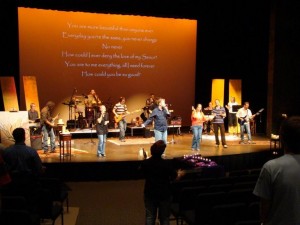
praise-band-300x225


The drummer begins a snappy, energizing beat.

The guitarists add moving chords.

The keyboard player joins with a compelling melody and attention-grabbing harmony.

Then the leader of the band enthusiastically proclaims, “This is the day the Lord has made; let us rejoice and be glad in it! Please stand and join me as we praise and worship our awesome God!”

It’s a familiar scene for those who attend a contemporary or blended worship service.

Have you ever wondered why we are invited to praise and worship? Aren’t the two words just synonyms for each other?

That’s what I thought for a long time.   Then a worship leader explained that the upbeat praise songs we sing first are designed to help us focus on God instead of the many mind-distractions vying for attention.

After a time of praise, he said, we are more receptive to the quieter, more reverent songs of worship. He likened our musical journey to the movement of Bible time worshipers, from the outer courts of the temple to the inner court.

Since then, I’ve learned more insights into the difference between praise and worship. For example:

Praise is an expression of approval and admiration, exalting God for who he is. We praise him for his wonderful attributes, like love, wisdom, power, and holiness. He is certainly worthy of every word of praise we can offer (Psalm 18:3).

But we can also praise people for their attributes. Even the family dog earns praise for being a good boy or girl! Praise is relatively easy to give. It costs us nothing except a little thoughtfulness and a little time.

A close relative of praise is thanksgiving. Just as we praise God for who he is, we express gratitude for what he does.

Worship, on the other hand, is exclusive. God is the only One worthy of our worship (Luke 4:8).

The word, worship, comes to us from Old English: weorth (worth) and scipe (ship). When we express our awe, love, and respect to God, we are proclaiming his worth to us.

True worship also includes humility, honesty, and surrender (John 4:24; Psalm 119:7):

  • Humility as we recognize God’s supremacy,
  • Honesty as we confess our inadequacy and sin,
  • Surrender as we relinquish our wills to his all-wise control.

Worship also draws us closer to God (Psalm 145:18), which is not just for Sunday mornings. Worship (as well as praise and thanksgiving) is designed by God to permeate our every day lives.

It’s as if praise, worship, and thanksgiving are tributaries, streaming together to form one great river. Three becoming one. Not like a braid, with three plaits woven side-by-side but still separate entities. No–a blending together into a whole, the parts no longer distinguishable.

Praise from a worshipful heart—one that is characterized by humility, honesty, and surrender—is the most sincere.

Thanksgiving that celebrates God’s goodness in his actions and praises God’s greatness of character, is the most complete.

Worship that includes sincere praise and complete gratitude is the most beautiful.


*     *     *     *     *     *     *     *     *     *


Every day, Lord, you manifest your greatness to me. May I be quick to offer you praise, thanksgiving, and worship, because you are worthy of no less. And thank you for the gift of worship, for the overwhelming privilege of basking in your glorious and holy Light.


(Photo credit:  www.blog.nextlevelworship.com.)


Read Full Post »

 d30200c131346a4ffed9f197bbee764d

(“You thrill me, Lord, with all you have done for me!  I sing for joy because of what you have done” — Psalm 92:4 NLT.)

God lavishes his gracious kindness upon us in countless ways, doesn’t he?

In appreciation for all he’s done, I have a suggestion. Let’s each write him a personal psalm for Valentine’s Day.  A love gift, on a love-focused holiday, for our loving God.  (You have more than a week to prepare your gift!)

Is that an overly sentimental idea?

Perhaps the timing is, but the matter of creating personal psalms has nothing to do with sentimental poetry.

I can hear some of you already. “Me—compose a psalm? I struggle to put a personal message on a birthday card!”

If that sounds like you, “Be strong and courageous. Do not be terrified; do not be discouraged, for the Lord your God will be with you” (Joshua 1:9)!

God waits with eager anticipation for you to enjoy an intimate Father/child relationship with him (2 Corinthians 6:18).

f2c43794cde3dc013fef692a6c7eabf1

 And what parent is not overjoyed when a son or daughter shares his/her innermost thoughts and feelings?

Remember, a psalm is simply a heartfelt prayer or song.  Key word: heartfelt.  Our psalms do not have to rhyme. We don’t have to use fancy literary devices like metaphors, imagery, or parallelism unless we want to.

These psalms are for our Heavenly Father.  He takes great pleasure in the sincere, unpretentious efforts of his children, just as all parents do.  We can even ask for his help to string the words together that will express our hearts.

Sometimes the hardest part is getting started—that first thought. An easy solution is to use a biblical psalm as a model.

?????????????????????????

To begin, you might choose a favorite verse. Read it slowly, several times. Rewrite it in your own words.  These questions might help to push your thinking further:

  • Is there a phrase or word that stands out?   Explain to God why it is important to you.
  • Do you feel a connection with this particular verse?  Add a personal experience when God’s activity in your life made this verse especially meaningful for you.

Following is one way to create a personal psalm, based on Psalm 3:3a: “You are a shield around me, O Lord.”

f74d4bae680c7ed0bb80f31d68a4bd72

1.  Choose a key word.  “Shield” is an obvious choice.

2.  Use the question-words who, what, where, when, why, and how to jump-start your thought processes.  Not all of them will spark an idea, but several will.  For example:  How is God a shield for me? What is he shielding me from? Why is it important for me to remember that he is my shield?

3.  Prayerfully and thoughtfully answer your questions. Meditate for a moment, then begin to write. One word can become the basis for the first sentence. A word or idea from that sentence can be expanded upon and become another sentence.

Before you know it, a psalm is born!


I praise you, oh God, for being like a shield

when disturbing thoughts are hurled my way.

You deflect those poisoned-arrows

with your shield of scriptural truth

and tender compassion.

Help me remember

you are all-powerful and all-wise.

There is no circumstance or emotional battle

that you cannot handle.

Your strong shield protects me

from the assault of Satan and his cohorts—

those negative, discouraging thoughts

that try to attack the peace and joy you’ve given me.

You are my almighty Warrior-God,

unsurpassed in power.

Satan cowers in your presence!

Help me avail myself of your protection

at every onslaught.


Once your psalm is complete, it’s time for presentation.  Read your psalm out loud to God. You will sense his presence as he comes to listen! How do I know?

OLYMPUS DIGITAL CAMERA

(“Come near to God and he will come near to you” — James 4:8.)

Keep your journal or notebook handy. Further thoughts may occur to you as you read, or afterward as you reflect. One more question to consider: In what ways has your relationship to God been impacted through this composing process?  You may wish to write about that, too.

I must confess, I’ve written a number of personal psalms. But recent reading on the subject has inspired me to pursue new avenues of this form of worship.

In future psalms I want to increase my reflection time, be more specific, add more detail, and actually read my psalms out loud.  I’m looking forward to expressing the depths of my heart more openly and discovering new depths of my Heavenly Father.

If you already write personal psalms, or should decide to write one, I’d love to hear about your experience!


(Art and photo credits:  www.pinterest.com; http://www.healthcentral.com; http://www.dwellingintheword.wordpress.com.)

Read Full Post »

2d3c14e3fd1f6d47776b5a17f69d7fbd


With the Sunday morning congregation, she sang enthusiastically and with conviction in her voice:

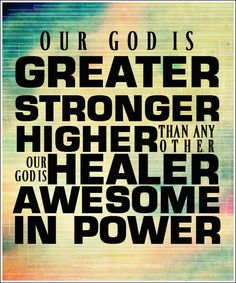
“Our God is greater, our God is stronger,

God you are higher than any other.

Our God is Healer, Awesome in Power,

Our God! Our God!”*

She raised her hands, palms upward, offering her song as an expression of trust.

Other inspiring songs followed. By the time she sat down, her spirit already felt strengthened and uplifted. Then came the encouraging prayer time and an empowering sermon.

“Thank you, Lord,” she breathed while exiting the sanctuary. “My heart overflows with joy. You are the stronghold of my life—of whom shall I be afraid” (Psalm 27:1)?

Then came Monday morning, with its hectic commute to work, dozens of emails to process, a meeting that went too long and accomplished little, a disturbing phone conversation with a disgruntled caller, a notice from the boss asking for the impossible, etc., etc.

In a matter of hours the storehouse of strength was depleted, her joy gone. And on the way home that afternoon, she whispered, “God, I don’t understand. One day I’m on a mountaintop of faith, the next I’m crawling around in the mud of discouragement!”

How do I know the experience of this woman? Because I am she.

There are times I am no better than the Israelites of Moses’ time, allowing frustration, stress, and self-pity to nibble away at my faith.

Just three days after their miraculous rescue at the Red Sea, the Israelites lost their trust in God. (At least they lasted three days!)

Yes, they had witnessed the ten plagues that chipped away at Pharaoh’s resolve to keep his slaves at all costs.  Yes, they had watched as God parted the waters of the sea so they could walk across on dry land. And they saw all Pharaoh’s horses and chariot-driving horsemen drown.

After four hundred years of slavery, the Israelites walked away from the shores of the Red Sea, a free people. And they had done nothing to make it happen. God did it all.

But by the third day, they were tired and very thirsty. They had been traveling through the Desert of Shur and had found no water. Finally they came to Marah where water flowed. But it was too bitter to drink.

Discouragement quickly gave way to complaining. The people railed against their leader, Moses. “What are we supposed to drink?” they cried.

Note what they did not do. They did not cry out to God. But Moses did. God showed him a piece of wood to throw in the bitter waters, and the water became sweet (Exodus 15:22-25).

Scripture tells us this experience at Marah was a test (v.25). Perhaps God wanted to show them that their actions and reactions did not yet back up their words–words they sang when God rescued the Israelites at the Red Sea: “In your unfailing love you will lead the people you have redeemed. In your strength you will guide them” (Exodus 14:13).

Might miserable Mondays be a type of test for me?  Are you facing a test?  And how do we pass such tests?  Listed below are possible strategies.  We can:

  1. Pour out our hearts to God in total honesty as David did: “How long must I wrestle with my thoughts and every day have sorrow in my heart? How long will my enemy triumph over me?” (Psalm 13:1-2).  Honesty with God puts us in a humble frame of mind so he can help us.
  1. Turn our thoughts to expressions of praise and assurance. Again, that’s what David did. “But I trust in your unfailing love,” David affirmed in the same psalm. “My heart rejoices in your salvation. I will sing to the Lord, for he has been good to me” (vs. 5-6).  We cannot help but strengthen our faith when we meditate on the beautiful attributes of our God.
  1. Reaffirm that our Heavenly Father loves to bring good out of every circumstance (Romans 8:28).   We can look for the good in our lives instead of focusing on the negative.
  1. Resolve to be obedient to God’s Word. What he told the Israelites at Marah is true for us, too: “Listen carefully to the voice of the Lord your God and do what is right in his eyes…I am the Lord, who heals you (Exodus 15:26). He is the One who will heal us of discouragement, frustration, and stress–as we follow his instructions.
  1. Take encouragement from the very next stop in the Israelites’ journey: Elim. “There were twelve springs and seventy palm trees, and they camped there near the water (v. 27)” We can remind ourselves that our personal Elims may very well be just around the corner!

What strategies help when you are faced with frustration, stress, or discouragement?  Please share your ideas/experiences in the Comment section below!

* From the chorus of Chris Tomlin’s song, “Our God” (2010).

(Art credit:  www.pinterest.com.)

Read Full Post »

Our neighbor, Christine, happened to be in her yard yesterday morning (in spite of frigid temperatures), as I was leaving to babysit our granddaughter. Christine was picking up trash that had blown in front of her house.

“I’ll be so glad when this weather warms up,” she called, stooping to gather more bits in her bag-covered hand. We encouraged each other with the forecast for the weekend: temperatures approaching fifty degrees.

Actually, I haven’t minded the deep freeze that has gripped the Midwest for most of January.  After living in Florida for forty years, I see cold weather as a pleasant change from stifling hot temperatures and hard-to-breathe humid air. (Give me a few years up here, and I might be longing for that heat again.)

th1

For now, these wintry January days offer a multitude of pleasures:

  • A bit of rest after the bustle of Christmas.
  • Feathery cirrus clouds gracing the sky.
  • Cardinals, juncos, and flickers cavorting in the trees on the occasional temperate, sunny day. (Without foliage to obscure the view, we can watch their antics unobstructed.)
  • The soft, pale glow of winter sunsets.
  • Plumes of smoke winding lazily upward from the neighbors’ chimneys.

stock-footage-little-town-s-morning-winter-view-the-main-accent-in-the-shot-is-rising-sun-and-rising-up-smoke

  • Candles glimmering cheerily as dusk falls.
  • The scent of homemade chicken soup simmering on the stove. (Granted, soup can be enjoyed anytime, but it takes a chilly evening to bring out the best of a savory bowl.)
  • Hibernating by the fire, computer on my lap, hot tea in a thermal mug at my side.
  • Layering myself in soft, cozy clothing—and Smartwool socks!
  • Quenching my thirst with a drink of water from the faucet–and it’s already cool – no ice necessary.
  • That first “Ah” moment upon entering the warm house. (Entering a cool house in Florida is more of a “Whew!” moment!) The coziness of home is most appreciated when cold winds blow outside.
  • Nature renewing itself for the life-burst of spring. One sign: buds on the magnolia tree are already growing plump.

Winter_Snow-covered_trees_at_the_lake_046387_

And what about those times when snow covers the landscape? Oh my. The enjoyment is magnified ten times.

  • Delicate flakes waltz in quiet descent.
  • Trees become dressed in lace.
  • Light glistens and sparkles from the brilliant snowscape.
  • A quiet hush surrounds us, as the freshly fallen snow absorbs sound.

All precious gifts, indeed.

*     *     *     *     *     *     *     *     *     *

Heavenly Father, I thank you that the whole earth is full of your glory, even in bleak winter.

In the snowflakes we see your never-ending creativity.

In the full magnolia buds we see the hope of spring, symbolic of our sure hope in you.

In the pleasure of a warm home and crackling fire we glimpse the refuge you offer to us: a place of safety, comfort, rest, and delight.

In the purity of white snow that covers the gray and the dismal, we see a reminder that you cleanse away our sins and make them white as snow (Isaiah 1:18).

And in the beauty and hush of a winter snowscape, we find our attention drawn to you. In quiet, wondrous worship. we give praise to you, our gracious, glorious God!


*     *     *     *     *     *     *     *     *     *


What gifts of winter do you most appreciate?


(Photo credits:  www.zatavki.com; http://www.blog.snyderac.com; http://www.shutterstock.com.)


Read Full Post »

desert

Last Thursday we pondered these promises from Isaiah 58:11:

 “The Lord will guide you always,” and

“He will satisfy your needs in a sun-scorched land.”

 Today, more discoveries and encouragement await as we meditate upon the last two promises:

  • “[He] will strengthen your frame.”
  • “You will be like a well-watered garden, like a spring whose waters never fail.”

garden-waterfall-design


Do you long for strength within your frame, that is, inner strength? Perhaps you’re moving as fast as you can, but never quite reaching the end of the to-do list. And you’re bone-weary from the effort.

Perhaps the stresses of life—difficult relationships, a high-pressure job, financial obligations—are squeezing in hard.

Perhaps boredom or depression surround you in a gray shroud, and you haven’t the energy to fight against them.

“He will strengthen your frame.”

But God doesn’t wave a magic wand over us and suddenly turn weakness into strength. Usually he invites us to be part of the process.   And his solutions are radical.

For example, celebrate anything and everything (Philippians 4:4).

3095781994_90a392c03f

Take joy in:

  • Your cozy robe to ward off the morning chill
  • That cute tuft of hair sticking up on your toddler’s head
  • A parking place opening up when and where you need it
  • Licking the stamp just as the mail carrier pulls up in her truck
  • An earring lost last week turns up between the counter and stove this week.

You see, joy and strength are closely related. Ezra told the people of Israel, “The joy of the Lord is your strength” (Nehemiah 8:10).

Those five examples above, and thousands like them, are gifts from your Heavenly Father. “Every good gift and perfect gift is from above, coming down from the Father of the heavenly lights” (James 1:17).

In the same way we can build up physical strength with exercise, we can build up spiritual strength with praise—by expressing gratitude and joy for every good and perfect gift.

And now, the last promise of this verse describes in metaphor the result of living according to God’s design.

“You will be like a well-watered garden, like a spring whose waters never fail.”

TotalChildCareVegetables7 

Visualize a flourishing garden, with rich, green plants overflowing with healthy, ripe produce.

Those can be descriptors of you and me.  We are:

  • Rich in God’s grace, which he has lavished on us with all wisdom and understanding (Ephesians 1:8).
  • Green and flourishing, because we spend time with the Master Gardener and allow him to cultivate our spirits (Psalm 1:2-3).
  • Healthy and prosperous of soul (v. 3). As we soak up God’s Word, we’ll produce actions and attitudes that honor God and bring us inner satisfaction.
  • Ripe and mature, lacking in nothing (James 1:3).

God offers us “a continual source of thirst-quenching, drought-ending, fruit-producing, spiritual hydration” (James MacDonald).

Doesn’t that sound refreshing?  Who could turn down such provision?

*     *     *     *     *     *    *     *     *     *

Thank you, Father, for the precious assurances of these promises: 

  • You are leading me along the path you preordained before time began.
  • Every day of this earthly journey I can count on you to supply my needs.
  • Every day you provide fresh strength. One way is through the exercise of praise.  
  • As I spend time in your presence, I will be transformed–like a garden replenished by hydration. In fact, I can grow into your likeness with ever-increasing glory!

 “Such knowledge is too wonderful for me. It is too lofty for me to attain.” Yet I know it to be true because these are truths from your reliable Word.  My heart overflows with wonder and gratitude.

(Psalm 139:16; Philippians 4:19; 2 Corinthians 3:18; Psalm 139:6)

(Photo and art credits:  www.dayofgrace.me; http://www.anativegarden.blogspot.com; http://www.flickr.com; http://www.naturalearning.org.)


Read Full Post »

Woman with piggy bank at rainy window


“Save for a rainy day,” financial experts advise.  And they’re right.  It is smart to have funds set aside in case of emergency.

But we would also be wise to save up for another kind of rainy day:

  • The day great disappointment shatters our joy
  • The day the doctor begins a consult by saying, “I’m terribly sorry, but…”
  • The day a loved one calls with disturbing news

What could we possibly save up that would help in such circumstances?

Consider: monetary deposits in a bank account insulate us against financial emergencies.

Similarly, we can make faith-statement deposits into our soul-accounts, to insulate us against life’s emergencies.  A healthy soul-account offers peace of mind, confidence, and a sense of well-being.

The most valuable faith statements are those straight from scripture, since the Bible is our source of truth.

Statements such as these are worthy starting points:

  • God is with me, even in the midst of trial.

“Those who know Your name will trust in You, for You, Lord, have never forsaken those who seek You” (Psalm 9:10).

  • God is my stronghold in time of trouble, offering help and deliverance.

“The salvation of the righteous comes from the Lord; he is their stronghold in time of trouble.  The Lord helps them and delivers them” (Psalm 37:39-40).

  • He will supply all my needs.

“My God will meet all your needs according to his glorious riches in Christ Jesus” (Philippians 4:19).


Sometimes God makes deposits in our soul-accounts through other reading.  Here are a few examples I’ve collected:

  • “God makes good things out of the hard times.” – Erica Hale
  • “Difficulties are sent to make us grow. Move from complaining to proclaiming what God is doing through the problem. Remind yourself, for every Calvary, there is an Easter.” – Barbara Johnson
  • “When we understand that life is not about us, we learn to overlook the trivial and fix our gaze on the eternal. What is an offense compared to His love? What is a rejection compared to His unconditional acceptance? What is a momentary trial compared to an eternity with Him?” – Emmanuelle Gomez


Faith statement deposits also come through experiences, such as:

  • The spontaneous hug of a good friend who knows of our struggles. That’s God’s way of assuring us…

…We are not alone.

  • An answered prayer—and the answer is far beyond what we asked for. That’s God’s way of showing us…

…His love and blessing never fail, even in the midst of difficulty.

  • A transformed spirit through worship.  Worry becomes faith. Fear becomes courage. Depression becomes gladness. That proves…

…The joy of the Lord is our strength (Nehemiah 4:8).


Faith-statements, deposited in our souls even before we have need of them, provide a deep, sweet sense of security.

When difficulties arise, and the time comes to make withdrawals, we can praise God for each truth. Praise will fill our hearts with song and drown out the voices of worry and fear.

*     *     *     *     *     *     *     *     *     *

Your faithfulness, O God, is unwavering and unfailing.   Oh, how I want to be faithful to you, especially during difficult circumstances.  You have provided the tools.  I praise you for the deposits your Spirit makes into my soul account, offering solace, perspective, strength, and wisdom.   Help me to avail myself of your gracious provision.  


(Photo credit:  www.dailyfinance.com.)


Read Full Post »

mri-scanner


My brother had to get an MRI last week. The technician warned him the machine was very loud—similar to a large motorcycle.

“I like motorcycles!” John told her.

Nevertheless she gave him earplugs, to block the noise as much as possible, and a set of headphones, through which he could listen to the music of his choice.

Earplugs and headphones. That’s what I need to drown out the devil’s loud voice.   Sometimes he can be incredibly persistent with his irritating chatter in my spiritual ears, saying things like:

  • “You are past your prime. Why bother trying to accomplish anything?”
  • “Look how blessed your neighbor is. You must have upset God in some way or you’d be blessed like that, too.”
  • “Can you believe how insensitive Ms. __________ is? How can she be so hurtful and not even realize it?

Wouldn’t it be nice if God handed out earplugs and headphones for our spiritual ears?

Maybe God wants us to develop some worthy habits in the process of manufacturing our own auditory devices.

And how might we do that?

Earplugs could be fashioned out of gratitude. We can occupy our minds with continual rejoicing in the blessings of this moment. Then we won’t be able to hear the devil’s negative and critical comments.

Let’s see…I wonder if I could name a blessing for each of the five senses, for what I am experiencing right now?

  • Thank you, Lord, for books and the gift of sight that allows me to read and enjoy them, as well as learn from them.
  • Thank you for soft breezes that create a cheerful rustling of fall leaves.
  • Thank you, Father, for the cozy warmth of my fleece jacket.
  • Thank you for the nutty goodness of hazelnut coffee,
  • And thank you, Lord, for the homey aroma of vanilla, coming from a nearby candle.


candleflame


Oh! That was fun, and I didn’t have one negative thought during the exercise. No wonder Paul told us to rejoice always.

Alright–earplugs are in place. Now it’s time for the headphones—something worthwhile to pay attention to, that drowns out the noise of negativity and criticism.

And what could be more worthwhile than scripture, where God offers reassurance, encouragement, and strength? The psalms are a perfect place to begin:

  • “Blessed is the man who makes the Lord his trust” (Psalm 40:4).
  • “I will sing of your strength, in the morning I will sing of your love; for you are my fortress, my refuge in times of trouble” (Psalm 59:16).
  • “Your ways, O God, are holy. What god is so great as our God? You are the God who performs miracles; you display your power among the peoples” (Psalm 77:13-14).

And one of my favorites:


Ps.89.15.16


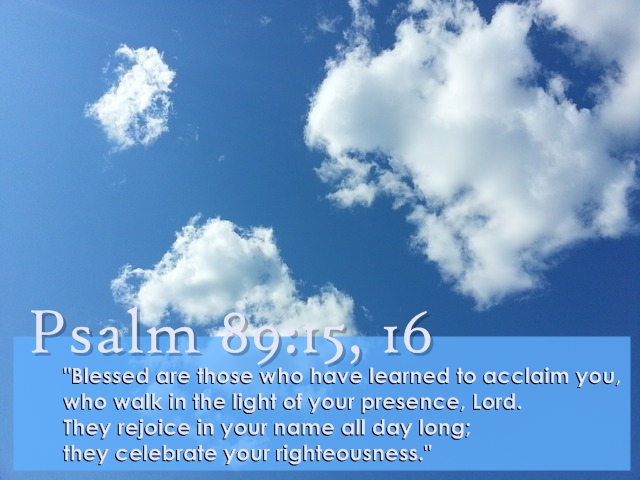
(“Blessed are those who have learned to acclaim you, who walk in the light of your presence, O Lord. They rejoice in your name all day long; they exult in your righteousness. For you are their glory and strength” (Psalm 89:15-17).)

Notice: We are blessed when we acclaim God. Disparaging ourselves or others, bemoaning our circumstances—even just in our thought life—is counter-productive.  It is worship that transforms our minds and spirits.

So let’s insert those earplugs and pop on those headphones! The difference will be remarkable.


(Photo and art credits:  www.cancerresearchuk.org; http://www.cozyhearthcandles.com; annemateer.com.)


Read Full Post »

autumn5

“The land is lit with autumn blaze.”

–Helen Hunt Jackson (1830-1885)

I’ve been anticipating these few weeks of October ever since we moved back to the Midwest in June—the gilding on tree-covered hillsides, the crimson coats on sumac trees, and, of course, the swaths of gold and vermilion among the maples.

The trees appear dressed for a grand party!

Indeed, autumn was the season I missed most during our forty years in Florida.

So Friday afternoon I sat on our second-story deck, to observe more closely the magnificent display in our back yard. You see, a shallow woods stands sentry between the houses on our street and the houses behind us. Among the tree-fellows, chestnut, elm, oak, and others stretch their colorful arms heavenward.

But already the trees are beginning to lose their leaves.

Elm leaves somersault while they plummet, flashing sparks of sunlight from their luminous topsides.

Oak leaves drift downward, gracefully zigzagging side to side.

But whether they tumble or drift, the leaves of all deciduous trees will eventually fall, having fulfilled their purpose: photosynthesizing light, absorbing carbon dioxide and releasing oxygen.

As human beings, we, too, have purpose to our existence: to live for the praise of God’s glory (Ephesians 1:11).  What an honor is ours, to inspire others to give praise to the King of the universe.

And how might we do that?

  1. Reflect God’s character, like the elm leaves flashing in the sunlight. Wherever we are, whatever we’re doing, we can shine as lights (Matthew 5:14)–offering assistance or a listening ear, being a positive voice and example, exercising self-control and patience.
  1. Give praise to God at every opportunity. As tree leaves fall, the lacey branches are exposed, all reaching upward toward the sunlight. Our hearts should be raised toward the Light of Life, the Son of God.

df352dd4289de9df98adedcc47361a1a

(“My lips will glorify you.  I will praise you as long as I live,  and in your name I will lift up my hands” — Psalm 63:3-4)

We can:

  • Praise him in the morning for the opportunities of the day ahead.
  • Praise him in the afternoon for the blessings and accomplishments already enjoyed.
  • Praise him in the evening for his guidance and care throughout the day, his strength for the challenges, and the blessing of rest yet to come.
  1. Be content (Philippians 4:11).  God has blessed us with every spiritual blessing in Christ (Ephesians 1:3).  Begin to name those blessings and note how your heart begins to swell with elation–blessings like:
  • relief of forgiveness
  • liberation from guilt
  • assurance of hope
  • confidence of access to his presence
  • certainty of eternal life.

(How long might the list grow if we continued?)

Just as autumn blazes around us, may our hearts blaze to live for the praise of God’s glory!

(Photo credits:  www.galleryhip.com; http://www.media-cache-akO.pinimg.com.)

Read Full Post »

article-step-by-step_ds-photo_getty_article_178_67_200377237-001_XS

Back in the 1970s somebody came up with the idea of worry stones—small, smooth pebbles that people could rub between their fingers to release their worries. (What a great money-maker, huh?  Collect some free pebbles, clean ’em up and sell for 100% profit.  Genius.)

According to enthusiasts, the constant rubbing activates the nerves at the base of the thumb, releasing endorphins. As a result, a sense of calmness purportedly settles in the user’s mind.

Even if that’s true, what happens when the person stops rubbing? Since the worry has not been resolved; isn’t it likely to return? I can’t see myself rubbing a stone until I fall asleep at night, can you?

Here’s a better idea.  Instead of going to a small pebble for worry-relief, go to the Rock.

What Rock, you ask?

“There is no one holy like the Lord; there is no one besides you; there is no Rock like our God” (1 Samuel 2:2).

Next question:  Why go to the Rock?

1.  God our Rock is more stable and reliable than Gibraltar.

igibrat001p4

The Rock of Gibraltar has become a symbol for stability, having stood sentry on the southern coast of Spain for centuries. Some say it dates back to the Jurassic Period.

But our God is older still, isn’t he.

“Trust in the Lord forever, for the Lord is the Rock eternal” (Isaiah 26:4).

And he is the same yesterday, today, and forever (Hebrews 13:8).  Now that’s reliable.

2.  God our Rock is more sheltering than a deep cave.

Verteba_Cave

(Verteba Cave, Ukraine)

During World War II, a small group of Ukrainian Jews found a way to escape the Nazis. They lived underground in caves for a year and a half.

At night they foraged for food. They even built showers and latrines deep inside.

But imagine living every day in pitch blackness and in fear of being discovered.

One day it happened. Nazi soldiers stumbled upon their hiding place. A courageous woman spoke for the group, as German guns pointed straight at her.

“What are you afraid of here?” she said. “Is the Furhrer going to lose the war because we live here?” Miraculously the soldiers left without doing anyone harm.

The band of Jewish villagers found relative safety in those caves,  and in April, 1944, the cave dwellers were liberated, able to return to the light.

But God our Rock offers guaranteed eternal safety for our souls. His Son, Jesus “became the source of eternal salvation for all who obey Him” (Hebrews 5:9)

3.  God our Rock is more protective than Masada.

slide-static

Perhaps you’re familiar with the mountaintop fortress, towering 1500 ft. above the Dead Sea.   The refuge was built by Herod the Great, from 37 to 31 B.C., to showcase his power.

Infamous for his brutality, Herod had good cause to be paranoid. He spared no expense to make sure this desert fortress could withstand attack and provide long-term refuge. His plan included protective casement walls, an ingenious water-collection system and cisterns for storage, storehouses, barracks, palaces, an armory and more.

Impregnable? Almost.

When Herod died, Jewish rebels were able to overtake the Roman guard remaining at the fortress. A thousand Jewish zealots lived atop Masada for three years.

Yet nothing or no one on earth can compare to God our Rock.

“Lead me to the Rock that is higher than I,” cried David. “For you have been my refuge, a strong tower against the foe” (Psalm 61:2-3).

And how do we avail ourselves of God’s refuge?  Through gratitude, praise, and prayer.  We can:

  • Thank him for his promises, for the times he has protected and provided in the past.  We must feed our confidence in God rather than our fear.
  • Praise him for his glorious attributes that he is bringing to bear upon our situations–attributes such as power, wisdom, trustworthiness, and love.
  • Affirm our faith. If we occupy our minds with expressions of trust, there won’t be room for thoughts of worry.

“My soul finds rest in God alone;

my salvation comes from him.  

He alone is my rock and my salvation;

he is my fortress, I will never be shaken…

Find rest, O my soul, in God alone;

my hope comes from him”

(Psalm 62:1-2, 5).

(Photo credits:  www.ehow.com; http://www.kids.brittanica.com; http://www.noplaceonearthfilm.com; http://www.masada.org.il.)

Read Full Post »

freedoms

“Jesus hasn’t brought us into the family of God just to make our dreams come true.

Our dreams are always too small.

We are here to fulfill God’s dream:

That we will bring Him glory through a remarkably abundant life.

That’s how we find our greatest personal fulfillment, now and for eternity.”

–Bruce Wilkinson

(Secrets of the Vine, Multnomah, 2001)


No wonder some folks have been dissatisfied. They thought the abundant life Jesus spoke of in John 10:10 meant an abundance of enjoyment – free from problems and pain, and a life of plenty – free from want.

God just wasn’t big enough, not big-hearted enough, to make it happen – or so they thought.

Turns out their dreams of personal satisfaction or success are not too big for God to fulfill. They’re too small. He has grander plans for each one of us.

In fact, God has one over-arching vision statement that applies to all his children. Paul explained it like this:

“We who had already fixed our hope on the Messiah might live for his praise and glory” (Ephesians 1:12, ISV).

God wants us to live for the praise and glory of himself. That’s God’s bottom line.

Now someone is going to say, “That sounds rather self-serving to me!”

Truth is, when God created us, he put a craving for himself within us. To know him and be known by him, to experience him is a God-given pleasure that nothing else can satisfy. That’s the gateway to the abundant life–the God-enhanced life.

“OK,” someone else may say. “But spending all day praising God and giving him credit for everything isn’t my idea of abundant living. Where’s the satisfaction, the adventure, the fun in that?”

I’d ask, “Have you tried it?”

Gratitude would be a good place to begin. Gratitude for what God has already done satiates the soul. We start to realize how much we already have.

Gratitude becomes an adventure. How many things can I identify today for which I’m grateful?

Gratitude becomes fun because it fills the heart with joy, which naturally leads to praising him and giving him the credit for everything positive.

His blessings do provide an abundant life:

  • Eternity in heaven (John 14:2-3)
  • Access to God at any time, through prayer (Hebrews 14:6)
  • His loving care through life’s ups and downs (1 Peter 5:7)
  • Wisdom to determine right action from wrong (James 1:5)
  • Joy that is independent of circumstances and defies logic (Psalm 16:11)
  • Freedom from worry and fear (John 14:27)

Of course, that’s only the beginning of a long list.  Each one is a wondrous and precious gift. Our Heavenly Father most certainly deserves continual praise for all he has done.

In addition to gratitude, each of us–no matter who we are, where we live, or what we do–can display the excellencies of our God – his loving kindness, grace, mercy, wisdom and more – to those around us.  Each of us can be obedient to his Word, helpful and generous to others.

And all the while we are giving God the glory–the credit–for who we are becoming and for what we’re able to do. We’re expressing gratitude for all his benefits and praise for all his attributes, which he pours into our lives.

This is how we fulfill God’s dream and, as a natural, God-engineered consequence, we also find great personal fulfillment.

*     *     *     *     *     *     *     *     *     *

Heavenly Father, I do not want my attention side-tracked by small dreams. I want to fulfill your grand dream for me: that I might bring you glory through an abundant life of enthusiastic worship and service. You are majestic, holy, all-powerful, completely trustworthy, good and loving to your people. You are more than worthy of every word of praise and every kind deed accomplished in your name—period. But you grant us deep, satisfying, personal fulfillment as we bring you glory. We stand in awe of your magnificence and grace!


(Photo credit: http://www.fromhispresence.com.)


Read Full Post »

« Newer Posts - Older Posts »

When the House is Quiet

Impressions Becoming Expressions

Mitch Teemley

The Power of Story

Still Traveling

Impressions Becoming Expressions

Living Our Days

Gaining a heart of wisdom

He Said What?!

I'm Patty, and my husband and I are living with our adult son who has autism and epilepsy. I love sharing lessons learned from life around me, especially life with Aaron.

Meditations of my Heart

Impressions Becoming Expressions

Linda Stoll

Impressions Becoming Expressions

Signora Sheila

Where faith meets la dolce vita

Heidi Viars

Finding the Image of God